Burden of healthcare on poor

When it comes to health care, every individual dreads it. Health care costs are taking a large chunk out of the savings of an individual. These costs make the lives of poor people more vulnerable. Though India is becoming a destination for foreigners to avail affordable health care, many Indians find health care services unaffordable. The treatment costs are rising at a much faster rate than inflation for both rural and urban areas. Also inefficiency of government hospitals and pharmacies have led people to turn towards private players resulting in increased health care costs.

The private expenditure on health care is around 4% in India, which makes it one of the highest ranking countries when it comes to private expenditure on health care. However, major costs of healthcare are born by individuals rather than insurance companies or employees. 

A research paper in BMJ, a medical weekly, reported that 55 million Indians-more than the population of South Korea- were pushed into poverty because of out of the pocket health expenses between 1994 to 2014. Out of those 55 million, 69% (38 million) were impoverished due to expenses on medicine alone. This study also reported that 80% Indians incurred out of the pocket expenses in 2011-12 which was 60% in 1993-94. The contribution of medicines was more than 67% of these out of the pocket expenses in 2011-12.

Government has rolled out various schemes to ensure that poor people don’t have to bear the costs of medicine. However, as per study by India’s largest national survey on social consumption conducted between July 2017 and June 2018, reported that 90% of India’s poor population do not have any health insurance. Despite of many health insurance schemes like Rashtriya Swasthya Bima Yojana (RSBY, National Health Insurance Scheme), which was precursor of PMJAY, the central government health schemes for government employees, the Employee State Insurance Scheme for formal sector employees, the poor did not have any kind of health insurance.

The health insurance coverage in India is poor because the private health insurance industry has not yet developed in India and the number of people who are willing to pay for health insurance are very low. Also the insurance premiums are high which makes health insurance unaffordable by many poor people. In rural India, people have limited access to healthcare services like doctors and hospitals, thus they do not prefer to buy health insurance.

This condition led the government to roll out an effective scheme and the result was Ayushman Bharat- National Health Protection Scheme(AB-NHPS) in 2018. The scheme is targeted at following categories:

  • Poor
  • Deprived rural families
  • Identified Occupational category of urban workers’ families

Benefits of this scheme

  • This scheme defined benefit cover of Rs 5 lakhs per family per year for secondary and tertiary care hospitalisation.
  • There is no cap on family size and age under this scheme.
  • This scheme will be cashless and paperless in public and enlisted private hospitals.

With Covid-19, poor are facing a lot of issues and all they need is support majorly in financal ways.

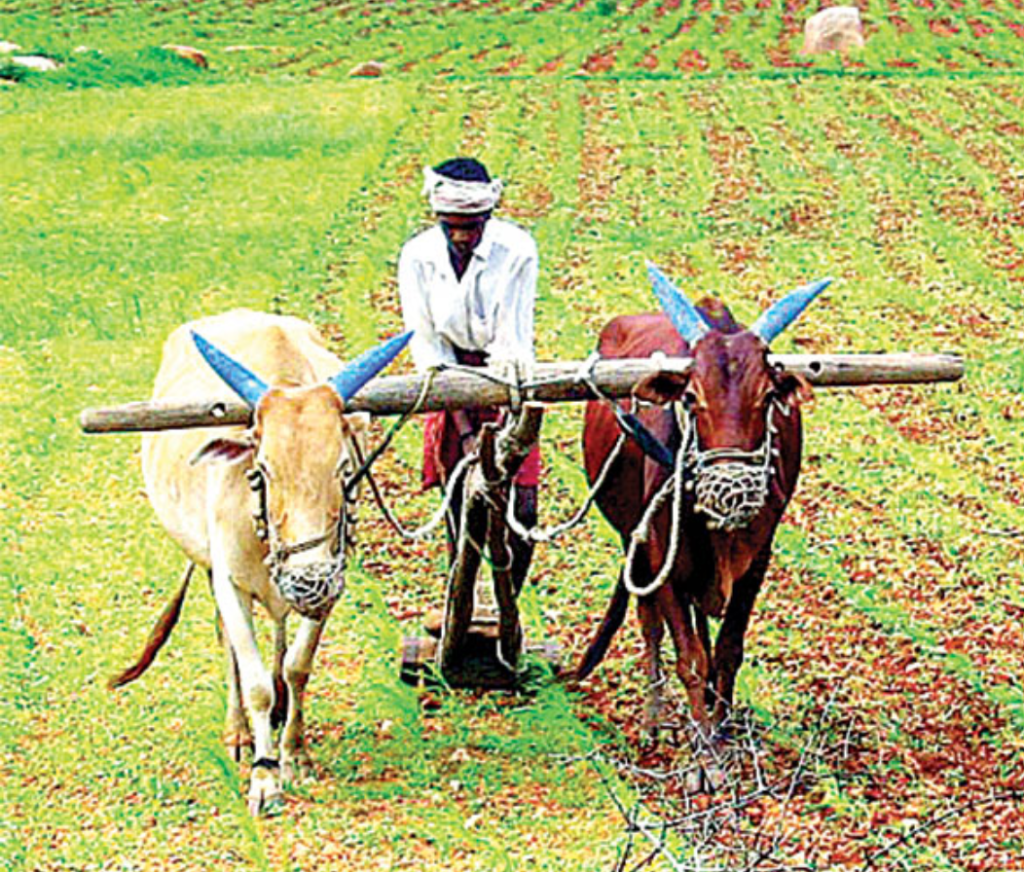
How Agri-tech startups can help farmers?

Farmers are facing a bad time in this pandemic. As per IBEF(Indian Brand Equity Foundation) more than 58% of India’s population is dependent on agriculture for livelihood. The reverse migration of migrants due to covid-19 will also lead to more people being dependent on agriculture as a source of income. The government has come up with some reforms that can help farmers. Now, the question is whether agri-tech startups become a ray of hope for farmers and make their lives better.

Farmers have long been exploited by the present system of APMC. They have earned less due to the presence of middlemen. Thus, farmers are left with fewer returns. Farmers require more than policies and this where agri-tech startups come to their rescue.

Ways in which agri-tech startups can help farmers

Removing middlemen

The major problem that farmers face is of middlemen. This increases the cost per transaction which is mostly 2-3% in case of offline transactions. However, this cost can be upto 0.5% in case of online transactions. This is the same as online stock market investments, where people used to pay a lot per transaction before startups like Zerodha came into the market. The result of this reduction in cost is more profit in the hands of farmers.

Health of Crop

India loses around 30-35% crop due to pests. Also, attacks by insects is a major threat to farmers. The recent attack by locusts have created fear among many farmers. Agri-tech apps can help a lot in such situations. They can help in monitoring the health of crops with the help of AI. One such startup is Plantix which is a Hyderabad and Berlin-based startup. It helps farmers to identify plant diseases, pests and nutrient deficiencies. This is done with the help of AI.

Increasing crop productivity with the help of data

Agri-tech startups can store data and measure the performance of crops. With the data, farmers can identify in which conditions the crop yielding is good. These apps can study the history of land and also comment about the fertility of the soil. This data can also be used by other companies who produce agri based products and can lead to newer developments.

Easy availability of finance

The farmers have faced a lot of problems because of non-availability of finance from banks. This led them to borrow money from unorganised sectors at very huge costs. With these apps, the farmers can maintain their data regarding stock sold and inventory. This will help banks in monitoring their performance and thus banks will be more willing to provide money to farmers.

Challenges that can be faced by agri-tech startups

These startups can definitely help farmers but there are some challenges in their way. Their growth depends on the following factors:

  • Support from government.
  • Faster data penetration.
  • Strong financial support from private investors.

These are some of the technical and legal challenges that these startups may face. Apart from these challenges, the acceptance of these apps by farmers is also a challenge. As many farmers are not tech savy, these startups will have to make farmers comfortable with technology. Even with these challenges, agri-tech startups are likely to change the life of farmers.

Is Rural India ready for Ed-tech?

Many schools and universities have switched to online mode for education of their students. However, one question still remains whether the economically weaker section of the society will be able to keep pace with the technology. The migrants are jobless and farmers are in distress. They used to sustain their lives on daily wages and somehow managed to educate their children. Now, with the outbreak of Covid-19 the question arises of how these kids will avail education.

There has been a huge divide in India when it comes to education. Ed-tech may be able to provide good education but it can not be afforded by everyone at least for now. Millions of students studying in government schools and colleges specially from poor economic backgrounds have lost access to education. Though people argue that online courses bridge the gap between economically stronger and weaker sections of society, the question here is of accessibility to technology. Technology has become accessible to many people but it is still not accessible to many rural parts of the country. As per National Sample Survey report on education 2017-18, less than 15% of the rural parts of India have access to the internet, whereas for urban areas the percentage is 42%. The economically weak cannot afford internet or smartphone or a computer. 

Thus the poor students are hit hard by this pandemic because they can be left behind with this sudden change in teaching pedagogy. Many poor families used to send their children to schools because they were assured that their children would get a mid-day meal. They believed that school was a safe environment for them. Many poor students do not have such facilities like their private rooms in which they can study. The houses in rural areas are not very spacious and sometimes lack basic amenities. Therefore, even if the students get access to the internet there will be another challenge of whether they will have the right environment for studies.

Impact on education of Girls

This may have an impact on the education of girls. Many poor people have a laid back attitude when it comes to education of girls. This problem of accessibility of education has further added to the problems of education of girls. This may increase the drop out rate of girls. 

Challenge of learning in English rather than their native language

The other challenge is providing them education in the language they understand. Many ed-tech platforms are not available in vernacular languages. The students should be able to connect to their teacher through these platforms. However, many government schools and colleges don’t have the infrastructure for this connectivity and building this infrastructure right now will incur huge costs. The schools will have to invest in digital infrastructure as well training of the teachers and they lack funds for these changes. 

Electricity Issue

Even if the students tackle all the above barriers there is one more barrier which comes in way of their education and that is electricity. Though the government, through the Subhagya scheme, claims that 99.9% of Indian households receive electricity, the question is about their quality. The electricity connection is poor in major parts of the country. Electricity is very crucial for digital learning because digital devices operate on it. This leads to more cost in accessing education.

What can be immediate solution for this?

For short-term the government schools should explore other options like radio and TV. Most preferably the government can work out something with radio. It can be like setting some local frequencies for an area like one frequency for Gujarat students where they can learn in their native language gujarati. This may help them in accessing education till the situation improves. The government should ensure that lack of access to internet should not lead to digital divide.

Will agri reforms solve the problem of distressed farmers?

For a long time, the farmers have been distressed. From harsh nature to corrupted humans, they have to deal a lot in their lives. The Covid-19 pandemic destroyed the supply chains and thus devastated the business of many farmers who grew fruits and vegetables. 

To provide some relief to farmers, the government came with three reforms

  • Ammendment of Essential Commodities Act 1955.
  • Enabling Contract farming.
  • Relaxing Agriculture marketing rules.

Ammendment of Essential Commodities Act 1955

There are many products that are categorised as essential commodities and therefore their prices and quantities are regulated by government. The government has now ammended this act and deregulated cereals, edible oils, oil seeds, pulses, onions and potato.

Enabling Contract Farming

This reform was passed as ‘The Farmers (Empowerment and Protection) Agreement on Price Assurance and Farm Services Ordinance, 2020’. We are all aware of how businesses hedge their risks by entering into contracts. Now, this model of contract can be used in farming also. Farmers can now enter into contracts with the buyers and get an assured amount for their crops. This will enable them an assured income.

Relaxing Agriculture marketing rules

Out the the three reforms this reform is the most appealing one. The government passed this reform as ‘The Farmers’ Produce Trade and Commerce(Promotion and Facilitation) Ordinance,2020′. This ordinance not only frees farmers from many barriers but also gives them exemption from taxes and fees. 

The existing system:

In the current system farmers had to sell their crops in mandis aka APMC (Agriculture Produce Marketing Companies). APMCs were formed by state government to ensure that farmers get fair price on their farm produce and these APMCs are governed by the APMC Act. The farm produce is brought to the market and sold through auction. Only licensed traders can operate within the market and private ones are not allowed to buy directly from the farmers. These licensed traders used to form a cartel and thus farmers had to sell them at  very lower prices. Under this system, only those traders who registered with that market can purchase from the farmers of that market. So, a trader from Gujarat will not be able to purchase from a mandi in Delhi unless he is registered there. The recent ordinance removed this barrier and thus allows farmers to sell their crops to any buyer. 

This open ups the opportunity for private players to enter the market. However, these private players will have to incur capital expenditure in form of establishing a system to procure farm produce. They will compete against the existing system of APMC and thus it is not going to be easy for the new entrants. They will have to setup a physical infrastructure (a private mandi) which enables them to weigh, sort and grade the farm produce. This mandi should also be near to the farm-gate.

Without any doubt these reforms are a step towards prosperity of farmers. However, the farmers may not get immediate benefits of these reforms. In these times, the farmers required actions that provides them with immediate benefits. This reforms will help them in long run but when it comes to fighting the current situation, the farmers are not equipped. They needed measures which could support their family in a short time. If government does not come with any measure to give farmers short term benefits than farmers have to look for themselves. In that situation, they can only hope of some good private players entering the market immediately and thus paying them to sustain themselves.

The plight of migrant workers

When the world is fighting a deadly pandemic, the migrant workers of India have a fight of their own. It is fight of their survival. The rule of this world is simple and that is, the weak gets taken. When many people were exploring their hobbies in their home during lockdown, these migrant workers were struggling to find their way back to home. They walked miles to reach their home and many lost their precious lives because of it.

For them before fighting Covid-19, the fight of their survival was important. After a long time of ignoring their problems, the government finally appears to have woken up by announcing some measures to reduce the plight of the migrant workers.

Some of the measures announced by it are as follows:

  • Rs. 3500 crore food support programme.
  • An allotment of additional funding of Rs. 40000 crore to NREGA scheme.
  • Plan to provide them with affordable housing so that they are able to come back to cities.

Apart from these measures, the measure which will definitely make a lot of effect will be direct benefit transfer to these workers. This will help them to sustain themselves and atleast fulfill their basic needs. The aforementioned measures are also effective but they won’t solve the problem these workers are facing right now. These workers are in a devastating situation and some amount of direct transfer can cure their pain.

The ripple effects of their problem

The migrant workers will reduce the spending on education of their children. They will also not travel long distances in search of some work. Their will an increase in interstate migration and a drop in long-distance inter state migration. 

Starving for food

Without a day job these migrant workers are fighting persistent hunger. Some of them, mostly children, are facing a condition called “wasting” a sign of acute malnutrition and chronic hunger. The landless families that are dependent on day job are covered under federal food security scheme and normally gets 20kg of rice and wheat every month. The government, expanded this federal food security scheme and provided extra 20kg of grains for free. However, many of them can not avail this benefit because of absence of their Aadhar data in the database. In such circumstanes, they have hopes on wages from rural jobs scheme so that they can sustain their families. However, the problem with scheme is that there are many hands and few work which makes the situation more vulnerable for them.

The problem with rural jobs scheme like NREGA is that there is work for one or two weeks and then there is nothing for two to two and a half months. This uncertainty adds to the plight of the workers. Also a unique feature of this scheme is that the workers are not paid on daily basis but according to the earthwork done by them. Suppose if a person completes earthwork equivalent to 80 cubic feet in a day then, he /she will receive a day’s wage of Rs. 202. Also, the maximum permitted number of days to work are 100. The government has not made any changes for now on this limit.

The order of Supreme Court

The Supreme Court has ordered the Central and State Government to drop all the cases against migrant workers to break lockdown and also facilitate their return home in next 15 days so that they can be provided with ration, food and jobs in the next phase.

Many actors like Sonu Sood and Amitabh Bachchan have come ahead to support these migrant workers. All they need is some support. Kindly, support them in which ever way you can.

Pradhan Mantri Jan Dhan Yojana- A step towards Financal Independence and Inclusion of the poor

For a long time, the poor population of our country was devoid from basic financial services. With Pradhan Mantri Jan Dhan Yojana(PMJDY), the government is trying to provide the basic financial services to those who were not able to avail it previously.

Major benefits under this scheme:

  • No minimum balance required.
  • Interest on deposits.
  • Accidental insurance cover upto Rs. 2,00,000.
  • Life cover of Rs. 30,000 payable on the death of the beneficiary, subject to the fulfillment of eligibility criteria.
  • Beneficiaries of government schemes will get Direct Benefit transfer in these accounts.
  • After satisfactory operation of the account for 6 months, overdraft facility is available.
  • Overdraft facility of 10,000 is available in only one account per household, preferably lady of the household.

Who is eligible?

  • Indian citizen
  • Age should be 10 years and above
  • The person should not have any bank account.

If all the above criterias are fulfilled, then the person can open an account under this scheme.

Documents Required:

  • Passport
  • Driving Licence
  • Aadhar Card
  • Voter’s Identity Card
  • Job Card issued by NREGA signed by an officer of the State Government.
  • ID card with photograph issued by Central/ State Government Departments, Statutory/ Regulatory authorities, Public Sector Undertakings, Scheduled Commercial Banks, and Public Financal Institutions; or
  • A letter with duly attested photograph of the person issued by a Gazetted Officer.

What if you don’t have a document?

Well, even if you don’t have a document you can still open a Small Account with the bank by submitting a self-attested photo and signing or giving thumb print in presence of a bank official.

To open an account Click here