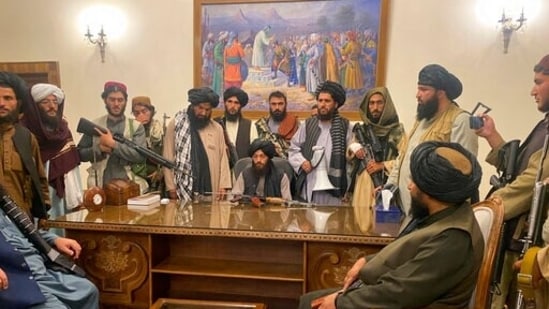
Blast at mosque in Afghan city of Kandahar, atleast seven dead

A large explosion tore through a Shi’ite mosque in the southern Afghan city of Kandahar during Friday prayers, killing at least seven people and wounding 13, officials and provincial leaders said.

Qari Saeed Khosti said authorities were collecting details of the explosion, which took place days after a suicide bomb attack claimed by Islamic State on a Shi’ite mosque in the northern city of Kunduz that killed scores of people.

Photographs posted by journalists on social media showed many people apparently dead or seriously wounded on the floor of the mosque.

Nematullah Wafa, a former member of the provincial council, said the blast occurred at the Imam Bargah mosque and caused heavy casualties but there were no immediate confirmation of the number of dead and wounded.

The blast, coming so soon after the Kunduz attack underlined the increasingly uncertain security in Afghanistan as Islamic State has stepped up operations following the Taliban victory over the Western-backed government in Kabul in August.

Written by : Ananya Kaushal

BOOK REVIEW-THE KITE RUNNER BY KHALED HOSSEINI

BY DAKSHITA NAITHANI

The Kite Runner is a remarkable and compelling novel that has become a cherished, yet another classic. It is a sweeping narrative of family, love, and friendship set against the terrible background of Afghanistan’s history during the previous three decades.

The Kite Runner is a riveting and dramatic narrative of treachery and redemption that left the readers both excited and touched. It depicts the narrative of Amir and Hassan, two best friends who are also specialists in the art of kite flying and are as close as brothers. The two young boys reside in Kabul, the capital of Afghanistan and this year they’ll try harder than ever before to win the local kite-fighting championship, a traditional Afghan pastime—which is Amir’s last hope of regaining his father’s affection. But, like the kites fighting in the skies, conflict descends on Afghanistan, turning the nation into a deadly region.

In this work, the kite was utilised as a metaphor. Amir wants to please his father by winning the game, while Hassan demonstrates his naive allegiance by being a kite runner, in the early stages of the storey. Khaled Hosseini’s words are quite solemn, like as Hassan’s dialogue “For you, a thousand times over” when Amir replied “Hassan, come back with the kite.” It expresses Hassan’s earnest commitment to their friendship. Baba is a hero to his son, treating his servant’s son as if he were his own. Amir attempts to amaze him for the most part and becomes exhausted, but Hassan makes it look easy As a result, he despises Hassan for that reason alone. “There is just one sin, only one,” Baba said of lying. That is thievery. Theft is the root of all other sins. When you kill a guy, you take away a life… you take away his wife’s right to a husband, and you take away his children’s right to a father. When you tell a falsehood, you are robbing someone of their right to know the truth. Cheating robs you of your right to justice… there is no more heinous conduct than stealing.” In the second part of the storey, he develops into an irony.

People are frequently compelled to make enormous sacrifices in battle, and the young Amir himself commits a treachery, directed at his best mate Hassan, that will plague him for the rest of his life. When Amir and his father are forced to escape Afghanistan for America, The Kite Runner has become the narrative of Amir’s search for atonement, as he seeks to atone for the wrongs he did as a child in Kabul.

The tale is fast-paced and never dull, and it brings us to a weird, intriguing, yet oddly familiar world, the world of Afghan life. Not only is the storey itself brilliantly constructed, but the book also explores the very art of storytelling. Hosseini’s writing strikes a great balance between being clear and yet powerful, and not only is the story itself brilliantly constructed, but the book also explores the very art of storytelling. Amir becomes a writer himself, and he reflects on his experiences in the tale as if his lifetime were a work of fiction.

The kite runner’s finest feature is its feeling of fate and justice, of virtue triumphing over bad in the end, despite all obstacles. Without giving anything away about the plot, Amir returns to Afghanistan and undertakes a new series of sacrifices in order to put things right. The message underlying the finale might be taken differently by various readers, but it gives a glimmer of hope for the characters’ futures, as well as possibly for war-torn Afghanistan.

Khaled Hosseini writes with a heart that recalls, and remembers well, his motherland. Though most of us think of Afghanistan as war-torn and exhausted, obsessive and confining, even terrifying, Hosseini recalls what it was like before all of that. He provides the Afghan community a face, which has the potential to be quite strong.

He doesn’t offer us a narrator that is pleasant, admirable, or even excusable, but he does give us a narrator who is real, fragile, and suffers as a result of his flaws. There is no atonement for certain sins, just pardon.

PLIGHT OF WOMEN IN AFGHANISTAN

BY DAKSHITA NAITHANI

The Afghan women, maybe more than anybody else, have dreaded the Taliban’s return. There have been many advances in women’s rights over the last 20 years, which appear to be set to erase nearly overnight.

A quick lesson from history…

The Taliban, a political and military force, is said to have started in Islamic schools in Northern Pakistan in the early 1990s. Its aim was to restore order in Afghanistan following the withdrawal of Soviet troops in 1989, as well as to impose a harsh form of Sharia law. By 1998, the organisation had seized 90% of Afghanistan’s territory.

Once in control, the organisation garnered worldwide condemnation for a slew of human-rights violations. The ban on female education above the age of ten as well as harsh limitations on day-to-day liberties, were among the stringent mores imposed on women and its influence has frequently threatened to expand beyond, to places like Pakistan, where the organisation memorably shot teenager Malala Yousafzai in 2012. Women were treated worse than at any previous period or by any other culture throughout its rule (1996–2001). They were prohibited from working, leaving the house without a male escort, seeking medical assistance from a male doctor, and being compelled to cover themselves from head to toe, including their eyes. Women who had previously worked as physicians and teachers were compelled to become beggars or even prostitutes in order to feed their families during the Taliban’s rule.

Following the 9/11 attacks, it was thought that the Taliban were harbouring Al-Qaeda soldiers, thus an US-led international operation was started against Afghanistan. As a consequence, the Taliban were deposed from power, an Afghan government was established, and soldiers occupied the country for 20 years. It destabilised several regions of the nation due to battles with US and UK forces on a regular basis, and Afghan people were continued to be assaulted. Many would agree that the political and cultural status of Afghan women had improved significantly since the Taliban’s collapse in late 2001.

The Bush administration’s acceptance of women’s rights and empowerment as rationale for its assault on the Taliban is long gone. So it was under the Barack Obama administration, when then-Secretary of State Hillary Clinton stated that the Taliban’s repudiation of al-Qaida and promise to support the Afghan constitution and safeguard women’s rights were preconditions for US discussions with them. The rejection of al-Qaida has yet to be declared openly and publicly less than 10 years later; the constitutional order and women’s rights are still subject to intra-Afghan talks and will be influenced by the changing balance of military power.

In February 2020, US-Taliban peace talks were concluded, with the US pledging a quiet departure in exchange for an end to hostilities. Afghan leaders and top military generals have warned that the government will collapse without foreign assistance. It looks like the worst has transpired only weeks before Biden’s deadline of September 11th.

The Taliban rule wreaked havoc on the institutions and the economy, which had already been ravaged by decades of conflict and the Soviet scorched-earth counterinsurgency policy.

The post-Taliban constitution of 2004 granted Afghan women a wide range of rights, and the political epoch brought social and economic progress, which greatly improved the socioeconomic situation. From a crumbling health-care system with almost no healthcare available to women during the Taliban years, the post regime built 3,135 functional facilities by 2018, giving more than 80 percent of Afghans access to a medical facility within two hours’ drive.

 Less than 10% of females were enrolled in elementary schools in 2003; by 2017, that figure had risen to 33%, while female secondary school attendance increased from 6% to 39%. As a result, 3.5 million Afghan females were enrolled in education, with 100,000 of them enrolled in academic institutions. Women’s life expectancy increased from 56 to 66 years in 2017 and maternal mortality fell from 1,100 per 100,000 live births in 2000 to 396 per 100,000 in 2015. By 2020, women made up 21% of Afghan public workers, including 16% of top management positions, and 27% of Afghan parliamentarians.

 These benefits for women have been dispersed inequitably, with women in metropolitan areas benefiting considerably more than women in rural regions. Despite formal legal empowerment, life for many rural women has not improved much since the Taliban era, notably in Pashtun regions but also among other rural minority groups. Many Afghan males are staunch conservatives. Families often let their daughters to complete a primary or secondary education before proceeding with planned marriages. The burqa is worn by the majority of Afghan women in rural regions without any pushing from the Taliban.

What is the situation for women in Afghanistan now?

Women’s rights in Afghan had arguably maintained pace with many other Western countries prior to the 1970s. Women were granted the right to vote in 1919, one year after women in the United Kingdom. In the 1950s, gender segregation was eliminated, and in the 1960s, a constitution was enacted that included women in political life. As the region became more unstable in the 1970s, these rights were steadily eroded.

Only 38% of the international humanitarian response plan for Afghanistan is financed as of August 2021. This gap might result in the loss of specialised protection services for 1.2 million children, putting them at risk of abuse, recruitment, child labour, early and forced marriages, and sex abuse. About 1.4 million females, many of whom are survivors of domestic abuse, would be left without access to safe spaces where they may receive full care.

Females, who have experienced life with rights and freedoms, are among the most exposed as a result of the Taliban’s fast progress in Afghanistan. As the Taliban capture control of Kabul, they risk losing their hard-won achievements.

Those cries for aid may be too late as the capital city falls into the clutches of Islamist rebels. There have been several stories of the Taliban going door-to-door and compiling a list of women and girls aged 12 to 45 who are then compelled to marry Taliban warriors. Women are told that they cannot leave the house without a male escort, that they cannot work or study, and that they cannot wear anything they want. Schools are also being shuttered.

There is a lot to lose for a whole generation of Afghan women who entered public life – legislators, journalists, local governors, physicians, nurses, teachers, and public administrators. While they worked alongside male colleagues and in communities that were unfamiliar with people in positions of power to help establish a truly democratic civil society, they also wanted to pave the way for future generations to follow in their footsteps.

The Taliban offers itself a broad range of possibilities by claiming that they will “protect” women’s rights under sharia but refusing to explain how women’s rights and life in Afghanistan will alter if they achieve their goals. Even if the government did not openly adopt as cruel a system for women as in the 1990s, the Taliban’s dispositions are quite likely to undermine women’s rights, impose cultural prohibitions on women, and reduce socio-economic possibilities for them.

In summary, even with this change in behaviour, the Taliban in power would almost certainly strive to curtail Afghan women’s legal rights, exacerbating their social, economic, and political circumstances. How much and in what manner, is the question.

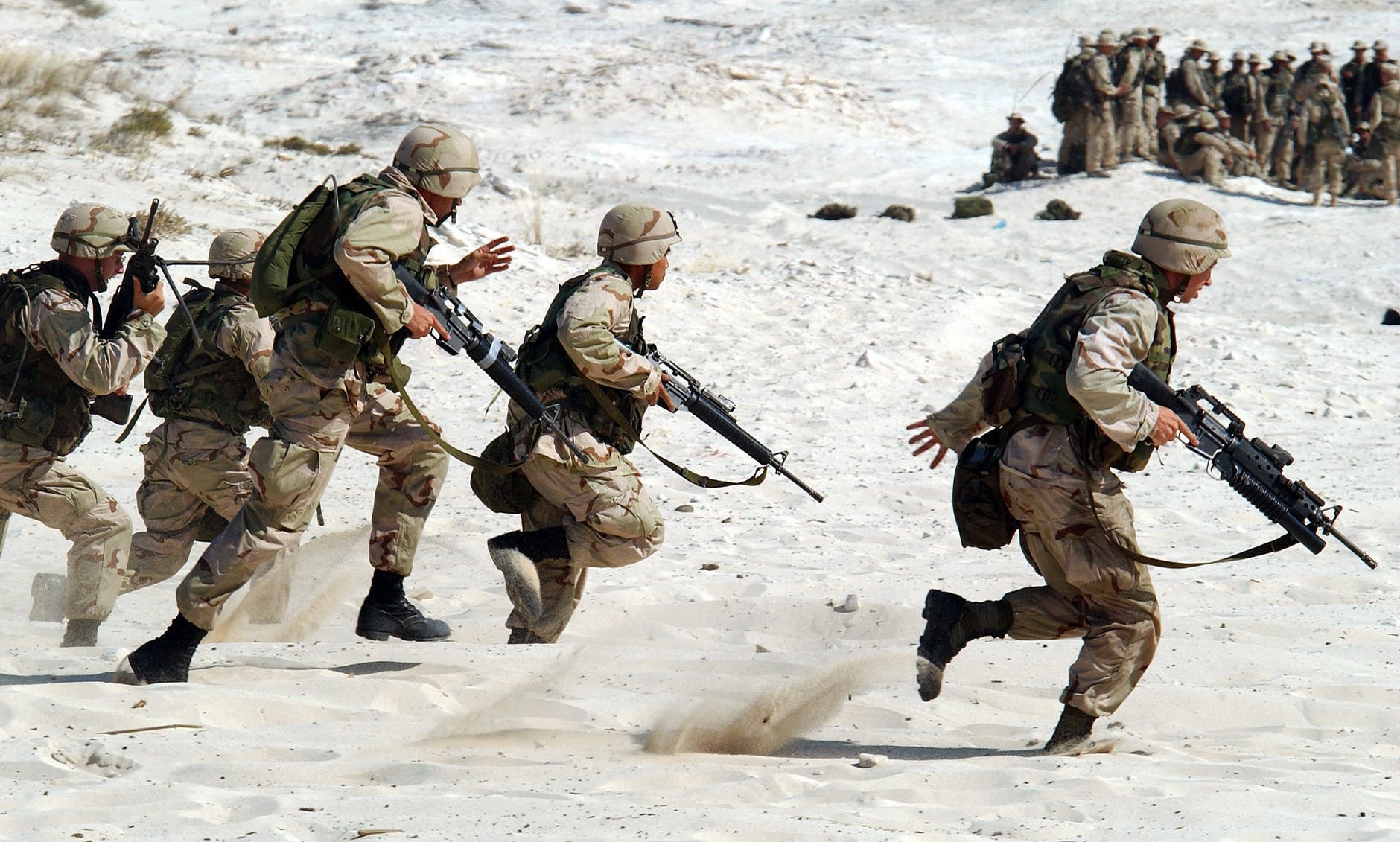
Under Taliban, Afghanistan is the location of worldwide jihad

India because of its geological area, local foes, vote based nation and culture will confront expanded radicalisation and will be the ideal objective of fear alongside the US, Europe and Australia.

US President Joe Biden has waded into controversy with dread when he asserted job well done in his August 20 discourse subsequent to assuming praise for the obliteration of al Qaeda in Afghanistan and 2011 balance of Osama canister Laden in Pakistan. The pusillanimous retreat of the US powers from Afghanistan, abandoning the two weapons and men, is out and out a servile acquiescence on account of shalwar-kameez-shoe wearing AK-47 rifle-hauling Sunni Islamic local army. The tragic part is that the Taliban didn’t convey a take out punch, the US powers just decided to flee from the war zone. The deficiency of the US validity all around the world on the guidance of its second-division partner UK with the Pakistan armed force, of the multitude of individuals, going about as a merchant in the awful arrangement with the Taliban, will work out in the coming decade with blameless people addressing the cost of fear.

While al Qaeda might not have the hierarchical design of the earlier decade in Afghanistan, the Salafi association with its philosophical sibling, Lashkar-e-Taiba in Pakistan, is particularly alive in the Af-Pak locale. So is the Islamic State of Khorasan Province. The Taliban alongside Haqqani Network and Jaish-e-Mohammed (JeM) share a similar Deobandi philosophical stage, which gets enlivened from Wahhabism. Also, the point of every one of these young men, as the hallucinating UK head of protection staff Nick Carter characterized the Taliban, is the foundation of the Islamic Caliphate and worldwide jihad.

With the Taliban presently involving 652,000 square kilometers of Afghanistan Emirates an area notwithstanding Panjshir Valley, the worldwide jihad currently has a location in Kandahar with a display area in Kabul. This second is much the same as the Islamic State catching Mosul in Iraq in 2014 and the world particularly the Yazidis Shias actually have bad dreams of those fierce days.

While the US might have washed its hands off playing the worldwide cop and offered need to sexual orientation legislative issues, Afghanistan under the Taliban will be the signal of jihad and will turn into the electrifying power for other firearm carrying non-state entertainers to take on their administrations especially in Africa and Asia. A feeble Taliban might drive duplicate the clout of its tutor Pakistan yet a solid Taliban will press for Pashtun rights far past the Durand Line and destabilize Islamabad. A comparative gradually expanding influence will likewise be found in the Middle East with increment Islamic radicalisation from one side of the planet to the other.

Despite the fact that the US and the UK accept the Taliban account that they won’t trade fear to a third country for acknowledgment and assets, Afghanistan will turn into the new dread industrial facility with in excess of 40 dread gatherings in Pakistan sending their framework for graduation with best in class US weapons, specialized gadgets, robots and helicopters. With Baloch agitators and Tehreek-e-Taliban Pakistan previously focusing on the Chinese specialists chipping away at the CPEC project, there is no Xinjiang protection strategy for Beijing as well. Shia Iran will be protected till such time it makes a move with the Taliban and permits entry to Sunni jihadists as it did previously. As Islamic gatherings are known to go through transformation, it is very clear that new psychological militant gatherings, replacements of Harkat-ul-Ansar and HUJI during the 1990s, will bring forth from Afghanistan under the watch of the Taliban. India by its topographical area, territorial enemies, vote based nation, and culture will be the initial ones to get hit. The world has abruptly lost craving for Rambo and US Seal Hollywood films.

Crisis in AFGHANISTAN

Photo by Pixabay on Pexels.com

Now that the US army has pulled out from Afghanistan after spending 20 years there, the Taliban has taken control of almost whole of the country. HISTORY REPEATS ITSELF, and here history is repeating itself for the worst. Politicians have fled from the country leaving their countrymen to die and the civilians are in a state of panic. As Taliban has taken control from all the borders leaving no exit point.

What is Taliban

Taliban is the word for ‘student’ in pashto language. Ironically they have nothing to do with knowledge, at least on humanitarian basis. They emerged from the northern part of Pakistan in the early 1990s, they basically promised peace to the peope an to impose Sharia or islamic law, once in power. In September 1995, they started their rule by capturing Herat and then all the major cities one by one and by 1998, they had captured about 90% of Afghanistan.

They became popular as they finished corruption and lawlessness. They also introduced roads. But at the same time they implemented the Sharia law and gave punishments according to it, like public execution for murderers and adultration, amputating those, who were found guilty of theft. Girls were not allowed to go to school after the age of 10, women had to wear chaadri (burqa, covering whole body) when going out and they had to be accompanied by a man all the time, men too had to grow beard. Cinema, music and television were banned. women were not allowed to work even when their husbands died. Basically all their rights were taken away.

Read more about Afghanistan: https://edupub.org/2021/07/19/afghanistan-through-khaled-hosseinis-a-thousand-spendid-suns/

Major terrorist activities by Taliban

On 11 September, 2001 the world trade center was attacked and Taliban was accused of providing safety to Al Qaeda.

Malala Yousafzai was shot by the talibani terrorists as she refused to leave school and continued to study.

pic courtesy: shutterstock

Disturbing images have been coming in from airport where people were rushing as their last hope of fleeing from there. It’s very saddening to see politicians leaving their people to die on the streets. Even though talibanis have said that the people need not be scared of anything but can we trust them?? Not really. Several videos have been surfacing on the net of dead bodies littered on roads. People are being dragged out of their houses, specifically those who have in any way helped American forces.
Residents are trying any possible way to get out of there but unfortunately the only exit left at last, the airport in kabul, has been shut off, shutting their last hope for now.

Photo by Disha Sheta on Pexels.com

Well, I hope for now at least the citizens will be safe and peace will be restored soon. The Afghanistan of 1960s-70s, where women enjoyed freedom and the country was progressing will be back. Children will play with toys and not guns, knowledge will be used as weapon and not violence.