CASTE DISCRIMINATION AND EXCLUSION IN INDIA

India is a land of diversity as there are diverse variety of people co-existing on the same land. The Indian society is remarked with the presence of different people belonging to different religions and caste, following different traditions, practicing different culture, speaking different languages, eating different kinds of food, wearing different types of clothes, etc. these diversities result in disparities among the people. These inconsistencies result in discrimination and exclusion of various individuals and groups from the society at many points of time.
The people in the society are highly discriminated on the basis of the caste that they belong to and family they are born in. just because someone is born in a family belonging to a lower caste, they are considered to be lower than the others members of the society and are discriminated. The country is dominated by Hindus and the Hindu culture divides and sub-divides the individuals in different castes; certain castes are awarded the states of supreme whereas others like Shudras are regarded as the untouchables. This discrimination was highly based upon the type of work or occupation that is performed by the members of a particular caste. Also, in the later stages, if a particular caste is considered to be lower, the members of the caste are discriminated and excluded irrespective of their occupation. This was a worse situation as it affected the development and modernization of the society as well as the individuals, and also depicts the narrow and conventional ideologies prevailing the nation.

This kind of Discrimination and the practice of untouchability are hereditary in India. The society rank the people as per the purity of their occupation and justify their action through the concept of Karma. the traditional people believed that a certain individuals belong to a particular caste as a result of their deeds of pervious birth. However, the above concept is completely illogical and unjustified, the Indian society has undergone various reforms to eliminate this discrimination. The Indian Constitution observes the application of the principle of Equality and Justice for every individual citizen of the nation. Thus, the practice of Untouchability has been nearly abolished from the society and equal recognition has been provided to all the individuals.

Yet, there is some extent of discrimination and exclusion taking place on the basis of different traits and characteristics of an individual or group. The extent of this problem is much wider and deeper than what is supposed. That’s the reason why the strict legislations and regulations have also failed to eradicate the problem completely. This discrimination and exclusion manifest itself in several forms, whether socially, economically or politically.

SOCIAL DISCRIMINATION: The society divides itself into different castes and creeds, there is a hierarchical relationship formed that grades the different castes as high or low. It depicts that people belonging to some specific castes are considered to be unholy, impure and polluting, thus, they are ordered at the lowest position in the list. The people belonging to the upper caste would consider them and even their touch to be impure. Hence, they were exploited and discriminated and often beaten if they come in contact with the people of higher caste. The social exclusion was practiced as they were excluded from the social gatherings and other social activities, they were not allowed to make use of the public properties or spaces like Wells, ponds, temples, schools, hostels, hospitals, etc. Even after the enforcement rules and legislations, they are forced to live outside of the town and village during the day time and their homes are physically separated from that of the upper caste. Along with these discriminations, they are also discriminated religiously; they are not allowed to practice their religion and culture, worship their gods or even perform their burial rituals.

ECONOMIC DISCRIMINATION: The people belonging to the lower caste commonly lack financial resources, they were not allowed to purchase their own piece of land or build their own homes. It is only after the establishment of a democratic form of government and enforcement of the Constitution that these people are allowed to own some property under their Right to Property. However, many of the Dalits are still landless labors working on the farmers of upper caste Zamindars and land owners, even the one owning a land has a small insignificant piece of it.

POLITICAL DISCRIMINATION: The lower caste people were not even recognized in the society; thus, they were definitely not allowed to participate in the political matters. Even, their constitutional right to vote is violated, as the people of the upper caste didn’t agree to share the polling booth with them. This kind of discriminatory behavior results to them losing their self-confidence and ignorance of their Self-esteem. Thus, they were not confident enough to raise any voice or represent themselves to the nation and the authorities.

Therefore, it can be concluded that even after many reforms and governmental regulations, the Indian system has miserably failed to help the lower caste earn their self-identity. We as a responsible citizens uphold discrimination as immoral and make attempts to eliminate it.
Black Man Shot by Police in Wisconsin, Protests Follow

Jacob Blake, a 29-year-old Black man was shot in the back by the Wisconsin police in the city of Kenosha. The incident happened on Sunday, while he was walking towards his car and was shot several times in the back. His three young sons witnessed the shooting from the car and were screaming after seeing their father being shot. Video footage of the shooting was shared on social media, which was taken from across the street, it shows the father-of-three leaning into the car. An officer is seen grabbing his shirt after which seven shots were heard. It is unclear what had happened before the video recording begun. He survived the shooting and had a surgery. His father had told the newspapers that his son is paralyzed but the doctors do not know whether its permanent.

At night, groups of protesters defying a dusk-to-dawn curfew gathered outside the courthouse. They confronted law enforcement officers in riot gear outside the county courthouse which was blocks away from where Jacob Blake was shot. They were shouting and tossing water bottles after which they were responded with tear gas and pepper balls.

Despite the curfew, demonstrations erupted on Sunday night, which lead the authorities to close public buildings. Governor Tony Evers have ordered National Guard troops to be deployed in the city to maintain order. He has condemned the incident and “the excessive use of force” and called for a special legislative session next week in order to reconsider police reforms. Protestors marched on the streets from Monday night into Tuesday morning. Many commercial and government buildings and vehicles were set ablaze. The disturbances and protests had slowed down by early morning. According to a protestor, the police used tear gas, rubber bullets and smoke bombs to disperse the crowd. Protestors were marching peacefully but a small group suddenly got violent and started setting fires and breaking glass. The instigators who were seen were reported to be white. After the demonstrations ended, the police and demonstrators had worked together to clean the debris.

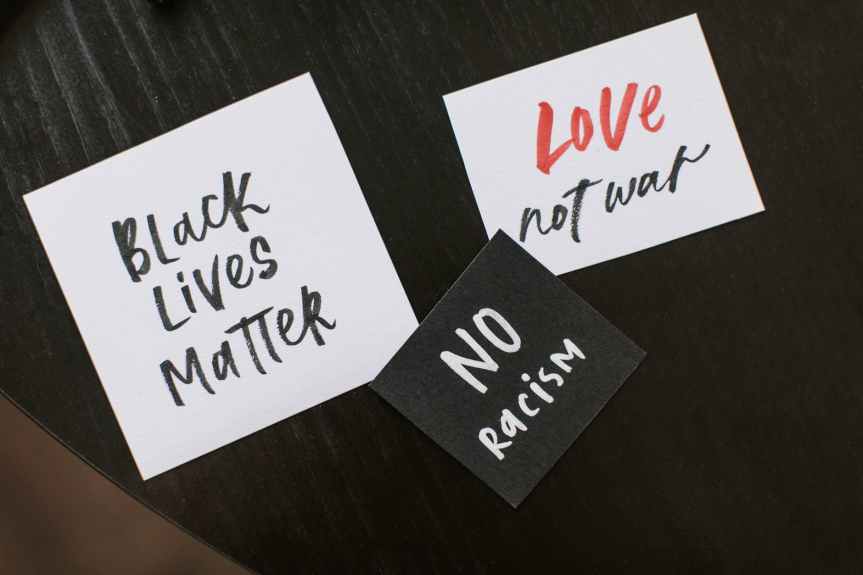
The incident occurred three months after the death of George Floyd on May 25. The Black man was pinned to the street under the knee of a white police officer in Minneapolis. The incident sparked protests, against police brutality and racism within the U.S. criminal justice system, across the country and abroad.

Black Lives Matter activists have demanded the arrest of the officers involved in it. Attorney Crump, who also has also represented Floyd’s family, said in a statement, “Blake had been trying to de-escalate a domestic incident when the officers first shot him with a stun gun. As he was walking away to check on his children, police fired their weapons several times into his back at point-blank range.”

Sunday’s shooting had been termed a “domestic incident’ which the police responded to. According to a police statement, they had immediately taken him to the hospital. Authorities have given no further explanation of the details of the incident or what had led to the shooting. The officers who were involved in the shooting have been placed on administrative leave. The Wisconsin Department of Justice said on Monday that the investigation is underway.

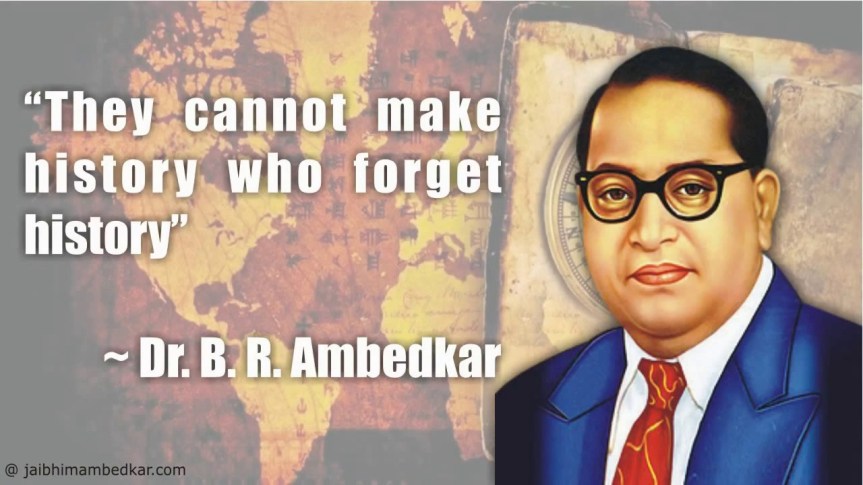
B. R. Ambedkar

Bhimrao Ramji Ambedkar was an Indian economist, politician and social reformer. He was also known as Babasaheb Ambedkar. He campaigned against social discrimination against the lower castes or Dalits of the country. Completing his doctorate from Columbia University and The London School of Economics, he gained reputation as a scholar for his research in economics, law and political science.

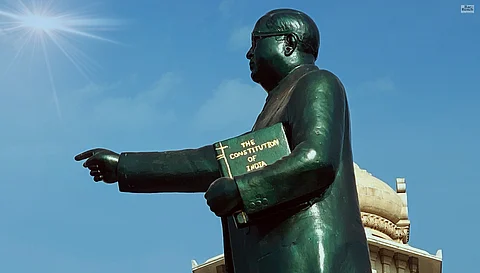
In the early phases of his career, he was an economist, professor and lawyer. Towards the later phases, he was actively involved in campaigns for India’s independence. He published journals and advocated for political and social rights for Dalits. He made a significant contribution to the establishment of the state of India. He was the first Minister of Law and Justice of India and the chief architect of the Constitution of India.

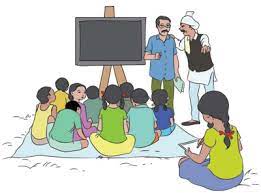
He had a Marathi family background and was from the town of Ambadawe in Ratnagiri district of modern-day Maharashtra. Ambedkar was born into a poor Mahar (Dalit caste), who were treated as untouchables and faced a lot of socio-economic discrimination. Although he attended school, Ambedkar and other untouchable children were segregated from the rest of the children and given little attention by teachers. They were not even allowed to sit inside the class. He had to sit on a gunny sack which he took home after school. When they needed to drink water, someone from a higher caste had to pour that water from a height as they were not allowed to touch the water vessel. It was usually the peon who did this for him and on days when the peon was not available, he had to go without water. He had later described this as “No peon, No water” in one of his writings.

During British rule, Ambedkar’s effort for the political representation of the oppressed untouchables of India bore fruit in the 1920s. The colonial state was forced to include two members from among the Dalits in the Round Table Conference in 1930. This eventually led to the framing of the Government of India Act, 1935.

From 1927, Ambedkar launched active movements against untouchability. He began public movements and marches to open up public drinking water resources for all. He led a satyagraha in Mahad to fight for the right of the untouchable community to draw water from the main water tank of the town. He also began a struggle for the right of Dalits to enter Hindu temples. In a conference in1927, Ambedkar publicly condemned the Hindu text Manusmriti (Laws of Manu), for ideologically justifying caste discrimination and “untouchability”. He ceremonially burned copies of the ancient text. On 25th December 1927, he led thousands of followers to burn copies of Manusmrti. Since then 25 December is celebrated as Manusmriti Dahan Din (Manusmriti Burning Day) by Ambedkarites and Dalits.

In 1956, he converted to Buddhism, initiating mass conversions of Dalits which eventually led to the Dalit-Buddhist movement.

A few days after completing his final manuscript ‘The Buddha and His Dhamma’, he died in his sleep on 6 December 1956 at his home in Delhi.

The Casteless Collective

 The Casteless Collective is a Chennai-based Tamil indie band. The band currently consists of nineteen members including Tenma (leader and music producer), singers Muthu, Bala Chandar, Isaivani, Arivu and Chellamuthu, Dharani (Dholak), Sarath (Satti), Gautham (Katta molam), Nandan (Parai and Tavil), Manu Krishnan (drums) and Sahib Singh (guitar).

 Formed in the year 2017, the band was started by Pa. Ranjith and Tamil Indie Musician and Composer, Tenma, founder of Madras Records. The band’s name originated from the phrase ‘Jaathi Illadha Tamizhargal’ translating to Casteless Tamils which was coined by the 19th-century anti-caste activist C. Iyothee Thass. He was a social activist who urged Dalits across Tamil Nadu to register themselves as Tamils without caste in the first census in 1871. The band makes music to protest and rebel against the age-old caste system resulting in caste-based discrimination and violence. Their songs are political and speak against the inequalities of the caste system and the oppression of women and minorities in Tamil Nadu.

The leader and music producer of the band, Tenma was preparing to put together a group of indie musical artists for the Madras Indie Collective in 2017 when he got the idea from Pa. Ranjith, of training Gaana musicians for it. They prepared auditions for over 150 applicants and looked for artists who had a socio-political motivation in their lives as well as musical strengths. A mixture of Gaana, hip-hop, rap and folk musicians were brought together. About 19 singers were selected for the initial ensemble.

It has broken caste boundaries by engaging with the current social and political issues in the state. Instead of making music for entertainment alone the band has tried to eradicate discrimination through its music. Their main intention is “to create political awareness through music and art” because “art which makes us question discomfort is beautiful”. The band is a collective without caste which aims to eradicate caste-based and religious discrimination through music.

Jai Bhim Anthem (2018), Quota (2018), Magizhchi (2018), Vada Chennai (2018), Thalaiva (2019), Dabba Dabba (2019) are popular singles of the band.

The Casteless Collective had their very first concert in January 2018 in Chennai. It was their first performance in front of more than 4000 people. The 19 members including one female artist, all dressed in identical grey suits gave a wonderful performance. Their cries of “Jai Bhim!” were greeted with thunderous applause. They had not expected such a big enthusiastic crowd and it was a very emotional experience for all of them. This was also because most of the artists came from rural backgrounds and they had mostly performed in one or two funeral processions. The instrumentalists who played katte and chatti were really overwhelmed as these instruments were restricted to only funeral events. 

 It was not a concert that had people head-banging or jumping to the beat of drums. Instead, the audience listened to the songs with rapt attention. They broke into applause and shouts of agreement whenever the lyrics hit home. The “Bhim Rap”, a song on BR Ambedkar’s life and work, was met with a very enthusiastic reception. So was the rap song that condemned honour killings in the name of caste pride which was a major social evil in Tamil Nadu. Another popular track is “Madrasin Magizhchi” which speaks about the small joys of living in Madras, despite being poor.

They say that people often ask them about the song lyrics and the stories about their experiences. This has led to the beginning of a conversation around caste. The band believes that social problems cannot be solved unless they are spoken about. Without discussions around caste-based discrimination, one cannot attempt to eradicate this evil of society. Their songs have already fulfilled their aim and created a stir among people. Here’s hoping that the band achieves greater heights and reaches out to everyone out there who has been a victim of caste discrimination and that it becomes successful in eradicating the malpractices of the system.

Discrimination

Discrimination is the unfair or prejudicial treatment of people and groups based on characteristics such as race, gender, age or sexual orientation. That’s the simple answer. But explaining why it happens is more complicated.

The human brain naturally puts things in categories to make sense of the world. Very young children quickly learn the difference between boys and girls, for instance. But the values we place on different categories are learned – from our parents, our peers and the observations we make about how the world works. Often, discrimination stems from fear and misunderstanding.

Laws are in place to protect people from discrimination in housing and employment.

  • The Fair Housing Act prohibits discrimination in the sale, rental and financing of dwellings on the basis of race, color, national origin, religion, sex, familial status and disability.
  • The Civil Rights Act, the Age Discrimination in Employment Act, and the Americans with Disabilities Act prohibit discrimination in employment on the basis of race, color, sex, ethnic origin, age and disabilities. But Unfortunately, discrimination still occurs. 

Dealing with discrimination Finding healthy ways to deal with discrimination is important, for your physical health and your mental well-being.

Focus on your strengths. Focusing on your core values, beliefs and perceived strengths can motivate people to succeed, and may even buffer the negative effects of bias. Overcoming hardship can also make people more resilient and better able to face future challenges.

Seek support systems. One problem with discrimination is that people can internalize others’ negative beliefs, even when they’re false. You may start to believe you’re not good enough. But family and friends can remind you of your worth and help you reframe those faulty beliefs.

Family and friends can also help counteract the toll that microagressions and other examples of daily discrimination can take. In a world that regularly invalidates your experiences and feelings, members of your support network can reassure you that you’re not imagining those experiences of discrimination. Still, it’s sometimes painful to talk about discrimination. It can be helpful to ask friends and family how they handle such events.

Get involved. Support doesn’t have to come from people in your family or circle of friends. You can get involved with like-minded groups and organizations, whether locally or online. It can help to know there are other people who have had similar experiences to yours. And connecting with those people might help you figure out how to address situations and respond to experiences of discrimination in ways you haven’t thought of.

Help yourself think clearly. Being the target of discrimination can stir up a lot of strong emotions including anger, sadness and embarrassment. Such experiences often trigger a physiological response, too; they can increase your blood pressure, heart rate and body temperature.

Try to check in with your body before reacting. Slow your breathing or use other relaxation exercises to calm your body’s stress response. Then you’ll be able to think more clearly about how you want to respond.

Don’t dwell. When you’ve experienced discrimination, it can be really hard to just shake it off. People often get stuck on episodes of discrimination, in part because they’re not sure how to handle those experiences. You might want to speak out or complain, but you’re not sure how to go about it, or are afraid of the backlash. So instead, you end up ruminating, or thinking over and over about what you should have done.

But rumination can make things worse. Researchers have found that while traumatic experiences are a significant cause of anxiety and depression, people who ruminate, or dwell on, those negative thoughts and experiences report more stress and anxiety.

In a calmer moment, it might be helpful to talk over the ways you can cope with similar experiences in the future. Try to come up with a plan for how you might respond or what you could do differently next time. Once you’ve determined how to respond, try to leave the incident behind you as you go on with your day.

Seek professional help.  Discrimination is difficult to deal with, and is often associated with symptoms of depression. Psychologists are experts in helping people manage symptoms of stress and depression, and can help you find healthy ways to cope.

Role of perception in the discrimination against people with COVID-19

I am not a virus.' How this artist is illustrating coronavirus ...

The on-going COVID-19 pandemic crisis has had severe implications on the economic and social landscapes of the world. It has caused a substantial amount of deaths and has disrupted the workings of the entire world. This has impacted the way we perceive our world and everyday lives. The pandemic has also brought out a whole range of attitudes, prejudices, beliefs, perceptions and stereotypes. The pandemic is extremely infectious and is dangerously quick in spreading. In addition to this, it is a new virus and no vaccine or medical procedure guarantees recovery. This is critical as people are fearful and uncertain about their own safety around corona patients or otherwise. A general perception has been formed and shared amongst several people against people suffering from COVID-19. This has caused several instances of discriminatory behaviour against these patients. There could be many factors in play that might have influenced the perceptions of the masses. Perceptions are instrumental to personal characteristics of the individual as well as the target. The personal characteristics include personality, past experiences, interests, motives and expectations. The target factors include novelty, motion, sounds, size, background, proximity and similarity. The role of perception in the discriminatory behaviour exhibited by the masses can be analysed using these factors as well as common errors in perception.

The perceptual process begins with the environment and leads to perception of a stimulus which eventually results in a behavioural reaction. The uncertainty around infections and their cures causes fear. People do not have the most rational responses under an environment where they are fearful. They associate this fear to “others” in order to reduce the uncertainty. This phenomenon is likely to be responsible for the mass perception developed with regards to corona patients. Consequently, a stigma has been associated with these patients. This causes negative association towards the patients or anyone who is perceived to be a patient. Discriminatory behaviour, stereotyping, differential treatment are all reactions to this stigma. Even people who are not infected with the virus and are merely exhibiting some common symptoms such as coughing are being treated unfairly. There have been many instances where people thought that an individual was infected and instead of aiding, they reacted in an unpleasant manner.

COVID-19 originated in Wuhan, China. This fact caused people to form negative perceptions towards the Chinese. In Italy, the rampant pandemic spread was initiated due to two carrier of the virus who were from China. There were several cases of discrimination against the Chinese people living in many countries across the world. They were shunned at and treated unfairly. However, the main question is if this is due to people inherently being racist or if there is some other explanation. The psychological factors should not be ignored in this circumstance as in a pandemic situation, emotional responses are bound to occur. It is important to realize that the perception formed by the masses needs to be exposed to objective reality. The government of India has tried to do the same by using social media, mass media as well as caller ringtones to disseminate information about discrimination of corona patients. They have clearly said that corona patients are not the enemy, corona is. This shows the importance of mass perception as it can be dangerous if it is formed based on irrational and untrue facts. Stigma can undermine social cohesion and prompt possible social isolation of groups, which might contribute to a situation where the virus is more, not less, likely to spread. This can result in more severe health problems and difficulties controlling a disease outbreak.

Past experiences of the people also play an important role in forming their perception. Viruses are known to be extremely dangerous and have caused significant death. When exposed to this fact, people are much more fearful of the pandemic. This causes chaos and confusion. Under this psychological framework, errors in perception are bound to happen. Assigning group guilt, isolating and blaming groups are some of the behavioural responses made under the influence of this erroneous perception. This has severe implications. Such negative perception associated to patients and potential patients drive people to hide the illness just to avoid discrimination. This reduces testing and increases the potential spread of the virus. It prevents them from seeking appropriate medical assistance and adopting essential healthy behaviours.

The Horn effect is a perceptual error which resembles the current situation quite appropriately. The horn effect is when an individual is completely judged and treated based on his negative aspect. The corona patients are perceived as “negative” or “bad” or “dangerous” based purely on the fact that have been infected by the virus. It is not considered that they are fighting for their lives and they are in the situation that they are in just because they were unlucky. Another perceptual error is stereotyping which is currently rampant.

Chinese and Asian races are being discriminated all over the world. This is purely due to the negative perception formed which identifies Chinese and Asian races as “dangerous” and blames them for the misery caused in the world. This stigma and perception associated with patients and races is extremely serious as it escalates and gets out of hand quickly. It starts with differential treatment and ends with extreme racism and associating group guilt to individuals.

Negative perception has also caused segregation of people. This further facilitates stigmatisation and normalises routine differential behaviours. Stigmatization causes resentment. As the number of patients rise, if the perception does not change there could be dire consequences. Just like HIV and leprosy patients demanded rights and concessions, COVID-19 patients could walk the same path. Protests and riots are potential consequences. This was seen in Indore, where a group of patients protested and attacked a peaceful contingent of doctors who just wanted to provide medical assistance. However, due to constant discrimination, resentment exceeded the level of tolerance and violent demonstrations were made. When the importance of mass perception as well as the consequences are realised, precise steps to avoid the development of negative perception can be taken.

Erroneous perception has not only facilitated stigmatization towards covid-19 patients but also influenced behaviour to anyone and anything perceived to be associated to covid-19. There have been numerous instances where healthcare workers and police officers have been subjected to differential treatment. The famous beer named Corona had been boycotted. A rumour which said that covid-19 spread rampantly due to the 5G towers caused people to try and burn down these towers. Normally these reactions seem extremely irrational and could be cases of blatant ignorance. However, in this case it could be explained by the mass perception of stigma and hatred towards anything associated to the pandemic. There is no doubt that perception plays a significant role in the discriminatory behaviours exhibited by several people against covid-19 patients.

It is important to inculcate the right attitude in people towards the pandemic situation as it will strengthen the fight against coronavirus. In order to accomplish this, the perception towards the same must be modified. Misconceptions, rumours and misinformation are contributing to stigma and discrimination which hamper response efforts. Correcting

misconceptions, at the same time as acknowledging that people’s feelings and subsequent behaviour are very real, even if the underlying assumption is false is vital. Another way to modify perception could be to promote the importance of prevention, lifesaving actions, early screening and treatment. Collective solidarity and global cooperation are needed to prevent further transmission and alleviate the concerns of communities. Share sympathetic narratives, or stories that humanize the experiences and struggles of individuals or groups affected by the new coronavirus. Communicating support and encouragement for those who are on the frontlines of response to this outbreak (health care workers, volunteers, community leaders etc) is necessary. Facts and not fear will stop the spread of novel coronavirus (COVID-19).

Objectivity is facilitated when accurate facts are revealed, and hoaxes and myths are debunked. We need to Share facts and accurate information about the disease. Challenging myth and stereotype is another important step. Choose words carefully and precisely when addressing anything related to the pandemic. Words have enormous power and influential abilities. The way we communicate can affect the attitudes of others. The government leaders need to use the power of speech to influence and steer the perception of the masses in t a direction where it is productive and does not hamper the ongoing fight against the pandemic. The mass media should ensure that accurate information and facts are being disseminated to the masses. People should be enlightened to the fact that solidarity and unity is the way to go forward and not discriminatory behaviour. These steps could be critical as they could influence perception and bring about change in attitudes and behaviours in the society.

“In a time of universal deceit – telling the truth is a revolutionary act”

George orwell