8 Amazing places to visit in India

India – a land of diverse landscape, language and culture, offers a variety of destinations for travellers to add to their bucket list. Whether its heavenly mountains, historical forts or peaceful beaches, every nook and corner has something beautiful to offer. These exotic places will surely take your breath away.

Dal Lake, Kashmir

Being one of the most prominent lakes in India, Dal Lake is also known as Srinagar’s Jewel. Pristine clear water with the backdrop of heavenly hills and mountains is sure to take your breath away. A Shikara ride in the Dal Lake is a must to explore in Kashmir. Shikaras are beautiful houseboats which are used to travel across the lake. The lake also has a travelling market. With an old world charm, the lake gives you a breathtaking experience.

The Rann of Kutch, gujarat
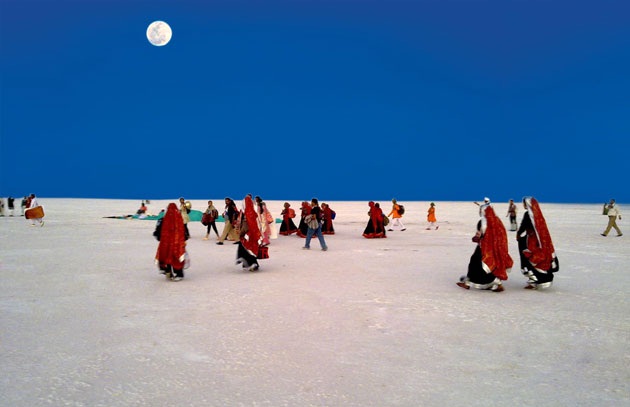
The Rann of Kutch is a salt marsh in the Thar desert located in the border between India and Pakistan. It is one of the largest salt deserts in the world. It is a really popular exotic travel location. The Rann festival is the best time to visit when the region celebrates with crafts, handwork, cultural and musical performances. It is famous for its colourful and intricate crafts. On a full moon night, the sparkling salt desert looks spectacular and is a treat to the eyes.

Andaman and Nicobar Islands
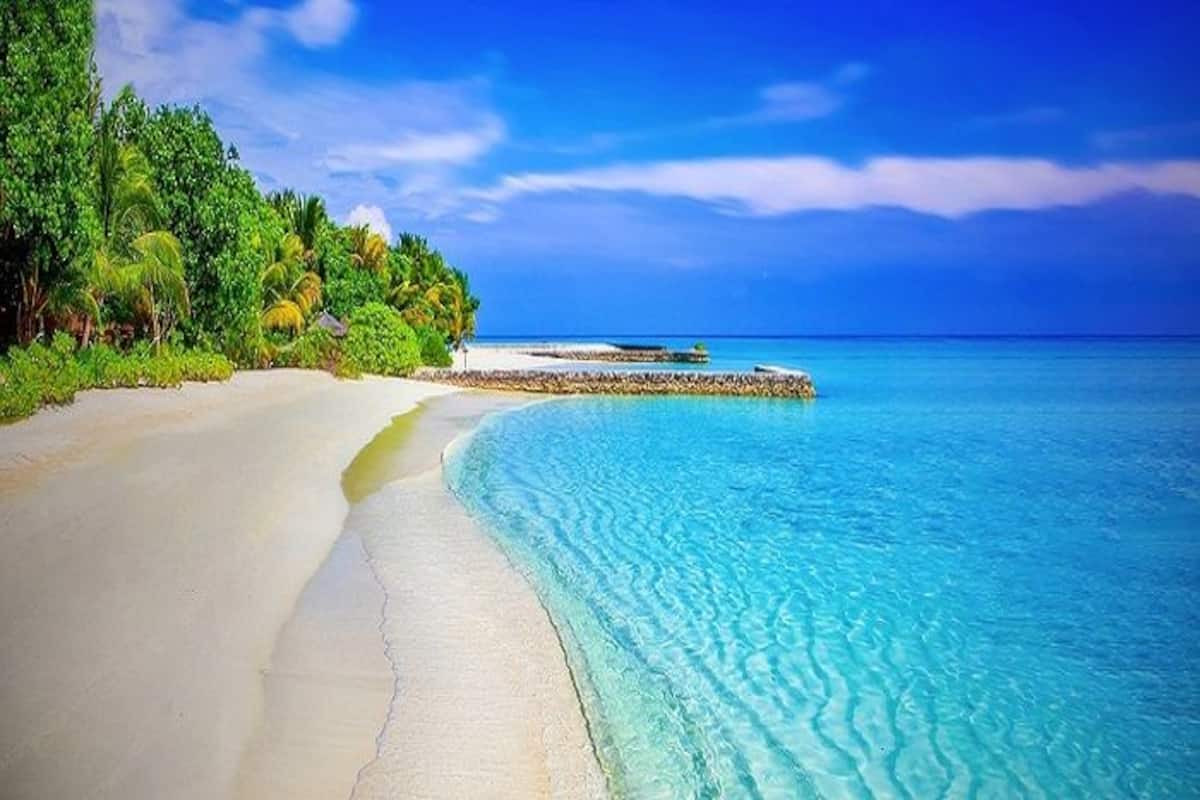
The Andaman Islands is an Indian archipelago of about 300 islands scattered in the Bay of Bengal. Its palm lined beaches and coral reefs is sure to give you a wonderful experience. The islands are known for its popular tourist sights like Havelock Island, Neill Island, and Wilson Island. You can also enjoy exotic sports like Parasailing, Snorkeling, and Scuba Diving.

Pangong Lake, Ladakh
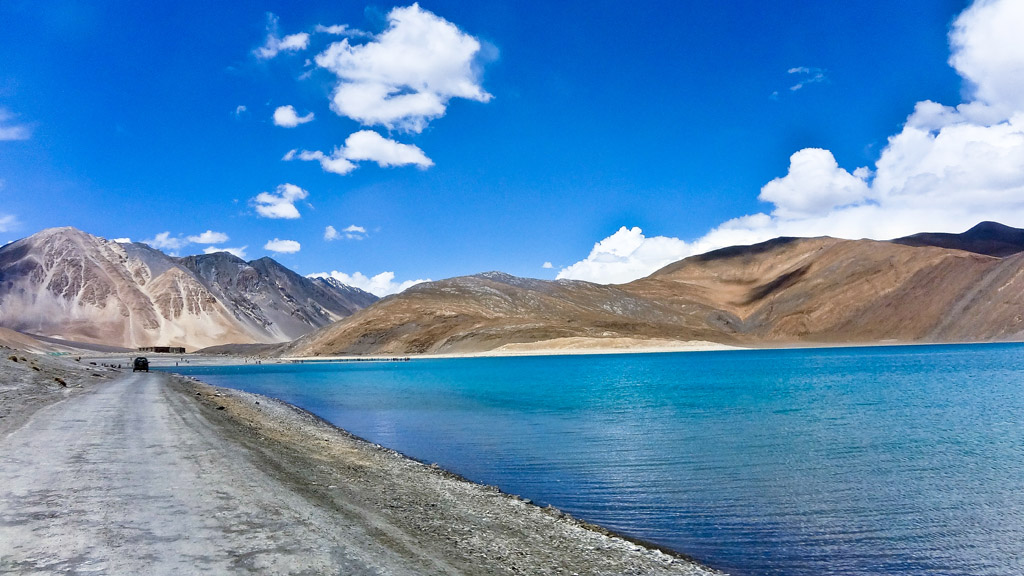
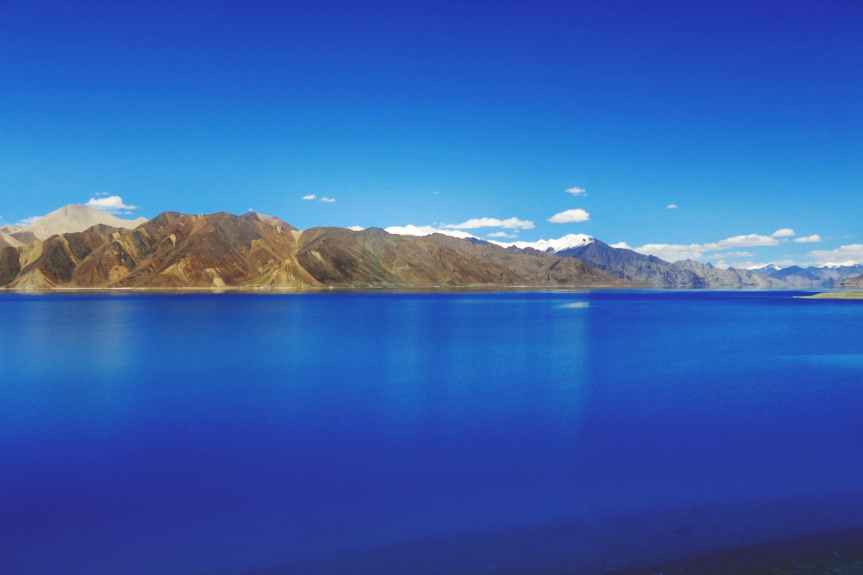
Also known as Pangong Tso, it is a beautiful lake situated in the Himalayas. The beautiful lake situated on a height of 4350 m, attracts tourists from all over the world. The alluring blue waters is a sight to soothe sore eyes. The best time to visit the lake is summer because in winter the whole lake freezes into ice. It is also a great place for bird lovers as it is home to different birds like cranes, seagulls and rodents.

Backwaters, Kerala

The Kerala backwaters are a network of lagoons and lakes on the Arabian sea coast. With its rivers and inlets it is connected with almost 900 kilometres of waterways. The picturesque site with its lush green landscapes and diverse wildlife is a popular tourist attraction of South India. You can visit the backwaters by boat or shikara from Alleppey. Watching the sunset from a shikara in the midst of green landscapes and serene waters will give an experience of a lifetime.

Valley of flowers, Uttarakhand

Valley of Flowers is an Indian national park, located in North Chamoli and Pithoragarh in Uttarakhand. With rare and exotic Himalayan flora it is located in the dense forests close to the Pushpawati river. The beautiful meadows with blossoms of Alpine flowers is a treat to any nature lover. The best time to go on a trek to the Valley of Flowers is March to October as during this time the valley is also known to change colours due to its colourful blossoms.

Loktak Lake, Manipur

Loktak is the largest freshwater lake in Northeastern India. It is mostly known for the unique sight of floating phumdis which are heterogeneous mass of soil and organic matter at various stages of decomposition. It is the most popular tourist attraction around Imphal. Being almost like a miniature inland sea, the lake mesmerises all visitors.

Living root bridge, Meghalaya

Located in the Khasi and Jaintia hills, the suspended root bridge is made up of a species of the Indian rubber tree with a very strong root system. These are estimated to be around 500 years old and attract tourists all around the year. There are dozens of these root bridges near Cherrapunjee. Since they are located in very remote places you may need a guide to reach there. The spectacular bridges in the Meghalayan villages will be a treat to any traveller.

So happy travelling!

Question- what is the importance of birds?

The data of the recently released State of India Birds 2020 report is extremely shocking.

Wherever you live in the country, from dense forest to desert or any other city to streets. Possibilities are you wake up in the morning and the very first thing you hear is birds’ chirping. There are a number of countries around the world where there is a vast population of birds like ours. Bird watchers have recorded 867 species of sightings so far, which includes locals as well as expatriates.

The truth is that for decades our subcontinent has welcomed migratory birds from places that are miles away like Siberia. In the Lakkundi village near Hampi, relief carvings of migratory birds can be found on the walls of the Chalukya temple which is thousands of years old. It includes goose, cranes and flamingos.

If seen, birds are remarkably acknowledged in our culture. Coming to mythology, we do not even need to be reminded which birds are the vehicle mount of the Gods or Goddesses, or which birds had impressions in the emblems of our royalty. Whether it is music or art, we can find its presence symbolically.
Every child remembers stories of birds, must remember the story of a clever crow, birds are in every story of Indians. Even India, itself was known as ‘The Golden Bird.’

However, the data of the recently released State of India Birds 2020 report is extremely shocking.  This is the detailed (first of its kind) assessment of the conservation status of birds in abundance in the country. Tens of organizations like NCF, NCBS and A Tree have come together to collect bird data in India. They have reposed great faith in the 1 crore observations of 15,500 common people who have recorded their data on the easy-to-use ‘e Bird’ platform.

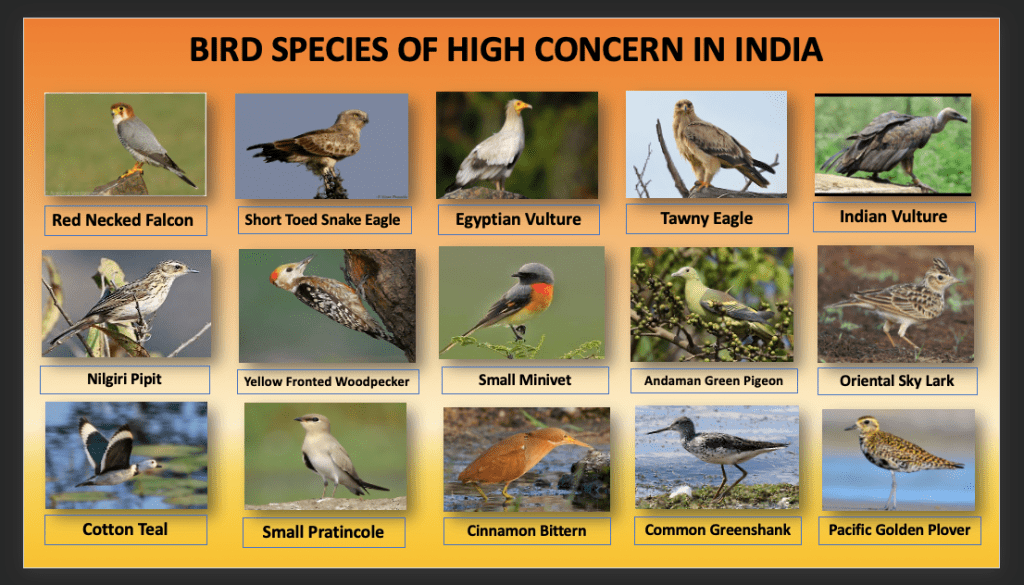
According to the data, out of 867 species, 101 are highly in need of preservation, 319 in general and 442 the least. Long-term trends were considered for 261 species, of which 52 per cent, more than half, have declined since 2000 while 22 per cent of these numbers have fallen significantly. Annual trends were read for 146 species and 80 per cent of them are declining and 50 per cent are at alarming levels. This situation requires immediate attention.

We did not know the objective of our birds’ lives until the arrival of this report. We knew about selected species, such as peacock. Its situation is quite better and the number is increasing well and about Gauraiya (Sparrow), which environmentalists thought was coming to an end.

Simply because their presence in urban areas was decreasing, while in reality, their numbers are stable. This report has now revealed that migratory birds such as the Golden Plover, prey birds such as vultures and Habitat specialists such as Forest Wagtail are in great danger.
But why should we worry about them? What is the importance of these birds?

Birds play an important role in our ecosystem.  They are pollinators for other species, seed dispersers, scavengers and also sustenance for other organisms. Birds can become part of the local economy, as several people like to watch them. A growing number of bird watchers in the country have promoted ecotourism.

The truth is that human health is closely related to the well being of birds and their number is threatening. There is an English metaphor, ‘Canary in the Coal Mine’ i.e. a canary bird in a coal mine. In the old days, while going to the mine, labourers used to carry the canary bird in the mines. If the levels of methane or carbon dioxide in the mine were high and the gas reached a dangerous level, the bird would die and workers used to come out of the mine safely.

The State of India Birds Report 2020 can alert us just like this canary bird. What can we do to save our birds? We need to observe, understand and protect them. Many of you would be a bird lover or chances are that birds give you immense pleasure.  In a way, to pay their debts, you should allow a part of your garden to remain untouched so that birds can reach there and make their nest. Many species of Munia (Lonchura), Bulbul and Sunbird are flourishing around us. Try to keep water for birds in different corners at different altitudes of the garden.

Many communities in India are doing a lot for the conservation of birds, sometimes even at the cost of their livelihood. There is a special connection between the villagers in Kokrebellur, Karnataka, and the two types of bird species, the spot build pelican and the painted stork. Villagers in Pangati, Nagaland, have vowed not to kill Amur Phalkan in the past. These birds pass through that area in large numbers.

Recently, the Supreme Court has taken the initiative to direct the Government of Rajasthan to save the endangered Sarang (Herons). It’s lesser-known fact that Sarang was in the race to become our national bird while picking peacocks. Such examples can be found everywhere. Birds fill our sights with grandeur, lends peace to our souls. As a nation, we should think about what we can do to preserve India’s incredible diversity of birds. For them as well as for us.