
INDIAN CULTURE

INTRODUCTION :
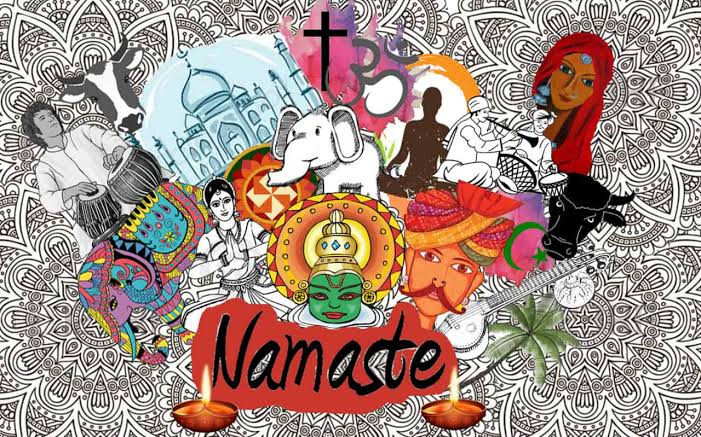
India is a country that gloats of a rich culture. The way of life of India alludes to an assortment of minor exceptional societies. The way of life of India involves clothing, celebrations, dialects, religions, music, dance, design, food, and workmanship in India. Generally vital, Indian culture has been affected by a few unfamiliar societies since its commencement. Additionally, the historical backdrop of India’s way of life is a few centuries old.
OBJECTIVES OF INDIAN CULTURE :
- Culture is the manner in which we treat others, how delicate we react to things, our comprehension of qualities, ethics, standards and convictions.
- Individuals of more established ages give their societies and convictions to their next ages.
- Subsequently, every kid here treats others well, as he definitely thought about the way of life of guardians and grandparents.
- Here we can see culture in everything like dance, design, imaginativeness, music, conduct, accepted practices, food, engineering, dressing sense and so on
- India is a tremendous mixture with various convictions and practices that brought forth various societies here.
- The starting points of different religions here are antiquated by around 5,000 years, and it is accepted that Hinduism began from the Vedas.
- All the Hindu sacred writings are written in the hallowed Sanskrit language; it is likewise accepted that Jainism has old starting points and existed in the Indus Valley.
- Buddhism is another religion that started in the nation following the lessons of Lord Gautama Buddha.
- Christianity was subsequently brought here by French and British individuals who controlled for quite a while for just about two centuries.
- Along these lines, different religions started in old occasions or were some way or another brought into this country.
- Nonetheless, individuals of each religion live here in harmony without influencing their customs and convictions.
- The variety of the ages has traveled every which way, however nobody was so amazing as to change the impact of our genuine culture.
- The way of life of the more youthful age is as yet associated with the more seasoned ages through the umbilical string.
- Our ethnic culture consistently shows us how to act well, regard seniors, care for defenseless individuals and still assistance penniless and destitute individuals.
- It is our strict culture to keep quick, love, offer Ganga water, welcome the sun, contact the feet of the seniors in the family, do yoga and contemplation day by day, give food and water to the ravenous and handicapped.
CONCLUSION :
India is a place that is known for rich culture and custom which shows individuals consideration, liberality, and resilience. Indian culture varies from one spot to another as it’s anything but a multilingual, multicultural, and multi-ethnic culture. Indian culture is a novel mix of present day western culture and recorded practices. India is a nation of extraordinary legends where numerous incredible individuals were conceived and recollected perpetually because of their penance for the country. Individuals across the world come to appreciate and feel the way of life and custom of India.
 Track2Training
You must be logged in to post a comment.