Northeast India an Untouched Heaven

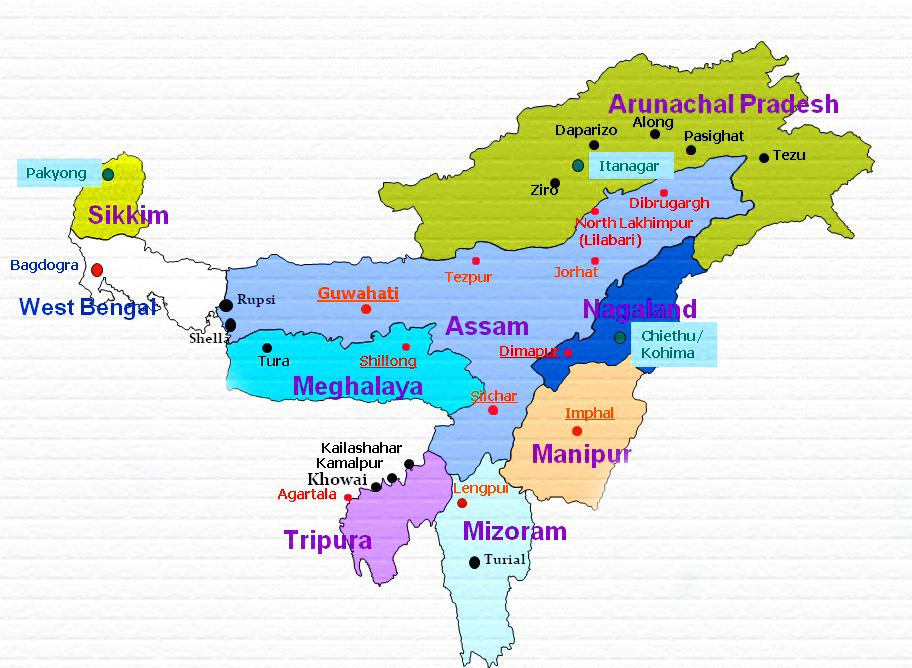
Northeast India of you may be familiar with others might not have given attention in the geography class. North East India consists of eight States Sikkim, Assam, Meghalaya, Tripura, Mizoram, Manipur, Nagaland and Arunachal Pradesh. The states are much closer to the name nature as compared to other states. The people here live a mostly tribal but they are friendly too. These states were always neglected form development for many years. They are discriminated because of their looks. Many North East Indian student face racist comments on daily basis.

And since the outbreak of COVID-19 their situation is becoming worse. They were beaten , were called coronavirus, where spit up on, even the shopkeeper refuse to sell their products to them.

The we treated like they don’t belong to this country. This is really shameful act. It doesn’t mean that I am pointing out each and everyone and saying that they are racist, but there are some Anti Social people who are racist.

There are many examples where North East people have brought glory to our country whether it is Mary Kom,Hima Das, Mirabai Chanu ,Baichung Bhutia, Lovlina borgohain, etc. Slowly their understanding their right and are coming up in in all the field, but there is a long way to go. And it’s our responsibility to treat every being with respect and should at least know about one own country’s geography.

Now new development projects are taking place in North East too. The act is east policy which will connect India to Southeast and East Asia.

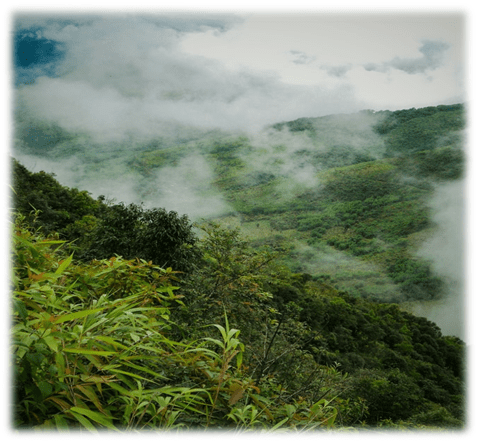
They are famous for other things too like Assam is famous for its tea, which is considered to be the most expensive tea in the world. Sikkim is famous for its cleanliness and organic farming. Meghalaya for receiving the highest rainfall in the world. Tripura for producing sports stars and hand-wovencottonfabric and woodcarvings.Meghalaya is famous for manipuri dance and bamboo forests. Mizoram for it’s evergreen Hills and dense forest of bamboo. Nagaland for which tribal culture and the hottest chilli in the world, the ghost paper. Arunachal Pradesh also known as the Rising Sun of India famous for Buddhist temple, Brahmaputra river and beautiful green forests.

If you are a person who loves nature and adventure, and want to take a holiday and relax then North East is a must visit place for you. It will provide you with the opportunity of river rafting mountain climbing trekking etc. You will definitely not regret it.

Casual racism in India

Racism against Indians living in the northeastern region has been increasing day by day and is an issue of concern. States like Assam, Nagaland, Mizoram, and others surrounding it are the main ones to be part of the northeast.

 Recently, a Youtuber even got arrested for allegedly “defaming” the people of Andhra Pradesh and accusing them of being Chinese. While this was a good step and start, we are all aware of how casually the people of northeast India are called slangs like “Ch*nki”, “momo” etc. and no action is taken against them because it is so very engraved in our society now, that practicing this is not an offense. We must not forget how many spectacular pieces of art the north Indian part has contributed to India and continues to do so even now.

The simple answer to this is- The mentality. It’s not a big revelation that casual racism is not faced only by the northeastern people but by all the people belonging to different and seemingly “unconventional” parts of India. It comes out that our Indian society likes to put people into boxes and parts according to their skin color and way of living.

When I look around myself, I usually have this realization that most people are not even aware of the fact that using slangs and treating them differently is, in fact, wrong, which pilots us to our first point –

  1. Awareness- This is the most obvious but crucial point. People need to know that THIS is wrong in the first place. And I know that it is better said than done, but, at this point of time, even the so-called “progressive youth” of India is simply not ready to take up this topic into talks. “Black lives matter” was in the news rigorously for so long, as it should have been. But in my opinion, we should focus on making things right in our country first.
  2. Better representation in the media and government- This is absolutely no diversity when it comes to people from differing communities being recruited in the mainstream media and the parliament. This will even be a catalyst in achieving a society and country where decisions are made equally in the favor of all communities.
  3. Highlighting the achievements- The media plays a very big role in this one. We need to show our people that people from the northeast contribute a lot to the potency of India as a country.
  4. Better job opportunities and laws for all Although it’s nice to see that small steps have started to be taken by our government now, we all know that we still have a very long way to go to attain utter equality in all the fields.
  5. Speaking up -This point is valid for any kind of prejudice you witness in your life and can make the biggest change ever. Don’t be a standbyer when someone is being mistreated in this world because hashtags can’t save the world, only we can.

Ultimately, We are the change that we seek in this world.

Today, China is trying its best to gradually break India apart and snatch it’s parts little by little. And will Indians be able to survive this if they make it easier for China to tear us apart by disintegrating themselves on the basis of their race and language and whatnot? I wish I could say ‘yes’ to this question right now.

Living Root Bridges

Once upon a time there lived a magical bridge.  The bridge was alive and breathing just like you and me. Oh wait! It’s not a mere figment of my imagination or a story I cooked (though I’m pretty good at that).The living roots bridges do exist in reality.  Thriving in the north eastern state of Meghalaya, these century old bridges have grown from tangled roots.  The Ficus elasticia plant produces roots which can grow high from the trunk of this tree and penetrate through rocks and boulders.

Now how did these roots turned into bridges?

The credit for these bridges goes to the war sub tribe of the “Khasis “in Meghalaya. The khasis observed these roots and channeled them through hollow trunks of trees in the direction of the riverside. When these roots reached the other side of the river, they were covered by soil allowing them to penetrate deeper into the ground. Then these roots were engraved with stones and side railings were attached to them. Voila! That’s how these mesmerizing structures came into existence. Would you believe if I told you that these bridges grow stronger as the time passes by?

Here are some interesting facts about these marvelous natural structures:

  • Living Root Bridges in Meghalaya are recognized by UNESCO as a World Heritage Sites.
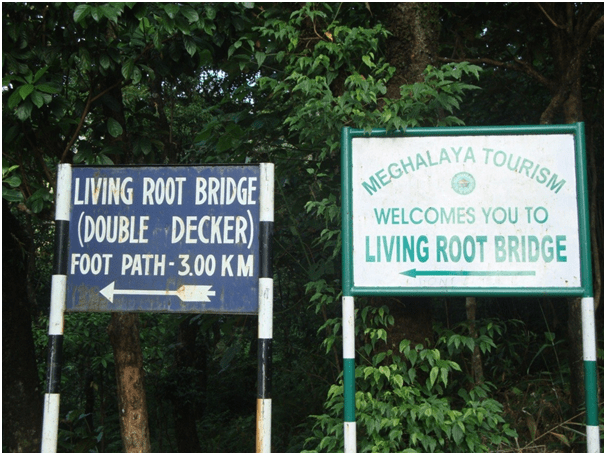
  • There is a double -decker living Root Bridge in Cherrapunji and a single decker bridge in Shillong which are prime tourist destination of Meghalaya.
  • Some of these roots last up to 500 years while others may decay gradually.
  • These bridges are quite sturdy and have the capacity to hold more than 50 people.
  • These living root bridges take more than 10-15 years to grow. How intriguing, isn’t it?
  • Out of many living root bridges found in Meghalaya only 11 are functional.
  • These bridges are a legacy passed on from one generation to the other in Meghalaya.

Double Decker living root bridges

This picturesque double decker bridge is located in the Nongirat village. You have to undertake a steep trek in order to witness this surreal view. Yes, this trek isn’t an easy one but definitely worth the effort.  The trek is amidst lush forest and rains accompany you wherever you go. That’s because Cherrapunji once held the record of receiving highest rainfall in the world.

Umshiang, the double decker living Root Bridge, is quite close from the village of Nongriat.

Tips for travelling:

  • Make sure to carry an umbrella/raincoat with you.
  • Plastic bags would come in handy. But ensure not to litter around

And after a strenuous trek, you will experience a landscape like never before. Nature; at its ever best.  This view will make sure your tiredness fades way into nothingness.

Restoring Living root Bridges

Villagers in Meghalaya came together to restore these 200 year old living root bridges which faced a threat from tourists. These root bridges were getting damaged as people lined them up with heavy stones to make it easier from them in crossing the bridges. Consequently, it weakened the roots making the bridge fragile.

Villagers used dead wood from jackfruit trees mixed with a light layer of soil serving as a great source of nutrients for the roots. The Khasi tribes also planted Areca nut trees on top of this layer so that people could walk on the bridge without stepping directly on the roots to prevent damage.

Lessons from the Khasi Tribe

While the world is facing ecological crisis, griped by issues such as mass extinction, environmental threats and global warming. The Khasi Tribe presents an excellent lesson in environmental conservation. We don’t Environmental summits or protocol if we realise our responsibility towards nature. Villagers of Meghalaya treat these bridges as a part of their heritage and take good care of them that too without any external pressure.

“Charity begins at home”. We can’t just wait for the governments to come with protocols. For the nature is not a place to visit, it is our home.

P.S. Make sure the Living root bridges do find a spot in your travel Bucket list .