Plastic A Modern Devil

Plastic the most dangerous and harmful enemy of our environment. It is killing mother nature and our health too. We take plastic bags from shop and don’t realise that we are actually taking home a devil who will cause harm to not only nature but to us too.

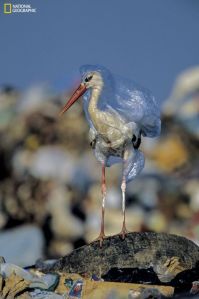
A normal plastic takes about 1000 years to decompose. Just think about it that a single piece of plastic take such long years to decompose, the level of plastic which we are using today will take how many years to decompose. It is choking our water organisms life. It is also choking are animals who eat food from the garbage like the cow, dogs, cats etc.

The youth are taking responsibility reduce the use of the plastic and organising campaigns and webinars to create awareness among people to not use plastic or use decomposable plastic. The big companies are taking responsibilities to to recycle plastic and many new forms has also set up for this purpose.

Even the government have started realising the need to protect our environment and nature. International organisations like UN has also so so called for an international cooperation in this matter.

There are many innovative way in which the plastic are being reused like in making bricks, floor, dolls, chair, etc. Forest sustainable future we have to look into this matter with utmost seriousness. This earth belongs to everyone and we have no right to miss you or destroy any element on this earth.

Should plastic be banned?

Plastic bags are a significant source of plastic pollution. Plastic pollution significantly contributes to the deterioration of our environment.

There should be a plastic ban to decrease in plastic pollution. Plastic bags cause land, water and air pollution. Decomposing of plastic waste is also a significant challenge which leads to an increase in plastic pollution.

Using plastic has been banned in various countries because of the adverse effects. However, plastic products have been used in various parts of the world, thereby causing hazards to the environment.

Plastic bags are easily available in the market and are widely used. Plastic bags are usually available in grocery stores and are used to carry grocery items like rice, fruits, veggies, wheat flour and other grocery items. The plastic bags are available in various sizes; they are much more economical and easy to use.

However, bags harm the environment. The plastic items and bags that we use in our day-to-day life are hazardous for our environment. This is a major problem than it appears. Scientists say that plastic bags are a major cause of water pollution.

Plastic waste is also responsible for making agricultural land infertile and also many other problems. Many countries throughout the world, including India, have banned the use of plastic bags to ensure a greener environment.

History of Plastic Bags
The plastic products that we use today were originally acquainted with the world by Alexander Parkes at London’s Great International Exhibition in the year 1862.

Parkes’ used a natural subsidiary to f cellulose as the material, which was formed when warmed and was kept in shape after cooling it.

Coining the word “Plastic”
The word plastic was coined in the year 1909. The word was first used by Leo H. Baekeland to describe a type of material that constituted Bakelite,” a substance he made from coal tar, which was used to make many things like phone, camera and ashtrays.

Plastics were used as a critical segment in the production of all these things. Plastics turned out to be well known throughout the world only after World War 1 when oil becomes effortlessly accessible.

Plastic Bags – A Boon or A Curse?
‘Need to Encourage People for Plastic Ban’

Plastic bags are very lightweight and can be easily carried anywhere.

This may sound like a boon for people, but however, there is also another side if the use of plastic bags. Since it is lightweight in nature, it is easily carried away by wind and water.

This is the reason that it blows away anywhere like seas and oceans and pollutes it. They also destroy the beauty of landscapes. A material called polypropylene is used to make plastic bags. It makes them much durable to use.

Natural gas and petroleum are used to make polypropylene. Natural gas and petroleum are non-biodegradable in nature.

The production of various plastic products, including plastic bags releases greenhouse gases like methane, carbon dioxide and carbon monoxide, which is the major cause of global warming throughout the world.

People believe that recycling is an alternative to the misuse of plastic waste; however, it is a misconception. An average of only 5% of all the plastic waste can be recycled, and the remaining 95% find its way in soil, water and other landscapes.

According to the latest report, about 35 – 40 % of all the plastic waste is being recycled, and the location of the remaining 60 % is not even known. This makes the plastic producers produce even more number of plastics, and a minor change occurs in the number of recycled products.

Plastic bags considered to be one of the most convenient ways to carry loads of products. However, plastic ban is the solution as it is harmful to human health.

The plastic bag contains a few chemical and synthetic substances in them which can potentially disturb the typical working of the hormones of the human body.

Most of the plastic products that are discharged in the seas and oceans, like plastic bags contain contaminations like PCB’s (polychlorinated biphenyl) and PAHs (Polycyclic fragrant hydrocarbons) which can affect the hormone structure.

When sea animals eat these substances, it travels through the food web and finally reaches to a human while consuming fish.

How can we minimize use of plastic?

Plastic ban has soared high in several countries.  The government of India has also made plastic ban in various states of the country. The use of plastic bags should be stopped throughout the country, and strict measures should be taken to implement this.

  • There must be a ban on the production of plastic bags also.
  • Retailers must be fined to sell plastic bags.
  • People who use and carry plastic bags should be fined.
  • Some amount must charge plastic bags of good quality which are easily available in the market; this will significantly reduce the use of plastic bags.
  • A good option should be available in the market, which can substitute plastic bags.

Plastic ban is a movement in the right direction. Most of the biggest economic countries of the world like China, USA and many European countries have banned the use of plastic bags.

There are many countries which have not implemented plastic bags, and they should do it soon. Some of the concerns arise on which people depend as a source of livelihood.

However, on the other side, the plastic ban is a sole need as these bags are destroying our environment. Innovators will eventually come up with an alternative for plastic ban everywhere. This will, in turn, create products and companies, and finally, people will get employment.

When it comes to production costs, plastic bags and cheaper and much easier to produce as compared to eco-friendly bags, however, the demerit is that the plastic bags undergo wear and tear easily. In fact, people discard them in the garbage bins as soon as they carry their products home.

Eco-friendly bags like that of cotton bags are much durable, and also it can be washed and reused again. Eco-friendly bags are cheaper for the long run because it doesn’t have government intervention to clear them from the street.

They are easily degradable and can be cleared from the face of the world. It is not wise to spend money on something that costs almost three times the amount to get rid of it.

10 Lines on Plastic Ban

  1. The world produces more than 6 billion metric tons of plastic waste annually.
  2. Plastic is dumped in lands and oceans, causing massive pollution and environmental problems.
  3. Plastic is a human-made material and hence cannot be degraded in nature.
  4. Scientists are working on a natural degradation of plastic through certain types of bacteria and enzymes.
  5. On average, a person consumes more than 100 kilograms of plastic each year.
  6. There are more than 12.7 million times of plastic in our oceans as of now.
  7. Irresponsible disposal of plastics will lead to disturbance in the natural ecosystems as well as our food chain.
  8. Banning plastic altogether is not possible because we are heavily dependent on plastic every day.
  9. From our Smartphone’s to computers to medical devices, plastic exist in every sphere of our lives.
  10. Plastic bags should be banned because the alternative for it exists like jute bag, gunny bag or paper bags.

Conclusion

There are many problems which are caused due to plastic waste, and it has often been overlooked and underestimated.

This is because people don’t think about the long term effect that plastic is causing to the environment. People look at the benefits that they are getting from it.

People do not consider plastic ban and keep using plastic bags owing to the convenience they offer and ignore the adverse effects that are caused to the environment.

Marine Plastic Pollution

Plastic is a synthetic organic polymer made from petroleum, and has wide uses in packaging, building, construction and household materials. If you look around, you will easily be able to spot a plastic item, be it sports equipment or electrical devices.  Yes, plastic is used everywhere and is very important because of its lightweight structure and malleable properties.  But here is the flipside to it.

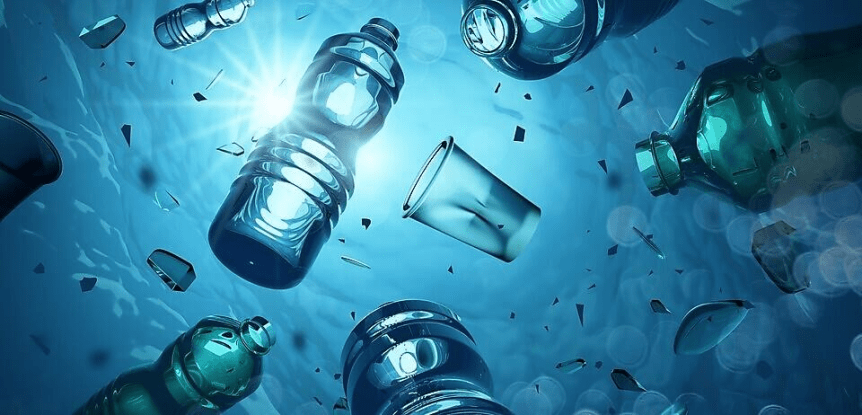
Nearly 300 million tons of plastic is produced every year, with half of it being used to make single-use items such as shopping bags, toothbrush and straws. Even a bag of chips is made of plastic and is discarded as soon as the chips are consumed. Now get this. About 8 million tons of plastic end up in our oceans every year. Water plastic makes up 80% of all marine debris.

Plastic can be present in surface waters as well as deep sea sediments. If you thought deep sea trenches could escape plastic, you are in for a surprise. A plastic bag, one that you give away in a grocery store, was found in the Mariana Trench at depths of 10,975 meters (36,000 feet).

Plastic poses a threat to marine life. Hundreds of marine species ingest the plastic debris which can cause lacerations and injuries. Entanglement and suffocation of fishes and other organisms are a major cause of death.  Plastic, when incinerated leads to emissions of carbon dioxide, which increases the temperature of the atmosphere. This leads to global warming, a threat prevalent in all parts of the world, especially the Polar Regions, which are witnessing rapid melting of glaciers and increase in the water level in oceans.  Plastic waste threatens food quality and health, and also affects coastal tourism.

In these times, governments of several different countries are taking steps to tackle this threat of marine plastic pollution. Equipped with research, technology and innovation, one can slowly but surely reduce the overall plastic consumption.

One interesting project which occurred recently was introduced by the World Bank. They invited youth all across India to take a deep dive into the problems of mismanaged plastic waste and come up with innovative ideas to counter the tide. Well, the response was overwhelming. Every team came up with brilliant ideas that were very realistic and could be implemented on a larger scale. Read ahead to find out about a few of the interesting projects.

Ecopod- a solution proposed by Team Iota, which won first place, talked about the use of plastic for packaging of personal toiletries and how much plastic waste it amounted to. The team presented a single use, plastic free shampoo, conditioner and body wash solution via disposable pellets.  Ensuring a 37.5 percent reduction in bottled personal shampoos and toiletries and an 80% reduction in CO2 emissions, bottled toiletries might well be water under the bridge if Ecopods were to take off.

Second place winners-team INACTUS, developed a project about building sustainable toilets with plastic bottles stuffed with waste. Both these projects also focused on providing employment to women in rural areas, hence employing the women workforce towards a global cause.

This is a global problem, which can only be solved if all the countries come together, and address these issues. When companies, industries work towards minimum plastic usage as an achievable goal and people voice their opinions on this pressing issue. When people understand the importance of the oceans and reducing plastic consumption, only then will we be able to see a measurable outcome.


Plastic- Inseparable part of our lives

Imagine thousands of plastic bags floating around you forever

Inventions and discoveries lay a tremendous impact on the human race and development. Yet, few human creations can metamorphose into a curse. Nearly a hundred years ago, humanity created the most durable and cheap material -plastic. In a flash, plastic reached the deepest trenches, in the air we breathe and even in our stomachs. Barely 10% of the plastic we produce gets recycled whereas, the rest of the plastic contributes to climate change. Today these estimations may seem ordinary numbers, yet incautious measures can lead to the extinction of our race. Unbelievably we produce 3,000,000 plastic bottles in just 60 seconds; how horrifying is that? Our irrational use of plastic has affected the abundance of the entire ecosystem. The fishes are floating at the brink of extinction. We are the ones to condemn; hence it is our responsibility to wonder about potential solutions. Binish Desai-the recycle man has that solution. Amidst the Covid pandemic, the masks and PPE kits have made their way to the oceans. Binish Desai came up with an extraordinary idea to make eco-bricks out of them, recently introducing ‘Brick 2.0’. Furthermore, hundreds of women have started using menstruation cups to limit the plastic waste created by sanitary pads. Therefore, together we can beat plastic pollution. The story of our ecosystem is a tale older than ours. The majesty and abundance of the creatures out there are beyond our foresight. Each creation is unique and a mystery for us. Yet, our reckless management of plastic and other resources has affected the entire ecosystem. Our environment would collapse before we get a chance to know everything about it. Hence, together we need to think of solutions. We know that energy can neither be created nor destroyed; only be transformed. Similarly, nothing is a waste in nature; scrap produced today can be transformed into something productive tomorrow. Together we can build a sustainable future if we start recycling now. A very efficient way to cease plastic pollution is brand audits and cleaning drives. They help to collect plastic and hold the brand guilty of who created the plastic waste in the first place. The most generous aid we can give to the ecosystem is minimizing plastic usage from our surroundings. We can switch to a bamboo toothbrush and go for a waterless car wash. In addition, social media gives us a platform to contribute even in this pandemic. Social media let us share and debate upon solutions in an efficient way. Furthermore, we need to consider that we are genius at planning; however, we fail to execute our solutions. Discussing the solutions will only help us when we work upon them. Hence, always try to buy products of brands that believe in sustainability. Together let us unwrap the layer of plastic we laid on our mother Earth. Remember tsunami of throwaway plastic is awaiting us tomorrow if we stop recycling. “Only when the last tree has died, the last river has flourished, we will realize that we cannot eat the money”. Your contribution matters!