
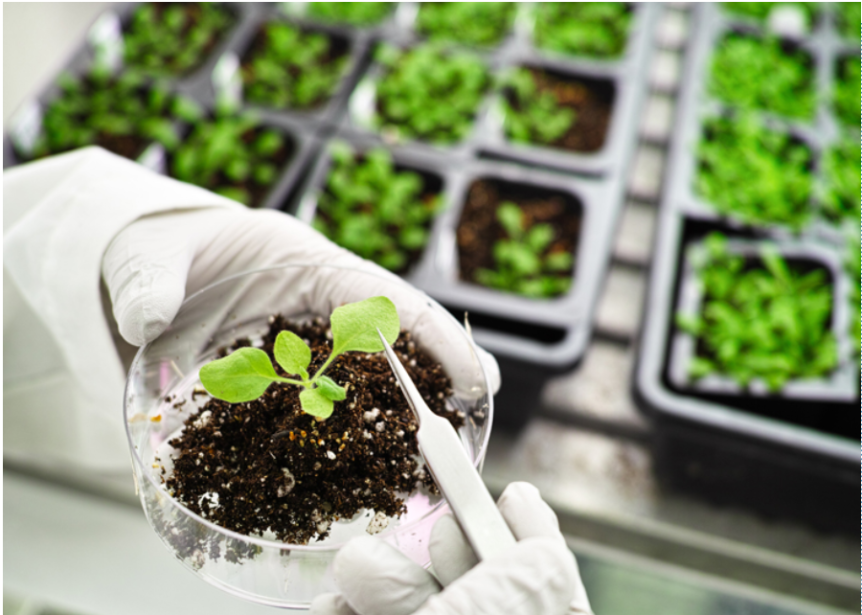
Biotechnology is the application based on various scientific techniques which are used to alter and improve species of plants, animals, and microorganisms and enhance their commercial value.
When the applications biotechnology is used in the field of agriculture its is called Agricultural Biotechnology. Originally agricultural biotechnology came into the picture when the importance of selection and breeding of organisms was known to people. An example of traditional agricultural biotechnology is the development of disease-resistant varieties of wheat made by cross-breeding different types of wheat varieties until the desired disease-resistant wheat variety was found.
Genetic engineering and GMOs
When the field of molecular biology advanced in the 1970s, scientists found that different genetic materials found in different organisms like DNA and RNA can be altered. So, it was observed that when scientists altered the chemistry of genetic material (DNA/RNA) and transferred it into a host organism, the desired product was obtained or the phenotype of the organism changed. This technique is called genetic engineering. Today this technology has a place where scientists can obtain different genes from different organisms like plants, animals, bacteria, viruses, or fungi and transfer those genes to another organism.
The primary use of biotechnology in agriculture is to increase food production through genetically engineered crop-based agriculture. But the question is food production can be increased with help of agrochemicals (fertilizers and pesticides) then why employ genetic engineering?
For farmers in the developing world agrochemicals are often too expensive and also the existing varieties are not able to produce high yield through conventional breeding. Therefore, genetic engineering is the way by which maximum yield can be produced.
Now, what are GMOs? Well, GMOs are simply the product of genetic engineering. Plants, bacteria, fungi, and animals whose genes have been altered to make them more useful are called Genetically Modified Organisms (GMO).
What are the advantages of GMOs in agriculture?
1. Enhanced tolerance
Crops are made more tolerant to abiotic stresses such as drought, cold, heat, acidity, salinity, etc.
2. Reduced reliance on agrochemicals
Plants are made in such a way that the reliance on chemical pesticides is reduced. This can be done by creating pest-resistant crops. One of the examples of pest-resistant plants is Bt cotton.
3. Reduced post-harvest loss
The gas hormone called ethylene is involved in the regulation of fruit ripening. This ripening can be slowed down by blocking or reducing ethylene production. This gives the fruits a longer-shelf life and the chances of spoilage are reduced.
4. Nutrient quality
The nutritional value of food is enhanced using GMOs. These are produced by introducing genes involved in the metabolism of vitamins, minerals, and amino acids. One of the very renowned examples will be of the ‘Golden rice’ which is enriched in pro-vitamin.
There are many other examples of application plant genetic engineering which are:
-
Disease resistant plants
-
Resistance to fungal and bacterial infections
-
Improved seed protein quality
-
Molecular farming
-
Edible vaccines
-
Development of blue roses
-
Development of tear-less onions, caffeine-free coffee, and low nicotine tobacco.
Biosafety
GM crops are rapidly becoming a part of agriculture throughout the world because of their contribution to increasing crop productivity and global food, feed, and fibre security. However, there are some issues related to the public acceptance of transgenic crops.
The safety of GM crops cannot be fully ensured for human and animal consumption as GM food may cause allergenicity and toxicity.
The effect which GM crops can have on the environment and biodiversity is a question. Moreover, GM crops can affect non-target and beneficial insects or microbes.
There can be cases in which the transgene may escape through pollen to related plant species and may cause the development of superweed.
The GM crops may lead to a change in the evolutionary pattern.
Nevertheless, proper assessment of the risks associated with transgenics for plants is important before they are released. Foods made from GMOs must be shown safe or safer than their traditional counterparts before they are released for public use. In general, what scientist believe is that genetic engineering is the ‘technology that can efficiently solve various human problems, especially related to hunger and disease,
Reference
https://www.ctahr.hawaii.edu/oc/freepubs/pdf/bio-3.pdf

