ADDICTION OF THE PRESENT WORLD

 TECHNOLOGY 

Technology has a developed a lot and it has made possible many things that weren’t earlier . everyday we encounter new type of technology that helps us in day to day activity . Earlier we used animals to travel from here and there . Then engines were developed and we started using cars , train and other vehicles to travel . We used to send letters that usually took around 5-7 days to reach . But now we have a e-mail services and so better technology to send letters . 
Technology has made things easier and faster . There is no doubt that technology has helped us in several ways . Hospitals are filled with new technology equipment that makes possible to detect several diseases that were not possible earlier . 

MOBILE 

Mobile phone is one of the biggest gift of technology and so a biggest addiction . Nowadays smart phones are able to do what earlier computer’s couldn’t do . But if you see around small kids are holding a phone and use it continuously for several hours . When parents are busy they hand over them their mobile phones and keep them busy . But now when it has become an addiction to their children , they are worried . 

WHY IT IS SO ADDICTIVE ?

A mobile phone has everything . You can watch YouTube ,movies , cartoons and several things . Small kids finds it attractive and use it until they get bored , but than again mobile phones have so many options that no one can get bored with it . They keep playing new games and find another interesting game and keep on using it.

IS THERE ANY SOLUTION ?

What parents can do is set example to them by using minimum phone infront of them . So they can learn from them that they should not use mobiles the much . They should give them daily remainders how harmful a mobile phone can be .
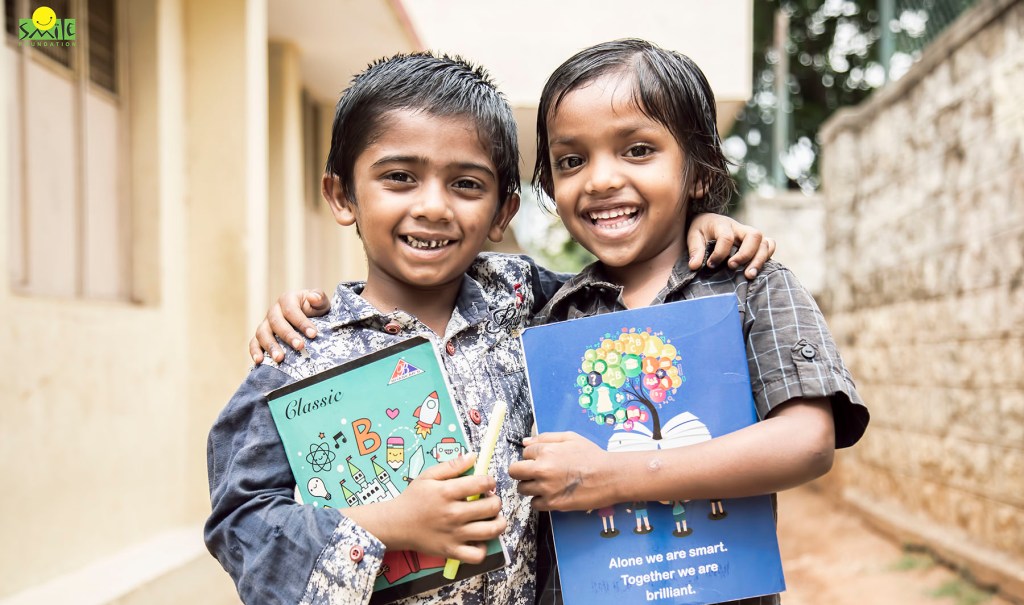
  

What Is The Importance Of Social Media In Education?

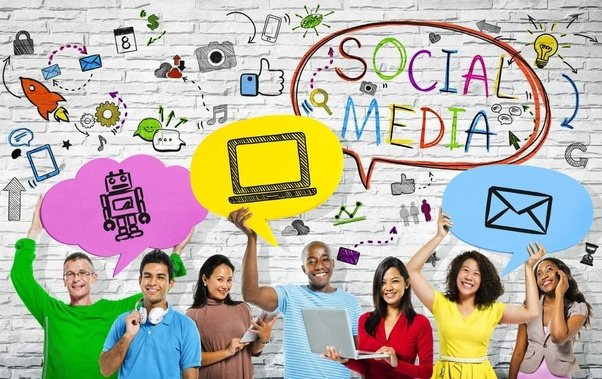
For quite some time, social media has had an impact on our lives, and the trend of utilizing it is growing by the day. People use it as a platform to communicate with one another, post personal images, videos, opinions, and reviews on a variety of themes such as everyday life, politics, sports, markets, and much more over the internet using devices such as computers, tablets, and cell phones, among other things.

  1. Nowadays, social media usage is on the rise. Whether it’s social networking and networking sites like Facebook, blogs and information sites like Twitter and Tumblr, video sharing sites like YouTube and Daily-motion, or other platforms, they’ve made life easier by allowing people to quickly share nearly anything they want to know about. Humans’ reliance on these sources of socialization is undeniable, which is why every organization employs them to increase productivity and profits.
  2. The use of social media in education is no exception. We all know that education has been heavily reliant on print and electronic media for a long time, but both media are costly owing to their limited availability, but social media is both inexpensive and readily available. Most instructors and professors now use YouTube to present students various types of videos relating to their studies, and as a result, their productivity has increased significantly.
  3. Teachers have come up with the idea of creating a shared page for all students to communicate updates about any changes in class schedule, due dates for assignment submission and tests, and so on, because students increasingly use Facebook. It allows students to communicate with their lecturers and inquire about course challenges while at home. This does not end there; it also encourages collaboration: when students are working on a group assignment, they can better communicate with one another and share files and comments on the same page.
  4. Students no longer need to lug around hefty books: they may learn about anything by browsing collaborative media sources like Wikipedia at any time. Not just for students, but also for instructors, it functions as a dictionary. The most essential feature of these social media platforms is that they encourage open debate. When students and teachers communicate through these channels, they engage in a dialogue that leads to a useful conclusion, for example, when a teacher from Asia meets a teacher from Europe, both can share their perspectives on the educational system and learn about useful teaching methods they had never tried before.
  5. Diigo is another social bookmaking tool. Because it can pool intellectual information, this social media technology is simply user friendly for educators and learners. It provides tailored materials on any area of interest to its users. Wikis are also used as participatory platforms by educational systems all throughout the world, with site visitors contributing to their upkeep. Another social technology that is used in interactions is Twitter (Dixon, 2012). This program allows students to engage with their classmates as well as their professors. Teachers can utilize Twitter effectively to boost post-class discussions.
  6. Social media also exposes students to a variety of instruments that aid in the rapid advancement of the educational process. Students should be taught the benefits and drawbacks of such instructional tools and given the opportunity to utilize them whenever they want. Students can use social media to hold group discussions in the form of chats. Such technologies are critical for the advancement of education. Teachers’ teaching techniques have also benefited from the use of social media. Teachers can now offer online lessons that are transmitted over social media platforms like Skype, thanks to the advancement of social media.

EDUCATION SYSTEM IN INDIA.

How do you view the education system of India? The education system plays a crucial role in one’s development. Though the whole education system of India in history has some positive examples. Nowadays we can’t deny the fact that the education system is failing for quite some decades. There are many Indian colleges and schools and that many students have been studying in those schools and colleges. But the quality is important to India’s education system, it turned out to be a failure as compared to a foreign country’s education. Because many of the colleges and schools( larger or smaller) and universities have flaws and lag. Colleges and schools mainly focus on the journey of a student rather than teaching some core disciplines and all-important destination of learning. Majority of the people who manage to learn to tend to shift abroad for earning a better income. Because the mindset of Indian people is, even after studying for 15 years jobs aren’t properly assigned to a person who deserves it.  The government is paying attention to educate every child as a basic right, the illiteracy rate is going high. To study students usually appeal to study under their guru and then the guru invites them to their home, one should stay there. Students get to learn and have detailed ideas about all the subjects from Sanskrit maths to physics. So, earlier everything was related to life and nature and it was not just about learning and juggling up.

Earlier India was considered as richest of all countries, but due to the entry of foreign colonizers, India lost its richness, wealth, and knowledge. The educational system restricted the so-called modern education knowledge, including English, mathematics, philosophy was considered vague in the late 1830s.

There are major downsides to modern education in India. Which is an ongoing system of education that is just not affordable for many students. In India, more than 37% of the people are living below the poverty line, so education is so expensive that it is unavailable for many of them. Many schools have poor teaching systems, many have fluctuating teachers in government schools. The level of education in government schools is just not applicable because they do not possess a proper image among students and people. Instead of focusing on learning new things and focusing on the debate, writing, expressing new ideas, writing, developing mental and critical thinking our education is mainly focused on where is your degree achieved. Absence of proper framework for developing industry with academia. Our colleges lack a multi-disciplinary approach. Private institutions which provide degrees to postgraduate. Even private institutes are expensive and also complicated procedures for common people.

Steps to enhance the recent system.
1. Government should take steps to extend the rate of primary schools in rural areas so that people who are staying in villages have the proper opportunity to study.
2. More emphasis should be given to adult education and teach guidelines. So, that parents become keen towards their kid’s education.
3. There should be strict laws related to cheating and then the system should be created corruption-free.
4. Everyone should be given proper opportunity rather than discriminating on cast, culture, and gender, rich and poor.
5. People should be employed and get jobs according to their results and grades.
6. Education loans should be made available, so that poor families for their kid’s education.
7. Girls’ education should give the highest priority.
8. The condition of colleges and schools should be raised to a reasonable level.

India is a progressive country and the recent education system can be improved. As of now, there’s an urgent need for change in the education system or else India will be more divided and unequal than it is today. There’s going to be a change in the education system.  The sole step to improve education is to help strict laws, education itself, and to penalize those who are against it.

Causes of stress on Modern Generation

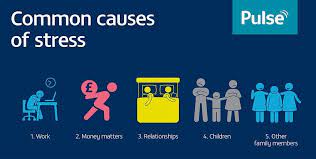
Stress is actually a normal part of life, at times of serves a useful purpose. Stress can motivate you to get that promotion at work, or run the last mile of a marathon. But if you don’t get a handle on your stress and it becomes long-term, it can seriously interfere with your job, family life, and health. More than half of Americans say they fight with friends and loved ones because of stress, and more than 70% say they experience real physical and emotional symptoms from it.

The present day youth are greatly stressed due to cut-throat competition and consumerist culture. Today, we are living in an age when people are more stressed than relaxed. Due to extreme competitiveness in every aspect of life, there is always a lack of time. This then leads to high level of anxiety, mental tension and of course, the feeling of dissatisfaction.

A cut-throat competition starts at school level with parents pressure-rising children to work extra hard and score high marks in all subjects. Students too feel the pressure of performing better than the rest. Therefore, they get stressed when they are unable to perform according to expectation. The stress builds on until it turns into health hazards, which stays on forever.

Then there is stress at work front, which is worse than scoring high. Students might acquire highest marks, but this does not guarantee that it would land their desired jobs. Even if they do, there are other reasons for one to feel the stress. Desired salary, timely promotion, material growth such as own house and car, marriage etc, often come along with anxiety, stress and lifestyle diseases. Therefore, it is suffice to say that the present day youth are greatly stressed and to some extent, the consumerist culture is to be blamed for this.

With the advent of technology and social media platforms like Facebook and Instagram a lot of people get stressed about how they’re living their lives and compare themselves to others. For example, models ad actors/actresses who adhere to the societal perception of beauty, make many people wish to be like them, which cause stress and anxiety when they find it hard to do so. Due to increased use of technology the face to face conversation or meetings have decreased resulting in loneliness, depression and stress. Also, Insomnia caused bu overuse of technological gadgets has decreased the life expectancy of the modern generation. Insomnia also causes stress and fatigue. People’s eyesight has also weakened from a very young age due to expose of the naked eye to the screen of the gadgets. Over usage of gadgets results into stress as people forget to rip away their faces from the smartphones and enjoy nature and its breathtaking views.

Tips to control stress

Fortunately there’s a solution for to avoid stress at all times. Regular exercising or yoga and maintaining good health improves concentration and keeps the mind healthy. It decreases physical ailments reduces behavioral problems reduces depression and stress thus calming one’s mind. One should also spend some quality time with one’s family friends and loved ones, do charity/ community service adopt pets go for walks or pursue a hobby in order to reduce stress.

Macroecocomics

Macroeconomics is a branch of economics that studies how an overall economy—the market or other systems that operate on a large scale—behaves.

The two main areas of macroeconomic research are long-term economic growth and shorter-term business cycles.

Macroeconomics in its modern form is often defined as starting with John Maynard Keynes and his theories about market behavior and governmental policies in the 1930s; several schools of thought have developed since.

Macroeconomics studies economy-wide phenomena such as inflation, price levels, rate of economic growth, national income, gross domestic product (GDP), and changes in unemployment.

Some of the key questions addressed by macroeconomics include: What causes unemployment? What causes inflation? What creates or stimulates economic growth? Macroeconomics attempts to measure how well an economy is performing, to understand what forces drive it, and to project how performance can improve.

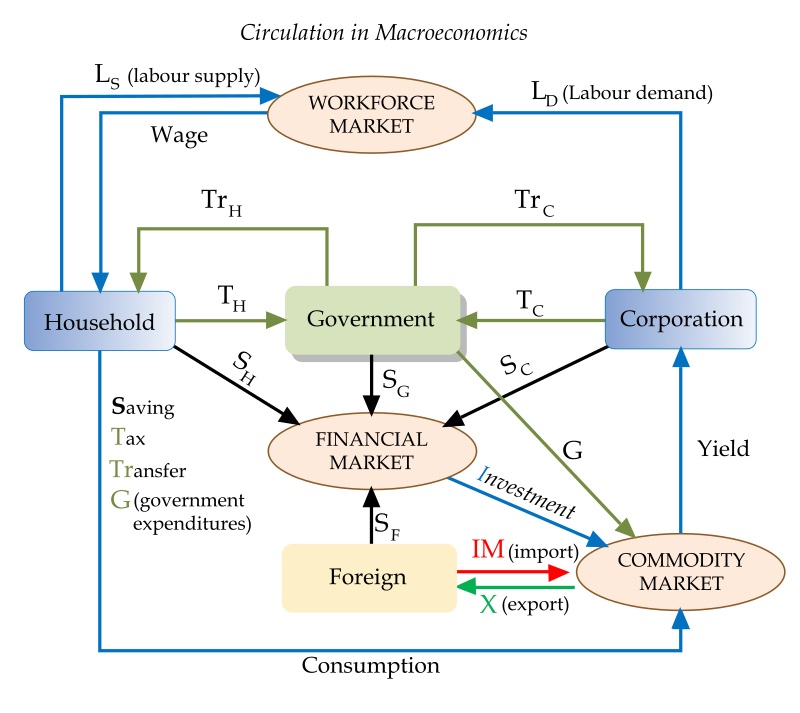
Circulation

Understanding Macroeconomics

There are two sides to the study of economics: macroeconomics and microeconomics. As the term implies, macroeconomics looks at the overall, big-picture scenario of the economy.

Put simply, it focuses on the way the economy performs as a whole and then analyzes how different sectors of the economy relate to one another to understand how the aggregate functions. This includes looking at variables like unemployment, GDP, and inflation.

Macroeconomists develop models explaining relationships between these factors. Such macroeconomic models, and the forecasts they produce, are used by government entities to aid in the construction and evaluation of economic, monetary, and fiscal policy; by businesses to set strategy in domestic and global markets; and by investors to predict and plan for movements in various asset classes.

Given the enormous scale of government budgets and the impact of economic policy on consumers and businesses, macroeconomics clearly concerns itself with significant issues. 

Limits of Macroeconomics

It is also important to understand the limitations of economic theory. Theories are often created in a vacuum and lack certain real-world details like taxation, regulation, and transaction costs.

The real world is also decidedly complicated and includes matters of social preference and conscience that do not lend themselves to mathematical analysis.

Even with the limits of economic theory, the performance of companies, and by extension their stocks, is significantly influenced by the economic conditions in which the companies operate and the study of macroeconomic statistics can help an investor make better decisions and spot turning points.

Likewise, it can be invaluable to understand which theories are in favor and influencing a particular government administration. 

Areas of Macroeconomic Research

Economic Growth

Economic growth refers to an increase in aggregate production in an economy. Macroeconomists try to understand the factors that either promote or retard economic growth in order to support economic policies that will support development, progress, and rising living standards.

Business Cycles

Superimposed over long term macroeconomic growth trends, the levels and rates-of-change of major macroeconomic variables such as employment and national output go through occasional fluctuations up or down, expansions and recessions, in a phenomenon known as the business cycle.

The Basic of Macroeconomics

SOURCES

https://www.investopedia.com/terms/m/macroeconomics.asp