Hashtags and Mobilization

Movements are part of changing society and changing holocaust. Social movements have a structure which makes them functional relative to their goals. Activism is action on behalf of a cause, action that goes beyond what is conventional or routine activity. The central theme is to resist authority. The kind of reformation that is taking place through movements is shaking the base root of patriarchy. The patriarchal belief system is constantly negotiating the need of revolution. The action might be door-to-door canvassing, alternative radio, public meetings, rallies, or fasting. The cause of the activism will vary according the type of protests. The cause might be women’s rights, gender equality, opposition to a factory, world peace and so forth. Activism has played a major role in ending slavery, challenging dictatorships, protecting workers from exploitation, protecting the environment, promoting equality for women, opposing racism, and many other important issues. Activism can also be used for aims such as attacking minorities or promoting war.The main purpose of movements is to raise a sought of awareness and to engage the people in deliberation. It makes the people politically aware of the situation and hitherto experiences. The perpetrators of activism are called
‘activists’.

A major protest that happened in India was the ‘Nirbhaya’ movement. In December 2012, New Delhi witnessed a horrific crime– a student was violently gang-raped on a moving bus and then dumped onto the highway, injured and unconscious. While she didn‟t survive the attack, Nirbhaya, as she was named by the media, sparked a revolution in India and its neighboring countries. Social movements always stand by the side of marginalized. The Naxalite movements in India exemplify this. The Naxalite movement helps the downtrodden indigenous people to acquire their needs. It is a small group devoted to the left liberal activism.

The Internet helps in coordinating and creating platforms of discussion inside movements. The internet has given rise to social media and the social media in turn gave rise to hashtags and mobilization is an essential part of the movement. Social mobilization is directed towards social change. The Kerala floods were not greatly acknowledged by the national media. But with the influence of Facebook and twitter it crossed the regional differences and help was provided by various people residing outside the state. It is the ordinary people who harnessed social media and their own resources to play a role in relief and rescue efforts. Hashtags such as #KeralaFloods #Verified became trending within hours and helped to grab the attention of the whole world.

Movements are context based and it is up to the people to decide whether it should sustain or not. In today’s world there are both online and offline movements and both of them have their own merits and demerits. A protest that begins in the internet transforms into an offline movement and vice versa.
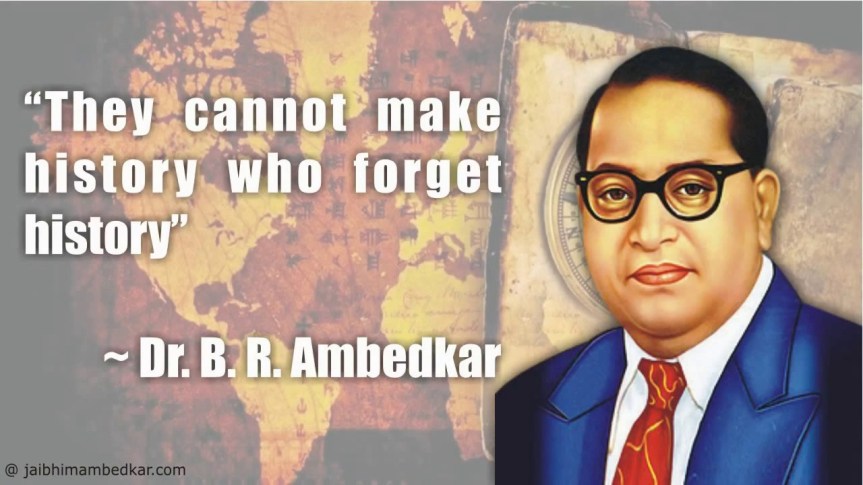
B. R. Ambedkar

Bhimrao Ramji Ambedkar was an Indian economist, politician and social reformer. He was also known as Babasaheb Ambedkar. He campaigned against social discrimination against the lower castes or Dalits of the country. Completing his doctorate from Columbia University and The London School of Economics, he gained reputation as a scholar for his research in economics, law and political science.

In the early phases of his career, he was an economist, professor and lawyer. Towards the later phases, he was actively involved in campaigns for India’s independence. He published journals and advocated for political and social rights for Dalits. He made a significant contribution to the establishment of the state of India. He was the first Minister of Law and Justice of India and the chief architect of the Constitution of India.

He had a Marathi family background and was from the town of Ambadawe in Ratnagiri district of modern-day Maharashtra. Ambedkar was born into a poor Mahar (Dalit caste), who were treated as untouchables and faced a lot of socio-economic discrimination. Although he attended school, Ambedkar and other untouchable children were segregated from the rest of the children and given little attention by teachers. They were not even allowed to sit inside the class. He had to sit on a gunny sack which he took home after school. When they needed to drink water, someone from a higher caste had to pour that water from a height as they were not allowed to touch the water vessel. It was usually the peon who did this for him and on days when the peon was not available, he had to go without water. He had later described this as “No peon, No water” in one of his writings.

During British rule, Ambedkar’s effort for the political representation of the oppressed untouchables of India bore fruit in the 1920s. The colonial state was forced to include two members from among the Dalits in the Round Table Conference in 1930. This eventually led to the framing of the Government of India Act, 1935.

From 1927, Ambedkar launched active movements against untouchability. He began public movements and marches to open up public drinking water resources for all. He led a satyagraha in Mahad to fight for the right of the untouchable community to draw water from the main water tank of the town. He also began a struggle for the right of Dalits to enter Hindu temples. In a conference in1927, Ambedkar publicly condemned the Hindu text Manusmriti (Laws of Manu), for ideologically justifying caste discrimination and “untouchability”. He ceremonially burned copies of the ancient text. On 25th December 1927, he led thousands of followers to burn copies of Manusmrti. Since then 25 December is celebrated as Manusmriti Dahan Din (Manusmriti Burning Day) by Ambedkarites and Dalits.

In 1956, he converted to Buddhism, initiating mass conversions of Dalits which eventually led to the Dalit-Buddhist movement.

A few days after completing his final manuscript ‘The Buddha and His Dhamma’, he died in his sleep on 6 December 1956 at his home in Delhi.

The Casteless Collective

 The Casteless Collective is a Chennai-based Tamil indie band. The band currently consists of nineteen members including Tenma (leader and music producer), singers Muthu, Bala Chandar, Isaivani, Arivu and Chellamuthu, Dharani (Dholak), Sarath (Satti), Gautham (Katta molam), Nandan (Parai and Tavil), Manu Krishnan (drums) and Sahib Singh (guitar).

 Formed in the year 2017, the band was started by Pa. Ranjith and Tamil Indie Musician and Composer, Tenma, founder of Madras Records. The band’s name originated from the phrase ‘Jaathi Illadha Tamizhargal’ translating to Casteless Tamils which was coined by the 19th-century anti-caste activist C. Iyothee Thass. He was a social activist who urged Dalits across Tamil Nadu to register themselves as Tamils without caste in the first census in 1871. The band makes music to protest and rebel against the age-old caste system resulting in caste-based discrimination and violence. Their songs are political and speak against the inequalities of the caste system and the oppression of women and minorities in Tamil Nadu.

The leader and music producer of the band, Tenma was preparing to put together a group of indie musical artists for the Madras Indie Collective in 2017 when he got the idea from Pa. Ranjith, of training Gaana musicians for it. They prepared auditions for over 150 applicants and looked for artists who had a socio-political motivation in their lives as well as musical strengths. A mixture of Gaana, hip-hop, rap and folk musicians were brought together. About 19 singers were selected for the initial ensemble.

It has broken caste boundaries by engaging with the current social and political issues in the state. Instead of making music for entertainment alone the band has tried to eradicate discrimination through its music. Their main intention is “to create political awareness through music and art” because “art which makes us question discomfort is beautiful”. The band is a collective without caste which aims to eradicate caste-based and religious discrimination through music.

Jai Bhim Anthem (2018), Quota (2018), Magizhchi (2018), Vada Chennai (2018), Thalaiva (2019), Dabba Dabba (2019) are popular singles of the band.

The Casteless Collective had their very first concert in January 2018 in Chennai. It was their first performance in front of more than 4000 people. The 19 members including one female artist, all dressed in identical grey suits gave a wonderful performance. Their cries of “Jai Bhim!” were greeted with thunderous applause. They had not expected such a big enthusiastic crowd and it was a very emotional experience for all of them. This was also because most of the artists came from rural backgrounds and they had mostly performed in one or two funeral processions. The instrumentalists who played katte and chatti were really overwhelmed as these instruments were restricted to only funeral events. 

 It was not a concert that had people head-banging or jumping to the beat of drums. Instead, the audience listened to the songs with rapt attention. They broke into applause and shouts of agreement whenever the lyrics hit home. The “Bhim Rap”, a song on BR Ambedkar’s life and work, was met with a very enthusiastic reception. So was the rap song that condemned honour killings in the name of caste pride which was a major social evil in Tamil Nadu. Another popular track is “Madrasin Magizhchi” which speaks about the small joys of living in Madras, despite being poor.

They say that people often ask them about the song lyrics and the stories about their experiences. This has led to the beginning of a conversation around caste. The band believes that social problems cannot be solved unless they are spoken about. Without discussions around caste-based discrimination, one cannot attempt to eradicate this evil of society. Their songs have already fulfilled their aim and created a stir among people. Here’s hoping that the band achieves greater heights and reaches out to everyone out there who has been a victim of caste discrimination and that it becomes successful in eradicating the malpractices of the system.

Trigger Warnings

Trigger Warnings (TW) are labels that we are well-acquainted with today. The term comes from the vocabulary of therapy especially for PTSD, where an individual who has undergone trauma is ‘triggered’ by something that they come across, creating a negative emotional response. It has been extrapolated into mainstream discourse as a measure to help in such situations. ‘Trigger warning’ is meant to be used before content that some may find distressing or triggering owing to their past traumas or experiences. It appears widely on social media platforms, spaces of activism, and even in classrooms to alert students about potentially distressing images or texts that may come up in class. These can include images such as those of violence or mutilation, discussions or descriptions of instances relating to racism, sexism, misogyny, discrimination, rape, murder, etc. , or any topic that is connected to traumas. Trigger warnings acknowledge the existence of trauma and give them legitimacy, allowing individuals to mentally prepare themselves should the content be triggering.

close up photo of caution signage
Photo by Viajero on Pexels.com

However, a careful understanding of the dynamics of trigger warnings is worth looking into in the current scenario since the term is a pointer towards a much larger framework of engagement. Particularly when cancel culture is in vogue and anyone who speaks against anything that is not agreed upon by those who control that space is “cancelled”, labeling what others say as ‘triggering’ can be used as a weapon to attack anyone who might disagree. It is important to note that this is not about legitimate concerns and harm inflicted, but about those who use such labels as a defense to escape accountability or use activism as a facade for their own ends. While there are always individuals whose experiences have made their apprehension of such content extremely difficult, there seems to be an increasing proclivity towards considering being triggered as providing legitimacy, especially if one’s voice is to be heard. A Harvard researcher opines that it only encourages people to see trauma as central to their identity. However, that is not healthy for them. There can come a point when any opinion that might be against or even deviant from the popular discourse among a certain group be considered “triggering”. It can be used to permit behaviors that focus on destroying rather than constructively criticizing. Mindful responses are given away in favor of immediate reactions, creating echo chambers where no one who might disagree is allowed to enter. This only leads to the deterioration of any movement or cause, since it effectively cuts off all engagement with another.

It is also important to understand that while we may be able to move away by seeing the label TW, there is someone, and often a group of people, for whom what we move away from seeing is their everyday lived reality. It is our privilege, to an extent, that lets us walk away. While we should not discount our mental states, we should not promote avoidance as a coping mechanism. Adoption of trigger warnings itself has been questioned by academicians who opine that it only leads to lower levels of resistance and consequently, a decreasing capacity to engage or bring change. It is interesting that therapy for those who have experienced trauma does not go the way of avoiding all triggers, but gradually increasing exposure to them under the guidance of an expert. Only then can we say that the person is on the road to healing. This is a difficult process but considered necessary. Otherwise, the patient will be a victim of the experience all through their lives. And a growing of body of research suggests that trigger warnings do not really help a person who faces such struggles. In fact, it might even have the opposite effect by making him weaker and more sensitive to anything that could potentially cause distress. Seeing TW itself can instinctively cause a negative reaction. This will also render him incapable of adequate response when he might be faced with such a situation in real life without any warning. Avoidance does not help with learning nor with the skills to properly respond. Being fragile in such respects is not something to be aspired to, but something to be dealt with gently for those who are struggling, and to be overcome with support and care.

So, while trigger warnings are useful, the manner in which we think about them might need to change. They should not be an excuse to leave every single time, but more of a “proceed with caution” sign. They should exist as a marker that reminds us of the need for change, and an opportunity to be mindful of how we engage with the content that is presented to us. We might not be able to deal well with all content overnight, but gradually we will be able to not leave the space but stay and meaningfully act in spite of our discomfort, and to provide encouragement to those facing similar struggles. It will also allow us to be better allies to those the mention of whose experiences we find triggering. Our mental health is important, but strength can be built over time with exposure, and we should consider if we are to privilege how something makes us feel over how that something is a lived reality that is affecting lives on the ground, and what we can do about it.

HOW LAW HAS AN IMPACT IN YOUR LIFE

The most well-known manner by which individuals portrayed their noteworthy common equity issues is that it’s either misfortune or God’s will for them. … In the event that I think something has simply transpired in my life due to powers beyond my ability to do anything about, I’m most likely not going to go down to the nearby legitimate office and request lawful assistance with an issue that I don’t comprehend is lawful.

Everything to lay it out simply, the law is the thing that keeps a great deal of things running easily and precise. Without law there would be a ton of mayhem. We people can be very awful animals to one another, envision there wasn’t a law set up to oppress murderers,i can wager you there would be much more deaths, on the other hand , Stealing wasn’t a wrongdoing, admirably I’ll let you picture that in your mind. Laws are what guard you, they influence your life in a bigger number of ways than you can even think.

Satisfaction and the law appear to be random, isn’t that right? The law harshly disallows individuals from getting things done and afterward backs up its principles with alarming disciplines. Be that as it may, envision what life would resemble if there were no law. Being burglarized or assaulted could turn into a typical event, and the greater part of the advantages of society we as a whole underestimate would not, at this point be conceivable. At the point when you consider it, the general purpose of having law is to improve our lives.

Great laws assist individuals with carrying on with more joyful lives. So if a nation needs to make great laws, it ought to realize what satisfies individuals. Furthermore, luckily, there’s been an ongoing blast of examination into bliss. In what capacity would that be able to investigate be utilized to improve laws?

Some people are affected more and others less. However, the law and government do affect us all in some common ways. Most importantly, the law and government affect us by allowing us to live in a society where we are not related to most other people and we generally do not even know who they are. Most definitely the so-called “civil law” or, depending on you location, the “common law”. The “law” is a set of rules designed to regulate relations (a) between humans and (b) between humans and objects. What exactly those rules are, and how they operate, varies. Typically, when people think of the “law”, they think of circumstances when the “law” becomes visible, i.e. in exceptional circumstances that are potentially life-changing, i.e. criminal law,or when the state makes it’s presence known, by demanding you pay taxes. However, daily life is usually regulated by a much larger degree by the so-called “zivilrecht”, for lack of a better word, a “law of interpersonal relationships”. You get up in the morning, out of bed? Chances are you bought that bed someplace, so the law of contracts, which governs sales, has something to do with it. The bed is standing in a flat or house, which is either rented → law on lease agreements, or owned → property law. You take a shower → you have a service agreement with your utilities provider, who ensures that there is water in the pipe leading to your domicile. You get dressed → law of contracts concerning how you bought the clothes you wear, → property law concerning you’re allowed to do with them as you please.

You leave house and walk down the street → traffic laws are designed dot make that a safe and convenient experience: and enter a coffee shop. There, you buy a cup of coffee, a bagel, and an newspaper for your breakfast → depending on where in the world you are, you just entered into, and executed, anything between one and nine contracts governing the passage of ownership of coffee, bagel and newspaper to you, reciprocal obligations (“stuff” for “money) concerning the quality, payment of the items you purchased, and them now “belonging” to you, and not to the coffee shop, any more.

If the coffee shop is part of a chain, chances are you will not be contracting with the guy behind the counter, but with a company (f.e, Starbucks?), so laws on representation and agency also apply. In 90% of the cases, if your coffee is cold, you will complain to whoever sold you your coffee if the coffee is too cold → Implied terms, coffee is suitable for human consumption and of a “typically to be expected” quality and temperature.

All of this happens more or less “in plain sight”, but out of mind. It is supposed to happen that way. The law is there, more or less invisible to non-lawyers, but it only becomes visible when things go wrong. y Our everyday lives are typically enmeshed by legal rules, most of them concerning “commercial” transactions in the widest sense. That is the area of law that most of us will find prevalent in our everyday lives. Everything else, Taxes, criminal law, etc., is not nearly as prevalent.

BY GOVIND SAGAR

The Problem with Online Activism Today

We live in times of great political and economic turmoil. Questions that have been pushed back till now are being asked on public platforms and many are unable to answer. There is also the rise of alternate ideologies, identities, and other categories which are challenging traditions and cultures, and rightly so.  An intrinsic part of our current culture is activism and social media engagement with issues in the world. Problems such as discrimination, violence, and abuse are talked about greatly and much needed debates held, often in the comments section of posts. While there is meaningful engagement, many activist pages on Facebook, Instagram, and Twitter are littered with comments of vitriolic language, multiple opinions, and yelling. While discussions are useful, one has to stop and wonder whether this is the best to go about bringing change.

Most of the social media today is usually seen protesting or talking about an issue. Posts are shared and people are called out. But we have to be mindful that it does not lead to a kind of elitism where only those who are educated in the ‘woke’ culture can speak. There has to be respectful space for dissent and dialogue that is inclusive of even opposing views. It is saddening that there is an increasing group of people who limit their activism to what they do online. We tend to become comfortable once we have posted something on a public platform and wait for approval from others. We shape our words in such a way that it will have a lot of impact or even invite debate. Once we have a debate going, it is often the sensational value of it rather than what is being said that is the focus. And this approach might be detrimental to true engagement. Such online activism also allows many to feel like they are actually doing something to change the status of things in the real world. This doesn’t mean that raising awareness online or speaking about it is unnecessary or useless but also shows that if our activism ends after posting something and ranting about it, we have changed nothing. It is a mechanism to gain emotional satisfaction especially in a culture that is oriented towards getting things done quickly and seeking instant gratification. Actually engaging on the ground is a messy affair and requires patience, perseverance, ability to listen, and also to accommodate. But we do not like those things and it is much more convenient to talk about discrimination sitting on our couches typing on our high-end laptop while watching Netflix. This is to be expected with the virtual world indulgence that we have but we need to realize that just because we enjoy something or think something is good does not mean that it is good.

A desire to change things is necessary and essential. But when we live in a culture geared towards justice but often becoming hateful in the process, unless we are able to see beyond our own opinions, look for objective frames of reference, and listen to those who have been systemically discriminated against, and then get onto practicing what we say in real life, no amount of sharing posts or shouting will change much. We have to learn to respond intelligently, with love and concern, rather than react spontaneously with anger and then stop with that. Unless we learn to do that, no matter how wronged we feel, the ultimate result of our campaign wouldn’t be effecting change but creating another kind of exclusivity which might not solve the problem at all.

Civic Engagement for Young People During Social Distancing

Many of us feel a bit helpless to help others out during these coronavirus social distancing and isolation times. This also true for kids and young people. There are actions they can take as part of their home schooling. They can participate in civic engagement and activism activities.

Civic engagement is defined as “working to make a difference in the civic life of one’s community and developing the combination of knowledge, skills, values and motivation to make that difference (https://youth.gov/youth-topics/civic-engagement-and-volunteering).”

Quite frequently, not only do state standards permit teachers and schools to support student activism, but they encourage student activism as a means by which to develop civic understanding. Although standards vary from state to state, many of them are modeled on the National Council for the Social Studies (NCSS) College, Career, and Civic Life (C3) Framework for Social Studies State Standards (NCSS, 2013), which specifically endorses student activism:  “Civics is not limited to the study of politics and society; it also encompasses participation in classrooms and schools, neighborhoods, groups, and organizations . . . In civics, students learn to contribute appropriately to public processes and discussions of real issues. Their contributions to public discussions may take many forms, ranging from personal testimony to abstract arguments. They will also learn civic practices such as voting, volunteering, jury service, and joining with others to improve society. Civics enables students not only to study how others participate, but also to practice participating and taking informed action themselves” (https://kappanonline.org/student-activism-civics-school-response-singer/).

Civic engagement and activism in normal times has benefits, but in these times of coronavirus and social distancing-isolation, the benefits are amplified as such engagement can move young people from feelings of helplessness to feelings of empowerment.

Even in social isolation, there are actions young people and kids can do. The following activity guide can provide ideas and give some structure to civics activity engagement.

The following PDF has links with more information about how to do that challenge: