Censorship of Indian Films

N kavya

In India, films are censored by the Central Board of Film Certification (CBFC), a statutory censorship and classification body under the Ministry of Information and Broadcasting, Government of India. Films should be certified by the board to be publicly exhibited it in India, including films shown on television.

History -:

Film censorship, the control of the content and presentation of a film, has been a part of the film industry for almost as long as it has been around. The activists of current society continue to broaden the First Amendment rights for the film industry allowing the art to be restricted to a certain limit.[24] Britain established film censorship in 1912 and the United States followed a decade later. Other early efforts of censoring the film industry include the Hays Code of 1922 and the Motion Picture Production Code of 1930.

The Film Fraternity – :

Films are considered a great medium of communication with people. With the development and progress of society and also with the progress in the field of science and technology, films have undergone a sea change and by adopting all the available technologies, have been able to reach the masses and are also significantly contributing to the social and cultural development of the country. In this way, the films are equated with the Press as Press is also considered a great medium of communication.

The Constitution-:

Article 19(1) of the Indian constitution ensures the right to freedom of speech and expression for all. Hence, this right is also applicable to moviemakers as well as writers. Article 19(2) specifies that freedom of expression should not threaten the sovereignty and integrity of the Nation. Censor Board was established based on this principle.

Central Board of Film Certification (CBFC) -:

A motion film is certified by CBFC, the regulatory authority in India, under Sections 5A and B of the Cinematograph Act, 1952. CBFC certifies and differentiates movies as ‘U (Unrestricted Public Exhibition)’, ‘U/A (Parental Guidance for children below the age of 12 years)’, A (Restricted to adults), and S (Restricted to any special class of persons).

NECESSITY OF CENSORSHIP -:

1. Influences the young -:
Nowadays, most movies have unrealistic scenes. Violent scenes that motivate young viewers to copy the tasks their heroes perform on screen may cost them their lives. movies that claim that the consumption of drugs is injurious to health are promoting the use of drugs as young minds grow curious to try them in real life. It is better if such scenes are censored. Children are also watching ‘A’ certified movies, filled with full of violence. The accessibility to movies has increased considerably. So there is a need to remove scenes of too much violence and vulgarity.

2. Tackles the unacceptable -:
If a part of a movie contains scenes or language that cannot be accepted by people of all religions, then there will be calls to ban the movie and a riot may break out. So, to avoid them, the government has set up a board that will censor those unacceptable parts. If there is no censorship, there are dangers that movies that hurt the sentiments of certain sections will be out in public. This can lead to violence and threatens public order.

3. Keeps children safe -:
Censoring certain parts of movies helps keep children away from hearing and seeing inappropriate things. Nowadays, children are addicted to watching TV. When a movie is shown on TV — and most movies are these days — children are exposed to it. Inappropriate scenes or a string of wrong words can teach them all the wrong things and have a bad influence. As a society, we have a responsibility to protect children from being exposed to dangerous content.

4. Maintains harmony -:
Scenes that make a travesty of history or create friction amongst people should be completely removed. The case of the movie, Padmaavat, which was released in January 2018, is the perfect example of the need of censoring movies to maintain communal harmony.

DISADVANTAGES OF CENSORSHIP -:

1. An art -:
The arts do not influence people’s thoughts and feelings, let alone their actions unless they connect with something already present in those people’s personalities or experiences. People choose what art they will look at, what movies they will watch, what games they will play, or what sites they will visit, because of who they already are. Cinema, like other art forms, is a medium for expression. Filmmakers translate their vision onto the big screen through months or years of hard work. Thus, to snip off portions that are undesirable in a movie is unfair.

2. Obstructs creativity -:
Censoring parts of movies obstructs their creative flow and nullifies the effect of the narrative. It is always up to us if we want to watch a movie or not. Censoring parts of it means breaking the million thoughts and ideas that go into building that movie. Documentaries, which are meant to expose truths, are also undergoing many cuts. Filmmakers spend a lot of money and time making movies. If parts of the movie are cut in the name of censorship, they will be discouraged to make more movies.

3. Essence lost-:
Be it a plot or sub-plot, every part of a movie is crucial. So, with a part missing, the entire essence of the movie is lost. It’s time to leave movies in the hands of the movie’s crew and not the certification board. People have the mental ability to decide what to watch and what not to watch. Government has no right to decide what people are allowed to watch.

Is censorship a necessary evil?

Censorship can be considered a necessary evil, but that doesn’t negate the freedom of speech and expression completely. The chief problem is that it seems that Censor Board doesn’t look into alternative options before banning a movie and fails to take into account a lot of mitigating factors involved in the making of the movies. While public interest needs to be protected, the private interest of the parties involved cutely be forgotten.

Loss of time and money :

Right from the script to music, to production and advertising, a lot of effort and money has gone into the movies which when banned enormously impacts the economic status of people involved, which in turn comes under the ambit of their fundamental right of livelihood. This repeated pattern of Board or Government banning or halting the release of movies, thereby consequently an appeal being filed to High Courts and Supreme Court where the ban is lifted is getting quite tedious.

Conclusion :

The Certification Board must take a balanced approach while reviewing movies and must take into account that the harmony between freedom of expression and a sense of security and peace in society is maintained. In a perfect world, censorship would not be necessary. Children wouldn’t be exposed to movies inappropriate for their age and every person would have the mental stability to recognize the boundary between movies and reality. But we don’t live in a perfect world – so while we can’t always monitor what our children watch, or predict what could inspire violent behavior, we can take steps to protect the unguarded things in society through classification and censorship.
Career opportunities for BA Programme students

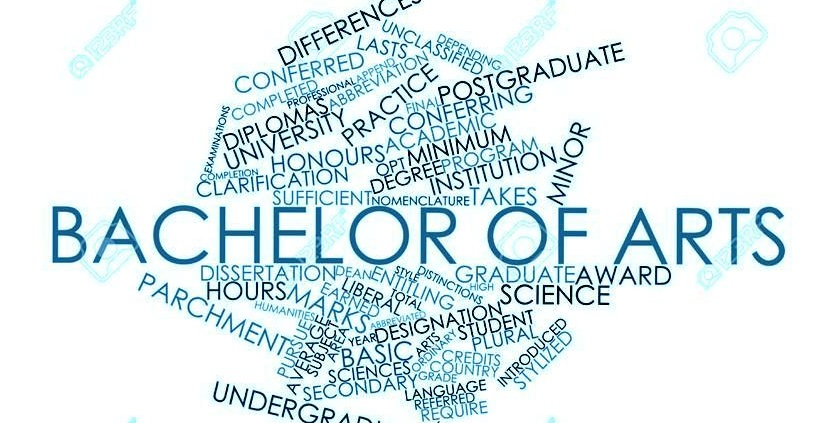
If you are a BA student and confused about what to do after graduation, don’t worry we have sorted out some career paths that you can choose after getting a bachelor’s degree in BA programme.

As we all know BA is one of the most popular undergraduate course among students specially humanities students. This three year course allows you to study a combination of subjects ranging from English, Hindi, Economics to History, political science and philosophy. Due to variety of subjects it opens up many job opportunities. Following are the most popular career paths after doing BA:

  1. Post Graduation in courses like B.Ed. or M.A. (in a specific subject).

After M.A in Education, candidates are eligible for PGT jobs, elementary and secondary teaching jobs in private and government schools. After qualifying NET/SET in education, candidates are also eligible for university level teaching jobs in private and government institutions while obtaining a degree of B.Ed. only provides an opportunity to be a teacher in a government or private school.

2. MBA (Masters in Business Administration) is another sought after course after a degree in BA programme where upon completion, candidates are offered jobs in private/ government financial institutes.  In an MBA program, you’ll learn about solving business problems, which would allow you to become a competent manager. You need to give the Common Admission Test (CAT) to apply for MBA degrees in numerous colleges and universities. Your CAT Score determines which colleges you can enter.  Students of every stream are eligible for this course. This job pays handsome amount of money. Average salary of a MBA graduate is 5-10 LPA.

3. Civil Services Examination, Bank PO Exams, NDA Exams – After completing graduation, students are eligible to apply for civil service examinations and Bank PO exams. They can apply in Union public service communication for posts like IPS, IAS, IFS, Indian defense service. Jobs in public sector banking system is another good option. As these jobs provide job security.

4. Computer Courses– A B.A. graduate can pursue many certifications like web designing, animations, coral draw etc. to get a job/profession in the media industry in fields like web and graphics designing. This field is becoming broader with the rise of social media platform and inclusion of AI. It is almost certain that this field will provide a large number of jobs in near future.

5. Law – Students who have studied English, Hindi, Political Science as subjects can pursue law as a career. The program imparts extensive knowledge on topics like Jurisprudence, Environment Laws, Arbitration, Law of Insurance, Consumer Protection Act. Upon completing the course, one can either pursue LLB, start practice after registering oneself with the respective councils or can work in government or private sectors.

6. Master of Fine Arts is another sought after course for ones who are inclined towards artistic endeavors. Some of the prominent specialization offered under master’s level design programmes are: Industrial design, design computing, architectural design, fashion and textile design, shoe designing, leather designing, graphic designing, house design etc. After completion of the course, one can practice as a designer in the field of specialization in the private/government sector.

BEST COLLEGES IN MUMBAI

A college assists a student in building their career. Colleges are necessary for converting the thoughts into action. The institution acts as a bridge for their career pathways. In college we are taught how to make into the society and working industry and progress in life, the institution boost our overall development. A college provide with many activities, fest, placement, etc so that an individual growth is secured. It’s on us to work hard and achieve our dream; here are few of the best colleges in Mumbai.

1) IIT BOMBAY – INDIAN INSTITUTE OF TECHNOLOGY

It is a public technical and research university, located in Powai. It was established in 1958, the Chairman is Dr Pawan Goenka and the Director is Subhasis Chaudhari. The institute has physically expanded to include more than 584 major building. The institute grant’s admission through JEE and Advance. It offers many courses such as bachelor of technology, bachelor of science. It offer courses for post graduate, doctoral and postdoctoral level. The centre has five primary research areas. It offers a great campus area and an awesome student life.

2) ST. XAVIER’S COLLEGE

It is a private Catholic autonomous higher education institution run by The Society of Jesus in Mumbai, located in the Fort area of South Bombay. It was established in 1869, the Chairman is Fr. Arun de Souza, SJ and the Principal is Dr. Rajendra Shinde. The college was greatly expanded in 1930s and is built in Indo-Gothic style. The college is equipped with modern amenities and has a large common library. It also has a leisure space area known as ‘The Woods’. The college is affiliated with the University of Mumbai, offering undergraduate and postgraduate courses in Arts, Science, Commerce and Management. One can opt for this college for a better career development.

3) MITHIBAI COLLEGE OF ARTS, CHAUHAN INSTITUTE OF SCIENCE AND AMRUTHBEN JIVANLAL COLLEGE OF COMMERCE AND ECONOMICS

Mithibai college is affiliated by the University of Mumbai and was granted the status of autonomous in 2018. The college was established in 1961 by Shri Vile Parle Kelavani Mandal as a part of the trust’s Silver Jubilee Celebration, located in Vile Parle. The principal was Dr. Rajpal Hande. It has 50% reservation for gujrati speaking community. It has been consistently featured on the top 5 ranks in India Today College rankings. It offers an undergraduate and postgraduate courses in commerce. Other courses include bachelor of management studies, bachelor of science and master of science courses in biochemistry, biotechnology and computer science.

4) JAI HIND COLLEGE

Jai Hind College is an autonomous college affiliated by the University of Mumbai, located in Churchgate Mumbai. It was established in 1948, the Principal of the college is Ashok Wadia. The college offers both junior college and regular degree college. The college provides bachelor degree in science, commerce and arts and also offers MSc in Big Data Analytic. It offers great students life and hosts big college fests every year. Once can consider this college if they have to enjoy their college life along with their studies.

BEAUTY IN THE EYE OF THE BEHOLDER.

Art in all of its form has been beautiful, it’s also terrifying. Beauty is a characteristic particular to an object that appeases the human senses. There is beauty in the way that we always catch something different each time we look at it, it’s terrifying because you didn’t catch it in the first place; it’s almost that beauty reflects what the eye of the beholder is feeling. You can find meaning in how you can distinguish melancholy from sadness in a painting, the way the music feels different. Art is beautiful not for the way that it was painted or how a song was sung or how a person danced but how the way you think of it, how your eyes sparkle when you talk about it. Art in all of its forms is beautiful for its ability to make someone happy just by looking at it even if that piece of art was made in sadness. It’s beautiful not for the way everyone said it is but for the way how everyone looks at it, it’s almost like you are staring right at your soul. Haruki Murakami said that “Have you ever had that feeling – which you’d like to go to a whole different place and become a whole different self” this saying is the essence of art. Art always makes us feel more human than we all are because we are always sticking their emotions in things that have no emotions.

It’s the human hopes and beliefs that make art beautiful; it’s how humans crave words and depth, desires, and fears. It’s how you love art in a way you don’t understand. That’s why art is beautiful and we humans quiver before it because of how art consumes us, unstrings our emotions. Life without the existence of art is painful and bland, the different of expressions art give birth to human identity and our creative powers with which human identity is meaningless.; art gives humans a chance to show and display important facets of their identity, show why they believe that certain issues must be paid more importance, why they vehemently stand for who they are. Art is for everyone and art is a display of human being’s capacity for empathy and honesty, open understanding. We make art because we want to be relatable and oddly humane despite all our flaws. Of course, all of us aspire to be an elegant person who is well-read, fluent in many languages, knowledgeable in the art, and always smells exquisite like roses. But we also aspire to be a woman in the cottage in the countryside who drinks wine, reads old novels, loves the feeling of warmth of a hot cup of tea by the window, is humble, and bakes the best biscuit ever. That is art is a relatable and bizarre concoction of feelings that we feel, we feel complex feelings but art makes our feelings more e defined, a bit sharper, a bit easier to understand, and explains to others about it. It’s basically a sardonic commentary of the spectrum of human emotions. They are powerfully glorious mysteries and yet art fulfills every human desire ever. We humans despite all our flaws are marred creatures who create fascinating works of art based on emotions and watch them in awe and be amazed. Whatever we do ends up being art, it’s always fascinating that anything we humans are good at ends up becoming art. We call cooking art when it’s beautiful, we call painting art when it’s beautiful. More importantly, art is different for each and every one of us, the difference in our perspective gives us a different outlook on art. Everything around us becomes art if we look at it pretty. 

Why We Need the Arts

Art has been central to human expression since time immemorial. We have come a long way from the cave paintings of our earliest ancestors to stop motion animation. But connecting all modes of artistic expression is the representation of the human, his thoughts, feelings, and aspirations. The power of art has only become stronger with time and remains as spectacular as ever. Even when we have progressed far ahead in science and technology, art has never been and never will be something that is non-essential. While everything else is poised towards our pursuit of knowledge, the arts itself is a way of knowing and representing the seeker himself.

In this time of the COVID-19 pandemic, with almost the entire global having to shut-down and face an unprecedented crisis, humanity is desperate for hope. This pandemic has not only led to a health crisis but a global economic and political crisis as well. While we battle against the odds as best as we can with all the knowledge and expertise that we have accumulated over the years, we have also come to see the importance of things that make us hopeful and optimistic.

couple love sitting evening
Photo by cottonbro on Pexels.com

The arts have proved their value yet again in this situation by offering us the respite we need from the daily inflow of depressing news and uncertainty of the future. In the months of lockdown, music and cinema have been constant companions to many. With the cinema closed and live music becoming temporarily non-existent, it is a blessing that we can still access the arts through technology. Art often allows us to distract ourselves for a little while and thus maintain a balance, not getting fully sucked into any kind of despair. From stand-up comedians to big-screen movies, from mural art to simple tunes, the arts have helped us get through many a day and have reminded us who we are. It lets us remember better days and also leaves space for hope. It allows us to imagine and expands our perspectives on life. Art has been proven to concretely influence our physical health and well-being. Art also provides a platform from which we can interact with other cultures and other styles of expression. It is also a tool for political awareness and self-assertion as well as the creation of identities. It adds meaning, curates safe spaces, and tells our story.

While we praise the arts often in public, one has to wonder whether we had placed it as being lesser useful than the sciences. In many households in India, children are actively told to pursue science or professional courses which will land them a steady income and security in life. This is because an industrially-driven culture that focuses only on profit places a lesser value on endeavors that might not seem to have any specific tangible profit. This has led to artists struggling to make a living and many being forced to leave their passions to pursue other ‘safer’ options to survive. Artists are regularly underpaid and underappreciated. This has also led to many small-town and emerging artists struggling to make a living during this lockdown. This pandemic ought to make us see this practice that has been so ingrained in our society and move us to re-instate the arts as equal, if not more valuable, than all other pursuits. This needs to be a systemic change and has to be prioritized, keeping in mind how much art has enriched our lives. We need to understand how it is intrinsic to our humanity and that at the end of the day, we need more than just medicine for the body but also healing for the soul, a way to process our emotions, and a reminder of our shared humanity.

For the Love Of Lingo !


Haruki Murakami, the renowned Japanese author quoted “Learning another language is like becoming another person”. The journey of learning a second language is indeed a beautiful one. For a language carries within itself the ethos of an age old civilization, its traditions and the glorious tales of its evolution. It is rightly said, ‘To learn a new language is to posses a second soul ’.
Sounds fascinating right? From the groovy Spanish number “Despacito” to watching Korean TV series or going gaga over the K-pop band BTS , we’re are all in awe of these rich languages. Sometimes that fascination of ours leads to learning. Yes, you guessed it right; we embark on the journey to learn that language. And if you haven’t considered learning a new language until now ,then let me introduce you to the benefits learning the lingo!!
· Travel: Are you a wander who loves to explore new places and cultures? Travelling across lands is one to the most enriching experience if done right. By right I mean immersing oneself into the local culture of the place, far away from the luxury hotels. Interacting heart to heart with the locals. That’s where knowing the language comes into play. Who knows what hidden gems, tales you might discover besides making memories of a lifetime. Hey you!! Do add a language holiday to your bucket list for a cherishing experience.
· Friends, Family and Culture : With new language comes new friends and the world feels like a family. Exchange of ideas, coming together of speakers of different languages inculcates a sense of mutual respect, empathy and admiration towards other traditions. Imagine going to Brazil and cheering your favorite football team or appreciating the all time classic French movies in their original form. From deciphering the Arabic scripts on the Islamic tombs or the new found confidence within you on being able to read those complicated street signs in Chinese script. It’s no less of euphoria than the “Eureka moment “, right?
· Food for the Brain: Here comes the good news! Did you know learning a new language not only boosts your brain power but also enhances your memory? Studies prove that multilingual people have an edge at multitasking and decision-making skills compared to their monolingual counterparts. Also, learning the lingo keeps Alzheimer’s at bay.
· Career Boost and CV skills: Having a second language on your CV is like cherry on the cake. It gives you an upper hand over others, opening new career avenues. As a student, it increases your chances of selection for Student exchange Programs and being a part of global immersion. On the professional front, one can apply to Embassies, language translator and various other promising profiles.
· Diving into the world of literature : Learning a new language helps one discover the real gems of literature whose essence is lost in translation. Be it the original works of Persian poet Rumi, Les Misérables by Victor Hugo, the heart wrenching tales of Nazi Germany expressed originally in Dutch by Anne Frank in her Diary. They all offer insights into the realities of world ,broaden our perspectives and help us embrace the world with kindness. Romance languages (French, Spanish, Portuguese, Italian and Romanian) have similar roots and knowing either of one makes it quite easy to learn another. Having prior knowledge of Portuguese myself, I found Spanish quite easy to comprehend.
Still wondering when, how and where to start from?
Let me help you with this. The answer is pretty simple.
· When: If not now then when? There’s no better time to learn a language than now. It all starts with a simple step.
Just set aside an hour from your busy schedule everyday and start learning the language you’ve always dreamt of being fluent in.
· How: Here’s an interesting answer. Pick that one language you are passionate about. It could be as simple as impressing your love with French ( most romantic language in the world ) or maybe German cause you want to move there for higher studies . I’m sure you have plenty of reasons to pick your Lingo! ( For me , It was reading the Alchemist by Paulo Coelho in Portuguese )
· Where: Start from the basics, build a strong foundation. There are plenty of online resources available such as Coursera , Duolingo , Memrise along with various podcasts and resources available on the internet . There’s an entire ocean to choose from, you just have to pick your pearls.
Remember, Change is hard at first, Messy in the middle and gorgeous at the end.” This journey of learning the lingo might be frustrating. There are gonna be times you’d feel frustrated and wanting to giving up. Be consistent because Rome wasn’t built in a day. Eventually, you’ll fall in love with the journey and the language itself.
P.S. Carpe Diem Folks!! (Live the moment, Live the lingo)
Happy learning !