Social Media

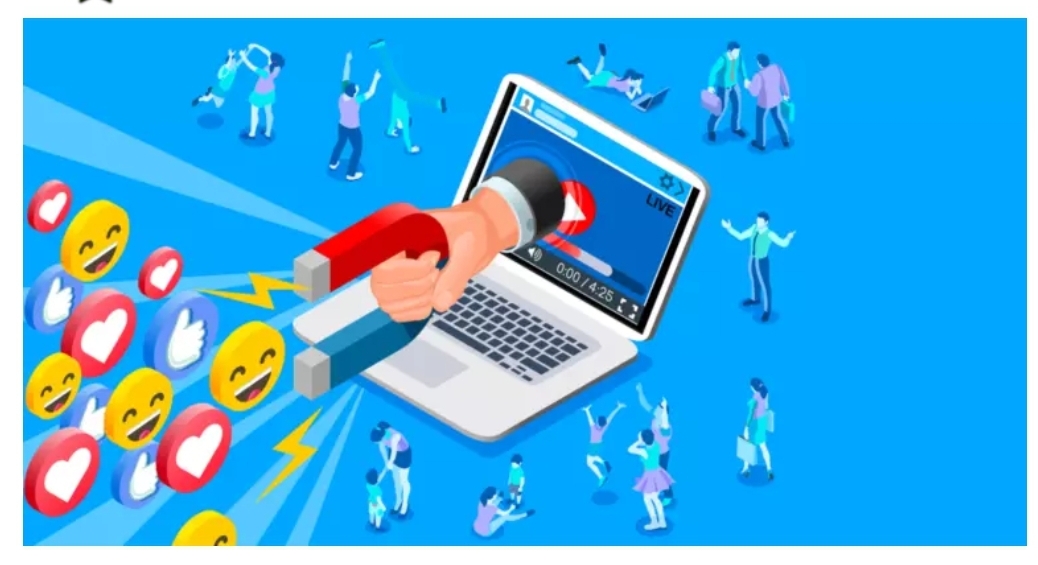
The term Social Media refers to computer and mobile mediated technologies that are designed and developed to help people socialise and connect with one another. It is a platform which is used to share ideas, communicate about daily life, discuss work related topics and so on. Originally the term social media was coined to refer to a person getting socialised with his/her friends and relatives. However, seeing the vast popularity and effectiveness, it was incorporated by the business houses to create mass awareness about their company and products. 

Types of Social Media

The term social media is very huge. It can vary between two school friends to large broadcasting houses using to communicate with large public in general. So, I have tried to list down the basic types of social media generally seen – – –

  1. Social networks: this is the most widely used form of social media. The most commonly used platforms are Facebook, Instagram, WhatsApp etc. these were used to send messages and upload pictures and videos. But in recent times, these sites are being used to actively promote businesses and din digital marketing.
  2. Blogs: these are articles and posts that cater to a particular idea/topic. Blogs can be in written form which describes about any topic or it may be in video form which tells us about any topic through the means of videos. Video blogs are called as vlogs.
  3. Forums: these are platforms where people come and brainstorm regarding any issue or trends. These forums are the active sites of social media which remains busy whenever there is any development regarding the socio-economic scenario of a country, or at times when people feel the need to discuss about a law passed.
  4. Enterprise social network: these are the platforms that cater to the image of a company in front of the public. This type of network is developed so that a customer may connect with the company and its products via internet. This type of network handles customer queries, pricing of items, any feedbacks and service complaints. 

Importance of Social Media

Social media plays a very vital role in the lives of current generation of people. Everyone from the old to the young can relate to this term. Let’s see how important it is – – –

  1. It serves as a source of great number of information and news. Its now possible to know about even the smallest of details in any nook and corner of the world thanks to the social media. It spreads like wildfire. It truly has made the world global village. 
  2. It helps to keep in touch with people and relatives who are far away from us. For officials it’s a great help as they can’t go to their homes every now and then and meet their parents or children. Thus, it helps to bring people closer.
  3. For companies it helps to create a brand name for themselves. They can use the platform to connect with the customers and make their marketing strategy even more profound. Attractive campaigns on social media tend to bring in a lot of people in the shopping outlets and can be seen as beneficial for the company.
  4. Many a times the government is seen using social media to create public awareness regarding sensitive issues prevalent in the society. It helps to find the target audience with much larger ease since there is at least one person from every family who uses social media in the 21st century.

Controversy in using social media

  1. Social media is the site for maximum number of fake news. Once spread, it’s impossible to stop it since everyone is now connected with each other. This fake news has resulted in serious consequences for the victim including death. Innocent people are seen being destroyed with just a stroke of a key in the media.
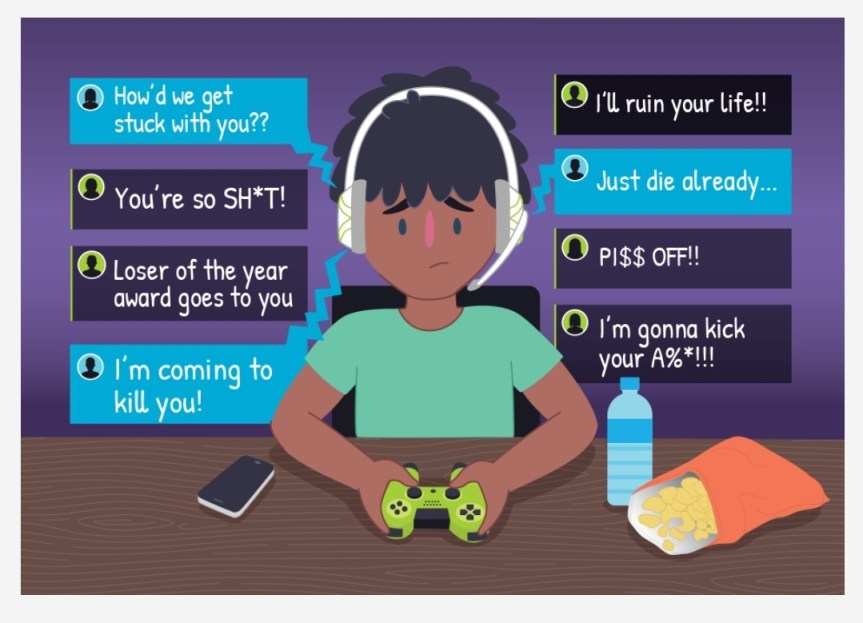
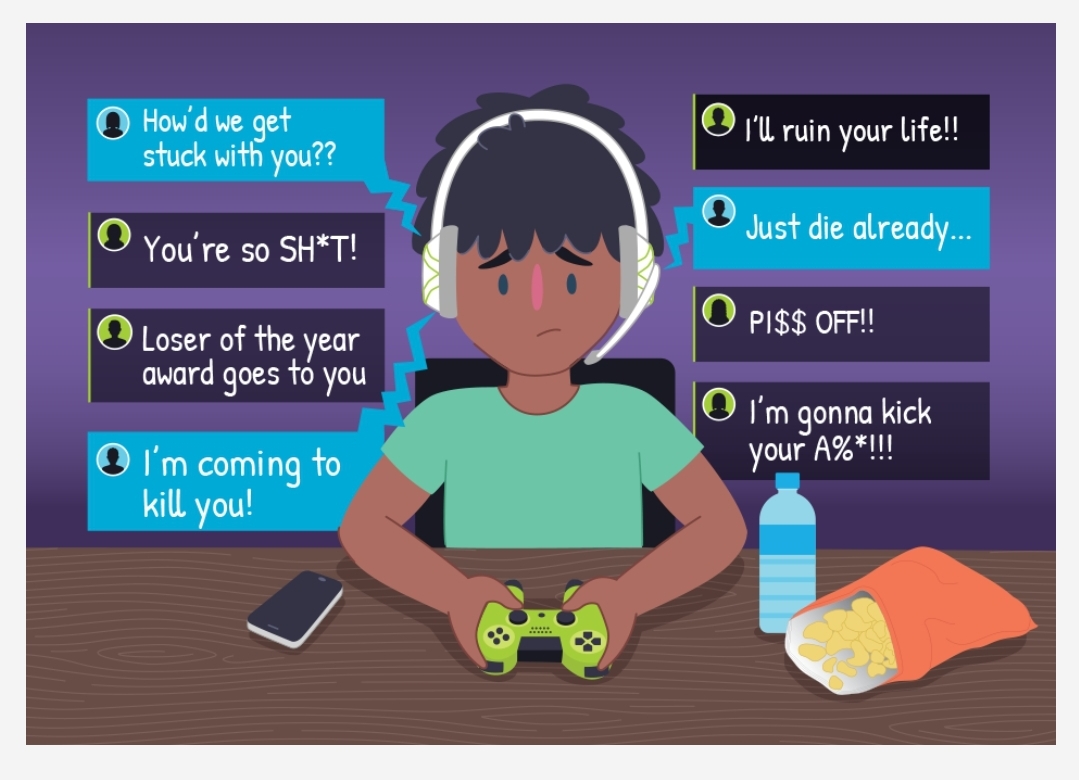
  2. Many young children have become the victim of cyber bullying. There have been reported cases of threats and kidnaps for the children of famous personalities. Also, many cases of body shaming take place on the internet. These incidents make the person down and makes him/her mentally unstable.
  3. Honey trapping and scandals are common in social media. People with high power and connections are usually targeted to gain an unfair advantage over them. Their competitors may then blackmail them and try to force undue advantages. Many a times girls are used in this business who in turn put the blame of assault and molestation on the victim if their demands are not fulfilled. 
  4. Hacking and fishing often takes place on the net. The bank details are stolen and the person is looted. This can be termed as digital robbery. Also, many people may hack the media accounts and upload vulgar/ obscene pictures and videos.
  5. However, the greatest problem of social media is the addiction. Young children are seen getting glued on their mobiles and computers most of the times. These kids forget the interaction with people physically and stop doing physical activities like playing, walking etc. this in turn creates health issues.

Conclusion

Like any scientific invention social media has both good as well as bad effects on the people who uses them. Its like the two sides of the same coins. However, the most important part is the awareness through which a person can utilise it for his/her benefits. Ultimately, it’s up to the social media user who can make or break his image on the platforms. Like I said before people from small areas are connecting towards the people from metro all thanks to the social media. In this way people no longer feel alienated or homesick even though they are far way. Social media has also given rise to many beautiful love stories across countries. So, make the most of it to develop as a much better person and let the world know.
Cyberbullying and Students

In today’s world, cyberbullying cases are common. Many students are negatively affected by it. Let us learn about it and know to stop it.

What is Cyberbullying?

Cyberbullying is bullying with the use of digital technologies. It can take place on social media, messaging platforms, gaming platforms and mobile phones. It is repeated behaviour, aimed at scaring, angering or shaming those who are targeted. Unlike the normal face-to-face bullying, cyberbullying leaves a digital footprint – a record that can prove useful and provide evidence to help stop the abuse.

Cyberstalking is a form of online harassment in which the perpetrator uses electronic communications to stalk a victim. This is considered more dangerous than other forms of cyberbullying because it generally involves a credible threat to the victim’s safety. 

Internet trolls intentionally try to provoke or offend others in order to elicit a reaction. Trolls and cyberbullies do not always have the same goals: while some trolls engage in cyberbullying, others may be engaged in comparatively harmless mischief. 

Effects of cyberbullying

When bullying happens online it can feel as if you’re being attacked everywhere, even inside your own home. It can seem like there’s no escape. The effects can last a long time and affect a person in many ways:

  • Mentally — feeling upset, embarrassed, stupid, even angry 
  • Emotionally — feeling ashamed or losing interest in the things you love
  • Physically — tired (loss of sleep), or experiencing symptoms like stomach aches and headaches 

The feeling of being laughed at or harassed by others, can prevent people from speaking up or trying to deal with the problem. In extreme cases, cyberbullying can even lead to people taking their own lives.

Fighting cyberbullying 

If you think you’re being bullied, the first step is to seek help from someone you trust such as your parents, a close family member or another trusted adult. In your school you can reach out to a counsellor or your favourite teacher. And if you are not comfortable talking to someone you know, search for a helpline in your country to talk to a professional counsellor.

For bullying to stop, it needs to be identified and reporting it is key. It can also help to show the bully that their behaviour is unacceptable. If you experience cyberbullying, you may want to delete certain apps or stay offline for a while to give yourself time to recover. But getting off the Internet is not a long-term solution. 

  • Think twice before posting or sharing anything online – it may stay online forever and could be used to harm you later. 
  • Don’t give out personal details such as your address, telephone number or the name of your school.
  • You can decide who can see your social media profile, send you direct messages or comment on your posts by adjusting your account privacy settings. 
  • Besides ‘unfriending’, you can completely block people to stop them from seeing your profile or contacting you.
  • You can also choose to have comments by certain people to appear only to them without completely blocking them.
  • You can delete posts on your profile or hide them from specific people. 

The Modern Problem of Cyberbullying


In this technology-saturated era, communication and trade have moved online and with the pandemic, we will see an increase in the number of people who use online platforms for their everyday activities which hitherto relied on other physical materials. This has various advantages and has greatly accelerated the process of the entire world becoming a global village. However, it is also important to note that scammers, frauds, unethical hacking, and cybercrimes are on the rise. One of the major problems faced in virtual spaces is cyberbullying. It is not a new phenomenon but with more of our everyday interactions going to be virtual, it is important that we know what it is and how we are to handle it.

Cyberbullying refers to the practice of bullying over digital devices such as phones or laptops, and electronic means such as via text, SMS, or on social media and public forums. It is also known as cyber-harassment and is akin to the kind of bullying one might experience at school, only on a different platform and potentially much more dangerous. A cyberbully uses technology to threaten, harass, ridicule, or embarrass an individual or a corporation. This is done by sharing harmful or false content about them or posting things designed to hurt or demean someone else. Some cyberbullying behavior that goes off-limits is considered criminal and is taken as a serious offense liable to police action. Living in a society in which more than half of its members use social media platforms, sharing photos, videos, and other personal content online has become a very common thing. However, one should be cautious of this data being misused, particularly when not just our friends or followers but even strangers are able to access this information. Online forums and chat rooms were the spaces where cyberbullying was most rampant. But now it is social media platforms like Facebook, Snapchat, Instagram and others that top the list for the greatest number of cyberbullying cases.

internet screen security protection
Photo by Pixabay on Pexels.com

One of the challenges when dealing with cyberbullying is our lack of awareness about it. Very often, people tend to dismiss or sideline these issues when they first appear. However, it only aggravates with time and usually leaves a permanent mark on the reputation and image of the person once he starts engaging with it. Such harassment via electronic means will only increase with more of our time spent online and it is necessary that we take note of it. If left to itself as a problem that will go away in time, cyberbullying can have long term consequences, destroying a person’s mental health, making him feel helpless, information, photos, and details being sold for money, manipulating public opinion, and destroying careers. It is difficult to combat it since the bullies usually remain anonymous and it is difficult to ascertain what their range of activities have been.

If you become a prey to cyberbullies, one of the first things you can do is to draw attention to the issue, speak about it with others, and seek professional remedy if necessary. Report it to authorities. Also try to not keep engaging since that only leads to them having more bait to agitate us. Keep a record of everything that happens in that space so that you will have proof even if they take down whatever they had done or posted. Let others know what is happening and seek their support as well. This is a crime that can be fought together if we are vigilant and willing to be there for each other. Let us make sure that cyberbullies are held accountable and removed, and that the internet is a safer and more welcoming space for all people.

Social Media Has Turned Into A Breeding Ground for Toxicity

Social Media is great – no contesting that. It’s a tool for self-empowerment, it’s a way to express yourself, it’s a way to stay connected with your inner circle….all of that. But what happens when the noise of social media becomes so intense that it overpowers your life? Unfortunately, that’s what social media has become for many people today. There’s everything from the infamous cancel culture, fleeting news trends, and fake influencers, to the body dysmorphia faced mostly by women users…..the list goes on.

Being a social media user myself, I find it disturbing how petty and superficial our reliance on social media has become. Instead of developing our personalities through real life experiences, we have developed digital walls. Walls filled with ideas of perfectionism and unrealistic standards of life. I’m still mind blown that we once lived in a world where social media was just another piece of entertainment. Now, it seems to be a necessity to function in life. You are not cool unless you have social media. If you don’t, you are deemed a social outcast. Life is not a picture, nor can it be summarized in a bunch of captions. We are not one-dimensional people, yet we are glued to boxes with snippets of other people’s lives. We wake up first thing in the morning checking our notifications to see how many likes and comments we’ve garnered. This was me, and I know this is a lot of you out there too. But at the end of the day, does of any this matter? If we as a community rely on digital acceptance to function as human beings, then it’s really just disappointing. Our happiness should not be defined by social media, let alone a heart or like. Social media is harmful to us, especially to the younger generation.

We as a society rely on digital acceptance to function as human beings. Nowadays, we can’t take a photo without some sort of embellishment, the “right” angle, or even a filter. We’ve been convinced that anything less than perfect is a flaw, and thus unacceptable. Curves, lips, accomplishments, awards, etc. define beauty and success. If it’s not an already altered image of our self, it’s one of something as trivial as food. But for what? To make someone jealous? Does happiness really need to come through the acceptance of others with a single like on a post? Our intentions on posting may be harmless, but our mind set is so focused on the opinions of other people. When are we going to focus on ourselves? Doing things for ourselves, because of what we want and need regardless of what other people may think.

Social media also enables commoditizing social status via likes is detrimental to mental health.
It’s disheartening to see what social media has done to our society. Nothing feels genuine anymore. A picture is taken to be posted on Snapchat. A video to be shared on our story. An activity because it’s popular on Instagram. We read posts on a person’s Facebook and assume to know their whole life.

Today’s social publishing environment rewards sensationalized content, thereby damaging healthy relationships online. These platforms reward “engagement” by highlighting highly liked posts more prominently in newsfeeds, accustomizing social media users to attempting to post that sensationalized content themselves. This attention-seeking behavior has left people vulnerable to dangerous propaganda and influence campaigns.

Social media is not life, instead, at this point, it has evolved into a wall. What was once a seemingly harmless platform, then, has now evolved into a powerful machine that, due to confusing hate speech and privacy policies, has set dangerous precedents for the future of social media.

At the end of the day, we need to come to the realization that social media doesn’t define us, but it should represent who we are.

Screenshot_20200717-165445_Chrome
Social Media has turned into a breeding ground for toxicity.

Is Cyberbullying Real?

Unless and until our society recognizes cyberbullying for what it is, the suffering of thousands of silent victims will continue.

Facebook, Instagram and Twitter may be the main social networks used to keep in touch with friends, but, worryingly, they are also the main sites used for cyberbullying and internet trolling.

Cyberbullying has been emerging as a growing concern for quite some years now. With the power of anonymity, people can verbally attack others over social networking sites, most often going after students with low self-esteem or a low circle of friends. These are not exclusive targets, but there’s a general consensus that these are the groups that are most affected by cyberbullying. Anybody can be a victim- although it’s the young teens that are most vulnerable.

Cyberbullying can affect its victims in more ways than you can imagine. Besides bringing down self esteem, it alienates you from social crowds, and in some cases, it may push people to severe depression and suicide. And, no it’s not as simple as ‘just turning the computer off’ or ‘simply looking away’. Think of it this way: if someone hurts your feelings on the phone, is stepping away from the phone going to magically fix it? No, because the issue lies with the person and the interaction, not the phone itself. Similarly, cyberbullying doesn’t end when you turn off the computer. Our real lives are so intertwined with social networks now that if you poison someone’s network, it will poison his or her real life. Besides, asking the bullied victim to not use the computer or advising them to refrain from going online is a rather harsh demand for obvious reasons. The focus should be on fixing the bully issue, not putting the onus on the victims. It’s even worse when the bullies wear the shroud of anonymity. After all, how do you deal with a bully when you don’t even know who he or she is. Cyberbullying is visceral too. Bullies can go out of their way to post unflattering pictures of you or paint you in a negative light in ways that they can’t do face-to-face.

What’s worse it that there’s not much that can be done about it. Cyberbullying is still protected by freedom of speech, and as long as a bully isn’t crossing over into obvious libel territory, they can’t really be touched. Even then, if you had a libel case, it is costly, expensive, and hard to prove.

So, why do people cyberbully? Is it out of jealousy or hatred? Or is it just the law of the jungle that the strong bullies the weak?

It is a myth that the strong bully the weak. It is those who cannot handle their stress with grace, who attack the gentle natured. The most clear, and psychological aspect is that they feel tough behind a computer screen, and believe that anything they say won’t affect them negatively in the grand scheme. It is a sort of thought process that most people employ when cyberbullying. Think of it this way. How much more likely are you to argue or even insult someone online than you are to do in person? You would probably feel “safer” attacking someone online as opposed to in-person, and understandably so. They could do it to feel better about themselves. A lot of bullying cases, IRL or online are usually fed by insecurity or hatred towards oneself. Again, most bullies have some underlying problem which they believe can be quelled by being aggressive online. It’s also much easier since they don’t have to worry about other factors and feel they are safe from consequence. Lastly, they could just be looking for attention. It is evident that most cyberbullies attack others for the sake of attention, and the ability to instigate a response out of a victim.

So, if you ever encounter a cyberbully, Know that it’s not your fault and Don’t respond or retaliate. Sometimes a reaction is exactly what aggressors are looking for because they think it gives them power over you, and you don’t want to empower a bully. Further, you should save the evidence and Use available tech tools to either block the person and/or report the person to the service.

Lets never forget that words impact people emotionally, and how you feel emotionally affects how you are physically. Pulling someone down will never help you reach the top.

Screenshot_20200716-120846_Chrome
A keyboard away doesn’t make it okay.