
Exploring the Elements and Principles of Design: Building Blocks of Creative Design and Built Form

By Kavita Dehalwar

Design, whether in the realms of art, graphic design, architecture, or any other creative field, relies on a set of fundamental components that form the basis of visual aesthetics and functionality. These components are categorized into two main groups: the Elements of Design and the Principles of Design. Understanding and mastering these elements and principles is crucial for creating compelling and effective designs.

Elements of Design:

  1. Line: Lines are the basic building blocks of design. They can be straight or curved, vertical or horizontal, thick or thin. Lines guide the viewer’s eye and can convey a sense of movement, stability, or dynamism.
  2. Shape: Shapes are two-dimensional and can be geometric (circles, squares) or organic (natural shapes). They contribute to the overall structure and balance of a design.
  3. Form: Unlike shapes, forms are three-dimensional and have depth. They add a sense of volume and solidity to a design. Think of a cube or a sphere as examples of form.
  4. Color: Color is a powerful visual element that evokes emotions and sets the tone of a design. It involves the use of hues, shades, and tints. Colors can create contrast, harmony, or emphasis within a composition.
  5. Texture: Texture adds a tactile quality to a design. It can be perceived visually or through touch. Texture enhances the overall visual experience and can be smooth, rough, glossy, or matte.
  6. Space: Space refers to the area within, around, or between elements in a design. It plays a crucial role in determining the overall composition and balance. Effective use of positive and negative space is essential for a harmonious design.
  7. Typography: In graphic design, typography involves the arrangement and selection of fonts and typefaces. It contributes to the readability and visual appeal of text in a design.

Principles of Design:

  1. Balance: Balance is the distribution of visual weight in a design. It can be symmetrical, where elements are evenly distributed, or asymmetrical, where balance is achieved through contrast.
  2. Contrast: Contrast involves the juxtaposition of elements to create visual interest and emphasize certain aspects of a design. It can be achieved through variations in color, size, shape, or other visual elements.
  3. Emphasis: Emphasis directs the viewer’s attention to a focal point in a design. It can be achieved through color, contrast, size, or placement of elements.
  4. Unity: Unity brings a sense of cohesion and completeness to a design. It ensures that all elements work together harmoniously to convey a unified message or concept.
  5. Movement: Movement creates a sense of flow and direction in a design, guiding the viewer’s eye through the composition. It can be achieved through the arrangement of elements or the use of lines and shapes.
  6. Rhythm: Rhythm is the repetition or alternation of elements in a design. It creates a sense of visual tempo and can be regular, flowing, or progressive.
  7. Proportion: Proportion involves the relationship between the sizes of different elements in a design. It ensures that elements are appropriately sized in relation to each other, contributing to a balanced composition.

Understanding how to effectively utilize these elements and principles allows designers to communicate ideas, evoke emotions, and create visually appealing and functional compositions. Whether in the digital realm, on canvas, or in architectural structures, the elements and principles of design serve as the foundation for creative expression and aesthetic excellence.

References

Dehalwar, Kavita, and Shashikant Nishant Sharma. “Fundamentals of Research Writing and Uses of Research Methodologies.” (2023).

Farrell, Alex, Stacy D. VanDeveer, and Jill Jäger. “Environmental assessments: four under-appreciated elements of design.” Global Environmental Change 11.4 (2001): 311-333.

Fu, Katherine K., Maria C. Yang, and Kristin L. Wood. “Design principles: The foundation of design.” International design engineering technical conferences and computers and information in engineering conference. Vol. 57175. American Society of Mechanical Engineers, 2015.

Martin, Robert C. “Design principles and design patterns.” Object Mentor 1.34 (2000): 597.

Sharma, Shashikant Nishant. “Urban forms in planning and design.” International Journal of Research 1.1 (2014): 7-16.

Sharma, Shashikant Nishant. “Review of most used urban growth models.” International Journal of Advanced Research in Engineering and Technology (IJARET) 10.3 (2019): 397-405.

Watts, Ronald D. “The elements of design.” The design method (1966): 85-95.
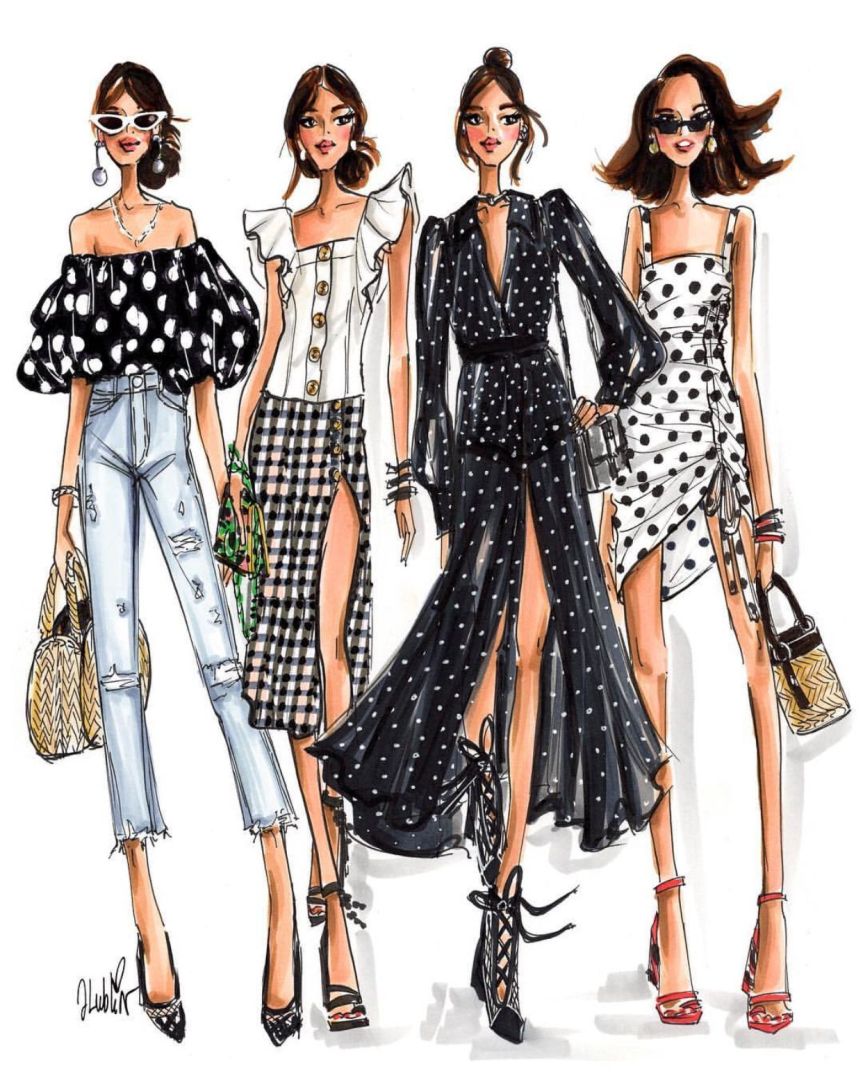
In Layman’s view-The world of fashion

In layman’s view, let us know about the fashion in our daily lifestyle. Fashion comes and fashion goes but or the style designer remains forever. Allow us to at the onset of this the name given to the mode of dress and makeup at any given time. Fashion is not anything that’s static or stays for any length of your time. When people have forgotten the past. Like everything else, Fashion also keeps changing and this alteration is that the backbone of all-time fashion. However, what we’ve to know about fashion is that, how far can fashion change. Let us for example take the dress of girls, which is that the most important thing within the modern times of today. As an example, take the Dress of saree and a blouse. A blouse changes from full sleeves, to three-Quarter sleeves, to half sleeves, and sleeveless. Once this circuit of change is over in a very particular length of your time, the style comes back to full sleeves and continues on the identical path yet again. Sometimes it’s seen that the black isn’t there, sometimes the front is changing in shape. With these Variations within the blouse, decades surpass and therefore the fashion comes back to the Orginal position from where it started. Regarding the saree, this is often even originally a very versatile dress. Every state of India includes a different type of wearing it and draping it around. This is only one piece of a dress that we see of change. In point of fact, all dresses need to go through changes so as to suit the pattern of the most recent in fashion. Another example we can see in men’s wear the pant. At just once it accustomed be broad from top to bottom, Loose fit. uninterested in a loose fit came the bell-bottoms with the length of the pant being fit, but being bell-shaped and lose sort of a bell at the underside, and hence named bell bottom. After ages, the loose bell gave thanks to tight pants not only tight but I have to say they were skin-tight, called drainpipe trousers which were actually shaped absolutely straight sort of a drain thus named drainpipe trousers. Now, the most recent could be a change from pants of any pattern and size to jeans. The pant has now taken the position of formal wear. In the major and commonest dresses, we’ve got noticed how patterns keep changing. In the world of fashion, there has got to be a continual change. However, there’s still a limit to the extent, fashion can go, within the given scenario. But, nowadays of exposure to the body, even there’s a limit so, fashion designers must keep changing the portion of the body that should be exposed. Sometimes and in some dresses, the legs are shown, and in others, the front or back is shown. it’s only within these permutations and combinations that the designer needs to work. The day when the complete body is sparingly covered or dressed is not very far. Regarding a following for the style setters, they are doing not need to worry the least bit this aspect, for, it’s been noticed time and again that, the style designer just must bring out something new, something different, and therefore the public, yes all of it follows it. This is often because it is a thing of pride to decorate like all others. It’s this attitude of the general public that has made the World of fashion a really lucrative business /profession.No matter what the change introduced in a dress, the general public is guaranteed to follow it as, to be in fashion is thrown resolute the winds, and anyone Who isn’t dressed as per the newest code of the planet of fashion is backward, orthodox, and just not fit to move in society and this offers a lift to the business of fashion. With this attitude towards fashion, the industry of fashion has a heyday. Though being in fashion is a rich hobby, most people wish to stay in fashion and follow the newest trends. In this regard, I feel that since fashion keeps on changing which also in no time, rather than a private following it, it’d be more interesting for fashion to require a full circle and came back for me to suit within the slot. In my view, we must always wear a dress that suits us and is comfortable. Certainly, a time will come when whatever we prefer to wear is going to be in fashion on behalf of us.

HOW TO MAKES YOUR HOME SAFE DURING COVID-19

The government released a new set of guidelines this week to combat COVID-19 transmission, emphasising the importance of masks, distance, hygiene, and well-ventilated spaces. It has been stressed that “ventilation can decrease the risk of transmission” from an infected individual to others.

It was recommended that outdoor air be introduced into workplaces, houses, and wider public spaces, as well as that steps be taken to increase ventilation in these spaces.

It was also recommended that fans, open windows and doors, even partially open windows, be strategically placed to introduce outdoor air and increase indoor air quality. It also said that adding cross ventilation and exhaust fans is helpful in curtailing fans running if the windows and doors are locked, it said.

To generate the optimal air flow for optimum protection from indoor infection, add an exhaust fan or convert a pedestal fan into an exhaust fan by turning it to face outdoors, according to the guidelines.

COVID-19 pandemic and prolonged stay-at-home phenomenon, according to Shalini Chandrashekar, principal designer and co-founder, Taliesyn- Design & Architecture, have revised the value of comfortable dwellings.

Optimizing the use of natural sunlight

By orienting the openings toward the northeast (N-E), an open breezeway can be created within the built volume. Orienting the kitchen in the southeast (S-E) will reward the mundane morning chores with the soothing morning sunshine, and locating the bedroom in the southwest (S-W) can pull in the warmth of the afternoon golden sun, all such conscious considerations can come in handy when designing a well-ventilated home, she advised.

Furthermore, strategically placing the openings while keeping the sun path and wind direction in mind lowers the operational costs of mechanical temperature regulation and indoor lighting, allowing the architecture to take on a more elevated spatial identity, she adds.

Incorporating skylights

In India, people prefer to keep their windows closed to keep insects out and preserve privacy. Openings with screens or jaalis can solve this problem by allowing fresh air in while maintaining protection and privacy.

Windows with buck mesh and sheer curtains inside are positioned disgonally to allow for instant cross-ventilation in the room. Because of the heat strength coming from those directions, large glass walls on the south and west are typically closed.

“It’s best to ensure that the prevailing wind direction of the site/city is taken into account and the fenestrations are placed in accordance with them to maximize the air flow,” Meena Murthy Kakkar, Design Head and Partner, Envisage, says.

Keeping the house dry

For proper ventilation and hygiene, it is important to keep the house dry. To keep the dampness out, create a dedicated wet utility area, which is a semi-covered utility room for washing and drying. Powerful exhausts in the kitchen and toilets, as well as easy-to-open windows, are a must if the position allows it. To keep the kitchen dry, place it in the sunniest part of the house.

Segregating wet and dry areas

If you have a balcony in a shady corner or a house without a balcony, invest in a dryer to prevent a dark and musty odour inside. Separate the dry and wet areas of your bathroom’s bathing enclosures with a partition. This also aids in preventing moisture from entering your quarters. Invest in high-capacity exhaust fans.

Arun K.R., senior architect at Brick&Bolt says, “We usually take care to provide sufficient and proper air circulation by having larger windows. Since morning sunlight is so beneficail, openings to the east help.”