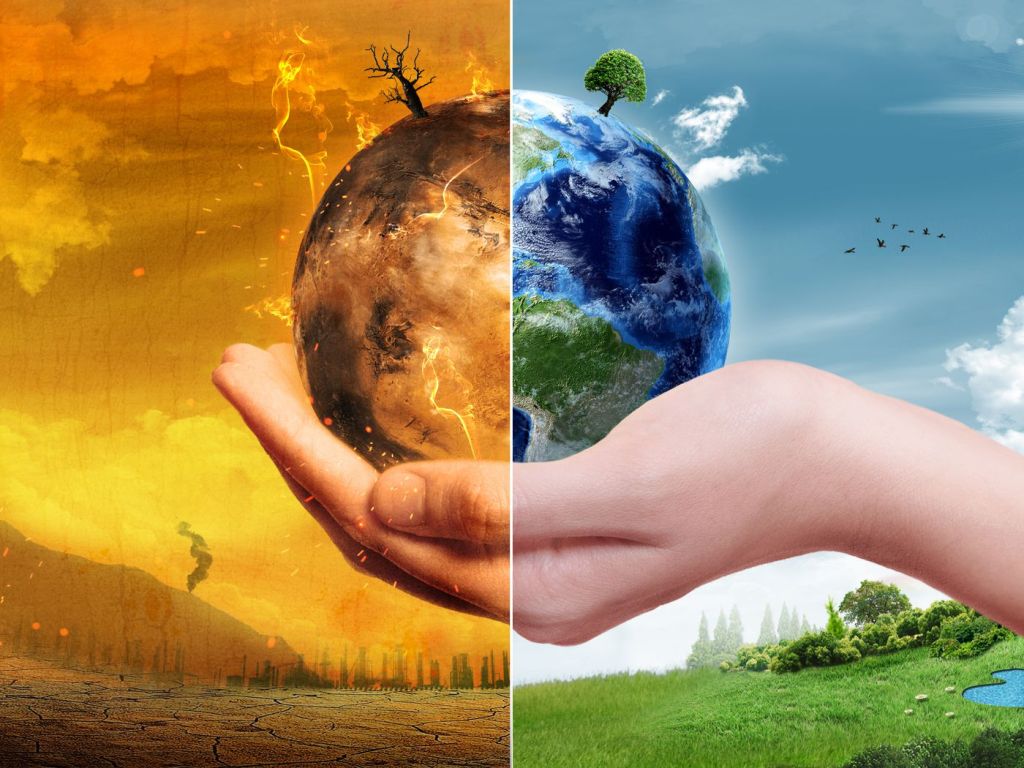
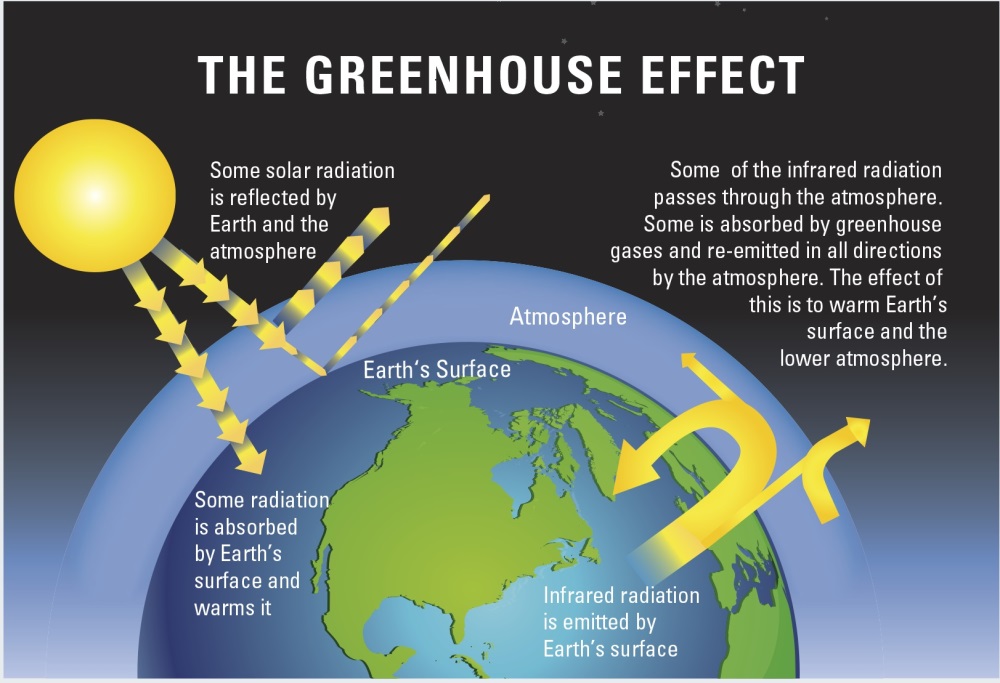
Global Warming Definition: “Global warming is a gradual increase in the earth’s temperature generally due to the greenhouse effect caused by increased levels of carbon dioxide, CFC’s, and other pollutants.”
The Earth is warming up, and humans are at least partially to blame. The causes, effects, and complexities of global warming are important to understand so that we can fight for the health of our planet. Global warming is the long-term warming of the planet’s overall temperature. Though this warming trend has been going on for a long time, its pace has significantly increased in the last hundred years due to the burning of fossil fuels. As the human population has increased, so has the volume of fossil fuels burned. Fossil fuels include coal, oil, and natural gas, and burning them causes what is known as the “greenhouse effect” in Earth’s atmosphere. The greenhouse effect is when the Sun’s rays penetrate the atmosphere, but when that heat is reflected off the surface cannot escape back into space. Gases produced by the burning of fossil fuels prevent the heat from leaving the atmosphere. These greenhouse gasses are carbon dioxide, chlorofluorocarbons, water vapor, methane, and nitrous oxide. The excess heat in the atmosphere has caused the average global temperature to rise overtime, otherwise known as global warming.
Global warming has presented another issue called climate change. Sometimes these phrases are used interchangeably, however, they are different. Climate change refers to changes in weather patterns and growing seasons around the world. It also refers to sea level rise caused by the expansion of warmer seas and melting ice sheets and glaciers. Global warming causes climate change, which poses a serious threat to life on earth in the forms of widespread flooding and extreme weather. Scientists continue to study global warming and its impact on Earth.
The Earth is divided into geological time scales, each denoting events that occurred in Earth’s geological history, by scientists. The scale begins with the formation of the Earth about 4.5 billion years ago, known as “Hadean”. The current geological epoch is known as the “Holocene”, which began approximately 11,700 years ago. The Holocene epoch is characterized by the rapid proliferation and spread of the human species on Earth. The “Anthropocene” is a proposed epoch that follows the Holocene and marks the period when human activity has started to have a significant impact on the planet’s ecosystem. The term “Anthropocene” was first proposed by the Dutch chemist Paul J. Crutzen and American biologist Eugene F. Stoermer (Crutzen & Stoermer 2000) to denote the current period in Earth’s geological history wherein, instead of the environment shaping humans it is the humans who are shaping and drastically altering the environment.
The Anthropocene, according to Steffen et al. is divided into three periods (616). It begins with the industrial revolution, wherein man first harnessed the energy of fossil fuels, coal, and oil and gas. The extensive use of the newfound wealth of energy in the form of fossil fuels stamped a significant imprint on Earth’s environment, evident in the increase in deforestation and rise in the concentration of methane, carbon dioxide, and nitrous oxide in Earth’s atmosphere (616). The second period, from 1945-to 2015, is known as the “great acceleration”. This period is characterized by an exponential increase in the impact of humans on the Earth system. An increase in the population of humans and an increase in industrialization resulted in a substantial increase in the concentration of greenhouse gases in Earth’s atmosphere (618). The third period, from 2015 onwards, is known as “stewards of Earth’s system”. This period is marked by the recognition of Anthropogenic influences on the Earth system and the subsequent filtration of this growing awareness on decision-making processes (618).
The major problem represented by the Anthropocene is the radical shifts in Earth’s temperature and biodiversity. These shift include global warming, extinction of species, habitat loss, and changes in the chemical composition of oceans and soils. Other probelms inlclude sustenance of human vices like greed, indifference, and intemperance.
There are, according to Steffen et al., three philosophical approaches to dealing with these problems. Firstly, is the business-as-usual philosophy (619), which employs a laissez-faire mindset when dealing with the changing global environment. The second is mitigation which is “based on the recognition that the threat of further global change is serious enough that it must be dealt with proactively” (619). And the third option is geoengineering (619), which attempts to solve the problem of climate change with technology.
Works cited
Crutzen, Paul J. and Eugene F. Stoermer 2000. The “Anthropocene.” Global Change Newsletter (41): 17–18.
Steffen, Will, et al. “The Anthropocene: Conceptual and Historical Perspectives.” Philosophical Transactions of the Royal Society A: Mathematical, Physical and Engineering Sciences, vol. 369, no. 1938, 2011, 842–67. Crossref, https://doi.org/10.1098/rsta.2010.0327.
Steffen, Will, Paul J. Crutzen, et al. “The Anthropocene: Are Humans Now Overwhelming the Great Forces of Nature.” AMBIO: A Journal of the Human Environment, vol. 36, no. 8, 2007, 614–21. Crossref. https://doi.org/10.1579/0044-7447(2007)36[614:taahno]2.0.co;2
Global warming is defined as the global annual temperature has increased in total by a little more than 1 degree Celsius, or about 2 degrees Fahrenheit. Global warming is mainly because of the industrial revolution, burning plastics.
CAUSES OF GLOBAL WARMING:-
* Greenhouse Gases Are the Main Reasons for Global Warming.
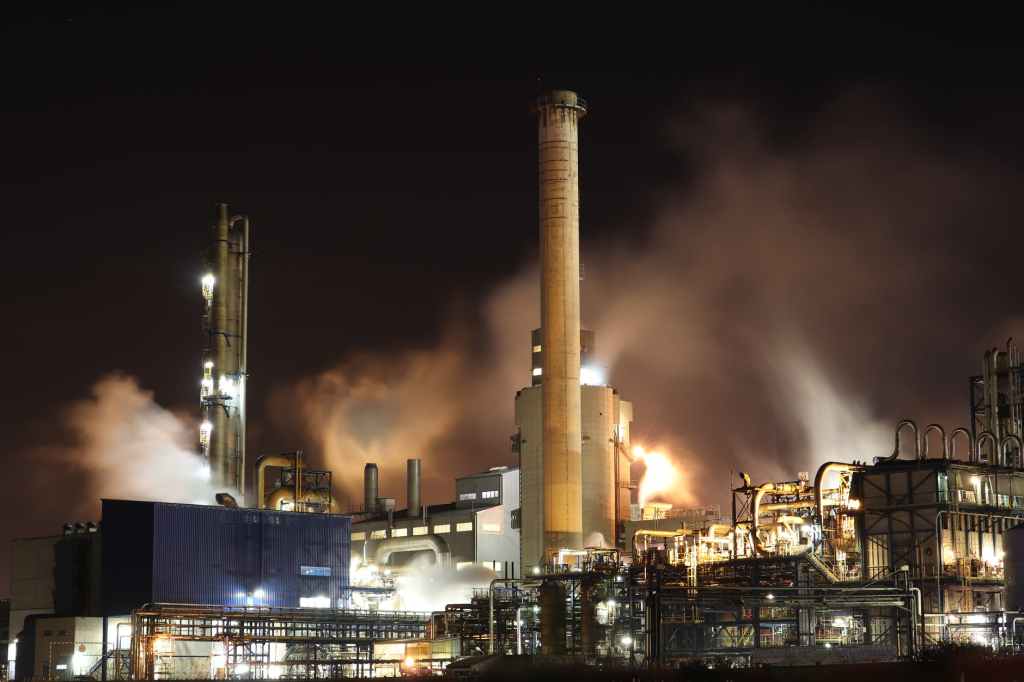
* Another main reason for global warming is the industries.
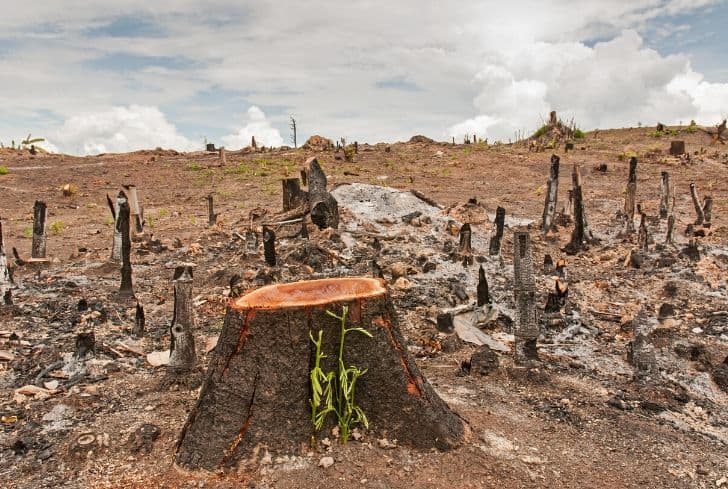
* Deforestation is one of the reason for global warming.
* The smoke from vehicles.
EFFECTS OF GLOBAL WARMING:-
* Global warming cause increase in temperature that raises sea level can cause flood.
* Global warming raises temperature in the atmosphere.
* Melting of glaciers are one of the most threat for the earth
* If global warming cause increase in temperature then there is threat for availablity of water.
* It also cause some diseases like allergies,chest pain etc.
CONTROLLING MEASURES OF GLOBAL WARMING:-
* By decreasing deforestation and encouraging affrostration
Global warming is defined as the global annual temperature has increased in total by a little more than 1 degree Celsius, or about 2 degrees Fahrenheit. Global warming is mainly because of the industrial revolution, burning plastics.
CAUSES OF GLOBAL WARMING:-
* Greenhouse Gases Are the Main Reasons for Global Warming.
* Another main reason for global warming is the industries.
* Deforestation is one of the reason for global warming.
* The smoke from vehicles.
EFFECTS OF GLOBAL WARMING:-
* Global warming cause increase in temperature that raises sea level can cause flood.
* Global warming raises temperature in the atmosphere.
* Melting of glaciers are one of the most threat for the earth
* If global warming cause increase in temperature then there is threat for availablity of water.
* It also cause some diseases like allergies,chest pain etc.
CONTROLLING MEASURES OF GLOBAL WARMING:-
* By decreasing deforestation and encouraging affrostration
Global warming’ is the term used to describe the rise in global surface temperatures. The term is often used interchangeably with ‘climate change’. The phenomenon revolves around the rise in surface temperatures – over land and oceans – that have led to an accelerated increase in temperatures. This has in turn led to the progressive shrinkage of the glaciers and polar ice caps, leading to rise in sea level. Another observed effect has been the disruption of cyclical weather patterns and the rising number of freak natural disasters.
The rise in temperatures has been attributed to the build-up of greenhouse gases, such as carbon dioxide and methane, at especially accelerated levels as a result of the industrialisation of the past 100 years. A concerted global effort to counter and mitigate the effects of this phenomenon has been elusive, with developed nations and developing countries facing off over the respective levels of emission cuts they would have to effect domestically.
However, there is also a considerable minority, especially in the US, that holds the assumption that global warming as a hoax perpetrated by certain countries for their own benefit.
Carbon Markets: Carbon markets facilitate the trading of emission reductions. Such a market allows countries, or industries, to earn carbon credits for the emission reductions they make in excess of their targets. These carbon credits can be traded to the highest bidder in exchange of money. The buyers of carbon credits can show the emission reductions as their own and use them to meet their reduction targets. Carbon markets are considered a very important and effective instrument to reduce overall emissions.
A carbon market existed under Kyoto Protocol but is no longer there because the Protocol itself expired last year. A new market under Paris Agreement is yet to become functional. Developing countries like India, China or Brazil have large amounts of carbon credits left over because of the lack of demand as many countries abandoned their emission reduction targets. The developing countries wanted their unused carbon credits to be transitioned to the new market, something that the developed nations had been opposing on the grounds that the quality of these credits — the question whether these credits represent actual emission reductions — was a suspect. A deadlock over this had been holding up the finalisation of the rules and procedures of the Paris Agreement.
The Glasgow Pact has offered some reprieve to the developing nations. It has allowed these carbon credits to be used in meeting countries’ first NDC targets. These cannot be used for meeting targets in subsequent NDCs. That means, if a developed country wants to buy these credits to meet its own emission reduction targets, it can do so till 2025. Most countries have presented climate targets for 2025 in their first NDCs.
The resolution of the deadlock over carbon markets represents one of the major successes of COP26.
Mitigation: The Glasgow agreement has emphasised that stronger action in the current decade was most critical to achieving the 1.5-degree target. Accordingly, it has:
1. Asked countries to strengthen their 2030 climate action plans, or NDCs (nationally-determined contributions), by next year.
2. Established a work programme to urgently scale-up mitigation ambition and implementation.
3. Decided to convene an annual meeting of ministers to raise ambition of 2030 climate actions.
4. Called for an annual synthesis report on what countries were doing.
5. Requested the UN Secretary General to convene a meeting of world leaders in 2023 to scale-up ambition of climate action.
6. Asked countries to make efforts to reduce usage of coal as a source of fuel, and abolish “inefficient” subsidies on fossil fuels Has called for a phase-down of coal, and phase-out of fossil fuels. This is the first time that coal has been explicitly mentioned in any COP decision. It also led to big fracas at the end, with a group of countries led by India and China forcing an amendment to the word “phase-out” in relation to coal changed to “phase-down”. The initial language on this provision was much more direct. It called on all parties to accelerate phase-out of coal and fossil fuel subsidies. It was watered down in subsequent drafts to read phase-out of “unabated” coal power and “inefficient” fossil fuel subsidies. But even this was not liking to the developing countries who then got it changed to “phase down unabated coal power and phase out inefficient fossil fuel subsidies while providing targeted support to the poorest and the most vulnerable in line with national circumstances…”. Despite the dilution, the inclusion of language on reduction of coal power is being seen as a significant movement forward.
Adaptation: Most of the countries, especially the smaller and poorer ones, and the small island states, consider adaptation to be the most important component of climate action. These countries, due to their lower capacities, are already facing the worst impacts of climate change, and require immediate money, technology and capacity building for their adaptation activities.
As such, the Glasgow Climate Pact has:
Asked the developed countries to at least double the money being provided for adaptation by 2025 from the 2019 levels. In 2019, about $15 billion was made available for adaptation that was less than 20 per cent of the total climate finance flows. Developing countries have been demanding that at least half of all climate finance should be directed towards adaptation efforts.
Created a two-year work programme to define a global goal on adaptation. The Paris Agreement has a global goal on mitigation — reduce greenhouse gas emissions deep enough to keep the temperature rise within 2 degree Celsius of pre-industrial times. A similar global goal on adaptation has been missing, primarily because of the difficulty in defining such a target. Unlike mitigation efforts that bring global benefits, the benefits from adaptation are local or regional. There are no uniform global criteria against which adaptation targets can be set and measured. However, this has been a long-pending demand of developing countries and the Paris Agreement also asks for defining such a goal.
Finance: Every climate action has financial implications. It is now estimated that trillions of dollars are required every year to fund all the actions necessary to achieve the climate targets. But, money has been in short supply. Developed countries are under an obligation, due to their historical responsibility in emitting greenhouse gases, to provide finance and technology to the developing nations to help them deal with climate change. In 2009, developed countries had promised to mobilise at least $100 billion every year from 2020. This promise was reaffirmed during the Paris Agreement, which also asked the developed countries to scale up this amount from 2025. The 2020 deadline has long passed but the $100 billion promise has not been fulfilled. The developed nations have now said that they will arrange this amount by 2023.
Following are the major observations of the Glasgow Summit :
1. A deal aimed at staving off dangerous climate change has been struck at the COP26 summit in Glasgow.
2. Expressed “deep regrets” over the failure of the developed countries to deliver on their $100 billion promise. It has asked them to arrange this money urgently and in every year till 2025.
3. Initiated discussions on setting the new target for climate finance, beyond $100 billion for the post-2025 period.
4. Asked the developed countries to provide transparent information about the money they plan to provide.
5. Loss and Damage: The frequency of climate disasters has been rising rapidly, and many of these cause largescale devastation. The worst affected are the poor and small countries, and the island states. There is no institutional mechanism to compensate these nations for the losses, or provide them help in the form of relief and rehabilitation. The loss and damage provision in the Paris Agreement seeks to address that.
Introduced eight years ago in Warsaw, the provision hasn’t received much attention at the COPs, mainly because it was seen as an effort requiring huge sums of money. However, the affected countries have been demanding some meaningful action on this front. Thanks to a push from many nations, substantive discussions on loss and damage could take place in Glasgow. One of the earlier drafts included a provision for setting up of a facility to coordinate loss and damage activities. However, the final agreement, which has acknowledged the problem and dealt with the subject at substantial length, has only established a “dialogue” to discuss arrangements for funding of such activities. This is being seen as a major let-down.
Carbon Markets: Carbon markets facilitate the trading of emission reductions. Such a market allows countries, or industries, to earn carbon credits for the emission reductions they make in excess of their targets. These carbon credits can be traded to the highest bidder in exchange of money. The buyers of carbon credits can show the emission reductions as their own and use them to meet their reduction targets. Carbon markets are considered a very important and effective instrument to reduce overall emissions.
A carbon market existed under Kyoto Protocol but is no longer there because the Protocol itself expired last year. A new market under Paris Agreement is yet to become functional. Developing countries like India, China or Brazil have large amounts of carbon credits left over because of the lack of demand as many countries abandoned their emission reduction targets. The developing countries wanted their unused carbon credits to be transitioned to the new market, something that the developed nations had been opposing on the grounds that the quality of these credits — the question whether these credits represent actual emission reductions — was a suspect. A deadlock over this had been holding up the finalisation of the rules and procedures of the Paris Agreement.
The Glasgow Pact has offered some reprieve to the developing nations. It has allowed these carbon credits to be used in meeting countries’ first NDC targets. These cannot be used for meeting targets in subsequent NDCs. That means, if a developed country wants to buy these credits to meet its own emission reduction targets, it can do so till 2025. Most countries have presented climate targets for 2025 in their first NDCs.
The resolution of the deadlock over carbon markets represents one of the major successes of COP26.
The main task for COP26 was to finalise the rules and procedures for implementation of the Paris Agreement. Most of these rules had been finalised by 2018, but a few provisions, like the one relating to creation of new carbon markets, had remained unresolved.
After two weeks of negotiations with governments debating over provisions on phasing out coal, cutting greenhouse gas emissions and providing money to the poor world, the annual climate change summit came to an end on Saturday night with the adoption of a weaker-than-expected agreement called the Glasgow Climate Pact.
The Glasgow meeting was the 26th session of the Conference of Parties to the UN Framework Convention on Climate Change, or COP26. The main task for COP26 was to finalise the rules and procedures for implementation of the Paris Agreement. Most of these rules had been finalised by 2018, but a few provisions, like the one relating to creation of new carbon markets, had remained unresolved. However, due to clear evidence of worsening of the climate crisis in the six years since the Paris Agreement was finalised, host country United Kingdom was keen to ensure that Glasgow, instead of becoming merely a “procedural” COP, was a turning point in enhancing climate actions. The effort was to push for an agreement that could put the world on a 1.5 degree Celsius pathway, instead of the 2 degree Celsius trajectory which is the main objective of the Paris Agreement.
Earth is the only planet in the solar system with life. It is home to numerous species. It is home to numerous species. but today, our planet is afflicted with environmental issues that are life threatening. Now water, air, and soil is polluted. Because of the increasing population and the irresponsible human behaviour, the environment conditions are becoming worse and perhaps uninhabitable. Some of the major environment problems faced by the world looming large are listed below.
Global Warming & Climate Change
“Global warming” refers to the rise in global temperatures due mainly to the increasing concentrations of greenhouse gases in the atmosphere.
“Climate change” refers to the increasing changes in the measures of climate over a long period of time – including precipitation, temperature, and wind patterns.
Earth’s climate has changed throughout history. Just in the last 650,000 years there have been seven cycles of glacial advance and retreat, with the abrupt end of the last ice age about 11,700 years ago marking the beginning of the modern climate era — and of human civilization. Most of these climate changes are attributed to very small variations in Earth’s orbit that change the amount of solar energy our planet receives.
The current warming trend is of particular significance because it is unequivocally the result of human activity since the mid-20th century and proceeding at a rate that is unprecedented over millennia. It is undeniable that human activities have warmed the atmosphere, ocean, and land and that widespread and rapid changes in the atmosphere, ocean, cryosphere, and biosphere have occurred.
The planet’s average surface temperature has risen about 2.12 degrees Fahrenheit (1.18 degrees Celsius) since the late 19th century, a change driven largely by increased carbon dioxide emissions into the atmosphere and other human activities.4 Most of the warming occurred in the past 40 years, with the seven most recent years being the warmest. The years 2016 and 2020 are tied for the warmest year on record.
The ocean has absorbed much of this increased heat, with the top 100 meters (about 328 feet) of ocean showing warming of more than 0.6 degrees Fahrenheit (0.33 degrees Celsius) since 1969.6 Earth stores 90% of the extra energy in the ocean.
The Greenland and Antarctic ice sheets have decreased in mass. Data from NASA’s Gravity Recovery and Climate Experiment show Greenland lost an average of 279 billion tons of ice per year between 1993 and 2019, while Antarctica lost about 148 billion tons of ice per year.
Glaciers are retreating almost everywhere around the world — including in the Alps, Himalayas, Andes, Rockies, Alaska, and Africa.
Satellite observations reveal that the amount of spring snow cover in the Northern Hemisphere has decreased over the past five decades and the snow is melting earlier.
Global sea level rose about 8 inches (20 centimeters) in the last century. The rate in the last two decades, however, is nearly double that of the last century and accelerating slightly every year.
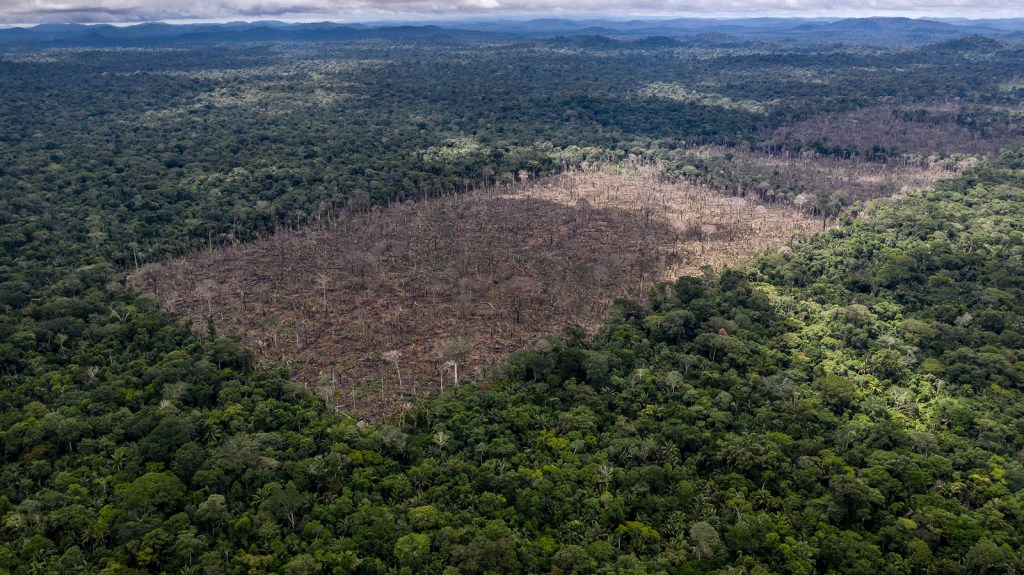
Deforestation
The clearing or thinning of forests by humans is known as Deforestation.
Forests cover 31% of the land area on our planet. They help people thrive and survive by, for example, purifying water and air and providing people with jobs; some 13.2 million people across the world have a job in the forest sector and another 41 million have a job that is related to the sector. Many animals also rely on forests. Eighty percent of the world’s land-based species, such as elephants and rhinos, live in forests.
Forests also play a critical role in mitigating climate change because they act as a carbon sink soaking up carbon dioxide that would otherwise be free in the atmosphere and contribute to ongoing changes in climate patterns.
But forests around the world are under threat, jeopardizing these benefits. The threats manifest themselves in the form of deforestation and forest degradation.
The main cause of deforestation is agriculture (poorly planned infrastructure is emerging as a big threat too) and the main cause of forest degradation is illegal logging. In 2019, the tropics lost close to 30 soccer fields’ worth of trees every single minute.
Illegal deforestation found in the indigenous Uru-Eu-Wau-Wau territory. This area of deforestation was discovered on December 15th 2019 during the first surveillance made by the Uru-eu-wau-wau after the drone course funded by WWF’s Amazon Emergency Appeal.
Drones are to be used to monitor deforestation, invasion and land grabbing. The Uru-Eu-Wau-Wau people received drone piloting training in a partnership between Kanindé Ethno-Environmental Defense Association and WWF. From the funds raised from WWF’s Amazon Emergency Appeal WWF donated 14 drones and trained 55 people to operate them during a training course in December 2019 held in Rondônia.
The Indigenous Uru-Eu-Wau-Wau territory in Rondônia measures 1,867,117 hectares and is home to the springs of the 17 largest rivers, it is known as “the state water tank”. This Indigenous Land is the most important of Rondônia because of its biodiversity and the economic value of the water available. There are also caves with rock scriptures, endangered animals, flora and fauna that have never been studied. In the history of the Indigenous Land there have been successive invasions by loggers, rubber tappers, farmers, and land grabbers but it suffers in particular from land grabbing and illegal livestock. The invasions intensified from the 1980s and persist to this day. A new wave of invasions has intensified threats to the people of the Uru-eu-wau-wau Indigenous Land since the 2018 election campaign.
Energy Crisis
Our energy sources such as petroleum, biofuel, coal, etc. are ,mostly non-renewable resources. The energy crisis due to the excess usage of these energy sources, are not depleting the sources fast, but are also adding the green the greenhouse gases which in turn are adding to the green house gases which in turn are adding to the global warming condition. So, most countries are looking for alternative energy sources such as wind energy, solar energy, nuclear energy etc, which will be helpful in the future.
Ozone Layer Depletion
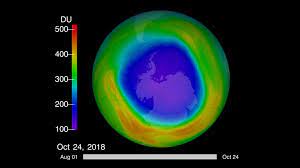
Ozone layer depletion is the gradual thinning of the earth’s ozone layer in the upper atmosphere caused due to the release of chemical compounds containing gaseous bromine or chlorine from industries or other human activities.
This happens when the chlorine and bromine atoms in the atmosphere come in contact with ozone and destroy the ozone molecules. One chlorine can destroy 100,000 molecules of ozone. It is destroyed more quickly than it is created.
Some compounds release chlorine and bromine on exposure to high ultraviolet light, which then contributes to the ozone layer depletion. Such compounds are known as Ozone Depleting Substances (ODS).
The ozone-depleting substances that contain chlorine include chlorofluorocarbon, carbon tetra-chloride, hydro-chlorofluorocarbons, and methyl chloroform. Whereas, the ozone-depleting substances that contain bromine are halons, methyl bromide, and hydro bromofluorocarbons.
Chlorofluorocarbons are the most abundant ozone-depleting substance. It is only when the chlorine atom reacts with some other molecule, it does not react with ozone.
Montreal Protocol was proposed in 1987 to stop the use, production and import of ozone-depleting substances and minimise their concentration in the atmosphere to protect the ozone layer of the earth.
If the emission of these gases and other harmful gases are not checked, the ozone layer will disappear very soon. This may expose the living beings to harmful radiations which cause life-threatening diseases like skin cancer.
Forming a Ozone-hole
Pollution
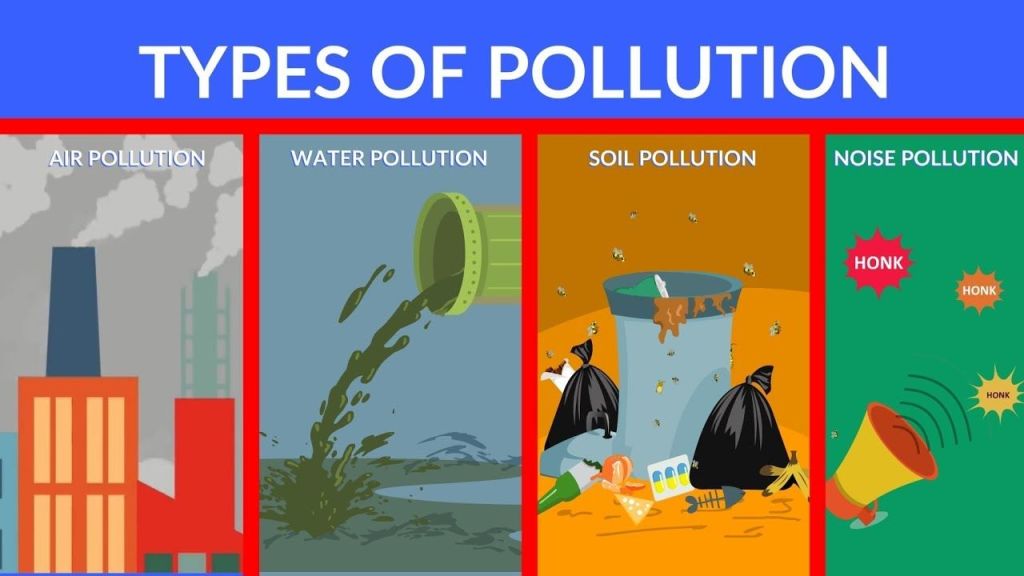
Pollution is the introduction of contaminants into the natural environment that cause adverse change. Pollution can take the form of chemical substances or energy, such as noise, heat, or light. All these pollution are very harmful and can seriously affect the living being. Air pollution is related to the emission of harmful gases in the earth’s atmosphere causing health problems. Water Pollution on the other hand, is related to the dumping of waste materials in the water which causes harm to the aquatic as well as terrestrial life. Soil pollution is also related to dumping of waste material, fertilizer run-offs, pesticides and in the sol which degrades the soil. Now comes noise pollution, radio waves from mobile towers and mobile phones, smell pollution, which is related to the high frequency sound ways and pungent smell which are harmful for the ears, brains, nose and lungs.
Waste
Waste are unwanted or unusable materials. Waste is any substance which is discarded after primary use, or is worthless, defective and of no use.
A by-product by contrast is a joint product of relatively minor economic value. A waste product may become a by-product, joint product or resource through an invention that raises a waste product’s value above zero.
Examples include municipal solid waste (household trash/refuse), hazardous waste, wastewater (such as sewage, which contains bodily wastes (feces and urine) and surface runoff), radioactive waste, and others.
Inappropriately managed waste can attract rodents and insects, which can harbor gastrointestinal parasites, yellow fever, worms, the plague and other conditions for humans, and exposure to hazardous wastes, particularly when they are burned, can cause various other diseases including cancers.
Toxic waste materials can contaminate surface water, groundwater, soil, and air which causes more problems for humans, other species, and ecosystems.
Waste treatment and disposal produces significant green house gas (GHG) emissions, notably methane, which are contributing significantly to global warming.
As global warming and carbon-dioxide emission increase, soil begins to become a larger carbon sink and will become increasingly volatile for our plant life.
Education and awareness in the area of waste and waste management is increasingly important from a global perspective of resource management. The Talloires Declaration is a declaration for sustainability concerned about the unprecedented scale and speed of environmental pollution and degradation, and the depletion of natural resources.
Local, regional, and global air pollution; accumulation and distribution of toxic wastes; destruction and depletion of forests, soil, and water; depletion of the ozone layer and emission of “green house” gases threaten the survival of humans and thousands of other living species, the integrity of the earth and its biodiversity, the security of nations, and the heritage of future generations.
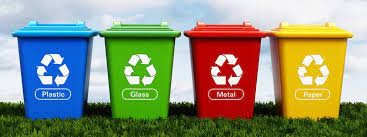
Recycling
Oil Spills
An oil spill is the release of a liquid petroleum hydrocarbon into the environment, especially the marine ecosystem, due to human activity, and is a form of pollution. Oil spills may be due to releases of crude oil from tankers, offshore platforms, drilling rigs and wells, as well as spills of refined petroleum products (such as gasoline, diesel) and their by-products, heavier fuels used by large ships such as bunker fuel, or the spill of any oily refuse or waste oil. It has become a major cause for the extinction of many marine species. The biggest oil spill in the world history was a result of Gulf War and it took place in the Persian Gulf where more than 420 million gallons of oil was spilled by the Iraqi forces just to stop the American soldiers from landing.
Depletion of Resources
Resource depletion is the consumption of a resource faster than it can be replenished.
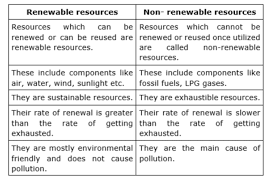
Natural resources are commonly divided between renewable resources and non-renewable resources . Use of either of these forms of resources beyond their rate of replacement is considered to be resource depletion.
The value of a resource is a direct result of its availability in nature and the cost of extracting the resource, the more a resource is depleted the more the value of the resource increases.
There are several types of resource depletion, the most known being – Aquifer depletion, deforestation, mining for fossil fuels and minerals, pollution or contamination of resources, slash-and-burn agricultural practices, soil erosion, and over consumption, excessive or unnecessary use of resources.
The 1760 industrial revolution saw large-scale mineral and oil exploration and the practice has been gradually growing, leading to more and more natural oil and mineral depletion. And together with the advancements in technology, development, and research in the contemporary era; exploitation of minerals has become easier and humans are digging deeper to access different ore. The increased exploitation of different minerals has led to some of them entering into a production decline.
For example, minerals such as Gasoline, Copper, and Zinc production are estimated to decline in the next 20 years. Plus, oil mining continues to rise due to the upsurge in the number of engines that use petroleum thereby magnifying its depletion. The peak oil theory supports this fact by putting forward that it will come a time when the globe will experience uncertainties on alternative means of fuels owing to the over-harvesting of petroleum.
Overpopulation
The total global population is more than seven billion people. Still, there is a consistent increase in the overall earth populace and this has been a critical factor in accelerating the depletion of natural resources. An increase in the populace expands the need for resources and conditions necessary to sustain it. In addition, It contributes to increased ecological contamination. Research further indicates that developing countries are using more and more resources to industrialize and support their ever-increasing population. Hence, the depletion of natural resources will continue as long as the world population increases.
Nuclear Issues
Nations long to have nuclear weapons. But the fact is, nuclear weapons have become one of the most dangerous environmental issues today. The amount of nuclear weapons we have can destroy the entire earth in a few seconds. There are many disadvantages of nuclear of nuclear power. Water is used to cool the reactors which then mixes up with he other water bodies and by this, it ads to the problem of global warming. The waste which is produced is so dangerous that even a a small amount of nuclear waste can harm, a big area and effect the living beings. The misuse of nuclear power has become a threat to the survival of life on earth.
Nuclear Power Plants
Go Green to Save Earth
In order to save the planet, the only way is to go green. We need to save energy to reduce the energy crisis and to save nature. Switch off all electrical appliances when not in use. Try to avoid non-renewable energy resources and concentrate on renewable energy like solar energy. Save water. preserve rainwater and stop water pollution. Use recycled things. Stop using plastic bags and bottles. Use Eco-friendly things. Control over-population. save trees avoid using paper bags. Plant tress.
Climate change refers to a change in the average weather conditions of a place. It is one of the biggest crisis that humanity is facing right now. In 2019, around 11,000 scientists declared a global climate emergency and warned of the dangers to come. Countries across the globe are grappling with the severe effects that reflect the state of the planet. The impact of climate change is intensifying and poses a threat to life on Earth as we know it. The Earth has become warmer than the previous century, and CO2 levels in the atmosphere have risen by 50%.
Human actions have influenced the rapid climate change we are experiencing today. Cutting trees, burning coal, oil, and gas contribute to an increase in global warming. These activities have led to a drastic increase in CO2 levels in the atmosphere, which traps more heat. According to the 2018 US National Climate Assessment, the emission of greenhouse gases has been the dominant cause of global warming since the mid 20th century. Thus, 97% of scientists agree that human activity is the primary cause of the present climate scenario.
Humans have exploited nature for the longest time, and we’re facing devastating consequences. Climate change and extreme weather conditions have led to natural disasters on a large scale, leading to the massive loss of life and property. The past few years have proven that climate change is real, as the world woke up to devastating headlines of forest fires, hurricanes, heatwaves, floods, droughts, and storms ravaging countries around the globe.
IPCC Report:
The Sixth Assessment Report (AR6) by the Intergovernmental Panel on Climate Change (IPCC) of the United Nations recently released the 2021 Climate Report that raised concerns about the climate of the Earth. The report is based on more than 14,000 scientific studies and presents the most comprehensive state of climate change and its impacts. Within the next two decades, the average temperature of the Earth will increase by 1.5 degrees celsius. This increase will lead to extreme weather events. Heatwaves, droughts, floods, and wildfires will occur frequently. The sea levels will rise due to the warming of oceans and melting of glaciers, which pose a threat for the cities along India’s coastline, which are vulnerable to the rising sea levels. All these changes will affect livelihoods, agriculture, and the ecosystem drastically.
Impact:
If the temperature of the planet goes on increasing, weather-related events will become more frequent and dangerous. According to the World Health Organization, climate change will contribute to approximately 250,000 deaths per year due to malnutrition, malaria, diarrhea, and heat-related stress. A new study by scientists from China, Europe, and the US has found that within just 50 years, climate conditions in India could become unlivable, with temperatures as high as the Sahara Desert if the emissions of greenhouse gases continue to rise at the current pace. Scientists predict that we could lose 550 species by the end of this century, and this is only the tip of the iceberg. People living in developing and third world countries will be the most impacted and will face a hard time coping with the consequences of climate change. India is among 11 countries declared as “highly vulnerable” by US Intelligence Agencies to prepare and respond to the climate crisis.
Governments and corporations cannot tackle climate change alone without the collective help of the people. People have to do their bit and can contribute in their ways to help save the planet. Small daily efforts can help create an impact. The following are some ways in which we can help:
Reduce, Reuse, Recycle
Consume less meat
Reduce the use of plastic
Take fewer flights
Walk and cycle more
Carry your own shopping bag
Plant trees and create green spaces
Embrace slow fashion
Compost
Reduce consumption and wastage
Spread awareness
Climate change is a threat to humanity and is a serious issue that needs to be tackled. The present generation is experiencing an overwhelming sense of dread and climate anxiety regarding the future. The Covid19 pandemic provided some climate relief, but that is only temporary. We are running out of time to salvage the planet and its inhabitants, and it is time for governments, corporations, and individuals to step up their climate action to match the scale of the task ahead of us.
“Global warming, a global threat”. We have heard a lot about global warming in the news debates general discussion and international discussions too. But are we really serious about it, we just hear it and leave it we never try to understand the seriousness of it. It has just turn to be a debate topic for us.
The temperature of the Earth is increasing drastically, even in Antarctica whoes normal temperature remain +10°C in summer experience 18.3 degree Celsius record temperature which is an alarm in one. Even Canada is facing about 50 degree celsius temperature which is the record highest in the history of Canada.
Cause of global warming is the CFC gases which are released by the AC, refrigerators and cars that we use. The clearing of forests that leads to deforestation is another cause of global warming as carbon dioxide is not been able to use by the trees. Global warming leads to melting of glaciers which ultimately leads to increase in sea level which is the main cause of tsunamis and other problems.
We always hear that action speaks Louder Than words and this is the real problem to take action upon. There are many steps taken internationally for this cause but we should contribute from our side too.
We can contribute by planting a tree or any small plant or by reducing the use of ACs, refrigerators and cars. Just think about it it might be a very small step from your side but will cause a great difference to this earth. Just bring the first step forward and other get inspired by you and will ultimately E result in reduction of the Global temperature.
Wildlife conservation Are we aware of the amount of deaths and the amount of endangered species around us? And of course, the answer would be an absolute NO. I would not like to include all single human beings, as there are organisations trying to help the species and working on conserving them, but I don’t think they can do it all alone. They need our help. The animals NEED our help.
How are we, humans, causing extinct species? One of the main reason for extinction is habitat destruction. Humans destroy the habitats of species which cause them to die or suffer.The second main reason would be the diseases causing species to die because of us, example : taking pictures, polluting the area, hunting, deforestation and ect. These activities can be the major reasons for species extinction.
What are the well known critically endangered species? and why? Amur leopards – being hunted for their fur for coating. it is also said that their habitat are continuously being destroyed – ( human causing ) Black rhino – their horns are being hunted for medicines. – ( human causing ) Hawksbill sea turtle – is being hunted for their shell and also for meat. the jelly fishes, water animals and also the Hawksbill sea turtle are being affected by the plastic covers being thrown on seas – ( human causing ) Mountain gorillas – being extinct due to deforestation also causes to destroy the trees which can be the food for animals – ( human causing ) pangolin – scales of the pangolin are believed that they are used for medical problems. polar bear – global warming issues – ( human causing ) plants – yes! I would also like to include plants in endangered species. We all know humans are the main reasons for the dying of plants. plants are being dead by deforestation, cutting trees – for wood and paper, and pollution ( water, air, water) What is India doing? “India will work with Coalition countries to adopt cleaner energy sustainable production and consumption patterns and environment-friendly transport, agriculture, industry and waste management to promote clean air,” Minister Javadekar said. The central government gives all types of financial literacy and conserving and protecting the wildlife. National ban was imposed on tiger hunting in 1970 and the Wildlife Protection Act became effective in 1972. countries that are helping the endangered species The Philippines and Malaysia are trying to shield the animals. Individual European nations are taking actions to help and support their animals.
let’s do it together! Nothing is impossible!All of us can do it together! There are a lot of tips for us to follow for conserving wildlife. If we follow them continuously we can achieve! The animals can achieve! Join in organisations or wildlife agencies. donate and volunteer Learn about species and animals ( birds ) – increasing our knowledge. Let’s raise awareness Recycle Build a wildlife garden let’s stop using products made from animals Let’s not eat meat or nonveg – try eating a low impact diet. save energy, save water, save the environment Avoid plastic What are we supposed to do? Just… save the animals. save the planet!
Global warming is the phenomenon of the increase of certain gas levels in the atmosphere due to the increase in the earth’s temperature. The temperature rise is due to the greenhouse effect caused by the increased levels of carbon dioxide (CO2), Chlorofluorocarbons (CFCs), and other pollutants. This term has been observed over the past 2 or 3 centuries. The rise in global warming has brought changes in climatic patterns. Many scientists have warned that a temperature rise may bring significant social, ecological, and economic damage to society. Such damage also includes the extinction of some flora and fauna species.
CAUSES OF GLOBAL WARMING:
The causes of global warming may be natural or artificial (man-made). The following are the major causes of global warming:
DEFORESTATION: The cutting of trees over a large area will result in deforestation. The loss of trees will gradually increase the level of carbon dioxide in the atmosphere since the plants are the main source to intake CO2 and release Oxygen (O2). This in turn results in economic imbalance and increases global warming.
INDUSTRIALIZATION AND POPULATION GROWTH: With the advent of industrial development, there is a rapid rise in the earth’s temperature. The release of harmful pollutants into the atmosphere results in global warming. The increase in population increases the level of CO2 in the atmosphere since they exhale CO2.
GASES PRODUCED IN AGRICULTURE: Various farming activities produce carbon dioxide, methane, and nitrous oxide. Methane is released by various resources like rice paddies, fossil fuels, cow dung. By adding the fertilizers to the land, it increases the level of nitrous oxide in the atmosphere. This leads to a rise in the earth’s temperature.
VOLCANIC ERUPTION AND FOREST FIRE: The ash and smoke emitted during the volcanic eruption and forest fire will drastically increase the level of CO2, which in turn increases global warming.
IMPACTS OF GLOBAL WARMING ON EARTH
MELTING OF GLACIERS: Global warming has led to the temperature rise which may bring several disadvantages to the earth. This in turn increases the melting of glaciers and thus increases sea level.
ECOLOGICAL IMBALANCE: Increase in global warming results has affected the coral reefs that may lead to the extinction of some flora and fauna species. This creates an ecological imbalance.
CLIMATIC CHANGES: Global warming has brought changes in climatic patterns. The monsoon failure, drought, acid rain, tsunami, floods due to heavy rainfall are some of the results of climatic changes. This will have a drastic impact on the living species of earth. The marine ecosystem is greatly affected by global warming.
ARRIVAL OF NEW DISEASES: The patterns of heat and humidity have been greatly affected by global warming. This results in the mutation of several microbes and that mutation maybe sometimes dangerous and will result in severe diseases. The increase in temperature affects the normal healthy lifestyle of humans.
LOSS OF HABITAT: Global warming will result in the loss of habitat for several flora and fauna species. Some of the animals have to migrate from their natural habitats or some become endangered species and indirectly it brings drastic effects on biodiversity.
HOW TO STOP GLOBAL WARMING?
Follow 3R’s Reduce, Reuse, and Recycle. Reduce the usage of devices that emits CFCs and CO2 to the atmosphere. Plant more saplings to decrease the level of carbon dioxide and thus helps in maintaining the ecological balance. Conduct many awareness programs about global warming and its impact so that people can understand. Avoid the usage of plastic bags and canes. Use energy-efficient products to save energy. So, let’ protect our earth by following these steps.
Every other year we face various challenges due to climatic change. The human community is not the only living thing who are facing the problem rather, each and every living organism in the planet is affected due to the climate change. Some scientists have claimed that climate change was first noticed in 19th century when natural green house effect was first identified. Thomas edison was the one who initially voiced concern for climate change and spread awareness for renewable energy. Since that day many people and organisation came forward to promote renewable energy and various steps to reduce the rate at which the climate is changing.
The biggest threat of climate change is global warming. climate change leads to global warming and everybody knows about it but how does it actually affect our planet ? Well the global warming increases the average temperature of the earth due to which the glacier sheets melt and end up increasing the sea level which can submerge majority of the land and it will not only affect the human habitation but also affect the animals life as some animals do not have the capability to handle high temperature.
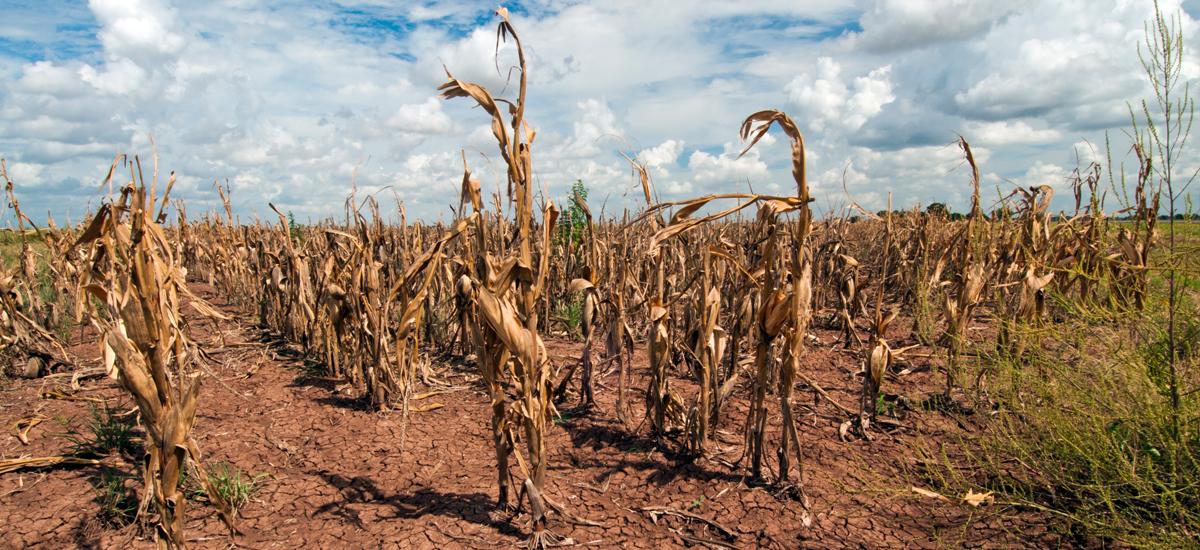
It can affect the economy as well, as the change in climate might result in droughts and can affect the cultivation of crops which will affect almost every human from every background. Due to climate change many natural resources are also depleting due to which the price of such resources are touching skies and it might become almost impossible for any normal human to afford it. Also pollution is another reason which is affecting the health, not only of humans but also of animals and plants. And who do you think is responsible for this ? obviously we humans are behind this destruction and only we have the power to stop this. Governments can only talk about the possible solutions and it’s implementations but it lies in our hand whether we are implementing right steps to reduce climate change or not. Atleast we are able to raise our voice against it but think about the poor animals who are suffering because of our deeds and can’t even fight for their rights to live in a healthy environment. So next time when you throw a plastic search for a dustbin first. I know such acts won’t have an immediate impact on environment but it really does have long term positive impact on environment.















 Track2Training
You must be logged in to post a comment.