Theoretical vs. Practical Education

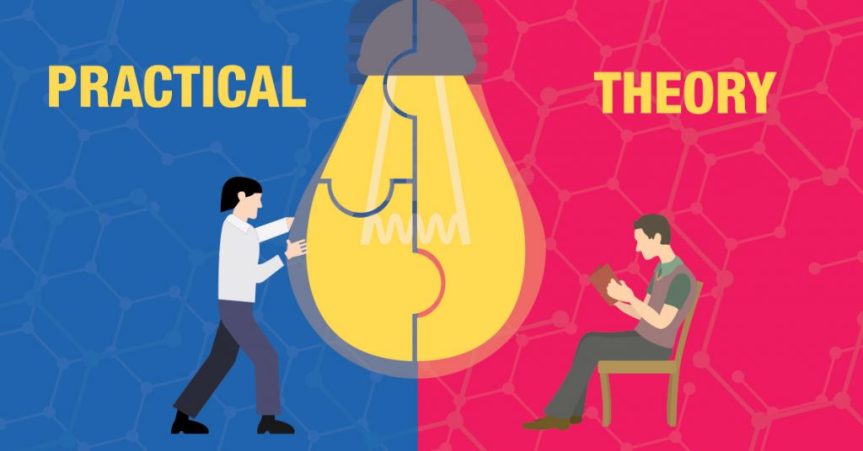
Education is important and should be obtained by everyone in order to gain information and abilities. It is the only way to raise a generation of responsible human beings capable of absorbing good teachings and passing them on to others. It teaches us many topics and opens up a wide range of professional alternatives for us that we would not be able to pursue if we were ignorant. Education can be delivered in two ways: theoretically or practically. However, which of these two is more beneficial to the learner, and which should we value more?

  1. It does not necessitate the use of a cup.Some people have the uncanny ability to recall everything they read, even if they have only read it once. Others, on the other hand, must cram it in order to remember it. And theoretical knowledge can necessitate a lot of memorization. If you don’t want your child to become a bookworm who is always immersed in a stack of books, you must balance practical education with theoretical instruction. We don’t need to cram information from a book when we’re looking at things and experiencing them in the real world.
  2. When we cram a lesson for a test, our brain tends to retain it for a short period of time, which may be smaller than the duration of the test, and so does not serve that goal because our brain forgets it quickly. You make an effort to memorize a theorem or explanation word for word, yet you constantly forget something. While putting it into practice, whether through experiments, real-life projects, or educational excursions, the knowledge and the whole learning experience stay with us for a long time.
  3. Could you have ever grasped the concept of light reflection if you hadn’t seen a mirror? Even if you read about a phenomenon or a lesson in the greatest possible way, it will not be able to penetrate your mind. You had to watch it happen in front of your eyes rather than hear it through someone else’s words. Because everything is available, practical knowledge can be quite beneficial. Whether it’s comprehending scientific phenomena or immersing oneself in literature.
  4. Reading a lesson over and again isn’t always helpful. However, carrying out exercises or investigations based on it necessitates practice, and as the saying goes, “practice makes perfect.” You will make no progress if you continue to read a guide book for a new language without speaking it. But if you start utilizing that language and conversing with other people, you’ll notice a difference. You’ll notice a difference. So, until the theoretical training is turned into practical activity, simply sitting in a corner with a book or listening to a lecture does not constitute practice.
  5. Learning facts and ideas is useless unless you are aware of how they are used in real-life situations. I spent the most of my middle school years wondering why knowing Sine theta square plus cosine theta square equals one is useful. However, after learning about its applications, I realized how important trigonometry is in architecture and related professions. So, until you apply your theoretical knowledge to real-life situations through practical experiments, theory won’t help you much, and you’ll keep asking why you’re studying that particular topic in the first place.
  6. Don’t you prefer field excursions, projects, and experiments than books, assignments, and lectures? I’m sure they do because they’re far more intriguing and engrossing than reading your typical book.
  7. While most activities involve team projects or programs where students are required to work in a group or as a team while imparting practical knowledge to students, the majority of activities involve team projects or programs where students are required to work in a group or as a team while imparting practical knowledge to students. For one thing, it increases a student’s capacity to engage with his or her peers and encourages everyone to work together. Furthermore, learning in a group makes the process more enjoyable because pupils are able to grasp more information. They enjoy each other’s company, and the entire teaching process becomes less tedious and more enjoyable. You also learn more while having a good time.
  8. Theoretical education is far less engaging than practical education. It entails more than just lecturing and educating, regardless of whether the student understands the principles or not. Teachers who teach in a straightforward manner or publications that may or may not include interactive tasks are commonly used in theoretical education. In contrast, student contributions are not only welcomed but often required in practical projects. Interactive sessions, experiments, and interactive exercises are all vital aspects of practical education that assure student engagement and help them learn and understand more. And since learning is the primary goal of school, it is necessary to raise one’s degree of learning.

Never Stop Learning- How and Why

My life mantra is simple: live as if you were to die tomorrow. Learn as if you were to live forever – Mahatma Gandhi. Learning is not  only bound to schools and colleges; it is a lifelong activity. 

Why?

Learning should never stop. We learn from everything that we hear and see. Many people share the perspective that learning stops after college or an age, this is wrong. We acquire new skills due to continuous knowledge and more skills deliver us various experiences. Experiences are the viable part of our lives and we even learn from them! In recent years, distinct skills are required to be qualified in a job interview. Many multinational companies hire only the people who have creative thinking. All this can be earned only through learning. The brain gets regular exercise, this prevents our mind from being left idle and also improves our memory. Individuals who keep learning are less likely to feel depressed and unenthusiastic. This way we can prevent many mental health diseases. Regular exercise of the brain keeps us mentally fit and active. The knowledge gained never goes to waste, it can always be shared so that more people can start learning. During these difficult and challenging times we can spend our time learning and teaching about various topics. We can also earn some money by taking tuitions/coaching classes. Learning about new topics and subjects increases our self confidence. We believe more in ourselves when we try new things. If an individual never tries new things, then he will never know his capabilities, he will surely avoid learning. It also boosts self esteem and makes us happy. Learning plays a key role in improving our mental health and providing peace of mind. It also builds a strong and charismatic personality.

How to keep learning?

Learning is not limited to only a particular place and a specific time. We can learn anywhere and anytime. From a role model to a child, anybody can be our teacher. It is often seen that students correct the teachers or parents and they learn great lessons from children. We also have to understand that all skills have their own importance. We should create a list of topics that are interesting to us and try to grasp as much as possible information for these topics. We should not restrict ourselves only to bookish knowledge. Our everyday lives also offer us a great opportunity to learn new things. E.g. a scientist should also learn how to change tyres along with his core subjects and work.

We can learn more by trying out different things. If you experience something first hand then you will remember it for a long time. Learning a guitar, a piano and a dance form are some examples. This can be a very good and productive use of our free time. You will feel more energetic and enthusiastic. These skills will come handy in the future. Knowledge can be also expanded by reading books, newspapers and journals on different subjects and issues. Our general knowledge will increase rapidly and reading will keep us occupied for several hours. Facing various challenges will also help us in learning. It will teach us the value of hardwork and time in our life. Always ask questions whenever you are curious, if your questions get answered then you will learn something new and if they don’t get answered, they will make somebody else curious. Learning is a part of the journey on earth and it should never stop. 

Happy learning.

THE ASSASSINATION OF A GREAT LADY

Through the centuries the world has seen many acts of hooliganism and inhuman acts. Men like Abraham Lincoln fell victims to the bullets of assassins. The twentieth century has also its quota of assassinations. Since the death of Mahatma Gandhi, the country never experienced such a tragedy as that which took place on October 31,1984. It was the assassination of the then Prime Minister Mrs. Indira Gandhi.

When Mrs. Indira Gandhi reeled and writhed on the ground riddled with bullets from the guns of her own security gaurds it marked the beginning of the end of a great era. An epoch making personality left the scene which she had dominated like a colossus. It was a tragedy beyond description. It was an end as sudden as it was tragic, an end to a glorious career, but the misery and pity of it was that such a life should come about in this way in Blood. The greater tragedy it was that she was gunned down by her own trusted security gaurds in her own house. The gardener had destroyed his own garden.undefined

Mrs. Indira Gandhi was assassinated by two of her security guards as she was leaving her residence to appear in a television documentary, then being produced by the world – famous actor and director, Mr. Peter Ustinov. She was rushed to the All India Institute of Medical Research where a team of a dozen doctors fought a vain battle with death to save her. On the next day her mortal remains were moved to Teen Murthi Bhavan to lie in State to enable people to pay their last homage to the departed leader. An unending stream of people, tears streaming down their cheeks, filed past the body. But for the tragedy in it, the proof of the people ‘s love for the loyalty to Mrs. Indira Gandhi would have been a marvellous spectacle. On November 3, 1984, Mrs. Indira Gandhi left her residence on her last trek along a route lined by lakhs of people among whom, four thousand and more Army personnel maintained order and discipline. At 16-30 hours the mortal remains of the immortal Mrs. Indira Gandhi, one of the greatest fighters for freedom and one of the greatest figures of the 20th century world was consigned to the sacred flames, the funeral pyre lit by her son, Mr. Rajiv Gandhi, the then Prime Minister.

No adjectives would do any justice to the greatness of Mrs. Indira Gandhi. Coming on the Indian Political scene even before her tenth year – when most children of her age would have been at their pranks- she had her political tutelage under her illustrious father, Pandit Jawaharlal Nehru. From that period till she shed her blood in her own house, gunned down by traitors there was no looking back for her. To list her achievements or to mention her many meritorious qualities would require volumes. But among her achievements could be mentioned a few like the bold step of nationalising banks, her heroic leadership and exhibition of indomitable will in the war with Pakistan when she was dubbed THE DURGA and her 20- point programme aiming at the amelioration of the poor and the downtrodden. More than all these, her personal approach to problems of men and matters and her secular outlook and attempts to carry the people with her irrespective of considerations of caste, creed or religion gave her the stature that she retained till the end. Her incessant mission of striving for international peace and understanding could find proof in her work as the Chairperson of the NAM. The only homage that the people of India can pay her are not mere tears, but their practical action in eschewing violence and in striving to complete the various tasks that she had been prevented from performing by the cruel hand of death.

“Playfulness, creativity and many other aspects can never be transferred through online learning”, says the former ISRO Chief

Implementation of the techniques to teach is lacking important facets.

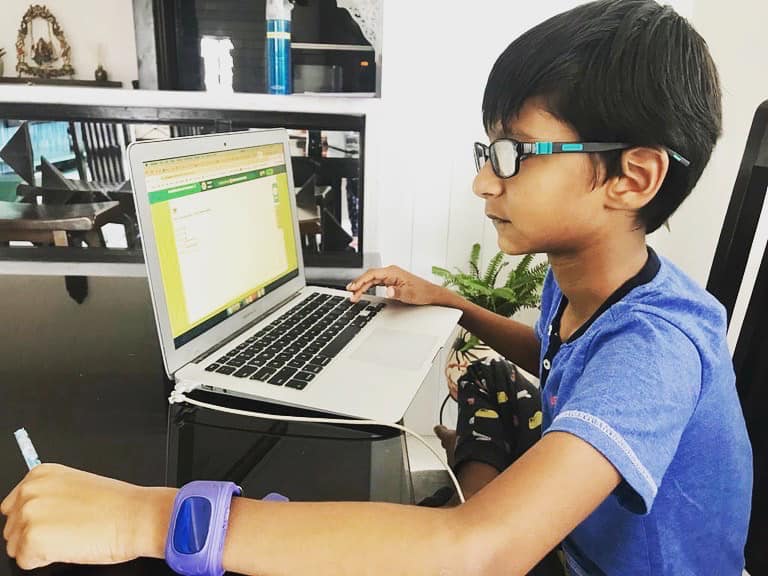
The theory of procuring online education for school children does not seem favourable to the eminent scientist K Kasturirangan, who says that candid physical and cognitive association is essential to bring out the meaningful characteristics such as playfulness and ideation.

The National Education Policy, 2019, draft committee chairperson intensified the necessity for face-to-face communications, interactions, exchange of ideas and beliefs as he braced the traditional mode, amid a debate on online classes for children due to COVID-19 resulted in the closure of schools.

“Fundamentally, the physical and mental connection with children directly is extremely important. Playfulness, creativity and many other aspects can never be transferred through online learning”, Kasturirangan, who was Chairman of Indian Space Research Organisation between 1994 and 2003, told news agency PTI.

He stated 86 percent of the brain develops by the age of eight, expanding that issues associated with the initial stage of children need to be scrutinized and evaluated carefully and any sort of new strategy prefers a scientific footing.

Development of a brain is a continuous process within these eight years, and if you don’t stimulate the brain properly by continuous interactions, then obviously you are missing a chance of really getting the best out of youngsters in terms of brain boat and performance, the recipient of Padma Shri, Padma Bhushan and Padma Vibhushan said.

There are issues of these which need to be analysed very carefully. Just the kind of solutions that we talk of for higher education like online and so on may not be the way to deal when it comes to dealing with the early phase of children, the former Rajya Sabha member said.

The issue of online education for school children needs to be looked into very carefully and one should not jump into any kind of approach without any scientific basis.


“There is much to be evaluated, and it has to be assessed”, underlined Kasturirangan, who had also served as a Member of the now-defunct Planning Commission of India.

Another renowned scientist, Prof. C N R Rao, who was awarded ‘Bharat Ratna’ in 2014, also spoke out lately against inducting online classes for children, giving prominence to the importance of human interface for useful communication and motivating young minds.

The Honorary President of the Jawaharlal Nehru Centre for Advanced Scientific Research and the Linus Pauling Research Professor said online classes for young children such as KG, first and second grade should be terminated.

I am not an enthusiast about online teaching. We need a human interface with students for good communication. That is how young minds can be inspired, Prof. Rao, who was Chairman of the Science Advisory Council to the Prime Minister from 1985-1989, and from 2004-2014, told PTI.