Birth of solar system! New theory

A consider of the Ophiuchus star-forming complex has advertised unused experiences into the conditions in which our possess sun based framework was born.

The discoveries of the ponder were distributed within the diary Nature Astronomy. A locale of active star arrangement within the group of stars Ophiuchus is giving stargazers modern bits of knowledge into the conditions in which our possess sun oriented framework was born

In specific, the ponder appeared how our sun based framework may have ended up improved with short-lived radioactive elements. Evidence of this enhancement prepare has been around since the 1970s when researchers considering certain mineral incorporations in shooting stars concluded that they were flawless remainders of the newborn child sun based framework and contained the rot items of short-lived radionuclides. These radioactive components seem have been blown onto the early sun powered framework by a adjacent detonating star (a supernova) or by the solid stellar winds from a sort of gigantic star known as a Wolf-Rayet star.

The creators of the unused ponder utilized multi-wavelength perceptions of the Ophiuchus star-forming locale, counting marvelous unused infrared information, to uncover intelligent between the clouds of star-forming gas and radionuclides delivered in a adjacent cluster of youthful stars. Their discoveries shown that supernovas within the star cluster are the foremost likely source of short-lived radionuclides within the star-forming clouds. “Our solar framework was most likely shaped in a mammoth atomic cloud along with a youthful stellar cluster, and one or more supernova occasions from a few enormous stars in this cluster sullied the gas which turned into the sun and its planetary system,” said co-author Douglas N. C. Lin, teacher emeritus of space science and astronomy at UC Santa Cruz. “Although this scenario has been recommended within the past, the quality of this paper is to utilize multi-wavelength perceptions and a modern factual examination to infer a quantitative estimation of the model’s probability,”

To begin with creator John Forbes at the Flatiron Institute’s Center for Computational Astronomy said information from space-based gamma-ray telescopes empower the discovery of gamma beams transmitted by the short-lived radionuclide aluminum-26. “These are challenging perceptions. Ready to only convincingly identify it in two star-forming districts, and the finest information are from the Ophiuchus complex,” he said. The Ophiuchus cloud complex contains numerous thick protostellar cores in different stages of star arrangement and protoplanetary disk improvement, speaking to the most punctual stages within the arrangement of a planetary system. By combining imaging information in wavelengths extending from millimeters to gamma beams, the analysts were able to picture a stream of aluminum-26 from the adjacent star cluster toward the Ophiuchus star-forming locale.

The enhancement handle we’re seeing in Ophiuchus is steady with what happened amid the arrangement of the sun based framework 5 billion a long time back,” Forbes said. “Once we saw this decent case of how the method might happen, we set almost attempting to demonstrate the adjacent star cluster that created the radionuclides we see nowadays in gamma beams,” he added. Forbes created a demonstrate that accounts for each enormous star that may have existed in this locale, counting its mass, age, and likelihood of detonating as a supernova, and joins the potential yields of aluminum-26 from stellar winds and supernovas. The show empowered him to decide the probabilities of distinctive scenarios for the generation of the aluminum-26 watched today. “We now have sufficient data to say that there’s a 59 per cent chance it is due to supernovas and a 68 per cent chance that it’s from numerous sources and not fair one supernova,” Forbes said.

This sort of factual investigation allots probabilities to scenarios that cosmologists have been debating for the past 50 a long time, Lin noted. “This is the modern heading for cosmology, to measure the probability,” he added. The unused discoveries moreover appeared that the sum of short-lived radionuclides consolidated into recently shaping star frameworks can shift widely. “Many unused star frameworks will be born with aluminum-26 plenitudes in line with our sun powered framework, but the variety is tremendous – a few orders of greatness,” Forbes said. “This things for the early advancement of planetary frameworks since aluminum-26 is the most early warming source. More aluminum-26 likely implies drier planets,” he added. The infrared information, which empowered the group to peer through dusty clouds into the heart of the star-forming complex, was gotten by coauthor Joao Alves at the College of Vienna as portion of the European Southern Observatory’s VISION overview of adjacent stellar nurseries utilizing the VISTA telescope in Chile

There’s nothing uncommon almost Ophiuchus as a star arrangement locale,” Alves said. “It is fair a normal setup of gas and youthful enormous stars, so our comes about ought to be agent of the improvement of short-lived radioactive components in star and planet arrangement over the Smooth Way,” he concluded. The group moreover utilized information from the European Space Agency’s (ESA) Herschel Space Observatory, the ESA’s Planck adj., and NASA’s Compton Gamma Beam Observatory.

A Brief Introduction to Stars

Stars are something we all know and see, glittering in the night sky above. Most people, however are content to just admire their beauty. These stars have their own fascinating physics and chemistry behind them. There are a lot of fascinating information which not many people are aware of. This article will attempt to give some basic information about stars to facilitate a greater interest in them.

What exactly are stars and how are they ‘born’

Stars are luminous spheroidal celestial objects made up of plasma. They are held together by their own gravity. They may be found singularly or in groups known as constellations. Stars are born in star nurseries called nebula. Nebula are nothings but clouds of gas and dust. Star formation begins due to instability in the gravity within molecular clouds. This gravitational instability soon causes the nebula cloud / clouds to collapse under its own gravitational force. The density of the region also increases. The gravitational energy gets converted into heat which causes a rise in temperature. After a certain period, the collapsed nebula cloud reaches the hydrostatic equilibrium condition. Hydrostatic equilibrium is the condition where and external force (like gravity) of an object either fluid or plastic in nature gets balanced by a pressure-gradient force. This gives rise to a protostar, which then evolves into a star.

Stars are comprised of gases, mainly hydrogen and helium. The structure of a star comprises of its core where various nuclear reactions take place, a conduction zone which carries energy outwards from the core, a convection zone which transfers gases of extremely high temperatures to the surface, and the surface of the star. The heat generated by these nuclear reactions is what makes the stars shine.

The types of stars

Red Giants

Red giants are stars which have run out of hydrogen from their core. As an alternative way, they start to use hydrogen present outside the core, which causes it to swell and puff up. After the hydrogen totally gets over, it starts burning up other gases which may cause it to grow into yellow or blue supergiants and hypergiants.

Betelguese, a red giant seen from a telescope

White Dwarfs

White Dwarfs are dying stars. They are formed from stars which has used up all of its available gas. It then collapses to form a small planet-sized star with only a white-hot and extremely dense core.

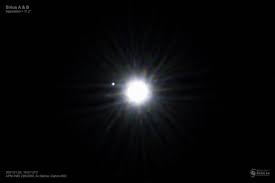
Sirius B, a white dwarf seen from a telescope

Neutron Stars

If a star roughly 5 times or more the size of our sun dies, it does not become a white dwarf. Instead, it undergoes a supernova explosion. Supernova explosions are very bright and powerful enough that it could be seen with the naked eye even on Earth despite the star being 168, 000 light years away (SN 1987A). The intense force of the gravity produced in the collapse causes the protons and electrons to merge forming a star made purely of neutrons, giving these stars the name ‘neutron stars’. However more massively sized stars, roughly 8 times the sun, instead collapse to form not neutron stars, but black holes, a region of space with gravity so extremely powerful that even light cannot escape it.  

Illustration of neutron star
Image of a black hole courtesy NASA

STARS

ABOUT STARS:

A star is an astronomical object consisting of a luminous spheroid of plasma. Stars are held together by gravity. They are huge in size and have very high temperatures. They give out heat and light because they are very hot. Sun is also a star.

WHY DO STARS TWINKLE? :

The stars twinkle in the night sky. When starlight enters the atmosphere, it is affected by winds in the atmosphere and by areas with different densities, and temperatures that cause light from the star appear to twinkle when seen from the ground.

TYPES OF STARS:

There are different types of stars. Some of them are,

  • RED GIANT STARS:

 A red giant star is a star that has low surface temperature and a diameter that is large relative to the sun. A red giant will expand outward many times its original size. Betelgeuse (Alpha Orionis) is a well-known example of a Red Giant Star.

  • WHITE DWARF STARS:

A white dwarf is what stars like the Sun become after they have exhausted their nuclear fuel. A white dwarf is very dense. White dwarf stars, so-called because of the white color of the first few that were discovered, are characterized by a low luminosity, a mass on the order of that of the Sun, and a radius comparable to that of Earth.

  • SUPERGIANT STARS:

Supergiant is among the most massive and most luminous stars. A star classed as a supergiant may have a diameter several hundred times that of the Sun and a luminosity nearly 1,000,000 times as great. The temperature range of supergiant stars spans from about 3,400 K to over 20,000 K.

  • NEUTRON STARS :

Neutron stars are the smallest and densest stellar objects, excluding black holes and hypothetical white holes, quark stars, and strange stars. The properties of neutron stars are utterly out of this world — a single teaspoon of neutron-star material would weigh a billion tons. Neutron stars have a radius on the order of 10 kilometers (6.2 mi) and a mass of about 1.4 solar masses.

  • YELLOW DWARF STARS:

A G-type main-sequence star often called a yellow dwarf, or G dwarf star is a main-sequence star of spectral type G. Such a star has about 0.84 to 1.15 solar masses and a surface temperature of between 5,300 and 6,000 K., Tables VII, VIII. Yellow dwarf stars live for about 10 billion years, and at 4.5 billion years old, our middle-age sun is about halfway through its lifetime. Once its hydrogen supply is depleted, the sun will start consuming its heavier elements. 7.5% of stars are yellow dwarfs and they are brighter than 90% of all other stars.

  • BLUE GIANT STARS:

A blue giant is a hot star with a luminosity class of III (giant) or II (bright giant). Rigel is a blue giant star close to zero magnitudes in Earth’s sky, making it a bright star, and is best visible in the winter northern sky. It also has somewhere between 265 and 315 solar masses, making it the most massive star yet discovered.

  • BROWN DWARF STARS:

A brown dwarf is a type of substellar object that has a mass between the most massive gas giant planets and the least massive stars, approximately 13 to 80 times that of Jupiter ( M J).

  • BLACK DWARF STARS:

When a white dwarf exhausts its own supply of carbon, oxygen, and free-flowing electrons, it will slowly burn out, transforming into a black dwarf. A black dwarf is a theoretical stellar remnant, specifically a white dwarf that has cooled sufficiently that it no longer emits significant heat or light. Black dwarfs take quadrillions of years to form.