
WHY MENSTRUATION A TABOO IN INDIA?

Menstruation is a phenomenon unique to girls. Menstruation is the natural part of the reproductive cycle in which blood from the uterus exits through the vagina. It is a natural process that first occurs in girls usually between the age of 11 and 14 years and is one of the indicators of the onset of puberty among them.

Taboos surrounding menstruation exclude women and girls from many aspects of social and cultural life. Some of these are helpful, but others have potentially harmful implications.

In India especially, I found it extremely ironic for it to be still a taboo in this time and era, even before I don’t understand why it was called a taboo and the reason for that I guess was, India where a girl child recognised as boon ( as GODDESS LAKSHMI when born) and giving birth is also considered boon given only to women despite that this unique process that make it possible for a women to have a child is considered a TABOO. Even with many scientific clarification of the process of this unique phenomenon, even though being this 21st century there still continuous myth regarding this adapted within the society.

SOME OF THEM ARE:

  • Women who menstruate have long been taught to keep silent about their periods. Young girls are taught from a young age that they have to manage it privately and discreetly.
  •  In Indian households including the literate ones, women are constantly reminded of the old-age traditions where “you are not allowed to touch anything holy, visit temples, cook or touch pickle.”
  • The taboo is so ingrained that women often have the “walk of shame” while carrying their sanitary pads wrapped in black plastic bags in their hands. 
  • Strangely enough, in some cultures, celebrations are held on the commencement of menstruation. And in the same cultures, the already menstruating women are looked down upon as impure and filthy.
  • It is not uncommon for boys to giggle and laugh during biology class when the topic of menstruation comes up.
  • BUT NOT IN EVERY CULTURE IT OCCURS- In Kashmiri Hindu culture, menstruating women are given special care considering the belief that they become weak due to blood loss. They do not consider them to be impure and rules like, a woman on her period can’t visit temples or can’t work don’t apply.

#BREAKTHEBLOODYTABOO

It’s high time that we normalize menstruation as just a healthy and positive part of the female life cycle. Menstrual periods are nothing to be ashamed of. Just like digestion, blood circulation and respiration are considered as natural and biological processes, both men and women should work towards making menstruation an important topic to talk about openly. This is the only way to combat its silence and break the stigma.

some changes I notice toward breaking this taboo for women in this society

  • The greatest changed I noticed was for the changed working environment toward women as the sanitary environment facilities given to them as employment care like washroom provided with sanitary pads and tampons etc.
  • knowledge about the first period to young girls now given at their school is compulsory not only to girls but to boys too given knowledge for it be known as normal topic and not as a taboo topic.
  • Advertisement about sanitary pads and tampons starts to make this topic to talk openly about.
  • Men buying the sanitary pads and tampons make it comfortable for women during their periods so that they can express their thoughts, sorrows, angers, happiness with them.

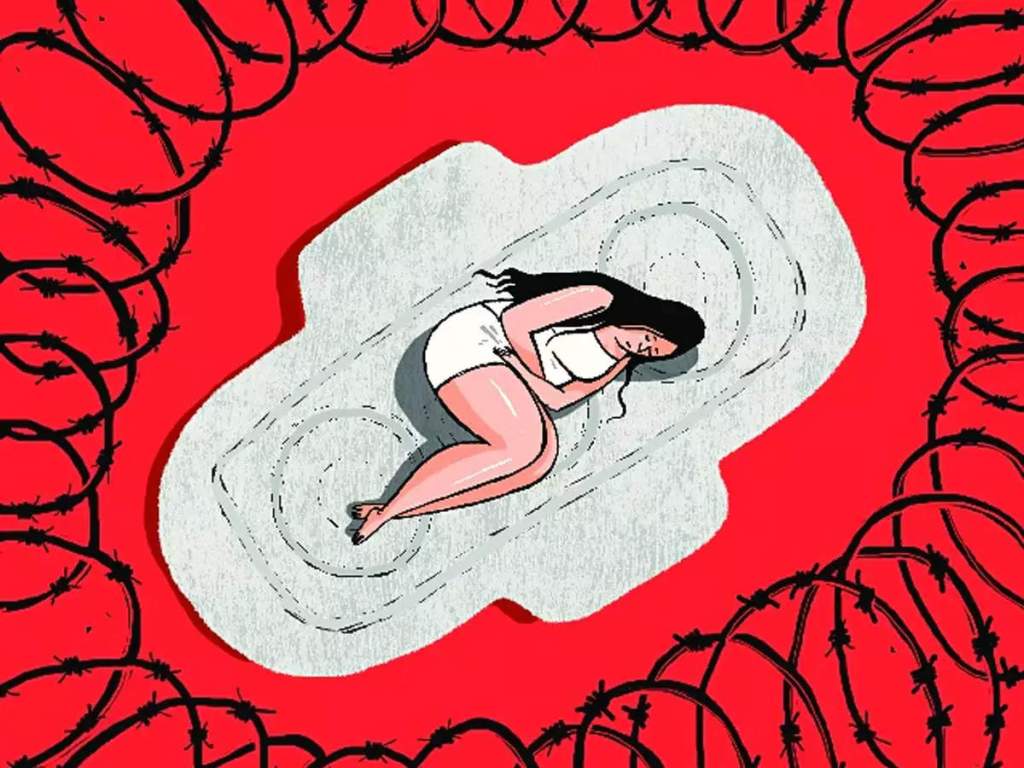
Common Menstruation Myths in India

What is Menstruation?

Menstruation is a natural phenomenon particular to women. It is a part of the women’s reproductive cycle and this cycle occurs at the onset of puberty. During menstruation, blood and tissues of the uterus is discharged from the vagina that lasts for 3 to 6 days.

Despite being a natural process, menstruation is highly stigmatized. Merely pronouncing the word ‘Menstruation’ which is commonly known as periods is considered as a taboo. This natural, biological process is trapped in myths which directly or indirectly create obstacles in the socio – cultural life of women. A menstruating woman is treated like an impure and unwanted being. The taboos regarding menstruation has been circulated from one generation to another since a very long time and unfortunately even now, people still have misconceptions regarding this natural process.

Common myths regarding Menstruation

1. MYTH – A menstruating woman cannot enter a place of worship.

FACT – Menstruation is purely biological and has nothing to do with religion.

2. MYTH – Menstrual blood is impure.

FACT – Menstrual blood is not impure. It is the blood that sheds from the lining of the uterus when the egg is not fertilized during the menstrual cycle.

3. MYTH – A menstruating woman is not allowed to enter into the kitchen and are also not allowed to touch pickles.

FACT – In the earlier days, women during their periods used cloth which was extremely unhygienic that led to many dieseases and infections. In that case, it was not preferred for a bleeding woman to enter into the kitchen and touch pickles or any other things in the kitchen. But now when women are using sanitary pads during their periods which is safe, it doesn’t lead to dieseases and infections and this is why there is no need to impose such restrictions.

4. MYTH – A menstruating woman should not come into contact with any family members because she is considered to be in an impure state.

FACT – Because menstruation is a biological phenomenon, there is no way that a woman can be considered to be impure. There is no harm if she come into contact with her family members when she is on her periods.

5. MYTH – Women on their periods should not go near plants as it will kill the plants.

FACT – Plants survive on sunlight, water, manure and good care and their lifespan is not effected if someone goes near them.

6. MYTH – A menstruating woman should refrain from engaging in physical activities like exercise.

FACT – Engaging in physical activities does not harm a menstruating woman rather it helps them to get rid of menstrual cramps.

7. MYTH – There is nothing like PMS.(Pre Menstrual Syndrome)

FACT – PMS is a real thing. A woman on her periods often goes through mixed emotional feelings, anxiety, gets disturbed at little issues etc. Women should consult a doctor if they face these conditions severely during their periods.

8. MYTH – A woman on her periods should not take bath or wash her hair

FACT – It is completely safe for women to take bath during periods. In fact, it is essential for a woman to keep herself clean and maintain hygiene when she is in her periods.

9. MYTH – A woman on her periods should not indulge in sexual activities.

FACT – There is no health problem associated with indulging in sexual activities when a woman is on her periods.

10. MYTH – Do not talk about periods publicly.

FACT – Young girls should be educated about their bodily changes and menstruation right before the time they attain puberty. Also, there is nothing to be embarrassed to talk about periods openly rather it is important to create awareness among people regarding this natural process to swipe away taboos.

Myths relating to menstruation effect a woman’s mental, social and emotional state. Adolescent girls should be made aware of menstrual health and they should be educated enough to distinguish between myths and facts. Awareness should be created among people regarding menstruation so that people stop believing in myths that will help in improving the reproductive health of women.

Menstruation – Still a Taboo?

The roots of period shaming

Many old cultures and texts considered menstruation impure. These views date back thousands of years and have formed generations of cultural disgrace. Discrimination counter to menstruating women is prevalent in India, where periods have long been a taboo and considered unclean. They are often eliminated from societal and spiritual events, deprived of entering into religious places and even kept out of kitchens.

The absence of discussion about menses, according to one study, 71% of pubertal girls in India are ignorant of menstruation until they get it themselves. Campaigners say it shows that parents hardly prepare their daughters for something they know is very certain to occur. And this unpreparedness leads to so much unavoidable fear and anxiety. The trouble in accessing sanitary pads is another main issue. India cancelled a 12% tax on sanitary products in 2018 after months of campaigning by activists. Campaigners had debated over the matter of “menstrual hygiene products are not a luxury and periods are not a choice that a woman could simply opt out of. However, tax exception is only a minor step towards a much longer journey of making menstrual health and hygiene an approachable reality for every woman in the country.

What is the menstruation taboo?

The menstruation taboo ranges to various parts of a woman’s body structure and sexuality, but it principally includes the shame and disgrace around discussing and caring for menstrual needs. This taboo often results into the prohibiting of women from community and family activities. The taboo also makes people feel like the topic of menses is awkward and embarrassing to discuss in some societies. This often results in women using code words or slang to mention periods.

In the last two centuries, intellectuals, writers, and psychologists have made an effort to state what exactly has contributed to taboos around periods. Sigmund Freud supposed that the fear of blood was one reason behind the taboos, another being that it was related with a woman’s fear of losing her virginity. Twentieth-century author Allan Coult said that rude man had an unconscious wish to avoid the hostile effects menstruation had on “organic materials.” According to Coult, taboos grew as a way to manage with periods. Whatever the reason behind these stigmas, menstruation taboos have actual and serious effects on the health, education, safety, and happiness of women.

Menstruation in India

Menstruation in India is broadly considered unclean and impure. An absence of sanitary products makes periods more of a load in India. In fact, 88 percent of women in India still rely on cloths, rags, hay, ash, and even leaves to manage their periods. Isn’t that shameful? When their menstruation instigates for the first time, over 23 percent of girls in India drop out of school. Those who continue miss an average of five days of school per month because of their menses. Women’s education can have a huge impact on economic growth, which means menstruation taboo can affect the prosperity of a country.