
Unbelievable Travel and Tourism Success Stories :

People sometimes refer to me as an explorer, but I am not. Those who follow maps are adventurers, those who wrote the maps were the explorers.

some Inspiring Traveler Tales From Around the World :

A JOURNEY TO RIVAL THE ODYSSEY :

Karl Bushby is attempting to be the first person to completely walk an unbroken path around the world. He began his quest, known as the Goliath Expedition , in 1998 at the tip of South America and is still on the move. He hopes to reach his home in England soon, and as of 2020 he was encountering some visa obstacles, but is still committed to finishing his walking adventure. At journey’s end, he’ll have walked over 36,000 miles, through icy seas, mountains, and deserts , across four continents and two dozen countries.

FORBIDDEN TRAVELS TO A FORBIDDEN CITY :

“Ever since I was five years old, a tiny precocious child of Paris, I wished to move out of the narrow limits in which, like all children of my age, I was then kept. I craved to go beyond the garden gate, to follow the road that passed it by, and to set out for the Unknown.

Famous French explorer Alexandra David-Neel made history in the early 1900s by walking, disguised as a male beggar, across China and Tibet and into the forbidden and fabled city of Lhasa. She then wrote over 30 books about Eastern religion, philosophy, and her travels, until her death at age 101. It is said that her teachings influenced beat writers Jack Kerouac and Allen Ginsberg. She is surely one of the greatest female adventurers of the 20th century, and her travel stories also rank as some of the best travel books of our time. Check out her entire collection of stories and be inspired—we particularly love her journey to Lhasa.

DANCING, BADLY :

The dancing gives me an opportunity to see places I’d never get to otherwise. I love to travel. The people and experiences have taught me a great deal.

In 2003, Matt Harding quit his day job to embark on a journey that would lead him to more than 39 countries in seven continents. Best known for a dance that looks very similar to running in place while snapping, Matt and his dance eventually attracted the attention of Stride Gum. The company then then paid Matt to travel, dance and record videos.

Matt has danced with locals in Mulindi, Rwanda; in a narrow canyon in Petra, Jordan; on a lush hillside overlooking Machu Picchu in Peru; and in a crowded street in Tokyo, Japan, all on his sponsor’s dime. Although he no longer actively updates his website, the videos live on, as does his collection of short travel stories on social media and elsewhere, and make for an entertaining and inspiring journey around the world.

Now it’s turn for some Indian travelling stories :

Exploring Rajasthan’s Ranakpur Temple
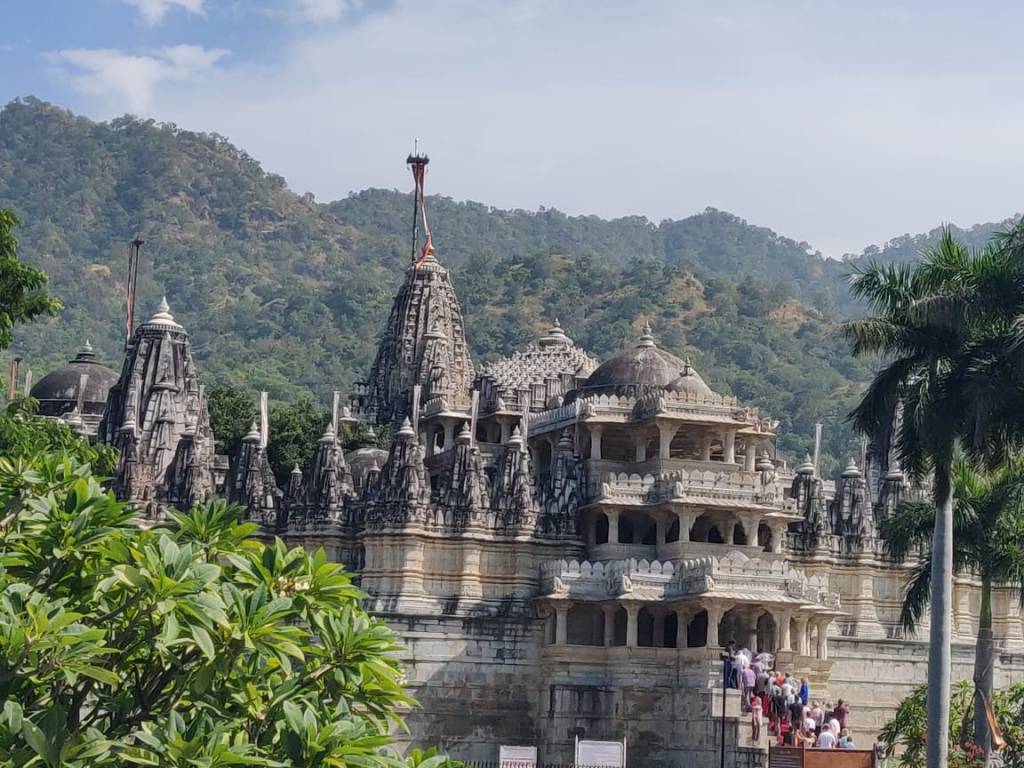
Between the intricate carvings, jungle views and visiting monkeys, Chaumukha Mandir, the Jain Temple at Ranakpur, will transport you to another world.

Built in the 15th century, this enormous complex has 1,400 pillars, each one hand-carved with its own unique patterns, icons and elements from nature – no two pillars are alike.

Wander around the different chambers and marvel at the craftsmanship that took around 65 years to complete.  Don’t forget to stop for a photo of the lush jungle through the temple windows, or to get a glimpse of the families of monkeys that leap between the columns and domes.

Guides aren’t allowed in the temple, so make sure to grab an audio guide before you head in so that you can make the most of your experience and learn a bit more about the Jain religion if you’re not families with its traditions and beliefs.

Kolkata & The Sunderbans

If you are talking to an Indian and mention the Kolkata, the first response is generally a wistful sigh and an explanation about the amazing street food available there.  When you are in a country that is known globally for having delicious food, this says quite a lot!  However, there is more to Kolkata than food.    The city was once the capital of British India and Kolkata is dotted with beautiful colonial buildings that remind visitors of a bygone era.   It is also the location of India’s biggest Durga Puja festival which transforms the city into a giant open air museum.  Adorable blue and yellow taxis whirl around the city like cartoon cars and iconic blue buses ply the streets and a wide variety of bars and restaurants line the streets.

Kolkata is a much-loved destination by expats in India because of the delicious food, beautiful architecture and calm city streets.  Yet, it gets even better!  Kolkata is also the entry point of the famous Sunderbans, a UNESCO World Heritage Site due to its incredible biodiversity.   Known as one of the largest mangrove forests in the world, the Sunderbans are home to Bengal tigers, crocodiles, wild boars, deer and a wide array of birds.   While the Sunderbans are located in both Bangladesh and India, the easiest (and cheapest) place to organize trips is from Kolkata itself.

You can opt for an overnight boat trip operated by the West Bengal Tourism Development Corporation.  However, we highly recommend staying in an eco-village located near the park which gives you the chance to help support the local community.  (Our favorite “village” employs women from the local village.  Most of the jobs available in the Sunderbans are very dangerous and this is a safe way for them to make a living and support their families.)

Kolkata is easily accessible from most major cities in India with direct flights from Mumbai, Delhi, and Bangalore.  For onward travel, flights to Port Blair in the Andamans are inexpensive and relatively frequent.  Otherwise, you can grab a train to Darjeeling or even travel overland to Dhaka, Bangladesh!

Ladakh
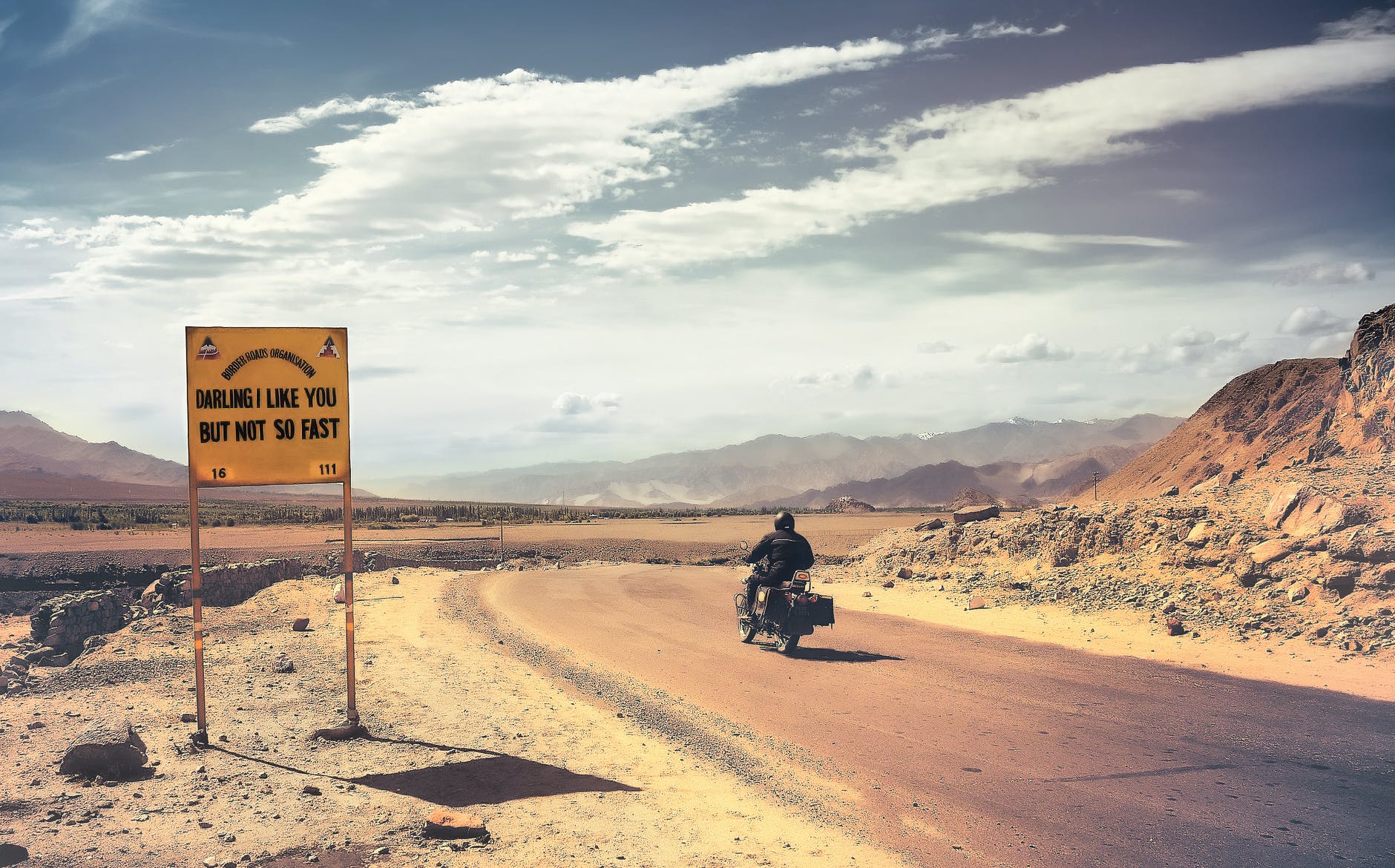
The region of Ladakh is jaw-droppingly beautiful and the warm Ladakh (similar to Tibetan) culture is welcoming to female travelers. Head to Leh, join up with a tour and make your way to the hotspots of Nubra Valley and Pangong Lake for a Ladakh trip that you are unlikely to forget!  Getting to Ladakh can either be very tricky or pretty straightforward.  Direct flights operate from Delhi or you can take a gruelling 2-day bus trip from Manali.

Patna Tourism
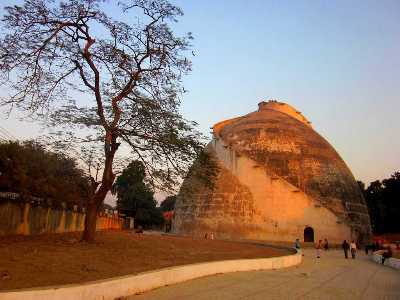
Prospering along the southern banks of river Ganges and set in the backdrop of a glorious historical past, Patna boasts of a dominating presence in history and enjoys the distinction of being one of the oldest cities in the world. In addition to being one of the major and most popular tourist destinations in India, this capital city of Bihar also holds significant religious and spiritual importance as it is a gateway to pilgrimage sites of Hindus, Sikhs, Jains and Buddhists.

Originally called as Pataliputra, Patna is currently a hot-bed for the culminating political fortunes. One of the oldest continuously inhabited places in the world, it is the quintessential North Indian town  – West of the city lies the area called Bankipur, while towards the southwest is the new area with wide roads and swanky buildings. The cultural heritage of Bihar is reflected in the many monuments housed in Patna, the most famous ones being Patna Sahib Gurudwara, Patna Planetarium, the Highcourt, Golghar, Secretariat Building and Padri ki Haveli among numerous other attractions. Typical of an Indian city, the riverside city of Patna is also known for some palatable dishes – litti chokha being the king of all! 

You never know what you’ll learn about yourself when you challenge yourself and experience the unexpected as you look to find your unknown.

Hugging might even lower heart rates and blood pressure

The university of North Carolina conducted a studies with 59 women and found some interesting results after a short series of questions and general chatting about their partner some women ended each session with a 20 second hug

The women who received a hug from their partner had lower blood pressure and heart rates during stressful section of testing the researchers think that oxytocin that we mention earlier might be the causes for their better heart health

Hugging can be good for your heart health. In one studyTrusted Source, scientists split a group of about 200 adults into two groups:

  • One group had romantic partners hold hands for 10 minutes followed by a 20-second hug with each other.
  • The other group had romantic partners who sat in silence for 10 minutes and 20 seconds.

People in the first group showed greater reductions in blood pressure levels and heart rate than the second group.

According to these findings, an affectionate relationship may be good for you heart health.

Oxytocin is a chemical in our bodies that scientists sometimes call the “cuddle hormone.” This is because its levels rise when we hug, touch, or sit close to someone else. Oxytocin is associated with happiness and less stress.

Scientists have found that this hormone has a strong effect in women. Oxytocin causes a reduction in blood pressure and of the stress hormone norepinephrine.

One study found that the positive benefits of oxytocin were strongest in women who had better relationships and more frequent hugs with their romantic partner. Women also saw positive effects of oxytocin when they held their infants closely.

‘Walking Tours’ by R L Stevenson.

“It must not be imagined that a walking tour, as some would have us fancy, is merely a better or worse way of seeing the country.”

R L Stevenson’s ‘Walking Tours’ guides us to the method of enjoying a ‘walking tour’. The essay which starts with relishing the ‘walking’ ends on an unexpected note of self reflection.

Miles and miles of walk may sound exhausting but it is not so when one reads this essay. If a tour is all about viewing landscapes and picturesque places, then a train would make for a satisfactory travel. But a walking tour starts with hope and spirit and ends with replenishing ourselves with peace and spirit. A person will find pleasure after pleasure during the walk.

When going on such a tour, one shouldn’t be an ‘over walker’ for they will not comprehend the purpose of the travel. To cover a long distance by walking fast is merely to brutalize one’s own body. An over walker will neither enjoy the evening sky nor the journey and his physical exhaustion will put him to sleep. 

“It is the fate of such an one to take twice as much trouble as is needed to obtain happiness and miss happiness in the end…”

To enjoy the walking tour to the fullest, one has to go alone. For if one goes with a company or as pairs, it will be more like a picnic. In a walking tour, one should enjoy the liberty to stop and then continue. 

“…you must be open to all impressions and let your thoughts take color from what you see. You should be as a pipe for any wind to play upon.”

In the beginning of the tour, it might be difficult and one would have the urge to give up. In this case, one is to take off their knapsack, enjoy a short break and “ give three leaps and go on singing”. This will improve the mood and soon the spirit of the journey will enter them. If one constantly ponders over their anxieties and worries, which like the merchant Abudah’s chest never empties, they will never be happy about the walk. 

There are instances where one will be joined by other wayfarers. Of them is this one who walks fast with a keen look all concentrated on setting the landscape to words. There is this one who stops at each canal to look at the dragonflies and each gate to look upon cows. There is another who is busy talking, muttering, laughing and gesticulating to themselves; definitely composing the most passionate oration and articles.

There will also be that person who will sing even though he is not a master in that art. It is all fine until he comes across a stolid peasant. This person may be misunderstood for a lunatic for no reason can explain their gaiety to the passers-by. This is completely possible in a walking tour for when surrounded by pleasant things, a person will definitely skip, run, and laugh out of nowhere. Here the essayist quotes Hazlitt who had said,

“Give me the clear blue sky over my head, and green turf beneath my feet, a winding road before me,…I laugh, I run, I leap, I sing for joy.” 

Though the essayist had quoted it, he is against leaping and running because these actions breaks the natural rhythm of respiration and break the pace. But when one is on an equable stride, there requires no conscious thought to keep one going and it neither does engage the mind. A walking tour gives us a sense of physical wellbeing, a delightful play of fresh air, contraction of thigh muscles and makes him relish the solitude. 

“He becomes more and more incorporated with the material landscape, and the open air drunkenness grows upon him with great strides, until he posts along the road, and sees everything about him, as in a cheerful dream.”

The essayist stresses on bivouacs as a necessary part of the walking tour. One may dally time as long as one wishes to. It feels like prolonging the time and slowing it down. This is what we people in the industrial era miss. Being in a constant race with time, we have forgotten to live the time. 

“You have no idea, unless you have tried it, how endlessly long is a summer’s day, that you measure out only be hunger, and bring to an end only when you are drowsy.”

The essayist draws near conclusion with a talk on an evening’s rest after a long walk. We throw ourselves into the hands of nature and bring down all our guards.

“And it seems as if a hot walk has purged you, more than of anything else, of all narrowness and pride, and left curiosity to play  its part freely, as in a child of a man of science.”

When the night leaves us alone, we are free to reflect on the way we have led our lives. We are all running after our desires and greeds, we have failed to understand how ephemeral life is.  The essayist puts out lines which makes the readers to question themselves. 

“We are in such a haste to be doing, to be writing, to be gathering gear, to make our voice audible a moment in a derisive silence of eternity, that we forget that one thing, of which these are but the parts — namely, to live.”

“We fall in love, we drink hard, we run to and fro upon the earth like frightened sheep. And now you are to ask yourself if … to remember the faces of women without desire, to be pleased by the great deeds of men without envy, to be everything and everywhere in sympathy, and yet content to remain where and what you are — is not this to know both wisdom and virtue, and to dwell with happiness?”

These lines make us reflect on ourselves. It urges us to ask ourselves when was the last time we were happy, are we happy, are we living, what have we left for the world. These profound questions are for us to think. Maybe there will be no answer. To think and to live our life from here onwards is all that matters. When times get better and when you are to live, go on a walking tour.

“And whether it was wise or foolish, tomorrow’s travel will carry you, body and mind, into some different parish of the infinite.”