Porter’s Five Forces Model

Porter’s 5 Forces Model is a business model and a tool which helps in identifying main competitive forces of an industry or a sector. The 5 Forces Model is mainly used to create a corporate strategy which will help a company to enhance its long- term profitability.

Understanding Porter’s Five Forces Model

The 5 Forces Model was created by Harvard Business School’s Professor Michael E. Porter and was published in his book “Competitive Strategy: Techniques for Analyzing Industries and Competitors” in 1980. The model was created to explain why various industries are able to maintain varying level of profitability. Porter’s 5 Forces helps in analyzing the industry of the company so that a company can adjust their corporate strategy, boost their profitability and beat their competition.

What are the five forces of the Porter’s Model?

  • Competition in the industry
  • Potential of new entrants into the industry
  • Power of Suppliers
  • Power of Customers
  • Threat of substitute products

Competition in the Industry

For most industry, the level of competition in the industry determines the positioning of the product in the market. The intense the competition in the market, the more the company has to focus on innovation, marketing, price, etc. of the product. When the competition is less, a company has more authority to charge higher prices and establish the terms of deals in order to increase sales and profits.

Potential of New Entrants into the Industry

A company’s positioning is also affected by the new entrants in the market.  This in turn puts pressure on prices, costs, and the rate of investment needed to sustain a business within the industry. The less the time, money and effort it takes for a competitor to enter the market, more is the threat for a company to lose its market share. On the contrary, if there are strong barriers to entry in the industry, companies more secure about their market share.

Power of Suppliers

Power of suppliers in a market means how easily suppliers can increase the cost of the inputs. The suppliers’ power in the market is determined by the factors like number of suppliers in the market, uniqueness of the inputs they provide, cost of switching a supplier for a company. If the number of suppliers in an industry is less, a company would depend more on its current supplier, thus giving more power to supplier in terms of cost of inputs and other advantages in trade. However, if the suppliers are more in the market, then company has the advantage of switching the supplier in case the supplier increases the price or if a company finds a cheap supplier, thus keeping their input costs low and increasing their profitability.

Power of Customers

Customers are more powerful in an industry when there are less number of customers in an industry and more number of suppliers. Because the client base for a company is smaller and more strong, each customer has greater negotiating leverage to get better rates and deals. A company with a large number of smaller, independent consumers will find it easier to raise prices and increase profits.

Threat of Substitute Products

A substitute is a product or service that can be easily replaced with another by consumers. In economics, products are often substitutes if the demand for one product increases when the price of the other goes up. When there are no close substitutes in the market, a company can take advantage of charging higher prices. However, if there is availability of close substitutes, customers will switch to substitutes in case of increase of the prices of the products of a company.

Understanding Porter’s Five Forces and how they apply to a particular industry can help a company change its business plan to make better use of its resources and generate more profits for its shareholders.

HEALTHY EATING FOR HEALTHY HEART

When stress hits hard as it has during the pandemic, many of us eat more, and less-than-healthy comfort foods may be the treats we reach for first. But an unhealthy response to stress can be hard on your body, especially your heart. That’s why it’s smart — at the top of the New Year, or anytime — to try to eat more foods that nourish. It’ll make your heart happier, and maybe trim your waistline, too.Don’t know where to start? Let the National Heart, Lung, and Blood Institute (NHLBI) help.”We have many recipes for healthy and really tasty dishes, plus an award-winning eating plan called Dietary Approaches to Stop Hypertension, or DASH for short,” says Charlotte Pratt, Ph.D., M.S., R.D., a nutrition expert at NHLBI. For years, the DASH eating plan has ranked among the U.S. News & World Reports’ best diets for healthy living and heart health. Its secret, says Pratt: “Eating nutrient-dense foods and meals that are lower in sodium and saturated fat, rich in fruits, vegetables, low-fat dairy, and legumes.”Some of the recipes NHLBI has developed to support the plan feature healthy versions of comfort foods, such as oven-baked french fries, chicken chile stew, and sweet potato custard. The recipes are easy to make and family-friendly. They include traditional African American, American Indian/Alaska Native, Vietnamese, Latino, and Filipino dishes. You can find these recipes, along with tips about safe cooking, what to stock in your kitchen online The DASH eating plan is scientifically proven to lower your blood pressure and cholesterol levels,” says Pratt. And NHLBI research shows that increasing your physical activity and watching your calories while following DASH will also help you lose weight.DASH requires no special foods, and it helps you set daily and weekly nutritional goals using these simple guides:

  • Eat vegetables, fruits and whole grains
  • Include fat-free or low-fat dairy products, fish, poultry, beans, nuts and vegetable oils
  • Limit foods that are high in saturated fat, such as fatty meats, full-fat dairy foods and tropical oils such as coconut, palm kernel and palm oils
  • Limit sugar-sweetened drinks and desserts

To make it easier to follow the DASH for life, these tips can help:

  • Change gradually. Add one more serving of vegetables a day. Read nutrition labels to choose the food lowest in saturated fat, sodium or salt and added sugar.
  • Vary foods high in proteins. Try a mix of lean cuts of meat. Remove the skin from chicken. Eat fish once or twice a week. Eat two or more meals without meat each week.
  • Select healthy, tasty snacks. Have a piece of fruit, a few unsalted snacks such as rice cakes, fat-free or low-fat yogurt or raw vegetables with a low-fat dip.
  • Find substitutes. Try whole-wheat bread or brown rice instead of white bread or white rice. Try beans or seeds such as flax or sunflower seeds, if you’re allergic to nuts.

Combining healthy eating habits with other self-care activities can help you reduce stress and take care of your heart. Top of the list: move more throughout the day, get 7 to 8 hours of sleep, and try relaxation exercises such as meditation or yoga. If you smoke, try quitting, and develop a strong social-support system to help keep you motivated. Delicious Oven-Baked French Fries Baking instead of frying these potatoes reduces the fat while keeping them crispy.Prep time: 10 minutes.
Cook time: 35 minutes.
Makes 5 servings.
Serving size: 1 cup.Ingredients4 large potatoes (2 lbs.) (regular or sweet potatoes)
8 C ice water
1 tsp garlic powder
1 tsp onion powder
1/4 tsp salt
1 tsp white pepper
1/4 tsp allspice
1 tsp hot pepper flakes
1 Tbsp vegetable oilDirections

  1. Scrub potatoes and cut them into long 1/2-inch strips. Place the strips in the ice water, cover and chill for 1 hour or longer.
  2. Remove potato strips and dry them thoroughly. Preheat oven to 475 degreeF.
  3. Place garlic powder, onion powder, salt, white pepper, allspice and pepper flakes in a plastic bag. Toss the potato strips in the spice mixture.
  4. Put the potato strips in a shallow baking pan and brush them with oil.
  5. Cover the baking pan with aluminum foil and bake at 475 degreeF for 15 minutes.
  6. Remove the foil and continue baking, uncovered, for an additional 15 to 20 minutes or until golden brown. Turn fries occasionally to brown on all sides.

The Homecoming by Rabindranath Tagore

The Homecoming”, also known as “Chutti” is a Bengali short story written by Rabindranath Tagore (1892-93). This story depicts how much parental love and care is required for every child in its childhood days. It also depicts that if we abandon a child, definitely tragedy will take place.

SUMMARY

Phatik Chakravarthi was a fourteen year old Bengali boy whose father died very early. He grew up lazy, wild and disobedient. Makhan Chakravarthi, his younger brother, was quiet, good and fond of reading. Phatik thought about doing new mischief every day. One day, he and his gang of boys pushed a wooden log shaped like a boat’s mast into the river. Makhan, objecting to this and sitting firmly on the log, was thrown into the river along with the log. 

At home, when he was questioned about this, he beat not just his brother, but also his mother. His uncle from Calcutta City arrived at that time. He agreed to take the Phatik to Calcutta and educate him there. Phatik was excited to leave, but his mother was torn between relief and sadness.

Phatik’s uncle had three sons of his own, and his aunt was not pleased with the new addition to their family. A fourteen-year-old boy is bound to have his own set of challenges. He was neither a child nor a man, crossing the line in between.

He missed the meadow, mountain and river of his native village. As a result, it’s no wonder that he struggled in school. He refused to answer any questions, was severely beaten at school every day, and was mocked by everyone, including his cousins.

Despite these negative signs, Phatik begins penning a letter to his mother. At first he lies and asserts to her that everything is rosy with his life in Calcutta.  But when he starts recollecting how harshly he was treated by his aunt on the occasion of his losing his school bag, he changes his tone – he writes that he wants to return home.  He promises that he will be a good boy from now on and do whatever his mother tells him to do. 

Then Phatik goes to his uncle and tells him he wants to be taken back home. He tells Phatik that the soonest he can take him back to his home village is when Durga Puja holiday comes, which is several months away. Phatik insists he wants to go right away, but he can’t convince his uncle to listen to him. That night Phatik goes to bed and makes a decision.

The next morning his uncle learns that Phatik has run away during the night, and he notifies the police about the missing boy.  Now for the first time his uncle, aunt, and cousins feel anxiety about their own culpability in Phatik’s disappearance. 

That evening in a pouring rain, the police carry the weakened-by-fever Phatik back to the residence.  It is clear that the delirious boy is critically ill, and a summoned doctor is not optimistic.  Meanwhile, in his delirious state, Phatik has idyllic visions of his mother and little brother, evidently recalling, or dreaming of, some precious moments when he felt loved.

Soon Phatik’s mother, have been notified about her boy’s serious condition, tearfully rushes to his bedside and lovingly fondles his feverish head.  Phatik looks up at her, and in his closing words asks, “has the holiday finally come?”  Indeed it has.

The story is a sad one and reminds us that the awkward years of early adolescence, while displays the first impulses of boastful assertiveness, it also features a newly intense, but unexpressed need for love and affection. Instead of abandonment, Phatik would have survived if he had been treated with love and care. Finally, his uncle and aunt could only express their regret for failing to convey their love for Phatik.

GLOBAL WARMING

Global Warming is a term almost everyone is familiar with. But, its meaning is still not clear to most of us. So, Global warming refers to the gradual rise in the overall temperature of the atmosphere of the Earth. There are various activities taking place which have been increasing the temperature gradually. Global warming is melting our ice glaciers rapidly. This is extremely harmful to the earth as well as humans. It is quite challenging to control global warming; however, it is not unmanageable. The first step in solving any problem is identifying the cause of the problem. Therefore, we need to first understand the causes of global warming that will help us proceed further in solving it. In this essay on Global Warming, we will see the causes and solutions of Global Warming.

essay on global warming

Causes of Global Warming

Global warming has become a grave problem which needs undivided attention. It is not happening because of a single cause but several causes. These causes are both natural as well as manmade. The natural causes include the release of greenhouses gases which are not able to escape from earth, causing the temperature to increase.

Further, volcanic eruptions are also responsible for global warming. That is to say, these eruptions release tons of carbon dioxide which contributes to global warming. Similarly, methane is also one big issue responsible for global warming.


After that, the excessive use of automobiles and fossil fuels results in increased levels of carbon dioxide. In addition, activities like mining and cattle rearing are very harmful to the environment. One of the most common issues that are taking place rapidly is deforestation.

So, when one of the biggest sources of absorption of carbon dioxide will only disappear, there will be nothing left to regulate the gas. Thus, it will result in global warming. Steps must be taken immediately to stop global warming and make the earth better again.

Global Warming Solutions

As stated earlier, it might be challenging but it is not entirely impossible. Global warming can be stopped when combined efforts are put in. For that, individuals and governments, both have to take steps towards achieving it. We must begin with the reduction of greenhouse gas.

Furthermore, they need to monitor the consumption of gasoline. Switch to a hybrid car and reduce the release of carbon dioxide. Moreover, citizens can choose public transport or carpool together. Subsequently, recycling must also be encouraged.

For instance, when you go shopping, carry your own cloth bag. Another step you can take is to limit the use of electricity which will prevent the release of carbon dioxide. On the government’s part, they must regulate industrial waste and ban them from emitting harmful gases in the air. Deforestation must be stopped immediately and planting of trees must be encouraged.

In short, all of us must realize the fact that our earth is not well. It needs to treatment and we can help it heal. The present generation must take up the responsibility of stopping global warming in order to prevent the suffering of future generations. Therefore, every little step, no matter how small carries a lot of weight and is quite significant in stopping global warming.

Mud Therapy

Mud corresponds to prithvi (earth), one of the element among panchamahabhutas. It is considered as one of the ancient wisdom of universe in curing sickness and also for rejuvenation of health. Mud therapy in Naturopathy involves scientific use of moistened earth in a proper manner, so as to benefit the body from within.

It is a treatment in naturopathy. Clay holds the quality to get inside the system and treat all the imbalances. In naturopathy, Mud Therapy involves the scientific use of moistened earth in a proper manner to benefit the body from within. Mud possesses the quality of absorbing toxins from the body which eventually helps in the prevention of many diseases. There are many advantages of mud therapy such as:

  • The application of mud over the body causes cooling and helps to retain the moisture. 
  • The shape and consistency can be changed easily by adding water.
  • Mud therapy is easily available and is an affordable procedure. 
  • It has the property of absorbing all the colours from the sun and radiate them to the body. 

The quality of Mud used

Mud used for therapeutic purpose should be clean and free from contamination. It should be taken at a 60cm depth from the surface of ground. Before using, the mud should be dried in sun rays, powdered and sieved to separate impurities.

Mud Pack-Local Application 

It is a pack that is made by keeping soaked mud in a thin, wet muslin cloth and making it into a thin flat brick according to the size of the patient’s abdomen. The duration of the pack would be 20 to 30 minutes. It is advised to place a blanket over the mud pack and cover the body as well when it is applied in cold weather.

Benefits:

  • The mud pack is applied to the abdomen to relieve all the forms of indigestion. It is also effective in stimulating and decreasing intestinal heat. 
  • A thick application of mudpack over the head proved to be effective in congestive headaches as it heals the pain quickly. 
  • The application of mud over the eyes is recommended in case of conjunctivitis, haemorrhages in eyeball, itching, errors of refraction like short sighted and long sight especially efficient in glaucoma as it helps to reduce eyeball tension. 

Mud Pack for Face 

Mud therapy exerts positive effects on various organs of body but most of all it does wonders to the face. It creates cooling effect on skin and also improves the complexion of the skin. To reap the benefits of mud therapy, you must apply a thick application on the face and allow it to dry for 30 minutes. From helping in controlling the effects of pitta to treating dark circles, Mud Therapy is regarded as one of the best ways of detoxification since ancient times. 

Mud Bath

In the Mud Bath therapy, mud is applied to the patient in a sitting or lying position. It involves the application of minerals rich mud and natural salts over the body. It successfully treats diseases like Psoriasis, Leprosy, Urticaria, leukoderma, and other skin allergy conditions. In this therapy, thorough care must be taken to ensure that the patient is safe from catching a cold during bath. Then, thorough washing of the patient with cold water jet spray is followed after the bath. In case a patient is feeling cold, warm water can be used. Afterward, the patient must be taken to a warm bed to avoid sickness. It should be noted that the duration of a mud bath should be 45 to 60 minutes. 

Benefits:

  • The effects of mud are refreshing, invigorating, and vitalizing.
  • Gives a cooling effect to the body.
  • It dilutes and absorbs the toxic substances of body and ultimately eliminates them from body.
  • It relaxes the muscles, improves blood circulation and helps to regulate the metabolism.
  • Useful in conditions of inflammation/swelling and relieves pain.
  • Anti-inflammatory and anti-aging effects.

Panchakarma Therapy

What is Panchakarma Therapy?

In Ayurveda there are several ways to keep the body and mind fit. That is why, Panchakarma is important. To reduce the problems of body and mind with Panchakarma is helpful. Ayurveda says that the human body is made up of 5 elements (earth, water, fire, sky and air), the universe is also made of those same elements. When there is a disturbance in the ratio of these 5 elements in the body, then dosha i.e. problems occured. Ayurveda brings these elements back to normalize and thus cures diseases. Panchakarma is a special medical method of Ayurveda. is believed. It is used for purification and rejuvenation of the body. Through this method, all the 3 physical doshas: Vata, Pitta and Kapha are brought back to normal and they are removed from the body. Different types of procedures are used to remove different chemical and toxic substances from the body that contaminate the different organs and blood. 

WHO CAN AVAIL PANCHKARMA?

It has 3 categories

First category

In this category a person who want to relax and detox their body are come under this.

The body is purified during detoxification by eliminating toxins (harmful chemicals) from the body. Disease can also be healed in this manner. It is the process of purification of the body which is also beneficial for a healthy human lifestyle. 

Some of common problems in which one can take panchakarma:

  • Body relaxation
  • Headache
  • Stiffness in body
  • Tiredness due to hectic routine
  • For beauty purpose
  • For skin brightness and smoothness
  • to improve blood circulation

Therapies included:

  • Abhyanga (body massage)
  • Lepas
  • Sirodhara
  • Akshi tarpan
  • Fruit Mukha Lepam (Traditional Ayurvedic Fruit Facial)

Second category

Ayurveda is based on the principle of curing a patient’s condition and maintaining one’s health. As a result, Panchakarma is believed to be the ideal therapy for the treatment of both physical and mental disorders.

In second category severe patients with lifestyle disorders can have panchkarma.

Some of common problems in which one can take panchakarma:

  • Hypertension
  • Diabetes
  • Knee pain
  • Back pain 
  • Thyroid
  • Migraine
  • Obesity
  • Stomach ailments
  • insomnia 

Therapies include:

Herbs used according to doshas and diseases

  • Abhayanga
  • Patra Pinda Sweda (Leaf Bundle massage)
  • Shastik Shali Pinda Sweda (Medicated Rice massage)
  • Parishek (Medicated herbal water therapy)
  • Utsadan (Powder massage/ obesity massage)
  • Nabhi Vasti ( Umblical oil reservoir therapy)
  • Whole Body Lepam (Full Body Lapping)
  • Kati basti
  • Nasyam
  • Shirodhara
  • Janu basti
  • Dhoompan

Third category

This is primarily for chronic diseases. With the use of panchakarma, several major disorders that are persistent and untreatable in conventional ways can be treated.

Few common problems in which one can take panchakarma:

  • Arthritis,
  • Paralysis, 
  • Stomach related diseases,
  • Sinus
  • Cervical spondylitis, 
  • Sciatica, 
  • Sever Joint pain,
  • Eye and intestinal diseases 
  • Knee replacement
  • Depression
  • Neurological disorders
  • Varicose vein
  • Osteoporosis
  • Conjunctivitis
  • Psoriasis others..

Therapies includes:

Herbs are used according to doshas and diseases

  • Sarvangya Abhayanga (Traditional Ayurvedic massage)
  • Patra Pinda Sweda (Leaf Bundle massage)
  • Shastik Shali Pinda Sweda (Medicated Rice massage)
  • Parishek (Medicated herbal water therapy)
  • Utsadan (Powder massage/ obesity massage)
  • Nabhi Vasti ( Umblical oil reservoir therapy)
  • Whole Body Lepam (Full Body Lapping) 
  • Churna Pinda Sweda (Herbal powder massage
  • Udvartana (Dry powder massage
  • Anuvasna Vasti (Oil enema therapy)
  • Niruha Vasti (Herbal enema therapy)
  • Jaluka & Leech Therapy (Blood purifier therapy)
  • Kati basti
  • Nasyam

People Still Optimistic Despite Big Swings In The Market

Even though the stock market continues to engage in wild swings, people are still predicting a better year financially.

That sense of optimism was one of the most striking findings in Fidelity Investments’ tenth annual “New Year Financial Resolutions Study,” and could be an encouraging sign that – despite December’s rockiest performance in decades by all the major U.S. indexes – Americans still have confidence when it comes to the strength of the economy.

In fact, 75 percent of the adults age 18 and older who were surveyed envisioned a rosier financial future for 2019, and 42 percent say they were presently better off than the year before. What’s more the fact that far more people were even making financial resolutions compared to last year – saving more money topped the list – was telling, says Ken Hevert, Fidelity’s senior vice president of retirement and income solutions.

“This suggests people are no longer willing to remain complacent about their finances simply because the stock market has performed well in the last decade,” he says. “On the heels of what is the longest bull market in history, Americans are re-examining their past financial mistakes and revisiting areas that could stand improvement. They want to maintain momentum in the new year, no matter what the market brings.”

Fattening retirement nest eggs was among the long-term goals deemed especially important, so much so that 48 percent of respondents say they intended to boost their 401(k) and/or IRA contributions by at least 1 percent of their salary. How fortuitous: The limit on annual contributions was recently raised from $18,500 to $19,000 for the former, and from $5,500 to $6,000 for the latter.

As for “re-examining their past mistakes,” as Hevert puts it, 58 percent of respondents confessed to committing at least one of the following financial missteps last year: 
• Dining out too much (28 percent);
• Splurging on something they couldn’t really afford (19 percent);
• Neglecting to return or exchange unwanted purchases (18 percent);
• Continuing to pay for subscriptions like apps and streaming media services they no longer use (18 percent);
• Paying too much in fees for ATM machines and late payments (18 percent).

Many online tools exist to help people keep their resolutions. Fidelity, for example, has an entire webpage dedicated to the subject that anyone can access, and also 
offers a free “Retirement Score” tool that lets you see where you currently stand just by answering six simple questions.

So what were the top three financial resolutions for 2019? And who was the most optimistic?

The answer to the first question: Aside from saving more (a median of $200 per month), there was paying down debt and spending less. As for the second, Millennials – with 85 percent of them predicting better times ahead.

PRIORITIES OF WOMEN

According to a new survey from Edward Jones, “Female Financial Empowerment,”while women have made significant strides in gender and income equality in the workplace, one of the biggest obstacles they continue to face is the tendency to “prioritize immediate family needs” over saving for their own future.

That certainly helps explain what the financial services firm acknowledges is an inherent conflict in the findings: Although seven out of 10 women polled say they feel “confident” in their financial knowledge, all too many have actually done little to generate their own long-term wealth.

“Only 25 percent of women surveyed consider saving for retirement as their most important goal over the next three to five years,” says Nela Richardson, an investment strategist at Edward Jones. “That tells us that female financial empowerment should be next on the list of barriers women have broken over the past few decades.”

The two other biggest challenges women need to surmount, according to the national sample of 1,004 adult women ages 18 and older, is waiting for the “perfect” time to invest (something men do as well), or something else to motivate them.

Some examples: A big raise or other windfall (49 percent). A financial emergency (20 percent). A significant life event (20 percent). A market correction (12 percent).

“Waiting for a raise or a significant life event, by definition, isn’t a financial strategy,” Richardson says, “and they’ll always have competing priorities. The key is to anticipate both tailwinds and headwinds in life, and be flexible enough to adapt to changing situations so you can meet your long-term financial goals.”

Edward Jones lays out a female centric approach to handling your finances on its website. But here’s a quick cheat sheet to get you started:

• Make yourself a priority by starting to invest now in order to give your money time to grow – never underestimating the power of a wondrous thing called compound interest.

• Begin small with modest investments.

• Develop a goals-based financial strategy.

As for how much better women are doing financially, here’s one notable sign: Forbes’ list of the world’s 100 richest people featured just four females in 2000 compared to 10 this year. The richest woman – and fifteenth overall – is the L’Oréal heiress, Francoise Bettencourt Meyers ($49.3 billion), who is chairwoman of the family’s holding company.

But she inherited her wealth, you say? Well, the youngest billionaire ever, according to Forbes, is 21-year-old cosmetics wunderkind Kylie Jenner ($1 billion).

Pollution : A grim agenda

Pollution is a term which even kids are aware of these days. It has become so common that almost everyone acknowledges the fact that pollution is rising continuously. The term ‘pollution’ means the manifestation of any unsolicited foreign substance in something. When we talk about pollution on earth, we refer to the contamination that is happening of the natural resources by various pollutants. All this is mainly caused by human activities which harm the environment in ways more than one. Therefore, an urgent need has arisen to tackle this issue straightaway. That is to say, pollution is damaging our earth severely and we need to realize its effects and prevent this damage. In this essay on pollution, we will see what are the effects of pollution and how to reduce it.

essay on pollution

Effects of Pollution

Pollution affects the quality of life more than one can imagine. It works in mysterious ways, sometimes which cannot be seen by the naked eye. However, it is very much present in the environment. For instance, you might not be able to see the natural gases present in the air, but they are still there. Similarly, the pollutants which are messing up the air and increasing the levels of carbon dioxide is very dangerous for humans. Increased level of carbon dioxide will lead to global warming.

Further, the water is polluted in the name of industrial development, religious practices and more will cause a shortage of drinking water. Without water, human life is not possible. Moreover, the way waste is dumped on the land eventually ends up in the soil and turns toxic. If land pollution keeps on happening at this rate, we won’t have fertile soil to grow our crops on. Therefore, serious measures must be taken to reduce pollution to the core.

Types of Pollution

How to reduce pollution?

After learning the harmful effects of pollution, one must get on the task of preventing or reducing pollution as soon as possible. To reduce air pollution, people should take public transport or carpool to reduce vehicular smoke. While it may be hard, avoiding firecrackers at festivals and celebrations can also cut down on air and noise pollution. Above all, we must adopt the habit of recycling. All the used plastic ends up in the oceans and land, which pollutes them.

So, remember to not dispose of them off after use, rather reuse them as long as you can. We must also encourage everyone to plant more trees which will absorb the harmful gases and make the air cleaner. When talking on a bigger level, the government must limit the usage of fertilizers to maintain the soil’s fertility. In addition, industries must be banned from dumping their waste into oceans and rivers, causing water pollution.

Conclusion

To sum it up, all types of pollution is hazardous and comes with grave consequences. Everyone must take a step towards change ranging from individuals to the industries. As tackling this problem calls for a joint effort, so we must join hands now. Moreover, the innocent lives of animals are being lost because of such human activities. So, all of us must take a stand and become a voice for the unheard in order to make this earth pollution-free.

The Tourist Attraction by Sarah Morgenthaler

This book was so enjoyable and cute for 70% of it. Graham and Zoey have an instant connection. Graham is a grumpy, Alaska native who runs a local diner, has a blind dog that he dresses up in outfits, and is a woodcarver in his spare time. Zoey is a tourist who has been saving up for this Alaska trip for years (so ~she’s not like other tourists~ in this typical rich area). Because of their instant connection, the story provides a lot of cute moments of them feeling like a couple from nearly the beginning. There’s also the cool backdrop of Alaska, the vacation romance element, and the small town vibe that I loved.

But, firstly, the book went on too long. It started to drag a bit. Then, there was repeating conflict. The big conflict here is that this is short term, since Zoey is a tourist. That’s all well and good, but the characters decide to “fight” about this over and over at the end which feels inconsistent with the rest of the story because they are not a tumultuous couple.

Also, Graham has a violent streak which was so unnecessary. I loved his grumpy personality with a heart of gold. But then, he has these moments of “alpha male” where he wants to punch any other guy that shows interest in Zoey, he punches a wall at one point, and actually ends up punching another male character for a reason that I think was really weak and unjustified. Zoey at one point does call him an “alphahole”, which is a romance community word for these type of toxic masculine characters, but beyond that the narrative doesn’t really address this behavior as bad. He even breaks the law a few times and it’s brushed off because “he’s a local and knows everyone.” It was an addition that felt unnecessary because his grumpy but loveable personality that was present for the majority of the book was just fine!

The combination of the book dragging on so that I lost some of the tension, along with the bad behavior dropped this from what would have been a 4 star down to a 3/3.5 star. This is going to be a series set in this tourist town, and I will likely continue as I did enjoy the setting and am intrigued about some of the side characters and their stories.

tropes:
– nicknames
– small town romance
– vacation romance: tourist + local

Clap When You Land by Elizabeth Acevedo

It is hard to describe the space that yawned open in the life of Camino Rios and Yahaira Rios after their father died in a flight crash. It is harder still to describe the truths he left behind, cutting swift and deep, like a knife: Camino and Yahaira are sisters who, for sixteen years, hadn’t known of each other’s existence. Their world too had tipped, and fallen, and the secrets their father held aloft over their heads are seized by gravity. Now it was just the two of them, and the slow, outgoing tide of aftermath.

Camino and Yahaira are both desperately pawing for the truth of their father as they might paw at beach sand in hopes of finding a shell, hunting in the rubble of his life for answers, and trying to find their way to each other across the Rubicon that divided their two worlds.

On the screen, beyond where she can see, I trace her chin with my finger. & for the first time I don’t just feel loss. I don’t feel just a big gaping hole at everything my father’s absence has swallowed. Look at what it’s spit out & offered. Look at who it’s given me.

There’s no doubt that Acevedo is one of the brightest literary talents around.

Tender, patient and raw as a wound, “Clap When You Land” burrows deep under its reader’s skin while at the same time nudging them into inhabiting the perspective of its characters. The author possesses a unique musicality for language—her writing buoys and soothes at once, and I wanted nothing more than to breathe the words in until they ached inside my chest, to nestle into the story’s steady warmth like a well-worn sweater. But for all the novel’s poetry and lyricism, Acevedo never forgets to tell a gripping tale.

There’s a chafed, bruised feeling to this book, and something in me splintered while reading it. “Clap When You Land” is a novel that explores the wrenching depths of what it feels like to lose something and be unable to move on, not only a literal person, but also a way of life. This is Cami and Yaya’s story of weary grief and visceral longing—the novel alternating between their voices—but you are in there too, and that makes their loss your loss, the ache your ache, the anger you anger, and the secrets their father had sealed away inside him like a box with another box inside it and another inside something you too must process and come to terms with yourself. All of it burgeoning within you with every turn of the page, welling up like tears. And that owes in huge part to the author’s deft, tender characterizations, and the way she artfully infuses her novel with great empathy—offering the reader so many questions, but not giving any direct or easy answers.

Yaya and Cami’s father had been the life of their small universe, and without him their world felt huge and empty, like a shipwreck hull. They loved him, and they mourned him, but they also wondered if they could ever really forgive him. In the fraying cobwebs of their memories, the side of their father that they saw was polished to such a high gloss of perfection—the loving, attentive father—but it is now vying with this newly revealed side of him—the terrible husband, the selfish man—and the two are clashing like swords. Does one side cancel out the other? Will Cami and Yaya ever be able to think of him and see only the word “father” and not the things he left behind?

This is the “gift and curse” both Yahaira and Camino are wrestling with throughout the story. Camino and Yahaira didn’t have to articulate the curious shape of their grief because they could see it mirrored in each other’s eyes. Cami, on the one hand, is grateful, but she can’t help but think a little bit secretly—and resentfully—in her heart that life for Yahaira has been as easy as pulling strings: Yahaira, after all, got to live with their father nine months a year in their New York apartment, while Cami is the one he left behind, fighting off the unwanted advances of an older neighbor who refused to take no for an answer. Yahaira, on the other hand, can see the sadness in Cami’s anger, the guardedness of grief, and she’s grappling with her own relationship to her mother, both of them filled with a sadness that they could not articulate without fracturing their relationship.

As for other thematic notes, the novel probes achingly at the question of identity, what it means to grow up in a world you felt only halfway inside of, and to question your claim to your parents’ roots when you’ve never set foot in their world. The novel cracks open all that wordless agony like an egg and leaks out the words: “Can you be from a place you have never been? You can find the island stamped all over me, but what would the island find if I was there? Can you claim a home that does not know you, much less claim you as its own?” The author also skillfully articulates how different tragedies are portrayed in the media, especially the ones that touch a marginalized community, and how those stories tend to be quickly robbed of their sharp edges, easily dismissed even while those communities are still wrestling with the loss.

That said, Acevedo tempers the sting of that harsh reality with the beauty of hope in a way that is deeply affecting. Yahaira and Camino’s feelings are twins, even if they are not, and the ravine between them gets smaller enough to close with every page. There’s also so much sapphic tenderness nestled into this story: Yahaira and Dre’s relationship filled me with so much warmth.

I tell her that when we land some people on the plane might clap. She turns to me with an eyebrow raised. I imagine it’s kind of giving thanks. Of all the ways it could end it ends not with us in the sky or the water, but together on solid earth safely grounded.

Hello, Summer by Mary Kay Andrews

We all know Mary Kay Andrews is the Queen of summer reads. I read her books every May when they typically publish. I was super excited for Hello, Summer and let me just say this did NOT disappoint!

Conley is a big time reporter and is leaving her current company to start a bigger and better job. The day of her going away party her sister sends her an article that the company she’s transitioning to is going under and her current company already found her replacement. Not knowing where to go, she drives to her G’mama’s house in Florida to sort things out. Once she’s there she gets some pressure to help with the family’s local paper and it ends up being more than she bargained for.

Conley gets involved with a former high school flame as well as in the middle of a family political scandal. She is a witness at a scene of a crime and has to literally fight for her life. All the while she is trying to make amends with family she hasn’t visited in six years after she randomly shows up on their doorstep. Conley goes through about every emotion trying to really figure out what the important things are and she must learn to enjoy what’s right in front of her.

I loved this book so much and I think that it’s MKA’s best one yet. It is quite lengthy (500 pages) but I read it in under 2 days because I wanted to know what was going to happen with Conley and the rest of the characters. This is written in short chapters and they make you want to keep turning the pages as there were a few story lines going on at once. I felt the characters were relatable in some way or another. I also felt totally transported to the beach town Silver Bay and felt like a fly on the wall watching it all play out.

What I loved most about this book was it had everything I want in a book. It had characters I loved and characters I hated. It had a soft love story. It had a political family with a scandal. It has an investigation playing out. It has family drama, secrets and relationships that work through their problems. It had a strong female lead who figured out what she really wanted in life, not because anyone else told her what she should want. It had beautiful descriptions of the beach and sunsets. It just had everything I always look for in a beach read

Overall, this book was stellar. It may seem intimidating with the page count but don’t let that stop you. I promise it’s worth the read and I will definitely be recommending it to all during this summer season!

Thank you to St Martin’s Press, KCCPR and Tandem Literary for my ARC and finished copies of this book. Go pick this one up now!

Royal Holiday by Jasmine Guillory

The fourth book in Jasmine Guillory’s series focuses on Maddie’s mum Vivian Forest and her meeting a smart and handsome British man.

I like the way throughout the series the author created diverse characters that do not often get enough representation in romance books. This time she concentrates on slightly older protagonists – Vivian is 54 and has been divorced for more than three decades. She has also been working hard as a social worker in a busy hospital, raising her daughter as a single mother and taking care of her sister Jo who has had serious health probems. All this meant that she hasn’t had much time for travelling or holidays.

When Maddie Forest unexpectedly is invited to step in and substitute her mentor on a work trip to the UK which is scheduled around Christmastime, Maddie knows she can spend New Year with her boyfriend Theo, but Christmas…Christmas is for family, Christmas is for her mum. Luckily, Vivian is all in. The job is high profile as it involves the royal family and Ms Forest and Ms Forest get to spend a part of their holiday at a royal residence in the north of England. We do not see much of Maddie in this book as she is way too busy with clothes alterations and fittings, so Vivian has a lot of free time to explore the house and marvel at neverending cultural differences. Vivian’s meet cute, Malcolm Hudson has an important job- he is a private secretary of Her Majesty. He has been divorced for six years, and his private life very much centres around his sister and his 19 year old nephew Miles. Malcolm is charmed by Vivian’s smile and positive attitude: ‘She had such a strong and playful sense of self…She was neither demanding nor bashful; just friendly and inquisitive and smiling’. Christmas holidays and New Year are a special time when unusual things can happen and even the most careful and realistic people decide to give in to romance. Malcolm takes time to get to know Vivian and what is important to her, as much as it is possible in the short time they have together. I love the way Vivian vents her feelings on the subject of surprises and how they are often about what the other person wants, not the person they are surprising, and Malcolm takes it aboard to make sure she feels comfortable with the things he suggests.

The fairy-tale setting and royal guest appearances in the book might make you think that this romance is too far away from real life and difficult to relate to, but it isn’t the case. Vivian and Malcolm live thousands of kilometers away, but, ultimately, they will understand that the connection they have is special and worth the risk. You don’t have to be based in different countries to experience this feeling: No, we are too different…No, there is no way it will work… He/She is too set in his /her ways. His job/ college/family is too important for him…The logistics would be a nightmare… And another potentially beautiful relationship bites the dust before you’ve even given it a chance. Yes, our life experiences teach us that we have to be realistic and pragmatic, and avoid risks, and this is how we may end with a job that brings more money, but less joy and happiness, or refuse to apologise to a relative or a friend who might just have a different point of view, but be as right as we are. Vivian and Malcolm knew from the very beginning the risks, but, still, they decided to give it a try, and they certainly deserve their own happy ever after.

This was not a laugh out loud book for me, but Jasmine Guillory’s trademark sense of humour is still there, coupled with her impeccable writing style. If you loved her previous books, and the diversity of her characters and settings, you will definitely appreciate this slightly more mature romance. And if you love tea, scones, cucumber sandwiches and all things British, you will have even more reasons to enjoy this last instalment of Jasmine Guillory’s hugely successful Wedding series .

Thank you to Edelweiss and Berkley for the ARC provided in exchange for an honest opinion.

The Witches of New York by Ami Mckay

I enjoyed reading THE WITCHES OF NEW YORK by Ami McKay and found it interesting, engaging, informative and well written. I liked the historical references, and was intrigued by the three main characters and Perdu, who looks like a raven, but is not a bird.
Adelaide Thom, claiming to be a mind reader, and Eleanor St. Clair, a keeper of spells, have a tea shop specializing in cures, potions, and palmistry and cater to Manhattan’s high society ladies. When Beatrice Dunn, a girl of sixteen and interested in magic, shows up at the tea shop, something happens!
Having enjoyed reading this book and The Birth House by Ami McKay, I wish to read The Virgin Cure also written by her.

A little tune that Eleanor’s mother used to sing at the onset of a thunderstorm,’a reminder of the dangers of getting caught in a tempest.’
‘Beware the oak, it draws the stroke. Avoid the ash, it prompts the flash. Creep under the thorn, it saves you from harm.’
Page 357

Some more of my favourite quotes from this book :-
“They’d lived there, just the two of them, in a house so large that even their shadows occasionally got lost.”
Page 13

‘May you rise with the sun, ready to make hay.
May the rains come at night to wash your cares away.
May you sleep with the angels sittin’ on your bed.
May you be an hour in Heaven a’fore the Devil knows you’re dead.’
Page 31

“Careful what you wish for, lest you receive it.”
Page 504

I am excited to add that I did get to meet Ami McKay and hear her read from this book! I think that everyone present enjoyed listening to her talk about her interest in witchcraft and extensive research in preparation to write this book. She welcomed and answered questions until there were no more.
As an aside, that same evening, I had the pleasure and surprise of a private encounter with Ami McKay. She is lovely!

Attila: The Judgement by William Napier

This is the final installment in ‘Napier’s trilogy on one of the most famous non-Roman historical figures.
It starts off reasonably well enough with the siege of Viminacium, a legionary fortress though one which is nevertheless incredibly provincial in comparison to what it would have been like at the apogee of Roman might.
Napier’s sporadically used abilities for deep characterisation are at their most evidenced for the characters who feature predominantly in this part of the story – though a number of survivors do feature more or less throughout the rest of the book.
Sadly, that level of characterisation isn’t sustained through the rest of the book as it feels like the story is going through the motions to close the loop of the story rather than being driven by intrigue or passionate story-telling.

There are times when it actually becomes something of a slog just to keep going with the story and, I’ll be honest, if I didn’t already know that this was the end of the trilogy and the climax to the tale, I would quite easily have bailed midway through.
As it was, it was ultimately the final reckoning for both Aetius and Attila which kept me slogging through this book, which was at times more pompous and possibly even pretentious, certainly more so than I recall the author’s previous works being.

If I have to read one more case of a warrior quoting poetry to himself like some cheesy 50s MGM sword-and-sandals epic, I might just throw the book out the window. Not to mention that there is also a rather glaring error in that the characters refer to Constantinople as Byzantium, even though it had changed names almost a century earlier than the events in the book.

Overall, an initially appealing but gradually underwhelming, increasingly tepid affair which is also a relatively sound summary of the trilogy itself.

I first became aware of ‘Napier’ after reading his book on the Siege Of Malta in 1565 and, while there was still occasions where the pretense and poetry loving got a bit OTT, it was still a relatively rip roaring read. There’s relatively little, if any, of the same compulsion to this story. If I was being harsh, I could sum it up basically as a “by the numbers” story; average, standard fare. Kind of like the jacket potato of the historical fiction world.

If you’re genuinely interested in Attila the Hun, Aetius or the fall of the Roman empire, frankly a good non-fiction book would do a far better job of engaging with the reader than what’s on display here.

Distinctly average & bland.

Attila: Gathering of the Storms by William Napier

In every way a leap up from the first.

For thirty pages I was uncertain; before page fifty I was won. Won by Attila, whom Napier has ambition to portray as a truly great man – and succeeds, for me. Won also by description of the steppe. The first had an element of fantasy; this doesn’t, but I was put in mind of fantasy whenever we journey over the steppe: description both very real in local detail and a little surreal, and just the sense of the unexplored, the strange (yet not fantastic) landscapes to be met with. Won, thirdly, by a philosophical vein in the book.

That’s largely from the person of Attila. Attila gave his first speech around page fifty, or more of a contemplation aloud over the campfire, for three pages. Near the end of the book we have a chapter called, ‘Attila Speaks, the Council Listens’ and that’s his fieriest speech, for seven pages. I was electrified by both. But it’s daring, isn’t it, it’s stretching the expectations of histfic – Attila speaks, for several pages, and when I tell you he quotes from a kindred spirit, he gives you a couple of proverbs from ‘The Marriage of Heaven and Hell’, you’re going to talk about trespasses against histfic, maybe. I happen to be an admirer of William Blake as of Attila, and I can see where their thoughts about the world might intersect. Does that make me the audience for this book?

There are two ways in which this is not the straightest of straight histfic. I can get bored with the straightest of the straight, so I’m happy with both of these: they either crank up my brain or they fire my imagination. I’ve told you one; the other has to do with history.

The plot of this second is, Attila unites the steppe. Black Huns, White Huns, the monstrous Kutrigur Huns, once-Huns who have settled and corrupted: by means fair or foul he has them declare a brotherhood, to be one army, Huns undistinguished, against the settled world. We visit the steppe from end to end; Attila has travel tales from his thirty years of exile, he has seen the Yellow River and the Great Wall, he has been to the Huns’ lost home in the Ordos. There you have it. Attila’s Huns keep a memory of China, and the name of China does not cross their lips – until Attila is bold enough, not only to remind them of their old humiliations, but to forge a nomad army and march, first against Rome and next, against the original enemy, the other empire that has done the Huns wrong. For Rome and China are two imperial peas in a pod, to nomad eyes, and Attila has speeches to tell you why.

Now, this can’t exactly be called historical. It draws on history before and after. I think he has drawn on Attila’s later distant cousin, Genghis – both for Attila’s life story, and for this grand conception of conquest east and west. These Huns can sing the Mongols’ origin legends, and the Turkic epic Manas. Of this I’m going to say, Napier widens history. He fits more history in. He has a time period, but he draws into that strands from before and after, because he wants to talk about historical issues – large ones. He wants to talk about the settled and the steppe, and to that end Attila, steppe spokesman, knows things he can’t have known, travels further than in any likelihood he did. As I say, this is fine by me, and makes for a fiction that comments on history.

There’s a Roman interlude, to keep us up to date with Rome and Constantinople. This wasn’t a trot-through, for me; I cared about the people we meet – Aetius and Athenais – and I’m glued to the page by his style. The scandal-sheet was a riot, as were the deviant adventures of Galla Placida’s daughter. Though the latter stopped being funny when she has a hideous forced abortion. Napier always has a heart for the unfortunate, and though awful things happen in this book, he writes about them with humanity. Only once or twice do I think his love of description runs away with him so that he glories in the porridge brains out the saucepan of the skull. With descriptive skills like his, I understand an ill-judged one or two.

The Opposite of Fate by Amy Tan

Despite the subtitle, I bought this book expecting it to be more of a memoir than it actually is. I think Amy Tan’s main purpose in writing it was to set the record straight on a variety of topics, beginning with an inaccurate summary of her life that turned up in an edition of CliffsNotes. She does so in essays that directly address the points that need to be made, and also tosses in other writings that range from a college commencement address to an item she wrote for the newspaper when eight years old.

As such, it’s somewhat disjointed and uneven. Some parts appealed to me much more than others.

Early on, she provides some personal and family history, which includes plenty of elements readers will recognize from her fiction (a character who goes one day each year without speaking, for example, and most certainly the memorable voice of her mother). This is followed by a section in which she argues that readers ought not assume that her stories are autobiographical. (Maybe they aren’t, but reading between the lines in yet another section one can conclude that she sees a self-portrait in The Kitchen God’s Wife.) There’s also an eloquent rebuttal to the people in publishing and educational circles who insist on pidgeon-holing her as a representative of her ethnic group, gender, color, etc. and looking to her for politically correct lessons. That kind of writing, she feels (and I agree) amounts to propaganda, not literature. She says, “I write stories about life as I have misunderstood it. To be sure, it’s a Chinese-American life, but that’s the only one I’ve had so far.”

There are points at which it seems the lady protests too much. She mentions a journalist friend who says, “Any attention is valuable … If you receive any, you should be grateful.” I rather agree with that as well, because Tan’s path to literary success appears to have been unusually smooth. Better to be misunderstood by some harebrained people than completely ignored. This is not to suggest that she doesn’t deserve success; she emphatically does. But she too acknowledges that she has been lucky.

Her luck has not been only literary, since apparently she’s had more than her share of close brushes with death. For me, the final section is devastating. It describes a mysterious illness that overtook her and the frustratingly slow process of getting a diagnosis. Because of the story described in my own book, I recognized her discovery that most doctors and even professional medical societies are clueless when presented with something out of the ordinary. I recognized the cynical but helpful voices she found on Internet discussion boards, and her conclusion that, rare or not, this thing afflicts a heck of a lot of other people.

I found most of this book utterly fascinating. It sparked an interest in going back and rereading her novels. It reaffirmed an earlier impression that Amy Tan is someone I’d be glad to know (an impression that faded when I later visited her Facebook page). Most importantly, in discussing her life and what has been important to her, she shows how much of the joys and fears of this existence are common experiences

Solar Energy: Advantages and Challenges

What is Solar Energy?

Sunlight is a renewable source of energy which can be converted into usable energy by solar panels. There are two main types of solar energy. Solar photovoltaic (PV) panels which directly convert solar energy into a usable form of energy using a PV cell containing a semiconductor material. CSP (concentrating solar power) on the other hand, concentrates energy from sunlight to a heat receiver which transforms energy from heat into mechanical energy, and in turn, solar thermal electricity.

Photo by Pixabay on Pexels.com

Advantages of Solar Energy

  • Because solar energy does not emit greenhouse gases, there will be no negative environmental impact. It is a pollution-free and non-polluting source of energy.
  • Solar energy is a renewable source of energy. As a result, there will be no trouble using it all up without leaving any for future generations.
  • Expanding the solar energy business will result in a large number of green jobs.
  • Solar energy will benefit the economy in the long run because there will be no need to import fossil fuels like coal for energy.
  • There is no need to buy any resources because sunlight is free.
  • Solar energy requires money to install, but the energy generated is the cheapest electricity. So, many more people can have access to affordable electricity.
  • Even in disaster-hit places, off-grid solar systems provide power. Off-grid means buildings designed to be self-sufficient without depending on public electricity and water lines.
  • The production of electricity from fossil fuels requires a large amount of water. Solar energy production does not require the use of water. As a result, it saves water. Therefore, this makes solar energy more reliable. Even if there is a drought, power generation will not be affected.

Challenges in using solar energy 

  • Solar power generation on a huge scale requires a large area of land.
  • Solar cells currently only use a small portion of sunlight. Increasing the efficiency of solar cells is a big challenge. Moreover, as efficiency improves, the amount of land required decreases.
  • Solar energy production facilities need a huge investment to set up.
  • Not every part of the earth gets enough sunlight to totally rely on it.
  • Storage is required to ensure power supply during the night when there is no sunlight.
  • The clean energy industry is facing a skilled labour shortage. Another challenge is to train a large number of people in the required skill set to keep up with the increasing solar industry.
  • Toxic chemicals such as sulfuric acid and hydrochloric acid are used in the production of solar cells. Developing efficient solar cells using less toxic chemicals is a big challenge.

Conclusion

The use of solar energy will result in energy transformation from fossil fuels to clean and sustainable energy. It also helps in the fight against global warming. Government should provide subsidies and widespread awareness to encourage roof-top solar grids and solar farms, so that everyone will have access to affordable and clean energy.

Nobel prize

Photo by Nataliya Vaitkevich on Pexels.com

every year in he month of october, swedis and norgwegian committees award 6 nobel prizes to an individual or organization in 6 different fields for their ground breaking work in their respective fields and their contribution for the humanity. the 6 different fields include physiology or medicine, physics, chemistry, economic science, literature and peace work. the winners are awarded with a diploma and a degree with cash prize of about 1.1 million$. the prize money is divided when there are multiple winners.

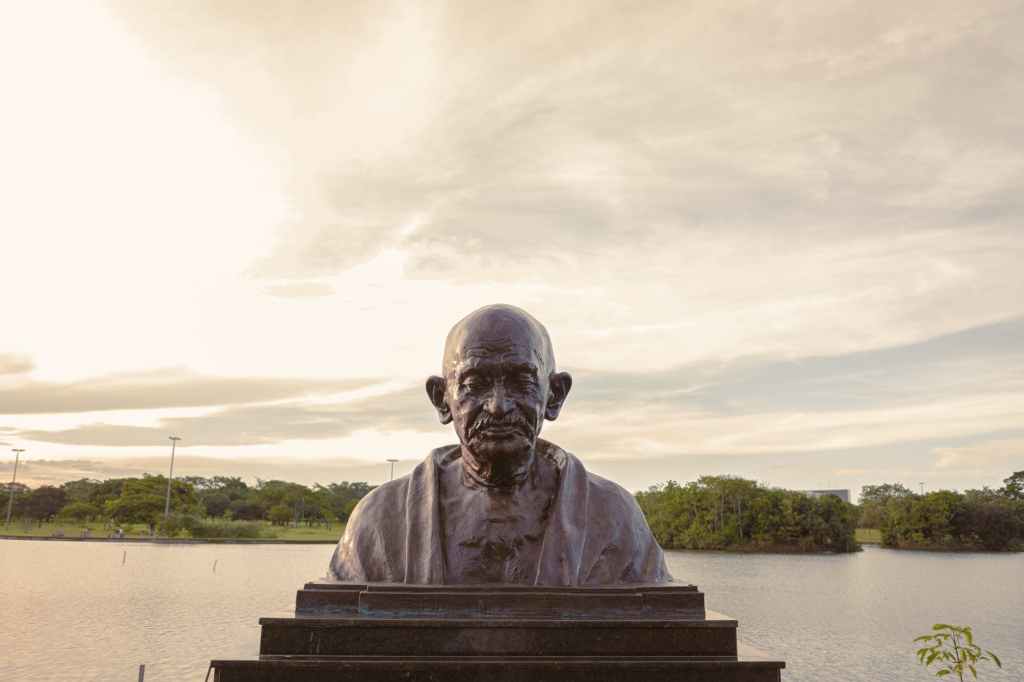
GANDHI’S GOAL-SHANTI SENA

SHANTI SENA

              *    SHANTI SENA is a word derived from Sanskrit.

               *  SHANTI means peace and SENA Means army.

                *  SHANTI SENA is also called as peace army.


MAIN GOALS OF SHANTI SENA:

*.   Service to peoples as a volunteer at any time.

*.    Give to a cause close to your heart.

*.     Most important goal is to bring the non-violence.

*.       No religion diverse all religions must       get equal rights and respect.

All are equal

QUOTES BY PEACE ARMY:-

“THE GREAT GOOD IS WHAT WE DO FOR ONE ANOTHER”.

” TREES NEED FOR SEED PEOPLE NEED FOR SHANTI SENA”.

  NON – VIOLENT LIFE :-

                        *  Non violent is a personal practice to not make harm to others.

                        *  Gandhi introduced the concept of ahimsa ( Non-violence).

                         *. Non violence is powerful tool for the social protest.

                          *. To create non violent children.It is crucial to maintain the peaceful environment.

                          *. It is the active out pouring of one’s whole being of another.

                          *. Non violence love is active not passive.


IMPORTANT OF NON VIOLENT COMMUNICATION IN Society:-

* Non violent will bring peace among the people.

* Non violent communication help us to express our feelings.

* Non violent communication means complete lack of violence in the way we communicate with others.

* To respect our people.

MAIN COMPONENTS OF NON VIOLENT COMMUNICATION:-

* Observation.

* Feelings.

* Needs.

* Requests.

SHANTI SENA:-

* SHANTI SENA makes love and peace to the people.

* SHANTI SENA brings non violence to the people.

* SHANTI SENA is not only to maintain peace also good relationship.

* SHANTI SENA is the non weapon war of peace.

* If one should have shanti sena he should ignore annoyance.

* SHANTI SENA avoid us from the jealous and competition with the people.

* SHANTI SENA is one of the fundamental peace policy of people.

” soldiers army save country

Peace army save courtesy”.

GANGA RIVER

The Ganges is the largest river in India with a profound religious significance. It is known by several names, including Jahnavi, Gange, Shubhra, Sapteshwari, Nikita, Bhagirathi, Alaknanda, and Vishnupadi. Nothing can match the ever-lasting divinity of the holy River Ganga; the sacred river is a true mother by all means. 

Children’s Day

Children’s Day is a commemorative date celebrated annually in honor of children, whose date of observance varies by country. In 1925, International Children’s Day was first proclaimed in Geneva during the World Conference on Child Welfare. Since 1950, it is celebrated on 1 June in most Communist and post-Communist countries. World Children’s Day is celebrated on 20th of November to commemorate the Declaration of the Rights of the Child by the UN General Assembly on 20 November 1959. In some countries, it is Children’s Week and not Children’s Day.World Children’s Day

7 WONDERS OF THE WORLD

Our world is filled with the most unique structures that are both man-made and natural. Some of the man-made creations include churches, tombs, temples, monuments, mosques, buildings and even cities. These structures have withstood the test of time and they continue to leave many awestruck with their brilliance. There are many in the world, but only seven are selected, which are deemed to be the best.

The 7 wonders of the world are:

  • Taj Mahal – India
  • Colosseum – Italy
  • Chichen Itza – Mexico
  • Machu Picchu – Peru
  • Christ the Redeemer – Brazil
  • Petra – Jordan
  • Great Wall of China – China

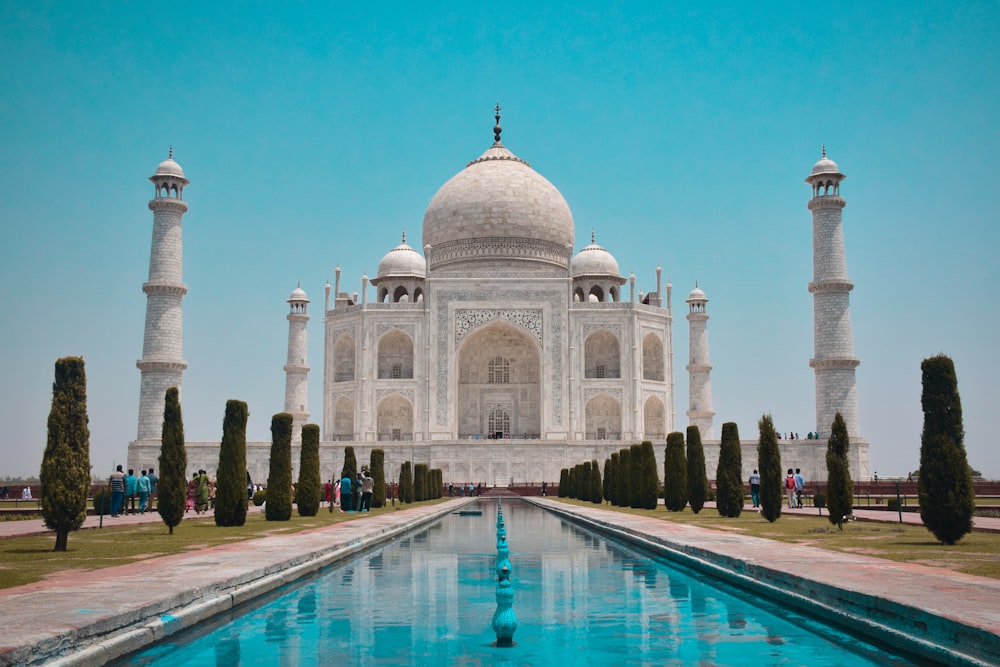
TAJ MAHAL – INDIA

Taj Mahal India photo – Free Taj mahal Image on Unsplash
TAJ MAHAL

The Taj Mahal is well known across the world for its historical value, its tale of love, and its stunning beauty. The Taj Mahal is located in the historic Indian city of Agra. It houses the tomb of Mumtaz Mahal, the wife of the Mughal Emperor Shah Jahan. It is said that the Emperor loved his wife dearly and was prompted to build the Taj Mahal after her death as a testament to his love.The construction of the Taj Mahal was completed by 1632. It took 17 years, 22,000 laborers, stonecutters, painters, and embroidery artists, and 1000 elephants to complete the Taj Mahal. The construction of the temple cost the equivalent of US$827 million today. 28 types of precious and semi-precious stones were used to decorate the Taj Mahal. The monument changes color depending on the time of the day and the moon. In 1983, the Taj Mahal was inscribed by the UNESCO as a World Heritage Site. Today, it attracts 7 to 8 million annual visitors each year.

COLOSSEUM – ITALY

Visiting the Colosseum: Highlights, Tips & Tours | PlanetWare
COLOSSEUM

Rome, Italy, hosts the Colosseum, which is one of the world’s seven wonders. Sometimes called the Flavian Amphitheatre, the Colosseum is an oval-shaped amphitheater in the center of the city. Constructed from concrete and sand, it is the largest amphitheater in the world. The Colosseum’s construction was initiated in AD 72 by Emperor Vespasian and was finished by AD 80 by his successor, Titus. Domitian, another emperor of the Flavian dynasty later made certain modifications to the amphitheater. The labor of tens of thousands of slaves were used to build this magnificent structure. The Colosseum had the capacity to host about 80,000 spectators and 80 entrances at the time of its construction.Mock sea battles, animal hunts, famous battle re-enactments, executions, and mythological dramas were just some of the public spectacles held at the Colosseum. Entry to events in the Colosseum were free and paid from the Emperor’s treasury. However, the Colosseum bore witness to a lot of brutality. Often over 10,000 animals were killed in a day. Today, this wonder of the world is a popular tourist attraction and serves as the iconic symbol of Imperial Rome.

CHICHEN ITZA – MEXICO

Chichen Itza Sunrise Tour | Globol

Chichen Itza is an archaeological site located in Mexico’s Yucatán State. It is a pre-Columbian city that was built during the Terminal Classic period by the Maya people. Chichen Itza’s structures like the temples, arcades, and pyramids were sacred to the ancient Maya people. Chichen Itza is believed to have been one of the major cities of the ancient Mayan world and constructions in the city exhibit a variety of architectural styles.

The Temple of Kukulkan in Chichen Itza is an archeological marvel based on Maya astronomy. It has 365 steps for each day of the year. There are 91 steps on each of the four sides and the platform at the top serves as the 365th step. The site even houses a sophisticated ancient observatory that exhibits the excellent advanced astronomical knowledge possessed by the Maya people. Chichen Itza was abandoned in the 1400s. However, it is still not known why people left their homes in the city. The historical value of the site contributes to its status as a wonder of the world.

7

Distance Learning

Distance learning can truly be defined as the way of getting an education without visiting a school or attending a class physically.

Adaptability and Freedom:

One of the main advantages of distance learning can be the personalized approach to getting an education regardless of the channels or mediums you are using for this purpose. Whether you are getting study materials online or through posts you can learn only when a connection is developed between the material of the course and you. You get the freedom to deal with the study material in the distance learning process. You can plan your learning process at your convenience instead of sticking with a fixed schedule.

Self-inspiration:

Distance learning encourages you to motivate yourself to learn due to the absence of a traditional teacher to guide you. You will have to create a learning environment and control it effectively so that a band of self-motivation develops in you to inspire you to learn for your personal growth. You can cultivate this band in you by engaging yourself in distance learning methods.

Flexibility to Choose:

You will have to follow a set schedule of learning as per the curriculum of the school if you are following traditional ways of learning. But different types of distance learning allows you to set your learning schedule as per your convenience without following a regular schedule of learning. Even if you are out of touch with the learning process, a distance learning program offers you the flexibility to choose your course of learning.

Easy to Access:

If you cannot attend regular classes due to various reasons like time constraints and distance etc. then distance learning can be the best option for you to access the benefits of your education. If you opt for a correspondence course for distance learning then you will have to make postal delivery as a connection between you and your distance learning centre. But if you have a computer and internet connection then you can opt for an online learning method by using some video conferencing software like ezTalks Cloud Meeting etc. It will allow you to interact with your teachers face-to-face to resolve your problems. Moreover, you can continue learning even without taking leave from your job.

Earn While You Learn:

For those who want to improve their resume by getting a higher education and without breaking their existing job then distance learning can be the best option for them. You can go on earning your livelihood along with improving your qualification as distance learning will accommodate both, learning as well as earning.

Saves Money and Time Both:

By joining a distance learning course you can save money and time spent travelling to a nearby educational institution. Distance learning allows you to access your learning centre online without any additional cost. Moreover, the course offered at distance learning centres is cheaper than the courses provided at traditional education centres.

Easy Access to the Experts:

The students in traditional classes have limited options to guide them but distance learning by video conferencing will provide you expanded opportunities to access the experts in your course even if they are not located in your town or country. They can easily get connected with you from any part of the world to share their expertise and experiences with you. Such a facility is not possible in traditional classrooms.

Communicate with Other Educational Institutions:

You can also be in touch with several other e-schools by getting distance learning through video conferencing software. You can also connect with the students located at far locations from you, anywhere in the world, to mutually share the experiences and problems along with solving problems of each other. Distance learning through video conferencing also allows you to hone your interactive skills by collaborating with others from different work environments and cultures. Such facilities will not be available in the traditional classroom education system.

Virtual Trips:

Another important advantage for distance learning is to plan virtual trips if your budget does not allow you to go on trips from an actual school. Video conferencing allows the students of distance learning courses to visit the location important for them and experience the enjoyment even better than an actual trip. These virtual trips allow you to visit locations that you might have never thought of. Moreover, such trips can enable your teachers or lecturers to make your ordinary lessons more interesting than ever.

Thus, distance learning through video conferencing software tools like ezTalks Cloud Meeting or Skype etc. offers some benefits for those who want to improve their qualification even without disturbing their daily routine.

Me Before You- A Book Review

A love different than any, Me before you by Jojo Moyes is going the hug, twist, and crush your hearts. It is cruelly beautiful. Introducing us to the story of two strangers, who were never supposed to meet if wreckage had not greeted them if they hadn’t been completely flipped over again and again in the hands of their wicked lives, Will Traynor and Louisa Clark. Two souls, perfectly carved out for each other, like two jigsaw pieces fit together, and yet, all the while, poles apart.

The story starts with a small yet life-altering chronicle in the world of Will. We can see he is a dapper guy, with impossible fears, and a great liking for adventure and travel. But before we start hoping the rising scene starts, the climax greets upon our doors. Will has an accident. This is where we start our bewitching tale. Funny right? I thought so too at first. The fact that how an almost-fatal thing can start a love story is beyond my mental capability. But this happened, not only in this fictional tale but also in real life. I have seen numerous examples of how, when one type of living ends, the other starts, but the person inside stays constant. It is magnificent.

You will cry, OH, you will cry, at the sweetness, the unfairness, the predictable unpredictability, you will wholly devour this book with your soul. Or whatever sane part’s left of it, though I doubt there’ll be any after you read it. It is that good. I am not even trying to oversell this book, but it is hands-down beguiling. No matter how foreseeable the ending is, this book is all worth it. It is worth the time, the effort and the constant search of a dictionary on every page.

Instructions For Dancing: A Book Review

Though we can predict what happens on the next page, this dazzling book certainly doesn’t prove to be dull. Instructions for dancing by a very talented Nicola Yoon gives us the hypes for love, lust, and well…dance!. It starts with an obvious scenario Of almost every romance novel. The girl gives up her past life and self because of something tragic and life-changing which forced her not to believe in love and happily-ever-afters anymore. But, she knows, deep-down, the silent and loneliest place of her, That romance-novel reading girl with a pair of dreamy eyes containing unwavering fire still hopes for something magical to happen in her dreary life, and before she knows it, it does.

Yvette Antoinette Thomas, better known as Evie wakes up a simple morning, hoping for a normal day. Little does she know that she will not be the same anymore, ever again, and nor will her world. After she packs her old books with hopeless eyes and a forgone excitement for anything, she plans to give them away to the library. As soon as she paddles out with her unique but absolutely fabulous bicycle, it strikes her that it is a Sunday, and the library is shut on Sundays. With an even soulless, even more cynical sense of life(even she didn’t know it was possible) she paddled her way back to home, when, out of nowhere, she passed upon a little blue junction with a big board showing “open library”. The rest is history.

Comfort and luxury

“We act as though comfort and luxury were the chief requirements of life when all that we need to make us happy is something to be enthusiastic about.” – Albert Einstein

The Dip

Across language learning, company building, and any kind of creative project, there is a dip. The Dip is the long stretch between beginner’s luck and real accomplishment.
Extraordinary benefits accrue to the tiny minority of people who can push just a tiny bit longer than most.

The Start before the Dip

In any goal that has to be accomplished, there is a Start. It usually gets overlooked, as it’s always there. 
The Start is a much bigger problem since you can’t reach The Dip if you don’t get through The Start, and many more people fantasize about doing something than do it and give up.

Motivation management

The biggest problem we face with completing our projects isn’t productivity or time management, but motivation management. When you’re sufficiently motivated to accomplish something, you’ll move heaven and earth to do it.

Motivation Defined

Motivation is “the reason or reasons one has for acting or behaving in a particular way,” or rephrased, “the general desire or willingness of someone to do something.”

“When you quit something that you had initially wanted to do, it’s because the reasons to stop eventually came to outweigh the reasons to continue. Thus, to maintain your motivation you can either strengthen the reasons to keep going or weaken the reasons to quit. Successful motivation efforts generally include both.”

  • Ericsson & Poole

Getting Motivated to Start a Project

• Increase your reason to start a project, by increasing the value of starting it.
• Increase your expectancy of succeeding at that project.
• Decrease your reasons to delay, by increasing urgency, using a deadline.

Parkinson’s Law

It states that “work expands to fill the time available for its completion.”

A commitment Device

Many people use a commitment device or game their surroundings to get and stay motivated.
You can physically help your goal by things like throwing away your junk food, only showering at the gym so that you go there, and similar activities aimed at focussing on your goal. People also use public commitments in social media to stay motivated by peer pressure.

Stay Motivated 

Set small, incremental goals that are sufficiently exciting to be motivating and for which you have a reasonable expectation of completing.

How To Keep Going

• Maintain your sense of Expectancy in the project using small wins and accomplishments.
• Reward yourself.
• Maintain a sense of value by finding a way to remind yourself of the bigger picture of the small, everyday bouts of effort.
• Build positive habits.
• Find flow.
• Set clear follow-on goals.
• Maintain energy.

Governments budgeting

Description of the budget

The word ‘budget’ is derived from the French word, Bougette, which means a leather wallet or purse. Therefore, the term modern budget refers to a document that contains estimates of revenue and expenditure of a country, usually for one year.

Types of Budget
Budgets can be categorized based on the following principles:

(i) Combined time.
(ii) Number of budgets tabled in the legislature.
(iii) The overall finance budgets position is presented in the budget.
(iv) An approved policy on the takeover of revenue and expenditure in the budget.
(v) Division of receipts and expenses in the budget.

Based on these principles budgets can be:

(i) Annual budgets or long-term budgets.
(ii) One or more budgets.
(iii) Excess budgets, deficits or estimates.
(iv) Budget or revenue budget.
(v) Departmental budget or operating budget.

A brief description of the different types is as follows:

Annual or long-term budgets:
Generally, Government budgets are for one year, that is, for one year. In India, England and many other commonwealth countries the financial year starts on April 1 and ends on March 31, but in the U.S.A., Australia, Sweden and Italy the dates are 1st July and 30th June.
Some countries adopt a planned economic policy and meet the requirements for long-term planning, using a long-term budget, that is, preparing a budget for three years or more. Such a budget is a long-term plan rather than a long-term budget because what is offered is a financial plan over the years to fund the program.
These countries spread the use of program costs over many years. The legislature approves the plan and estimates its costs, but that does not equal the actual voting of all-time shares. Every year the national budget will include expenditure on a plan for that year to be approved by the legislature.

One or more budgets:
When the estimates of all Government functions are allocated to a single budget, it is known as a single budget. The advantage of a single budget is that it reflects the financpractisetion of the Government as a whole.
But if there are separate budget-related budgets passed by the legislature, it is called a mass budget. In India, we have two budgets — one for the railway line and one for the rest of the departments. The practise of having a separate train budget began in 1921. In England, there is one budget.

Extra income, deficit or limited budget:
A budget is a surplus if the estimated income exceeds the estimated cost/expense But if the expected revenue falls below the expected cost, it becomes a budget deficit. According to economists, a deficit budget is a sign of global development. A limited budget is when the expected revenue is equal to the expected cost/expense. Budgets are often in short supply.

Income or budget of income:
A budget is one in which the estimates of various items of income and expenditure include amounts to be acquired or used in one year.
In revenue and expenditure budgets, accumulated in one financial year, are planned for that financial year regardless of whether the revenue is available or expenses incurred in that financial year. In India, Britain and the U.S.A., counts are calculated, in France and other continents, counting income.

Departmental or operational budget:
The current practice is to have a departmental budget, that is, the revenue and expenses of one department are organized under it. It does not provide any information about the work or activity that has been budgeted for. The operating budget is another where the total cost of a particular project is compiled under the head of a specific program.
It is organized into activities, programs, activities and projects, for example, in the case of collaboration (employment), it will be divided into programs such as higher education, Secondary and Higher Education. Each program will be divided into activities, for example, teacher training is a task. The project is the final unit of division of labour.
It symbolizes work as a major project, such as the construction of a school building. The A.R.C. proposed the adoption of a budget for all the departments and agencies of the Central and provincial governments that have managed development programs.

The Romantic Revival

Introduction

The first thirty years of the 19th century is termed as the period of the Romantic Revival in English literature. The Elizabethans were the first romantics. The romantic spirit suffered a decline during the subsequent ages and it was left to the writers, especially the poets of the early 19th century, to bring back that spirit once again to literature. The Romantic Revival is a broad term used to indicate the change that came over literary sensibility and expression during this period.

Romantic Revival in English Literature

The Romantic Revival was a revlot against the neo-classical spirit. The classical mode had outlived its utility and a change was universally felt. The signs of revolt became evident when James Thompson published his ‘The Season’, a poem totally new in matter and manner. Collins and Gray enlarged the spirit of the movement in their odes and elegies. Burns, Crabbe and Cowper also contributed to the incipient revolt against the neo-classical traditions. Among the early romantics William Blake was the most revolutionary and his two publications ‘Songs of Innocence’ (1789) and ‘Songs of Experiences’ (1794) were landmarks in the evolution of the romantic spirit in English poetry. These poets are called ‘the transition poets’ because they represented a period just before the great romantics.

Impact on French Revolution

The ideas of the French Revolution such as liberty, equality, and franternity encouraged the growth of the romantic spirit. The literature and arts of ancient Greece and Rome and the writngs of philosophers like Rousseau also had an impact on the Romantic Revival. Victor Hugo defined romanticism as liberalism in literature. The roamntic outlook emphasised spontaneity of expression and encouraged man’s right to utter his thoughts without restrictions.

Romanticism in poetry

Romanticism is the expression of sharpened sensibilities and heightened imaginative feeling. It found solace in going back to the ancients both in mythology and history. It was also a return to nature. Romanticism was not only concerned with beauty and inner life but also it added strangeness to beauty. Other aspects of romanticisim are a subtle sense of mystery, an exuberant intellectual curiosity and instinct for the elemental simplicities of life. Thus the Romantic Revival brought back many of the characteristics of the Renaissance and the Reformation. The diginity and importance of man was recognised and the emotions and feelings of even the humblest human being were recognised as worthy of artistic and literary expression. The spirit of the Romantic Revival was best expressed in the poetry of the great romantics Wordsworth, Coleridge, Keats, Shelley, and Byron and in the novels of Walter Scott. Even the prose writings of Charles Lamb were coloured by romantic sentiments.

The Lyrical Ballads published by Wordsworth and Coleridge in 1798 inaugurated the romantic era. It is called the period of Romantic Revival because the glorious productions of the nineteenth century had a close kinship with those of the spacious age of Elizabeth. Unbridled imagination, the first joy of a new found power – the inevitable consequence of the Renaissance and Reformation characterised the Elizabethan and Caroline literature in the seventeenth century. But this spirit of imaginative enthusiasm was subjected to deep scrutiny and close criticism by the growing self-consciousness of the nation in the next age – the age of Pope and Johnson. During the eighteenth century, in society, in politics, in life and literature which is but a reflection of life, it stood for order, dignity, clarity and for a certain standard of grace and beauty of ‘correctness’ and decorum in expression, and for the smothering of all passions and emotions which came to be regarded as barbaric and genteel. Against this spirit the natural reaction was the second Romantic movement which was actually founded by William Blake and strengthened by William Wordsworth.

Victor Hugo describes romanticism as ‘liberalism in literature’. Wordsworth in his preface to the Lyrical Ballads boldly asserts “Those who have been accustomed to the guadiness and inane phraseology of modern writers, if they persist in reading this book to its conclusion will no doubt, frequently have to struggle with feelings of strangeness and awkwardness.”

Before by Anna Todd

I felt obligated to read this because I’d already suffered through the rest of the series, and I couldn’t just.. not finish it. But my god. This entire series is so, so awful. And I’m a sucker for crappy entertainment, so that’s saying a lot.

Worst characters ever. Hardin is a sh*thead, through and through. The fact that he eventually becomes capable of developing feelings for another human does not negate his sh*thead status, especially since he only becomes capable of those feelings because he can’t fathom not being able to sleep with said human whenever he so wishes (as well as making sure he’s the only person who will ever get to see or touch pretty much any part of her for the rest of eternity, until the end of time, etc, etc). This book in particular shows what a sh*thead he truly is. Tessa is unbelievably and annoyingly naive and whiny. I was tempted to reread the first couple of books so I had more to say about what a crappy character she is for about five minutes before I realized it’s really not worth it. So, she sucks too, that’s it.

Worst attempt at creating a “relationship” with two people who have no connection other than an overwhelming love for each other’s naughty bits. They know close to nothing about each other before they’re mentally professing their undying love for the other. Remember, these are college aged people, not a couple of twelve year olds navigating their way through their first crush. Apparently, neither Hardin nor Tessa were ever taught the difference between lust and love. HUGE difference.

Full of unnecessary, over the top drama, simply for the sake of drama. Basically, the equivalent of a soap opera written by a hormonal teenager. The drama is exhausting; I can’t imagine waking up every day knowing that I’ll be in hysterics at least once, most likely multiple times, due to the unstable romantic relationship that I refuse to walk away from in order to save some sh*thead from thinking that he’s a sh*thead, despite the multiple reasons he’s given me to do just that, in addition to all of the other strained relationships in my life (family/frenemies).

Not even going to touch on the whole abusive relationship business that I see being complained about in a lot of other reviews of this series; that’s actually somehow less disappointing/annoying than the fact that EVERY SINGLE LITTLE THING is worthy of either walking away dramatically and vowing to never speak to the other person again, or confessing how one simply can’t survive without the other (dramatically, of course). Both scenarios are inevitably followed by sex, because that is the only way these two know how to “connect” to one another. Super possessive, jealous, emotionally closed off boyfriend mad at you for saying hi to a male coworker? Have sex, everything will be dandy! Until 10 pages later, when he gets mad at you for wearing the wrong socks. Is he mad at someone else for something totally unrelated to you or your relationship with him? Well, sex will fix that too! And if you’re angry at him for something silly, like lying or invading your privacy, just let him fondle you a bit and you’ll feel soooo much better. Moral of the story: Sex fixes everything!!!

To be fair, this last book was the best, mostly because it was the shortest and skipped over quite a bit of the drama included in the first four books.

After Ever Happy by Anna Todd

The fourth book in the ‘After’ series, ‘After Ever Happy’ is the first book in the series that had a different “feel” to it. Don’t get me wrong, there is plenty of dramatic shenanigans between Tessa and Hardin. However, this time around they aren’t the sole focus of the book. The result is a much more somber vibe.

After everything that went down at the end of the third book, Tessa is left markedly changed from the girl she was before. Those tragic events forced her to take a long, hard look at her relationship with Hardin. She finally faces the facts — they’re toxic.

Despite her love for Hardin, she knows that she needs to get away from him. Like the clichéd saying, “sometimes love isn’t enough”. Nothing could be more true for this dysfunctional couple at that point in time.

Even though Hardin comes to his senses and does his best to get Tessa to forgive him, it won’t come easy this time around. Tessa has made up her mind and it will take years for Hardin to prove himself to her. It was long overdue.

With Tessa and Hardin living separate lives for most of this book, the story definitely had a different feel to it than earlier books. As much as it was what the logical me said needed to happen, the illogical part of me couldn’t help but feel like this new direction wasn’t as captivating. After all, this series’ entire guilty pleasure appeal was based on the very same things that made this couple such a train wreck — fighting, angst, jealousy, breaking up and making up. With those elements largely missing from this book, I didn’t feel the same pull to the story.

That being said, I think that the author had used up all of the major angst-ridden story elements that readers could handle. Although the loss of this drama resulted in a slightly less engaging story for me, I don’t think I could’ve handled another book full of Tessa and Hardin’s back and forth fighting. This series has left me emotionally exhausted and I just don’t have it in me.

Luckily, Tessa and Hardin do get the HEA eventually. It was long overdue and I was glad to see it. Finally, they have started to mature and deal with some of the issues in their relationship. As much as I loved to hate this couple, I have to admit that if there was ever a couple that stuck it out, it was them. Talk about hanging in there for better or worse.

Overall, this was still a great read. I have been completely hooked on Tessa and Hardin’s story right from the start. It was one hell of an emotional rollercoaster ride. I feel content, but emotionally drained. I know that there are two remaining books in this series, but I’m stopping with this one for now. I don’t want to upset the balance. I’m feeling content with how this book ended and I’m not sure I could handle it right now if something disrupted that peace.

After We Collided by Anna Todd

After finishing the first book in the ‘After’ series, I immediately jumped into this second book. There was no way that I was going to quit this series with the way things ended at the end of ‘After’–absolutely, no way! I had to know how things were going to play out for this disastrous couple. They are like crack! It might kill me. I know it’s really not healthy…but I just can’t seem to pull myself away from it!

If I thought that Hardin and Tessa were going to grow up and start treating each other better, I would’ve been sorely disappointed. These two are every bit as toxic as they were the first time around. The back and forth, break-up and make-up, abusive cycle continues, strong as ever. Of course, I’m such a glutton for punishment that I had to have a front row seat for all of it!

Picking up right where the first book ended, Tessa does her best to try and piece her life back together. She has been betrayed by everyone that she thought were her friends — most of all, Hardin. Unfortunately, the manipulative jackass succeeded in tying her to him when he tricked her into moving into an apartment with him and away from the dorms. This will make distancing herself from him more difficult than she had hoped.

While Tessa makes a weak attempt at moving on, Hardin sets out to prove that his feelings for her are genuine. Of course, every time he starts to make any progress in that regard he does something that sabotages all of his efforts. They truly are their own worst enemies.

For what it’s worth, Hardin does seem to show some actual emotions in this book. Mainly, his regret and heartache shines through. It’s hard to feel sorry for him though, since all of his pain is entirely the result of his own cruel actions. To make matters worse, every time he starts to gain a little “nice guy” stock, he goes and does something abhorrent again, reminding me of what a despicable asshat he is. Some big revelations about his past only further prove that he is not to be trusted. He really is deplorable…but I love to hate him!

I also found myself feeling a little more irritated with Tessa’s weakness this time around. Can you say “doormat”? How many times is this girl going to fall for his crap? She also played the same childish games over and over, using other guys to make Hardin jealous, only to play the victim when she got the reaction she was looking for all along.

I felt sorry for Tessa at first. By the end of this book, I was marveling at the fact that she hadn’t been weeded out as part of the process of natural selection. Surely, this girl is too stupid to live!

That being said, I still can’t pull myself away from this angsty, infuriating story. It is like watching a trashy talk show or soap opera. It’s unrealistic. The relationships are toxic. It probably kills off brain cells. However, I can’t get enough of it. It is my latest guilty pleasure. I’m kind of ashamed to admit it, but I’m completely hooked on this series.

Like the first book, ‘After We Collided’ ends with a huge cliffhanger. Anna Todd certainly knows how to pull me back in. At this point, I think my relationship with this series is much like the relationship between Hardin and Tessa. I should probably cut all ties and get out while I can, but I just can’t seem to resist the pull. I’m on to the third book in this addictive, dysfunctional romance. 

After by Anna Todd

I know I’m late to the After party. But hey, better late than never! I started After by Anna Todd in the evening, then stayed up all night because I had to finish it. And then, I begged my teen sister for the second book. She kindly agreed to give the book to me. I hope she doesn’t change her mind just to torture me. We’ll have to see how this unravels. 

Synopsis:

Tessa is just starting college, and she’s got everything planned. In one year, her boyfriend Noah will join her as well. But then she meets her wild roommate Steph as well as the incredibly rude guy with a British accent, Hardin. And everything changes!

My Thoughts:

Tessa is a good girl and she doesn’t do parties and short dresses. And she goes to a party with Steph and something changes. She can’t look away. Harding is doing something to her and she can barely resist. But she has a boyfriend. And also, everything she has a good moment with Hardin, two bad ones follow. Hardin is toxic, and Tessa hurts him in return as well. Also, their communication has to improve. Not the mention how the whole boyfriend situation was handled. 

Honestly, I thought my opinions would be conflicting. But they’re not. I really enjoyed the book and I’m looking forward to the second one. Also, I know Hardin is based on Harry Styles, but while I was reading the book, he didn’t once cross my mind. I also often have fantasies about celebrities, I just don’t happen to write them. Honestly, it’s not a big deal. 

My only worry was that teens might see Hardin’s toxic side and think that’s how a girl should be treated. But that would mean underestimating the girls out there. Even in the book, Tessa was aware Hardin’s behaviour was not okay, which is why she reacted the way she did. The facts she would return only meant that she had feelings for him. Their relationship has more issues than good parts, but in all honesty, when I think about my high school days, it was that way for me too. I didn’t handle things well. Sometimes I didn’t communicate well. I trusted people I shouldn’t have trusted. And that’s the beauty of this book. 

After by Anna Todd is the perfect teenage book.

It reminded me of my days of high school and uni. Attending parties I shouldn’t have and trusting people that didn’t deserve my trust. Handling relationships badly and having terrible ability to communicate. And this book brought all the excitement back and more. Fond and not so fond memories that reminded me that I have lived at the fullest. 

In the next book, I do hope that their relationship improves. I hope Hardin grows up and Tessa communicates to him, instead of hurting him back. Also, I hope Tessa fixes her relationship with her mother as well, even though her mother needs to work on her own biases as well. I also hope that the dramas continue as well – I really love them. 

Attila : Scourge of God by William Napier

Rome C AD408 is laid out to us as an Empire on the edge of collapse, it’s allies the Huns alongside Roman forces under the command of General Stilicho defeat the barbarian hordes & Rome is saved (for now).

The players are thus introduced, one being a hostage, that of Attila as a boy in Rome alongside other barbarian leaders sons, his grandfather King Uldin (of the Huns) having just fought alongside the Romans. General Stilicho & his wife Serena are a coupla who feature in Attila’s life, somewhat surrogate parents to him in an otherwise hostile environment. The Emperor & Princess Galla are front & centre in Attila’s world too along with various others namely a servant & a soldier, all who have some way influenced a young Attila as we read of his early life at the hands of Rome. Other hostages, namely the Vandal Princes Gesaric & Beric become his protagonists, they appearing in a few scenes.

So what else happens…..?

The sack of Rome by Alaric of the Goths is covered in the period but only through the eyes of a travelling Roman soldier (lieutenant which is a rank I don’t recognise as being Roman tbh) & not really done in any detail… its jus mentioned which is an omission I think.

The character of Attila is well played & I warmed to him instantly, strong, wilful & mindful of his roots whilst in the belly of Rome, certainly not seduced by its trappings as other hostages appear to be. Always distrustful, listening & gathering intelligence all the while, making plans to escape, its all believable as part of the story. Its the only part of the story, at it’s ending, that I truly enjoyed.

Some parts contain mystical nonsense which don’t really fit in with the story but perhaps fit with the superstitious nature of the period, some are a little fantastical though. A Druid, shaman & witch all make appearances & have to say I mostly cringed when I read those excerpts, expecting unicorns or cave trolls to pop outta the mist at any moment…….

The part about the Huns was quite interesting & probably the only part where you felt immersed in the period & the people. The Romans could have been from any era especially the soldiering element.

As you can derive from the last statement I did expect a little more historical detail. As for its substance, in truth I found it a similar read to the Simon Scarrow Macro & Cato series (even the Centurion in it is called Marco!), not great depth or intrigue but good fun nevertheless…… not a read that takes itself to seriously. The author even nicks a coupla immortal lines from the film Zulu during a battle scene!

Quite a contrast throughout the book, sometimes the historical detail is there & the context is sound at others its a boys own adventure whilst in patches it’s puerile crassness. Bit of a mash-up I’m trying to say but for the most part it did hold my attention & i would give it 3.25 stars for an enjoyable enough romp, although not the historical content I had expected or was looking for, rounded down to a 3.

Brave New World by Aldous Huxley

Brave New World is a dystopian social science fiction novel by English author Aldous Huxley, written in 1931 and published in 1932. The book presents a nightmarish vision of a future society.

In 1999, the Modern Library ranked Brave New World at number 5 on its list of the 100 best English-language novels of the 20th century. In 2003, Robert McCrum, writing for The Observer, included Brave New World chronologically at number 53 in “the top 100 greatest novels of all time”, and the novel was listed at number 87 on The Big Read survey by the BBC. Despite this, Brave New World has frequently been banned and challenged since its original publication. It has landed on the American Library Association list of top 100 banned and challenged books of the decade since the association began the list in 1990.

Summary

This is a story about a world where people are born in test tubes and their lives are predetermined by their social status. Mothers, fathers, children, and other social relationships do not exist, and all of the primary human needs are met by forced or fabricated social experiences.

The Alphas, the top social class, are the most brilliant and enjoy more of life, whereas the lower classes, who have been genetically stunted in a lab, perform the society’s less important chores. To further assure their future social rank, each generation of children is created in batches via cloning and suggestive conditioning.

Bernard, a government psychologist in London, is an Alpha, but he’s physically small and doesn’t like society’s artificial social aspects, such as unrestricted sex and soma, a drug that makes people feel drunkenly good.

Bernard is sent to New Mexico as a psychologist to study a “savage” reservation, a place where the “old” society still exists. He brings Lenina, a young and attractive woman, with him, and the two of them enter the reservation together. There, Bernard meets Linda, a lady who grew up in London but was abandoned in the reservation several years ago. It is also discovered that, Linda had a son named John.

This is problematic because the father is Bernard’s boss, the Director of Hatcheries and Conditioning, and Bernard’s society does not accept procreation through natural means. Instead, Bernard decides to bring Linda and John back to London.

Bernard, who is normally quiet, becomes outgoing, as his fame for bringing back John, “The Savage”, grows. However, when John fails to show up for a social event, his social status returns to one of an outcast.

After his mother’s death, John understands that something is wrong with society. He attracts the attention of the Controller, the regional leader of Western Europe, and then John and the Controller talk.  

The Controller explains how and why things are the way they are.  That the coexistence of truth and happiness is a balancing act and that they have chosen a life of extreme happiness with very little truth.

Bernard is sent to an island with other freethinkers like himself, and John decides to move to the countryside and live alone. In the end, after being made a spectacle, John hangs himself out of shame.

Review

There’s a lot to say about this story, but what draws my interest is the concept of predisposing individuals for a specific course before they’re even born, similar to putting them on a train track. We learn in the story that lower-level individuals learn what is comfortable to them early on so that when they grow up and have to do menial duties, they are not angry because they have been conditioned to believe that what they are doing is good. In other words, a social ceiling has been created for them.

What’s even more interesting is that the same thing could be happening today. For example, if a person is raised in a high-status social network, he or she is bound to stay in that high-status social network. Similarly, someone who grew up in a poor social network is more likely to stay in that network. Of course, these paths aren’t cast in stone, and there’s always the possibility of deviations, but for the most part, one’s environment has a significant impact on the type of person they become and the decisions they make.

What’s exciting to see are individuals, through their own talents or luck, who shift their social circumstances and assimilate themselves into other social networks. In essence, they are shifting the direction of their tracks and arriving at new destinations.

Cycling for Health and Fitness

Physical activity is required to be fit and healthy. Obesity, heart disease, cancer, mental illness, diabetes, and arthritis are all diseases that can be prevented by regular physical activity. One of the most effective strategies to lower your risk of health problems related with a sedentary life is to ride your bicycle on a regular basis.

Cycling is a low-impact, healthy activity that may be enjoyed by people of all ages, from toddlers to seniors. It’s also enjoyable, inexpensive, and environmentally friendly.

Riding to work or the shops is one of the most time-efficient ways to combine regular exercise with your everyday routine. An estimated one billion people ride bicycles every day – for transport, recreation and sport. It only takes two to four hours a week to achieve a general improvement to your health.

Photo by Andrea Piacquadio on Pexels.com

Health benefits of regular cycling

Cycling is mostly an aerobic activity, which means that your heart, blood vessels and lungs all get a workout. You will breathe deeper, sweat more, and have a higher body temperature, all of which will improve your overall fitness.

The health benefits of regular cycling include:

  • increased cardiovascular fitness
  • increased muscle strength and flexibility
  • improved joint mobility
  • decreased stress levels
  • improved posture and coordination
  • strengthened bones
  • decreased body fat levels
  • prevention or management of disease
  • reduced anxiety and depression.

Cycling and specific health issues

Cycling can improve both physical and mental health, and can reduce the chances of experiencing many health problems.

1) Obesity and weight control

Cycling is a good way to control or reduce weight, as it raises your metabolic rate, builds muscle and burns body fat. If you’re trying to lose weight, cycling must be combined with a healthy eating plan. Cycling is a comfortable form of exercise and you can change the time and intensity – it can be built up slowly and varied to suit you.

2) Cardiovascular disease and cycling

Cardiovascular diseases include stroke, high blood pressure and heart attack. Regular cycling stimulates and improves your heart, lungs and circulation, reducing your risk of cardiovascular diseases. Cycling strengthens your heart muscles, lowers resting pulse and reduces blood fat levels.

3) Cancer and cycling

Many researchers have studied the relationship between exercise and cancer, especially colon and breast cancer. Research has shown that if you cycle, the chance of bowel cancer is reduced. Some evidence suggests that regular cycling reduces the risk of breast cancer.

4) Diabetes and cycling

The risk of developing type 2 diabetes is rising, posing a severe threat to public health. Physical inactivity is known to be a primary factor in the development of this condition. Large-scale research in Finland found that people who cycled for more than 30 minutes each day had a 40% decreased chance of acquiring diabetes.

5) Bone injuries, arthritis and cycling

Cycling improves strength, balance and coordination. It may also help to prevent falls and fractures. Riding a bike is an ideal form of exercise if you have osteoarthritis, because it is a low-impact exercise that places little stress on joints.

Cycling does not specifically help osteoporosis (bone-thinning disease) because it is not a weight-bearing exercise.

6) Mental illness and cycling

Regular bike riding can help with mental health issues like sadness, stress, and anxiety. This is due to the effects of the exercise itself and because of the enjoyment that riding a bike can bring.

7) Hand cycling and health

Hand cycles are similar to recumbent tricycles, but instead of using foot pedals, they use hand power. If necessary, Velcro straps can be used to hold the hands to the pedals.

This style of tricycle allows amputees, people with spinal injuries and those recovering from certain conditions such as stroke to cycle as a form of exercise and recreation. Hand cyclists get the same cardiovascular and aerobic benefits as normal bicycles.

The Great Gatsby by F. Scott Fitzgerald

The Great Gatsby, third novel by F. Scott Fitzgerald, published in 1925 by Charles Scribner’s Sons. Set in Jazz Age New York, the novel tells the tragic story of Gatsby, a self-made millionaire, and his pursuit of Daisy Buchanan, a wealthy young woman whom he loved in his youth. Unsuccessful upon publication, the book is now considered a classic of American fiction and has often been called the Great American Novel.

Summary

This is the story of a man named Nick who lives in America in the 1920s. He moved to New York to work as a bond trader and discovers that he lives next to a large mansion occupied by a mysterious man named Gatsby.

Gatsby throws huge parties every night, along with loads of women and alcohol, and when Nick is invited, he learns that Gatsby served in the army as well. However, no one knows how Gatsby became so rich.

Nick reunites with his cousin, Daisy, a flirty young woman who is married to Tom, a wealthy businessman. Tom, on the other hand, is having an affair with Myrtle, the wife of a mechanic.

Nick meets Daisy’s friend Jordan, a young professional golfer, and the two fall in love. In the meantime, Nick and Gatsby become friends, and Gatsby tells Nick about how he inherited his wealth from a yacht owner.

Gatsby also reveals that he knew Daisy when they were younger and that he is still in love with her. In fact, Gatsby secretly watches Daisy from across the lake, where she lives with Tom and her daughter.

When Gatsby and Daisy finally reunite, a flood of emotions returns. They acknowledge their love for each other. To escape the heat, they all drive into town.  When Tom finds that Daisy wants to leave him, he gets upset and tells Daisy and Gatsby to drive back home and talk about it. However, Daisy, driving Gatsby’s yellow car, accidentally runs over Myrtle.

Tom then tells the mechanic that it was Gatsby who ran over Myrtle. The mechanic shows up and shoots Gatsby when he is swimming at home. Unfortunately, no one attends Gatsby’s funeral, and Nick, confused and saddened, sells everything and returns to the Midwest.

Analysis

First of all, this novel provides a historical perspective on the 1920s, a fascinating period in American history.  We get the vividness of the time, with the lights and glitz that saturated the people. Drinking and parties were to be encouraged rather than discouraged.

It should also be highlighted that expressing this energy and culture through writing  is a difficult task. It’s not only saying that there were bright lights and cocktails, but also engaging the reader in a world with subtle reminders of the culture.

Identity is another major theme, as the characters, like real people, have complicated identities that frequently involve deceit. People aren’t who they say they are, as seen by Tom and Myrtle’s affair and Gatsby’s ambiguous history, as Gatsby’s name isn’t even his real name. And as readers, we are reminded of this when Gatsby’s father shows up and corrects Nick, saying his name was “James Gatz.”

There are various theories of how Gatsby became wealthy. Readers learn early on how he had gained his wealth , but are still wondering how he kept it over the years. Even after Gatsby’s death, ambiguous phone calls seem to be coming to the house, which hints at illegal gambling as a source of income for Gatsby.

Nick makes an interesting point regarding parties that may still be relevant today. That, despite the fact that parties happen every weekend, there is a sense of emptiness experienced at parties.  This emptiness stems from how easily people may be replaced. That if you go to enough parties, they all start to look the same.

Gatsby also wishes he could travel back in time to when he first met Daisy. And any character who wishes the present were the past, that things were the way they used to be, is doomed.  This is a strong literary strategy that many of the best stories use in their tragic characters. So be forewarned, living in the past is dangerous.

FAHRENHEIT 451 by Ray Bradbury

Fahrenheit 451, dystopian novel, first published in 1953, that is regarded as perhaps the greatest work by American author Ray Bradbury and has been praised for its stance against censorship and its defense of literature as necessary both to the humanity of individuals and to civilization.

In 1954, Fahrenheit 451 won the American Academy of Arts and Letters Award in Literature and the Commonwealth Club of California Gold Medal. It later won the Prometheus “Hall of Fame” Award in 1984 and a “Retro” Hugo Award in 2004. Bradbury was honoured with a Spoken WordGrammy nomination for his 1976 audiobook version.

Summary

This is a story about a man named Guy Montag who is a fireman.  However, by today’s standards, he is not a fireman. Rather than putting out fires, he starts them by burning books, which are outlawed by the government.

After talking to his neighbour, Clarisse, Guy begins to doubt his work. When he looks around, he sees a wife who doesn’t love him and a world wrapped in technology and war. Every day, people kill each other and  no one seems to care.

After learning that Clarisse died, Guy further begins to question himself whether or not he is doing the right thing by burning books. He is so enraged that he steals a book before burning a lady and a pile of books.

Beatty, his fire captain, notices changes in Guy and keeps a close eye on him. Guy tells his wife that he has a small book collection at home, and they try to read them together, but his wife seems disinterested.

Guy meets Faber, an old English professor, and the two decide to fight the government together.

Meanwhile, when Guy is at work, they receive a notification that books have been found. Surprisingly, the firemen arrive at Guy’s residence.

Guy is forced to burn all of his books with a flamethrower, but when provoked, he kills Beatty. He grabs what books he can and rushes over to Faber’s house for a final farewell. 

The government has launched a full-fledged broadcast hunt for Guy, which includes the use of a mechanical search dog. Guy escapes the city and walks down the river, where he encounters a group of runaways. There, he discovers that they have all memorized books, thus creating a human library of literature.

Finally, the runaways watch the city being destroyed by enemy bombs and prepare themselves for a grim future.

Analysis

So, why does this society dislike books? What did books ever do to humans?  In this society, people have chosen not to read books. The majority of people quit reading and instead found entertainment in the form of bite-sized  portions of educational information. 

The administration then decided that books should be forbidden because they contained contradictory views that caused debates and conflicts. Rather than creating a marketplace of ideas, the government wanted to streamline thinking so that everyone had the same viewpoint. What’s even scarier is that this doesn’t seem too farfetched to occur in real life.

Most importantly, this story tries to answer the question: Why are books so important?  As Faber discusses with Guy, books are important for three reasons.  The first is that books are excellent sources of information. The second reason is that reading books takes time and dedication. The third reason is that we have the power to react to our surroundings based on what we learn from reading. That the words in books aren’t just meaningless words, but have practical applications in our lives.

It’s not just because this old dead guy wrote some things for me to read hundreds of years later, but also because how do those words apply to our society today? 

Despite the fact that technology has progressed our society, we still tent to see the same human problems as in the past, so it seems that technology makes our life simpler but does not solve many of our most basic problems, such as war, disease, and poverty.

It’s quite scary to think that the author may have imagined some of the technology that we use presently. Fast cars, mechanical dogs, large TV screens, reality TV, bluetooth, and a variety of other technologies are included in the novel. It makes you question how far we are from a world without books.

Benefits of Surya Namaskar

In Surya Namaskar, Surya refers to “the sun,” and Namaskar means “bowing down in respect.” This has been the most popular yogic kriyas for many decades now, as it combines 12 yoga asanas in a yogic sequence. Practicing Surya Namaskar daily helps in balancing three constituents of your body, i.e., Kapha, Pitta, and Vata, which will help you lead your life in a greater way and influence your creativity and intuitive abilities. It’s simple yet powerful poses are what make it possible for people of all age groups and all sizes to perform it, anytime, anywhere.

Benefits of Surya Namaskar

1) Helps lose weight

Surya namaskar at a fast pace serves as an effective cardiovascular workout. It includes poses that stretch the abdominal region which is helpful in burning the extra fat layer around the belly. Hence, it is effective in losing weight.

2) Improves overall flexibility

Along with the spine, the entire body experiences deep stretches while performing Surya Namaskar. It expands and contracts most of the muscles and keeps the body flexible and agile.

3) Relieves gastrointestinal issues

Surya Namaskar stimulates the digestive tract due to alternate stretching and contraction of abdominal muscles and organs. It keeps the digestive and gastrointestinal issues at bay.

4) Cures insomnia

Surya Namaskar includes a set of 12 poses along with synchronized breath that calms the mind and ensures sound sleep.

5) Regulates and eases the menstrual cycle

Females experiencing irregularity in their menses or pain or discomfort before or during menstruation find Surya namaskar quite relieving.

6) Lowers blood sugar levels

Surya namaskar involves poses that stimulate heart muscles and act as a natural remedy for controlling blood pressure. It regulates the blood sugar level keeping the heart healthy.

7) Helps getting rid of anxiety, stress, and depression

The deep breathing involved in Surya namaskar poses draws oxygen to the brain which brings the state of calm. Along with the nervous system, it benefits the endocrine system, especially the thyroid gland which uplifts the mood and fights against anxiety and depression.

8) Increases the focus and concentration power

As already mentioned that the benefits of Surya Namaskar are not limited to physical health as it also relaxes the mind. Therefore, the physical postures along with breath regulation in Surya Namaskar are helpful in increasing awareness levels along with enhancing the concentration power of the brain.

Conclusion

Various studies have shown how beneficial Surya Namaskar is for uplifting the overall health. Therefore, doing few rounds of Surya Namaskar before starting your hectic regular routine is a must if you want to live life to the fullest.

So, next time you wake up to start your day, consider how much productive you could be if you added Surya Namaskar to your daily routine.

The Pros and Cons of Drones (UAVs)

What is Drone technology ? 

By definition, drones are unmanned aerial vehicles that are operated and navigated by a smartphone or a remote control.

As per records, the earliest version of drones was launched in 1849. Since then, drones have primarily been used for military purposes. Only a few years ago, the miniaturization of drones allowed different businesses to start utilizing drone technology.

Now, the drone industry is rapidly expanding. Drone technology is increasingly being used by organizations to manage their business and deliver services. In the near future drones may be used to deliver items and services. With this new technology, drones have their own set of benefits and drawbacks.

Pros of drone technology

  • Drones are used in a various sectors. They go to places that people find difficult to get.  For example, they can be used to quickly deliver medicines in hilly areas.
  • During natural disasters, drones can be used to deliver food. Not only can drones be used to distribute food, but they may also be used to locate and rescue those who are stuck. Drones can thereby save lives.
  • They can also be used in agriculture to disperse seeds, pollinate flowers, and identify crop diseases, and so on.
  • They can reduce human workload by performing monotonous chores such as delivering goods, sowing seeds, and so on.
  • Drones are extremely useful in substituting humans  for working in dangerous places such as mining.
  • Drones are being used in the military. By replacing humans, they can prevent or reduce the loss of life during wars.
  • They can also be used to provide internet access in remote areas.
  • Drones can replace various jobs, especially those that are monotonous. However, the good news is that drone technology is generating a lot more jobs in different sectors.
  • Drones are cost-effective. Many people who buy drones for personal use, for example, use them to take aerial shots. Taking aerial pictures used to be quite expensive before drones were affordable to the general people.

Cons of drone technology

  • Drones are vulnerable to cyber-attacks.
  • It’s possible that they’ll crash with flights.
  • Drones can be misused to stalk people, vandalize homes and  engage in a variety of other anti-social behaviour. There have been numerous instances where drones have posed a security threat.

Conclusion

Unmanned Aerial Vehicles (UAVs) have a wide range of applications. Drones have the potential to transform a variety of industries. Many industries, including agriculture, construction, mining, and filmmaking, are already using them.

Non-Fungible Tokens (NFTs)

What are Non-Fungible Tokens?

NFTs (Non-Fungible Tokens) are units of data that are stored on a blockchain.  They are non-fungible, which means they cannot be replaced by another identical item, which means they are unique.

 For example, if an artist wishes to sell digital art online, he or she can convert it to NFT and then sell it. People can buy this artwork using cryptocurrency.  They will be the official owners of digital artworks if they buy them as NFTs. They can resell it to someone else for a higher price. So, there will be only one official owner for NFT at a time.

Any digital work/art can be converted into NFTs. Music, video clips, photos, URLs, tickets, and metaverse virtual lands are just a few examples of the things that are being converted into NFTs.

Ethereum was the first blockchain to support NFTs. That’s why the Ethereum blockchain is mostly used for NFTs. Because of their growing popularity, several other blockchains are now adding support for NFTs.

The present situation

People are buying and selling NFTs through NFT marketplaces.Currently, the majority of NFTs are digital arts.

Bitcoin and Ethereum are cryptocurrencies that cannot be used for regular purchases. Only a few platforms, such as Xbox games and Overstock, accept cryptocurrency as a payment method. At present, cryptocurrencies are mostly used for trading.  So, people who own cryptocurrencies now have something to invest in: NFTs. So, some NFTs were sold for millions of dollars.  In February 2021, a Nyan cat gif that had been converted to NFT was sold for $58000. Another example is Jack Dorsey, the co-founder of Twitter, who sold his first tweet for $2.9 million. In August 2021, clip art of rock was sold for 400 ether  ($1.3 million).

They are digital assets, according to some. Several people who have bought NFTs have stated that they bought these as an investment in the hope that their value will increase in the coming days.

Benefits of Non-Fungible Tokens

  • NFTs enable artists to sell their paintings, music, and other works for a high price, which may not be possible before NFTs.
  • Even though at present NFTs are mostly used to sell digital artworks and video clips, they can also be used for a variety of other reasons such as preserving important documents.

Problems with Non-Fungible Tokens

  • The transaction of selling or buying an NFT consumes a lot of electricity. Because we are already fighting against climate change, this massive energy consumption is a serious problem.
  • The copies of digital artworks that were sold as NFTs are now available online and can be seen for free by anyone.
  • In the hope of becoming rich, many people are burning money to buy these overhyped digital artworks. Many will lose money when people lose interest in buying these NFTs. According to some, NFTs are a bubble that is going to burst.
  • The non-financial-transactions sector is mostly unregulated.
  • Hackers are stealing NFTs. They’re also sending malicious NFTs to steal cryptocurrencies. Recently, hackers stole $150k worth of crypto from Twitch co-founder’s Fractal NFT project.

The future of Non-Fungible Tokens

The technology offers a wide range of applications for storing and transferring digital assets. NFTs are still new and the technology is still in its early phases. So, with the new developments, the energy consumption of NFT transactions may also be reduced.  Furthermore, the use of NFTs may increase.

Conclusion

Non-fungible tokens are unique pieces of data that are stored on a blockchain. Digital art, music, video clips, and tickets are just a few examples of the digital assets that are being transformed into NFTs. Some believe that this is a bubble  that will burst, while others believe that NFTs will drive the digital economy. The technology is still in its early phases, so we must wait and see how it evolves.

Benefits of Game-Based Learning

What is Game-Based Learning?

Game-based learning (GBL) is a teaching method that is designed to help students learn and explore certain subjects and acquire skills while playing the game. This type of game has defined learning outcomes and is designed to help students in remembering and applying the learning in the real world. Game-based learning defies the old school method of ‘rote memorization’, in which the focus is on learning by memorization and recall of information.

The core concept behind game-based learning is repetition, failure and the achievement of goals. Students work toward a goal. During the process, they choose actions and experience the consequences of those actions. While doing so, they actively participate, learn and practice the right way to do things.

Benefits of Game-Based Learning

1. Boost self-confidence

Motivation is one of the core benefits of game-based learning.  As students progress through the game’s various stages, they feel a sense of accomplishment. Game-based learning has been shown to increase student’s self-confidence by 20%.

2. Sharpen Memory

According to studies, game-based learning sharpens memory by 90%. Because the principles are taught visually, this leads to better retention power.

3. Better Analytical Skills

Game-based learning encourages students to think critically and logically, allowing them to increase their analytical skills by four times more. 

4. Better Conceptual Knowledge

Game-based learning improves student’s conceptual understanding and knowledge by 11%. The game’s interactive aspects boost their degree of involvement and promote better learning.

5. Simplifies Complex Concepts

Theoretical concepts might be difficult to propagate. Games can be used to break them down into more manageable chunks. This trait of Game Based learning is also useful for students writing an expository essay as a college assignment.

6. Motivate towards completing tasks

Game-based learning keeps students engaged and allows them to accomplish three times as many activities as they would with traditional learning techniques.

7. Enhance real-world skills

Game-based learning encourages students to “learn by doing.” The learner gains a 20% better understanding of real-world applications through hands-on experience.

8. Inquiry-based learning

By performing certain actions and then understanding and facing the consequences of those actions, the learner takes an active role in acquiring knowledge.

9. Encourages Teamwork

Since game-based learning involves complex activities, the entire group can  team up in the learning environment, conceptualize the potential results and offer their plans in solving the problems.

10. Provide immediate feedback

Students feel motivated when they get their scores immediately, pushing themselves to play until they get the perfect scores.

Conclusion

Game-based learning improves a student’s ability to acquire and retain new information. It helps students in learning new concepts, remembering them, and applying them when needed.

As a student, you can try to find games that are related to the subjects you are studying. You will notice a big change in your learning abilities as you dive deep into the virtual world of knowledge.

The Curious Case of Benjamin Button by F. Scott Fitzgerald

The short story “The Curious Case of Benjamin Button” was published in 1922 by F. Scott Fitzgerald, who was a pillar of American literature from 1920 until his death in 1940. “The Curious Case of Benjamin Button” follows a 70-year-old man who is destined to age backwards. Though Fitzgerald is best known for novels like The Great Gatsby (1925) and Tender is the Night (1934), he also completed more than 160 short stories. Today, Fitzgerald is regarded as one of the best American writers of the 20th century, though he experienced only moderate success during his life. “Benjamin Button” was adapted into a major motion picture in 2008, with Brad Pitt starring as the protagonist.

Summary

This is a story about Benjamin Button, an infant who is born as a 70-year-old man and ages in reverse.

Set near the time of the Civil War, when Benjamin is born, his father and mother struggle to accept his condition, forcing Benjamin to act his actual age. Benjamin, on the other hand, dresses and thinks like an older man, wanting to wear a suit and smoke a cigar.

After failing to integrate into school, eventually Benjamin begins to notice that he is looking younger.  His skin is tightening and he is becoming more energetic.

Soon after, Benjamin and his father, almost similar in appearance in terms of age, attend a party where he meets a young woman named Hildegarde. Despite the fact that Benjamin is approximately twenty years older than Hildegarde, the couple marries soon after.

After fathering a child, Benjamin continues to grow younger.  He begins to notice that his interests in the party lifestyle are growing, while his interest in his wife is decreasing.

After serving in the army, Benjamin enters college and graduates from Harvard.  In the meantime, his son, Roscoe, has taken over the family hardware store. Even Roscoe, though, is embarrassed to be seen with Benjamin because of how young he looks.  

And in the end, after Benjamin attends kindergarten with his own grandchild, he continues to become younger and younger until his mind starts to blank out, resetting back to an infantile status.

Review

This story takes an interesting look at a life in reverse, but really magnifies the similarities between the polar extremes of a life – the elder and infant years. In both extremes, individuals are highly dependent on extra care.

Behind all of the fantasy, this story also comments on the loneliness of being in a family. Despite the fact that Benjamin is surrounded by a “family,” albeit a distant and apathetic family, the narrator of this story prefers to place him alone. He is often the only person looking out for himself. Even in relationships where we may expect some help, such as from his parents, wife, or child, he is still the primary source for his own well-being.  

The ending scene, where Benjamin’s mind begins to lose consciousness, is quite sad.  He loses all memory of his life, and his universe is reduced to his crib and nurse.  

This juxtaposition of life’s most polar extremes, birth and death, works wonders at the end.  We’re left with a child, who represents new beginnings and birth, while also being left with a literal 70-year-old man who is losing his memories and entering death.

And so it seems that in the course of a natural life, we enter and leave with nothing, no memories at all.

Web 3.0

Previous versions of Internet Era

Web 1.0: The first version of the web was started with the development of the web browser in 1991. It consisted of static websites with content written by a few people and organizations. Other people can only read the content, they cannot comment or provide new information, so it is just one-way communication. It worked very well but had one big problem there was no way to make money off it. For instance, a Web 1.0 startup called Google had heavy traffic, but couldn’t encash it.

Web 2.0: The next version of the web, which is web 2.0 was started approximately from 2004. It allowed consumers to add content through comments, blogs etc. People began creating a lot of content on social media websites as well. So, people can read and write on this version of the web, which allowed two-way communication.

What is Web 3.0 ?

Any innovation starts with a vision. So, many people had different version on how the next version of the web should be. The majority of them wanted a web that ensured data privacy and free speech. The invention of Blockchain technology, which enables peer-to-peer online payment transfers without the interference of banks, gave hopes of creating the decentralized web, where user privacy and free speech are guaranteed. The latest technologies, such as blockchain technology, artificial intelligence, and the Internet of Things, are being used to create Web 3.0.

Web 3.0 is defined as a decentralized web, where content does not lie in the hands of big corporations. Instead, it uses peer-to-peer infrastructure, so the information cannot be censored by corporations or the government. So, it can ensure free speech.

However, the reality may or may not match the vision. It may change somewhat from the vision or take a whole different direction.

The vision of web 3.0

  • Web 3.0 will most likely be a decentralized internet. Now there are already so many Decentralized applications (dApps), which are based on blockchain technology to give more control to users over their data and finances.
  • As the data is not controlled by big companies, user privacy will be guaranteed.
  • The accuracy of the information may also be improved by making Artificial intelligence learn to distinguish between good and bad data. AI is already being used to accomplish this goal. Google, for example, uses Artificial Intelligence to delete millions of fake reviews.

  • Web 3.0 allows 3D graphics in apps. Big tech companies have already begun to invest metaverse – virtual environments. Some of the most popular metaverses include Decentraland, Sandbox, and CryptoVoxels. Metaverses are made possible with the help of Virtual Reality (VR) and Augmented Reality (AR) technologies. We may use our digital avatars to interact, shop, and play games in the virtual world. There, we can use cryptocurrencies for financial transactions.
  • Web 3.0 is already being included by several websites and apps. According to some experts, web 3.0 will not be able to totally replace web 2.0 in the near future. Instead, both will run simultaneously.

Challenges with Web 3.0

  • Vastness: The internet is huge and it contains billions of pages and the SNOMED CT medical terminology ontology alone includes 370,000 class names, and existing technology has not yet been able to eliminate all semantically duplicated terms.
  • Vagueness: User queries are not really specific and can be extremely vague at the best of times. Fuzzy logic is used to deal with vagueness.
  • Uncertainty: The internet deals with scores of uncertain values. For example, a patient might present a set of symptoms that correspond to many different distinct diagnoses each with a different probability. Probabilistic reasoning techniques are generally employed to address uncertainty.
  • Inconsistency: Inconsistent data can lead to logical contradiction and unpredictive analysis.

Conclusion

Web 3.0 is the next step in the internet’s evolution, and its foundations have already been set. According to current standards, web 3.0 will be a huge advance in network technology since it will be a hyper-intelligent network capable of understanding information like a human. Aside from the technological marvels proposed by web 3.0, it also proposes the application of certain ideas that will drastically alter existing mode of operation of today’s networks.  And we as the end-users will usher into a new era of networking, one that will further blur the lines between the physical and the digital space.

Biomedical Waste Crisis

The present situation

At present, there is poor segregation of biomedical waste and other general solid waste. As a result, biomedical waste such as masks, gloves, and personal protective equipment (PPE) kits is mixed in with regular waste and ends up in landfills and open dump yards. This has an impact on the health of waste collectors as well as the environment.

In India, there are currently around 40 lakh garbage pickers. Due to the increasing biomedical waste in the time of the Covid pandemic, almost all are susceptible to health risks. According to the World Health Organization (WHO), depositing biomedical waste in open dump yards might lead to the spread of drug-resistant bacteria.

As per the Central pollution control board (CPCB), 616 tons of biomedical waste was being generated per day in 2019. On an average, India generated about 183 tonnes of COVID-19 related bio-medical waste per day in September 2021. 

How to deal with biomedical waste

  • Rules on the segregation of biomedical waste from normal solid waste should be implemented strictly with hefty fines.
  • The general public should be educated on how to properly dispose of biomedical waste such as gloves and masks. According to the CPCB, Masks and gloves should be cut into pieces to prevent misuse, and garbage should be kept separate for 72 hours before being given to municipal workers in a separate bag.
  • Currently, India’s biomedical waste treatment facilities can manage 840 tons of medical waste per day. This capacity should be enhanced, and also they should be monitored well.
  • More investment and human resources should be brought into handling biomedical waste.
  • Greener options for destroying biomedical waste, such as bio-methanisation (converting biomedical waste into electricity), should be explored and implemented on a broad scale. The majority of biomedical waste is currently incinerated (destruction by burning).
  • Sanitation workers should be provided with protective equipment.
  • Regular checks on the disposal of biomedical waste at diagnostic centers and hospitals can help in the effective implementation of guidelines.

Reducing biomedical waste waste generation as much as possible by effective practices such as wearing cloth masks, reusable gloves, and so on can help in reducing the burden of the destruction of the biomedical waste.

Conclusion

More investment and human resources are needed to deal with the growing amount of biological waste. Effective management of biomedical waste is very essential to ensure a cleaner environment and healthy humans.

Know your furry buddy

Giggling and playing with your new puppy is so mesmerising. It is fun to look how your new doggy is gradually being comfortable with you. Be honest, you love it when your puppy snuggle into you unknowingly while taking little naps right. We all love that isn’t it. There comes a phase during his adulthood where your grown up doggy follows your every command, protects you, helps you stay away from toxicity and one thing is sure that your dog is a free therapy to your mental health. Your dog will become a part of your family just like that. But everything comes with a responsibility. Would you like if your dog suffers from food poisoning just because you didn’t knew what he ate last time was injurious to his health?  Ofcourse not,  you’ll do whatever it takes to make your furry friend healthy. Pepperoni is one of the most delicious items we know so far.

Almost everyone loves it. Ever wondered if it is good for your dog? Is it something your dog should enjoy or suffer after consuming?  So, in this series of Know your furry buddy, we’ll mainly focus on one question, Can dogs eat pepperoni?

It might seem harmless, after all, it is just meat. But can dogs eat pepperoni? In this guide you’ll learn all about this meat and how much of it is safe for dogs to eat.

For ultimate pet safety, I recommend consulting with your vet about all the questions you have about your dog eating pepperoni.

Dogs should not eat pepperoni. It contains too much sodium and fat for dogs. Some flavors and types of pepperoni might have seasonings in them that are unsafe for dogs.Dogs can safely eat one slice of pepperoni once in a long while – like a few times a year. More than that and they run the risk of experiencing digestive issues, salt poisoning, pancreatitis, or kidney damage.

This situation alone comes with several questions. We’ll try to deal with few of them

Can Dogs Eat Hot Pepperoni?

No, dogs can not eat hot pepperoni. Spicy foods will upset their stomach and give them digestive problems. Do not let your dog eat hot pepperoni.If your dog eats some hot pepperoni, give them plenty of water and watch for any signs of lethargy or dehydration. 

Can Dogs Eat Pepperoni Jerky?

Do not give your dog pepperoni jerky more than once every few months. Avoid any flavors that have garlic or onion powder since that is toxic for dogs.Don’t give your dog spicy jerky.

Can Dogs Eat Pepperoni Slices?

It is safe to give your dog one pepperoni slice every few months, but do not give them more than that. Too many pepperoni slices could cause your dog to consume too much salt and fat – both of which have bad health effects for dogs.

Can Dogs Eat Pepperoni Sticks?

Do not give your dog entire pepperoni sticks to munch on. That is far too much sodium and fat for your dog to eat all at once. Instead, give your dog a small part of a pepperoni stick.

Can Dogs Eat Turkey Pepperoni?

Dogs can safely eat small amounts of turkey pepperoni, just like traditional pepperoni. The type of meat doesn’t matter, it’s the amount of salt, fat, and the types of spices it has. If the turkey pepperoni is just as high in salt and fat, then only give them a little bit of it. If it has garlic or onion powder, don’t let them eat any of it.

Can Dogs Eat Pepperoni Pizza?

No, dogs should never eat pepperoni pizza. Pizza crust and sauce usually has garlic and onion powder – both are toxic for dogs.Pizza is also really high in sugars, fats, and sodium. It will give your dog an upset stomach and could lead to long-term health effects if they eat it regularly.

Is Pepperoni Bad For Dogs? Can pepperoni kill dogs?

A few slices of pepperonis won’t kill your dog, but eating too much could make them very sick.Too much pepperoni is bad for dogs. If your dog eats it frequently, then watch out for these symptoms.

Increased thirst

Increased urination

Vomiting

Diarrhea

Abdominal pain

If your dog shows any of the above symptoms, please call your vet.

How Often Can Dogs Eat Pepperoni?

Try to keep pepperoni away from your dog. Dogs should only eat a few thin slices of pepperoni once in a while. In other words, dogs can eat one slice of pepperoni every few months. They should not eat it regularly.

Dogs might love the smell of the seasoned chewy pepperoni, but keep it away from them. It is perfectly safe to allow your dog to eat one slice every few months as a special treat. Since it has so much sodium and fat in it, be careful with everything else they eat that day.As always, call your vet if you notice your dog reacting negatively after eating pepperoni.

Conclusion

Your dog is your responsibility. Through this article, i’ve tried to answer almost all the questions related to the issue. It’s human nature to make mistakes, even if you mistakenly feed your dog with pepperoni, contact your vet immediately if your dog is showing negative symptoms. Be accountable for your dog’s poor health. Take good care of him afterwards and try not to let him eat pepperoni again.

That’s it for now, wish you and your Furry Buddy stays happy and healthy forever.

Metaverse

What is Metaverse?

In metaverse, people can interact with each other using virtual and augmented reality technologies. It will result in forming the shared virtual world.

Metaverse is considered web 3.0. The earlier version of the internet which consisted of web pages that provided information is termed web 1.0. The next version consisted of interactive web pages. Now, web 3.0 will be a result of assimilating virtual reality and augmented reality in web 2.0.

We can shop, play games, buy things and own places in the metaverse. Several companies are creating gaming metaverses. The game ‘Second Life,’ which was released in 2003, can be considered an early version of the metaverse.

Benefits of Metaverse

  • It will be quite beneficial to host meetings. Video conferencing has some drawbacks, such as the lack of a personal connection. Metaverse will make us feel like we are sitting at the same place by interacting through digital avatars.
  • It will also help people with special needs.
  • It can also be used to help people overcome phobias.
  • It is expected that virtual currencies in the metaverse will significantly influence the world economy. Decentralization will reduce the dependence on governments.

Challenges with Metaverse

  • Few companies may control the metaverse and hence power and influence may stay in the hands of a few people.
  • Government surveillance and control could be increased by collaborating with businesses.
  • Addictions to the internet and smartphones are becoming common. As a result, it’s possible that virtual world addiction will become the next huge concern. Furthermore, metaverse consists of entertainment, shopping, games and many other things that are addictive in nature.
  • Even in this modern era, not everyone has access to the internet. Many people are digital illiterates. Due to the digital divide, the benefits of metaverse will not be accessible to many.

Conclusion

Some people believe that the metaverse will be the internet’s future. Many businesses are investing in the development of the metaverse. It is important to ensure that no monopoly exists in the shared virtual environment.

Ender’s Game by Orson Scott Card

Ender’s Game is a 1985 military science fiction novel by American author Orson Scott Card. The book originated as a short story of the same name, published in the August 1977 issue of Analog Science Fiction and Fact. The novel was published on January 15, 1985.

Reception of the book has been mostly positive. Ender’s Game was recognized as “best novel” by the 1985 Nebula Award and the 1986 Hugo Award in the genres of science fiction and fantasy.

Book Summary

This is a story about a boy named Ender who lives with his mother, father, and two older siblings, Peter and Valentine.  All of the children are intelligent, but Ender, unlike his siblings, seems to have the potential to be a brilliant military leader. As a result, he is taken away to be trained by Colonel Graff for the war against the buggers, an alien race looking to invade Earth.

When Ender arrives at battle school, he is put through a series of tests and introduced to various battle simulators, video game-like simulations of space battles.  He performs excellently and is assigned to one of the several armies. He is initially advised to remain out of the war games, but he discovers a superior winning strategy. Despite his success as a tactician, Ender is despised even more, but he does teach those who want to learn from him on the side.

Meanwhile, Peter and Valentine create fake personas and begin political discussions on the net.

After graduating early from battle school, Ender is trained on a dedicated battle simulator.  And when that becomes too easy, he trains with Mazer Rackham, an old war hero.

Under this new training, Ender is pushed to the limit and nearly breaks down as his battle simulations become increasingly more difficult.  

Ender finally has one last battle simulation that involves a planet and several thousand ships.  He wins the game, but then is told that all of it was real.  That he was commanding real ships in what he thought was a simulation.

Ender is proclaimed a hero, but still fears Peter, who has great political influence on Earth.  In the end, Ender finds a bugger cocoon and takes it with him as he travels in space with Valentine.

Analysis

There’s a lot to say about this story, but what draws my interest and attention is the idea of using children in intergalactic war.

Throughout the story, it is sometimes difficult to remember that most of the main characters are children.  In Ender’s society, children are often forced into maturing quickly for military endeavours.  

But why children?  Isn’t it more practical to train more physically mature people to fight? The explanation given is that the military wants individuals who are willing to react to situations without thinking about the consequences.  Children are able to act this way because they haven’t lived long enough to understand the scope and bigger consequences of their actions.  

While cruel, this type of thinking is valuable and necessary in the battle against the buggers because of how the buggers learn and adapt.

Also, a lot of the battles are battle simulations, or at least perceived as battle simulations to the children.  It’s this perception of a game that allows the children to learn, strategize, and take risks that would not be possible had they known it was happening in real time, which says a lot about how children learn and how humans learn in general. 

Aggression in Sports

Aggression is inherent in animals and in human beings because biologically it serves an important purpose of facilitating organisms struggle for existence.

Aggression is a part of human behaviour and is accepted as social phenomenon to some extent but beyond that aggression becomes an anti social behaviour intended to harm others. 

Types of Aggression

  1. Hostile aggression: intent to harm, goal to harm, anger
  2. Instrumental aggression: intent to harm, goal to win, no anger
  3. Assertive aggression: no intent to harm, legitimate force, unusual effort and energy expenditure

Reflections of Aggression in Various Sports

In sports, the following five levels of aggression are recorded:

1) Direct and strong aggression in boxing, wrestling, American football.

2) Limited aggression in football, hockey, water polo etc.

3) Indirect aggression in handball, volleyball, tennis, table tennis etc.

4) Aggression directed only against objects in golf, throwing events in track & field.

5) Little observable aggression in gymnastics, figure skating, aesthetic events etc.

Effect of Aggression on Performance

  1. Aggression results in a decrement in performance of individual as well as team as whole. 
  2. The level of frustration produced by the particular situation usually determines the amount of aggression.
  3. There are some factors that influence aggression in sports are:
    • Win-at-all-cost
    • Perceived intention of the opponents
    • The reinforcement of violent behaviour by the coach
    • Spectators effects
    • Maturity and standard of players
    • High incentives
    • Rise of professionalism

How to Reduce Aggression in Sports

1) Most influential people actually promote rather than discourage violence because they believe it sells tickets. If this attitude is curtailed then it is possible to minimize aggression.

2) Anger behaviour and feelings can be modified through anger awareness training and role playing.

3) Athletes can learn to control their feelings of hostility and anger.

4) Athletes who engage in aggressive act must be severely penalised. 

5) Coaches who encourage should be fined or suspended from their coaches duty.

6) External stimuli capable of evoking hostile aggression on the field of play should be removed.

7) Coaches and referees should be encouraged to attend in-service training workshops on dealing with aggression on the part of players.

8) Social interaction between members of opposing teams should be encouraged by coaches and managers.

Development

Development has been a topic of discussion and debate since several decades. It has a very deep meaning. When we talk about development of a particular thing, we should know it’s roots first. We need to understand 3 aspects of that object:-

  1. First existence:- where or how it came into existence?
  2. How it evolved with the passage of time? 
  3. It’s current stage.

These are the three aspects that determines rate of development. 

Development at personal level:-

Self development and analysis plays a cruicial role in personality development. It means evolution of our understanding and knowledge. When we were kids, we were dumber and easily manipulated. But as of now, we know what’s for our well being and what’s not. This growth is defined as development. There’s an ethical side of development too. For instance, if someone act rudely unnecessarily, we should confront them straight in the most decent way possible rather than abusing them, no matter what, we should not be unnecessarily cruel to anyone. This understanding can be a part of development as well. 

Development as a whole:-

The term national development is very comprehensive. It includes all aspects of the life of an individual and the nation.It is holistic in approach. It is a process of reconstruction and development in various dimensions of a nation and development of individuals. It includes full-growth and expansion of our industries, agriculture, education, social, religious and cultural institutions. Moreover, national development implies development of a nation as a whole. It can be best defined as the all-round and balanced development of different aspects and facets of the nation viz. political, economic, social, cultural, scientific and material. 

John Vaizey, noted economist defines:

“National development is the total effect of all citizen forces and addition to the stock of physical, human resources, knowledge and skill.”

Broadly, development of the nation encapsulates such parameters as:

(i) Development through a planned national economy

(ii) Increase in agricultural production through application of modern technical 

(iii) Harnessing industrial production

(iv) Development of human resource

(v) Application of science and technology in production sector

(vi) Provision of mass education and

(vi) Provision of various facilities to meet the needs and aspirations of disadvantaged, deprived and poorest of the poor segments of population.

Bridge to Terabithia by Katherine Paterson

Bridge to Terabithia is one of the most classic books you may ever read about friendship, imagination, and loss. And, with all of these elements, the book won Katherine Paterson her first Newbery Medal in 1978 (she won another for Jacob Have I Loved in 1981). The novel won a lot of other honors, too, including being named an ALA Notable Children’s Book in 1977 and a School Library Journal Best Book of 1977.

Summary

This is a story about a boy named Jessie who lives with his family in a small town called Lark Creek and has a hard family life. He likes to draw and to run, and is kind of lonely; he’s out-of-place in his family and the only person he really gets along with is his little sister May Belle. He’s about to enter the fifth grade and has been training all summer to be the fastest runner in school.  

The Burke family moves in next door.  Their daughter, Leslie, is creative and smart and becomes Jessie’s classmate.

When the big day of the race arrives at school, however, Jessie gets beaten by Leslie. And, at first Jess is crushed, but later he and Leslie end up becoming good friends.

Since they’re both outcasts, Jess and Leslie spend a lot of time together. They take over a part of a nearby forest that’s only accessible by swinging on a rope over the creek, and name it Terabithia. In this imaginary land, they are king and queen. They can escape from the bullies and the boredom of fifth grade, and dream all they like. When Janice Avery, the resident bully, takes May Belle’s Twinkies, Jess and Leslie get revenge by writing her a fake love note and humiliating her.

The most of the school year has passed. Jess gives Leslie a puppy for Christmas, and she becomes a member of their Terabithia kingdom. They also assist Leslie’s father with the construction of their new home. When they discover Janice the bully is truly upset, they work together to comfort her.

By Easter, it’s been raining continuously for a month and crossing the creek to Terabithia has gotten more difficult. Leslie attends Easter service with Jess’s family. After the service, Leslie and Jess, along with May Belle, debate whether people who do not believe in the Bible go to hell.

One day after Easter, Jess thinks it’s too dangerous to go to Terabithia, with all of the rain that’s been coming down. But he forgets about it when Miss Edmunds, the school music teacher, calls and invites him to a museum with her. He goes and has one of the best days of his life. However, when he returns home, he discovers that Leslie had gone to Terabithia without him and died while attempting to cross the creek.

At first, Jess refuses to believe it. In meeting with Leslie’s parents and spending time with her dog, he slowly begins to understand what he’s lost…but also what he gained by having Leslie in his life at all.

He goes to Terabithia to try to figure out what’s going on, but his younger sister follows him and nearly drowns in the water. In rescuing her he realizes that  he has gained some of Leslie’s bravery.

Later, Jess returns to Terabithia and constructs a bridge across the creek. When May Belle follows him again, he welcomes her to Terabithia and guides her across the bridge.

Review

Despite portraying the power of imagination and the innocence of childhood, this is not really a children’s book in my opinion as it touches upon various adult-related themes and challenges many of the social conventions established in society.  It displays unusual relationships that children may not understand.  Of course, by that fact alone, it does not make the book false or bad, just, shall we say, unique.  

And of course, there is death.  One of the main characters in the story dies.  How is a child supposed to react to this?  How do children react to the death of someone they know?  There doesn’t seem to be a real answer presented to us from the author, but maybe the lack of an answer through Jessie’s struggles to come to understand his situation is relatable enough for children. 

All of these may fly over the heads of children. I do not know how children would take the book or what they would think but other than that it is a great read!

Global Warming

Global warming refers to the gradual rise in the overall temperature of the atmosphere of the Earth. There are various activities taking place which have been increasing the temperature gradually. Global warming is melting our ice glaciers rapidly. This is extremely harmful to the earth as well as humans. It is quite challenging to control global warming; however, it is not unmanageable. The first step in solving any problem is identifying the cause of the problem. Therefore, we need to first understand the causes of global warming that will help us proceed further in solving it.  

Causes of Global Warming

1. Oil and Gas

Oil and Gas is used all the time in almost every industry. It is mostly used in automobiles, buildings, manufacturing, and the electricity production. When we burn coal, oil and gases it largely adds to the climate problem.  Fossil fuel consumption is also harmful to wildlife and the environment because of its toxicity, which kills plant life and makes areas uninhabitable.

2. Deforestation

Deforestation is the clearing of woodland and forest for the purpose of harvesting wood or making space for farms or ranches. Because trees and forests convert carbon dioxide into oxygen, when they are cut down, the stored carbon is released into the atmosphere. Deforestation can also occur naturally which has a greater effect because of the fumes released from the fire.

3. Waste  

Humans create more waste now than ever before, because of the amount of packaging used and the short life cycle of products. Many products, garbage, and packaging are not recyclable, resulting in their disposal in landfills. When landfill waste decomposes/breaks down, hazardous gases are released into the atmosphere, contributing to global warming.

4. Power Plants 

Power plants work by burning fossil fuels, and as a result, they emit a variety of pollutants. The p ollution they produce  that not only ends up in the atmosphere but also in waterways, contributing significantly to global warming. Coal combustion in power plants is responsible for around 46% of total carbon emissions.

5. Oil Drilling 

Oil drilling is responsible for 30 % of methane emissions and about 8% of carbon dioxide emissions. Oil drilling is a method of extracting petroleum oil hydrocarbons from the ground. As a result of this process, additional gases are released into the atmosphere, contributing to climate change. It is also harmful to wildlife and the environment.

6. Transport and Vehicles 

The large amount of transportation is done through cars, planes, boats and trains, almost all of which rely on fossil fuels to run. Carbon and other pollutants are released into the atmosphere when fossil fuels are burned. As a result, transportation is partly responsible for the greenhouse gas emissions. This effect could be reduced with the introduction of electric vehicles.

7. Consumerism 

Customers may buy any goods at any time because of technological and industrial advancements. This means that we are producing  more and more goods each year, and now we are overproducing them. The majority of the products we buy aren’t very sustainable, hence we’re producing more waste than ever before due to the shorter lifespan of electronics and textiles.

8. Farming

Because farming consumes a lot of green land, local habitats may be devastated to make room for farming. These animals emit a large number of greenhouse gases, such as methane, and they also produce a large amount of trash. Factory farming is responsible for even more climate issues because of the extra pollution it produces and the more animals it can hold.

9. Industrialization 

Industrialization has a number of negative consequences. All of the waste generated by this industry ends up in landfills or in our environment. Chemicals and materials used in industrialization have the potential to damage both the atmosphere and the soil underneath it.

10. Overfishing

Fish is one of humans main sources of protein and a lot of the world now rely on this industry. The amount of people buying and consuming fish has resulted in a decrease in marine life. Overfishing has also resulted in a loss of ocean variety. 

Ways to Prevent Global Warming

There are many changes we can bring about in our life both big and small to prevent global warming and save our planet. Firstly, we must stop deforestation in all forms. Do not cut down more trees as it will only worsen the level of carbon dioxide in the air. Instead, encourage people to plant even more trees to create a fine balance in nature.

Moreover, it reduces the usage of energy everywhere. It does not matter if you are at your home or at your office, the higher the energy used the more the carbon dioxide produced. Thus, do not waste electricity as it requires the burning of fossil fuels. As a result of the burning of fossil fuels, greenhouse gases in the atmosphere increase rapidly and contribute to global warming. Moreover, reduce the carbon footprint and do not travel through planes that often.

Most importantly, replace all your ordinary bulbs with LED lights. It will help in reducing the use of energy by a massive amount. Similarly, do not waste that energy. Instead of becoming more dependent, we need to reduce our dependence on fossil fuels and electricity right away.

OTT Platforms: Why Are They So Popular?

What is An OTT Platform?

An over-the-top (OTT) media service is a streaming media service offered directly to viewers via the internet without the traditional use of cable/satellite.

Over–the–top media services (OTT) platforms have become quite popular since the last few years. Due to COVID-19 outbreak in the country, many filmmakers are now releasing their movies on major OTT platforms, instead of waiting for the theatres to re-open.

Your Complete Guide to Over-The-Top (OTT) Advertising

REASON FOR RAPID GROWTH OF OTT PLATFORMS

1) Affordable Subscription-Based Service:

Most OTT platforms offer very pocket-friendly subscriptions. For example, the leading OTT player in the market, Netflix offers an Rs.149 subscription for mobile users in India. The variety of content offered for prices as low as that beats PayTV/Cable subscriptions by miles and we are not complaining.

2) Ease of Viewing Across Devices:

Another major point in favor of OTT platforms is that you are not stuck in front of TV or praying for good weather before the match starts because even the tiniest of raindrops render the UFO-like dish antennas useless. OTT platforms work across smartphones, smart TVs or laptops as long as you have a valid subscription. 

3) Ad-Free Streaming Experience:

This one is one big reason why OTT Platforms are getting more popularity than televisions and stuff. Wasting 15 minutes on seeing add is as irritating as it sounds. Plus it interrupts the interest while watching something. That is why the ad-free streaming experience is what viewers are investing their money and time for.

4) Flexible Subscription Models:

Unlike satellite TV/Cable subscriptions where they keep confusing you with choices that are barely any different from one another, OTT platforms offer straight-forward subscriptions. You get an all-access pass with only one subscription for Amazon Prime, whether monthly or yearly. Netflix offers multiple choices depending on how many screens are being used.

5) Ease Of Payment:

All your payments can be made online using debit/credit cards, online wallets or UPI payment options, or your Amazon pay wallet if it’s your Prime subscription. You get reminders over texts/emails before your subscription expires unlike Cable TV alerts on your TV screens that leave you more pissed off than mindful. You also don’t have to run to your local operator or spend hours on the phone any time the service is disrupted, which is a rare possibility in itself.

6) Better Choice Of Content:

The major reason most of us have taken to OTT platforms is definitely how different and fresh the content is as compared to satellite TV channels. On OTT platforms like Prime and Netflix, you can watch  pretty much anything from movies to web series to original content. Set your filters and let the algorithm recommend possibilities for compiling a list of your favourite shows to binge-watch on the weekends or late at night whenever you want, rather than waiting for it to air on the television. The originality of content is a major factor, just as much as the fact that we finally have the option to watch shows from all over the world and not just from your own country.

7) Convenience:

The best thing about the OTT platform is that it is differentiated from a normal TV set, it is based on the following slogan: “Anytime, Anywhere, Everyone”

  • Anytime – The user can watch their favourite shows at any time, because the shows are already on the web, except for just a few clicks;
  • Anywhere– User can watch shows anywhere, the only requirement is a gadget and internet facility (in case of online streaming otherwise shows can be downloaded also);
  • Everyone– Any person with any gadget can access the platform. You just need to create an account on that platform and can use it.

8) Quality and Fresh Content:

The OTT platform gives you the option to watch anything. People are also attracted to these platforms because they are tired of traditional TV serial especially Indian serial which is endless. The growing demand for fresh and original content has been addressed by these OTT platforms.

9) The World Is On Your Screen:

OTT service providers have done away with any remaining geographical barriers when it comes to the distribution of content. Now we can watch global shows at the exact same time as the rest of the world, or even premier football league matches! Similarly, even audio content distributors now finally have a global audience, leading to a tremendous rise in both revenues as well as growth opportunities.

10) Functional User-Friendly Interface:

Last but not the least, the use of AI technology in OTT platforms have created a far superior user interface experience than what traditional TV could even get close to. You see suggestions based on your browsing history and your preferred genres as soon as you launch the respective apps, as well as get alerted to upcoming launches, thereby engaging the users better without forcing them to constantly reach out for the remote control to change the channels.

With an increasing demand for content on OTT platforms, we can expect quite a few more media giants to jump on the OTT wagon. Given the potential for growth and promises of better content, it is safe to assume that OTT platforms are not going out of trend any time soon.

These are some of the epic reasons of why the OTT platforms are gaining such popularity than any other infotainment platforms.

THE NOTION OF DEATH IN ANDREW MOTION’S “THE LAST CALL”

Sir Andrew Motion, known for his narrative poetry is an English poet novelist and a biographer. He served as the Poet Laureate of England from 1999 to 2009. The “Last Call” is a short poem about the thoughts of a person who is at the edge of death. In a humourous way he thinks about his situation. Usually death is presented in a dark or melancholic manner. But here the narrator accepts death in a more positive light.

As the title implies, death, the last call comes to the narrator. Death is personified as “he” and the narrator,l says that he calls him to “come near”. Here, the narrator decides to answer the call of death with pity. But later the poet finds that death loves him. So then the poet reciprocates the love and he loves death back. Thud there is a constant love for each other and he embraces death.

The omnipresence of death is represented by the poet. Everyone knows that death is inevitable. Death is a companion for everyone from birth itself. Every living being are gradually moving towards death in their life. So this awareness about the omnipresence and inevitability of death is the reason for the poet’s acceptance of death. The transformation from pity to genuine love is the result of this belief that death is one’s constant companion. Thus in the short, humoristic way poet represents the notion of death. Death is presented in a more light, positive way by Andrew Motion.

“VIEW OF A PIG”: THEMES

Ted Hughes popularly known as animal poet portrays animal as better than humans. He has love and devotion for nature as well as animals. He believes that animals do not live under the fear of morality. Even though the themes of Hughes’ poetry is nature and animals, he do not romanticize them. But for Hughes poetry is a “journey into the inner universe” and “an exploration of the genuine self”.

In this 1959 poem “View of a Pig”, Hughes represents the pig through which he implies human characteristics. The pig mentioned in the poem is not just dead, but “too dead”, “less than lifeless”. The pig is referred to as’it’ in a cold way. The vast sized pig lie its “eyes closed” , and “it was like a sack of wheat”. Even though the narrator observes pig for a long time, he doesn’t feel pity for dead pig. He is frustrated, by thinking that how this pig could be moved. In the lines “the gadh in its throat was shocking”, is the first indication of the cause of its death. But that was shocking, not pathetic. The eating habit of the pig is mentioned as “they eat cinders, dead cats”. For a long time the narrator stared at the pig without feeling any remorse.

While analysing in a postmodern context, the themes of passivity, alienation and the lack of humanity of the post war era can be found in the observer’s behaviour. The poem can be also analysed in the finality of death. Hughes merely depicts the weight of the pig like “sack of wheat” to show that there is no life, only the body is left. The animal slaughter and industrial farming and also the cruelty of human beings can also be found in the poem.

PORTRAYAL OF FADING PASSION IN THE POEM “ONE FLESH”

“One Flesh” written by Elizabeth Jennings is a poem which shows the narrator’s reaction towards the passionless marriage of her parents. She explores their never in a melancholic tone. The title can be related to Bible in the Book of Genesis, in the creation of Adam and Eve. There the two individuals were ‘one flesh’ and could not be divided. This concept also extends to marriage where two individuals become one entity. Here the parents of the narrator were also ‘one flesh’ as mentioned in the title. They are the remnants of a former passion. Speaker says that she has rarely seen her parents touch or when they did that was fake or an act of necessity. Their relationship does not seem genuine. Poet describes the relation as ‘flotsam’ which shows their relationship growing colder. Poet also says that “whose fire from which I came, has now grown cold?”. The poet views her parents behaviour as chaste, or they are preparing themselves for the lives of chastity. During those times chastity was of utmost importance. So the narrator ends the poem by saying that all people, including her parents’ final destination is chastity.

Even though at an age they engage in passionate relationship they ultimately return to abstinence. Poet also questions whether the parents know they are old. The parents lie close but, they are not speaking to one another. They are mentally apart, their minds drifts to different places. The poet says that they are wasting precious moments they are together. For the speaker time seems to be a feather, which is withering away. Even though poet is able to find the feather parents are not realising that time is not left.

Sociology & Psychology of Ashtanga Yoga

The modern age is known as age of competition. It includes not only academic field, sports field but also every sphere of life. In the field of sports we see that every player is trying to reach his maximum capacity. In international competition, take the example of running in which competitors are having the difference of fraction of seconds. Everyone wants to get medal. So competitors are acquired fraction of second with the help of psychology biomechanics nutrition, sports medicine and all other. All these science help us to develop maximum performance through the minimum expenditure of energy. Maximum sports performance are developedof the players through the yoga and pranayam.

The most of the people eat and drink(too much tea or coffee, which creates toxicity in his blood and brain) this chaotic life style makes him prone to disease both somatic and psychic such as acidity, asthma, headache, hypertension, common cold, diabetes, thyroid, postural defects and give stress etc. Which are not directly amenable to conventional (allopathic medicine). Now a days yoga and pranayam therapy have been mostly used for the treatment of both somatic and psychic diseases. Yoga and pranayam are one of the ancient Indian principles which are used in the mind-body connection.

Yoga refers to the types of exercises based on controlled the respiratory system, blood circulatory system, endocrine system, digestive system, nervous system, urinary system and muscular system etc.

The great saint Patanjali considered “Ashtanga yoga” i.e. eight fold of yoga. These are given below:

  1. Yama (forbearance)
  2. Niyama (religious observance)
  3. Asana (posture)
  4. Pranayama (suppression of the breath or breathing in a peculiar way)
  5. Pratyahara (restraint of the senses) 6. Dharana (steading of the mind)
  6. Dhyana (contemplation)
  7. Samadhi (trance

The first five make external yoga while other three are internal yoga. All of these elements have further sub divisions. According to Patanjali there are five yamas such as:

  • Ahinsa
  • Satya
  • Asteya
  • Aparigraha.
  • Brahamcharya

Niyam are also five in number such as

  • Shauch
  • Santosh
  • Tapas
  • Swadhyay
  • Ishavar paridhan
  1. Asanas are incalculable in number. For physical vigour mental poise are spiritual upliftment all these asanas, advisably done with pranayama and significantly important.
  2. Pranayam is in fact, a part of upasana or devotion. It has three phrases i.c. Purak. Rechak, Kumbhak. After the adoptation of the correct posture, one aims at synchronizing. inhalation, exhalation process to such an extent that there is natural and automatic suppression of the health. This state is called Pranayama.
  3. Pratyahar is restraining the senses which are gateways of knowledge. In fact, pratyahar simply means back from the sensual pleasures. When senses have been controlled through it is an attempt to steady one’s mind. To this yogis call ‘Dharana’ which means steadying and concentrating ones mind in particularly ‘nothing’. After the mind has been steadied, the real contemplation (Dhayan) starts. At this stage, there is smooth flow of deep thinking neither hampered nor distorted. The state of body and mind can be compared to the smooth flow of water in a stream which never disturbed. The state of mind which originates in dhayan, now culminated in “Samadhi” or profound meditation; the highest state of yoga where there is neither aught nor naught, neither dark nor light, neither pleasure nor pain etc. Dhayan, Dharana and Samadhi, all the three together make sanyam(restraint or control). We have see that yoga is not something an ordinary physical exercise or a way of worship. It is a means through which we enjoy the blessing of this life processing good health but also mitigates the pains and suffering of death.

BENEFITS OF YOGA ARE GIVEN BELLOW:

1) Yoga and pranayam are use for cure and a prevention of many diseases, such as acidity, asthma, arthritis, indigestion, diabetes, thyroid, hypertension etc.

2) Yoga is the simplest form of relaxation. It reduces obesity.

3) Yoga has a hygienic effect. Exercises like, Bhujangasana, Shalabhasana, Dhanurasana, sarvangasana, paschimotanasana and chakrasana etc. are meant for cleaning various internal and external vital organs of the body.

4) Yoga is most necessary for mental disorder of a people.

5) Yoga helps us to a great extent, which stimulates our brain.

6) Yoga helps in regularizing he breathing process(inhalation and exhalation).

7) It is the most economical activity.

Yoga is becoming popular everyday. Centers are being opened everywhere to attract people to the practice yoga. Yoga as a therapy is useful in every sphere of modern life whether it is social, professional or spiritual.

” In Response to Executive Order 9066″ : Analysis

Dwight Okita’s poem “In Response to Executive Order 9066” addresses issues such as identity, and discrimination as a result of cultural hybridity. The narrator of the poem is a fourteen year old Japanese girl who writes a letter to the government in response to Executive Order 9066. As the title of the poem implies the historical context of the poem is the time when president Franklin D Roosevelt signed the Executive Order 9066. After two months of the Japanese attack on the Pearl Harbour Roosevelt signed the order, which orders the removal of over 12000 people of Japanese descent from the West Coast. This resulted in their loss of home, job and all other possessions including human rights.

Okita uses the form letter to represent the innocence as well as the horrors in the mind of the young people who were forced to leave to the camps. The narrator presents the the people in her life, from father to best friend in the letter. The relevance of racial identity among children is presented by the best friend. Through the first person narrative, poet presents the contrast between two cultures, one she came from and the other she grew up.

tje narrator is a normal, naive American girl even though she is of Japanese origin. She says to the government that it is obvious that I will be coming to the camp and I have packed. Her innocence is visible when she mentions about the tomato seeds. Her father warns her that they don’t grow there. The cultural dilemma faced by the girl can be find when she mentions about her inability to use chopsticks and her love for hotdogs.

The following lines after this shows the horrors of migration, war and racial identity among children. Denise and the narrator were best friends. But after being aware that narrator is of Japanese origin her friend has started to discriminate her. She said “you are going to start a war”. Denise also told her to keep their mouth shut, and not to give secrets to the enemies. Thus these lines suggest that even innocent people were considered as enemies or “other” as a result of war. Even being a young naive girl, the narrator is discriminated.But she looks upon this discrimination with hope and love and gives Denise tomato seeds and tells her that “she would miss her”.

Through this poem Okita presents themes like discrimination, innocence and ignorance. Both the characters are ignorant. The narrator is ignorant about her being discriminated, and it’s reason, about her future in the camps. The friend is ignorant about war and considers and stereotypes every Japanese as enemies. This shows her ignorance. Innocence is the primary theme of the poem through which the narrator is unfolding her feelings and hope. Poet shows how war and relocation affect the common people and children who are not even part of that.

An Analysis of Philip Larkin’s poem “Church Going”

Philip Larkin is a British poet of twentieth century. His poem “Church Going” deals with the issues regarding the declining religious beliefs and spirituality of the twentieth century. The title of the poem carries multiple connotations. In a primary analysis the title may refer to going to the church for participating in the sermons or for praying. Another meaning is just visiting the church for the sake of visiting. And in a deeper analysis it can be said that the title may refer to going away from the church which means an escape from religion and spirituality.

The poem is filled with various rhetorical questions through which poet brings a sense of sarcasm. Poet is at the church in the beginning. As he enters he thuds close the door. But he refuses to enter first, because he doesn’t want to disturb the practices. Then there are several instances in the poem which reflects the lack of faith in the poetic persona’s mind.

He has seen many pillars, bible, altar and he doesn’t feel any respect towards them. He reads from the Bible in a sarcastic way and exits. He feels a kind of uncle or irreverence towards the church and religion. The poetic persona wonders that what will happen to the church if the people completely stop the visit. He says that some will be tourist attractions with their documents and ceremonial plate wares. Others will decay and take over by sheeps and cows. Or some women with superstitious beliefs would visit.

The narrator also wonders who will be the last person to visit the church as a church. One may be a history buff, or an antique lover. Someone who loves the Christmas will also be a visiter. But the last person may be a poet like the narrator, bored and ignorant about religion. Even though the poetic persona is ignorant and having irreverence, says that the church held everything together from the shattered form. It is the place of marriage, birth and death and gives meaning to all human action. The church, which is a serious and meaningful place in a meaningful ground combine all human instinct and humans seek wisdom from here. Through the poem Philip Larkin presents a contrast between shattering beliefs and the spirituality of the twentieth century and the role of church and religion in giving meanings to human life.