Cybersecurity is concerned with preventing unauthorised access to, damage to, or inaccessibility of computer systems. All information assets, whether they are in hard copy or digital form, are protected by information security, a more general term.
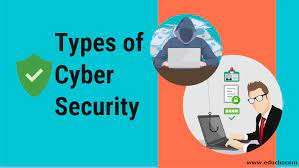
Types of Cyber Security:
1.Critical Infrastructure security.
2.Application security.
3.Network security
4.Cloud security.
5.Internet of Things security
1.Critical infrastructure security:
The protection of systems, networks, and assets whose continuing functioning is judged important to ensure a given nation’s security, its economy, and the health and/or safety of the general population is the subject of critical infrastructure security.
2.Application security:
In order to guard against dangers like illegal access and alteration, application security is the process of creating, integrating, and testing security measures within applications.
3.Network security:
A group of technologies known as network security guard against a wide range of potential dangers from entering or spreading within a network, preserving the usefulness and integrity of a company’s infrastructure.
4.Cloud security:
Cloud security, often referred to as cloud computing security, is a group of security controls intended to safeguard data, programmes, and infrastructure that are hosted in the cloud. These steps guarantee data and resource access control, user and device authentication, and data privacy protection.
5.Internet of Things security:
The technique of protecting IoT devices and the networks they use is known as internet of things security. Its key objectives are to uphold user privacy and data confidentiality, guarantee the security of equipment and other relevant infrastructures, and permit the smooth operation of the IoT ecosystem.
Importance of Cyber security:
Because of various security concerns and cyberattacks, cybersecurity is crucial in today’s environment. Many businesses create software for data protection. The data is shielded by this software. Cybersecurity is crucial since it protects not only our systems from virus attacks but also helps to secure information.
Ten tips for cyber security:
1.Back up the data from your divices
2.Choose your accounts having memorable passwords.
3.Keep your devices are update
4.Toggle two factor authentication on.
5.Avoid making important purchases via public wifi.
6.Install an antivirus programme, and perform routine virus scans.
7.Careful for social media account information
8.Can give less information for online related apps
9.Check bank account details for safety way
10.Be imaginative while responding to your account recovery inquiries.
Scams are becoming a bigger threat to the economy of any country. The pace at which fraudsters are attacking and luring innocent people is alarming. Now, there are reports that there has been fraud involving ICC. It has been speculated that ICC lost close to $2.5 million in this fraud.
The fraud was done through email. The culprit was depicted as a legit professional and duped the organization of the large amount. The amount was reportedly lost through online transactions.
Now, this raises the question that how can one safeguard themselves from online horror. For that one needs to stop paying attention to the emails that one gets involving any kind of payment.
These emails can be anything from a lottery winner notification or any other email involving a big surprise as a result of some XYZ competition. These emails promise you a big amount, but in the end, they end up taking from you a large amount of money by either packing your account or by making you pay some kind of charges or taxes to get the prize. Several people do the mistake of believing the email.
Now, the introduction and usage of online payment systems for almost everything, are making frauds even more effective. So, to avoid such a situation there also needs to be caution that one needs to stop sharing their details with an unknown person.
The source of such frauds is difficult to track as the culprits use internet-connected devices ad use software that makes it impossible to track them. The horrific result of such incidents can also be avoided by making use of the usual reliable modes of payment and avoiding unnecessary purchases on unknown websites. We also need to put some boundaries on the unending purchases that we make through our credit or debit cards.
Frauds can also sometimes result in our identity loss. Sometimes the culprits use our details to commit crimes and then we are the ones who get blamed for the loss. So, it is important to avoid sharing our details with others.
In recent times, there have also been attacks on some big organizations that have resulted in a loss of details of the users. The loss has resulted in the details being sold to interested parties over the dark web. So, we must check the security settings of our online accounts regularly. We also need to avoid creating accounts on unknown websites that are very new. We can identify some of these websites by paying attention to the pop-ups that come up and what happens when we try to close them up. So, any website which redirects us to some other third-party website is not good.
So, we must take care of that with whom we are sharing our details online. We also need to use the new security features that companies introduce from time to time. For example, we can safeguard our email accounts by enabling the authentication feature. This way we can stop others from getting into our account.
Computer Crime Cyber crime encompasses any criminal act dealing with computers and networks (called hacking).Additionally, cyber crime also includes traditional crimes conducted through the internet. For example; The computer may be used as a tool in the following kinds of activity- financial crimes, sale of illegal articles, pornography, online gambling, intellectual property crime, e-mail spoofing, forgery, cyber defamation, cyber stalking.The computer may however be target for unlawful acts in the following cases- unauthorized access to computer/ computer system/ computer networks, theft of information contained in the electronic form, e-mail bombing, Trojan attacks, internet time thefts, theft of computer system, physically damaging the computer system
Cyber Law is the law governing cyberspace. Cyberspace is a wide term and includes computers, networks,software, data storage devices (such as hard disks, USB disks), the Internet, websites, emails and even electronic devices such as cell phones, ATM machines etc.
Computer crimes encompass a broad range of potentially illegal activities. Generally, however, it may be divided into one of two types of categories
(1) Crimes that target computer networks or devices directly; Examples – Malware and malicious code, Denial-of-service attacks and Computing viruses.
(2) Crimes facilitated by computer networks or devices, the primary target of which is independent of the computer network or device. Examples – Cyber stalking, Fraud and identity theft, Phishing scams and Information warfare.
CASE STUDIES
Case no:1 Hosting Obscene Profiles (Tamil Nadu)
The case is about the hosting obscene profiles. This case has solved by the investigation team in Tamil Nadu. The complainant was a girl and the suspect was her college mate. In this case the suspect will create some fake profile of the complainant and put in some dating website. He did this as a revenge for not accepting his marriage proposal. So this is the background of the case.
Investigation Process
Let’s get into the investigation process. As per the complaint of the girls the investigators started investigation and analyze the webpage where her profile and details. And they log in to that fake profile by determining its credentials, and they find out from where these profiles were created by using access log. They identified 2 IP addresses, and also identified the ISP. From that ISP detail they determine that those details are uploaded from a café. So the investigators went to that café and from the register and determine suspect name. Then he got arrested and examining his SIM the investigators found number of the complainant.
Conclusion
The suspect was convicted of the crime, and he sentenced to two years of imprisonment as well as fine.
Case no:2 Illegal money transfer (Maharashtra)
ThIS case is about an illegal money transfer. This case is happened in Maharashtra. The accused in this case is a person who is worked in a BPO. He is handling the business of a multinational bank. So, he had used some confidential information of the banks customers and transferred huge sum of money from the accounts.
Investigation Process
Let’s see the investigation process of the case. As per the complaint received from the frim they analysed and studied the systems of the firm to determine the source of data theft. During the investigation the system server logs of BPO were collected, and they find that the illegal transfer were made by tracing the IP address to the internet service provider and it is ultimately through cyber café and they also found that they made illegal transfer by using swift codes. Almost has been The registers made in cyber café assisted in identifying the accused in the case. Almost 17 accused were arrested.
Conclusion
Trail for this case is not completed, its pending trial in the court.
Case no:3 Creating Fake Profile (Andhra Pradesh)
The next case is of creating fake profile. This case is happened in Andhra Pradesh. The complainant received obscene email from unknown email IDs. The suspect also noticed that obscene profiles and pictures are posted in matrimonial sites.
Investigation Process
The investigators collect the original email of the suspect and determine its IP address. From the IP address he could confirm the internet service provider, and its leads the investigating officer to the accused house. Then they search the accused house and seized a desktop computer and a handicam. By analysing and examining the desktop computer and handicam they find the obscene email and they find an identical copy of the uploaded photos from the handicam. The accused was the divorced husband of the suspect.
Conclusion
Based on the evidence collected from the handicam and desktop computer charge sheet has been filed against accused and case is currently pending trial.
Hacking is a widespread crime nowadays due to the rapid development of the computer technologies. In order to protect from hacking there are numerous brand new technologies which are updated every day, but very often it is difficult to stand the hacker’s attack effectively. With some of these case studies, one is expected to learn about the cause and effect of hacking and then evaluate the whole impact of the hacker on the individual or the organization.
What is the work ofPegasus and What is its origin ?
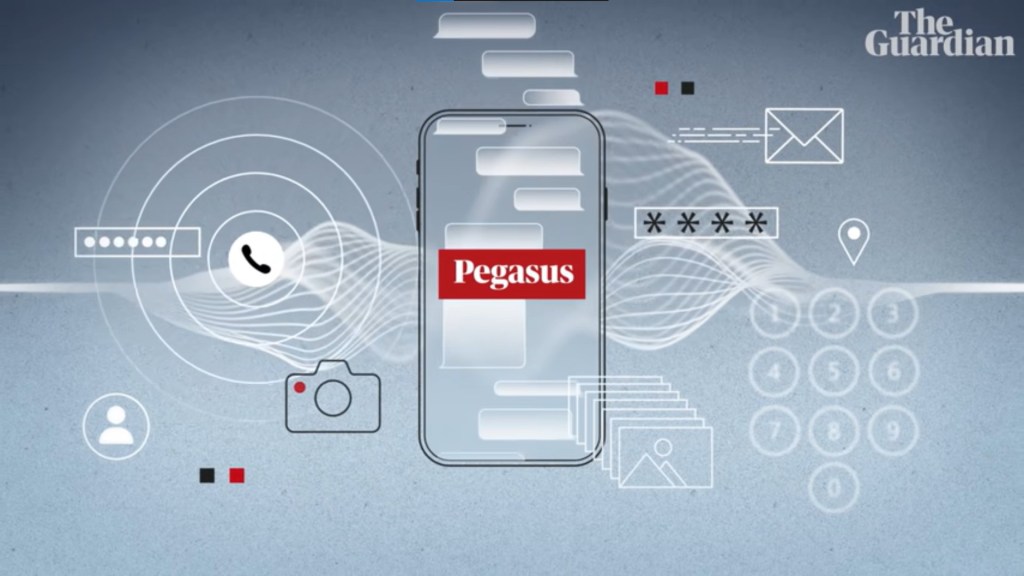
Pegasus owned by a NSO group- a private foundation, which many leading countries believe that it is the most powerful spyware ever created, it was coded to infiltrate into the smartphones of target users, be it IOS or Android, and it converts personal devices into surveillance devices. It is the main product of NSO group which was founded by Niv Carmi, Shalev Hulio and Omri Lavie. It is a Herzliya based company located near Tel Aviv, Israel which was founded in 2010, it is a subsidiary of Q Cyber Technologies group of companies.
What is the actual meaning of a Spyware?
Let’s get this straight, in simple words, a spyware is the term given to a category of software which aims to steal personal or organisational data/information without the consent of host. Once a spyware is successfully installed, it starts sending the data from that computer/mobile in the background to a third-party which is controlling this spyware. This third-party can be any government or The NSO group itself.
Pegasus can bypass your phone’s security and install malware that grants complete access to your device. It can access every message you’ve ever sent and received, every photo, video and email, can turn on your microphone, even when you’re not using a phone call, just record what you’re doing in the room. It can turn on your camera, and is also able to record what’s on your screen, can access your GPS, it can monitor your location. And it is able do all of this without you ever knowing.
So if you think that you are using online chatting apps like WhatsApp owned by Facebook or Signal owned by Moxie Marlinspike and Brian Acton which are famous for end-to-end encryption but this gets meaningless once Pegasus is on your phone. It is virtually undetectable which makes it even more lethal.
History of Pegasus software :
To begin with the brief history of Pegasus, in 2016 the Canadian Cybersecurity Organisation The Citizen Lab encountered it’s first case on the smartphone of Human Right activist Ahmed Mansoor.
In addition, in September 2018 The Citizen Lab published a report identifying 45 countries in which Pegasus was being used.
Furthermore, in the year 2019 WhatsApp exposed that journalists and Human Rights Activists in India were under surveillance by operators using Pegasus.
The latest case of this spyware is found India in July 2021, The Pegasus Project revealed that various governments used the software to spy on governmentofficials, oppositionpoliticians and many more eminent faces. Some records state that Indian government used the software to spy on around 300 people between 2019 and 2021.
Is spying legal in India?
The laws governing surveillance in India are The Telegraph Act, 1885 which indicates about the interception of calls and The Information Technology Act, 2000, it deals with the interception of data. Under both the laws, only government, under certain circumstances, is allowed to conduct surveillance. Moreover, hacking in India is illegal under IT Act.
Is there any solution to save us from this cyber attack havoc ?
Many Cybersecurity experts state that a phone infiltrated by Pegasus might not be able to recover completely, some traces can be found even after a strong factory reset.
Although they have introduced some preventive measures to save oneself from getting hitched with this software.
Open links only from trusted websites, contacts and sources while using your device.
Please make sure that your device is fully upgraded with the latest patches and system/app updates.
Keep your device safe by limiting physical access. This can be done by applying pin, password, biometric locking and face-locking facility.
Also avoid using open Wi-fi or hotspot as the host may steal your data from the network connection. Try using VPN to prevent this condition while using Wi-fi or hotspots it is a safer option to prevent your information.
Do have a backup of your credentials and important documents, if in case your device is lost, stolen or broken you will never lack from your data.
I for one, got sceptical about the internet, when I was signing up for a newsletter for some website. The ones that end up being unread in the spam folder of the inbox.
As I was about to type in my details, an option popped up on my device, offering to type out the my details for me. The moment I clicked ‘ok’, it entered all my details, which even I, myself got wrong at times. Alarmed was not the word for it.
Being a law student, a paper in the current semester brought me up close with the nuances of cyber security and its relevance in this new age world.
Prior to that, me, being a victim of a cyber attack, never crossed my mind. It felt as the fort of the ‘big body corporates’ and hackers as we’ve seen in the movies.
The scene starting of with a shot of the outside of a high rise building and then the scene progressing into the interiors filled with people in expensive suits hustling and bustling. Then we were shown a guy Sitting in a shady corner, mostly, in a far away place, with blood shot eyes behind the specs, with the hoody on and staring onto the screen with the concentration of a heart surgeon conducting bypass surgery, not concerned about the realities of the world.
The power of what all a person can accomplish with a gadget connected to the internet is old news for us, but the intensity of the troubles are worth pondering about.
The need for educating people of all walks of life about the dangers of the internet and how to steer clear is indeed the need of the hour.
If systems of international banks can be compromised over the web, why not a person like you and me, who are unaware of the pool we’ve our legs dipped in.
Surely, it has made our lives easier, closer and more colourful, but don’t forget that there are two sides to every coin. We go about living our lives believing that the ‘common man’ will never be vulnerable to cyber attacks.
In the quest of becoming more social, we often get carried away on a few things. A couple of decades back and even now at times, the society as a whole gets sceptical of exposing sensitive datas like addresses, contact details and other stuff to a complete stranger.
But now, to fit in, we’ve all details from our DOB to mail ids and everything and anything on the web for people to access. What if it goes into the hands of the wrong kind?
Completely forgetting that everything about them is just a few taps away on some site.
Most importantly I believe conversations in the past were restricted due to the fear of getting punched in the face. But now the power of the internet has made anybody a ‘somebody’, a ‘keyboard warrior’; people, hiding away behind a screen, doing anything, feeling assured against not getting punched, at all.
Sure, we can justify all these, that we’ve progressed and become free thinking but people are still people.
We were taught not to step into the cars of a stranger but now we book and share cabs with people who we’ve never met.
Whole of my life I was asked to live by the rules and I believe that’s the best way to live. When all my peers started downloading movies and songs, from random sites, I’ve never felt the need; because I’ve always been certain that there’s nothing like a ‘free lunch’ in this world. People play it smart, by downloading pirated stuff, believing that they pulled a fast one, unaware of the threats posed by such sites.
Cyber security experts have time and again conferred that such articles are often kept out as baits for snatching the weak ones. You may never know when your luck runs out.
Everything comes with a cost.
The very websites that may host such pirated content may contain malware that might end up compromising your system.
Taking everything from basic details to bank info along with it. Enough to make you lose everything you own to your name in a matter of seconds. Losing everything you’ve had to strive for your entire life, gone, in just a matter of minutes, to download a movie or two, is something we can surely live without, right?
Most websites know us like the back of their hands with the algorithms they use. Next time when you see an ad for something you were searching for a little while back, coincidence, I think not.
Digital footprint is something that’s not talked about. It’s the track of what all we’ve done across the Internet. The track would itself suffice to tell a tale or two about us.
They say energy can’t be destroyed, same applies to data, once created it can never be destroyed. Every single time we send a doc or text to the Recycle bin and get it erased from there, we feel we’ve got it out of the system. But apparently what happens is that the data gets taken out from the view but will continue to be stored on the hard disk. The tech is so advanced that, nowadays anyone can buy a software and retrieve all kinds of data from your device.
The vastness of the internet has made us ever so negligent of what all we do. .
Every time we hear somebody being a victim of a cyber attack, we judge them, that very moment, that ‘they should’ve been more careful.’ But how safe do you think you’re? It might be somebody today, and you tomorrow. Think twice before your next type/leap.
It’s better to be safe than sorry.
As the internet gets more and more entangled with our day to day lives, going the extra mile to ensure that no data is unnecessarily shared can make all the difference in all the world.
The internet is nothing more than a large network connecting and abridging the gaps between networks. It grants us access to everything and anything.
But always remember a bridge has two ends, what may connect us to everything, connects us to them too.





 Track2Training
You must be logged in to post a comment.