IMPORTANCE OF SELF LOVE

Self love, which is the “consideration of one’s own happiness or advantage” is a basic human necessity. It is a kind of appreciation for oneself that results in the well being of one’s physical, psychological and spiritual self. It includes actions and thoughts which is for one’s own needs and not sacrificing one’s well being to please others. The habit of self love and self appreciation is considered as compulsory for the psyche of human. Because people who love themselves are less likely to suffer from anxiety, depression and such similar psychological conditions. It also lessens procrastination and increases the focus to work.

Loving oneself is a different task, but to develop the habit is easy. One of the practice to develop self love is to stop comparing oneself with others. This comparison is natural, but if it sometime leads to danger. There is no need for comparison because every individual is unique m Apart from this one needs to focus on his or her self energy and spirit. Neglecting other’s opinion is also an important habits with regard to self love. Constructive criticism is important for one’s personality development. But worrying about other’ opinion and thinking what the society thinks before doing anything is a bad practice. It is human to make mistakes. Nobody is perfect. With each mistakes one learn each lessons. So the freedom to do mistakes is an important factor in self love. Good decision making, forbidding how one’s body look, avoidance of toxic people, understanding and rejecting fears and finding beauty in simple things are some steps to develop the habit of self love.

Another important factor is the freedom to feel pain and happiness equally. Limitations in feelings like happiness, pain and fear are dangerous. It is human to experience every emotion in its fullest form. These experiences will make one to realize oneself. Giving priority to oneself is a good practice. Even though it is in every one, women is more accustomed to putting other’s first.

When a person practices self love, others will also start feeling love with himself or herself. As a result of this one’s confidence increases and it leads to success in professional and personal life. It helps to understand one’s passion and this habit attracts others. Thus self love is a necessary habit in one’s physical psychological and spiritual well being.

Building best habits!

Building habits

Our habits have the power to enable us, most of the time, to live a more organized life. However, we might find it quite challenging when it comes to establishing new habits, as they require time and strong will. 
We should start by taking small steps every day to get used to eventually taking big ones for long periods.

Set measurable targets as habits

When trying to build new habits, be specific by thinking about ways to measure the evolution of your action: set clear targets that can help you, when the deadline previously decided on approaches, to evaluate your progress.

The pros and cons of building new habits

When picking up a new habit, think it well through: take into account the possible inconveniences as well as the most attractive advantages. 
Remember that sometimes it might get harder to keep to the habit, but eventually, you are doing it for a good cause that is related directly to yourself.

Get used to planning

Whenever you plan on building a new habit, make sure that you have already planned thoroughly what to do when difficulties appear: how to handle the situations that make it harder to respect your new routine. 

Associate new habits with the old ones

If you feel like picking up a new habit, don’t start from scratch. It is easier when you associate a new habit with one that already exists. 
This way, it will seem less work and fewer changes. In the end, both notions tend to scare us, so why not better avoid them?

Ensure the means

When building a new habit, make sure you have all the means that would enable you to get to like it faster. 
Equipment is often what matters the most when trying to get used to a new routine.

Provide the proper reward

When considering a new habit, make sure you see its accomplishment as satisfying rather than tiring. Therefore, choosing the proper reward after the completion of the habit can make you feel more at ease when it comes to your new routine.

Reference

https://zapier.com/blog/effective-habit-change/

Things to do when you are bored

There are times when you feel like doing nothing. You just want to sit there and stare at the wall. It feels like the time stopped flying. When you encounter such situations where you literally have nothing to do but you want to actually do something, there are certain things you can try to pass the time. I will give some ideas on how you can utilize that time to spend it in a better way.

Journaling

Journaling is the act of writing about you or anything you like. It is used to express your thoughts or get your negative thoughts out on a diary. Journaling is a habit that we will pick up at some point in our life. I would say it is a great practice that one should do whenever they get time. It helps you clear your mind, a piece of paper will act as your friend to whom you can express everything, pour everything and clear your mind. If you are stuck without knowing what to do, go and take a notebook or paper and start writing about your life or about how you feel at the moment. Writing organizes your thoughts and paves way to new thoughts in your mind.

Plan/organize

You ever think that you don’t have time to organize your work or plan your schedule beforehand? This free time is what will help you with your plan. Whenever you find yourself bored, make a todo list and plan your schedule. Plan the next day and organize your work. This is a great use of time and you are also being ready for your upcoming works.

Learn something new

Learning or picking up a new habit when you are free is going to help you for a long time. It can be very small thing or it can be a long time thing to do whenever you are bored. Learning language will make you exercise your brain. Your knowledge in language expands, which will help you somewhere in future. Apps like Duolingo works best for learning short phrases and words. It will also help you pass time without getting bored.

One more tip I would give is that when you are busy and something pops in your head. Let’s say you are watching a series and you want to know the meaning of some word or phrase, quickly note it in a paper or mobile notes. You can utilize this free time to go through that work. It can be anything little that you postpone to do later, you simply note it down and do it when you are free.

Workout

What could be the best time to start working out than when you are extremely bored and looking for doing something interesting. Grab this time to start your workout and make it a habit. It is a really healthy habit and you are not wasting any time there.

Explore

Explore your hobbies. There may be hobbies that you left at some point of your life and you may want to pick it up. Start exploring your interests and start doing them when you are free. They are like helping hands when you are bored. Start exploring new things too and pick up new habits.

Conclusion

This is a simple article to give you ideas on the opportunities that are around you to learn because it is never over, we keep learning every single day. Using our time to do something useful gives immense happiness because of the fact that we are not simply sitting. Being productive every single day is a key to happiness and feeling good about yourself.

CRACKING OF JOINTS- GOOD OR NOT

written by Sairam Adithya

The cracking of the joints is often a common habit seen in a lot of people. This is especially seen in the joints of the fingers in the hand and legs (medically known as phalanges). Many people say that this is a very bad habit and can degrade your joints. However, to confirm this, it is essential to find the reason for the sound. Then, based on the cause we can come to a conclusion that whether the habit is good or not. This would be an appropriate and better approach.

In order to understand the noise, it is essential to understand joints. Joints can be called the nuts and bolts of the body. The joints are a medium of connection between several bones. There are about 360 joints and all of them fall into three main categories and have some subcategories. The table below well represents the classification.

Type Other namesMobility Constituent Example 
FibrousSynarthroses ImmovableHyaline(denser)Skull
Cartilaginous SynchondrosisSlightly movableHyaline cartilageSternum
SynovialDiarthrosesMovableArticular cartilage covered with synovial membraneKnee 

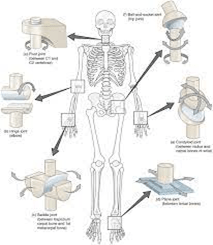
Out of these the synovial joints are of our importance. The prominent examples of a synovial joint include the knee, the hip and the forearms. There are six types of synovial joints which are tabulated below:-

Typedescription/analogyExample
Ball and socketThe tail of bone attached to the head of other boneShoulder
HingeHinge present between the doorKnee
PivotAction of turningNeck
CondyloidTwo plane motionWrist
SaddleLooks like a seat in horseThumb
Gliding Bones pass over each otherWrist
pictorial representation of different synovial joints in human body

Hence it is to be understood that the freely moving joints (synovial joints) are those which are capable of producing the cracking sound. Also, not all of them can do so, it is the phalanges of the hands and legs, the elbow, the neck, and sometimes the knee which can produce the cracking sounds.

The important characteristic of synovial joints is the presence of synovial fluid and a fatty layer. There are two specific functions for the fat layer. An important feature of fat is that it has the highest affinity for nitrogen. Affinity can be known as “chemical love”. Like it can be considered that nitrogen is a drug for the fat in our joints which has an irresistible addiction towards it (just for analogy, please don’t even think about drugs….).

i)       To provide protection from mechanical damage; For instance, banging the fingers/knee onto a wall

ii)     To trap the heat; heat is required for internal mechanisms to occur, so it is essential that fat (adipose tissue) encapsulates the heat

There are two important facts that have to be known relevant to this phenomenon. The first is the atmosphere; it is a collection of enormous amounts of gases, liquids, and lots more. What is trivial is that nitrogen constitutes about 78% of the total atmosphere. Phew! That is indeed huge. Another aspect is the process of diffusion. Diffusion is a passive method of gas transportation that moves from a higher concentration to a lower concentration.

a visualisation of diffusion between oxygen and hydrogen molecules

So what happens is that the nitrogen diffuses from the atmosphere (high concentration) to the fat present in the joint (low concentration). As a result of this process, nitrogen bubbles get accumulated in the gaps in the synovial fluid. As we press the joints or do any movements, the bubbles inside the gaps are forced to be released out. This process is known as capitation and as a result, a popping/cracking sound is developed.

To conclude, the release of the nitrogen bubbles are the ones responsible for the popping sound and this activity has nothing related to the health of the joints. You can pop the joints and this is not a bad habit (in the sense of health). Make sure that you don’t disturb others in the process!!

HAPPY READING!!!

The Importance of Solitude

Human beings are social creatures who seek to be in community. Relationality is an important aspect of our selves as we tend to develop our perceptions of ourselves through others. However, that is not the only thing necessary for us to have a healthy conception of who we are and what matters to us. We currently live in a world where constant interaction is privileged over taking time alone. We are always called to act, to do things quickly, to be efficient, and to be productive. Add to this equation the phenomenon of social media where we are continuously being exposed to the lifestyles and opinions of others, it is certain that we are more socially connected than ever. Yet, we find that all this boom in productivity and immersion in socializing has not really helped us better our relationship and communication skills. Rather, it seems to have done the opposite with more people finding it more difficult to maintain any relationship and social media considered one of the loneliest spaces to be in. It is in this context that we have to regain the concept of solitude, of healthy retirement from constant socializing, and of learning to understand oneself.

cheerful young woman with red leaf enjoying life and weather while reading book in autumn park
Photo by Andrea Piacquadio on Pexels.com

People often tend to confuse solitude and loneliness, and that is a mistake we should not make. To put it simply, we can say that loneliness has a negative connotation and is to indicate a situation where one longs for company but is unable to find it. Solitude, on the other hand, is contentment in a state of being alone where one is not seeking for the presence of another but the presence of oneself. Taking time for oneself comes easily for some, particularly for character types like introverts who thrive in their own spaces and are able to channel their energies well without external interventions. It might be harder for others who are social butterflies and they might not even consider it necessary. However, it is important to realize that solitude is more of a discipline that has to be developed rather than an inclination, because it does have tangible effects. It is more than just liking to be alone which would differ from one person to the other, but the requirement of time and space for quietness and rest.

Solitude is necessary for us to confront and process our own emotions as well as opinions and prejudices. It is easy for us to constantly move from one topic to another superficially, and thus be unaware of what we ourselves might be unconsciously endorsing or defending. It also limits us from completely placing our worth on something as fickle as the opinion of others or their treatment of us. It is vital that we spend time effectively switched off from the rest of the world so that we can choose how to spend our energies as well. Otherwise, we will burn out and be unable to contribute well to those around or be a good friend to someone who needs us. Solitude, since it allows us to acquaint with our own selves better, helps us in the way we are able to relate to others. Unless we know ourselves alone and who find ourselves to be, we will be less capable of meaningfully bonding with another. Thus, solitude has a dialectical relationship with community. It allows for introspection and thereby, better engagement with those around us, letting us see them in newer and deeper ways.

In a world where we are constantly bombarded by voices telling us to do and to be a million different things, the practice of embracing solitude is essential now more than ever. We have to find time to log off, to read, to sit in quietness, to think, or just be. This is an effective measure against being pressured into being what everyone else would want us to be and to realize who we are, where our interests lie, and what we care about, so that we can be more intentional and empathetic in our approach towards society and individuals.

The Perils of Perfectionism

Perfectionism can be described as the persistent need or desire to accomplish things perfectly, according to a standard that one sets for oneself. It is considered a positive virtue often in our culture. We encourage students to strive for their best and athletes have grueling practice sessions in order to reach their goals. The desire to do well is a good thing but one has to ask whether an obsession with perfectionism actually ends up being counterproductive. We need to distinguish between aiming to do well which is what high achievers tend to do, and being obsessed with nothing but perfection, a standard too high to reach and humanly impossible to achieve.

In a society where individuals are so often judged based on what they are capable of achieving and what position they hold, it is tempting to base all our worth on our ability to do something flawlessly. The temptation is greater for certain personality types who are naturally prone to work harder and be ambitious. Perfectionism has a positive side which involves healthy practices like setting goals for oneself, attempting to do better, and to learn and grow more. The negative side includes feelings of unworthiness, fear of failure, anxiety, insecurity, and debilitating stress. A healthy balance of both, and a need to overcome an obsession with being perfect is essential to maintain mental and physical health.

man in black suit achieved an accomplishment
Photo by Andrea Piacquadio on Pexels.com

Perfectionism causes an individual to set standards for himself that he might not be able to keep. This can lead to him becoming anxious or depressed. It will affect his relationship with others, he might consider asking for help a sign of weakness, and he might develop severe trust issues since he tends to believe others will not do as good a job as him; he will think that unless he carries out a task, it won’t be perfect. This often leads to exhaustion and severe stress. A perfectionist tends to obsess over details that might not be that important, and their fear of failure might lead them to not engage in many opportunities. They usually tend to procrastinate chronically, and they might also end up holding others to impossible standards as well. Perfectionists are overly critical about themselves and worry about whether they are doing things right. As opposed to high achievers who will be satisfied with having given their best, perfectionists will need to have done everything perfectly regardless of how equipped they are to do the activity. Unrealistic standards and unnecessary self-criticism are detrimental to our mental health and our ability to do work well. It also makes us defensive and anxious about all criticism.

Understanding the signs of perfectionism and trying to undo it is important for every individual who struggles with this issue. Self-affirmation and acceptance can be one of the first steps towards a better and healthier approach to work. A work ethic that is bent on having everything perfect only destroys rather than builds. Acknowledge that you are not perfect and that you are bound to make mistakes. Delegate tasks and trust others when you are overburdened. Set goals that are achievable and be kind to yourself. Don’t ruminate over a problem excessively but learn to let go and move on. If you find yourself going on a thought spiral, find a distraction that will break that thought cycle: take a nap, do a mundane task, phone a friend. Remember to let yourself breathe and be human, to aim for excellence but not perfection.

Productivity Obsession

We are living in a fast-paced world where everyone is always trying to do more. We are constantly bombarded with articles and self-help tips on how to manage time well and be more productive. The ability to get a large number of things done in the least amount of time is considered a quality that one should aspire to. This obsession with productivity, the repulsion to doing things slowly, or “wasting” time, and the perpetual need to prove oneself by what one achieves is a byproduct of the Capitalistic culture and attitude that we have imbibed. The worth of an individual is closely associated with how much she is able to contribute to society in tangible ways and the efficiency with which she does it. We often say that a person is not what they do but looking at how perceptions in society function currently, we are forced to reconsider if we really mean what we say.

One of the major factors that pervade this accomplishment-oriented culture is the idea of being productive. Productivity is supposed to be the ability to do more in less time, being focused on our goals, and always achieving what we set out to do. While these are good things in themselves, an obsession with being productive is detrimental to mental health and the quality of our lives as well. Many of the tips that we follow might end up being counterproductive as well. There are various myths about productivity that we hear and see around us; some of them in articles and blogs, others in books or videos. Again, while a few of these tips might work out, they do not generally function to make our lives better. In fact, many of us find that our inability to keep up with these advices make our days more stressful.

bored formal man watching laptop at desk
Photo by Andrea Piacquadio on Pexels.com

A common myth is that we are only being productive when we are doing certain kinds of things. Here’s an example: It is considered more productive to learn a new language or skill than it is to spend our time reading a novel. Being focused on productivity makes us feel like there are always “more” productive things we can do, when in fact the things we are doing can be considered good and productive things themselves. We tend to grade our activities and give those which do not fulfill certain criteria, such as new knowledge or public appeal, as lesser productive. We forget that rest and leisure is often much more needed for our well-being than stressing over learning something new. Another myth is that we can look at successful people and copy their habits to be productive. Some say that we should read one book a day because someone famous did so, or that we should wake up at a specific time. While this might be good habits in themselves, we are not to discount the individual personalities and circumstances of people. it is not just habits but a collection of events that made someone who they are, and many of these things are outside our control. This often leads to comparison which almost never brings contentment.

Another important point to note is that being productive should not mean continuously being occupied with a specific kind of activity since that would just lead to burnouts and even repulsion after some time. People who tend to take regular breaks, spend time with themselves, and even “waste” time by doing nothing or engaging in seemingly irrelevant activities, are able to direct their energies better when involved in their actual work. It is not a better use of time but a better use of energy that lets them accomplish what is to be accomplished. Obsession with productivity is also closely linked to a culture that is becoming increasingly self-focused to the point of being egotistical. It can lead to us being so focused on getting things done that quality is sacrificed for quality, in order to have the feeling of having done more in lesser time than having done fewer things but of better quality. We must always keep in mind that taking rest itself is sometimes more “productive” in the long run than indulging in and spending our energies on anything that comes our way.

Print vs Digital: Reading in the Modern Era

Much has changed with the advent of technology and globalization in our societies. This change comes in all kinds of forms, from how we dress and eat to how we study and engage. Reading is an arena where this is very evident. Our reading habits have changed drastically with the inflow of gadgets and technologies that transform the reading experience. It has also affected how we engage with what we are reading, our attention span, and the ability to grasp and recollect the things we read. While many prefer older ways of reading like directly from a book or newspaper, more people are turning to the digitalized spaces to read what they are interested in.

The print versus the digital media has always been an ongoing tug of war. Both have their advantages and disadvantages but as time moves on, one is bound to see a shift in reading habits, when a generation that grew up with technology starts becoming the main consumers of the market. Reading printed copies of books and newspapers are many a time described as a wholesome activity with no ‘modern’ interruptions. It allows the individual to engage with something tactile, a book with pages they can feel, touch, and turn. It also allows one to mark passages with pencil and scribble down notes on the sides. And how can one let go of the sensory experience, the smell of old books, and the satisfaction of putting it down after finishing it or running your hands through the worn pages? Researches also opine that one is prone to remember better when one reads something in print rather than from a screen.

person reading on book
Photo by Oladimeji Ajegbile on Pexels.com

However, with the evolving ways of being and living in a technological era, change is inevitable. Today it is not uncommon to read entire books online or as a pdf on a computer. Books are available in these formats for sale as well as for free on some sites. Gadgets like the Amazon Kindle have furthered this field by offering a digital device that can store a large amount of information and books which you can access at all times. It is like carrying around thousands of books in your pocket and very efficient in that sense. It is also a very convenient and cost-effective investment. Books online tend to be much cheaper than paperbacks or hard copies. So, investing in a kindle and buying and reading books online turn out to be much more economical than spending on printed material. As a betterment from the app, kindle as a device also does not have any screen glare which makes the experience of sight exactly how it is as that of a book.  It also allows you to highlight, bookmark, and add notes. However, the aesthetic experience that paperbacks afford is almost non-existent here.

In the end, it comes down to what you and your preferences are. Older generations tend to prefer reading print, but also a huge part of the current generations lean towards print as well when given a choice between the two because of the experience of holding a book in your hand and reading. However, we should never discount the conveniences that digital reading affords, especially in such a fast-paced world. Understanding the limitations of both while embracing what is best suited to your situation in life, without discounting either completely, is the only way to go about it. Mixing both as and when required in order to gain the most out of it and learn better should be our goal. And one can keep wondering if reading as a phenomenon refers to only the act of reading or if it denotes the entire sensory experience.