The problem of poverty in India

In India, poverty is presently estimated by fixing a poverty line based on a differentiated calorie-norm. This means that the level of poverty depends upon the capacity of a person to purchase food and a person who can buy specific amount of food to cross the poverty line margin for nutrients and calorie intake is above the poverty line. Whereas, the person who cannot buy enough food to meet the required nutrition value of calories and carbohydrates is below the poverty line. This level is not the correct parameter to check the level of poverty.

A task force of the Planning Commission in 1979 defined the poverty line as that per capita expenditure at which the average per capita per day calorie intake was 2400 calories in rural areas and 2100 calories in urban areas. Average per capita expenditures incurred by that population group in each State which consumed these quantities of calories, as per the 1973-74 survey of NSSO, were used as the poverty lines.

The debate on the extent of poverty in India has been a matter of global interest in the recent years. The primary reason for the global interest in the debate is that the levels of poverty in India and China have come to exert significant influence over the trends in world poverty itself.

Within India too, there has been growing contestation around poverty estimates, particularly in the period of economic reforms. First, there are persistent disagreements among economists on whether the rate of poverty decline after economic reforms was slower than in the preceding period. Secondly, the shift to targeted, rather than universal, welfare schemes has witnessed the use of poverty estimates to decide on the number of households eligible to access these schemes. The report of the Expert Group on the estimation of poverty, chaired by Suresh Tendulkar, is the latest input to the “Great Indian Poverty Debate.”

It is to be noted here that many subsidies and programs are launched by the government but these additional increments do not reach the actual people that are in need of them. Instead it is sent back to the businessman and thus a lot of profit is earned on these subsidized goods. Thus, to lower the level of poverty in India, schemes have to be launched in order to directly benefit the people in need.

The Hindu states that, “A final issue with the report, of much long-term consequence, relates to the wisdom of abandoning the calorie norm. It is indeed true that the levels of calorie intakes are not well correlated with nutritional outcomes. However, abandoning the calorie norm altogether and taking solace from the fortuitous fact that calorie intakes appear adequate at the new poverty lines is an arbitrary proposition. It is unclear whether there is any basis, theoretical or empirical, for this relationship to hold true across time.”

the Tendulkar Committee has pitched for a policy position that is stranded between the harsh realities of poverty in India and the fiscal conservativeness of a neo-liberal framework. The real challenge lies in preserving the positives from the report, and strongly persisting with the demand for a universal social security system.

– Ananya Kaushal

Major geopolitical developments and it’s impact on India

Over the past several weeks, a number of important developments have taken place which may appear disconnected at a glance but in fact add up to a significant shift in regional and global geopolitics.

ONE, the withdrawal of US and NATO forces from Afghanistan and the complete takeover of the country by the Taliban. This resulted in chaos and overall disruption of the semblance of peace the country earlier possessed. With the Taliban claiming the residents of the country are happy with their takeover and the disrupted president on the run, the future of the country appears in shambles.

TWO, significant domestic political changes in the People’s Republic Of China. This includes the ideological and regulatory assault against its dynamic private high-tech companies and now recently, its real estate companies. As a result, it has a heightened risk perception among international business and industries which had seen China as a huge commercial opportunity until now. While the economical affairs of the country are entirely their own to manage and govern, there will be a lasting impact on the general job opportunities.

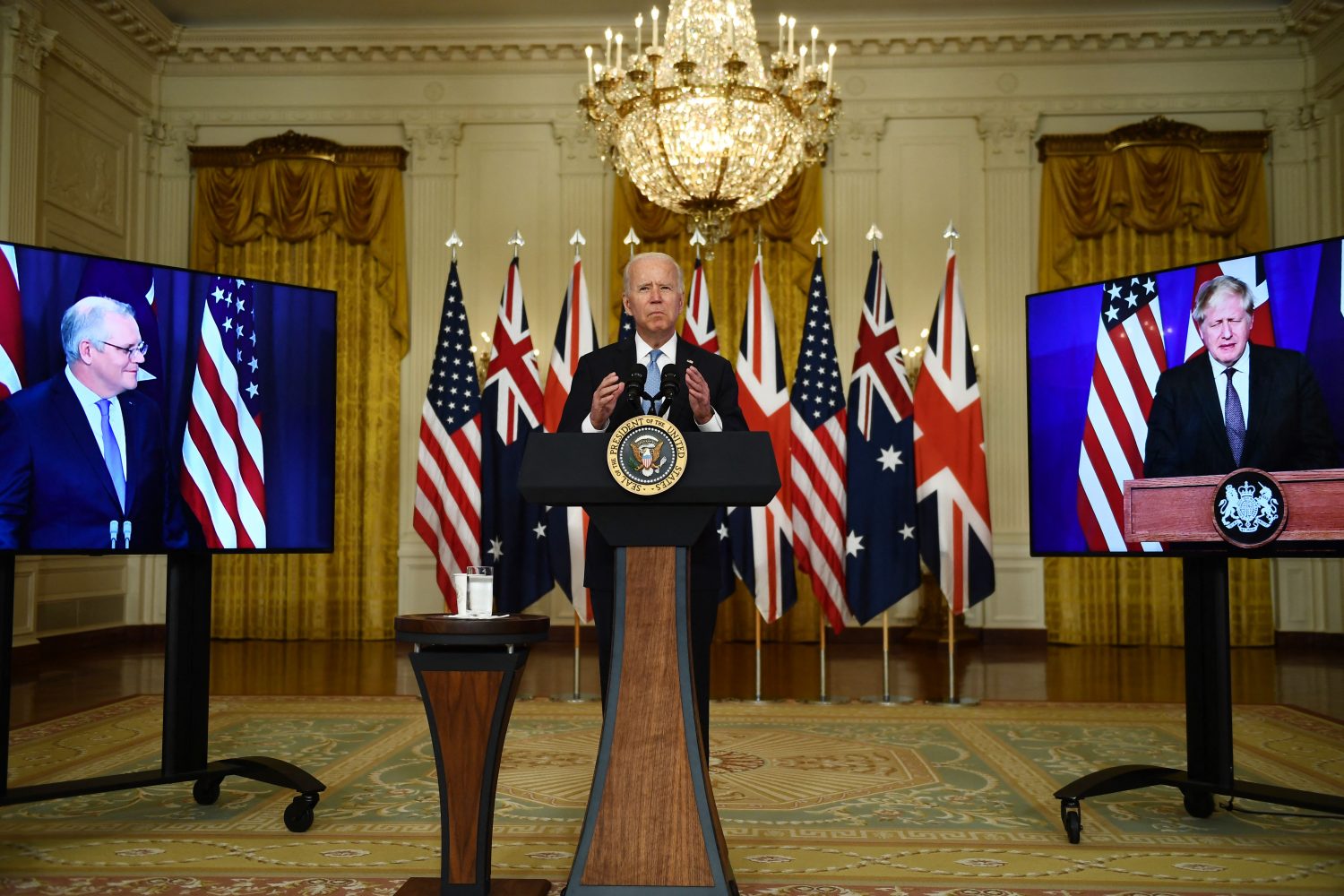
THREE, the announcement of the Australia-UK and US (AUKUS) alliance which represents a major departure in US strategy by its commitment to enable Australia to join a handful of countries with nuclear submarines. The alliance clearly portraits Australia’s strategic choice to firmly support USA despite its considerable economic and commercial equation in China.

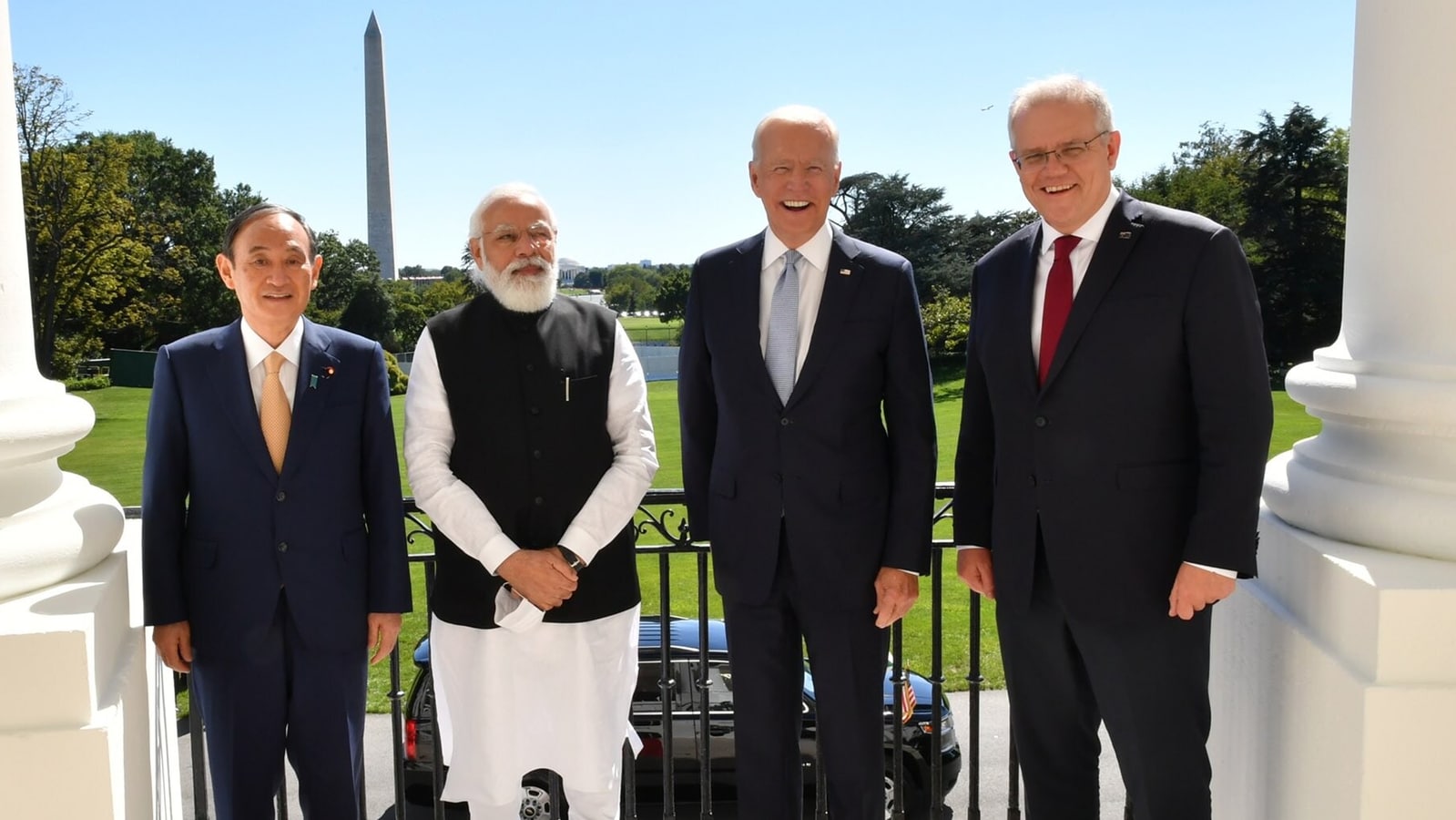
FOUR, the convening of the four nation Quad physical summit (India, Australia, Japan and the US) IN Washington. This reflected a major step towards its formalization as an influential grouping in the Indo-Pacific going beyond boundaries and into a personal level of safeguarding.

These four developments together present India with both risks and opportunities. While the latter outweighs the risks henceforth. It would indeed be fitting to say a future of uncertainties awaits the entire world. Are these measurements a preparation of the unseen future or simply precautions is something only time will reveal.

Written by : Ananya Kaushal

The Omnipotence of Death

We glorify power, fame and strength when they don’t even stand a chance before the most powerful force, death. In life, there are ups and downs, the powerful and the powerless, rich and poor. But death ultimately levels all these differences and makes everything equal.

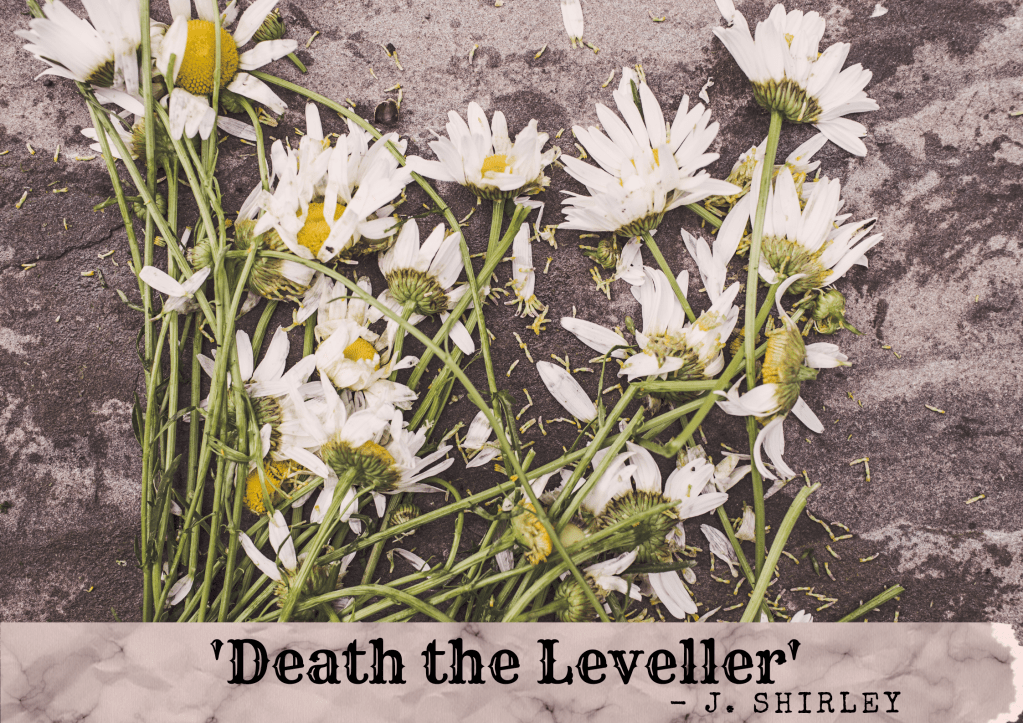
The poem ‘Death The Leveller’ by J. Shirley starts with stating that all the glories of humans are mere shadows which appear and disappear after some time. They do not make up an essential part of human life.  This is because there is nothing that can defend us from our fate. We can’t fight against it. When Death lays his cold hand on Kings, they can’t protect themselves and their sceptre and crown are ought to tumble down. The most powerful of all the kings is turned to dust and made equal with the poorest peasant on death. The sceptre and crown are as powerless as scythe and spade.

The glories of our blood and state

Are shadows, not substantial things;

There is no armour against Fate;

Death lays his icy hand on kings:

Sceptre and Crown

Must tumble down,

And in the dust be equal made

With the poor crooked scythe and spade.

The second stanza gives the picture of men in armour. Men fight battles and rejoice fame from killing their foes. Such battles boast bravery, chivalry, and courage. But even the strongest soldier must yield to death. No matter how brave he fights death, sooner or later, he must surrender to fate. He ceases breathing as death slowly creeps up to this captive of fate. Thus, even the strongest soldier is also rendered powerless by death.

Some men with swords may reap the field,

And plant fresh laurels where they kill:

But their strong nerves at last must yield;

They tame but one another still:

Early or late

They stoop to fate,

And must give up their murmuring breath

When they, pale captives, creep to death.

The flowers sing no more of the celebrated deeds once the garland withers. We witness everyone and everything coming to stillness in Death’s kingdom. The word ‘victor-victim’ refers to all the conquerors, emperors, and victors who are victims of Death. The victor-victims bleed and finally lie dead in their cold tomb. Though all turns to nothing, the only thing, which can bloom and spread fragrance, is the actions and good deeds of people who had led a just life. 

The garlands wither on your brow,

Then boast no more your mighty deeds!

Upon Death’s purple altar now

See where the victor-victim bleeds.

Your heads must come

To the cold tomb:

Only the actions of the just

Smell sweet and blossom in their dust.

The only thing which stands the test  of time is the deeds of selflessness and service to fellow beings. Thus, this poem has a moralising tone and shows the omnipotence of death.