What is Disaster Management?

We have always seen disasters taking many shapes. Human-made disaster results from human mistakes and incorporates modern blasts or design disappointments. Catastrophic events result from actual peculiarities and include quakes and dry seasons. Calamities delegated complexes can contain pestilence or outfitted clashes.

In any structure, disaster disrupts communities and can negatively affect individuals, property, economies, and the climate. They frequently stretch a local area’s ability to adapt. Debacle the executives in the course of successfully for and answering to disaster. It includes decisively arranging assets to decrease the mischief that calamities cause. It likewise consists of an orderly way to deal with the obligations of the calamity: counteraction, readiness, reaction, and recovery.

Figuring Out Risks in Disaster Management

Frequently, issues, for example, an effectively kept up with levee framework or other carelessness, can demolish the result of a calamity. State-run administration and associations can endure disaster by tending to conceded framework upkeep and other casual elements. A few communities are more powerless than others. For instance, more unfortunate networks have fewer assets to set themselves up for a cyclone or return quickly from flood harm. Disaster management likewise includes breaking down openness to misfortune. For instance, homes worked underneath the ocean level might confront more apparent vulnerability to flooding if a storm hits them.

The Scope of Disaster Management

Disaster management has a vast degree. To comprehend disaster management, it is helpful to concentrate on counteraction, readiness, reaction, and recuperation.

Counteraction

Moderation and avoidance endeavours expect to lessen the possible harm and experiencing that calamity can cause. While calamity the executives can’t forrestal disaster, it can keep them from becoming compounded because of dismissing casual elements and sensible dangers. Moderation explicitly alludes to activities that can reduce the seriousness of a debacle’s effect. Putting resources into measures that breakpoint dangers can significantly lessen the weight of calamities.

Systems that Disaster management the executives’ experts carry out to safeguard weak networks and restrict risks incorporate the accompanying:

  1. Bringing issues to light about expected dangers and how to address them
  2. Teaching people in general about how to get ready for various kinds of calamity appropriately
  3. Introducing and fortifying forecast and cautioning frameworks

Overseeing perils and dangers implies wanting to limit a local area’s weakness to fiascos. This can include:

  1. Empowering people group individuals to purchase suitable protection to safeguard their properties and effects
  2. Teaching families and organisations the best way to make viable fiasco plans
  3. Advancing the utilisation of fire-retardant materials in the development
  4. Supporting capital works drives, like the development and upkeep of levees
  5. Building organisations among areas and offices at the government, state, and nearby levels to team up on relief projects

Disaster management executives’ experts working on relief endeavours likewise centre around the accompanying:

Land Use and Building Codes

Building schools, medical clinics, and neighbourhoods in flood-inclined regions expand their openness to fiascos. Disaster management highlights these dangers and presents thoughts to involve land in more secure ways.

For instance, instead of building homes in floodplains, local area organisers can assign those regions as spots for outside diversion, natural life attractions, or climbing trails. They can likewise encourage individuals to stay away from these areas during flood season. These actions make inhabitants and their homes less defenceless against hurt.

Moreover, alleviation endeavours can do the accompanying:

Address ways of designing scaffolds to support tremors
Authorise building regulations that protect structures during tropical storms

Basic Infrastructure

Safeguarding a basic foundation during a debacle can mean distinguishing between life and demise. Basic foundation, which contains the frameworks and resources indispensable to a local area’s economy, security, and general wellbeing, merits special consideration for catastrophe the board relief.

Drawing up defensive estimates that line harm to water and wastewater frameworks or atomic plants, for instance, can forestall serious repercussions.
For instance, Japan experienced wrecking physical and mental results after a 2011 seismic tremor set off a tidal wave. The immersion of water sliced off the power supply to the cooling framework for Fukushima Daiichi reactors, prompting an enormous atomic mishap.
Readiness
Very much organised reactions to fiascos expect earlier preparation. This guarantees quick, mighty reaction endeavours and cut-off points copied endeavours.

Disaster readiness plans:

  1. Distinguish hierarchical assets
  2. Assign jobs and obligations
  3. Make strategies and approaches
  4. Arrange exercises that further develop calamity preparation

Expecting the necessities of networks that catastrophes influence works on the nature of the reaction endeavours. Building the limits of workers, faculty, and calamity supervisory groups to answer fiascos also makes the reaction attempts more successful.

Plans might incorporate the accompanying:

  1. Crisis cover locales
  2. Departure courses
  3. Crisis energy and water sources

They may likewise address:

  1. Levels of leadership
  2. Preparing programs
  3. Correspondence strategies
  4. Crisis supply conveyance
  5. Reserve needs

Reconstructing
revamping their lives after injury. This includes longer-term endeavours to re-establish:

  1. Lodging
  2. Economies
  3. Foundation frameworks
  4. Individual and local area wellbeing

Government offices and supporting associations assist networks with critical thinking and finding assets as they redevelop and rejuvenate.

Recuperation help might incorporate the accompanying:

  1. Joblessness help
  2. Lodging help
  3. Legitimate administrations
  4. Emotional wellbeing directing
  5. Calamity case, the executives
    Assam witnesses an annual flood, and the 2022 flood has affected lakhs of people while 1.08 lakh hectares of crops have been destroyed. Though we cannot entirely avoid disasters, we can prepare for and address them.

Avoidance endeavours and facilitated responses to disasters save lives and decrease their effect on communities. Experts in disaster management play a critical part in forestalling enduring, safeguarding individuals’ jobs, and assisting networks with recuperating. Now the question arises about what is disaster management? To address the inquiry, you ought to inspect how these experts manage disaster previously, during, and after it strikes.

Safeguard Communities by Launching a Career in Disaster Management

What is Disaster Management? It is a far-reaching way to deal with forestalling, planning, answering, and supporting crisis recuperation endeavours. Whether leading crises or the executives for human-made or cataclysmic events, experts in the field assume priceless parts in saving lives and lessening languishing.

Crisis in AFGHANISTAN

Photo by Pixabay on Pexels.com

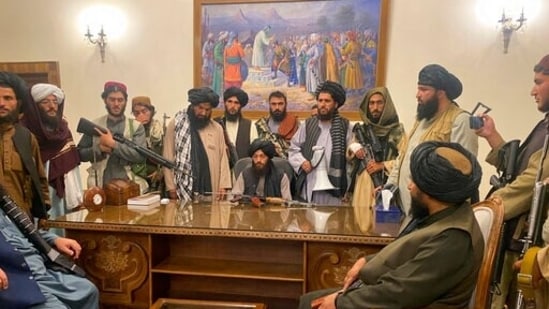
Now that the US army has pulled out from Afghanistan after spending 20 years there, the Taliban has taken control of almost whole of the country. HISTORY REPEATS ITSELF, and here history is repeating itself for the worst. Politicians have fled from the country leaving their countrymen to die and the civilians are in a state of panic. As Taliban has taken control from all the borders leaving no exit point.

What is Taliban

Taliban is the word for ‘student’ in pashto language. Ironically they have nothing to do with knowledge, at least on humanitarian basis. They emerged from the northern part of Pakistan in the early 1990s, they basically promised peace to the peope an to impose Sharia or islamic law, once in power. In September 1995, they started their rule by capturing Herat and then all the major cities one by one and by 1998, they had captured about 90% of Afghanistan.

They became popular as they finished corruption and lawlessness. They also introduced roads. But at the same time they implemented the Sharia law and gave punishments according to it, like public execution for murderers and adultration, amputating those, who were found guilty of theft. Girls were not allowed to go to school after the age of 10, women had to wear chaadri (burqa, covering whole body) when going out and they had to be accompanied by a man all the time, men too had to grow beard. Cinema, music and television were banned. women were not allowed to work even when their husbands died. Basically all their rights were taken away.

Read more about Afghanistan: https://edupub.org/2021/07/19/afghanistan-through-khaled-hosseinis-a-thousand-spendid-suns/

Major terrorist activities by Taliban

On 11 September, 2001 the world trade center was attacked and Taliban was accused of providing safety to Al Qaeda.

Malala Yousafzai was shot by the talibani terrorists as she refused to leave school and continued to study.

pic courtesy: shutterstock

Disturbing images have been coming in from airport where people were rushing as their last hope of fleeing from there. It’s very saddening to see politicians leaving their people to die on the streets. Even though talibanis have said that the people need not be scared of anything but can we trust them?? Not really. Several videos have been surfacing on the net of dead bodies littered on roads. People are being dragged out of their houses, specifically those who have in any way helped American forces.
Residents are trying any possible way to get out of there but unfortunately the only exit left at last, the airport in kabul, has been shut off, shutting their last hope for now.

Photo by Disha Sheta on Pexels.com

Well, I hope for now at least the citizens will be safe and peace will be restored soon. The Afghanistan of 1960s-70s, where women enjoyed freedom and the country was progressing will be back. Children will play with toys and not guns, knowledge will be used as weapon and not violence.

Illitracy in India

Illiteracy in India is a massive problem in India especially when it comes to facing crisis like the Covid 19 . This crisis has nearly disturbed the lives of a majority of the world population . A group of seen applying cow dung on their body and when they were asked they told the news reporter that cow dung will help them face the crisis . And what happened the next day  is not very happening as one of them died due to Covid 19 . So education plays an important role in facing such crisis . But the problem is levels of education can not be increased over night . Science play an important role in this case .

Starvation in North Korea

The north koreans are starving but they have no choice but to face such starvation . They cannot fight , shout or do anything . They are brutalized every second by the cruel emperor of North Korea . No one is allowed to raise his or her voice against the cruel emperor . They can only suffer under his regime . The problem with this country is that their are so many trade restrictions imposed on this country that no external trade happens in North Korea . Now since China is not allowing any trade with this country so it has resulted in starvation of the people of North Korea . Now they have no choice but to suffer indefinitely .

THE COVID-19 DELTA VARIANT

The central government on Tuesday confirmed that it has detected a mutation in the delta variant of SARS CoV2 virus which has emerged into an additional strain named as Delta Plus.

Confirming that the Delta variant played a crucial role in the second wave of the covid-19 pandemic, the government said that it has submitted the information to the global data system.

It has been seen in Europe since March and was brought into the public domain two days ago on June 13. Delta variant played a major role in the pandemic. Delta Plus is a variant of interest, but not a variant of concern,” said Dr Vinod Paul Member (Health) in NITI Aayog and Chair of the National Expert Group on Vaccine Administration for covid-19 (NEGVAC) at a press briefing.

The government said that INSACOG (Indian SARS-CoV-2 Genomic Consortia) will keep a strict vigil on the new variant. Meanwhile the number of covid-19 cases are steadily in the country with the trajectory of the pandemic declining. India reported over 60,471 daily new cases in last 24 hours, lowest after 75 days with 2733 deaths due to coronavirus.

Sports

Sports are an integral part of ones life . It is rightly said that ” All work and no play makes Jack a dull boy “. These cannot be excluded from our lives . But during the Covid 19 pandemic we are not able to play outdoor games .  We all are scared to go outside our homes . So what we do is that during our free time we play online games like PUBG , Free fire , FIFA , Call Of Duty  etc . So that is what we can do before every thing becomes normal .

GDP CREATES NEW RECORDS!

India’s Gross Domestic Product (GDP) contracted 7.3% in 2020-21, as per provisional National Income estimates released by the National Statistical Office on Monday, marginally better than the 8% contraction in the economy projected earlier. GDP growth in 2019-20, prior to the COVID-19 pandemic, was 4%.


The fourth quarter of 2020-21 recorded a growth of 1.6% in GDP, the second quarter of positive growth, after the country had entered a technical recession in the first half of the year. The Gross Value Added recorded 3.7% growth in Q4, compared to 1% in Q3. GVA had contracted 22.4% and 7.3% in the first and second quarters of 2020-21.


The GVA in India’s economy shrank 6.2% in 2020-21, compared to a 4.1% rise in the previous year. Only two sectors bucked the trend of negative GVA growth – Agriculture, Forestry and Fishing (which rose 3.6%) and Electricity, Gas, Water Supply and other Utility Services (up 1.9%).

Plastic- Inseparable part of our lives

Imagine thousands of plastic bags floating around you forever

Inventions and discoveries lay a tremendous impact on the human race and development. Yet, few human creations can metamorphose into a curse. Nearly a hundred years ago, humanity created the most durable and cheap material -plastic. In a flash, plastic reached the deepest trenches, in the air we breathe and even in our stomachs. Barely 10% of the plastic we produce gets recycled whereas, the rest of the plastic contributes to climate change. Today these estimations may seem ordinary numbers, yet incautious measures can lead to the extinction of our race. Unbelievably we produce 3,000,000 plastic bottles in just 60 seconds; how horrifying is that? Our irrational use of plastic has affected the abundance of the entire ecosystem. The fishes are floating at the brink of extinction. We are the ones to condemn; hence it is our responsibility to wonder about potential solutions. Binish Desai-the recycle man has that solution. Amidst the Covid pandemic, the masks and PPE kits have made their way to the oceans. Binish Desai came up with an extraordinary idea to make eco-bricks out of them, recently introducing ‘Brick 2.0’. Furthermore, hundreds of women have started using menstruation cups to limit the plastic waste created by sanitary pads. Therefore, together we can beat plastic pollution. The story of our ecosystem is a tale older than ours. The majesty and abundance of the creatures out there are beyond our foresight. Each creation is unique and a mystery for us. Yet, our reckless management of plastic and other resources has affected the entire ecosystem. Our environment would collapse before we get a chance to know everything about it. Hence, together we need to think of solutions. We know that energy can neither be created nor destroyed; only be transformed. Similarly, nothing is a waste in nature; scrap produced today can be transformed into something productive tomorrow. Together we can build a sustainable future if we start recycling now. A very efficient way to cease plastic pollution is brand audits and cleaning drives. They help to collect plastic and hold the brand guilty of who created the plastic waste in the first place. The most generous aid we can give to the ecosystem is minimizing plastic usage from our surroundings. We can switch to a bamboo toothbrush and go for a waterless car wash. In addition, social media gives us a platform to contribute even in this pandemic. Social media let us share and debate upon solutions in an efficient way. Furthermore, we need to consider that we are genius at planning; however, we fail to execute our solutions. Discussing the solutions will only help us when we work upon them. Hence, always try to buy products of brands that believe in sustainability. Together let us unwrap the layer of plastic we laid on our mother Earth. Remember tsunami of throwaway plastic is awaiting us tomorrow if we stop recycling. “Only when the last tree has died, the last river has flourished, we will realize that we cannot eat the money”. Your contribution matters!