Jumping ₹3.28 lakh crore, TCS, HUL, and RIL are at the top of the list of companies.
According to a PTI report, eight of the 10 most valuable corporations in India had a combined increase in market worth of ₹3.28 lakh billion last week. The top three performers were Hindustan Unilever (HUL), Reliance Industries (RIL), and Tata Consultancy Services (TCS). RIL continued to be the most valuable corporation overall, with TCS, HDFC Bank, Bharti Airtel, and ICICI Bank completing the top five. In the ranks that followed were the State Bank of India (SBI), Infosys, Life Insurance Corporation of India (LIC), HUL, and ITC. op Gainers.
Top Gainers
RIL, TCS, HDFC Bank, Bharti Airtel, ICICI Bank, Infosys, HUL, and ITC were the top gainers. These companies saw their market valuations increase by a total of ₹3,28,116.58 crore, as per PTI.
The biggest individual gainer was TCS, which saw its market valuation soar by ₹80,828.08 crore to ₹14,08,485.29 crore.
HUL was next, adding ₹58,258.11 crore, and taking its market capitalization to ₹6,05,407.43 crore.
RIL was third last week, increasing by ₹54,024.35 crore to ₹19,88,741.47 crore.
HDFC Bank’s market valuation rose by ₹32,241.67 crore to ₹11,96,325.52 crore.
Bharti Airtel climbed ₹32,080.61 crore to ₹8,10,416.01 crore.
ITC’s valuation surged by ₹16,167.71crore to ₹5,48,204.12 crore.
ICICI Bank increased by ₹1,745.46 crore to ₹7,88,975.17 crore.
The Laggards
LIC and SBI were the only two laggards in the top 10 list of corporations.
The market value of LIC decreased to ₹6,28,451.77 crore, a decrease of ₹12,080.75 crore. Of ₹7,40,653.54 crore, SBI’s mcap fell by ₹178.5 crore. The BSE benchmark increased by 2,732.05 points, or 3.69 percent, last week in the market. On Friday, June 7, the 30-share BSE Sensex increased by 1,720.8 points, or 2.29 percent, to record an intraday high of 76,795.31. At the close, the benchmark was up 1,618.85 points, or 2.16 percent, to a record high of 76,693.36.
The impact of coronavirus pandemic on India has been largely disruptive in terms of economic activity as well as a loss of human lives. Almost all the sectors have been adversely affected as domestic demand and exports sharply plummeted with some notable exceptions where high growth was observed. An attempt is made to analyze the impact and possible solutions for some key sectors.
Food & Agriculture
Since agriculture is the backbone of the country and a part of the government announced essential category, the impact is likely to be low on both primary agricultural production and usage of agro-inputs. Several state governments have already allowed free movement of fruits, vegetables, milk etc. Online food grocery platforms are heavily impacted due to unclear restrictions on movements and stoppage of logistics vehicles. RBI and Finance Minister announced measures will help the industry and the employees in the short term. Insulating the rural food production areas in the coming weeks will hold a great answer to the macro impact of COVID-19 on Indian food sector as well as larger economy.
Aviation & Tourism
The contribution of the Aviation Sector and Tourism to our GDP stands at about 2.4% and 9.2% respectively. The Tourism sector served approximately 43 million people in FY 18-19. Aviation and Tourism were the first industries that were hit significantly by the pandemic. The common consensus seems to be that COVID will hit these industries harder than 9/11 and the Financial Crisis of 2008. These two industries have been dealing with severe cash flow issues since the start of the pandemic and are staring at a potential 38 million lay-offs, which translates to 70 per cent of the total workforce. The impact is going to fall on both, White and Blue collar jobs. According to IATO estimates, these industries may incur losses of about 85 billion Rupees due to travel restrictions. The Pandemic has also brought about a wave of innovation in the fields of contactless boarding and travel technologies.
Telecom
There has been a significant amount of changes in the telecom sector of India even before the Covid-19 due to brief price wars between the service providers. Most essential services and sectors have continued to run during the pandemic thanks to the implementation of the ‘work from home’ due to restrictions. With over 1 billion connections as of 2019, the telecom sector contributes about 6.5 per cent of GDP and employs almost 4 million people. Increased broadband usage had a direct impact and resulted in pressure on the network. Demand has been increased by about 10%. However, the Telco’s are bracing for a sharp drop in adding new subscribers. As a policy recommendation, the government can aid the sector by relaxing the regulatory compliances and provide moratorium for spectrum dues, which can be used for network expansions by the companies.
Pharmaceuticals
The pharmaceutical industry has been on the rise since the start of the Covid-19 pandemic, especially in India, the largest producer of generic drugs globally. With a market size of $55 billion during the beginning of 2020, it has been surging in India, exporting Hydroxychloroquine to the world, esp. to the US, UK, Canada, and the Middle-East.
There has been a recent rise in the prices of raw materials imported from China due to the pandemic. Generic drugs are the most impacted due to heavy reliance on imports, disrupted supply-chain, and labour unavailability in the industry, caused by social distancing. Simultaneously, the pharmaceutical industry is struggling because of the government-imposed bans on the export of critical drugs, equipment, and PPE kits to ensure sufficient quantities for the country. The increasing demand for these drugs, coupled with hindered accessibility is making things harder. Easing the financial stress on the pharmaceutical companies, tax-relaxations, and addressing the labour force shortage could be the differentiating factors in such a desperate time.
Oil and Gas
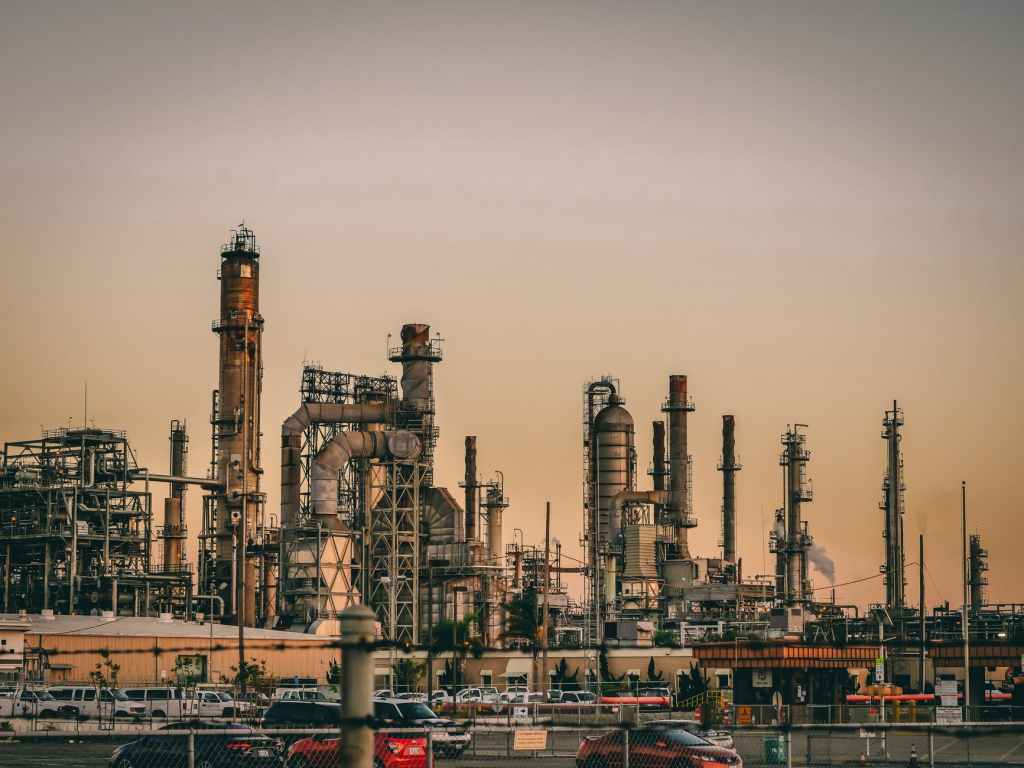
The Indian Oil & Gas industry is quite significant in the global context – it is the third-largest energy consumer only behind USA and Chine and contributes to 5.2% of the global oil demand. The complete lockdown across the country slowed down the demand of transport fuels (accounting for 2/3rd demand in oil & gas sector) as auto & industrial manufacturing declined and goods & passenger movement (both bulk & personal) fell. Though the crude prices dipped in this period, the government increased the excise and special excise duty to make up for the revenue loss, additionally, road cess was raised too. As a policy recommendation, the government may think of passing on the benefits of decreased crude prices to end consumers at retail outlets to stimulate demand.
Beyond Covid: The new normal
In view of the scale of disruption caused by the pandemic, it is evident that the current downturn is fundamentally different from recessions. The sudden shrinkage in demand & increased unemployment is going to alter the business landscape. Adopting new principles like ‘shift towards localization, cash conservation, supply chain resilience and innovation’ will help businesses in treading a new path in this uncertain environment.
Coronavirus (COVID-19), a virus that grew stealthily has become one of the deadliest viruses that are killing people worldwide. This virus took birth in Wuhan city of China and since then have traveled to more than 160 countries. The World Health Organization (WHO) has declared Coronavirus as a pandemic. It has become a mass scare and is leading to the deaths of thousands of people in numerous countries including China, Italy, Iran, Spain, the US, and many more. In India, this pandemic started on 30 January 2020 by affecting an individual who had a travel history from Wuhan, China.
The world economy is seeing its greatest fall ever. Coronavirus has largely impacted the growth of almost every country and is responsible for the slump in GDP worldwide. Like other countries, India is also impacted by this virus but not largely. Almost every industry sector has seen a fall in their sales and revenue. India’s GDP growth has fallen to 4.7% in the third quarter of 2020.
Inflation and Affected Industry:
China is one of the largest exporters of many raw materials to India. Shutting down of factories has damaged the supply chain resulting in a drastic surge in the prices of raw materials. Some of the other products that have seen a rise in their prices are gold, masks, sanitizers, smartphones, medicines, consumer durables, etc. The aviation sector and automobile companies are the hardest hit among the rest. With no airplane landings or take-offs globally and restricted travel has brought the aviation and travel industry to a halt.
Slump in Share market: Share markets that include Sensex and Nifty are on nose dive since the occurrence of this pandemic (COVID-19). Sensex has declined close to 8000 points in a month. As of 12 March 2020, share market investors have lost approximately Rs. 33 lakh crore rupees in a month. This could be the beginning of a recession that the Indian market will never want to witness. Investors are advised to stay safe and invested in this virus-infected stock market. Few industries that can benefit from novel coronavirus during the time of the market crash are pharmaceuticals, healthcare, and Fast Moving Consumer Goods (FMCG).
Cash flow Issue: Due to this outbreak, almost 80% of Indian companies have witnessed cash flow difficulty and over 50% of companies are facing operations issues. As per the Federation of Indian Chambers of Commerce and Industry (FICCI), 53% of companies are impacted by COVID-19. Slow economic activity is resulting in cash flow problems eventually impacting repayments, interest, taxes, etc.
Coronavirus (COVID-19), a virus that grew stealthily has become one of the deadliest viruses that are killing people worldwide. This virus took birth in Wuhan city of China and since then have traveled to more than 160 countries. The World Health Organization (WHO) has declared Coronavirus as a pandemic. It has become a mass scare and is leading to the deaths of thousands of people in numerous countries including China, Italy, Iran, Spain, the US, and many more. In India, this pandemic started on 30 January 2020 by affecting an individual who had a travel history from Wuhan, China.
The world economy is seeing its greatest fall ever. Coronavirus has largely impacted the growth of almost every country and is responsible for the slump in GDP worldwide. Like other countries, India is also impacted by this virus but not largely. Almost every industry sector has seen a fall in their sales and revenue. India’s GDP growth has fallen to 4.7% in the third quarter of 2020.
Efforts from CII and Govt. of India: Confederation of Indian Industry (CII) has suggested the RBI reduce repo rate up to 50 basis points and also asked for a reduction of 50 basis points on the cash reserve ratio. The government is planning to set up an amount to support MSMEs to overcome the crisis during this phase of shut down, cash flow difficulty, and working capital issues.
The Reserve Bank of India (RBI) is stubborn about its amended rules on the information stockpiling strategy. The RBI has dismissed the proposition made by installment door organizations as to the new guideline that may kick in from January of 2022. The modified guidelines forestall installment aggregators and vendors like Amazon, Flipkart and Netflix from putting away the data of a client’s card on their workers or information bases. The bank goes about as a significant contact between the client and the aggregators. The new change additionally implies that clients with charge cards or Mastercards should punch in their 16-digit card number each time they continue to make an exchange. This will dial back the accommodation, all things considered, yet the point of this change was to get the card data and ensure that installment administrators are not putting away the information on the framework.
Why you Should Memorize those 16 digits on your Credit/Debit Card?
The progressions happen from January 2022 as is normal, then, at that point clients should enter their 16-digit card number, alongside the expiry date and the CVC for every single exchange. This will apply whether you are doing it on a shipper site or online business stage. This will be particularly unwieldy to the clients who have more than one card or have different running memberships, yet toward the day’s end, the fact is wellbeing and information security. That being said, it would work well for you to retain those 16 numbers to streamline the interaction however much as could reasonably be expected.
Try not to Expect Any Rewards Anytime Soon:
The aggregate of the internet business installment model deals with information that is put away; these organizations utilize this information to showcase new things to client socioeconomics dependent on the data they have. This prohibition of information stockpiling will make it harder for them to focus on their clients with explicit arrangements or offers. Tokenisation is one potential arrangement that these players may execute however that would mean concealing the card subtleties with codes.
Going to UPI:
With greater security protracting the course of checkout or exchange, UPI may turn into the more preferred technique for installment. Lately UPI installment strategies have gotten extremely mainstream for their fast and simple installment frameworks. Clients with charge cards may think that it is a lot simpler to utilize UPI for paying on dealer stages.
What Changed?
As the new standards have not come into full impact yet, dealer destinations and instalment doors permit cardholders to store their information on their data sets with just a slim layer of safety to check. Typically, this is finished with the CVV (card check esteem) and a one-time secret phrase (OTP). The RBI dismissed this and the interest for an annulment in the new rules. The peak bank needed to acquire the new rules in July itself however needed to delay it by a half year because of banks not being prepared for it yet. The RBI has done an amazing job to guarantee undeniable degrees of client security as the new principle will keep instalment aggregators from putting away client card subtleties on their foundation that are gotten to by shippers.
When the new rules become effective, even approved card administrators cannot get to information for smooth preparing of chargebacks, complaints, and settling issues. Despite the fact that the speedy and simple cycle is to some degree upset, it guarantees the security of the information, which is at last the best norm of tasks.
Now may be the best time to sing the folk song ‘Mehangai daiyin khaye jaat h’ (Inflation named witch is a killer) but sadly singing a song is a challenge because coronavirus has killed the mood. Prices of food products and petrol have skyrocketed. The common man like always is helpless. With no job, the future seems shrouded in clouds of uncertainty. The government is doing its bit by provisioning the poor through ration distribution. This however cannot suffice for the uncertainties that are waiting ahead. To understand what is happening in India currently, we have to know about the concept of inflation.
Inflation simply means a rise in the price of goods that we, the consumers, use daily. In India, the ministry of statistics and program implementation has the responsibility of measuring inflation. It can occur due to a variety of reasons like excess money circulating in the economy that reduces the purchasing power of the money, high demand and low supply or the supply-side constraints that cannot cater to the present level of demand. There are many types of inflations depending on the reason and the effect. The one that we experienced most recently is called stagflation. It is a condition with no economic growth, relatively high unemployment along with high inflation.
Inflation decreases the purchasing power of the currency. This translates to a higher cost of living further pulling down the economic growth of the country. Like everything else inflation also affects people differently. It is profitable for borrowers because they own an asset that was bought from the borrowed money. On the other hand, inflation is bad for those who kept cash or liquidity since the money that they own now has less value than before.
Interestingly, a little inflation is good for the economy because it improves expenditure. In simple words, a small amount of inflation will prevent people from saving money. Instead of increasing the bank balance, the focus will shift on investment and this will bring economic growth to the country.
We are living in unprecedented times. India’s story of inflation is the same as other economies. The pandemic has disrupted supply and demand. Many external factors have influenced the economy. Crude oil price, for example, is determined by complex metrics of international economics which include import and export of the commodity amongst other things. Despite bumper production in the primary sector or agricultural sector, there were logistical issues that ensued during the pandemic. Customers were risk-averse and tried to save money by cutting down the investment. The demand for goods became low. There were incentives by the government and the Reserve Bank of India, the central bank, to improve the demand. These included decreasing the repo rate to make interest rates more lucrative to the people. Till now nothing seems to work since inflationary pressures persist.
To keep a check over inflation, the government tried to set a target in the Fiscal Responsibility and Budget Management Act, 2003. Albeit, the experts suggest that right now inflation should not be a matter of concern for the government. The focus should be on public investment so that the economic engine that went cold can run again. This means that price might remain high for some time. The government will try to compensate for the inflationary pressure through schemes and subsidies to give to impetus demand and this is the only silver lining that we can rely on during these tumultuous times while waiting for normalcy to get restored.
According to the Reserve Bank of India (RBI), the central government will receive a surplus of Rs 99,122 crore.
The decision was made at the RBI’s Central Board of Directors’ 589th meeting on May 21, 2021.
“With the change in the Reserve Bank’s accounting year to April-March (earlier July-June), the Board discussed the working of the Reserve Bank of India during the transition period of nine months (July 2020-March 2021) and approved the Annual Report and accounts of the Reserve Bank for the transition period. The Board also approved the transfer of Rs 99,122 crore as surplus to the Central Government for the accounting period of nine months ended March 31, 2021 (July 2020-March 2021),” RBI said.
The Reserve Bank of India transferred only 44% of its surplus to the government last year, totaling Rs 57,128 crore. Prior to last year, this was likewise the lowest surplus transfer in the previous seven years.
In 2019, the Reserve Bank of India transferred a surplus of Rs 1,23,414 crore to the government.
Every year, as the manager of government finances, the RBI distributes a dividend to the government from its surplus earnings to assist with the government’s finances. The Reserve Bank of India (RBI) was established in 1934 and operates under the Reserve Bank of India Act of 1934. The “Allocation of Surplus funds” clause of Chapter 4 of the Act demands that any profits earned by the RBI from its operations be remitted to the Centre.
According to Section 47 of the RBI Act, “after making provision for bad and doubtful debts, depreciation in assets, contributions to staff and superannuation funds 2 [and for all other matters for which provision is to be made by or under this Act or which’ are usually provided for by bankers, the balance of the profits shall be paid to the Central Government.”
Is the central government again going to demand funds from RBI? Corona crisis has a profound impact on revenue collection.
Amidst the ongoing Corona crisis in the country, the news is coming that the Central Government can once again demand funds (money) from the Reserve Bank of India (RBI) for its urgent expenses. In fact, the government can also do so because the Corona epidemic has had a profound impact on revenue collection and is facing difficulties in meeting its regular expenses. In such a situation, it can ask the RBI directly to buy government bonds or ask for financial help in the form of a dividend.
According to the news published in the Economic Times, the coronavirus epidemic has had a major impact on the revenue of the government. The government’s budget has increased to 7 per cent of GDP. According to one estimate, this is the highest in two decades. Quoting Sabyasachi Kar, a New Delhi-based professor of public finance and policy (RBI chair), the newspaper has written that taking measures to reduce losses would be the right step. If the government spends, only then demand will arise in the economy. Sabyasachi Kar said that central banks from America to Japan are helping their governments in combating the corona epidemic. This is also seen in emerging markets. This week, the central bank in Indonesia has agreed to buy billions of dollars of bonds directly from the government. However, countries with emerging economies have their own risks. This can affect inflation, currency and central bank autonomy.
In India, RBI cannot buy bonds directly from the government in primary markets. There is a provision in the Fiscal Responsibility and Budget Management Act, but this law is allowed to do so under special conditions. This can be done in an atmosphere of national emergency or too much economic lethargy. Although the RBI has made some purchases of bonds in the secondary market so far, it has not said yet how it will implement the plan to raise Rs 12 lakh crore of borrowings for the government in this financial year.
RBI works for the central government to raise debt from the market. Right now banks are investing in government bonds with the hope that the central bank will buy these bonds later. Right now, banks have a lot of cash and on the other hand, loan demand is limited. Because of this situation, they have invested their money in government bonds. Investors of banks in government bonds reached Rs 41.4 lakh crore on June 19. This is 13 per cent additional, compared to the end of March.
It is worth noting that due to the autonomy of the Reserve Bank and the demand of Rs 3.6 lakh crore from RBI’s Reserve Fund by the Government, there was a fierce battle in the month of October-November of 2018. As a result, on 10 December 2018, the then RBI Governor Urjit Patel had to resign his post. After his resignation, the government appointed Shaktikanta Das as the Governor of the Reserve Bank.
Actually, the pull of 2018 was not just between the government and the RBI. It was the same at the level of fiscal policy and monetary policy in the economy. Fiscal policy and monetary policy have different effects on the economy. The Reserve Bank was established under the Reserve Bank of India Act. The central bank runs its monetary system through this act. Under Section 7 of the same Act, the government issues an order to the RBI if it considers it necessary to discuss any important issue.












 Track2Training
You must be logged in to post a comment.