WOMEN OF ELIZABETHAN AGE

Elizabethan age can be rightly said as the ‘period of patriarchy ‘which can be approximately marked between 1558 and 1603 where women were not allowed to choose their life partner nor they could deny the parents choice if they try to do so then they were tortured and beaten up badly it was clearly stated by professor(historian) trevelyan’s – ‘History of England’ which Virginia woolf was going through ,such denial of choice shows that women in that time were having no agency. Women were not allowed to learn grammar, logic ,English grammar and poetry; they were recommended or were made only for men. They were always reminded to focus their attention on household chores and on family.In the Elizabethan age, the role of women was very limited in society. Men were expected to be breadwinners and women to be housewives and do household chores. Women were considered as inferiors and were not given the right to education. They were also denied the right of expressing themselves through writing. Taking the example of Judith Shakespeare, she was as talented and imaginative as her brother but she was not allowed to learn and study more and she was married forcefully. When she wanted to become an actor, everybody made fun of her and discouraged her. Women could not own property of their own. This is one of the reasons Queen Elizabeth never married- she did not want to give up her power to a man.Gender was considered more important than skill.The sister of Shakespeare who was imagined by Virginia woolf was an example of such case , In the story she (Judith)desired to become an actor but everyone in the society made fun of her and discourage her but the theatre manager took advantage of this weakness he cheated her by trapping her in his false love and the innocent girl couldn’t found that,now it was too late to identify the trap and which resulted in her pregnancy, all she was going through now was mental, emotional and social trauma which made her to take a wrong step that is to end her life by committing suicide .This incident help us to understand how man of that time only took woman for granted more or less as a ‘toy’ , whatever could be said to them ,and done to them no one took care and society In such acts they just keep silence,Woman were deprived to pursue their interest there was many instances even in the 19th century that woman writers were forced to use male pen names to hide their identity because women were not supposed to popular and were supposed to be working by using mail pen names their work gets someone else identity.As in the initial part of the answer we talked about a play i.e.” MERCHANT OF VENICE “where• Portia was the women protagonist and a clear representation of Shakespeare’s heroine where she had her agency to choose her husband and she had devised a kind of lottery for the purpose to choose her husband. Which gave potential suitors from all over the world the chance to choose among the three caskets and whoever chooses the right one is set to marry PortiaWhereas Elizabethan women for decades were not allowed to choose their life partner nor they could deny the choice of partner if they tried to do so they were badly beaten.•Her(Portia) famous “Quality of Mercy” speech is proof of her compassionate nature. She is well known for her quality of mercy speech given in the trial room. This speech depicts mercy as a sublime quality which is twice blest: it blesseth him that gives, and him that takes. Mercy, she says, is an attribute to God Himself.Although Portia is a woman with a powerful intellect and extraordinary powers of reasoning Whereas Elizabethan women were not having speech rights , forbidden from acting on public stages ,restrained from giving their opinions,less personal freedom as well as they were restricted from studying logic,law ,science etc.There lies the various differences between actual 16th-century women and Shakespeare heroines.

1)Cleopatra: She was the all-powerful queen of Egypt, everyone under her was loyal. She is the best in diplomacy and strikes personal relationships as a powerful diplomatic tool. She also demonstrated that she can speak as eloquently, intelligently, and on equal par with some of the greatest male figures in history: Julius Caesar, Marc Antony, and Octavius Caesar.On the other hand, Elizabethan age women had almost no individual identity and the mere adventure they would have done is marrying to a household in a distant land. The real women were uneducated and hence were unrepresented

2)Juliet: Her romantic story with Romeo is a worthy resemblance of what any modern urban romantic story would be like. The difference is the timeline. Juliet seems far more of a distinct identity, who somehow decided for her future, decisions, or even her love partner.While Elizabethan women were betrothed to any man at a young age that too as decided by her parents.

3) Viola: She is a bold girl. She goes on to disguise herself as a young man to find work, and charms a young woman, Olivia, with her frank wit and honesty, but even in disguise, she demonstrates the capacity for female fellowship. She Demonstrates how Shakespeare values mutual dependence in relationships between men and women.And obviously, the real Elizabethan era women had no part in any such mutual dependence concept. Women were only subject to social expectations of the household and childbearing, along with the prevalent right of men to beat their women.

Milestones in India’s science and technological development

The fashionable age is the age of science, technology and knowledge in which all of these are interrelated and are different aspects of the same thing. Explosion of knowledge and data , supported breathtaking advancement within the world of science and technology, has bestowed on man powers enviable even for gods. it’s helped man conquer space and time. Now one has unraveled many mysteries of nature and life and is ready to face new challenges and move forward within the realm of the unknown and thus the undiscovered. In India there has been an extended and distinct tradition of scientific research and technological advancement since the past .

Since independence, India has accelerated it’s speed and efforts in this field and have established many research laboratories, institutions of upper learning and technical education. The results would make anybody’s heart swell with pride , confidence and fulfillment. The best, however, is yet to return . The central and state governments, various public and private sector establishments are engaged in scientific research and technological development to require the state on the trail of rapid development, growth and prosperity. There are about 200 research laboratories spread everywhere in the country. The institutions of upper learning, and universities, the fashionable temples of learning, are all committed to need the country forward. they’re well equipped and staffed to secure for the people of the state all the blessings and benefits which can accrue from the acquisition and application of knowledge and technology. But there is no room for complacency, for during this field only the sky’s the limit and that we are yet a developing country.

Our technology policy is comprehensive and well thought out. It aims at developing indigenous technology to ensure efficient absorption and adoption of imported technology suitable to national priorities and availability of resources. Its main objective is attainment of technical competence and self- reliance, leading to reduction in vulnerability in strategic and important areas.

With a view to strengthening our economy and industrial development, our government has introduced many structural reforms through adoption of a replacement industrial policy which features an important pertaining to the programmes of development concerning science and technology. Consequently, technology has become our mainstay enterprise and now we’ve built a robust and reliable infrastructure for research, training and development in science and technology. Within the field of agriculture, our scientific and technological researches have enabled us to be self-reliant and self-sufficient in food grains.

Today, India withstand droughts and natural calamities with much greater confidence than ever before. Now, we are at an edge to export food grains, etc. and are on the sting of white and blue revolutions. Our agricultural scientists and farmers, who are always ready to imbibe new technologies, our country has many kinds of hybrid seeds, crop- protection technologies, balanced farming practices and better water and irrigation management techniques. Similarly within the sector of economic research, we’ve achieved many milestones and India is emerging as a significant industrial power of the earth .

The Council of Scientific and Industrial Research (CSIR), which has its network of research laboratories and institutions, has been chiefly instrumental in our major achievements in scientific and industrial research. We’ve now joined the exclusive club of six advanced nations by developing our own supercomputer at the Centre for Development of Advance Computing (C- CAD) at Pune. Our Atomic Research Commission, acknowledged in 1948, is engaged in valuable nuclear research for peaceful purposes. The chief agency for implementing atomic energy programmes is the Department of atomic energy . The Bhabha Atomic Research Centre, Trombay, near Mumbai is the most important single scientific establishment within the country, directing nuclear research. Now, we’ve five research reactors, including Cyrus, Dhruua, Zerina and Purnima. We’ve administered two underground nuclear tests at Pokhran in Rajasthan.

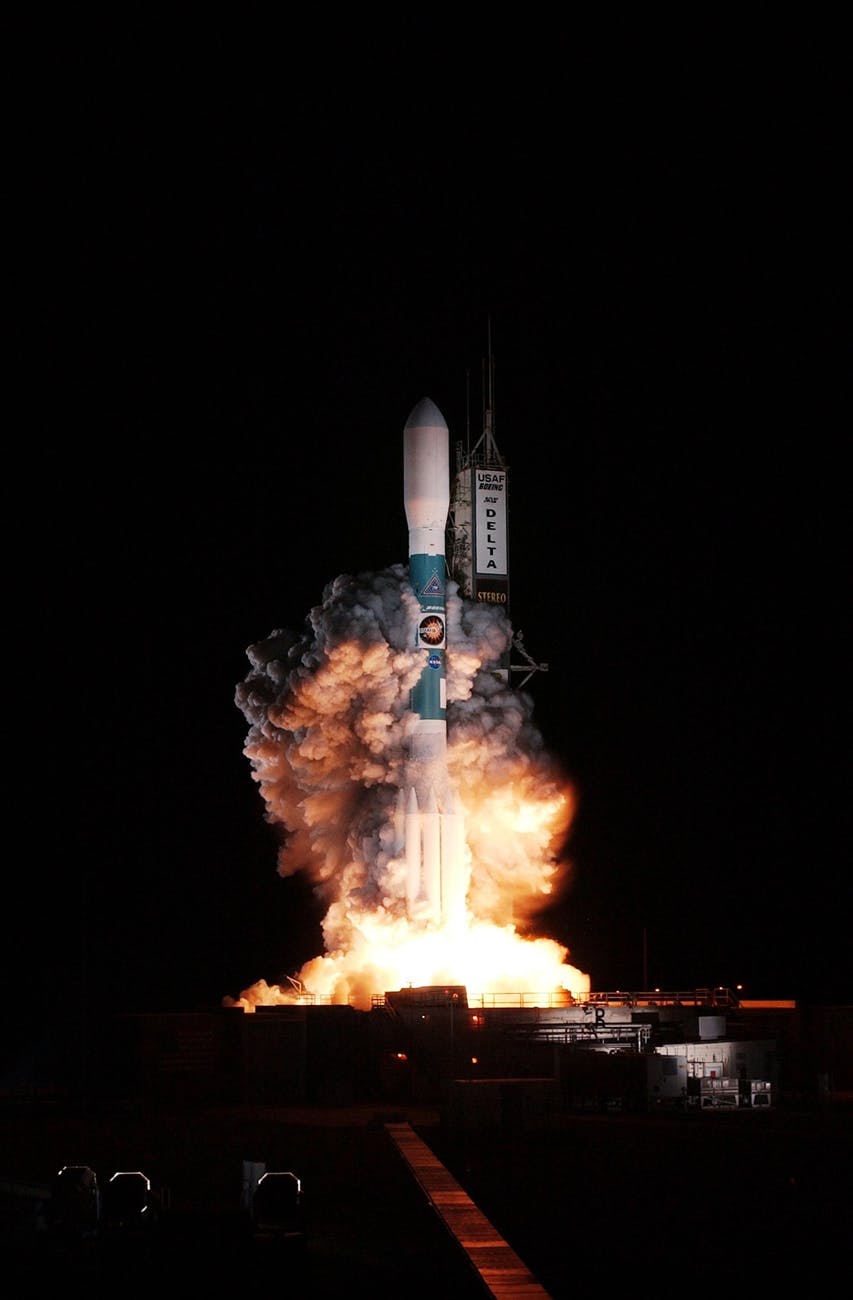
This is often an interesting achievement by our nuclear scientists, which has enabled us to become one of the chosen few countries on earth to have done it. India is additionally the first developing country, and one of the seven countries of the earth to master fast breeding technology. Research in breeder technology is currently happening at Gandhi Centre for Atomic Research at Kalpakkam, Chennai. The successful launching of the Polar Space Launching Vehicle (PSLV- D-2), in October 1994, marked India’s entry into the league of the world’s major space powers. Within the INSAT-2 series of satellites, launched first in 1992, India has shown its ability to fabricate complex systems like anything made anywhere within the earth . Our previous launches of the SLV-3 and thus the SLV were merely stepping stones to what’s going to be the workhorses of the business, the PSLV, which can launch one tone satellite into orbit of up to 1000 km, and therefore the Geosynchronous Satellite Launch Vehicle, which can take 2.5 tonne satellite to orbits 36,000 km away. India’s space programme rocketed to greater heights with the successful launch of the second Geosynchronous Satellite Launch Vehicle (GSLV-D2) in May, 2003. As has been rightly observed, the challenge before Indian Space Research Organisation (ISRO) is to take care of the momentum of the programme by integrating it with other missions. The foremost obvious ones are related to military communication and reconnaissance.India’s first space mission to specialize in an extraterrestrial landing, Chandrayaan-2, would have commenced by the time you read this. It’s a symbol achievement for India’s technological capability, in areas ranging from propulsion , signals and communications, materials, robotics, remote guidance and even AI , to let the lunar lander navigate on its own on the far side of the moon. If successful on all targeted fronts, it’d also increase humankind’s understanding of cosmology and thus the origins of the planet , because the moon probably could also be a piece of this planet that got thrown out at a stage when it had been mostly molten matter. And, of course, it’d cause greater understanding of the moon itself, its chemistry and composition. America landed men on the moon essentially to demonstrate that it had overcome the Sputnik scare — the shock realisation that the Soviet Union was before it in space science and technology which its own education system had to repair for greater specialize in science and maths — and had beaten the Soviet Union therein lone area of human achievement during which the Communist nation had been ahead.

Achievements in space still have a component of demonstration of technological capability, apart from their intrinsic utility. So, becoming the fourth nation within the world, behind the US, the previous Soviet Union and China, to land a mobile explorer on the moon, tells the earth of India’s capability altogether the intricate technologies that are marshalled and harmonised to carry out Chandrayaan-2, its predecessor having orbited the moon with a proximity of 100km. The mission, conceived in 2008, has taken 11years to end . The mission director and thus the project director are both women, to boot. The Indian Space Research Organisation is standing testimony to the overall public sector’s capacity to deliver outstanding results, when given autonomy and resources. There’s a case for similar public sector initiatives in cyber security, telecom systems and AI . What it lacks is political vision and commitment. Our success on Antarctica speaks volumes of our scientific genius and technological wisdom within the world . So far, 13 scientific expeditions by our oceanographers,scientists and technicians are to Antarctica where we’ve two permanent stations on the icy continent. within the field of defence also our achievements are quite laudable.

The successful production of such missiles as Prithvi and Nag testify to the high capabilities and achievements of our scientists. we’ve also been successful in producing opt-electronic preparation and night-vision devices required for our indigenous tanks. The HAL at Bangalore has already produced the Advanced Light Helicopter (ALH). Obviously, technology has been used effectively as a tool and instrument of national development and yet much remains to be achieved so that its benefits reach the masses. Scientists within the country will strive hard to bring technological developments to people’s doorsteps.

Therefore, they can not rest on their laurels, but should remember the famous and galvanizing lines of the poet Robert Frost: The woods are lovely, dark and deep, But I even have promises to stay, And miles to travel before I sleep……

INDEPENDENCE DAY OF INDIA

BACKGROUND

India’s struggle for independence started in 1857 with the Indian Mutiny in Meerut and it gained momentum when the first war . In twentieth century, below the leadership of Gandhi , the Indian National Congress (INC) and different political organisations launched a state independence movement and revolt against the oppressive British rule.During the Second war in 1942, the Bharatn Congress launched the Quit India Movement strict AN finish to British rule that prompted colonial rulers detaining several campaigners, nationalists, and ministers together with Gandhi.During the partition of Bharat in 1947, violent riots, mass casualties, and displacement of nearly fifteen million individuals happened amid non secular violence.

“Where the mind is without fear and the head is held high,where knowledge is free”-Rabindranath Tagore

HISTORY

India gained independence from British rule on Assumption , 1947. As India freed herself from the clutches of British Empire , the entire country roared in happiness, marking the reign of an independent and free land, faraway from the fear rule of the 200-year British rule.Fearless Patriots led the liberty struggle which went on to be written within the deep trenches of history. On the occasion of this patriotic day, let’s know more about the history, significance, facts, and therefore the way today is widely known in India and across the earth .Jawahar lal Nehru declared India’s independence on Assumption , 1947, and swore in because the 1st Indian Prime Minister. British House of Commons passed the Indian Independence Bill on Independence Day , 1947, and it had been passed within a fortnight. This was a significant a neighborhood of the tactic that led India to her victory. Freedom fighters and patriots like Mohandas Karamchand Gandhi, Netaji Subhash Chandra Bose, Bhagat Singh, Rani Lakshmi Bai, and far of more lead the parents with their belief and determination to win independence.

Mahatma Gandhi

SIGNIFICANCE

This day may be a remembrance and dedication to all or any those people that gave their lives, mind, body, and soul to free India. Countless lives were lost and lots of were tortured but with immense determination and faith, Indian rose as a free country. On today , India’s tricolour flag was hoisted above the Lahori Gate of Red Fort in Delhi on Assumption , 1947. to the present day, per annum the Prime Minister hoists the flag and commemorates the occasion by a standard ceremony in Delhi, India’s capital. After the Prime Minister addresses the state , a military parade is held that’s broadcasted everywhere the country. The President also delivers a speech.

Today India completed 74 years of independence and we are celebrating 75th independence which has brought real change in India in this so many years. At last I want to quote DR. B.R.Ambedkar’s famous quote;-

Freedom of mind is the real freedom. A person whose mind is not free though he may not be in chains, is a slave, not a free man. One whose mind is not free, though he may not be in prison, is a prisoner and not a free man. One whose mind is not free though alive, is no better than dead. Freedom of mind is the proof of one’s existence.”-B.R.AMBEDKAR

The rise of online learning during the pandemic

The pandemic has severly affected all the sectors ,and Educational sector was one of them ,but thanks to technology because of that we have an alternative mode of learning.Online or virtual mode of education became asset for the students life in the pandemic situation,but who thought that this online mode of learning would remain with us for such a long duration and still no one knows how long.

ADVANTAGES OF ONLINE LEARNING

Several arguments are associated with e-learning.

• Accessibility, affordability, flexibility, learning pedagogy, life-long learning, and policy are a number of the arguments associated with online pedagogy.

• It is said that online mode of learning is definitely accessible and may even reach to rural and remote areas.

• Flexibility is another interesting aspect of online learning; a learner can schedule or plan their time for completion of courses available online.

•Students can learn anytime and anywhere, thereby developing new skills within the process resulting in life-long learning.

•The government also recognizes the increasing importance of online learning during this dynamic world, as in future online mode of education would be the most helpful and trending part.

DISADVANTAGES OF ONLINE LEARNING.

• Personal attention is also a huge issue facing online learning,as no one knows who is paying attention during the classes and who is not.

•Sometimes, online content is all theoretical and does not let students practice and learn effectively,which is a huge disadvantage of e-learning.

• A lot of distraction sources are available during the online mode of teaching .

• A lot of health related problems can be developed in this mode be it mental or physical , continuous learning from electronic gadgets can lead to eye problems as well as mental stress and exhaustion could also be felt , physical movement is negligible in this mode.

What should be done to get better mode of education in the time of pandemic?

Combining face-to-face lectures with technology gives rise to blended learning and flipped classrooms; this type of learning environment can increase the training potential of the students.

The relevance of yoga and meditation in the modern lives

We are living in a complex world, it’s a changing world, nothing is permanent, traditions and values are changing everything seems to be in the state of flux. In today’s world the majority of the people are suffering from mental and physical illness.What we can do to overcome them. The simple answer to the question is that follow the path that is showed by our sages and great gurus and that is the path of yoga and meditation, the modern life is full of confusion people are generally seen obsessed with materialistic things, consideration a good house , big bank balance are the three virtues of successful modern life according to today’s man,but do they lead to real peace? Do money and modern items make happier human beings perhaps not here comes the relevance of yoga and meditation. They are the creative processes ,the discipline in our minds as well as the body, the great extra energy and power yoga exercises help us with many elements and prevent many diseases . Meditation helps our mind . to neglect other thoughts and make us feel positive .It also makes us confident and morally strong . Yoga and meditation are necessary for students too, they are generally engaged in online work be it online studying or any other business work in which there is no physical movement ,but yogic exercise and meditation can help them restore their reserves of their lost energy and power that can help them in concentration and remove tiredness too.

Some of the types of Yoga are which help are useful are:-

(1).Mountain Pose (Tadasana)

The heels root down, the muscles of the legs are engaged, the bones are stacked with the shoulders directly over the hips, the shoulder blades slump the rear , and therefore the crown of the top rises. do not forget to breathe.

(2).Garland Pose (Malasana)

Photo by Marta Wave on Pexels.com

Move your feet, bend the sides of your mat and bend your knees, coming into a squat. The toes may end up if necessary. If your heels don’t reach the ground , you’ll sit on two stacked blocks. This modification makes the pose more accessible for several people.This is an edge that’s quite natural for youngsters , but we lose the knack for it as adults. It’s great for the hips and to counteract the consequences of an excessive amount of sitting in chairs and riding in cars.

What is meditation?

Meditation refers to the practice of focusing attention on breath or on an object or thought or a mantra. Here attention is focused.

Some of the types of meditation are :-

(1) Vipasana meditation

It is also known as mindfulness-based meditation, there is no fixed object or thought to hold the attention. The person passively observes the various bodily sensations and thoughts that are passing through in her or his awareness.

(2) Kundalini Yoga

It is taught within the USA and has been found to be effective in treatment of mental disorders. The Institute for Nonlinear Science, University of California, San Diego, USA has found that Kundalini Yoga is effective within the treatment of obsessive compulsive disorder. Kundalini Yoga is a mixture or combination of pranayama or breathing techniques with chanting of mantras. Prevention of repeated episodes of depression could also be helped by mindfulness based meditation or Vipasana. This meditation would help the patients to process emotional stimuli better and hence prevent biases within the processing of those stimuli.

Teacher’s Day

When and Why teacher’s Day is celebrated?

Teacher’s day is celebrated on 5th September every year, because of the Sarvapalli Radhakrishnan, who was the former president of India and he was born on this day.So to honour the memory of India’s first President and to commemorate the importance of teachers in our lives this day is celebrated every year.

About Sarvapalli Radhakrishnan

He was born on 5th September 1888. He was a great person, having many qualities in him ,he was a philosopher, educationalist, humanist as well as a religious thinker. He also wrote some of the books and out of them many were written on religion and philosophy topics .He is remarked as one of the greatest thinkers of the 20th century ,and he is also remembered for introducing western philosophies into the Indian society,he was also appointed as a Spalding professor of Eastern Religions and Ethics at the University of Oxford which is a great achievement,not only this he was nominated 16 times for the Nobel Prize in Literature, and another 11 times for the Nobel Peace Prize.

Importance of teachers

“If a country is to be corruption free and become a nation of beautiful minds, I strongly feel there are three key societal members who can make a difference. They are the father, the mother and the teacher.” – Dr APJ Abdul Kalam.With this wonderfully written quote we can see that teachers hold the same position as our parents have. We learn many a things from teachers not only about studies but also moral values, social etiquettes and what not , they are the most important building block of our personality .In success of every person’s life teacher play a very important role.

How do children celebrate this day?

Children in schools organise numerous of activities on this day ,to thank their teacher for playing such an important role in their life effortlessly. They thank them by giving Thankyou cards, by organising music and dance competitions,also giving speeches in order to make teacher’s feel special .

Conclusion

Therefore ,the teachers day is celebrated to convey a message that every teacher is important, and without them we cannot attain anything in our life.So this day work as a realisation day for every student or person who neglect their teacher’s opinion or efforts to make them feel how relentlessly a teacher do his or her job.