General issues on Environmental ecology

The environment plays a significant role to support life on earth. But there are some issues that are causing damages to life and the ecosystem of the earth. It is related to the not only environment but with everyone that lives on the planet. Besides, its main source is pollution, global warming, greenhouse gas, and many others. The everyday activities of human are constantly degrading the quality of the environment which ultimately results in the loss of survival condition from the earth.There are hundreds of issue that causing damage to the environment. But in this, we are going to discuss the main causes of environmental issues because they are very dangerous to life and the ecosystem.

Pollution โ€“ It is one of the main causes of an environmental issue because it poisons the air, water, soil, and noise. As we know that in the past few decades the numbers of industries have rapidly increased. Moreover, these industries discharge their untreated waste into the water bodies, on soil, and in air. Most of these wastes contain harmful and poisonous materials that spread very easily because of the movement of water bodies and wind. Greenhouse Gases โ€“ These are the gases which are responsible for the increase in the temperature of the earth surface. This gases directly relates to air pollution because of the pollution produced by the vehicle and factories which contains a toxic chemical that harms the life and environment of earth. Climate Changes – Due to environmental issue the climate is changing rapidly and things like smog, acid rains are getting common. Also, the number of natural calamities is also increasing and almost every year there is flood, famine, drought, landslides, earthquakes, and many more calamities are increasing.

Development recognises that social, economic and environmental issues are interconnected, and that decisions must incorporate each of these aspects if there are to be good decisions in the longer term.For sustainable development, accurate environment forecasts and warnings with effective information on pollution which are essential for planning and for ensuring safe and environmentally sound socio-economic activities should be made known.


THE EARTH IS WHAT WE
ALL HAVE IN COMMAN

History of India & Indian National Movement.

Early times the Indian subcontinent appears to have provided an attractive habitat for human occupation. Toward the south it is effectively sheltered by wide expanses of ocean, which tended to isolate it culturally in ancient times, while to the north it is protected by the massive ranges of the Himalayas, which also sheltered it from the Arctic winds and the air currents of Central Asia. Only in the northwest and northeast is there easier access by land, and it was through those two sectors that most of the early contacts with the outside world took place.

Within the framework of hills and mountains represented by the Indo-Iranian borderlands on the west, the Indo-Myanmar borderlands in the east, and the Himalayas to the north, the subcontinent may in broadest terms be divided into two major divisions: in the north, the basins of the Indus and Ganges (Ganga) rivers (the Indo-Gangetic Plain) and, to the south, the block of Archean rocks that forms the Deccan plateau region. The expansive alluvial plain of the river basins provided the environment and focus for the rise of two great phases of city life: the civilization of the Indus valley, known as the Indus civilization, during the 3rd millennium BCE; and, during the 1st millennium BCE, that of the Ganges. To the south of this zone, and separating it from the peninsula proper, is a belt of hills and forests, running generally from west to east and to this day largely inhabited by tribal people. This belt has played mainly a negative role throughout Indian history in that it remained relatively thinly populated and did not form the focal point of any of the principal regional cultural developments of South Asia. However, it is traversed by various routes linking the more-attractive areas north and south of it. The Narmada (Narbada) River flows through this belt toward the west, mostly along the Vindhya Range, which has long been regarded as the symbolic boundary between northern and southern India.

India’s movement for Independence occurred in stages elicit by the inflexibility of the Britishers and in various instances, their violent responses to non-violent protests. It was understood that the British were controlling the resources of India and the lives of its people, and as far as this control was ended India could not be for Indians.

On 28 December 1885 Indian National Congress (INC) was founded on the premises of Gokuldas Tejpal Sanskrit School at Bombay. It was presided over by W.C Banerjee and attended by 72 delegates. A.O Hume played an instrumental role in the foundation of INC with an aim to provide Safety Valve to the British Government.
A.O Hume served as the first General Secretary of INC.
The real Aim of Congress is to train the Indian youth in political agitation and to organise or to create public opinion in the country. For this, they use the method of an annual session where they discuss the problem and passed the resolution.
The first or early phase of Indian Nationalism is also termed as Moderate Phase (1885-1905). Moderate leaders were W.C Banerjee, Gopal Krishna Gokhale, R.C Dutt, Ferozeshah Mehta, George Yule, etc.
Moderates have full faith in British Government and adopted the PPP path i.e. Protest, Prayer, and Petition.
Due to disillusionment from Moderates’ methods of work, extremism began to develop within the congress after 1892. The Extremist leaders were Lala Lajpat Rai, Bal Gangadhar Tilak, Bipin Chandra Pal, and Aurobindo Ghosh. Instead of the PPP path, they emphasise on self-reliance, constructive work, and swadeshi.
With the announcement of the Partition of Bengal (1905) by Lord Curzon for administrative convenience, Swadeshi and Boycott resolution was passed in 1905.


ONE INDIVIDUAL MAY DIE; BUT THAT IDEA WILL, AFTER HIS DEATH, INCARNATE ITSELF IN A THOUSAND LIVES.

-Netaji Subhash Chandra Bose

Internet Protocol

What is an IP address?

An IP address abbreviation of Internet Protocol address, it is an address that is provided by the Internet Service Provider to the user, it is just like a postal address code that is pin code to find the location or place where to send the message.  An IP address is a unique group of number what are separated by the period (.), it varies from 0 to 255, and   every device has a separate and unique IP address that is assigned by the specific Internet Service Provider (ISP) to identify which particular device is communicating with them and accessing the internet from there.

If you want to access internet from you device which may be your Android, I phone, Computer the service provider assigned them a particular, unique  address  that is help them to communicate send, receive information from the right person without any misunderstanding, mistake the message is pass to the authentic person to whom it has to send.  This problem is solved by the IP address, in olden days; we have postal address to send the message/letter to the person, the message that has to be sent with the help of the address which may be his house number, city, town, postal code.  The sender will write the address on the top of the letter envelope so that it will be delivery to the right person.  If the person connected his device to internet provide by the hotel, the hotelโ€˜s Internet Service Provider will assign an IP address to the device.

Types of IP addresses

There are different types of IP based on different categories, types.

Consumer IP addresses

A Consumer IP addresses is the individual IP addresses of a customer who connects his/her  device to a public or private  network.  A consumer connects his device through internet from his Internet Service Provider, or from the Wi-Fi.  In these days the Consumer has many electronic gadgets which he connects to his router that transfer the data from the Internet Service Provider.

Private IP addresses

A  Private IP addresses are a secure one that is connected Private Network and every devices that is connected to this Private Network is assigned a unique IP address that is assigned by the Internet Service Provider.  All Mobile devices, Computer, and Internet of Things that are connected to this private network are assigned a unique string number to the devices.

Public IP addresses

A Public IP addresses is the main address that is related to your network, as stated above that the IP address are assigned by the Internet Service Provider, the Public IP address is also assigned by the Internet Service Provider, The Internet Service Provider has a large amount of IP addresses that are stored and assigned to the customer. The public IP address is the address that  devices that are outside the network use to identify the network.

The Public IP addresses are further classified into two types they are:

  1. Dynamic
  2. Static

Dynamic IP addresses

                The Dynamic  IP address  are the IP address that changes very frequently, so the Internet  Service Providers  purchase a very huge amount of IP addresses , they assign it mechanically to the customer . This frequently changing the IP address helps the customer not to make the security actions. The frequently changing IP address wonโ€™t let the hacks to track or pool your data.

 Static IP addresses

The Static IP addresses is the contradictory to the Dynamic IP address, it remain fixed. The IP address remains fixed when it is assigned by the Internet Service Provider.  The mostly many person and business man donโ€™t   choose static because it is risk of getting easily track, but most business which are trying host her own website server choose Static IP address so it will easier  for the customer to find them.

                The IP address can be protect by 2 ways that are using proxy and the other one is use of Virtual Private Network.   A proxy server acts as a intermediary between the internet server and your internet service providers, when you visit any website it will show the proxy IP address not yours. 

Where to find IP address is Device?

                The IP address set up in every device that is connected to the Internet, but the steps or direction is different in different devices. Some of device direction is given below:

In Window or any other Personal Computer

  1. Go to the Start Menu
  2. Type  โ€˜Runโ€™ in the Search bar
  3. A Run Tab pops up
  4. Type  โ€˜cmdโ€™
  5. A black screen pops up
  6. Type โ€˜ipconfigโ€™
  7. Your  IP address is found.

In Android Mobile

  1. Go to the Settings
  2. Tap on Network and Internet
  3. Tap on Wi-Fi, it will show the IP address

IJR – Research Journal

International Journal of Research (IJR)ย is an Open Acess, peer reviewed, international online publishing journal, which aims to provide a platform for the exchange of information covering all aspects of science, technology, and public policy including technicism, appropriate technology, microbiology, environmental studies, materials science and so on. Articles presenting original research in the field are expected for publishing in this journal.ย 

Photo by Startup Stock Photos on Pexels.com

IJRย provides a forum for sharing timely and up-to-date publication of scientific research and review articles. The journal publishes original full-length research papers in all areas related to corporate governance, human resource management, strategic management, entrepreneurship, marketing, e-business, services, information technology management, production & operations management, financial management, decision analysis, management research methods and managerial economics, etc. SJBM aims to enhance the dissemination of knowledge across the business and management community.ย 

Send papers for publication to ijr@ijrjournal.com

IJR Journal – Research Publication

International Journal of Research (IJR) publishes articles in the disciplines of sustainable management and information technologies based on scientific and technological researches, as well as its methodology, concepts, function and principles and interaction among both disciplines. It aims to publish the advances and trends, and to collaborate in the dissemination of knowledge and show advances derived from researches conducted internationally.ย 

Photo by Andrea Piacquadio on Pexels.com

IJRย is an international, professional, and peer reviewed journal, it offers opportunities for the exchange of research results, experience and insights, and provides a forum for ongoing discussion between experts in any field of business and economic development. This journal focuses on marketing, management, finance, accounting, decision sciences, operations research and economics. The submission of manuscripts that meet the general criteria of significance and scientific excellence are encouraged.

Send papers for publication to ijr@ijrjournal.com

New NASA Earth System Observatory to Help Address, Mitigate Climate Change

May 24, 2021

NASA will design a new set of Earth-focused missions to provide key information to guide efforts related to climate change, disaster mitigation, fighting forest fires, and improving real-time agricultural processes. With the Earth System Observatory, each satellite will be uniquely designed to complement the others, working in tandem to create a 3D, holistic view of Earth, from bedrock to atmosphere.


โ€œIโ€™ve seen firsthand the impact of hurricanes made more intense and destructive by climate change, like Maria and Irma. The Biden-Harris Administrationโ€™s response to climate change matches the magnitude of the threat: a whole of government, all hands-on-deck approach to meet this moment,โ€ said NASA Administrator Sen. Bill Nelson. โ€œOver the past three decades, much of what weโ€™ve learned about the Earthโ€™s changing climate is built on NASA satellite observations and research. NASAโ€™s new Earth System Observatory will expand that work, providing the world with an unprecedented understanding of our Earthโ€™s climate system, arming us with next-generation data critical to mitigating climate change, and protecting our communities in the face of natural disasters

Top 5 books to read at least once in your life.ย 

This is an image of Top 5 books to read at least once in your life.
Photo by rikka ameboshi on Pexels.com

Reading is an immersive experience that often rewards you with a great story and good vocabulary. There are books across several genres one can choose from to indulge in a wonderful reading experience. But there are some books that fall under the category of โ€˜classicsโ€™ as their themes, characters, and plot lines become relevant for ages to come. These are written by some of the brilliant literary minds that became popular and they went on to influence many modern works of literature. 

Animal Farm- a satirical allegory

This is an image of Animal Farm
Photo by Amelie Lachapelle on Pexels.com

The story begins with a typical farm being run by a human with a variety of animals living in it. The farm animals are often mistreated, overworked and ignored by the human which agitates them. Hoping to overthrow the human race and reaping all the benefits of their work, they drive the human out of the farm. What follows is a satirical allegory to the events that happened during and after the Russian Revolution of 1917.ย 

Although the story revolves around farm animals, its  themes of corruption, slavery, dicatorship, class distinction, and characters, makes the readers draw parallels with the current political scenario. It is a must-read for a better understanding of the Russian revolution and an engaging experience. 

The Great Gatsby- The Jazz age novel

The Great Gatsby is a 1925 novel written by F. Scott Fitzgerald. It follows the life of a self-made millionaire named Jay Gatsby who is in pursuit of his long lost lover named Daisy Buchanan. The novel however, has little scope for romance and represents America in the 1920s. It highlights the era of unrivalled wealth and materialistic access. 

The novel upon its release didnโ€™t gain commercial success. Critics believed that it did not amount to Fitzgeraldโ€™s earlier novels. However, it began to gain popularity during World War II as free copies were distributed among American soldiers who were serving overseas. The Great Gatsby went on to become an important part of Americaโ€™s educational curriculum and pop culture. 

The novel continues to attract scholarly attention and is a contender for the title of โ€˜The Great American Novelโ€™. 

Harry Potter and the Philosopherโ€™s stone- You Know Who

This is an image of Harry Potter and the Philosopher's stone
Photo by Dzenina Lukac on Pexels.com

This book can be considered as J.K Rowlingsโ€™ stepping stone to success. After being rejected by 11 publications and finally being published by Bloomsbury publication, upon the request of the chief executiveโ€™s 8 year old daughter. Harry Potter and the Philosopherโ€™s stone went on to be translated into 73 languages and sold 120 million copies. Becoming the second best-selling novel of all time.ย 

The story follows Harry Potter and the readersโ€™ introduction to the world of magic, following Harryโ€™s discovery of his magical heritage and acceptance into the Hogwarts School of Witchcraft and Wizardry. As the readers alongside Harry manage to grasp the  revelation of a whole new world of possibilities, worthy opponents and dangers show up on whom magic must be used to defeat and protect. 

The Book Thief- Narrated by death.

Photo by Ingo Joseph on Pexels.com

Reading is an immersive experience that often rewards you with a great story and good vocabulary. There are books across several genres one can choose from to indulge in a wonderful reading experience. But there are some books that fall under the category of โ€˜classicsโ€™ as their themes, characters, and plot lines become relevant for ages to come. These are written by some of the brilliant literary minds that became popular and they went on to influence many modern works of literature.ย 

The book thief is a 21st century novel that uses the Nazi regime in Germany as its background. Although it has its fair share of horror and despair. The Book Thief delivers hope to its readers through love and tranquility among family and friends. 

The novel follows the life of Liesel, who moves into her new foster parentsโ€™ home following her brotherโ€™s death. As she goes on to witness the dangers posed by the Nazi regime, Liesel adopts her newly found passion for reading by stealing books from the rubbles and also the Mayorโ€™s house. One of the pivotal characters in the novel is death itself as it narrates the entire story.ย 

The Lion, The Witch, and The Wardrobe- A world of fantasy

This is an image of The Lion, The  Witch and The Wardrobe
Photo by Pixabay on Pexels.com

Open the book to a whole new world of fantasy, mythical creatures and magic. When 4 siblings are relocated to a large house in the countryside due to wartime evacuation. They discover a wardrobe in the house which had more than just clothes hanging inside. The 4 siblings venture into the world of dreams upon entering the wardrobe. They go on to encounter the witch and the lion, and participate in an impending war to end the evilโ€™s oppression over the good. 

This fantasy novel was the first to be published among the 7 volumes known as The Chronicles of Narnia. C.S Lewis wrote this novel as a dedication to his goddaughter named Lucy Barfield. 

Here are some of the classic novels from the 20th century across different genres to enhance your reading pleasure. 

Happy Reading.

Buy books on Amazon

References

Anna Chui, 26th  January 2021, lifehack.org

goodreads.com

wikipedia.org

Dubal Collaboration Plans To Build ‘Food Secure Future’ Centers Around India


Food secure future is a significant issue for the United Arab Emirates (UAE) yet in addition for India. Worldwide Food Policy Research Institute (IFPRI), truth be told, cautions that evolving environment, developing worldwide populace, rising food costs and natural stressors will uncertainly affect food security in the coming many years. Notwithstanding, industry specialists and strategy creators accept that the UAE and India can up their synergistic endeavors to handle food security issues towards accomplishing food independence.


This is because the United Arab Emirates is India’s third largest trading partner with the bilateral trade of US$ 59.1 billion in 2019-20. Furthermore, it is a well-known fact that India wants to work very closely with the UAE as a reliable partner in food security. India’s food corridor is slated to attract investments to the tune of US$ 7 billion. Dubai can be a gateway for Indian companies in agriculture and food processing sector to take their products and services globally. This is the opinion of Dr Aman Puri council general of India.

According to him the UA should not be looked at as just a market of 10 million consumers rather it is is beneficial to the entire middle East and North African region. It is considered food secure due to its ability to import food from international markets.


The food technology valley aims at promoting innovation in agriculture to achieve food security from sustainable sources. Dubai is already adopting the new age farming technologies, vertical farming, smart farming, aeroponics, hydroponics, LOT and other new technologies have resulted in a 53% increase in output in agriculture.

The capital intensive nature of the Emirates aptly suits India which needs funding infusions for infrastructure creation. All the sovereign wealth funds have an investor bill capacity of around US$ 1.2 trillion which is growing at a rate of 18 % per annum.


India is on the threshold of a landmark change in the nature of food processing it is now moving towards value-added process and ready to eat foods. Thus, there has never been a better time for the Indian companies to tap the opportunities that the UAE and Dubai throw up. With the peceeding opportunities, both UAE and India face a common challengeas well, in the creation of value chain perspective, that is, end-to-end, farm-to-fork. So, moving forward, the two countries can deepen their collaboration and help each other in achieving this goal.

-Ananya Kaushal

Things to know before taking up Mass Media and Communication courses.

Photo by Caleb Oquendo on Pexels.com

Letโ€™s begin by knowing what Mass Media or Mass Communication is. Mass media refers to the media technologies such as movies, songs, news, podcasts, advertisements and photos, that are utilized to carry information to the masses. 

Importance of Mass Media

This blog you are reading is helping you gain knowledge about Mass Media and communication. Hence this blog becomes a media technology and educating you in the field of Mass Media defines its importance. From applying for a job to reaching out to a friend on your phone, everything becomes a portion of Mass Media as they help users pass on information from one place to another or one person to another. 

Here are some advantages of Mass Media to highlight its importance. 

  • It becomes a voice for the voiceless: Mass Media provides every individual with an opportunity to practice their freedom of speech and spread their ideas among the world. YouTube is a great example of Mass Media. As a platform in this 21st century it helps both small and large creators publish their videos for everybody to watch. 
  • Enables widespread communication: Today, the world is often referred to as a global village. This is made possible due to several types of mass media technologies such as social media, internet, and other digital content. It helps governments, businesses and organizations to communicate with each other and stay connected. 
  • Diversifying culture: Mass Media helps in diversifying languages and cultures beyond its place of origin. A good internet connection and a mobile phone or a computer is all you need to learn a new language or gain knowledge about a new culture. You can even take a peek around the world without leaving your home. 

The Evolution of Mass Media

Mass Media can be traced back to the 800 AD which consisted of prehistoric arts, writings and some basic printing technology. The introduction of Gutenbergโ€™s printing press in the 1450s helped art and literature gain a wider reach among the people.The year 1605 witnessed the publishing of the first weekly newspaper in Antwerp, known as โ€˜Relationโ€™. This was followed by the inventions of radio and television in 1895 and 1925 respectively. Finally in 1990, the world wide web was introduced by Tim Berners Lee. 

The number of people benefiting from these media technologies witnessed a steady growth from a handful, to thousands, and millions with the introduction of newspapers, radios and televisions. Today, due to the internet, these numbers are reaching billions. In 2018, the number of  World Wide Webโ€™s users was estimated to be 4 billion. 

The 21st century has introduced the ability for even individuals to broadcast a customised message for thousands across the globe. You no longer need to be a part of some huge networking channel to do so. A good internet connection and a hand held device can do the job. 

The functions of Mass Media

Mass Media, in the form of writing, podcasting, and publishing, has a significant effect on the masses. Commercials on television, billboards and social media influence the audience into buying a product or availing a service. Hence companies across the world look for suitable mediums such as social media, blogs, forums, or video streaming platforms to convey their messages based on their businesses. Once they find the right mass media technology, they conduct campaigns to communicate their ideas. 

Majority of the companies today create and maintain their social media pages, maintain blog posts on their websites, and run advertisements on video streaming platforms to educate viewers about their products or to entertain them. These define the functionality of Mass Media. 

Courses in the field of Mass Media and communication

Photo by Redrecords u00a9ufe0f on Pexels.com

After addressing the โ€˜Whโ€™ questions of Mass Media, let us dive into the courses one can opt for in the field of Mass Media and communication. There are three kinds of courses available for aspiring students in the field of Mass Media and communication. Courses at undergraduate, postgraduate and diploma levels.

Both the course levels familiarise students both practically and theoretically in the field of Mass Media and Communication. 

Eligibility for courses in Mass Media and communication (UG PG) 

A student aspiring to seek admission in a Bachelor of Arts in Mass Communication course, he or she must fulfil some eligibility criterias. 

  • The applicant should have completed senior secondary schooling (10+2) from a recognized university. 
  • The applicant must have scored a minimum of 50% from the aggregate in their senior secondary schooling. 

Similarly, students aspiring for seeking admission in the Master of Arts in Mass Communication course must fulfil the following eligibility criterias. 

  • The applicant must have a Bachelorโ€™s degree in any stream from a recognized university. 
  • The applicant must have scored a minimum of 50% from the aggregates in their Bachelorโ€™s degree. 

Institutes may also require you to give an entrance exam to fulfil the admission process.

Hereโ€™s what you will learn from Mass Media and Communication courses

Courses in Mass Media helps you get acquainted with subjects such as Public Relations, Design and Graphics, Digital Media, Reporting and Editing for Print Media, Data Journalism, Photojournalism, Event Management, and Media Law and Ethics. The courses are inclusive of Computer based learning, Guest Lectures, Seminars, Workshops, Massive Open Online Courses, Individual and Group projects, and community based projects. 

Scope for Mass Media courses under employment prospect.

Photo by Pixabay on Pexels.com

With an increase in media technologies following new inventions and establishments such as Television Channels, Radio Stations, Advertising Agencies, PR Agencies, etc. Scope in this field is also parallely increasing. Here are some of the job profiles candidates can look out for upon completion of the course. 

  • Journalism
  • Public Relations
  • Advertising
  • Media Planner
  • Broadcasting and Production
  • Event Manager

Conclusion

Mass Media and Communication as a field in academics has a great scope in India and overseas. Freshers with expertise in specific areas and sufficient experience will be hired by prominent media companies for different job profiles. Individuals with good communication skills, writing proficiency, and passion for learning can pursue an undergraduate or a postgraduate course in Mass Media and Communication. 

References

Ritika Shrivastava, May 17, 2021 09:36 IST, shiksha.com

Akanksha Sirohi, July 15 2020, collegedekho.com

https://www.careers360.com/courses/mass-communication-course

CYBER CRIME CASE STUDY IN INDIA

Computer Crime Cyber crime encompasses any criminal act dealing with computers and networks (called hacking).Additionally, cyber crime also includes traditional crimes conducted through the internet. For example; The computer may be used as a tool in the following kinds of activity- financial crimes, sale of illegal articles, pornography, online gambling, intellectual property crime, e-mail spoofing, forgery, cyber defamation, cyber stalking.The computer may however be target for unlawful acts in the following cases- unauthorized access to computer/ computer system/ computer networks, theft of information contained in the electronic form, e-mail bombing, Trojan attacks, internet time thefts, theft of computer system, physically damaging the computer system

Cyber Law is the law governing cyberspace. Cyberspace is a wide term and includes computers, networks,software, data storage devices (such as hard disks, USB disks), the Internet, websites, emails and even electronic devices such as cell phones, ATM machines etc.

Computer crimes encompass a broad range of potentially illegal activities. Generally, however, it may be divided into one of two types of categories

(1) Crimes that target computer networks or devices directly; Examples – Malware and malicious code, Denial-of-service attacks and Computing viruses.

(2) Crimes facilitated by computer networks or devices, the primary target of which is independent of the computer network or device. Examples – Cyber stalking, Fraud and identity theft, Phishing scams and Information warfare.

CASE STUDIES

Case no:1 Hosting Obscene Profiles (Tamil Nadu)

The case is about the hosting obscene profiles. This case has solved by the investigation team in Tamil Nadu. The complainant was a girl and the suspect was her college mate. In this case the suspect will create some fake profile of the complainant and put in some dating website. He did this as a revenge for not accepting his marriage proposal. So this is the background of the case.

Investigation Process

Letโ€™s get into the investigation process. As per the complaint of the girls the investigators started investigation and analyze the webpage where her profile and details. And they log in to that fake profile by determining its credentials, and they find out from where these profiles were created by using access log. They identified 2 IP addresses, and also identified the ISP. From that ISP detail they determine that those details are uploaded from a cafรฉ. So the investigators went to that cafรฉ and from the register and determine suspect name. Then he got arrested and examining his SIM the investigators found number of the complainant.

Conclusion

The suspect was convicted of the crime, and he sentenced to two years of imprisonment as well as fine.

Case no:2 Illegal money transfer (Maharashtra)

ThIS case is about an illegal money transfer. This case is happened in Maharashtra. The accused in this case is a person who is worked in a BPO. He is handling the business of a multinational bank. So, he had used some confidential information of the banks customers and transferred huge sum of money from the accounts.

Investigation Process

Letโ€™s see the investigation process of the case. As per the complaint received from the frim they analysed and studied the systems of the firm to determine the source of data theft. During the investigation the system server logs of BPO were collected, and they find that the illegal transfer were made by tracing the IP address to the internet service provider and it is ultimately through cyber cafรฉ and they also found that they made illegal transfer by using swift codes. Almost has been  The registers made in cyber cafรฉ assisted in identifying the accused in the case. Almost 17 accused were arrested.

Conclusion

Trail for this case is not completed, its pending trial in the court.

Case no:3 Creating Fake Profile (Andhra Pradesh)

The next case is of creating fake profile. This case is happened in Andhra Pradesh. The complainant received obscene email from unknown email IDs. The suspect also noticed that obscene profiles and pictures are posted in matrimonial sites.

Investigation Process

The investigators collect the original email of the suspect and determine its IP address. From the IP address he could confirm the internet service provider, and its leads the investigating officer to the accused house. Then they search the accused house and seized a desktop computer and a handicam. By analysing and examining the desktop computer and handicam they find the obscene email and they find an identical copy of the uploaded photos from the handicam. The accused was the divorced husband of the suspect.

Conclusion

Based on the evidence collected from the handicam and desktop computer charge sheet has been filed against accused and case is currently pending trial.

Hacking is a widespread crime nowadays due to the rapid development of the computer technologies. In order to protect from hacking there are numerous brand new technologies which are updated every day, but very often it is difficult to stand the hackerโ€™s attack effectively.ย With some of these case studies, one is expected to learn about the cause and effect of hacking and then evaluate the whole impact of the hacker on the individual or the organization.

NOSTALGIC CHILDHOOD MEMORIES involves cartoons that todayโ€™s kids will never know

As we grow older, we sometimes forget about how much fun we had as children and how much we use to love waking up on Saturday morning and after returning from school to watch cartoons. Now that we are all grown up, it is easy to get lost in our long lists of things-to-do and forget to appreciate the little things.

The mind is a complicated thing, and although we have pushed back many of our childhood memories, it still harbours every theme song, character and saying that we use to live by. So, all it would take is for someone to hum a certain tune, and once recognized, you would probably be able to sing it out โ€” word by word.

If you recently happened to flip through the channels, you might have caught a glimpse of today’s cartoons and been slightly disappointed at what you saw. Times are changing and with that the quality of TV shows are rapidly disintegrating. So be happy that you were born when you were and make sure to take a trip down memory lane every once in a while.

SOME MOST APPRECIATED AND ENJOYED CARTOON DURING MY TIME

  • BOB THE BUILDER

Bob the builder is one of my favorite cartoon show and I thoroughly enjoyed watching it as a kid. And the title track of this cartoon is super iconic, it just freshes up all the beautiful memories of my childhood. The show focused on Bob a building contractor who solves all the problems with a positive attitude along with his vehicles who can actually talk.

  • THE POWERPUFF GIRLS

Whenever I think ofย  Cartoons, the first thing that pops into my head is โ€œPowerpuff Girls”. The Powerpuff Girls – Blossom, Bubbles, and Buttercup were created by Professor Utonium in an attempt to create the “perfect little girl” using a mixture of “sugar, spice, and everything nice”. However, he accidentally spilled a mysterious substance called “Chemical X” into the mixture, creating three girls and granting all three superpowers including flight, superhuman strength, superhuman speed, superhuman senses, nigh-invulnerability, x-ray vision, red heat vision, energy projection, space survivability, and thermal resistance. Despite being the main characters of the show, the villain of the show was most popular character i.e. MOJO JOJO and his popularity was so high that you could do a freaking show on Mojo JoJo alone!

  • ย Ed, Edd n Eddy

The show is based on three adolescent boys, Ed, Edd n’ Eddy. They hang around their suburban neighborhood of Peach Creek Estates, coming up with scams to con their peers for cash, so they can buy themselves a handful of their favorite treat, jawbreakers. Their plans normally fail though, leaving them in predicaments and situations that always go hay-wire. The characters almost never leave the neighborhood, and adults are nowhere to be seen, as well as any other kids. ย The characters are funny and the jokes are creative. Most of the episodes are funny with the Ed’s and my favorite one is Ed because he is stupid in a funny way and comes up with the most things he says. My least favorite characters are the Kanger Sisters, Kevin, Sarah, and Jimmy.

  • JOHNNY BRAVO

This is a show I grew up with. And probably the only show on this list that Iโ€™ve watched on and off for over a decade. Regardless of what age I was at,ย  โ€œJohnny Bravoโ€ has *always* made me laugh! And it made me laugh *a lot*! As you probably already know, Johnny is a 20 age something egotistical super-star wannabe.ย ย  What makes โ€œJohnny Bravoโ€ such a great show isnโ€™t just the settings. Itโ€™s purely the main character! Constant Banters between Johnny and his mother were the most hilarious one of all things.

  • RECESS

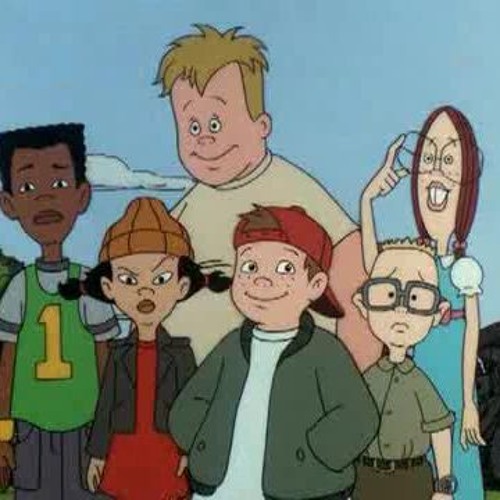
Recess is an American animated show that revolves around 6 brave elementary school kids. This cartoon show was best, it used to come on Disney channel. Almost every 90s kid has grown up watching recess in their childhood. It was just great watching recess after coming from school, this cartoon show holds so many beautiful childhood memories. This was the time where these idiotic storyline made me to cause ruckus in my own school and get punished very tough and fun time that was.

  • COURAGE THE COWARDLY DOG

โ€œCourage the Cowardly Dogโ€ย ย  I Watched โ€œCourageโ€ when I was 10 years old it was one of the 1st times I remember feelingโ€ฆ genuinely disturbed while watching a cartoon. There was a real sense of atmosphere in these settings. The colors were this strange contrast of bleak, yet alien. It really added to the sense of mystery in the show. All with alien, curses , psychopaths follows the dogs like a bad mojo and add to it the hilarious abuse he get from his male owner. I watched it both in English and Hindi, I seriously found it more hilarious in Hindi dude that psycho barber episode really give me goosebumps.

  • DEXTERโ€™s LABORATORYย 

ย It mentions a scientific genius who conducts countless experiments in his secret laboratory while always keeping his eyes on his elder sister Dee Dee. This boy even has to use both his teeth and fingernail to prevent her from invading his lab.ย 

  • POWER RANGERS FRANCHISE

Power ranger was one of the most enjoyed show of all times especially in my time, kids were hooked on the special postures and tag lines to transform in the super gears. Popularity of power ranger over the kids was equally in both gender despite having some violent fight sequence it didn’t affected its popularity. ย Each series revolves around a team of youths recruited and trained by a mentor to morph into the eponymous Power Rangers, able to use special powers and pilot immense assault machines, called Zords, to overcome the periodic antagonists.

These were some of my favourite show which was cherished and enjoyed not only by me but all from my age and still do.

DEEP LEARNING SERIES- PART 10

This is the last article in this series. This article is about another pre-trained CNN known as the ResNet along with an output visualization parameter known as the confusion matrix.

ResNet

This is also known as a residual network. It has three variations 51,101,151. They used a simple technique to achieve this high number of layers.

Credit – Xiaozhu0429/ Wikimedia Commons / CC-BY-SA-4.0

The problem in using many layers is that the input information gets changed in accordance with each layer and subsequently, the information will become completely morphed. So to prevent this, the input information is sent in again like a recurrent for every two steps so that the layers donโ€™t forget the original information. Using this simple technique they achieved about 100+ layers.

ResNet these are the three fundamentals used throughout the network.

  (conv1): Conv2d (3, 64, kernel_size= (7, 7), stride= (2, 2), padding= (3, 3))

  (relu): ReLU

  (maxpool): MaxPool2d(kernel_size=3, stride=2, padding=1)

These are the layers found within a single bottleneck of the ResNet.

    (0): Bottleneck

  1    (conv1): Conv2d(64, 64, kernel_size=(1, 1), stride=(1, 1))

  2    (conv2): Conv2d(64, 64, kernel_size=(3, 3), stride=(1, 1), padding=(1, 1))     

  3    (conv3): Conv2d(64, 256, kernel_size=(1, 1), stride=(1, 1))    

      (relu): ReLU(inplace=True)

   Down sampling   

   Conv2d(64, 256, kernel_size=(1, 1), stride=(1, 1))

    (1): Bottleneck

  4    (conv1): Conv2d(256, 64, kernel_size=(1, 1), stride=(1, 1))

  5    (conv2): Conv2d(64, 64, kernel_size=(3, 3), stride=(1, 1), padding=(1, 1))     

  6   (conv3): Conv2d(64, 256, kernel_size=(1, 1), stride=(1, 1))     

      (relu): ReLU(inplace=True)

    )

    (2): Bottleneck

  7    (conv1): Conv2d(256, 64, kernel_size=(1, 1), stride=(1, 1))

  8    (conv2): Conv2d(64, 64, kernel_size=(3, 3), stride=(1, 1), padding=(1, 1))

  9   (conv3): Conv2d(64, 256, kernel_size=(1, 1), stride=(1, 1))

   (relu): ReLU

There are many bottlenecks like these throughout the network. Hence by this, the ResNet is able to perform well and produce good accuracy. As a matter of fact, the ResNet is the model which won the ImageNet task competition.

There are 4 layers in this architecture. Each layer has a bottleneck which comprises convolution followed by relu activation function. There are 46 convolutions, 2 pooling, 2 FC layers.

TypeNo of layers
7*7 convolution1
1*1, k=64 + 3*3, k=64+1*1, k=256 convolution9
1*1, k=128+ 3*3, k=128+1*1, k=512  convolution10
1*1, k=256+ 3*3, k=256 + 1*1, k=1024 convolution16
1 * 1, k=512+3 * 3, k=512+1 * 1, k=2048 convolution9
Pooling and FC4
Total50

There is a particular aspect apart from the accuracy which is used to evaluate the model, especially in research papers. That method is known as the confusion matrix. It is seen in a lot of places and in the medical field it can be seen in test results. The terms used in the confusion matrix have become popularized in the anti-PCR test for COVID.

The four terms used in a confusion matrix are True Positive, True Negative, and False positive, and false negative. This is known as the confusion matrix.

True positive- both the truth and prediction are positive

True negative- both the truth and prediction are negative

False-positive- the truth is negative but the prediction is positive

False-negative- the truth is positive but the prediction is false

Out of these the false positive is dangerous and has to be ensured that this value is minimal.

We have now come to the end of the series. Hope that you have got some knowledge in this field of science. Deep learning is a very interesting field since we can do a variety of projects using the artificial brain which we have with ourselves. Also, the technology present nowadays makes these implementations so easy. So I recommend all to study and do projects using these concepts. Till then,

HAPPY LEARNING!!!

DEEP LEARNING SERIES- PART 9

This article is about one of the pre-trained CNN models known as the VGG-16. The process of using a pretrained CNN is known as transfer learning. In this case, we need not build a CNN instead we can use this with a modification. The modifications are:-

  • Removing the top (input) and bottom (output) layers
  • Adding input layer with size equal to the dimension of the image
  • Adding output layer with size equal to number of classes
  • Adding additional layers (if needed)

The pre-trained model explained in this article is called the VGGNet. This model was developed by the Oxford University researchers as a solution to the ImageNet task. The ImageNet data consists of 10 classes with 1000 images each leading to 10000 images in total.

VGGNet

I/p 1     2   3     4     5        6       7         8      9          10     11            12       13   o/p

Credit: – Nshafiei neural network in Machine learning  Creative Commons Attribution-ShareAlike 4.0 License.

This is the architecture for VGGNet. This has been found for the CIFAR-10 dataset, a standard dataset containing 1000 classes. This was used for multiclass classification. Some modifications are made before using it for detecting OA. The output dimension is changed into 1*1*2 and the given images must be reshaped to 224*224 since this dimension is compatible with VGGNet. The dimensions and other terms like padding, stride, number of filters, dimension of filter are chosen by researchers and found optimal. In general, any number can be used in this place.

The numbers given below the figure correspond to the layer number. So the VGGNet is 13 layered and is CNN till layer 10 and the rest are FNN.

Colour indexName
GreyConvolution
RedPooling
BlueFFN

Computations and parameters for each layer

Input

224*224 images are converted into a vector whose dimension is 224*224*3 based on the RGB value.

Layer 1-C1

This is the first convolutional layer. Here 64 filters are used.

Wi =224, P=1, S=1, K=64, f=3*3

Wo =224 (this is the input Wi for the next layer)

Dim= 224*224*64

Parameter= 64*3*3= 576

Layer 2-P1

This is the first pooling layer

 Wi =224, S=2, P=1, f=3

Wo=112 (this is the input Wi for the next layer)

Dim= 112*112*3

Parameter= 0

Layer 3-C2C3

Here two convolutions are applied. 128 filters are used.

Wi =112, P=1, S=1, K=64, f=3

Wo=112 (this is the input Wi for the next layer)

Dim= 112*112*128

Parameter= 128*3*3=1152

Layer 4- P2

Second pooling layer

Wi =112, P=1, S=2, f=3*3

Wo =56 (this is the input Wi for the next layer)

Dim= 56*56*3

Parameter= 0

Layer 5- C4C5C6

Combination of three convolutions

Wi =56, P=1, S=1, K=256, f=3*3

Wo = 56 (this is the input Wi for the next layer)

Dim= 224*224*64

Parameter= 64*3*3= 576

Layer 6-P3

Third pooling layer

Wi =56, P=1, S=2, f=3*3

Wo =28 (this is the input Wi for the next layer)

Dim= 28*28*3

Parameter= 0

Layer 7-C7C8C9

Combination of three convolutions

Wi =28, P=1, S=1, K=512, f=3*3

Wo =28 (this is the input Wi for the next layer)

Dim= 28*28*512

Parameter= 512*3*3= 4608

Layer 8-P4

Fourth pooling layer

Wi =28, P=1, S=2, f=3*3

Wo =14 (this is the input Wi for the next layer)

Dim= 14*14*3

Parameter= 0

Layer 9-C10C11C12

Last convolution layer, Combination of three convolutions

Wi =14, P=1, S=1, K=512, f=3*3

Wo =14 (this is the input Wi for the next layer)

Dim= 14*14*512

Parameter= 512*3*3= 4608

Layer 10-P5

Last pooling layer and last layer in CNN

Wi =14, P=1, S=2, f=3*3

Wo =7 (this is the input Wi for the next layer)

Dim= 7*7*3

Parameter= 512*3*3= 4608

With here the CNN gets over. So a complex 224*224*3 boil down to 7*7*3

Trends in CNN

As the layer number increases,

  1. The dimension decreases.
  2. The filter number increases.
  3. Filter dimension is constant.

In convolution

Padding of 1 and stride of 1 to transfer original dimensions to output

In pooling

Padding of 1 and stride of 2 are used in order to half the dimensions.

Layer 11- FF1

4096 neurons

Parameter= 512*7*7*4096=102M

Wo= 4096

Layer 12- FF2

4096 neurons

Wo= 4096

Parameter= 4096*4096= 16M

Output layer

2 classes

  • non-osteoarthritic
  • osteoarthritic

Parameter= 4096*2= 8192

Parameters

LayerValue of parameters
Convolution16M
FF1102M
FF216M
Total134M

It takes a very large amount of time nearly hours for a machine on CPU to learn all the parameters. Hence they came with speed enhancers like faster processors known as GPU Graphic Processing Unit which may finish the work up to 85% faster than CPU.

HAPPY LEARNING!!

DEEP LEARNING SERIES- PART 8

The previous article was about the padding, stride, and parameters of CNN. This article is about the pooling and the procedure to build an image classifier.

Pooling

This is another aspect of CNN. There are different types of pooling like min pooling, max pooling, avg pooling, etc. the process is the same as before i.e. the kernel vector slides over the input vector and does computations on the dot product. If a 3*3 kernel is considered then it is applied over a 3*3 region inside the vector, it finds the dot product in the case of convolution. The same in pooling finds a particular value and substitutes that value in the output vector. The kernel value decides the type of pooling. The following table shows the operation done by the pooling.

Type of poolingThe value seen in the output layer
Max poolingMaximum of all considered cells
Min poolingMinimum of all considered cells
Avg poolingAverage of all considered cells

The considered cells are bounded within the kernel dimensions.

The pictorial representation of average pooling is shown above. The number of parameters in pooling is zero.

Convolution and pooling are the basis for feature extraction. The vector obtained from this step is fed into an FFN which then does the required task on the image.

Features of CNN

  1. Sparse connectivity
  2. Weight sharing.

ย ย ย ย 

ย ย ย  Feature extraction-CNNย ย ย ย ย ย ย ย ย  ย ย ย  classifier-FNN

In general, CNN is first then FFN is later. But the order or number or types of convolution and pooling can vary based on the complexity and choice of the user.

Already there are a lot of models like VGGNet, AlexNet, GoogleNet, and ResNet. These models are made standard and their architecture has been already defined by researchers. We have to reshape our images in accordance with the dimensions of the model.

General procedure to build an image classifier using CNN

  1. Obtain the data in the form of image datasets.
  2. Set the output classes for the model to perform the classification on.
  3. Transform or in specific reshape the dimension of the images compatible to the model. The image size maybe 20*20 but the model accepts only 200*200 images; then we must reshape them to that size.
  4. Split the given data into training data and evaluation data. This is done by creating new datasets for both training and validation. More images are required for training.
  5. Define the model used for this task.
  6. Roughly sketch the architecture of the network.
  7. Determine the number of convolutions, pooling etc. and their order
  8. Determine the dimensions for the first layer, padding, stride, number of filters and dimensions of filter.
  9. Apply the formula and find the output dimensions for the next layer.
  10. Repeat 5d till the last layer in CNN.
  11. Determine the number of layers and number of neurons per layer and parameters in FNN.
  12. Sketch the architecture with the parameters and dimension.
  13. Incorporate these details into the machine.
  14. Or import a predefined model.  In that case the classes in the last layer in the FNN must be replaced with โ€˜1โ€™ for binary classification or with the number of classes. This is known as transfer learning.
  15. Train the model using the training dataset and calculate the loss function for periodic steps in the training.
  16. Check if the machine has performed correctly by comparing the true output with model prediction and hence compute the training accuracy.
  17. Test the machine with the evaluation data and verify the performance on that data and compute the validation accuracy.
  18.   If both the accuracies are satisfactory then the machine is complete.

HAPPY LEARNING!!

DEEP LEARNING SERIES- PART 7

The previous article was about the process of convolution and its implementation. This article is about the padding, stride and the parameters involved in a CNN.

We have seen that there is a reduction of dimension in the output vector. A technique known as padding is done to preserve the original dimensions in the output vector. The only change in this process is that we add a boundary of โ€˜0sโ€™ over the input vector and then do the convolution process.

Procedure to implement padding

  1. To get n*n output use a (n+2*n+2) input
  2. To get 7*7 output use 9*9 input
  3. In that 9*9 input fill the first row, first column, last row and last column with zero.
  4. Now do the convolution operation on it using a filter.
  5. Observe that the output has the same dimensions as of the input.

Zero is used since it is insignificant so as to keep the output dimension without affecting the results

Here all the elements in the input vector have been transferred to the output. Hence using padding we can preserve the originality of the input. Padding is denoted using P. If P=1 then one layer of zeroes is added and so on.

It is not necessary that the filter or kernel must be applied to all the cells. The pattern of applying the kernel onto the input vector is determined using the stride. It determines the shift or gaps in the cells where the filter has to be applied.-

S=1 means no gap is created. The filter is applied to all the cells.

S=2 means gap of 1. The filter is applied to alternative cells. This halves the dimensions on the output vector.

This diagram shows the movement of filter on a vector with stride of 1 and 2. With a stride of 2; alternative columns are accessed and hence the number of computations per row decreases by 2. Hence the output dimensions reduce while use stride.

The padding and stride are some features used in CNN.

Parameters in a convolution layer

The following are the terms needed for calculating the parameter for a convolution layer.

Input layer

Width Wi โ€“ width of input image

Height Hi โ€“ height of input image

Depth Di โ€“ 3 since they follow RGB

We saw that 7*7 inputs without padding and stride along with 3*3 kernels gave a 5*5 output. It can be verified using this calculation.

The role of padding can also be verified using this calculation.

The f is known as filter size. It can be a 1*1, 3*3 and so on. It is a 1-D value so the first value is taken. There is another term K which refers to the number of kernels used. This value is fixed by user.

These values are similar to those of w and b. The machine learns the ideal value for these parameters for high efficiency. The significance of partial connection or CNN can be easily understood through the parameters.

Consider the same example of (30*30*3) vector. The parameter for CNN by using 10 kernels will be 2.7 million. This is a large number. But if the same is done using FNN then the parameters will be at least 100 million. This is almost 50 times that of before. This is significantly larger than CNN. The reason for this large number is due to the full connectivity. 


Parameter= 30*30*3*3*10= 2.7M

HAPPY READING!!

DEEP LEARNING SERIES- PART 6

The previous article was about the procedure to develop a deep learning network and introduction to CNN. This article concentrates on the process of convolution which is the process of taking in two images and doing a transformation to produce an output image. This process is common in mathematics and signals analysis also. The CNNโ€™s are mainly used to work with images.

In the CNN partial connection is observed. Hence all the neurons are not connected to those in the next layer. So the number of parameters reduces leading to lesser computations.

Sample connection is seen in CNN.

Convolution in mathematics refers to the process of combining two different functions. With respect to CNN, convolution occurs between the image and the filter or kernel. Convolution itself is one of the processes done on the image.

Here also the operation is mathematical. It is a kind of operation on two vectors. The input image gets converted into a vector based on colour and dimension. The kernel or filter is a predefined vector with fixed values to perform various functions onto the image.

Process of convolution

The kernel or filter is chosen in order of 1*1, 3*3, 5*5, 7*7, and so on. The given filter vector slides over the image and performs dot product over the image vector and produces an output vector with the result of each 3*3 dot product over the 7*7 vector.

A 3*3 kernel slides over the 7*7 input vector to produce a 5*5 output image vector. The reason for the reduction in the dimension is that the kernel has to do dot product operation on the input vector-only with the same dimension. I.e. the kernel slides for every three rows in the seven rows. The kernel must perfectly fit into the input vector. All the cells in the kernel must superimpose onto the vector. No cells must be left open. There are only 5 ways to keep a 3-row filter in a 7-row vector.    

This pictorial representation can help to understand even better. These colors might seem confusing, but follow these steps to analyze them.

  1. View at the first row.
  2. Analyse and number the different colours used in that row
  3. Each colour represents a 3*3 kernel.
  4. In the first row the different colours are red, orange, light green, dark green and blue.
  5. They count up to five.
  6. Hence there are five ways to keep a 3 row filter over a 7 row vector.
  7. Repeat this analysis for all rows
  8. 35 different colours will be used. The math is that in each row there will be 5 combinations. For 7 rows there will be 35 combinations.
  9. The colour does not go beyond the 7 rows signifying that kernel cannot go beyond the dimension of input vector.

These are the 35 different ways to keep a 3*3 filter over a 7*7 image vector. From this diagram, we can analyse each row has five different colours. All the nine cells in the kernel must fit inside the vector. This is the reason for the reduction in the dimension of output vector.

Procedure to implement convolution

  1. Take the input image with given dimensions.
  2. Flatten it into 1-D vector. This is the input vector whose values represent the colour of a pixel in the image.
  3. Decide the dimension, quantity and values for filter. The value in a filter is based on the function needed like blurring, fadening, sharpening etc. the quantity and dimension is determined by the user.
  4. Take the filter and keep it over the input vector from the first cell. Assume a 3*3 filter kept over a 7*7 vector.
  5. Perform the following computations on them.

5a. take the values in the first cell of the filter and the vector.

5b. multiply them.

5c. take the values in the second cell of the filter and the vector.

5d. multiply them.

5e. repeat the procedure till the last cell.

5f. take the sum for all the nine values.

  • Place this value in the output vector.
  • Using the formula mentioned later, find the dimensions of the output vector.

HAPPY LEARNING!!

DEEP LEARNING SERIES- PART 5

The previous article was on algorithm and hyper-parameter tuning. This article is about the general steps for building a deep learning model and also the steps to improve its accuracy along with the second type of network known as CNN.

General procedure to build an AI machine

  1. Obtain the data in the form of excel sheets, csv (comma separated variables) or image datasets.
  2. Perform some pre-processing onto the data like normalisation, binarisation etc. (apply principles of statistics)
  3. Split the given data into training data and testing data. Give more preference to training data since more training can give better accuracy. Standard train test split ratio is 75:25.
  4. Define the class for the model. Class includes the initialisation, network architecture, regularisation, activation functions, loss function, learning algorithm and prediction.
  5. Plot the loss function and interpret the results.
  6. Compute the accuracy for both training and testing data and check onto the steps to improve it.

Steps to improve the accuracy

  1. Increase the training and testing data. More data can increase the accuracy since the machine learns better.
  2. Reduce the learning rate. High learning rate often affects the loss plot and accuracy.
  3. Increase the number of iterations (epochs). Training for more epochs can increase the accuracy
  4. Hyper parameter tuning. One of the efficient methods to improve the accuracy.
  5. Pre-processing of data. It becomes hard for the machine to work on data with different ranges. Hence it is recommended to standardise the data within a range of 0 to 1 for easy working.

These are some of the processes used to construct a network. Only basics have been provided on the concepts and it is recommended to learn more about these concepts. 

Implementation of FFN in detecting OSTEOARTHRITIS (OA)

Advancements in the detection of OA have occurred through AI. Technology has developed where machines are created to detect OA using the X-ray images from the patient. Since the input given is in the form of images, optimum performance can be obtained using CNNโ€™s. Since the output is binary, the task is binary classification. A combination of CNN and FFN is used. CNN handles feature extraction i.e. converting the image into a form that is accepted by the FFN without changing the values. FFN is used to classify the image into two classes.

CNN-convolutional neural network

The convolutional neural network mainly works on image data. It is used for feature extraction from the image. This is a partially connected neural network. Image can be interpreted by us but not by machines. Hence they interpret images as a vector whose values represent the color intensity of the image. Every color can be expressed as a vector of 3-D known as RGB- Red Green Blue. The size of the vector is equal to the dimensions of the image.


This type of input is fed into the CNN. There are several processing done to the image before classifying it. The combination of CNN and FNN serves a purpose for image classification.

Problems are seen in using FFN for image

  • We have seen earlier that the gradients are chain rule of gradient at different layers. For image data, large number of layers in order of thousands may require. It can result in millions of parameters. It is very tedious to find the gradient for the millions of these parameters.
  • Using FFN for image data can often overfit the data. This may be due to the large layers and large number of parameters.

The CNN can overcome the problems seen in FFN.

HAPPY LEARNING!!!

DEEP LEARNING SERIES- PART 4

The previous article dealt with the networks and the backpropagation algorithm. This article is about the mathematical implementation of the algorithm in FFN followed by an important concept called hyper-parameter tuning.

In this FFN we apply the backpropagation to find the partial derivative of the loss function with respect to w1 so as to update w1.

Hence using backpropagation the algorithm determines the update required in the parameters so as to match the predicted output with the true output. The algorithm which performs this is known as Vanilla Gradient Descent.

The way of reading the input is determined using the strategy.

StrategyMeaning
StochasticOne by one
BatchSplitting entire input into batches
Mini-batchSplitting batch into batches

The sigmoid here is one of the types of the activation function. It is defined as the function pertaining to the transformation of input to output in a particular neuron. Differentiating the activation function gives the respective terms in the gradients.

There are two common phenomena seen in training networks. They are

  1. Under fitting
  2. Over fitting

If the model is too simple to learn the data then the model can underfit the data. In that case, complex models and algorithms must be used.

If the model is too complex to learn the data then the model can overfit the data. This can be visualized by seeing the differences in the training and testing loss function curves. The method adopted to change this is known as regularisation. Overfit and underfit can be visualized by plotting the graph of testing and training accuracies over the iterations. Perfect fit represents the overlapping of both curves.

Regularisation is the procedure to prevent the overfitting of data. Indirectly, it helps in increasing the accuracy of the model. It is either done by

  1. Adding noises to input to affect and reduce the output.
  2. To find the optimum iterations by early stopping
  3. By normalising the data (applying normal distribution to input)
  4. By forming subsets of a network and training them using dropout.

So far we have seen a lot of examples for a lot of procedures. There will be confusion arising at this point on what combination of items to use in the network for maximum optimization. There is a process known as hyper-parameter tuning. With the help of this, we can find the combination of items for maximum efficiency. The following items can be selected using this method.

  1. Network architecture
  2. Number of layers
  3. Number of neurons in each layer
  4. Learning algorithm
  5. Vanilla Gradient Descent
  6. Momentum based GD
  7. Nesterov accelerated gradient
  8. AdaGrad
  9. RMSProp
  10. Adam
  11. Initialisation
  12. Zero
  13. He
  14. Xavier
  15. Activation functions
  16. Sigmoid
  17. Tanh
  18. Relu
  19. Leaky relu
  20. Softmax
  21. Strategy
  22. Batch
  23. Mini-batch
  24. Stochastic
  25. Regularisation
  26. L2 norm
  27. Early stopping
  28. Addition of noise
  29. Normalisation
  30. Drop-out

 All these six categories are essential in building a network and improving its accuracy. Hyperparameter tuning can be done in two ways

  1. Based on the knowledge of task
  2. Random combination

The first method involves determining the items based on the knowledge of the task to be performed. For example, if classification is considered then

  • Activation function- softmax in o/p and sigmoid for rest
  • Initialisation- zero or Xavier
  • Strategy- stochastic
  • Algorithm- vanilla GD

The second method involves the random combination of these items and finding the best combination for which the loss function is minimum and accuracy is high.

Hyperparameter tuning would already be done by researchers who finally report the correct combination of items for maximum accuracy.

HAPPY READING!!!

DEEP LEARNING SERIES- PART 3

The previous article gave some introduction to the networks used in deep learning. This article provides more information on the different types of neural networks.

In a feed-forward neural network (FFN) all the neurons in one layer are connected to the next layer. The advantage is that all the information processed from the previous neurons is fed to the next layer hence getting clarity in the process. But the number of weights and biases significantly increases when there is a large number of input. This method is best used for text data.

In a convolutional neural network (CNN), some of the neurons are only connected to the next layer i.e. connection is partial. Batch-wise information is fed into the next layer. The advantage is that the number of parameters significantly reduces when compared to FFN. This method is best used for image data since there will be thousands of inputs.

In recurrent neural networks, the output of one neuron is fed back as an input to the neuron in the previous layer. A feed-forward and a feedback connection are established between the neurons. The advantage is that the neuron in the previous layer can perform efficiently and can update based on the output from the next neuron. This concept is similar to reinforcement learning in the brain. The brain learns an action based on punishment or reward given as feedback to the neuron corresponding to that action.

Once the final output is computed by the network, it is then compared with the original value, and their difference is taken in different forms like the difference of squares, etc. this term is known as loss function.

It will be better to explain the role of the learning algorithms here. The learning algorithm is the one that tries to find the relation between the input and output. In the case of neural networks, the output is indirectly related to input since there are some hidden layers in between them. This learning algorithm works in such a way so as to find the optimum w and b values for the loss function is minimum or ideally zero.

The algorithm in neural networks do this using a method called backpropagation. In this method, the algorithm starts tracing from the output. It then computes the values for the parameters corresponding to the neuron in that layer. It then goes back to the previous layer does the computations for the parameters of the neurons in that layer. This procedure is done till it encounters the inputs. In this way, we can find the optimum values for the parameters.

The computations made by the algorithm are based on the type of the algorithm. Most of the algorithms find the derivative of a parameter in one layer with respect to the loss function using backpropagation. This derivative is then subtracted from the original value.

Where lr is the learning rate; provided by the user. The lesser the learning rate, the better will be the results but more the time is taken. The starting value for w and b is determined using the initialization.

MethodMeaning
ZeroW and b are set to zero
Xavierw and b indirectly proportional to root n
He w and b indirectly proportional to root n/2

 Where n; refers to the number of neurons in a layer. These depend on the activation function used.

The derivative of the loss function determines the updating of the parameters.

Value of derivativeConsequence
-veIncreases
0No change
+veDecreases

The derivative of the loss function with respect to the weight or bias in a particular layer can be determined using the chain rule used in calculus.

HAPPY READING!!

DEEP LEARNING- PART 2

This image has an empty alt attribute; its file name is deep-learning-logo-picture-id871793108

The previous article gave a brief introduction to deep learning. This article deals with the networks used in deep learning. This network is known as a neural network. As the name suggests the network is made up of neurons

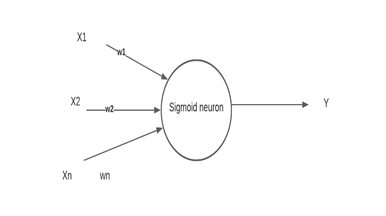
The networks used in artificial intelligence are a combination of blocks arranged in layers. These blocks are called an artificial neurons. They mimic the properties of a natural neuron. One of the neurons is the sigmoid neuron.

This is in general the formula for the sigmoid function. Every neural network consists of weights and biases.

Weights- The scalar quantities which get multiplied to the input

Biases- the threshold quantity above which a neuron fires

NotationMeaning
XInput
YOutput
WWeight
BBias

Working of a neuron

This is the simple representation of a neuron. This is similar to the biological neuron. In this neuron, the inputs are given along with some priority known as weights. The higher the value of the weights, the more prioritized is that input. This is the reason for our brain to choose one activity over the other. Activity is done only if the neuron fires. A similar situation is seen here. The particular activity is forwarded to the next layer only if this particular neuron fires. That is the output must be produced from the neuron.

Condition for the neuron to fire

The neuron will produce an output only if the inputs follow the condition.

As mentioned before, the bias is the threshold value and the neuron will fire only when the value crosses this bias. Thus the weighted sum for all the inputs must be greater than the bias in order to produce an output.

Classification of networks

Every neural network consists of three layers majorly: –

  1. Input layer
    1. Hidden layer
    1. Output layer

Input layer

The input layer consists of inputs in the form of vectors. Images are converted into 1-D vectors. Input can be of any form like audio, text, video, image, etc. which get converted into vectors.

Hidden layer

This is the layer in which all the computations occur. This is generally not visible to the user hence termed as a hidden layer. This layer may be single or multiple based on the complexity of the task to be performed. Each layer processes a part of the task and it is sent to the next layer. Vectors get multiplied with the weight matrix of correct dimensions and this vector gets passed onto the next layer.

Output layer

The output layer gets information from the last layer of the hidden layer. This is the last stage in the network. This stage depends upon the task given by the user. The output will be a 1-D vector. In the case of classification, the vector will have a value high for a particular class. In the case of regression, the output vector will have numbers representing the answer to those questions posed by the user.

The next article is about the feed-forward neural network.

HAPPY LEARNING!!

DEEP LEARNING SERIES- PART 1

Have you ever wondered how the brain works? One way of understanding it is by cutting open the brain and analyzing the structures present inside it. This however can be done by researchers and doctors. Another method is by using electricity to stimulate several regions of the brain. But what if I say that it is possible to analyze and mimic the brain in our computers? Sounds quite interesting right! This particular technology is known as deep learning.

Deep learning is the technique of producing networks that process unstructured data and gives output. With the help of deep learning, it is possible to produce and use brain-like networks for various tasks in our systems. It is like using the brain without taking it out.  Deep learning is advanced than machine learning and imitates the brain better than machine learning and also the networks built using deep learning consists of parts known as neurons which is similar to biological neurons. Artificial intelligence has attracted researchers in every domain for the past two decades especially in the medical field; AI is used to detect several diseases in healthcare.

Sl.noNameDescriptionExamples
1DataType of data provided to inputBinary(0,1) Real
2TaskThe operation required to do on the inputClassification(binary or multi) Regression(prediction)
3ModelThe mathematical relation between input and output. This varies based on the task and complexityMP neuron(Y=x+b) Perceptron(Y=wx+b) Sigmoid or logistic(Y=1/1+exp(wx+b)) *w and b are parameters corresponding to the model
4Loss functionKind of a compiler that finds errors between the output and input (how much the o/p leads or lags the i/p).Square error= square of the difference between the predicted and actual output.  
5AlgorithmA kind of learning procedure that tries to reduce the error computed beforeGradient descent
NAG
AdaGrad
Adam
RMSProp
6EvaluationFinding how good the model has performedAccuracy
Mean accuracy

Every model in this deep learning can be easily understood through these six domains. Or in other words, these six domains play an important role in the construction of any model. As we require cement, sand, pebbles, and bricks to construct a house we require these six domains to construct a network.

 Now it will be more understandable to tell about the general procedure for networks.

  1. Take in the data (inputs and their corresponding outputs) from the user.
  2. Perform the task as mentioned by the user.
  3. Apply the specific relation to the input to compute the predicted output as declared by the user in the form of model by assigning values to parameters in the model.
  4.  Find the loss the model has made through computing the difference between the predicted and actual output.
  5. Use a suitable learning algorithm so as to minimize the loss by finding the optimum value for parameters in the network
  6. Run the model and evaluate its performance in order to find its efficiency and enhance it if found less.

By following these steps correctly, one can develop their own machine. In order to learn better on this, pursuing AI either through courses or opting as a major is highly recommended. The reason is that understanding those concepts requires various divisions in mathematics like statistics, probability, calculus, vectors, and matrices apart from programming.ย 


HAPPY READING!!

Historical facts about India

  • India never invaded any country in her last 10000 years of history.
  • India invented the Number System. Zero was invented by Aryabhatta.
  • The World’s first university was established in Takshila in 700BC. More than 10,500 students from all over the world studied more than 60 subjects. The University of Nalanda built in the 4th century BC was one of the greatest achievements of ancient India in the field of education.
  • Sanskrit is the mother of all the European languages. Sanskrit is the most suitable language for computer software, reported in Forbes magazine, July 1987.
  • Ayurveda is the earliest school of medicine known to humans. Charaka, the father of medicine consolidated Ayurveda 2500 years ago. Today Ayurveda is fast regaining its rightful place in our civilization.
  • Although modern images of India often show poverty and lack of development, India was the richest country on earth until the time of British invasion in the early 17th Century.
  • The art of Navigation was born in the river Sindh 6000 years ago. The very word Navigation is derived from the Sanskrit word NAVGATIH. The word navy is also derived from Sanskrit ‘Nou’.
  • Bhaskaracharya calculated the time taken by the earth to orbit the sun hundreds of years before the astronomer Smart.; Time taken by earth to orbit the sun: (5th century)365.258756484 days.
  • The value of pi was first calculated by Budhayana, and he explained the concept of what is known as the Pythagorean Theorem. He discovered this in the 6th century long before the European mathematicians.
  • Algebra, trigonometry and calculus came from India; Quadratic equations were by Sridharacharya in the 11th Century;The largest numbers the Greeks and the Romans used were 10^6(10 to the power of 6) whereas Hindus used numbers as big as 10^53(10 to the power of 53) with specific names as early as 5000 BCE during the Vedic period. Even today, the largest used number is Tera 10^12(10 to the power of 12).
  • According to the Gemological Institute of America, up until 1896, India was the only source for diamonds to the world.
  • USA based IEEE has proved what has been a century-old suspicion in the world scientific community that the pioneer of Wireless communication was Prof. Jagdeesh Bose and not Marconi.
  • The earliest reservoir and dam for irrigation was built in Saurashtra.
  • According to Saka King Rudradaman I of 150 CE a beautiful lake called ‘Sudarshana’ was constructed on the hills of Raivataka during Chandragupta Maurya’s time.
  • Chess (Shataranja or AshtaPada) was invented in India.
  • Sushruta is the father of surgery. 2600 years ago he and health scientists of his time conducted complicated surgeries like cesareans, cataract, artificial limbs, fractures, urinary stones and even plastic surgery and brain surgery. Usage of anesthesia was well known in ancient India. Over 125 surgical equipment were used. Deep knowledge of anatomy, physiology, etiology, embryology,digestion, metabolism, genetics and immunity is also found in many texts.
  • When many cultures were only nomadic forest dwellers over 5000 years ago, Indians established Harappan culture in Sindhu Valley (Indus Valley Civilization)
  • The place value system, the decimal system was developed in India in 100 BC.

[These facts were recently published in a German Magazine, which deals with World History Facts about India.]

CONCEPT OF THE RENAISSANCE

WHAT do you mean by Renaissance?

REBIRTH

  • Renaissance is a French word meaning โ€œrebirth.โ€ It refers to a period in European civilization that was marked by a revival of Classical learning and wisdom.
  • The word โ€œRenaissance,โ€ whose literal translation from French into English is โ€œRebirth,โ€ appears in English writing from the 1830s. The word occurs in Jules Micheletโ€™s 1855 work, Histoire de France.
  • The word โ€œRenaissanceโ€ has also been extended to other historical and cultural movements, such as the Carolingian Renaissance and the Renaissance of the 12th century.

The Renaissance was a period in Europe, from the 14th to the 17th century, regarded as the cultural bridge between the Middle Ages and modern history. It started as a cultural movement in Italy, specifically in Florence, in the late medieval period and later spread to the rest of Europe, marking the beginning of the early modern age. 

Beginnings

Various theories have been proposed to account for the origins and characteristics of the Renaissance, focusing on a variety of factors, including the social and civic peculiarities of Florence at the time; its political structure; the patronage of its dominant family, the Medici; and the migration of Greek scholars and texts to Italy following the Fall of Constantinople at the hands of the Ottoman Turks.

Many argue that the ideas characterizing the Renaissance had their origin in late 13th-century Florence, in particular in the writings of Dante Alighieri (1265โ€“1321) and Petrarch (1304โ€“1374), as well as the paintings of Giotto di Bondone (1267โ€“1337).

Cultural, Political, and Intellectual Influences

  • As a cultural movement, the Renaissance encompassed the innovative flowering of Latin and vernacular literature, beginning with the 14th-century resurgence of learning based on classical sources, which contemporaries credited to Petrarch; the development of linear perspective and other techniques of rendering a more natural reality in painting; and gradual but widespread educational reform.
  • In politics, the Renaissance contributed the development of the conventions of diplomacy, and in science an increased reliance on observation. Although the Renaissance saw revolutions in many intellectual pursuits, as well as social and political upheaval, it is perhaps best known for its artistic developments and the contributions of such polymaths as Leonardo da Vinci and Michelangelo, who inspired the term โ€œRenaissance man.โ€

IMMUNOLOGY SERIES- PART 9- VACCINES

The previous article was all about the process of inflammation. This article is about vaccines.

The vaccines fall under the type of artificial active acquired immunity. This is artificial because we are giving the vaccine externally and this is active because the body is generating the antibodies/response and it is acquired because we are getting the immunity and it is not present by birth. You must have known what immunity is at least by now.

A vaccine is a biological preparation that provides active acquired immunity to a particular infectious disease. A vaccine typically contains an agent that resembles a disease-causing microorganism and is often made from weakened or killed forms of the microbe, its toxins, or one of its surface proteins (antigens). So these vaccines are nothing but the pathogen itself but it cannot cause any disease, instead, it triggers the immune system.

This is a quick recap of the principle of working on vaccines. The vaccine contains the pathogens as a whole or the surface antigens only. These antigens stimulate the immune system. If the immune system had a memory about this antigen, then it would immediately produce an antibody, and phagocytosis of the antigen occurs by the macrophage aided by the antibody. In this scenario, the antigen is new and there is no memory, therefore the immune system struggles and takes time to produce the antibody.

So the antigen reign over the body and this can lead to inflammation. As a result, some of the symptoms of inflammation like fever, heat, pain in the area of application, and swelling may appear. The chances of them are rare and also severity is less (last for a few hours/days) since the pathogen is attenuated.

Once the immune system produces the correct antibody, phagocytosis of the antigen occurs and hence the causative agent is eliminated from the body (primary response). So if the same or similar pathogen which has disease-causing ability enters into the body, the memory triggers the immune system to produce the correct antibody. So a heightened and rapid response is generated in order to kick away the pathogen quickly (secondary response).

There are three types of vaccines:-

Live- infection is caused without any harm โ€“ measles & polio

Dead- doesnโ€™t last long, requires booster dose- cholera

Microbial products- involves non-infectious pathogen, capsule and toxoid- anthrax, diptheria

Hence using the vaccine as a stimulus, the body is able to generate a response that is stored and can be useful for preventing the disease caused by the pathogen.

There might be an idea to generate vaccines for all diseases so that all humans are protected. But there are some difficulties in this which are listed below:-

There are new microbes being discovered every day and no one knows which microbe can cause disease. There can be multiple microbes causing the same or similar disease. So being immune to one microbe doesnโ€™t mean being immune to the disease

The disease-causing microbe can undergo mutation meaning that there can be changes in the genetic material and hence the antigen can change. In this case, the antibody which was stimulated by the vaccine wonโ€™t work. A suitable example is a common cold, it is impossible to produce a vaccine that covers all mutants of viruses

The pathogen has to be genetically modified so as to remove its disease-causing ability which is easy to say but difficult to implement

Also, it is important that the antigen chose for the vaccine must be close to that of the original causative agent of the disease. If the original pathogen is not so close to that of the vaccine, then it will not work

Hence all these above points explain the difficulties in producing a vaccine. Despite these many research organizations in many countries have produced vaccines especially for the pandemic and dreadful diseases like the COVID-19, hepatitis, polio, etc. in which some vaccines provide lifetime immunity to some of the diseases. We must take a minute to appreciate those who have done immense work and their contribution is stopping some of the dreadful diseases.

With this, we come to the end of the series. I hope that all the concepts explained in this were simple and clear and also would have inculcated an interest in immunology. By now, it would be clear how the immune system protects us from several microbes and diseases.

HAPPY LEARNING!!

IMMUNOLOGY SERIES- PART 8- INFLAMMATION

The previous article dealt with the types and functions of immunoglobulin. This article provides a complete explanation of the process of inflammation.

Inflammation is the process of protection which was seen as one of the six mechanisms of innate immunity.

Inflammation is one of the bodyโ€™s responses to the invasion of foreign particles. This is an important process in the human body that occurs to drive away from the pathogen. Inflammation is one of the stages seen in healing. Some of the changes that can be seen in the target site are:-

  • Changes in blood flow (mostly blood loss)
  • Increase in platelets (to plug the damaged vessel)
  • Increase in immune cells
  • Supply of nutrients

The word inflammation refers to a burning sensation. Hence there are five cardinal signs in inflammation namely:-

  • Rubor (redness)
  • Tumor (swelling)
  • Calor (heat)
  • Dolor (pain)
  • Functioleasia (loss of function)

These cardinal signs as well as the changes occur due to some mediators which are basically chemicals and also due to the action of various immune cells.

Mediator nameItโ€™s effect
Bradykinin, histamine, serotoninIncrease permeability
ProstaglandinDecreases blood pressure
CytokinesProduce fever
Toxic metabolitesDamage tissue

This inflammation can be either acute or chronic. As seen earlier, acute stays for a shorter time but produces more vigorous pain whereas chronic stays for a longer time with less vigorous pain. If the causative agent has been driven away then healing occurs either by complete restoration or scar formation. There are chances that the acute inflammation can become chronic which can be worse. It can lead to several diseases and complications.

The pathogen in order to establish its supremacy in the human body, it has to pass through the epidermis which is the outermost layer of the human body. This is known as SALT skin-associated lymphoid tissues. Hence T and B lymphocytes are prominent in the skin. Most of the pathogens get destroyed in this stage. Let us assume that our pathogen is strong and it had passed through it. The next layer it encounters is the dermis. As we go deep inside the skin, more and more immune cells get involved. In the dermis the following immune cells are seen:-

immunity in the skin
  • Macrophage
  • NK cells
  • Mast cell โ€“ produce histamine and serotonin
  • T helper cells โ€“ it provides help to other immune cells

The next stage is the hypodermis which has a large number of macrophages and neutrophils that phagocytosis the pathogen. Hence these following processes help in defending against the pathogens.

When a particular pathogen say a virus enters the cell, the immune system will get alerted through signals and they immediately send the correct immune cell to the target site. This occurs since either the immune system gets information naturally or artificially through previous infection or vaccine. This leads to the classification of immunity in humans.

So now we will consider a new and strong pathogen that has not been recognized by the immune system and has dodged those barriers and has entered inside the skin. Now it multiplies at a rapid rate and colonizes that particular area. Hence the cells in that area start to die and they release several signals like TNF, cytokines, interleukins. This gets combined with other signals like histamine, serotonin released from immune cells. Some of these signals produce direct effects on the target site as seen in the table.

An array of these signals triggers the immune system and it, in turn, starts the inflammation process and the cardinal signs are observed. This process lasts for some time and as it occurs; the pathogens decrease in number through phagocytosis and subsequently vanishes from the body. This can be observed by a decrease in the signs. After this process, the targeted site starts to heal and the immune system learns how to defend the pathogen when it enters the next time.

Now the damage caused by the pathogen has to be repaired by the process of healing.

  1. Haemostasis
  2. Inflammation
  3. Proliferation
  4. Maturation/Remodelling

The pathogen will rupture and damage the outer layer of blood vessels known as endothelium resulting in blood loss. Hence the blood vessels start to contract to prevent further loss. Also, a plug is formed at the site of leakage by the platelets. Then the process of inflammation occurs; clearing out the dead cells and the pathogen. In the proliferative stage, new blood cells are formed by a process known as neovascularisation and the new epithelium is formed. In the last phase, the newly formed cells become stronger and flexible. Hence the combination of these steps brings the affected area back to normal.

Hence the inflammation is an essential process in the immune system and it has to occur to prevent the conspiracy of the microbes. The next article is about vaccines and their principle of working.

HAPPY READING!!!

WINTER SEASON

Winter is the coldest season of the year in some parts of the northern and southern hemisphere, this season is characterized by falling snow and freezing cold temperatures, usually exacerbated by strong winds,… The sun comes out very late on winter mornings and when it does is not hot.

  1. Winter is the coldest season which starts in the month of December and last till mid of March.
  2. After autumn season winter season arrives, mainly due to the orientation in the axis of earth away from the sun.
  3. December and January are the coldest months of winter season.
  4. Winter season have temperature dropping of 3 degree to 5 degree in night in northwest region.
  5. During this season high speed of cold wings blows from north region in peak months.
  6. Winter seasons leads to the formation of thick fog because air is cooled to the fog droplets sue to low temperature.
  7. During winter season, nights become long and day becomes of shorter duration.
  8. Winter season is an ideal season for tours and travels to hilly region.
  9. It is the season of healthy fruits and green leafy vegetables.
  10. This season comprises of snowfall, winter storms, old rains, frost, fogs, and very low temperature most of the time.

Major festivals like Deepawali, Makar Sankranti, and Republic day fall in winter season. People enjoy many activities in hilly areas like ice skating, skiing, ice hockey, etc… Winter season gives relief from heat and humidity after long summer. Many people plan vacation and adventurous trips to tourist places during winter season.

Various beautiful birds like Siberian cranes and blue throat migrate to India during winter season. Rain during winter season has disadvantages too as it destroys crops, vegetables and fruits. Day during winters are pleasant because of the low heat intensity of sun. Excess cold during winter season also brings a period of discomfort to old and poor people.

I personally love winter season. This season brings a lot of happiness to all of us. All people get the chance to eat fresh fruits, vegetables and more. Apart from all of this things lots of flowers bloom during this winter season.

Photo by eberhard grossgasteiger on Pexels.com

The season are defined as spring (March, April, May), summer(June, July, August), Autumn( September, October, November) and winter (December, January, February) .

Antarctica is certainly the coldest country in the world , with temperature sinking as low as -67.3 degree celsius.

YAKUTSK:

Yakutsk, Russia – The capital city of the vast (1.2 million square miles). Siberian region known as the Sakha Republic, Yakutsk is widely identified as the world’s coldest city. ” No other place on the Earth experiences this temperature extreme”.

HARBIN:

Under the koppen climate classification , Harbin features a monsoon-influenced , humid continental climate (Dwa). Due to the Siberian high and its location above 45 degree north latitude, the city is known for its cold weather and ong winter.

Dras:

The coldest place in India. Dras is a lonely town in the infamous Kargil district of Jammu and Kashmir, popularly known as ‘The gateway to Ladakh’ . Dras is the coldest place in India and often touted as second to the coldest place inhabited on Earth.

LEH:

Leh, no doubt, Leh is one of the coldest places to visit in India. Perched in the newly formed Union Territory of Ladakh, the temperature is known to drop to as less as -13 degrees celsius!.

INTRESTING ABOUT WINTER- Delhi is the city which is coldest in December one

Delhi, which is shivering under on intense spell of cold wave for two weeks, experienced its coldest recorded December day on Monday, with the maximum temperature being at just 9.4 degrees celsius, the IMD announced.

WINTER FORMS OUR CHARACTER AND BRINGS OUT OUR BEST ” .

Mini Movie Review|It touched the hearts but not the brains

A character played by Kirti Sanon personifies surrogacy through Mimi who was aspired to chase her dreams but couldn’t fulfill it.

Nothing like you are expecting!!

Cast: Kirti Sanon, Pakaj Tripathi, Sai Tamhankar, Supriya Pathak, Manoj Pahwa

Director: Laxman Utekar

In a patriarchal society like India, women have always been under the umbrella of the community. It’s barely seen in the families who support a girl’s dream and accept her to be a dancer.

The movie begins with the introduction of a foreign couple who came to India in the search of a surrogate. After long hours of work, they were finally able to find a girl with the help of the driver (a role played by Pankaj Tripathi) in a hotel. Mimi(the girl) was a dancer and getting influenced by its flexibility they decided to offer her 20 lakhs to be the surrogate. Being an ambitious 25-year old woman agrees to take the risk for the same of becoming a famous Bollywood actress. She decides to live at her friend’s house by convincing the parents saying, she is going to a film shoot. With the required procedure, Mimi becomes the surrogate, and for the first four months, she was having a good time with the pregnancy. However, after eight months tests revealed that the baby is suffering from some mental disorder. This news outraged the couple and they decided not to accept the baby after birth and told Mimi to abort. This became the turning point in her life. She sacrificed all her dreams by deciding to give birth to the child and raise him. Later, the couple returned to her after 2 years when they came to know that the baby was born healthy. Mimi refused to give the child back and in the end, they decided to adopt a girl.

Message

  • A girl is also born with a dream and her character is not decided with what she pursues but what she is.
  • The support of family is crucial in the darkest times. Mimi faced all the criticisms from society but her parents never let her alone and accepted her as she was.
  • Killing is not an option. It’s not the fault of a child to be born unhealthy.
  • One loyal friend is more important than a group of unloyal ones. The driver and the friend were with Mimi till the end, helping her go through all the difficulties with a smile.

Every coin has two sides. Even though the movie won the hearts of the audience, it faced several criticisms like not following the laws related to a sensitive topic of surrogacy, using the term casually, and disrespect towards the decision of abortions.

It played with the emotions well, yet failed to manipulate the thoughts.

ARE COMPUTERS REALLY INTELLIGENT?

When it comes to the possibilities and possible perils of artificial intelligence (AI), learning and reasoning by machines without the intervention of humans, there are lots of opinions out there. Only time will tell which one of these quotes will be the closest to our future reality. Until we get there, itโ€™s interesting to contemplate who might be the one who predicts our reality the best.

โ€œThe development of full artificial intelligence could spell the end of the human race. It would take off on its own, and re-design itself at an ever-increasing rate. Humans, who are limited by slow biological evolution, couldn’t compete, and would be superseded.โ€โ€” Stephen Hawking

Will computers eventually be smarter than humans? 
 
Everyone is talking about artificial intelligence (AI) โ€“ in the media, at conferences and in product brochures. Yet the technology is still in its infancy. Applications that would have been dismissed as science fiction not long ago could become reality within a few years. With its specialty materials, the Electronics business sector of Merck is contributing to the development of AI. 

HOW SMART ARE YOU?

Whoโ€™s smarter โ€” you, or the computer or mobile device on which youโ€™re reading this article? The answer is increasingly complex, and depends on definitions in flux. Computers are certainly more adept at solving quandaries that benefit from their unique skill set, but humans hold the edge on tasks that machines simply canโ€™t perform. Not yet, anyway.

Computers can take in and process certain kinds of information much faster than we can. They can swirl that data around in their โ€œbrains,โ€ made of processors, and perform calculations to conjure multiple scenarios at superhuman speeds. For example, the best chess-trained computers can at this point strategize many moves ahead, problem-solving far more deftly than can the best chess-playing humans. Computers learn much more quickly, too, narrowing complex choices to the most optimal ones. Yes, humans also learn from mistakes, but when it comes to tackling the kinds of puzzles computers excel at, weโ€™re far more fallible.

Computers enjoy other advantages over people. They have better memories, so they can be fed a large amount of information, and can tap into all of it almost instantaneously. Computers donโ€™t require sleep the way humans do, so they can calculate, analyze and perform tasks tirelessly and round the clock. On the other hand, humans are still superior to computers in many ways. We perform tasks, make decisions, and solve problems based not just on our intelligence but on our massively parallel processing wetware โ€” in abstract, what we like to call our instincts, our common sense, and perhaps most importantly, our life experiences. Computers can be programmed with vast libraries of information, but they canโ€™t experience life the way we do.

Some of thatโ€™s rethinking how we approach these questions. Rather than obsessing over whoโ€™s smarter or irrationally fearing the technology, we need to remember that computers and machines are designed to improve our lives, just as IBMโ€™s Watson computer is helping us in the fight against deadly diseases. The trick, as computers become better and better at these and any number of other tasks, is ensuring that โ€œhelping usโ€ remains their prime directive.

The important thing to keep in mind is that it is not man versus machine. โ€œIt is not a competition. It is a collaboration.”

IMMUNOLOGY SERIES- PART 7- TYPES OF IMMUNOGLOBULIN

The previous article dealt in detail with immunoglobulin and how they help in phagocytosis. This article is about the types of immunoglobulins, their functions.

The types of immunoglobulins are based on the types of light and heavy chains. There are two types of light chains namely the kappa and the lambda. An immunoglobulin contains either kappa (K-K) or lambda (L-L) but does not have a mixture of both (K-L not possible). About 60% of the immunoglobulins in humans have kappa chains.

So, the classes of immunoglobulins are based on the heavy chain. So based on this condition, there are five classes of immunoglobulins namely:-

  • Immunoglobulin G (IgG) โ€“ gamma
  • Immunoglobulin M (IgM) โ€“ mu
  • Immunoglobulin A (IgA) โ€“ alpha
  • Immunoglobulin D (IgD) โ€“ delta
  • Immunoglobulin E (IgE) โ€“ epsilon

These immunoglobulins have certain configurations and play different roles in the human body. The immunoglobulin G is present the most. It constitutes about 80% of the total immunoglobulin. These are mostly present in the blood, plasma, and other body fluids. This immunoglobulin has the lowest carbohydrate content when compared to the rest. This immunoglobulin has a half-life of 23 days which is the longest of all. Some of the unique features and functions of this immunoglobulin:-

  • This is the only immunoglobulin which can cross the placenta (this is a unique feature because this immunoglobulin provides immunity to the foetus inside the womb and also after birth for some months. Presence of others may indicate infection)
  • This helps in killing bacteria and viruses by opsonisation (the process of covering the pathogen with a protein coat such that the pathogens become more presentable to the immune cells)
  • Neutralize toxins
  • Activate complement by classical pathway (The complement system, also known as complement cascade, is a part of the immune system that enhances the ability of antibodies and phagocytic cells to clear microbes and damaged cells from an organism, promote inflammation, and attack the pathogen’s cell membrane)
  • Unique catabolism (breaking down of molecules) based on concentration
  • There are four sub classes (G1, G2, G3 and G4) out of which 1,3 and 4 cross the placenta and offer immunity
  • Also involves in the Rh immunization (there are two typesโ€™ Rh+ve and Rh-ve based on the presence of Rh factor in blood). The mother being Rh+ve and child the opposite is not a problem in the first pregnancy but can be fatal in second, killing the foetus.

The immunoglobulin M constitutes about 5-10% of total proteins. This is a pentamer structure with a J chain. This weighs about 900000-1000000 and is the heaviest of all. They have 5 days of half-life. Some of its features-

  • Presence in newborn indicate congenital infection as they donโ€™t cross placenta
  • Short lived, so their presence indicates recent infection
  • First Ig to participate in primary response
  • Opsonisation
  • classical pathway
  • bacteria agglutination
  • Play an important role in ABO blood grouping (discovered by Landsteiner). There are 8 types of blood groups based on antigen, antibody and Rh factor

Immunoglobulin A is also known as the secretory immunoglobulin and is mostly present in body secretions (tear, saliva, sebum, mucous, and milk) in which they are dimer and are monomer in blood. They constitute 10-15% of the proteins. They also have a J chain and secretory piece. Their half-life is 6-8 days.

  • The secretory piece protects the Ig from enzymes and juices
  • Complement activation by alternate pathway
  • Promote phagocytosis
  • Intracellular microorganism killing
  • First line of defense against some microbes

Immunoglobulin E is a dimer similar to IgG. This is present in low concentrations (about 0.3) and has the weight of about 1,90,000. These have a half-life of about 2 days and can become inactivated at 56 C.

  • Present extra-cellularly
  • Associated with allergic reactions like asthma, hay fever and anaphylactic shock
  • Bind with the Fc of mast cells and basophils resulting in degranulation and release histamine which causes allergy
  • Mediate the some immunity reactions
  • No complement activation
  • Provide immunity against helminthes

The last is immunoglobulin D.  It is present in low concentrations and on the surface of B lymphocytes. They constitute 0.2% of proteins. They have a half-life of 3 days. The IgM and IgD bind on the B lymphocyte to help in antigen identification.

Hence these were the different types of immunoglobulins and the mechanisms by which they help with immunity. The next article is about the process of inflammation.

HAPPY READING!!

IMMUNOLOGY SERIES- PART 6- IMMUNOGLOBULIN

The previous article was about the different types of immune cells. This article is about a special molecule in immunity known as immunoglobulin.

There might be a question that what is so special about this immunoglobulin. There is a reason for this. These molecules play an important and inevitable role in the phagocytosis of pathogens. To understand this, it is essential to know about immunoglobulins.

The immunoglobulin is a gamma globulin, a specialized group of proteins (glycoprotein) produced in response to pathogens. It is produced by the plasma cells (a globulin protein present in the plasma). These constitute 25-30% of the blood proteins.

There are two important terms that are more commonly known by the most, they are the antigen and the antibody. The antigen is the molecule present on the surface of the pathogen and can stimulate an immune response. There is a small part of the antigen called the epitope which interacts with the antibody.  The epitope is known as the antigen determinant site. An antigen can have unlimited epitopes.

On the contrary, the antibody is the molecule produced in response to the antigen in order to kick it away. The part of the antibody which interacts with the antigen is called a paratope. An antibody must have at least 2 paratopes. These antibodies belong to the immunoglobulins. All antibodies are immunoglobulins but not immunoglobulins are antibodies. To understand how the antibody helps in immunity, it is essential to understand the structure of an antibody/immunoglobulin. The image below shows the general structure of an immunoglobulin:-

There are two chains in an immunoglobulin namely the light chain and heavy chain. The light chain has 212 amino acids (the building block of protein) and the heavy chain has 450 amino acids. Each chain has two types namely the constant and variable. These regions are based on the amino acid sequences. Half of the light chain (1 out of 2) is constant and the rest is variable. A quarter of the heavy chain (1 out of 4) is variable and the rest is constant. These are linked by two types of sulfide bonds namely the intra (H-H AND L-L) and inter (H-L). These molecules contain carbohydrates (CHO) hence these are called as glycoproteins.

The tip of the variable regions of the heavy and light chain is hypervariable in nature and these constitute the antigen-binding site (Fab). These are hyper-variable because they have to produce amino acid sequences complementary to that of the antigen so that they can interact together. The other site is called a crystallizable region (Fc).

Having known all this, now it will be convenient to explain the process by which the antibody plays in the prevention of infections.

There are millions of substances that pass through the blood every day. So there must be a criterion/substance to identify them whether they are pathogenic. This is where antigen comes to play. These antigens present on the surface of the pathogens alert the immune system which then identifies this as a pathogen. So in response to the antigen, a suitable antibody is secreted and deployed to the target site. On reaching the antigen, the Fab region binds with the antigen.

The ultimate aim of the immune system is to abolish the pathogen and one way is by phagocytosing them. This is done by the macrophages. But it is essential for them to identify the substance before engulfing it. This is where the antibody comes to play. The Fc region of the antibody combines with the receptor of the macrophage. This facilitates the process of phagocytosis.

Hence the antibody acts like a bridge between the source (antigen) and the destination (macrophage) aiding in phagocytosis. This is essential because in most of the cases the macrophages, it is difficult to identify the non-self-objects and this is where antibody helps.

In the case of the new pathogen, the antigen is new, and therefore their might not be a suitable antibody. In that case, the macrophage cannot phagocytocise the pathogen and it reigns in the body causing infection and disease.

The next article is about the types of immunoglobulins.

HAPPY LEARNING!!

TIPS TO STAY FOCUSED

โ€œAlways remember, your focus determines your reality.โ€ โ€” George Lucas

Unless you have a strong desire to learn the information or develop a skill, it can be hard to focus all of your attention in one place. If you are impatient to learn or master anything, it wouldn’t benefit you more. If you are restless, you will make more mistakes and you will be more distracted as your whole focus will be on result, not on your action.

Instead, remain calm and be devoted to your work.

A mind which is calmer helps you to concentrate better, attaining undivided focus and it makes you proactive.

Television, smart phones, social media, friends, and family can all distract you from your goal of doing well in school. Create an environment that helps you focus. Set a schedule that maximized your study time. Try different study techniques and take breaks so you don’t become too overwhelmed. Here are some of the best tricks that scientists have come up with to help you increase your focus in studying.

  1. Get rid of distractions. Choose the right spot. In order to concentrate, you must eliminate those things that you know will distract you. Put up mobile devices. Turn off the TV. Close other pages in your web browser. Sit away from people making loud noises.
  2. Play music without lyrics. Some people cannot stand silence. They need to have background noise to help keep themselves motivated. Consider playing classical music softly. For some people, music helps them concentrate. For some, it doesn’t. Try it out and see what works best for you. A little something in the background can make you forget that you’re studying instead of out having fun.
  3. Come prepared. Be sure to have all the materials needed to work. Have pencils, pens, highlighters, paper, textbooks, calculators, or whatever else will help you finish the task. Organize the area. A clean space will mean less distractions too. Your goal should be to take care of everything outside of studying before you sit down to focus. If not, youโ€™ll just end up getting up repeatedly. Having to stop and start takes more time than continuously working.
  4. Find a place where you can โ€œunplugโ€. One of the biggest complaints that teachers have about their students is their inability to concentrate on a subject. Our constant use of social media and personal devices like cell phones divides our attention and makes it more difficult to concentrate.
  5. Learn when to say no. Often times, people find it difficult to concentrate on their studies because they are overextended with other obligations. If this is you, donโ€™t be afraid to tell people no. Just explain that you need to study and wonโ€™t have the time or energy to do so, if you help them out.

Ultimately, thereโ€™s no quick, one-size-fits-all solution to staying focused while studying. Different methods and tools will work better for some than others. However, with a little trial and error and the tools and techniques above, you can create a routine of focused studying that works best for you.

IMMUNOLOGY SERIES-PART 5- INTRODUCTION TO THE IMMUNE CELLS

The previous article was about the acquired immunity. This article is all about the immune cells, the warriors of the human body.

These cells play a major role in protecting the body from infections. Some of them contribute directly and some contribute indirectly. Despite the methods, all of them are required in optimum amounts so as to live a healthy life.

All of these cells are derived from a specific type of cell found in the blood. The blood is a freely flowing interstitial fluid that transports oxygen, nutrients, etc. to the cells of the body. There are two components in the blood in which the first one is called plasma. The plasma is the liquid carrying water, salts, enzymes, and proteins. There are three specialized proteins in the plasma-

Albumin- to maintain water balance

Globulin- for immunity (it is a part of immunoglobulin)

Fibrinogen- for clotting

Hence the plasma also contributes to immunity. This plasma constitutes about 55% of the blood. The rest 45% of the blood is constituted by the formed elements or corpuscles. There are three elements in it namely-

Erythrocyte or Red Blood Corpuscle- transport of oxygen

Leucocyte or White Blood Corpuscle- fight infections

Thrombocyte or platelets- for clotting

Out of these, the WBC is the one primarily contributing to immunity. A healthy person must have a WBC count from 4000-11000. Count less than 4000 means leukopenia meaning that the immune system is weak. If the count is more than 11000 then it means the condition of autoimmunity known as leucocytosis. There are some further classifications in the WBC which are displayed through the flowchart below.

There are two types of cells in the WBC namely the granulocytes and agranulocytes.

The granulocytes, as the name specifies have granules in their cytoplasm. There are three different cells in this.

The neutrophil constitutes to about 55-70% of the total WBC and they are ones involved in most of the fights against the infections. These defend against bacterial and fungal infections. These cells are mostly found in the epidermal regions and are in the first line of defense.  These cells engulf the pathogens by the process of phagocytosis. These cells have multiple nuclei hence these are also known as PMN (Poly Morpho Neutrophils). Neutrophils help prevent infections by blocking, disabling, and digesting off invading particles and microorganisms. They also communicate with other cells to help them repair cells and mount a proper immune response. The death of these cells often results in the formation of pus (suppuration).

neutrophil

The eosinophil constitutes about 2-4% of the total WBC. These cells are very little in the body but can increase in the case of allergic reactions, parasite infection, and so on. The functions of the eosinophil include movement to inflamed areas, trapping substances, killing cells, anti-parasitic and bactericidal activity, participating in immediate allergic reactions, and modulating inflammatory responses.

eosinophil

The basophil is present in the least concentration of all (0.2%) in total WBC. These cells play an important role in allergic reactions in which their count can increase. The basophil contains inflammatory mediators like histamine and heparin. The release of the compounds results in dilation of the blood vessels. Hence these cells regulate the inflammation process.

The agranulocytes are those which lack granules in their cytoplasm. There are two types in this. The lymphocyte can be called as the memory of the immune system. There are two types of lymphocytes namely T and B lymphocytes. These lymphocytes recognize the incoming pathogens and based on their memory it produces a suitable response in a short amount of time. These cells are involved in the secondary response in the acquired immunity.

B cells make antibodies that can bind to pathogens, block pathogen invasion, activate the complement system, and enhance pathogen destruction. The T cells mostly known as CD4+ T helper cells produce the cytokines (proteins in cell signaling) and coordinate with the immune system. There is another form called CD8+ cytotoxic T cells which is opposite to the previous type, they help in the destruction of tumors and pathogens.

The monocyte is the largest of all the cells in WBC. They function similarly to that of the neutrophils (phagocytosis of the pathogens). These cells present the pathogen to the memory cells upon which a response is generated. Once they leave the blood, they turn into macrophages which help in clearing cell debris and killing pathogens. These are known as the vacuum cleaners of immunity.

Hence all these cells work in different mechanisms and they coordinate together to make sure that we do not fall prey to the disease-causing microorganisms.

HAPPY LEARNING!!

DEBATE CONCEPTS IN OSTEOARTHRITIS

This article deals with some of the concepts related to the progression of osteoarthritis. These statements were given by prominent researchers and resulted in a debate between two prominent groups of researchers against each other. All of these took place actively in the 19th century where the publications of research scholars were opposed to that of the scholars in the other group.

William Bauer told that mechanical trauma can result in OA directly or indirectly. By the 20th century ideologies were majorly split into two โ€˜inflammationโ€™ and โ€˜no inflammationโ€™. Henry Fuller and Robert Todd suggested that OA occurred due to disruption to nutrients required for knee development and doesnโ€™t occur through inflammation. On the other hand, Garrod and others stated that OA is partly degenerative and partly inflammative. Hence the study for OA continued under these two domains and each group of scientists trying to prove the other is false. But this situation can be compared to two sides of a coin where both the situations cannot be neglected. Hence both the domains of OA cannot be neglected.

Some others say that OA is a neurogenic immune homeostatic disorder. Garrod in 1988 stated that OA is associated with lesions in CNS in a peculiar manner. CNS refers to the central nervous system which constitutes the brain and spinal cord. The brain is the mastermind of the body which generates electrochemical signals to simulate several neurons in the body. The spinal cord is known as a warehouse of reflexes. Reflex is an involuntary (cannot be controlled by conscience) rapid sequence of actions. Reflex can be best explained by several experiments.

When someone comes to hit you; you will either duck or catch his hand spontaneously and this is known as a reflex and the spinal cord or vertebral column is responsible for this.

The reflex of the knee is tested by the doctor who takes a rubber mallet and taps it on the knee and what interestingly happens is that the knee starts to retract and the patient can feel the pain. In case of OA or any knee-related diseases, the patient cannot experience any pain and hence the doctor understands that there is some abnormality in the knee. Hence we can understand that there is a connection between the kneeโ€™s ability and CNS and an interruption in this connection can lead to knee diseases.

We have to understand that this is a basic relation and there are other complex associations between them and require more complex methods like electrophysiology and pharmacology to understand them. Later it was proposed that changes in the sympathetic nervous system can also lead to OA.

The sympathetic nervous system is a part of the autonomic nervous system. This can be correlated to the word โ€˜increaseโ€™. The sympathetic nervous system works in response to stimuli like emotions and increases some parameters of the human body like heart rate, eye dilation, blood sugar, blood pressure, etc. this proposal paved the way for using micro-circuitry to correct it.

There is also another field on which the world is divided into two namely โ€˜nociceptiveโ€™ and โ€˜neuropathicโ€™ where nociceptive refers to pain resulted due to receptors. These are present at target and send signals to the brain via the spine more or less like the reflex. On the other hand neuropathic refers to the condition where pain occurs due to nerves. The following table shows the difference between these two. 

NociceptiveNeuropathic
Receptor-mediated painNerve mediated pain
Doesnโ€™t affect nervesAffects the nerves
Due to painful stimuliDue to inflammation

However, some of the debate topics have not been resolved even till now but a lot of research articles about the progression of the disease and its underlying phenomena have been published. This is one of the cases in which a debate has done some good to the field of science!

HAPPY READING!!

How to become A Leader

Photo by Rebrand Cities on Pexels.com

Transformational leaders are positive, empowering, and inspiring. They value followers and inspire them to perform better. So what can you do to embrace these valued leadership qualities and become a stronger and more effective leader?

Understand Your Leadership Style: Understanding your currentย leadership styleย is essential. What are your strengths? Which areas need some improvement? One way to start assessing your skills is to take thisย leadership style quizย to get a general idea of how you lead.

Once you have completed the quiz, read about the major characteristics of your dominant style. Are these qualities helping or hindering your leadership? Once you’ve determined which areas need some work, you can begin looking for ways to improve your leadership abilities.

Encourage Creativity: One way to foster creativity is to offer challenges to group members, making sure that the goals are within the grasp of their abilities. The purpose of this type of exercise is to get people to stretch their limits but not become discouraged by barriers to success.

Show Passion: You can develop this leadership quality by thinking of different ways that you can express your zeal. Let people know that you care about their progress. When one person shares something with the rest of the group, be sure to tell them how much you appreciate such contributions.

Communicate Effectively: Another important quality of transformational leadership involves a focus on providing one-on-one communication with group members. Transformational leadership is effective when leaders are able to communicate their vision to followers, who then feel inspired and motivated by this vision.

Part of the trust-building process is creating an environment where itโ€™s safe to take risks and allows you and your employees to comfortably exchangeย candid, honest and direct feedbackย without the fear of being punished.

Itโ€™s important you provide ample channels for two-way communication between employees and managers, and also solicit and reward them for their ideas and contributions. This facilitates progress toward reaching organizational goals. As a leader, you should foster trust and cooperation. Leaders can paint a vision of the future that inspires the team to do whatever it takes to get there.

And as a coach, you have to inspire action that will help execute that goal. Reinforce an honest and candid environment without taking information personally. Equally treat everyone like you would want to be treated.

Give credit where credit is due. Say โ€œthank you,โ€ be encouraging, and try to put yourself in their shoes to better understand their everyday challenges.

You have to support and assist your team. Give them the confidence to take risks and speak up without being punished.

When the mistake is yours, take ownership. Donโ€™t try to blame someone else, the situation or a circumstance.

Be credible โ€“ people want to follow an honest leader. Be candid about why things didnโ€™t work out, learn from the mistake and move on. People will trust someone who actively displays honesty. As you work toward developing some of these leadership qualities, don’t forget to look to your followers for feedback and inspiration. Pay attention to the things that have been effective in the past and always be on the lookout for new ways to inspire, motivate, and reward group members.

OSTEOARTHRITIS GRADING SYSTEM

Osteoarthritis can be mainly classified into two. They are primary and secondary. The criterion for this classification is based on the different types of risk factors. Primary OA is mainly due to age where the reason for cartilage breakdown is not known or maybe due to genetics. Secondary OA is due to direct injury through sports or trauma, stress, inflammation, or other metabolic diseases. In this case, the cause may localize.

OA grading

Grading is the process of classifying the disease based on its extent or severity. OA has been graded into 5 from grade 0 to grade 4

Stage numberCondition
 0Normal
1Minor
2Mild
3Moderate
4Severe

This was proposed by Kellgren and Lawrence and it is known as KL grading. The five grades have been proposed based on radiographic analysis of subjects. This was accepted as a standard measure by WHO in 1961. The grading has been done based on the narrowing of joint space and the formation of osteophytes.

  • grade 0 (normal): no changes in knee x-ray
  • grade 1 (minor): minimalistic joint space narrowing with possible osteophyte lipping
  • grade 2 (mild): definite osteophytes and  joint space narrowing
  • grade 3 (moderate): multiple osteophytes, definite narrowing of joint space and some sclerosis and possible deformity of bone ends
  • grade 4 (severe): large osteophytes, marked narrowing of joint space, severe sclerosis and definite deformity of bone ends

Grade 0

Grade 0 is considered normal. The subject will not exhibit any features for OA. The x-ray image from this grade is taken as a standard and the other grades are compared with this grade.

Credit:- Hรคggstrรถm, M (2014). “Medical gallery of Mikael Hรคggstrรถm 2014“. WikiJournal of Medicine 1 (2). doi:10.15347/wjm/2014.008. ISSN 2002-4436. Creative Commons CC0 1.0 Universal Public Domain Dedication
X-ray of a healthy knee 
Credit:- Hรคggstrรถm, M (2014). “Medical gallery of Mikael Hรคggstrรถm 2014“. WikiJournal of Medicine 1 (2). doi:10.15347/wjm/2014.008. ISSN 2002-4436. Creative Commons CC0 1.0 Universal Public Domain Dedication
This is the joint space which is observed in healthy patients.

Grade 1

Grade 1 is known as the minor. It can be considered as the initial grade. The joint space has just started to decrease. Osteophyte refers to excess bone growth. It is also known as bone spurs since spur refers to kind to sharp material. This bone growth can be observed as sharp spikes. Here there is very minimal growth of excess bone. Bone spurs occur only at the bones adjacent to the joint. There will be very minor loss of cartilage but this does not contribute to the narrowing of the joint space. Subject in this stage is not confirmed with osteoarthritis. However, subjects having any of the risk factors become more prone to the disease

Grade 2

Grade 2 is known as mild. In this grade, the narrowing of the joint space is more and is visible through the x-ray. There will be also more formation of osteophytes. This grade can be considered as the precursor to many complications like bone dislocation and rubbing. None of these complications are seen in this grade but these complications are soon to occur. The subject in this grade is confirmed with osteoarthritis. Special care has to be taken by those in this grade and through proper medications, they can prevent those further complications.

Grade 3

Grade 3 is known as moderate. Obvious damage occurs to the cartilage and the joint space narrows even at a faster rate. Swelling of the joints starts to occur in this stage. Erosion of cartilage becomes prominent in this stage. The joints become rougher due to spurs leading to stiffness. Inflammation occurs at regular intervals. Subjects can experience popping sounds from the knee.

Grade 4

Grade 4 is known as severe. It is the worst and highest grade of all. The changes become prominent and occur at larger scales. There will be no gap literally meaning the joint is absent. The bones start to rub over each other causing pain. The joint becomes stiff like a rock. The cartilage wears down and maximum growth of osteophyte is seen. Various cytokines are released at cartilage resulting in further death. Life would be dreadful for those in this grade. The arrow in the given X-ray indicates the bones are touching each other and there is no gap in between them.

Grade 4 osteoarthritis
Courtesy: – James Heilman, MD Osteoarthritis of the left knee. Note the osteophytes, narrowing of
 the joint space (arrow), and increased subchondral bone density (arrow). the joint space (arrow), and increased subchondral bone density (arrow). Creative Commons Attribution-Share Alike 3.0

HAPPY READING!!

THE DREADFUL DISEASE FOR THE AGED- THE OSTEOARTHRITIS

Osteoarthritis is the most well-known type of joint pain, influencing a huge number of individuals in the world. It occurs as a result of the wearing down of the cartilage that cushions the ends of your bone over time. It is a complex disease that integrates biomechanics and biochemistry associated with the knee. This is the standard way of defining OA which will be difficult to understand. Hence let us try to understand what OA is. The best way is by splitting the word and analyzing it part by part

Osteo- bone

Arth- joint                        

It is- inflammation    

Knee, Old, Care, Injury, Pain, Knee Pain
x-ray of the osteoarthritic knee joint


As mentioned earlier, the unit of bone is called osteon and any word ending with itis refers to inflammation. Also, arthro term refers to joints in general. Hence the combination of the terms corresponds to inflammation of bones in the joint. This rather sounds simplified. The previous definition had complex terms like biomechanics and biochemistry. Biomechanics refers to the study of movement in living beings. Biochemistry refers to the study of the reactions occurring in living things. So in short, osteoarthritis is such a disease that results in inflammation of joints that occur due to wearing down of the bones surrounding the joint hence affecting the movement and chemical reactions which used to occur properly during normal conditions.

Osteoarthritis can occur in any joint in the human body like elbows, hips, knees, etc. Since our primary focus is on the knee, we will take a deep dive into it. In view of its expectancy and the tolerance that goes with sickness in the knee osteoarthritis represents more prevalence with daily activities like climbing steps and walking when compared to other diseases. Osteoarthritis is the most standardized reason for total knee replacement. As a result of the frequency of this disease especially in middle-aged people, osteoarthritis can act as an extensive barrier towards work and can lead to early retirement.

Coining of OA

Many say that the term osteoarthritis was coined by the British physician John Kent Spender but it was Richard Von Volkmann who tried to separate it from rheumatoid arthritis. The other names which were offered to this disease were โ€˜chronical rheumatismโ€™

โ€˜senile arthritisโ€™

โ€˜hypertrophic arthritisโ€™

โ€˜arthritis deformansโ€™.

Effect of age

Osteoarthritis can affect people of any age group but it majorly affects old age people. National Library of Medicine suggests that people with an age greater than 70 have more risk to get osteoarthritis. The reason lies in the definition of osteoarthritis. The definition says that disease occurs due to the wearing down of bones. So the bones donโ€™t get worn down the next instant a baby is born. Every process requires time to occur. A mother has to wait for a minimum of 9 months to give birth to a healthy baby. A student must wait for 4 years to get a degree from college. Similarly, it takes time for the bones in the knee to get worn down.

This disease has always troubled old aged people in their lives. Living with osteoarthritis is dreadful. Even climbing the stairs will be a difficult task for them. Hence it is worth knowing about the disease.

HAPPY READING!!

USAGE OF BOTTLED WATER

SHOULD WE AVOID IT?

For a long time now, bottled water has become a trend amongst people all around the world. Mostly, it is cheap and advertised as healthy. Unfortunately, the water is actually not always as healthy as it might seem. Many companies use tap water sealed into bottles, sometimes purified, sometimes not. Many people who buy water bottles never reuse them and the plastic ends up polluting the environment. The cost for transporting millions of empty bottles each month is huge, and ultimately pollutes the air. Therefore, harming the environment, polluting the air and wasting plastic and fuel are strong arguments that why should not sell bottle water.

โ€œDrinking water is like washing out your insides. The water will cleanse the system, fill you up, decrease your caloric load and improve the function of all your tissues.โ€ – Kevin R. Stone

Even though recycling is something everyone should be doing, many people still throw away their water bottles. Millions use plastic bottles each month, causing transport to waste lands costing great amounts of money for fuel. The wastelands pollute the air, and so does the fuel when used. If our school sells and uses these plastic bottles normally, that demonstrates that we are helping to pollute the environment.

I believe that bottled water should be banned, because of the environmental impact & the health effects they cause. Bottled water is obviously not a healthier or cleaner option to normal tap water. Also, bottled water is despicably expensive when you compare it to the cost per gallon of tap water.

Almost all bottled water sold is tap water, which is put in plastic bottles and sold at huge profits. So pretty much what youโ€™re doing is buying the same water that you could drink at your house for FREE. Also, if a person is choosing between tap water and bottled water, tap water is clearly the more economical and the healthier option.

According to a 2001 report of the World-Wide Fund for Nature, approximately 1.5 million tons of plastic are used in the bottling of 89 billion liters of water each year. Other than the amount of plastic bottles produced each year, the energy essential to produce and transfer these bottles to the market uncontrollably drains limited fossil fuels.

Did you know that each year the making of the plastic water bottles takes sufficient oil and energy to fuel a million cars? Millions of gallons of fuel are wasted daily transporting filtered tap water around the world and across countries. All the energy to make the bottle, even more to ship it around the planet and then we drink it in about two minutes? And do you know what happens when youโ€™re finished with that bottle?

Ninety percent of water bottles end up in landfills where they sit for thousands of years or in incinerators where theyโ€™re burned releasing toxic pollution. I donโ€™t see this as being recycling; real recycling would be turning the bottles back into bottles, which happens to only ten percent of the water bottles.

Pretty much what the government is doing, is wasting so much money and energy to pollute our earth. Bottled water companies have made a momentous strain on the environment, due to their tolerant use of precious resources and their manufacturing of billions of plastic bottles.

Around the globe, a billion people donโ€™t have access to clean water. However cities all over the world are spending millions of dollars to deal with all the plastic bottles thrown out. What if we spent that money improving our water systems or even better, developing better water systems in third world countries?

Just remember it could be the beginning of this change, but after cities would be banning water bottles and maybe even countries.

IS RECONSTRUCTING OUR PAST MORE IMPORTANT THAN BUILDING OUR FUTURE?
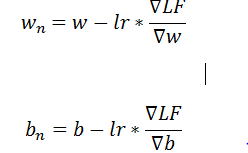
โ€œThere are times in our lives when we have to realize our past is precisely what it is, and we cannot change it. But we can change the story we tell ourselves about it, and by doing that, we can change the future.โ€
โ€• Eleanor Brown

We often hear that ‘the past is past, don’t bother about it’. But actually, the past is not only the past, but also it is the foundation of our future. Every moment is going to be past. It is the only reality that we can know. Future and present are related. Everything is being examined on the basis of past, future and present. Past is a set of experiences, events and beliefs that someone or something confronted with. Everything has a past and that past constitutes the essence of its present and future. It can be said that history is the collection of recorded past events in the form of written documents, monuments, oral discourses etc. But the past is beyond these historical remains.

The things and deeds we did in past are now to give us fruit in present and also in the future. And our present which is going to be our past will give us its fruit in the future. Some think it is essential to study history in order to make their future bright but some think past has no concern with the future. Other thinks that future is related to present, the things they have in present remain same as in future. Different people have different believe on the same the topic. Why is it so? Due to the different experiences, they have in their past life. In some way or another experience is second name of past.

What actually affect the future?

Experience affects the future. Future can never be predicted but we can strive to make it better by mean of the past experiences. Without knowing the past, we repeat mistakes made in the past, and destroy our future.

We canโ€™t say that we are guessing future upon the past, but in some way, we can perk up our future by relating it to the events take place in past, and work to make it enhanced. No one knows what will happen in the future but the past lends us a hand and lead us to our destiny.

There must be some reasons why past contribute a lot in building future. It is vitally important to study history and keeping the past in mind to avoid repeating the mistakes of the past and understand why things are as they are!

We study history to learn where we were in the past and where we are now, to learn what worked for people in the past. We study history to know what is the right thing to do and what is wrong so that we can understand what to do in life and how the wrong things happen and how we can be prevented.

New thoughts and systems cannot be formed overnight. It is subject to change and reconstruction over the centuries and generations. We cannot say that the past is always constructive and beneficial. Progress is being made by identifying faulty systems. Many things that were once considered right and socially good are now considered as reactionary and unprogressively.

For example, once untouchability was a prevailing practice in our society which was considered as a normal thing. But later, the practice of untouchability is abolished and now we know how ridiculous it is. This realization is the product of reconstruction. This sort of change can be seen in all areas of life such as culture, cinema, environment, caste, religion, gender, language etc. What we firmly believe to be right and wrong today may not be like that tomorrow. Reconstruction aims at deconstruction also.

Future is created through rectifying the mistakes of our past by maintaining its positive aspects. It is determined by the realizations gained through the past experiences. Therefore, it is essential to have a proper sense of past and history.

Here lies the relevance of the reconstruction of the past. The future can only be built by a proper understanding of the past. We must be able to embrace what is progressive and reject what is irrational and biased. Thus, it would be better to say that reconstructing our past is the foundation for building our future instead of reconstructing our past is more important than building our future.

Yes, the past is past, but it continues.

HOW TO MAKE BETTER NOTES IN CLASS

โ€œThe more content you try to capture during a lecture or a meeting, the less you’re thinking about what’s being said. You burn through most of your attention parroting the source.โ€

Do you sometimes struggle to determine what to write down during lectures? Have you ever found yourself wishing you could take better or more effective notes? Whether you are sitting in a lecture hall or watching a lecture online, note-taking in class can be intimidating, but with a few strategic practices, anyone can take clear, effective notes. This handout will discuss the importance of note-taking, qualities of good notes, and tips for becoming a better note-taker.

In-class benefits

Taking good notes in class is an important part of academic success in college. Actively taking notes during class can help you focus and better understand main concepts. In many classes, you may be asked to watch an instructional video before a class discussion. Good note-taking will improve your active listening, comprehension of material, and retention. Taking notes on both synchronous and asynchronous material will help you better remember what you hear and see.

Post-class benefits

After class, good notes are crucial for reviewing and studying class material so that you better understand it and can prepare appropriately for exams. Efficient and concise notes can save you time, energy, and confusion that often results from trying to make sense of disorganized, overwhelming, insufficient, or wordy notes. When watching a video, taking good notes can save you from the hassle of pausing, rewinding, and re watching large chunks of a lecture. Good notes can provide a great resource for creating outlines and studying.

  1. Gather your note-taking materials. It may sound pretty basic, but it’s important to have all of your note-taking materials organized and ready to go before the start of any class, meeting or lecture.
  2. Come prepared. Before you come to a class, lecture, or meeting, make sure to review your notes from the last time round. This will bring you fully up to speed and ready to pick up where you left off.
  3. Be an active listener. When note-taking, many people make the mistake of mindlessly taking down every word, without really comprehending what is being said. Instead, make an effort to understand the topic while you’re in class. Focus on what’s really being said, then ask questions if you don’t understand
  4. Take notes by hand. Although taking notes on your laptop is convenient, research shows note takers actually retain information better when they take notes by hand. This may be because people typing on a laptop tend to transcribe every word without understanding the meaning, while people writing by hand are forced to pick out relevant information in order to keep up
  5. Don’t be afraid to ask questions. When you come across something you don’t understand, don’t just jot it down and tell yourself that you’ll worry about it later — ask the teacher/lecturer for clarification.

FINALLY

Follow up after class

Part of good note-taking includes revisiting your notes a day or so after class. During this time, check for clarity, fill in definitions of key terms, organize, and figure out any concepts you may have missed or not fully understood in class. Figure out what may be missing and what you may need to add or even ask about. If your lecture is recorded, you may be able to take advantage of the captions to review.

REFERENCES

https://learningcenter.unc.edu/tips-and-tools/effective-note-taking-in-classes

https://www.wikihow.com/Take-Better-Notes

INTRODUCTION TO THE KNEE DISORDERS

When there are some imbalances within the knee then it can lead to disorders which can be indicated by deviation of the knee in terms of function. Most of these disorders occur due to some conditions imposed onto the structures present inside the knee.

BURSITIS: – inflammation (burning sensation) of the bursa causes pain.

(TIP- a word ending with itis refers to inflammation)

FAT PAD IMPINGEMENT: – the fat pad gets swollen heavily and can burst due to over-expansion.

TENDINITIS: – inflammation of a tendon

TORN MENISCUS: – a sudden twist of the knee can tear the rubbery cartilage leading to serious issues.

FRACTURE: – the bones surrounding the joint may get broken especially the patella is viable to damage in the case of accidents.

DISLOCATION: – the knee bone slips and comes out from its original location leading to excruciating pain.

ACL AND PCL INJURY: – the anterior and posterior cruciate ligament gets torn which may occur when there are a lot of instantaneous turns. However, this occurs rarely since these are very strong ligaments naturally.ย 

OSGOOD-SCHLATTER DISEASE: – this is the swelling of the tendon between the tibia and patellar muscles.

STRAIN AND SPRAIN: – both are injuries but strain occurs in ligaments whereas sprain occurs in tendons.

These are some of the common disorders occurring to the knee. All of these disorders have something in commonโ€ฆ.PAIN but the intensity can vary based on time and severity of the disorder

ARTHRITIS                                                      

Arthritis is a commonly used word referring to the inflammation of joints. In fact, many people have an intuition that severe pain in the knee corresponds to arthritis mainly in old age groups. This is potentially a dreadful disease and can mainly affect the old aged. Most arthritis occurs over time but some can occur suddenly. Old-aged persons are more prone to this disease. This disease is likely to affect all age groups. This disease is more prevalent in women rather than men since their joints are weaker and more susceptible to motion when compared to men.

differences between normal and arthritic knee joint

ย ย 

In the case of arthritis, the bones start to wear down, the ligaments can tear, inflammation and swelling can occur, and also lead to internal bleeding (hematoma). There are about 100+ types of arthritis with different causes and symptoms.

comparisons between some of the arthritis

The different types of arthritis have symptoms different from each other. But arthritis, in general, shows some symptoms irrespective of the type.

Joint pain, stiffness in joints, red swollen mass, deranged and irregular motion is some of the common symptoms exhibited during arthritis. These symptoms are easy to identify by a common man and hence one can consult a medical practitioner known as a rheumatologist. The study of joints is known as arthrology and it is recommended to consult such a person.

As mentioned earlier cartilage is the one that protects the bones and also acts as a shock absorber. In the case of Osteoarthritis, this cartilage starts to vanish slowly. In the case of rheumatoid arthritis, the synovial fluid gets attacked by its own antibodies!!! This phenomenon in medicine is known as autoimmune disease and occurs due to error in the programming of these cells leading to the attack on their own cells.

In the case of gouty arthritis, there is a deposition of sodium urate crystals in the joints. It can lead to redness, pain, and heat around the joint. Uric acid which is generated in our body gets converted to purines (an essential component in DNA). Increased uric acid levels can lead to its deposition in the form of crystals. The best way is to remove the synovial fluid.

So these are the different types of disorders that can be seen in the knee. Proper diet and exercise and a healthy lifestyle can prevent most of them. So it is essential to be healthy to prevent the occurrence of these diseases.

HAPPY READING!!

INTRODUCTION TO THE BONES AND JOINTS

Our human body can be compared to a machine in terms of its functioning, but the magnanimous human can perform extremely better than a machine. As there are many nuts and bolts to connect many parts in a machine, there are too some bolts and nuts in our body which join several parts of the body like arms and legs. The so-called nuts and bolts of the human body are known as JOINTS. A joint in general is the articulation that is present in between two bones. This sounds a bit complex. So joint in the English language refers to the association. So the joints in the human body associate something. The something defined previously is bones. In order to understand this, we have to know about the structure of bone in detail.

Fig 1.1- structure of a bone 


The above image depicts the structure of a bone in general. Important information to be known is that the unit of a bone is called an osteon. Many osteons combine together to form a bone. Bone-destroying cells are known as osteoclasts and bone-forming cells are known as osteoblasts. The external structure of a bone has two parts namely epiphysis and diaphysis. Physis refers to the growing plate. An increase in the boneโ€™s height corresponding to bone growth. Epi means above and dia means through. Hence diaphysis is found in between two epiphysis which acts as the head and tail to the bone. The point of attachment of muscle in this bone is known as the trochanter. Everything present in the human body has some kind of protection. In the case of bone, that protection is offered by the periosteum. The inner layers can be visualized by peeling off those previous layers hindering them. Next, we have the cartilage which is a rubbery kind of protection to the bone. Hyaline cartilage present in bone is rather glassy in nature. The bone also has nerves and blood vessels since the bone requires nourishment and a proper message for its functioning. Bone marrow is the spongy tissue inside the bones. It contains stem cells. The stem cells can develop into the red blood cells that carry oxygen through your body, the white blood cells that fight infections, and the platelets that help with blood clotting. Bone marrow can be considered the mother of blood cells. This table provides insights on the types.

Type namePrevalenceContent
RedChildrenBlood
YellowAdultsFat

So now we move onto how a joint connects two bones. Consider this situation where there are two pipes and we want to connect them. The best way to connect so as to minimize their loss is by using a junction. There may be other options also, but there is no need to make a fuss about it.

Fig 1.2- the structure of a healthy joint

Hence from all these, we can come to an understanding of the importance of joints in the human body. To be short, the human body is meaningless and fragmented as the face, trunk, hands, and legs are separated without the joints.

HAPPY READING!!

SLEEP HYGIENE

โ€œSleep’s what we need. It produces an emptiness in us into which sooner or later energies flow.โ€
โ€• John Cage.

Almost everyone has encountered a zombie-like feeling after a night of minimal or no sleep. Even after just one night without enough rest, we can feel drowsy during the day with slowed thinking, lack of energy, and an irritable mood.

Sleep deprivation is when you donโ€™t get the sleep you need, and it is Itโ€™s estimated to affect most of the students, a problem that has only worsened in recent years.

Lack of sleep directly affects how we think and feel. While the short-term impacts are more noticeable, chronic sleep deprivation can heighten the long-term risk of physical and mental health problems.

If you eat well and exercise regularly, but donโ€™t get at least seven hours of sleep every night, you may be undermining all of your other efforts.

How much sleep do you actually need?

Everyone feels better after a good nightโ€™s rest.ย  But now, thanks to a report from the National Sleep Foundation, you can aim for a targeted sleep number tailored to your age.

  • Older adults, 65+ years: 7 to 8 hours.
  • Adults, 26 to 64 years: 7 to 9 hours.
  • Young adults, 18 to 25 years: 7 to 9 hours.
  • Teenagers, 14 to 17 years: 8 to 10 hours.
  • School-age children, 6 to 13 years: 9 to 11 hours.
  • Preschool children, 3 to 5 years: 10 to 13 hours.
  • Toddlers, 1 to 2 years: 11 to 14 hours.
  • Infants, 4 to 11 months: 12 to 15 hours.
  • New-born, 0 to 3 months: 14 to 17 hours.

But a minimum of seven hours of sleep is a step in the right direction to improve your health.

What happens when you donโ€™t get enough sleep?

Short-term problems can include:

  • Lack of alertness. Even missing as little as 1.5 hours can have an impact on how you feel.
  • Excessive daytime sleepiness. It can make you very sleepy and tired during the day.
  • Impaired memory. Lack of sleep can affect your ability to think, remember and process information.
  • Relationship stress. It can make you feel moody and you can become more likely to have conflicts with others.
  • Quality of life. You may become less likely to participate in normal daily activities or to exercise.
  • Greater likelihood for car accidents. Drowsy driving accounts for thousands of crashes, injuries and fatalities each year, according to the National Highway Traffic Safety Administration.

Chronic sleep deprivation can even affect your appearance. Over time, it can lead to premature wrinkling and dark circles under the eyes. Thereโ€™s also a link between lack of sleep and an increase in the stress hormone, cortisol, in the body. Cortisol can break down collagen, the protein that keeps skin smooth.

So lack of sleep could mean more wrinkles! Understand why sleep is so important yet?

How to Sleep Better

If youโ€™re experiencing mild, occasional problems with sleep, try these simple strategies to make you better.

1. Treat getting enough sleep as if it is as important as taking medicine.

With all the demands on our time every day, you might put a good nightโ€™s rest at the bottom of your priority list.

2. Keep a consistent wake time.

Wake up at the same time every day, including weekends or days off.  Waking at the same time every day will actually help you to sleep better at night. A fixed wake time helps to build a strong desire for sleep throughout wakefulness. This sleep drive gradually builds, and shortening it by sleeping in will make it harder to fall asleep the next night. Sleeping in on the weekend makes it much more difficult to wake up earlier on Monday morning.  

It also is important to do some relaxing activity such as taking a warm bath or reading a book before bedtime. By making these activities part of your bedtime ritual, you can train yourself to associate these activities with sleep. This association will help you to move more easily into slumber.

3. Put away the smart phones and tablets.

Electronic devices keep your mind humming โ€” and far from the relaxed state you need to achieve before bedtime. So, keep away the gadgets at least an hour ago before sleep.

BOTTOM LINE

Getting frequent sunlight exposure during the day supports a healthy circadian rhythm that helps you be alert during the day and sleepy at night. Regular physical activity can also contribute to a normal sleep schedule, so try to engage in at least moderate exercise every day.

REFERENCES https://health.clevelandclinic.org/happens-body-dont-get-enough-sleep