National Transit Pass System (NTPS)-‘One Nation-One Pass’

By Shashikant Nishant Sharma

The concept of a National Transit Pass System (NTPS) called ‘One Nation-One Pass’ refers to a unified, nationwide system for public transportation passes in a country. This system aims to streamline and simplify the process of using public transit by providing a single pass or card that can be used across different modes of transportation such as buses, trains, subways, trams, and more, regardless of the city or region within the country.

The ‘One Nation-One Pass’ initiative intends to make travel more convenient for commuters, tourists, and regular transit users by eliminating the need to purchase separate tickets or passes for different transportation networks. It promotes seamless mobility and ease of access, potentially encouraging more people to use public transit due to its simplicity and accessibility.

Implementing such a system involves collaboration between various transit authorities, government agencies, and technology providers to develop a unified infrastructure that can manage and integrate the different transit networks into a cohesive, interoperable system. This may include the use of smart cards, mobile apps, or other digital platforms that can store fare information, track usage, and enable payments across multiple transit services.

The benefits of ‘One Nation-One Pass’ include reducing administrative complexities, improving commuter experience, potentially lowering travel costs, and encouraging more sustainable modes of transportation. However, the implementation may involve challenges related to technological integration, data management, and coordination among different stakeholders.

The success of an NTPS like ‘One Nation-One Pass’ largely depends on effective planning, investment in infrastructure, collaboration between relevant authorities, and the adoption of user-friendly technologies to ensure a seamless and efficient transit experience for all users across the nation.

Union Minister for Environment, Forest and Climate Change and Labour and Employment Shri Bhupender Yadav today launched the National Transit Pass System (NTPS) pan-India  to facilitate the seamless transit of timber, bamboo, and other forest produce across the country. Currently, the transit permits are issued for transport of timber and forest produce based on state specific transit rules. The NTPS is envisioned as a “One Nation-One Pass” regime, which will enable seamless transit across the country. This initiative will streamline the issuance of timber transit permits by providing a unified, online mode for tree growers and farmers involved in agroforestry across the country, contributing to the ease of doing business.
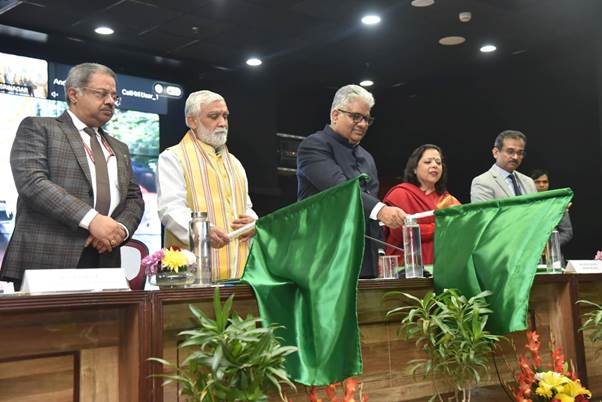
In order to create awareness and showcase the applicability and ease of using NTPS, special Pan Indian vehicles carrying forest produce were flagged-off by Minister of Environment, Forest and Climate Change, Shri Bhupender Yadav today. Two vehicles carrying timber and other forest produce from Gujarat and Jammu & Kashmir were flagged-off which are bound for West Bengal and Tamil Nadu. The QR coded transit permits generated under NTPS will allow check gates across various states to verify the validity of the permits and allow seamless transit.

On the occasion of the flag-off event, Shri Bhupender Yadav expressed that this marks a historic achievement with the nationwide implementation of the NTPS. He said NTPS will help strengthen the journey towards greater transparency which is Prime Minister Shri Narendra Modiji’s  guarantee for India’s development. Shri Yadav said this initiative is poised to facilitate the seamless transportation of timber and various forest products across the country. He said its impact extends beyond merely encouraging agroforestry and tree farming; it also promises to incentivize the entire value chain.

Additionally, the Union Minister highlighted several other recent initiatives by the Ministry, such as the Indian Forest and Wood Certification Scheme and the Trees Outside Forest Initiative. These endeavours collectively aim to boost agroforestry practices in the nation.

Shri Ashwini Kumar Choubey, the Minister of State for Environment, Forest, and Climate Change, emphasized that the NTPS is a game-changer for agroforestry and trees outside the forest. Launched to streamline the transit of timber and other forest products, it is expected to enhance the ease of doing business in this sector. Secretary, Ministry of Environment, Forest and Climate Change, Smt. Leena Nadan and Director General of Forests and Special Secretary, Shri. Chandra Prakash Goyal were present during the flag-off event.

Prior to the introduction of NTPS, obtaining transit permits from different states along the route was a time-consuming process, causing hurdles in transporting timber and forest products across the states. Each state has its own transit regulations which meant that in order to transport timber or forest produce across states, one was required to get a separate transit pass issued in each state. NTPS offers seamless transit permits, managing records for both inter-state and intra-state transportation of timber, bamboo and other forest produce obtained from various sources like private lands, government owned forest and private depots.

NTPS is designed for user convenience, featuring desktop and mobile applications for easy registration and permit applications. Transit permits will be issued for tree species which are regulated, while the users can self-generate No Objection Certificates for exempted species. Presently, 25 States and Union Territories have embraced the unified permit system, streamlining interstate business operations for producers, farmers, and transporters. This move is expected to provide a significant impetus to the agroforestry sector. The NTPS can be accessed at https://ntps.nic.in .

***

References

Lodhi, A. S., Sharma, S. N., Dehalwar, K., & Jaiswal, A. (2023). Framework for Road Safety Improvement Measures for Madhya Pradesh. Vision Zero: Systems, Approaches and Implementation, New Delhi. Blumsburry. https://doi.org/10.5281/zenodo.10396811

Khosa, M. M. (1995). Transport and popular struggles in South Africa. Antipode27(2), 167-188.

Ugboaja, P. C. (2010). The economic sustainability of Nigeria’s National Transport Policy. Journal of Academic Research in Economics (JARE), (3), 348-365.

VALUES OF BIODIVERSITY:

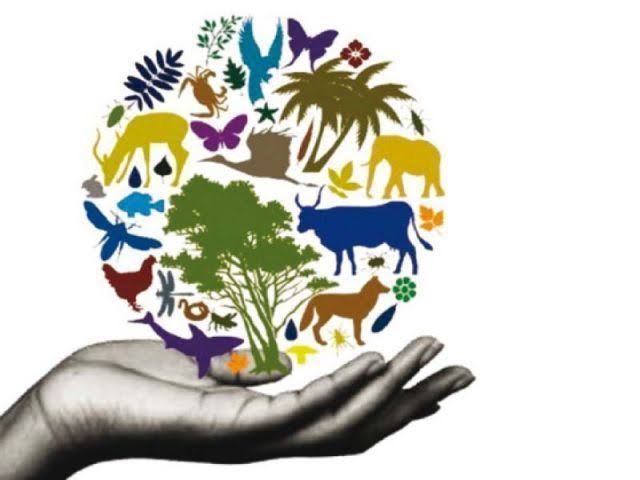
Biodiversity is very essential for the health of the biosphere and it provides the raw materials for man to make him adapt to the changing environment. Man derives many direct and indirect benefits from living things. Biodiversity provides ecological services also. The uses of Biodiversity are as follows.

1. Consumptive use value:

It includes food, medicine, fuel, fiber, timber, clothing, etc. 80,000 Species are edible wild plant species. 90% of the crops have been domesticated from wild tropical plants. Many wild animals were also sources of food (now it is banned). 75% of the world’s population depends upon plants for medicine. For instance, penicillin from a fungus namely Penicillium, quinine from a plant namely, cinchonas, tetracycline from a bacterium, and cancer-causing drugs like vinblastine and vincristine from a plant namely, Catharanthus roseus (Nithyakalyani) are obtained.

2. Productive Use Value:

The products are commercially usable. The wild gene resources are traded to introduce desirable traits in the crops and domesticated animals. Productive uses of biological resources are fuel, timber, musk, tusk, ivory, honey, fiber, gums, resins, medicines, silk, wool, etc. Though there is a ban on trade in products of endangered species, illegal smuggling does take place.

3. Social Value:

Biodiversity in India is related to our religious, cultural, and spiritual uses. Many plants like Tulsi, Pipal, Hibiscus, and Datura are considered to be sacred. Peacock, cow, snake, bull, and owl have a place in our spiritual arena.

4. Ethical Value:

We must protect every life. It is based on the concept ‘Live and let live’. we must enjoy watching all animals -Kangaroo, Giraffe, Zebra, etc., though they are not useful to us directly. We should not cage birds for our pleasure and pastime.

5. Aesthetic Value:

Biodiversity provides us with a good deal of fun and recreation. This type of tourism is known as ecotourism which generates 12billion dollars as income per year. If we have a lion in a zoo we get about Rs.2 crores as income per year. But if we kill the lion we get only Rs. 50,000\-. A teak tree fetches Rs.50,000\- if cut down; But if it lives, its value is priceless by way of its ecological role.

6. Option Values or Unknown Benefits :

We must try to explore the potential of Biodiversity for the future benefit of mankind. We must protect the biodiversity to find out drugs to fight diseases like cancer and AIDS.

BIODIVERSITY AT GLOBAL LEVEL:

According to Erwin(1982), 5 to 30 million species of the world are yet to be described and are living in tropical forests. So far only 1.7 million species have been described. These include green plants and fungi (3lakhs), insects (8lakhs), vertebrates (40,000), and microorganisms (3.6 lakhs).

1. 20,000 to 30,000 taxonomists all over the world do serious research and describe name, and classify plants every year.

2. 20,000 species are being discovered and named every year. There are about 2.5lakhs species of plants described so far.

3. The continental drift is a main reason for the increasing diversity.

4. In tropical forests, about 1,25,000 species of flowering plants are considered to be in existence.

Published by

Ayisha shabana……

Bio-diversity and climate change (Nature’s cries for assistance)

Bio diversity is the biological variability of life on earth. It is the variation of animal, plants, fungi and microorganisms like bacteria. Biodiversity is a variation in the genetic, species, and ecosystem level. Terrestrial biodiversity is usually greater near to the equator. Biodiversity is not equally distributed on earth. There are only 10% of tropical evergreen forests on earth but they contain about 90% of world species. Marine Biodiversity is greater is usually higher along the coast in western pacific where the sea temperature is highest. Biodiversity generally tends to cluster in hotspots and has been increasing through time. Biodiversity supports everything in nature that we need to survive: food, clean water, medicine, and shelter.

But as people put expanding weight on the planet, utilizing and devouring more assets than ever some time recently, we hazard disquieting the adjust of biological systems and losing biodiversity. Quick natural changes regularly cause mass terminations. More than 99.9 percent of all species that ever lived on Soil, producing to over five billion species, are evaluated to be terminated. In 2006, numerous species were formally classified as uncommon or imperiled or undermined; in addition, researchers have assessed that millions more species are at chance which have not been formally recognized. Approximately 40 percent of the 40,177 species surveyed utilizing the IUCN Ruddy List criteria are presently recorded as undermined with extinction—a add up to of 16,119.

The factors affecting the biodiversity are Residential & commercial development, Farming activities, Energy production & mining, Transportation & service corridors and human activities. Pollution is an another major cause of loss of biodiversity causing habitat destruction. Territory devastation has played a key part in terminations, particularly in connection to tropical woodland pulverization. Components contributing to living space misfortune incorporate: overconsumption, overpopulation, arrive utilize alter, deforestation, contamination (discuss contamination, water contamination, soil defilement) and worldwide warming or climate alter.

Climate change is the long-term alteration of temperature and normal climate designs in short. Climate alter might allude to a specific area or the planet as a entire. Climate alter may cause climate designs to be less unsurprising. These unforeseen climate designs can make it troublesome to preserve and develop crops in districts that depend on cultivating since anticipated temperature and rainfall levels can now not be depended on. Climate alter has too been associated with other harming climate occasions such as more visit and more seriously tropical storms, surges, deluges, and winter storms.

Effects of climate change are Hotter temperatures Nearly all land areas are seeing more hot days and heat waves; 2020 was one of the hottest years on record. Higher temperatures increase heat-related illnesses and can make it more difficult to work and move around. Wildfires start more easily and spread more rapidly when conditions are hotter. More extreme storms Changes in temperature cause changes in precipitation. This comes about in more extreme and visit storms. They cause flooding and avalanches, pulverizing homes and communities, and costing billions of dollars. Many more effects like Droughts, Rise in the level of oceans, shortage of food and more health problems.

Securing biodiversity could be a exceptionally complex errand since most of human’s activities have a negative impact on biological systems by overexploiting them. For occurrence, human exercises create contamination that influences living species. Deforestation crushes the living space of numerous animals, reptiles, and plants. Limiting deforestation Reducing the artificialization of natural environments and preserve natural areas as much as possible Reduce air pollution (by limiting our use of transport and our energy consumption, by switching to renewable energies) Fighting global warming by creating regulations for activities that contribute to the greenhouse effect. Making changes in the way industrial agriculture works and using more agroecology methods.

Climate change and biodiversity

In the atmosphere, gases such as water vapour, carbon dioxide, ozone, and methane act like the glass roof of a greenhouse by trapping heat and warming the planet. These gases are called greenhouse gases. The natural levels of these gases are being supplemented by emissions resulting from human activities, such as the burning of fossil fuels, farming activities and land-use changes. As a result, the Earth’s surface and lower atmosphere are warming, and this rise in temperature is accompanied by many other changes.Rising levels of greenhouse gases are already changing the climate.

According to the Intergovernmental Panel on Climate Change (IPCC) Working Group I (WGI) Fourth Assessment Report, from 1850 to 2005, the average global temperature increased by about 0.76ºC and global mean sea level rose by 12 to 22 cm during the last century. These changes are affecting the entire world, from low-lying islands in the tropics to the vast polar regions.Climate change predictions are not encouraging; according to the IPCC WGI Fourth Assessment Report, a further increase in temperatures of 1.4°C to 5.8°C by 2100 is projected. Predicted impacts associated with such temperature increase include: a further rise in global mean sea level, changes in precipitation patterns, and more people at risk from dangerous “vector-borne diseases” such as malaria.

Vulnerability of biodiversity to the impacts of climate change

The present global biota has been affected by fluctuating Pleistocene (last 1.8 million years) concentrations of atmospheric carbon dioxide, temperature, precipitation, and has coped through evolutionary changes, and the adoption of natural adaptive strategies. Such climate changes, however, occurred over an extended period of time in a landscape that was not as fragmented as it is today and with little or no additional pressure from human activities. Habitat fragmentation has confined many species to relatively small areas within their previous ranges, resulting in reduced genetic variability. Warming beyond the ceiling of temperatures reached during the Pleistocene will stress ecosystems and their biodiversity far beyond the levels imposed by the global climatic change that occurred in the recent evolutionary past.Current rates and magnitude of species extinction far exceed normal background rates. Human activities have already resulted in the loss of biodiversity and thus may have affected goods and services crucial for human well-being. The rate and magnitude of climate change induced by increased greenhouse gases emissions has and will continue to affect biodiversity either directly or in combination with other drivers of change.

Links between biodiversity and climate change

There is ample evidence that climate change affects biodiversity. According to the Millennium Ecosystem Assessment, climate change is likely to become one of the most significant drivers of biodiversity loss by the end of the century. Climate change is already forcing biodiversity to adapt either through shifting habitat, changing life cycles, or the development of new physical traits.Conserving natural terrestrial, freshwater and marine ecosystems and restoring degraded ecosystems (including their genetic and species diversity) is essential for the overall goals of both the Convention on Biological Diversity and the United Nations Framework Convention on Climate Change because ecosystems play a key role in the global carbon cycle and in adapting to climate change, while also providing a wide range of ecosystem services that are essential for human well-being and the achievement of the Millennium Development Goals.Biodiversity can support efforts to reduce the negative effects of climate change. Conserved or restored habitats can remove carbon dioxide from the atmosphere, thus helping to address climate change by storing carbon (for example, reducing emissions from deforestation and forest degradation). Moreover, conserving in-tact ecosystems, such as mangroves, for example, can help reduce the disastrous impacts of climate change such as flooding and storm surges.

Ecosystem-based Adaptation

Ecosystem-based adaptation, which integrates the use of biodiversity and ecosystem services into an overall adaptation strategy, can be cost-effective and generate social, economic and cultural co-benefits and contribute to the conservation of biodiversity.Conservation and management strategies that maintain and restore biodiversity can be expected to reduce some of the negative impacts from climate change; however, there are rates and magnitude of climate change for which natural adaptation will become increasingly difficult. Options to increase the adaptive capacity of species and ecosystems in the face of accelerating climate change include:

  • Reducing non-climatic stresses, such as pollution, over-exploitation, habitat loss and fragmentation and invasive alien species.
  • Wider adoption of conservation and sustainable use practices including through the strengthening of protected area networks.
  • Facilitating adaptive management through strengthening monitoring and evaluation systems.

Ecosystem-based adaptation uses biodiversity and ecosystem services in an overall adaptation strategy. It includes the sustainable management, conservation and restoration of ecosystems to provide services that help people adapt to the adverse effects of climate change. Examples of ecosystem-based adaptation activities include:

  • Coastal defence through the maintenance and/or restoration of mangroves and other coastal wetlands to reduce coastal flooding and coastal erosion.
  • Sustainable management of upland wetlands and floodplains for maintenance of water flow and quality.
  • Conservation and restoration of forests to stabilize land slopes and regulate water flows.
  • Establishment of diverse agroforestry systems to cope with increased risk from changed climatic conditions.
  • Conservation of agrobiodiversity to provide specific gene pools for crop and livestock adaptation to climate change
Advertisements

Why do people have so much aggression?

  • We all act aggressively from time to time—say while sitting in traffic or in the midst of an argument—but some are more aggressive than others.
  • There are several reasons we engage in aggressive behavior, which also help to explain why some people display aggression more often.
  • These causes include instinct, hormonal imbalance, genetics, temperament, nurture, and stress.
  • If there are excessively aggressive people in your life, like a loved one or coworker, you can learn to cope or deal with their behavior effectively.
  • First, try keeping your cool, empathizing, and expressing your concern—these actions should help you to navigate the interaction and make it more pleasant.
  • If these strategies don’t prove effective, consider distancing yourself from the overly aggressive person; your wellbeing should be your priority.

Aggression is hostile or violent behavior. It’s a woman yelling at her son for spilling his milk on the carpet. It’s a child pushing his friend down on the playground because she was playing with his favorite toy. It’s a girl snapping at her boyfriend because he didn’t invite her out with the guys.

As you can see (and probably know from personal experience), aggression can take many forms. We all act aggressively at some point or another in our lives, whether it’s yelling at the black Sudan that cut us off or getting into it with family or friends. But some are more aggressive than others—quick to react or engage in hostile behavior. Which begs an important question: why

What Causes Aggression? 6 Origins

Sure, traffic can spur aggression, as can a disagreement with a coworker. But what’s the psychology behind this behavior? There are actually a few reasons we become aggressive, which also help to explain why some people are more aggressive than others:

1. Instinct: Aggression is one of our many survival instincts. According to Sigmund Freud, aggression continuously builds up until it releases as aggressive behavior, at some point or another. Some individuals can suppress this aggression and use other survival instincts instead, but others simply react and release.

2. Hormonal imbalance: A hormonal imbalance in an individual can certainly contribute to aggressive behavior. For example, high levels of testosterone contribute to high levels of aggression. This explains why males are characteristically more aggressive than females.

3. Genetics: Aggression can also be passed down genetically. Children are at a greater risk of adapting aggressive tendencies if they have a biological background for it. Time and time again, father and son both display aggressive behavior.

4. Physiological illness and temperament: Serious illness can have a major effect on an individual’s mood and behavior, as the stress and other mental effects may bring about greater aggression. Additionally, one’s temperament can play a role in aggression. People with bad tempers typically become aggressive more quickly than calmer individuals.

5. Social learning: Aggression can be learned. Some become more aggressive due to personal experiences or observational learning. For example, children are always looking for cues on how to act, as illustrated by the Bobo doll experiment. They learn to act aggressively when they watch someone else commit violent acts like in movies or video games.

6. Psychological frustrations: It’s human nature to become frustrated when life just doesn’t seem to be going so well. This frustration may involve work or love, for example, and can lead to an all-around feeling of negativity. This negativity then represents a threat, which can lead to aggression

How to Cope with an Aggressive Individual

Dealing with someone who constantly lashes out in hostile or violent behavior is tough—especially when it’s someone you’re close to like your boyfriend or mother, or someone you can’t get away from, like a coworker. In any case, the following can help you deal with the aggressive people in your life more effectively:

  • Keep your cool. The last thing that will alleviate this situation is another aggressive individual. Maintain your composure and use your better judgment to handle the situation. Aggressive people often seek to intimidate and upset others. You have to ensure this doesn’t happen and instead of reacting with rage like they want you to, take a moment to count to ten and think of a better way to deal with the situation at hand.
  • Put yourself in their shoes. Even if the aggression seems unwarranted, take a moment to imagine yourself in their position. Maybe they grew up in an overly aggressive household. Or, maybe they have a lot on their plate and they’re reacting to the stress with aggression. This will help calm your own negative feelings down and empathize with the individual. Then, maybe you can turn the aggressive attack into a productive conversation.
  • Express your concern. Maybe there isn’t an obvious, underlying cause of the individual’s aggression. Once you’ve taken a step away and you’re both calm, express your concern for them. They may not realize the severity of their aggression or its effect on those around them. It could take someone like you bringing it to light for them to make that realization and make a change.
  • Distance yourself. Sometimes, these aggressive individuals are just not worth it and don’t deserve a place in your life. You have to prioritize your wellbeing and if that means cutting them out of your lives, then so be it. And if cutting them completely out of your life isn’t very realistic (think, an aggressive aunt or uncle that’s at every family reunion or your coworker who doesn’t look to be going anywhere anytime soon), then just distance yourself as best you can. Avoid them.

Ultimately, you have to decide if it’s worth dealing with the aggressive individual. If you decide that it’s not, kick them to the curb and distance yourself from them. But if you decide that this individual is worth it and could maybe use your help, do your best to sympathize with them and determine the underlying cause of the aggression. This will help you both moving forward

Role of Biodiversity and Agriculture in making of Atmanirbhar Bharat

While flipping pages of my Geography textbook, a fact caught my eye – two third of the population of India is engaged in agricultural activities. We are blessed to have diverse climatic conditions because of which we see a variety of flora and fauna, and grow so many veggies, fruits and other crops. But India still imports a lot of harvested produce from other countries.

Atmanirbhar Bharat

Atmanirbhar Bharat, which translates to ‘self-reliant India’ or ‘self-sufficient India’, is a policy formulated by Prime minister of India Narendra Modi for making India a bigger and more important part of the global economy. It was launched on 12 May 2020  during the announcement of India’s COVID-19 pandemic related economic package. Not only should products be ‘made in India’, but the promotion of those products should take place so as to make those products competitive.  We should appreciate our local products, if we don’t do this then our products will not get the opportunity to do better and will not get encouraged. The agriculture and biodiversity sector were also given a lot of importance in it. This scheme helps farmers by providing better financial help, good prices of crops and a lot of new schemes are introduced which will help to support farmers and other people who are dependent on the agricultural sector for their livelihood. The improvement in PDS (Public Distribution System) has also started. Sustainable fishing practices and organic farming practices are encouraged, beekeeping shelters are increased and Rs 1500 crore is specified for animal husbandry. Many medicinal herbs are to be grown by the shore of river Ganga. Minister of Chemicals and Fertilisers, D V Sadananda Goda, in September 2020, said that “India will be self-reliant in fertiliser production by 2023”. Three Farm Bills passed in September 2020 provide the legal framework to give the farmers the right to choose the price and people to whom they want to sell. Coir Udyami Yojana aims to develop the coir-related industry’s sustainable development.

Role of Agriculture and Biodiversity

From my point of view, the making of New India does not mean cutting the forests to make big buildings, industries or exploiting the natural resources without limit. When I think about a new Bharat, I imagine a country with minimum degradation of natural resources while still sustaining the agricultural demand of our country. 

Important focus on agricultural exports should also be given so as to improve the quality of exports rather than just quantity, thereby fetching more price for the farmer. Exports of medicinal herbs and oils, agricultural produce and raw materials like cotton and jute will increase drastically; also aiding the economy. Correspondingly, many people will start to prefer Indian exported products.

Great biodiversity will help to maintain ecological balance for ecosystem stability and support ecotourism. We can use resources and conserve them due to eco-friendly practices in farming, fishing, etc. 

At school level, a new subject – Agriculture should be introduced with hands-on experience and interaction with farmers. This will inspire many students to study agriculture and forestry streams. 

I think that biodiversity and agricultural prosperity will highly assist in the making of New India. Our new Bharat will be more sustainable and more developed. India will promote eco friendly practices, biodiversity, organic farming, quality produce and build a strong economy. From a developing country, it will turn into a super-power.