Introduction to Multi-Criteria Decision Making (MCDM)

By Shashikant Nishant Sharma

In the modern decision-making landscape, where complexity and the need for nuanced choices abound, Multi-Criteria Decision Making (MCDM) emerges as a pivotal research technique. MCDM encompasses a range of methodologies and tools designed to evaluate, prioritize, and select options based on multiple conflicting criteria. This approach is invaluable across various domains, including business, engineering, environmental management, and public policy, where decisions are rarely black and white.

Photo by Expect Best on Pexels.com

Core Concepts of MCDM

1. Criteria and Alternatives: At the heart of MCDM are two fundamental components: criteria and alternatives. Criteria represent the dimensions or attributes against which decisions are evaluated, while alternatives are the different options or courses of action available. For instance, in selecting a location for a new manufacturing plant, criteria might include cost, proximity to suppliers, environmental impact, and local labor availability.

2. Decision Matrix: A decision matrix is a common tool in MCDM, where alternatives are listed against criteria in a tabular format. Each cell in the matrix contains a value representing the performance of a particular alternative against a specific criterion. This matrix serves as the foundation for further analysis.

3. Weighting of Criteria: Different criteria often hold varying levels of importance in the decision-making process. Weighting involves assigning a relative importance to each criterion, typically through techniques like pairwise comparisons, direct rating, or the Analytic Hierarchy Process (AHP). These weights ensure that more critical criteria have a greater influence on the final decision.

Prominent MCDM Techniques

1. Analytic Hierarchy Process (AHP): Developed by Thomas L. Saaty in the 1970s, AHP is one of the most widely used MCDM techniques. It involves decomposing a decision problem into a hierarchy of sub-problems, comparing elements pairwise, and calculating weighted scores to rank alternatives. AHP is particularly useful for complex decisions requiring both qualitative and quantitative assessments.

2. Technique for Order Preference by Similarity to Ideal Solution (TOPSIS): TOPSIS is based on the concept that the chosen alternative should have the shortest geometric distance from the ideal solution and the farthest distance from the negative-ideal solution. It involves normalizing the decision matrix, calculating the Euclidean distance for each alternative, and ranking them accordingly.

3. Preference Ranking Organization Method for Enrichment Evaluation (PROMETHEE): PROMETHEE is a family of outranking methods that evaluate alternatives based on preference functions. It helps decision-makers visualize the strengths and weaknesses of each alternative through graphical representations like the PROMETHEE I partial ranking and PROMETHEE II complete ranking.

4. Simple Additive Weighting (SAW): SAW, also known as the weighted sum method, is a straightforward technique where each alternative’s performance scores are multiplied by the respective criterion weights and summed up. The alternative with the highest total score is considered the best choice.

Applications of MCDM

1. Business and Management: MCDM techniques are extensively used in strategic planning, resource allocation, project selection, and performance evaluation. For instance, companies can employ AHP to prioritize projects based on criteria like cost, return on investment, and strategic alignment.

2. Engineering and Technology: In engineering, MCDM aids in material selection, design optimization, and risk assessment. Techniques like TOPSIS can help engineers select the best materials for a specific application by evaluating properties such as strength, weight, and cost.

3. Environmental Management: MCDM is crucial in environmental decision-making, where trade-offs between economic development and environmental sustainability must be carefully balanced. PROMETHEE and AHP are often used to assess the impacts of various policies and select the most sustainable options.

4. Public Policy: Governments and policy-makers use MCDM to address complex societal issues, such as urban planning, healthcare, and education. MCDM techniques facilitate transparent and rational decision-making by considering diverse stakeholder perspectives and conflicting objectives.

Challenges and Future Directions

Despite its widespread applicability, MCDM is not without challenges. Key issues include the subjectivity in criteria weighting, the complexity of certain methods, and the need for accurate and comprehensive data. Future research is likely to focus on integrating MCDM with artificial intelligence and machine learning to enhance decision support systems, improve robustness, and handle large datasets more efficiently.

Conclusion

Multi-Criteria Decision Making stands as a vital tool in the arsenal of modern decision-makers. By systematically evaluating alternatives against a set of diverse and often conflicting criteria, MCDM facilitates more informed, transparent, and rational choices. As complexity in decision-making continues to grow, the evolution and adoption of MCDM techniques will remain crucial in navigating the multifaceted challenges of the contemporary world.

References

Dehalwar, K., & Sharma, S. N. (2023). Fundamentals of Research Writing and Uses of Research Methodologies. Edupedia Publications Pvt Ltd.

Kumar, A., Sah, B., Singh, A. R., Deng, Y., He, X., Kumar, P., & Bansal, R. C. (2017). A review of multi criteria decision making (MCDM) towards sustainable renewable energy development. Renewable and sustainable energy reviews69, 596-609.

Massam, B. H. (1988). Multi-criteria decision making (MCDM) techniques in planning. Progress in planning30, 1-84.

Sharma, S. N., Dehalwar, K., & Singh, J. (2023). Cellular Automata Model for Smart Urban Growth Management.

Taherdoost, H., & Madanchian, M. (2023). Multi-criteria decision making (MCDM) methods and concepts. Encyclopedia3(1), 77-87.

Water Management for Sponge Cities: A Sustainable Urban Future

Daily writing prompt
What jobs have you had?

By Kavita Dehalwar

Photo by Tom Fisk on Pexels.com

Introduction

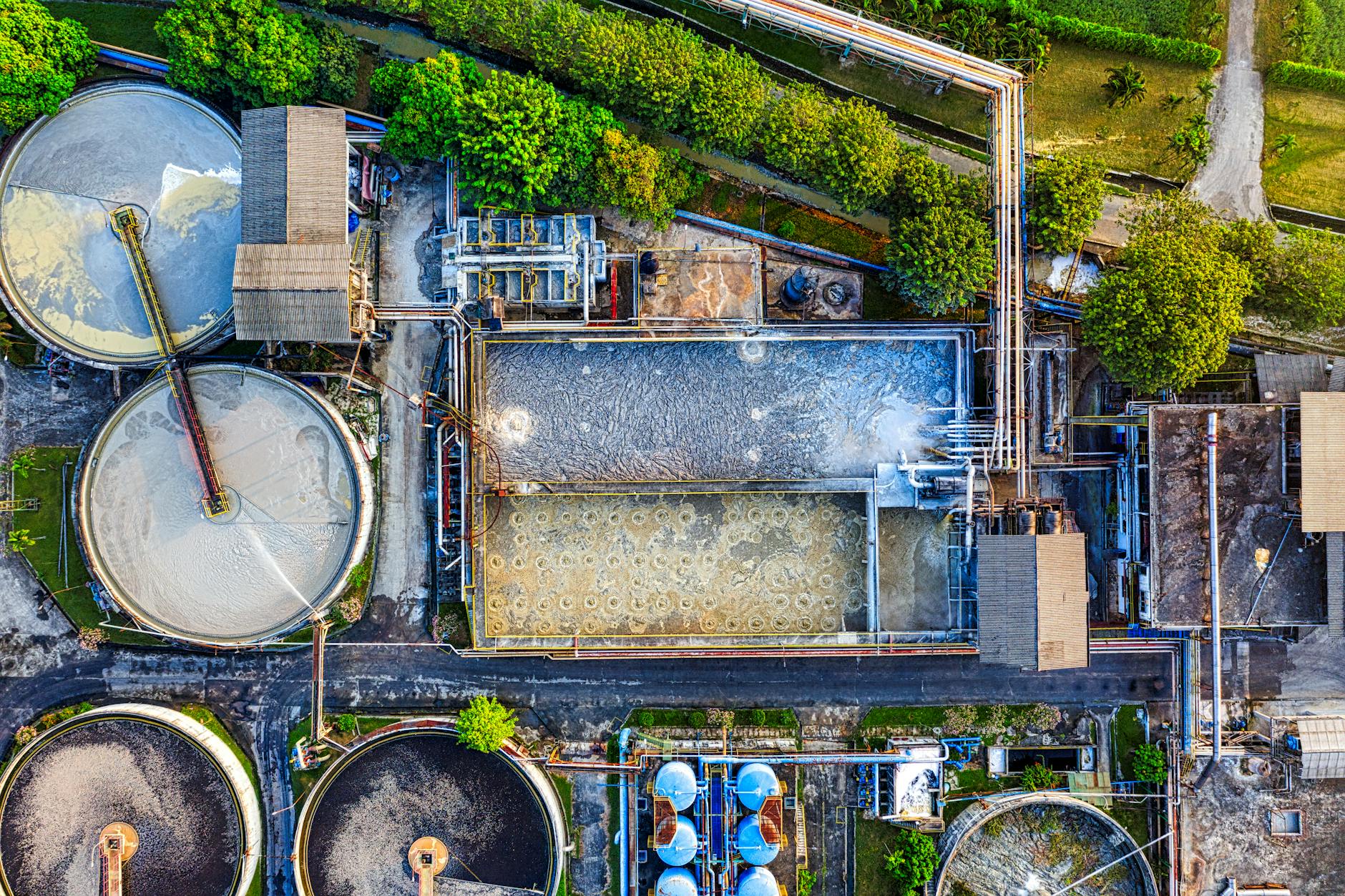
As urbanization continues to surge, cities worldwide face significant challenges related to water management. Traditional infrastructure often struggles to cope with heavy rainfall, leading to flooding, water pollution, and depletion of groundwater resources. The concept of the “sponge city” offers an innovative solution, aiming to enhance urban resilience by mimicking natural water cycles. This article explores the principles of sponge cities, their benefits, and effective strategies for their implementation.

What is a Sponge City?

A sponge city is an urban area designed to absorb, store, and purify rainwater, allowing it to be reused or to recharge groundwater. This approach contrasts with conventional urban design, which typically focuses on rapid drainage of stormwater through sewers and channels. By integrating green infrastructure and sustainable water management practices, sponge cities aim to mitigate flooding, improve water quality, and ensure a sustainable water supply.

Key Principles of Sponge Cities

  1. Infiltration
    • Green Spaces and Permeable Surfaces: Utilizing parks, green roofs, and permeable pavements to allow rainwater to infiltrate the ground, reducing surface runoff and promoting groundwater recharge.
    • Bioretention Systems: Implementing rain gardens and bioswales to capture and filter stormwater.
  2. Storage
    • Retention Ponds and Wetlands: Creating ponds and artificial wetlands to store excess rainwater, which can later be used for irrigation or released gradually to prevent flooding.
    • Underground Tanks and Cisterns: Installing tanks beneath buildings and streets to capture and store rainwater for non-potable uses like flushing toilets and watering plants.
  3. Purification
    • Natural Treatment Systems: Utilizing plants and soil in wetlands and green spaces to naturally filter pollutants from stormwater.
    • Constructed Wetlands: Designing engineered wetlands that mimic natural processes to treat and purify water.
  4. Reuse
    • Rainwater Harvesting: Collecting and storing rainwater from rooftops and other surfaces for domestic and industrial use.
    • Greywater Recycling: Treating and reusing water from sinks, showers, and laundry for landscaping and irrigation.

Benefits of Sponge Cities

  1. Flood Mitigation By enhancing the capacity of urban areas to absorb and store rainwater, sponge cities significantly reduce the risk of flooding during heavy rainfall events.
  2. Water Quality Improvement Natural filtration systems remove pollutants from stormwater, leading to cleaner rivers, lakes, and coastal waters.
  3. Groundwater Recharge Increased infiltration helps replenish groundwater reserves, which is crucial for maintaining water supplies during dry periods.
  4. Climate Resilience Sponge cities are better equipped to cope with the impacts of climate change, such as more frequent and intense rainfall and prolonged droughts.
  5. Enhanced Urban Greenery Integrating green spaces into urban design not only supports water management but also enhances biodiversity, reduces urban heat islands, and improves residents’ quality of life.

Implementation Strategies

  1. Policy and Planning
    • Integrated Water Management Plans: Developing comprehensive plans that incorporate sponge city principles into urban development projects.
    • Regulations and Incentives: Enforcing regulations that mandate the inclusion of green infrastructure in new developments and providing incentives for retrofitting existing buildings.
  2. Community Involvement
    • Public Awareness Campaigns: Educating residents about the benefits of sponge cities and encouraging practices like rainwater harvesting.
    • Participatory Planning: Involving local communities in the design and implementation of green infrastructure projects.
  3. Technical Solutions
    • Green Roofs and Walls: Installing vegetation on rooftops and building facades to absorb rainwater and provide insulation.
    • Permeable Pavements: Using materials that allow water to pass through, reducing runoff and promoting infiltration.
  4. Monitoring and Maintenance
    • Regular Inspections: Ensuring that green infrastructure components are functioning correctly and efficiently.
    • Adaptive Management: Adjusting strategies based on performance data and evolving climate conditions.

Conclusion

Sponge cities represent a forward-thinking approach to urban water management, offering sustainable solutions to the challenges posed by rapid urbanization and climate change. By incorporating principles of infiltration, storage, purification, and reuse, cities can transform themselves into resilient, water-sensitive environments. The successful implementation of sponge city strategies requires a collaborative effort involving policymakers, urban planners, engineers, and the community. As more cities adopt this innovative model, the vision of sustainable and livable urban spaces can become a reality.

References

Cosgrove, W. J., & Loucks, D. P. (2015). Water management: Current and future challenges and research directions. Water Resources Research51(6), 4823-4839.

Guan, X., Wang, J., & Xiao, F. (2021). Sponge city strategy and application of pavement materials in sponge city. Journal of Cleaner Production303, 127022.

Haasnoot, M., Middelkoop, H., Van Beek, E., & Van Deursen, W. P. A. (2011). A method to develop sustainable water management strategies for an uncertain future. Sustainable Development19(6), 369-381.

Pahl-Wostl, C. (2008). Requirements for adaptive water management. In Adaptive and integrated water management: Coping with complexity and uncertainty (pp. 1-22). Berlin, Heidelberg: Springer Berlin Heidelberg.

Rogers, P. P., & Fiering, M. B. (1986). Use of systems analysis in water management. Water resources research22(9S), 146S-158S.

Stormwater Management: A Comprehensive Review

Daily writing prompt
Do you have a quote you live your life by or think of often?

By Shashikant Nishant Sharma

Photo by Mary Taylor on Pexels.com

Stormwater management is a critical aspect of urban planning and infrastructure development, as it aims to mitigate the adverse impacts of excessive runoff and improve water quality. This review synthesizes the key findings from recent research on stormwater management practices and their effectiveness.Urbanization has significantly altered the natural hydrological cycle, leading to increased runoff volumes and reduced groundwater recharge12. This has resulted in more frequent flooding, erosion, and water pollution in many cities. To address these challenges, stormwater management has evolved from a focus on quantity control to a more holistic approach that also considers water quality and environmental sustainability23.Modern stormwater management techniques, often referred to as “sustainable (urban) drainage systems” (SUDS), “low impact development” (LID), or “best management practices” (BMPs), aim to reduce runoff volumes, enhance groundwater recharge, minimize flood and erosion risks, and improve water quality23. These approaches can be categorized as non-structural (e.g., street cleaning, spill control) or structural (e.g., porous pavements, swales, detention ponds)3.Research has shown that structural SUDS can effectively reduce peak flows and total runoff volumes, as well as remove various pollutants such as suspended solids, heavy metals, and nutrients45. The performance of these practices is influenced by factors such as climate, soil characteristics, and design parameters. For example, cold climates can pose challenges for the operation and maintenance of certain SUDS, necessitating adaptations4.In addition to their hydrological and water quality benefits, SUDS can also provide ecosystem services, enhance urban aesthetics, and contribute to climate change adaptation23. However, the implementation of SUDS may face various constraints, including limited space, high costs, and institutional barriers1.Future research should focus on optimizing SUDS design, evaluating long-term performance, and addressing the challenges of implementing these practices in diverse urban contexts. Interdisciplinary collaboration and stakeholder engagement will be crucial for advancing stormwater management strategies that are both effective and sustainable.

key methods of stormwater management include:

  1. Structural Practices123:
    • Detention ponds: Designed to manage peak flows and improve water quality by temporarily storing and slowly releasing stormwater runoff.
    • Retention ponds: Designed to permanently store stormwater runoff and allow it to infiltrate into the ground or evaporate.
    • On-site detention: Storing stormwater on-site, often under parking lots or other paved areas, to reduce peak flows.
    • Rainwater harvesting: Collecting and storing rainwater from roofs or other surfaces for later use, such as irrigation.
    • Green roofs: Vegetated rooftops that can reduce runoff volumes and improve water quality.
    • Constructed wetlands: Engineered systems that use natural processes to treat stormwater.
  2. Non-Structural Practices2:
    • Street cleaning: Removing debris and pollutants from streets to prevent them from being washed into stormwater systems.
    • Spill control: Preventing and containing spills of hazardous materials to protect water quality.
  3. Infiltration-Based Practices35:
    • Infiltration systems: Shallow excavated trenches or tanks designed to detain and infiltrate stormwater into the ground, recharging groundwater.
    • Bioretention swales: Shallow, vegetated depressions that filter and infiltrate stormwater.
    • Rain gardens: Shallow, planted depressions that capture and infiltrate runoff from roofs or other impervious surfaces.
  4. Water Sensitive Urban Design (WSUD)45:
    • An integrated approach that manages the entire urban water cycle, including groundwater, surface runoff, drinking water, and wastewater.
    • Focuses on storage, treatment, and beneficial use of runoff, as well as water-efficient landscaping and enhancing biodiversity.

The choice of stormwater management techniques depends on factors such as climate, soil characteristics, land use, and development constraints3.

The environmental impacts of poor stormwater management include:

  1. Sediment: Sediment enters stormwater when rainwater flows across bare soil, reducing water clarity, impeding aquatic plant growth, and destroying aquatic habitats1.
  2. Nutrients: Excess nutrients from sources like pet waste and fertilizer in stormwater runoff can lead to algae overgrowths, toxic algal blooms, reduced water oxygen levels, and harm to aquatic organisms1.
  3. Bacteria and pathogens: Human and animal waste contribute bacteria and pathogens to stormwater, causing illnesses, closing swimming areas, and impairing streams for recreational use1.
  4. Trash and debris: Stormwater runoff picks up trash and pollutants from streets and parking lots, impacting waterways, wildlife, and aesthetics1.
  5. Oils, chemicals, and other pollutants: Improperly stored or disposed chemicals can end up in storm drains, altering water chemistry, diminishing water quality, and posing risks to aquatic organisms1.
  6. Downstream impacts: Poor stormwater management can lead to downstream environmental issues such as altered water temperature regimes, degraded water quality, shifts in trophic status, fish passage barriers, and destruction of riparian cover and wetlands2.

These environmental impacts highlight the importance of effective stormwater management practices to protect water quality, aquatic ecosystems, and public health.

References

1 Hao, W., Sohn, D.-W., & Wan, D. (2023). Development and Research Regarding Stormwater Runoff Management: Bibliometric Analysis from 2001 to 2021. Buildings, 13(4), 901. https://doi.org/10.3390/buildings13040901
2 Pimentel da Silva, L., & Souza, F.T.d. (2020). Stormwater Management: An Overview. In: Leal Filho, W., Marisa Azul, A., Brandli, L., Gökçin Özuyar, P., Wall, T. (eds) Sustainable Cities and Communities. Encyclopedia of the UN Sustainable Development Goals. Springer, Cham. https://doi.org/10.1007/978-3-319-95717-3_16
3 Jotte, L., Raspati, G., & Azrague, K. (2017). Review of stormwater management practices. Klima 2050 Report No 7. SINTEF Building and Infrastructure.
4 Vermont Agency of Transportation. (2012). Stormwater Practices Research Project Final Reporthttps://dec.vermont.gov/sites/dec/files/wsm/stormwater/docs/Resources/sw_VTransStormwaterResearch.pdf
5 Eck, B. J., Winston, R. J., Burchell, M. R., & Hunt, W. F. (2012). Water quality of drainage from permeable friction course. Journal of Environmental Engineering, 138(2), 174-181.

Patel, R. S., Taneja, S., Singh, J., & Sharma, S. N. (2024). Modelling of Surface Runoff using SWMM and GIS for Efficient Storm Water Management. CURRENT SCIENCE126(4), 463.

The Importance of Earth Day Celebration Globally

Daily writing prompt
What makes you nervous?

By Shashikant Nishant Sharma

Earth Day is an annual event on April 22 to demonstrate support for environmental protection. First held on April 22, 1970, it now includes a wide range of events coordinated globally by EARTHDAY.ORG including 1 billion people in more than 193 countries. The official theme for 2024 is “Planet vs. Plastics.” 2025 will be the 55th anniversary of Earth Day.

Photo by Lauris Rozentu0101ls on Pexels.com

Earth Day, observed annually on April 22, is a pivotal event dedicated to endorsing environmental protection. Launched in 1970, this day marks an era of increasing environmental awareness and advocacy. As we approach the 55th anniversary of this crucial occasion in 2025, it’s essential to look back at its origins, achievements, and the ongoing efforts to safeguard our planet.

The Inception of Earth Day

The first Earth Day was held on April 22, 1970, catalyzed by U.S. Senator Gaylord Nelson as a nationwide teach-in on environmental issues. It mobilized 20 million Americans from various social backgrounds to advocate for a healthy, sustainable environment. This overwhelming response highlighted the importance of the environment in national discourse and led to the creation of the United States Environmental Protection Agency (EPA). Additionally, it spurred the passage of critical environmental laws, such as the Clean Air Act, Clean Water Act, and the Endangered Species Act.

Global Expansion and Impact

Over the decades, Earth Day grew from a national event in the United States to a global movement. Coordinated by EARTHDAY.ORG, the initiative now encompasses 1 billion people across more than 193 countries, making it one of the largest secular observances in the world. Each year, activities range from tree planting and community clean-ups to educational forums and policy advocacy, all aimed at fostering a sustainable future.

Earth Day 2024: “Planet vs. Plastics”

The theme for Earth Day 2024, “Planet vs. Plastics,” underscores a critical environmental challenge. Plastics, particularly single-use plastics, have become a ubiquitous and formidable pollutant, clogging our waterways, harming marine life, and contributing to health problems in humans and animals. The focus on plastics aims to ignite change in consumption patterns, promote alternatives to plastic products, and encourage policies that reduce plastic waste.

Toward the 55th Anniversary

As we approach the 55th anniversary of Earth Day in 2025, it is a moment to reflect on past achievements and renew our commitment to environmental stewardship. The challenges we face today—climate change, biodiversity loss, pollution—are daunting, but the spirit of Earth Day encourages collaborative action and innovative solutions.

How to Participate

Participating in Earth Day can take many forms, whether it’s joining a local clean-up, educating oneself and others about sustainable practices, or supporting environmental policies. Everyone’s involvement counts. As individuals, we can make impactful changes in our daily lives, such as reducing plastic use, recycling more efficiently, and supporting sustainable businesses.

Conclusion

Earth Day serves as a yearly reminder of the power and responsibility we hold to maintain and enhance the health of our planet. It is a day for action and advocacy, a chance to unite globally around the protection of the environment, our shared home. As Earth Day continues to evolve and inspire, the call to protect our planet becomes more urgent. Let’s heed this call and ensure that every day is Earth Day.

References

Bowman, K. (1996). Attitudes toward the environment twenty-five years after Earth Day (pp. 179-189). Washington, DC: National Academy Press.

Christofferson, B. (2009). The man from clear lake: Earth day founder senator Gaylord Nelson. University of Wisconsin Pres.

Dehalwar, K., & Singh, J. (2015). A Critical Evaluation of the main Causes of Water Management Problems in Indian Urban Areas. International Research Journal of Environment Sciences. 48.

Dehalwar, K. (2015). Basics of Environment Sustainability and Environmental Impact Assessment. In Basics of Environment Sustainability and Environmental Impact Assessment (pp. 1–208). Edupedia Publications Pvt Ltd. https://doi.org/10.5281/zenodo.8321058

Dunaway, F. (2008). Gas masks, pogo, and the ecological Indian: Earth Day and the visual politics of American environmentalism. American Quarterly60(1), 67-99.

Freeman III, A. M. (2002). Environmental policy since Earth day I: what have we gained?. Journal of Economic Perspectives16(1), 125-146.

Sharma, S. N., Dehalwar, K., Kumar, G., & Vyas, S. (2023). Redefining Peri-urban Urban Areas. Thematics Journal of Geography12(3), 7-13.

Sharma, S. N., Kumar, A., & Dehalwar, K. (2024). The Precursors of Transit-oriented Development. Economic and Political Weekly59(14), 16-20.

Exploring Community Development and its Challenges: Anthropo-Social Considerations in Development-Induced Displacement, Resettlement, and Rehabilitation

Daily writing prompt
How would you improve your community?

By Kavita Dehalwar

Community development is a multifaceted process aimed at enhancing the well-being, cohesion, and empowerment of communities. It encompasses various initiatives and strategies designed to foster social, economic, and environmental progress within a particular locality. However, despite its noble objectives, community development often faces significant challenges, particularly in the context of development-induced displacement, resettlement, and rehabilitation.

Photo by Leah Newhouse on Pexels.com

Understanding Development-Induced Displacement

Development projects, such as infrastructure construction, urban renewal, or natural resource extraction, can lead to the displacement of communities. This phenomenon, known as development-induced displacement, has profound anthropo-social implications. Displaced communities often experience disruptions in their social fabric, loss of livelihoods, and disconnection from cultural and historical roots. Furthermore, displacement can exacerbate existing inequalities and marginalization, particularly among vulnerable populations such as indigenous peoples or ethnic minorities.

Anthropo-Social Considerations

Anthropo-social considerations in development-induced displacement delve into the human and social dimensions of displacement. It involves recognizing the unique identities, cultures, and social structures of affected communities. Failure to acknowledge these anthropo-social factors can result in inadequate planning and implementation of resettlement and rehabilitation initiatives, leading to further marginalization and injustice.

Resettlement and Rehabilitation

Resettlement and rehabilitation are critical components of mitigating the adverse impacts of development-induced displacement. Resettlement involves the physical relocation of displaced communities to new areas, while rehabilitation focuses on restoring and enhancing their livelihoods, social cohesion, and well-being. However, effective resettlement and rehabilitation require more than just providing housing and infrastructure; they necessitate comprehensive strategies that address the socio-economic, cultural, and psychological needs of affected communities.

Challenges in Community Development

Several challenges hinder effective community development in the context of development-induced displacement:

  1. Lack of Participation and Consultation: Displacement often occurs without meaningful consultation or participation of affected communities in decision-making processes. This lack of engagement undermines community ownership and can lead to mistrust and resistance towards development initiatives.
  2. Inadequate Compensation and Assistance: Many displaced communities receive insufficient compensation for lost assets and livelihoods, and the assistance provided during resettlement is often inadequate to meet their needs. This can exacerbate poverty and deepen social inequalities.
  3. Cultural Disruption and Identity Loss: Displacement disrupts the cultural traditions, practices, and identities of affected communities, leading to a sense of loss and disorientation. Preserving cultural heritage and fostering cultural continuity are essential for the well-being and resilience of displaced communities.
  4. Psychological Impacts: Displacement can have profound psychological impacts, including stress, anxiety, depression, and trauma. Addressing the psychosocial needs of displaced individuals and communities is crucial for their mental health and resilience.
  5. Sustainability and Long-Term Development: Ensuring the long-term sustainability of resettlement and rehabilitation efforts is essential for the enduring well-being of displaced communities. This requires investment in education, healthcare, infrastructure, and economic opportunities to foster self-reliance and resilience.

Conclusion

Community development in the context of development-induced displacement is a complex and challenging endeavor that requires a holistic understanding of anthropo-social dynamics. Effectively addressing the needs and aspirations of displaced communities necessitates participatory approaches, respect for cultural diversity, and comprehensive strategies that encompass socio-economic, cultural, and psychological dimensions. By prioritizing the well-being and empowerment of affected communities, we can strive towards more inclusive and sustainable development that leaves no one behind.

References

Aboda, C., Mugagga, F., Byakagaba, P., & Nabanoga, G. (2019). Development induced Displacement; A review of risks faced by communities in developing countries.

Bronen, R. (2013). Climate-induced displacement of Alaska Native communities. Washington DC: Brookings Institution (US).

Draper, J., & McKinnon, C. (2018). The ethics of climate‐induced community displacement and resettlement. Wiley Interdisciplinary Reviews: Climate Change9(3), e519.

Robinson, W. C. (2003). Risks and rights: The causes, consequences, and challenges of development-induced displacement (Vol. 18). Washington DC: The Brookings Institution.

Sharma, S. N. (2014). Participatory Planning in Plan Preparation. BookCountry.

Vanclay, F. (2017). Project-induced displacement and resettlement: from impoverishment risks to an opportunity for development?. Impact Assessment and Project Appraisal35(1), 3-21.

Navigating the Waters: The Importance of Stormwater Management

Daily writing prompt
If you could have something named after you, what would it be?

By Shashikant Nishant Sharma

Stormwater, often overlooked in the grand scheme of environmental concerns, plays a crucial role in maintaining the health of our ecosystems and communities. As urbanization continues to expand and climate change exacerbates weather patterns, effective stormwater management becomes increasingly imperative. In this article, we delve into the significance of stormwater management, its challenges, and innovative solutions shaping its future.

Photo by Arthur Shuraev on Pexels.com

The Significance of Stormwater Management: Stormwater refers to precipitation that flows over land surfaces, collecting pollutants, debris, and sediment along its path before entering water bodies. Uncontrolled stormwater runoff poses various threats to the environment and public health, including erosion, flooding, water pollution, and habitat destruction.

Moreover, urban development alters natural landscapes, replacing permeable surfaces with impervious ones like roads, roofs, and sidewalks. This shift disrupts the natural infiltration of rainwater into the ground, exacerbating runoff and intensifying the risk of flooding and water pollution.

Challenges in Stormwater Management: One of the primary challenges in stormwater management is the sheer volume and intensity of storm events, which often overwhelm traditional drainage systems. Aging infrastructure, inadequate maintenance, and insufficient funding further compound these challenges, leaving many communities vulnerable to the impacts of stormwater runoff.

Additionally, the diverse array of pollutants carried by stormwater, including heavy metals, nutrients, pathogens, and sediment, poses a significant threat to water quality and ecosystem health. These pollutants originate from various sources such as industrial activities, agriculture, transportation, and urban runoff, making effective mitigation strategies complex and multifaceted.

Innovative Solutions: Addressing the complexities of stormwater management requires a holistic approach that integrates engineering solutions, policy interventions, public education, and community engagement.

Green infrastructure, which utilizes natural processes to manage stormwater, has emerged as a promising solution. Techniques such as green roofs, permeable pavements, rain gardens, and constructed wetlands help to capture, absorb, and treat stormwater at its source, reducing runoff and mitigating pollution.

Furthermore, advancements in technology, such as sensor networks, predictive modeling, and real-time monitoring systems, enable more accurate forecasting of storm events and adaptive management of drainage systems. These tools empower decision-makers to optimize infrastructure investments and enhance resilience to climate change impacts.

Policy initiatives and regulatory frameworks also play a crucial role in promoting sustainable stormwater management practices. Measures such as stormwater utility fees, development regulations, and pollution control standards incentivize the adoption of best management practices and foster collaboration among stakeholders.

Moreover, public education campaigns raise awareness about the importance of responsible stormwater management and encourage individuals to adopt water conservation practices, reduce pollution, and participate in community-based initiatives.

Conclusion: Stormwater management is a complex and multifaceted challenge that requires collaborative efforts from government agencies, private sectors, communities, and individuals. By implementing innovative solutions, investing in green infrastructure, and enacting effective policies, we can mitigate the impacts of stormwater runoff, protect water resources, and build more resilient and sustainable communities for future generations.

References

Barbosa, A. E., Fernandes, J. N., & David, L. M. (2012). Key issues for sustainable urban stormwater management. Water research46(20), 6787-6798.

Berland, A., Shiflett, S. A., Shuster, W. D., Garmestani, A. S., Goddard, H. C., Herrmann, D. L., & Hopton, M. E. (2017). The role of trees in urban stormwater management. Landscape and urban planning162, 167-177.

Dehalwar, K., & Singh, J. (2015). A Critical Evaluation of the main Causes of Water Management Problems in Indian Urban Areas. International Research Journal of Environment Sciences. 48.

Dehalwar, K., & Singh, J. (2016). Challenges and strategies for the improvement of water management in Bhopal. European Scientific Journal12(2).

Dehawar, K. The Harsh Reality of Slum Life in Bhopal: A Closer Look at Poor Living Conditions.

Patel, R. S., Taneja, S., Singh, J., & Sharma, S. N. (2024). Modelling of Surface Runoff using SWMM and GIS for Efficient Storm Water Management. CURRENT SCIENCE126(4), 463.

Sharma, S. N. (2019). Review of most used urban growth models. International Journal of Advanced Research in Engineering and Technology (IJARET)10(3), 397-405.

Sharma, S. N. (2014). Participatory Planning in Plan Preparation. BookCountry.

National Transit Pass System (NTPS)-‘One Nation-One Pass’

By Shashikant Nishant Sharma

The concept of a National Transit Pass System (NTPS) called ‘One Nation-One Pass’ refers to a unified, nationwide system for public transportation passes in a country. This system aims to streamline and simplify the process of using public transit by providing a single pass or card that can be used across different modes of transportation such as buses, trains, subways, trams, and more, regardless of the city or region within the country.

The ‘One Nation-One Pass’ initiative intends to make travel more convenient for commuters, tourists, and regular transit users by eliminating the need to purchase separate tickets or passes for different transportation networks. It promotes seamless mobility and ease of access, potentially encouraging more people to use public transit due to its simplicity and accessibility.

Implementing such a system involves collaboration between various transit authorities, government agencies, and technology providers to develop a unified infrastructure that can manage and integrate the different transit networks into a cohesive, interoperable system. This may include the use of smart cards, mobile apps, or other digital platforms that can store fare information, track usage, and enable payments across multiple transit services.

The benefits of ‘One Nation-One Pass’ include reducing administrative complexities, improving commuter experience, potentially lowering travel costs, and encouraging more sustainable modes of transportation. However, the implementation may involve challenges related to technological integration, data management, and coordination among different stakeholders.

The success of an NTPS like ‘One Nation-One Pass’ largely depends on effective planning, investment in infrastructure, collaboration between relevant authorities, and the adoption of user-friendly technologies to ensure a seamless and efficient transit experience for all users across the nation.

Union Minister for Environment, Forest and Climate Change and Labour and Employment Shri Bhupender Yadav today launched the National Transit Pass System (NTPS) pan-India  to facilitate the seamless transit of timber, bamboo, and other forest produce across the country. Currently, the transit permits are issued for transport of timber and forest produce based on state specific transit rules. The NTPS is envisioned as a “One Nation-One Pass” regime, which will enable seamless transit across the country. This initiative will streamline the issuance of timber transit permits by providing a unified, online mode for tree growers and farmers involved in agroforestry across the country, contributing to the ease of doing business.

In order to create awareness and showcase the applicability and ease of using NTPS, special Pan Indian vehicles carrying forest produce were flagged-off by Minister of Environment, Forest and Climate Change, Shri Bhupender Yadav today. Two vehicles carrying timber and other forest produce from Gujarat and Jammu & Kashmir were flagged-off which are bound for West Bengal and Tamil Nadu. The QR coded transit permits generated under NTPS will allow check gates across various states to verify the validity of the permits and allow seamless transit.

On the occasion of the flag-off event, Shri Bhupender Yadav expressed that this marks a historic achievement with the nationwide implementation of the NTPS. He said NTPS will help strengthen the journey towards greater transparency which is Prime Minister Shri Narendra Modiji’s  guarantee for India’s development. Shri Yadav said this initiative is poised to facilitate the seamless transportation of timber and various forest products across the country. He said its impact extends beyond merely encouraging agroforestry and tree farming; it also promises to incentivize the entire value chain.

Additionally, the Union Minister highlighted several other recent initiatives by the Ministry, such as the Indian Forest and Wood Certification Scheme and the Trees Outside Forest Initiative. These endeavours collectively aim to boost agroforestry practices in the nation.

Shri Ashwini Kumar Choubey, the Minister of State for Environment, Forest, and Climate Change, emphasized that the NTPS is a game-changer for agroforestry and trees outside the forest. Launched to streamline the transit of timber and other forest products, it is expected to enhance the ease of doing business in this sector. Secretary, Ministry of Environment, Forest and Climate Change, Smt. Leena Nadan and Director General of Forests and Special Secretary, Shri. Chandra Prakash Goyal were present during the flag-off event.

Prior to the introduction of NTPS, obtaining transit permits from different states along the route was a time-consuming process, causing hurdles in transporting timber and forest products across the states. Each state has its own transit regulations which meant that in order to transport timber or forest produce across states, one was required to get a separate transit pass issued in each state. NTPS offers seamless transit permits, managing records for both inter-state and intra-state transportation of timber, bamboo and other forest produce obtained from various sources like private lands, government owned forest and private depots.

NTPS is designed for user convenience, featuring desktop and mobile applications for easy registration and permit applications. Transit permits will be issued for tree species which are regulated, while the users can self-generate No Objection Certificates for exempted species. Presently, 25 States and Union Territories have embraced the unified permit system, streamlining interstate business operations for producers, farmers, and transporters. This move is expected to provide a significant impetus to the agroforestry sector. The NTPS can be accessed at https://ntps.nic.in .

***

References

Lodhi, A. S., Sharma, S. N., Dehalwar, K., & Jaiswal, A. (2023). Framework for Road Safety Improvement Measures for Madhya Pradesh. Vision Zero: Systems, Approaches and Implementation, New Delhi. Blumsburry. https://doi.org/10.5281/zenodo.10396811

Khosa, M. M. (1995). Transport and popular struggles in South Africa. Antipode27(2), 167-188.

Ugboaja, P. C. (2010). The economic sustainability of Nigeria’s National Transport Policy. Journal of Academic Research in Economics (JARE), (3), 348-365.

RainWater Harvesting

N kavya

Rainwater harvesting is a sustainable process that helps in preserving water for future needs. Water scarcity is a major concern in today’s scenario. The process of rainwater harvesting is a good way to conserve water. Rainwater Harvesting is one of the most used methods to save water. It refers to storing rainwater for various uses. The notion behind rainwater harvesting is to not waste the rainwater and prevent it from running off. In other words, it is done to collect rainwater using simple mechanisms. It is usually collected at the place the rain falls from the ground or rooftops. Rainwater harvesting is an alternative to reduce the stress of public water supply sources. The recharge of rainwater to the ground in the coastal regions prevents seawater immersion into the freshwater. Finally, rainwater harvesting reduces water supply bills.

Rainwater Filtration -:

Rainwater can be harvested or purified in multiple ways. The catch area before harvesting must be cleaned thoroughly, and the pipelined must be flushed regularly. Initially, the water flow is diverted to wash or rinse the area.
Rainwater contains contaminants or other waste materials that affect the quality of the water. Contaminants such as dust, Bird excreta, pollution, leaves, and sand particles can affect water quality.


Filtration removes contaminants and other impurities and purifies rainwater for drinking and other purposes. However, the harvested water must be treated and tested before consumption to ensure the right quality check.
Industries use the practice of pre-filtration to ensure that the purified water is directed water to the tank. The pre-filtration measure is a vital step that the water supply system should not compromise in terms of water quality.


Some techniques of rainwater purification are solar sterilization, the use of chemicals like iodine or chlorine, or sediment filtration. However, harvested rainwater used for drinking purposes can be filtered through Reverse Osmosis (RO).

Favorable aspects of Rainwater Harvesting -:

Rainwater Harvesting positively affects underground water quality. It dilutes the number of nitrates, fluorides, and salinity of the underground water. It contains zero hardness and almost neutral pH, making it highly suitable for industries, homes, institutions, industries, and other commercial establishments. Rainwater Harvesting reduces water supply bills. It is an excellent method that solves the water shortage crisis and lessens the energy consumption in water disturbance. Rooftop Rainwater harvesting controls urban flooding. The recharge of rainwater to the ground in the coastal regions prevents seawater immersion into the freshwater. Rainwater harvesting is an alternative to reduce the stress of public water supply sources. Construction of deeper wells can damage the natural environment as well as upscale. Therefore, the source of rainwater is highly effective and dependable. Stored harvested rainwater can be used as an alternative to municipal water and used during the water crisis.

Rainwater harvesting can be done in a variety of methods, including -:

1. A watershed is a region where precipitation flows directly into a river or another reservoir.
2. There are two ways to keep water: on the roof or the ground.
3. Normally, rainwater is collected on the rooftops. The rainwater from the roof is usually collected in PVC pipes and stored in a sump (a deep pit dug into the earth) or a tank.
4. The water in the tank can then be used for home purposes after it has been filtered.
5. Rainwater collection also helps to restore natural aquifers.

The two types of rainwater harvesting -:

1. Surface runoff harvesting -:

In this method, rainwater flows away as surface runoff and can be stored for future use. Surface water can be stored by diverting the flow of small creeks and streams into reservoirs on the surface or underground. It can provide water for farming, cattle, and for general domestic use. Surface runoff harvesting is most suitable in urban areas.
Rooftop rainwater/storm runoff can be harvested in urban areas through:
• Recharge Pit
• Recharge Trench
• Tubewell
• Recharge Well

Groundwater recharge -:

Groundwater recharge is a hydrologic process where water moves downward from surface water to groundwater. Recharge is the primary method through which water enters an aquifer. The aquifer also serves as a distribution system. The surplus rainwater can then be used to recharge Grothe underwater aquifer through artificial recharge techniques.

3. Rainwater in rural areas can be harvested through -:

• Gully Plug
• Contour Bund
• Dugwell Recharge
• Percolation Tank
• Check Dam/Cement Plug/Nala Bund
• Recharge Shaft


Although rainwater harvesting measure is deemed to be a desirable concept for the last few years, it is rarely implemented in rural India. Different regions of the country practiced a variety of rainwater harvesting and artificial recharge methods. Some ancient rainwater harvesting methods followed in India includes Madaras, Ahar Pynes, Surangas, Taankas, etc.

Advantages of Rainwater Harvesting -:

1. Less cost.
2. Helps in reducing the water bill.
3. Decreases the water demand.
4. Reduces the need for imported water.
5. Promotes both water and energy conservation.
6. Improves the quality and quantity of groundwater.
7. Does not require a filtration system for landscape irrigation.
8. This technology is simple and easy to install and operate.
9. It reduces soil erosion, stormwater runoff, flooding, and pollution of surface water with fertilizers, pesticides, metals, and other sediments.
10. It is an excellent source of water for landscape irrigation with no chemicals, or dissolved salts, and is free from all minerals.

Disadvantages of Rainwater Harvesting-:

1. In addition to the great advantages, the rainwater harvesting system has a few disadvantages like unpredictable rainfall, unavailability of the proper storage system, etc.
2. Listed below are a few more disadvantages of the rainwater harvesting process.
3. Regular maintenance is required.
4. Requires some technical skills for installation.
5. Limited and no rainfall can limit the supply of rainwater.
6. If not installed correctly, it may attract mosquitoes and other waterborne diseases. 7. One of the significant drawbacks of the rainwater harvesting system is storage limits.

The world faces an increasingly critical need to address climate change, and the impact that water conservation has on a sustainable environment is undeniable. Groundwater is the primary source of freshwater that caters to the demand of the ever-growing domestic, agrarian, and industrial sectors of the country. Over the years, it has been observed that the necessity for the exploitation of groundwater resources for various everyday needs, like toileting, bathing, cleaning, agriculture, drinking water, industrial and ever-changing lifestyles with modernization is leading to tremendous water wastage. Harvesting and collecting rainwater is an adequate strategy that can be used to address the problem of water crisis globally. The use of a rainwater harvesting system provides excellent merits for every community. This simple water conservation method can be a boost to an incredible solution in areas where there is enough rainfall but not enough supply of groundwater. It will not only provide the most sustainable and efficient means of water management but also unlock the vista of several other economic activities leading to the Empowerment of people at the grass-root level.

For this, the Government should come out with an appropriate incentive structure and logistic assistance to make it a real success. Rainwater harvesting is something that thousands of families across the world should participate in rather than pinning hopes on the administration to fight the water crisis. This water conservation method is a simple and effective process with numerous benefits that can be easily practiced in individual homes, apartments, parks, and across the world. As we all know that charity begins at home, likewise, a contribution to society’s welfare must be initiated from one’s home.

The Anthropocene

The Earth is divided into geological time scales, each denoting events that occurred in Earth’s geological history, by scientists. The scale begins with the formation of the Earth about 4.5 billion years ago, known as “Hadean”. The current geological epoch is known as the “Holocene”, which began approximately 11,700 years ago. The Holocene epoch is characterized by the rapid proliferation and spread of the human species on Earth. The “Anthropocene” is a proposed epoch that follows the Holocene and marks the period when human activity has started to have a significant impact on the planet’s ecosystem. The term “Anthropocene” was first proposed by the Dutch chemist Paul J. Crutzen and American biologist Eugene F. Stoermer (Crutzen & Stoermer 2000) to denote the current period in Earth’s geological history wherein, instead of the environment shaping humans it is the humans who are shaping and drastically altering the environment.

The Anthropocene, according to Steffen et al. is divided into three periods (616). It begins with the industrial revolution, wherein man first harnessed the energy of fossil fuels, coal, and oil and gas. The extensive use of the newfound wealth of energy in the form of fossil fuels stamped a significant imprint on Earth’s environment, evident in the increase in deforestation and rise in the concentration of methane, carbon dioxide, and nitrous oxide in Earth’s atmosphere (616). The second period, from 1945-to 2015, is known as the “great acceleration”. This period is characterized by an exponential increase in the impact of humans on the Earth system. An increase in the population of humans and an increase in industrialization resulted in a substantial increase in the concentration of greenhouse gases in Earth’s atmosphere (618). The third period, from 2015 onwards, is known as “stewards of Earth’s system”. This period is marked by the recognition of Anthropogenic influences on the Earth system and the subsequent filtration of this growing awareness on decision-making processes (618).

The major problem represented by the Anthropocene is the radical shifts in Earth’s temperature and biodiversity. These shift include global warming, extinction of species, habitat loss, and changes in the chemical composition of oceans and soils. Other probelms inlclude sustenance of human vices like greed, indifference, and intemperance.

There are, according to Steffen et al., three philosophical approaches to dealing with these problems. Firstly, is the business-as-usual philosophy (619), which employs a laissez-faire mindset when dealing with the changing global environment. The second is mitigation which is “based on the recognition that the threat of further global change is serious enough that it must be dealt with proactively” (619). And the third option is geoengineering (619), which attempts to solve the problem of climate change with technology.

Works cited

Crutzen, Paul J. and Eugene F. Stoermer 2000. The “Anthropocene.” Global Change Newsletter (41): 17–18.

Steffen, Will, et al. “The Anthropocene: Conceptual and Historical Perspectives.” Philosophical Transactions of the Royal Society A: Mathematical, Physical and Engineering Sciences, vol. 369, no. 1938, 2011, 842–67. Crossref, https://doi.org/10.1098/rsta.2010.0327.

Steffen, Will, Paul J. Crutzen, et al. “The Anthropocene: Are Humans Now Overwhelming the Great Forces of Nature.” AMBIO: A Journal of the Human Environment, vol. 36, no. 8, 2007, 614–21. Crossref. https://doi.org/10.1579/0044-7447(2007)36[614:taahno]2.0.co;2

Global Warming

Global warming’ is the term used to describe the rise in global surface temperatures. The term is often used interchangeably with ‘climate change’. The phenomenon revolves around the rise in surface temperatures – over land and oceans – that have led to an accelerated increase in temperatures. This has in turn led to the progressive shrinkage of the glaciers and polar ice caps, leading to rise in sea level. Another observed effect has been the disruption of cyclical weather patterns and the rising number of freak natural disasters.

The rise in temperatures has been attributed to the build-up of greenhouse gases, such as carbon dioxide and methane, at especially accelerated levels as a result of the industrialisation of the past 100 years. A concerted global effort to counter and mitigate the effects of this phenomenon has been elusive, with developed nations and developing countries facing off over the respective levels of emission cuts they would have to effect domestically.

However, there is also a considerable minority, especially in the US, that holds the assumption that global warming as a hoax perpetrated by certain countries for their own benefit.

New NASA Earth System Observatory to Help Address, Mitigate Climate Change

May 24, 2021

NASA will design a new set of Earth-focused missions to provide key information to guide efforts related to climate change, disaster mitigation, fighting forest fires, and improving real-time agricultural processes. With the Earth System Observatory, each satellite will be uniquely designed to complement the others, working in tandem to create a 3D, holistic view of Earth, from bedrock to atmosphere.


“I’ve seen firsthand the impact of hurricanes made more intense and destructive by climate change, like Maria and Irma. The Biden-Harris Administration’s response to climate change matches the magnitude of the threat: a whole of government, all hands-on-deck approach to meet this moment,” said NASA Administrator Sen. Bill Nelson. “Over the past three decades, much of what we’ve learned about the Earth’s changing climate is built on NASA satellite observations and research. NASA’s new Earth System Observatory will expand that work, providing the world with an unprecedented understanding of our Earth’s climate system, arming us with next-generation data critical to mitigating climate change, and protecting our communities in the face of natural disasters

Bio-diversity and climate change (Nature’s cries for assistance)

Bio diversity is the biological variability of life on earth. It is the variation of animal, plants, fungi and microorganisms like bacteria. Biodiversity is a variation in the genetic, species, and ecosystem level. Terrestrial biodiversity is usually greater near to the equator. Biodiversity is not equally distributed on earth. There are only 10% of tropical evergreen forests on earth but they contain about 90% of world species. Marine Biodiversity is greater is usually higher along the coast in western pacific where the sea temperature is highest. Biodiversity generally tends to cluster in hotspots and has been increasing through time. Biodiversity supports everything in nature that we need to survive: food, clean water, medicine, and shelter.

But as people put expanding weight on the planet, utilizing and devouring more assets than ever some time recently, we hazard disquieting the adjust of biological systems and losing biodiversity. Quick natural changes regularly cause mass terminations. More than 99.9 percent of all species that ever lived on Soil, producing to over five billion species, are evaluated to be terminated. In 2006, numerous species were formally classified as uncommon or imperiled or undermined; in addition, researchers have assessed that millions more species are at chance which have not been formally recognized. Approximately 40 percent of the 40,177 species surveyed utilizing the IUCN Ruddy List criteria are presently recorded as undermined with extinction—a add up to of 16,119.

The factors affecting the biodiversity are Residential & commercial development, Farming activities, Energy production & mining, Transportation & service corridors and human activities. Pollution is an another major cause of loss of biodiversity causing habitat destruction. Territory devastation has played a key part in terminations, particularly in connection to tropical woodland pulverization. Components contributing to living space misfortune incorporate: overconsumption, overpopulation, arrive utilize alter, deforestation, contamination (discuss contamination, water contamination, soil defilement) and worldwide warming or climate alter.

Climate change is the long-term alteration of temperature and normal climate designs in short. Climate alter might allude to a specific area or the planet as a entire. Climate alter may cause climate designs to be less unsurprising. These unforeseen climate designs can make it troublesome to preserve and develop crops in districts that depend on cultivating since anticipated temperature and rainfall levels can now not be depended on. Climate alter has too been associated with other harming climate occasions such as more visit and more seriously tropical storms, surges, deluges, and winter storms.

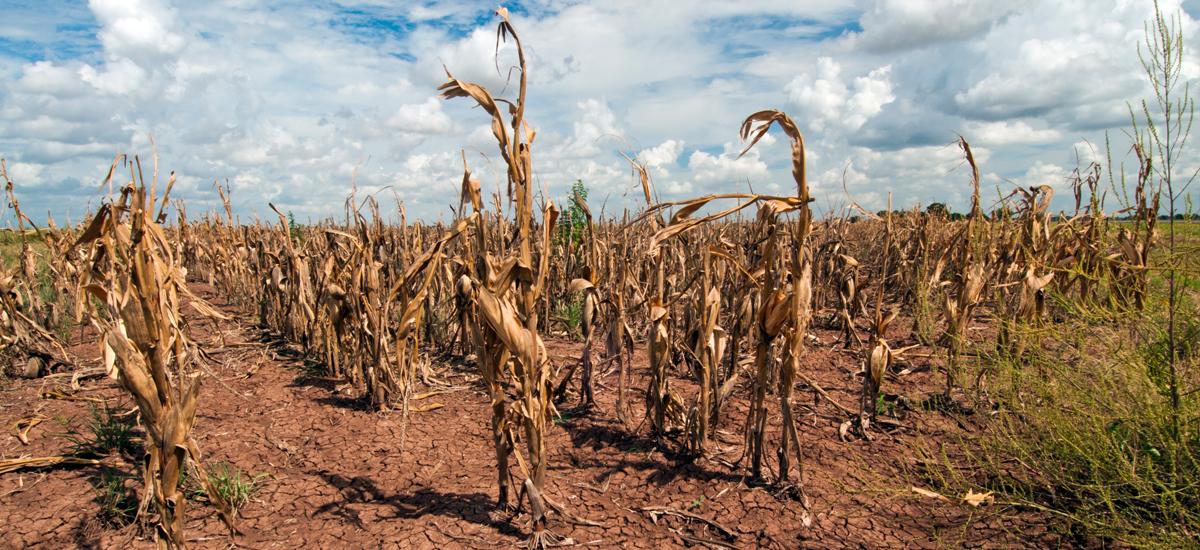
Effects of climate change are Hotter temperatures Nearly all land areas are seeing more hot days and heat waves; 2020 was one of the hottest years on record. Higher temperatures increase heat-related illnesses and can make it more difficult to work and move around. Wildfires start more easily and spread more rapidly when conditions are hotter. More extreme storms Changes in temperature cause changes in precipitation. This comes about in more extreme and visit storms. They cause flooding and avalanches, pulverizing homes and communities, and costing billions of dollars. Many more effects like Droughts, Rise in the level of oceans, shortage of food and more health problems.

Securing biodiversity could be a exceptionally complex errand since most of human’s activities have a negative impact on biological systems by overexploiting them. For occurrence, human exercises create contamination that influences living species. Deforestation crushes the living space of numerous animals, reptiles, and plants. Limiting deforestation Reducing the artificialization of natural environments and preserve natural areas as much as possible Reduce air pollution (by limiting our use of transport and our energy consumption, by switching to renewable energies) Fighting global warming by creating regulations for activities that contribute to the greenhouse effect. Making changes in the way industrial agriculture works and using more agroecology methods.

Climate Change – a looming threat

Photo by Pixabay on Pexels.com

Climate change refers to a change in the average weather conditions of a place. It is one of the biggest crisis that humanity is facing right now.  In 2019, around 11,000 scientists declared a global climate emergency and warned of the dangers to come. Countries across the globe are grappling with the severe effects that reflect the state of the planet. The impact of climate change is intensifying and poses a threat to life on Earth as we know it. The Earth has become warmer than the previous century, and CO2 levels in the atmosphere have risen by 50%. 

Human actions have influenced the rapid climate change we are experiencing today. Cutting trees, burning coal, oil, and gas contribute to an increase in global warming. These activities have led to a drastic increase in CO2 levels in the atmosphere, which traps more heat. According to the 2018 US National Climate Assessment, the emission of greenhouse gases has been the dominant cause of global warming since the mid 20th century. Thus, 97% of scientists agree that human activity is the primary cause of the present climate scenario. 

Humans have exploited nature for the longest time, and we’re facing devastating consequences. Climate change and extreme weather conditions have led to natural disasters on a large scale, leading to the massive loss of life and property. The past few years have proven that climate change is real, as the world woke up to devastating headlines of forest fires, hurricanes, heatwaves, floods, droughts, and storms ravaging countries around the globe. 

IPCC Report:

The Sixth Assessment Report (AR6) by the Intergovernmental Panel on Climate Change (IPCC) of the United Nations recently released the 2021 Climate Report that raised concerns about the climate of the Earth. The report is based on more than 14,000 scientific studies and presents the most comprehensive state of climate change and its impacts. Within the next two decades, the average temperature of the Earth will increase by 1.5 degrees celsius. This increase will lead to extreme weather events. Heatwaves, droughts, floods, and wildfires will occur frequently. The sea levels will rise due to the warming of oceans and melting of glaciers, which pose a threat for the cities along India’s coastline, which are vulnerable to the rising sea levels. All these changes will affect livelihoods, agriculture, and the ecosystem drastically.

Impact:

If the temperature of the planet goes on increasing, weather-related events will become more frequent and dangerous. According to the World Health Organization, climate change will contribute to approximately 250,000 deaths per year due to malnutrition, malaria, diarrhea, and heat-related stress. A new study by scientists from China, Europe, and the US has found that within just 50 years, climate conditions in India could become unlivable, with temperatures as high as the Sahara Desert if the emissions of greenhouse gases continue to rise at the current pace. Scientists predict that we could lose 550 species by the end of this century, and this is only the tip of the iceberg. People living in developing and third world countries will be the most impacted and will face a hard time coping with the consequences of climate change. India is among 11 countries declared as “highly vulnerable” by US Intelligence Agencies to prepare and respond to the climate crisis.

Photo by Markus Spiske on Pexels.com

What we can do:

Governments and corporations cannot tackle climate change alone without the collective help of the people. People have to do their bit and can contribute in their ways to help save the planet. Small daily efforts can help create an impact. The following are some ways in which we can help:

Reduce, Reuse, Recycle 

Consume less meat

Reduce the use of plastic 

Take fewer flights 

Walk and cycle more 

Carry your own shopping bag 

Plant trees and create green spaces

Embrace slow fashion

Compost 

Reduce consumption and wastage 

Spread awareness 

Climate change is a threat to humanity and is a serious issue that needs to be tackled. The present generation is experiencing an overwhelming sense of dread and climate anxiety regarding the future. The Covid19 pandemic provided some climate relief, but that is only temporary. We are running out of time to salvage the planet and its inhabitants, and it is time for governments, corporations, and individuals to step up their climate action to match the scale of the task ahead of us.

Agriculture of the New Age

Using smart techniques like vertical farming, censors, potential land requirements,etc.

Agriculture of today is faced with many problems. The lack of availability of farm lands, limited access to water, climate change, and overpopulation all jeopardize the overall sustainability of farm production. In aiming to produce enough food for the growing population, farmers are forced to increase crop productivity per field unit. So here is the big question that every struggling farmer is faced with: How this can be achieved? Luckily, there is one possible and quite simple solution: the introduction and use of modern technologies in modern farming. New modern technologies not only bring revolutionary changes into farming but also revolutionize the way in which farmers work.

web-650-1

Modern farm management relies on many different factors, including sensing methodologies, farm equipment, enhanced seeds, and farm software which facilitates the tracking of a complete farm production from one central location. Modern technology helps farmers obtain accurate information of crop, soil, climate, and environmental conditions.

Sensors are important tools in modern agriculture management. They are used either to control variable rate application in real-time or to generate field maps of particular soil properties, in conjunction with GPS.

According to variation in soil characteristics that influence the yield, sensors can measure:

  • Soil texture
  • Soil moisture
  • Soil organic matter
  • Soil pH
  • Soil nutrient level (nitrogen, phosphorus, potassium)
  • Cation exchange capacity (CAC)
  • Soil compaction
  • Pest detection
  • Depth of plant roots
  • Soil structure and bulk density.

There are two main types of sensors available to farmers for measuring of various soil characteristics. These are:

1. On-the-go sensors

On-the go sensors are sensors attached to a tractor or to its implement which measure various soil characteristics with or without entering the soil. As a tractor with GPS receiver moves across the field, measured data is generated on a soil map. This map can serve as an information for application rate of fertilizers, pesticides or enhancement of soil properties.  

web-650-1

2. Real-time sensors

Real-time sensors are sensors attached to a tractor or to its implement which record the real-time changes in the soil, such as nitrogen amount or weed presence. The changes are automatically registered by a central computer which coordinates the application of a fertilizer or herbicide. In this case, a product is applied only where it is needed.

Real-time sensors are generally used for variable-rate application where pesticides, fertilizers, and seeds are applied according to measured soil’s or crop’s characteristics.

web-650-1

Sensors for soil mapping are mainly vehicle-based but can also be made by drones. Soil data is captured on-the-go and instantaneously converted into distribution maps. Based on analyzed data, farmers know which part of the field lacks a certain crop nutrient or need to manage its characteristic. This helps minimize the need for farm inputs use and lower financial cost while increasing crop yield.

Technology is increasingly taking over the agriculture sector. Farmers are not dummy village people anymore, they are becoming technologically educated and proud to participate in eradication of world hunger. Be one of them and reduce the hunger by using modern farm technology.

Climate change the greatest threat

Drought and Climate Change | Union of Concerned Scientists

Every other year we face various challenges due to climatic change. The human community is not the only living thing who are facing the problem rather, each and every living organism in the planet is affected due to the climate change. Some scientists have claimed that climate change was first noticed in 19th century when natural green house effect was first identified. Thomas edison was the one who initially voiced concern for climate change and spread awareness for renewable energy. Since that day many people and organisation came forward to promote renewable energy and various steps to reduce the rate at which the climate is changing.

The biggest threat of climate change is global warming. climate change leads to global warming and everybody knows about it but how does it actually affect our planet ? Well the global warming increases the average temperature of the earth due to which the glacier sheets melt and end up increasing the sea level which can submerge majority of the land and it will not only affect the human habitation but also affect the animals life as some animals do not have the capability to handle high temperature.

It can affect the economy as well, as the change in climate might result in droughts and can affect the cultivation of crops which will affect almost every human from every background. Due to climate change many natural resources are also depleting due to which the price of such resources are touching skies and it might become almost impossible for any normal human to afford it. Also pollution is another reason which is affecting the health, not only of humans but also of animals and plants. And who do you think is responsible for this ? obviously we humans are behind this destruction and only we have the power to stop this. Governments can only talk about the possible solutions and it’s implementations but it lies in our hand whether we are implementing right steps to reduce climate change or not. Atleast we are able to raise our voice against it but think about the poor animals who are suffering because of our deeds and can’t even fight for their rights to live in a healthy environment. So next time when you throw a plastic search for a dustbin first. I know such acts won’t have an immediate impact on environment but it really does have long term positive impact on environment.

Climate Change

The phenomenon of rising temperatures of the Earth resulting in change of climate, seasons, rainfall patterns etc. is called Global warming. Global warming and its effects are together referred to as Climate Change. While these changes have been seen before but the rate of change has increased rapidly from the middle of the 20th century. Findings from different recognized scientific organizations support these claims. According to the Intergovernmental Panel on Climate Change (IPCC), “human influence on climate has been the dominant cause of observed warming since the mid-20th century”. The emission of greenhouse gases as a result of human activities have been one of the largest causes for this. Fossil fuels, Chloro-fluro carbons (CFCs), deforestation, rise in different forms of pollution are all behind this.

Photo by Markus Spiske on Pexels.com

Temperature change is also accompanied by loss of snow cover, melting permafrost, frequent natural disasters like cyclones. Land surfaces heat more quickly which have resulted in heat waves, forest fires, increase in desert area. These temperature changes are the highest in the Arctic region. Changes in environmental conditions have led to extinction of several wildlife species in forests, coral reefs etc. Rising carbon dioxide emissions lead to rising sea levels, ocean temperatures and ocean acidification. These changes bring in frequent droughts, extreme weather conditions affecting the equilibrium and natural balance.

Photo by Markus Spiske on Pexels.com

Almost all countries have come together for climate change under the umbrella of the United Nations Framework Convention on Climate Change (UNFCCC). The convention aims to “prevent dangerous anthropogenic interference with the climate system”. It has instructed policy makers that there is much greater risk to human and natural systems if the warming goes above 1.5 °C compared to pre-industrial levels. Under the Paris Agreement, nations have made climate pledges to reduce greenhouse gas (GHG) emissions, but even after following those, global warming would still reach about 2.8 °C by 2100. To prevent this from happening and limit the warming to 1.5 °C, methane emissions need to decrease to near-zero levels and carbon dioxide emissions should reach net-zero by the year 2050.

Governments should act immediately and policies should be constructed to reduce fossil fuel emissions, increase reforestation, forest prevention, use of low carbon energy technologies, food preservation. All societies should work together towards dealing with future global warming problems in a scientific way. Development of more resistant crops, better disaster management should also be considered.

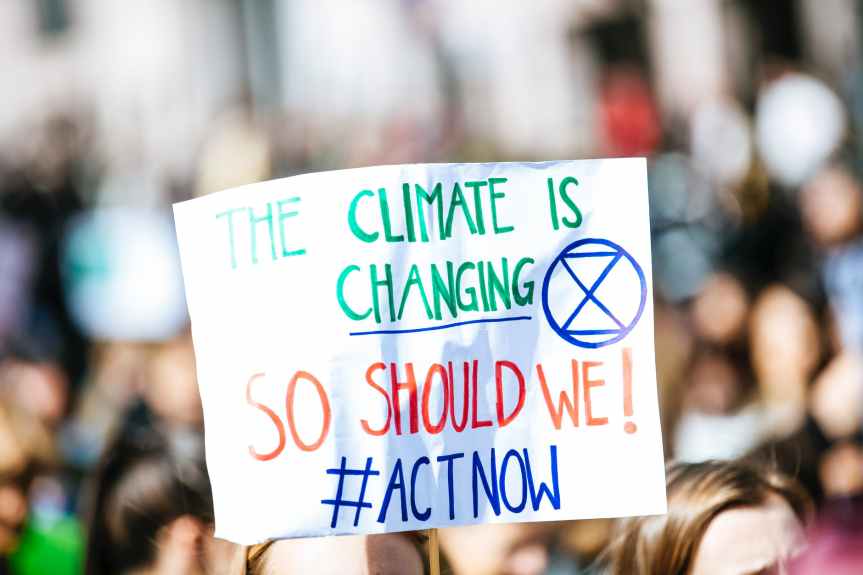
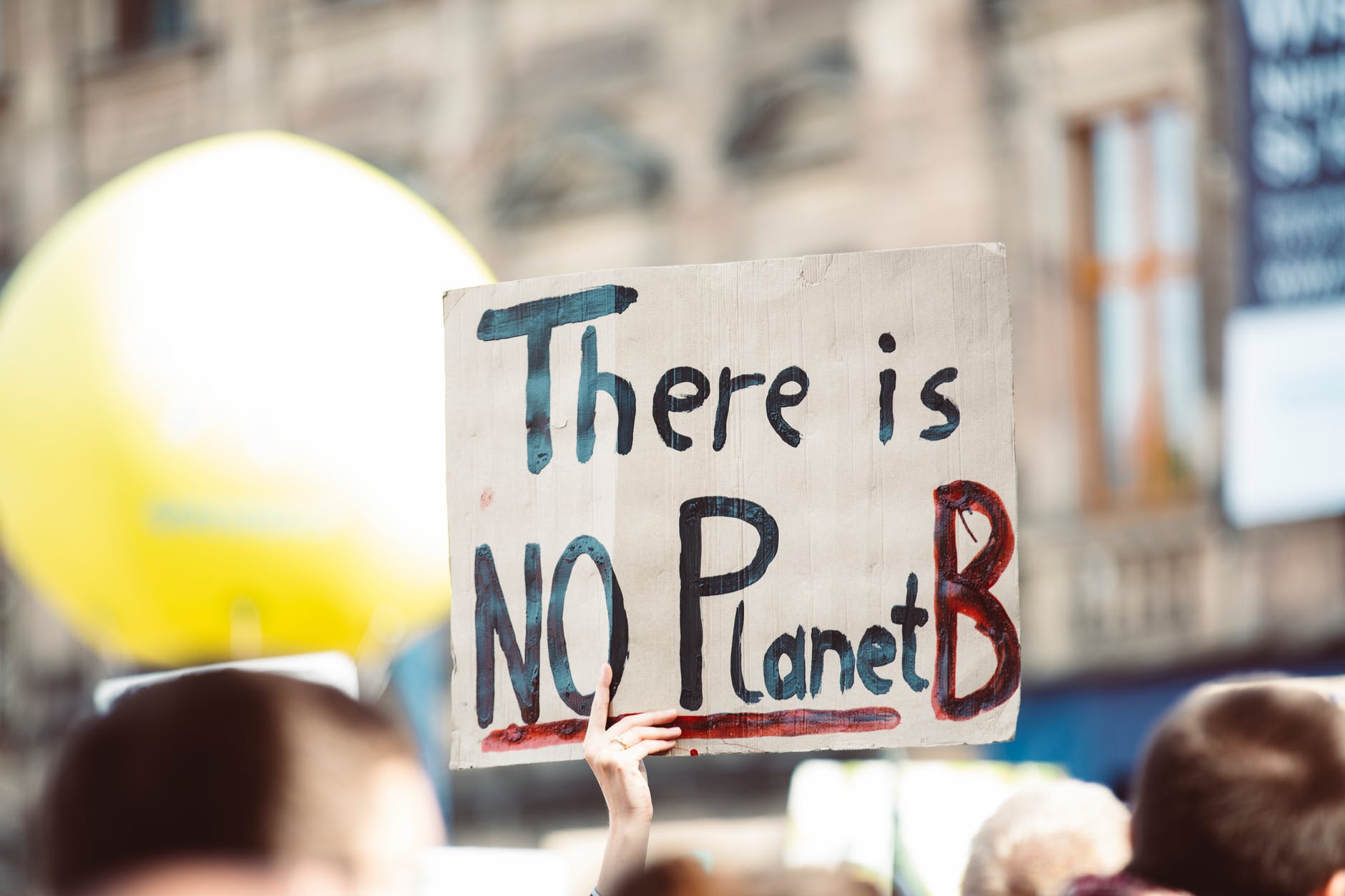
Several international movements have taken place like Fridays For Future where school students take time off from school to aware people and demand climate change action from governments. They demand action from political leaders of the world for the fossil fuel industry to convert to renewable energy and take immediate measures for climate change. This movement was publicised after Greta Thunberg started a protest outside the Swedish parliament with a poster saying “School strike for climate”. She is an environmental activist who has spoken at several internationally recognised platforms. She started her journey as an activist from the time when she had convinced her parents to change their lifestyle for reducing their carbon footprint. She is known for her straight forward manner of speaking at public platforms and criticizing world leaders for their failure to address climate change. She has participated in the United Nations Climate Change Conference (2018) and UN Climate Action Summit (2019). She has also got several awards and made it into the Forbes list of The World’s 100 Most Powerful Women (2019). Though her popularity at such a young age has made her a target of critics, but she continues to work and struggle towards her goal with indomitable spirit.