MENSTRUAL HYGIENE: A MATTER OF CONCERN

INTRODUCTION
Menstrual hygiene: A challenging development issue
The major reasons behind menstruation still being a taboo in the Indian society are illiteracy, poverty and lack of awareness.

WHAT IS MENSTRUATIONS?
The blood coming out from vagina normally occurs as part of a woman’s monthly cycle called menstruation or periods. Every month, our body prepares for pregnancy. The uterus, or womb, sheds its lining in case of no pregnancy . The menstrual blood is partly blood and partly tissue from inside the uterus. We can say that periods are the onset of puberty in girls. During this time a girl goes through several physical and psychological changes in her body. It is associated with bleeding along with stomach ache , nausea as well as mood swings.
After the onset of puberty , it brings various rules, restrictions, isolation and changed expectations in the girls life by the society. These changes in attitude towards girls such as restrictions on their self expressions, schooling, mobility and freedom has far reaching consequences on the mindset of women.
MENSTRUATION- A TABOO
In the Indian society menstruation is still considered as a taboo. Till now, adolescent girls are not given proper information about menstruation. People create major hurdles in educating girls about menstrual hygiene.

Mothers also don’t talk with their daughters about this topic because they feel shy while expressing the terms. Another reason they don’t discuss this topic is because most of them lack scientific knowledge on puberty and menstruation.
Most of the people in India, especially the girls are illiterate. This is one of the reasons for which menstruation is still a relevant taboo in our Indian society. The other important reasons are poverty and lack of awareness about menstrual health and hygiene.
Very less number (less than 18 percent) of Indian women use sanitary pads.

According to the latest National Family and Health Survey 58 per cent of young Indian women (15-24 years) use a hygienic method of protection (mostly sanitary pads) which is a significant increase from the 12 percent using pads in 2010. This is a consequence of greater attention to menstrual hygiene management over the past few years in India. This not only prevails in the Indian society but is a global issue.


On a global level, at least 500 million women and girls lack adequate facilities for menstrual hygiene management. The lack in appropriate information on sanitation and hygiene facilities, especially in public places like schools, workplaces or health centres can pose a major obstacle to women and girls.

In many families women’s freedom is still in the hands of patriarchal discourse. With the evolution of these cultures, there has not been any significant change in people’s attitudes and mentality towards menstruation.

In some families menstruation is still denoted as an unclean or embarrassing thing. For them even mentioning menstruation in public or private places is embarrassing. Most girls feel embarrassed to go to a medical store to buy sanitary pads for them. There are also many girls who cannot afford to buy the Sanitary Napkins.

Most of the girls in financially unprivileged families drop out of school when they begin to menstruate. More than 77 percent of girls and women in India use an old cloth, which is often reused, ashes, newspapers, dried leaves and husk sand during periods.

During these periods women are not allowed to participate in day-to-day activities. They are not allowed to enter the house or carry in with their household chores. They are even restricted from entering the kitchens. They are restricted from entering the temple. They are not even allowed to any sacred places and also not allowed to perform any rituals. They are restricted from doing all these works because they think that a menstruating woman is impure and everything she touches turns impure or bad. They think after menstruation a woman must be purified before entering the house or other places.
While menstruating, a woman goes through several psychological trauma and mood swings . During this time they should be given proper care but instead they are treated poorly by the society.

CONCLUSION
To prevent the troubles faced by the menstruating women in our society, we must give them proper education about menstrual health and hygiene, provide financial support or distribute sanitary napkins to the unprivileged women so that they don’t have to suffer the ill fate.

@track2trainings @track2trainingseminar @track2trainingngo @track2trainingworkshop @socialperceptive @track2trainingworkshop

What happened after Mahabharat

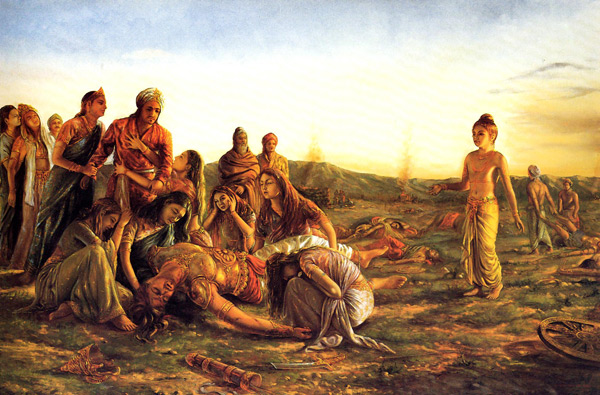
No one told us what happened after the Mahabharat war. Mahabharat is the greatest epic ever written. It has a deeply rooted impact on culture and on the way people behave today. The Kurukshetra war is considered one of the bloodiest war ever fought in human history. What is known is that the Pandavas won and the Kauravas lost. So what exactly happened after the Pandavas won?

After winning the Kurukshetra war the Pandavas are crowned as rulers of Hastinapura. With Yudhishthira leading the affairs. Afflicted Gandhari curses Lord Krishna wishing him and the whole Yadav clan a painful death just like her sons. The Pandavas began to rule Hastinapura for 36 long years. Meanwhile, Gandhari’s curse to Lord Krishna began to work.

Many unpleasant events took place in place in Dwarka. Where Krishna lead an exodus from the entire Yadav’s clan to Prabhas. In Prabhas there is a murderous rebellion among the clan and the Yadav’s end up killing each other to the point of annihilating their entire race. While trying to extinguish the rebellion a hunter mistakenly shoots an arrow at the mortal Lord Krishna and finally kills him.

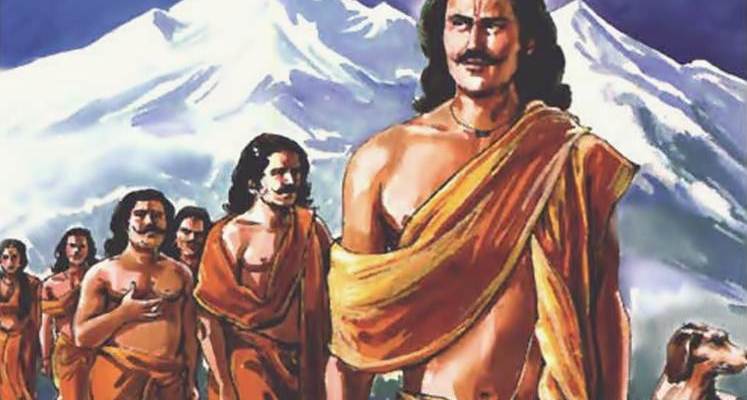
From then on Lord Krishna merges with Maha Vishnu and leaves his mortal human body. After the demise of Lord Krishna Ved Vyas tells Arjun that the purpose of his and his brother’s lives is over. At approximately the same time Dwaper-yuga is about to end and Kali-yuga is about to start. Looking at the chaos and Adharm that seeps into his kingdom, Yudhishthira crowns Parikshit as a king and the Pandavas along with Draupadi decide to climb the Himalayas as final penance to reach heaven. Lord Yumraj (god of death), in the form of a stray dog, joins them on the way to the top.

As they started climbing the Himalayas they began to die. It starts with Draupadi and Bheema is the last one to die. The reasons for their death are associated with their desires, issues and troubles caused by their pride. Only Yudhishthira who was not proud of anything along with the dog arrives at the gate of heaven over the Himalayas. At the gates of heaven Lord Yumraj disguised as a dog reveals his identity and before letting Yudhishthira enter the sky he takes him to travel through the gallows of hell. In hell, he witnesses his brothers and Draupadi redeem their sins. Lord Indra then takes Yudhishthira to heaven and promises that his brothers and Draupadi will be there. This is how Lord Krishna and the Pandavas left the mortal world.

After that, the kali yuga began which is wrold as we know it ‘Today’.

Nvidia Announces 3080Ti And 3070Ti.

  • Credits.Nvidia

Nvidia launced GeForce RTX 3080 Ti, GeForce RTX 3070 Ti at Computex 2021

Nvidia has announced its 3080Ti along with 3070Ti which will give a competition to AMD’s Radeon 6000 series of graphic cards. AMD Radeon 6900XT is the best competitor of Nvidia’s 3080Ti. This is an update over RTX 3080 which includes an increment of 2GB GDDR6X which makes it in total of 12GB VRAM with GDDR6X memory. With an increase of about 18% in memory interface of 384-bit which same as RTX 3090 compared to 320-bit.

Specifications of RTX 3080Ti.

Boost Frequency : 1.67GHz.

Cuda Cores : 10240.

Tensor Cores : 320.

RT Cores : 80.

ROP : 112.

Memory Bus : 384-bit.

Memory : 12GB.

TDP : 350 watt.

Price : 1,22,000.

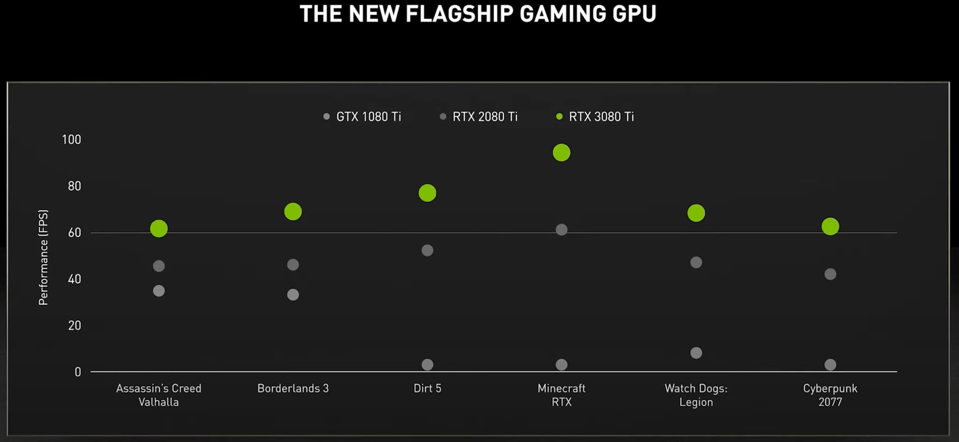
The RTX 3080ti is 1.5X faster than 2080Ti.

Along with 3080Ti the 3070Ti was also announced which comes at an price of 61000.

Specification of RTX 3070Ti

Boost Frequency : 1.7GHz.

Cuda Cores : 6144.

Tensor Cores : 192.

RT Cores : 48.

ROP : 96.

Memory Bus : 256-bit.

Memory : 8GB.

TDP : 290 watt.

Price : 1,22,000.

The RTX 3070Ti is 2X faster then geforce 1070Ti.

How technology can help in solving challenges faced by schools during this pandemic…

The COVID-19 pandemic is prompting many colleges and universities to abruptly and comprehensively adopt online learning, remote work, and other activities to help contain the spread of the virus. In the past decade, institutions have recognized the importance of advising, early alerts, degree planning, and other services to help students attain their academic goals affordably and efficiently. A wide range of applications and new technologies to support student success are now available. It may prove invaluable to help students adapt to fully remote learning. EDUCAUSE data reveal that all institutions, students, faculty, and staff are ready and able to use these technologies during the pandemic.1

This research summary is one of a series of reports outlining higher education’s readiness to adapt in response to the COVID-19 pandemic.

How Many Institutions Are Using Technology to Support Student Success?

Core technologies that support student success include advising center management and an advising case management system that tracks student interactions (70% partial or institution-wide deployment).

Other data and analytics technologies and practices support managing, sharing, and decision-making related to student success.

Some types of institutions are more prepared—or less prepared—than others to use technology to support student success.  Bachelor’s institutions, which typically place the strongest emphasis on campus-based learning, are least ready to use data and technology to support student success, while associate’s institutions, which generally adopt learning and instructional technologies more rapidly, are the most prepared.

Are Faculty, Staff, and Students Able to Use Technology to Support Student Success?

Having technologies and analytics is one step. Providing students, faculty, and staff with the access and training to use these systems is a critical additional step. More than half of institutions take steps to facilitate the adoption and use of student success technologies by faculty, advisors, and other staff. Six in ten institutions provide applications that enable students to access data such as current academic standing and resources including tips for improvement. Students at institutions that don’t provide such access might struggle to track their progress during times when it’s difficult to get such feedback, and faculty, advisors, and other staff may lack sufficient training or even access to use tools to help students.

Do Institutions Have Technology to Help Students with Credential Planning?

Students need to develop, monitor, and adjust their academic plans to ensure they are on track to attain the credentials they seek as expeditiously as possible; sometimes that entails managing academic credits across multiple institutions. This need may be even more pressing given the current disruption and uncertainty brought on by the pandemic. Fortunately, most institutions have a core set of applications to help students plan their educational programs and manage credits, even across institutions. However, fewer than half of institutions have technologies that can recommend courses or degree programs for students based on their academic record or other factors. Most students who have used these technologies find them very or extremely useful

The COVID-19 Corona virus global pandemic is creating a global learning crisis in addition to a global health crisis. 82% of the world’s learners are no longer in traditional schooling or education programs and UNESCO is recommending online learning and education technology to to reach learners remotely.

All Children Reading: A Grand Challenge for Development developed a list of nine ACR GCD-funded solutions to respond to educational needs during the global COVID-19 Digital Response. I’ve added a 10th edutech solution. I invite you to add more in the comments.

Each solution is available for free in multiple languages and, once downloaded, does not require a continuous Internet connection. Ministries of Education, educational development organizations and parents can leverage these tools to support children’s educational needs during school closures.

Edutech Solutions for COVID-19 Response

1. Global Digital Library

This open source digital library offers free accessible eBooks in more than 40 languages readable on the web, mobile, or for downloading and printing. The books can also be translated or localized directly on the platform.

2. Feed the Monster

A winner of ACR GCD and Norad’s EduApp4Syria prize to support the education needs of out-of-school Syrian refugee children, Feed the Monster is an early literacy digital gaming app that teaches children reading and writing fundamentals while collecting and growing their pet monsters. Available in more than 50 languages on Google Play, and in Arabic on the App Store, research shows the app improves children’s early literacy skills and psychosocial wellbeing.

3. Antura and the Letters

Also a winner of an EduApp4Syria prize, Antura and the Letters is available in English and Arabic on Google Play, the App Store and Windows download. Designed for children age 4 and older, the app enables children to catch letters hidden around the world, solve puzzles and earn gifts, alongside Antura the dog. Like Feed the Monster, the research conducted on use of Antura and the Letters shows improvement in children’s early literacy skills and psychosocial wellbeing.

4. Bloom

The winner of ACR GCD’s Enabling Writers prize, Bloom enables teachers, parents and children to easily create leveled and decodable children’s books in any language. Books can be adapted from shell books, or new resources created using Bloom software’s templates for basic books, picture dictionaries and wall calendars, with images available from its free illustration library. Don’t want to create the books yourself? Access the Bloom Library, with basic leveled and decodable books available in more than 220 languages.

5. eKitabu

Winner of multiple ACR GCD prizes, eKitabu offers dozens of books for free download and readable via free e-reader software. eKitabu’s Studio KSL (Kenyan Sign Language) and Studio RSL (Rwandan Sign Language) also offer several sign language videos and sign language storybooks to support accessible, early grade reading.

6. World Around You

Funded through ACR GCD’s Sign On For Literacy prize, WAY enables communities to create content in local and national sign languages and share it in WAY’s open content digital library of folktales. The digital libraries are viewable from any web browser and can be remixed by anyone, including children, with simple text and video editing tools.

7. Bookshare

Children and adults with disabilities such as blindness, low vision, dyslexia and cerebral palsy can access thousands of accessible books on Benetech’s Bookshare platform. Benetech was a winner of ACR GCD’s 2014 grant competition, using the Bookshare platform to provide students who are blind in India access to accessible reading materials. The library is provided to individuals with disabilities for free or low cost, depending on the support of local partners in your region.

8. Kit Kit School

A finalist of ACR GCD’s Sign On For Literacy prize, Kit Kit School is a tablet-based early learning program that includes a suite of games, books, videos, and art and music tools in Swahili and English to support children in learning literacy and math skills independently.

9. Sema

A finalist of ACR GCD’s EduApp4Syria prize, the Sema package of apps enable children to teach themselves how to read, write and do basic numeracy. The curriculum was designed in collaboration with pedagogy experts and teachers in Africa.

10. Worldreader

I don’t know if Worldreader received ACR-GCD, yet Worldreader is a standout educational resource and needs inclusion on a list like this. Worldreader provides people in the developing world with free access to a library of digital books via e-readers and mobile phones. Since 2010, over 13 million people across 47 countries have read from Worldreader’s digital library of thousands of e-books and they have a special COVID-19 effort. Main image is copyright Worldreader.

CAREER IN QUARANTINE

In these pandemic situations,  students, workers and jobbers have a bad effect on their careers. No one is allowed to work at the offices or study at the schools during lockdown days due to the huge break out of corona virus (covid19) worldwide. It has been more than two months since the prime minister has announced the 1st stage of lockdown in India. This decision has a brutal impact on not only country GDP but also careers (of youth especially).

HOW DOES QUARANTINE AFFECT CAREERS?

Career of a student depends on the quality of his education and the good quality education can be given through practicals, labs, experiments apart from classroom teaching. Better equipped labs, qualified staff can result better quality education. When the educational institutions are closed how can the students learn anything related to academics?

Apart from students’ career, many employees lost their jobs, new jobbers, who are going to start their professional career, have been locked at home. Government is providing few bacis necessities but what about their career life? This was the major problem arised during 1st stage of lockdown.

WHAT TO DO IN LOCK DOWN?

There are few beneficiary ways for students to make their lockdown days useful and productive. Many institutions have started provided classes through online with the availabe resources ( online applications, softwares and websites). Though they cannot provide best education as in school premises but it is atleast useful for some extinct. Besides there are few youtube channels which teach online courses for free. But if they feel like not appropriate then there are few sites which offer online trainings and teachings ( paid and unpaid ). How to prove to any company or organisation that we have learnt such a course? Yes, the websites provides certificates either physical or softcopy for those who finished the course.

And what about the employees and jobbers? Few companies provide online working facilities but thousands of employees lost their jobs. Some of them searching for online jobs ( part time or full time ) and internships. They may not be much satisfying for the employees but atleast they got something to work.

Importance of Education in Society

Education plays a massive role in current societal growth and progress. It has been one of the key elements which can significantly impact the development of a society. If people of a society are educated, they can contribute greatly in the fields of arts, literature, science, technology, and others, and ultimately develop a well-rounded and stimulating culture.

Education & Society - The Editors' Desk

It helps to earn money and meet life’s basic needs. Education plays an essential role as it helps an individual in their overall development and help them sit in a pretty good position in a society. It might help you grow in a profession and make your dreams come true. It also helps one set their personal and career goals.

The ways in which Education plays a significant role in the betterment of society are as follows:

Improved Communication:

A quality education helps us to interact with others more easily and more effectively. Keeping in mind that communication is not just about talking to one another and exchanging information. There is a way lot more to it than that. It’s about knowing when and how to listen to one in need, how to use and read someone’s body language.

If one has been deprived of decent level of education, communicating with others via email , letter, fax or even smartphone would be difficult. You may need to know whether to add to anyone in a formal or informal manner, or not. Why is education important within society? The very first reason points out to meaningful interaction amongst one another.

Ability to express views and Opinions:

Many people face problems when they have to express their opinions and personal views. Having a tough time expressing yourself may also be the product of inadequate education and a lack of experience in life.

Education is the source of your work and social progress, as it helps you in better communication and everyone wants to know what you’ve got to say. Just imagine how all those authors and poets became worldwide popular for their ability to influence individuals, if not because of their education. For what cause is education essential to society? Reason 2-People more open-minded.

Social Cohesion:

Education is a wonderful thing but social cohesion is the most beautiful and essential thing that has been associated with it in recent years. Despite our differences, education has made us coexist in consonance with one another.

When you enter every university’s doors you can see people from distinct religions, cultures and races. You’ll be surprised to see that they realized, given all the appearances, that after all, they are not that different

Raising the Standard of Living:

Many people think that education can lead a person to a place where he / she can fulfil all their ambitions and aspirations. But most do not believe in such thinking that education in one’s life tends to create such a difference.

Training alone, too, cannot make you productive unless one really works hard to get to that point. When a person commits himself/herself to quality education, only then the outcome of such commitment can be fruitful.

Conclusion:

With that said, education is mankind’s greatest gift and it is only through information that we will ever be able to coexist peacefully on this beautiful planet. Once we understand this, it is our responsibility to help the younger generations understand how powerful and important education can be. One should have rights and freedoms, rules and regulations living in a society. This knowledge will help to build boundaries around us so that we can follow the rules to have a peaceful life. Education will help to communicate and exchange information and insight with people from different cultures and live in harmony. To be an active participant in society and gain respect from the community, one should learn new things at all times.

Education system in INDIA

By Droupadi Murmu

I take this opportunity to present my votes of thanks to all those guidepost who really acted as lightening pillars to enlighten our way throughout this project that has led to successful and satisfactory completion of this study. I am highly thankful to Mr. Pankaj Jain for her active support, valuable time and advice, whole-hearted guidance, sincere cooperation and pains-taking involvement during the study and in completing the assignment of preparing the said paper within the time stipulated. Without the active participation of our teachers it would have been extremely difficult for me to prepare the project in a time bound framework.

HISTORY OF EDUCATION IN INDIA

Indian education history is very rich and motivating. In the ancient days, gurus and scholars impart education orally, but after the development of letters, it took the form of writing. Palm leaves and barks of trees were used for teaching, and this in turn helped in spreading of the written literature. Temples and community centres often took the role of school. When Buddhism spread in India, education become available to everyone and this was the time when some world famous educational institutions were established like Nalanda, Vikramshila and Takshashila. History has taken particular care to give Nalanda University, which flourished from the fifth to 13th century AD, full credit for its brilliance. This university had around 10,000 resident students and teachers on its roll at one time. These students included Chinese, Sri Lankan, Korean and other international scholars. It was in the 11th century that the Muslims recognized elementary and secondary schools. This led to the forming of few universities too at cities like Delhi, Lucknow and Allahabad. Medieval period saw excellent interaction between Indian and Islamic customs in all fields of knowledge like theology, religion, philosophy, fine arts, painting, architecture, arithmetic, medicine and astronomy. Later, when British arrived in India, English education came into being with the help of the European missionaries. Since then, Western education gained advances in the country. With hundreds of universities and thousands of colleges affiliated to them, India has positioned itself happily as a country that provides superiority higher education to its people in specific and to the world in general.

PRESENT EDUCATION SYSTEM IN INDIA

The present education system in India mainly comprises of-

  1. primary education,
  2. secondary education,
  3. senior secondary education and
  4. higher education

Elementary education consists of eight years of education. Each of secondary and senior secondary education consists of two years of education. Higher education in India starts after passing the higher secondary education or the 12th standard. Depending on the stream(Arts,Commerce or Science). Doing graduation in India can take three to five years. Post graduate courses are generally of two to three years of duration. After completing post graduation, scope for doing research in various educational institutes also remains open. The growing receiving of distance learning courses and growth of the open university system is also causative a lot in the democratization of higher education in india.

WORLD CLASS HIGHER EDUCATION INSTITUTES IN INDIA:

There are quite a good number of educational institutes in India that can compete with the best educational institutes of the world and made India recognizable in the International Education. Some of them are as follows-

Ø The Indian Institutes of Technology (IITs),

Ø Indian Institutes of Management (IIMs),

Ø Indian Institutes of Science, National Law Schools,

Ø Jawaharlal Nehru University are some such institutes.

FACILITIES OF EDUCATION TO MARGINALIZED IN INDIA:

As education is the means for bringing socio- economic transformation in a society, various measures are being taken to enhance the access of teaching to the marginalized sections of the society. One such measure is the introduction of the reservation system in the institutes of higher education. Under the present law:-

(1) 7.5% seats in the higher educational institutes are reserved for the

scheduled tribes,

(2) 15% for scheduled castes and 27% for the non creamy layers of the

Other Backward Classes (OBCs).

PRESENT SCENARIO OF INDIAN EDUCATION :

Soon after independence in 1947, making education available to all had become a priority for the government. As discrimination on the basis of caste and gender has been a major hurdle in the healthy development of the Indian society, it also restricted the educational development of the nation as a whole. The 86th constitutional amendment has also made elementary

education a fundamental right for the children between the age group- 6 to 14. According to the 2001 census:-

Ø The total literacy rate in India is 65.38% .

Ø The female literacy rate is only 54.16%

The gap between rural and urban literacy rate is also very significant in India. This is evident from the fact that only 59.4% of rural population are literate as against 80. 3% urban

population according to the 2001 census

PUBLIC PRIMARY EDUCATION IN INDIA- AN

OVERVIEW:

Early childhood education in India is subject to two extreme but contrary deficiencies. On the one hand, millions of young children in lower income groups, especially rural and girl children, comprising nearly 40% of first grade entrants never complete primary school. Even among those who do, poorly qualified teachers, very high student-teacher ratios, inadequate teaching materials and out- moded teaching methods result in a low quality of education that often imparts little or no real learning. It is not uncommon for students completing six years of primary schooling in village public schools to lack even rudimentary reading and writing skills.

PRIVATE PRIMARY EDUCATION IN INDIA- AN OVERVIEW:

Cildren attending urban schools, especially middle and upper class children in private schools, are subjected to extreme competitive pressures from a very early age to acquire basic language skills and memorize vast amounts of information in order to qualify for admission into the best schools. Parents and teachers exert intense pressure on young children to acquire academic skills at an age when children should be given freedom and encouraged to learn as a natural outcome of their curiosity, playfulness and eagerness to experiment. Necessary steps should be taken to avoid unnecessary pressure for childrens.

GOVERNANCE OF PRIMARY EDUCATION:

Schemes undertaken by the government:

Ø State-wise Allocation of Central Government’s Share Made

Ø Under Sarva Shiksha Abhiyan in India (2006-2007)

State-wise Amount Spent on Elementary Education from Component of Prambhik Shiksha Kosh in India (2006-2007 and 31.10.2007) State-wise Targets and Achievements under Sarva Shiksha Abhiayan (SSA) in India (2002-2007) Selected State-wise Number of Additional Kasturba Gandhi Balika Vidyalayas (KGBVs) Sanctioned in India (As on 01.02.2006)

Funds Released to North Eastern States under CentrallySponsored Schemes for Operation Blackboard and Non Formal Education in India (1997-1998 to 2000-2001) Non Lapsable Central Pool of Resources under Centrally Sponsored Schemes for Elementary Education for North Eastern States in India (1999-2000 and 2000-2001 Progress Recorded under Shiksha Karmi Project in India (upto september2001)

Efforts are also being taken to improve the access to higher education among the women of India by setting up various ecational institutes exclusively for them or eserving seats in the already existing institutes.

Development so far:-

Under SSA,

Ø 1.47 lakh primary schools have been opened across the country,

Ø 1.23 lakh primary schools have been upgraded to have upper primary classes.

Ø 9.86 lakh teachers have been recruited,

Ø children are provided free textbooks,

Ø teachers are provided periodic in-service training,

Ø Mid-day meal is provided to all children in classes 1-8 in

Ø Government and Government aided schools.

GOVERNANCE OF SCHOOL EDUCATION

The National Council Of Educational Research and Training (NCERT) is the legal body for governing the curriculam matters for school education in India. The NCERT provides support and technical assistance to a number of schools in India and give guidance to many educational policies in India. Different Indian curriculam bodies governing school Education in India are as follows:-

  1. The State Government Board
  2. The Central Board Of Secondary Education ( CBSE ) Board
  3. The Council For The Indian School Certificate Examinations ( CISCE) Board
  4. The Indian Certificate Of Secondary Education ( ICSE ) Board
  5. The National Institute Of Open Schooling ( NIOS ) Board

GOVERNANCE OF HIGHER EDUCATION

In order to develop the higher education system, the government had established the

University Grants Commission in 1953(UGC) . The primary role of UGC has been to regulate the standard and spread of higher education in India. There has been a marked progress in the expansion of higher education if we look at the increase of higher educational institutes in India. The higher education system in India comprise of more than 17000 colleges, 20 central universities, 217 State Universities, 106 Deemed to Universities and 13 institutes of National importance. Under the Indian constitution, various minority groups can also set up their own educational institutes. This number will soon inflate as the setting up of 30 more central universities, 8 new IITs, 7 IIMs and 5 new Indian Institutes of science are now proposed.

References

Dehalwar, K., & Sharma, S. N. (2024). Politics in the Name of Women’s Reservation. Contemporary Voice of Dalit, 0(0). https://doi.org/10.1177/2455328X241262562