Rishi sunak: Prime minister of UK

Rishi Sunak born on May 12, 1980, is a British politician who has served as Prime minister designated the United Kingdom and Leader of the conservative party since 24 October 2022. He previously served as Chancellor of the Exchequer from 2020 to 2022 and chief secretary to the treasure from 2019 to 2020. He has been a member of Parliament and MP for Richmond York since 2015.

    Rishi Sunak was born in Southampton to parents of Punjabi-Indian descent who migrated to Britain from East Africa in the 1960s. He was educated at Winchester College read philosophy politics and economics PP at Lincoln College Oxford and gained an MBA from Stanford University in California. As a Fulbright scholar while studying at Stanford, he met his future wife shitamorti, the daughter of Inar Narayana Morty the Indian Billionaire businessman who founded Infosys. Sunak and Morty are the 2022 richest people in Britain with a combined fortune of 730 metres as of 2022. After graduating Sunak worked for Goldman Sachs and later as a partner at the huge fund firms the Children’s investment fund management and Saleem Partner. Sonic was elected to the House of Commons for Richmond in North Yorkshire. Its the 2015 general election succeeding William Hague sonic supported Brexit in the 2016 reference on EU membership he was appointed to Thresha Mays’s second government as the parliamentary government in the 2018 reshuffle he voted three times in favor of Mays’s Brexit withdrawal agreement after May resigned, Sonak supported Boris Johnson campaign to become a conservative leader. After Johnson was elected and appointed prime minister he appointed Sunak as Chief secretary to the treasury Sonak replaced Saja David as Chancellor of ex check after his resignation in February 2020 Cabinetry shuffle as Chancellor sunak was prominent in the government’s financial response to the Covid 19 pandemic and it’s economic impact including the coronavirus job retention and reaches to help out schemes. He resigned as Chancellor on July 2022 followed by Johnson’s resignation amid a government crisis. Sunak stood in the Conservative party leadership election to replace Johnson and last the members vote for Liz Dress following Truss’s resignation amid another government crisis. Sunak was elected unopposed as a leader of the conservative party and is set to become the next British prime minister.  

He is the eldest of three siblings. His father was born and raised in the colony and protectorate of Kenya present-day Kenya while his mother was born in Tanganyika which later became part of Tanzania. His grandfather was born in Punjab province British India and migrated from East Africa with their families to the UK in the 1960s. His paternal grandfather Ramdas Sunak was from Gujranwala in presence Pakistan and moved to Nairobi in 1936 to work as a clerk where he was joined by his wife Suhagwani sunk from Delhi

Sunak’s maternal grandfather rub reason berry MBE worked in Tanganyika as a tax officer and had arranged a marriage with 16-year-old Tanganyika born srksha with whom he had three children the family moved to the UK in 1966 funded by Srksha sold her wedding jewelry Sunk attended school in Romsey Hampshire and Winchester college a boy’s independent boarding school where he was head boy.

Major geopolitical developments and it’s impact on India

Over the past several weeks, a number of important developments have taken place which may appear disconnected at a glance but in fact add up to a significant shift in regional and global geopolitics.

ONE, the withdrawal of US and NATO forces from Afghanistan and the complete takeover of the country by the Taliban. This resulted in chaos and overall disruption of the semblance of peace the country earlier possessed. With the Taliban claiming the residents of the country are happy with their takeover and the disrupted president on the run, the future of the country appears in shambles.

TWO, significant domestic political changes in the People’s Republic Of China. This includes the ideological and regulatory assault against its dynamic private high-tech companies and now recently, its real estate companies. As a result, it has a heightened risk perception among international business and industries which had seen China as a huge commercial opportunity until now. While the economical affairs of the country are entirely their own to manage and govern, there will be a lasting impact on the general job opportunities.

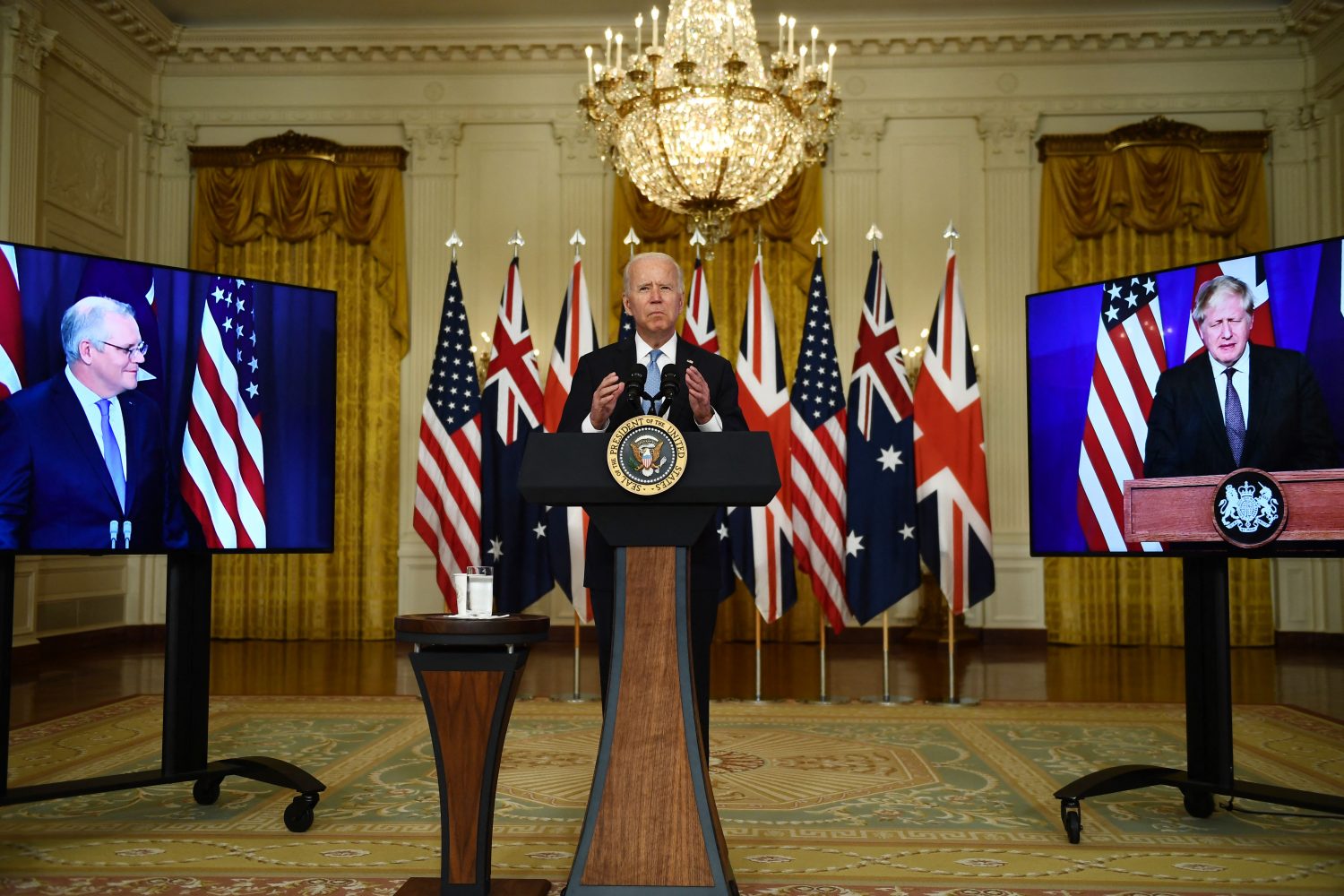
THREE, the announcement of the Australia-UK and US (AUKUS) alliance which represents a major departure in US strategy by its commitment to enable Australia to join a handful of countries with nuclear submarines. The alliance clearly portraits Australia’s strategic choice to firmly support USA despite its considerable economic and commercial equation in China.

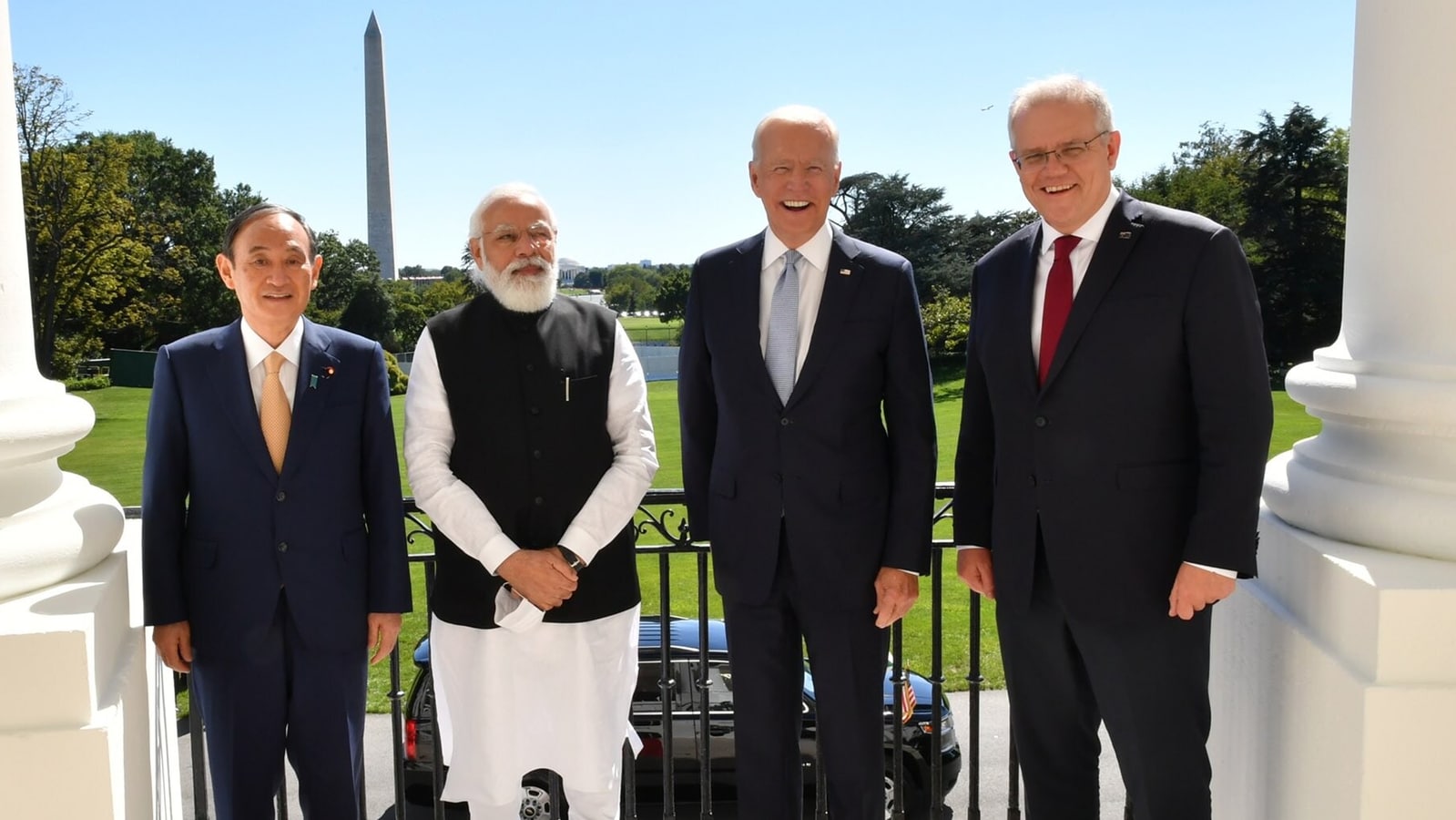
FOUR, the convening of the four nation Quad physical summit (India, Australia, Japan and the US) IN Washington. This reflected a major step towards its formalization as an influential grouping in the Indo-Pacific going beyond boundaries and into a personal level of safeguarding.

These four developments together present India with both risks and opportunities. While the latter outweighs the risks henceforth. It would indeed be fitting to say a future of uncertainties awaits the entire world. Are these measurements a preparation of the unseen future or simply precautions is something only time will reveal.

Written by : Ananya Kaushal

PLIGHT OF WOMEN IN AFGHANISTAN

BY DAKSHITA NAITHANI

The Afghan women, maybe more than anybody else, have dreaded the Taliban’s return. There have been many advances in women’s rights over the last 20 years, which appear to be set to erase nearly overnight.

A quick lesson from history…

The Taliban, a political and military force, is said to have started in Islamic schools in Northern Pakistan in the early 1990s. Its aim was to restore order in Afghanistan following the withdrawal of Soviet troops in 1989, as well as to impose a harsh form of Sharia law. By 1998, the organisation had seized 90% of Afghanistan’s territory.

Once in control, the organisation garnered worldwide condemnation for a slew of human-rights violations. The ban on female education above the age of ten as well as harsh limitations on day-to-day liberties, were among the stringent mores imposed on women and its influence has frequently threatened to expand beyond, to places like Pakistan, where the organisation memorably shot teenager Malala Yousafzai in 2012. Women were treated worse than at any previous period or by any other culture throughout its rule (1996–2001). They were prohibited from working, leaving the house without a male escort, seeking medical assistance from a male doctor, and being compelled to cover themselves from head to toe, including their eyes. Women who had previously worked as physicians and teachers were compelled to become beggars or even prostitutes in order to feed their families during the Taliban’s rule.

Following the 9/11 attacks, it was thought that the Taliban were harbouring Al-Qaeda soldiers, thus an US-led international operation was started against Afghanistan. As a consequence, the Taliban were deposed from power, an Afghan government was established, and soldiers occupied the country for 20 years. It destabilised several regions of the nation due to battles with US and UK forces on a regular basis, and Afghan people were continued to be assaulted. Many would agree that the political and cultural status of Afghan women had improved significantly since the Taliban’s collapse in late 2001.

The Bush administration’s acceptance of women’s rights and empowerment as rationale for its assault on the Taliban is long gone. So it was under the Barack Obama administration, when then-Secretary of State Hillary Clinton stated that the Taliban’s repudiation of al-Qaida and promise to support the Afghan constitution and safeguard women’s rights were preconditions for US discussions with them. The rejection of al-Qaida has yet to be declared openly and publicly less than 10 years later; the constitutional order and women’s rights are still subject to intra-Afghan talks and will be influenced by the changing balance of military power.

In February 2020, US-Taliban peace talks were concluded, with the US pledging a quiet departure in exchange for an end to hostilities. Afghan leaders and top military generals have warned that the government will collapse without foreign assistance. It looks like the worst has transpired only weeks before Biden’s deadline of September 11th.

The Taliban rule wreaked havoc on the institutions and the economy, which had already been ravaged by decades of conflict and the Soviet scorched-earth counterinsurgency policy.

The post-Taliban constitution of 2004 granted Afghan women a wide range of rights, and the political epoch brought social and economic progress, which greatly improved the socioeconomic situation. From a crumbling health-care system with almost no healthcare available to women during the Taliban years, the post regime built 3,135 functional facilities by 2018, giving more than 80 percent of Afghans access to a medical facility within two hours’ drive.

 Less than 10% of females were enrolled in elementary schools in 2003; by 2017, that figure had risen to 33%, while female secondary school attendance increased from 6% to 39%. As a result, 3.5 million Afghan females were enrolled in education, with 100,000 of them enrolled in academic institutions. Women’s life expectancy increased from 56 to 66 years in 2017 and maternal mortality fell from 1,100 per 100,000 live births in 2000 to 396 per 100,000 in 2015. By 2020, women made up 21% of Afghan public workers, including 16% of top management positions, and 27% of Afghan parliamentarians.

 These benefits for women have been dispersed inequitably, with women in metropolitan areas benefiting considerably more than women in rural regions. Despite formal legal empowerment, life for many rural women has not improved much since the Taliban era, notably in Pashtun regions but also among other rural minority groups. Many Afghan males are staunch conservatives. Families often let their daughters to complete a primary or secondary education before proceeding with planned marriages. The burqa is worn by the majority of Afghan women in rural regions without any pushing from the Taliban.

What is the situation for women in Afghanistan now?

Women’s rights in Afghan had arguably maintained pace with many other Western countries prior to the 1970s. Women were granted the right to vote in 1919, one year after women in the United Kingdom. In the 1950s, gender segregation was eliminated, and in the 1960s, a constitution was enacted that included women in political life. As the region became more unstable in the 1970s, these rights were steadily eroded.

Only 38% of the international humanitarian response plan for Afghanistan is financed as of August 2021. This gap might result in the loss of specialised protection services for 1.2 million children, putting them at risk of abuse, recruitment, child labour, early and forced marriages, and sex abuse. About 1.4 million females, many of whom are survivors of domestic abuse, would be left without access to safe spaces where they may receive full care.

Females, who have experienced life with rights and freedoms, are among the most exposed as a result of the Taliban’s fast progress in Afghanistan. As the Taliban capture control of Kabul, they risk losing their hard-won achievements.

Those cries for aid may be too late as the capital city falls into the clutches of Islamist rebels. There have been several stories of the Taliban going door-to-door and compiling a list of women and girls aged 12 to 45 who are then compelled to marry Taliban warriors. Women are told that they cannot leave the house without a male escort, that they cannot work or study, and that they cannot wear anything they want. Schools are also being shuttered.

There is a lot to lose for a whole generation of Afghan women who entered public life – legislators, journalists, local governors, physicians, nurses, teachers, and public administrators. While they worked alongside male colleagues and in communities that were unfamiliar with people in positions of power to help establish a truly democratic civil society, they also wanted to pave the way for future generations to follow in their footsteps.

The Taliban offers itself a broad range of possibilities by claiming that they will “protect” women’s rights under sharia but refusing to explain how women’s rights and life in Afghanistan will alter if they achieve their goals. Even if the government did not openly adopt as cruel a system for women as in the 1990s, the Taliban’s dispositions are quite likely to undermine women’s rights, impose cultural prohibitions on women, and reduce socio-economic possibilities for them.

In summary, even with this change in behaviour, the Taliban in power would almost certainly strive to curtail Afghan women’s legal rights, exacerbating their social, economic, and political circumstances. How much and in what manner, is the question.

Hugging might even lower heart rates and blood pressure

The university of North Carolina conducted a studies with 59 women and found some interesting results after a short series of questions and general chatting about their partner some women ended each session with a 20 second hug

The women who received a hug from their partner had lower blood pressure and heart rates during stressful section of testing the researchers think that oxytocin that we mention earlier might be the causes for their better heart health

Hugging can be good for your heart health. In one studyTrusted Source, scientists split a group of about 200 adults into two groups:

  • One group had romantic partners hold hands for 10 minutes followed by a 20-second hug with each other.
  • The other group had romantic partners who sat in silence for 10 minutes and 20 seconds.

People in the first group showed greater reductions in blood pressure levels and heart rate than the second group.

According to these findings, an affectionate relationship may be good for you heart health.

Oxytocin is a chemical in our bodies that scientists sometimes call the “cuddle hormone.” This is because its levels rise when we hug, touch, or sit close to someone else. Oxytocin is associated with happiness and less stress.

Scientists have found that this hormone has a strong effect in women. Oxytocin causes a reduction in blood pressure and of the stress hormone norepinephrine.

One study found that the positive benefits of oxytocin were strongest in women who had better relationships and more frequent hugs with their romantic partner. Women also saw positive effects of oxytocin when they held their infants closely.

THE G7 SUMMIT

What is the G7?

The G7 stands for the ‘Group of Seven’ and is a assembly of government chiefs from some of the world’s wealthiest nations.

The countries which make up the G7 have met each year since the 1970s. The 2021 summit will be the 47th meeting to take place. It held in UK this year.

The group used to be known as the G8 until Russia was excluded in 2014 because of its takeover of Crimea.

What does the G7 do?

The prime ministers and presidents from the G7 countries meet yearly to discuss problems facing the world – including economic issues, health emergencies and the climate crisis.

Earlier G7 summits have concentrated on subjects ranging from debt relief for developing countries, health emergencies such as HIV and AIDS and global security threats.

Participants, INVITEES AND THEIR probable representatives:

The “Group of Seven” and their representatives are:

  1. Canada was represented by Prime Minister Justin Trudea
  2. France was represented by President Emmanuel Macron
  3. Germany was represented by Chancellor Angela Merkel
  4. Italy was represented by Prime Minister Mario Draghi
  5. Japan was represented by Prime Minister Yoshihide Suga
  6. United Kingdom was represented by Prime Minister Boris Johnson
  7. United States was represented by President Joe Biden

This year UK hosted G7 Summit and was held on 11 – 13 June ‘21

Following Countries were invited and were represented by their respective leaders:

  1. Australia was represented by Prime Minister Scott Morrison
  2. India was represented by Prime Minister Narendra Modi
  3. South Korea was represented by President Moon Jae-in
  4. South Africa was represented by President Cyril Ramaphosa

What happened in the Summit?

Topics of conversation included developing a response to the COVID-19 pandemic and climate change. British Prime Minister Boris Johnson pledged to call for the G7 to work on a world-wide approach to pandemics to ensure a uniform global supply of COVID-19 vaccines and to avoid future pandemics. He suggested a five-point plan to prevent future pandemics, which includes a worldwide network of zoonotic research hubs, developing global manufacturing capacity for treatments and vaccines, the design of a global early warning system, the agreement of global protocols for a future health emergency and the reduction of trade barriers.

The G7 nations decided to pledge 1 billion vaccines to other countries. Johnson also focused on climate change, a top priority for the United Kingdom ahead of the COP26 conference. UK Secretary for Business Kwasi Kwarteng has indicated that Johnson pursued organized action on carbon border taxes, green finance, the phase-out of coal and helping poorer countries to step up climate action. While the taxes have been backed by the EU and US, EU climate ambassador Mark Vanhuekelen designated that Australia may resist the measures. The G7 nations pledged to reach net-zero emissions by 2050.

India has said it supports a follow-up review by the World Health Organization (WHO) for a new and evident enquiry into the roots of the coronavirus pandemic.

News reports on Friday said G7 leaders in their summit at Cornwall in Britain will call for a new investigation into the origins of the coronavirus while assuring one billion doses of vaccines for countries world-wide.