
Sustainable development goal 5: Gender equality

1. Introduction

Sustainable Development Goal 5 (SDG 5) is one of the 17 Sustainable Development Goals adopted by the United Nations in 2015 under the 2030 Agenda for Sustainable Development. It aims to achieve gender equality and empower all women and girls by eliminating discrimination, violence, exploitation, and unequal opportunities in society.

Gender equality is an essential requirement for sustainable development because social and economic progress cannot be achieved when individuals are denied opportunities, rights, or resources because of their gender. Women and girls contribute significantly to economic development, education, healthcare, agriculture, governance, environmental conservation, and community development. However, many continue to face barriers such as unequal wages, limited access to education and employment, unequal participation in decision-making, unpaid domestic responsibilities, and gender-based violence.

SDG 5 recognises that gender equality is not limited to providing equal legal rights. It also requires creating social, economic, political, and institutional conditions in which women and girls can exercise their rights, access opportunities, make independent decisions, and participate equally in development.

The goal is closely connected to other Sustainable Development Goals, particularly SDG 1 (No Poverty), SDG 3 (Good Health and Well-being), SDG 4 (Quality Education), SDG 8 (Decent Work and Economic Growth), SDG 10 (Reduced Inequalities), and SDG 11 (Sustainable Cities and Communities).

2. Definition of Gender Equality

Gender equality refers to a condition in which people of all genders enjoy equal rights, responsibilities, opportunities, and access to resources. It means that a person’s opportunities and treatment should not be restricted by gender-based discrimination or stereotypes.

Gender equality does not mean that everyone must have identical experiences or needs. Instead, it ensures that differences in circumstances do not become a reason for discrimination, exclusion, or unequal treatment.

For example, gender equality in education means that girls and boys have equal opportunities to attend school, receive quality education, choose their subjects, and pursue their career interests. In employment, it means equal opportunities for recruitment, fair remuneration, career advancement, safe working conditions, and leadership.

Gender equality also involves recognising the value of unpaid care work, ensuring freedom from violence, and enabling women to participate in decisions that affect their households, communities, and countries.

3. Main Objective of SDG 5

The official objective of SDG 5 is:

“Achieve gender equality and empower all women and girls.”

The goal focuses on removing structural and social barriers that prevent women and girls from enjoying equal rights and opportunities. It seeks to address both direct discrimination, such as denying someone employment because of gender, and indirect inequalities, such as inadequate public transport, unsafe streets, or a lack of childcare facilities that restrict access to education and work.

The major objectives include:

  1. Eliminating all forms of discrimination against women and girls.
  2. Ending gender-based violence, exploitation, trafficking, and harmful practices.
  3. Recognising and valuing unpaid domestic and care work.
  4. Ensuring equal participation and leadership in political, economic, and public life.
  5. Providing equal access to healthcare, economic resources, property, technology, and financial services.
  6. Strengthening laws, policies, and institutions that promote gender equality.
  7. Expanding women’s opportunities to participate in sustainable development and decision-making.

4. Table: Targets of Sustainable Development Goal 5 (SDG 5)

TargetTitleDescription
5.1End discriminationEliminate all forms of discrimination against women and girls everywhere.
5.2Eliminate violenceEliminate all forms of violence against women and girls in public and private spaces, including trafficking, sexual exploitation, and other forms of exploitation.
5.3End harmful practicesEliminate harmful practices such as child, early and forced marriage and female genital mutilation.
5.4Recognise unpaid care workRecognise and value unpaid domestic and care work through public services, infrastructure, social protection, and shared household responsibilities.
5.5Ensure equal participationEnsure women’s full and effective participation and equal opportunities for leadership in political, economic, and public life.
5.6Ensure reproductive health and rightsEnsure universal access to sexual and reproductive healthcare and reproductive rights in accordance with internationally agreed frameworks.
5.aEqual economic resourcesUndertake reforms to give women equal rights to economic resources, property ownership, inheritance, land, and financial services.
5.bUse technology for empowermentEnhance the use of enabling technology, particularly information and communication technology, to promote women’s empowerment.
5.cStrengthen policies and lawsAdopt and strengthen sound policies and enforceable legislation to promote gender equality and empower all women and girls at all levels.

5. Importance of SDG 5

Gender equality is essential for achieving inclusive, balanced, and sustainable development. Its importance extends beyond the rights of individuals because gender inequalities affect household welfare, economic productivity, public health, education, governance, and the overall development of communities.

5.1 Social development

Gender equality helps create a society in which individuals can access education, healthcare, employment, and public services without discrimination. It also challenges stereotypes that restrict the roles of women and girls in families and communities.

When women have equal opportunities to participate in social life, communities benefit from a wider range of experiences, knowledge, and perspectives. Equal treatment also contributes to greater dignity, independence, and social inclusion.

5.2 Economic development

Women’s participation in the workforce, entrepreneurship, agriculture, and business contributes to economic productivity and household financial security. Gender-based barriers can prevent societies from making full use of the skills and abilities of their populations.

Equal pay, fair recruitment, access to credit, property rights, and opportunities for professional advancement can improve women’s economic independence. Recognising unpaid care work is also important because household and caregiving responsibilities support the functioning of the wider economy.

5.3 Education and skill development

Equal access to education allows girls and women to develop their knowledge, skills, and career opportunities. Education can improve awareness of legal rights, health, financial management, and civic participation.

Gender equality also requires removing barriers such as unsafe journeys to school, inadequate sanitation facilities, discriminatory attitudes, and restrictions on subject or career choices.

5.4 Health and well-being

Gender equality supports access to healthcare, informed health decisions, reproductive health services, and protection from violence. It also encourages institutions to address gender-specific barriers to healthcare access.

Accessible health centres, affordable services, appropriate information, and safe transport are important for ensuring that women and girls can obtain the care they need.

5.5 Political participation and governance

Women’s participation in decision-making strengthens democratic representation and can help public institutions respond to a wider range of community needs.

Women should be able to participate in elections, hold public office, lead organisations, and contribute to the preparation and implementation of development policies. Their participation should be meaningful rather than merely symbolic.

5.6 Sustainable urban and rural development

Gender equality is directly connected to the planning and management of settlements. The location of housing, schools, healthcare facilities, employment centres, markets, and public transport affects how easily people can access opportunities.

For example, a woman living in a peripheral settlement may face additional difficulties if public transport is infrequent, healthcare facilities are distant, and walking routes are unsafe. Inclusive planning can reduce these barriers by improving connectivity, accessibility, public services, and safety.

6. Major challenges in achieving SDG 5

Despite improvements in legislation, education, and women’s participation in public life, several challenges continue to affect progress towards gender equality.

6.1 Gender stereotypes and social norms

Traditional beliefs about the roles of women and men can restrict educational choices, employment opportunities, mobility, and decision-making. Expectations that women should primarily manage household responsibilities can also limit their professional development. Addressing these attitudes requires education, public awareness, equal participation in household decisions, and the promotion of shared responsibilities.

6.2 Unequal access to employment and income

Women may face barriers in recruitment, career advancement, access to finance, and entrepreneurship. Unequal distribution of unpaid care responsibilities can further reduce their ability to participate in paid employment. Equal employment opportunities, fair wages, skill development, affordable childcare, and supportive workplace policies can help address these inequalities.

6.3 Gender-based violence and safety concerns

Violence and harassment in homes, workplaces, educational institutions, and public spaces remain serious barriers to equality. Fear of unsafe environments can affect women’s ability to travel, work, study, and participate in public life. Addressing this challenge requires effective legal protection, accessible support services, public awareness, and safe, inclusive environments.

6.4 Unequal distribution of unpaid care work

Domestic responsibilities are often distributed unequally within households. When women spend a disproportionate amount of time caring for children, older people, and other family members, they may have less time for education, employment, and recreation. Public childcare, accessible healthcare, improved basic infrastructure, and shared household responsibilities can reduce this burden.

6.5 Limited representation in leadership

Women remain underrepresented in many senior positions in politics, administration, business, and technical fields. Barriers can include discrimination, limited professional networks, unequal access to opportunities, and the burden of unpaid care work. Leadership training, inclusive recruitment, institutional support, and meaningful participation in decision-making can improve representation.

6.6 Digital inequality

Limited access to mobile phones, affordable internet, digital skills, and online services can prevent women from benefiting equally from technological development. Digital literacy, affordable connectivity, access to devices, and protection against online abuse are important for reducing this gap.

6.7 Unequal access to property and financial resources

Inadequate awareness of legal rights, restrictive social practices, and limited access to financial services can prevent women from controlling land, housing, savings, and productive resources. Improving legal awareness, enforcing property rights, supporting financial inclusion, and facilitating access to credit can strengthen women’s economic independence.

7. Strategies to achieve SDG 5 by 2030

Achieving SDG 5 requires coordinated action by governments, educational institutions, employers, communities, civil society organisations, and individuals.

1. Strengthen laws and implementation: Ensure that anti-discrimination laws and protections against violence are effectively implemented, monitored, and accessible to those who need them.

2. Promote equal education: Improve access to quality education, vocational training, digital literacy, and career guidance for girls and women.

3. Expand economic opportunities: Support women’s employment, entrepreneurship, access to credit, fair remuneration, and professional advancement.

4. Improve safety and public services: Provide safe public transport, well-maintained pedestrian routes, adequate lighting, accessible healthcare, public toilets, and childcare facilities.

5. Share unpaid care responsibilities: Encourage equal participation in domestic work and expand public services that reduce the time required for household tasks.

6. Increase women’s participation in governance: Include women in local government, urban planning, public consultations, and leadership positions.

7. Promote digital inclusion: Improve access to mobile devices, affordable internet, digital skills, and safe online environments.

8. Improve data collection: Collect and analyse data by sex, age, income, disability, and location where appropriate, while protecting privacy. Reliable data can help identify inequalities and evaluate policies.

9. Allocate adequate funding: Integrate gender considerations into government budgets and monitor expenditure and outcomes.

10. Change social attitudes: Encourage families, schools, workplaces, and communities to challenge discriminatory stereotypes and promote equal rights and responsibilities.

8. Conclusion

Sustainable Development Goal 5 is a fundamental component of the global sustainable development agenda. It aims to eliminate discrimination, prevent violence, end harmful practices, recognise unpaid care work, improve access to resources, and ensure equal participation in decision-making.

Gender equality benefits individuals, families, communities, and economies. However, achieving it requires more than introducing laws or launching government programmes. It also requires changing discriminatory social attitudes, improving access to education and employment, strengthening institutions, and ensuring that women can participate meaningfully in decisions that affect their lives.

From an urban planning perspective, gender equality means creating settlements where everyone can access housing, transport, healthcare, education, employment, and public spaces safely and conveniently. Gender-sensitive planning, inclusive infrastructure, accessible public services, and women’s participation in local governance can help reduce inequalities.

Ultimately, SDG 5 can be achieved only when equal rights are supported by equal opportunities, effective institutions, accessible services, and meaningful participation in society. Its success is essential for achieving the broader objective of sustainable development by 2030.

References

1. United Nations Department of Economic and Social Affairs. (n.d.). Goal 5: Achieve gender equality and empower all women and girls.
https://sdgs.un.org/goals/goal5

2. United Nations Statistics Division. (n.d.). Global Indicator Framework for the Sustainable Development Goals.
https://unstats.un.org/sdgs/indicators/indicators-list/

3. United Nations. (2025). The Sustainable Development Goals Report 2025.
https://unstats.un.org/sdgs/report/2025/

4. NITI Aayog, Government of India. (2024). SDG India Index 2023–24.
https://www.niti.gov.in/sites/default/files/2024-07/SDG_India_Index_2023-24.pdf

5. Ministry of Women and Child Development, Government of India. Mission Shakti.
https://wcd.gov.in/

6. Government of India. The Constitution of India. Legislative Department, Ministry of Law and Justice.
https://legislative.gov.in/constitution-of-india/

7. Government of India. India Code: Digital Repository of Laws and Legislation.
https://www.indiacode.nic.in/

8. United Nations. (1995). Beijing Declaration and Platform for Action. Fourth World Conference on Women.
https://www.un.org/womenwatch/daw/beijing/platform/

9. United Nations Entity for Gender Equality and the Empowerment of Women (UN Women). Gender Equality: Women’s Rights and Empowerment.
https://www.unwomen.org/en

10. United Nations Development Programme (UNDP). Gender Equality.
https://www.undp.org/gender

WOMEN SAFETY

Top 100 Motivational Quotes on Women Safety in 2021

India is a country known for its rich beautiful culture and tradition. Women are given the place of goddess Lakshmi in the Indian culture.Women in India have been given equal rights as men; however, people do not follow this rule. They contribute to the growth and development of our country; still, they are living in fear. Women are now on respected positions in the country, but if we take a look behind the curtains, we see even then they are being exploited. Each day we read about horrific crimes being committed against women in our country like it’s a norm.

CRIMES

The list of crimes against women is quite long, to say the least. Acid attack is becoming very normal is various parts of the country. The criminal throws acid on the face of the victim to destroy their lives completely. Nonetheless, India has a lot of strong acid attack survivors who are battling for their lives and trying to lead their lives independently.

Domestic violence  and honor killings are very common. The wife stays in an abusive relationship because of the fear of society. The family kills their daughters in the name of honor to keep up with the reputation of their family. Similarly, female foeticide is yet another common crime. Due to the regressive thinking, people kill daughters before they are born.

In India domestic abuse, sexual assault and murder are common forms of violence against women. Dowry death is an ultimate form of murder. Indians are still with the psychology that dowry is tradition and girls’ father loses everything to pay it. Domestic violence or domestic abuse is done by one partner with the other partner in a relationship. The rate of domestic violence is increasing in India. 70% of women are victims of domestic violence. It leads to depression and suicides. It’s not a direct murder but it is a cause of murder for sure. Moreover, girls are forced into marriage at a young age. This child bride is not even mature enough to understand her responsibility. Acid throwing is a form of violent assault which ruins the beautiful girl’s life. ‘Cheat in a relationship’ is the other commonly found crime against women. A man easily breaks up with his wife and starts a new life with another bride. 

The list continues as crimes against women are on the rise. Other crimes also include child marriages, child abuse, rape, trafficking and many more.

WAY TO ENSURE WOMAN SAFETY

Quotes about Protect Women (59 quotes)

Although the list of crimes is very long, we can take measures to ensure women’s safety in our country. Firstly, the government must make stringent laws that ensure the punishment of criminals immediately. Fast track courts must be set so the victim gets justice instantly. This will serve as a great example for other men to not commit crimes against women.

Most importantly, men must be taught to respect women from an early age. They must consider women as equals so they don’t even think of harming them. When you consider someone inferior, you tend to oppress them. If this thinking goes away, half of the crimes will automatically end.

In short, crimes against women are stopping the growth of our country. We must not put the blame on women and ask them to be extra careful. Instead, we must ask the men to change their thinking and work to make the world a safer place for women.

FIGHT BACK ! BE ALERT!

About Teen Pregnancy

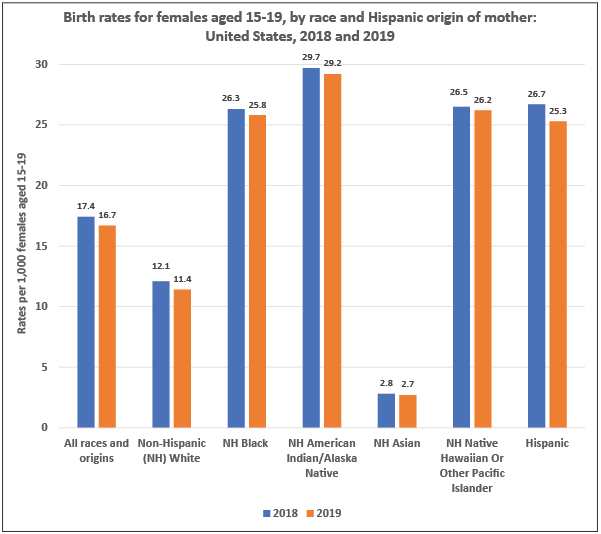
The US teen birth rate (births per 1,000 females aged 15 to 19 years) has been declining since 1991.  Teen birth rates continued to decline from 17.4 per 1,000 females in 2018 to 16.7 per 1,000 females in 2019.  This is another record low for US teens and a decrease of 4% from 2018. Birth rates fell 7% for females aged 15 to 17 years and 4% for females aged 18 to 19 years.

Although reasons for the declines are not totally clear, evidence suggests these declines are due to more teens abstaining from sexual activity, and more teens who are sexually active using birth control than in previous years.

Still, the US teen pregnancy rate is substantially higher than in other western industrialized nations, and racial/ethnic and geographic disparities in teen birth rates persist.

Disparities in Teen Birth Rates

Teen birth rates declined from 2018 to 2019 for several racial groups and for Hispanics. Among 15- to 19-year-olds, teen birth rates decreased:

  • 5.2% for Hispanic females.
  • 5.8% for non-Hispanic White females.
  • 1.9% for non-Hispanic Black females.

Rates for non-Hispanic American Indian/Alaska Natives (AI/AN), non-Hispanic Asians, and non-Hispanic Native Hawaiian, and other Pacific Islander teenagers were unchanged.

In 2019, the birth rates for Hispanic teens (25.3) and non-Hispanic Black teens (25.8) were more than two times higher than the rate for non-Hispanic White teens (11.4). The birth rate of American Indian/Alaska Native teens (29.2) was highest among all race/ethnicities.

Birth Rates for Females Aged 15 to 19 Years, by Race and Hispanic Origin of Mother: United States, 2018 and 2019

Birth Rates per 1,000 Females Aged 15 to 19 Years, by Race and Hispanic Origin of Mother: United States, 2018 and 2019.  All races and origins, 2018: 17.4; 2019: 16.7 Non-Hispanic White, 2018: 12.1; 2019: 11.4 Non-Hispanic Black, 2018: 26.3; 2019: 25.8 Non-Hispanic American Indian/Alaska Native, 2018: 29.7; 2019: 29.2 Non-Hispanic Asian, 2018: 2.8; 2019: 2.7 Non-Hispanic Native Hawaiian or Other Pacific Islander, 2018: 26.5; 2019: 26.2 Hispanic, 2018: 26.7; 2019: 25.3

Data source: Martin JA, Hamilton BE, Osterman MJK, Driscoll AK. Births: final data for 2019. Natl Vital Stat Rep. 2021;70(2):1–50.

Geographic differences in teen birth rates persist, both within and across states. Although among states with low overall teen birth rates, some counties have high teen birth rates.

Social determinants of health, such as low education and low income levels of a teen’s family, may contribute to high teen birth rates. Teens in certain settings are at higher risk of teen pregnancy and birth than other groups. For example, young women living in foster care are more than twice as likely to become pregnant than young women not in foster care.

To improve the life opportunities of adolescents facing significant health disparities and to have the greatest effect on overall US teen birth rates, CDC uses data to inform and direct interventions and resources to areas with the greatest need.

The Importance of Prevention

female  and male teen

Teen pregnancy and childbearing are associated with increased social and economic costs through immediate and long-term effects on teen parents and their children.

  • Pregnancy and birth are significant contributors to high school dropout rates among girls. Only about 50% of teen mothers receive a high school diploma by 22 years of age, whereas approximately 90% of women who do not give birth during adolescence graduate from high school.
  • The children of teenage mothers are more likely to have lower school achievement and to drop out of high school, have more health problems, be incarcerated at some time during adolescence, give birth as a teenager, and face unemployment as a young adult.
  • On a positive note, between 1991 and 2015, the teen birth rate dropped 64%, which resulted in $4.4 billion in public savings in 2015 alone.

Feminism in India

A feminist is anyone who recognizes the equality and full humanity of women and men.”-Gloria SteinemSo, what is feminism? Feminism is an action of the society to bring rights to women and treat them equally regardless of their gender. Feminism is not something that should be endorsed by a woman only ,it can be carried forward by a man too. As said by G.D Anderson,” Feminism isn’t about making women strong, women are already strong, it’s about changing the way the world perceive that strength.” The fact itself is so confusing to understand the imbalance between two genders despite of any human being who is born with the same type of skin and color of blood. A woman deserves the same respect a man has without facing the question about their gender. Needless to say , patriarchy runs deep in our Indian society . A woman is forced to feel weak and small in front of a man and enforced to stay within a certain boundary. The long injustice in the name of gender has led to the topic of  feminism.
The importance of feminism in India is utmost. History has been an evident of feminism culture and its significance. The first and the foremost reason to bring this revolution is to change the mentality and to achieve a society free from male dominance. It has been a long battle for women to fight for their rights even if it’s about their decision. It is sad that till today a girl has to accept a man as her husband without her consent. A married woman is forced to do the household work and do not have the right to have a job hand in hand. Feminism plays an important part in the society because it demands equality among genders. Every year lakhs of female fetus get buried due to the burden of carrying a responsibility and the fear of giving dowry in marriage. Do you know Indian culture also discriminate working profession in regard of gender? Yes, in the past women could only do a job if that is approved by the male society and not judged by her talent. Feminism helps to remove such inequality. Today because people are giving importance to it, women like Mirabai Chanu and Lovlina Borgohain could outshine in their own field. No doubt with different kind of body framework and organs women have to undergo certain changes to meet the reproductive life. Menstruation is a big taboo, where women are considered impure during period cycle. Also there needs to have a stoppage of peoples hindering nature. Needless to say, women sometimes give rise to the inequality they once suffer from. Her mother-in-law force her to behave in a certain way, to cover her face whole life, to dress decently and ultimately it turns to be a social practice in a community.With change in generation and people advancing mindset things are changing and women are getting their rights. Topics like women empowerment, Beti bachao Beti padhao making people aware of the crucial role of a woman in balancing the atmosphere. Now a days, highly restricted states like Haryana is producing Miss world, wrestler like Geeta Phogat and Nirmala Devi. With the hope that one day the country would be free of gender inequality. Thus, people need to carry this journey forward and bring a change where both men and women could walk in the street without having the fear of getting killed or molested as a girl rather with the feeling safety to chase their dreams.

ReplyForward

WOMEN SAFETY IN INDIA

Women in India, today, are becoming the most vulnerable section as far as their safety and security is concerned. Women are the greatest strength of our society and it is so disheartening to see that they are getting unsafe day by day as the number of crimes against them are increasing. According to a poll by Reuters, India has been ranked the most dangerous country out of the world’s 10 worst countries for women. When we turn the pages of a newspaper, we come across many headlines reporting cases of molestation, harassment, trafficking, ill treatment of women in houses, violence against women in remote areas etc. Women feel unsafe and unsecure and feel that their freedom and liberty are expose to risk. It is unbearable to imagine the plight of women who are sufferers of such crimes. It is a shake on the confidence of the women of the society and on our judicial system.

According to the National Crimes Records Bureau(NCRB), India recorded 88 rape cases every day in 2019 and crimes against women increased by 63.3% in the first six months of 2021. NCRB report highlights that rape vulnerability of a girl or woman has increased up to 44% in the last 10 years. As per the latest NCRB data, KOLKATA comes out on top in safety, not just for women, but overall as well. To protect women from domestic violence THE PARLIAMENT OF INDIA passed ‘The Protection of Women from Domestic Violence Act 2005’.

IMPORTANCE OF WOMEN SAFETY-

Safety of women is very important in this cruel and evil society. As the number of cases are arising against women, it is very important to exercise the laws and get the criminal arrested and punished as soon as possible. It helps women be calmer, understanding and they feel protected. They will trust the government if the criminal gets required punishment in time. It will develop body and mind control in them. They will take active part in every thing if proper safety is ensured to them. There are laws but there should be proper safety measures which we have to follow strictly to protect the women from violence.

We generally play the blame game for any such incidence and hence have not succeeded to reach the root cause of this issue. An effective implementation of loss protecting women’s rights is the first step in this direction. There should be stringent loss and the criminals of such crime should be severely punished.

CRIMES AGAINST WOMEN-

In India, sexual harassment, rapes, domestic violence, dowry cases and murder are common forms of violence against women. It is found in some places that even today, there is a tradition of taking dowry from the girl’s family and the father sacrifices and loses everything to pay it. Domestic violence is also increasing very badly where one partner or a man abuses another another partner or a girl in a relationship. It leads to depression and suicides. It’s not a direct murder but it is the cause of murder for sure. Cheating in a relationship and giving divorce is also a crime against women which destroys the whole life of a women and the man easily finds a new girl and marries her. Acid throwing is considered to be the most heinous crime against women which ruins the beautiful girl’s life and left her in a state of shock.

HOW CAN WE SAFEGUARD WOMEN OF OUR SOCIETY?

We also need to create social awareness about these issues and ostracise those who commit such crimes and not the victims. Women safety is a crucial concern in India and a lot of organisations started working on it after Nirbhaya’s case. Women should be taught some self-defence tips and tricks in schools, colleges, offices and residential colonies, so that if anyone tries to harm them, they can apply these tricks to protect them and hurt the person trying to attack her. Also, various videos of self-defence techniques are uploaded online, on various social media platforms for educating women’s safety. Women should always put some chilly powder, ginger-garlic paste or some harming materials while going out to harm the attacker. To ensure the security of the women in the country, the entire population should be well-educated and the laws should be very tough against every kind of crime. Both the men and women of the society should be empowered with proper education and income so that they can fight against any harm to them. There are also various helpline numbers for ensuring women safety in India. Only when these measures are taken, India can become a carefree and enjoyable place for women when they can go where ever they like to without any fear of being stared at, molested or discriminated.

”It took me quite a long time to develop a voice, and now that I have it, I am not going to be silent”. – Madeleine Albright

Women Safety in India: Still a Major Concern?

Women Safety in India - An Unending Struggle? – BloggerBunny

Protection of women in India has become a crucial issue. We cannot assure the safety of the women nowadays because if we read a newspaper or go on social media, the news of girls getting raped by cab drivers, acid burning, child marriage, domestic violence, molestation is flooded from different parts of India. Such incidents have created fear and fright among young girls and women. They don’t feel safe in their own country. In rural areas, the conditions are worse where women are burned and killed by in-laws or tortured for dowry. Moreover, female infanticide is still practised in some remote areas.

The most dreadful event that the country faced was the Nirbhaya gang-rape incident. To curb such horrendous crimes against women, the government has passed laws for women’s safety. They are Child Marriage Restraint Act 1929, Hindu Marriage Act 1955, Dowry Prohibition Act 1961, Deaths and Marriages Registration Act 1886, Indian Divorce Act 1969, Equal Remuneration Act 1976, Prohibition of Sex Selection Act 1994, Protection of women from Domestic Violence Act 2005, Sexual Harassment of Women at Work Place Act 2013 etc. and many more.

How to Ensure Women Safety in India?

Everyone requires to determine and willingly agree that every person has the freedom to feel safe. Indian constitution states that every person is even before the law. But unfortunately, it is not practiced everywhere. Women and girls around the world should be given access to education, freely walk at any place, reach to hospitals, the opportunity of choosing a career, freedom of choice of marriage partner and also the freedom to wear their own choice of clothes. They should not be punished for the selection of garments, friends, and other extra-curricular activities.

Education is the demand for the hour to eradicate such problems and to help individuals in the nation recognize and respect limits, and approval in order not to dishonor women’s rights. As individuals, we can regard each other with respect. Let us stand as active bystanders where we stop sexual violence and interfere if any such incidence happens anywhere with the women. Most importantly, do not perpetuate it.

Role of the Government:-

The Government must ensure that the law in force is activated. What is the point of having women’s security law if the order is definitive and inhibiting? There is a requirement to improve the infrastructure to secure women’s freedom. Notwithstanding the production of various efficient laws and ordinance by the Government of India to trade with and set assaults against females, the volume and repetition of sins against females are growing daily. The state of women in the country has been metal assault and offensive in the past few years.

Women’s belief in their protection in their country has decreased. Women are in questionable conditions for their security and anxiety while going everywhere or outside their houses (such as office, market, etc.). We should not criticize the government, because it is not just the duty of the government to safeguard women but of every citizen of India, especially the people who require it. Research that put India as the most unsafe place due to its raised incidence of sexual violence, deficiency of access to trial in rape instances, child wedding, female feticide and trafficking in human beings. India surpassed nations that have a high rate of women’s criticism.

The safety of women in India is a significant concern today. We cannot say that women are safe in India by going through crimes against women in the past few years. Women feel frightened to move out and roam around by themselves.

Some Major Safety Tips:-

  • Self-defense routines are the first and foremost method that every woman must be mindful of and have sufficient self-defense practice for their security.
  • Women need to be mindful of some efficient defense techniques, such as crotch kicks, blocking punches, etc. Usually, most women should be trained well to recognize the issue.
  • Women should at once limit any situation that they feel wrong about.
  • Escape and operate is also an excellent way to mitigate some of the risks women face whenever they are in trouble.
  • They should never travel alone with an unknown person in some strange location.
  • Women must know and feel their dynamic power and practice it subsequently. They should nevermore think that they are more insecure than men and get some self-defense practice.
  • Women should be alert to interact with someone on the Internet in cyberspace.
  • Pepper spray can also be used as a self-defense tool, but it may be not effective for some people who cannot be harmed by even full-face spraying. It may not obstruct the attacker; thus women should not depend completely on it and use other methods as well.
  • Women should carry all the emergency numbers with them to tell their family members and the police immediately, in case of any emergency.

Conclusion:-

Though we had a woman prime minister, a woman president and a woman finance minister, and a woman defense minister, still we have a gender non-inclusive legislature primarily. At 12%, India is one of the stragglers among its associates in the portrayal of women in Parliament.

Free India represents women as half of the population, which is observed in the Chinese bureaucracy. The situation is not very promising yet in the state of the judiciary, where, as a nation, we are glorifying only the first instance of three female judges sitting in the 68-year tale of the nation’s Supreme Court. Notwithstanding repeated crimes against women and young girls, India still does not have a wide database of physical offenders. Registration and information systems for sex offenders have been created around the world over the past 20 years. Since 1994, 18 more countries have launched new laws on the recording of sex offenders.

Women, in the past years, have made an extraordinary contribution to the world whether she is Mother Teresa, Marie Curie, Virginia Woolf, Betty William, and the most present one is Malala Yousafzai. They fought for their freedoms and stood up for their convictions against all the odds. Few more women such as Kalpana Chawla, Sania Mirza, Saina Nehwal, Indra Nooyi, etc. are the examples in the history of India, who broke down all the obstacles in their routes to progress and impact.

Women empowerment in the nation encourages equality between women and men and supports women by allowing them with power and courage to be the decision-maker of their individual life. Women’s empowerment in India has achieved power with the support of women’s welfare organizations by giving them all the required support.