Unveiling the Top Secret Skills to Thrive in the Modern Age

Daily writing prompt
What’s a secret skill or ability you have or wish you had?

By Shashikant Nishant Sharma

In an era characterized by rapid technological advancements, globalization, and ever-evolving societal landscapes, the skill sets required to succeed have undergone a profound transformation. As the world becomes increasingly interconnected and dynamic, certain skills have emerged as invaluable assets in navigating the complexities of the modern age. These skills not only empower individuals to adapt to change but also enable them to thrive amidst uncertainty and competition. Here, we unveil the top secret skills essential for success in the modern era.

Photo by Antoni Shkraba on Pexels.com
  1. Adaptability and Resilience: In a world where change is constant, adaptability and resilience are paramount. The ability to swiftly adjust to new circumstances, learn new technologies, and bounce back from setbacks is indispensable. Those who can embrace change and view challenges as opportunities for growth are better equipped to succeed in today’s fast-paced environment.
  2. Critical Thinking and Problem-Solving: With an abundance of information at our fingertips, the ability to analyze, evaluate, and synthesize information is crucial. Critical thinking enables individuals to make sound decisions, solve complex problems, and innovate effectively. In an age where solutions are not always obvious, those who can think critically are invaluable assets to any organization.
  3. Digital Literacy: As digital technologies continue to permeate every aspect of our lives, digital literacy has become non-negotiable. Proficiency in using digital tools, navigating online platforms, and understanding digital security is essential for both personal and professional success. From basic computer skills to advanced data analysis, individuals who are digitally literate are better equipped to thrive in the modern workforce.
  4. Emotional Intelligence: In a hyper-connected world, interpersonal skills are more important than ever. Emotional intelligence, which encompasses self-awareness, empathy, and effective communication, plays a crucial role in building strong relationships and navigating social dynamics. Individuals with high emotional intelligence are better equipped to collaborate with others, resolve conflicts, and inspire teams towards common goals.
  5. Creativity and Innovation: In an increasingly competitive marketplace, creativity and innovation are key drivers of success. The ability to think outside the box, generate novel ideas, and turn them into reality is highly sought after. Whether it’s developing groundbreaking products, designing captivating marketing campaigns, or finding inventive solutions to complex problems, creativity fuels progress and sets individuals apart in a crowded landscape.
  6. Cultural Competence: As the world becomes more interconnected, cultural competence is essential for effective communication and collaboration across diverse settings. Understanding and appreciating different cultures, perspectives, and ways of thinking fosters inclusivity and enhances teamwork. Individuals who possess cultural competence are better equipped to navigate multicultural environments and leverage diversity as a source of strength.
  7. Lifelong Learning: In a knowledge-driven economy, the pursuit of learning doesn’t end with formal education. Lifelong learning, characterized by a growth mindset and a commitment to continuous self-improvement, is vital for staying relevant and adaptable in the face of change. Whether through formal education, online courses, or hands-on experience, individuals who prioritize learning are better positioned to thrive in an ever-evolving world.

In conclusion, the modern age demands a new set of skills to navigate its complexities and seize its opportunities. From adaptability and critical thinking to digital literacy and emotional intelligence, the top secret skills outlined above are essential for success in today’s dynamic landscape. By cultivating these skills, individuals can not only survive but thrive in the modern era, unlocking their full potential and making a meaningful impact in the world.

References

Cashion, J., & Palmieri, P. (2002). The secret is the teacher: The learner’s view of online learning. National Centre for Vocational Education Research.

Goleman, D. (2008). The secret to success. The Education Digest74(4), 8.

Noel, P. (2006). The secret life of teacher educators: becoming a teacher educator in the learning and skills sector. Journal of vocational education and training58(2), 151-170.

Thornton, C. (2016). Group and team coaching: The secret life of groups. Routledge.

Watson, J. (2019). The Secret of Success. IEEE Potentials38(6), 8-12.

stevie Edward died at 58 by lung cancer

Expressions and CULTURE

Stevie Edwards, Design Originator Who Styled Diana Ross, Kicks the bucket At 58. The Washington Park local concentrated on design at Dunbar Professional Foundation, was found by Dark Magazine matron Eunice Johnson and got one of his greatest breaks from the Oprah Winfrey Show.

Style fashioner Stevie Edwards as of late sent off an internet based mission to assist with clinical expenses as he fights Stage 3 cellular breakdown in the lungs.

Edwards’ sister, Aretha Edwards, said the style creator kicked the bucket calmly Sunday encompassed by friends and family. He’d combat cellular breakdown in the lungs for over two years. The family will design a remembrance to respect him before very long, she said.

NAXALITE ACTIVITIES

As per Seventh Schedule of the Constitution of India, subjects of Police and Public Order are with the State Governments. However, the Government of India (GoI) has been supplementing the efforts of States affected by left wing extremism. To address the issue of Left Wing Extremism (LWE) holistically, a National Policy and Action Plan to address  Left  Wing  Extremism (LWE) was  approved  in 2015. It  envisages    a   multi-pronged     strategy     involving   security    related measures, development interventions, ensuring rights and entitlements of local communities etc. While on security front, the Central Government assists the LWE affected State Government by providing Central Armed Police Forces battalions, training, provision of funds through schemes like Security Related Expenditure (SRE) and Special Infrastructure Scheme (SIS), funds for modernization of State police forces, equipment & arms, sharing of intelligence, construction of Fortified Police Stations etc; on development side, the Central Government has taken various measures including construction of roads, installation of mobile towers, improving network of banks, post offices, health and education facilities in the LWE areas.

Under Security Related Expenditure (SRE) Scheme funds are provided to LWE affected states for capacity building of the States through provisions of ex-gratia to the family of civilian/security forces killed in LWE violence, training and operational needs of security forces, rehabilitation of surrendered LWE cadre, community policing, compensation to security force personnel/civilians for property damage by left wing extremists, etc. Under the scheme, funds are not released district-wise but state-wise. Balaghat, Mandla and Dindori districts of Madhya Pradesh and Gadchiroli district of Maharashtra are covered under the scheme. Rs.1485 crore have been released to the LWE affected states in last 05 years. This includes Rs.14.05 crore for Madhya Pradesh and Rs.91.63 crore for Maharashtra.

Under Special Infrastructure Scheme (SIS), funds are provided to States for the following purposes:

  1. Strengthening of their Special Forces (SFs) Special Intelligence Branches (SIBs) for LWE operations only.
  2. Strengthening/construction of Fortified Police Stations.
  3. Strengthening of district police.

Under the scheme, funds are not released district-wise but state- wise. Balaghat, Mandla and Dindori districts of Madhya Pradesh and Gadchiroli district of Maharashtra are covered under the scheme. A total of Rs.324.90 crore have been released to the LWE affected states since 2018-19.  This include Rs.0.71 crore for Madhya Pradesh and Rs.12.85 crore for Maharashtra.

To give further impetus for development in the most LWE affected districts, funds are provided to the States under ‘Special Central Assistance (SCA)’ to fill the  critical  gaps  in  public  infrastructure  and services.  Rs.3120.74 crore  has been released to the States since 2018-19. The details of funds (in Rs.crore) released to the districts of Madhya Pradesh and Maharashtra are as under:

StateFunds released
Balaghat (MP)20
Mandla (MP)2.5
Gadchiroli (Maharashtra)69.88

On development front, apart from flagship schemes of Government of India (GoI) has taken several specific initiatives in LWE affected States, with special thrust on expansion of road network, improving Telecom connectivity, skill development and financial inclusion:

  • For expansion of road network, 13234 km roads have been constructed. Of which 250 km of roads in Madhya Pradesh and 869 km in Maharashtra have been constructed.
  • To improve telecom connectivity, 2343 mobile towers are installed in phase-I of the Mobile Tower Project. Of which 22 in Madhya Pradesh     and     65     in     Maharashtra     have     been     installed.
  • Under phase-II of the Mobile Tower Project, 2542 Mobile Towers are under installation. Of these, 23 are for Madhya Pradesh and 125 are for Maharashtra.  In additional to this, 05 more towers have been approved for Madhya Pradesh in May, 2023.
  • For financial inclusion of the local populace in these areas 927 Bank Branches (Maharashtra 81), 944 ATMs (Maharashtra 42) and 27513 Banking Correspondents (Maharashtra 699) in 30 Most LWE Affected Districts since April-2015.
  • 4903 new Post Offices in 90 districts have been opened during last 08 years. Of these 511 are opened in Madhya Pradesh and 829 are opened in Maharashtra.
  • For skill development 43 ITIs (Madhya Pradesh- 01) and 38 Skill Development Centres (SDCs) (Madhya Pradesh- 02) have been made functional in LWE affected districts.
  • For quality education in tribal blocks of LWE affected districts 125 Eklavya Model Residential Schools (EMRSs) have been made functional in 90 LWE affected districts, of which 11 are in Madhya Pradesh and 09 are in Maharashtra.

Steadfast implementation of this policy has resulted in consistent decline in LWE violence across the nation. The  number  of  LWE related violent incidents have come down by 76% in 2022 in comparison of high of 2010. The number of resultant deaths (Security Forces + Civilians) have also reduced by 90% from all time high of 1005 in 2010 to 98 in 2022. Details of LWE violence in LWE affected States during the last five years (year-wise) are as under: –

Parameter/Year201820192020202120222023(till July 15)
Incidents833670665361*148**413*118**273*63**
Deaths(Civilians & Security Forces)2402021831479879

* Incidents perpetrated by Left Wing Extremists

** Incidents Initiated by Security Forces

From 2022, the data is maintained separately for number of incidents perpetrated by Left Wing Extremists & Incidents initiated by Security Forces.

   The geographical spread of LWE violence has also been constricted and the districts reporting violence also reduced from 96 (2010) to 45 (2022).

Third G20 Finance Ministers and Central Bank Governors Meeting

All G20 Finance Ministers and Central Bank Governors agreed to paragraphs 1, 4, and paragraphs 6 to 26 along with Annexes 1 and 2.

  1. We, the Finance Ministers and Central Bank Governors of G20 countries, met on 17-18 July 2023, in Gandhinagar, India. Under the Indian Presidency’s theme of “One Earth, One Family, One Future”, we pledge to prioritize the well-being of our people and the planet and reaffirm our commitment to enhancing international economic cooperation, strengthening global development for all and steering the global economy towards strong, sustainable, balanced, and inclusive growth (SSBIG).
  2. 1 2Since February 2022, we have also witnessed the war in Ukraine further adversely impact the global economy. There was a discussion on the issue. We reiterated our national positions as expressed in other fora, including the UN Security Council and the UN General Assembly, which, in Resolution No. ES- 11/1 dated 2 March 2022, as adopted by majority vote (141 votes for, 5 against, 35 abstentions, 12 absent), deplores in the strongest terms the aggression by the Russian Federation against Ukraine and demands its complete and unconditional withdrawal from the territory of Ukraine. Most members strongly condemned the war in Ukraine and stressed that it is causing immense human suffering and exacerbating existing fragilities in the global economy constraining growth, increasing inflation, disrupting supply chains, heightening energy and food insecurity, and elevating financial stability risks. There were other views and different assessments of the situation and sanctions. Recognising that the G20 is not the forum to resolve security issues, we acknowledge that security issues can have significant consequences for the global economy.
  3. It is essential to uphold international law and the multilateral system that safeguards peace and stability. This includes defending all the Purposes and Principles enshrined in the Charter of the United Nations and adhering to international humanitarian law, including the protection of civilians and infrastructure in armed conflicts. The use or threat of use of nuclear weapons is inadmissible. The peaceful resolution of conflicts, efforts to address crises, as well as diplomacy and dialogue are vital. Today’s era must not be of war.

1 China stated that the G20 FMCBG meeting is not the right forum to discuss geopolitical issues.

2 Russia dissociated itself from the status of this document as a common outcome because of references in paragraphs 2, 3 and 5.

  1. Global economic growth is below its long-run average and remains uneven. The uncertainty around the outlook remains high. With notable tightening in global financial conditions, which could worsen debt vulnerabilities, persistent inflation and geoeconomic tensions, the balance of risks remains tilted to the downside. We, therefore, reiterate the need for well-calibrated monetary, fiscal, financial, and structural policies to promote growth, reduce inequalities and maintain macroeconomic and financial stability. We will continue to enhance macro policy cooperation and support the progress towards the 2030 Agenda for Sustainable Development. We reaffirm that achieving SSBIG will require policymakers to stay agile and flexible in their policy response, as evidenced during the recent banking turbulence in a few advanced economies where expeditious action by relevant authorities helped to maintain financial stability and manage spillovers. We welcome the initial steps taken by the Financial Stability Board (FSB), Standard Setting Bodies (SSBs) and in certain jurisdictions to examine what lessons can be learned from this recent banking turbulence and encourage them to advance their ongoing work. We will use macroprudential policies, where required, to safeguard against downside risks. Central banks remain strongly committed to achieving price stability in line with their respective mandates. They will ensure that inflation expectations remain well anchored and will clearly communicate policy stances to help limit negative cross-country spillovers. Central bank independence is crucial to maintaining policy credibility. We will prioritise temporary and targeted fiscal measures to protect the poor and the most vulnerable, while maintaining medium-term fiscal sustainability. We will ensure the coherence of the overall monetary and fiscal stances. We recognise the importance of supply-side policies, especially policies that increase labour supply and enhance productivity to boost growth and alleviate price pressures. We reaffirm our April 2021 exchange rate commitments. We also reaffirm the importance of the rules-based, non-discriminatory, fair, open, inclusive, equitable, sustainable and transparent multilateral trading system with the World Trade Organization (WTO) at its core in restoring growth and job creation and reiterate our commitment to fight protectionism and encourage concerted efforts for reform of the WTO.
  2. While global food and energy prices have fallen from their peak levels, the potential for high levels of volatility in food and energy markets remains, given the uncertainties in the global economy. In this context, we welcome the G20 Report on Macroeconomic Impacts of Food and Energy Insecurity and their Implications for the Global Economy, informed by policy experiences shared by members and supported by analysis from the International Monetary Fund (IMF), World Bank Group (WBG), International Energy Agency (IEA) and Food and Agriculture Organisation (FAO) and take note of its voluntary and non-binding policy learnings. We look forward to an ambitious replenishment of the International Fund for Agricultural Development (IFAD) resources at the end of the year by IFAD members, to support IFAD’s fight against food insecurity.
  3. We also take note of the discussions on assessing macroeconomic risks to SSBIG, including those stemming from climate change and various transition policies considering country-specific circumstances and different levels of development. The macroeconomic costs of the physical impacts of climate change are significant at an aggregate level and the cost of inaction substantially outweighs that of orderly and just climate transitions. We recognise the importance of international dialogue and cooperation, including in the areas of finance and technology, and timely policy action consistent with country- specific circumstances. It is also critical to assess and account for the short, medium and long-term macroeconomic impact of both the physical impact of climate change and transition policies, including on growth, inflation, and unemployment. We endorse the G20 Report on Macroeconomic Risks Stemming from Climate Change and Transition Pathways that presents an evidence-based assessment informed by policy experiences shared by members and technical inputs from the IMF, IEA, and the Network of Central Banks and Supervisors for Greening the Financial System (NGFS). Building on analysis in this Report, we will consider further work on the macroeconomic implications, as appropriate, particularly as relevant for fiscal and monetary policies, drawing on the inputs from a diverse set of stakeholders.
  4. We remain committed to pursuing ambitious efforts to evolve and strengthen Multilateral Development Banks (MDBs) to address the global challenges of the 21st century with a continued focus on addressing the development needs of low- and middle-income countries.
  5. Following up on the mandate from our Leaders in Bali in November 2022 and based on the updates from MDBs in Spring 2023, a G20 Roadmap for Implementing the Recommendations of the G20 Independent Review of MDBs Capital Adequacy Frameworks (CAFs) has been developed. We endorse this Roadmap and call for its ambitious implementation, within MDBs’ own governance frameworks while safeguarding their long-term financial sustainability, robust credit ratings and preferred creditor status. We also call for a regular review of the progress of implementation on a rolling basis including through engaging with MDBs, subject experts and shareholders. We commend the MDBs for their progress in implementing the CAF recommendations, especially with respect to adapting definitions of risk appetite and financial innovation. At the same time, we emphasise the need to give an additional push to CAF implementation. We appreciate the ongoing collaboration among MDBs on the timely release of Global Emerging Markets (GEMs) data and the launch of GEMs 2.0 as a stand-alone entity by early 2024. Going forward, we also encourage MDBs to collaborate in areas such as hybrid capital, callable capital, and guarantees. We appreciate the enhanced dialogue between the MDBs, Credit Rating Agencies and shareholders and encourage continued transparency in the exchange of information and rating methodologies. We take note that initial CAF measures, including those under implementation and consideration, could potentially yield additional lending headroom of approximately USD 200 billion over the next decade, as estimated in the G20 CAF Roadmap. While these are encouraging first steps, we will need continued and further impetus on CAF implementation.
  6. Furthermore, we reiterate our call for the MDBs to undertake comprehensive efforts to evolve their vision, incentive structures, operational approaches and financial capacities so that they are better equipped to maximize their impact in addressing a wide range of global challenges, while being consistent with their mandate and commitment to accelerate progress towards Sustainable Development Goals (SDGs). Recognising the urgent need to strengthen and evolve the MDB ecosystem for the 21st century, we appreciate the efforts of the G20 Independent Expert Group on Strengthening MDBs in preparing Volume 1 of the Report, and we will examine it in conjunction with Volume 2 expected in October 2023. We take note of Volume 1’s recommendations and the MDBs may choose to discuss these recommendations as relevant and appropriate, within their governance frameworks, in due course, with a view to enhancing the effectiveness of MDBs. We look forward to a High-Level Seminar, on the sidelines of the Fourth FMCBG meeting in October 2023 on strengthening the financial capacity of MDBs. We encourage MDBs to update the International Financial Architecture Working Group (IFA WG) on their evolution efforts to better address global challenges. We welcome the March 2023 Report on Evolution of the World Bank Group and call on the World Bank to advance the implementation of the agreed actions and continue to develop further proposals that can contribute to significant progress of the Bank’s evolution exercise by the IMF/WBG 2023 Annual Meetings in Marrakech. Recognising other multilateral efforts in this area, we take note of the Summit for a New Global Financing Pact. We also look forward to an ambitious IDA21 replenishment. We acknowledge the concluding report on the 2020 Shareholding Review of the International Bank for Reconstruction and Development (IBRD) and look forward to the 2025 Shareholding Review.
  7. We reiterate our commitment to a strong, quota-based, and adequately resourced IMF at the centre of the global financial safety net. We remain committed to revisiting the adequacy of quotas and will continue the process of IMF governance reform under the 16th General Review of Quotas (GRQ), including a new quota formula as a guide, and ensure the primary role of quotas in IMF resources, to be concluded by December 15, 2023. In this context, we support at least maintaining the IMF’s current resource envelope. We welcome the landmark achievement of the global ambition of USD 100 billion of voluntary contributions (in SDRs or equivalent) and USD 2.6 billion of grants in pledges for countries most in need and call for the swift delivery of pending pledges. We welcome the progress achieved under the Resilience and Sustainability Trust (RST) and Poverty Reduction and Growth Trust (PRGT) with pledges for the RST amounting to about USD 45.5 billion and for the PRGT to about USD 24.2 billion in loan resources and nearly USD 1.9 billion in subsidy resources, respectively, through the voluntary channelling of Special Drawing Rights (SDRs) or equivalent contributions. We call for further voluntary subsidy and loan pledges to the PRGT by the IMF/WBG 2023 Annual Meetings in Marrakech to meet the first stage PRGT fundraising needs. We look forward to the IMF delivering a preliminary analysis, by the 2023 IMF/WBG Annual Meetings, of the range of options to put the PRGT on a sustainable footing with a view to meeting the growing needs of low-income countries in the coming years. The G20 reiterates its continued support to Africa, including through the G20 Compact with Africa. We will continue to monitor progress on channelling SDRs or equivalent contributions from countries with strong external positions and look forward to the IMF Ex-Post Report on the use of SDRs in September. We will continue to monitor the effectiveness of RST supported programs and look forward to interim review scheduled for April 2024. We look forward to further progress on the exploration of viable options for channelling SDRs through MDBs, while respecting relevant legal frameworks and the need to preserve the reserve asset character and status of SDRs. We look forward to the review of precautionary arrangements (FCL, PLL and SLL) and take note of the discussions held on the IMF surcharge policy.
  8. We welcome discussions on the potential macro-financial implications arising from the introduction and adoption of Central Bank Digital Currencies (CBDCs), notably on cross-border payments as well as on the international monetary and financial system. We welcome the BIS Innovation Hub (BISIH) Report on Lessons Learnt on CBDCs and look forward to the IMF Report on Potential macro-financial implications of widespread adoption of CBDCs to advance the discussion on this issue. We also look forward to continued discussions on the implementation of international frameworks for the use of different tools in addressing capital flow volatility based on the policy updates by the IMF, the OECD, and the BIS while being mindful of their original purpose. We reiterate our commitment to promote sustainable capital flows. To this effect, we note the OECD’s Report on Towards Orderly Green Transition – Investment Requirements and Managing Risks to Capital Flows.
  9. We re-emphasise the importance of addressing debt vulnerabilities in low and middle-income countries in an effective, comprehensive and systematic manner. We continue to stand by all the commitments made in the Common Framework for Debt Treatments beyond the DSSI, including those in the second and final paragraphs, as agreed on November 13, 2020, and step up the implementation of the Common Framework in a predictable, timely, orderly and coordinated manner. To this end, we ask the G20 International Financial Architecture Working Group (IFA WG) to continue discussing policy-related issues linked to implementation of the Common Framework and make appropriate recommendations. We welcome the recent agreement between the Government of Zambia and official creditor committee on a debt treatment and look forward to a swift resolution. We welcome the formation of an official creditor committee for Ghana and look forward to an agreement on a debt treatment as soon as possible. We also call for a swift conclusion of the debt treatment for Ethiopia. Beyond the Common Framework, we welcome all efforts for timely resolution of the debt situation of Sri Lanka, including the formation of the official creditor committee, and we call for the resolution as soon as possible. Noting the work in developing the G20 Note on the Global Debt Landscape in a fair and comprehensive manner, we ask the G20 IFA WG to continue the development expeditiously. We encourage the efforts of the Global Sovereign Debt Roundtable (GSDR) participants to strengthen communication and foster a common understanding among key stakeholders, both within and outside the Common Framework, for facilitating effective debt treatments.
  10. We welcome joint efforts by all stakeholders, including private creditors, to continue working towards enhancing debt transparency. We note the results of the voluntary stocktaking exercise of data sharing with International Financial Institutions. We welcome the efforts of private sector lenders who have already contributed data to the joint Institute of International Finance (IIF)/OECD Data Repository Portal and continue to encourage others to also contribute on a voluntary basis.
  11. We emphasise the need for enhanced mobilisation of finances and efficient use of existing resources in our efforts to make the cities of tomorrow inclusive, resilient, and sustainable. To this effect, we endorse the G20 Principles for Financing Cities of Tomorrow, which are voluntary and non-binding in nature and the G20/OECD Report on Financing Cities of Tomorrow, which provides a financing strategy as well as presents a compendium of innovative urban planning and financing models. We encourage stakeholders, including the Development Financial Institutions and the MDBs, to explore the potential of drawing upon these principles in their planning and financing of urban infrastructure wherever applicable and share experiences from early pilot cases. We note the progress in outlining the enablers of inclusive cities. We also note the customisable G20/ADB Framework on Capacity Building of Urban Administration to guide local governments in assessing and enhancing their overall institutional capacity for the effective delivery of public services. We note the ongoing pilot application of the voluntary and non-binding Quality Infrastructure Investment (QII) Indicators and look forward to further discussion on their application considering the country circumstances. We thank the Global Infrastructure Hub for supporting the G20’s multi-year infrastructure agenda since 2014. We note that the GIH Board and shareholders are currently engaged in exploring a way to best sustain the value created so far. We look forward to the outcome report of the 2023 Infrastructure Investors Dialogue focused on integrating the private sector perspective in designing policies for financing cities of tomorrow.
  12. We continue to reaffirm our steadfast commitment to strengthening the full and effective implementation of the United Nations Framework Convention on Climate Change (UNFCCC) and the Paris Agreement. We recall and reaffirm the commitment made by developed countries to the goal of mobilising jointly USD 100 billion climate finance per year by 2020, and annually through 2025, to address the needs of developing countries, in the context of meaningful mitigation action and transparency in implementation. Developed country- contributors expect this goal to be met for the first time in 2023. In this context, we also support continued deliberations on an ambitious new collective quantified goal of climate finance from a floor of USD 100 billion per year to support developing countries, that helps in fulfilling the objective of the UNFCCC and implementation of the Paris Agreement.
  13. We welcome the Sustainable Finance Working Group (SFWG) recommendations on the mechanisms to support the timely and adequate mobilisation of resources for climate finance, while ensuring support for transition activities in line with country circumstances. We also recognise the significant role of public finance, as an important enabler of climate actions such as leveraging much-needed private finance through blended financial instruments, mechanisms and risk-sharing facilities, to address both adaptation and mitigation efforts in a balanced manner for reaching the ambitious Nationally Determined Contributions (NDCs), carbon neutrality and net-zero considering different national circumstances. We welcome the recommendations for scaling up blended finance and risk-sharing facilities, including the enhanced role of MDBs in mobilizing climate finance. We underscore the importance of maximizing the effect of concessional resources, such as those of the multilateral climate funds to support developing countries’ implementation of the Paris Agreement and look forward to an ambitious replenishment of the Green Climate Fund (GCF) this year. Recognizing the importance of supporting the commercialization of early-stage technologies that avoid, abate and remove greenhouse gas emissions and facilitate adaptation, we note the recommendations on financial solutions, policies, and incentives to encourage greater private flows for the rapid development, demonstration, and deployment of green and low-carbon technologies. We reiterate the importance of a policy mix consisting of fiscal, market and regulatory mechanisms including, as appropriate, the use of carbon pricing and non-pricing mechanisms and incentives, toward carbon neutrality and net zero. We look forward to the early finalisation of the Compendium comprising the discussions on Non-Pricing Policy Levers to Support Sustainable Investment.
  14. We reiterate our commitment to take action to scale up sustainable finance. In line with the G20 Sustainable Finance Roadmap, we welcome the analytical framework for SDG-aligned finance, and voluntary recommendations for scaling-up adoption of social impact investment instruments and improving nature-related data and reporting, informed by the stocktaking analyses, considering country circumstances. We encourage all relevant stakeholders to consider these recommendations in their actions and support for the 2030 Agenda.
  15. We endorse the multi-year G20 Technical Assistance Action Plan (TAAP) and the voluntary recommendations made to overcome data-related barriers to climate investments. We encourage the implementation of TAAP by relevant jurisdictions and stakeholders in line with the national circumstances. We look forward to reporting on the progress made by members, international organisations, networks and initiatives in the implementation of the G20 Sustainable Finance Roadmap, which is voluntary and flexible in nature, and call for further efforts to advance the Roadmap’s recommended actions that will scale up sustainable finance, including among others the implementation of the Transition Finance Framework. We look forward to the finalisation of the 2023 G20 Sustainable Finance Report, including a review of the implementation of the G20 Sustainable Finance Roadmap. We welcome finalization of the sustainability and climate-related disclosure standards published by the International Sustainability Standards Board (ISSB) in June 2023, which provide the mechanisms that address proportionality and promote interoperability. It is important that flexibility, to take into account country- specific circumstances, is preserved in the implementation of those standards. When put into practice as above, those standards will help to support globally comparable and reliable disclosures.
  16. We remain committed to strengthening the global health architecture for pandemic prevention, preparedness and response (PPR) through enhanced collaboration between Finance and Health Ministries under the Joint Finance and Health Task Force (JFHTF). Under the JFHTF, we welcome the participation of invited key regional organisations in the Task Force meetings as they enhance the voice of low-income countries. We welcome the discussion on the Framework on Economic Vulnerabilities and Risks (FEVR) and the initial Report for Economic Vulnerabilities and Risks arising from pandemics, created through collaboration between World Health Organisation (WHO), World Bank, IMF, and European Investment Bank (EIB). We call on the Task Force to continue refining this Framework over its multi-year work plan in order to regularly assess economic vulnerabilities and risks due to evolving pandemic threats, taking into account country-specific circumstances. We welcome the Report on Best Practices from Finance Health Institutional Arrangements during Covid-19 that will contribute towards joint finance-health sector readiness to support our response to future pandemics. We welcome the Report on Mapping Pandemic Response Financing Options and Gaps developed by the WHO and World Bank and look forward to further deliberations on how financing mechanisms could be optimized, better coordinated and, when necessary, suitably enhanced, to deploy the necessary financing quickly and efficiently, duly considering discussions in other global forums. The analysis provided by these three reports will offer important inputs for discussion in the Joint Finance-Health Ministerial Meeting in August on global response to the next pandemic threat. We welcome the conclusion of the call for proposals by the Pandemic Fund and look forward to the first round of funding in the coming months.
  17. We reaffirm our commitment to continue cooperation towards a globally fair, sustainable and modern international tax system appropriate to the needs of the 21st century. We welcome the delivery of a text of a Multilateral Convention (MLC) on Amount A, significant progress of work on Amount B and the completion of the work on the development of the Subject to Tax Rule (STTR) and its implementation framework as set out in the July 2023 Outcome Statement of the OECD/G20 Inclusive Framework on BEPS (Inclusive Framework). We call on the Inclusive Framework to swiftly resolve the few pending issues relating to the MLC with a view to prepare the MLC for signature in the second half of 2023 and complete the work on Amount B by end of 2023. We welcome the steps taken by various countries to implement the Global Anti-Base Erosion (GloBE) Rules as a common approach. We recognise the need for coordinated efforts towards capacity building to implement the two-pillar international tax package effectively and in particular, welcome a plan for additional support and technical assistance for developing countries. We welcome the launch of the pilot programme of the South Asia Academy in India for tax and financial crime investigation in collaboration with OECD. We note the 2023 update of the G20/OECD Roadmap on Developing Countries and International Taxation. We note the Update on the Implementation of the 2021 Strategy on Unleashing the Potential of Automatic Exchange of Information for Developing Countries by the Global Forum on Transparency and Exchange of Information for Tax Purposes (“Global Forum”). We call for the swift implementation of the Crypto-Asset Reporting Framework (“CARF”) and amendments to the CRS. We ask the Global Forum to identify an appropriate and coordinated timeline to commence exchanges by relevant jurisdictions, noting the aspiration of a significant number of these jurisdictions to start CARF exchanges by 2027, and to report to our future meetings on the progress of its work. We note the OECD Report on Enhancing International Tax Transparency on Real Estate and the Global Forum Report on Facilitating the Use of Tax-Treaty-Exchanged Information for Non-Tax Purposes. We note the discussions held at the G20 High-Level Tax Symposium on Combatting Tax Evasion, Corruption and Money Laundering.
  18. We continue to closely monitor the risks of the fast-paced developments in the crypto-asset ecosystem. We endorse the Financial Stability Board’s (FSB’s) high-level recommendations for the regulation, supervision and oversight of crypto-assets activities and markets and of global stablecoin arrangements. We ask the FSB and standard-setting bodies (SSBs) to promote the effective and timely implementation of these recommendations in a consistent manner globally to avoid regulatory arbitrage. We welcome the shared FSB and SSBs workplan for crypto assets. We look forward to receiving the IMF-FSB Synthesis Paper, including a Roadmap, before the Leaders’ Summit in September 2023, to support a coordinated and comprehensive policy and regulatory framework taking into account the full range of risks, and risks specific to the emerging market and developing economies (EMDEs) and ongoing global implementation of FATF standards to address money laundering and terrorism financing risks. In this context, we note the Presidency Note as an important input for the Synthesis Paper. We also welcome the BIS Report on The Crypto Ecosystem: Key Elements and Risks.
  19. We continue to strongly support the work of the FSB and SSBs to address vulnerabilities and enhance the resilience of non-bank financial intermediation (NBFI) from a systemic perspective while monitoring evolving developments in NBFI. We welcome the FSB’s consultation report on revisions to the FSB 2017 recommendations on addressing liquidity mismatch in open-ended funds, and we support work to promote implementation of the FSB money market fund proposals, enhance margining practices, and address vulnerabilities from non-bank leverage. We welcome the FSB’s recommendations to achieve greater convergence in cyber incident reporting, updates to the Cyber Lexicon and Concept Note for a Format for Incident Reporting Exchange (FIRE). We look forward to the FSB’s work to identify the reporting needs and the prerequisites for and feasibility of the development of FIRE, and we ask the FSB to develop an action plan with appropriate timelines.
  20. We welcome the FSB’s consultation Report on Enhancing Third-party Risk Management and Oversight. We expect the toolkit to support efforts in enhancing the operational resilience of financial institutions, addressing the challenges arising from their growing reliance on critical third-party service providers including BigTechs and FinTechs, as well as reducing fragmentation in regulatory and supervisory approaches across jurisdictions and in different areas of the financial services sector. We reaffirm our commitment to the effective implementation of the prioritised actions for the next phase of the G20 Roadmap for Enhancing Cross-border Payments and welcome the initiatives undertaken by SSBs and international organisations in this direction. To that end, we look forward to the FSB’s progress report in October on the implementation of this roadmap. We look forward to the G20 TechSprint 2023, a joint initiative with the BIS Innovation Hub, which will promote innovative solutions aimed at improving cross-border payments. We welcome the annual progress Report on the FSB’s Roadmap for Addressing Financial Risks from Climate Change. We endorse the revised G20/OECD Principles of Corporate Governance with the aim to strengthen policy and regulatory frameworks for corporate governance that support sustainability and access to finance from capital markets, which in turn can contribute to the resilience of the broader economy.
  21. We welcome the progress made by the Global Partnership for Financial Inclusion (GPFI) towards the completion of the deliverables under the G20 2020 Financial Inclusion Action Plan (FIAP). We welcome the 2023 Update to Leaders on Progress towards the G20 Remittance Target and endorse the Regulatory Toolkit for Enhanced Digital Financial Inclusion of Micro, Small and Medium Enterprises (MSMEs). We endorse the voluntary and non-binding G20 Policy Recommendations for Advancing Financial Inclusion and Productivity Gains through Digital Public Infrastructure. We take note of the significant role of digital public infrastructure in helping to advance financial inclusion in support of inclusive growth and sustainable development. We also encourage the continuous development and responsible use of technological innovations including innovative payment systems, to achieve financial inclusion of the last mile and progress towards reducing the cost of remittances in line with the G20 Leaders’ directions. We also support continuous efforts to strengthen digital financial literacy and consumer protection. We endorse the G20 2023 FIAP, which provides an action-oriented and forward-looking roadmap for rapidly accelerating the financial inclusion of individuals and MSMEs, particularly vulnerable and underserved groups in the G20 countries and beyond. We also endorse the 2023 Updated GPFI Terms of Reference.
  22. We recognise the importance of delivering on the strategic priorities of the Financial Action Task Force (FATF) and FATF Style Regional Bodies. We commit to supporting their increasing resource needs and encourage others to do the same, including for the next round of mutual evaluations. We remain committed to the timely and global implementation of the revised FATF Standards on the transparency of beneficial ownership of legal persons and legal arrangements to make it more difficult for criminals to hide and launder ill- gotten gains. We welcome the ongoing work of the FATF to enhance global efforts to recover criminal proceeds, in particular, the progress made by the FATF towards revising its standards on asset recovery and reinforcing global asset recovery networks. We reiterate the importance of countries developing and implementing effective regulatory and supervisory frameworks to mitigate risks associated with virtual assets in line with FATF Standards especially for terrorism financing, money laundering, and proliferation financing risks. In this regard, we support the FATF’s initiative to accelerate the global implementation of its standards, including the “travel rule”, and its work on risks of emerging technologies and innovations, including decentralised finance (DeFi) arrangements and peer-to-peer transactions. We look forward to the completion of FATF’s work on the use of crowdfunding for terrorism financing and on money laundering related to cyber-enabled fraud.
  23. With a vision reminiscent of Mahatma Gandhi’s teachings, we, the Finance Ministers and Central Bank Governors of G20 countries, envisage a future in which every nation thrives, prosperity is widely shared, and the well-being of humanity and the planet are harmoniously intertwined.


Annex I: Issues for further work

This Annex lists the deliverables from various G20 Finance Track workstreams following the July FMCBG meeting.

Framework Working Group

  • G20 IMF Report on Strong, Sustainable, Balanced and Inclusive Growth, October 2023, in the context of increasing vulnerabilities associated with macroeconomic instabilities and financial globalisation.

International Financial Architecture Working Group

· Volume 2 of the Report of G20 Expert Group on Strengthening MDBs

  • Regular review of the progress of implementation of CAF recommendations on a rolling basis including through engaging with MDBs, subject experts and shareholders

· Updates from IMF on the progress of the 16th General Review of Quotas

  • Update from the IMF on the ex-post assessment of 2021 SDR allocation
  • Continued exploration of opportunities for a “User manual” for the Common

Framework presenting the experience of the first cases.

  • G20 IFA WG to continue developing expeditiously the G20 Note on the Global Debt Landscape in a fair and comprehensive manner.
  • IFA WG to continue discussing policy-related issues linked to implementation of the Common Framework and make appropriate recommendations
  • Technical workshops to be held under the ambit of GSDR, such as the one on Comparability of Treatment (CoT).
  • Improvements to sovereign debt restructuring by continuing the discussion on some specific debt instruments, including potential best practices for LICs on collateralised financing practices, exploring ways to increase private sector involvement, in particular regarding the restructuring of syndicated loans, collective action clauses, assessing the benefits and complications of state- contingent debt instruments (SCDI), and climate-resilient debt clauses in international sovereign bonds and in official bilateral lending.
  • IMF Report on the potential macro-financial implication of widespread adoption of CBDCs, in September 2023.

Infrastructure

  • Continuation of the InfraTracker 2.0 to track planned infrastructure investments across G20 member economies using publicly available sources and transition it to an online tool.
  • Compilation of the scope and taxonomies related to infrastructure across G-20 economies and International Organisations.

Sustainable Finance Working Group

  • Monitoring and reporting of progress on G20 Sustainable Finance Roadmap on the SFWG online dashboard.
  • Finalisation of the 2023 G20 Sustainable Finance Report.
  • Compendium of case studies for financing SDGs.

International Taxation

  • A Handbook by the OECD on Pillar Two to facilitate implementation through a common approach, especially to assist capacity-constrained jurisdictions and present the Handbook by October 2023.

Financial Sector Issues

  • A joint synthesis paper by the IMF and the FSB integrating the macroeconomic and regulatory perspectives of crypto assets to be submitted in September 2023.
  • An interim report by the BIS Committee on Payments and Market Infrastructures (CPMI) on Fast Payment Systems (FPS) interlinking governance, risk management and oversight considerations; and the final report on ISO 20022 harmonisation requirements for cross-border payments in October 2023.
  • FSB to provide a report on the financial stability implications of leverage in NBFI in September 2023.
  • FSB to provide an overall progress report on enhancing the resilience of NBFI in September 2023.
  • FSB to provide its Annual Report on Promoting Global Financial Stability in October 2023.
  • FSB to report in October 2023 its progress on the implementation of the G20 Roadmap for Enhancing Cross-Border Payments.
  • FSB, in coordination with the ISSB and IOSCO, to prepare a report on the progress of jurisdictions and firms on climate-related financial disclosures by October 2023.

Global Partnership for Financial Inclusion

  • GPFI will continue work to complete the Second Update of National Remittance Plans and present a case-study on the impact of digital remittances in reducing the cost of remittances.
  • GPFI will report on progress in implementing the G20 GPFI High-Level Principles on Digital Financial Inclusion.
  • GPFI to work on SME best practices and innovative instruments to overcome common constraints in SME financing based on GPFI SME living database.


Annex 2: Reports and Documents received

  1. G20 Report on Macroeconomic Impacts of Food and Energy Insecurity and their implications for the global economy
  2. G20 Report on Macroeconomic risks stemming from climate change and transition pathways
  3. G20 Roadmap for implementing the recommendations of the G20 Independent Review of MDBs Capital Adequacy Frameworks (CAFs)
  4. Volume 1 of the G20 Expert Group on Strengthening MDBs
  5. BIS Innovation Hub (BISIH) Report on “Lessons learnt on CBDCs”
  6. OECD’s report on “Towards Orderly Green Transition – Investment Requirements and Managing Risks to Capital Flows
  7. G20 note on the total global ambition of USD 100bn of voluntary contributions for countries most in need
  8. G20 Principles for Financing Cities of Tomorrow: inclusive, resilient and sustainable
  9. G20/OECD Report on Financing Cities of Tomorrow
  10. G20/ADB Framework on Capacity Building of Urban Administration
  11. G20 Sustainable Finance Working Group Deliverables
  12. Framework on Economic Vulnerabilities and Risks (FEVR) and the initial Report for economic vulnerabilities and risks arising from pandemics
  13. Report on Best Practices from Finance Health Institutional Arrangements during Covid-19
  14. Report on Mapping Pandemic Response Financing Options and Gaps developed by the WHO and World Bank
  15. G20/OECD Roadmap on Developing Countries and International Taxation Update 2023
  16. OECD Report on ‘Enhancing International Tax Transparency on Real Estate’
  17. Global Forum Report on ‘Facilitating the Use of Tax-Treaty-Exchanged Information for Non-Tax Purposes’
  18. Global Forum Update on the implementation of the 2021 Strategy on Unleashing the Potential of Automatic Exchange of Information for Developing Countries
  19. FSB Chair’s Letters to G20 Finance Ministers and Central Bank Governors, April and July 2023.
  20. FSB’s global regulatory framework for crypto-asset activities: Umbrella public note to accompany final framework
  21. FSB’s high-level recommendations for the regulation, supervision, and oversight of crypto-asset activities and markets
  22. FSB’s high-level recommendations for the regulation, supervision, and oversight of global stablecoin arrangements
  23. BIS Report on “The crypto ecosystem: key elements and risks”.
  24. FSB Consultation report on addressing liquidity mismatch in open-ended funds-Revisions to the FSB 2017 policy recommendations
  25. FSB Report on Enhancing Third-Party Risk Management and Oversight: A toolkit for financial institutions and financial authorities
  26. FSB Roadmap for Addressing Financial Risks from Climate Change: 2023 Progress Report
  27. FSB Recommendations to Achieve Greater Convergence in Cyber Incident Reporting: Final Report
  28. FSB Concept Note on Format for Incident Reporting Exchange (FIRE) – A possible way forward
  29. Revised G20/OECD Principles of Corporate Governance
  30. G20 Policy Recommendations for Advancing Financial Inclusion and Productivity Gains through Digital Public Infrastructure
  31. 2023 Update to Leaders on Progress towards the G20 Remittance Target
  32. Regulatory Toolkit for Enhanced Digital Financial Inclusion of Micro, Small and Medium Enterprises (MSMEs)
  33. G20 2023 FIAP
  34. 2023 Updated GPFI Terms of Reference.
  35. 2023 GPFI Progress Report to G20 Leaders
  36. G20 Financial Inclusion Action Plan Progress Report 2021-23
  37. FATF Report- Countering Ransomware Financing Report (March 2023)
  38. Targeted Update on the Implementation of the FATF Standards for Virtual Assets (June 2023)
  39. FATF Report on Guidance on Beneficial Ownership Transparency for Legal Persons (March 2023)

****

Cruise Tourism and Global Tourism Plastics Initiative

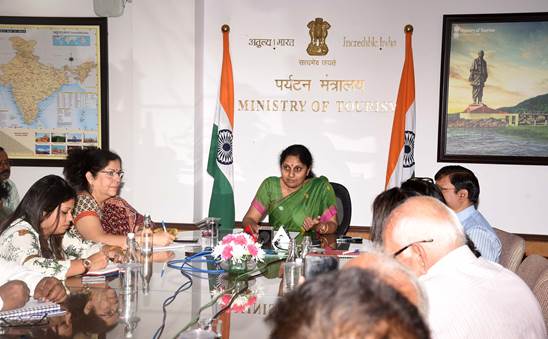
The Ministry of Tourism is organising the fourth G20 Tourism Working Group meeting and Tourism Ministerial Meeting from 19th to 22 June 2023 in Goa. Briefing media in New Delhi today, Secretary Tourism, Smt  V. Vidyavathi said that under India’s G20 Tourism Track, the Tourism Working Group is working on five inter-connected priority areas, which are Green Tourism, Digitalization, Skills, Tourism MSMEs, and Destination Management. Giving more details, the Secretary said that there are two key deliverables of the Tourism Working Group, which are GOA Roadmap for Tourism as a vehicle for achieving sustainable development goals and G20 Tourism Ministers’ Declaration both of which will be finalised shortly. During the meeting, G20 member countries, invited countries, and international organizations will welcome and endorse both the documents.

She also added that the G20 Tourism Working Group meeting and Tourism Ministerial Meeting in Goa aims to strengthen economic growth, preserve cultural heritage, and promote tourism and sustainable development of the region.

The Ministry of Tourism, Government of India, welcomes the participation of Tourism Ministers, Heads of Delegations and delegates from G20 member countries, invited countries, and international organizations to collectively work towards advancing the tourism sector and achieving the UN sustainable development goals 2030.

A side event on ‘Making Cruise Tourism a Model for Sustainable & Responsible Travel’ will be  organized , focusing on strategies to promote cruise tourism. The event will see the participation of G20 member countries, invited countries, international organizations, and industry stakeholders. The event will witness deliberations on the challenges and opportunities in the growth of cruise tourism globally. A panel discussion featuring esteemed speakers from G20 Member countries and guest countries will shed light on country specific policies and initiatives on varied aspects of cruise tourism, its growth and need to make cruise tourism sustainable and responsible.

Smt  V. Vidyavathi said that, along the sidelines of the main event , a national level side event is also being organized which will focus on ‘Making India a Hub for Cruise Tourism’, to deliberate on various challenges and opportunities for developing Cruise Tourism in the country following the principles of sustainability.

The deliberation upon Multi Facets of Cruise Tourism (Coastal, Island, Regional and Yachting), perspectives from Coastal States, private and public stakeholders in inland waterways, perspectives from Riverine States will be the focus areas of discussion during the event. The event will see the participation of key States and Union Territories, Industry Stakeholders, national and international experts.

She also informed that “The Ministry of Tourism is also organizing a side event ‘Towards a circular economy of plastics in tourism – the Global Tourism Plastics Initiative’ in collaboration with the United Nations Environment Programme (UNEP) and United Nations World Tourism Organization (UNWTO).

This  side event will focus on encouraging engagement of tourism stakeholders to address plastic pollution through circular approaches across the tourism value chain. The event will encompass high-level introductory remarks and a keynote presentation on the action framework proposed by the Global Tourism Plastics Initiative (GTPI). These interventions will be followed by a panel discussion with tourism stakeholders and a signing ceremony to welcome the adherence of several organizations to the GTPI.

Further, a ‘Public Private Dialogue: Importance of Travel & Tourism to the G20 Economies’ is also being co-organized by the Ministry of Tourism in Goa on 21st June 2023 in association with World Travel and Tourism Council (WTTC) and United Nations World Tourism Organization (UNWTO). The Dialogue is an opportunity for participants to share their priorities and concerns and identify opportunities for mutual support and greater public-private partnership. This discussion will align and provide a private sector perspective on the 5 priority areas set out for the G20 tourism track. The Dialogue will start by opening the conversation on the respective importance and relevance of these priorities to the private sector and potential areas of support and collaboration from the public sector.

The Secretary informed that good practices and case studies on sustainable tourism by participating countries will be shared on a Dashboard which is being created for the purpose.It will be a dynamic dashboard which will serve as a learning platform for various countries and these case studies will continue to be uploaded on it for coming next three years, she added. 

Secretary Tourism also remarked that to celebrate   the ‘International Day of Yoga’ on June 21, which coincides with the G20 4th Tourism Working Group Meeting and Tourism Ministerial Meeting, a special yoga session has been organized by the state government of Goa.

This session will offer an enchanting experience of yoga to all G20 Tourism Ministers and delegates, providing them with a moment of serenity and mindfulness amidst the busy proceedings of the meeting. It highlights the significance of incorporating wellness practices in the tourism sector and emphasizes the importance of holistic well-being.

On the occasion, Additional Secretary, Shri Rakesh Verma gave a presentation highlighting the important events and schedule of the meeting.

Various cultural programs will be organized to highlight and showcase the rich cultural heritage of Goa to the international G20 delegates. Some of the choreographed programs planned are: Lamp Dance, Kathak Dance, GoanMandoMusic  and Dance presentation, Dekhni Dance, Mussal Khel (Pastel Dance) and Gomant Rang. Delegates will also have the opportunity to experience the local attractions of Goa. Excursion visits have been planned to Lower  Aguada Fort and Jail Museum, and experiencing the UNESCO World Heritage Site:  Churches and Convents of Goa viz. the Basilica of  Bom Jesus, Church of St Francis of Assisi and Se  Cathedra land Archaeological Museum.

During the meeting, the delegates will also be visiting the Art and Craft Bazaar organized by the State Government showcasing local handicrafts, work of artisans, signifying the importance of community participation. DIY Activities at the Craft Bazaar have been planned to have hands on experience.

The Ministry of Tourism is promoting local products of Goa by handing below souvenirs to the delegates:

  • Embroidered Stole/Scarf (Made from Handmade Kunbi Fabric)
  • G.I. Cashew Feni Miniature
  • Terracotta Lotus shaped Incense Stick Holder
  • Upcycled Natural Scented Candle made using discarded bottle
  • Roasted Organic Goan Cashew Nuts
  • Recycled wood Tray with Azulejo Tiles inlay
  • Goan House Window

Click here for more details and schedule

Harmonised Guidelines and Space Standards for Universal Accessibility in India is now available on India

Under the provision of section 40 of RPwD Act 2016, the Central Government in consultation with the Chief Commissioner formulate rules for persons with disabilities laying down the standards of accessibility for the physical environment, transportation, information and communication, including appropriate technologies and systems and other facilities and services provided to the public in urban and rural areas.

Harmonised Guidelines and Space Standards for Universal Accessibility in India-2021 prepared by Ministry of Housing and Urban Affairs has been amended in RPwD (Amendment) Rules, 2023 vide notification G.S. R. 413 (E) dated 05.06.2023.  

The detailed status of these guidelines/standards is as follows:

Standards/Guidelines notified in RPwD Rules under Rule 15
1.Accessibility for the ICT products and services (Part I and II)
2.Harmonised Guidelines and Space Standard for Universal Accessibility in India-2021
3.Standard for Bus Body Code for Transportation system,
Guidelines under Draft notification in RPwD Rules and inviting public and other stakeholder comments
4.Accessibility standards for Health Care by 02.07.2023
5.Accessibility Standards and Guidelines for Civil Aviation by 10.06.2023
6.Accessibility standards and guidelines for the Culture sector (monuments/sites/museums/libraries by 10.06.2023
7.Accessible Sport complex and residential facilities for sports person with disabilities by 10.06.2023
Guidelines awaited for notification in Gazette of India by concerned Ministry/Department
8.Ministry of Home Affairs
9.Guidelines on accessibility of Indian Railways stations and facilities at stations for differently abled persons and passengers with reduced mobility
10.Accessibility Guidelines and Standards for Higher Education Institutions and Universities
11.Accessibility Guidelines for Bus Terminals and Bus Stops
12.Department of Drinking Water and Sanitation 
Guidelines at various stages in the concerned Departments
13.Ministry of Rural Development
14.Ministry of Port, Shipping and Waterways
15.Ministry of Tourism
16.Department of Financial Service
17.Ministry of Information and Broadcasting
18.Department of School Education and Literacy

All the information is regarding the harmonized guidelines is available in the website of DEPwD department disabilityaffairs.gov.in

***

“Suvidha, Suraksha, Samman” to women

Last 9 years the Union Government under Prime Minister Narendra Modi has provided “Suvidha, Suraksha, Samman” to women. Thoughtfully planned schemes like Ujjwala for Gas connections, Swachhta for female toilets and Jal Jeevan for tap water in households not only provided Ease of Living to women but also gave them a sense of self-confidence with self-esteem.

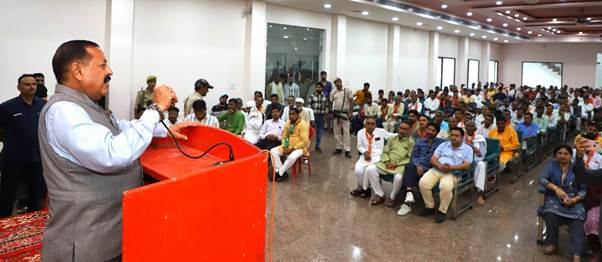
This was stated by the Union Minister of State (Independent Charge) for Science and Technology, MoS PMO, Department of Atomic Energy and Department of Space and MoS Personnel, Public Grievances and Pensions, Dr Jitendra Singh at Sambhal, Uttar Pradesh while addressing a congregation of Modi scheme beneficiaries, majority of whom comprised women.

The Minister said there has been a paradigm shift in Public Service Delivery and the implementation of Government schemes in the last 9 years. “Be it DBT, or provision of basic facilities like electricity, water, toilets to poor people, all these have brought a revolution at the grassroots level,” he said.

Dr Jitendra  Singh said Prime Minister Narendra Modi has put Nari Shakti at the forefront of India’s development journey. Mission Shakti comprises two sub-schemes ‘Sambal’ and ‘Samarthya’ for the safety, security and empowerment of women. The impact of this approach has been evident in the outcomes, such as an improved sex ratio at birth which is now for the first time 1020 women per 1000 men, a rise in institutional deliveries, declining infant mortality, and a lower maternal mortality rate.

With a promise to remove drudgery from the daily life of Women, Dr Jitendra Singh said the increased usage of LPG cylinders under the Ujjwala Yojana has saved crores of women from chronic respiratory disorders through smoke-free kitchens. With the success of Swachh Bharat Abhiyan, crores of women are now able to access toilets in their homes without any fear of safety or violation of dignity. Walking long distances to fetch water for daily consumption is becoming a thing of the past as households across the country are getting tap water connections under the Jal Jeevan Mission. Over 27 crore sanitary pads have been sold at One Rupee at Jan Aushadhi Kendras.

He said Women Empowerment is contingent upon the economic empowerment of women. Programmes such as MUDRA Yojana in which 68% of loans have been extended to more than 27 crore women, have enabled crores of women across the country to pursue micro-level entrepreneurship and become financially independent. 3.18 crore Sukanya Samriddhi Yojana accounts have been created. To promote financial inclusion among women, Mahila Samman Savings Certificate was introduced as part of the Union Budget 2023-24, which is a small savings scheme exclusively for female investors.

Under PM Awas Yojana, women are being made owners of the family home thus becoming active participants in household decision-making. In the 9 years of the Modi government, women have grown from strength to strength. Their success can be seen in the significant increase in the numbers of female police personnel, laurels won by sportswomen for the country and enrolment of women in the fields of Science, Technology, Engineering & Maths.

The government has transformed Women from being targets of welfare to agents of empowerment. “Today it is no longer women development, but women-led development,” he said.

*******

Enlightening session  on RTI Act, of 2005 organized by Pro Bono Club

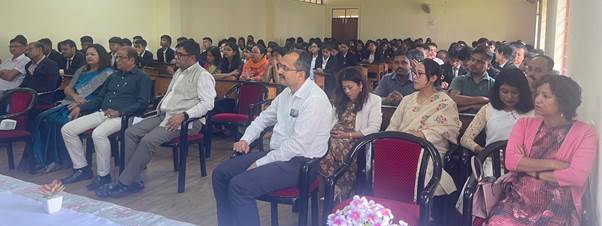
Under Department of Justice’s Nyaya Bandhu, the Pro Bono Club of NEHU, Shillong organised an enlightening session on the RTI Act, of 2005. It highlighted the significance of the Act, educating citizens about their right to access vital public information.

Image

Led by Dr. Ravi Kant Mishra, the esteemed guests Heimonglang Nongpluh & Prof. Prabha Shankar Shukla stressed the importance of employing this right when necessary, empowering individuals, and  promoting awareness in rural Meghalaya. It shed light on the Act’s numerous benefits and  its role in ensuring public authorities’ accountability.

Image

International Conference on Multidisciplinary Research (ICMR) 2023

International Conference on Multidisciplinary Research (ICMR) 2023 is a federated organization dedicated to bringing together a significant number of diverse scholarly studies for presentation within the conference program. With its high quality, it provides an exceptional value for students, academics and industry researchers.

ICMR2023 aims to bring together leading academic scientists, researchers and research scholars to exchange and share their experiences and research results on all aspects of Social Sciences focus on Technology. It also provides a premier interdisciplinary platform for researchers, practitioners and educators to present and discuss the most recent innovations, trends, and concerns, as well as practical challenges, encountered and solutions adopted in the fields of Social Sciences.

ICMR2023 will be held as a fully ONLINE conference. All presentations will be made ASYNCHRONOUSLY (by sending a presentation video). Pre-created presentations of invited speakers and other participants will be made accessible on the website on the day of the congress. The presentations will be uploaded to the IICTSS channel on the Izmir Academy account to be created on YOUTUBE. Participants are deemed to have allowed their videos to be uploaded on YOUTUBE by participating in the congress. They cannot make any claims or requests on this issue later.

Submission Guidelines

  • Authors are kindly invited to contribute to the conference through submissions of their research abstracts and/or full papers.
  • Full paper submission is NOT MANDATORY. You can present your paper only by sending it’s abstract using the abstract template and rules below.
  • Those who want to publish their full-text papers in the journal or in the proceedings book will be able to send their full-text papers after the conference specified date on the Important dates page.
  • Also, high-quality research contributions describing original and unpublished results of conceptual, constructive, empirical, experimental, or theoretical work in all areas of Social Sciences are cordially invited for presentation at the conference.
  • The conference solicits contributions of abstracts and papers that address themes and topics of the conference, including figures, tables and references of novel research materials.
  • Please visit Publication Opportunities page for abstract and full paper publication.

Guidelines for Abstract Submission

  • Downloadable versions of the checklist for Abstract Papers (CLICK HERE TO DOWNLOAD ABSTRACT TEMPLATE).
  • Instruction of Submitting abstract;
    • Title: Please select a suitable title for your abstract
    • Authors: Put commas between the authors. (Name Surname, Affiliation, city, country, email, ORCID)
    • Abstract: (Between 350-800 words. It should include Problem statement, Research method, Contribution, Expected results)
    • Keywords: Put commas between words
    • References: References will be given for the abstract
  • Note: Your study should have 6 authors at most.

CLICK HERE TO SUBMIT YOUR ABSTRACT

Guidelines for Full Paper Submission

  • Regular paper submissions are 8 (eight) pages maximum (exclusive of bibliography).
  • Formatting instructions for all papers: they must be written in English and use standard two-column conference templates that can be downloaded from HERE (CLICK HERE TO DOWNLOAD FULL PAPER TEMPLATE)

List of Topics

  • Technology and Administrative Sciences
  • Technology and Social Sciences
  • Technology and Economics
  • Technology and Finance
  • Management Information Systems
  • Information and Communication Technologies
  • Computer Science
  • Technology and International Relations
  • Metaverse
  • Digital Twins
  • Artificial Intelligence
  • Blockchain
  • Crypto Assets
  • Cyber Security
  • e-Government
  • e-Commerce
  • e-Business
  • Technology in Health
  • Other topics

Scientific & Advisory committee members

You can find the publication opportunities offered by ICMR2023 for your abstract and full-text paper in the following subheadings.

  • Abstract Book
    • All accepted abstracts will be published in an electronic book with ISBN  named “ICMR2023 Abstract Book”. Book will be open access and shared freely.
  • Conference Proceedings
    • All submitted conference full papers will be blind peer-reviewed.
    • The peer-reviewed and accapted conference proceedings will be published in an electronic book with ISBN (Authors will have the option not to include full text articles in the proceeding book so they can send it to another journal or use it in our 3.3 and 3.4 heading options). Book will be open access and shared freely.
  • Journal Publication
    • ICMR2023 has teamed up with the regular/special issue on
      • International Journal of Research (Indexed by Index Copernicus (Master List), CrossRef, ROAD, Academic Resource Index (Researchbib), Scientific Indexing Services (SIS), ASOS Index, Google Scholar,Academia.edu, Advanced Science Index, Base, OpenAIRE, WorldCat),
    • Some selected high-impact full-text papers will also be considered for that journals’ issue. Selected full papers will have the opportunity to be considered for the Journals’ Issue. The paper selection will be carried out during the peer review process as well as at the conference presentation stage. Submitted papers must not be under consideration by any other journal or publication. The final decision for paper selection will be made based on peer review reports by the Journal Editorial Board. Selected full-text papers will be published online free of charge.
  • Edited Book Publications
    • One or more edited books can be published. All accepted full papers will have the opportunity to be considered for the edited book option. Book(s) and titles will be decided by the book editor. Papers will be grouped and considered for the specified book(s). The authors won’t pay any extra publication, processing or open access fee for the book(s). Book will have ISSN and be published electronically by an academic publishing house in TURKEY. It will be open access and we will share the pdf version with the authors. 

Venue

  • ICMR2023 will be held as a fully ONLINE conference. All presentations will be made ASYNCHRONOUSLY (by sending a presentation video). Pre-created presentations of invited speakers and other participants will be made accessible on the website on the day of the congress. The presentations will be uploaded to the ICMR2023 channel on the Izmir Academy account to be created on YOUTUBE. Participants are deemed to have allowed their videos to be uploaded on YOUTUBE by participating in the congress. They cannot make any claims or requests on this issue later.

Important Things to Note

Important Dates

Date for Submission of Papers

20 March 2023 (without Late fee)

30 March 2023 (with late fee)

Acceptance Mail for Papers

10 April 2023

Date of Online Conference

20-22 April 2023

Email id for Submission of Papers

Email: icmr2023@edupub.org

Special Issue for Conference Papers

Visit conference Official Site at https://icmr.edupub.org/

ISBN for Conference Proceedings 

International Conference on Multidisciplinary Research (ICMR) 2023

International Conference on Multidisciplinary Research (ICMR) 2023 on April 20-22, 2023. The scope of Conference is to provide a forum to promote, enhance and stimulate research interactions and collaboration in the fields of Technology, Media and Management in line with NEP-2020. This conference will facilitate to promote the exchange of ideas among interested researchers, students, industrialists, developers, and practitioners. This conference will also feature plenary talks, workshops, and parallel technical sessions. The vision of NEP 2020 is to develop knowledge, skills, values, and dispositions that support responsible commitment to human rights, sustainable development and living, and global well-being, thereby reflecting a truly global citizen. The conference welcomes conceptual and empirical papers highlighting the application of Technology, Media & Management as innovative solutions for organizations as well as individuals in the current scenario.

Submission Guidelines

  • All contributions must be original, should not have been published elsewhere and should not be intended to be published elsewhere during the review period.
  • Plagiarism of any type, if detected, will lead to rejection of the articles anytime.
  • At least one author of an accepted paper must register.
  • Article may have maximum of 3 authors.
  • Presentation through Skype is allowed only for foreign authors.

List of Topics

Track-1

  • Artificial Intelligence and Machine Learning
  • Computing Technology
  • Computer Network
  • Multimedia Application
  • Others

Track-2

  • Ecommerce
  • Human Resource Management
  • Industrial issues in Management
  • Globalization and current issues
  • Recent Media Innovations
  • Others

Track-3

Multidisciplinary

  • present original research
  • share findings from pilot studies
  • demonstrate results of comprehensive evaluations of campaigns or programs
  • present new conceptual models and frameworks
  • discuss new theories, new concepts and constructs, theoretical refinements, or emerging propositions.

Publication

The conference proceedings will be published with ISBN No. and special issue of IJR – International Journal of Research ijrjournal.com

Venue

Online and link will be sent in mail.

Contact

All questions about submissions should be emailed to : editor@edupub.org

  • FOR PAPER SUBMISSION SEND PAPERS TO icmr2023@edupub.org

Important Things to Note

Important Dates

Date for Submission of Papers

20 March 2023 (without Late fee)

30 March 2023 (with late fee)

Acceptance Mail for Papers

10 April 2023

Date of Online Conference

20-22 April 2023

Email id for Submission of Papers

Email: icmr2023@edupub.org

Special Issue for Conference Papers

Visit conference Official Site at https://icmr.edupub.org/

ISBN for Conference Proceedings 

Don’t kill it

When you least expect it, Nature has cunning ways of findings our weakest spot. Just remember: I’m here. Right now you may not want to feel anything; may you never want to feel anything. And maybe it’s not me that you will want to speak about these things but, Feel something you did.
Look… You had a beautiful friendship, maybe more than a friendship, and envy you. In my place, most guardians would hope the…..

http://myblogbriefcase.blogspot.com/2023/01/dont-kill-it.html

You can read the whole blog on given link.

AI is here to improve our lives

Artificial Intelligence is one of the most exciting creations of the modern world. Recently, Satya Nadella said that AI will help to get people together. He said so while giving a session during the World Economic Forum in Switzerland.

The advancements which we see around us in various fields will get even more advanced with the new improvements. Some of those we can already see in the form of ChatGPT. 

In recent times, AI has been able to change our surrounding in various ways. Various websites now have a bot that can talk to us and resolve our queries. The number of automated systems around us has also increased to a large extent. Automated systems are being used in various fields and places. 

There is also automation even in our house. The various IoT devices that we are buying are also communicating with us with the help of AI. The various assistants are answering our questions with the help of an AI. 

AI as a whole is making various sectors completely independent and the dependence on people is decreasing. Also, tech-related jobs are increasing. So indirectly AI is creating jobs in various fields. 

 AI has been able to make changes to the medical field also. Now, several robots help in performing complex surgeries which are generally difficult for surgeons. The diagnosis of diseases is also getting easier due to AI.

https://unsplash.com/photos/LIlsk-UFVxk

Now we even have several robots that help us in keeping our homes clean. The various cars are also having AI assistance in terms of self-driving technology. In the future, we will also see self-driving vehicles that will take us from one place to another.

AI has also done justice to the security sector. As of now, we have face recognition that scans and notifies the concerned authorities of any findings. The use of AI is now also helpful in terms of various fields like content writing and even coding. Now, computers are capable of writing codes and even rectifying errors in a completed program.

The use of AI has also helped in highly sensitive manufacturing sectors. For example, robots are being used in the automotive painting industry. It helps in removing the smallest of errors and the results are excellent. 

So, the upcoming decade is going to be more interesting. If we consider the fact that the last decade was the one in which technology simply exploded. Now, we have devices in our respective homes that are remote-controlled and can be operated from any were in the world. The Internet has pushed the boundaries with the things that we can do now with our gadgets. Now, we can even take consultations with a doctor over a video call.

The improvements in the features that technology offers us are automated, but there are still improvements that we need. There also needs to be clear that AI is not destroying jobs. The number of fields that get affected by AI also needs to ensure that the people who are using should also depend less on machines.

Hockey World Cup gives hope to the Indian Hockey Team

In the ongoing Hockey World Cup, India is performing well. They have been able to win their first match against Spain. In their second game, India managed to draw the game against England. 

They are being hopeful that they will likely break the 48 years of drought. For that, they will have to win the match against Wales on 19th January. But for this win, they will have to take a big lead. 

In this edition of the World Cup, there are 16 teams. Those have been divided into a group of 4. So, there are four groups namely A to D. India is in group D along with England, Spain and Wales. 

On the competitive front, Belgium and Australia are the favourites to lift the cup in this edition. The tournament is being played for the second time in a row in India. Bhubaneswar and Rourkela are the cities, which are hosting the games.

Currently, on the points table, India and England have 4 points each. But England is on top as they have won the match by a bigger margin.

For this tournament, Odisha has spent an amount of 10.98 billion rupees for the financial year 2022-23. This money has been used to build a new stadium in Rourkela and a facelift to the existing one in Bhubaneswar.

https://unsplash.com/photos/TPZiORGCRBg

The amount has been used to also beautify the two cities. For the unknowns, the stadium that has been built in Rourkela is the biggest Hockey stadium in the world. The stadium can accommodate 20,000 people at the same time.

The matches in the tournament are also going completely packed. The matches are also getting attention on the live telecast the last time India won the Hockey World Cup was in 1975. During that tournament, the final was between India and Pakistan. 

But this time, India has performed well in the Olympics also. They have been previously the Olympic Gold medallist for 8 times. So, the Indian Hockey team is going to give a tough fight to whichever team they will face in the tournament. 

On the player’s front, Hardik Singh did encounter an injury during the match against England. But there is nothing to worry and coach Reid did ensure that he is alright. 

In recent times, the Indian government is also putting in the effort to promote various games other than cricket. States especially, Odisha have been able to promote the hockey game to a great extent. It has also been able to present itself as a state that has given sports equal importance as any other field like education. There have also been good players in the Indian Hockey team from Odisha at a regular pace. 

So, now we will need to patiently wait for the finals to see whether the Indian team manages to lift the World Cup this time or not. The tournament can end in favour of any team, but this event will surely make India a worthy contender for the future several tournaments in various other sports.

Automobile sales are going back to normal in India

The automobile sector is slowly climbing in India. According to the latest reports, sales in India will get back to the pre-COVID level soon. This has been due to the rising popularity of SUVs. The sales of SUVs are on the rise.

Recently, the UV category has also seen various new entries in the segment. The various new launches from the companies are also making it possible for people to get their hands on their choice of car. The multiple options which are available for the models in the market are also a big plus for the people.

There is also an advantage of incentives from the government. On various electric vehicles, the government is giving incentives to the people.

The pressure of environmental health is playing a role in this high sale. Many people are now opting for changing their current vehicle to an electric one. The lucrative case of less expenditure on charging and electric service is also making it possible for various companies to attract more customers towards electric vehicles.

In terms of companies, Maruti Suzuki is still the king as it has been able to sell the maximum number of vehicles. This number one position for Maruti is due to the various launches like Brezza, XL6 and the new Grand Vitara. On the other hand, Mahindra has been able to sell close to 60000 units in the last year.

https://unsplash.com/photos/X16zXcbxU4U

Among all this, Tata is also putting a good effort into their new models. Tata Nexon has been able to do well in both forms. Nexon is being offered in electric as well as in the classic fossil fuel options. Now, when it comes to international companies, then they have also been able to perform well in India.

During the pandemic, luxury companies have been able to register unimaginable sales in India. This has been noted that people have been spending heavily since the pandemic. The higher sales are making luxury brands more eager to launch more models in the country. The Make-in-India incentives are also making it possible for people to get their favourite vehicle at a cheaper rate. The biggest example has been the S- Class from Mercedes that is now being assembled in India. 

The rapid expansion of electric vehicle infrastructure in the country along with the introduction of new models in the country is going to push the automobile sale in the country further. The damage to the environment due to the internal combustion engine vehicle is also forcing the government to force out the older vehicles faster and direct people to buy new and cleaner and greener vehicles. 

The improvement in the road condition in the country in various parts and the expansion of companies like Uber and Ola are also pushing up the sales of vehicles in the country. In the future as vehicles will become more affordable and as the second-hand car market will increase, car ownership will propel vehicle sales even further. All of these will also increase vehicle ownership in the country, which is quite low currently.

The air travel sector is going to see a sea change in India

Airlines in India are going to have a tough time in the next few years. The airlines will likely face a large population, who will likely prefer air transport in the future. This trend has been going on for the last few years. This has resulted in profits at a consistent pace or the last few years also.

But the trend is going to increase a lot as people have started to prefer air transport more. The pandemic also assisted this trend, as air transport was more secure and well-regulated.

As a result, there is also speculation that there will be an increase in aircraft acquirement by the airlines every year. The speed of acquiring will be around 100 on average. Several of these aircraft will most probably be a replacement for the existing ones.

On the other hand, there is also speculation that Air India is going to place an order for 500 aircraft. This order will likely improve the service and most importantly the quality of travel for the passengers.

The number of aircraft will likely grow at a fast pace. In the last decade, the number of aircraft increased from 300 in 2013 to 700 in 2020. The number of aircraft is likely to be around 1000 in the year 2027. There is also an assumption that the number of passengers, who will use air travel, will be around 350 million this year. Or the next year the number will increase to around 400 million.

https://unsplash.com/photos/xDjcU1Pglro

To support all this rush, airports are also getting some facelifts. The number of airports is also increasing in numbers all over the country. The Airports Authority of India is also putting in an effort that the number of airports is sufficient in the country to cater to the increase in passengers. The number of airports was 74 in 2014 and it is around 141 in 2022.

The airports are also making it possible for a large population to access different parts of the country. The central government is also putting in efforts in terms of made-in-India aircraft, which will reduce the cost expenses which airlines bear while maintaining an aircraft.

The introduction of various new airlines is also increasing the options for passengers. This is creating a competitive market for the airlines which are local and have been providing service to the people. The increasing competition is also pushing the airlines to provide even better service. It will ensure that people have the best options on offer and can enjoy their travel at a competitive price.

These points are hinting the progress that the air travel sector is going to experience in India. The increasing spending capability of the people is also making it possible for the general population to travel to their destination by air. But increasing rush in a sector also hints at the points like the maintenance that the airlines authorities, as well as the airport authorities, will have to be up to the mark all the time. So, it will be a challenge for everyone involved in this industry.   

Rights that Indian women should be aware of:

  Regarding rights in the modern era, every Indian woman needs to be aware of a few legal rights. There are plenty of laws protecting women in India. For the protection and advancement of women, our constitution grants them exclusive rights.

Indian women rights history:

During the early Vedic era, women and men were treated equally in all aspects of their lives. Women may have received an education during the early Vedic era, according to the writings of ancient Indian grammarians like Patanjali and Katyayana. In a practise known as swayamvar or a live-in relationship known as Gandharva marriage, Rigvedic verses imply that women married at an advanced age and were likely free to choose their own husbands.

The modern laws to look in today’s world are:

Right to maintenance

As long as she doesn’t remarry, a married woman is entitled to get maintenance from her ex-husband, which includes the necessities of life like food, clothing, shelter, and access to healthcare. Except when the wife is living in adultery or refuses to live with her husband without a good reason, Section 125 of the Code of Criminal Procedure, 1973, requires the husband to support his divorced wife.

Right to equal pay

Our laws are now gender-neutral. Equal remuneration for equal work is due to both men and women. The same is provided for by the Equal Remuneration Act. It guarantees equal pay for equal work for both male and female employees. There won’t be any gender discrimination in the context of hiring practises or working conditions.

Right to dignity and decency

Women’s rights include decency and dignity. Anyone who tries to harm her modestly is regarded as a sinner, and the law very good mandates punishment for such behaviour. Each and every woman has the right to live in dignity, free from intimidation, compulsion, violence, and prejudice. The criminal code outlines the penalties for offences against women such as sexual harassment (Section 354), assault with the intent to strip her naked or violate her sense of modesty (Section 354), voyeurism (Section 354), stalking (354D), etc.

Rights at workplace

You have a right to have a female restroom where you work. At places, with more than 30 female workers, providing facilities for care and feeding of children is mandatory. Further, the Supreme Court and the Govt. had put in to ensure the safety of women at workplaces. The Hon’ble Supreme Court in Vaisakha v. State of Rajasthan, had laid down exclusive guidelines for protection of women from Sexual Harassment at workplace, following which, the Govt. in 2013, has enacted an exclusive legislation- The Sexual Harassment of Women at Workplace (PREVENTION, PROHIBITION and REDRESSAL) Act, 2013 for that end. So, if any person at your workplace, asks you for sexual favours, or makes sexually coloured remarks and whistles looking at you or sings obscene songs looking at you, touches you inappropriately, or shows pornography, then all that will constitute Sexual Harassment and you may complain to the Internal complaints committee which is required to be constituted by the employer at each office or branch with 10 or more employees. The District Officer is also required to constitute a Local Complaints Committee at each district, and if required at the block level. Apart from this, IPC also, penalizes Sexual Harassment under 354A by providing an imprisonment of 1-3 years.

.

Right of private defence/ self-defence

It is a right of defence. When defending your body or the body of another person from the attacker, you run the risk of causing serious harm, severe harm, or even death. However, you can only kill the attacker without drawing liability or punishment if certain conditions are met. For example, if you believe the attacker is about to rape, kill, or kidnap you, lock you in a room, or throw or attempt to throw acid at you, you can kill that person and the law will protect you.

India wins the 2nd ODI and series against Sri Lanka

In the ongoing series India again displayed a noteworthy performance. The 2nd match of the ODI series was being played at the iconic Eden Gardens in Kolkata.

After winning the toss, the Sri Lankan team choose to bat first. In the first innings, they posted a total of 215. In their inning, Nuwanidu Fernando scored the highest run of 50. From the Indian side, Kuldeep Yadav took 3 wickets.

In the second innings, India started on a strong note but lost Rohit Sharma and Shuman Gill in quick succession. After the fall of both the openers, India was at 41. Then came Virat Kohli, who lost his wicket at a score of 4 and India was at 62 at that moment. Then Shreyas Iyer tried to steady the ship with K L Rahul. Shreyas fell at a personal score of 28 when India was at 86. Then a partnership was built by K L Rahul and Hardik Pandya. They both took India to a respectable score of 161, which kept India in the hunt for the win. Then Hardik Pandya fell for a personal score of 36. After that Axar Patel and Kuldeep Yadav also came in to take India home. Axar Patel continued his good form and scored 21 at a run-a-ball pace, which also had a six and a four. Kuldeep on the other hand scored 10 runs in 10 balls and made sure that India made it home with 219 on board in 43.2 overs and 4 wickets in hand. Along with this win, India secured another ODI series victory over their home turf. They are now head of Sri Lanka with a 2-0 lead.

https://unsplash.com/photos/bY4cqxp7vos

In the second innings, Sri Lanka also performed well in the beginning. They were able to remove both openers in quick succession. Then, Viral Kohli also rapidly returned to the pavilion. But after that, K L Rahul and Hardik Pandya built a partnership that made sure that India won the match and also the series. In the bowling department, Chamika Karunaratne along with Lahiru Kumara took 2 wickets each. Also, Wanindu Hasaranga de Silva was the most economical bowler and gave away just 28 runs in his quota of 10 overs.

With this series win Indian cricket team put their foot forward on a positive note in the new year.  This win will also help them in some way in their preparation towards the ODI World Cup, which will be played this year in India itself. It was an important series as Sri Lanka is the current champions of Asia after they won the Asia Cup in 2022. This series will also give them the confidence to face the next series. The next series for the Indian team will be against New Zealand, which is currently playing against Pakistan.NZ is also currently the winner of the ODI series against Pakistan with a lead of 2-1.

In the upcoming series against NZ, India will be playing 3 ODIs and 3 T20s. New Zealand will be touring India for this series, they will also have a chance to flex their muscle. In the last World Cup in 2019, New Zealand was unlucky to lose against England in the final.    

Mercedes announces the car launch date for the 2023 season

The year 2022 was a year filled with ups and downs for various teams in Formula 1. The 2022 season gave us the best competitive racing which we hope for. Now, all the fans of the popular sports are waiting for the announcement of the cars which the teams will be using for this year’s season.

Mercedes has now announced that they will launch the car W14 on February 15. This time they are hoping to get back to winning ways and get their hands on the title again. During the last decade, they won 7 driver’s championships and 8 constructors titles between 2013 and 2021.

The various other teams are also trying their level best to get to the podium. The changes in rules and regulations in the past year have made it difficult for various teams. Mercedes faced the same fate. But lately, they were able to finish on the podium in some of the last few races. This happened, thanks to the good performance of George Russell.

It has been surprising since last year that Lewis Hamilton has not been able to get ahead of the grid. The same has happened with some other teams that showed promise at the beginning of the season. One of the examples has been Ferrari. Ferrari showed promising performance in the first few races, but later on, they started to face issues.

https://unsplash.com/photos/VIVpQ94hf_k

But Red Bull was the one which performed well. They managed to win the driver’s championship as well as the constructor’s championship for the year 2022. This year too, they will try to repeat the performance that they showed last year.

In the case of drivers, Mercedes is allowing Mick Schumacher to be their reserve driver. This gives a new lease of life for the driver with an iconic name. On the other hand, Daniel Riccardo has also been lucky by becoming the third driver for the Red Bull team.

Also, there have been changes to the top management too for some of the teams. This year Ferrari will have a new team principal. Frederic Vasseur has been promoted to Ferrari from being the team principal of Alfa Romeo. Now, if we take a look at the past then the French team principle has been extremely successful for Ferrari. So, we will have to wait until the end of the season to see whether the speculations become correct for the team.

There will also be a lot of doubts related to the cars that the teams will launch for the season. The budget for a team for an entire season will also be under check as last season several teams had to take various engines and damages during the season. The drivers will also have to become comfortable with the cars as several drivers have changed their teams during this season. The change will also likely affect the performance of a team as the teams are still dealing with the rule changes and drivers will also be new for the teams.     

Google Play Movies will become free for viewers

Streaming services have been able to get the maximum profits during the pandemic. They have been a lifesaver for several people. As a result, several OTT platforms stream some of the best series for us. But there have been some issues for the users. One of those problems has been the subscription service that platforms have. It is sometimes difficult for the users to shell out money every month for the subscription.

So, there has been a revelation by XDA Developers that there are chances that Google will introduce ad-based movie streaming on Google Play Movies. It has been done to make the platform more popular. It has been revealed after an analysis of the APK of the app. It is similar to the feature that YouTube provides.  

In the entertainment market, online streaming platforms have been the king for the last couple of years. Several movies and shows are being released especially for the OTT platform. As a result, several big production houses like Bollywood, Hollywood and various others all around the world are creating content for the OTT platform.

As a result, platforms like Amazon Prime, Netflix and many others are already gaining users and popularity. But Google Play Movies has been on the back foot in this case. The content that is available on this platform is paid. Due to that, the users are finding it difficult to use the platform as they will have to pay individually for each content.

https://unsplash.com/photos/DsmDqiYduaU

So, now Google might launch this service for its users. But there is no clarity that which content will be free and which will not. Once, the confusion is clear then it will be better for the users. 

On the other hand, mobile networks are also making users in India stream more content over the internet. The decrease in internet costs in the country is also making it possible for users to consume more data. All of these changes were made possible by the introduction of the JIO 4G network in the country.

Now, there is another point for streamers to take advantage of. The feature is that of the higher penetration of smart devices in various households. The pandemic pushed several people to buy devices or upgrade their existing one. This was done to complete the various tasks that people need a device for. Also, the new devices helped various people beat their boredom by watching content online. 

The higher usage and the slow but steady expansion of devices that support streaming platforms are also making it easier for people to stay UpToDate with their favourite shows. It is due to the support that various devices like tablets, smartphones and many more have. The continuous software support which is currently being provided by the major smart device companies is also helping in making various devices eligible for use by the users. The constant support is also making the various streaming platforms push out an update for their apps so that they can work on various devices. 

So all of these points are going to help google play movies get more viewers after they release the ad-free support for the users. But for the time being this news must be taken with a pinch of salt.

Qualcomm plans to launch an exciting new feature for Android users

Qualcomm Snapdragon has been on a roll lately. Various devices are being launched in India daily that have 5G capability. The new device is getting positive reviews due to its efficiency and good performance. As a result, Snapdragon chipsets in mobile devices are getting positive feedback.

This year Snapdragon is preparing to launch new features on its flagship chipset. One of those features is satellite communication. Recently, some devices have been launched with the current flagship chipset Snapdragon 8 Gen 2. 

It has also been revealed that the devices that have the flagship chipset will have satellite communication features. The feature will enable people to communicate in areas where there is a weak or no mobile network.  

The new chipsets are blurring the lines between what a smartphone can do and what it cannot do. The new features that are being introduced in the latest and the most eye catchy devices are noteworthy. The implementation of Qualcomm chipsets in various devices like smartwatches, and even laptops are making it more relevant that Snapdragon is going global in every way. The new devices that have Snapdragon chipsets already do have a great battery life that is making the Snapdragon a better choice for device manufacturers. 

https://unsplash.com/photos/tpAyLp9Ro50

Other than that, it is also facing stiff competition from Media Tek. There is also some serious heat from the likes of Apple, who are now trying to manufacture chipsets for their devices. The same has been the case with Google which now has its chipset for the Pixel line of mobile devices. Samsung is another company which already has a chipset for the devices. There are other Chinese manufacturers also like Huawei that also have chipsets for their devices. So, competition is tough for Snapdragon. 

The chipset is also gaining importance due to the popularity of electric vehicles and the implementation of internet-related services in various vehicles. This is also creating a lot of buzz in the chip market and is also increasing demand for chips.

Shortly, there is also a rumour that Apple will move away from Qualcomm chips. This is also bad news for Qualcomm, as Apple is one the biggest users of its modems on Apple devices. In the future, if the trend goes on then Qualcomm will have to rethink its business strategy. It is because all the companies will probably have their chip for their respective devices. 

The devices in the future will need chips. Qualcomm, being a major chip manufacturer, needs to stick to its position, if it wants to stay relevant in the field. The implementation of 5G and 6G in quick succession, and that of many other technological revolutions is making it dissect for such big companies to implement such changes so quickly.

Now, we will have to wait for a few years before we can see the effect Qualcomm will have on the 5G and the 6G network era. The new networks are going to bring new challenges for Snapdragon. So, these steps may bring along good results for Qualcomm.

Apple prepares physical stores in India

Apple has been able to get the attention of Indian customers for a long time. But they are yet to make their presence in the physical form among the people. The pandemic also slowed the plans for any physical expansion of the company in India.

Now, as the pandemic is under control so Apple is going to open its physical stores in various cities in India. It is not yet clear which cities will get the iconic store. But it is speculated that the journey of physical Apple stores will start from Delhi and Mumbai. 

These stores will have all the features and facilities which are present in their stores worldwide. The stores are likely to open to the general public this year. This news is also relevant from the fact the hiring for the stores has already going on LinkedIn. The store was previously planned to open in 2021.

But now, the stores will remove a big problem for the company as they will directly sell the products to the customers. It will also remove the dependence on third-party stores that are currently selling Apple products.

https://unsplash.com/photos/4oWSXdeAS2g

Recently, there have also been some recent developments for Apple iPhone users. Those who are planning to get their battery replaced will have to pay more if their device is older than iPhone 14. So, iPhone repair will cost more for a few. On the other hand, there is also increased pressure from governments of various countries that electronic devices need to have a common charging technique. In the case of smartphones, it is USB type-C. At first, the EU declared to the world that smartphones, tablets and laptops will have USB type-C charging. Later on, India also declared that devices will have USB type-C. But Apple is in conflict as most of its devices have a lightning USB cable.

Along with all of the above, there is also speculation that there will be no iPhone SE in 2023. This news does not come as a surprise as Apple has been launching the compact version of its iPhone at irregular intervals. 

But there is excitement around the next iteration of iPhones as they will bring about some new changes for the users. The device will likely be accompanied by a new version of iOS along with some other gadgets. The new gadgets may include AirPods, iPad and even MacBooks. 

All of the above changes are making the year ahead look good for Apple users. The new year looks promising for Apple on paper, but we will have to wait for the annual Apple event to get to know more about the devices and the software changes that the existing iPhone users will receive. The hardware changes will not be major in the new iPhones, but the changes will enhance the experience of the users.  Most interesting will be to see what Apple does to the charging port problem which is bound to be followed by the mod-2025 in many major countries. Along with that Apple will also eagerly wait for the response for users towards brick-and-mortar stores. 

Apple cancels the next iPhone SE

Apple has been trying to woe the customers who love the small form – factor for quite some time now. The company has also launched some small iPhones. But the effect has been very minimal on the minds of the users. The devices are also not selling in high – numbers. So, Apple generally reduces the production of its SE models after a few days of its launch. Similar was the case when Apple launched the iPhone the last time around.

 But now there is speculation that Apple is not going to launch the successor of its SE in 2024. This is because the device has not able to get profits for the company until now. The device has also served as a testing track for the company when it comes to network modems. So, this is a kind of good news for companies like Qualcomm, which has been able to partner with Apple as a modem supplier until now.

The SE models have been in the limelight for nostalgia reasons. The devices have generally been used by those who love the form factor or are not comfortable with big-size screens. The device has nothing inferior when compared to its bigger counterparts. The SE devices also have powerful hardware and can do all the powerful stuff which you expect from an iPhone device. Even the support for such devices is like other iPhones. The device also has bells and whistles and even supports the latest tech that Apple launches for its flagship iPhones.

https://unsplash.com/photos/zKzHHKOsZ-8

The iPhone SE have been launched previously on an arbitrary gap of time. There is no regular launch of the iPhone SE right from the beginning. The second iteration of the iPhone SE was launched 4 years after the first one. The third one was launched 2 years after the second version. So, there is not even an approximate timeline that when the next iteration of the iPhone SE will be launched.

For the unknown, the iPhones will have a tough time for the next few years. It is because governments in various countries are implementing universal charging rules for various handheld devices. Even iPhones are included in the list of devices facing the blunt. But Apple is raising concerns about this as it says that there will be a large amount of electronic waste in the form of lightning cables that users are currently using with their devices, as they will upgrade their iPhones.

Now, there is confusion that what will happen to the charging option in an iPhone. There is also increasing demand for the 14 Pro model and the difficulty in keeping the price down for the SE model is making the cancellation legit.

Now, we will have to wait and see until the next few years, until the launch of a new generation of SE models. The next generation of devices will clear up the air about the future of the small and compact iPhones. In the meantime, Apple will launch some new products for users every year.

Motorola ThinkPhone breaks cover

Motorola has been the talk of the town. It has now unveiled the ThinkPhone at CES 2023. This has been planned by keeping in mind the needs of the enterprise users. The feature set of the device is for the ones who like their device up and running all the time.

On the hardware side, the device is likely to have a sturdy body. The phone is expected to take a hit of up to 1.5 meters. The device is also going to have Gorilla Glass Victus protection. The device is also likely to have some features that are exclusive to ThinkPad devices.

The device is likely to have a special red button that will provide you with the necessary apps in the time emergency. The device is also likely to have military-grade certifications to survive the accidents that it may encounter in a working environment. 

On the specs sheet also, the device looks strong. It is likely to have 8 GB of LPDDR5 RAM. It will also support the 5G networks in the supported countries. The device is also going to have the latest Snapdragon 8 Gen 1 chipset. The device will be powered by a 5000 mAh long-lasting battery. The storage will be taken care of by a 128 GB internal storage capacity, at the very least.

https://unsplash.com/photos/cyH4HcZJxGc

The software part will be taken care of by Android 13 OS. The display section will have pOLED and will support 144 Hz. There will also be Dolby Atmos support on the device. the device will also have 8K video recording support through its 32 MP camera at 30fps. 

After taking a look at the specifications of the device, it is bound to create some noise in the corporate world. Businessmen and working-class people will love the unique features of the device. There is no information whatsoever regarding the availability of the device. But there is speculation that the device will be available across America, Latin America, the Middle East and some Asian countries.

Now, we will have to wait for the official launch of the device in the future. The device will also likely have a hefty price tag, as is obvious from the feature set. But it remains to be seen in which category Motorola puts the device. 

The device will be one of the launches for Motorola this year. One of the other devices from Motorola for this year is the new member of the Moto Edge series. This device will be the next flagship from the famous company, which now lies under the ownership of Lenovo. There are also some other budget segment devices planned by Motorola. These budget devices will also likely be launched within the next few months, to compete against the growing competition from the Chinese counterparts. The devices will likely put forward a stronger foot for Motorola and will likely improve the foothold of the once iconic company in markets all around the globe. The devices will also play a crucial role for the company as users are currently transitioning towards 5G networks within various parts of the world.

Chinese Smartphones are losing their shine

Chinese manufacturers are facing the heat, especially smartphone manufacturers. It has happened rapidly after the pandemic. Now various departments in India are putting in efforts to evaluate and analyze the steps and activities of various Chinese smartphone manufacturers in India. 

This will now affect the grip of Chinese smartphone makers in India. It has been due to some major steps from some powerful government departments. First of all, there has been a ban on some Chinese apps due to suspicion of surveillance. There has also been a collection of data from such apps without any prior knowledge of the user. There has been a notice against Vivo India of 2217 crore rupees. There is also a customs duty evasion of 4389 crore rupees from Oppo. The Enforcement Directorate has also taken control of 456 crore rupees of Vivo India, due to money laundering issues.

There are also a lot of restrictions on Xiaomi. The company has faced the seizure of all of its assets in the country due to foreign exchange regulation violations. It is also facing a notice of around 3700 crore rupees. 

Now, all of these steps will give a push to some other companies who are trying to capture more market space in our country. They will now have some celebratory moments when they will be able to get some more users for their devices. It has been done last year when Samsung managed to do well with the M series lineup.

https://unsplash.com/photos/1t1CBECuqvs

Now Apple, Nokia and many others will have a chance to show that their devices also have some potential. This year Samsung also going to launch its next flagship within the next few months. Recently, it also launched Galaxy F04, which is a budget device. 

Based on some previous year’s data from Tech Arc and Counterpoint Research, the share of Chinese smartphones has been on the decline for the last two years. The focus will also be on how Indian brands like Lava, do in the market. The slide in the market share of the Chinese players has also been because they are shifting their focus away from the budget segment. 

Now, it remains to be seen how the smartphone market reacts to these speculations in India. The chances of these events being true are high. There is also a high expectation from the consumers that they want to try out something other, than the one that they are already using. This opportunity is also beneficial for other non – Chinese companies, who want to make it large in the Indian market. Recently, the Indian Government also emphasized the use of non – Chinese equipment for the implementation of 5G in the country. The changes are also giving rise to Indian companies that are trying to become big. Several local companies along with Make in India initiative are also making it possible for users to get their hands on some good products at a reasonable rate in the stores around us. Now, we will have to wait and watch for the actual results.  

Pele leaves behind a legacy

Pele was one the greatest. He pushed football to new heights. But now we have a void which can never be filled. The place which he had in the football world and among his fans, will become sacred.

Days after Argentina lifted the World Cup and the football world was basking in the success of the glorious tournament, Pele left us with just his memories. 

Pele always wanted to be the best in the world. The most beautiful game on the planet gave him the respect that he deserved. He was always eager to put his family name on the top, especially his father’s. his father was also a player and loved the sport a lot. But he didn’t get the popularity or the recognition that he wanted. So, Pele fulfilled his wish and became the best football player in the world. Pele, started his career at the age of just 17 at the World Cup, in the year 1958.

 He was one of a kind, whose most of his career was during the radio era. After the arrival of television, he played for some time and gave a glimpse of his greatness to the world. The moves and the technique he had, were one of a kind. He was the one, who despite being a legend, treated everyone around him with respect.

https://unsplash.com/photos/lBhhnhndpE0

He even showed the world that anyone can connect with the entire world at one point without taking into consideration, caste, religion or skin colour. The mere mention of his name made sure that everyone was glued to the presence he had on the field. His style of play was magical. He was one of a kind, who can never be replicated. His entire charisma was the benchmark for future generations.

The people of his generation made sure that no one ever forgets the player, who gave the world one big reason to love the game of football. The sheer magnitude with which people loved him and his style, was proof that his name will remain in the history books forever.

He also made sure that even after he retired from the sport, he was still in touch with the game. The love he had for the game never fainted and always praised any perfect moment in any match. The sheer pleasure he experienced in watching the magical game, brought him closer to the hearts of his fans. 

He was the one who loved every instance and even the changes to the game. The implementation of technology is also good for the game, as even he realized the importance and the positive effects on the game. But the various advancements were never able to explain or overshadow the pure brilliance with which he played the game. All the other greats of his time were in agreement that he was the one who made sure that others who didn’t love the game, also kept an eye on the most popular sport. So, he was, is and will remain the best in the world.

Samsung prepares to launch its new devices

Samsung has been able to get the attention it deserves after every flagship launch. It has also been able to launch devices that cater to the needs of the people. Now, they are already making plans for 2023.

They are planning to launch their next flagship on February 1, 2023. Within the next few days, they are going to even launch a budget device for the market. The device specifications have been leaked and the pricing is also out.

The budget device is named Galaxy F04. It will be launched at an approximate price of 7500 rupees. It will likely have a memory of 8 GB. It will also have various models and will be available in two different colours purple and green and will be available for sale on Flipkart.

The specifications of the device also look impressive on paper. The device is speculated to have a Mediatek chipset. The display segment has a 6.8-inch HD + screen. The display will also have a refresh rate of 60 Hz. The device has a battery power of 5000 mAh.

It appears to be an upgrade for the Galaxy A04e model. In terms of the camera, it appears to have a 13 MP main camera. There will also be a depth 2 MP camera. The device will have Android 12 out of the box. 

https://unsplash.com/photos/PdALQmfEqvE

On the other hand, S23 Ultra will also launch with some bells and whistles. It will be a worthy successor to the S22 Ultra. The new flagship is likely to have a better zoom quality. The smartphone will likely have the same shooter as the S22 Ultra.   

These devices are also going to have satellite communication. There are also rumours of an increase in battery capacity in some models of the S23 series. Along with these, there seem to be very slight changes to the design of the device. 

There will also be some drastic improvements in terms of the performance of the device as the devices will have the latest Snapdragon chipset. The chipset will be top-of-the-line. The new chipset will also help in providing better battery life to the device along with a smooth performance. 

In terms of colour, the devices are going to be available in beige, light pink and black colour. These colours are the probable ones and can also be different in the final product. 

Now, it remains to be seen whether these devices will perform well or not for Samsung in the market. But next year Samsung is also going to reduce its production. It is being done to clear out the current stock which has piled up over time. Apart from that, there is also stiff competition from Chinese players. The devices are now being launched with at least one USP by all the companies. The intense competition is keeping all the players on their toes. The devices need to be competitive to stay relevant in the market. Now, various devices can compel any other company to be the number one or number two smartphone maker in the world, in terms of popularity. So, Samsung needs to be careful now.

BigBasket goes offline in Hyderabad

BigBasket is going to become a supermarket. After the acquisition by Tata in 2021, it has experimented in different ways. Earlier, it also tried self- services to fruit and vegetable outlet in Bangalore. But this time, it is going to do so in the form of a supermarket in Hyderabad. 

It is also planning to expand in this physical space. It is going to open 3 more supermarkets in Hyderabad, 5 in Kolkata and 15 more in Bangalore. After that, it also plans to open 400 more such stores across the top 10 cities of the country. It will cater to those users, who are more comfortable with physical stores. 

On the online front, BigBasket has a user base of 15 million. It is also making a profit of around $ 1 billion. Now, there is also one additional app that Tata has launched for use by the users of BigBasket. It is a total of all the apps that belongs to the companies owned by Tata Group.

Now, there are some drastic changes that Tata Group is going through. For the last few years, it has been on a purchasing spree. It now owns some companies from the tech world like 1mg and BigBasket. It also has an airline named Air India. So, Tata has lined up major expansion plans for the future. For the time being it needs to invest some more resources in these companies to make them capable competitors in the market. After that, companies like BigBasket will also make it to the IPO listing by 2025. 

From the business point of view, BigBasket did serve its customers well. The highest order on its online platform was from Karnataka. On the popularity front, the tomato was the top choice of the customers on the platform. In the entire year, BigBasket delivered around 400 kgs of coriander also, which was also one of the most popular items.

On the offers front, users also saved around 1500 crore rupees from various offers and coupons. The orders were mostly during the rush hours of 7 pm and 9 pm. The platform is also planning to expand to 20 more cities. This expansion will take the total count of cities from 55 to 75 for BigBasket service. 

Now, BigBasket also needs to take care of the fact that it needs to tackle the competition from platforms like Jio. The competition is also from some physical platforms that do support the flexibility of shopping by looking at the actual product. There are still several users who love the offers and the variety of products that stress like DMart offers. There are also some competitive moves from Flipkart and Amazon. These e-commerce giants are also putting in efforts to score big in one of the world’s fastest-growing online markets.

These changes will surely put smiles on the face of those who love to buy milk from the supermarket while coming back from morning exercise. The further increase in the valuation of BigBasket at $3.2 billion also makes it a top contender to become one of the best platforms for groceries and fresh veggies for a long time and with a bright future.

New Vande Bharat trains are on the cards

Indian Railways has been consistently putting in efforts in improving the condition of railways in our country. The main reason for that has been the general people of the nation who use it daily. The railways are the main commuter of the general middle public of the country. So, recently Railways has been trying to improve the experience of the people by introducing trains like Vande Bharat. There have also been efforts to run this train on multiple circuits. 

Until now, 6 Vande Bharat trains are running in our country. The trains have been introduced for the people with some attractive features. One of the prominent features has been the ability of the train to run at a top speed of 160 mph. But due to the outdated infrastructure, the trains at running at a much-reduced speed. 

Now, Indian Railways is planning to introduce Vande Bharat 2.0. In this train, there will be an increase of top seed by 20 kmph. But still, there is doubt that whether it will happen in the real world or not.

So, to improve the condition of the infrastructure. The government is planning to invest 17000 crore rupees in the Delhi to Kolkata circuit. This will improve the performance of the Vande Bharat train on the route drastically. But apart from that, there have also been questions regarding the safety of the train. It is because there have been various cattle-related incidents with trains. This has raised various questions related to safety. To counter these discussions are being made that will reduce such incidents in the future. There is also work in progress related to the implementation of Kavach in all the trains. This technology will specially be incorporated into the Vande Bharat trains. This technology will improve the capability of locomotives to avoid train collisions. 

https://unsplash.com/photos/PJUbLL5g9BY

There are also efforts to manufacture sleeper coaches for the Vande Bharat trains. The new version of the prestigious Made in India train will also have a more compact 75-seater chair car coach. These trains are also being considered as a replacement for the ageing Shatabdi trains. It also acts as a flag bearer for the faster future of the Indian Railways. The trains also ensure safe travel for the passengers as they have automatic doors that can only be opened and closed from the locomotive. 

In recent times, there have also been some positive changes in the Indian Railways. The first one is the implementation of electric locomotives all over the country. Now, there are only a very few challenging routes where environmental hurdles are making it difficult. Now, there is also an implementation of 3AC economy class in some trains. This new class will make the journey more comfortable for the public as the new coaches have better seats and better air conditioning. There is also better waste management in these new coaches and there is also a greater number of seats in these coaches.

For a change, there is also a plan for developing various railway stations all across the country. The new railway stations especially in the bigger cities will likely provide an airport-like experience for the passengers. In the end, these passengers will bring about some much-needed freshness to the Indian Railways, the lifeline of the country.

Yezdi brand name ownership is in doubt

Jawa motorcycles have been successful right from its launch. There have also been frequent launches. Various models are now available from Jawa and cater to the different needs of a user. The various models are from different categories. The best thing is that bikes are for every budget and are also getting popular among bike enthusiasts. The popularity is also due to the nostalgia factor, which is playing a role in today’s modern world.

Now, Jawa is also planning to launch more models. More so, it also revived a popular brand by name of Yezdi. But recently there has been an astonishing by the Honorable High Court in Karnataka. In the statement, the High Court stated that the ownership of the name Yezdi is still with Ideal Jawa. This company has been under liquidation since 1991. The statement also pointed out that the ownership of these names does not belong to Boman R. Irani and Classic Legends. The court further said that the name is not for sale as it has not been renewed by Ideal Jawa. 

In the past, the company Ideal Jawa was started by Farokh Irani, who is the father of Boman R. Irani. The company sold Jawa motorcycles in 1960 and then Yezdi motorcycles in 1973. But this did not give the right of ownership of Yezdi to Boman R. Irani.

https://unsplash.com/photos/u6WaBe3MDXU

But the honourable court said that all the trademarks that Ideal Jawa owned will remain with the court under the liquidation is finished. The company Classic legends and Boman R. Irani has also been ordered to pay 10 lakh rupees to the liquidator. Along with that, Classic Legends have also been directed to pay all the profits to Ideal Jawa, which have been made by the use of the Yezdi name till now.

But apart from all this the sale and the normal business of Yezdi motorcycles will continue till further notice. Also, in response to these orders, Classic Legends and Boman R. Irani are planning to take some legal advice and take the necessary actions.

Now, we will have to wait and see whether the owner of the Yezdi name is given to Classic Legends or not. in terms of competition, Yezdi is facing stiff competition from Hero and some other companies who are building and even planning to introduce bikes similarly. This segment is bound to grow as more people are choosing such bikes. 

Royal Enfield on the other hand is the biggest competitor that Jawa has in the market. For a very long time, RE ruled the segment with its popular models. But now things have changed. Now, there is a growing challenge for these companies. The challenge is that of the electric two-wheelers. Electric vehicles are slowly gaining popularity. The increasing environmental issues are making it difficult for companies to continue with traditional vehicles. The newer two-wheelers are also gaining more features and capabilities. There is also a challenge for the right pricing of the two-wheelers. As more electric two-wheelers are being manufactured, their price is also becoming more challenging for the petrol heads.

USB type – C will be available in all laptops and smartphones

Electronic devices are back in demand. They can get huge profits from various companies. Consumers are now trying to utilize the various benefits of technological advancements. As a result, many companies are trying to find out ways that can reduce electronic waste.

The waste that is getting generated due to rapid technological change is creating problems for the environment. Electronic devices are getting older and obsolete very quickly. This is creating problems for people also. They need to buy new devices now and then. The worst situation is in the case of the accessories. Things like chargers are the worst hit. There are various types of chargers for different types of electronic devices. This creates a lot of problems for the environment and the public.

But to reduce this issue, the government is discussing following the footsteps of the European Union. The European Union EU decided earlier this year that there will be a USB type – C charging feature for all consumer electronic devices like laptops and mobile phones. It will reduce electronic waste and will also enable people to charge any device using the same cable. 

Now, this step has been directed to all consumer electronic device manufacturers. They have been given a deadline of December 28, 2024. The Indian government is also planning to set the same deadline for the companies in India. It will give some relaxation to the companies to reset the systems for the manufacturing of their devices. Other than that, there will also require some planning in terms of the devices that will be exported to other countries.

https://unsplash.com/photos/4xMAiJZPQXI

Now, the biggest problem, in this case, will be Apple. It is because Apple is the only company which has not been able to provide the USB type – C charging option in its iPhones, which is the major seller. It says that if it does so, then there will be a huge amount of waste because people will then throw away their lightning cables, which will be bad for the environment.

On the other hand, all the Android manufacturers are almost transitioned to USB type – C charging features. It also enables their device to have a faster-charging speed which is not possible in micro-USB cable after a certain extent. Another advantage of USB type – C cable is the ease of use. 

Now, these changes will make sure that there will also be further fewer accessories in the electronic packaging. Just like the phase we are facing right now, in which companies are slowly removing the chargers from their package. But there will be phased implementation of this plan in India. It will enable the users to transition to the new norms smoothly. 

These changes will pave the way for a universal experience for the users. The new rules will also enable that the devices in the future like smartphones and laptops will become more compatible with the advancement that is being implemented in charging technology. These changes will slowly reduce some pressure from the environment also.  

Electric two-wheelers are getting the push for support

The electric two-wheeler market is one of the fastest-growing markets in our country. This segment is also gaining popularity among the public in a rapid manner. The large number of companies that are currently providing options in this segment are trying their level best to attract more customers to his segment.

But due to some glitches, the segment has been under the scanner for some time now. There have been cases recently that involved some two-wheelers burning up right after coming out of the showroom. So, to make the segment better in terms of quality, the government has released some new rules which need to be followed by the manufacturers. The new features can improve the user experience and can also ensure that the vehicles are safer for general users.

There have been rising concerns regarding the environmental damage that general vehicles are causing. This has caused the general public to steer away from fossil fuels. As a result, electric vehicles are getting more attention. The other reason has been the fewer emissions that electric two-wheelers have. They do not pollute the environment with smoke and keep the environment clean. 

As a plus point, there has been also an increase in the number of charging stations all over the country. There were 1000 charging stations all over the country. Currently, there are around 2000 charging stations. There have also been incentives from the government for EVs and all the other equipment related to it. The equipment includes chargers/ charging stations and the parts that are used in the manufacturing of an electric two-wheeler. 

https://unsplash.com/photos/LN8IwrFW_Ow

But some hurdles need some treatment. The hurdles are like involving the real-estate tycoons to enable the charging options in their skyscrapers. There is also a requirement for charging stations in the residential complexes as well as in the commercial complexes in the parking areas. This will enable more people to adopt electric vehicles in the future.

Now, after looking at all of the above points it is evident that electric vehicles are the future. But the hurdles are still there. There still needs to be some changes in the system that is controlling the entire electric vehicle field. For example, we will be able to see electric two-wheelers that will be fireproof.

There are also some recent efforts from the governments in different states and even the central government. The efforts have resulted in more use of electric public transport vehicles in different cities. The vehicles like electric buses and even the Indian Railways are now trying to promote more use of electric vehicles for transport. This will in turn help in improving the quality f the air that we breathe in. 

In the end, there are several other campaigns like Switch Delhi that are trying to attract people towards electric vehicles. This will ensure that the capital of our country remains clean and safe for living in the future.  So, the various efforts will surely help in reducing global warming which is creating several problems like untimely natural calamities and even the disruption of the natural season cycle in nature. Also, people need to support such initiatives and help the government in making more such efforts to allow electric vehicles to rule our roads. 

Users are getting advertisements based on their phone conversations

Today we are living in an era in which there is constant surveillance on us through various sources. Among these, there are satellites and various other electronic equipment that we use daily. Some of those apps collect our data in the background.

The Internet has oven us many things but along with that, there are also some scary consequences. Among those consequences, there is also a breach of our privacy. Especially, smart devices are the main culprits that help in such breaches of trust. We are using them daily. We are also giving consent to various apps to access our microphones as well as our contact list as a whole. This data is then sold to advertising companies, who then show advertisements relevant to us on our devices.

These findings have been proved recently by some recent research. During the research, the users were asked whether they see advertisements based on their conversations or not. In return, several users admitted to getting ads based on their conversations, during phone calls. Several users even admitted to getting emails with the relevant products of their choice. On the other hand, some users did not see any such advertisements. Then some users had no opinion on such matters and some did get such ads some and some very times.

https://unsplash.com/photos/XIVDN9cxOVc

The above problem now needs some strict rules or regulations. This can only happen when the government will pass the Personal Data Protection Bill 2019. Once this will gets passed then people will have control over their privacy. The bill will also ensure that the apps need to specify the data which they are accessing. There also needs to be some clarification about the collection of data and their transactions with third parties.

These changes will make sure that the companies whose apps we are using are alert to the way our data is being used by them. They will also need to be careful with the way they handle our data. Then our data will get some protection om the wrong hands. These changes will also bring about some much-needed changes in the data field. The companies will focus more on the protection of the privacy of data. The data will also need some serious protection from outer elements. It is because various attacks are happening nowadays which are affecting various big organizations. In recent times, AIIMS servers were also hacked and there is a demand for 200 crore rupees in cryptocurrencies from hackers to give back control of servers to the major medical organization.

The recent attacks on the data of such major organizations are also asking for some data-related laws in the country. The changes will pave way for the implementation of some better rules for future generations so that their privacy remains in their own hands. These data-related issues will also safeguard the future of the country. Nowadays, data is the real gold. Data now paves the way for development shortly as technology is getting more dependent on the data being collected from users like us.

Google RCS gets a new update

Google is trying to make its RCS functionality better. It is trying to implement some well-deserved features that are otherwise available in other instant messaging services.    

For the unknown, the features include the option to reply to any message with an emoji. This feature has been created to tackle the similar feature that is present in Apple iPhone iMessages users.

But this feature is still in the testing phase, as it is available for very few users currently. This feature will gradually make it to your phone if you are using the RCS feature. But there are still some disruptions that can be due to some bugs. The disruptions are in the sense that responses from some iPhone users will still show up as a separate message in the chat history.

Google has been trying to make RCS the default choice for its users for quite some now, but it has not been able to succeed in its efforts. The main reason for such a situation is the fact that other instant messaging services can implement any new feature very quickly. There is also the introduction of new features for the engagement of users regularly on other instant messaging platforms.

On the contrary, there have been some drastic changes to social media websites, especially Twitter after the famous billionaire Elon Musk took over its top position. There will be some changes in the social media company also. Now, various ex-employees have been fired right after Musk took over the office. These layoffs are being seen as a sign of some difficult times ahead for the social media company.

https://unsplash.com/photos/zhZydTyNMPg

These layoffs are also being followed by some employees being called back to the office. So there is much confusion regarding the current scenario of the jobs in the tech field. 

On the other hand, there is also speculation that Google will lay off 10000 employees from its team. All of these changes are being seen as steps to tackle the slowdown.

Apart from all this, there are also changes in the Pixel line-up which are witnessed in the market. First of all, the Google flagship lineup has changed from Qualcomm chipset to its very own Tensor chipset.

This has created questions in various minds that what will be the next step that will make Google more independent of its suppliers. The in-house development also means that future google products will make them more Google-centric. The devices will have more professional support. The ecosystem that Google is struggling to maintain within itself will become possible as more devices will fall in line with Google guidelines.

All of these changes are going to bring about some much-needed change in the Google ecosystem. The software part of the Google Android OS will become better. The software part will become more user-friendly. The changes will keep on improving as more updates arrive, and it may also encourage more users to accept the RCS as a new member of the technology world. It can also make the SMS chapter more interesting for the users.

Relevance of cricket throughout the year

Gone are the days when we had the opportunity to watch our favourite national cricket team play a game or a series in a year. Now, we have cricket throughout the year. Teams visit different countries and play several series in a year. Now the series also have various duration. Some are very short and some are of very long duration. It appears as if cricket has lost its shine.

Now, players play throughout the year. If they are free, then they take part in some domestic tournaments all over the globe. IPL has been one of the biggest influencers in such a manner. It gives the players a platform to showcase their skills and also provides them with a chance to earn big amounts. They are also paid handsomely in such tournaments and sometimes. Even get recognition in their respective countries. 

But all of this is slowly creating problems. Now, the question arises that how can this round-the-clock behaviour be stopped. Is there any way that can ensure that cricket stays relevant for a longer duration? The new format of T20 is also taking the shine off the test matches.

With the exit of India, in T20 World Cup the talks are on several sections of society giving their opinion. The team reached the semi-final and then aced a 10- wicket defeat from the England cricket team.

https://unsplash.com/photos/oDs_AxeR5g4

After this defeat, questions are raised about the performance of the team. A blame game is also going on. Some blame the batsmen, some blame the bowlers, some blame the lack of experience and some even blame the coach.

But at the core, there is also some positive result in this year’s performance. The younger lot of the team has performed well to some extent. The team did reach the semi-final and this is a good sign. It can give some confidence to the team before they proceed to the ODI World Cup in 2023. 

For the preparation part, the Indian team which is playing in NZ currently, has some changes. For starters, Dravid has been replaced by Laxman as the new head coach of the Indian cricket team.

For the time being, the team has been able to win the T20 series against the NZ team. There were three matches, out of which the first one was washed out. The second one was won by the Indian team. Then the third match ended in a tie. So, this results in the Indian team winning the series. Now, it’s time for the ODI series. The series will better prepare the team for the next year’s ODI World Cup. 

After this series, there is also a series against the Bangladesh team in Bangladesh. It will also be helpful as the series will be played in friendly conditions. Another plus point is that as the next year’s World Cup will be played in India, so familiar conditions will give more exposure to the youngsters to play in the single-day format of the popular game.

Air India introduces new flights

Air India is one of the most talked about airlines in India. After the takeover by the Tatas, the airline is being put on a road to revival.

The first signs regarding the recovery of this airline are showing up. In October, the airlines got the top spot in terms of punctuality. Tata has three airlines all of which are occupying the top three slots in the punctuality index. Other than that, AI Express is not on the chart because it generally operates on international routes.

In recent developments, Air India is also planning to introduce some international flights to some important destinations.

Flights to New York, Paris and Frankfurt have already been announced. These flights were new on the route chart. Other than these, some non-flights have been introduced on other routes also Vienna, Milan and Copenhagen.

All the new flights are taking the tally of regular flights between India and the US to 47 and it will be around 79 to European countries and including Britain.

The new flights have been introduced and they will be using the new Dreamliners from Boeing. These introductions will ensure that the major cities in India get more connectivity with the other major cities of the world. It will also give people from other countries the to experience the hospitality and the friendly nature that Indians have.

https://unsplash.com/photos/0dvPFzubryE

Apart from all these, there has also been some news that Air India is also planning to hire more foreign pilots to fly its fleet of Boeing 777. It has come as a setback for the Indian-origin pilots who claim that India has sufficient skilled widebody aircraft pilots. A senior pilot also argued that India has no scarcity of able pilots and the pay the Indian pilots get is also lower than the global average.

The new hiring offer is also going to be costlier for the airlines as the foreign pilots usually get 40% extra that their Indian counterparts. According to the latest developments, the offer will be $11500 for a month of service. There will also be an extra payment of $134 for every hour flown above the stipulated limit of 70 hours on ultra–long–haul flights.

It has come at a point when Air India is planning to acquire more flights on lease from other airlines. These flights will ensure to fulfil of the long-haul-flight plans of the Maharaja. There are also some speculations that the prestigious airline is also on the lookout for some well-trained cabin crew for its long-haul- flights.

All of these are coming as a welcome change for the Maharaja. The airlines are currently going through a transition phase. The changes have been planned by keeping in mind a 5-year cycle. These changes will bear fruits for the airline in the long run. But in recent times. These changes will be difficult for some. There have also been some positive changes. For example, the airline is planning to retain some of these experienced pilots for a longer duration. Currently, their pilots retire at the age of 58. But some will be offered to extend their services until the age of 65.

Apple iPhone will get the largest manufacturing unit in India

iPhones have been able to grab eyeballs everywhere. They have the best hardware for all users. For convenience, various form factors are available for the users. Every year, new iPhones give users something new to experience.

But pandemic has been able to affect the overall manufacturing of the iPhones worldwide. It has been mainly due to the disruption at the China plant. China has the largest iPhone manufacturing plant. It was due to the lockdown due to the COVID pandemic. The plant is the Zhengzhou plant.

On the positive side, India has started to gain due to this loss. Now, there is positive information that Hosur near Bangalore, will get the largest iPhone plant in the country. Now, iPhones will be manufactured at the new plant where approximately, 60000 people will get to work with new iPhones. Among these 60000 workers, 6000 are tribal women from the areas of Ranchi and Hazaribagh. These women have been trained to manufacture the latest iPhones. The new plant is under the control of Tata Electronics. Other than this, Apple also has other manufacturers in the country namely Foxconn, Wistron and Pegatron.

To reduce the stress on the parts supplier, Apple has given a contract to LG as a new display supplier. This will ensure that Samsung will have less burden in terms of display supply during and after the pandemic period.

https://unsplash.com/photos/nxo1dv5tkmo

This new change has some major effects on the overall supply of the latest iPhones. The new devices will not face supply chain disruptions anymore. It will also ensure that India will be one of the major suppliers or exporters of iPhones to other markets.

But there have also been rumours that iPhones can get a price cut in India. But this is not true. As there will be no reduction in the prices of the iPhones in India. But there will be some relief to the availability of parts in our country. If the need arises, then there can also be a great market for refurbished iPhones. It will help in increasing the number of iPhone users in our country.

iPhones are also facing a little bit of a slowdown in terms of sales. This can be due to the weak financial conditions of several sections of society. So now, this kind of effect has also been seen in companies like Samsung. Samsung is currently planning to reduce the production of mobile phones by 30 million. The reduction of production will also enable the unnecessary stacking up of inventory in various warehouses.

All the above points depict that iPhones will have a great future. India will also play an important part in making a more user-friendly iPhone. The device will be more easily accessible to general users. Maybe there can also be a reduction in the prices of the iPhones. The newer models will also get the opportunity to be assembled or manufactured in countries like India. It will also help in increasing employment in the manufacturing field. The number of skilled people will also increase in terms of electronic manufacturing in our country.

India is moving towards a faster decade

With the introduction of 5G in Hyderabad and Bangalore, India has been able to get into the era of 5G. It is going to be a major change in the technological advancement in India. 

On the network front, the trials are still going on for 5G in some other parts of our country. There will be an introduction of 5G in the rest of the country also. The introduction will happen very soon. The telcos are currently busy giving the final ok to the network performance for a better experience for the public. 

Among all this, companies like BSNL have not been able to launch even 4G in our country. As the latest development, the contract has been given to TCS for the installation of the towers and the technology which will be taking care of the entire system. It will be the biggest order for a home-grown technical implementation in India. 

Now, the next phase for BSNL will be to launch the 5G services along with 4G as soon as possible. For that, the work is going on. It is expected that BSNL will launch 4G by December or January and 5G will be rolled out by August next year.

On the private telcos front, Jio is the one which has launched 5G in Hyderabad and Bangalore. Airtel is also working hard to launch the latest 5G network in the market. 

In the field of internet-related technology and especially equipment, there are some companies which are considered the world leader. The companies are Nokia, Ericsson and Huawei. 

https://unsplash.com/photos/eYwn81sPkJ8

So, if India becomes successful in developing the technology for implementing such revolutions in a country like India. Then, India will be one of the few countries that have been able to implement indigenous built technology in the country.

For those, who are not in touch with such development, the private telcos are planning to launch the services in the metro cities at first. After that, the rest of the country will be able to experience it. 

In case of advantages, 5G has better speeds than 4G. The network also provides a greater number of devices to be connected. The new network will also provide better stability than the previous generations.

These new implementations will also likely increase job opportunities in the tech field.

The new launch will also initiate more locally made technologies in the future. In recent times, even Tata has been able to get the opportunity to make iPhones in India.

There is also an initiative which will allow some companies to manufacture chips in our country. It is necessary as there is a shortage of chips in India. All of these changes will surely improve the scenario of the tech world in India.  There will also be some challenges to the implementation that the companies will have to tackle. It will also reveal some underlying concerns regarding the networks and the possible issues that the beta users will generally face during the trials. All of these factors will slowly disappear. Now, we will see how the 5G changes the face of our country. 

Pixel 4 gets its last system update

Pixel devices are one of the popular devices that have been able to grab right from their launch. This year Google launched its Pixel 7 series of smartphones. 

There are various reasons that people prefer Pixel devices. There is the safety of regular software updates. The devices are always top-of-the-line. The device line-up consists of devices for different categories also. These are known for their pure Android experience and put forward, the latest and the best from Google every year. 

But there are times when these devices get less attention. This happens when they lose the software’s regular update support cycle. It happens after every approximately 3 or 4 years. Last month, Pixel 4 lost its regular update after getting the last monthly update for October 2022. So, it makes them old and time for some to upgrade their device.

For the unknown, Google launched the Pixel 7 series this year. It will also be offered this year on the Black Friday sale. The special offer will be available on the official website of the company. Special offers will include a special price for the entire new line-up. 

https://unsplash.com/photos/3LG1D7p1xtg

During the offer, the price of the Pixel 7 will be $499, and for the Pixel 7 Pro, it will be $749. But the device which will be the cheapest is the Pixel 6a at $299. Along with these, there will also be offers for the Pixel Buds.

So, now you can get the devices at a cheaper rate and even get the latest from Google. But on the bright side, you will be able to get more security for your data. The bugs will also be absent from your device. 

But for Pixel 4 lovers, it is the end of the road for the motion sensor features. The Pixel 4 device was the first and the last one with the feature. But the two devices of the line-up Pixel 4 and Pixel 4 XL, will get support from open-source developers. 

Popular ones like Lineage OS will provide the latest OS for the device for a longer duration. For that, you will need to visit the XDA developer’s website and follow the instructions to install the OS on your device. but the point to be noted here is that you will not get any support from Google. You will also need to unlock the bootloader of your device. along with all this, your device will sometimes also face some bugs and reduced performance, if there are any bugs in the OS. 

So, Pixel 4 users will need to be extra careful as they will need to avoid any malware-infected sites and also some doubtful apps from installing on their device. as these can cause some errors in your device. But those who are extra careful with their device can extend one or two more years from their device, before finally bidding goodbye to the device. 

But apart from all this, there are still Pixel 5 series devices that you can still buy at a cheaper rate than the flagship devices. Some websites and shops will even allow you to exchange your device for a new Pixel device at an even cheaper rate.

Netflix gives a reason to cheer for some of its viewers

Netflix is now providing one more option for American users. Now, some users have the option of taking up the lowest subscription available with ads. This subscription is available for a price of $6.99 a month and comes with ads in between the shows.

This subscription also makes some of the content unavailable to the viewers. To check the blocked content, you will have to get the no ads subscription. If the content has a red lock in the top right corner, then assume that such content is blocked.

This offer was on the cards for quite some time. So, after some trial, now the offer is available for some. This offer now makes the most popular streaming site, more attractive to viewers. It also enables the viewers to experience their favourite content, but with some ads. There is also a restriction in terms of the resolution, which is restricted to 720p.

On the official part, Netflix clarifies that there will ads of 15 to 20 seconds in duration. You cannot skip them, but you can pause them. The ads are the general ads that you see on the internet or YouTube. So, now we can choose one of the cheaper options from Netflix and keep using it. It will reduce piracy to some extent. It will also reduce the sharing of accounts which has been the case with many, for the last few years.

https://unsplash.com/photos/yubCnXAA3H8

Recently, there have been speculations of various changes in the Netflix plan. So there have been some for the last few months. It is one of them. The other changes include the introduction of restrictions that will stop people from sharing passwords of their accounts with their friends and family.

But there is also content on the platform which will not show you any ads. It is difficult to predict as no list or indication will indicate which content has ads and which does not.

Now, if we consider different platforms, then there are a few changes that point to this new subscription option. In the case of iOS, there is an indication that people can select an ad-supported option, but there are no links, that can point you in the right direction. On the other hand, there are links on the website that will direct you to the page, that will let you choose the ad option.

So, now these changes will be bad news for some. As people expect to see ads in a free version of any service. But, here the viewers will have to watch ads even after paying a certain amount for a subscription. Only time will tell whether viewers like this plan or not. But for beginners there is one plus point, there is an even cheaper version of Netflix for the viewers. For the unknown, there will also be less requirement for some to share their login details as more viewers will be able to afford Netflix. Netflix will also be hoping that more subscribers use its streaming service.

Twitter is going through a transition period

Twitter has been able to create a lot of buzzes lately. It has a new owner now, named Elon Musk. This change has taken place after several ifs and buts. But a decision has been made.

Now, if we take a look at the previous actions related to this matter. Then we can safely conclude that there have been various changes to the multimillion-dollar deal. At first, it was declared that Musk will buy the company. But later on, he demanded to disclose the number of fake accounts. Then it was declared that he was cancelling the deal. After that, Twitter did question the fact that someone cannot cancel a deal after having a look at some confidential data.

So now the $44 million deal is done. It also avoids Elon Musk from facing a court case, which Twitter was planning to put against the famous billionaire. As a result of the deal, several top executives have been removed from their places. There have also been layoffs to reduce the number of employees.

Now, when it comes to Twitter as a platform, then there will be some changes to the social media platform. The first one is the fact that the blue tick will now cost $8 for a month. So, this is the beginning of a new future for Twitter.

Now, there are also speculations that Elon Musk will be making a lot of changes within the Twitter platform. Some of them can be seen on the official Twitter account of the famous billionaire. All of these changes will be seen shortly.

https://unsplash.com/photos/cJDwJ4X2IrQ

https://unsplash.com/photos/cJDwJ4X2IrQ

Among all this, there have been various speculations that the employees of Twitter are going to sue it for the mass firing act. To remove the spotlight from the mass layoff, there are also complaints from Elon Musk that the advertisers are fleeing the platform.

There is also speculation by Twitter users that there will now be strict rules and regulations that will shape a different future for Twitter. All of these also point out that Elon Musk is desperately waiting for Twitter to start making money.

After the layoffs, Jack Dorsey has also taken the responsibility for the layoffs. The layoffs have come as a setback for several employees. But there is also speculation that after the layoffs, some employees are being requested to come back.

This layoff has mainly affected India. The maximum workforce of the company has been fired in India, and now very few have been retained.  

All of these events have given very bold and harsh indications to the entire world. As Elon Musk is the CEO, so he will now be taking a lot of steps towards changing the company. The steps will bring about some more surprises, as has been depicted by the above incidents. But the effects will also be there. The recent rapid steps have not been accepted positively by the public. So, it remains to be seen, what more will make the headlines for the social networking site. After all this, the future is exciting for Twitter. 

Rishi sunak: Prime minister of UK

Rishi Sunak born on May 12, 1980, is a British politician who has served as Prime minister designated the United Kingdom and Leader of the conservative party since 24 October 2022. He previously served as Chancellor of the Exchequer from 2020 to 2022 and chief secretary to the treasure from 2019 to 2020. He has been a member of Parliament and MP for Richmond York since 2015.

    Rishi Sunak was born in Southampton to parents of Punjabi-Indian descent who migrated to Britain from East Africa in the 1960s. He was educated at Winchester College read philosophy politics and economics PP at Lincoln College Oxford and gained an MBA from Stanford University in California. As a Fulbright scholar while studying at Stanford, he met his future wife shitamorti, the daughter of Inar Narayana Morty the Indian Billionaire businessman who founded Infosys. Sunak and Morty are the 2022 richest people in Britain with a combined fortune of 730 metres as of 2022. After graduating Sunak worked for Goldman Sachs and later as a partner at the huge fund firms the Children’s investment fund management and Saleem Partner. Sonic was elected to the House of Commons for Richmond in North Yorkshire. Its the 2015 general election succeeding William Hague sonic supported Brexit in the 2016 reference on EU membership he was appointed to Thresha Mays’s second government as the parliamentary government in the 2018 reshuffle he voted three times in favor of Mays’s Brexit withdrawal agreement after May resigned, Sonak supported Boris Johnson campaign to become a conservative leader. After Johnson was elected and appointed prime minister he appointed Sunak as Chief secretary to the treasury Sonak replaced Saja David as Chancellor of ex check after his resignation in February 2020 Cabinetry shuffle as Chancellor sunak was prominent in the government’s financial response to the Covid 19 pandemic and it’s economic impact including the coronavirus job retention and reaches to help out schemes. He resigned as Chancellor on July 2022 followed by Johnson’s resignation amid a government crisis. Sunak stood in the Conservative party leadership election to replace Johnson and last the members vote for Liz Dress following Truss’s resignation amid another government crisis. Sunak was elected unopposed as a leader of the conservative party and is set to become the next British prime minister.  

He is the eldest of three siblings. His father was born and raised in the colony and protectorate of Kenya present-day Kenya while his mother was born in Tanganyika which later became part of Tanzania. His grandfather was born in Punjab province British India and migrated from East Africa with their families to the UK in the 1960s. His paternal grandfather Ramdas Sunak was from Gujranwala in presence Pakistan and moved to Nairobi in 1936 to work as a clerk where he was joined by his wife Suhagwani sunk from Delhi

Sunak’s maternal grandfather rub reason berry MBE worked in Tanganyika as a tax officer and had arranged a marriage with 16-year-old Tanganyika born srksha with whom he had three children the family moved to the UK in 1966 funded by Srksha sold her wedding jewelry Sunk attended school in Romsey Hampshire and Winchester college a boy’s independent boarding school where he was head boy.

New policy of Education system 2022

The president of India Sri Ramnath Kovind inaugurated a virtual conference of governors on the role of national education policy NEP 2020 and transforming higher education in New Delhi. Today Prime Minister Narendra Modi addressed the inaugural session of the conference which was attended by union education minister sir Ramesh April Shank for Education Sri Sanjay Dutta governors lieutenant governor administrations of states and also some sat chief ministers and education ministers addressing the conference. 

The president of India said that the national education policy NEP will take the country, especially the youth forward by the needs and aspirations of the 21st century congratulated the prime minister for his visionary leadership and inspiring role in shaping this historical document he also appreciated Dr. Kastura Runyan and ministers as well as the officials of education ministry for giving shape to NEP. Through an elaborate process that took into consideration more than two lack suggestions received 2.5 lakhs gram panchayats more than 12.5 thousand local bodies and about 675 districts if changes are effectively brought about India will emerge as an education superpower he added elaborating on the NEP. The president said that governors being chancellors of states Universities have a crucial role to play in the implementation of NEP there are some 400 states Universities with about 40k colleges affiliated with them hence it was imperative to establish coordination and dialogues with these universities which could be done by governors who are also the chancellors the president said that Education is the most effective way for social justice and hence the NEP calls for an investment of about 6 percentage of GDP  jointly by the center and the states. He said the NEP emphasized strengthening public educational institutions for a vibrant democratic society and at the same time inculcating respect among students for fundamental rights duties constitutional values and patriotism speaking on the occasion the prime minister said the education policy and education system are important means of fulfilling the aspirations of the country. The prime minister said that though the responsibility of education lies with the central state and local level governments their interference in the policy should be minimal. He said the relevance and effectiveness of the education policy will increase when more and more teachers, parents, and students get associated with it. He added that NEP 2020 was drafted after receiving feedback from millions of people across the country and from those related to the Education sector which is why there is a sense of ownership and an all round acceptance among people about this policy. The prime minister further said that NEP is not only directed at reforming the education system but also at giving a new direction to the social and economic fabric of 21st-century India. he said the policy aims at making India self-reliant or atma nirbhar by making our youth further ready in a rapidly changing world and equipping them with the knowledge and skills as per the requirements of the future. He added that NEP focuses on learning rather than studying and goes beyond the curriculum to emphasize his critical thinking he said there is more emphasis given on passion practically and performance than a process he said that the policy aims at making India a knowledge economy in the 21st century. He said that it also allows for offshore campuses of top international Universities in India which will address the issue of brain drain in his welcome remarks union education Minister Sri Rameshh’s portrayal of Shank touched upon the journey evolution and consultation process of the NEP. The minister said this policy is the result of a wide-ranging consultation process covering Laksa villages block districts’ academicians vice chancellor principal teachers and scientists he stressed the new direction and support to research that will be given through the national research foundation. He said the NEP will make our education system both flexible and stable he said the focus and the police are on reform transform and performance and hope the road to a swatch status act atma nirbhar and Ek Bharat Shrestha Bharat will go through this NEP policy the minister of State for Education Sri Sanjay dutra appreciated the entering insights from the governor’s conference and thanked all the participants of the conference discussion sessions with governors lieutenant governor and education minister of the states and union Territories were held during the conference the prospect of transformational reforms in higher education under the new NEP 2020 and the road ahead was elaborately discussed upon in the session the governors and lieutenant governors briefed the president and other participants about various issues with regards to their states and union Territories.

The New Education Policy is a comprehensive and all-encompassing policy that seeks to revamp the Indian education system in its entirety. One of the most significant changes proposed by the NEP is the switch from the 10+2 education structure to a new 5+3+3+4 education system.

Under the new system, students will spend five years in elementary school, three years in middle school, three years in high school, and four years in college. This will allow for a more well-rounded and holistic education, as students will be exposed to a broader range of subjects and disciplines.

In addition, the New Education Policy 2022 also proposes introducing multiple exit options so that students can choose to leave the education system after completing elementary school, middle school, or high school if they so desire.

The NEP 2022 is an ambitious and far-reaching policy that seeks to transform the Indian education system into one that is on par with the best in the world.

This national education policy focuses on students’ individual needs. It aims to create a more flexible and adaptive education system that can meet the needs of students and the economy.

Vocational Education is part of the new education policy. It includes teaching the mother tongue and provincial languages up to the 5th year of schooling. Training in vocational skills will be included from the 6th class onwards.

HAMARI PEHCHAN NGO

Hamari Pehchan NGO is a non-governmental organisation with the main motive of improving and changing the lives of people and leading them towards a better and happier life. It provides a platform for different people across the country as well as the society to show their skillsets and develop a unqiue niche for themselves. Through this NGO, many underprevlideged have been able to improve their livelihood and have also been able to overcome the fear of living their lives in jeopardy.

The NGO continuously thrives in changing the lives of people who are deprived of the basic essentials and are unable enjoy their company. Hamari Pehchan is not just limited to a specific gender, age group or a particular methodology for conditioning the advancement of the society. Whether it is about women, children, older people, it tries to reach out to everybody and every section of society. The main motto as earlier stated is always to help all the underprevildged ones and provide them an essential platform to showcase their skills and expertise.

Mission-

Seeking a world of hope, tolerance and social justice where poverty has been eradicated and all people live with dignity and security.

Vision-

 To help everyone in creating their own ‘Pahchan’ and live a life with dignity.

Values driven-

Believing in urgent action, innovation and the necessity of transformation—within the world and our own organization.

The NGO has created almost 390+ campaigns throughout the country to spread awareness regarding the donation programs and making lives of the underprivledged much better. And not just this, it has also helped almost 10,000+ people across the country in create their own niche and live their lives with dignity. The organization has been up and running for the past 5 years. With collaboration and support of the Delhi police, School Teachers, Advocates, experienced Doctors and especially the school and college youth, the organization has come a long way with now over 5000 active members working relentlessly to support various causes.

Help is the most expensive gift, so be Rich by heart- Tarun Mathur

Premium subscribers only get to watch 4k content on YouTube

Google has been able to acquire the best of the best in almost all sections of the technology world. YouTube has been one of its prized possessions. But at the end of the day. There are some demerits of every app.
In the latest development, some YouTube users are getting a new option in their apps. Some users are getting a premium sign alongside the 4k video resolution option in their video settings. It means that 4k resolution will only be available for premium subscribers.
This particular change will help Google in getting more subscribers and will also increase its revenue. But it is not confirmed, as the trial is still going on and the decision will be taken after some time. Until now, there is still no update from Google regarding this change.
In the recent past, Google has been trying to increase its revenue through different methods. One of them has been evident with the trial that is going on with the several ads for the free account users.
Google also shut down its Stadia gaming platform to redirect the revenue flow. It will also increase their focus on the selective few options, that are the real money maker for them.

https://unsplash.com/photos/31OdWLEQ-78


Now, there have also been speculations that Google is trying various things to increase its user base for subscriptions. It is due to lesser revenue this year than last year. But on the bright side, the number of subscriptions is increasing on various platforms for Google. One of them is YouTube music.
Now, on the evidence part, users are posting screenshots of the new premium option on Reddit. In return, Google has confirmed that some of the users are getting such options as a part of the trial program. It will let them analyze whether users are willing to pay for such options or not.
Now, it remains to be seen whether users will accept such a change or not. On the contrary, users can also look at a future where there will be two different options. Users can experience so on various platforms like YouTube, YouTube Music, and many others.
A bigger subscriber base here does not mean that it is the end for the free account users because there are quite a few free account users. Google will support the free users also as it is the first reason that users are using YouTube in the first place. The other reason is the rapidly increasing traffic on the internet. It is for the content that allows the users to learn various things, that are related to various fields.
With 5G, taking on the world in different parts of the world, at a fast pace. As the network coverage will improve, the users will be willing to experience better and more advanced features. They will like to experience a video in 4k resolution. So, in return, it might help Google in getting more subscribers. On the other hand, it might not help Google as people may get comfortable with 2k or even Full HD. All of these, are just speculations, and the future is uncertain but exciting.

Shadow Puppetry in India;Gender role & Divisions

Shadow Puppetry

In India Puppetry has been one of the most ancient folk skill forms of traditional entertainment and has the richest variety of types and styles of shadow puppets.

Shadow puppets are made up of leather that has been carved into flat figures.

The audience is seated in front of the screen, and shadow puppets are pressed up against the screen with a powerful source of light behind it. The interaction between the light and the screen creates vibrant shadows for the audience. Popular regions for these puppets include Orissa, Kerala, Andhra Pradesh, Karnataka, Maharashtra, and Tamil Nadu.

Indian shadow puppetry examples include: 

Togalu Gombeyatta (Karnataka),

Tholu Bommalata (Andhra Pradesh), 

and 

Ravanachhaya (Odisha)

Togalu Gombeyatta: 

Togalu Gombeyatta is the name of Karnataka’s shadow theatre. 

Most of these puppets are small in size. 

However, the puppets’ sizes vary according to their social standing; for example, kings and religious figures are larger than ordinary people or servants, who are smaller.

Tholu Bommalata:

The majority of it comes from the state of AP. The puppets have jointed shoulders, elbows, and knees and are quite huge. On both sides, they are colored. As a result, these puppets cast colorful shadows on the screen. The Ramayana, the Mahabharata, and the Puranas are used as the inspiration for the puppet plays’ themes, and the music is mostly influenced by local classical music.

Ravanachhaya, Orissa:

This is a type of puppet from that state. There are no joints and the puppets are in one piece. Since they lack color, they cast opaque shadows on the screen. Along with the usage of human and animal characters, several props are also employed, including trees, mountains, chariots, etc. Despite being smaller in size—the tallest Ravanachhaya puppets are less than two feet tall and lack jointed limbs—they cast incredibly tender and lyrical shadows.

Gender role and division on Shadow puppetry in India:

For a long time, this art has hampered the involvement of women in taking part in the playing role of puppets. Women are mostly hidden or invisible in play and men’s roles are exclusively visible. A study conducted on the role of women in the traditional puppeteer family in India on
two major forms of puppetry-‘String puppetry and Leather- Shadow puppetry which shows women are not involved in making puppets even in South India that are made of wood called string marionettes.

Women are mostly involved in the fabrication of natural dyes and colors, such as those made from dirt, mud, leaves, tree bark, seeds, and charcoal, on cloth, the preparation of appam (Wall putty) utilizing soft lay, tamarind seeds, and traditional glue, and the designing and dressing of costumes are all more commonly done by women. puppets that are stitched using a needle and thread.

What studies say?

Traditional puppeteers did not allow women to take part actively as in Kerala, Shadow puppetry and the place and performance going on are like a temple and puppets are made of Gods and goddesses to be played on stage where they are not allowing women for the reason by the Custom or their menstruation. Only Male members are allowed to connect the profession and play roles.

What’s now?

Nevertheless, Today Women from Traditional families and women who are interested in puppetry come under an umbrella called Contemporary puppeteers. As a result, women in puppetry are using puppetry to revive the art form,  to address some of India’s most pressing social problems, to impart education, awareness campaign, in theatre, and also as therapeutic value. 

Women artists today not only contribute to this rich art form, but they also hold their own as equal puppeteers and performers. The evident cultural rebirth can be seen in the appropriation of traditional art, modifications, exploration of interconnection, artistic and creative modules connecting the international models, for teaching, education, social cause, campaign, and lastly to entertain with a message.

Reference:

Many Voices, One World (1982). New Delhi: Oxford, IBH.
Melkote, S.R. (1991). Communication for Development in the Third World: Theory and Practice. New Delhi: Sage.
Mukhopadhyay, D. (1994). Folk Arts and Social Communication, New Delhi: Publications Division.

WOMEN EMPOWERMENT

N kavya

Empowerment stands for giving authority and power to women. Thus, Women’s empowerment refers to empowering women to make their own decisions. It means women should have full equality across all fields, regardless of stereotypes. With higher literacy rates and equal pay for equal work, women can thrive economically and rise out of poverty. Protecting women and girls from violence and abuse while challenging the stigmas against reporting crimes would overall create a much safer society.

The Current State of Gender Equality:

On the World Economic Forum’s Global Gender Gap Index of 2021, India ranks 140th among 153 nations, “becoming the third-worst performer in South Asia.” India fell 28 places from its 2020 rank of 112th. The report cites several reasons for this fall. In terms of political empowerment, the number of female ministers declined from about 23% in 2019 to just 9% in 2021. The female workforce participation rate also decreased “from 24.8% to 22.3%.”
Additionally, the “share of women in senior and managerial positions also remains low.” The report also indicates that women in India earn just one-fifth of what men earn.

Furthermore, “one in four women” endure “intimate violence” at least once in their lifetime. Although India has achieved gender parity in educational attainment, illiteracy rates among women remain high. The report indicates that just 65.8% of women in India are literate in 2021 in comparison to 82.4% of men.


Women also endure inequality concerning land and property rights. A 2016 UNICEF report noted that only 12.7% of properties in India “are in the names of women” despite 77% of women in India depending on agricultural work as a core source of income.

Benefits of Empowering Women in India:

As the majority of India’s population, women represent a significant portion of the nation’s untapped economic potential. As such, empowering women in India through equal opportunities would allow them to contribute to the economy as productive citizens. With higher literacy rates and equal pay for equal work, women can thrive economically and rise out of poverty.

Protecting women and girls from violence and abuse while challenging the stigmas against reporting crimes would overall create a much safer society. Improving the female political representation rate would enable more women to serve as role models for young girls and allow a platform to bring awareness to the issues affecting women in India. Overall, gender equality allows for women to live a better quality of life, allowing them to determine their futures beyond traditional expectations.

Women Of Worth (WOW):

According to its website, “Women Of Worth exists for the growth, empowerment, and safety of girls and women” standing “for justice, equality and change.” WOW began in 2008, created by a group of women who longed for change in a society rife with gender discriminatory practices. Its ultimate vision is “to see women and girls live up to their fullest potential.” With a mission of empowering women in India.

The organization has three focal areas:

1. Advocacy Work: WOW utilizes social media platforms to raise awareness of gender inequality and “change attitudes and behavior.”


2. Training and Health Services: WOW provides training to both men and women in schools, tertiary institutions, and companies on women’s safety and rights. It also presents lectures and “keynote addresses” on the topic. Furthermore, WOW provides counseling sessions to improve mental health.
Rehabilitation and Restoration: WOW offers “counseling, life skills training, and therapy” to children and women who are victims of abuse, neglect, and trafficking.


WOW’s efforts have seen success. The organization helped to rescue 200 girls from abusive backgrounds, providing them with rehabilitation services. WOW also gave 11 girls scholarships to continue their education. WOW provided training on gender equality to about 800 working people and “1500 students” along with “200 parents” and 300 educators.


3. Gender equality is a crucial cornerstone in the advancement of any society or nation as it affects all areas of society from economic growth to education, health, and quality of life. Gender inequality in India is a deep-rooted, complex, and multi-layered issue but it is also an essential battle to overcome to see the fullest potential of the nation.

How are women empowered in India?

The Constitution of India has certain provisions that specifically focus on women’s empowerment and prevents discrimination against women in society. Article 14 talks about equality before the law. Article 15 enables the state to make special provisions for women.

Beti Bachao Beti Padhao Andolan has been launched for creating awareness among the people to educate all girl children in the country. The government successfully promotes this scheme by forming District Task Force and Block Task Force. The scheme was launched in the Panipat district of Haryana on 22 January 2015 with initial funding of Rs. 100 crore. Before the launching of this scheme, the Child Sex Ratio of Panipat was 808 in 2001 and 837 in 2011.
Massive publicity is made about the program in print and electronic media, and the logo of this scheme is very common in government buildings such as pillars of National Highway 44, Panipat District Court, bus stand, and railway station of Panipat district, etc.

Financial independence is important for women’s empowerment. Women, who are educated and earning, are in a much better position in our society as compared to uneducated women workers. Therefore, a scheme called working women hostels has been launched so that safe and convenient accommodation should be provided to working women. The benefit of this scheme is given to every working woman without any distinction of caste, religion, marital status, etc. To take benefit from this scheme, the gross total income of women should not exceed Rs. 50,000 per month in the case of metropolitan cities whereas, in the case of small cities, the gross total income should not exceed Rs. 35,000 per month.

The focus of the government has shifted from women’s development to women-led development. To achieve this goal, the government is working around the clock to maximize women’s access to education, skill training, and institutional credit. MUDRA Yojana ( Micro Units Development and Refinance Agency Ltd ) is one such scheme that was launched on 8 April 2015 in which loans up to Rs. 10 lakh are provided to women entrepreneurs, without any collateral. For instance: A woman namely Kamla daily wage laborer from Panipat has taken a loan of Rs. 45,000 from the State Bank of India to start work in a beauty parlor and she is engaged in gainful employment with dignity now.

Conclusion:

Women must have an equal voice, rights, and opportunities, throughout their lives. Gender equality can make a difference to individual lives and whole communities. Economic and Social Empowerment places women and girls in a stronger position. Women’s and girls Economic Empowerment gives a voice in decison making processes. women also should be given equal rights like men to actually empower them. They need to be strong, aware, and alert every time for their growth and development. The most common challenges are related to the education, poverty, health, and safety of women.

Queen Elizabeth II (1926-2022)

N kavya

Elizabeth II (Elizabeth Alexandra Mary; 21 April 1926 – 8 September 2022) was Queen of the United Kingdom and other Commonwealth realms from 6 February 1952 until she died in 2022. She was queen regnant of 32 sovereign states during her lifetime and 15 at the time of her death.[a] Her reign of 70 years and 214 days is the longest of any British monarch and the longest recorded of any female head of state in history.

Elizabeth was born in Mayfair, London, as the first child of the Duke and Duchess of York (later King George VI and Queen Elizabeth). Her father acceded to the throne in 1936 upon the abdication of his brother, King Edward VIII, making Elizabeth the heir presumptive. She was educated privately at home and began to undertake public duties during the Second World War, serving in the Auxiliary Territorial Service. In November 1947, she married Philip Mountbatten, a former prince of Greece and Denmark, and their marriage lasted 73 years until his death in April 2021. They had four children: Charles, Anne, Andrew, and Edward.

When her father died in February 1952, Elizabeth—then 25 years old—became queen of seven independent Commonwealth countries: the United Kingdom, Canada, Australia, New Zealand, South Africa, Pakistan, and Ceylon (known today as Sri Lanka), as well as Head of the Commonwealth. Elizabeth reigned as a constitutional monarch through major political changes such as the Troubles in Northern Ireland, devolution in the United Kingdom, the decolonization of Africa, and the United Kingdom’s accession to the European Communities and withdrawal from the European Union. The number of her realms varied over time as territories gained independence and some realms became republics. Her many historic visits and meetings include state visits to China in 1986, Russia in 1994, and the Republic of Ireland in 2011, and meetings with five popes.

Significant events include Elizabeth’s coronation in 1953 and the celebrations of her Silver, Golden, Diamond, and Platinum jubilees in 1977, 2002, 2012, and 2022, respectively. Elizabeth was the longest-lived British monarch and the second-longest reigning sovereign in world history, behind only Louis XIV of France. She faced occasional republican sentiment and media criticism of her family, particularly after the breakdowns of her children’s marriages, her annus horribilis in 1992, and the death of her former daughter-in-law Diana, Princess of Wales, in 1997. However, support for the monarchy in the United Kingdom remained consistently high, as did her popularity. Elizabeth died aged 96 at Balmoral Castle, Aberdeenshire in 2022, months after the Platinum Jubilee, and was succeeded by her eldest son, Charles III.

Elizabeth was the elder daughter of Prince Albert, duke of York, and his wife, Lady Elizabeth Bowes-Lyon. As the child of a younger son of King George V, the young Elizabeth had little prospect of acceding to the throne until her uncle, Edward VIII (afterward duke of Windsor), abdicated in her father’s favor on December 11, 1936, at which time her father became King George VI and she became heir presumptive. The princess’s education was supervised by her mother, who entrusted her daughters to a governess, Marion Crawford; the princess was also grounded in history by C.H.K. Marten, afterward provost of Eton College, and had instruction from visiting teachers in music and languages. During World War II she and her sister, Princess Margaret Rose, perforce spent much of their time safely away from the London blitz and separated from their parents, living mostly at Balmoral Castle in Scotland and the Royal Lodge, Windsor, and Windsor Castle.
Early in 1947, Princess Elizabeth went with the king and queen to South Africa. After her return, there was an announcement of her betrothal to her distant cousin Lieutenant Philip Mountbatten of the Royal Navy, formerly Prince Philip of Greece and Denmark. The marriage took place in Westminster Abbey on November 20, 1947. On the eve of the wedding her father, the king, conferred upon the bridegroom the titles of duke of Edinburgh, earl of Merioneth, and Baron Greenwich. They took residence at Clarence House in London. Their first child, Prince Charles (Charles Philip Arthur George), was born on November 14, 1948,

In the summer of 1951, the health of King George VI entered into a serious decline, and Princess Elizabeth represented him at the Trooping the Colour and on various other state occasions. On October 7 she and her husband set out on a highly successful tour of Canada and Washington, D.C. After Christmas in England she and the duke set out in January 1952 for a tour of Australia and New Zealand, but en route, at Sagana, Kenya, news reached them of the king’s death on February 6, 1952. Elizabeth, now queen, at once flew back to England. The first three months of her reign, the period of full mourning for her father, were passed in comparative seclusion. But in the summer, after she had moved from Clarence House to Buckingham Palace, she undertook the routine duties of the sovereign and carried out her first state opening of Parliament on November 4, 1952. Her coronation was held at Westminster Abbey on June 2, 1953.

The modern monarch:

The queen seemed increasingly aware of the modern role of the monarchy, allowing, for example, the televising of the royal family’s domestic life in 1970 and condoning the formal dissolution of her sister’s marriage in 1978. In the 1990s, however, the royal family faced several challenges. The separation and later divorce (1996) of Charles and the immensely popular Diana further eroded support for the royal family, which was viewed by some as antiquated and unfeeling. The criticism intensified following Diana’s death in 1997, especially after Elizabeth initially refused to allow the national flag to fly at half-staff over Buckingham Palace. In line with her earlier attempts at modernizing the monarchy, the queen subsequently sought to present a less-stuffy and less-traditional image of the monarchy. These attempts In 2002 Elizabeth celebrated her 50th year on the throne. As part of her “Golden Jubilee,” events were held throughout the Commonwealth, including several days of festivities in London. Having dealt with several physical setbacks in recent years, Philip, who had been Elizabeth’s husband for more than seven decades, died in April 2021. On their 50th wedding anniversary, in 1997, Elizabeth had said of Philip, “He has, quite simply, been my strength and stay all these years.” Because of social-distancing protocols brought about by the COVID-19 pandemic, the queen sat alone in a choir stall in St. George’s Chapel (in Windsor Castle) at Philip’s funeral. The widely disseminated images of her tragic isolation were heartbreaking but emblematic of the dignity and courage that she brought to her reign. In June 2022 Britain celebrated Elizabeth’s 70 years on the throne with the “Platinum Jubilee,” a four-day national holiday that included the Trooping the Colour ceremony, a thanksgiving service at St. Paul’s Cathedral, a pop music concert at Buckingham Palace, and a pageant that employed street arts, theatre, music, circus, carnival, and costume to honor the queen’s reign. Health issues limited Elizabeth’s involvementElizabeth was known to favor simplicity in court life and was also known to take a serious and informed interest in government business, aside from the traditional and ceremonial duties. Privately, she became a keen horsewoman; she kept racehorses, frequently attended races, and periodically visited the Kentucky stud farms in the United States. Her financial and property holdings made her one of the world’s richest women.

Photo Gallery :

Mutual Funds

N kavya

A mutual fund is a company that pools money from many investors and invests the money in securities such as stocks, bonds, and short-term debt. The combined holdings of the mutual fund are known as its portfolio. Investors buy shares in mutual funds.

Why do people buy mutual funds?

Mutual funds are a popular choice among investors because they generally offer the following features:

1. Professional Management -:The fund managers research for you. They select the securities and monitor the performance.
2. Diversification-: “Don’t put all your eggs in one basket.” Mutual funds typically invest in a range of companies and industries. This helps to lower your risk if one company fails.
3. Affordability -: Most mutual funds set a relatively low dollar amount for initial investment and subsequent purchases.
4. Liquidity -: Mutual fund investors can easily redeem their shares at any time, for the current net asset value (NAV) plus any redemption fees.

What types of mutual funds are there?

1. Money market funds-: Have relatively low risks. By law, they can invest only in certain high-quality, short-term investments issued by U.S. corporations, and federal, state, and local governments.
2. Bond funds-: Have higher risks than money market funds because they typically aim to produce higher returns. Because there are many different types of bonds, the risks and rewards of bond funds can vary dramatically.
3. Stock funds-: Invest in corporate stocks. Not all stock funds are the same. Some examples are:
• Growth funds-: focus on stocks that may not pay a regular dividend but have the potential for above-average financial gains.
• Income funds-: invest in stocks that pay regular dividends.
• Index funds-: track a particular market index such as the Standard & Poor’s 500 Index.
• Sector funds-: specialize in a particular industry segment.
4. Target date funds -: Hold a mix of stocks, bonds, and other investments. Over time, the mix gradually shifts according to the fund’s strategy. Target date funds, sometimes known as lifecycle funds, are designed for individuals with particular retirement dates in mind.

What are the benefits and risks of mutual funds?

Mutual funds offer professional investment management and potential diversification. They also offer three ways to earn money:

1. Dividend Payments -: A fund may earn income from dividends on stock or interest on bonds. The fund then pays the shareholders nearly all the income, and fewer expenses.
2. Capital Gains Distributions -: The price of the securities in a fund may increase. When a fund sells a security that has increased in price, the fund has a capital gain. At the end of the year, the fund distributes these capital gains, minus any capital losses, to investors.
3. Increased NAV -: If the market value of a fund’s portfolio increases, after deducting expenses, then the value of the fund and its shares increases. The higher NAV reflects the higher value of your investment.


A fund’s past performance is not as important as you might think because past performance does not predict future returns. But past performance can tell you how volatile or stable a fund has been over a while. The more volatile the fund, the higher the investment risk.

How to buy and sell mutual funds:

Investors buy mutual fund shares from the fund itself or through a broker for the fund, rather than from other investors. The price that investors pay for the mutual fund is the fund’s per share net asset value plus any fees charged at the time of purchase, such as sales loads.

Mutual fund shares are “redeemable,” meaning investors can sell the shares back to the fund at any time. The fund usually must send you the payment within seven days.

Before buying shares in a mutual fund, read the prospectus carefully. The prospectus contains information about the mutual fund’s investment objectives, risks, performance, and expenses.

Avoiding fraud:

By law, each mutual fund is required to file a prospectus and regular shareholder reports with the SEC. Before you invest, be sure to read the prospectus and the required shareholder reports. Additionally, the investment portfolios of mutual funds are managed by separate entities known as “investment advisers” that are registered with the SEC. Always check that the investment adviser is registered before investing.

Are mutual funds safe?

Mutual funds are a safe investment if you understand them. Investors should not be worried about the short-term fluctuation in returns while investing in equity funds. You should choose the right mutual fund, which is in sync with your investment goals and invest with a long-term horizon.

Insurance and it’s Types

N kavya

Insurance is a means of protection from financial loss. It is a form of risk management, primarily used to hedge against the risk of a contingent or uncertain loss. An entity that provides insurance is known as an insurer, an insurance company, an insurance carrier, or an underwriter. an arrangement with a company in which you pay them regular amounts of money and they agree to pay the costs if, for example, you die or are ill, or if you lose or damage something.

Insurance is a contract in which an insurer indemnifies another against losses from specific contingencies or perils. It helps to protect the insured person or their family against financial loss. There are many types of insurance policies. Life, health, homeowners, and auto are the most common forms of insurance. insurance is a contract, represented by a policy, in which a policyholder receives financial protection or reimbursement against losses from an insurance company. The company pools clients’ risks to make payments more affordable for the insured.

Insurance policies are used to hedge against the risk of financial losses, both big and small, that may result from damage to the insured or their property or liability for damage or injury caused to a third party.

Key Takeways :

1. Insurance is a contract (policy) in which an insurer indemnifies another against losses from specific contingencies or perils.

2. There are many types of insurance policies. Life, health, homeowners, and auto are the most common forms of insurance.

3. The core components that make up most insurance policies are the deductible, policy limit, and premium.

How Insurance Works :

A multitude of different types of insurance policies is available, and virtually any individual or business can find an insurance company willing to insure them—for a price. The most common types of personal insurance policies are auto, health, homeowners, and life. Most individuals in the United States have at least one of these types of insurance, and car insurance is required by law. Businesses require special types of insurance policies that insure against specific types of risks faced by a particular business. For example, a fast-food restaurant needs a policy that covers damage or injury that occurs as a result of cooking with a deep fryer. An auto dealer is not subject to this type of risk but does require coverage for damage or injury that could occur during test drives. There are also insurance policies available for very specific needs, such as kidnap and ransom (K&R), medical malpractice, and professional liability insurance, also known as errors and omissions insurance.

Insurance Policy Components:

A firm understanding of these concepts goes a long way in helping you choose the policy that best suits your needs. For instance, whole life insurance may or may not be the right type of life insurance for you. Three components of any type of insurance are crucial: premium, policy limit, and deductible.

1. Premium -:
A policy’s premium is its price, typically expressed as a monthly cost. The premium is determined by the insurer based on your or your business’s risk profile, which may include creditworthiness.

2. Policy Limit -:
The policy limit is the maximum amount that an insurer will pay under a policy for a covered loss. Maximums may be set per period (e.g., annual or policy term), per loss or injury, or over the life of the policy, also known as the lifetime maximum.

3. Deductible -:
The deductible is a specific amount that the policyholder must pay out of pocket before the insurer pays a claim. Deductibles serve as deterrents to large volumes of small and insignificant claims.

Types of Insurance :

There are many different types of insurance. Let’s look at the most important.

1.Health Insurance -:
Regarding health insurance, people who have chronic health issues or need regular medical attention should look for policies with lower deductibles. Though the annual premium is higher than a comparable policy with a higher deductible, less expensive access to medical care throughout the year may be worth the tradeoff.

2. Home Insurance -:
Homeowners insurance (also known as home insurance) protects your home and possessions against damage or theft. Virtually all mortgage companies require borrowers to have insurance coverage for the full or fair value of a property (usually the purchase price) and won’t make a loan or finance a residential real estate transaction without proof of it.

3. Auto Insurance -:
When you buy or lease a car, it’s important to protect that investment. Getting auto insurance can offer reassurance in case you’re involved in an accident or the vehicle is stolen, vandalized, or damaged by a natural disaster. Instead of paying out of pocket for auto accidents, people pay annual premiums to an auto insurance company; the company then pays all or most of the costs associated with an auto accident or other vehicle damage.


4. Life Insurance -:
Life insurance is a contract between an insurer and a policy owner. A life insurance policy guarantees that the insurer pays a sum of money to named beneficiaries when the insured dies in exchange for the premiums paid by the policyholder during their lifetime. Life insurance. life insurance provides for your family if you unexpectedly die. This is especially important if your family is dependent on your salary. Industry experts suggest a policy that pays out 10 times your yearly income. But not everyone can afford the cost. When estimating the amount of life insurance you need, factor in funeral expenses. Then calculate your family’s daily living expenses. These may include mortgage payments, outstanding loans, credit card debt, taxes, child care, and future college costs.


5. Travel Insurance -:
Travel insurance is a type of insurance that covers the costs and losses associated with traveling. It is useful protection for those traveling domestically or abroad.

6. Long-Term Disability Coverage -: Long-term disability insurance is the type of insurance most of us think we will never need. Yet, according to statistics from the Social Security Administration, one in four workers entering the workforce will become disabled and will be unable to work before they reach the age of retirement. Often, even workers who have great health insurance, a nice nest egg, and a good life insurance policy don’t prepare for the day when they might not be able to work for weeks, months, or ever again. While health insurance pays for hospitalization and medical bills, you’re still left with all of the expenses that your paycheck had covered.

Is insurance an asset?

Depending on the type of life insurance policy and how it is used, permanent life insurance can be considered a financial asset because of its ability to build cash value or be converted into cash. Simply put, most permanent life insurance policies can build cash value over time.

Conclusion:

Insurance plans will help you pay for medical emergencies, hospitalization, contraction of any illnesses and treatment, and medical care required in the future. The financial loss to the family due to the unfortunate death of the sole earner can be covered by insurance plans.


LGBTQ AND THEIR RIGHTS

N kavya

LGBTQ is an acronym for “lesbian, gay, bisexual, transgender, and queer. Lesbian, Gay, Bisexual and Transgender, Queer. Over the past decade, LGBT people have gained more and more tolerance and acceptance in India, especially in large cities.

LGBTQ people in India remain closeted, fearing discrimination from their families, who might see homosexuality as shameful. Discrimination is still present in rural areas, where LGBTQ people often face rejection from their families and forced opposite-sex marriages. People in the LGBTQ community are fighting for equal rights and acceptance. Trans people, especially, face a lot of difficulty in finding acceptance. People in the LGBTQ community are looked down upon all the time.

This is a major issue because discrimination against the LGBTQ community is highly prevalent. People’s prejudices lead them to think that LGBTQ people are odd and very different. Today, homosexuality and queer identities may be acceptable to more Indian youths than ever before but within the boundaries of families, homes, and schools, acceptance remains a constant struggle for LGBTQ people. I have heard of people coming out of the closet and declaring to their families that they are not the person their family expected them to be. Being L, G, B, T, or Q is not a ‘problem’, nor is it a ‘choice’ as such. LGBTQ individuals are merely individuals who have sexual preferences that differ from what would appear to be the ‘norm’, due to differing learned behaviors and, you know, having a personal perspective and mindset that differs from everyone else’s. Saying that it’s objectively wrong for people to have sexual preferences that differ from the norm is objectively wrong itself.

Transgender people in India are allowed to change their legal gender post-sex reassignment surgery under legislation passed in 2019 and have a constitutional right to register themselves under a third gender. Additionally, some states protect hijras, a traditional third-gender population in South Asia through housing programs, and offer welfare benefits, pension schemes, free operations in government hospitals as well as other programs designed to assist them. There are approximately 480,000 transgender people in India as per Census 2011. Article 15 of our Indian Constitution Article 15, 1949. 15. Prohibition of discrimination on grounds of religion, race, caste, Sex, or place of birth.

In 2018, in the landmark decision of Navtej Singh Johar v. Union of India, the Supreme Court of India decriminalized consensual homosexual intercourse by reading down Section 377 of the Indian Penal Code and excluding consensual homosexual sex between adults from its ambit. Amidst strong political movements in favor of LGBTQ rights, people are more accepting of same-sex relationships, with around three out of four Indians supporting them according to an opinion poll. In the 2010s, LGBT people in India increasingly gained tolerance and acceptance, especially in large cities.

Major Activists of LGBTQ:

1. Anand Grover.
2. Menaka Guruswamy.
3. Laxmi Narayan Tripathi.
4. Anjali Gopalan.
5. Gopi Shankar Madurai.
6. Manvendra Singh Gohil.
7. Harish Iyer.
8. Ashok Row Kavi.

Conclusion:

The backlash is the biggest concern at the moment. Homophobia is still one of the last acceptable forms of bigotry in some regions, and my hope is that that changes. Legally India has taken many steps in this area to identify the rights of LGBT community. Discrimination and the fear of discrimination is an important concern among the minorities at workplace.

If normal men and women have the right to live in this society with respect then why not a person who belongs to LGBTQ can live in this society with respect? It’s not about what our religion says it’s about what humanity says.

FEMINISM

N kavya

Feminism is a range of socio-political movements and ideologies that aim to define and establish the political, economic, personal, and social equality of the sexes. Feminism incorporates the position that society prioritizes the male point of view and that women are treated unjustly in these societies.

Who started Feminism ?

Mary Wollstonecraft is seen by many as a founder of feminism due to her 1792 book titled A Vindication of the Rights of Woman in which she argues for women’s education. Charles Fourier, a utopian socialist and French philosopher are credited with having coined the word “féminisme” in 1837.

The important aspect of feminism:

1. Feminism is defined as the belief in the social, political, and economic equality of the sexes.


2. The goal of feminism is to challenge the systemic inequalities women face daily.


3. Contrary to popular belief feminism has nothing to do with belittling men feminism does support sexism against either gender. Feminism works towards equality, not female superiority.


4. Feminists respect individual, informed choices and believe there shouldn’t be a double standard in judging a person. Everyone has the right to sexual autonomy and the ability to make decisions about when, how, and with whom to conduct their sexual life.


5. There isn’t just one type of feminism, there are a variety of feminist groups including girlie feminists, third-wave feminists, pro-sex feminists, and so on. All these groups aim to deal with different types of discrimination women, and sometimes men, face.


6. Women earn 78 cents for every dollar a man makes.


7. Only 17% of the seats in Congress are held by women.


8. Although 48% of law school graduates and 45% of law firm associates are female, women make up only 22% of federal-level and 26% of state-level judgeships.


9. Even in the 10 top paying jobs for women, females earn less than men; only one career, speech pathology, pays the same regardless of gender.


10. Despite previous attempts to ratify a UN treaty guaranteeing the elimination of all forms of discrimination against women, the U.S. refuses to support an international bill of rights for women signed by nearly every other nation on the planet.


11. What feminists want the world to know, or at least acknowledge is the different ways men and women are treated, and although there have been great strides towards equality, women and men are far from playing on the same field.

The First Wave of Feminism:

This first wave of feminism activism included mass demonstrations, the publishing of newspapers, organized debates, and the establishment of international women’s organizations. At around the same time, women became more active in communist, socialist and social democratic parties because increasing numbers of women began to work outside the home in factories and offices. Women were first allowed to go to university in the early 20th century, having both a career and a family. In certain countries, when fascist parties gained power the feminist movement was banned. Women started organizing again after the end of the Second World War, and they soon gained equal political rights in most European countries, with women’s emancipation becoming an important aim and most women being allowed to take on full-time jobs, divorce their husbands and go to university.

The Second Wave of Feminism:

The second wave of feminism aimed to achieve ‘women’s liberation, different groups had different ideas about how this should be done. Liberal feminists wanted better equality laws and reform of institutions such as schools, churches, and the media. Radical feminists argued that the root cause of women’s inequality is patriarchy: men, as a group, oppress women. They also focused on violence against women by men and started to talk about violence in the family, and rape. Socialist feminists argued that it is a combination of patriarchy and capitalism that causes women’s oppression. The second wave of feminism also resulted in new areas of science: women’s studies became a discipline to be studied at university, and books began to be published about women’s achievements in literature, music, and science and recording women’s previously unwritten history.

The women’s movement played an important role in the drafting of international documents about women’s rights, such as the Universal Declaration of Human Rights and the Convention on the Elimination of all Forms of Discrimination Against Women (CEDAW, 1979).

The Third Wave of Feminism:

The third wave of feminism mainly refers to the American movement in the 1990s, and was a reaction to the backlash of conservative media and politicians announcing the end of feminism or referring to ‘post-feminism’.t the third wave of feminism can be characterized by increased awareness of overlapping categories, such as race, class, gender, sexual orientation. More emphasis was also placed on racial issues, including the status of women in other parts of the world (global feminism). This was also a moment when several feminist non-governmental organizations were established, but focused on specific feminist issues, rather than claiming to represent general feminist ideas. Third-wave feminism actively uses media and pop culture to promote its ideas and to run activities, for example by publishing blogs or e-zines. It focuses on bringing feminism closer to people’s daily lives. The main issues that third-wave feminists are concerned about include: sexual harassment, domestic violence, the pay gap between men and women, eating disorders and body image, sexual and reproductive rights, honor crimes, and female genital mutilation.

The Fourth Wave of Feminism:

The term cyberfeminism is used to describe the work of feminists interested in theorizing, critiquing, and making use of the Internet, cyberspace, and new media technologies in general. The term and movement grew out of ‘third-wave’ feminism. Cyberfeminism is considered to be a predecessor of ‘networked feminism’, which refers generally to feminism on the Internet: for example, mobilizing people to take action against sexism, misogyny, or gender-based violence against women. One example is the online movement in 2017, which was a response on social networks from women all over the world to the case of Harvey Weinstein, a Hollywood producer who was accused of sexually harassing female staff in the movie industry.

Feminism Activists in India:

1. Aranya Johar. 2. Kamla Bhasin. 3. Aruna Roy. 4. Vandana Shiva. 5. Medha Patkar. 6. Manasi Pradhan. 7. Urvashi Butalia. 8. Laxmi Agarwal. 9. Deepa Malik. 10. Swati Maliwal

Conclusion:

Feminism can be seen as a movement to put an end to sexism, sexist exploitation, and oppression and to achieve full gender equality in law and practice. The women’s movement is made up of women and men who work and fight to achieve gender equality and to improve the lives of women as a social group.

FASHION BLOGGING

N kavya

A fashion blog can cover many topics, such as specific items of clothing and accessories, beauty tips, trends in various apparel markets (haute couture, prêt-à-porter, etc.), celebrity fashion choices, and street fashion trends. Many fashion blogs could also be categorized as shopping blogs, similar to the content of fashion magazines. Some retailers in the fashion industry have started blogs to promote their products. Some blogs focus more on fashion advice, featuring how-to articles for the lay reader. Articles discuss clothing fit, the matching and complementing of colors, and other information on clothes wearing and care, along with prescriptive advice on adhering to basic standards and recent trends.

History:

Fashion blogs first appeared in the blogosphere before 2002. Both the number of fashion blogs and the number of media mentions of fashion blogs have grown considerably since then. Published accounts of the growing number of fashion blogs are mentioned above, and a Facteva search reveals that media articles mentioning “fashion blogs” grew from one in 2002 to over 100 in 2006. In 2006, the commercial success and growing profile of fashion bloggers were the two main themes in the coverage of fashion blogs. In 2009, CNN wrote about a blogger, Rumi Neely of Fashion Toast, who went from a small website to the runway for a popular label.

Impact on Fashion Industry:

Fashion is a multi-billion dollar industry that has a considerable impact on the way ordinary people dress and present themselves and relies heavily on media and advertising to communicate the producer’s preferences and goals and influence public perception through various types of promotion; at the same time, fashion can be influenced by social change and counter-trends outside the producer, retailer or advertiser’s control. As fashion is driven by trends within and without the fashion industry, fashion blogs and other “new media” outside the control of traditional establishments represent a disruptive innovation to the social dynamics of mass media and fashion consumption in modern consumer society.

From the industry’s standpoint:

The New York Times “Style” section writer, Eric Wilson, did an extensive study on the impact of fashion bloggers on the fashion industry for one of his style columns. Wilson wrote that these bloggers have ascended ‘from the nosebleed seats to the front row’ in the past year and that the divide between the ‘high code’ editors with a professional opinion and the ‘amateur’ fashion bloggers is beginning to disintegrate.


From a reader’s standpoint:

A similar statement was said by Constance White, the style director for eBay and former fashion journalist, saying that the impact of the fashion blogosphere has allowed the whole population to take ownership of the fashion world, including people of all different races, genders, and social standings. Unlike fashion-focused magazines and television shows, fashion blogs can be updated more frequently, keeping up to date with the new and up-and-coming fashion trends.

From an advertising standpoint:

Many of these fashion blogs also serve as a source of advertisement for both designers and fashion retail stores. These advertisements have had a heavy influence on fashion designers of various standings, helping to give a name to small up-and-coming designers as well as bringing high-end designers back to life. Many of the top fashion bloggers are said to have received free samples of the designer pieces that they have mentioned in their blogs and some top fashion bloggers got paid for wearing and publishing a brand name product on their Instagram accounts.

Types of fashion blogs:

• By writer’s expertise:

Fashion blogs may be written by insiders, outsiders, or aspiring insiders. Insiders are people who work (or have previously worked) in the fashion industry or for the traditional fashion media. In addition, some fashion insiders write occasionally as guest bloggers on larger sites. For example, the fashion designer Nanette Lepore has contributed to Glam.com. Aspiring insiders are people who want to work in the fashion industry or media and believe their blog may provide a ‘back door entry into a mainstream fashion writing job.

• By ownership:

Fashion blogs may be owned either by individuals or by companies. The types of individuals running fashion blogs are listed above. The types of companies now running fashion blogs include large mainstream media organizations and fashion retailers. Condé Nast Publications is a mainstream media organization with fashion blogs. Fashion retailers with blogs include Bluefly, Queen of Suburbia, and Splendora.

Indian Fashion Bloggers:

1. Komal Pandey.
2. Masoom Minawala Mehta.
3. Aashna Shroff.
4. Kritika Khurana.
5. Riya Jain.
6. Sakshi Sindwani.
7. Siddharth Batra.
8. Karron S Dhingra.
9. Usaamah Siddique
10. Abhinav Mathur

Conclusion:

Fashion blogs are increasingly becoming a part of the mainstream fashion press. Many big media organizations have started fashion blogs and the best fashion bloggers are now also being offered mainstream media positions. Fashion blogging is also now regarded as worthy of mainstream media coverage. The reference list below shows the very high caliber of media publications that have written about fashion blogs. These publications include the Wall Street Journal, The New York Times, Fast Company, and the Sydney Morning Herald. Fashion blogging is rapidly becoming a highly profitable new media business, with a mixture of independent blogs and well-funded fashion blog networks competing to dominate the space.

How Social Media Creates Required Attention For A News

N kavya

At the touch of a screen, most people now get their news information online, especially from social media. Social media reaches a maximum audience. In a recent survey, 50 percent of internet users said that they get to know about the latest news via social media even before it is on a news station. Social media in reporting is that the news does not get spread fairly quickly. If information is correct then it can be an excellent way of getting the news.

Positive -:

1. The news on social is immediate, while traditional media, can be delayed due to press times
2. Social media is versatile (you can make changes or delete once published. Whereas traditional media, once published, is set in stone.
3. The accessibility of social networks across devices makes them easy to use on the go and one of the most convenient ways to read the news.
4. RVCJ media page that provides the latest news on Instagram

Negative -:

1. There is a fierce media competition
2. Social platforms have control over what news and information we see. Our social media friends have become “managing editors” deciding what we see. An article needs to be liked and shared multiple times before many see it in their feed. Therefore, social media friends have control over what news pieces we see and what we do not.
3. The authentic content is hard to come by now. In fact, fake news is actually more likely to spread than the truth. 4. Falsehood diffused significantly farther, faster, deeper, and more broadly than the truth in all categories of information.

Conclusion -:

News happens fast now. Today’s story will be tomorrow’s forgotten story. It is easy to miss things now because of how quick stories can get turned around and shared. While having so much information at our fingertips is great, it is worth always checking sources and not taking headlines as truth. With social media as our new news managers, it is up to us to be the new fact checkers for media.

Robber Barons

N kavya

The super rich industrialists and financiers such as John D. Rockefeller, Andrew W. Mellon, Andrew Carnegie, Henry H. Rogers, J.P. Morgan, Cornelius Vanderbilt of the Vanderbilt family, and the prominent Astor family were labeled as “robber barons” by the common people.

A robber baron is a term used frequently in the 19th century during America’s Gilded Age to describe successful industrialists whose business practices were often considered ruthless or unethical. Robber baron is a term that is also sometimes attributed to any successful businessperson whose practices are considered unethical or unscrupulous. This behavior can include employee or environmental abuse, stock market manipulation, or deliberately restricting output to charge higher prices.

These practices included exerting control over natural resources, influencing high levels of government, paying subsistence wages, squashing competition by acquiring their competitors to create monopolies and raise prices, and schemes to sell stock at inflated prices to unsuspecting investors. The term combines the sense of criminal (“robber”) and illegitimate aristocracy (a baron is an illegitimate role in a republic). This monopoly was achieved in part by crushing rivals and systematically cheating Native Americans of fur pelts.

During 19th century the chief complaint that was capitalists were becoming monopolists. Fear over the robber barons and their monopoly practices increased public support for the Sherman Antitrust Act of 1890 (The Sherman Anti-Trust Act authorized the federal government to institute proceedings against trusts in order to dissolve them). Many so-called robber barons. became wealthy entrepreneurs through product innovation and business efficiency. Of the goods and services they provided, supply grew, and prices fell rapidly, greatly boosting Americans’ standards of living. This is the opposite of monopolistic behavior.

Some Of The Major Robber Barons -:

1. James Fisk, one Wall Street’s first great financiers, accumulated much of his fortune by fraudulent stock market practices. The venture brought them vast sums but led to a securities market panic that began on September 24, 1869, a day that was long remembered as Black Friday.

2. Leland Stanford became involved in Republican politics in California and was elected governor in 1861. With three colleagues, he formed the Pacific Association and used their combined assets to bribe congressmen and others with political influence in the country’s capital. In return, the association was provided 9 million acres (3.6 million hectares) and a $24 million loan financed by federal bonds.

3. John D. Rockefeller made his immense riches from monopolizing America’s oil industry. Conspiring with refinery owners, he helped found what became known as the Standard Oil monopoly. Those who stubbornly resisted were confronted with price wars. By 1890, the Rockefeller trust controlled approximately 90 percent of the petroleum production in the United States, a situation that led to the passage of the Sherman Antitrust Act that same year.

4. J.P. Morgan who organized a number of major railroads and consolidated the United States Steel, International Harvester, and General Electric corporations

5. Andrew Carnegie who led the enormous expansion of the American steel industry in the late 19th century; shipping and railroad magnate

6. Cornelius Vanderbilt, Industralist

7. George Pullman the inventor of the Pullman sleeping car

8. Henry Clay Frick who helped build the world’s largest coke and steel operations.

Common criticisms of the early robber barons -:

Poor working conditions for employees, selfishness, and greed. Some robber barons including Robert Fulton, Edward K. Collins, and Leland Stanford earned their wealth through political entrepreneurship. Many wealthy railroad tycoons during the 1800s received privileged access and financing from the government via extensive use of lobbyists.

The major considerations of robber barons are – :

•While robber barons took advantage of their workers, they sometimes offered better working conditions than the norm of the day


•Some tycoons rank among the most noted philanthropists of all time. Rockefeller donated around 10% of every paycheck he ever earned.


•Railroad tycoon James J. Hill publicized and provided free education about crop diversification, and would transport immigrants at reduced rates if they promised to farm near his railroads.

Radio In India

N kavya

Radio broadcasting began in India in 1922. The Government owned radio station All India Radio dominated broadcasting since 1936.

Broadcasting in India actually began about 13 years before AIR came into existence. In June 1923 the Radio Club of Bombay made the first ever broadcast in the country. This was followed by the setting up of the Calcutta Radio Club five months later. The Indian Broadcasting Company (IBC) came into being on July 23, 1927, only to face liquidation in less than three years.

In April 1930, the Indian Broadcasting Service, under the Department of Industries and Labour, commenced its operations on an experimental basis. Lionel Fielden was appointed the first Controller of Broadcasting in August 1935. In the following month Akashvani Mysore, a private radio station was set up. On June 8, 1936, the Indian State Broadcasting Service became All India Radio.

The Central News Organisation (CNO) came into existence in August, 1937. In the same year, AIR came under the Department of Communications and four years later came under the Department of Information and Broadcasting. When India attained independence, there were six radio stations in India, at Delhi, Bombay, Calcutta, Madras, Tiruchirapalli and Lucknow. The following year, CNO was split up into two divisions, the News Services Division (NSD) and the External Services Division (ESD). In 1956 the name AKASHVANI was adopted for the National Broadcaster. The Vividh Bharati Service was launched in 1957 with popular film music as its main component

The phenomenal growth achieved by All India Radio has made it one of the largest media organisations in the world. With a network of 262 radio stations, AIR today is accessible to almost the entire population of the country and nearly 92% of the total area. A broadcasting giant, AIR today broadcasts in 23 languages and 146 dialects catering to a vast spectrum of socio-economically and culturally diverse populace.

Programmes of the External Services Division are broadcast in 11 Indian and 16 foreign languages reaching out to more than 100 countries. These external broadcasts aim to keep the overseas listeners informed about developments in the country and provide a rich fare of entertainment as well.

The News Services Division, of All India Radio broadcasts 647 bulletins daily for a total duration of nearly 56 hours in about 90 Languages/Dialects in Home, Regional, External and DTH Services. 314 news headlines on hourly basis are also being mounted on FM mode from 41 AIR Stations. 44 Regional News Units originate 469 daily news bulletins in 75 languages. In addition to the daily news bulletins, the News Services Division also mounts number of news-based programmes on topical subjects from Delhi and its Regional News Units

AIR operates at present 18 FM stereo channels, called AIR FM Rainbow, targeting the urban audience in a refreshing style of presentation. Four more FM channels called, AIR FM Gold, broadcast composite news and entertainment programmes from Delhi, Kolkata, Chennai and Mumbai. With the FM wave sweeping the country, AIR is augmenting its Medium Wave transmission with additional FM transmitters at Regional stations.

In April 2020, as per a survey by AZ Research PPL, commissioned by the Association of Radio Operators for India (AORI) Radio listenership in India touched a peak of 51 million.

Does radio have a future?

The consoles, connected watches and TV’s that we use every day will be just another way in which radio stations can broadcast and increase their audience numbers. Since its creation, radio has continually evolved with the times

Why Radio is still popular?

Portable and Inexpensive: Radio is portable among many modes of communication. They can be used in cars, stores, and other places, which helps to reach the targeted audience. According to researchers, broadcast radio reaches 99% of the Indian population today.

The Government decision for transition to the digital mode of transmission, AIR is switching from analog to digital in a phased manner. The technology adopted is the Digital Radio Mondiale or DRM. With the target of complete digitization by 2017, the listeners can look forward to highly enhanced transmission quality in the near future.

MICROPHONES

N kavya

A microphone is a device that translates sound vibrations in the air into electronic signals and scribes them to a recording medium or over a loudspeaker. Microphones enable many types of audio recording devices for purposes including communications of many kinds, as well as music vocals, speech and sound recording.

Types Of Microphone

There are three main types microphones based on construction -:

1. Dynamic/Moving coil. 2. Ribbon. 3. Condenser/ capacitor

1. Dynamic / Moving coil

A microphone in which the sound waves cause a movable wire or coil to vibrate in a magnetic field and thus induce a current.

Key Advantages -:

1. Rugged and able to handle high sound pressure levels, like those delivered by a kick drum.
2. Provide good sound quality in all areas of microphone performance.
3. They do not require a power source to run
4. They are relatively cheap

Key disadvantages -:

Heavy microphone diaphragm and wire coil limits the movement of the assembly, which in turn restricts the frequency and transient response of the microphone
Generally not as suitable as condenser microphones for recording instruments with higher frequencies and harmonics, such as a violin.

Dynamic microphones can be used for many applications, produce an excellent sound and are suitably rugged – great for traveling on the road. They are best avoided when recording high-frequency content on an important recording.

For reliable, everyday tasks you will not find a more multifaceted, trustworthy device than a good quality dynamic microphone.

Ribbon -:

A ribbon microphone, also known as a ribbon velocity microphone, is a type of microphone that uses a thin aluminum, duraluminum or nanofilm of electrically conductive ribbon placed between the poles of a magnet to produce a voltage by electromagnetic induction. Ribbon microphones are typically bidirectional, meaning that they pick up sounds equally well from either side of the microphone

Key Adavantages -:

1. Ribbon Microphones are very sensitive and accurate
2. Ribbon microphones have a very low noise
3. Ribbon microphones tend not to pick up lots of background noise
4. Ribbon microphones can be very expensive
5. Ribbon microphones are good to produce a thin and tinny sound

Key disadvantages -:

1. Ribbon microphones can be very large and heavy
2. Ribbon microphones are very sensitive to air movements
3. It is very difficult to achieve a tight polar pattern
4. The ribbon is fragile and susceptible to damage
5. Ribbon microphones are not as popular as dynamic microphones
Ribbon microphones require more maintenance

Ribbon microphones are often described as the most natural-sounding microphones available, and for good reason: they condenser microphones that use a thin ribbon of aluminum foil to pick up sound (instead of a solid diaphragm).

Condenser/ Capacitor Microphones -:

A Condenser capsule is constructed similarly. It consists of a thin membrane in close proximity to a solid metal plate. The membrane or diaphragm, as it is often called, must be electrically conductive, at least on its surface. The most common material is gold-sputtered mylar, but some (mostly older) models employ an extremely thin metal foil.

When sound waves hit the diaphragm, it moves back and forth relative to the solid backplate. In other words, the distance between the two capacitor plates changes. As a result, the capacitance changes to the rhythm of the sound waves. Thus, converted sound into an electrical signal.

Key Adavantages -:

1. They have a Greater Dynamic Range than Ribbon or Dynamic Mics.
2. They Have a Better Frequency Response than Dynamic Mics.
3.They Have a Better Noise Floor than Dynamic or Ribbon Mics.
4. When Hit with Loud Transients, They Generally Sound Snappier than Dynamic or Ribbon Mics.

Key Disadvantages -:

1. The limited number of operating microphones at the same time and place.
2. The limited number of radio channels.
Sound files can use up a lot of computer memory in a device.
3. Voice recognition system software is not as accurate as typing manually.

Condenser microphones are best used to capture vocals and high frequencies. They are also the preferred type of microphone for most studio applications.

Conclusion -:

Microphones are used everywhere, from stage performances, broadcasting, and even talking on the phone. The microphone is a transducer, a machine that changes one form energy to another form of energy. Microphones are an essential part of any audio recording system.