Zero Waste During Lockdown.

The Corona virus pandemic has swept over the planet and with it has brought about concepts like quarantine and social distancing which were earlier seen only in films. The lockdown that is widely being followed all over the world has not been the easiest time for people. With no provision to step out of the house, markets aren’t functioning and economies are crashing. A common man would wonder, ‘How am I supposed to help out, when I am locked inside my own house?’

Your miniscule contributions to the society, can massively assist the authorities and the paramedical staff in this time of need. A major step you can take during this quarantine period is to ensure that the waste produced in your home is minimized. In India alone, 21 million tonnes of food is wasted every year. This wasted food is often treated with plastic waste leading to emission of methane gas in a large quantity. While a life-threatening disease is upon the earth, one must not forget another crisis that is underway, that of global warming. Dealing with the COVID-19 gives us no excuse to forget caring for nature. The small roles we play at our house can make a huge impact outside.

How has Pandemic increased Waste Production?
The Corona Virus has forced the government to take some drastic measures. The shutting up of all non-essential shops across the country was the first of many shocks. People were advised to reduce their trips to the market in order to encourage social-distancing. Lots of families misunderstood this message and hoarded up on supplies to minimize their trips to the market. This uncalculated decision made by the people has led to the wastage of food on a large scale. The pandemic has led to the limitation of a few commodities and we cannot afford to waste even the slightest of food.

1. Buying Smart

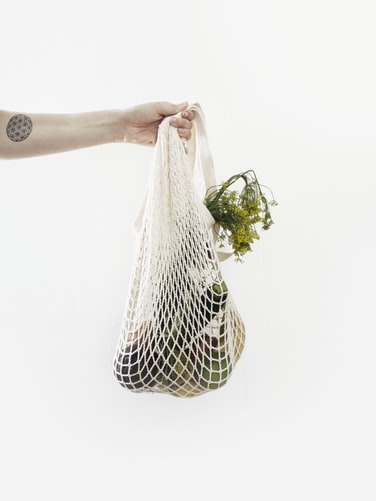
The first step in moving towards a zero-waste lifestyle is to by only the amount of food you will require. Hoarding should be thoroughly discouraged as it is the main cause of waste production. The limited number of supplies means that the food you waste could have actually filled the stomach of a person in need.

2. Proper Storage
Advertisements

In these testing times, you never know, when even a single loaf of bread could be useful. Hopefully, the situation won’t get to such an extremity but storing items should still be a priority. Keep food items in cool and covered places to ensure that they are not spoiled. This could immensely reduce the amount of waste being produced at your place.

3. Use Items before they Expire

About 40% of the food produced in the country is thrown into the trash, uneaten. During the lockdown period, try and have a basic idea of the expiry dates all food items in your home. It is essential to make sure that no sort of canned or packaged food is kept win your house past its expiry date. Make sure that you have completely finished an item before going out to buy more. An interesting fact about packaged food is that some of it is safe to consume even after its ‘best before’ date. Check on the internet to find out if the can in your store room is still safe to consume. If not make sure it is disposed off correctly. Separate the food item from its packaging before throwing it away in two separate bins.

4. Utilize the Leftovers

The most important aspect of living a zero-waste life is to ensure that your leftovers are put to good use. Segregation into two different bins is an ideal way to dispose off leftover food. The only problem lying with this situation is that many garbage trucks and cleaners just pile all the garbage into one huge bag regardless of its recycling and ecological properties. The perfect way to deal with this problem would be to use the leftover food as compost.

People often avoid using compost as it is a long and slightly difficult process. The quarantine makes it a perfect time to finally do something good for the environment. Before creating compost make sure that you are doing it right. There are a lot of factors that need to be considered before generating a manure in your kitchen. Use proper tips and techniques from professionals for optimal results.

5Mini Farming

Now that you have composed manure just from your wasted food, it is time to put that compost to good use. Indoor farming is not easy and it requires care and time but it is not necessary for you to own a huge balcony or a garden. You can grow vegetables even in the small terrace of your house. There are families around India who have become completely self-sufficient. Shilpa and Nitin, a couple based in the traffic heavy Bengaluru, grow more than 50 vegetables in their small balcony. Just one small pot for each type of vegetable is enough to sustain a family of four. The food they consume is from their own balcony and the waste produced in their home is used as manure to grow more vegetables. This ecological cycle can have a huge positive impact on the environment.

6. Eat Healthy

Perhaps the most underestimated way to reduce food wastage is to eat healthy. Junk food, has a much faster rate of decay when compared to fresh vegetables and fruits. Having a balanced and planned diet can help you minimize the amount of waste you generate. If you do not have the provision to create compost and farm in your balcony, you can start by eating healthy.

The COVID-19 pandemic has not been an easy time of us. Para medical staff and nurses are working overtime to ensure that we are safe the least we can do is reduce the burden on the planet. Correct utilization of leftovers and controlled generation of waste will make sure that the country has ample supply of food for the poor and needy. Play your part in the quarantine by changing to a zero-waste lifestyle.

Advertisements

History of Chocolate

Photo by Delphine Hourlay on Pexels.com

The first thought that comes to our mind when we hear the word chocolate is a candy or a dessert which tastes sweet. At present, Chocolate is one of the most famous food items in the world. It is consumed worldwide in different forms and is loved by foodies. At first thought we think of it as something to eat and not drink. Chocolate has a very different history and the story behind its popularity is quite an interesting one. The history of Chocolate dates back to about 450 B.C. when it was originally consumed as a bitter drink mixed with spices or corn puree. It originated in Mesoamerica where the Aztecs believed that the cocoa or cacao seeds were the gifts of the God of wisdom. It was used as an aphrodisiac which gave the drinker strength. The sweet pulp of the cacao fruit surrounding the beans was also fermented into an alcoholic beverage at that time. Today local folks of South Mexico are still known to make such drinks.

Photo by Pixabay on Pexels.com

The word chocolate came from the Aztec word “xocoatl” meaning a bitter drink brewed from cacao beans. The cacao tree has a Latin name “Theobroma cacao” meaning Food of the Gods. In pre-modern Latin America, the cacao seeds were considered so valuable that they were used as a currency. It was one of the essential items in rations of the United States soldiers during war. According to a 16th century Aztec document 100 cacao beans could be exchanged for a good turkey hen. 

The cacao tree is native to Mesoamerica where its cultivation, consumption and cultural use began. When pollinated, the seeds of the cacao tree form a sheath, within which 30 to 40 brownish-red almond shaped beans are embedded in a sweet viscous pulp. The beans are bitter, but the pulp is sweet which may have been consumed by humans at first. The cacao pods grow in a wide range of colors, like pale yellow, bright green, purple and crimson. The texture may vary from sculpted to completely smooth. The plantation of the cocoa trees is a tough process. When in the natural environment, the trees can grow up to 60 feet tall but in plantations they grow only up to 20 feet. 

Photo by Karolina Grabowska on Pexels.com

Chocolate was prepared as a sweet by the Europeans when it arrived there. It got popularized among the rich and eventually among the common masses. Christopher Columbus first came across Cacao on his fourth mission to America, when he and his crew seized a canoe full of native goods for trade. He took the beans back to Spain. After it got imported to Europe, it was used as a medicine for treating abdominal diseases because of its bitter taste. After getting sweetened with the addition of sugar or honey, it became a court favorite and chocolate established a foothold in Europe within the next hundred years.  

In 1828, a Dutch chemist found a way to make powdered chocolate and this product became known as the Dutch cocoa. This led to the creation of solid chocolate. The first modern chocolate bar was made by Joseph Fry in 1847 by making a moldable chocolate paste. By 1868, a small company called Cadbury was making chocolate candies in England. A few years later milk chocolate was made by Nestle. In the 20th century the word chocolate includes a variety of sweet treats. While modern-day chocolate might be a delicacy, it is said to have been made from the hardest and least flavorful cocoa beans, and oftentimes it has more sugar and additives than actual cocoa. 

Indian traditional food😋

The india is the famous for various types of festivals various cultures, dresses. nature, historical places etc. and the most famous of different types of foods. The Indian food is the rest of the world not just only in test but also some cooking methods. Throughout in India be it North India, south India spices are used generously in food. In the kashmir, is mostly dishes are prepared by the main course of rice founded abundantly in the beautiful. Delicious item cooked is the saag. That is prepared with a green by leafy vegetables known as the HAk,

East Indian Food –

East Indian Recipes

The bengali and Assamese style of cooking are noticeable. The staple food of the Bengalis food is yummy combination of rice and fish. Usually the Bengali love eating varieties of fishes. A special way of way of preparing the delicacy known as Hilsa, is by the pumpkin leaf and then cooking it. Another unusual ingredient that is commonly used int the bengali cooking of the Bamboo shoot. Vrous sweets prepared in the region by using including the Roshgollas, Sandesh, Cham-Cham other than more type of foods.

In the state like Maharashtra, the food is a usually mix of both north as well as the south cooking style here some people use both of rice and wheat with same intrest. along coastline of Mumbai is a wide variety of a fishes are available. Some of the delicious preparation include like the Bombay prawn and Pomfret.

GOA Food –

All You Need to Know About Goan Cuisine

In the Goa is further down towards south, one can notice Portuguese influence in the cooking style as well as in the dishes are some of the major dishes of this region are the sweet and sour Vindaloo, duck Baffad, sorpotel and egg molie etc.

SOUTH INDIAN FOOD –

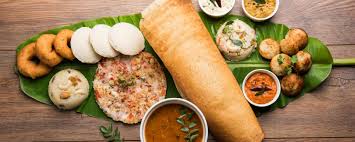
Delicious South Indian Food In The City | WhatsHot Bangalore

The south Indian state make great use of spices, like some fishes and coconuts, as most of them have a coastal kitchen.In food of Tamil Nadu use of tamarind is frequency made in order to important sourness to the dishes.

KERALA –

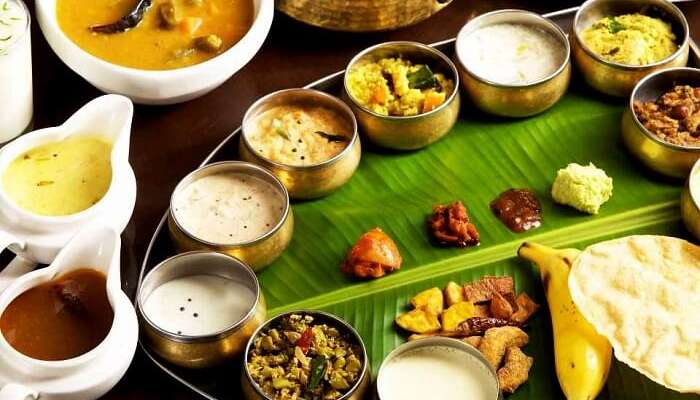
Kerala Cuisine: 21 Dishes To Try On Your Next Trip In 2020

In Kerala their are have some delicious food of the dishes are appams, Malabar fried Prawans, Idlis, Dosas, Fish and rice puttu. Another famous item of the region is the sweetened coconut milk. Yet another dish puttu, which is the rice power steam like in a pudding a bamboo shoot.

GUJARAT FOOD –

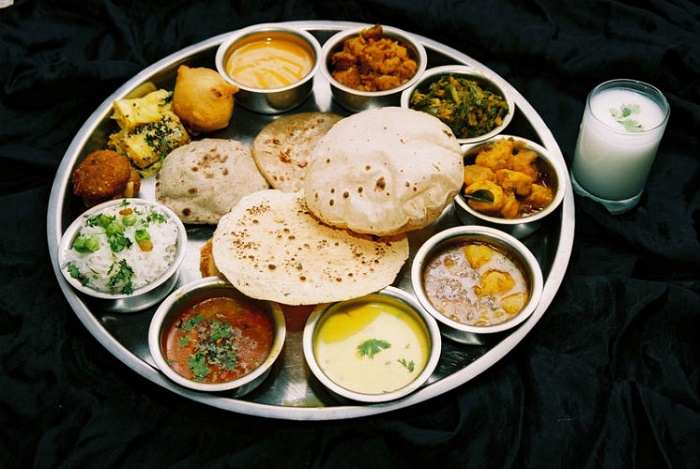
Traditional Gujarati Food & Cuisine

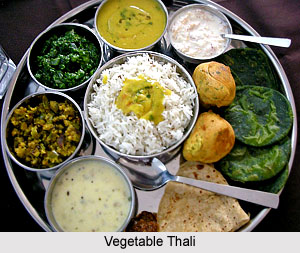
The Gujarat Thali is main contain dish of in here food. And the main dishes are include variety of dal, Kadhi, two to three vegetable preparation, salad savories, Puriyan and rice, chutney, sweet, pickles and papad buttermilk and etc. Gujarat Thali makes a balanced diet for everyone.

MAHARASHTRA FOOD

Dependable And Delicious Maharashtrian Food In Mumbai - Homegrown

The maharashtra most world famous of pav-bhaji is to delicious as well another one is Poha, Maharashtra has a lot of offers to food lovers. Cuisine can be broadly classified into two styles of kokan and Varadi. The Kokan being from the coastal region has from Goan, Saraswat, Gaud and Malvani region. Vardi cuisine, on other hand belong to some Vidarbha region. Some spiece like Goda Masala, Kokum, Tamarind and coconut are essential ingredient in the kitchen. and their are spice level differ in different part of the state.

KASHMIR FOOD –

Harisa festival : Now you can experience Kashmiri cuisine through ...

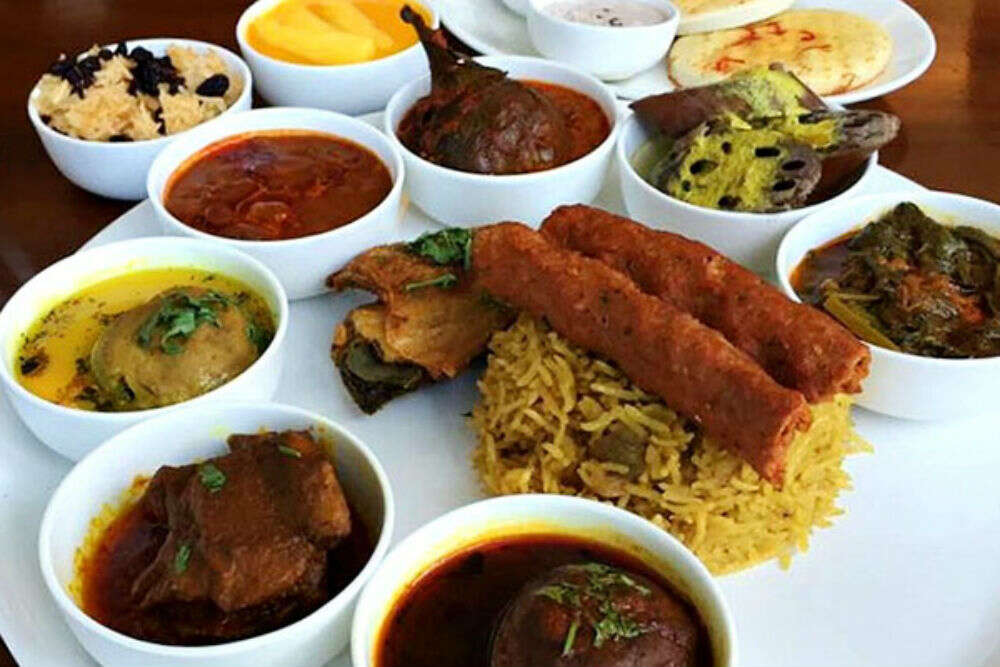
The Kashmir is most world famous nature is too beautiful the Kashmir is called as the “Jannat” and here’s dish was too delicious. The Kashmir food is varied and vibrant. Here are the names of Kashmiri food dishes that is introduce to you the Zaika-e-Kashmir. So do try the popular food of Kashmir on vacation of most which is the foods are Roghan Rosh, Modur Pulao, Dum Olav, Yakhni lamb curry, Goshtaba, Kavha, Shab Deg,Aab Ghosh, Momos, Butter tea.