Impact of Covid-19 on the Corporate Sector in India


The impact of coronavirus pandemic on India has been largely disruptive in terms of economic activity as well as a loss of human lives. Almost all the sectors have been adversely affected as domestic demand and exports sharply plummeted with some notable exceptions where high growth was observed. An attempt is made to analyze the impact and possible solutions for some key sectors.


Food & Agriculture

Since agriculture is the backbone of the country and a part of the government announced essential category, the impact is likely to be low on both primary agricultural production and usage of agro-inputs. Several state governments have already allowed free movement of fruits, vegetables, milk etc. Online food grocery platforms are heavily impacted due to unclear restrictions on movements and stoppage of logistics vehicles. RBI and Finance Minister announced measures will help the industry and the employees in the short term. Insulating the rural food production areas in the coming weeks will hold a great answer to the macro impact of COVID-19 on Indian food sector as well as larger economy.


Aviation & Tourism

The contribution of the Aviation Sector and Tourism to our GDP stands at about 2.4% and 9.2% respectively. The Tourism sector served approximately 43 million people in FY 18-19. Aviation and Tourism were the first industries that were hit significantly by the pandemic. The common consensus seems to be that COVID will hit these industries harder than 9/11 and the Financial Crisis of 2008. These two industries have been dealing with severe cash flow issues since the start of the pandemic and are staring at a potential 38 million lay-offs, which translates to 70 per cent of the total workforce. The impact is going to fall on both, White and Blue collar jobs. According to IATO estimates, these industries may incur losses of about 85 billion Rupees due to travel restrictions. The Pandemic has also brought about a wave of innovation in the fields of contactless boarding and travel technologies.


Telecom

There has been a significant amount of changes in the telecom sector of India even before the Covid-19 due to brief price wars between the service providers. Most essential services and sectors have continued to run during the pandemic thanks to the implementation of the ‘work from home’ due to restrictions. With over 1 billion connections as of 2019, the telecom sector contributes about 6.5 per cent of GDP and employs almost 4 million people. Increased broadband usage had a direct impact and resulted in pressure on the network. Demand has been increased by about 10%. However, the Telco’s are bracing for a sharp drop in adding new subscribers. As a policy recommendation, the government can aid the sector by relaxing the regulatory compliances and provide moratorium for spectrum dues, which can be used for network expansions by the companies.


Pharmaceuticals

The pharmaceutical industry has been on the rise since the start of the Covid-19 pandemic, especially in India, the largest producer of generic drugs globally. With a market size of $55 billion during the beginning of 2020, it has been surging in India, exporting Hydroxychloroquine to the world, esp. to the US, UK, Canada, and the Middle-East.

There has been a recent rise in the prices of raw materials imported from China due to the pandemic. Generic drugs are the most impacted due to heavy reliance on imports, disrupted supply-chain, and labour unavailability in the industry, caused by social distancing. Simultaneously, the pharmaceutical industry is struggling because of the government-imposed bans on the export of critical drugs, equipment, and PPE kits to ensure sufficient quantities for the country. The increasing demand for these drugs, coupled with hindered accessibility is making things harder. Easing the financial stress on the pharmaceutical companies, tax-relaxations, and addressing the labour force shortage could be the differentiating factors in such a desperate time.

Oil and Gas

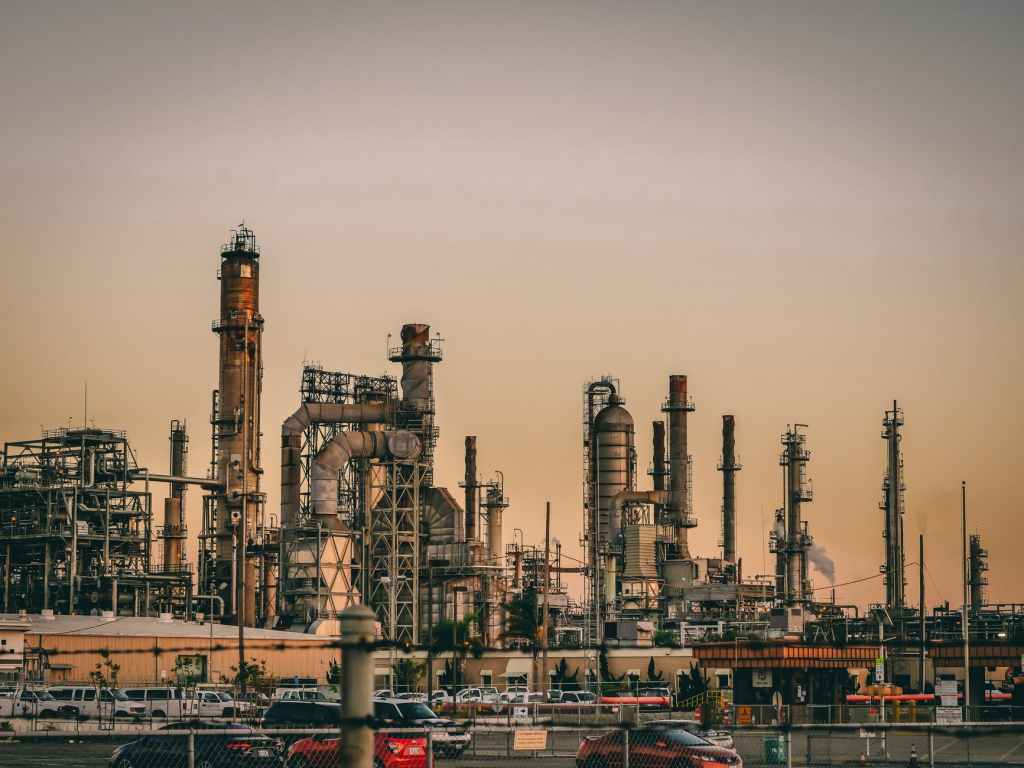
The Indian Oil & Gas industry is quite significant in the global context – it is the third-largest energy consumer only behind USA and Chine and contributes to 5.2% of the global oil demand. The complete lockdown across the country slowed down the demand of transport fuels (accounting for 2/3rd demand in oil & gas sector) as auto & industrial manufacturing declined and goods & passenger movement (both bulk & personal) fell. Though the crude prices dipped in this period, the government increased the excise and special excise duty to make up for the revenue loss, additionally, road cess was raised too. As a policy recommendation, the government may think of passing on the benefits of decreased crude prices to end consumers at retail outlets to stimulate demand.


Beyond Covid: The new normal

In view of the scale of disruption caused by the pandemic, it is evident that the current downturn is fundamentally different from recessions. The sudden shrinkage in demand & increased unemployment is going to alter the business landscape. Adopting new principles like ‘shift towards localization, cash conservation, supply chain resilience and innovation’ will help businesses in treading a new path in this uncertain environment.

Coronavirus (COVID-19), a virus that grew stealthily has become one of the deadliest viruses that are killing people worldwide. This virus took birth in Wuhan city of China and since then have traveled to more than 160 countries. The World Health Organization (WHO) has declared Coronavirus as a pandemic. It has become a mass scare and is leading to the deaths of thousands of people in numerous countries including China, Italy, Iran, Spain, the US, and many more. In India, this pandemic started on 30 January 2020 by affecting an individual who had a travel history from Wuhan, China.


The world economy is seeing its greatest fall ever. Coronavirus has largely impacted the growth of almost every country and is responsible for the slump in GDP worldwide. Like other countries, India is also impacted by this virus but not largely. Almost every industry sector has seen a fall in their sales and revenue. India’s GDP growth has fallen to 4.7% in the third quarter of 2020.


Inflation and Affected Industry:

China is one of the largest exporters of many raw materials to India. Shutting down of factories has damaged the supply chain resulting in a drastic surge in the prices of raw materials. Some of the other products that have seen a rise in their prices are gold, masks, sanitizers, smartphones, medicines, consumer durables, etc. The aviation sector and automobile companies are the hardest hit among the rest. With no airplane landings or take-offs globally and restricted travel has brought the aviation and travel industry to a halt.


Slump in Share market:
Share markets that include Sensex and Nifty are on nose dive since the occurrence of this pandemic (COVID-19). Sensex has declined close to 8000 points in a month. As of 12 March 2020, share market investors have lost approximately Rs. 33 lakh crore rupees in a month. This could be the beginning of a recession that the Indian market will never want to witness. Investors are advised to stay safe and invested in this virus-infected stock market. Few industries that can benefit from novel coronavirus during the time of the market crash are pharmaceuticals, healthcare, and Fast Moving Consumer Goods (FMCG).



Cash flow Issue:
Due to this outbreak, almost 80% of Indian companies have witnessed cash flow difficulty and over 50% of companies are facing operations issues. As per the Federation of Indian Chambers of Commerce and Industry (FICCI), 53% of companies are impacted by COVID-19. Slow economic activity is resulting in cash flow problems eventually impacting repayments, interest, taxes, etc.


Coronavirus (COVID-19), a virus that grew stealthily has become one of the deadliest viruses that are killing people worldwide. This virus took birth in Wuhan city of China and since then have traveled to more than 160 countries. The World Health Organization (WHO) has declared Coronavirus as a pandemic. It has become a mass scare and is leading to the deaths of thousands of people in numerous countries including China, Italy, Iran, Spain, the US, and many more. In India, this pandemic started on 30 January 2020 by affecting an individual who had a travel history from Wuhan, China.


The world economy is seeing its greatest fall ever. Coronavirus has largely impacted the growth of almost every country and is responsible for the slump in GDP worldwide. Like other countries, India is also impacted by this virus but not largely. Almost every industry sector has seen a fall in their sales and revenue. India’s GDP growth has fallen to 4.7% in the third quarter of 2020.


Efforts from CII and Govt. of India:
Confederation of Indian Industry (CII) has suggested the RBI reduce repo rate up to 50 basis points and also asked for a reduction of 50 basis points on the cash reserve ratio. The government is planning to set up an amount to support MSMEs to overcome the crisis during this phase of shut down, cash flow difficulty, and working capital issues.

Written by: Ananya Kaushal

Geography of India

Geography as a university discipline got recognition in the early decades of the 19th century in the German universities and subsequently in the French and British universities.

During the period of evolution, geography, like all other sister social science disciplines, faced many philosophical and methodological problems. Geography did not develop as a well-regulated

It followed a process of varying tensions in which tranquil periods, characterized by steady accretion of knowledge, are followed by crisis which can lead to upheaval within subject discipline and breaks in continuity. In each phase of tranquillity and crisis, geographical literature was and has been written with changing philosophies and methodologies; the philosophy and methodology being largely governed by the individual beliefs of the author, the political system, the social requirements of the people of the region and its economic institutions.

The last twenty-five years can be regarded as a period in which enormous geographical literature has been produced. This literature in the shape of books, research papers and monographs pertains to teaching, research, professional employment and pragmatic plans for the public and private bodies. Geography up to the Second World War, however, was regarded as a discipline providing general information about topography, relief features, weather, climate, mountains, rivers, routes, towns, cities and seaports.

Geography for most of the people was nothing but general knowledge. In the recent past, geographers have, however, adopted a new strategy in the restructuring of their courses and designed the syllabi around the theme of social welfare, making the subject the principal source of awareness of local surroundings, regional milieu, environmental pollution and world environment.

Geographers are venturing into the areas of environmental management and problems of pollution to make the social environment conducive for the proper development of individuals and societies. In order to achieve the welfare target, geographers are attacking social problems and exploring the causes of socio-economic backwardness, environmental pollution, and uneven levels of development in a given physical setting. Now, the main objective of geographical teaching and research is to train students in the analysis of phenomena, so that they can take up subsequently the problems of society as the fields of their research and investigation, thereby helping the local, state and national administration to overcome the regional and intra-regional problems.

The social problems are being tackled with approaches ranging from positive to normative, from radicalism to humanism, and from idealism to realism. In brief, geographers are increasingly concerning themselves with the problems of society, conditions of mankind, economic inequalities, social justice, and environmental pollution.

For the reduction of regional inequalities and for the improvement of the quality of life, the main concern of geographers is with what should be the spatial distribution of phenomena instead of with what it is. It is in this context that the spatial inequality in social amenities and living standards is investigated by geographers to trace the origin of disparity rather than to condemn injustice.

Historically, in the initial phases of its development, the main area of employment of geography students in the developed countries was teaching. In the Third World countries, geographers even today are not much actively involved in the process of planning and development. Regrettably, research had less important place in the geographical profession than in many of the social and physical sciences.

Moreover, the research done by individuals mainly remained confined to the libraries and has hardly been utilized for the purpose of planning. Unfortunately, the policy-makers in developing countries like India do not seem to be aware of the spatial dimensions of their problems of policies. Another reason is widespread ignorance of and even prejudice against geography particularly among the present generation of decision-makers whose opinions have been shaped by the experience of the previous generation school geography—when geography occupied a low place and was, as a subject, considered to be nothing more than general knowledge.

In fact, in most of the social fields, very little contribution had been made by geographers, and in the past they could not significantly suggest alternative strategies for the spatial organization of space. The last three decades have, however, seen some particularly important changes in the subject-matter, philosophy and methodology of geography. The major issues on which the geographers are concentrating include poverty, hunger, pollution, racial discrimination, social inequality or injustice, environmental pollution, and use and misuse of resources.

Some of the leading works which have been useful in the public policy making are: Geography of Crimes, Black-Ghetto, and Geography of Social Well-being. The quantitative revolution of the 1960s in geography gave to it some kind of intellectual vigour so essential for the rigorous analysis required in any public context and in the formulation of proposals for public policy.

It is an encouraging fact that now geographers all over the world are envisaging research on social problems with a welfare theme. They are working with a pragmatic approach to overcome the problems of inequalities. In fact, the objective of welfare geography is the evolution of the social desirability of alternative geographical state.

Scientific revolution entered in geography in the early 1970s. The pragmatists advocated the use of scientific methods (positivism) for finding solutions to human problems. It is with this intention that scholars like David M. Smith has adopted the welfare approach while discussing the problems and prospects of human geography.

The welfare geography has been defined differently by different scholars of geography. In the words of Mishan, “theoretical welfare geography is that branch of study which endeavours to formulate positions by which we may rank, on the scale of better or worse, alternative geographical situation open to society”. While Nath expressed ‘welfare geography’ is that part of geography where we study the possible effects of various geographical policies on the welfare of society. In the spatial context, Smith defined welfare geography as the study of “who gets what, where and how”.

The geographical ‘state’ or situation, in the sense used above, may refer to any aspect of the spatial arrangement of human existence. It may relate to the spatial allocation of resources, income, or any other source of human well-being. It may concern with the spatial incidence of poverty or any other social problem. The expression may also be used in desirable industrial location pattern, the distribution and concentration of population, the location of social services facilities

transportation network, patterns of movement of people or goods and any other spatial arrangement which has a bearing on the quality of life as a geographically variable condition. And beneath them all, in the type of society—the economic, social, political structures that generate the pattern.

The welfare approach, nevertheless, has had different meanings in the different periods of human history. The humanist endeavours in various periods of different nations and societies like Jewish, Christians, Muslims, Confucians, Hellenistic, Scientific, Realists, Marxist and Existentialists, and many other forms of humanism appeared on the map of intellectual history.

The geographers who are mainly concerned with the problems of society and trying to formulate pragmatic proposals for public policy clarify the description and explanation of the phenomena. On the basis of such analysis they evaluate their plans and prescribe suitable strategies for balanced development.

Description involves the empirical identification of territorial levels of human well-being—the human condition. This is a major and immediate research area in which surprisingly little work has been done in India and in other developing countries. Explanation covers the how…It involves identifying the cause and effect links among the various activities undertaken in society, as they contribute to determining who gets what and where. This is where the analysis of the kind of economic, demographic and social patterns mentioned above logically fits into the welfare structure.

Evaluation involves making judgement on the desirability of alternative geographical states and the societal structure from which they arise. To say that one spatial pattern of human well-being is preferable to another is to say that a higher level of welfare is attached to it. Such judgements must be made with reference to equity as well as the efficiency criteria with which the geographer is more familiar. Geographical patterns of all kinds can be judged with respect to their profit maximizing and cost minimizing criteria.

Prescription requires the specifications of alternative geographical state, and alternative societal structures designed to produce them. Prescription involves answering the ethical question: who should get what, where? Implementations is the final process replacing as a state deemed undesirable by something superior. It covers the question of how, once it has been decided who should get what, where. Just what role should be adopted by geographer qua geographer in a changing world.

In the contemporary world, there is a growing awareness among geographers that all physical development has a potential income redistributive impact. Any development proposed at any time in space has the capacity to benefit some people in some places more than others. It would be very difficult to construct anything anywhere which would be of equal benefit to every citizen. This is because of this situation that the benefits of government developmental policies in developing societies do not percolate down to the lowest strata of these societies.

Geographical distance and accessibility mean that some people will be better placed to enjoy the advantages or disadvantages, whether the structure is hospital, school, road, railway, community hall, cinema, theatre, park, recreational place or sewage works. Therefore, location decisions and plans for spatial allocation of resources must be made with utmost care, if the benefits and penalties are to be proportional among the population in a predictable and equitable manner. In such public policy decisions, geographers’ role becomes imperative as they have the basic training in the spatial and temporal analysis of phenomena.

Spatial allocation problems are associated with identification of priority areas, planning routes, location of factories or other sources of employment, spatial arrangement of facilities providing medical care, housing complexes, shopping centres and allocation of land for different urban and recreational uses. Each of these decisions can be made in a number of ways, and each decision can have a different impact. Geographers by their training can build up more sophisticated knowledge of the process of development. This involves disentangling complex networks of economic, social and cultural relationships and also the ecological relationships in a balance, so easily disturbed by ill-conceived ‘development’ projects. Geographers by allocation, analysis and synthesis of space can contribute, successfully, meaningfully and effectively to the formation of public policy.

In developing countries like India there is a high degree of internal inequality. In the Third World nations wealth and power are still largely in the hands of a small urban elite or big landlords. The most obvious example is South Africa. In India also, more than 50 per cent of the population is below the poverty line while over 50 per cent of the total national assets are in the hands of only two dozen families. Moreover, in India, most of the economic activity is concentrated in metropolitan cores, though still over 70 per cent of the total population is residing in the rural areas. The urban biased industrial and social infrastructural policy adopted by planners is widening the gap between the rich and the poor on the one hand and rural and urban population on the other.

The highly advanced countries like U.S.A., Canada and Australia also have spatial variations in levels of human well-being. In the United States, the general material standard of living is higher than anywhere else in the world. Yet, millions of Americans, especially Negroes, live in poverty and social deprivation in ghettos—city slums. In parts of the rural south of U.S.A. (Texas, Georgia, etc.) people can be found living in conditions as bad as anywhere in South Africa. In these urban slums, the rate of crimes and drug addiction is fairly high.

The persistence of widespread poverty in American slums—the most affluent society in the world—is a contradiction which underlines the failure of economic growth under a capitalist system to uplift the lives of all people to current standard of decency. In 1976, according to the U.S. Census Bureau, about 12 per cent (26 million) Americans have income below the officially recognized poverty line.

One of the arguments put forward by the capitalist for the existing regional and intra-regional inequalities is that peoples are not born equal and they cannot be equal in their societies owing to the unequal distribution of the means of production. In fact, the chance of birth into a particular family or group in a particular locality, immediately constrains a child’s opportunity.

This situation gets further aggravated if the socio-political and economic organization is planned with an urban-biased or rich people-oriented policy. The planners in consultation with geographers can construct general social amenities which can benefit all sections of the society. Geographers, however, cannot be a panacea to all the ills, inequalities and socio-economic imbalances.

They know it much better than any other experts that they cannot make all deserts fertile, eliminate drought and create mineral resources where none exist in nature. There are physical limitations in the development of societies living in harsh environment. Such people, however, can have better chances of development if their resource base and needs of society will help to highlight fundamental issues of choice, efficiency and equity. Moreover, it would be useful in the provision of public services and other aspects of local life quality.

Geographers have the ability to analyze the spatial dimension of environmental problems and more particularly, to handle, analyze and interpret spatially distributed data. This awareness of and facility of handling the spatial dimension, which is a major ingredient of all problems of environmental and resource management, is something not generally provided by those in other disciplines and tends to be overlooked if a geographer does not provide it.

A welfare society needs better allocation of commodities, better distribution of commodities and better allocation of means of production among individuals (groups or classes) and among places. All these things are more easily achievable if geographers who deal with the man-environment interaction and examine the spatial distribution of phenomena are actively involved in the process of planning and formulation of public policies at the local, regional, national and international levels.

In countries like Sweden, Norway, the Netherlands, Israel, Denmark, U.S.S.R., France, New Zealand and Australia where geographers in collaboration with other scientists design public policies the use and beneficial effects of resources are reaching all sections of the societies. Geographers in India can provide pragmatic proposals for solving the various socio-economic and employment problems facing the rapidly increasing population.

By their efforts geographers can consider the causal relationships between inequity, the spatial organization of society and social structure. Public policies about reorganization and redistribution can be designed through planning by the experts who have expertise in man-environment interaction and spatial analysis of phenomena. For this purpose, geographers have to assert themselves through their applied and utilitarian researches.

Advertisements

Globalisation And Its Imapact On India

by Megha sharma

The term ‘globalisation’ means integration of economies and societies through cross country flow of information, ideas, technologies, goods, services, capital, finance and the people. The essence of globalisation in a broad sense is connectivity in all aspects of human life. Although economic forces are an integral part of globalisation, it would be wrong to suggest that they alone produced it. It has been driven forward above all by the development of information and communication technologies that have intensified the scope and speed of interaction between the people all over the world.

The British colonial rule had destroyed the self-sufficient agrarian economy. The then Prime Minister of India Jawaharlal Nehru preferred mixed economy for planned economic development of the country. As a result of this, public sectors were set up along with a number of private enterprises, but like the socialistic model of economy, the mixed economy of India has not produced profitable results. A number of public sectors became sick and the growth rates of production began to fall. While the poverty of the people continued to grow at an alarming rate, there was an acute balance of payment crisis and due to low domestic savings, there was no adequate capital for investment. 

impact of globalization

TYPES OF GLOBALIZATION

  • Economic globalization: is the development of trade systems within transnational actors such as corporations or NGOs;
  • Financial globalization: can be linked with the rise of a global financial system with international financial exchanges and monetary exchanges. Stock markets, for instance, are a great example of the financially connected global world since when one stock market has a decline, it affects other markets negatively as well as the economy as a whole.
  • Cultural globalization: refers to the interpenetration of cultures which, as a consequence, means nations adopt principles, beliefs, and costumes of other nations, losing their unique culture to a unique, globalized supra-culture;
  • Political globalization: the development and growing influence of international organizations such as the UN or WHO means governmental action takes place at an international level. There are other bodies operating a global level such as NGOs like Doctors without borders or oxfam.
  • Social Globalization: People move all the time too, mixing and integrating different societies;
  • Technological globalization: the phenomenon by which millions of people are interconnected thanks to the power of the digital world via platforms such as Facebook, Instagram, Skype or Youtube.
  • Geographic globalization: is the new organization and hierarchy of different regions of the world that is constantly changing. Moreover, with transportation and flying made so easy and affordable, apart from a few countries with demanding visas, it is possible to travel the world without barely any restrictions;
  • Ecological globalization: accounts for the idea of considering planet Earth as a single global entity – a common good all societies should protect since the weather affects everyone and we are all protected by the same atmosphere. To this regard, it is often said that the poorest countries that have been polluting the least will suffer the most from climate change.
Types of Globalization.

Globalisation has undermined the traditional role of women in homemaking, farming, handicrafts, handlooms etc., and resulted in a relatively better environment for women. Today, women are working in all spheres of Indian economy and are enjoying the fruits of “empowerment process” brought in by globalisation. At the same time, their security has become a major issue in this changing scenario and they are bearing the double burden of family as well as that of the job because the role of men in India have not changed much. People today, especially the young, developed an identity that gives them a sense of belonging to a worldwide culture, which includes an awareness of events, practices, styles and information that are a part of the global culture. There is the development of a bicultural identity or a hybrid identity, which means that part of one’s identity is rooted in the local culture while another part stems from an awareness of one’s relation to the global world.

We cannot say that the impact of globalisation has been totally positive or negative. It has been both. However, it becomes a point of concern when, an overwhelming impact of globalisation can be observed on the Indian culture. Every educated Indian seems to believe that nothing Indian is to be approved unless recognised and recommended by an appropriate authority in the West. This should be checked in order to preserve the rich cultural diversity of India and to ensure the fulfillment of the principle of self-sufficiency.

Rate this

Rating: 0 out of 5.
Advertisements
Advertisements

By Megha Sharma

Posted in Internship

Income inequality in India

Shared Moral Blindness - Ted's Thoughts

How has the unpriviliged community in India fared within the last few decades? Has their scenario changed?

There square measure actually several changes that one might observe within the last twenty years. Access to food grains from the general public distribution system at a supported rate has improved; several villages are electrified; a lot of youngsters are attending primary colleges in villages and concrete slums; bathrooms are made in many villages; several currently use mobile phones.

But has there been any important modification within the financial gain of little and marginal farmers among Adivasis and Dalits?

This is in all probability a a lot of complicated question to answer. after we started our journey as development practitioners twenty years past, we have a tendency to had to conduct a village study.

The average financial gain of Adivasi households in an exceedingly village of Bihar’s Lohardaga district (now Jharkhand) was around Rs 15,000 in 1996. This matched with the findings of comparable such studies in different areas of the Central Indian Plateau (CIP) conducted by our peers throughout a similar time.

Similar studies by development practitioners show that across the CIP, the common financial gain of little associated marginal households in an Adivasi space was Rs 55,000-60,000 in 2020 — a rise of just about fourfold from 1996.

The financial gain of those individuals failed to modification abundant within the last twenty years, if we have a tendency to take under consideration the rate. The Net present value (NPV) of Rs 15,000 in 1996 was around Rs 67,000 within the year 2019.

Rising inequality

The scenario changing at the national level?

India’s per capita gross domestic product (GDP) multiplied 5 times between 2000 and 2019; to $2014 in 2019 from $443 in 2000.

This doesn’t mean that financial gain of the complete population has multiplied. The highest one per cent in India attained twenty one per cent of total country’s financial gain in 2019. This was eleven per cent in 1990.

The top ten per cent attained fifty six per cent of the country’s total financial gain in 2019; rock bottom ten per cent attained solely 3.5 per cent.

Wealth distribution tells an analogous story. The richest ten per cent Indians closely-held 80.7 per cent of wealth in 2019.

The Gini (inequality in financial gain distribution) constant points to associate increasing difference in Republic of India. The constant in 2014 was 34.4 per cent (100 per cent indicates full difference and zero per cent full equality).

The constant multiplied to 35.7 per cent in 2011 and to 47.9 per cent in 2018. India is just second to Russia within the world in terms of difference.

Agricultural work is one of the most common way to sustenance in villages. A complete of 26.3 crores households are concerned in farming activities in India, per the most recent census knowledge for 2011.

Of this, only 11.9 crore folks are land-owning farmers; 14.4 large integer are landless staff and peasants. A minimum of 86.2 per cent of all farmers in India own simply 47.3 per cent of the crop area, per the agriculture census knowledge 2015-16.

During 2010-11 and 2015-16, the proportion of tiny and marginal farmers grew to 86.2 per cent from 84.9 per cent, whereas the overall range of operational holdings grew to 146 million from 138 million.

There are 126 million tiny and marginal farmers, that points to fragmentation of lands which a lot of medium farmers have become tiny and marginal farmers. These farmers along in hand concerning 74.4 million hectares of land — or a mean holding size of simply 0.6 hectares every.

Between 2010-11 and 2015-16, the amount of tiny and marginal farmers rose by concerning nine million, per agriculture census 2015-16.

Per capita land holding of rock bottom sixty seven per cent marginal farmers reduced to 0.38 hectares from 0.4 hectares within the last 20 years. The world isn’t enough for farmers to grow food for even six months.

Nearly 17 per cent smallholders have a mean land holding of 0.4 angular distance — a discount of 1.42 angular distance in 2000. The typical holding of scheduled tribe marginal farmers is 0.48 ha; for scheduled Caste, it’s solely 0.37 ha.

The country has another 3.76 crore households of landless laborer within the same time.

Pandemic made it worse

French economic expert Thomas Piketty, in his book Capital in the 21st Century, came up with a straightforward plan to elucidate difference in terms of wealth distribution takes place in associate degree economy.

He believes, once the come back on investments (r) is over the speed of economic process (g) of the country, a lot of wealth gets accumulated within the hands of a couple of (who own the suggests that of production) as compared to the busy category.

Piketty showed that the typical rate of come back on investment was 5 per cent throughout history. He finished that any rate below five per cent can cause a lot of difference as a lot of wealth are going to be generated for a couple of investors as compared to people who don’t own any suggests that of production.

Whether Piketty’s findings, largely supported Europe and also the u. s., are applicable for countries like India where economic history and pathways are totally different, is debatable.

However, a thirty five per cent increase within the web value of the billionaires in India throughout the novel coronavirus malady (COVID-19) pandemic, once India’s growth was negative ten per cent, could force US to assume if Piketty was right.

The approach ahead

India’s economic process has caught up considerably. This can be the time once states ought to invest: cash must move into the hands of the marginalized.

States earn cash through taxation. Increasing tax on the rich folks is that the obvious resolution. Piketty additionally projected the same live to cut back difference. The next rate of tax for billionaires are often the simplest way to get a lot of revenue for the state.

In any case, withdrawal of Central Public Sector Undertakings associate and public sector banks can’t be a permanent resolution in an economy where difference is rising sharply.

There is a desire to trace what’s happening within the economic condition pockets of India. A periodic study could facilitate policy manufacturers to believe the problem a lot of seriously and are available up with higher ideas to cut back inequalities.

THE SUFFEREING OF INDIAN FARMERS

Thousands of farmers from Haryana and Punjab have surrounded Delhi for the past four months in defiance of the three ordinances passed by the Indian parliament on September 14, 2020. This protest, which has gathered thousands of farmers in the capital and set up camp on three major sites in the city, is being dubbed the single largest protest in human history. Farmers are expressing their dissatisfaction with the bills, fearing that they will simply empower big companies and leave farmers at their mercy.

Farmers- The Core of Our Economy

India’s agricultural sector has shown resilience in the face of COVID-induced lockdowns, according to the Economic Survey 2020-2021. Agriculture and related activities were the only bright spot in an otherwise dismal GDP efficiency, growing at a rate of 3.4 percent at constant prices in 2020-21. The agriculture sector employs more than half of the country’s workforce. We must comprehend our farmers’ plight and the difficulties they have faced. Be it colonial-induced famines, landowner exploitation, debt burdens, recent locust invasions, crop destruction due to severe weather conditions, or alarmingly high suicide rates. It is our responsibility to listen carefully and understand their concerns as well as the reasons for their dissatisfaction.

The Modifications has been Simplified

The three farm bills proposed are as follows –

The Essential Commodities Act (which is based on a colonial-era law governing the quantity of produce that can be stored or sold) only provides for the control of particular food products in the event of natural disasters or war.

This amendment restricts the ability of the federal government and states to enforce stock and price limits. These restrictions should only be enforced in an emergency. As a result, large companies now have complete leverage over resources such as cereals, pulses, edible oil, onions, and potatoes.

The Farmers’ Produce Exchange and Commerce (Promotion and Facilitation) Bill, also known as the APMC Bypass Bill, addresses the mechanism that now allows farmers to trade their produce both intra-state and inter-state. Previously, they could only carry their produce to the APMC (Agricultural Produce Market Committee) Mandis, no matter how far away they were. This bill also provides for electronic produce trading and e-commerce. It prohibits the state government from charging farmers or electronic trading platforms a market fee for selling produce outside of the designated mandi.

The Farmers (Empowerment and Protection) Agreement on Price Assurance and Farm Services Bill, the third bill, allows farmers to participate in “contract farming,” which allows them to enter into a contract with Agri-firms or large buyers for a specific crop at a predetermined price.

What is the aim of Farmer’s Mobilization

The aim of these bills appears to be to benefit and enable farmers to sell at larger markets without being taxed, engage in e-commerce, minimise interactions with middlemen, and incorporate technology into their farming practises. All of this is made possible by the ruling party’s deregulatory reforms, which encourage privatisation. In India, contract farming is not a new phenomenon. Contract farming has already been tried by the governments of Punjab and Gujarat. Their knowledge will aid us in determining the possible consequences of the new legislation in other parts of the world. Let’s take a peek at the state of Punjab. For more than three decades, PepsiCo has been involved in contract farming and has proven to be profitable. Farmers’ incomes increased as a result of the increased jobs. PepsiCo’s arrival ushered in a potato revolt. Small-scale or neglected producers, on the other hand, are said to be dissatisfied. Sunara Singh, a 15-acre farmer, claims that small-scale farmers who try to sell a few kilos of produce (as opposed to the tonnes sold by large-scale farmers) are not even spoken to politely or given gate passes to PepsiCo’s premises, as stated by Basant Kumar in an article for NewsLaundary in October 2020.

Another issue with the proposed laws is that, in the event of a conflict between a large company and a farmer, most small farmers have little resources in terms of time, funding, or legal skills. Farmers are unable to resolve cases ex post facto in either a civil or SDM (Sub-district magistrate) court due to a lack of documentary evidence to support their claims. The farmer will eventually be at the mercy of the corporate buyer. The bill mentions a Minimum Sales Price (MSP) for the crops, but no concrete legislation is in place to enact it. MSP does not have a statutory backup. MSP serves as a benchmark or signal price for all crop trade in the United States.

“The point is that in a country where 86 per cent of farmers have a land of the size of
fewer than two hectares, you can’t expect the farmer to carry his produce to far off
places to sell. What we need is an assured price for the farmers. If the markets are
saying they will provide a higher price to farmers, the question is a higher price to
what? There must be some benchmark.” Says Davindar Sharma, a food and trade policy
analyst at Al Jazeera.

The Agriculture Produce Marketing Committee (APMC) Act, also known as the Mandi system, was repealed by the state government of Bihar in 2006. “The financial situation of 94% of farmers in Bihar — who didn’t go to mandis or weren’t covered under minimum support price (MSP) — should have improved in the past 14 years, but their situation has worsened,” says economist DM Diwakar. This goes on to show that removing and selling agricultural produce outside of the APMC’s jurisdiction has an effect on the MSP that farmers are obligated to earn while trading inside the APMC Market Yard.

Educate, Organize, Agitate and Fact-Check!

Freedom of speech is important in a democracy. It must encourage people to express themselves, whether via social media sites, toolkits, or rallies. Tear gas and water cannons were used on protesters, demonstrators were arrested for standing up for their cause or without overt proof of a foreign plot, and the right to private counsel was denied during remand.

The Indian media has based its attention on the forces that have created instability, losing sight of the true causes of the unrest. Is it fair to ignore or, to put it another way, ridicule the majority of demonstrators who carried out their dissent in accordance with the government’s parameters and routes because a few groups had ulterior motives?

We must educate ourselves from reliable sources and double-check the information we ingest. We appear to equate oppressed people’s rage with their lack of credibility. We must empathise with the agitation and place it in perspective. If we really want to stand in solidarity, we must put an end to the dissemination of misinformation.

The Great Indian Banking Crisis.

For a few years now we have witness number of banks and other financial institution crumbled to dust. Apart from PMC (Punjab and Maharashtra Co-Operative) Bank and Yes Bank crisis there are several small banks crisis that have barely been reported and recently RBI have red flagged as many as 11 bank. So how come most important financial institution of our country are falling apart one by one?

Well the failure of several financial institutions and more importantly banking are mainly due to these reasons. Firstly, Indian banks mainly public sector banks(PSB) are loaded with non performing assets (NPA). This implies that they find it difficult to lend more money to industries and other business out of fear which leads to fall in capital formation which in turn leads to reduction in growth of an economy. Secondly, Public Sector Banks are not professional enough that is government still controls the appointment to their boards and their management are short of talents. Thirdly, Banks are made to do too much and take too much risk. They are made to bear the burden of loan waiver and direct lending. All banks suffer miserably due to lack of well develop financial system that could take some risk.

The banking system in India is overwhelmed by bad loans ( loans which bank fails to recover along with interest). Much of the blame is put on the poor performance of public sector bank but recent crisis in YES BANK shows that problem of poor governance, lack of transparency, government interference is same across all banks in both public and private through direct or indirect channel. And how small solution like privatisation is not a solution to any problems.

Any banking reform should address 2 important areas:

  1. Cleaning up banks
  2. Improve governance and management in Public sector banks

Cleaning up Banks

Under IBFC law, National Company Law Tribunal (NCLT) helps to restructure the loans for the largest firms but it’ll be overwhelmed if every stressed firms files before it. So, we need to find a way for out of court restructuring process so the many cases are restructure out of bankruptcy and NCLT acting as a last resort. Out of case settlement process should be transparent, speedy and it should protect the interest of bankers and harass them using central agency of CBI, CVC, ED on the other hand NCLT should be more transparent and speedy.

Improving Governance

Public sector has still not adequately professionalized since government rather than a independent body appoint boards member which inevitably leads to government interference. Every public sectors bank should independent body which have a power and authority to appoint CEO and hold him responsible for performance. Productivity of employees should also increased through imparting new skills and knowledge as PSBs has a huge talent deficit. Lateral entry should also be promoted at the top most. Banking system should not made to bear risk of the government electoral promises of loan waiver and direct benefit transfer targets because these are often achieved by abandoning appropriate procedure and create environment for future NPA and these measure constraint state and central government budget spending.

Over the there have been many debate and discussion over solution to fix the flaws of about the great Indian Banking crisis. All these debate and discussion often leads two common answers: Privatization of PSBs and Merger of Small and non performing PSBs to good performing and well managed PSBs.

Privatization of Banks

Privatization of Public Sector Banks (PSB) means to process in which government transfer the ownership and control to private entity by selling of its shares. Much of the discussion and debate over privatization are based on the ideology one believes in. Definitely, if the PSBs are given more independence in decision making, policy making and especially in recruitment of high skilled workers it’ll lead to some better result. However believing privatization is the solution to all the problems are short sightedness and foolish. The crisis of YES BANK only brought the biggest vulnerability in Indian banking system, the interference of government across all the bank both private and public is a big reality and lack of proper management and governance across all sector is also a reality which cannot be ignored.

Merger of Banks

Merger of banks often prescribed as solution to address the problem of poor goverance. In this process the poor manage banks are merged with good managed and governed banks. It is uncertain whether this process will result in a good result for collective performance of both banks but it’ll depends on ability of good bank management to impose its policy and will without alienating the employees of poor managed banks. Recently India government merge 10 PSBs and India is left with 12 Public sector banks. Whether this move is a success or not only time will tell.

Bank and other financial institution plays an important role in growth of any economy. It accepts deposit from an individual and lends that any people or business. It gives interest to people who deposit their savings and charges interest on loans, the difference between the two is its profit. Through process of accepting deposit and lending money (loans) leads to capital formation which is very important component of growth of an economy. So the government and all the stakeholder should pay a serious attention on the fragility of Indian banking system.

2000 Rupees Notes Not Printed By RBI In 2019-20, Currency is Still Valid

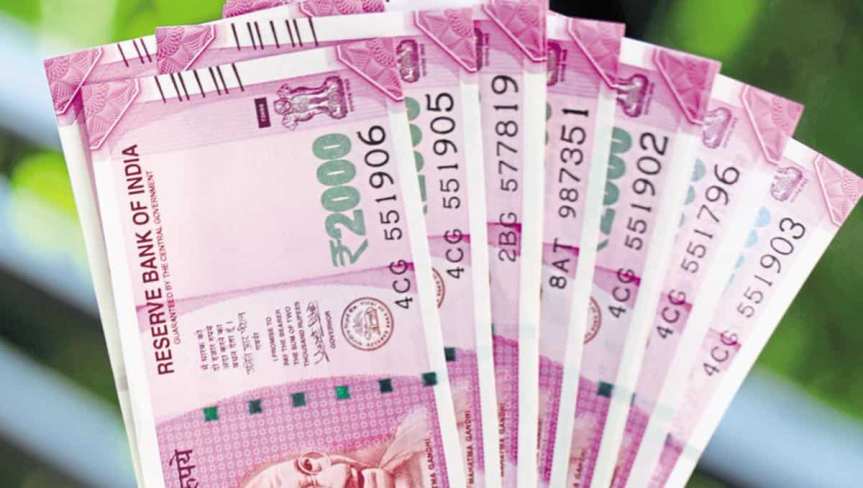
Rs. 2000 notes were introduced by the Government of India after the announcement of the demonetization of 500 and 1000 rupees notes in November, 2016. Currently, it is the highest denomination currency note of the country. According to the annual report of the RBI, the Rs 2000 denomination note was not printed at all during 2019-2020.

These notes were introduced after the government announced demonetisation of old Rs 500 and Rs 1,000 notes 4 years back. At that time, those two denominations had accounted for 86% of the then total currency in circulation.

The number of Rs 2,000 denomination notes had peaked at 3.36 billion units in 2017-18. This number had dropped to 3.29 billion in the years 2018-19. It has again fallen to 2.73 billion in 2019-20. The currency note presses of the Reserve Bank of India (RBI) did not print even one Rs 2,000 note in the last year. This happened because the presses did not receive any order for printing those. This seems to indicate a conscious decision for starting the trend of decreasing the number of notes which are circulated. The 2000 notes under circulation was 50% in 2016-17 and it has come down to almost 22% in 2019-20. These figures are based on RBI’s Annual Report for 2019-20, which was released on August 25 2020.

It is also known that RBI has also disposed a disproportionate share of Rs 2,000 notes in the soiled category. This has raised many questions on the government’s plan about the 2000 denomination note. In January, 2019 the was an indication that the Rs. 2000 notes were not being printed any further because there was adequate supply.

A total of 176.8 million pieces, which is quite a high number, of Rs 2,000 notes under the category of soiled notes were disposed of in 2019-20 by the RBI. While in 2018-19, just 1 million Rs 2,000 notes were disposed of and in 2016-17 or 2017-18, no Rs 2,000 notes were disposed of. Both the 2000 and 500 denomination notes were introduced after demonetisation. In 2019-20, the share of Rs 2000 notes which were disposed of was 6.5% while that of Rs.500 notes was 0.6%. Out of the 22 billion currency notes printed in 2019-20, more than 50% of those were of the Rs 500 denomination. Due to these changes in currency composition, the Rs 500 notes has reached a very high share in the total currency under circulation.

The Minister of State for Finance Anurag Singh Thakur had told the Lok Sabha on March 16, 2020 that, “Printing of bank notes of particular denomination is decided by the government in consultation with RBI to maintain the desired denomination mix for facilitating transactional demand of public. No indent was placed with the presses for printing of Rs 2,000 denomination notes for 2019-20. However, there is no decision to discontinue the printing of Rs 2,000 bank notes.”

A government official said that, “The Rs 2,000 notes were introduced in 2016 to quickly fill the gap created by demonetisation of Rs 500 and Rs 1,000 notes. It was the need of the hour. Gradually, with increased supply of smaller notes, including new notes of Rs 100 and Rs 200, and with growing popularity of digital transactions, the urgency to issue new Rs 2,000 notes is no longer there. But this does not mean that there is any move to discontinue Rs 2,000 notes. Increasingly, commercial banks are also using more and more smaller notes because their customers often find difficulties in getting change for Rs 2,000 notes.”