Grounded Theory Research: Unveiling the Underlying Structures of Human Experience

Daily writing prompt
What quality do you value most in a friend?

By Shashikant Nishant Sharma

Grounded theory research is a qualitative methodology that aims to generate or discover a theory through the collection and analysis of data. Unlike traditional research methods that begin with a hypothesis, grounded theory starts with data collection and uses it to develop theories grounded in real-world observations. This approach is particularly valuable in social sciences, where understanding complex human behaviors and interactions is essential.

Origins and Evolution

Grounded theory was developed in the 1960s by sociologists Barney Glaser and Anselm Strauss. Their seminal work, The Discovery of Grounded Theory (1967), introduced a new approach to qualitative research that emphasized the generation of theory from data. This was a departure from the traditional positivist approach, which often tested existing theories through quantitative methods.

Over the decades, grounded theory has evolved, with Glaser and Strauss eventually diverging in their approaches. Glaser’s approach remains more aligned with the original inductive methodology, while Strauss, along with Juliet Corbin, introduced a more structured and systematic method of coding and analyzing data, as detailed in their book Basics of Qualitative Research.

Core Principles

Grounded theory is built on several core principles:

  1. Theoretical Sensitivity: Researchers must be open to understanding the subtleties and nuances in the data, allowing theories to emerge naturally without preconceived notions.
  2. Simultaneous Data Collection and Analysis: Data collection and analysis occur concurrently, allowing for constant comparison and theory refinement throughout the research process.
  3. Coding: This involves breaking down data into discrete parts, closely examining and comparing these parts, and grouping them into categories. Strauss and Corbin’s approach includes three types of coding: open, axial, and selective.
  4. Memo-Writing: Researchers write memos throughout the research process to document their thoughts, hypotheses, and theoretical ideas, aiding in the development and refinement of the emerging theory.
  5. Theoretical Sampling: Data collection is guided by the emerging theory, with researchers seeking out new data to fill gaps and refine categories until theoretical saturation is achieved.
  6. Constant Comparison: Each piece of data is compared with others to identify patterns and variations, ensuring the theory is deeply rooted in the data.

Conducting Grounded Theory Research

  1. Initial Data Collection: Researchers begin by collecting data through various qualitative methods, such as interviews, observations, and document analysis. The goal is to gather rich, detailed information about the phenomenon under study.
  2. Open Coding: During this initial phase, researchers break down the data into smaller parts, labeling and categorizing each segment. This process helps identify initial patterns and themes.
  3. Axial Coding: Here, researchers focus on reassembling the data by identifying relationships between categories. This involves linking subcategories to main categories, often through a process of identifying causal conditions, contexts, strategies, and consequences.
  4. Selective Coding: Researchers integrate and refine the categories to develop a coherent theory. This final phase involves selecting the core category around which the other categories are organized, refining relationships, and validating the theory against the data.
  5. Theoretical Saturation: Researchers continue collecting and analyzing data until no new information or categories emerge. This indicates that the theory is well-developed and grounded in the data.

Applications and Impact

Grounded theory has been widely used across various fields, including sociology, psychology, education, nursing, and business. Its flexibility and inductive nature make it particularly useful for exploring new or complex phenomena where existing theories may not adequately explain the data.

For example, in healthcare, grounded theory has been used to understand patient experiences, the dynamics of healthcare teams, and the development of health policies. In education, it has helped uncover the processes of learning and teaching, student motivation, and curriculum development.

Challenges and Criticisms

Despite its strengths, grounded theory is not without its challenges and criticisms. Some researchers argue that the method can be too subjective, as the researcher’s interpretations play a significant role in data analysis. Others point out that the iterative nature of data collection and analysis can be time-consuming and labor-intensive.

Additionally, the divergence in methodologies between Glaser and Strauss has led to debates about the “correct” way to conduct grounded theory research. Researchers must navigate these differing approaches and determine which best fits their study’s goals and context.

Conclusion

Grounded theory research offers a robust framework for generating theories that are deeply rooted in empirical data. Its emphasis on inductive reasoning and iterative analysis allows researchers to uncover the underlying structures of human experience and behavior. While it presents certain challenges, its flexibility and depth make it an invaluable tool in the qualitative research arsenal. By remaining grounded in the data, researchers can develop theories that offer meaningful insights and contribute to a deeper understanding of complex social phenomena.

References

Breckenridge, J., & Jones, D. (2009). Demystifying theoretical sampling in grounded theory research. Grounded Theory Review8(2).

Dehalwar, K., & Sharma, S. N. (2023). Fundamentals of Research Writing and Uses of Research Methodologies. Edupedia Publications Pvt Ltd.

Dougherty, D. (2017). Grounded theory research methods. The Blackwell companion to organizations, 849-866.

Dunne, C. (2011). The place of the literature review in grounded theory research. International journal of social research methodology14(2), 111-124.

Holton, J. A. (2008). Grounded theory as a general research methodology. The grounded theory review7(2), 67-93.

McGhee, G., Marland, G. R., & Atkinson, J. (2007). Grounded theory research: literature reviewing and reflexivity. Journal of advanced nursing60(3), 334-342.

Oktay, J. S. (2012). Grounded theory. Oxford University Press.

Sharma, S. N., & Adeoye, M. A. (2024). New Perspectives on Transformative Leadership in Education. EduPedia Publications Pvt Ltd.

List of Top Social Scientists

Daily writing prompt
List the people you admire and look to for advice…

By Shashikant Nishant Sharma

list of ten influential social scientists who have made significant contributions to their respective fields:

Photo by Luis Quintero on Pexels.com
  1. Max Weber (1864-1920): A German sociologist, Weber is known for his work on the rationalization of society, the Protestant Ethic and the Spirit of Capitalism, and his theory of social action. He was instrumental in developing sociology as a distinct academic discipline.
  2. Karl Marx (1818-1883): A German philosopher, economist, and political theorist, Marx is best known for his analysis of capitalism and his theories on class struggle, labor, and historical materialism. His ideas laid the foundation for modern communism and have had a profound influence on sociology and political science.
  3. Émile Durkheim (1858-1917): A French sociologist, Durkheim is considered one of the founding figures of sociology. He pioneered the study of social facts, collective consciousness, and the division of labor in society. His work laid the groundwork for functionalist theory in sociology.
  4. Sigmund Freud (1856-1939): An Austrian neurologist and the founder of psychoanalysis, Freud revolutionized the understanding of human psychology. His theories on the unconscious mind, defense mechanisms, and the interpretation of dreams have had a lasting impact on psychology, psychiatry, and cultural studies.
  5. Michel Foucault (1926-1984): A French philosopher and social theorist, Foucault is known for his critiques of power, knowledge, and the mechanisms of social control. His work on institutions such as prisons, asylums, and sexuality has been influential in fields ranging from sociology to cultural studies.
  6. Jane Addams (1860-1935): An American social worker, feminist, and suffragist, Addams co-founded the Hull House in Chicago, a settlement house that provided social services to immigrants and the urban poor. She was a pioneer in the field of social work and an advocate for social justice and women’s rights.
  7. W.E.B. Du Bois (1868-1963): An American sociologist, historian, and civil rights activist, Du Bois was one of the founders of the NAACP and a leading figure in the fight against racial inequality. His seminal work, “The Souls of Black Folk,” addressed issues of race, identity, and social justice in America.
  8. Margaret Mead (1901-1978): An American cultural anthropologist, Mead is best known for her studies of non-Western cultures, particularly in the South Pacific. Her work challenged conventional notions of gender and sexuality and highlighted the cultural variability of human behavior.
  9. Pierre Bourdieu (1930-2002): A French sociologist, Bourdieu is known for his theories on cultural capital, habitus, and social reproduction. His work explored the ways in which social structures shape individual behavior and cultural practices, and has had a significant impact on fields such as sociology, anthropology, and education.
  10. Amartya Sen (1933-present): An Indian economist and philosopher, Sen is known for his work on welfare economics, social choice theory, and development economics. He has made significant contributions to our understanding of poverty, inequality, and human development, and was awarded the Nobel Prize in Economics in 1998.

These social scientists have each left a lasting legacy in their respective fields and have contributed to our understanding of society, culture, and human behavior.

Understanding Sociology: Scope and Relevance of the Discipline

Daily writing prompt
What makes you nervous?

By Kavita Dehalwar

Sociology is a captivating field of study that delves into the intricacies of social life, social change, and the social causes and consequences of human behavior. It explores the structure of groups, organizations, and societies, and how people interact within these contexts. By examining social and cultural phenomena, sociology helps us understand the underpinnings of our everyday experiences and broader societal issues.

Photo by Ahmed akacha on Pexels.com

Overview of Sociology as a Discipline

Sociology emerged in the early 19th century, during a time of profound social transformation in Europe. The industrial revolution, urbanization, and the emergence of modern states shaped the original questions sociologists sought to answer. Pioneers like Émile Durkheim, Karl Marx, and Max Weber developed foundational theories that illuminated how societies maintain and change their structures, and how individuals and groups influence and are influenced by these structures.

At its core, sociology is the systematic study of social behavior and human groups. It focuses on understanding the ways in which people behave in society, how social and economic forces influence that behavior, and how societies and their various institutions are structured and function. Sociologists use various methods of empirical investigation and critical analysis to develop a body of knowledge about social order, disorder, and change.

Scope of Sociology

The scope of sociology is extremely broad. It covers everything from the analysis of short conversations between strangers on the street to the study of global social processes. Here are the key areas:

  • Social Organization: Examines the structure of social groups and organizations, including families, workplaces, and religious congregations.
  • Social Psychology: Focuses on how individual behavior is shaped by social interactions and how social environments influence personal decisions.
  • Social Change: Studies how societies change over time, considering factors like technological advancements, economic shifts, and cultural trends.
  • Sociological Theory: Develops theories to explain social behaviors and phenomena, often looking at issues of power, inequality, and social structure.
  • Comparative Sociology: Compares social phenomena across different cultures and historical periods to identify patterns and variations.

Methods in Sociology

Sociologists employ a range of methods to gather and analyze data. Quantitative methods, such as surveys and statistical analysis, help in understanding patterns and making generalizations about societal behaviors. Qualitative methods, including interviews, field observations, and ethnography, provide deeper insights into the meanings, experiences, and contexts of social life.

Relevance of Sociology

Sociology holds immense relevance in understanding and addressing contemporary social issues:

  • Social Inequality: By studying patterns of inequality based on class, race, gender, and sexuality, sociology provides insights into the causes and effects of these disparities and suggests ways to address them.
  • Globalization: Sociologists examine how global interconnectivity influences economic dynamics, cultural exchanges, and political movements.
  • Urbanization: Exploring issues related to urban life, including housing, gentrification, and community organization, helps in planning better cities.
  • Health and Wellbeing: Sociological research into health disparities and access to healthcare services informs public health policies and practices.
  • Technology and Society: As technology transforms how we live and work, sociology studies its impact on social interactions, employment, privacy, and ethical considerations.

Conclusion

Sociology offers valuable perspectives on the complexities of social life, equipping us to better understand ourselves and the world around us. Its broad scope and diverse methods allow sociologists to address both timeless social questions and pressing contemporary issues. As societies continue to evolve, the insights provided by sociology will be crucial in shaping public policies, enhancing social welfare, and promoting a deeper understanding of social dynamics. Thus, sociology not only enriches our understanding of the social world but also empowers us to actively participate in its ongoing transformation.

References

Alexander, I., & Robertson, S. (2004). Understanding project sociology by modeling stakeholders. IEEE software21(1), 23-27.

Barkan, S. E. (2011). Sociology: Understanding and changing the social world. Boston, MA: Flat World Knowledge, Incorporated.

Brown, R. (2013). Understanding industrial organizations: Theoretical perspectives in industrial sociology. Routledge.

Dehawar, K. The Harsh Reality of Slum Life in Bhopal: A Closer Look at Poor Living Conditions.

Dehalwar, K. Sociology and Sociological Imaginations.

Dehalwar, K., & Sharma, S. N. (2024). Exploring the Distinctions between Quantitative and Qualitative Research Methods. Think India Journal27(1), 7-15.

Plummer, K. (2021). Sociology: the basics. Routledge.

Sharma, S. N. (2023). Understanding Citations: A Crucial Element of Academic Writing.

Sharma, S. N. Embracing Individuality: Exploring Personal Traits That Make Us Unique.

Sharrock, W., Hughes, J. A., & Martin, P. J. (2003). Understanding modern sociology. Sage.

Stark, W. (2020). The sociology of knowledge: Toward a deeper understanding of the history of ideas. Routledge.

Unraveling the Tapestry of Discovery: The Life of a Researcher

Daily writing prompt
What is one word that describes you?

By Shashikant Nishant Sharma

In the vast expanse of human knowledge, there exists a breed of individuals who dedicate their lives to unraveling its mysteries—the researchers. Their journey is one of relentless pursuit, fueled by curiosity, driven by passion, and defined by the pursuit of truth. From the depths of laboratories to the heights of academic institutions, the life of a researcher is a complex tapestry woven with threads of dedication, perseverance, and the occasional spark of inspiration.

Photo by Andrea Piacquadio on Pexels.com

The Quest for Knowledge: At the heart of a researcher’s life lies an insatiable thirst for knowledge. Their journey often begins with a question—an itch in the fabric of understanding that demands to be scratched. Whether exploring the intricacies of quantum mechanics or delving into the complexities of human behavior, researchers embark on a quest to push the boundaries of what is known and discover what lies beyond.

The Pursuit of Excellence: But the path of a researcher is not for the faint of heart. It is a journey fraught with challenges and obstacles at every turn. From the rigors of academic rigor to the pressures of publication, researchers must navigate a labyrinth of expectations and demands, constantly striving for excellence in their work. Late nights in the lab, endless revisions of manuscripts, and the occasional setback are all par for the course in the life of a researcher.

Collaboration and Community: Yet, amidst the trials and tribulations, researchers find solace in the camaraderie of their peers. Collaboration is the lifeblood of scientific inquiry, and researchers often find themselves working alongside colleagues from around the world, pooling their expertise and resources in pursuit of a common goal. Whether attending conferences, participating in interdisciplinary projects, or engaging in spirited debates over coffee, researchers thrive in the vibrant ecosystem of scientific community.

The Joy of Discovery: And then, amidst the toil and turmoil, comes the moment of triumph—the thrill of discovery. Whether it’s uncovering a new molecule with potential therapeutic properties, solving a centuries-old mathematical puzzle, or shedding light on the mysteries of the cosmos, the joy of discovery is an experience like no other. It is a moment of clarity—a glimpse into the vast tapestry of knowledge that stretches out before us, waiting to be explored.

The Legacy of Inquiry: But the impact of a researcher’s work extends far beyond the confines of their own lifetime. Each discovery, each breakthrough, becomes a brick in the edifice of human understanding, shaping the course of history and laying the foundation for future generations. From the revolutionary theories of Einstein to the groundbreaking experiments of Curie, the legacy of inquiry endures, inspiring generations of researchers to come.

Conclusion: In the end, the life of a researcher is a testament to the power of curiosity, the resilience of the human spirit, and the boundless potential of the human mind. It is a life of highs and lows, triumphs and setbacks, but above all, it is a life dedicated to the pursuit of truth. For researchers are the architects of our collective knowledge, the pioneers of our understanding, and the guardians of our future. And in their hands lies the power to unlock the secrets of the universe and illuminate the path forward for generations to come.

References

Åkerlind, G. S. (2008). An academic perspective on research and being a researcher: An integration of the literature. Studies in higher education33(1), 17-31.

Dehalwar, K., & Sharma, S. N. (2023). Fundamentals of Research Writing and Uses of Research Methodologies. Edupedia Publications Pvt Ltd.

Finley, S., & Knowles, J. G. (1995). Researcher as artist/artist as researcher. Qualitative inquiry1(1), 110-142.

Saldana, J. (2018). Researcher, analyze thyself. International Journal of Qualitative Methods17(1), 1609406918801717.

Wa-Mbaleka, S. (2020). The researcher as an instrument. In Computer Supported Qualitative Research: New Trends on Qualitative Research (WCQR2019) 4 (pp. 33-41). Springer International Publishing.

Yardley, A. (2008). Living stories: The role of the researcher in the narration of life. In Forum Qualitative Sozialforschung/Forum: Qualitative Social Research (Vol. 9, No. 3).

Top 10 Researchers of the Social Sciences

Daily writing prompt
Who is the most confident person you know?

It’s important to note that determining the “top ten” researchers in social sciences can be subjective and may vary depending on the criteria used (e.g., citations, impact, contributions to the field). However, here’s a list of ten influential researchers in the field of social sciences as of my last update:

  1. Daniel Kahneman: A Nobel laureate in Economics, Kahneman is renowned for his work in behavioral economics and cognitive psychology. His research on decision-making processes and heuristics has had a profound impact on understanding human behavior in various social contexts.
  2. Amartya Sen: An Indian economist and philosopher, Sen has made significant contributions to welfare economics, social choice theory, and development economics. His work on poverty, inequality, and capability approach has influenced policy-making globally.
  3. Noam Chomsky: A prominent linguist, philosopher, and social critic, Chomsky’s theories on language acquisition, cognitive science, and political analysis have shaped fields ranging from linguistics to political science. His critique of media and advocacy for human rights have had a lasting impact.
  4. Michel Foucault: A French philosopher and social theorist, Foucault’s work on power, discourse, and the relationship between knowledge and power has been highly influential in sociology, anthropology, and cultural studies. His ideas continue to be debated and applied across various disciplines.
  5. Judith Butler: An American philosopher and gender theorist, Butler is known for her work on gender performativity and queer theory. Her writings on identity, power, and subversion have reshaped feminist discourse and influenced fields such as cultural studies and sociology.
  6. Robert Putnam: An American political scientist, Putnam’s research on social capital and its implications for democracy and civic engagement has been widely cited. His book “Bowling Alone” highlighted the decline of social connectedness in modern societies, sparking discussions on community and social cohesion.
  7. Pierre Bourdieu: A French sociologist, Bourdieu’s theories on cultural capital, habitus, and social reproduction have had a profound impact on sociology, anthropology, and cultural studies. His empirical research on education, cultural practices, and social stratification remains influential.
  8. Susan Fiske: An American social psychologist, Fiske has made significant contributions to understanding social cognition, stereotypes, and intergroup relations. Her work on the stereotype content model and the fundamental dimensions of social perception has advanced the field of social psychology.
  9. Richard Thaler: An economist and behavioral scientist, Thaler is known for his contributions to behavioral economics and the theory of nudges. His research on bounded rationality and decision-making biases has influenced policy-making, particularly in the areas of finance and public policy.
  10. Carol S. Dweck: An American psychologist, Dweck is renowned for her research on mindset theory and the concept of growth mindset. Her work on the psychology of motivation and achievement has had implications for education, organizational behavior, and personal development.

These researchers have made significant contributions to understanding human behavior, society, and culture, shaping the landscape of social sciences and influencing various fields within it.

Social Structure and Social Control: An In-depth Analysis

by Dr. Kavita Dehalwar

Social structure refers to the complex framework of relationships and institutions that shape human societies. It encompasses various elements such as social institutions, hierarchies, norms, roles, and values. Social control, on the other hand, is the set of mechanisms, strategies, and institutions that regulate individual and collective behavior within a society. Together, they play a pivotal role in maintaining order and stability. This essay delves into the intricacies of social structure and social control, providing a comprehensive analysis supported by charts and graphs.

Social Structure:

Social Institutions: Social institutions form the backbone of social structure. These include family, education, economy, religion, and government. Each institution has a specific role in shaping individuals’ behaviors and interactions within the society.

Figure 1: Distribution of Influence among Social Institutions.

The chart above illustrates the relative influence of different social institutions. It indicates that education and family play crucial roles in shaping individuals during their formative years.

Social Hierarchies: Social hierarchies are systems of ranking and categorization that determine the distribution of power, resources, and prestige in a society. Hierarchies can be based on factors such as wealth, race, gender, and education._

Graph 1: Distribution of Wealth in a Social Hierarchy_The graph above demonstrates the unequal distribution of wealth in a hypothetical society, highlighting the disparities that can arise within social hierarchies.

Norms and Roles: Norms are societal expectations that dictate acceptable behavior, while roles are the expected behaviors associated with a particular status or position. These elements contribute to the cohesion and functioning of social structures._

Social Control:

  1. Formal Mechanisms: Formal mechanisms of social control involve established institutions and laws. Governments, legal systems, and law enforcement agencies are examples of formal mechanisms that regulate behavior through explicit rules. The bar graph depicts the effectiveness of formal mechanisms in maintaining social order. It suggests that legal systems are more effective than other formal mechanisms in curbing deviant behavior.
  2. Informal Mechanisms: Informal mechanisms operate through social interactions, norms, and values. Peer pressure, social expectations, and informal sanctions are examples of these mechanisms. The line graph demonstrates the influence of informal mechanisms over time, indicating that social expectations and informal sanctions play a significant role in shaping individual behavior.

Conclusion:

In conclusion, social structure and social control are interconnected components that define the dynamics of human societies. The charts and graphs presented in this essay provide visual insights into the complexity and functionality of these concepts. Understanding social structure and social control is crucial for creating informed policies and fostering societies that prioritize equity, justice, and stability.

References

Horwitz, A. V. (1990). The logic of social control. Springer Science & Business Media.

Nadel, S. F. (2013). The theory of social structure (Vol. 8). Routledge.

Ross, E. A. (1896). Social control. American Journal of Sociology1(5), 513-535.

Sharma, S. N. (2015). Introduction to Sociology. Journal for Studies in Management and Planning1(8), 32-36.

Stinchcombe, A. L. (2013). Social structure and organizations1. In Handbook of organizations (RLE: Organizations) (pp. 142-193). Routledge.

What are Different Sociological Theories

Daily writing prompt
If you had the power to change one law, what would it be and why?

By Shashikant Nishant Sharma

Photo Credit to Kelly on Pexels.com

Sociological theories provide frameworks for understanding various aspects of society, including social behavior, institutions, and relationships. Here’s a list of some prominent sociological theories:

  1. Structural Functionalism: This theory views society as a complex system composed of interrelated parts that function together to maintain stability and order. It emphasizes the importance of social institutions in maintaining social cohesion.
  2. Conflict Theory: Conflict theory posits that society is characterized by inequality and competition for limited resources. It focuses on power dynamics, social stratification, and how these lead to conflict and social change.
  3. Symbolic Interactionism: This theory explores how individuals interact through symbols (e.g., language, gestures) to create and interpret meaning in social interactions. It emphasizes the subjective interpretation of symbols and the role of communication in shaping social behavior.
  4. Social Exchange Theory: Social exchange theory examines social interactions as transactions involving rewards and costs. It suggests that individuals engage in behavior that maximizes rewards and minimizes costs, leading to the formation and maintenance of relationships.
  5. Rational Choice Theory: This theory applies principles of rational decision-making to social phenomena, suggesting that individuals make choices that maximize their self-interest. It examines how individuals weigh alternatives and make decisions in various social contexts.
  6. Feminist Theory: Feminist theory focuses on the social, political, and economic inequality between genders. It explores how gender roles, stereotypes, and power dynamics shape social institutions and interactions, advocating for gender equality and social justice.
  7. Critical Theory: Critical theory examines society through a lens of critique, questioning the underlying structures and power dynamics that produce social inequalities and injustices. It aims to challenge dominant ideologies and promote social transformation.
  8. Post-structuralism: Post-structuralist theories deconstruct traditional notions of social reality, emphasizing the fluidity and multiplicity of meanings. They critique the idea of fixed identities and challenge binary oppositions, such as male/female or self/other.
  9. Postmodernism: Postmodernist theories reject the idea of objective truth and question the grand narratives of modernity. They emphasize the fragmented nature of contemporary society and the proliferation of diverse perspectives and cultural influences.
  10. Phenomenology: Phenomenological theories focus on the subjective experiences of individuals and how they perceive and interpret the social world. They emphasize the importance of understanding social phenomena from the perspective of those involved.

These are just a few examples of the diverse range of sociological theories that researchers use to analyze and interpret social phenomena.

References

Merton, R. K. (1945). Sociological theory. American Journal of Sociology50(6), 462-473.

Parsons, T. (2010). Essays in sociological theory. Simon and Schuster.

Ritzer, G., & Stepnisky, J. (2017). Sociological theory. Sage publications.

SHARMA, S. N. (2015). Introduction to Sociology. Journal for Studies in Management and Planning1(8), 32-36.

Sharma, S. N. (2016). Introduction to Sociology. New Perspectives in Sociology and Allied Fields, 1.

Turner, J. H. (2012). Contemporary sociological theory.

Sociology and Sociological Imaginations

Daily writing prompt
Describe your most ideal day from beginning to end.

By Kavita Dehalwar

Sociology is the scientific study of society, human social behavior, and the structures and processes that shape and influence it. It is a discipline that seeks to understand the patterns and dynamics of human interaction, social institutions, and the broader social forces that impact individuals and groups. Sociology examines how societies are organized, how they change over time, and how individuals are shaped by their social environments.

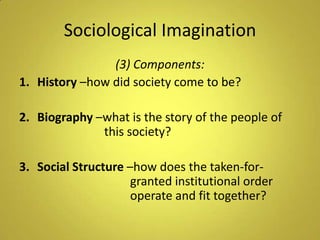
One key concept in sociology is the sociological imagination, which was introduced by American sociologist C. Wright Mills in his 1959 book of the same name. The sociological imagination encourages individuals to connect their personal experiences to larger social issues and historical contexts. Mills argued that people should be able to see the intersection between their private lives and the broader social structures in which they exist. This perspective helps individuals understand how personal troubles are often connected to public issues and how societal factors influence personal experiences.

The sociological imagination involves the ability to view one’s own life and the lives of others from a sociological perspective. It requires considering the broader social, historical, and cultural context in which individuals live. This perspective enables individuals to move beyond personal anecdotes and recognize the social forces at play in shaping their lives.

Key components of the sociological imagination include:

  1. Biography and History: Understanding the interplay between personal experiences (biography) and historical and social contexts (history). It involves recognizing that personal choices and experiences are influenced by societal structures and historical developments.
  2. Social Structure: Examining the overarching patterns and structures that organize society, such as institutions, social classes, and power dynamics. Social structure influences individuals and shapes their opportunities and constraints.
  3. Culture and Society: Recognizing the role of culture in shaping values, beliefs, norms, and practices within a society. Sociological imagination involves understanding how culture influences individual behavior and societal trends.
  4. Critical Thinking: Developing a critical and reflective mindset to question assumptions, challenge common beliefs, and analyze social phenomena. This involves looking beyond individual experiences to identify broader social patterns and inequalities.

Sociological imagination is a powerful tool for both sociological research and personal development. It encourages individuals to go beyond individualistic explanations for their circumstances and consider the broader social context. By understanding the societal forces at play, individuals can develop a more informed and critical perspective on their own lives and the world around them.

In the field of sociology, researchers use the sociological imagination to conduct studies and analyze social issues. Sociologists explore topics such as inequality, crime, education, family dynamics, and more, aiming to understand the underlying social structures and processes that contribute to these phenomena. This sociological perspective is crucial for developing insights into societal problems and proposing solutions that address root causes rather than merely addressing symptoms.

References

Dehalwar, K., & Sharma, S. N. (2023). Fate of Slums of Bhopal-A Tale of Struggle and Resilience. Think India Journal26(4), 12-18.

Harvey, D. (2005). The sociological and geographical imaginations. International journal of politics, culture, and society18, 211-255.

Hughes, E. C. (1963). Race relations and the sociological imagination. American Sociological Review, 879-890.

Mills, C. W. (2023). The sociological imagination. In Social Work (pp. 105-108). Routledge.

Sharma, S. N. (Ed.). (2016). New perspectives in sociology and allied fields. EduPedia Publications (P) Ltd.

Thomson, R. (2014). Generational research: between historical and sociological imaginations. International Journal of Social Research Methodology17(2), 147-156.

Conflict Theory of Social Change

By Shashiaknt Nishant Sharma

Conflict theory is a sociological perspective that emphasizes the role of conflict and competition in social processes and structures. It posits that society is characterized by various forms of inequality and social conflict, primarily driven by struggles for power, resources, and access to opportunities.

Conflict theory is a sociological perspective that examines society through the lens of power dynamics, social inequality, and the struggle for resources. Rooted in the ideas of Karl Marx, conflict theorists assert that society is marked by inherent conflicts arising from the unequal distribution of wealth, power, and social privilege. They contend that these disparities lead to ongoing struggles between different social groups, such as the bourgeoisie (ruling class) and the proletariat (working class). Conflict theory challenges the notion that society functions harmoniously, as suggested by functionalism, and instead posits that social order is maintained through the dominance of one group over another. The perspective emphasizes the role of social institutions in perpetuating these power imbalances, arguing that institutions such as education, law, and media often serve to maintain and legitimize the interests of the dominant class.

Central to conflict theory is the concept of class struggle, where economic disparities drive social conflict and shape the course of history. The theory extends beyond class conflict to include other forms of social inequality, such as those based on race, gender, and ethnicity. Conflict theorists view social change as a result of these ongoing struggles, with revolutions and social movements emerging as mechanisms for challenging existing power structures and fostering a more equitable society. By highlighting the role of conflict and tension in shaping social order, conflict theory provides a critical framework for understanding the complexities of societal dynamics and the interplay between different social groups.

Here are key points associated with conflict theory in sociology:

  1. Inequality and Power:
    • Society is marked by inherent inequality in the distribution of resources, wealth, and power.
    • Power is a central force shaping social relationships and structures.
  2. Social Classes:
    • Conflict theorists view society as divided into distinct social classes based on economic and social differences.
    • Class struggle is a fundamental aspect of social dynamics, with the bourgeoisie (owners) and proletariat (workers) being key classes in capitalist societies.
  3. Capitalism and Exploitation:
    • Conflict theorists critique capitalism, highlighting the exploitation of the working class by the capitalist class.
    • The profit motive and pursuit of self-interest contribute to social conflict.
  4. Conflict as a Driving Force:
    • Social change is often driven by conflict, as opposing forces struggle for dominance.
    • Contradictions and tensions within society lead to change and transformation.
  5. Institutions as Tools of Dominance:
    • Social institutions, such as education, law, and the media, are seen as tools that perpetuate and legitimize existing power structures.
    • These institutions may reinforce the interests of the dominant class.
  6. Ideology and Hegemony:
    • Conflict theorists explore how dominant ideologies serve the interests of the ruling class.
    • Hegemony refers to the ability of the ruling class to maintain its dominance by shaping societal norms, values, and beliefs.
  7. Social Change and Revolution:
    • Conflict theorists anticipate that societal conflict may lead to revolutionary change.
    • Revolutions are seen as mechanisms to overthrow existing power structures and create more equitable societies.
  8. Symbolic Interactionism:
    • In the realm of symbolic interactionism, conflict theorists focus on how symbols and language perpetuate and reflect power imbalances.
  9. Critique of Functionalism:
    • Conflict theory often contrasts with functionalism, which emphasizes the stability and equilibrium of society.
    • Conflict theorists argue that functionalism overlooks social inequalities and power struggles.
  10. Feminist Perspectives:
    • Feminist sociologists often draw on conflict theory to analyze gender inequalities and power imbalances between men and women.
  11. Global Perspective:
    • On a global scale, conflict theorists may analyze the dynamics of imperialism, neocolonialism, and global inequalities.

Understanding conflict theory provides insights into the dynamics of social change, inequality, and power struggles within societies. It offers an alternative perspective to functionalism, emphasizing the role of conflict in shaping social structures and institutions.

References

Dehalwar, K., & Sharma, S. N. (2023). Fate of Slums of Bhopal-A Tale of Struggle and Resilience. Think India Journal26(4), 12-18.

Sharma, S. N. (2016). Introduction to Sociology. New Perspectives in Sociology and Allied Fields, 1.

RELIGIOUS AND PHILOSOPHICAL ELEMENTS IN THE NOVEL ‘THE SLAVE’ BY ISAAC BASHEVIS SINGER

Written in the socio-political background of Polish- Cossack war and the Khemelnsky massacre, the novel The Slave unfolds many layers of religion, philosophy, vulnerabilities and guilt of man. The novel also portrays the critical or unbiased representation of the jew community. Isaac Bashevis Singer is a Jewish immigrant writer, and he is known for his unbiased representation of the Judaism. In this novel also Singer portrays this criticism of religion and Judaism and he questions the aim or meaning of the religion if it only serves for the separation of humans. The novel carries various religious allusions, symbols and philosophical truths.

The protagonist Jacob is a religious Jew, with extreme beliefs. He is described as ” he resembles the men in the holy pictures that hung in the chapel in the valley”. He upholds his Jewish identity. At the same time he is in a religious conflict and dilemma. Being an ardent believer , sexual relations and marriage with an “outsider” or non Jew is not allowed in Judaism. But his intense love for Wanda is in conflict with this. Here, a juxtaposition between free will and determinism is evident. The question that does God control his destiny or does Jacob controls his destiny is always in juxtaposition in his mind. In the relationship between Jacob and Wanda the novel questions the religion and the customs by giving the notion that, why do we follow certain rituals if it intends the seperatedness of individuals rather than their union. Apart from this internal dilemma, one external dilemma is there, that is the thought of discrimination or exclusion in the village. And this made him to tell that Wanda is deaf and mute to hide her ethnic Identity.

Another question of choice, righteousness comes in the instance where Teresa tries to seduce Jacob. But Jacob refuses and Teresa feels guilt and she laments.

There are several biblical allusions present in the novel. When Jacob changes Wanda’s name to Sarah, he is alluded to Abraham who changes his wife’s name to Sarah. The name of their son Benjamin also carry biblical allusion. And he takes him to Jerusalem for pilgrimage. Towards the end novelist presents the ultimate philosophy of life by the growing cemetery, which included the remains of Sarah, which was not accepted by the community because of Sarah not being a Jew. So here Singer portrays the ultimate philosophy and truth of life, the death. Death is the leveller, which is equal for everyone irrespective of race and religion. And everyone gets equality through death.

Father of western philosophy- Socrates

Socrates is one of the most prominent philosophical figures in the history of western philosophy. He laid the bricks for the very same idea on which philosophers like Plato and Aristotle built upon in the coming years.

Firstly let’s dissect the term “philosophy”, it comes from the Greek word philo- meaning love and sophia- meaning wisdom, i.e., the love for wisdom. 

Socrates’s lifestyle

Socrates followed his love for wisdom/knowledge for as long as he lived, he pursued knowledge in it’s absolute true sense, he thought that pursuing knowledge was the ultimate purpose of life and Socrates didn’t just think that he lived by these words, his actions reflected his ideas in the purest form. But he was born in 469 BC in Athens during a time when court trials were on the basis of the intensity of the arguments made and not facts, so no points for guessing that Socrates’s ideas were not received well by the Athenian population. 

And you can’t really blame them, that was a long long time ago, a time when women were thought to be inferior than men, it was a time when slavery was normal. On the other hand socrates did not do a very good job at dealing with people either, he was not the most hygienic person of that time, he did not shower for days and would go around the city asking random people questions and if that wasn’t enough he would tell them they were wrong. This is what Socrates loved to do, question and not because he knew more than an average Athenian citizen or that he wanted to massage his own ego; on the contrary Socrates admitted that he knew nothing. There is a very well known quote by Socrates that goes “One thing only I know, and that is that I know nothing”, that is why he went around Athens asking everybody questions hoping to one day find some answers, spoiler alert he didn’t. The Athenian population wasn’t very fond of him, and found him to be annoying.

Socrates- the martyr

And just to make it more clear, he annoyed the people so much that they united together and eventually he was put on trial. At this point you might think that Socrates would have given up on his unapologetic attitude but he didn’t. He stood by his principles even though he knew it would lead to his death. Socrates was a smart person, he could have very easily won that trial by making a strong argument but if he did then all his ideas and all his actions would have been in vain. In that trial, Socrates said that the people of Athens should be thanking him for asking them questions and showering upon them his own wisdom, this did not sit well with the jury and about many more dialogues later the jury declared Socrates guilty and was later sentenced to death by drinking poison.

Socrates died a martyr, a martyr for philosophy, he died defending his ideas. Socrates might have died but he made sure to immortalize his ideas.

The struggle is real

Every person has it’s own philosophy

What suits you, belongs you

AS IT IS!!

Starting from Darwin’s theory of survival of the fittest proves to be true even today, as everyone is striving to live. An individual tries to apply his consciousness to prepare plans for the future. One wants to move things as he wishes to regardless of the consequences. The never-ending desires keep adding up to the list and lead the being into the vicious cycle. While philosophy is an attempt to satisfy these reasonable desires. It is not an amenity but a necessity. In a broad sense, it means “love of knowledge “and tries to understand things that remotely concern man.

Several fields deal with different questions regarding the universe and man. The two broad branches were divided based on the belief of Vedas. Those who believed in it were termed as orthodox and the others as heterodox. Every book tried to solve the questions in their way. However, Bhagavad Gita made an effort to bring the direction towards an end of desire.

The meaning of Bhagavad Gita is 'Lord's song.' The words which were spoken by Krishna to Arjuna on the battlefield of Kurukshetra later got written down in the form of this pious book. 

It begins with teaching Arjuna regarding the duty of the Prince to fight against evil. It gives a synthesis of the three paths of knowledge, action, and devotion. The fundamental focus is on the path of Nishkaam karma.

A middle way between pravriti and nivriti proves to be the ethical doctrine. Pravriti refers to the actions which one does to get the fruits in return. While, nivriti is the giving up of all the materialistic things and responsibilities to achieve a life of sanyasi. Therefore, nishkaam karma avoids the extremes and accepts the necessities of both the karma. It depicts that one should do work without any expectation of getting the same in return. A sense of detachment and duty should arise.

A person needs to have a mental state of equanimity. The actions should be done either for humanity or the devotion towards God.

Happiness is the only key to live a happy and healthy life. However, it is disrupted by the expectations raise due to the unfulfillment of desires. When a person starts following this journey of Nishkaam karma, it does not only benefit him but also the society. And in turn the struggle becomes saral.

To whom the pleasure and pain are the same, is fit for attaining immortality.

Can Money Make You Happy?

Money. It’s either the root of all evil or the best thing ever. People are arguing about the merits of wealth since they started saving it up. We’ve all faced the question of if we should always pursue money for its own sake, or if we might be happier without it.

Science increasingly shows that there’s a correct quantity of cash for happiness, but that countless variables make the quantity change for a small reason. The problem must be approached another way.

Philosophers have asked the same question. Every thinker who has tried to answer the question of how to live has had to wonder how much money was right to have. Here, we have got the ideas on how money affects happiness from ten philosophers which may assist you to decide what proportion money is enough.

Aristotle

In Aristotelian philosophy, virtue is the key requirement for a life well-lived. But while his stoic contemporaries thought virtue alone would assure a good life, Aristotle knew that a few other things would be needed. Among them are friendship, good luck, and money.

While he saw money as merely a tool to market other goals, he’s open about the very fact that the great life requires that you simply have a good amount of it. One of the things on his list of virtues needed to measure a full life is magnificence, which involves the donation of huge sums to charity.

He warns against the life dedicated to pursuing money, however, as this is often a life spent chasing something which is “useful for a few other ends” without ever reaching that end.


“The lifetime of money-making is one undertaken under compulsion, and wealth is evidently not the great we are seeking; for it’s merely useful and for the sake of something else.” —Aristotle, Nicomachean Ethics

Thoreau

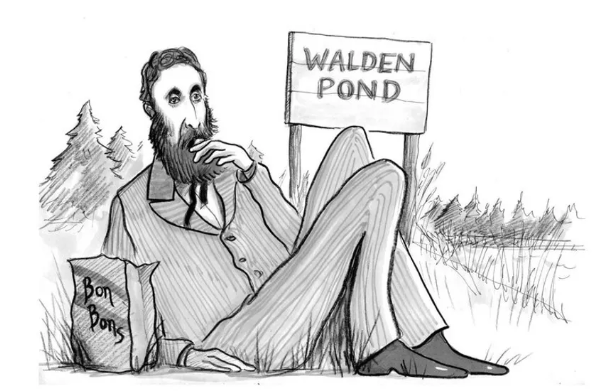
Henry David Thoreau is legendary for retreating to a cabin near Walden pound and writing a book about his experiment of living an easy, self-sufficient life within the wilderness. While his experiment is usually presented as quite it had been, his cabin wasn’t that far away from a town and his mother usually cooked and cleaned for him, his ideas on the straightforward life are still worth considering.

His time within the woods showed him the advantages of living simply; like what proportion humanity can gain by spending longer in nature and the way getting faraway from material pleasures can help us live a fuller life. While his self-imposed situation came with great security, we will all stand to find out from his ideas on the way to earn less and live more.

To have done anything by which you earned money merely is to have been truly idle or worse- Walden

Epicurus

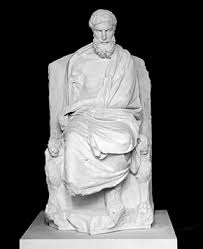
Epicurus was a philosopher with some bold ideas on the way to make people happy. He lived in the countryside in a large house with a dozen other people where they all lived communally. He argued that the path to happiness was moderation, strong friendships, and philosophy.

Rather than accumulating wealth, one should attempt to live an easy life and find joy in things like friends, the pleasures of labor, and philosophy. While he wasn’t against having some wealth, he feared that having an excessive amount of it might lead an individual to measure immoderately, which might cause vice and unhappiness. The moderate life, however, didn’t require much money in the least.

If you would like to form Pythocles wealthy, don’t give him more money; rather, reduce his desires- Epicurus

Why is Moral Relativism Being Challenged?

Morality is universally considered as one of the foundational aspects of our human existence. We make countless moral judgments every day and all our cries for justice are found in the knowledge that something is wrong and that it needs to be addressed. With the rise of Modernism and Post-Modernism in the mid-twentieth century, man who had disposed of hitherto frames of reference and found himself lost, placed greater emphasis on morality as being constructed and something he could change if he had the need to. However, the roots of this theory can be traced back to ancient Greece. It challenges the claims of moral objectivism which posits an objective moral standard from which we derive our notions of right and wrong. Relativists oppose this considering that nothing can exist so objectively, and the possibility of an overarching deity is not considered. Therefore, it is inconceivable to relativists that objectivism is tenable. However, one can only reject or approve the validity of an idea by looking at the other options available, and if they explain reality better.

While moral relativism was considered as a given in the absence of a God, it is being challenged by many philosophers in current scholarship. This includes many eminent scholars and even pop atheistic philosophers like Sam Harris who tries to posit an objective standard even though he fails to justify why it should exist. There are different kinds of moral relativisms such as subjectivism or perhaps the most popular of all, cultural relativism. The reason for the challenge is simple. The notion runs into multiple fundamental philosophical problems. We will discuss a few of those here.

Firstly, morals being relative to culture does not let us arbitrate between cultural conflicts without someone pointing out how it is immoral to impose one culture’s morality on another. This also assumes that cultures have morals that are vastly different but when one looks into this assumption, we do see a pattern of universality in many fundamental moral principles we hold to. The differences are mostly superficial and not fundamental. Rape is never considered as ever being objectively okay, neither is genocide or murder or any kind of harm. So, one is forced to say that this can only mean that there is an objective standard that everyone knows and is universal which is why it shows up in all cultures, but that our ways of knowing it and how we interpret it is different. This will explain why there have been cannibalistic cultures and regimes that have killed many of its own people. It was not because they thought murder was okay since they wouldn’t allow any of their kin to be murdered, but that they considered the murder of another who is not part of their community as necessary for the survival of the community, which leads us to power struggle and hierarchy rather than relativistic morals. We condemn slave owners and the Nazis even though we say that at that time, what they indulged in was not considered wrong by the morality of that time. We don’t however use that to justify their actions since we say they should have known better.

photo of a woman sitting beside statue
Photo by cottonbro on Pexels.com

This leads us to another problem with relativism: it cannot make any sense of moral progress. If everything was relative, why do we consider some practices better than others and try to change what is right? Should not we just accept it as our culture? And attributing such standards to culture is also problematic since culture doesn’t exist apart from humans. If the answer is that we oppose certain practices because all people should be treated equally, we would have to answer why we are equal at all. Our definition of ‘equal’, as well as our idea of all people being equal, will also be only mere opinions if everything is relativistic. Particularly today, we hear about “progress” being made and us being “better” than our ancestors morally. But we can only use the term “better” when we know we are moving towards the best. Without a standard, how do we even know where on the scale of progress we are?

Philosophers opine that objective morality can be known just as physical reality is known, that is through experience. The feeling that we are wronged when someone hurts us or oppresses us testifies to our inner reality of being moral creatures. In fact, we are unable as humans to think outside this framework. The most common objection is that moral relativism can be used to legitimize almost anything. This article barely scratches the surface of the complexity of the issue. While philosophers are trying to salvage the idea of relativism by offering arguments and with constant engagement, there is still a need for proper justification of this notion.  One has to wait and see how this debate turns out, but in the meantime try to learn for oneself, understand both sides of the argument and come to decide what is more rational and can be believed with reasonable surety.


Lessons from life of a Samurai

The world of martial arts is truly a thrilling one, isn’t it? Those movies with ninjas, mighty warriors and samurais give me an adrenaline rush. The swordfights are gripping ones. But above all , the Samurais for some inexplicable reason have always fascinated me. No they aren’t mere characters we see on the screen or hear tales of.

They are a jewel in Japan’s glorious history. The real warriors, whose lives had a deeper meaning beyond protection of the royalty. A life built upon the philosophy of Bushido. (Righteousness, couragebenevolence, respect, honesty, honour, and loyalty). Their lives hold the secrets of becoming a real warrior.

Here are major takeaways from the life of a Samurai. 

  • State of staying calm: The Samurais laid emphasis on cultivating a calm mind. A mind, wherein there is no room for anxieties and nor the fear of death.  In the words of samurai Miyamoto Mushashi, “Most important battle is to overcome yourself”. A calm mind is the ultimate weapon against all your enemies. When the Samurais can stay calm in the face of death, then why can’t we in midst of a challenging situation? Controlling your mind is the first step towards becoming a modern day Samurai.
  • Turning obstacles into opportunities: The story of Samurai Minamoto No Tametomo is an inspiring one. Born with a genetic deformity, his arm was 6 inches longer than others. But did that stop him from becoming a Samurai? Absolutely No!! He turned this “perceived” shortcoming into his strength and went on to become one of the finest Samurai archers. So the next time you feel like whining how unfair life is, just shift your focus. Today’s weakness might turn out to be your greatest strength tomorrow. So stop complaining when life hands you lemons, instead focus on the lemonade.
  • Dedication:  The Samurais had an unwavering dedication towards their duty. And mind you, unlike us their dedication wasn’t short lived. They committed their entire lives towards the single purpose of serving Japan.  The legendary Samurai tales are a testimony of how these warriors could pierce an arrow through large rocks with sheer devotion. They were so resolute in their purpose that upon facing defeat they chose to commit Seppuku(die with honour rather than fall into the hands of their enemies). Honour and purpose weighed far more for a Samurai than his own life. Do contemplate when was the last time you were so dedicated towards your life, relationships and self growth? If not, then find your calling and chase it like a Samurai.
  • Growth Mindset: Remember that scene in karate Kid wherein Jackie Chan tells Jaden Smith to pick up his jacket a thousand times over as a part of his martial arts training?

The above picture carries the essence of Kaizen (Japanese philosophy of change for the better” or “continuous improvement.”) The Samurais were masters of the art of repetition. Learning new techniques and practicing them until they attainted perfection. They trained relentlessly, preparing themselves for battles. Even the master Samurais instead of being consumed by pride, always strived for becoming better than the previous day.  And here we are, basking in the false glory of “knowing it all”. Remember, like desires there is no end to learning. So let’s learn, repeat and grow!

  • Comparison with self: Samurai Tshkara Bokuden quoted “My art is different from yours. It consists not so much in defeating others but not being defeated”. These words resonate deeply in the world today wherein we compare ourselves with colleagues, friends and random people on social media robbing our inner peace. We defeat the very meaning of our own existence in the process of comparison. So like Samurais let’s water the garden of our minds instead of letting the weeds of comparison to grow.
  • Acceptance towards life: The Samurais were mindful of their lives and actions. Unlike others, they weren’t caught in the quest for worldly success nor did they fear death. They accepted both happiness and sorrow with equal calm. They sought nothing outside themselves. The Samurais knew that there lies a powerful force inside us and it is the same force that drives our surroundings. Samurai Miyamoto Mushashi quotes “Get beyond love and grief. Exist for the good of humanity”.So instead of chasing material pursuits, let’s take a step towards becoming more accepting of our lives and the self.

As we come to an end, you must be wondering do samurais still exist? Honestly speaking, they don’t. The Meiji Emperor abolished the Samurai system. However, their cultural legacy is eternal and the lessons from the lives of Samurai still hold the same relevance as they did in the medieval times. But these Samurais weren’t born Samurais. They trained hard both physically and mentally to earn that honour.  I believe, we’re all warriors fighting our own battles and we don’t needs armours or swords for that. Let’s simply imbibe these valuable lessons from the Samurais into our lives.

You ,my friend, don’t just be any warrior. Strive to become a “modern day Samurai”.