India Of My Dreams.

The India of my dream would be a country where women are safe and walk freely on road. Also, it will be a place where there is freedom of equality to all and everyone can enjoy it in their true sense. Furthermore, it would be a place where there is no discrimination of caste, color, gender, creed, social or economic status, and race. In addition, I see it as a place that sees an abundance of development and growth.

Women Empowerment

There is a lot of discrimination against women. But, still, the women are stepping out of their houses and making a mark on different fields and on society. In addition, there are a lot of areas that need to be worked upon whether it is female feticide or restricting them to the household task. Besides, many NGO and social groups have come forward to promote women empowerment.

However, we have to work hard to change the mindset of society. I dream India as a country that sees women as its assets, not as liabilities. Also, I want to place women on an equal level as men.

Education.

Though there are many initiatives by the government to promote education. But there are many people who do not realize its true importance. The India of my dream will be a place where education will be mandatory for all.

Employment Opportunities.

Although there are many educated people in India. But, due to corruption and many other reasons they are unable to get a decent job. Besides, there are many employment opportunities in the country but they are either limited or don’t pay well enough. One of the reasons for this is weak industrial growth in the country.

In addition, reservation is a hindrance in this path as most of the deserving candidates lose their good opportunity because of it. Many of these deserving candidates go abroad and work for the economic growth of other countries. The Indian of My dream will be a place where the deserving candidate will get the job first rather than reserved candidates.

Caste Discrimination
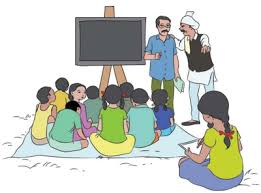
Though India got independence in 1947, still we are not able to get complete independence from the caste, religion, and creed discrimination. It is shameful to see how in certain parts of the country the people of the lower section of the society are denied the basic rights.

However, there are various social groups that speak for their rights and help them to oppose this oppression. Besides, I dream of an India where there is no discrimination of any kind.

Corruption.

Corruption is one of the major reasons that are hindering the growth of the nation. Instead of making an effort to serve the growth of the country the officials and politicians are busy filling their own pockets. So, I dream of an India where the minister and official are dedicated to their work and wholly for the development of the country.

In conclusion, the India of my dream will be an ideal country where every citizen will be equal. Also, there is no discrimination of any type. In addition, it will be a place where women are seen as equals to men and respected equally.

India of my dreams……… Where the bell of happiness rings,where the birds in harmony sings.

. —“Shumayla Mallick”………

From Salem to Sydney , Natarajan’s cricketing journey is nothing but full of inspiration

“ If you travel deep inside some 340 +km  from Chennai, you get to see a small village called Chinnappampatti. With barely any transportation available you would only find buses that will take you there. If you happen to visit the place , ask for Natarajan , the whole village loves to talk about their humble chella paiyan, which loosely  translates into  go boy ,” says a local resident .

 And rightly said . Cricket has no limits. It doesn’t have the foggiest idea where and which place you are .  In India , people are so determined  by cricket that each and everyone wants to break into the national  team as if it is super easy and then you will find strict mothers who chase you  for playing the game and breaking the windows. Having said that , nobody believes in you as they do.

 In Tamil Nadu, cricket was never a career option but a pass time . however , with hard work , proper path and determination some do make it . And one of them is  Thangarasu Natarajan .

 Natarajan’s family wasn’t monetarily wealthy. While his dad functioned as a coolie at a railroad station , his mother ran a road side snack stall. being the eldest child  , Natarajan was constantly stressed  about his family , but cricket has been a friend in need for the Natarajan family .

In an interview with Times of India ,the left arm quick recalled his early  days of struggle , “ We didn’t had enough food on the table, it was truly a struggle .”

“ we all studied in a government school and there were no facilities or mentors who could help me with my cricketing ambitions ,”  says Natarajan.

At a time when basic necessities  like food and water were hard to come by  let alone cricket gear , the bowler sharpened his skills  by playing tennis ball cricket .

His fortunes started changing after his breakthrough performances in Tamil Nadu premier league (  TNPL) , first with dindigul dragons and then with lyca kovai kings that caught the attention  of former kings XI Punjab ( now Punjab kings ) coach , Virender Sehwag , and was bought for a Whooping 3 crore,  making  him the highest unpaid Indian uncapped player in the auction .

However , his dream came true when he was selected for the Indian national team , after some stellar performances for the  Sunrisers Hyderabad in the Indian premier league 2020.

The left arm quick picked up two wickets in his ODI debut and three wickets for 30 runs in his T20 Debut , helping the team win on each occasions . Upon his return from Australia , the Yorker king was taken  on a chariot in his village in Salem district of Tamil Nadu.

Natarajan’s cricketing journey is full of inspiration. It teaches us that with hard work and dedication , anything can be accomplished . We , as Indian cricket fans , wish Natarajan carries his good form for  team India in the foreseeable future and keep on making his fans and his loved ones proud .

Values

Values are the positive teachings provided to help us and tread the right path in life. Every parent wants his child to imbibe these. These can even be referred to as good qualities. A person who imbibes good values grows on to become a responsible individual and he is capable of demarcating right and wrong. Also, he is able to make wiser decisions in life.

Importance of Values

For an individual, values are most important. An individual with good values is loved by everyone around as he is compassionate about others and also he behaves ethically.

Values Help in Decision Making

A person is able to judge what is right and what is wrong based on the values he imbibes. In life at various steps, it makes the decision-making process easier. A person with good values is always likely to make better decisions than others.

Values Can Give Direction to Our Life

In life, Values give us clear goals. They always tell us how we should behave and act in different situations and give the right direction to our life. In life, a person with good values can take better charge.

Values Can Build Character

If a person wants a strong character, then he has to possesses good values such as honesty, loyalty, reliability, efficiency, consistency, compassion, determination, and courage. Values always help in building our character.

Values Can Help in Building a Society

If u want a better society then people need to bear good values. Values play an important role in society. They only need to do their hard work, with compassion, honesty, and other values. Such people will help in the growth of society and make it a much better place to live.

Characteristics of Values

Values are always based on various things. While the basic values remain the same across cultures and are intact since centuries some values may vary. Values may be specific to a society or age. In the past, it was considered that women with good moral values must stay at home and not voice their opinion on anything but however, this has changed over time. Our culture and society determine the values to a large extent. We imbibe values during our childhood years and they remain with us throughout our life.

Family always plays the most important role in rendering values to us. Decisions in life are largely based on the values we possess. Values are permanent and seldom change. A person is always known by the values he possesses. The values of a person always reflect on his attitude and overall personality.

The Decline of Values in the Modern Times

While values are of great importance and we are all aware of the same unfortunately people these days are so engrossed in making money and building a good lifestyle that they often overlook the importance of values. At the age when children must be taught good values, they are taught to fight and survive in this competitive world. Their academics and performance in other activities are given importance over their values.

Parents, as well as teachers, teach them how to take on each other and win by any means instead of inculcating good sportsman spirit in them and teaching them values such as integrity, compassion, and patience. Children always look up to their elders as their role models and it is unfortunate that elders these days have a lack of values. Therefore the children learn the same.

Conclusion

In order to help him grow into a responsible and wise human being, it is important for people to realize that values must be given topmost priority in a child’s life because children are the future of the society. There can be nothing better in a society where a majority of people have good values and they follow the ethical norms.

“VALUES ARE LIKE FINGERPRINTS. NOBODY’S ARE THE SAME, BUT YOU LEAVE THEM ALL OVER EVERYTHING YOU DO.”

— ELVIS PRESLEY

What Kind of Introvert Are You?

Are you an introvert? It depends on which book you read. Here’s a sampling of the various conceptualizations of introversion in pop culture [1]: Preference for quiet, minimally stimulating environments: Quiet by Susan Cain Preference for concentration and solitude: The Introvert’s Way by Sophia Dembling Rechargeable battery: The Introvert Advantage by Marti Olsen Laney Thoughtful-introspective

Are you an introvert? It depends on which book you read.

Here’s a sampling of the various conceptualizations of introversion in pop culture [1]:

Historically, there has been just as much confusion in the psychological literature. Carl Jung originally defined introversion as a focus on one’s “inwardly directed psychic energy”. However, in the 30s, the psychologist J.P. Guilford showed that various attempts to measure Jung’s conceptualization of introversion resulted in multiple, distinct factors. In other words, there didn’t appear to be a single dimension of personality that captured all of introversion.

In the 60s Patricia Carrigan echoed this point, arguing that introversion was not effectively captured by a single scale. She cautioned that if the phrase introversion is to continue to be used, “care must be taken to specify its conceptual and operational referent. What appear to be minor distinctions between the various conceptions may in fact be crucial ones.” In the 70s, the heated debate continued, with a much older Guilford arguing with H.J. Eysenck over whether introversion can possibly, or even should, be captured by a single scale.

All seemed to be settled in the 90s with the emergence of the “Big Five” framework of personality. The five main factors of personality– extraversion, neuroticism, agreeableness, conscientiousness, and intellect/imagination– were empirically derived based on what patterns of behavior tend to go together within individuals. Under this framework, introversion is merely defined as the opposite of extraversion.

In the Big Five framework, extraversion comprises two main aspectsenthusiasm (reflecting sociability, positive emotions, and warmth) and assertiveness (reflecting the tendency to take charge, become a leader, and captivate attention). The common factor seems to be high sensitivity to rewards in the environment— which due to the highly social nature of humans throughout the course of human evolution, most prominently consists of rewards associated with social attention.

Therefore, under the dominant personality framework in modern psychology, if you score low in enthusiasm and assertiveness, you’re an introvert

Here’s the problem: the Big Five framework forces a definition of introversion onto people, many of whom do not conceptualize introversion in the same way. For instance, one study did a comparison of common-sense/everyday notions of introversion and ‘scientific’ conceptions of introversion. They found that the most prototypical characteristic of introversion, as identified by the general public, was the following item:

Clearly, many people equate introversion with introspection. In the Big Five framework, however, this item is classified as part of the intellect/imagination domain of personality, not the introversion domain. So there’s a serious mismatch between folk definitions of introversion and scientific definitions. People who view themselves as introverted because they are highly introspective are being told by scientists: “You aren’t really introverted based on patterns of covariation among the general population.” To which everyday people rightfully respond: “WTF?” [3]

As noted personality psychologist Jonathan Cheek told me, “by invalidating the ordinary language meaning of introversion by defining it solely as the opposite of Big Five Extraversion, the Big Five researchers are guilty of Psychological Imperialism [4].” Influenced by the seminal work of Jung, Guilford, and Carrigan, Cheek and his colleagues have decided to take a different approach, by focusing on the phenomenon of introversion on its own, free from having to be force-fit into one scheme or another.

As Carl Jung said, each individual is ultimately a unique crystal, but type theories can be helpful for navigating social life. Embracing this Jungian philosophy, Cheek and his colleagues argue that when people use the term “introversion”, they should never just use it by itself. Instead, they argue that researchers should put a specific modifier in front of the term. What modifiers could be used?

In her masters thesis (written under the advisement of Cheek), Jennifer Odessa Grimes defined four meanings of introversion: social, thinking, anxious, and restrained (which happens to form the positive acronym STAR). It’s possible to score high or low on either of these flavors of introversion. For instance, you could be low in social introversion by preference but not be particularly anxious in the presence of people. Or you could suffer from crippling social anxiety, but still have the desire to be highly social. Or any other combination of these four meanings of introversion.

By this point you’re probably wondering what kind of introvert you are. Well, you’re in luck. There’s a new test for that.

‘Still I Rise’ by Maya Angelou

When we aren’t confident about ourselves, we definitely can’t win anything in our life. Are you scorned, oppressed, and belittled? Want a little bit of confidence boost? Then the poem ‘Still I Rise’ by Maya Angelou is for you. 

People may picture you however they want. They may lie about you, spread rumors, and pull you down to gutters but you should never give in to such slanders. Even if they make you look dirty, like a dust which never settles down, you ought to rise. 

You may trod me in the very dirt

But still, like dust, I’ll rise.

People, who talk ill about you, do so because they are blinded by petty emotions like jealousy and insecurity. They may not like you when you differ from the crowd and when you are being yourself while they cannot. You may find your happiness in small things and this might irritate them. So, they might try to bring down your confidence, even then you must rise. 

Why are you beset with gloom?

’Cause I walk like I’ve got oil wells

Pumping in my living room.

And, when you rise, rise like the sun or the moon, which rises everyday without fail with its fullest radiance. Like the tides which hit the shore with certainty and hope which springs higher in the darkest times, you too should rise. You know why you should rise? Simply because everyone is watching. They want to see you broken, shoulders fallen, heads down, kneeling and desperately crying at misfortunes. So, rise beyond expectations.

They may label you haughty when you differ and might be offended when you laugh happily. Even though they slander you, belittle, treat you indifferently and hatefully, you must rise like air which sees no confines. 

You may shoot me with your words,

You may cut me with your eyes,

You may kill me with your hatefulness,

But still, like air, I’ll rise.

They will be jealous and afraid of you rising, and so they will try to pull you down. But you must rise. People oppress others based on economic conditions, race, ancestry, and color. Even then you must rise. 

Out of the huts of history’s shame

I rise

Up from a past that’s rooted in pain

I rise

I’m a black ocean, leaping and wide,

Welling and swelling I bear in the tide.

The poetess was strongly fighting against the oppression of black people and women. People of her race were ill treated and subjugated. She, the black ocean, is resolute to send tides of opposition against such oppressions. Though she had suffered and lived painfully, she will march into daybreak, proud of her identity that her ancestors had given her, and will rise and rise and rise. 

Leaving behind nights of terror and fear

I rise

Into a daybreak that’s wondrously clear

I rise

Bringing the gifts that my ancestors gave,

I am the dream and the hope of the slave.

I rise

I rise

I rise.

Hence, never let yourself be held back by restraints and limitations. You are you and be confident about yourself. If you do so, you shall also rise. 

A Poem in Appreciation of Defeat.

Failures and defeats are what everyone of us meets throughout life. But how we react to them is that which decides how successful we can be. Kahlil Gibran’s poem ‘Defeat’ gives a lesson on learning from our failures and appreciating them.

The poet calls defeat his solitude and aloofness. As said in one of the previous posts, we need to differentiate solitude from loneliness. Solitude is our time and it helps us reflect on yourselves. When defeat gives us our solitude, we reflect on what went wrong and what needs to be done to improve ourselves. This, we cannot get from success. So, failure is dearer than all the victories and sweeter to the heart than all the fame and respect which success gives.

Also, the poet calls defeat his self-knowledge and defiance. Through defeat, we learn that we are still young and prone to mistakes. Through it, we know that we have a long way to go and that we shouldn’t be trapped by the fleeting fame. When we fail, we receive criticisms and are censured. Some of these criticisms help us to grow and through defeat only, we learn more about ourselves and become strong.

Defeat, my Defeat, my self-knowledge and my defiance,

Through you I know that I am yet young and swift of foot

And not to be trapped by withering laurels.

In the third stanza, the poet calls defeat his ‘shining sword and shield’ because it protects him from falling prey to ignorance and false knowledge. Through it, the poet learnt that to succeed and labelled as a winner is to be enslaved. This is because when we succeed in something, we think we have mastered that thing and think no more. To think that we have understood everything is to level down ourselves and to be grasped by the ecstatic emotions caused by success is to be in an illusion. Hence, through defeat we learn about our weaknesses and though we fall, we are to cherish the defeat just like how a fallen ripe fruit is relished.

That to be enthroned is to be enslaved,
And to be understood is to be leveled down,
And to be grasped is but to reach one’s fullness
And like a ripe fruit to fall and be consumed.

Now, the poet calls defeat his companion with whom he can be himself.  When alone with defeat, he can talk openly about his worries and hardships. People console us when we fail but there is no greater consolation than defeat itself. Only defeat can truly tell us about what we need to work on, how to overcome hardships and challenges and how hard we should work to reach the goal. Only defeat can break into our insecurities and soul and show a way out. 

And none but you shall speak to me of the beating of wings,
And urging of seas,
And of mountains that burn in the night,
And you alone shall climb my steep and rocky soul.

Lastly, the poet calls defeat his ‘deathless courage’. He imagines himself laughing with defeat when undergoing challenges and together digging graves for everything that they shall leave behind. Finally, both the poet and defeat will see the sun and stand victoriously for all the dark times are gone. And this will be dangerous because there is no one more powerful than a person who has learnt to embrace his defeat.

Defeat, my Defeat, my deathless courage,
You and I shall laugh together with the storm,
And together we shall dig graves for all that die in us,
And we shall stand in the sun with a will,
And we shall be dangerous.

When we rightly learn to appreciate our defeat, there can be no greater strength than our defeat itself. Defeat shapes us stronger and wiser and brings us close to fullness. To succeed, we should befriend defeat and it shall be our greatest motivation.