The Great Banyan Tree of Howrah: An Ancient Giant Witnessing Time

By-Aditi Chhetri

In the bustling city of Howrah, West Bengal, India, amidst the cacophony of urban life, there stands a silent sentinel of natureโ€™s grandeur. The Great Banyan Tree, or simply the โ€œGreat Banyan,โ€ has captivated the imagination of all who have had the privilege of setting eyes upon it. This magnificent tree is not just a biological marvel but a symbol of endurance, resilience, and the enduring power of life. In this blog, we embark on a journey to explore the awe-inspiring story of the Great Banyan Tree of Howrah.

I. A Botanical Marvel:
The Great Banyan Tree, scientifically known as Ficus Bengaleseโ€™s, is an exceptional specimen of its kind. While many banyan trees are known for their expansive canopies, the Great Banyan has taken this to a whole new level. With its vast labyrinthine network of roots, it covers an astonishing area, making it the largest known banyan tree in the world.

(a) Dimensions Beyond Belief:
Spanning a colossal 4.68 acres, this giant tree has earned its place in the Guinness Book of World Records. Itโ€™s hard to fathom the sheer scale of this living organism โ€“ an entire forest encapsulated in a single tree.

(b) Historical Significance:
The Great Banyan Tree is believed to have been planted in the early 19th century, making it over two centuries old. Its existence predates the construction of the iconic Howrah Bridge, which now stands as a testament to modern engineering right nearby.

II. The Life Story of a Giant:
To understand the Great Banyanโ€™s journey, we need to delve into its life story, which is nothing short of remarkable.

(a) Multiple Trunk Formation:
One of the most intriguing aspects of this tree is its peculiar growth pattern. The main trunk of the original tree was affected by a disease in the late 19th century and had to be removed. However, the tree did not wither away; instead, it continued to grow horizontally. Multiple trunks emerged from the remaining branches, and the Great Banyan tree lives on through them.

(b) Immortal through Aerial Propagation:
The Great Banyan employs a unique survival strategy called โ€œaerial prop roots.โ€ These roots grow from the branches and reach down to the ground, taking root and eventually becoming part of the treeโ€™s complex structure. This phenomenon allows the tree to perpetuate itself, effectively making it immortal.

III. A Home for Countless Lives:

Beyond its botanical significance, the Great Banyan is a bustling ecosystem in its own right, supporting an incredible diversity of flora and fauna.

(a) Bird Paradise:
The sprawling canopy of the Great Banyan provides an ideal habitat for a wide variety of birds. Ornithologists and bird enthusiasts flock to the tree to witness species such as parakeets, mynas, and pigeons in their natural habitat.

(b) Miniature Ecosystems:
Within the network of its roots and branches, the Great Banyan houses numerous miniature ecosystems. Insects, fungi, and other organisms thrive in this microcosm, making it a subject of fascination for ecologists.

IV. Cultural Significance:

The Great Banyan Tree of Howrah is not only a biological wonder but also a cultural icon with deep-rooted significance.

(a) Sacred Ground:
For generations, the tree has been a site for religious and spiritual gatherings. Itโ€™s often considered sacred and serves as a backdrop for various rituals and ceremonies.

(b) Artistic Inspiration:
The tree has been a muse for many artists, poets, and writers. Its majestic form and historical significance have been captured in countless works of literature and art.

V. Challenges and Preservation:

Despite its enduring presence, the Great Banyan Tree faces several challenges, primarily due to urbanization and environmental factors.

(a) Environmental Stress:
Increased pollution, reduced groundwater levels, and changes in climate patterns have taken a toll on the treeโ€™s health. Conservation efforts are crucial to mitigate these threats.

(b) Conservation Initiatives:
To protect this natural wonder, various conservation initiatives have been undertaken. Measures such as regular health checks, controlled irrigation, and restricting human interference are helping safeguard the Great Banyanโ€™s future.

The Great Banyan Tree of Howrah stands as a testament to the resilience and majesty of the natural world. Its story is not just that of a tree but a living chronicle of time, witnessing the evolution of a city and the changing landscapes of human existence. As we marvel at this colossal botanical marvel, let us also reflect on our responsibility to preserve and protect such precious treasures of nature for generations to come. In the heart of Howrah, the Great Banyan Tree remains a symbol of lifeโ€™s enduring spirit and a living connection to our planetโ€™s rich history.

REFERENCES:

โ€ข Ugc. (2023b, October 3). Great Banyan Tree. Atlas Obscura. https://www.atlasobscura.com/places/great-banyan-tree

โ€ข Rongmei, P. (n.d.). Story of the Great Banyan, worldโ€™s largest banyan tree. Times of India Travel. https://timesofindia.indiatimes.com/travel/destinations/story-of-the-great-banyan-worlds-largest-banyan-tree/articleshow/92971166.cms

โ€ข Pearce, S. (2023, August 21). The Great Banyan Tree & 8 Important Tips For Visiting Kolkata Botanical Gardens. Third Eye Traveller. https://thirdeyetraveller.com/the-great-banyan-tree-kolkata-botanical-gardens/

โ€ข Roche, E. (2022, April 21). The largest banyan tree in the world is located in India. Condรฉ Nast Traveller India. https://www.cntraveller.in/story/kolkata-west-bengallargest-banyan-tree-in-the-world/

โ€ข Wikipedia contributors. (2023a). The Great Banyan. Wikipedia. https://en.m.wikipedia.org/wiki/The_Great_Banyan

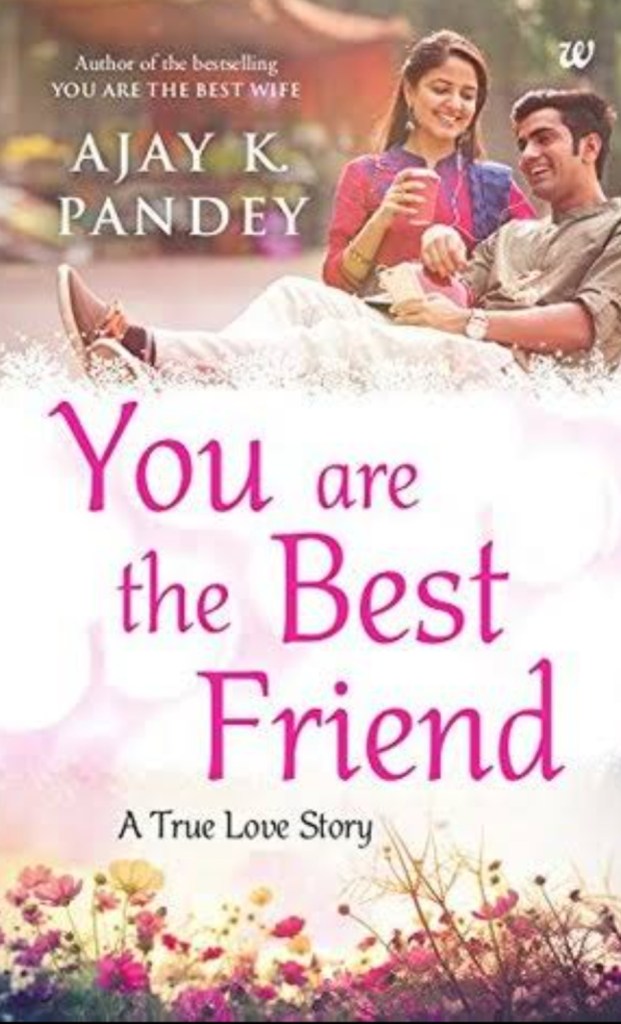
Books are our best friends

We all need friends who would be there for us when needed and who would understand us without being judgemental. And books can be our best friends for life, for all the right reasons. Good books enrich our mind and broaden our perspective towards life. What’s more, one can never feel lonely in the company of books.ย 

They don’t question us

They donโ€™t ask questions. They rather provide answer to the questions that keep troubling us.

They make us forget our troubles

They are the best refuge from the woes and troubles of life. Even as you may be battling the worse in life, reading a book can be a saviour as it will divert you from your troubles.

They make us smarter

They are our best teachers. A well-read person has not just answers to worldly questions but also has solution to queries of the soul. Besides, as add on you get a good vocabulary and a vast arena of knowledge.

They are always there for us

They are always there for us, no matter what. Even in the middle of the night, when everyone else is fast asleep, you can enjoy the company of books. They are a perfect cure for our loneliness.

They make us a better person

Reading fiction makes us empathise with others and also opens up our world view. Reading good books makes us a better person, that too without preaching too much.

They are non-judgemental

They donโ€™t judge. “Great books help you understand, and they help you feel understood,” John Green once said.

We can travel with them anywhere in the world

Stephen King once said, โ€œBooks are uniquely portable magic.โ€ Reading a book transports us to a different place each time– they are your quickest bet to instantly travel to a new place.

Books help us escape

Whether we are stuck in a boring party or had a bad day at work, reading a book can take us on an exciting adventure. What’s better than having a great companion on such journeys?

They change our perspective towards life

They bring in so many perspectives and influence the way we see the world, broadening our worldview. Books offer us to live many different lives and enable us to empathise with others.

Books teach us to accept our emotions and that itโ€™s okay to feel sad sometimes

Books are more patient than most people and they understand us. They allow us to feel our emotions and they teach us that it’s okay to feel sad sometimes; after all, we are humans. Also, just like our best friends, good books cheer-up our mood and soothe the soul, sometimes even making us laugh out loud.

General issues on Environmental ecology

The environment plays a significant role to support life on earth. But there are some issues that are causing damages to life and the ecosystem of the earth. It is related to the not only environment but with everyone that lives on the planet. Besides, its main source is pollution, global warming, greenhouse gas, and many others. The everyday activities of human are constantly degrading the quality of the environment which ultimately results in the loss of survival condition from the earth.There are hundreds of issue that causing damage to the environment. But in this, we are going to discuss the main causes of environmental issues because they are very dangerous to life and the ecosystem.

Pollution โ€“ It is one of the main causes of an environmental issue because it poisons the air, water, soil, and noise. As we know that in the past few decades the numbers of industries have rapidly increased. Moreover, these industries discharge their untreated waste into the water bodies, on soil, and in air. Most of these wastes contain harmful and poisonous materials that spread very easily because of the movement of water bodies and wind. Greenhouse Gases โ€“ These are the gases which are responsible for the increase in the temperature of the earth surface. This gases directly relates to air pollution because of the pollution produced by the vehicle and factories which contains a toxic chemical that harms the life and environment of earth. Climate Changes – Due to environmental issue the climate is changing rapidly and things like smog, acid rains are getting common. Also, the number of natural calamities is also increasing and almost every year there is flood, famine, drought, landslides, earthquakes, and many more calamities are increasing.

Development recognises that social, economic and environmental issues are interconnected, and that decisions must incorporate each of these aspects if there are to be good decisions in the longer term.For sustainable development, accurate environment forecasts and warnings with effective information on pollution which are essential for planning and for ensuring safe and environmentally sound socio-economic activities should be made known.


THE EARTH IS WHAT WE
ALL HAVE IN COMMAN

History of India & Indian National Movement.

Early times the Indian subcontinent appears to have provided an attractive habitat for human occupation. Toward the south it is effectively sheltered by wide expanses of ocean, which tended to isolate it culturally in ancient times, while to the north it is protected by the massive ranges of the Himalayas, which also sheltered it from the Arctic winds and the air currents of Central Asia. Only in the northwest and northeast is there easier access by land, and it was through those two sectors that most of the early contacts with the outside world took place.

Within the framework of hills and mountains represented by the Indo-Iranian borderlands on the west, the Indo-Myanmar borderlands in the east, and the Himalayas to the north, the subcontinent may in broadest terms be divided into two major divisions: in the north, the basins of the Indus and Ganges (Ganga) rivers (the Indo-Gangetic Plain) and, to the south, the block of Archean rocks that forms the Deccan plateau region. The expansive alluvial plain of the river basins provided the environment and focus for the rise of two great phases of city life: the civilization of the Indus valley, known as the Indus civilization, during the 3rd millennium BCE; and, during the 1st millennium BCE, that of the Ganges. To the south of this zone, and separating it from the peninsula proper, is a belt of hills and forests, running generally from west to east and to this day largely inhabited by tribal people. This belt has played mainly a negative role throughout Indian history in that it remained relatively thinly populated and did not form the focal point of any of the principal regional cultural developments of South Asia. However, it is traversed by various routes linking the more-attractive areas north and south of it. The Narmada (Narbada) River flows through this belt toward the west, mostly along the Vindhya Range, which has long been regarded as the symbolic boundary between northern and southern India.

India’s movement for Independence occurred in stages elicit by the inflexibility of the Britishers and in various instances, their violent responses to non-violent protests. It was understood that the British were controlling the resources of India and the lives of its people, and as far as this control was ended India could not be for Indians.

On 28 December 1885 Indian National Congress (INC) was founded on the premises of Gokuldas Tejpal Sanskrit School at Bombay. It was presided over by W.C Banerjee and attended by 72 delegates. A.O Hume played an instrumental role in the foundation of INC with an aim to provide Safety Valve to the British Government.
A.O Hume served as the first General Secretary of INC.
The real Aim of Congress is to train the Indian youth in political agitation and to organise or to create public opinion in the country. For this, they use the method of an annual session where they discuss the problem and passed the resolution.
The first or early phase of Indian Nationalism is also termed as Moderate Phase (1885-1905). Moderate leaders were W.C Banerjee, Gopal Krishna Gokhale, R.C Dutt, Ferozeshah Mehta, George Yule, etc.
Moderates have full faith in British Government and adopted the PPP path i.e. Protest, Prayer, and Petition.
Due to disillusionment from Moderates’ methods of work, extremism began to develop within the congress after 1892. The Extremist leaders were Lala Lajpat Rai, Bal Gangadhar Tilak, Bipin Chandra Pal, and Aurobindo Ghosh. Instead of the PPP path, they emphasise on self-reliance, constructive work, and swadeshi.
With the announcement of the Partition of Bengal (1905) by Lord Curzon for administrative convenience, Swadeshi and Boycott resolution was passed in 1905.


ONE INDIVIDUAL MAY DIE; BUT THAT IDEA WILL, AFTER HIS DEATH, INCARNATE ITSELF IN A THOUSAND LIVES.

-Netaji Subhash Chandra Bose

The Tourist Attraction by Sarah Morgenthaler

This book was so enjoyable and cute for 70% of it. Graham and Zoey have an instant connection. Graham is a grumpy, Alaska native who runs a local diner, has a blind dog that he dresses up in outfits, and is a woodcarver in his spare time. Zoey is a tourist who has been saving up for this Alaska trip for years (so ~sheโ€™s not like other tourists~ in this typical rich area). Because of their instant connection, the story provides a lot of cute moments of them feeling like a couple from nearly the beginning. Thereโ€™s also the cool backdrop of Alaska, the vacation romance element, and the small town vibe that I loved.

But, firstly, the book went on too long. It started to drag a bit. Then, there was repeating conflict. The big conflict here is that this is short term, since Zoey is a tourist. Thatโ€™s all well and good, but the characters decide to โ€œfightโ€ about this over and over at the end which feels inconsistent with the rest of the story because they are not a tumultuous couple.

Also, Graham has a violent streak which was so unnecessary. I loved his grumpy personality with a heart of gold. But then, he has these moments of โ€œalpha maleโ€ where he wants to punch any other guy that shows interest in Zoey, he punches a wall at one point, and actually ends up punching another male character for a reason that I think was really weak and unjustified. Zoey at one point does call him an โ€œalphaholeโ€, which is a romance community word for these type of toxic masculine characters, but beyond that the narrative doesnโ€™t really address this behavior as bad. He even breaks the law a few times and itโ€™s brushed off because โ€œheโ€™s a local and knows everyone.โ€ It was an addition that felt unnecessary because his grumpy but loveable personality that was present for the majority of the book was just fine!

The combination of the book dragging on so that I lost some of the tension, along with the bad behavior dropped this from what would have been a 4 star down to a 3/3.5 star. This is going to be a series set in this tourist town, and I will likely continue as I did enjoy the setting and am intrigued about some of the side characters and their stories.

tropes:
– nicknames
– small town romance
– vacation romance: tourist + local

Clap When You Land by Elizabeth Acevedo

It is hard to describe the space that yawned open in the life of Camino Rios and Yahaira Rios after their father died in a flight crash. It is harder still to describe the truths he left behind, cutting swift and deep, like a knife: Camino and Yahaira are sisters who, for sixteen years, hadnโ€™t known of each otherโ€™s existence. Their world too had tipped, and fallen, and the secrets their father held aloft over their heads are seized by gravity. Now it was just the two of them, and the slow, outgoing tide of aftermath.

Camino and Yahaira are both desperately pawing for the truth of their father as they might paw at beach sand in hopes of finding a shell, hunting in the rubble of his life for answers, and trying to find their way to each other across the Rubicon that divided their two worlds.

On the screen, beyond where she can see, I trace her chin with my finger. & for the first time I donโ€™t just feel loss. I donโ€™t feel just a big gaping hole at everything my fatherโ€™s absence has swallowed. Look at what itโ€™s spit out & offered. Look at who itโ€™s given me.

Thereโ€™s no doubt that Acevedo is one of the brightest literary talents around.

Tender, patient and raw as a wound, โ€œClap When You Landโ€ burrows deep under its reader’s skin while at the same time nudging them into inhabiting the perspective of its characters. The author possesses a unique musicality for languageโ€”her writing buoys and soothes at once, and I wanted nothing more than to breathe the words in until they ached inside my chest, to nestle into the storyโ€™s steady warmth like a well-worn sweater. But for all the novelโ€™s poetry and lyricism, Acevedo never forgets to tell a gripping tale.

Thereโ€™s a chafed, bruised feeling to this book, and something in me splintered while reading it. โ€œClap When You Landโ€ is a novel that explores the wrenching depths of what it feels like to lose something and be unable to move on, not only a literal person, but also a way of life. This is Cami and Yayaโ€™s story of weary grief and visceral longingโ€”the novel alternating between their voicesโ€”but you are in there too, and that makes their loss your loss, the ache your ache, the anger you anger, and the secrets their father had sealed away inside him like a box with another box inside it and another inside something you too must process and come to terms with yourself. All of it burgeoning within you with every turn of the page, welling up like tears. And that owes in huge part to the authorโ€™s deft, tender characterizations, and the way she artfully infuses her novel with great empathyโ€”offering the reader so many questions, but not giving any direct or easy answers.

Yaya and Camiโ€™s father had been the life of their small universe, and without him their world felt huge and empty, like a shipwreck hull. They loved him, and they mourned him, but they also wondered if they could ever really forgive him. In the fraying cobwebs of their memories, the side of their father that they saw was polished to such a high gloss of perfectionโ€”the loving, attentive fatherโ€”but it is now vying with this newly revealed side of himโ€”the terrible husband, the selfish manโ€”and the two are clashing like swords. Does one side cancel out the other? Will Cami and Yaya ever be able to think of him and see only the word โ€œfatherโ€ and not the things he left behind?

This is the โ€œgift and curseโ€ both Yahaira and Camino are wrestling with throughout the story. Camino and Yahaira didnโ€™t have to articulate the curious shape of their grief because they could see it mirrored in each otherโ€™s eyes. Cami, on the one hand, is grateful, but she canโ€™t help but think a little bit secretlyโ€”and resentfullyโ€”in her heart that life for Yahaira has been as easy as pulling strings: Yahaira, after all, got to live with their father nine months a year in their New York apartment, while Cami is the one he left behind, fighting off the unwanted advances of an older neighbor who refused to take no for an answer. Yahaira, on the other hand, can see the sadness in Camiโ€™s anger, the guardedness of grief, and sheโ€™s grappling with her own relationship to her mother, both of them filled with a sadness that they could not articulate without fracturing their relationship.

As for other thematic notes, the novel probes achingly at the question of identity, what it means to grow up in a world you felt only halfway inside of, and to question your claim to your parentsโ€™ roots when youโ€™ve never set foot in their world. The novel cracks open all that wordless agony like an egg and leaks out the words: โ€œCan you be from a place you have never been? You can find the island stamped all over me, but what would the island find if I was there? Can you claim a home that does not know you, much less claim you as its own?โ€ The author also skillfully articulates how different tragedies are portrayed in the media, especially the ones that touch a marginalized community, and how those stories tend to be quickly robbed of their sharp edges, easily dismissed even while those communities are still wrestling with the loss.

That said, Acevedo tempers the sting of that harsh reality with the beauty of hope in a way that is deeply affecting. Yahaira and Caminoโ€™s feelings are twins, even if they are not, and the ravine between them gets smaller enough to close with every page. Thereโ€™s also so much sapphic tenderness nestled into this story: Yahaira and Dre’s relationship filled me with so much warmth.

I tell her that when we land some people on the plane might clap. She turns to me with an eyebrow raised. I imagine itโ€™s kind of giving thanks. Of all the ways it could end it ends not with us in the sky or the water, but together on solid earth safely grounded.

Hello, Summer by Mary Kay Andrews

We all know Mary Kay Andrews is the Queen of summer reads. I read her books every May when they typically publish. I was super excited for Hello, Summer and let me just say this did NOT disappoint!

Conley is a big time reporter and is leaving her current company to start a bigger and better job. The day of her going away party her sister sends her an article that the company she’s transitioning to is going under and her current company already found her replacement. Not knowing where to go, she drives to her G’mama’s house in Florida to sort things out. Once she’s there she gets some pressure to help with the family’s local paper and it ends up being more than she bargained for.

Conley gets involved with a former high school flame as well as in the middle of a family political scandal. She is a witness at a scene of a crime and has to literally fight for her life. All the while she is trying to make amends with family she hasn’t visited in six years after she randomly shows up on their doorstep. Conley goes through about every emotion trying to really figure out what the important things are and she must learn to enjoy what’s right in front of her.

I loved this book so much and I think that it’s MKA’s best one yet. It is quite lengthy (500 pages) but I read it in under 2 days because I wanted to know what was going to happen with Conley and the rest of the characters. This is written in short chapters and they make you want to keep turning the pages as there were a few story lines going on at once. I felt the characters were relatable in some way or another. I also felt totally transported to the beach town Silver Bay and felt like a fly on the wall watching it all play out.

What I loved most about this book was it had everything I want in a book. It had characters I loved and characters I hated. It had a soft love story. It had a political family with a scandal. It has an investigation playing out. It has family drama, secrets and relationships that work through their problems. It had a strong female lead who figured out what she really wanted in life, not because anyone else told her what she should want. It had beautiful descriptions of the beach and sunsets. It just had everything I always look for in a beach read

Overall, this book was stellar. It may seem intimidating with the page count but don’t let that stop you. I promise it’s worth the read and I will definitely be recommending it to all during this summer season!

Thank you to St Martin’s Press, KCCPR and Tandem Literary for my ARC and finished copies of this book. Go pick this one up now!

Royal Holiday by Jasmine Guillory

The fourth book in Jasmine Guillory’s series focuses on Maddie’s mum Vivian Forest and her meeting a smart and handsome British man.

I like the way throughout the series the author created diverse characters that do not often get enough representation in romance books. This time she concentrates on slightly older protagonists – Vivian is 54 and has been divorced for more than three decades. She has also been working hard as a social worker in a busy hospital, raising her daughter as a single mother and taking care of her sister Jo who has had serious health probems. All this meant that she hasn’t had much time for travelling or holidays.

When Maddie Forest unexpectedly is invited to step in and substitute her mentor on a work trip to the UK which is scheduled around Christmastime, Maddie knows she can spend New Year with her boyfriend Theo, but Christmas…Christmas is for family, Christmas is for her mum. Luckily, Vivian is all in. The job is high profile as it involves the royal family and Ms Forest and Ms Forest get to spend a part of their holiday at a royal residence in the north of England. We do not see much of Maddie in this book as she is way too busy with clothes alterations and fittings, so Vivian has a lot of free time to explore the house and marvel at neverending cultural differences. Vivian’s meet cute, Malcolm Hudson has an important job- he is a private secretary of Her Majesty. He has been divorced for six years, and his private life very much centres around his sister and his 19 year old nephew Miles. Malcolm is charmed by Vivian’s smile and positive attitude: ‘She had such a strong and playful sense of self…She was neither demanding nor bashful; just friendly and inquisitive and smiling’. Christmas holidays and New Year are a special time when unusual things can happen and even the most careful and realistic people decide to give in to romance. Malcolm takes time to get to know Vivian and what is important to her, as much as it is possible in the short time they have together. I love the way Vivian vents her feelings on the subject of surprises and how they are often about what the other person wants, not the person they are surprising, and Malcolm takes it aboard to make sure she feels comfortable with the things he suggests.

The fairy-tale setting and royal guest appearances in the book might make you think that this romance is too far away from real life and difficult to relate to, but it isn’t the case. Vivian and Malcolm live thousands of kilometers away, but, ultimately, they will understand that the connection they have is special and worth the risk. You don’t have to be based in different countries to experience this feeling: No, we are too different…No, there is no way it will work… He/She is too set in his /her ways. His job/ college/family is too important for him…The logistics would be a nightmare… And another potentially beautiful relationship bites the dust before you’ve even given it a chance. Yes, our life experiences teach us that we have to be realistic and pragmatic, and avoid risks, and this is how we may end with a job that brings more money, but less joy and happiness, or refuse to apologise to a relative or a friend who might just have a different point of view, but be as right as we are. Vivian and Malcolm knew from the very beginning the risks, but, still, they decided to give it a try, and they certainly deserve their own happy ever after.

This was not a laugh out loud book for me, but Jasmine Guillory’s trademark sense of humour is still there, coupled with her impeccable writing style. If you loved her previous books, and the diversity of her characters and settings, you will definitely appreciate this slightly more mature romance. And if you love tea, scones, cucumber sandwiches and all things British, you will have even more reasons to enjoy this last instalment of Jasmine Guillory’s hugely successful Wedding series .

Thank you to Edelweiss and Berkley for the ARC provided in exchange for an honest opinion.

The Witches of New York by Ami Mckay

I enjoyed reading THE WITCHES OF NEW YORK by Ami McKay and found it interesting, engaging, informative and well written. I liked the historical references, and was intrigued by the three main characters and Perdu, who looks like a raven, but is not a bird.
Adelaide Thom, claiming to be a mind reader, and Eleanor St. Clair, a keeper of spells, have a tea shop specializing in cures, potions, and palmistry and cater to Manhattan’s high society ladies. When Beatrice Dunn, a girl of sixteen and interested in magic, shows up at the tea shop, something happens!
Having enjoyed reading this book and The Birth House by Ami McKay, I wish to read The Virgin Cure also written by her.

A little tune that Eleanor’s mother used to sing at the onset of a thunderstorm,’a reminder of the dangers of getting caught in a tempest.’
‘Beware the oak, it draws the stroke. Avoid the ash, it prompts the flash. Creep under the thorn, it saves you from harm.’
Page 357

Some more of my favourite quotes from this book :-
“They’d lived there, just the two of them, in a house so large that even their shadows occasionally got lost.”
Page 13

‘May you rise with the sun, ready to make hay.
May the rains come at night to wash your cares away.
May you sleep with the angels sittin’ on your bed.
May you be an hour in Heaven a’fore the Devil knows you’re dead.’
Page 31

“Careful what you wish for, lest you receive it.”
Page 504

I am excited to add that I did get to meet Ami McKay and hear her read from this book! I think that everyone present enjoyed listening to her talk about her interest in witchcraft and extensive research in preparation to write this book. She welcomed and answered questions until there were no more.
As an aside, that same evening, I had the pleasure and surprise of a private encounter with Ami McKay. She is lovely!

Attila: The Judgement by William Napier

This is the final installment in ‘Napier’s trilogy on one of the most famous non-Roman historical figures.
It starts off reasonably well enough with the siege of Viminacium, a legionary fortress though one which is nevertheless incredibly provincial in comparison to what it would have been like at the apogee of Roman might.
Napier’s sporadically used abilities for deep characterisation are at their most evidenced for the characters who feature predominantly in this part of the story – though a number of survivors do feature more or less throughout the rest of the book.
Sadly, that level of characterisation isn’t sustained through the rest of the book as it feels like the story is going through the motions to close the loop of the story rather than being driven by intrigue or passionate story-telling.

There are times when it actually becomes something of a slog just to keep going with the story and, I’ll be honest, if I didn’t already know that this was the end of the trilogy and the climax to the tale, I would quite easily have bailed midway through.
As it was, it was ultimately the final reckoning for both Aetius and Attila which kept me slogging through this book, which was at times more pompous and possibly even pretentious, certainly more so than I recall the author’s previous works being.

If I have to read one more case of a warrior quoting poetry to himself like some cheesy 50s MGM sword-and-sandals epic, I might just throw the book out the window. Not to mention that there is also a rather glaring error in that the characters refer to Constantinople as Byzantium, even though it had changed names almost a century earlier than the events in the book.

Overall, an initially appealing but gradually underwhelming, increasingly tepid affair which is also a relatively sound summary of the trilogy itself.

I first became aware of ‘Napier’ after reading his book on the Siege Of Malta in 1565 and, while there was still occasions where the pretense and poetry loving got a bit OTT, it was still a relatively rip roaring read. There’s relatively little, if any, of the same compulsion to this story. If I was being harsh, I could sum it up basically as a “by the numbers” story; average, standard fare. Kind of like the jacket potato of the historical fiction world.

If you’re genuinely interested in Attila the Hun, Aetius or the fall of the Roman empire, frankly a good non-fiction book would do a far better job of engaging with the reader than what’s on display here.

Distinctly average & bland.

Attila: Gathering of the Storms by William Napier

In every way a leap up from the first.

For thirty pages I was uncertain; before page fifty I was won. Won by Attila, whom Napier has ambition to portray as a truly great man โ€“ and succeeds, for me. Won also by description of the steppe. The first had an element of fantasy; this doesnโ€™t, but I was put in mind of fantasy whenever we journey over the steppe: description both very real in local detail and a little surreal, and just the sense of the unexplored, the strange (yet not fantastic) landscapes to be met with. Won, thirdly, by a philosophical vein in the book.

Thatโ€™s largely from the person of Attila. Attila gave his first speech around page fifty, or more of a contemplation aloud over the campfire, for three pages. Near the end of the book we have a chapter called, โ€˜Attila Speaks, the Council Listensโ€™ and thatโ€™s his fieriest speech, for seven pages. I was electrified by both. But itโ€™s daring, isnโ€™t it, itโ€™s stretching the expectations of histfic โ€“ Attila speaks, for several pages, and when I tell you he quotes from a kindred spirit, he gives you a couple of proverbs from โ€˜The Marriage of Heaven and Hellโ€™, youโ€™re going to talk about trespasses against histfic, maybe. I happen to be an admirer of William Blake as of Attila, and I can see where their thoughts about the world might intersect. Does that make me the audience for this book?

There are two ways in which this is not the straightest of straight histfic. I can get bored with the straightest of the straight, so Iโ€™m happy with both of these: they either crank up my brain or they fire my imagination. Iโ€™ve told you one; the other has to do with history.

The plot of this second is, Attila unites the steppe. Black Huns, White Huns, the monstrous Kutrigur Huns, once-Huns who have settled and corrupted: by means fair or foul he has them declare a brotherhood, to be one army, Huns undistinguished, against the settled world. We visit the steppe from end to end; Attila has travel tales from his thirty years of exile, he has seen the Yellow River and the Great Wall, he has been to the Hunsโ€™ lost home in the Ordos. There you have it. Attilaโ€™s Huns keep a memory of China, and the name of China does not cross their lips โ€“ until Attila is bold enough, not only to remind them of their old humiliations, but to forge a nomad army and march, first against Rome and next, against the original enemy, the other empire that has done the Huns wrong. For Rome and China are two imperial peas in a pod, to nomad eyes, and Attila has speeches to tell you why.

Now, this canโ€™t exactly be called historical. It draws on history before and after. I think he has drawn on Attilaโ€™s later distant cousin, Genghis โ€“ both for Attilaโ€™s life story, and for this grand conception of conquest east and west. These Huns can sing the Mongolsโ€™ origin legends, and the Turkic epic Manas. Of this Iโ€™m going to say, Napier widens history. He fits more history in. He has a time period, but he draws into that strands from before and after, because he wants to talk about historical issues โ€“ large ones. He wants to talk about the settled and the steppe, and to that end Attila, steppe spokesman, knows things he canโ€™t have known, travels further than in any likelihood he did. As I say, this is fine by me, and makes for a fiction that comments on history.

Thereโ€™s a Roman interlude, to keep us up to date with Rome and Constantinople. This wasnโ€™t a trot-through, for me; I cared about the people we meet โ€“ Aetius and Athenais โ€“ and Iโ€™m glued to the page by his style. The scandal-sheet was a riot, as were the deviant adventures of Galla Placidaโ€™s daughter. Though the latter stopped being funny when she has a hideous forced abortion. Napier always has a heart for the unfortunate, and though awful things happen in this book, he writes about them with humanity. Only once or twice do I think his love of description runs away with him so that he glories in the porridge brains out the saucepan of the skull. With descriptive skills like his, I understand an ill-judged one or two.

The Opposite of Fate by Amy Tan

Despite the subtitle, I bought this book expecting it to be more of a memoir than it actually is. I think Amy Tan’s main purpose in writing it was to set the record straight on a variety of topics, beginning with an inaccurate summary of her life that turned up in an edition of CliffsNotes. She does so in essays that directly address the points that need to be made, and also tosses in other writings that range from a college commencement address to an item she wrote for the newspaper when eight years old.

As such, it’s somewhat disjointed and uneven. Some parts appealed to me much more than others.

Early on, she provides some personal and family history, which includes plenty of elements readers will recognize from her fiction (a character who goes one day each year without speaking, for example, and most certainly the memorable voice of her mother). This is followed by a section in which she argues that readers ought not assume that her stories are autobiographical. (Maybe they aren’t, but reading between the lines in yet another section one can conclude that she sees a self-portrait in The Kitchen God’s Wife.) There’s also an eloquent rebuttal to the people in publishing and educational circles who insist on pidgeon-holing her as a representative of her ethnic group, gender, color, etc. and looking to her for politically correct lessons. That kind of writing, she feels (and I agree) amounts to propaganda, not literature. She says, “I write stories about life as I have misunderstood it. To be sure, it’s a Chinese-American life, but that’s the only one I’ve had so far.”

There are points at which it seems the lady protests too much. She mentions a journalist friend who says, “Any attention is valuable … If you receive any, you should be grateful.” I rather agree with that as well, because Tan’s path to literary success appears to have been unusually smooth. Better to be misunderstood by some harebrained people than completely ignored. This is not to suggest that she doesn’t deserve success; she emphatically does. But she too acknowledges that she has been lucky.

Her luck has not been only literary, since apparently she’s had more than her share of close brushes with death. For me, the final section is devastating. It describes a mysterious illness that overtook her and the frustratingly slow process of getting a diagnosis. Because of the story described in my own book, I recognized her discovery that most doctors and even professional medical societies are clueless when presented with something out of the ordinary. I recognized the cynical but helpful voices she found on Internet discussion boards, and her conclusion that, rare or not, this thing afflicts a heck of a lot of other people.

I found most of this book utterly fascinating. It sparked an interest in going back and rereading her novels. It reaffirmed an earlier impression that Amy Tan is someone I’d be glad to know (an impression that faded when I later visited her Facebook page). Most importantly, in discussing her life and what has been important to her, she shows how much of the joys and fears of this existence are common experiences

Before by Anna Todd

I felt obligated to read this because I’d already suffered through the rest of the series, and I couldn’t just.. not finish it. But my god. This entire series is so, so awful. And I’m a sucker for crappy entertainment, so that’s saying a lot.

Worst characters ever. Hardin is a sh*thead, through and through. The fact that he eventually becomes capable of developing feelings for another human does not negate his sh*thead status, especially since he only becomes capable of those feelings because he can’t fathom not being able to sleep with said human whenever he so wishes (as well as making sure he’s the only person who will ever get to see or touch pretty much any part of her for the rest of eternity, until the end of time, etc, etc). This book in particular shows what a sh*thead he truly is. Tessa is unbelievably and annoyingly naive and whiny. I was tempted to reread the first couple of books so I had more to say about what a crappy character she is for about five minutes before I realized it’s really not worth it. So, she sucks too, that’s it.

Worst attempt at creating a “relationship” with two people who have no connection other than an overwhelming love for each other’s naughty bits. They know close to nothing about each other before they’re mentally professing their undying love for the other. Remember, these are college aged people, not a couple of twelve year olds navigating their way through their first crush. Apparently, neither Hardin nor Tessa were ever taught the difference between lust and love. HUGE difference.

Full of unnecessary, over the top drama, simply for the sake of drama. Basically, the equivalent of a soap opera written by a hormonal teenager. The drama is exhausting; I can’t imagine waking up every day knowing that I’ll be in hysterics at least once, most likely multiple times, due to the unstable romantic relationship that I refuse to walk away from in order to save some sh*thead from thinking that he’s a sh*thead, despite the multiple reasons he’s given me to do just that, in addition to all of the other strained relationships in my life (family/frenemies).

Not even going to touch on the whole abusive relationship business that I see being complained about in a lot of other reviews of this series; that’s actually somehow less disappointing/annoying than the fact that EVERY SINGLE LITTLE THING is worthy of either walking away dramatically and vowing to never speak to the other person again, or confessing how one simply can’t survive without the other (dramatically, of course). Both scenarios are inevitably followed by sex, because that is the only way these two know how to “connect” to one another. Super possessive, jealous, emotionally closed off boyfriend mad at you for saying hi to a male coworker? Have sex, everything will be dandy! Until 10 pages later, when he gets mad at you for wearing the wrong socks. Is he mad at someone else for something totally unrelated to you or your relationship with him? Well, sex will fix that too! And if you’re angry at him for something silly, like lying or invading your privacy, just let him fondle you a bit and you’ll feel soooo much better. Moral of the story: Sex fixes everything!!!

To be fair, this last book was the best, mostly because it was the shortest and skipped over quite a bit of the drama included in the first four books.

After Ever Happy by Anna Todd

The fourth book in the ‘After’ series, ‘After Ever Happy’ is the first book in the series that had a different “feel” to it. Don’t get me wrong, there is plenty of dramatic shenanigans between Tessa and Hardin. However, this time around they aren’t the sole focus of the book. The result is a much more somber vibe.

After everything that went down at the end of the third book, Tessa is left markedly changed from the girl she was before. Those tragic events forced her to take a long, hard look at her relationship with Hardin. She finally faces the facts — they’re toxic.

Despite her love for Hardin, she knows that she needs to get away from him. Like the clichรฉd saying, “sometimes love isn’t enough”. Nothing could be more true for this dysfunctional couple at that point in time.

Even though Hardin comes to his senses and does his best to get Tessa to forgive him, it won’t come easy this time around. Tessa has made up her mind and it will take years for Hardin to prove himself to her. It was long overdue.

With Tessa and Hardin living separate lives for most of this book, the story definitely had a different feel to it than earlier books. As much as it was what the logical me said needed to happen, the illogical part of me couldn’t help but feel like this new direction wasn’t as captivating. After all, this series’ entire guilty pleasure appeal was based on the very same things that made this couple such a train wreck — fighting, angst, jealousy, breaking up and making up. With those elements largely missing from this book, I didn’t feel the same pull to the story.

That being said, I think that the author had used up all of the major angst-ridden story elements that readers could handle. Although the loss of this drama resulted in a slightly less engaging story for me, I don’t think I could’ve handled another book full of Tessa and Hardin’s back and forth fighting. This series has left me emotionally exhausted and I just don’t have it in me.

Luckily, Tessa and Hardin do get the HEA eventually. It was long overdue and I was glad to see it. Finally, they have started to mature and deal with some of the issues in their relationship. As much as I loved to hate this couple, I have to admit that if there was ever a couple that stuck it out, it was them. Talk about hanging in there for better or worse.

Overall, this was still a great read. I have been completely hooked on Tessa and Hardin’s story right from the start. It was one hell of an emotional rollercoaster ride. I feel content, but emotionally drained. I know that there are two remaining books in this series, but I’m stopping with this one for now. I don’t want to upset the balance. I’m feeling content with how this book ended and I’m not sure I could handle it right now if something disrupted that peace.

After We Collided by Anna Todd

After finishing the first book in the ‘After’ series, I immediately jumped into this second book. There was no way that I was going to quit this series with the way things ended at the end of ‘After’–absolutely, no way! I had to know how things were going to play out for this disastrous couple. They are like crack! It might kill me. I know it’s really not healthy…but I just can’t seem to pull myself away from it!

If I thought that Hardin and Tessa were going to grow up and start treating each other better, I would’ve been sorely disappointed. These two are every bit as toxic as they were the first time around. The back and forth, break-up and make-up, abusive cycle continues, strong as ever. Of course, I’m such a glutton for punishment that I had to have a front row seat for all of it!

Picking up right where the first book ended, Tessa does her best to try and piece her life back together. She has been betrayed by everyone that she thought were her friends — most of all, Hardin. Unfortunately, the manipulative jackass succeeded in tying her to him when he tricked her into moving into an apartment with him and away from the dorms. This will make distancing herself from him more difficult than she had hoped.

While Tessa makes a weak attempt at moving on, Hardin sets out to prove that his feelings for her are genuine. Of course, every time he starts to make any progress in that regard he does something that sabotages all of his efforts. They truly are their own worst enemies.

For what it’s worth, Hardin does seem to show some actual emotions in this book. Mainly, his regret and heartache shines through. It’s hard to feel sorry for him though, since all of his pain is entirely the result of his own cruel actions. To make matters worse, every time he starts to gain a little “nice guy” stock, he goes and does something abhorrent again, reminding me of what a despicable asshat he is. Some big revelations about his past only further prove that he is not to be trusted. He really is deplorable…but I love to hate him!

I also found myself feeling a little more irritated with Tessa’s weakness this time around. Can you say “doormat”? How many times is this girl going to fall for his crap? She also played the same childish games over and over, using other guys to make Hardin jealous, only to play the victim when she got the reaction she was looking for all along.

I felt sorry for Tessa at first. By the end of this book, I was marveling at the fact that she hadn’t been weeded out as part of the process of natural selection. Surely, this girl is too stupid to live!

That being said, I still can’t pull myself away from this angsty, infuriating story. It is like watching a trashy talk show or soap opera. It’s unrealistic. The relationships are toxic. It probably kills off brain cells. However, I can’t get enough of it. It is my latest guilty pleasure. I’m kind of ashamed to admit it, but I’m completely hooked on this series.

Like the first book, ‘After We Collided’ ends with a huge cliffhanger. Anna Todd certainly knows how to pull me back in. At this point, I think my relationship with this series is much like the relationship between Hardin and Tessa. I should probably cut all ties and get out while I can, but I just can’t seem to resist the pull. I’m on to the third book in this addictive, dysfunctional romance. 

After by Anna Todd

I know Iโ€™m late to the After party. But hey, better late than never! I started After by Anna Todd in the evening, then stayed up all night because I had to finish it. And then, I begged my teen sister for the second book. She kindly agreed to give the book to me. I hope she doesnโ€™t change her mind just to torture me. Weโ€™ll have to see how this unravels. 

Synopsis:

Tessa is just starting college, and sheโ€™s got everything planned. In one year, her boyfriend Noah will join her as well. But then she meets her wild roommate Steph as well as the incredibly rude guy with a British accent, Hardin. And everything changes!

My Thoughts:

Tessa is a good girl and she doesnโ€™t do parties and short dresses. And she goes to a party with Steph and something changes. She canโ€™t look away. Harding is doing something to her and she can barely resist. But she has a boyfriend. And also, everything she has a good moment with Hardin, two bad ones follow. Hardin is toxic, and Tessa hurts him in return as well. Also, their communication has to improve. Not the mention how the whole boyfriend situation was handled. 

Honestly, I thought my opinions would be conflicting. But theyโ€™re not. I really enjoyed the book and Iโ€™m looking forward to the second one. Also, I know Hardin is based on Harry Styles, but while I was reading the book, he didnโ€™t once cross my mind. I also often have fantasies about celebrities, I just donโ€™t happen to write them. Honestly, itโ€™s not a big deal.ย 

My only worry was that teens might see Hardinโ€™s toxic side and think thatโ€™s how a girl should be treated. But that would mean underestimating the girls out there. Even in the book, Tessa was aware Hardinโ€™s behaviour was not okay, which is why she reacted the way she did. The facts she would return only meant that she had feelings for him. Their relationship has more issues than good parts, but in all honesty, when I think about my high school days, it was that way for me too. I didnโ€™t handle things well. Sometimes I didnโ€™t communicate well. I trusted people I shouldnโ€™t have trusted. And thatโ€™s the beauty of this book. 

After by Anna Todd is the perfect teenage book.

It reminded me of my days of high school and uni. Attending parties I shouldnโ€™t have and trusting people that didnโ€™t deserve my trust. Handling relationships badly and having terrible ability to communicate. And this book brought all the excitement back and more. Fond and not so fond memories that reminded me that I have lived at the fullest. 

In the next book, I do hope that their relationship improves. I hope Hardin grows up and Tessa communicates to him, instead of hurting him back. Also, I hope Tessa fixes her relationship with her mother as well, even though her mother needs to work on her own biases as well. I also hope that the dramas continue as well โ€“ I really love them. 

Attila : Scourge of God by William Napier

Rome C AD408 is laid out to us as an Empire on the edge of collapse, itโ€™s allies the Huns alongside Roman forces under the command of General Stilicho defeat the barbarian hordes & Rome is saved (for now).

The players are thus introduced, one being a hostage, that of Attila as a boy in Rome alongside other barbarian leaders sons, his grandfather King Uldin (of the Huns) having just fought alongside the Romans. General Stilicho & his wife Serena are a coupla who feature in Attilaโ€™s life, somewhat surrogate parents to him in an otherwise hostile environment. The Emperor & Princess Galla are front & centre in Attilaโ€™s world too along with various others namely a servant & a soldier, all who have some way influenced a young Attila as we read of his early life at the hands of Rome. Other hostages, namely the Vandal Princes Gesaric & Beric become his protagonists, they appearing in a few scenes.

So what else happens…..?

The sack of Rome by Alaric of the Goths is covered in the period but only through the eyes of a travelling Roman soldier (lieutenant which is a rank I donโ€™t recognise as being Roman tbh) & not really done in any detail… its jus mentioned which is an omission I think.

The character of Attila is well played & I warmed to him instantly, strong, wilful & mindful of his roots whilst in the belly of Rome, certainly not seduced by its trappings as other hostages appear to be. Always distrustful, listening & gathering intelligence all the while, making plans to escape, its all believable as part of the story. Its the only part of the story, at itโ€™s ending, that I truly enjoyed.

Some parts contain mystical nonsense which donโ€™t really fit in with the story but perhaps fit with the superstitious nature of the period, some are a little fantastical though. A Druid, shaman & witch all make appearances & have to say I mostly cringed when I read those excerpts, expecting unicorns or cave trolls to pop outta the mist at any moment…….

The part about the Huns was quite interesting & probably the only part where you felt immersed in the period & the people. The Romans could have been from any era especially the soldiering element.

As you can derive from the last statement I did expect a little more historical detail. As for its substance, in truth I found it a similar read to the Simon Scarrow Macro & Cato series (even the Centurion in it is called Marco!), not great depth or intrigue but good fun nevertheless…… not a read that takes itself to seriously. The author even nicks a coupla immortal lines from the film Zulu during a battle scene!

Quite a contrast throughout the book, sometimes the historical detail is there & the context is sound at others its a boys own adventure whilst in patches itโ€™s puerile crassness. Bit of a mash-up Iโ€™m trying to say but for the most part it did hold my attention & i would give it 3.25 stars for an enjoyable enough romp, although not the historical content I had expected or was looking for, rounded down to a 3.

The Curious Case of Benjamin Button by F. Scott Fitzgerald

The short story “The Curious Case of Benjamin Button” was published in 1922 by F. Scott Fitzgerald, who was a pillar of American literature from 1920 until his death in 1940. โ€œThe Curious Case of Benjamin Buttonโ€ follows a 70-year-old man who is destined to age backwards. Though Fitzgerald is best known for novels like The Great Gatsby (1925) and Tender is the Night (1934), he also completed more than 160 short stories. Today, Fitzgerald is regarded as one of the best American writers of the 20th century, though he experienced only moderate success during his life. โ€œBenjamin Buttonโ€ was adapted into a major motion picture in 2008, with Brad Pitt starring as the protagonist.

Summary

This is a story about Benjamin Button, an infant who is born as a 70-year-old man and ages in reverse.

Set near the time of the Civil War, when Benjamin is born, his father and mother struggle to accept his condition, forcing Benjamin to act his actual age. Benjamin, on the other hand, dresses and thinks like an older man, wanting to wear a suit and smoke a cigar.

After failing to integrate into school, eventually Benjamin begins to notice that he is looking younger.  His skin is tightening and he is becoming more energetic.

Soon after, Benjamin and his father, almost similar in appearance in terms of age, attend a party where he meets a young woman named Hildegarde. Despite the fact that Benjamin is approximately twenty years older than Hildegarde, the couple marries soon after.

After fathering a child, Benjamin continues to grow younger.  He begins to notice that his interests in the party lifestyle are growing, while his interest in his wife is decreasing.

After serving in the army, Benjamin enters college and graduates from Harvard.  In the meantime, his son, Roscoe, has taken over the family hardware store. Even Roscoe, though, is embarrassed to be seen with Benjamin because of how young he looks.  

And in the end, after Benjamin attends kindergarten with his own grandchild, he continues to become younger and younger until his mind starts to blank out, resetting back to an infantile status.

Review

This story takes an interesting look at a life in reverse, but really magnifies the similarities between the polar extremes of a life – the elder and infant years. In both extremes, individuals are highly dependent on extra care.

Behind all of the fantasy, this story also comments on the loneliness of being in a family. Despite the fact that Benjamin is surrounded by a “family,” albeit a distant and apathetic family, the narrator of this story prefers to place him alone. He is often the only person looking out for himself. Even in relationships where we may expect some help, such as from his parents, wife, or child, he is still the primary source for his own well-being.  

The ending scene, where Benjamin’s mind begins to lose consciousness, is quite sad.  He loses all memory of his life, and his universe is reduced to his crib and nurse.  

This juxtaposition of life’s most polar extremes, birth and death, works wonders at the end.  We’re left with a child, who represents new beginnings and birth, while also being left with a literal 70-year-old man who is losing his memories and entering death.

And so it seems that in the course of a natural life, we enter and leave with nothing, no memories at all.

Every Breath by Nicholas Sparks

The master of romance Nicholas Sparks returned with another novel titledย Every Breathย in 2018 after a break of two years.ย Every Breathย is Sparks’ 21st novel. It is a touching story of Tru and Hope who are undergoing their own issues in life. They have a chance meeting at Sunset Beach, North Carolina and fall in love under hopeless circumstances but, fate has something else in store for them.


Tru Walls is a 42-year-old safari guide from Zimbabwe; Hope is a 36-year-old emergency room nurse from North Carolina. Tru travels from Zimbabwe to Sunset Beach, North Carolina for the first time in his life to discover his late motherโ€™s early years, after he received a letter from a man who claims to be his biological father. While Hope Anderson is going through a personal crisisโ€”she has been dating her boyfriend for six years with no wedding plans yet, and recently her father was diagnosed with ALSโ€”and decides to take a break and to make some important decisions of her life at her familyโ€™s cottage at Sunset Beach, North Carolina. Their paths cross during a chance encounter on the beach, and there is an instant connection between Tru and Hope which changes their lives forever. But, Hope is divided between her feelings for her boyfriend of six years and Tru, whom she falls in love with.

Whatโ€™s interesting to note is that though Tru and Hope are fictional characters, the story is inspired from a real-life mailbox โ€˜Kindred Spiritโ€™ which is located on a secluded part of Sunset Beach in North Carolina, where people have left their love-letters for many years for others to read and share. Sparks also reveals on his website that Truโ€™s character is inspired from his recent trip to Africa, as he writes, โ€œI then came up with the character of Tru when I was travelling in Africa. I was so impressed with the welcoming people, the exotic landscape, and the natural beauty and wildlife that I wanted to find a way to include a character from Zimbabwe into one of my books.โ€
Spread across many years and continents, Every Breath is a bittersweet contemporary story of love at first-sight, circumstances and destiny which will warm your heart.

How critics view the book:

USA Today writes in a review, โ€œWhat makes โ€œEvery Breathโ€ rise above mere pleasurable manipulation is its unpredictability and strong character development, especially with Tru.โ€

Sara Lawrence for the Dailymail.co.uk writes in an article, โ€œThe tussle between Hopeโ€™s head and heart is deeply moving and I was captivated.โ€

Life of Pi by Yann Martel

Life of Pi is a Canadian philosophical novel by Yann Martel published in 2001. The novel has sold more than ten million copies worldwide. It was rejected by at least five London publishing houses before being accepted by Knopf Canada, which published it in September 2001. The UK edition won the Man Booker Prize for Fiction the following year. It was also chosen for CBC Radio’s Canada Reads 2003, where it was championed by author Nancy Lee.

Book Summary

This is a story about a young man named Piscine Patel, or Pi, whose family owns a zoo in India.  Growing up, Pi is interested in religion and so he converts to each of the major religions:  Christianity, Islam, and Hinduism. The family decides to move to Canada, but on the way there, their ship sinks and Pi finds himself on a lifeboat with a tiger, Richard Parker, a hyena, a zebra, and an orangutan.  

Pi manages to keep himself separated from the other animals and all he can do is watch as the hyena kills the zebra and orangutan. Pi is afraid that he will be next to be killed, but the tiger kills the hyena. Pi decides to build an adjoining raft that is connected to the lifeboat by rope and luckily finds survival supplies, such as food and water.

Instead of waiting for the tiger to die, Pi decides he must train the tiger to ensure his own personal survival.  Pi learns to fish and begins feeding the tiger, slowly training and taming him.

As food and water supplies dwindle, Pi suffers from health problems such as blisters and dehydration. He also becomes temporarily blind.  Pi encounters another blind man who is also floating on a boat.  However, the man comes aboard and the tiger eats him.

When Piโ€™s eyesight returns, he sees an island in the distance.  He arrives on the island and finds algae that he can eat.  The island has fresh water and is home to a large meerkat colony who eat fish. Life on the island is great, but then Pi realizes that the algae is carnivorous and so he gets back on the boat with the tiger and heads off.

The boat eventually reaches Mexico and Pi is rescued.ย  In the end, Pi is questioned by investigators about his journey and despite being skeptical, they believe his story.

Analysis

A lot can be said about this story, but what draws my interest and attention is the idea of how a zoo can actually be more beneficial for a wild animal than the wild.

Pi goes to great lengths to explain how harsh conditions are for wild animals and how nice life in a zoo really is.  We tend to have a romantic sense of what the wild is like for animals, but the reality is that animals in the wild are either looking for food or trying not to be food for something else.

It seems like a stressful existence in the wild, where each day could be your last and you are literally playing a game of life or death.  And most humans wouldnโ€™t be able to survive in the wild, especially since weโ€™ve modernized ourselves to the luxuries of technology and civilization.

This also brings a greater appreciation to what we, as humans, have done with our food and safety needs:  bringing them closer to us in a more controlled environment.

Itโ€™s comforting to know that our food is about twenty feet away from us whenever I want and if we run out of food, we can go to a building that has more food for us to buy.

We and our possessions are safe from the weather and we donโ€™t need to worry about being attacked by predators.

So while it may seem lonely that the animals in zoos are confined to a limited space, we are looking at them through the eyes of a species that has, for the most part, everything it needs within reach.  We are smart enough to understand that protecting ourselves and surviving that way is far greater than being free in the wild and nature. 

The Old Man and The Sea

The Old Man and the Sea is a novella written by the American author Ernest Hemingway in 1951 in Cayo Blanco (Cuba), and published in 1952. It was the last major work of fiction written by Hemingway that was published during his lifetime. One of his most famous works, it tells the story of Santiago, an aging Cuban fisherman who struggles with a giant marlin far out in the Gulf Stream off the coast of Cuba.

In 1953, The Old Man and the Sea was awarded the Pulitzer Prize for Fiction, and it was cited by the Nobel Committee as contributing to their awarding of the Nobel Prize in Literature to Hemingway in 1954.

CHARACTER  SKETCH

SANTIAGO

Santiago is the protagonist of the novella. He is an old fisherman in Cuba who, at the beginning of the book has not caught anything for eighty-four days. The novella follows Santiago’s quest for the great catch that will save his career. Santiago endures a great struggle with an uncommonly large and noble marlin only to lose the fish to rapacious sharks on his way back to land Despite this loss. Santiago ends the novel with his spirit undefeated. Santiago represents Hemingway himself searching for his next great book.

MANOLIN

Manolin is Santiago’s only friend and companion. Santiago taught Manolin to fish, and the boy used to go out to sea with the old man until his parents objected to Santiago’s bad luck. Manolin still helps Santiago pull in his boat in the evenings and provides the old man with food and bait when he needs it. Manolin is the reader’s surrogate in the novel, appreciating Santiago’s heroic spirit and skill despite his outward lack of Success.

The Marlin

Although he does not speak and we do not have access to his thoughts, the marlin is certainly an important character in the novella. The marlin is the fish Santiago spends the majority of the novel tracking, kiling, and attempting to bring to shore The marlin is larger and more spirited than any Santiago has ever seen. Santiago idealizes the marlin ascribing to it traits of great nobility, a fish to which he must prove his own nobility if he is to be worthy to catch it

Summary and Review

This is a story about an old fisherman who is on somewhat of an unlucky streak. The only other fisherman who still believes in him is a young boy who has helped him fish in the past. The boy often takes care of the old man, who lives in a shack and often goes hungry.

The old man goes out, as he does every day, and tosses his line over the edge of the boat. He waits until something sharp pulls on the line. The fish is so strong that it begins to pull the boat.

The fish is resilient and continues to pull the boat further and further through the night. On the second day, the old man realizes he needs food and catches a dolphin, which he eats.

On the third day, he finally outlasts the fish and harpoons him. He drags the marlin to the side of the boat and is happy with his catch. However, he has to defend his catch against the slew of sharks.

He manages to kill several sharks, but by the time he makes it back to town, the marlin is nothing but bones. Exhausted, he barely makes it back to his shack, where he is greeted by the boy.

While other authors have dealt with man against nature, this story concentrates on that theme through its length, as well as the narrative. Hemingway often puts the reader into the mind of the old man with dialogue, but also internal monologue. This may present the old man as crazy, but it also reveals his emotions as he battles the fish over three days.

This, of course sets up the tragic ending where he is left to fight off the sharks from his prize catch that nearly took his life. The guy spent three days out at sea and had nothing to show for it when he got back. The ending is somewhat questionable as well. The old man is still poor, but the boy, and the other fishermen, have newfound respect for him. You may not be able to teach an old dog new tricks, but he may still be able to impress you.

After We Fell by Anna Todd

Book Three of the After seriesโ€”now newly revised and expanded, Anna Toddโ€™s After fanfiction racked up 1 billion reads online and captivated readers across the globe. Experience the Internetโ€™s most talked-about book for yourself!


Tessa and Hardinโ€™s love was complicated before. Now itโ€™s more confusing than ever.ย AFTER WE FELLโ€ฆLife will never be the same. #HESSA
Just as Tessa makes the biggest decision of her life, everything changes. Revelations about first her family, and then Hardinโ€™s, throw everything they knew before in doubt and makes their hard-won future together more difficult to claim.
Tessaโ€™s life begins to come unglued. Nothing is what she thought it was. Not her friends. Not her family. The one person she should be able to rely on, Hardin, is furious when he discovers the massive secret sheโ€™s been keeping. And rather than being understanding, he turns to sabotage. Tessa knows Hardin loves her and will do anything to protect her, but thereโ€™s a difference between loving someone and being able to have them in your life. This cycle of jealousy, unpredictable anger, and forgiveness is exhausting. Sheโ€™s never felt so intensely for anyone, so exhilarated by someoneโ€™s kissโ€”but is the irrepressible heat between her and Hardin worth all the drama? Love used to be enough to hold them together. But if Tessa follows her heart now, will it beโ€ฆthe end?


5 stars(this review contains spoilers for After and After We Collided)


The After series keeps on getting better and better! After We Fell is by far my favorite of the three!
At the end of After We Collided we were left again on a cliffhanger with a rather unexpected turn of events, Tessa is trying to find a way to break the news of her impending move to Seattle to Hardin when she runs into her estranged father outside a tattoo shopโ€ฆ
I hope you guys are fond of rollercoasters because, this book like its two predecessors, is nothing short of one, so hang on tight!ย 

Itโ€™s no surprise when I tell you that as soon as I started I was already frustrated.Tessa is going ahead with her plans to relocate to Seattle with Vance Publishing, Things are rocky with Hardin though not completely called off.Hardin is wayyyyyyyy frustrating though, when one thinks that he is starting to understand that a relationship takes compromise and that it’s not all about him and what he wants, he turns into the most unreasonable person ever. He doesnโ€™t have a valid reason at all to not want to move with Tessa to Seattle other than his insecurities, but yet even when he knows this he still chooses to be a total idiot about it.Tessa talks him into coming on a weekend trip with her and his family, in an effort to try and mend things and have some fun together.The trip will prove to be anything but fun! I felt like jumping into the book and screaming at Hardin I just couldn’t even process what he was doing!

 Once again the Hardin from the past surfaces and itโ€™s like we took 10 steps backward rather than forward, again he proves he can be overly controlling and inconsiderate. I was seriously pissed with him when I found out the lengths that he went to in order to try and get his way. I couldnโ€™t blame Tessa for being tired of his antics, when over and over he screws things up and then expects her to just forgive and forget.

I was glad though to see that Tessa didnโ€™t give in to Hardinโ€™s wishes, and put herself and her career first. I think Hardin needs to learn that not everything can go his way.Though while super smart for some things Tessa can be soooo dense for others. She gets invited to a โ€œgoing awayโ€ party at the frat house out of all places. Why would she even consider going there and hanging out with all those people that were nothing but horrible to her? I was screaming at the top of my lungs in frustration, ok fine maybe I was screaming into my Goodreads updates, but seriously Tessa!!

This is the point when things start getting really screwy and my heart was racing out of my chest, I mean we have seen betrayal before and I really didnโ€™t think I would see anything that would have me totally flabbergasted againโ€ฆ! I was crying angry tears for Tessa, I had to put the book down and walk away from it for a bitโ€ฆ I was in total and absolute disbeliefโ€ฆ

I donโ€™t want to give you tooo many details but just know that there is drama, frat house drama, Tessaโ€™s dad drama, Tessaโ€™s mother drama oh! and if you didnโ€™t guess it? Yeah, there is plenty of Zed drama!I mean I get it Zed is hot, he is nice, he shows up at the right time and at the right place but come on Tessa!!!! How much more are you going to push Hardin? Again I found myself wanting to slap some sense into this girl.

In After We Fell, like After We Collided, we have Hardinโ€™s POV which again is crucial to the story because while he still makes you mad you can understand why he is the way he is. I cant deny the growth in him, trying to control his temper, trying not to be impulsive and especially being much more considerate with Tessa, even his relationship with Landon makes you smile in this book. Again you see the wonderful guy he can be if he can learn to love himself.

But, itโ€™s Hessa we are talking about here so drama doesnโ€™t stay at bay for too long and the last part of the book will prove to be jaw dropping totally unexpected drama, and for this I wonโ€™t drop even a hint because you really need to experience this for yourself. All I can say is that it was unexpected and devastating, Iโ€™m scared for Hardin and his state of mind and him falling into that downward spiral he seems to often flirt with. What he will face will definitely be a very tough pill to swallow.

The last line in this book left me hyperventilating and in disbeliefโ€ฆ

and in need of wine.. lots and lots of wine… 

It has been a very long time since I’ve had a book hangover, years even. I finished After We Fell and couldn’t stop thinking about it, let alone start another book right away.

The fourth and final installment will be hitting shelves on February 24, yup that’s 49 days from today (but who’s counting), I can totally wait, because I’m so not dying to know what happens next….

The Concept of Ikigai

Ikigai is a Japanese concept which add meaning to life or finds purpose of this life. The book Ikigai was written by Hector Garcia and Francesc Miralles. They both bring out the secret of Japan’s centenarians to you and gives you a tool to find your own ikigai. People those who wants to find their Ikigai and if they discover, have everything they need for a long and joyful journey throughout their life.

Japanese believing that everyone has their own Ikigai. Our Ikigai is hidden deep inside each of us to find out we need patience in us. In Okinawa (island) people with the most centenarians in the world hopes that Ikigai is their only reason for wake up in morning. People who knows their Ikigai will brings them satisfaction, happiness, and meaning to oru lives. People living Japan will remain active after they retire. In fact, many Japanese people never really retire they keep doing what they love for as long as their health allows.

The Blue Zones:

Okinawa (Japan) holds first place among the world’s Blue Zones. A research clearly says that the Okinawan’s focus on ikigai gives a sense of purpose to each and everyday and plays an important role in their health and longevity. Sardinia (Italy) this island as in Okinawa, the cohesive nature of this community is another factor directly related to longevity. Sardinia (Italy) this island consume plenty of vegetables and a glass of wine. Loma Linda (California) a group of seventh day Adventist who are among the longest – living people in the United States. Among these Blue Zones, paying special attention to Okinawa and its so-called Village of Longevity.

Key features of their longevity is their ikigai. Members of these communities manage their time well in order to reduce stress, consume little meat and they take alcohol in moderation. People always involves them in low-intensity movement, they all practice in common. Ikigai thought us life has some purpose do. It always awoke a question why are we doing this? what’s the reason? Answer is when you get to know your Ikigai. This book will get you to your purpose (Ikigai).

Dhamakaโ€™ movie review: Sound of social implosion

The disturbing thoughts swim in the conscience as one could clearly hear the sound of social implosion in Ram Madhvaniโ€™s compelling thriller, lined with commentary on media ethics


In the week of big public apology, comes a film where a common man seeks repentance from a powerful minister for not being able to do his duty. A gutsy idea that fills you with nervous energy, the film is an official remake of a Korean flick but, closer home, it reminds you of the angry common man of โ€˜A Wednesdayโ€™.

In the Neeraj Pandey film, the desperate everyman threatened to bomb Mumbai, here the despairing migrant crosses the line. The film makes you wonder what has changed in the last decade. Perhaps, the trust of the marginalised has been breached. Perhaps, it was reflected during the mass exodus from big cities to villages during the pandemic. It is not that the last man standing in the row was getting attention earlier but he was not being fed hope by a section of rapacious media. His trust was not being played with 24×7.

What seems like a โ€˜usualโ€™ terror attack/ hostage situation to him that he intends to milk, quickly turns personal as his estranged wife (Mrunal Thakur) is reporting from ground zero. Even as the threat lurks into the newsroom, the remnant of journalism left in his system is smoked out by a hard-nosed producer Ankita Malaskar (Amruta Subhash). For her, truth and news are two different things.

In the ensuing moral battle, it becomes increasingly clear who is the bigger villain of the piece. But, at the same time, the narrative also becomes increasingly predictable. As the taut thriller starts getting flaccid, you start picking up faults in the plot. When a film takes a high moral ground, the margin to slip also reduces. When a film that seeks to expose the artifice of prime-time news starts looking staged, it pains.


The set design and cinematography are top-notch but the functioning of the newsroom, the motivations of the โ€˜villainโ€™, and the actions of the officer of the anti-terror unit (Vikas Kumar) leave you unsated. After taking you to the edge of the seat, the climax is a tad disappointing. A few more drafts, a little more sharpness would have helped. No such issue with Amruta who excels in a minutely observed character that exemplifies the state of a section of electronic news media.


Karthik has been astutely cast in the role of the hollow television anchor fattened by opportunism, teleprompter, and TRPs. Like in โ€˜Love Aaj Kalโ€™, he plays the โ€˜strayingโ€™ part well but when it comes to the transformation, he fumbles. Thankfully, that portion is short here.

Dhamaka is currently streaming on Netflix.

Top 5 books to read at least once in your life.ย 

This is an image of Top 5 books to read at least once in your life.
Photo by rikka ameboshi on Pexels.com

Reading is an immersive experience that often rewards you with a great story and good vocabulary. There are books across several genres one can choose from to indulge in a wonderful reading experience. But there are some books that fall under the category of โ€˜classicsโ€™ as their themes, characters, and plot lines become relevant for ages to come. These are written by some of the brilliant literary minds that became popular and they went on to influence many modern works of literature. 

Animal Farm- a satirical allegory

This is an image of Animal Farm
Photo by Amelie Lachapelle on Pexels.com

The story begins with a typical farm being run by a human with a variety of animals living in it. The farm animals are often mistreated, overworked and ignored by the human which agitates them. Hoping to overthrow the human race and reaping all the benefits of their work, they drive the human out of the farm. What follows is a satirical allegory to the events that happened during and after the Russian Revolution of 1917.ย 

Although the story revolves around farm animals, its  themes of corruption, slavery, dicatorship, class distinction, and characters, makes the readers draw parallels with the current political scenario. It is a must-read for a better understanding of the Russian revolution and an engaging experience. 

The Great Gatsby- The Jazz age novel

The Great Gatsby is a 1925 novel written by F. Scott Fitzgerald. It follows the life of a self-made millionaire named Jay Gatsby who is in pursuit of his long lost lover named Daisy Buchanan. The novel however, has little scope for romance and represents America in the 1920s. It highlights the era of unrivalled wealth and materialistic access. 

The novel upon its release didnโ€™t gain commercial success. Critics believed that it did not amount to Fitzgeraldโ€™s earlier novels. However, it began to gain popularity during World War II as free copies were distributed among American soldiers who were serving overseas. The Great Gatsby went on to become an important part of Americaโ€™s educational curriculum and pop culture. 

The novel continues to attract scholarly attention and is a contender for the title of โ€˜The Great American Novelโ€™. 

Harry Potter and the Philosopherโ€™s stone- You Know Who

This is an image of Harry Potter and the Philosopher's stone
Photo by Dzenina Lukac on Pexels.com

This book can be considered as J.K Rowlingsโ€™ stepping stone to success. After being rejected by 11 publications and finally being published by Bloomsbury publication, upon the request of the chief executiveโ€™s 8 year old daughter. Harry Potter and the Philosopherโ€™s stone went on to be translated into 73 languages and sold 120 million copies. Becoming the second best-selling novel of all time.ย 

The story follows Harry Potter and the readersโ€™ introduction to the world of magic, following Harryโ€™s discovery of his magical heritage and acceptance into the Hogwarts School of Witchcraft and Wizardry. As the readers alongside Harry manage to grasp the  revelation of a whole new world of possibilities, worthy opponents and dangers show up on whom magic must be used to defeat and protect. 

The Book Thief- Narrated by death.

Photo by Ingo Joseph on Pexels.com

Reading is an immersive experience that often rewards you with a great story and good vocabulary. There are books across several genres one can choose from to indulge in a wonderful reading experience. But there are some books that fall under the category of โ€˜classicsโ€™ as their themes, characters, and plot lines become relevant for ages to come. These are written by some of the brilliant literary minds that became popular and they went on to influence many modern works of literature.ย 

The book thief is a 21st century novel that uses the Nazi regime in Germany as its background. Although it has its fair share of horror and despair. The Book Thief delivers hope to its readers through love and tranquility among family and friends. 

The novel follows the life of Liesel, who moves into her new foster parentsโ€™ home following her brotherโ€™s death. As she goes on to witness the dangers posed by the Nazi regime, Liesel adopts her newly found passion for reading by stealing books from the rubbles and also the Mayorโ€™s house. One of the pivotal characters in the novel is death itself as it narrates the entire story.ย 

The Lion, The Witch, and The Wardrobe- A world of fantasy

This is an image of The Lion, The  Witch and The Wardrobe
Photo by Pixabay on Pexels.com

Open the book to a whole new world of fantasy, mythical creatures and magic. When 4 siblings are relocated to a large house in the countryside due to wartime evacuation. They discover a wardrobe in the house which had more than just clothes hanging inside. The 4 siblings venture into the world of dreams upon entering the wardrobe. They go on to encounter the witch and the lion, and participate in an impending war to end the evilโ€™s oppression over the good. 

This fantasy novel was the first to be published among the 7 volumes known as The Chronicles of Narnia. C.S Lewis wrote this novel as a dedication to his goddaughter named Lucy Barfield. 

Here are some of the classic novels from the 20th century across different genres to enhance your reading pleasure. 

Happy Reading.

Buy books on Amazon

References

Anna Chui, 26th  January 2021, lifehack.org

goodreads.com

wikipedia.org

TAR BABY – BOOK REVIEW

This 1981 novel Tar Baby by Toni Morrison explores the mythic image of Tar Baby to evoke the racial stereotyping. The novel brings together different oppositions like white and black, high and low culture, north and south etc. The title of the novel suggests the folk tale of Tar baby. The fable is an archetypal trickster tale and it describes how a fox entraps a rabbit by using the tar figure. The doll or ‘tar baby’ is made by Br’er fox and placed in the roadside to trap his archenemy Br’er Rabbit. Br’er Rabbit speaks to the doll or tar baby and gets angry as it is not responding, and strikes it and get struck. The more the Br’er Rabbit kicks, the more he becomes attached. In the modern scenario, we can consider this theme as a problematic situation that is only aggravated by additional involvement with it.

In the novel Morrison portrays the love and relation between central characters Jadine and Son, two African Americans, with the social background of a racial hierarchy and high and low cultures. Jadine is a beautiful fashion model, who has been sponsored by Valerian Street, a white man , candy manufacturer who marries Margaret Street, the principle beauty of Maine. When the novel begins Valerian is spending his life on the Caribbean island, Isle des Chevaliers. Son is a strong minded man, who washes up on the streets. Ondine and her husband Sydney, through their dialogues reveal the fact that, they have devoted most of their life serving Valerian Street, who considers them as “good Negroes”. There is another major mysterious character named Charlie, who never appears on the course of events of the novel. The novel progresses through the events that happened after the arrival of Son in the island.

The novel revolves around themes like nature v/s civilization, the subordinate black life and the shades of femininity. Morrison made the novel rich with dialogue episodes, symbolism and mythological involvement. Tar Baby powerfully portrays the plight and struggle of African Americans for livelihood in the second half of twentieth century. And this makes Tar Baby an essential read in the historical and cultural writings of American literature.

To kill a mockingbird summary

To kill a Mockingbird is a novel written by Harper Lee. The book was published in 1960 and was successful right away. It was Harper Lee’s first novel which sold more than 30 million copies all over the world and was also given the Pulitzer Prize. This novel is a classic among and outside of the bibliophiles for some very valid reasons. Letโ€™s explore them

Plot

The story is set in a fictional town of Maycomb in Alabama and narrated by a 6 year old girl, Jean Louise Finch, the daughter of a righteous and virtuous lawyer Atticus Finch. 

The story begins with Jean Louise and her brother Jeremy Finch talking about their esoteric neighbour Boo Radley who never went out of his house and that fascinates the Finch siblings yet they are scared of him too much. It revolves around the adventures of the Finch siblings in the beginning.

These adventures are followed by some worries that rain down on the finch household by virtue of a case their father is working on, the case of Tom Robison, an African-American fellow who is accused of rape of a young white girl Mayella Ewell. Atticus Finch is fighting in favor of Robinson. This story is set up in the 1930s, when discrimination against African Americans was prevailing, a good evidence of that is provided in the book when different churches are mentioned for the white and African American people. Because Atticus was fighting for Robinson, he was looked down upon by the people of Maycomb, especially some of the more powerful figures of the town. Atticus Finch and his children are threatened all this while but he didnโ€™t deter, he refused to step down until Robinson was given a chance, but he didnโ€™t stand a chance.

The trial takes place and Tom Robinson is convicted of raping the girl even though all odds favor him. He is pronounced guilty because of the color of his skin. Nevertheless, an African American man being given the chance to explain himself was a huge leap for that town, all because of Atticusโ€™s determination and skill. This case affects the finch siblings as well.

A deeper look

At first glance, the story seems about the escapades of Jean Louise and her brother Jeremy Finch but after a close look one will discover that this novel explores more profound issues in Maycomb which parallels the issues that 20th century and to some extent even 21st century America faces. First and foremost it addresses racism, in not the best of ways but you can’t blame the author considering the times it was written in. it doesnโ€™t deal with racism nor does it offer any solution to deal with it. It simply mentions the bizarre laws that existed or rather lack of any laws. Understanding is a thing that Atticus does very well, he possesses the ability to understand even his enemies even When a mob is about to attack him. โ€œA mob’s always made up of people, no matter whatโ€ is what he says to his children when talking about the same incident. His empathy is something that keeps the readers wondering.

It touches on the subject of gender roles and how Jean Louise who was a tomboy was told by her aunt to act ladylike. And it talks about subjects that can only be realized when you read and think about it yourself

Bloomโ€™s Taxonomy

A group of cognitive psychologists, curriculum theorists and instructional researchers, and testing and assessment specialists published in 2001 a revision of Bloomโ€™s Taxonomy with the titleย A Taxonomy for Teaching, Learning, and Assessment. This title draws attention away from the somewhat static notion of โ€œeducational objectivesโ€ (in Bloomโ€™s original title) and points to a more dynamic conception of classification.

The authors of the revised taxonomy underscore this dynamism, using verbs and gerunds to label their categories and subcategories (rather than the nouns of the original taxonomy). These โ€œaction wordsโ€ describe the cognitive processes by which thinkers encounter and work with knowledge.

A statement of a learning objective contains a verb (an action) and an object (usually a noun).

Using Bloom's taxonomy to help write lesson plans is the best way to start to differentiate your lessons. It can be tricky for new teachers and trainee teachers to plan lessons and differentiate effectively but I found using Bloom's taxonomy is a great help. This infographic shows exactly the differentiation possible.  #teacherofsci  #adviceforteachers #teacheradvice #teachertips #teachingtips #teacher #teachers #teaching #education #writinglessonplans #lessonplan #bloomstaxonomy #blooms
  • The verb generally refers to [actions associated with] the intended cognitive process.
  • The object generally describes the knowledge students are expected to acquire or construct. (Anderson and Krathwohl, 2001, pp. 4โ€“5)

The cognitive process dimension represents a continuum of increasing cognitive complexityโ€”from remember to create. Anderson and Krathwohl identify 19 specific cognitive processes that further clarify the bounds of the six categories. 

The Cognitive Process Dimension โ€“ categories, cognitive processes (and alternative names)

..

Remember

recognizing(identifying)

recalling (retrieving)

Understand

interpreting(clarifying, paraphrasing, representing, translating)

exemplifying(illustrating, instantiating)

classifying(categorizing, subsuming)

summarizing(abstracting, generalizing)

inferring (concluding, extrapolating, interpolating, predicting)

comparing(contrasting, mapping, matching)

explaining(constructing models)

Apply

executing (carrying out)

implementing (using)

Analyze

differentiating(discriminating, distinguishing, focusing, selecting)

organizing (finding, coherence, integrating, outlining, parsing, structuring)

attributing(deconstructing)

Evaluate

checking (coordinating, detecting, monitoring, testing)

critiquing (judging)

Create

generating(hypothesizing)

planning (designing)

producing (construct)

The knowledge dimension represents a range from concrete (factual) to abstract (metacognitive) (Table 2). Representation of the knowledge dimension as a number of discrete steps can be a bit misleading. For example, all procedural knowledge may not be more abstract than all conceptual knowledge. And metacognitive knowledge is a special case. In this model, โ€œmetacognitive knowledge is knowledge of [oneโ€™s own] cognition and about oneself in relation to various subject matters . . . โ€ (Anderson and Krathwohl)

 The Knowledge Dimension

Factual

  • knowledge of terminology
  • knowledge of specific details and elements

Conceptual

  • knowledge of classifications and categories
  • knowledge of principles and generalizations
  • knowledge of theories, models, and structures

Procedural

  • knowledge of subject-specific skills and algorithms
  • knowledge of subject-specific techniques and methods
  • knowledge of criteria for determining when to use appropriate procedures

Metacognitive

  • strategic knowledge
  • knowledge about cognitive tasks, including appropriate contextual and conditional knowledge
  • self-knowledge

Bloomโ€™s Revised Taxonomy Model

Note: These are learning objectives โ€“ not learning activities. It may be useful to think of preceding each objective with something like, โ€œstudents will be able toโ€ฆ:

The Knowledge Dimension

Factual

The basic elements a student must know to be acquainted with a discipline or solve problems in it.

The Knowledge Dimension

Conceptual

The interrelationships among the basic elements within a larger structure that enable them to function together.

The Knowledge Dimension

Procedural

How to do something, methods of inquiry, and criteria for using skills, algorithms, techniques, and methods.

The Knowledge Dimension

Metacognitive

Knowledge of cognition in general as well as awareness and knowledge of oneโ€™s own cognition

The Cognitive Process Dimension

Remember

Retrieve relevant knowledge from long-term memory.

Remember + Factual

List primary and secondary colors.

Remember + Conceptual

Recognize symptoms of exhaustion.

Remember + Procedural

Recall how to perform CPR.

Remember + Metacognitive

Identify strategies for retaining information.

The Cognitive Process Dimension

Understand

Construct meaning from instructional messages, including oral, written and graphic communication.

Understand + Factual

Summarize features of a new product.

Understand + Conceptual

Classify adhesives by toxicity.

Understand + Procedural

Clarify assembly instructions.

Understand + Metacognitive

Predict oneโ€™s response to culture shock.

The Cognitive Process Dimension

Apply

Carry out or use a procedure in a given situation.

Apply + Factual

Respond to frequently asked questions.

Apply + Conceptual

Provide advice to novices.

Apply + Procedural

Carry out pH tests of water samples.

Apply + Metacognitive

Use techniques that match oneโ€™s strengths.

The Cognitive Process Dimension

Analyze

Carry out or use a procedure in a given situation.

Analyze + Factual

Select the most complete list of activities.

Analyze + Conceptual

Differentiate high and low culture.

Analyze + Procedural

Integrate compliance with regulations.

Analyze + Metacognitive

Deconstruct oneโ€™s biases.

The Cognitive Process Dimension

Evaluate

Make judgments based on criteria and standards.

Evaluate + Factual

Select the most complete list of activities.

Evaluate + Conceptual

Determine relevance of results.

Evaluate + Procedural

Judge efficiency of sampling techniques.

Evaluate + Metacognitive

Reflect on oneโ€™s progress.

The Cognitive Process Dimension

Create

Put elements together to form a coherent whole; reorganize into a new pattern or structure.

Create + Factual

Generate a log of daily activities.

Create + Conceptual

Assemble a team of experts.

Create + Procedural

Design efficient project workflow.

Create + Metacognitive

Create a learning portfolio.

Power of your Subconscious Mind

The Power Of Your Subconscious Mind is a spiritual self-help book, which teaches you how to use visualization and other suggestion techniques to adapt your unconscious behavior in positive ways.

Understanding your subconscious mind as a photographic mechanism removes the emotion and struggle from changing your life, because if it is simply a matter of replacing existing mental images with new ones, you begin to see the ease with which you may change.

โ€˜The law of your mind is the law of belief itself,โ€™ Murphy says. What we believe makes us who we are. William James observed that whatever people expect to be true, will be so, irrespective of whether the object of their belief exists in fact. In the West we have made โ€˜the truthโ€™ our highest value; this motivation, while important, is weak next to the actual power of belief in shaping our lives.

1. You Receive Answers To Prayer Because Of Mental Acceptance About What You Pray

Murphy proposes that your religious affiliation is not what makes prayer effective. Rather, it is based on your ability and willingness to accept what you pray.

It makes sense that whatever you can and do accept on a conscious level has to be accepted by your subconscious as well.

Another statement that expands on this idea is this one: โ€œthe subconscious mind is subject to the conscious mind.โ€ What Murphy is saying is that you can train your subconscious mind to believe what you can accept on a conscious level.

2. Your Subconscious Mind Has The Answer To All Your Problems

This statement makes perfect sense if you donโ€™t have any problems with the idea that your subconscious mind = God.

Even if not for that, though, it speaks to the power of the subconscious mind. You donโ€™t need to go looking outside for the answers you seek โ€“ Murphy is saying โ€“ you can look inside, and pose questions to your subconscious.

The answers may not come immediately, but your mind is always working on problems you submit to it even when youโ€™re doing other things, and it will eventually present to you a workable solution.

3. Faith Is The Only Universal Healing Principle Operating Through Everybody

I believe the implication here is that faith is created by accessing and harnessing the power of our subconscious minds. Illness, physical ailments, and even traumatic experiences can be healed by repeatedly submitting thoughts of healing to our subconscious minds.

Can we be healed by any other means? According to Murphy, no. Faith is the universal healing principle. Of course, I donโ€™t think he would discount the importance of medicine and other orthodox cures, but I have to guess that in this case he is referring to instances of healing that have occurred in so-called โ€œhealing servicesโ€, churches, or religious gatherings.

4. If A Prayer Is Answered, It Is Answered Scientifically

What Murphy is suggesting is that there is a formula to prayers that are answered. He explains that โ€œscienceโ€ means knowledge that is coordinated, arranged and systematized, so the idea here is that we can cooperate with our subconscious minds to see more of our prayers answered.

If anything, the entire book sheds light on how little attention and thought we give to our subconscious minds, and what fantastic tools they are in helping us achieve ends that we desire to see in our lives.

5. Donโ€™t Compel Your Subconscious Mind To Accept Your Idea By Willpower

Although Murphy does talk about presenting positive thoughts and images to our subconscious minds, he is also quick to caution us that we canโ€™t force things. Our willpower is limited, and it continues to decrease and diminish throughout the day. Can you imagine how tiring it would be to force yourself to think the same things and visualize the same images all day long?

I think the idea is that we can plant seeds and nurture them, but we shouldnโ€™t be constantly uncovering the soil to see how our seeds are doing. We must keep pulling the weeds and watering the seed, and while that may require a daily investment, it shouldnโ€™t take more than a couple of minutes.

6. The World You Live In Is Determined By What Goes In Your Mind

Regardless of whether you subscribe to Murphyโ€™s theology, I think this is something we can all agree on. What goes into your mind is hugely important. If you choose poorly, youโ€™ll assimilate bad attitudes, behaviors, and thoughts. If you choose well, youโ€™ll begin to see positive changes within yourself.

What world do you want to live in? Have you thought about it? If you arenโ€™t sure what you want to achieve in your lifetime, it makes it much harder to select input that will assist you on your journey. If you are fully in alignment with your objectives, choosing the right input becomes much easier.

7. Man Punishes Himself With His False Concepts Of God

We create our own misery. No one else does it for us. I think I know exactly what Murphy was saying here. I can attest to the fact that my false concepts of God led me down a path of misery.

In 2014, I went through a period of depression. Up until that point, I had felt that there was a clear path laid out ahead of me. Suddenly, that path disappeared and I could no longer see what was ahead. I cried out to God, but to no avail. My prayers kept hitting the ceiling. And, in retrospect, I feel it was my false ideas of the divine that were responsible for my bouts of depression.

Mysticism is the belief that something outside you controls your life. Recognizing that you are in control and you can rely upon your subconscious mind for the answers you seek is empowering. Right or wrong is not something you can check against a book. Right or wrong is embedded deep within you already, and to try to fit yourself into someone elseโ€™s ideas is to try to put a square peg in a round hole.

  1. Be willing to see the unchangeable change.
  2. Give yourself permission to be successful.
  3. Donโ€™t allow other peopleโ€™s fears to cast shadows of doubt.
  4. Surround yourself with positive reinforcement.
  5. Speak your success as a present fact, not a future plan.

ABOUT THE AUTHOR – AGATHA CHRISTIE

Known Mysterious Incident About “the queen of crime” except her famous novels.

Born in Torquay in 1890, Agatha Christie became, and remains, the best-selling novelist of all time.

She is best known for her 66 detective novels and 14 short story collections, as well as the worldโ€™s longest-running play โ€“ย The Mousetrap. Her books have sold over a billion copies in the English language and a billion in translation.

Agatha Christie is one of the greats of mystery literature. For eleven days, she was at the center of her own mystery, that got international headlines. Unlike the plots in her brilliant books, the motives underpinning this particular storyline are rather vague.

The characters of this real and known incidents were the Two of Britainโ€™s most famous crime writers, Sir Arthur Conan Doyle, creator of Sherlock Holmes, and Dorothy L. Sayers, author of the Lord Peter Wimsey series and herself (Agatha Christie” the queen of crime”).

AGATHA CHRISTIE’S DISAPPEARANCE CASE

WHAT DO WE KNOW-

On the December night of 3rd,1926 she drove away from her home in Berkshire and vanished completely. Her car was found abandoned and a huge manhunt was launched. Arthur Conan Doyle, author of the Sherlock Holmes mystery stories and Dorothy L. Sayers, author of the Lord Peter Wimsey series, participated in the search.ย Their specialist knowledge, it was hoped, would help find the missing writer.

Her disappearance would spark one of the largest manhunts ever mounted. Agatha Christie was already a famous writer and more than one thousand policemen were assigned to the case, along with hundreds of civilians.

Agatha Christie’s disappearance prompted a nationwide search and for the first time in UK history, aeroplanes were employed as part of the search effort.

Newspapers offered rewards for information and her husband Archie was suspected of foul play.

The Home Secretary, William Joynson-Hicks, urged the police to make faster progress in finding her.

It didnโ€™t take long for the police to locate her car. It was found abandoned on a steep slope at Newlands Corner near Guildford. But there was no sign of Agatha Christie herself and nor was there any evidence that sheโ€™d been involved in an accident.

Not until 14 December, fully eleven days after she disappeared, was Agatha Christie finally located. Eventually, it was revealed that Christie had absconded to Harrow gate via train, where she spent eleven days hobnobbing with the young social crowd under the name of her husbandโ€™s mistress. Christie, upon being discovered, says she had no memory of the events.

The Speculations

  • Agatha Christie rarely talked about the incident, simply putting it down to about of temporary amnesia caused by a blow to the head.
  • The consensus of opinion at the time was that the whole affair (no pun intended) was an act of revenge aimed at her erring husband.
  • ย Recent researches on her medical condition suggest that she was suffering from Alzheimer’s disease or other dementia. She died of natural causes in early 1976.

Booktok made me read it. – Review on the book โ€˜We were liarsโ€™

Yes, you read it write. This book has been trending on Booktok (book recommendation tiktoks) under the titles of โ€œbooks that I would sell my soul to read for the first time againโ€, โ€œbooks that will make you sobโ€ or something as simple as โ€œmust have booksโ€. But this particular book made many heads turn.

So, whatโ€™s all the hassle about? Thatโ€™s exactly what we are here to find out.

Book history-

This book was written by E. Lockhart in 2014 and did a commendable job. The real hype began when in 2019 this book made an appearance in Booktok and ever since itโ€™s still in the lists of many.

Popular sites like Daily Trojan recently added โ€œWe were liarsโ€™ on their must read pile. Publishers weekly too has named it as one of the most discussed book on TikTok.

Plot check.-

Nope, sorry canโ€™t say. My lips are sealed.

ย But still for the sake of our lovely readers I will give you some insight. The plot is everything. Itโ€™s about a family, a rich one, whose story is narrated by a girl who canโ€™t remember the last summer she spent on that island. No literally she canโ€™t remember what happened. And believe me when I say thatโ€™s the only the start of the mysteries that revolve around the great Sinclair family.

Next up comes the plot twist. The suspense of this book will make you question reality. It will toy with your brain. But this book make every misery it puts us through worth it.

Theme park.-

The themes portrayed by the author E. Lockhart is quite literal slap on the society. The book challenges social norms head on. Ranging from racism to rich/poor and everything in between this book has it all. It also deals with psychological disorders which I might add is a very sensitive and controversial territory. But E. Lockhart sashayed her way into it quite elegantly.

This book can be added in our school syllabus and no one would question it. Cause that is life. Real one not the Shakespearean where people die unnecessarily or take unfinished revenges.

Why are Tiktokers hyped about it?

The reason behind this is one word โ€œnarrationโ€. The lines can be stolen, plot can be copied, hell even if entire idea of this book is plagiarized, still no one can copy the way the author narrates this book. The narration keeps you on edge, makes you restless and leaves a mark right on your soul. The ending will have you wailing in a corner of your room and question life and the entire credit goes to how beautiful the story has been narrated.

And thatโ€™s right I would personally sell my soul to read for the first time again.

Not just luck-

โ€˜We were liarsโ€™ made I to the popular list mainly due to Booktok but what makes this entire ordeal a little disappointing is that why such a great book written by a very talented author need a social media platform to get popular and sell some copies. Itโ€™s been a long time since I have been a reader, whilst social media is a great advertising platform, I still feel books should have a separate platform where we can find genuine books which are of our interest and not just the books which were lucky enough to reach Tiktokers.

โ€˜We were liarsโ€™ is like a ride on emotional rollercoaster. It takes you to another level of epiphany. This book has the capability to change one as a person and I am so not exaggerating.

Booktok made me read it but I hope you can say the review made you read it.

BOOK REVIEW – THE BLUE UMBRELLA BY RUSKIN BOND

BY DAKSHITA NAITHANI

The Blue Umbrella has received widespread acclaim from readers and reviewers alike, and is considered one of Ruskin Bond’s best works. The narrative is brief and straightforward, yet it eloquently hits on a fundamental quality of humanity: compassion. Binya Ruskin instils a spirit of kindness in youngsters via his work. It’s a fantastic book that everyone should read. The author’s writing style is admirable since it is basic yet effective, and his imagination is warm and inviting. This collection of lines captures the enthusiasm of people living in mountainous places, a location dear to the author’s heart as his birthplace.

Binya is a poor little girl who lives in a tiny mountainous village in Garhwal with her mother and older brother, Bijju. She comes upon some city folks enjoying a picnic in the valley one day while herding her two cows back home. She is captivated by their well-groomed appearance and wealth. She aspires to be like them, and amid their numerous possessions, a blue frilly umbrella strikes her eye. She has a strong desire for it. The city folks, on the other hand, are drawn to her naive beauty and the necklace around her neck. The pendant is made of a leopard’s claw, which is generally regarded as a mascot in the hills. Binya exchanges her necklace for a blue umbrella.

The blue umbrella is so lovely that it quickly becomes a topic of talk among the villagers, and the youngsters admire her umbrella so much that they want to touch or hold it at all times. Binya is in seventh heaven and only shuts it once in a while since she thinks it looks so lovely while it’s open.

Ram Bharosa owns a tiny shop without a refrigerator where he sells food, groceries, and soft beverages. He is so enamoured with the umbrella that he decides to acquire it under all circumstances. As a result, he makes Binya an offer to buy the umbrella. She, on the other hand, declines the offer. He is turned off by the refusal. He quickly recruits a youngster from a nearby hamlet to work in his business. Binya is out in the forest gathering porcupine quills when the boy, who is devoted to him, snatches the umbrella from her.

Bijju, ironically, catches the youngster. When the child discloses Ram Bharosa’s involvement in the theft, the locals shun him and refuse to visit his business. As a result, Ram Bharosa suffers a setback, and his livelihood is jeopardised. Binya is saddened by Ram Bharosa’s predicament and feels guilty for his suffering. She then gives Ram Bharosa her umbrella. In exchange, Ram gives her a pendant with a bear’s claw embedded in it, which is thought to be fortunate than a leopard’s.

When it comes to little children, various individuals with varied perspectives account for a sense of belonging when it comes to what is good and what is wrong.

In this narrative, it is a lovely trip of the umbrella, rather a risk worthy umbrella, from one hand to another, encapsulating a confusing attitude to how to cope with its beauty from the perspective of a youngster.

On the list, it is a highly recommended book. Adults may use it to educate themselves that power by empathy, rather than power via arrogance, is the only road to succeed. The author has flamboyantly inflated the setting and people, according to a mild critical viewpoint. Apart from that, everything is very gentle and enticing. The enthusiasm for the umbrella is a metaphor for our desire for small pleasures in life.

This book review was provided by a professional online writing service โ€” WriteMyPaperHub. If you need toย write your own book reviewย and the deadline is scarily close, you can either compromise on quality and risk getting a bad grade, or delegate this task to a reliable writer online. Experts in writing book reports and other academic papers help thousands of students worldwide every day. They know the rules for these assignments and have read most of the syllabusย for now, so they don’t need to spend extra time on it. Pay an expert writer to help you with this task, and focus on other assignments.ย 

BOOK REVIEW- “THE ALCHEMIST”- PAULO COELHO

BY DAKSHITA NAITHANI

ABOUT THE BOOK

โ€œTreasure is there where the heart is,โ€ says Paulo Coelho, author of one of the world’s best-selling books, โ€˜The Alchemist.’ Because of its extremely inspiring, enlightening, and life-changing substance, this book has sold millions of copies.

It was originally written and published in Portuguese in 1988. It is a worldwide best-seller that has been translated into over 70 languages. With only 167 pages, the book is relatively brief.

PLOT

The narrative is about a shepherd kid named Santiago who lives in the desert near Egypt’s pyramids and dreams of a treasure hidden in the midst of the desert. Later, he is compelled by a magician to go in quest of his wealth. He, on the other hand, does not take the advise seriously and begins working at a bakery, where he earns a decent sum of money. He encounters an elderly guy on a daily basis who tells him about the god’s omens.

MAKTUB is a term that meaning “everything is written” in Arabic. It has been used numerous times. Later, with the assistance of the strange old man and the bakery owner, he realises that his treasure is his destiny, so he embarks on a trek through a vast desert to Egypt’s pyramids. He falls in love with a tribal girl while on the voyage, but he needs to leave her in order to continue his quest, but he vows to return. He also encounters a genuine alchemist, who explains the science of alchemy to him. He falls in love with the desert and its enchantment throughout this long trek. 

Santiago travels through the Mediterranean and the Sahara in search of his treasures in Egypt, as well as to fulfil his own legend, which is his life’s mission. The book chronicles his trip and the numerous encounters he had while pursuing his ambition. Santiago meets a lot of new people and faces a lot of challenges along the road, which helps Santiago learn and grow along the way. Is he able to locate the treasures in Egypt’s Pyramids?

For a large number of people, the book has proven to be life-changing. It’s a lot of fun to read since it’s full of action, suspense, and thrills. The quotations strewn throughout the book are also quite enlightening. This book is highly recommended for everyone who wants to make a positive change in their life and is looking for inspiration.

QUOTES FROM THE BOOK

  • โ€œOneโ€™s Personal legend(destiny) is what you have always wanted to accomplish. Everyone, when they are young, knows what their Personal Legend is. โ€œAt that point in their lives, everything is clear and everything is possible. They are not afraid to dream, and to yearn for everything they would like to see happen to them in their lives. But, as time passes, a mysterious force begins to convince them that it will be impossible for them to realize their Personal Legendโ€ฆ.whoever you are, or whatever it is that you do, when you really want something, itโ€™s because that desire originated in the soul of the universe. Itโ€™s your mission on earth.โ€ Paulo Coelho, The Alchemist
  • โ€œTell your heart that the fear of suffering is worse than the suffering itself. And that no heart has ever suffered when it goes in search of its dreams, because every second of the search is a secondโ€™s encounter with God and with eternity. โ€Paulo Coelho, The Alchemist
  • โ€œIf someone isnโ€™t what others want them to be, the others become angry. Everyone seems to have a clear idea of how other people should lead their lives, but none about his or her own.โ€ Paulo Coelho, The Alchemist
  • โ€œLove is not to be found in someone else but in ourselves; we simply awaken it. But in order to do that, we need the other person.โ€ Paulo Coelho, The Alchemist
  • โ€œOne is loved because one is loved. No reason is needed for loving.โ€ Paulo Coelho, The Alchemist
  • โ€œYou can become blind by seeing each day as a similar one. Each day is a different one, each day brings a miracle of its own. Itโ€™s just a matter of paying attention to this miracle.โ€ Paulo Coelho, The Alchemist
  • โ€œItโ€™s the possibility of having a dream come true that makes life interesting.โ€ Paulo Coelho, The Alchemist
  • โ€œThere is only one thing that makes a dream impossible to achieve: the fear of failure.โ€ Paulo Coelho, The Alchemist

ALICE IN WONDERLAND FILM REVIEW.

What will be your response if your dreams become your reality? Wouldn’t you be delighted to live your alternate reality! What it’s a goofy fantasy? Let me take you all in the world of fantasy; Alice in Wonderland is a movie directed by Tim Burton, is a 3-D blend of live action and animation of Lewis Carroll novel Alice in Wonderland.

SYNOPSIS

The story starts with a girl named Alice who has a reoccurring dreams since her childhood. She has turned 19 year old mourning over the death of her father. She is attending a garden party at Lord Ascot’s estate, she is confronted into an unwanted marriage relation with Ascot’s son. Taking some time to take a decision she in haste follows a rabbit to a rabbit hole under a tree, unintentionally falling into it. The story takes a drastic turn by that incident and opens a portal to her recurring dream world from where she begins her journey to the Wonderland and also finding her true self. On her journey she meets the different characters of wonderland ; the Caterpillar (played by Alan Rickman), Mad Hatter (played by Johnny Depp), White Rabbit (played by Michael Sheen), Red Queen (played by Helena Bonham Carter), White Queen (played by Anne Hathaway) and many more. The destiny unfolds the secret of her presence in Wonderland. She was brought her to fulfill the pronounced Oracle. This adventure helps Alice to overcome her fears, insecurities and emerge as victorious. The adventure helps Alice to realise her potential and follow her own will and doesn’t get lost in the society rituals or let them decide your potential and future.

Overall the movie is pretty good, it’s a bit intense and scary at times for younger children who could not understand the film depictions just because of the scary secens. As it’s the Lewis Carroll bizzare imagination not many can match that level of fantasy creativity. The cast was great, everyone perfectly fits into their allotted characters. Their costumes, the makeup, the dialogue delivery everything was perfectly done. My personal favourite would definitely be The Red Queen I feel her presence on screen always keep’s the audience jolly and entertained. Her carzy acting her weird dressing sense everything just speaks confidence it just creates a feeling of nostalgia. I love everything about her in my opinion well sorry on advance for being baised! I feel the cinematography was substantial thr visual effects makes a person experience the scenes. According to me the story unfolds quite briskly. The direction was great but the writer could have added more parts of the actual novel, the film can be more descriptive. But what can we say after all it’s Tim Burton film who is unique in his work. So it’s a must watch movie .

Shutter Island – book review

About the book

Author : Dennis Lehane

Genre : Gothic, Psychological Horror, Crime

Pages : 380

Publication date : April 15, 2003

Story plot

In 1954, widower U.S. Marshal Edward “Teddy” Daniels and his new partner, Chuck Aule, go on a ferry boat to Shutter Island, the home of Ashecliffe Hospital for the criminally insane, to investigate the disappearance of a patient, Rachel Solando (who was incarcerated for drowning her three children). Despite being kept in a locked cell under constant supervision, she has escaped the hospital and the desolate island.

In Rachel’s room, Teddy and Chuck discover a code that Teddy breaks. He tells Chuck that he believes the code points to a 67th patient, when records show only 66. Teddy also reveals that he wants to avenge the death of his wife Dolores, who was murdered two years prior by a man called Andrew Laeddis, whom he believes is an inmate in Ashecliffe Hospital. The novel is interspersed with graphic descriptions of World War II and Dachau, which Teddy helped to liberate. After Hurricane Carol hits the island, Teddy and Chuck investigate Ward C, where Teddy believes government experiments with psychotropic drugs are being conducted. While separated from Chuck for a short while in Ward C, Teddy meets a patient called George Noyce, who tells him that everything is an elaborate game designed for him, and that Chuck is not to be trusted.

As Teddy and Chuck return to the main hospital area, they are separated. Teddy discovers a woman (in a sea cave he tried to take refuge in) who says she is the real Rachel Solando. She tells him she was actually a psychiatrist at Ashecliffe, and when she discovered the illegal experiments being run by them, she was incarcerated as a patient. She escaped and has been hiding in different places on the island. She warns him about the other residents of the island, telling him to take care with the food, medication and cigarettes, which have been laced with psychotropic drugs. When Teddy returns to the hospital, he can’t find Chuck and is told he had no partner. He escapes and tries to rescue Chuck at the lighthouse, where he believes the experiments take place. He reaches the top of the lighthouse and finds only hospital administrator Dr. Cawley seated at a desk. Cawley tells Teddy that he himself is in fact Andrew Laeddis (an anagram of Edward Daniels) and that he has been a patient at Shutter Island for two years for murdering his wife, Dolores Chanal (an anagram of Rachel Solando), after she murdered their three children.

Andrew/Teddy refuses to believe this and takes extreme measures to disprove it, grabbing what he thinks is his gun and tries to shoot Dr. Cawley; but the weapon is a toy water pistol. Chuck then enters, revealing that he is actually Andrew’s psychiatrist, Dr. Lester Sheehan. He is told that Dr. Cawley and Chuck/Sheehan have devised this treatment to allow him to live out his elaborate fantasy, in order to confront the truth, or else undergo a radicalย lobotomyย treatment. Teddy/Andrew accepts that he killed his wife and his service as a US Marshal was a long time ago.

The ending of the novel has Teddy receive a lobotomy in order to avoid living with the knowledge that his wife murdered their children and he is her murderer.

Review

Have you seen the movie Shutter Island starring Leonardo DiCaprio? If you havenโ€™t yet, read the Shutter Island book first. It was originally published in 2003 by Dennis Lehane, and made into a movie not long ago, 2010 actually. I personally havenโ€™t seen the movie either, but after reading the book Iโ€™ve decided I HAVE to see the movie adaptation.

Why was the book so good? Many people will already be familiar with Lehaneโ€™s work, heโ€™s a famous thriller/crime novelist, so to start off the book is really well written. Not only that, but the plot is fantastic, with lots of twists that you never see coming, which always makes great for a screenplay as well. The copy of the book that I read was a lent to me by a colleague of mine, so it was an older, well-loved paperback from a while back; a nice change from the brand new books I typically get! Anyway, as mass market paperbacks typically do, it had quotes and blurbs from press reviews all over the cover, and a few of them described the book as โ€˜cinematicโ€™, meaning the descriptions of the scenery and characters are so vivid that readers can easily imagine these scenes in their mind. Of course these were just predictions at the time, but the book was good enough for Martin Scorsese to take notice, as he was the eventual director of the film.

For those of you who like โ€˜spookyโ€™ summer time reads, this book is definitely for you, so make some time for some โ€˜oldies but goodiesโ€™ on your shelf, and then clear away an afternoon to watch the movie when youโ€™re done the book.

I DARE.

A biography of Kiran Bedi.

‘I Dare!’ Kiran BediParmesh Dangwal

This book was first published In 1995, has been translated into six languages. It was voted as the ‘Biography Of The Decade’ by India Today. The book incorporates her ‘Personal And Spiritual Journey’ on which she embarked, not only for the prisoners, or the Trainees in The Delhi Police but also for herself. The book is an insight of who Kiran is and โ€˜What Is It That Makes Her What She Isโ€™.

Biography of Kiran Bedi. She became internationally recognized after recieving the Ramon Magsaysay Award in Government Service, also considered the Asian Nobel Prize. Her work as the first woman in the Indian Police Service, and as the Inspector General of Tihar Prisons Delhi, got international attention. Her work in the field of crime prevention, forging partnerships in policing and prison transformation was absolutely innovative in the field of restorative justice.

You all may know who is she. Her biography will make you know her. The ups and downs, the highs and lows of her life. She is an inspiration to most of us.

The author has penned the events of Kiran Bedi’s life in detail. He has done a wonderful job by giving us the biography of such a wonderful personality.

This book teaches us to take a stand for the right, for ourself. It teaches us self empowerment. It makes us realize that one person can make a huge difference. You will learn about leadership. This book is a written-witness of a revolution.

I would recommend it to all those who dare to believe in themselves. If you are not that person, after reading this book you may be one of that kind.

Like I say : Reading books is magic, it makes you live hundreds of lives in a single one. Or atleast thatโ€™s what I believe. Hopefully this book will have an impact and magic you are/ were waiting for. Iโ€™ll take a leave.

And Thanks. ๐Ÿ˜‡

You are the best….

These books below are by: Ajay K Pandey

Sequel: 1

Ajay believes in living for himself; Bhavna teaches him to live for others. Ajay is a planner for life; Bhavna makes him live in every moment. You are the Best Wife is a story of two people with contradictory ideologies who fall in love. It changes them for good. It changes the way they look at the world and the way the world looks at them. Until destiny reveals its plans. This is a true inspiring story of the author and his struggle with life, after his beloved wife left him halfway through their journey. But her last words, โ€˜you are the best husbandโ€™ gave him the strength to live on, and fulfil his promise of love. Told with frankness and doses of humor, this heartwarming tale of a boy and a girl who never gave up on their love in face of adversities, ends on a bittersweet and poignant note as Ajay comes to terms with the biggest lesson life has to offer.

Every person’s life ends the same way. It’s only the details of how he/she lived that distinguish one person from another

You are the best wife (Ajay K Pandey)

It is based on a true story. It has a sequel too. This story has a sad and an emotional ending. But the whole story ends at the book 2.

Sequel:2

Ajay has lost his wife and is deep in depression. No amount of medication or therapy seems to help him as he struggles with his grief. He has only one wishโ€”he wants to immortalize his wife. Then, he meets Anisha, who is shocked at Ajayโ€™s hatred towards God. How can a person hate God? Where would that hatred lead him? Anisha is ready to judge Ajay harshly, when a simple, caring and guileless gesture changes her perception of him. So begins the journey of two people who are poles apart. A journey which will change their outlook towards life. A bittersweet tale, told very simply, by a man who lost everything, except his ability to find humour in the world. This is the story of Ajay who finds a second lease of life. What helps him? A friend? Or the love that he finds again?

This is the sequel of โ€œ You are the best wifeโ€. This book has a happy ending.

Both of these books are meant to read. If you read one and leave the other, the story will be incomplete. The story is written completely from heart and soul and directly touches your heart. These books inspire you to believe in yourself and fulfill your dreams.

The first sequel will make you tear up and the second will bring peace to it. You will start to value and celebrate every moment with your loved ones. This story will touch deep down your heart and make an impact. The characters are described in a detailed wonderful way.

I recommend these books to those who believe in love stories. For those who believe in LOVE. It is a sentimental story but effective one. Worth all the time you spend on reading.

Like I say : Reading books is magic, it makes you live hundreds of lives in a single one. Or atleast thatโ€™s what I believe. Hopefully this book will have an impact and magic you are/ were waiting for. Iโ€™ll take a leave.

And Thanks. ๐Ÿ˜‡

BOOK REVIEW “THE WIZARD’S OF OZ”

. ABOUT THE AUTHOR

L.Frank Baum was an American author born on May 15,1856 Chittenango New York. He has written 14 novel on Oz, plus 41 on others and many more works.

. SUMMARY

Let’s talk about one of the greatest literary work of L.Frank ‘The Wizard’s of Oz’ which became a classic of children literature. The novel is about a girl named Dorothy, who lives with her uncle Henry and aunt Em with her pet dog Toto in Kansas. A sudden cyclone strikes and swift away Dorothy and Toto along with her uncle’s farmhouse and dumped it in the land of Munchkin of Oz’s, in the process killing the wicked witch of East. Wanting to go back to her homeland the story embarks her journey on the yellow brick road to the emerald City of great wizard of oz. On the way she makes friends with the Scarecrow who wants a brain, the Tin woodmen who wants a heart and a cowardly Lion who wants courage. After many adventures they reach the Emerald City to the great wizard of Oz. The wizard lay’s a condition only if they kill the wicked witch of west the desires will be fulfilled. They commence their journey on killing the witch , after a lot of difficulties they are able to kill the witch. On returning back to the wizard they are left shocked………. Let me leave the summary on this note so the readers curiosity is not killed.

. THEME

The story has many theme ; one must find their strength in oneself and their friendship. The courage to tackle the problems comes from within and the good circle of friends who surrounds them. The grass is not greener on the other side , we should enjoy our present and stay contented from within . It also depicts there no place like home one can not find the happiness of a family to a foreign land but their own land . Life throws you many hurdles but one must fight with it with their full potential and never to lose hope .

House of Cards

By – Sudha Murthy

Hello readers

House of Cards is the story of Mridula, a bright young woman with enormous enthusiasm for life who hails from a Karnataka village. A chance meeting with Sanjay, a talented but impoverished doctor, leads to loveโ€”and the couple marry and settle in Bangalore. The more Mridula sees of the world, the more she realizes how selfish and materialistic people can be. But she does not take the ups and downs of life to heart, and lives each day with positive energy. Trouble brews when Sanjay quits his government job and starts an immensely successful private practice. With affluence comes the neverending ambition for more, and the inevitable slide into corrupt practices. For a long time, Mridula has no idea that Sanjay has sold his soul; when the truth hits her, she has no recourse but to walk out on him. But can she really find a space of her own?

This intricately woven novel explores human relationships in telling detail, and holds up a mirror to our society with candour and with conviction.

This book is wonderfully written. The harsh realities of the real life are fictioned in a simple language. The story focus on both love and practical life. The end of the story is very good. The fictional village (Aaladahalli, Karnataka) amuses the readers. It tells us the power of money, and how it affects the relationships. This will keep you hooked up.

Would recommend it. As Sudha Murthy writes beautifully in a simple language it is easy for most of the readers to grab the information and relate to a few characters. For beginners, I suggest to start with her children’s books and then her novels. This book is worth a read.

Like I say : Reading books is magic, it makes you live hundreds of lives in a single one. Or atleast thatโ€™s what I believe. Hopefully this book will have an impact and magic you are/ were waiting for. Iโ€™ll take a leave.

And Thanks. ๐Ÿ˜‡

Oracle PL/SQL Exception Handling: Examples to Raise User-defined Exception

What is Exception Handling in PL/SQL?

An exception occurs when the PL/SQL engine encounters an instruction which it cannot execute due to an error that occurs at run-time. These errors will not be captured at the time of compilation and hence these needed to handle only at the run-time.

For example, if PL/SQL engine receives an instruction to divide any number by ‘0’, then the PL/SQL engine will throw it as an exception. The exception is only raised at the run-time by the PL/SQL engine.

Exceptions will stop the program from executing further, so to avoid such condition, they need to be captured and handled separately. This process is called as Exception-Handling, in which the programmer handles the exception that can occur at the run time.

In this tutorial, you will learn the following topics-

Exception-Handling Syntax

Exceptions are handled at the block, level, i.e., once if any exception occurs in any block then the control will come out of execution part of that block. The exception will then be handled at the exception handling part of that block. After handling the exception, it is not possible to resend control back to the execution section of that block.

The below syntax explains how to catch and handle the exception.

Exception Handling in PL/SQL
BEGIN
<execution block>
.
.
EXCEPTION
WHEN <exceptionl_name>
THEN
  <Exception handling code for the โ€œexception 1 _nameโ€™' >
WHEN OTHERS
THEN
  <Default exception handling code for all exceptions >
END;

Syntax Explanation:

  • In the above syntax, the exception-handling block contains series of WHEN condition to handle the exception.
  • Each WHEN condition is followed by the exception name which is expected to be raised at the run time.
  • When any exception is raised at runtime, then the PL/SQL engine will look in the exception handling part for that particular exception. It will start from the first ‘WHEN’ clause and, sequentially it will search.
  • If it found the exception handling for the exception which has been raised, then it will execute that particular handling code part.
  • If none of the ‘WHEN’ clause is present for the exception which has been raised, then PL/SQL engine will execute the ‘WHEN OTHERS’ part (if present). This is common for all the exception.
  • After executing the exception, part control will go out of the current block.
  • Only one exception part can be executed for a block at run-time. After executing it, the controller will skip the remaining exception handling part and will go out of the current block.

Note: WHEN OTHERS should always be at the last position of the sequence. The exception handling part present after WHEN OTHERS will never get executed as the control will exit from the block after executing the WHEN OTHERS.

Types of Exception

There are two types of Exceptions in Pl/SQL.

  1. Predefined Exceptions
  2. User-defined Exception

Predefined Exceptions

Oracle has predefined some common exception. These exceptions have a unique exception name and error number. These exceptions are already defined in the ‘STANDARD’ package in Oracle. In code, we can directly use these predefined exception name to handle them.

Below are the few predefined exceptions

ExceptionError CodeException Reason
ACCESS_INTO_NULLORA-06530Assign a value to the attributes of uninitialized objects
CASE_NOT_FOUNDORA-06592None of the ‘WHEN’ clause in CASE statement satisfied and no ‘ELSE’ clause is specified
COLLECTION_IS_NULLORA-06531Using collection methods (except EXISTS) or accessing collection attributes on a uninitialized collections
CURSOR_ALREADY_OPENORA-06511Trying to open a cursor which is already opened
DUP_VAL_ON_INDEXORA-00001Storing a duplicate value in a database column that is a constrained by unique index
INVALID_CURSORORA-01001Illegal cursor operations like closing an unopened cursor
INVALID_NUMBERORA-01722Conversion of character to a number failed due to invalid number character
NO_DATA_FOUNDORA-01403When ‘SELECT’ statement that contains INTO clause fetches no rows.
ROW_MISMATCHORA-06504When cursor variable data type is incompatible with the actual cursor return type
SUBSCRIPT_BEYOND_COUNTORA-06533Referring collection by an index number that is larger than the collection size
SUBSCRIPT_OUTSIDE_LIMITORA-06532Referring collection by an index number that is outside the legal range (eg: -1)
TOO_MANY_ROWSORA-01422When a ‘SELECT’ statement with INTO clause returns more than one row
VALUE_ERRORORA-06502Arithmetic or size constraint error (eg: assigning a value to a variable that is larger than the variable size)
ZERO_DIVIDEORA-01476Dividing a number by ‘0’

User-defined Exception

In Oracle, other than the above-predefined exceptions, the programmer can create their own exception and handle them. They can be created at a subprogram level in the declaration part. These exceptions are visible only in that subprogram. The exception that is defined in the package specification is public exception, and it is visible wherever the package is accessible. <

Syntax: At subprogram level

DECLARE
<exception_name> EXCEPTION; 
BEGIN
<Execution block>
EXCEPTION
WHEN <exception_name> THEN 
<Handler>
END;
  • In the above syntax, the variable ‘exception_name’ is defined as ‘EXCEPTION’ type.
  • This can be used as in a similar way as a predefined exception.

Syntax:At Package Specification level

CREATE PACKAGE <package_name>
 IS
<exception_name> EXCEPTION;
.
.
END <package_name>;
  • In the above syntax, the variable ‘exception_name’ is defined as ‘EXCEPTION’ type in the package specification of <package_name>.
  • This can be used in the database wherever package ‘package_name’ can be called.

PL/SQL Raise Exception

All the predefined exceptions are raised implicitly whenever the error occurs. But the user-defined exceptions needs to be raised explicitly. This can be achieved using the keyword ‘RAISE’. This can be used in any of the ways mentioned below.

If ‘RAISE’ is used separately in the program, then it will propagate the already raised exception to the parent block. Only in exception block can be used as shown below.

Exception Handling in PL/SQL
CREATE [ PROCEDURE | FUNCTION ]
 AS
BEGIN
<Execution block>
EXCEPTION
WHEN <exception_name> THEN 
             <Handler>
RAISE;
END;

Syntax Explanation:

  • In the above syntax, the keyword RAISE is used in the exception handling block.
  • Whenever program encounters exception “exception_name”, the exception is handled and will be completed normally
  • But the keyword ‘RAISE’ in the exception handling part will propagate this particular exception to the parent program.

Note: While raising the exception to the parent block the exception that is getting raised should also be visible at parent block, else oracle will throw an error.

  • We can use keyword ‘RAISE’ followed by the exception name to raise that particular user-defined/predefined exception. This can be used in both execution part and in exception handling part to raise the exception.
Exception Handling in PL/SQL
CREATE [ PROCEDURE | FUNCTION ] 
AS
BEGIN
<Execution block>
RAISE <exception_name>
EXCEPTION
WHEN <exception_name> THEN
<Handler>
END;

Syntax Explanation:

  • In the above syntax, the keyword RAISE is used in the execution part followed by exception “exception_name”.
  • This will raise this particular exception at the time of execution, and this needs to be handled or raised further.

Example 1: In this example, we are going to see

  • How to declare the exception
  • How to raise the declared exception and
  • How to propagate it to the main block
Exception Handling in PL/SQL
DECLARE
Sample_exception EXCEPTION;
PROCEDURE nested_block
IS
BEGIN
Dbms_output.put_line(โ€˜Inside nested blockโ€™);
Dbms_output.put_line(โ€˜Raising sample_exception from nested blockโ€™);
RAISE sample_exception;
EXCEPTION
WHEN sample_exception THEN 
Dbms_output.put_line (โ€˜Exception captured in nested block. Raising to main blockโ€™);
RAISE,
END;
BEGIN
Dbms_output.put_line(โ€˜Inside main blockโ€™);
Dbms_output.put_line(โ€˜Calling nested blockโ€™);
Nested_block;
EXCEPTION
WHEN sample_exception THEN	
Dbms_output.put_line (โ€˜Exception captured in main block');
END:
/

How Does an Engineer Create a Programming Language?

Besides being a software engineer, Marianne Bellotti is also a kind of technological anthropologist. Back in 2016 at the Systems We Love conference, Bellotti began her talk by saying she appreciated the systems most engineers hate โ€”โ€messy, archaic, duct-tape-and-chewing-gum.โ€ Then she added, โ€œFortunately, I work for the federal government.โ€

At the time, Bellotti was working for the U.S. Digital Service, where talented technology workers are matched to federal systems in need of some consultation. (While there, sheโ€™d encountered a web application drawing its JSON-formatted data from a half-century-old IBM 7074 mainframe.)

The rich experiences led her to write a book with the irresistible title โ€œKill It with Fire: Manage Aging Computer Systems (and Future Proof Modern Ones).โ€ Its official web page at Random House promises it offers โ€œa far more forgiving modernization frameworkโ€ with โ€œilluminating case studies and jaw-dropping anecdotes from her work in the field,โ€ including โ€œCritical considerations every organization should weigh before moving data to the cloud.โ€

Kill it With Fire by Marianne Bellotti - book cover

Bellotti is now working on products for defense and national security agencies as the principal engineer for system safety at Rebellion Defense (handling identity and access control).

But her latest project is a podcast chronicling what sheโ€™s learned while trying to write her own programming language.

โ€œMarianne Writes a Programming Languageโ€ captures a kind of expedition of the mind, showing how the hunger to know can keep leading a software engineer down ever-more-fascinating rabbit holes. But itโ€™s also an inspiring example of the do-it-yourself spirit, and a fresh new perspective on the parsers, lexers and evaluators that make our code run.

In short, itโ€™s a deeply informative deconstruction of where a programmerโ€™s tools really come from.

Going Deep

In one blog post, Bellotti invited listeners to โ€œstart this strange journey with me through parsers, grammars, data structures and the like.โ€

And it is a journey, filled with hope and ambition โ€” and a lot of unexpected twists and turns. โ€œAlong the way, Iโ€™ll interview researchers and engineers who are active in this space and go deep on areas of programming not typically discussed,โ€ the podcast host promised. โ€œAll in all,  Iโ€™m hoping to start a conversation around program language design thatโ€™s less intimidating and more accessible to beginners.โ€

But the โ€œMarianne Writes a Programming Languageโ€ podcast also comes with a healthy dose of self-deprecation. โ€œLetโ€™s get one question out of the way,โ€ her first episode began. โ€œDoes the world really need another programming language? Probably not, no.โ€ But she described it as a passion project, driven by good old-fashioned curiosity. โ€œI have always wanted to write a programming language. I figured I would learn so much from the challenge.โ€

โ€œIn an industry filled with opinions, where people will fight to the death over tabs -vs.- spaces, there isnโ€™t much guidance for would-be program language designers.โ€

โ€”Marianne Bellotti, software engineer and podcast host

Fifteen years into a sparkling technology career, โ€œI feel like there are all these weird holes in my knowledge,โ€ Bellotti told her audience. And even with the things she does know โ€” like bytecode and logic gates โ€” โ€œI donโ€™t have a clear sense of how all those things work together.โ€

In the podcastโ€™s third episode, Bellotti pointed out that, โ€œfor me at least, the hardest part of learning something is figuring out how to learn it in the first place.โ€ She discovered a surprising lack of best-practices documents, she wrote in an essay in Medium. โ€œIn an industry filled with opinions, where people will fight to the death over tabs -vs.- spaces, there isnโ€™t much guidance for would-be program language designers.โ€

Still, her podcastโ€™s first episode showed the arrival of those first glimmers of insight. โ€œEven knowing very little upfront, I had a sense that in order for a programming language to work, there had to be some sense of cohesion in its design.โ€

Where to Begin?

Her Medium post cited a 2012 article titled โ€œProgramming Paradigms for Dummies: What Every Programmer Should Know,โ€ which offers a taxonomy of language types based on how exactly theyโ€™re providing their abstractions. That article apparently got her thinking about how exactly a programming language helps communicate the connections that exist between its various data structures โ€” which led to more insights. (In a later podcast, Bellotti even says โ€œtechnology suggests to its user how it should be used.โ€)

โ€œEventually I came to my own conclusions,โ€ she wrote in her Medium article. To be successful at creating her own language, she realized that she needed to think of  programming paradigms like object-oriented or functional programming โ€œas logical groupings of abstractions and be as intentional about what is included and what isnโ€™t.โ€

Bellotti is also trying to design a language that will work for her specific needs: to know how likely certain types of problems are in a given system, to achieve model resilience. But on her first podcast episode, Bellotti acknowledged that she still had to begin by typing, โ€œHow do you design a programming languageโ€ into Google โ€”and was surprised by how little came up. (Although she did discover โ€œthereโ€™s a whole world of obscure experimental languages that appear in research papers, rack up a host of citations, and never touch an actual computer other than their inventorโ€™s.โ€)

โ€œI feel like Iโ€™ve been struggling to hang pictures around my home and one day someone knocks on my door and introduces me to the hammer,โ€

โ€”Marianne Bellotti, software engineer and podcast host

So where to begin? Avoiding the standard dry collegiate textbooks like โ€œCompilers: Principles, Techniques, and Tools,โ€ she instead found her way to the book Writing an Interpreter in Go, a book which by necessity also created its own programming language (a modified version of Scheme called Monkey) for its interpreter.

That bookโ€™s author, Thorsten Ball, became her podcastโ€™s first guest, explaining that his language was not so much designed as experimented into existence. (Later, other people suggested something similar โ€” that Bellotti โ€œpick something you like in another language and copy the implementation to start, because figuring out all the edge cases from scratch is really hard.โ€)

In that first podcast episode, Bellotti explained her concern that โ€œtiny little design decisions I donโ€™t even realize Iโ€™m making could have dramatic impactsโ€ฆ it does seem to be the case that programmers create languages without being able to fully anticipate exactly how they will be used or how technology will change around them.โ€

Things Get Complicated

There are moments where it all sounds so simple. (โ€œWhat youโ€™re doing when you write a programming language is actually writing a series of applications that take string input and translate it into something the machine can execute.โ€)

But things get complicated pretty quickly, and by episode three Bellotti started to see a pattern: โ€œConfronting what feels like a tidal wave of information is becoming an all too familiar feeling on this project.โ€ Yet, while considering a need for her languageโ€™s source code-interpreting parser, she realized that parsers can be auto-generated โ€” as long as she can supply that tool with the necessary grammar rules.

โ€œI feel like Iโ€™ve been struggling to hang pictures around my home and one day someone knocks on my door and introduces me to the hammer,โ€ she told her podcast audience.

She ends up talking to a linguist who studied under Noam Chomsky, who refers her to another linguistics professor, who begins by discussing whether language can be learned through the brute-force assimilation of machine learning, and ends up explaining why Chomskyโ€™s โ€œcontext-free grammarโ€ ultimately became the basis for programming languages and compilers.

But there are resources to discover. Along the way, Bellotti found a Reddit forum about programming language design. (โ€œThis subreddit is full of great stories and people will give detailed explanations and encouragement, which is rare on the internet these days.โ€) Sheโ€™s also found a forum for people building Domain Specific Languages.

By December, sheโ€™d received a comment from a grateful listener who was also writing their own programming language, and was glad to find a relevant podcast. And Bellotti acknowledged in a response that her whole journey โ€œhas been so much fun so far.โ€

Progress is clearly being made. By episode 12, Bellotti considered how hard it would be to add modules to her language. (โ€œFrom my vantage point, being able to split a system specification into smaller parts means you get to reuse those parts and build progressively more complex systems that are in easily digestible chunks.โ€) And thereโ€™s also already an empty repository on GitHub thatโ€™s waiting expectantly for the code to arrive.

Then, in mid-April Bellotti announced that episode 12 would be the last one โ€œfor a while. Iโ€™ve made some design decisions that I feel really good about, but itโ€™s clear that the only way to validate them is to write code and try things out.โ€

Sheโ€™s also spending some time researching how to optimize her compiler, โ€œBut really, I just need to just be heads-down, hands-on-a-keyboard for a while on this.โ€

And so, the podcast has entered a productive hiatus, leaving listeners with this tantalizing promise.

โ€œIโ€™ll be back in a couple of months to let you know how that went.โ€

The Da Vinci Code – book review

About the book

Author : Dan Brown
Publication date : April 2003
Pages : 689 (U.S. hardback)
489 (U.S. paperback)


The novel explores an alternative religious history, whose central plot point is that the Merovingian kings of France were descended from the bloodline of Jesus Christ and Mary Magdalene, ideas derived from Clive Prince’s The Templar Revelation (1997) and books by Margaret Starbird. The book also refers to The Holy Blood and the Holy Grail (1982) though Dan Brown has stated that it was not used as research material.

Characters

Robert Langdon: A professor of symbology at Harvard University and the protagonist of the novel.

Jacques Sauniรจre: The grandmaster of priory of Sion, Curator of Louvre Museum and primary antogonist of the novel.

Sophie Neveu: A Cryptologist of French police and granddaughter of Sauniรจre.

Bezu Fache: A member of Opus dei and a French police.

Silas The monk: A member of Opus dei who murders Sauniรจre.

Manuel Aringarosa: A bishop of Vatican and member of Opus dei.

Sister Sandrine: A Seneschal of priory of Sion and sister of St. Sulpice.

Andrรฉ Vernet: A guard of Zurich bank.

Sir Leigh Teabing The Teacher: A Grail scholar, living in Paris and secondary antogonist of the novel.

Rรฉmy Legaludec: A maid who assist Teabing.

Jรฉrรดme Collet: A French police.

Marie Chauvel Saint-Clair: Sophieโ€™s grandmother and Sauniรจreโ€™s wife.

Summary


In the Louvre, a monk of Opus Dei named Silas apprehends Jacques Sauniรจre, the museumโ€™s curator, and demands to know where the Holy Grail is. After Sauniรจre tells him, Silas shoots him and leaves him to die. However, Sauniรจre has lied to Silas about the Grailโ€™s location. Realizing that he has only a few minutes to live and that he must pass on his important secret, Sauniรจre paints a pentacle on his stomach with his own blood, draws a circle with his blood, and drags himself into the center of the circle, re-creating the position of Da Vinciโ€™sย Vitruvian Man. He also leaves a code, a line of numbers, and two lines of text on the ground in invisible ink.

A police detective, Jerome Collet, calls Robert Langdon, the storyโ€™s protagonist and a professor of symbology, and asks him to come to the Louvre to try to interpret the scene. Langdon does not yet realize that he himself is suspected of the murder.

After murdering Sauniรจre, Silas calls the โ€œTeacherโ€ and tells him that, according to Sauniรจre, the keystone is in the Church of Saint-Sulpice in Paris. The Teacher sends Silas there. Silas follows Sauniรจreโ€™s clues to the keystoneโ€™s location and discovers that he has been tricked. In a fit of rage, he kills Sister Sandrine Bieil, the churchโ€™s keeper and a sentry for the Priory of Sion. At the Louvre, Langdon meets Jerome Collet and Bezu Fache, the police captain, and realizes that the two policemen suspect him of the murder.

Sophie Neveu, an agent of the department of cryptology and Sauniรจreโ€™s granddaughter, arrives at the crime scene and tells Langdon that he must call the embassy. When Langdon calls the number Sophie gave him, he reaches her answering service. The message warns Langdon that he is in danger and should meet Sophie in the bathroom at the Louvre.


In the bathroom, Sophie shows Langdon that Fache is noting his movements with a tracking device. She throws the device out the window onto a passing truck, tricking the police into thinking that Langdon has escaped from the Louvre.

Sophie also tells Langdon that the last line in the secret message, โ€œP.S. Find Robert Langdon,โ€ was her grandfatherโ€™s way of alerting her: P.S. are the initials of her grandfatherโ€™s nickname for her,ย Princesse Sophie. Langdon thinks that P.S. might stand for Priory of Sion, an ancient brotherhood devoted to the preservation of the pagan goddess worship tradition, and to the maintenance of the secret that Sauniรจre died protecting.

Langdon decodes the second and third lines in Sauniรจreโ€™s message: โ€œLeonardo Da Vinci! Theย Mona Lisa!โ€ Sophie returns to the paintings to look for another clue. The police have returned to the Louvre as well, and they arrest Langdon. Sophie finds a key behind theย Madonna of the Rocks. By using the painting as a hostage, she manages to disarm the police officer and get herself and Langdon out of the building.

As Sophie and Langdon drive toward the Swiss bank identified on the back of the key, Langdon explains the history of the Priory of Sion and their armed force, the Knights Templar. He reveals that the Priory protects secret documents known as theย Sangreal, or the Holy Grail. Langdonโ€™s latest manuscript is about this very subject.

When Sophie and Langdon enter the bank, an unnamed security guard realizes that they are fugitives and calls the police, but Andrรฉ Vernet, the bankโ€™s manager and a friend of Sauniรจreโ€™s, recognizes Sophie and helps her and Langdon escape. Sophie and Langdon figure out that the number left near Sauniรจreโ€™s body must be the account number that will open the vault. When they open the vault they find a cryptex, a message delivery device designed by Da Vinci and crafted by Sauniรจre. The cryptex can only be opened with a password.

Vernet successfully smuggles Sophie and Langdon past Collet in the back of a locked armored car. Vernet turns on them, but they manage to get away with the cryptex, which Langdon realizes is actually the Priory keystoneโ€”that is, the key to all of the secrets the Priory holds about the location of the Holy Grail.

Langdon and Sophie go to the house of Sir Leigh Teabing, a historian, to ask for his help opening the box. Teabing tells them the legend of the Grail, starting with the historical evidence that the Bible didnโ€™t come straight from God but was compiled by Emperor Constantine. He also cites evidence that Jesusโ€™ divinity was decided by a vote at Nicaea, and that Jesus was married to Mary Magdalene, who was of royal blood, and had children by her. Teabing shows them the hidden symbols inย The Last Supperย and the painted representation of the Magdalene. He tells them that the Holy Grail is actually Mary Magdaleneโ€™s body and the documents that prove Maryโ€™s blood line is related to Jesus. He says he thinks Sauniรจre and the others may have been killed because the Church suspected that the Priory was about to unveil this secret.

As Langdon is showing off the cryptex, Silas appears and hits him over the head. Silas holds Sophie and Teabing at gunpoint and demands the keystone, but Teabing attacks Silas, hitting him on the thigh where his punishment belt is located, and Sophie finishes him off by kicking him in the face. They tie Silas up.

Collet arrives at the castle, but Sophie, Langdon, the bound Silas, Teabing, and his servant, Rรฉmy, escape and board Teabingโ€™s private plane to England. Sophie realizes that the writing on the cryptex is decipherable if viewed in a mirror. They come to understand the poem, which refers to โ€œa headstone praised by Templarsโ€ and the โ€œAtbash cipher,โ€ which will help them arrive at the password. Langdon remembers that the Knights Templar supposedly worshipped the god Baphomet, who is sometimes represented by a large stone head. The word, unscrambled by the Atbash Cipher, isย Sofia. When they open the cryptex, however, they find only another cryptex, this one with a clue about a tomb where a knight was buried by a pope. They must find the orb that should have been on the knightโ€™s tomb.

Fache realizes that Teabing and the rest of them are in the jet. He calls the British police and asks them to surround the airfield, but Teabing tricks the police into believing that there is nobody inside the plane but himself. Then he goes with Sophie, Langdon, Rรฉmy, and Silas to the Temple Church in London, the burial site of knights that the Pope had killed.

Rรฉmy frees Silas and reveals that he, too, follows the Teacher. Silas goes to the church to get the keystone, but when he tries to force Langdon to give it up, Langdon threatens to break it. Rรฉmy intervenes, taking Teabing hostage and thus forcing Langdon to give up the cryptex.

Meanwhile, Collet and his men look through Teabingโ€™s house and become suspicious when they find that he has been monitoring Sauniรจre. Over the phone, the Teacher instructs Silas to let Rรฉmy deliver the cryptex. The Teacher meets Rรฉmy in the park and kills him. The Teacher calls the police and turns Silas in to the authorities. As Silas tries to escape, he is shot, and he accidentally shoots his idol, Bishop Aringarosa.

Silas takes Bishop Aringarosa to the hospital and staggers into a park, where he dies. In the hospital the next day, Aringarosa bitterly reflects that Teabing tricked him into helping with his murderous plan by claiming that if the Bishop delivered the Grail to him, he would help the Opus Dei regain favor with the Church.

Sophieโ€™s and Langdonโ€™s research leads them to the discovery that Sir Isaac Newton is the knight they are looking for, the one buried by a Pope, because they learn he was buried by Alexander Pope. They go to Westminster Abbey, where Newton is buried. There, the Teacher lures them to the garden with a note saying he has Teabing. They go there only to discover that Teabing himself is the Teacher. Teabing suspected that Sauniรจre had decided not to release the secret of the Priory of Sion, because the Church threatened to kill Sophie if the secret was released. Wanting the secret to be public knowledge, he had decided to find the Grail himself.

Teabing gives Langdon the cryptex and asks Langdon and Sophie to help him open it. Langdon figures out that the password isย appleโ€”the orb missing from Newtonโ€™s tomb. He opens the cryptex and secretly takes out the papyrus. Then he throws the empty cryptex in the air, causing Teabing to drop his pistol as he attempts to catch it and prevent the map inside from being destroyed. Suddenly, Fache bursts into the room and arrests Teabing.

The papyrus inside the second cryptex directs Sophie and Langdon to Scotland, where Sophie finds her brother and her grandmother. During the reunion, she discovers that her family is, indeed, of the bloodline of Jesus and Mary Magdalene. Sophie and Langdon part, promising to meet in Florence in a month. Back in Paris, Langdon comprehends the poem, which leads him to the small pyramid built into the ground in the Louvre, where he is sure the Grail must be hidden

Review

The Da Vinci Code by Dan Brown was a wonderful book. At several points in the book I found myself wondering what the next twist would be. The Da Vinci Code is about a symbologist named Robert Langdon.

I enjoyed how the author tied symbology into his novel. I learned things that I was not expecting to in a way that did not feel like I was in a class. I also feel that the action-packed novel kept me engaged with the characters. I often found myself sitting on the edge of my seat waiting for the next piece of the puzzle to be revealed. I highly recommend The Da Vinci Code to any who love mysteries or even to those looking for an adventure.

You can win

By- Shiv Khera

Hello readers.

Looking for the positivity does not necessarily mean overlooking faults. being a positive thinker does not mean one has to agree or accept everything. It only means that a person is solution-focused.

Shiv Khera

This book was recommended to me. I had high hopes on it that it will be as good as they said. And it turned true. It is one of the wonderful life-changing books. This book defines success. It gives us solutions to come from failure to success. Its easy language of description makes it easier to grasp the concepts

This book helps increase self confidence and achieve great goals in life. It gives a lot more inspiration for businesses related people. The book contains small basic stories, quotes in between and action plan at the end of every chapter to let you know about yourself.The perfect balance of professional & personal development can be maintained on reading & understanding this book.

Under Adverse conditions – some people break down,some break records

Shiv Khera

A practical, common sense guide that will help you:
ยท Build confidence by mastering the seven steps to positive thinking
ยท Be successful by turning weaknesses into strengths
ยท Gain credibility by doing the right things for the right reasons
ยท Take charge by controlling things instead of letting them control you
ยท Build trust by developing mutual respect with people around you
ยท Accomplish more by removing the barriers to effectiveness

Motivation is like fireโ€”unless you keep adding fuel to it, it dies. Your fuel is your belief in your inner values.

Shiv Khera

This book is totally worth every minute you spend on reading it. It’s even worth every penny you spend on it. It keeps you motivated. Hunger for positivity increases. This book is truly recommended to those who wish to change themselves for a better version of themselves.

Like I say : Reading books is magic, it makes you live hundreds of lives in a single one. Or atleast thatโ€™s what I believe. Hopefully this book will have an impact and magic you are/ were waiting for. Iโ€™ll take a leave.

And Thanks. ๐Ÿ˜‡

4 reasons to learn multiple programming languages

ARTICLE


4 Reasons To Learn Multiple Programming Languages

Learning your first programming language is a huge step in your journey to becoming a developer, but if the learning stops there it can dramatically impact your career prospects and income potential.

Technology is emerging at an unprecedented pace, with new coding languages created every year to keep up with this rapid innovation. Believe it or not, there are currently more than 500 programming languages, and that number continues to rise!

Companies like Shutterstock that used to be dedicated to only one language (Perl) are now multi-lingual with a developer team that programs in Node.js, Ruby, Java, Python, PHP, and Objective-C. A company using multiple programming languages isnโ€™t the exception, itโ€™s the norm.

So, hereโ€™s the million dollar question: Can someone really become a successful developer only knowing a single programming language? While there are specialized roles in single languages, including JavaScript, the majority of companies and jobs do, in fact, require knowledge of multiple programming languages.

Whether you already have one programming language under your belt, or are deciding where to start, here are a 4 reasons to learn multiple programming languages.

1. More Tools To Get The Job Done

As a developer, the end goal isnโ€™t learning as many languages as you can, or even learning how to code. Instead, itโ€™s about being able to look at a problem and figure out what tools (read: programming languages), you can bring in to get the job done. Naturally, the more tools you have under your belt the more ways youโ€™ll be able to tackle different problems.

Just as there are hammers, screwdrivers, sanders, and an array of other tools for different tasks, there are countless programming languages, with each serving a unique purpose.

2. Pick and Choose the Jobs You Love

Knowing a variety of programming languages, especially in this day and age, helps open up the job market tremendously.

Letโ€™s say you recently graduated from a coding bootcamp and are ready to dive headfirst into the field of programming. There are dozens of companies looking for junior developers, although you find only a fraction of them are hiring for the language you learned while attending a coding bootcamp. By default, only knowing one programming language automatically limits you to fewer roles.

Take a look at the market demand for each of these 9 programming languages:

programming-languages-ranked-by-number-of-jobs-graph-infographic

Having a solid grasp of multiple programming languages, on the other hand, means you have an edge in the job market and qualify for a wider range of job opportunities. You can pick the role and company you love, rather than settle with the limited options youโ€™re dealt with after graduation.

3. Increase Your Salary Potential

More languages equals more money. Donโ€™t believe me? Hereโ€™s a recent blog post that highlights the increasing number of companies looking for developers who can work across a number of different functions (and what theyโ€™re willing to dish out in return):

And while companies are often [cross-functional developers] to keep costs down, theyโ€™re also prepared to pay more to get someone who can switch between projects and has three or four programming languages at their fingertips. In fact, theyโ€™re prepared to pay up to a year more for developers who can work in multiple languages.

Facebook is another example of a company that uses a mashup of languages. Facebook.comโ€™s front-end is built on JavaScript, back-end built on Hack, PHP, C++, Java, Python, Erlang, D, Xhp and Haskell, and its database on MySQL, HBase and Cassandra.

Additionally, there are several contributing factors when it comes to determining a developerโ€™s salary. One being whether or not someone is a front-end, back-end or full-stack developer. Full-stack developers know all aspects of the development process, and can use both front-end and back-end technologies, making them more valuable to a company. Because of this, companies are willing to pay an average salary that tops out at roughly $20,000 higher than that of a front-end or back-end developer.

4. Donโ€™t Get Left Behind: Become A More Versatile Developer

Learning a programming language isnโ€™t all that different from learning a foreign language. Once you learn your first foreign language, it becomes progressively easier to learn your second,  third or even forth. The reason for this is because while learning your first foreign language you were essentially โ€œlearning how to learn.โ€ You can also start recognizing similarities across languages, which accelerates the learning process. The same principle goes for learning additional programming languages.  

One of Coding Dojoโ€™s lead instructors has been in the industry for 25 years. During that time, heโ€™s learned more than 20 different programming languages! Throughout his career he applied for jobs not knowing any of the languages they used, but was still hired because he showed that he was able to quickly learn, and run with, new languages and technologies.

Being a versatile developer and knowing multiple programming languages means your skills will never become outdated, and you can quickly adapt to industry trends. You can use your vast knowledge of software and web development to keep your job opportunities varied and fresh. Even if you get hired on to work as a programmer for a specific programming language, itโ€™s not unusual for companies to switch course and decide to move to or bring in new technologies. In this day and age, you really canโ€™t afford not to know more than one programming language!

BOOK REVIEW- SIX OF CROWS(LEIGH BARDUGO)

BY DAKSHITA NAITHANI

People usually tend to avoid the sci-fi and fantasy genre, and honestly, I don’t blame them. Complicated worlds, entirely different from our own, magic and otherworldly creatures, characters tasked with saving the world. It’s standard fantasy fare from the time of Tolkien, and it seems everyone is tired of it.

Six of Crows by Leigh Bardugo came as a breath of fresh air then in the Young Adult category. What is it about, you ask? I’ll give you three words:

Morally grey characters.

The first point in its favour was marked the moment it presented our chosen leads: a thief, a spy, a sharpshooter, a runaway scientist, a soldier girl trying to survive in the city with her powers, and a child soldier and ex-convict with a thirst for revenge.

Bardugo’s story is set in a world different from our own, with different nations, but same political machinations. Beings called Grisha wield powers of the elements. In some nations, they are revered and have a high standing in the armies (Ravka). In others, ingrained prejudice makes humans hunt them like dogs going for a kill (Fjerda). Unlike her previous trilogy, Shadow and Bone, this story takes place in Ketterdam, the capital of a small island called Kerch, filled with thieves and con artists and ruthless businessmen looking to make a coin.

The story is based on a heist, and our criminal mastermind, Kaz Brekker, is tasked with freeing a valuable Grisha prisoner from the Ice Courtโ€”the world’s most impenetrable fortress. To venture there means signing your death warrant, but Kaz accepts anyway. Why?

He is promised thirty million kruge.

Like I said, this story does not feature any selfless Chosen Ones.

With his mission given, Kaz gathers his crew: Inej Ghafa, a brown girl and one of the best spies on the Ketterdam rooftops; Jesper Fahey, a biracial boy with an excellent aim and the most charismatic smile; Wylan van Eck, a runaway scientist who also happens to be the son of a rich businessman; Matthias Helvar, former prisoner who is torn between assisting with the heist and the ingrained prejudices and loyalty to his country.

As the blurb of the book says, “Six dangerous outcasts. One impossible heist. Together they might just be unstoppableโ€”if they don’t kill each other first.”

What made this book even more amazing, in addition to the fast-paced plot and action, were the characters themselves. With five point-of-views, I got a clear picture of their past traumas and motivations, their quirks and flaws, and that just made me fall in love with all of them even more. The way they all slowly developed friendships and became each other’s family against impossible odds was heartwarming to see, especially for Kaz, who is used to operating alone as the mastermind.

Another great thing about this book has to be the representation. The author suffers from a disability herself which requires her a cane. It is no surprise then that Kaz too suffers from a permanent leg injury and chronic pain. This is never made fun of, and actually explains why he relies on his cunning and smarts so much.

While most white authors resort to stereotypical representation of brown people, Bardugo instead makes Inej a strong female character. She is kind even in the face of adversity and tries her best to embrace her religion and heritage. Despite her brutal past and obvious mental scars, she is talented with her knives and spying and as another brown girl, this was inspiring to read. Through her, Bardugo also elaborates on human trafficking and sex slavery of children: important topics of discussion that most people shy away from.

Nina Zenik, the Grisha Heartrender, is fat. No stereotypes. No jokes. She loves food. She loves her body, and she is a powerful magician and fighter. She is also incredibly street-smart (speaks at least seven languages) and a great actress. Her spunk, charisma and energy were infectious, even in the face of her past as a child soldier.

Jesper Fahey is biracialโ€”half Black. Like Nina, he is energetic and extroverted, coded as having ADHD, however addicted to gambling. He is an expert with guns and sharpshooting, Kaz’s right-hand man in any physical confrontation. His bisexuality is a normal thing in the world. No biphobia. His friends gladly accept him. His character arc and internal prejudices are elaborated upon in a very believable way, and I cannot wait to see his development in the sequel.

Also, the romances in the book were very well-written! Most books rush into the relationship too fast, but every couple in Six of Crows had proper development and slow build-up. Each couple became a well-functioning team first. This is especially true for Kaz and Inej, who each suffer from a form of touch aversion due to trauma. Both vow to become better people first before pursuing any sort of relationship, even though they work extremely well as a team.

Overall, this book deserves a full five-star rating! The world-building and magic system is a bit complicated to get into in the first few chapters, but the characters and their lovely friendships eventually get you hooked. If you love magic, want to have a different kind of adventure than the standard fantasy one, and like seeing heist movies, then this book is for you!

The Secret

By : Rhonda Byrne

Hello readers.

The Secret, there is a movie (specifically documentry) that goes by this name. The movie is based on this book. As the title says, it spills the secrets. All that we are is the result of what have thought. We are made of our thoughts; we are moulded by our thoughts.Change your life by changing your thoughts. It is as simple and as complicated. Because our thoughts become our words, words become actions, actions become habits, habits led you to your destiny.

This book, is a bit complicated for beginners. This book awakens the positivity in you. The hope on the goodness of universe will become more stronger than usual. It speaks about the law of attraction. The title itself attracts readers. At few movements you may feel you know those but by reading those facts from The Secret, will make your will to follow them stronger.

In the era of finger taps, following the tricks and methods mentioned may seem a difficult task. But it is worth every difficult step you take. You will find the new you a lot more happier and energetic than usual. A wonderful recommendation for all those who are not afraid of changing themselves.

Like I say : Reading books is magic, it makes you live hundreds of lives in a single one. Or atleast thatโ€™s what I believe. Hopefully this book will have an impact and magic you are/ were waiting for. Iโ€™ll take a leave.

And Thanks.๐Ÿ˜‡

Top 6 Websites to Find Data Science Freelance Jobs

Freelancing is a great choice, especially today

Photo by Bram Naus on Unsplash

As professional or aspiring data scientists today, we face so many challenges: Learning new skills, improving existing skills, building a strong professional network, job hunting, and landing a role. Data science is one of the glamorous tech fields at the moment, from being an analyst to deep learning professional. The resources to learn are many, the interested candidates are there, but the job availability is not always a match.

To move on in your career, especially in data science, you need to build more projects, hone your skillset, and prove your value as a data scientist. But, how are you going to do that if you canโ€™t find a job or if you werenโ€™t given a chance to put your knowledge to use and prove you can use it correctly?

One of the great options to improve your skills, gain experience, strengthen your portfolio, and have an income is freelancing. Personally, I am a big fan of freelancing; although I am fully aware that succeeding as a freelancer is not easy, itโ€™s very doable. As a freelance data scientist, you can choose the projects that you find interesting and really want to work on. You can also set your hourly pay, and most importantly, you get to be your own boss.

Perhaps my favorite thing about being a freelancer is the freedom of time. You get to choose when to work and when to take some time off, which is not always an option in regular 9-to-5 jobs. So now, you probably have a few questions, like, how do I get started with freelancing? Where do I find a freelance role (a gig)? What kinds of gigs exist out there?

I answered the latter question in another article, and I will write one answering the first question later this month. But today, letโ€™s focus on the middle question, โ€œwhere can I find and browse available data science freelance gigs?โ€ So I will focus today on the top 6 websites you can use to find freelance data science roles.

โ„–1: LinkedIn Job Finder

I will start with a great website that is often ignored, especially when looking for LinkedIn freelance gigs. Of course, we all know the professional networking website, and some of us have found our full-time job on LinkedIn. But, LinkedIn wonโ€™t probably come to mind if youโ€™re looking for a freelance project.

LinkedIn can be used to look for freelance jobs; the trick is to filter the role type to โ€œcontractโ€ or โ€œtemporaryโ€ only to see the freelance roles. Another good thing about using LinkedIn to find freelance roles is that you can set your experience level only to see jobs that match your skillset.

โ„–2: AngelList

Next up on the list is a website very popular with startups, AngelList. AngelList is one of the top websites to find freelance tech roles in general and data science ones in particular. So, all you need to do is build a potent profile and start browsing available roles.

On AngelList, you can find roles for every experience level. Whether you are a fresh graduate, a self-learner, or a professional, you find well-paying roles for your experience. The website has many roles, both remote and in specific locations, with the possibility of being remote.9 Free Quality Resources to Learn and Expand Your Python SkillsLearn Python regardless of your technical background.towardsdatascience.com

โ„–3: Lemon.io

My next website is not your typical freelance website; itโ€™s a community of developers and startups, Lemon.io. We all understand the importance of community, of belonging especially in the freelance world. However, being a freelancer may feel lonely; Lemon tries to overcome that by building an exclusive community.

In Lemon, you can find different freelance roles for all tech specialties, from pure Python to web dev to data science, with hourly pay anywhere from $35~ to $55. To ensure quality, you will need to pass a simple English test and technical interview with one of Lemonโ€™s developers to join Lemon.

โ„–4: Toptal

When you ask an experienced freelance data scientist to recommend you a website to find roles, one of the websites that you will hear often is Toptal. Toptal is a remote talent company that aims to match skilled people with projects that match their skillset.

Toptal is more than a hiring website; it offers many resources and events to improve your skills and learn more about the future of work. Once you pass the initial screening and based on your experience and skill level, you can have an hourly rate ranging from $20 to $100+.6 Lesser-Known Data Science Blogs That Are Worth Followingtowardsdatascience.com

โ„–5: Upwork

Next on todayโ€™s list is a website famous for being the freelance holy grail, not just tech freelance, but any freelance out there, Upwork. Create a profile, pass the screening, start browsing available roles, or just wait for clients to contact you.

In Upwork, you can mainly find two types of jobs based on payment: fixed payment and flexible roles. The fixed price has a fixed price to a specific amount of hours, while the flexible ones have average hourly pay starting from $20 and up.

โ„–6: Kolabtree

Last but not least is a freelance platform with over 20,000 scientists and experts on board, Kolabtree. Kolabtree connects freelancers of all levels of experiance to businesses of all sizes from all over the world, with hundreds of projects are posted every month, and you can filter it by the exact topic you want to work on, like data science or a more specific subject areas.

Kolabtree is free to signup for and starts applying for projects with an hourly rate starting from $30 on data analysis, machine learning, and statistical analysis projects.

Final thoughts

As a data scientist myself and a computer science instructor, I fully understand the frustration of applying to tens of jobs and sometimes not hearing back from any. I know what it is like to feel unworthy and not enough, skilled enough, smart enough, and good enough. Unfortunately, the current way job hunting work tends to strengthen this feeling of unworthiness and leave the applicant mentally tired.

But, one of the ways I was able to overcome that feeling of being unemployable is freelancing. So, I decided to get out of the job-hunting world and make my own path to prove myself, to myself first, and to employers out there. I made a profile and started doing freelance projects. I started small, and the size of my projects and my skills grew with time.5 Python Books to Transfer Your Code to The Next Leveltowardsdatascience.com

So, if you reached a good point in your learning journey or got tired of your company and looking for something new, something challenging and rewarding, I suggest you give freelancing a try. Check the websites I proposed in this article out, and maybe you will find a gig that matches your skills and that you will feel excited about.

After all, you build your own path to success.

THE LUCKY ONE – BOOK REVIEW

About the book

Author : Nicholas Sparks


Genre : Romance Drama


Publication date : 2008


Pages : 386

Story plot

The book starts from Keith Clayton’s perspective. Keith is a local police officer. He is at a location where local college students go for nude swimming. He is carrying a camera he borrowed from the Police Department and is taking pictures of three female college students. One of them leaves the beach and comes upon Keith who is supposed to be on duty. He hides the camera and talks with the girls about their breaking the law by nude bathing. He lets them go. He comes across a man whom Keith describes as looking like a hippie walking down a logging road by the beach with a dog. It is Logan Thibault and his dog, Zeus. Keith is concerned Logan saw everything that had happened and tries to find a way to take Logan in. However, after running a background check on Logan and Logan refusing to let him search his bags he lets Logan go. He asks Logan where he is going and states he is heading to Arden. Keith goes back to find the camera he hid, but it is gone and the tires on his squad car are slashed. Keith becomes concerned as his father is the local Sheriff and his grandfather is a local judge.

When the story changes to Logan’s perspective, he is in the car with the three college girls who picked him up when he indicated he wanted to hitch a ride. He gives the camera (from which he removed the memory disk) to the college girls. The story also back tracks to Logan witnessing Keith taking the pictures and Logan taking the camera, destroying the disk, and slashing the tires of Keith’s cruiser. The story then goes back further into Logan’s life as he reflects on his walking all the way from Colorado and even further back as to why he decided to join the Marines. It is explained how Logan began to play Poker while tensions were building in the Middle East and this was his outlet. He lost all of his money while doing this and eventually gave up joining in on the games. It is then mentioned that Logan liked to go for early morning runs while in the Middle East and one day he came upon a picture half buried in the sand. It turns out to be a picture of Beth who is wearing a shirt that says Lucky Lady. His luck then begins to change. It is first noticed when his friend in his squad, Victor, encourages him to join in a poker game that night. Victor also believes in omens and superstitions and is the one who slowly convinces Logan the picture and the girl in the picture are powerful to Logan and the picture may have a deeper meaning in Logan’s life.

Elizabeth (Beth) is next introduced in the story. It starts at a birthday party her son, Ben, is attending. It comes up that Beth’s grandmother, Nana, recently had a stroke and Beth has been helping her run the dog kennel/obedience school Nana owns. It is also mentioned that Nana raised Beth, because Beth’s parents died in a car accident when Beth was 3 years old. Beth is also a teacher at a local school. It slowly becomes known that Keith Clayton is the ex-husband of Beth, and the father of Ben. Beth expresses her frustration about Keith’s disappointment in Ben as Ben is not as athletically inclined as other boys of his age. It becomes apparent that Ben does not care for his father much and does not like spending every other weekend with Keith.

The story goes back to Logan and the beginning of his experience in the Middle East is mentioned. A story is told about how the two comrades in his fire team are killed by a RPG and Logan survives. Logan is staying at a local motel and first decides to find the fairgrounds where the picture he had of Beth was taken. He finds the exact location where the picture was taken and knows he is in the right place. He determines he is going to go to a pool hall/bar to ask the locals if anyone knows the girl in the picture.

Next, Keith reminisces about his day and having to explain the slashed tires to his father. It comes to light that his dad and grandfather are well known in the town and Keith is stuck between keeping out of trouble and his family being able to get him out of trouble due to their status in town. Keith also explains his dislike for his son’s (in Keith’s eyes) weaknesses. Instead of wanting to be with Ben, Keith wants to be out looking for Logan to make him pay for what he did. Keith receives a phone call from a co-worker, Tony, who says a stranger has a picture of Beth at a local pool hall and was asking about her. Keith asks if the guy looks like what Logan had looked like earlier, but the co-worker says that is not the description of the man at the pool hall. Keith is disappointed and decides to do nothing about man with the picture.

Logan’s version of the bar/pool hall encounter is described and he learns Beth’s full name. The next day Logan goes to the dog kennel and meets Beth for the first time. He applies for a position at the kennel and Beth becomes suspicious due to the half told story Logan tells her. (He leaves the part out about the picture as the reason why he came to Hampton). Beth is skeptical and decides to have Nana talk with Logan. Nana decides to hire Logan, but admits she feels he isn’t telling the whole truth about being in Hampton. Once hired, Logan finds a place to rent in town and begins working at the kennel. Over the next few weeks Logan (and Zeus) becomes closer with Nana, Beth and Ben.

Nana decides to go on a trip to visit her sister in Greensboro, leaving Beth and Logan to tend to the kennel. Beth and Logan get to know each other better, and this is one of the weekends when Ben spends time with his father. Logan and Beth make ice cream on the Saturday night Ben is gone when Keith brings him back to Beth. Ben has a bruise on his face and his glasses are broken. Keith tells Ben to tell Beth it wasn’t his fault, but it’s apparent Keith threw a baseball too hard and it hit Ben in the face. Keith does not notice Logan initially, but when he does he demands to know what Logan is doing there. Zeus becomes defensive and Logan tells Keith to leave. Keith does, but is upset about the incident, because he does not like being challenged and forced to back down. He also upset to have found out that Logan had never left town and is concerned Logan may still have the camera’s memory disk.

Beth and Logan go on a date and Logan opens up about Victor and Logan’s boating trip in Minnesota. Logan informs Beth that Victor died when another boat hit their boat. Logan and Beth continue to date, and eventually Keith breaks into Logan’s home to see if he could the photo disk. Logan suggests to Beth that Keith has been the reason why none of her relationships have lasted and tells her about the break-in he had had in his home. Nana implies she agrees with Logan. Beth goes to a former boyfriend’s home and he weakly admits Keith may have been involved in his breaking up with her. Beth (politely) confronts Keith about this. Keith during this conversation tries to convince Beth that she knows nothing about Logan and this could dangerous. Keith thinks he has begun to convince Beth and is in high spirits. However, Logan did research on Keith’s family and meets Keith at his Keith’s home. Logan tells Keith he knows it was Keith who broke into his home and bluffs that he has a video recording of the break in. Logan said he would take the information to Keith’s family if Keith did not stay out of Beth’s business. Keith realizes he no longer has the upper hand and begins to drink heavily.

Later, there is a storm that comes through Hampton and it rains for days/weeks and the area begins to flood. Ben convinces Logan to go to his tree house and Logan realizes it is no longer safe because of the flooding. They still enter the tree house and Logan gives Ben the picture because he feels it will keep Ben safe. Logan mentions his friend Victor’s belief in the luck of the photo. Logan also plays the piano in church for Nana and the town begins to admire Logan, and even Keith’s grandfather praises Ben, deepening Keith’s hatred of Logan.

Tony, the co-worker who called Keith from the pool hall when Logan first arrived in town, goes to Keith’s house and informs Keith that Logan was the guy who had had the picture of Beth which Keith had ignored. Keith goes to the school where Beth works and convinces Beth that Logan is a stalker. Beth doesn’t necessarily believe Keith at the time and confronts Logan who admits to having the photo. Beth becomes extremely upset and demands the picture. Logan informs Beth that he had given it to Ben.

Later, Beth asks Ben for the photo and asks him to tell her everything Logan had said when Logan had given it to Ben. Beth realizes Logan had been honest about how he felt the photo was a good luck charm. Beth goes to Logan’s home and he tells her everything. He also mentions the tree house being very unsafe to Beth. Keith spies on Beth and Logan and is enraged. When Beth leaves Logan’s house Keith follows her to her home. Keith tells her he was going to take her to court to obtain full custody of Ben if she doesn’t follow his rules. He wants her to stop seeing Logan and date him (Keith) again. Ben overhears Keith threatening to take full custody, and tells Keith he doesn’t want to live with him. Ben runs away to his tree house. Logan had seen the extra set of tire tracks and realizes Keith had been around when Beth was at his house. Logan runs to Beth’s house.

Beth finally realizes Ben had run to the tree house and both Keith and Beth struggle to get to the tree house through the flooding and rain. When they arrive at the tree house it has partially collapsed and Ben was in the creek running under the tree house clinging to the rope bridge. Keith tries to go to the tree house but falls through the rotten wood and breaks his ribs and clings to rope bridge as well. Beth broke her foot on the way to the tree house and only able to watch everything unfold. Logan and Zeus arrive and try to help, as well. Logan ends up closer to Keith and Keith clings to Logan dragging him under when the whole tree house collapses and Logan and Keith disappear into the abyss. Zeus saves Ben.

In the epilogue it becomes apparent that Keith died and Logan survives. Ben continues to carry the photo around for good luck.

Review

Over the past few years I have have come to realize that I am a hopeless romantic. I love reading stories about two people having a chance meeting and just knowing from that moment that they were meant to be together, no matter how much their relationship gets tested. That is why this week’s selection happens to be from the man that I like to call the King of Romance Novels, Nicholas Sparks.
“The Lucky One” tells the story of Logan Thibault, a U.S. Marine who finds a lost picture while in Iraq. When nobody claims the picture he decides to keep it, providing him with good luck in every situation he is put into. After coming homeย he decides to find the woman in the picture even though he knows nothing about her. When he meets Beth Clayton there is an instant attraction and a passionate love affair begins, but Logan has a secret that may tear them apart for good.

I liked this book. I have read two previous Nicholas Sparks novels -“A Walk To Remember” and “Dear John,” and enjoyed them, even though they both had sad endings. The ending to this novel is also sad but happy at the same time.
The book drags in certain spots because there is a lot of back story about each character that needs to be told, but there are also moments of action. Now, keep in mind because this is a romance novel the action scenes are few and far between, but the few that do exist leave an impact on the reader, especially the ending.

Sparks writes from the perspective of the main love triangle – Logan, Beth, and Beth’s ex-husband, Keith. As I’ve mentioned before, I am not the biggest fan of multiple points of view, but this method helps push the plot along. It also shows the readers how the characters are connected. This book is great for anyone, especially those who love a great love story every now and then. I enjoyed reading it and I hope you do too. Maybe someday we will have that chance meeting where we meet the right person.

Dollar bahu

Hello readers.

This book by Sudha Murthy is a fictional novel that revolves around a girl Vinuta. It is a regular novel with good narration. Even though the ending is quite predictable it is a good book to read for all those who likes family drama. The story is comparison between Indian lifestyle and American lifestyle.

The writing style is simple and very easy to follow. The story may not have big twists or interesting turning points, but still they keep you glued to the book till the end. If you like to go on with simple reading I would recommend it. But if you are looking for something good then this book may fall an inch short. These are words for those who are already familiar with Sudha Murthy’s work. But for those who are not, it is quite a wonderful book. I would rate it very good if I had too.

I am sorry if I hurt anyone’s sentiments. As I say in my book reviews: Reading books is magic, it makes you live hundreds of lives in a single one. Or atleast thatโ€™s what I believe. Hopefully this book will have an impact and magic you are/ were waiting for.

And Thanks. ๐Ÿ˜‡

3 Must-learn programming languages for developers in 2021

Photo by Kevin Ku on Pexels.com

Amidst the pandemic, it is essential to understand the major skills and a quick peep into the most in demand tech jobs that may help professionals to grow and explore various career prospects.

Especially with the evolving technology, which is offering innumerable job opportunities, for fresh graduates and even experienced programmers who are willing to learn the innovative trends that are emerging into the world of programming.

For a few the chances might be minimum in the growing tech market due to skills being mismatched. Therefore, to supersede this obstacle, we tailored 3 top programming skills which have high demand in the tech world today:

1. C++
The post-pandemic work that has forced people to work from home has seen an enormous rise in demand for cloud adoption. Various problems of data breaches have forced companies to come up with a greater budget for security purposes. The day-to-day cybersecurity threat is getting worse. So, if one wants to prosper in the said field, should be highly fascinated with IT not just that, sometimes it is even required more than that. Having command over various programming languages like C++ will make it easier. The demand for cybersecurity professionals with C++ skills has been rising especially with the rising cybersecurity cases globally.

2. Python
AI and ML are rising unexpectedly, mostly during pandemic times as businesses have been stuck in the digital world having no other way out than opting for AI and ML. For an AI engineer, it requires both the knowledge of technical and non-technical skills. A fastest-growing industry like this needs an ample amount of people with proper skills and knowledge. Well, Python is considered by experts the most suitable programming language for Machine Learning, Artificial Intelligence, and Natural Language Processing.

3. Rust
If one is starting a career in the world of programming they should be highly equipped with the knowledge of Python and JavaScript which forms the very base of it the reason being as they have a wide number of applications and have been used for many years. However, 2021, which is full of different things has something new to offer for people who aspire to be a programmer. In a survey, it was found that Rust was the most loved programming language which has been gaining prominence for the past few years.

Acting as an alternative for C++. Useful mostly for people who are looking for problem-solving techniques when they are working on large-scale applications. Offering a new atmosphere to programmers is highly functional helping developers remove bugs caused by C++.

Various courses are available with projects for hands-on experience.

Programming Languages: Choose Wisely?

languages cybersecurity

Weโ€™ve got decades of experience in programming and language adoption under our belt at this point, and there are a few things we can say definitively that developers in general (and DevOps engineers specifically) should be aware of.

First, it doesnโ€™t matter as much as you think. It really doesnโ€™t. Most developers donโ€™t choose programming languages based on important things like optimization or general applicability. They choose a language based on ease of use, availability of third-party libraries and simplification of things like UI. Open source version availability helps, but only insofar as it spawns more third-party libraries. So, use the language that works best for the project, and donโ€™t get too hung up on whether or not itโ€™s the newest shiny one.

Second, the changes in use and adoption that matterโ€“the top five to 10 languages that make up the vast majority of all professional programming activityโ€“donโ€™t happen overnight. Both JavaScript and Python are considered โ€œrapid ascentโ€ in terms of uptake when they took off โ€ฆ but both were around for years before that spike in adoption occurred. So, learning any of the top few languages is a far better long-term investment than learning the hottest new language.

Third, those top languages actually donโ€™t change much. They were written to fulfill a need, and that doesnโ€™t change much over time. Indeed, the only language I can think of that has fundamentally changed in its lifetime is C++, which seems to want to keep up with the times rather than keep serving its original niche. Python? Java? Still pretty much the same as when they became popular back in the day. And thatโ€™s a good thing. But that means if you want to try something new and engaging, you need to look to up-and-coming languages. At the time of this writing, specialist languages like R and Kafka are having their day, and thatโ€™s a good thing. After all, we know that different applications have different needs and different platforms have different needsโ€“and have been trying to address that second one forever, currently with languages like Flutter. All of these will offer new ways of doing things, which is good exposure.

Fourth, (though we briefly toyed with eliminating this one) organizations do determine the pool of available languages. Frankly, allowing each team to build a separate architecture was never a good idea from a long-term maintenance point of view โ€ฆ but a fairly large number of organizations played with the idea and learned the lessons about technical debt all over again. Now weโ€™re back to โ€œWe use these languages, pick one,โ€ which is better than โ€œWeโ€™re an X shop,โ€ and offers maintainability over time without burning a ton of man-hours.

And finally, you can do anything with those languages your organization makes available. Iโ€™ve seen object-oriented assembler, Iโ€™ve seen entire websites served in C; the list goes on. The language you choose makes certain things easier or harder, but if you need to get it done, youโ€™ll either get an exception to the language list, or youโ€™ll figure out how to get it done with whatโ€™s available. But you can โ€ฆ But as my father used to love to say, โ€œJust because you can, doesnโ€™t mean you should.โ€ He had nothing to do with programming and as little as possible to do with computers, but his logic still applies perfectly.

So, grab an approved language, and crank out solutions. Just keep driving it home; youโ€™re rocking it. Donโ€™t stop, and donโ€™t worry too much about which language youโ€™re using, just focus on the language and do what needs doingโ€“like youโ€™ve done all along.  And spin us up even more cool apps.

P.S. I LOVE YOU – book review

About the book

Author: Cecelia Ahern

Genre:ย  Romance, Womens Fiction chick- lit

Published: September 1st 2003

Pages: 470

PS, I Love You was a number-one bestseller in the United States, Ireland, and several other countries. It was made into a hit movie in 2007 starring Hillary Swank as Holly and Gerard Butler as Gerry. Ahern wrote a sequel, titled Postscript, released in the United Kingdom in 2020.

Summary

PS, I Love You (2004), a novel by Irish author Cecelia Ahern, tells the story of a young widow who receives a series of letters written by her late husband before his death; these letters help her through her grief, compelling her to embark on a series of funโ€”and often funnyโ€”adventures. PS, I Love You is ultimately a tale of love and marriage, death and survival, loss and recovery, and the eternal bond that can unite two people, even after one of them has passed away. It is also about the very human and awkward experience of moving forward alone after the death of a soulmate.

Holly Kennedy holds the sweater of her husband, Gerry Clark. Gerry has just died at the age of thirty from a brain tumor. Holly smells his sweater to remind her of his scent and presence. But as soon as she does, the reality of her loss hits her, and she feels as if she is going to be sick. Holly cannot imagine a life without Gerry, who had been her junior high sweetheart and her one constant source of love and strength for more than fifteen years.

Holly spends her days alone, wandering from room to room inside the home she had shared with Gerry. Consumed with loss, her sleep is fitful, and she rarely leaves the house. One day, her mother, Elizabeth, calls her to check in. Elizabeth has received a large envelope addressed to Holly; Holly assumes it is just another sympathy card. Her mother’s comment that the words The List are written on the top of the envelope shocks Holly. She suddenly knows what the envelope contains and who it is from.

She flashes back to a scene from her past with Gerry. When he jokes that someday he might not be around to do the little things like turn off the bedroom light before bed, Holly laughingly suggests he write her a list of things to do and leave it in his will. It started as a joke, but now, Holly knows, he followed through, sending the list to her mother before he passed away.

After a visit with her best friend, Sharon McCarthy, Holly decides to retrieve the envelope from her mother. She discovers that it is not really an envelope, but a package with no return address. Above the main address are the wordsย The List. She opens the package. On top is a letter in which Gerry assures Holly that she will be able to go on after his death and that she should open and follow the directions inside each small envelope only on the date written on the front of each one. The package contains ten small envelopes labeled with the months March through December. This month’s envelope tells her to buy a bedside lamp so she doesn’t have to get out of her cozy bed every night to shut off the bedroom light-switch. This letter, like all subsequent ones, ends with the words, “PS, I love you.”

For the next nine months, Holly looks forward to opening Gerry’s letters. She, Sharon, and Sharon’s husband, John, marvel at Gerry’s ability to put this project together. He had been so weak and ill toward the end of his life, it must have required a herculean effort.

In April, Gerry instructs Holly to buy a smart new outfit because she will need it in time for next month’s letter. In May, he tells her to put on her new outfit to face one of her biggest fears: singing karaoke live onstage. In June, he asks her to get rid of his belongings; “Iโ€™m already hereโ€ฆalways wrapping my arms around you,” he writes. In July, he wishes her a “good Holly day,” which she interprets as an order to get ready to go on vacation. In August, he sends her on vacation to Spain for a week with her friends. In September, Gerry advises Hollyโ€”who has a hard time finding a job she likesโ€”to get a career she finds fulfilling. In October, he sends her sunflowers with the instructions to plant more, in order “to brighten the dark October days you hate most.” In November, he encourages her to start dating. Finally, in December, he gives his permission for her to fall in love again.

Throughout these letters, buoyed by Gerry’s love and guidance, Holly emerges from the shell she has built around herself. She starts gradually by shopping for an outfit that will get her out of the blue-jeans-and-Gerry’s-shirts combination she’s been living in. The letters introduce more and more action and engagement, providing the springboard for Holly to reenter life once again. In the end, she doesn’t feel abandoned by Gerry or alone and single at a vulnerable time. She feels reconnected to all the amazing things in her life: her friends, her family, her newfound career in magazine advertisingโ€”and the eternal memory of one incredible man.

My Review

It is a very interesting read and very emotional one too. Love is the central theme of the book and it is presented in such a beautiful way. Dealing with the death of the beloved can be devastating but life goes on. You have to be keep on living and learn to be happy again for the sake of your family and friends but most importantly, for the same of your lost love who would never have wanted to see you unhappy.

A beautiful well written story which will make you cry for sure and also make you appreciate your loved ones. Cecilia Ahern has created some compelling characters. Her style of writing is simple and sometimes amateurish but the beauty of the story covers all the flaws. The poignancy of loss, letting go and rediscovery is beautifully captured in this story. Its a touching and emotional story about the long road of healing and finding yourself again after losing a loved one. I will definitely recommend this book to anyone who loves to read chick-lit.


Gently Falls the Bakula

By SUDHA MURTHY

Hello readers.

In the small town of Hubli, Shrikant discovers that he is attracted to his plain-looking but charming neighbour Shrimati, who always does better than him in the school exams. Shrimati too falls in love with the amiable and handsome Shrikant and the two get married. Shrikant joins an IT company and starts rapidly climbing the corporate ladder. He works relentlessly and reaches the pinnacle of his industry, while Shrimati abandons her academic aspirations and becomes his uncomplaining shadow, silently fulfilling her duties as a corporate leaderโ€™s wife. But one day, while talking to an old professor, she starts examining what she has done with her life and realizes it is dismally empty…

The way characters and their lives are described is wonderful. Sudha Murthy uses simple language and makes the plot so effective. The story is relevant to Indian society. It gives you a lesson on importance of standing on our own legs, being independent.

At the beginning you may feel it a bit dull but the way it gains the plot keeps us hooked up.All the Indian girls are taught to sacrifice something for everyone either itโ€™s her parents, brother or husband. It’s time we learn to sacrifice some time to ourselves. Learn to become independent and strong (both physically and mentally). It makes you clear about your choices between career and marriage life.

In brief it a great book for people who love to read about dreamers and lovers. It makes you realize that your dreams are very important. Never give up, they give you a purpose. This is worth every penny. Truely recommend.

As I say : Reading books is magic, it makes you live hundreds of lives in a single one. Or atleast thatโ€™s what I believe. Hopefully this book too will have an impact and magic you are/ were waiting for. For now I’ll take a leave.

And Thanks. ๐Ÿ˜‡