Job is lost, not the mastership!

Get the ‘tasks’ of your own!

You’ve lost your job but you are still in the possession of your skills.

“Unemployed, what to do now?”
“From where to start?”
“I can’t find anything else to do!”
It’s better to ponder over the strategies to get a job instead of spoiling the mood following such qualms.
Stop worrying, start learning something new. Because it’s just the scepticisms talking!

Many fundamental tasks at home must have been hung back, caused by unemployment. But it does not mean that all the portals are closed.
You have got time to think something raw, something fresh and to do something new as well. Then why not to do the enhancement of your skills?
First and foremost, start making a plan to control the expenditures and start executing it at your earliest convenience.
You can do anything you want to do. Just think ahead about what to do.

Think of ahead, what do you want to do


It happens many times that we stay in a job despite the fact that it is bearing no interest. Or say that we never really wanted to do.

Co-founder of a career assessment – ‘Map My Talent’, Rohit Sehgal says, “About 80% of employees believe that they are stuck in their jobs which actually is not for them.”


So you seek such a job that interests you.
For that, if you need to do any course or get enrolled in any program of two or three months, just go for it.
Can do work from home or would like to start something of your own, considering all these aspects, search for a new job.

“Donโ€™t Worry About Job Burn-Out. Worry About Job Boredom.” -Darius Foroux

Learn something new

HR consultant, Nirmala Menon says, “You’ve to remember one thing that whether the company has fired you or you’ve left the job, no matter what’s the case with you, your skills are still lodging in there!”
Instead of being disappointed, think about the ways in which you can reinforce your skills.
Due to lockdown, you’ve got enough time to train yourself to be a multitasker. If you want to learn something new, then choose the hi-tech way! Choose your desired online course from a list of choices and join online programs. (‘Modern problems require modern solutions!’)

Don’t flatten the graph of evolution

Networking is constructive


A survey of Yale University claims that 70% of jobs are available through the networks only.
So you need to find a new networking strategy.
You need to be active on social media platforms. Keep your revamped profile on job providers or search engines, particularly for jobs like LinkedIn and other job sites.
If you are looking for a job in marketing, then you can join the space of global marketing and communication professionals on LinkedIn.
Stay connected to your seniors and ex-colleagues. Discuss and swap viewpoints, seek pieces of advice.
Thrive the flexibility of decision-making as per the requirement of time.
Don’t think twice about challenging yourself otherwise you’d stop evolving.

THE IMPACT OF SOCIAL MEDIA ON BUSINESS

Here are six reasons why investing in social media is a wise business move.

1. Build Awareness

If people donโ€™t know about your business, they canโ€™t become your customers. Social media boosts your visibility among potential customers, letting you reach a wide audience by using a large amount of time and effort. And itโ€™s free to create a business profile on all the major social networks, so you have nothing to lose.

Define what you want to get out of social media to develop a social media strategy. Do you want new customers to discover your services? Do you hope to bring more local shoppers into your stores? By keeping your strategy specific, you can determine which social media channels are the best fit for your business.

2. Communicate Authority

Customers are increasingly savvier and more discerning about which businesses they support. Before making a decision, theyโ€™ll do a quick search to browse your website and social media.

Will they find an empty storefront or a rich source of information? Setting up robust profiles that you update frequently with relevant content will build your brandโ€™s authority and make sure you make a positive first impression through social media, showing that your business is trustworthy, knowledgeable, and approachable.

Look for ways to demonstrate your expertise as a thought leader in your industryโ€”like writing pieces related to your expertise or expanding on your companyโ€™s mission. By showing what your business offers and values, you will establish confidence in potential customers.

3. Show Authenticity

Customers arenโ€™t interested in businesses that publish dry, corporate-style social media posts.

Instead, let your brandโ€™s personality shine through in everything you share on social media. What does your brand voice sound like? How does it represent who you are?

Practice getting your tone just right, whether itโ€™s casual and funny or formal and friendly. Be true to who you are, not who you think you should be. Followers want to see real people behind your social profiles. Show them.

4. Encourage Engagement

Social channels evolve, constantly releasing new features, and this rapidly changing environment can be intimidating for some business owners.

But remember: you donโ€™t have to do everything. Play with new ways to connect with your audience, and give yourself permission to learn as you go. One day, you could post a series of Instagram Stories to give customers a behind-the-scenes tour of your office. The next, you could host a quick Q&A session via Facebook Live video streaming. Over time, youโ€™ll get a better idea of your followersโ€™ preferences.

You can create engaging video content for social media with a simple setupโ€”good lighting, a smartphone, and a tripod. Also, do a test run before you go live to make sure your internet connection or hotspot has enough speed to avoid delays and interruptions.

5. Provide Support

Social platforms have successfully broken down barriers between companies and their customers. Now, instead of calling a customer service line, many people turn to Facebook or Twitter to solve problems or find information.

Develop your reputation as a responsive, caring brand by offering support through social channels:

  • Create a system for tracking customer comments, questions, and complaints on social media.
  • Respond as quickly as possible to questions and concerns.
  • Go out of your way to be positive and helpful.
  • Listen to criticism and make customers feel heard.
  • Know when to resolve public conversations in private messages.

6. Grow Affordably

Marketing costs add up, and not every business can afford huge campaigns. But you can get a lot of value for your dollar with social media advertising. Your business, regardless of size or budget, has an opportunity to grow your audience and reach your objectives through ads on social platforms like Facebook and Instagram.

When building an ad campaign, know who youโ€™re trying to reach and what goal you want to achieve so you donโ€™t waste any of your budget on unhelpful advertising. Avoid overly salesy ads, and opt for content that educates or entertains (or does both at the same time).

Arctic Circle and Climate Change

Remember the times when we used to get ” Global Warming” as a topic for writing an essay or in multiple debates? Well, seems like climate change was always real and is now becoming more visible. With the smartphone users rising exponentially due to advancement of Technology, issues like climate change have become the topic of discussion and people are now talking about it openly and become more conscious towards such sensitive issues.

Though some of the prominent world leaders have said that climate change is not an issue to be discussed but news about Arctic Ocean to be warming twice as fast as the global average is something that cannot be neglected. Yesterday, it was observed that the temperatures in the Arctic Circle are likely to have hit an all-time record on Saturday, reaching a scorching 38C (100F) in Verkhoyansk, a Siberian town. The rising and Hot summer weather is not uncommon in the Arctic Circle, but recent months have seen abnormally high temperatures.

arctic

Every year, Earth is experiencing change in weather and rise in temperature but the intensity is quite more when it comes to Arctic Circle. It is an alarming situation as Arctic is warming faster than anywhere on this Earth. In fact, most scientists agree on the factย  that over the past 30 years, the Arctic has warmed at a rate of twice the global average.

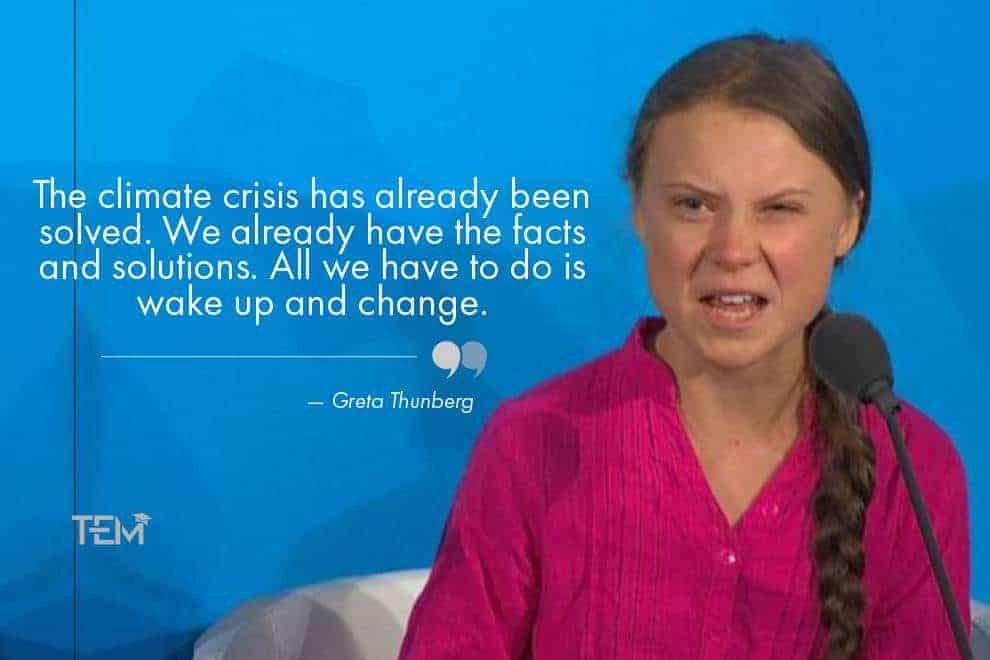
Changes observed in Earthโ€™s climate since the early 20th century are primarily driven by human activities, particularly fossil fuel burning, which increases heat-trapping greenhouse gas levels in Earthโ€™s atmosphere, raising Earthโ€™s average surface temperature. These human-produced temperature increases are commonly referred to as global warming. Natural processes can also contribute to climate change, including internal variability (e.g., cyclical ocean patterns like El Niรฑo, La Niรฑa and the Pacific Decadal Oscillation) and external forcings (e.g., volcanic activity, changes in the Sunโ€™s energy output, variations in Earthโ€™s orbit). (NASA Article)

Global warming is a part of climate change. According to a report by BBC, warming in the Arctic is leading to the thawing of once permanently frozen permafrost below ground. This is alarming scientists because as permafrost thaws, carbon dioxide and methane previously locked up below ground is released. These greenhouse gases can cause further warming, and further thawing of the permafrost, in a vicious cycle known as positive feedback. The higher temperatures also cause land ice in the Arctic to melt at a faster rate, leading to greater run-off into the ocean where it contributes to sea-level rise.

Though climate change deniers have argued that there has been a โ€œpauseโ€ or a โ€œslowdownโ€ in risingย global temperatures, but several recent studies shows that is the not the case. The situation in Arctic clearly indicates that the steps have to be taken on a global stage with strict actions. Countries have come together and have discussed about the same in G-20 and other summits but there is still a long way to go. Measures must be defined and followed by the masses to change some aspects of climate change.


Brand Awareness

Can you recognize the brand from the following pictures? Can you identify the food product in one go? I am quite sure most of you know these pictures and the brand I am talking about.

Well, that is the impact of the name that they have created in the industry. McDonald’s blurry billboards demonstrate just how instantly recognizable the fast food chain’s offerings are, as this innovative campaign has taken a global approach. The campaign that was titled as ‘Say No More’ featured multiple print and billboard images, all of which feature a blurred image of a popular McDonald’s menu item. “Brand awareness” is a challenge for every company, specially for a new company and marketers look for innovative and out-of-the box strategies to create visibility and awareness.

What exactly is Brand Awareness?

Brand awareness is a marketing term that describes the degree of consumer recognition of a product by its name. Creating brand awareness is a key step in promoting a new product or reviving an older brand. Ideally, awareness of the brand may include the qualities that distinguish the product from its competition. (Investopedia)

The products and services that are popular among the masses are mostly the ones due to brand recognition. For instance, if one remove the labels and packaging of soft drinks bottles, many of them will become indistinguishable. To reach out to the masses, the giants in the industry such as Coca-Cola and Pepsi rely on brand awareness to make their brands famous. Over the years, these companies have employed advertising and marketing strategies that have increased brand awareness among consumers, and that has directly translated into higher sales.

The term and the concept is extensively used by Facebook for its Brand Awareness Advertisement. Though it is a challenging task to predict how many people remember the ad, there are few algorithms for the same.

If we talk about the advertisement field, traditionally, it has been using various โ€œad recall surveysโ€ to measure whether people remember their ads. Now with big data, machine learning is used for the same. For example: Facebook choose target audience on the basis of:

  • Behaviour: measure more than a thousand signals including the existing relationship that someone has with your Page, their likelihood of interacting with the ad and demographic characteristics.
  • Polling: ย constantly calibrating our predictions by running thousands of polls on a random sample of campaigns each day that ask people if they recall an ad.

Now, with the advent of technology and rise in the smartphone users, social media has become a relevant platform for companies to create brand awareness. As social media allows one to share experiences, opinions and views, brands are anticipating the attitude of online users and creating strategies to reach out to the masses.


LEADERSHIP STYLES

1. Coach

A coaching leader is someone who can quickly recognise their team membersโ€™ strengths, weaknesses and motivations to help each individual improve. This type of leader often assists team members in setting smart goals and then provides regular feedback with challenging projects to promote growth. Theyโ€™re skilled in setting clear expectations and creating a positive, motivating environment.

The coach leadership style is one of the most advantageous for employers as well as for the employees they manage. Unfortunately, itโ€™s often also one of the most underutilised stylesโ€”largely because it can be more time-intensive than other types of leadership.

Example: A sales manager gathers his team of account executives for a meeting to discuss learnings from the previous quarter. They start the meeting by completing an assessment together of strengths, weaknesses, opportunities and threats regarding the teamโ€™s performance. The manager then recognises specific team members for exceptional performance and goes over the goals achieved by the team. Finally, the manager closes the meeting by announcing a contest to start the next quarter in order to motivate the sales people to reach their goals.

2. Visionary

Visionary leaders have a powerful ability to drive progress and usher in periods of change by inspiring employees and earning trust for new ideas. A visionary leader is also able to establish a strong organisational bond. They strive to foster confidence among direct reports and colleagues alike.

This type of leadership is especially helpful for small, fast-growing organisations or larger organisations experiencing transformations or corporate restructuring.

Example: A teacher starts a group at work for colleagues who want to help resolve anxieties and issues students have outside of school. The goal is to help students better focus on and succeed at school. He has developed testing methods so they can find meaningful ways to help students in a quick and efficient way.

3. Servant

Servant leaders live by a people-first mindset and believe that when team members feel personally and professionally fulfilled, theyโ€™re more effective and more likely to produce great work regularly. Because of their emphasis on employee satisfaction and collaboration, they tend to achieve higher levels of respect.

A servant leader is an excellent leadership style for organisations of any industry and size but is especially prevalent within nonprofits. These types of leaders are exceptionally skilled in building employee morale and helping people re-engage with their work.

Example: A product manager hosts monthly one-on-one coffee meetings with everyone who has concerns, questions or thoughts about improving or using the product. This time is meant for her to address the needs of and help those who are using the product in any capacity.

4. Autocratic

Also called the authoritarian style of leadership, this type of leader is focused almost entirely on results and efficiency. They often make decisions alone or with a small, trusted group and expect employees to do exactly what theyโ€™re asked. It can be helpful to think of these types of leaders as military commanders.

This leadership style can be useful in organisations with strict guidelines or compliance-heavy industries. It can also be beneficial when used with employees who need a great deal of supervision such as those with little to no experience. However, this leadership style can stifle creativity and make employees feel confined.

Example: Before an operation, the surgeon carefully recounts the rules and processes of the operation room with every team member who will be helping during the surgery. She wants to ensure everyone is clear on the expectations and follows each procedure carefully and exactly so the surgery goes as smoothly as possible.

5. Laissez-faire or hands-off

This leadership style is the opposite of the autocratic leadership type focusing mostly on delegating many tasks to team members and providing little to no supervision. Because laissez-faire leaders do not spend their time intensely managing employees, they often have more time to dedicate to other projects.

Managers may adopt this leadership style when all team members are highly experienced, well trained and require little oversight. However, it can also cause a dip in productivity if employees are confused about their leaderโ€™s expectations or if some team members need consistent motivation and boundaries to work well.

Example: When welcoming new employees, Keisha explains that her engineers can set and maintain their own work schedules as long as they are tracking towards and hitting goals that they set together as a team. They are also free to learn about and participate in projects that they might be interested in outside their team.

6. Democratic

The democratic leadership style (also called the participative style) is a combination of the autocratic and laissez-faire types of leadership. Democratic leaders ask for input and consider feedback from their team before making a decision. Because team members feel that their voice is heard and their contributions matter, a democratic leadership style is often credited with fostering higher levels of employee engagement and workplace satisfaction.

Because this type of leadership drives discussion and participation, itโ€™s an excellent style for organisations focused on creativity and innovation such as those in the technology industry.

Example: As a store manager, Jack has hired many brilliant and focused team members who he trusts. When deciding on storefronts and floor design, Jack acts only as the final moderator for his team to move forward with their ideas. He is there to answer questions and present possible improvements for his team to consider.

7. Pacesetter

The pacesetting leadership style is one of the most effective for driving fast results. These leaders are primarily focused on performance. They often set high standards and hold their team members accountable for hitting their goals.

While the pacesetting leadership style is motivational and helpful in fast-paced environments where team members need to be energised, itโ€™s not always the best option for team members who need mentorship and feedback.

Example: The leader of a weekly meeting recognised that an hour out of everyoneโ€™s schedule, once a week, did not justify the purpose of the meeting. To increase efficiency, she changed the meeting to a 15-minute stand-up with only those she had updates for.

8. Transformational

The transformational leadership style is similar to the coach style in that it focuses on clear communication, goal setting and employee motivation. However, instead of placing majority of the energy into each employeeโ€™s individual goals, the transformational leader is driven by a commitment to the organisationโ€™s objectives.

Because these types of leaders spend much of their time on the big picture, this style of leading is best for teams that can handle many delegated tasks without constant supervision.

Example: Reyna is hired to lead a marketing department. The CEO asks her to set new goals and organise teams to reach those objectives. She spends the first months in her new role getting to know the company and the marketing employees. She gains a strong understanding of current trends and organisational strengths. After three months, she has set clear targets for each of the teams that report to her and asked individuals to set goals for themselves that align with those.

9. Transactional

A transactional leader is someone who is laser-focused on performance similar to a pacesetter. Under this leadership style, the manager establishes predetermined incentives usually in the form of monetary reward for success and disciplinary action for failure. Unlike the pacesetter leadership style, transactional leaders are also focused on mentorship, instruction and training to achieve goals and enjoy the rewards.

While this type of leader is great for organisations or teams tasked with hitting specific goals such as sales and revenue, itโ€™s not the best leadership style for driving creativity.

Example: A bank branch manager meets with each member of the team bi-weekly to discuss ways the team can meet and exceed monthly company goals to get their bonus. Each of the top 10 performers in the district receives a monetary reward.

10. Bureaucratic

Bureaucratic leaders are similar to autocratic leaders in that they expect their team members to follow the rules and procedures precisely as written.

The bureaucratic leadership style focuses on fixed duties within a hierarchy where each employee has a set list of responsibilities and there is little need for collaboration and creativity. This leadership style is most effective in highly regulated industries or departments such as finance, healthcare or government.

Example: Managers at the office of the department of motor vehicles instruct their employees to work within a specific, defined framework. They must take many steps to complete a task with strict order and rules.

Remember, most leaders borrow from a variety of styles to achieve various goals at different times in their career. While you may have excelled in a role using one type of leadership, another position may require a different set of habits to ensure your team is operating most effectively.

By understanding each of these leadership types, and the outcomes theyโ€™re designed to achieve, you can select the right leadership style for your current situation.

Diesel being costlier

Crack in the limping bone!

Prices of petrol and diesel have been increasing continuously for 18 days and it was drawing attention but what alarmed more was diesel’s price.

In Delhi and its nearby areas, diesel is now about 12 paise costlier than petrol. Why did this happen?

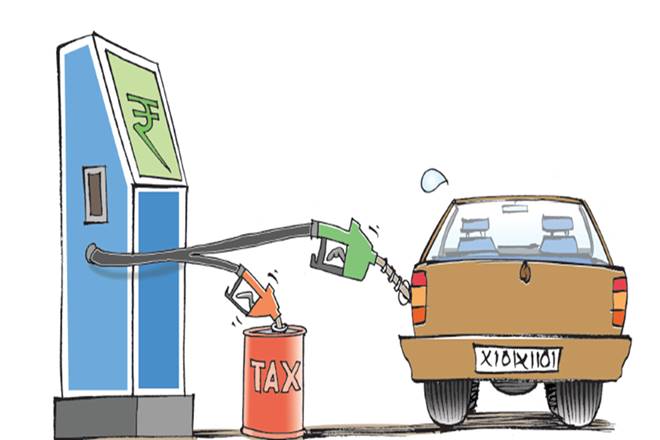
The biggest reason for this is the unevenness of the tax. Petrol is still expensive than diesel in the country but due to a higher toll on diesel in Delhi, the price has outpaced petrol. For now, we should endeavour so that the difference between petrol and diesel remains unchanged. We need to think back to the time when the price between diesel and petrol used to have a marginal gap between 20 to 30 rupees. The difference was because the use of diesel usually occurs in heavy vehicles for irrigation, riding or freight. The prices of diesel were handled by the governments because the price of diesel and the upshot of its hike was on the farmers and inflation. It is favourable for the economy to keep the gap between these two fuels.

It should be noted that private passenger vehicles that run on diesel also cost more than petrol vehicles, owing to the same reason the similarity between petrol and diesel’s price is even against our own vehicle policy.
By keeping the prices high in Delhi, customers can turn to states like Uttar Pradesh. In that case, Delhi itself will have to uplift the loss of revenue. Delhi and it’s neighbouring U.P has the difference by rupees 8.

So the effort should be to create a logical difference between the prices of petrol and diesel. It is also to be seen that there should not be much difference in the state-wise prices.
Seeing India as a whole economic unit is needed. In industrial sectors, even the difference between 10 and 20 paise counts. So the difference in state-wise prices should not exceed 50p or 1 rupee.

People do not understand the tax planning of governments but they definitely get upset to see that in Delhi if it is 79.76 rupees, so how is it for rupees 86.54 per litre in Mumbai?

The government should also notice oil companies. After keeping the prices stable for up to 82 days these companies are increasing the prices continuously from June 7, and there is a possibility of a hike in the coming days as well. International oil prices have already begun to rise.

It should be taken into consideration that in just 18 days, increment in the price which is approx rupees 10 is not good for the economy, hoping for improvement. The subsidy which is being given to the industrial world in this crucial time, it may so not happen that a large amount of economic support through petrol and diesel, gets snatched away from people.

At this time revenue is necessary for the government but that should be logical. Oil companies have been given the power to decide the price according to the cost but the increment should not happen in such a manner that everyday budget starts deteriorating.
It is important to take care of that selling oil for profit is not their only job, they will also have to think about the stability and strength of the economy of our country.

NECESSITY, IMPORTANCE, OBJECTIVES AND FUNCTIONS OF MAINTENANCE MANAGEMENT

Necessity of Maintenance Management:

Maintenance activities are related with repair, replacement and service of components or some identifiable group of components in a manufacturing plant so that it may continue to operate at a specified โ€˜availabilityโ€™ for a specified period.

Thus maintenance management is associated with the direction and organisation of various resources so as to control the availability and performance of the industrial unit to some specified level.

Thus maintenance management may be treated as a restorative function of production management which is entrusted with the task of keeping equipment/machines and plant services ever available in proper operating condition.

The minimization of machine breakdowns and down time has been the main objective of maintenance but the strategies adopted by maintenance management to achieve this aim have undergone great changes in the past.

Maintenance has been considered just to repair the faulty equipment and put them back in order in minimum possible time.

In view of the utilization of mostly general purpose/conventional machines with low production output, the demands on maintenance function were not very high. But with fast developments in the design, development and mechanisms of control such as electronic, NC and CNC in machine tools the manufacturing scenario has changed a lot.

The stringent control of dimensional tolerances and surface finish of the product have increased the tendency to adopt standardization and interchange-ability of parts/components of machines.

In the current production setups even a minor down time leads to serious production problems both technological as well as economical. All this is due to tough competition in the industrial market. Under the present circumstances effective and objectively designed efforts to update maintenance management has become a necessity.

Importance of Maintenance Management:

Maintenance management is responsible for the smooth and efficient working of the industrial plant and helps in improving the productivity.

It also helps to keep the machines/equipment in their optimum operating conditions. Thus plant maintenance is an important and inevitable service function of an efficient production system.

It also helps in maintaining and improving the operational efficiency of the plant facilities and hence contributes towards revenue by decreasing the operating cost and improving the quality and quantity of the product being manufactured.

As a service function it is related with the incurrence of certain costs. The important component of such costs are โ€” employment of maintenance staff, other minor administrative expenses, investment in maintenance equipment and inventory of repair components/ parts and maintenance materials.

Absence of plant maintenance may lead to frequent machine breakdown and failure of certain productive centres/services which in turn would result in stoppages of production activities, idle man and machine time, dislocation of the subsequent operations, poor quality of production, failure to meet delivery dates of product supply, industrial accidents endangering the life of workers/ operators and allied costs etc.

However, the importance of plant maintenance varies with the type of plant and its production but it plays a prominent role in production management because plant breakdown creates problems such as:

(i) Loss of production.

(ii) Rescheduling of production.

(iii) Materials wastage (due to sudden stoppage of process damages in process materials).

(iv) Need for overtimes,

(v) Need for work subcontracting.

(vi) For maximum manpower utilization workers may need alternative work due to temporary work shortages.

Hence, the absence of planned maintenance service proves costlier. So it should be provided in the light of cost benefit analysis. Since plant maintenance is a service function, it should be provided at the least possible cost but it is very important as discussed above.

Objectives of Maintenance Management:

The purpose of maintenance management is to optimize the performance of productive facilities of an organization by ensuring that these facilities function regularly and efficiently. This can be achieved by preventing the failures or breakdowns if any, as far as possible and by minimizing the production loss due to failures.

The main objectives of maintenance management are as follows:

(1) Minimizing the loss of productive time because of equipment failure to maximize the availability of plant, equipment and machinery for productive utilization through planned maintenance.

(2) To extend the useful life of the plant, machinery and other facilities by minimizing their wear and tear.

(3) Minimizing the loss due to production stoppages.

(4) To ensure operational readiness of all equipmentโ€™s needed for emergency purposes at all times such as fire-fighting equipment.

(5) Efficient use of maintenance equipmentโ€™s and personnel.

(6) To ensure safety of personnel through regular inspection and maintenance of facilities such as boilers, compressors and material handling equipment etc.

(7) To maximize efficiency and economy in production through optimum utilization of available facilities.

(8) To improve the quality of products and to improve the productivity of the plant.

(9) To minimize the total maintenance cost which may consist of cost of repairs, cost of preventive maintenance and inventory costs associated with spare parts/materials required for maintenance.

(10) To improve reliability, availability and maintainability.

Functions of Maintenance Management:

The important functions of maintenance can be summarized as follows:

(1) To develop maintenance policies, procedures and standards for the plant maintenance system.

(2) To schedule the maintenance work after due consultation with the concerned production departments.

(3) To carry out repairs and rectify or overhaul planned equipment/facilities for achieving the required level of availability and optimum operational efficiency.

(4) To ensure scheduled inspection, lubrication oil checking, and adjustment of plant machinery and equipment.

(5) To document and maintain record of each maintenance activity (i.e., repairs, replacement, overhauls, modifications and lubrication etc.).

(6) To maintain and carry out repairs of buildings, utilities, material handling equipmentโ€™s and other service facilities such as electrical installations, sewers, central stores and roadways etc.

(7) To carry out and facilitate periodic inspections of equipment and facilities to know their conditions related to their failure and stoppage of production.

(8) To prepare inventory list of spare parts and materials required for maintenance.

(9) To ensure cost effective maintenance.

(10) To forecast the maintenance expenditure and prepare a budget and to ensure that maintenance expenditure is as per planned budget.

(11) To recruit and train personnel to prepare the maintenance workforce for effective and efficient plant maintenance.

(12) To implement safety standards as required for the use of specific equipment or certain categories of equipment such as boilers, overhead cranes and chemical plants etc.

(13) To develop management information systems, to provide information to top management regarding the maintenance activities.

(14) To monitor the equipment condition at regular intervals.

(15) To ensure proper inventory control of spare parts and other materials required.

In terms of plants operations the functions of maintenance are:

(a) The plant must be available as and when required.

(b) The plant must not breakdown during actual operation state.

(c) The plant must operate in an efficient manner at required level of plant operation.

(d) The down time must not interfere with production runs.

(e) The down time due to breakdown should be a minimum.

To accomplish these conditions there must be complete cooperation and mutual understanding between maintenance and production departments. There must be an effective maintenance policy for planning, controlling and directing all maintenance activities.

The plant maintenance department must be well organized, adequately staffed sufficiently experienced and adequate in number to carry out corrective and timely maintenance with the efforts in minimizing breakdowns.


THE NEED FOR PLANNING IN ORGANIZATIONS

Planning helps an organization chart a course for the achievement of its goals. The process begins with reviewing the current operations of the organization and identifying what needs to be improved operationally in the upcoming year. From there, planning involves envisioning the results the organization wants to achieve, and determining the steps necessary to arrive at the intended destination โ€“ success, whether that is measured in financial terms, or goals that include being the highest-rated organization in customer satisfaction.

Efficient Use of Resources

All organizations, large and small, have limited resources. The planning process provides the information top management needs to make effective decisions about how to allocate the resources in a way that will enable the organization to reach its objectives. Productivity is maximized and resources are not wasted on projects with little chance of success.

Establishing Organizational Goals

Setting goals that challenge everyone in the organization to strive for better performance is one of the key aspects of the planning process. Goals must be aggressive, but realistic. Organizations cannot allow themselves to become too satisfied with how they are currently doing โ€“ or they are likely to lose ground to competitors.

The goal setting process can be a wake-up call for managers that have become complacent. The other benefit of goal setting comes when forecast results are compared to actual results. Organizations analyze significant variances from forecast and take action to remedy situations where revenues were lower than plan or expenses higher.

Managing Risk And Uncertainty

Managing risk is essential to an organizationโ€™s success. Even the largest corporations cannot control the economic and competitive environment around them. Unforeseen events occur that must be dealt with quickly, before negative financial consequences from these events become severe.

Planning encourages the development of โ€œwhat-ifโ€ scenarios, where managers attempt to envision possible risk factors and develop contingency plans to deal with them. The pace of change in business is rapid, and organizations must be able to rapidly adjust their strategies to these changing conditions.

Team Building and Cooperation

Planning promotes team building and a spirit of cooperation. When the plan is completed and communicated to members of the organization, everyone knows what their responsibilities are, and how other areas of the organization need their assistance and expertise in order to complete assigned tasks. They see how their work contributes to the success of the organization as a whole and can take pride in their contributions.

Potential conflict can be reduced when top management solicits department or division managersโ€™ input during the goal setting process. Individuals are less likely to resent budgetary targets when they had a say in their creation.

Creating Competitive Advantages

Planning helps organizations get a realistic view of their current strengths and weaknesses relative to major competitors. The management team sees areas where competitors may be vulnerable and then crafts marketing strategies to take advantage of these weaknesses. Observing competitorsโ€™ actions can also help organizations identify opportunities they may have overlooked, such as emerging international markets or opportunities to market products to completely different customer groups.

New Normal: Virtual Teams

Keys to Overcoming Virtual Team Communication Challenges - Chanty

The current pandemic situation has driven everyone to their homes in order to protect themselves from the novel Coronavirus. Countries are in the phase of โ€˜unlockingโ€™ now as they canโ€™t afford the lockdown anymore but the virus is still prevalent. Social distancing measures must be taken up even when all activities resume and other necessary precautions like wearing a mask and maintaining hygiene must be taken as well. The work-from-home culture has been adopted worldwide and both a person who is working individually and people who are working in teams need to be managed.ย 

A virtual team is a group of individuals in remote locations that are working together towards a common goal and the mode of communication through which they coordinate their activities is electronic. Before the pandemic, virtual teams were formed when people from different countries were on board for a project. Such a team was advantageous because the organisation could save up on real estate costs and it was also favourable for the employees because their time wasnโ€™t spent on commuting, leading to more productivity. There are also disadvantages like technological issues and lack of that level of bonding associated with workplace teams. Managing a virtual team is obviously more difficult than workplace teams, especially when the communication between the team members isnโ€™t as effective.

Due to the prevailing circumstances, formation of virtual teams is inevitable but there are a few differences. The members of the team arenโ€™t necessarily in different locations and the was formed to ensure social distancing and prevent the transmission of virus, in turn. There is a chance that the members of the team know each other personally beforehand. Formation of a virtual team is also more complex because the people with qualities like effective communication and sense of individualism have to be handpicked and assigned role after due thought process for smooth working of the team.

The leader of a virtual team isnโ€™t very different from the workplace team and needs to have qualities like emotional intelligence and effective communication so that the members of the team are clearly aware of  division of work and goals of the team and shortcomings of face-to-face interaction can be prevented. There is a possibility that the members might hesitate to speak up their concerns in such a setting but the leader must encourage them to speak their hearts out whenever needed. 

Read about Emotional Intelligence here.

Now that there is a team with a leader, the members have to get to know each other personally in case they donโ€™t and the targets have to be made and communicated. Short term milestones should also be set in order to keep the members motivated for them to keep up with their efforts continually in order to reach them. The means of electronic communication should also be decided and they should be favorable with whatever project the team is taking up. There are an array of platforms like Zoom and Microsoft Teams available that facilitate the work-from-home culture. Video conferencing should be done regularly for both work and non-work related conversations to increase cohesiveness.

THE IMPORTANCE OF HUMAN RESOURCE PLANNING(HRP) IN ORGANIZATIONS

Everything you need to know about the importance of human resource planning. Human resource planning is very important as it helps in determining the future human resource needs of the organization.

The effectiveness of human resource planning process decides the adequacy of available manpower in the organization. An unsuccessful human resource planning leads to either shortage or surplus of workforce in the organization and brings serious disaster.

Importance of Human Resource Planning โ€“ Key to Managerial Functions, Efficient Utilization, Motivation, Better Industrial Relations and Higher Productivity

We are acquainted with the objectives, approaches, forecasting, and techniques of HR planning. Obviously the importance of HR planning is manifold. It serves as a key to managerial functions, efficient utilizaยญtion of men, identifying and motivating them, promoting industrial relations, and boosting productivity.

i. Key to Managerial Functions:

Planning, organizing, leading, directing, and controlling (POLDC) are the five managerial functions that need HR for their execution. Human resources help in the accomplishment of all these managerial activities effectively and efficiently. Therefore, staffing becomes a key to all managerial functions.

ii. Efficient Utilization:

With the emergence of the concept of the global village, handling HR efficiently has become an imporยญtant function in the industry. Large organizations need huge HR to execute their job effectively. As such, the staffing function has emerged as a critical organization process.

iii. Motivation:

Irrespective of their levels, organizational citizens need motivation. The staffing function, in addition to putting the right men on the right job, also comprises various motivational programmes. It is essential to launch financial and non-financial motivational schemes, including incentive plans. Therefore, all types of incentive plans become an integral part of staffing function to satisfy both intrinsic and extrinsic motivation.

iv. Better Industrial Relations:

Stability, smooth running, and growth of a concern depend on the quality of interpersonal relations; especially on the relation between the management and unions. Members from the unions and assoยญciations form a collective bargaining forum. A strong relation between them helps taking decisions collectively. Furthermore, human relations can become even stronger through effective control, clear communication, and effective supervision and leadership.

v. Higher Productivity:

Productivity levels increase with the efficient utilization of resources in the best possible manner. Productivity is enhanced by minimizing wastage of time, money, efforts, and energies. Alternatively, cost reduction, value engineering, method study and work measurement, and other techniques help to enhance productivity. Human resource and its related activities/systems such as performance appraisal, / training and development, remuneration, further settle on productivity.

It is, therefore, suitable on the part of the organization to opt for HR Planning to prevent any unnecessary hurdles in its workforce needs. An HR Consulting Firm can provide the organization with a comprehensive HR assessment and planning to meet its future requirements in the most cost-effective and timely manner.


IMPORTANCE OF PERFORMANCE APPRAISAL

1. Performance Feedback

Most employees are very interested in knowing how well they are doing at present and how they can do better in a future. They want this information to improve their performance in order to get promotions and merit pay. Proper performance feedback can improve the employee’s future performance. It also gives him satisfaction and motivation.

2. Employee Training and Development Decisions

Performance Appraisal information is used to find out whether an employee requires additional training and development. Deficiencies in performance may be due to inadequate knowledge or skills. For e.g. A professor may improve his efficiency by attending workshops or seminars about his subject. Performance appraisal helps a manager to find out whether he needs additional training for improving his current job performance. Similarly, if the performance appraisal results show that he can perform well in a higher position, then he is given training for the higher level position.

3. Validation of Selection Process

Performance appraisal is a means of validating both internal (promotions and transfers) and external (hiring new employees from outside) sources. Organisations spend a lot of time and money for recruiting and selecting employees. Various tools used in the selection process are application blanks, interviews, psychological tests, etc. These tools are used to predict (guess) the candidate’s performance on the job. A proper performance appraisal finds out the validity of the various selection tools and so the company can follow suitable steps for selecting employees in future.

4. Promotions

Performance appraisal is a way of finding out which employee should be given a promotion. Past appraisals, together with other background data, will enable management to select proper persons for promotion.

5. Transfers

Performance appraisal is also useful for taking transfer decisions. Transfers often involve changes in job responsibilities, and it is important to find out the employees who can take these responsibilities. Such identification of employees who can be transferred is possible through the performance appraisal.

6. Layoff Decisions

Performance appraisal is a good way of taking layoff decisions. Employees may be asked to lay off, if the need arises. The weakest performers are the first to be laid off. If there is no performance appraisal, then there are chances that the best men in the department may be laid off.

7. Compensation Decisions

Performance appraisal can be used to compensate the employees by increasing their pay and other incentives. This is truer in the case of managerial jobs and also in the case of employees in non-unionized organisations. The better performances are rewarded with merit pay.

8. Human Resource Planning (HRP)

The appraisal process helps in human resource planning(HRP). Accurate and current appraisal data regarding certain employees helps the management in talking decisions for future employment. Without the knowledge of who is capable of being promoted, demoted, transferred, laid off or terminated, management cannot make employment plans for the future.

9. Career Development

Performance appraisal also enables managers to coach and counsel employees in their career development.

THE IMPORTANCE OF HUMAN RESOURCE MANAGEMENT(HRM) IN ORGANIZATIONS

The Importance of HRM must be viewed through of overall strategic goals for the organization instead of a standalone tint that takes a unit based or a micro approach. The idea here is to adopt a holistic perspective towards HRM that ensures that there are no piecemeal strategies and the HRM policy enmeshes itself fully with those of the organizational goals.HRM becomes significant for business organization due to the following reasons.

Importance  of HRM are:

  1. Objective :-

HRM helps a company to achieve its objective from time to time by creating a positive attitude among workers. Reducing wastage and making maximum use of resources etc.

  1. Facilitates professional growth :-

Due to proper HR policies employees are trained well and this makes them ready for future promotions. Their talent can be utilized not only in the company in which they are currently working but also in other companies which the employees may join in the future.

  1. Better relations between union and management :-

Healthy HRM practices can help the organization to maintain co-ordinal relationship with the unions. Union members start realizing that the company is also interested in the workers and will not go against them therefore chances of going on strike are greatly reduced.

  1. Helps an individual to work in a team/group :-

Effective HR practices teach individuals team work and adjustment. The individuals are now very comfortable while working in team thus team work improves.

  1. Identifies person for the future :-

Since employees are constantly trained, they are ready to meet the job requirements. The company is also able to identify potential employees who can be promoted in the future for the top level jobs. Thus one of the advantages of HRM is preparing people for the future.

  1. Allocating the jobs to the right person :-

If proper recruitment and selection methods are followed, the company will be able to select the right people for the right job. When this happens the number of people leaving the job will reduce as the will be satisfied with their job leading to decrease in labor turnover.

  1. Improves the economy :

Effective HR practices lead to higher profits and better performance by companies due to this the company achieves a chance to enter into new business and start new ventured thus industrial development increases and the economy improves.

Corporate Governance

Corporate governance is the current buzzword in corporate jargon. It has become a subject of discussion in corporate boardroom, academic circles and government around the globe. Unethical business conduct and behavior, laxity on the part of board, failure of external audit, unfettered powers in the hands of the Chairman/CEO, lack of transparency, inadequate disclosures, fraud, lack of proper internal audit are the most common governance problems/flaws noticed in the collapses of all such corporate failures in India, USA, UK and the other parts of the world.

The last few years have also highlighted major scams that have changed the way businesses were seen and have resulted in pendulum of public faith. Due to this, the emphasis on Corporate Governance has increased so much that some firms have an independent department for handling it. Various independent start-ups are also built to manage corporate governance practices. The events such as Satyam scam, Harshad Mehta scam, AgustaWestland chopper scam, Enron, Lehman Brothers, WorldCom, HealthSouth etc. have shifted the market to focus on a regulated market from a free market.

What is Corporate Governance?

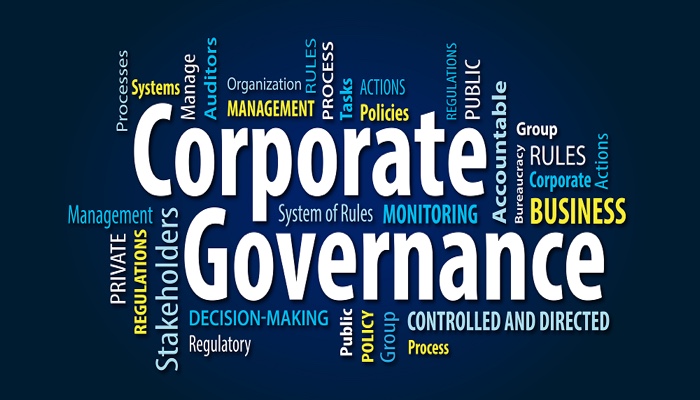
Corporate governance in simple words can be defined as the combination of rules, processes or laws by which businesses are operated, regulated or controlled. The term encompasses both, internal as well as external factors that affect the interests of a company’s stakeholders, including shareholders, customers, suppliers, government regulators and management.

Many institutional investors have taken a substantial interest in engaging with respect to corporate governance and have dedicated significant resources to governance issues. Not only this, they are thinking about company outreach, the overall development of voting policies and also the analysis of multiple proposals on the ballots of their portfolio companies. Additionally, overall levels of shareholder activism remain at record highs, imposing significant pressures on targeted companies and their boards.

Benefits of Good Governance:

  • It provides a framework for accessing effective external finances.
  • It helps to achieve sustainability and improve companyโ€™s performance.
  • It helps to conceptualize the practicality of CSR Activities that the company is having and gives it a new dimension to showcase it.
  • Helps in higher firm valuation and share performance.
  • It helps in reducing risks associated with corporate crisis and scandals.
  • It helps in effective management of relation among various people and entities such as shareholders, managers, employees, customers, creditors etc.

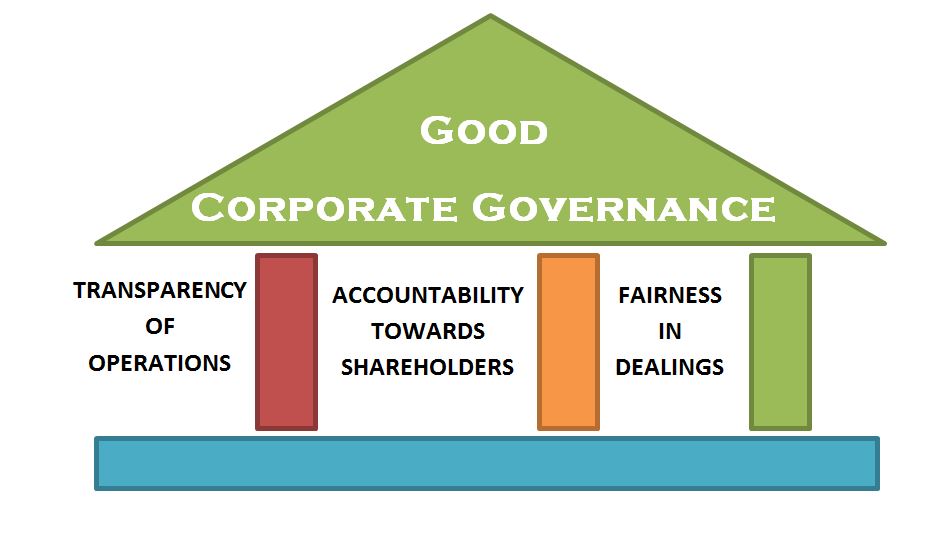
Fundamental Pillars of CG:

Fundamental Pillars of Corporate Governance include:

  • Accountability: Ensures that management is accountable to the board, shareholders and other involved.
  • Transparency: Ensures accurate disclosure of information on all material matter that includes financial situation, events, ownership, performances, mergers and corporate governance.
  • Independence: It gives freedom to take decisions so that major leaders are not influenced by others. There must be procedures and structures to minimize conflicts of interest.
  • Fairness: It combines treating all shareholders and related entities with fairness and provide effective redress for violations.


SEBI in India:

The Securities and Exchange Board of India is the regulator of the securities and commodity market in India owned by the Government of India. It was established in 1992 and given Statutory Powers on 12 april 1992 through the SEBI Act, 1992.

The main function is to make sure companies are running fairly and to stop any fraudulent activities of financial/stock market.


ย 

THE IMPORTANCE OF MARKET SEGMENTATION

Benefits or importance of market segmentation can be better explained by below stated points:

1. More Precise Definition of the Market:

Segmentation improves companyโ€™s understanding of why consumers do or do not buy certain products. Marketer can have very clear understanding of his consumers. He knows adequately about the market. He can formulate and implement marketing plan more successfully.

2. Maximum Customer Satisfaction:

Marketer can cater needs of customers more effectively. Market segmentation is relevant to the modern marketing practices. It ensures both maximum satisfaction to consumers and maximum sales to the company. Maximum consumer satisfaction is the master key to solve any problem. Marketer can cater needs of customers more effectively. Customers can have products as per their needs; they can get better products or services at lower costs.

3. Effective Marketing Strategy:

Market segmentation provides an opportunity to understand needs and wants of different segments of the market. This can help in formulating marketing mix/programme more meaningfully. Company can gain a maximum market response.

4. Essence of Modern Marketing:

Market segmentation strategy fits with modern marketing philosophy. If the marketer wants to satisfy his valued consumers, market segmentation is the only option. It is an essential condition for the successful modern marketing practice.

5. Improved Profitability:

On the basis of the study on needs of specific group of buyers, the products are manufactured. Company can attract distinct groups of buyers and can increase sales. An increased sale has positive impact on its profitability.

6. Optimum Use of Productive Resources:

Market segmentation leads to effective use of the valuable resources. Resources are allocated and used exactly as per market needs, avoiding mismatching between what marketer offers and what the market needs. So, valuable resources like man, money, material, space, technology, time, etc., can be utilized more effectively.

7. Benefit of Specialization:

It is easy to direct marketing efforts more clearly and specifically. Company designs its marketing programme for different products and for various groups of buyers. Specialization in production and marketing can offer a lot of benefits to the company.

8. High Competitiveness:

As a result of market segmentation, a company can treat its consumers more effectively than competitors. It improves competitive strength of the company. Company can respond strongly to the competitor; can prevent the entry of competitors; or can defeat competitors. Company can create and maintain the loyal consumers for long period of time.

9. Collection of Valuable Information:

Market segmentation process elicits a lot of valuable information for the company. Such information is instrumental for marketing research, product development, and evaluation of marketing activities. It is also useful for measuring effectiveness of sales and distribution facilities.

10. Identifying Market opportunity:

Market segmentation helps establish close relations with specific groups of buyers. Close relations facilitate a continuous interaction between consumers and company. Consumers inform the company regarding changes in their needs, wants, and habits on a continuous basis or whenever asked. Thus, it is easy for a marketer to project the future trends. He can identify opportunities to be available currently or in the near future, and can plan accordingly.

11. Benefits to Society and Nation:

Market segmentation, if taken objectively, can contribute to social welfare and national development. Basically, it is a consumer-oriented philosophy, and it results into a win-win-win approach, that is, company, society, and nation, all three, are benefited.

This can improve overall economic system by manufacturing the right products of the right quantity and quality for the right groups of consumers, made available continuously at the right price and place by the right distribution channel.

12. Benefits to Small Scale Industrial Units:

We know that small-scale industrial units can function on a limited scale of operation. They can have only the limited manufacturing and marketing capacity. Industries working on a small- scale basis can take advantages of market segmentation. By concentrating on special demand of specific group of a limited number of consumers, they can afford products and get profitable market easily. They can compete with the large industrial units, too.

IMPORTANCE OF MARKETING MANAGEMENT IN BUSINESS

The heart of any business success lies in its marketing techniques. The most perspective of your business depends on successful marketing. Marketing management simplifies the activities and functions which are involved in the distribution of goods and services. According to Philip Kotler, โ€œMarketing management is the analysis, planning, implementation and control of programs designed to bring about desired exchanges with target markets for the purpose of achieving organizational objectives.โ€

In short word, marketing management is a process by which a product or service is introduced and promoted to potential customers. The process covers advertising, public relations, promotions, and sales. It represents the โ€œroad mapโ€ to accomplish greater results, such as sales growth, brand recognition, higher market percolation, and much more.

The Importance of Marketing Management in Business

Marketing management has obtained importance to meet thriving competition and the need for developed strategies of distribution to reduce cost and to increase profits. Marketing is very beneficial for the transfer, exchange, and movement of goods. Marketing management today is the most important function in a commercial and business enterprise. The following factors will help you to understand why marketing management is important in this competitive world:

 Introduce new products

For a business to succeed, the product or service it provides must be known to potential buyers. If your business is unknown to the potential customers and you donโ€™t have any kind of relation with your customers then marketing techniques can help you to create brand awareness for your service or product.

In simpler terms, Marketing Management is important for any business, because:

  • Understand the customer needs
  • Improving the product and/or service to satisfy customer needs
  • Expand the technique to reach potential customers
  • Provide the right tools at the right time
  • Saves company time and money by focusing the resources

Boost your Sale

Adam Smith has remarked that โ€œnothing happens in our country until somebody sells somethingโ€. Marketing is the kingpin that sets the economy revolving. The marketing concept is about matching a companyโ€™s capabilities with customer wants. Once your product, service or company gets on the place that you expected, it increases your chances that consumers will make a sale. And more important is that marketing strategies also help to reduce the cost of sales and distribution.

Increase Company Reputation

The major marketing activities are buying, selling, financing, transport, warehousing, risk bearing, and build company reputation. The success of a company often rests on a solid reputation. The companyโ€™s image is very important! It is the soul of the business. And only marketing strategies can help any company to build a strong reputation by identifying the best opportunities worth pursuing as well as the threats to be avoided.

Source of New Ideas

The concept of marketing is a dynamic concept. Marketing differentiates a company from competition by recognizing the distinctive benefits and the supporting elements. Marketing also nourishes an environment in the marketplace for healthy completion. Marketing as a document of measurement gives scope for understanding this new demand pattern and improves the effectiveness of the Marketing message to customers and partners.

In short word, marketing management works for translating the company vision, mission, and objectives, into effective Marketing initiatives. What do you think about the importance of Marketing Management in business? Do you want to add something more? Let us know your feedback.

IMPORTANCE OF E- COMMERCE IN MODERN TIMES

E-commerce stores, online payments services and affiliate marketing websites have one thing in common: they all use e-business practices to generate revenue and attract customers. Even though the terms “e-business” and “e-commerce” are often used interchangeably, they’re not one and the same.

E-business refers to any business conducted online using the internet and related digital technologies. E-commerce involves buying and selling products or services on the internet.

Importance of E-Commerce in business

Think of “e-business” as an umbrella term that encompasses e-commerce, e-sales, e-banking, e-learning and online communication. It was first used by IBM in 1996. Today, it plays a key role in the way companies do business, shaping the global economy.

Reduced Business Costs

One of the primary benefits of e-business is its ability to cut costs. This technology eliminates the need to have a physical presence, such as a brick-and-mortar store or an office. Companies no longer have to rent a space and pay for utilities unless they want to.

For example, if you provide PR and marketing services, it’s not necessary to rent an office. You can run your business remotely and reach customers worldwide. Sure, you can expand your operations, rent a space and hire staff but that’s optional. You could just as well hire a remote team and do everything online. The choice is up to you.

Additionally, e-business strategies like social media and online advertising involve lower costs than traditional marketing which allows startups and small companies to reach their target audience and compete against big industry names without spending a fortune. Furthermore, technologies such as AI and machine learning can help reduce your operational costs and increase your productivity.

More Efficient Marketing

Over 93 percent of online experiences begin with a search engine. Today, most customers look for information about products and services on the internet. By implementing the best e-business practices, you can reach a wider audience and increase customer engagement.

Modern technologies, such as programmatic marketing, use smart data for more precise targeting which allows you to define your ideal buyer persona and display relevant ads accurately. You’ll no longer spend your marketing budget on banners and digital ads that customers will either block or ignore altogether.

Centralized Data

The latest e-business functions enable companies to store massive amounts of data and keep it secure. Cloud hosting, for example, allows you to take customer data, videos, contracts, employee records and other information away from the office to a virtual storage location which means youโ€™ll no longer have to rely on USB drives or paper documents. Plus, you can access these files on the go, regardless of your location.

Improved Inventory Control

In today’s digital era, organizations can automate the inventory of goods, process orders and accept payments without handwork. Modern e-business practices allow e-commerce stores, logistics centers and other product-based companies to gather information faster and have better control over their goods.

Automated inventory management tools can free up your time and eliminate human error resulting in lower operational costs and improved efficiency. You can focus on the core aspects of your business without having to worry about the small things.

Superior Customer Experience

Customer Relationship Management (CRM) software allows for more efficient communication with your prospects and clients. With these e-business solutions, companies can maximize upselling and cross-selling, get better insights into their audience and improve customer experience.

If a customer contacts your team, they will be able to retrieve key data related to past purchases and buying preferences within minutes. Furthermore, CRM software automates everyday tasks, such as data entry, sales tracking and reporting.

Higher Revenue

The latest e-business strategies can translate into higher revenue for your business. They can not only reduce costs but also enhance communication within your organization. Data-driven marketing, CRM software, content management tools and other technologies contribute to your business growth.

By integrating these solutions into your daily activities, you’ll get more done in less time. All of your employees, suppliers, customers and processes will be interconnected. Your departments can share valuable information in real time so they can achieve the desired result, whether it’s closing a sale or increasing marketing reach which can lead to higher productivity and performance, increased customer satisfaction and efficient transactions.

So, E-Commerce has become an integral part of today’s business.

Decision Making 101: Opportunity Cost

How we make choices | TED Talks

Wherever we are and whatever we are doing currently, is the result of the decisions we have made in the past. You have chosen to read this article and not scroll past it or do something else like watching TV or taking a nap. You have consciously made a choice from an array of options that were in front of you. Opportunity cost is the loss of benefits that could be derived from the next best alternative once a choice has been made. By reading this article, you have forgone the pleasure that could have been derived from watching TV or energy that youโ€™d have got from taking a nap.

Opportunity cost is a term in economics but it can be applied to almost every aspect of life and not just the things that can be measured in monetary terms. When an investor chooses to invest his money in a particular stock, the opportunity cost is the return on investment that he could have enjoyed if invested in a different stock. If that investor had an excess amount of funds, he could have invested in both the stocks but that sets things like money, time and even opportunities apart – they are limited. This elucidates the importance of making well thought out decisions.

People who are doing 9 to 5, 5-days a week jobs face difficulty in realising their opportunity costs because they have a fixed schedule and only do what they are told to. They barely make any decisions on their own and just do what their boss tells them to on a regular basis so when they finally see an opportunity to relax on weekend, they donโ€™t look for alternatives and just go with the flow. In case of freelancers or businessmen, however, these people are much more conscious of what they lose when they decide to spend their limited resources in a particular activity. A tailor can easily sacrifice the amount of business he is sacrificing when he decides to go on a week long vacation.

Opportunity cost is everywhere and in everything we do. When a person with a job decides to party on saturday night and sleep in because itโ€™s sunday, he gives up on the time that he could have spent with his family. When you decide to get an MBA from a named university and pay a hefty tuition fee for the same, you sacrifice not just the money but the time, 2 years in this case, that could have been spent in doing a job or learning a different skill. You still chose to go for an MBA and the reason could be because you can get a much better job that pays better than the one without an MBA. Basically, It is all about weighing your alternatives correctly and carefully.

Decision making process isn’t complicated but two of the most crucial steps are identification of alternatives, followed by thorough examination of each alternative. All the benefits that are derived from all the alternatives need to be compared and the one that seems the most satisfactory should be chosen. One can also weigh his options on the basis of what he would regret sacrificing the most.

Benefits Of Freelancing

What if you could choose your own office? What if you could change the dim, fluorescent lights from a cubicle, with a large open space. One where the wind would caress your face gingerly, and you could hear the waves breaking at the shore, not too far away. To make this Mediterranean setting complete, what if you could sip on your drink from a coconut while tapping passionately at your keyboard? Sounds highly idyllical, doesnโ€™t it? Not to twist the knife in the wound, but this is more than feasible. By choosing the path of self-employment, you can pick your own place to work from. And this is just one of the many benefits of freelancing.

The workforce emerges in different directions

Itโ€™s true, most individuals frown upon the idea of freelancing because aside from the plenty of misconceptions available, it seems to be an unreliable job. Think about it: you are living from paycheck to paycheck, from client to client.

However, itโ€™s highly understandable why most people fear this. After all, freelancing started as an option for income supplementation, and the main idea was not necessarily to find constant projects but to find some when you needed them. Yet in the past years, with millennials entering the workforce, it became a reliable alternative to 9-to-5 jobs. Moreover, because of the traction, it gained in the past years, companies of all sizes โ€“ including enterprises are reorienting themselves into hiring freelancers as well, not only full-time employees.

Now, I wonโ€™t claim that office jobs will be dead in a certain amount of time, but what I do say instead is that it could be a good option for you to take into the account the idea ofย going freelance, at some point, especially if you are seeking things such as flexibility, variety, work-life balance and more. Since I do not enjoy making claims without any arguments, here are 5 benefits of freelancing

*) Flexibility

Keeping all the prejudices aside on how millennials do this, do that, โ€œdestroyโ€ industries, one of the highest desire of the upcoming generations is flexibility. Whether we talk about having the option of choosing the time to start working or the amount in one day, flexibility is one of the main benefits of freelancing. Aside from this, freelancing gives you the option to work from anywhere โ€“ your own home, a cafรฉ, another city or another country, as long as you have a stable connection to the Internet

*) Thriving on variety

One of the greatest benefits of freelancing is having the opportunity to dip your toes into a pool of possibilities. Usually, freelancers work on a variety of projects, from several industries. Itโ€™s not unheard of working only with one, but thatโ€™s usually a matter of choice (and of income).

Thus, going freelance will give you the chance to grow, to expand your horizons and to achieve plenty of knowledge and an impressive portfolio. This way, you will be some sort of Jack of all trades (but better than a master of none), in your own field

*) Its a companion

Letโ€™s be honest about something โ€“ when having a full-time job, even if you have the chance to work on various projects, choosing which one to work on, is not one of the perks. This way, you might find yourself stuck with a project that goes against your ethical and moral objections, or would stick you in a routine. Even worse, in case your company provides services for other clients, thereโ€™s always the option into finding one who is either overly-demanding or aggressive.

On the other hand, ย one of the benefits of freelancing is this โ€“ย you get to choose who to work with. If your client comes to you with a project proposal that doesnโ€™t fit you, or his behavior is not one of your likings, you can always refuse. However, if this is the case, you need to have a plan B. Which, usually freelancers do have โ€“ and thus we can talk about another benefit

*)financial security

The idea of living from project to project, without knowing if the income will be enough to pay the bills, is indeed scaring. Yet, history has shown us that having a full-time job, doesnโ€™t necessarily reassure you that you will have the financial security you wish for.

Working as a freelancer makes you aware that maybe, not all the gigs you have are 100% certain. In numerous cases, projects can be cut short for a variety of reasons โ€“ budget, style, relationship between the client and the provider and more. Because of this, you will always be prepared to have a Plan B, C or Z, and you wonโ€™t leave things to fate.

  1. There is some cost-cutting involved

Maybe this isnโ€™t the main benefit of freelancing, but itโ€™s worth mentioning โ€“ working on your own can help you to reduce some of the costs. For instance, if you choose to work from home, you will cut on gas or any other type of commute. Even more, you might have some cost-cuts on food as well, since you can organize your work as you please and you might squiz in some time to cook. However, working from another place, such as a coworking or a cafรฉ, might increase the costs. But then again, as a freelancer, you can always pick a place closer to your home.

IMPORTANCE OF LEADERSHIP IN BUSINESS ORGANIZATIONS

A successful business is not only composed of business strategies but also exceptional leadership. A great leader acts as the catalyst that makes all the other things work together. A business that has all the fundamental things which are needed to operate a business but lacks a good leader will not be able to retain its positioning the market. A leaderless organization is an army without general, a school without teacher and a family without parents. There are following nitty-gritty reasons why good leadership is needed by the business:

  • REASON # 1 (Leadership and business objective)

A good leadership is required to help define why to the audience. A leader explains the employees the purpose of the business and conveys the objective of the business to them. A purpose eradicates their confusion and tells them what their purpose is. A great leader is the one who is humble, strong and decisive. This helps people to work well together that foster positive vibe in the entire organization. It defines employees the purpose of the business in the market. A leader gives is our โ€œwhyโ€ and the reason that we are doing what we do.

  • REASON # 2 (Leadership and organization culture)

There are companies that have amazing branding and goodwill in the market but their internal structure depicts a completely opposite picture. The internal structure is the culture of the organization.  The culture of the organization is what increases the employee retention rate. The key players in forming a great organizational culture are the upper management people because they have the authority to create a culture. A culture that appreciates, supports and motivates employee participation increases employee retention rate. A good leadership creates a better work world which increases the productivity and overall efficiency of the business.

  • REASON # 3 (Leadership and vision)

Leadership provides the sense of purpose to the business. A leader looks forward and sees where the business is headed. It helps us to avert from the catastrophe before it happens. It is essential to realize the need for the business and guide them during the rocky times. It provides the employee with the strategic direction ensuring that all the company employees and department are headed in the same direction. If the company has good leadership the obstacles will seem insignificant. A good leader preserves vision. It taps the vision into the sentiments of the employees.

  • REASON # 4 (Leadership and risk management)

The environment in which the company is operating is always changing. The element of risk is present all the time. To handle the risk and make the employee aware of the circumstances that appear with the risk a good leadership is crucial. A good leader trains the employees for the future and current risk management. Keeping workforce prepared will help them gain strategic vision which will indirectly add extensive value to the business.

  • REASON # 5 (Leadership and skill refinement)

A good leadership helps employees to refine their skills. It helps employees realize their potential talent and polished their skills. It provides the opportunity to practice those skills and enhance them. It shows them the skills that they need to attain a place they inspire to get. This creates equal success for employee and the company.

  • REASON # 6 (Leadership and values)

A good leader creates value for the organization in the employees. It focuses employee attention on the values of the organization; it syncs the values within the team so that they are being implemented. The attitude of the leader to the values is modeled by the team. These values create a better workplace for the employees. A great leader starts to live with the values and get employees to follow and believe in the values you do. This helps employees to feel connected to the organization. A famous quote from First Lady Eleanor Roosevelt states that the greatest leaders of all time are the ones who inspire others to have confidence in them rather than just in other leaders.

  • Reason # 7 (Leadership and integrity)

Every business needs a good leadership because he fosters integrity in the organization. Every executive agrees that the core of integrity is truthfulness. When leader practices integrity in the organization, he portrays a message for the employee that when you do the right thing they have nothing to be guilty about. A leader demonstrates to tell truth to the people in each situation because it makes a business a success. The real sign of leadership is how fair one can be when others are been unfair. It makes the business successful because the people out there can rely on you and this is because of the magic of integrity.

It doesnโ€™t matter which industry you operate in, a good leadership helps your employees in determining where to move with a vision.

IMPORTANCE OF DIGITAL MARKETING IN TODAY’S WORLD

Internet has unlocked the door of endless opportunities for businesses. Social networks have become an effective way to approach new clients. It can be a good platform where you can accelerate your business by acquiring new clients and interacting with your old customers. You can increase your business visibility which in turn can boost up your business. All this can be done with the help of Digital Marketing.Traditional marketing includes advertising and promotion of products and services on print media like pamphlets, posters, commercial ads on radio and television, hoardings, bill boards and other expensive ways. At that time, social media or internet were not utilized for promotion.ย  Traditional marketing had the restricted scope and customer reach. But after the invention of digital marketing, there are multiple online channels through which you can promote your business If a business is going digital, only then it can survive in todayโ€™s world.

The importance of Digital marketing has grown over the years because With the growth of the Internet, more people are spending their time online. Over 6 Million use the Internet across the globe. Itโ€™s become an integral part of everyday life to conduct searches, check social media, and purchase products online.Your customers are online, which highlights the importance of digital marketing. Theyโ€™re browsing the web looking for your products or services. If they canโ€™t find them because you donโ€™t have an online presence, you risk losing those leads to your competitors.To drive the best results for your business, you need to build your online presence. You will reach more leads that want your products or services. Second reason is that one can target their target market or audience.The ability to target your audience better is one of the most obvious reasons why digital marketing is important.Imagine being able to market directly to people who have an interest in your products or services. With digital marketing, you have the capability to directly reach leads interested in your business. You donโ€™t have to hope that people will see your traditional marketing efforts and contact your business.With digital marketing, you can target your audience more precisely than traditional methods. You can input important information about your audience and use that information to shape your digital marketing campaigns. It makes it easy for you to reach the right people. Another reason is that you can monitor your campaigns and optimize them for better results, The importance of digital marketing is that you can easily track and your Campaigns. When you invest time and money into your campaigns, you want to know that they are working. Digital marketing makes it easy for you to track your campaigns, which allows you to adapt and drive better results.When you use traditional methods, itโ€™s challenging to know the results of your campaign. If you run a TV ad, you may have to ask every person that comes into the store about what brought them to your business. It would be a very time-consuming effort that could annoy people who visit your business.With digital marketing, you donโ€™t need to worry about bothering your audience. Every campaign you run is trackable. You can easily keep an watch on campaigns Return on Investments and other indicators to see if it is driving valuable results for your business.You can see metrics such as impressions, clicks, likes, shares, comments, conversions, and more. The type of metrics will depend upon the medium and what you want to measure. You can easily set up your tracking system to monitor specific metrics for your campaigns.When you can track your campaignโ€™s performance, itโ€™s easier to fix it and adapt to changes.

So Itโ€™s clear. Businesses in the modern economy need digital marketing to compete. Online is where the customers are these days . Itโ€™s where they prefer that you reach them. Online is the place where action takes place in today’s world.

ROLE OF HR MANAGERS IN POST COVID-19 ERA

In last 10 years or so improvement in technologies allowed technology-enabled talent platforms to accelerate the digital HR disruption to create a new age where people can have control over the way they work and finding a balance between work and home.

As things were falling into place , Covid-19 came and started affecting all spheres of human life, disrupting human routine, lifestyle, businesses and the global economy. The overall economic impact of the outbreak will be felt over the years in business operations around the world.

But in the middle of the crisis one aspect that stood out of was the ability of HR functions that holds all ends together fix gaps quickly to ensure smooth running of their businesses. There are several vital important roles that HR managers will have to play in post Covid era to ensure smooth running of business operations.

The important role that HR managers has to play is to look after Physical health and well being of employees because constant staying at home will take its toll on mental health. With a potential increase in mental health issues, there is an increasing need for its importance and how companies can provide solutions, employment benefits, incentives to help its employees. Secondly HR Mangers need to look after its employees and get them used to various technologies that are being used to ensure work from home. Learning to use a new system, communication software or a tool can get challenging, and it worsens when one can’t get immediate support in person, this is where HR managers need to play a crucial role to ensure smooth transitioning. Next Important role is to look after Issues related to jobs and work continuity, this is very crucial area that every HR managers needs to look after since there is already layoffs , termination , pay cuts of employees across business sectors, the managers needs to chalk out a plan in consultation with the management and decide on a clear cut policy especially related to the employees who has been currently laid off. Lastly, HR Managers need to look after the various career opportunities that will arise once things stable, the situation has forced organizations to shift the fundamentals of jobs and the way theyโ€™re designed, thus creating more career opportunities. When the economy comes back after this Covid-19, there will be great requirements for employees and that the employees can catch up quickly, act, and put motivation behind efforts that make things happen for organizations. Whether internal or external or gig work , the organizations people will be needing people for their organization.

HR managers can innovate with work schedules and assignments by allowing flexible scheduling parameters and being creative in how the work gets done in post covid era. HR managers should Allow or expand flex-time opportunities for the majority of positions. HR managers should also be considerate about the salaries of the employees in the post covid era , where there will be more cut throat competition.

The Post Covid era will leave plethora of Challenges and opportunities for business organizations and HR managers will play a crucial role in this regard.

How to use Talent Management Benefit Your Organizations

Much of the popularity attributed to the growth of talent management strategies in corporations can be attributed to the nature of technological growth which has eliminated most of our geographical boundaries, leading to a blend of cultures. As such, top organizations are able to access international job markets to scour the professionals most suited for specific roles within their hierarchy. This does not come easy however, as the following step to hiring the best, is ensuring they stay with you and also stay at the top. Potential leadership candidates and high impact employees must be given the adequate opportunity to express their capabilities and impact at the workplace.

This is for mutual growth so this move does not go amiss when considering organizational objectives. Helping management think past profit margins and output targets aligns them with the needs of the organization as a whole, and how specific employees can impact the efficiency and productivity of its various facets. Weโ€™re here to provide you clarity on exactly that- the need and importance of talent management. As such, here are some of the most compelling reasons you should implement and invest in a solid talent management system to empower your organization and its future-

  1. You will ensure you have the ideal professional performing at the right roles. When you take a gander at relationship building talent and qualities, youโ€™ll see a best fit for every job. Talent mapping utilized in talent management and it enables you to analyze and capitalize on the potential in and around your organization. This impacts in both expanded profit margins and overall employment fulfillment.
  2. The strategy will enable and impassion your staff. On the off chance that you see staff essentially as a number, you do understand that they know this! Then again, if you value them, put resources into them and their future, they will work for more potential mutual benefit for the organization as opposed to simply their paycheck.
  3. Youโ€™ll empower performance consistency from your staff (particularly important with the more youthful age). Individuals are more inclined to operate within established hierarchies when they understand where they are needed and where they might be headed. Not only does talent management provide this level of clarity, the procedure allows professionals to capitalize on the phenomenon- it helps the professional to look ahead and focus on performance and growth.
  4. Youโ€™ll close hierarchical talent gaps by distinguishing them and making clear moves in altering the situation. The performance contrast between skilled individuals and those with less talent is immense with regard to results. Employees and how they are managed is the most vital wellspring of most productive and effective skills and qualities.
  5. You will have a superior shot of retaining the top talent already present and recently hired as time goes on. Be careful with losing your best staff to your competitors! The emphasis ought to be on employee development projects and techniques to create and draw in high impact workers- and in the same vein, keeping quality professionals satisfied and effective.
  6. There will be fewer hiring-related errors in the recruitment process. The nature of an organization is, basically, the nature of staff it has. Numerous talent programs perform and execute employing assessments as a major aspect of the hiring and selection process. Analysis of their experience, skills and potential through modern systems and how they might factor into the companyโ€™s hierarchy must be a critical step requiring comprehensive understanding of the situation.
  7. Management will understand the workforce better than it did before. Employee reviews give extraordinary bits of knowledge about the professionals within the organizations. This aids in planning promotion structures as you will comprehend their requirements, profession goals and qualities and shortcomings of the potential candidates and how this might be remedied. By its nature, it is both diagnostic and curative in nature. Thus, it is able to effectively form a professional development program that fulfills the needs of the organization as well as aligning with the companyโ€™s long term vision.
  8. Employees will begin to feel valued and along these lines be increasingly motivated at the workplace. Having a solid talent management culture determines how productive your workforce is and how invested they are in the business environments of your organization. There is no amount of decision making that can substitute this fundamental part of excellence and it gives organizations opportunities to make the most of exactly that.
  9. The workforce will begin to build greater trust in your organization and its objectives. In the event that representatives are certain about talent management practices of the organization, they are bound to trust the vision of the organization. The outcome is a workforce that is locked in, dedicated and resolved to do what is best for your organizationโ€™s success. This fact makes it too important to look over, and having the right people under your wing can make all the difference in the world.