Education is the process of facilitating learning, or the acquisition of knowledge, skills, values, beliefs, and habits. Educational methods include teaching, training, storytelling, discussion and directed research
In our biosphere immense diversity (or heterogeneity)exists not only at the species level but at all levels of biological organisation ranging from macromolecules within cells to biomes. Biodiversity is the term popularised by the sociologist Edward Wilson to describe the
combined diversity at all the levels of biological organisation.
The most important of them are–
(i) Genetic diversity: A single species might show high diversity at the genetic level over its distributional range. The genetic variation shown by the medicinal plant Rauwolfia vomitoria growing in different Himalayan ranges might be in terms of the potency and concentration of the active chemical (reserpine) that the plant produces. India has more than 50,000 genetically different strains of rice, and 1,000 varieties of mango.
(ii) Species diversity: The diversity at the species level. For example, the Western Ghats have a greater amphibian species diversity than the Eastern Ghats.
(iii) Ecological diversity: At the ecosystem level, India, for instance,with its deserts, rain forests, mangroves, coral reefs, wetlands, estuaries, and alpine meadows has a greater ecosystem diversity than a Scandinavian country like Norway.
It has taken millions of years of evolution, to accumulate this richdiversity in nature, but one could lose all that wealth in less than two centuries if the present rates of species losses continue. Biodiversity and its conservation are now vital environmental issues of international concern as more and more people around the world begin to realise the critical importance of biodiversity for our survival and well- being on this planet.
How Many Species are there on Earth and How Many in India?
Since there are published records of all the species discovered and named, As how many species in all have been recorded so far, but it is not easy to answer the question of how many species there are on earth. According to the IUCN (2004), the total number of plant and animal species described so far is slightly more than 1.5 million, but we have no clear idea of how many species are yet to be discovered and described. Estimates vary widely and many of them are only educated guesses. For many taxonomic groups, species inventories are more complete in temperate than in tropical countries. Considering that an overwhelmingly large proportion of the species waiting to be discovered are in the tropics, biologists make a statistical comparison of the temperate-tropical species richness of an exhaustively studied group of insects and extrapolate thisratio to other groups of animals and plants to come up with a gross estimate of the total number of species on earth. Some extreme estimates range from 20 to 50 million, but a more conservative and scientifically sound estimate made by Robert May places the global species diversity at about 7 million.
Since life originated on earth nearly 3.8 billion years ago, there had species been enormous diversification of life forms on earth. Biodiversity to the sum total of diversity that exists at all levels of biological organisation. Of particular importance is the diversity at ecosystem levels and conservation efforts are aimed at protecting diversity. More than 1.5 million species have been recorded in the world, but there might still be nearly 6 million species on earth waiting to be discovered and named. Of the named species, > 70 per cent are animals, of which 70 per cent are insects. The group Fungi has more species than all the vertebrate species combined. India, with about 45,000 species of plants and twice as many species of animals, is one of the 12 mega diversity countries of the world.
Various steps and initiatives have been taken by government to conserve it and still contributing towards it.
Most sold product – fruit juice (Tropicana) Tropicana Juice is prepared by mechanically squeezing fruit or vegetable flesh without the application of heat or solvents.
Reason • Segmentation:
The segmentation strategy used by Tropicana is very smart as it tries to reach the highest profit levels for the company. Under psychographic segmentation, it targets those health conscious and those who prefer to drink juice instead of coffee or soda. • Target: The main target customers are the adults who are between the ages 21-30 and are more concerned about their health and who choose a nutritious diet Mainly in this pandemic. • Positioning: Tropicana has a global strategy to focus on healthier and nutritious beverages. • Strong credibility: this business involves strong credibility.
• Customer analysis The main consumers of these business are the health conscious youth who would choose to drink Tropicana instead of unhealthier options like Coke or Pepsi • Promotion Strategy Tropicana promotes itself based on two facts, first that it is 100% pure drink and second is that it contains a large amount of fruit in each bottle.
Least sold product – soft drink Pepsi,
In India Pepsi was introduced into the market before few months of Cricket world cup.
Reason • Consumer analysis It revealed they are well known about the pepsi but majority of the people didn’t like Pepsi and for many people the color of pepsi reflected the color of Kerosene. • Packaging More over packaging of the drink also plays a important role in its sale and promotion and from the findings it is clearly noticed that the availability is in urban areas only. • Moreover color is a sensitive matter changing it suddenly and drastically reflects the sales of the product . Pepsi failed in the market due to lack of proper advertisement and it’s colour .
Turnover : This organisation selling juice direct to consumer can expect about a 50% – 70% gross margin for a month. The main thing to increase the turnover depend upon the following: • Financial Projections • Customer Demographics
Pricing Strategy: Its products are manufactured with high quality juices with innovative processes. they can be consumed by middle-income group families . The 200 ml tetra pack is priced at Rs.30 whereas the 1000 ml tetra pack is priced at Rs. 120. In the recent years, Tropicana sales have been increasing, as more and more people have become health conscious.
Market Structure MONOPOLISTIC COMPETITION Monopolistic competition is a type of imperfect competition such that one or two producers sell products that are differentiated from one another as goods but not perfect substitutes (such as from branding, quality, or location) As a monopolistic competitor this rm takes the prices charged by its rivals as given and ignores the impact of its own prices on the prices of other firms.
Life becomes utterly insipid and loses its charm and meaning when the worth of an individual is not valued. Having to face a raw deal every day would mean as one is running the risk of living a monotonous life. Every day is the new beginning for something.
We live in a society that sets demands without a frontier. One would evenly poise us between cherishing the outcome and in front of another skyrocketing dream. The urge to go after the best of the best overshadows the sweetness of fruit to be achieved. With the spark of little thought in the mind which leads to open up the heart for the goal striking in life, gives one opportunity to change the lives of many. We live in a world that sets demands without the frontier, out of which work hard for an opportunity goes beyond the scope which is important for building the youth of the nation.
Y4D is working towards shaping up a society which is sustainable for future generations by working on environment conservation and introducing values in society. It have even committed to empower the underprivileged section of our society by creating an enabling environment through Encouragement, Education and Employment so that citizens can harness their full potential and live happy and healthy lives with dignity and contribute positively to society.
In this world, where obstacle strikes back of opportunities, one has to make there own path towards the destination which is to be decided in present for the future. Development of any nation directly depends upon the youth of the nation, and the works go beyond one scope to encourage them by motivating and empowering them to ultimately prepare themselves for future goals by their full potential.
Starting with just one spark of the glint where one is capable of self-renewal, life is worthwhile. Education is the basic necessity of an individual, which eventually leads an individual to reach the path of the desired destination.
The same happens as we go ahead without knowing the fact that whatever is going to happen next directly can be expected which is provided by Y4D Foundation which envisions the nation where each of its citizens lives a happy and content life and provides a platform for building children and youth for nation-building. Even, it emphasis on to educate the youth about financial skills and knowledge at an early stage to help them to make informed financial decisions.
In today’s world where more and more people are engaged in their respective works. The desired to change the requirements and going out of their goal and improvement for the same needs drastic steps.
Y4D Foundation provides an opportunity for all this, going out of the box and striking for the success and achievement of the desired goal.
Life is what you make it . It is said that a human being with a purpose is most powerful than any other ordinary person . In this world , where obstacle strikes back of opportunities , one have to make there own path towards the destination which is to be decided in present for the future .
In today’s world were more and more people are engaged in their respective works . The desired to change the way of living just go out of their limitations and the improvement in the same seeks the time and discipline at the same time .
Happiness of an immense satisfaction of living a desired life just cannot be expressed in thoughts and words . The way of living depends on the lifestyle they have and maintain it as per the requirements. Living a life includes being happy, energised, as well as facing any situation with strong will.
In the matter of time the most important aspect of an individual’s life is going towards a goal set out . It is always said that a good health is the greatest wealth for an individual more than any thing . So , it’s totally depends on the individual to move towards the path of an successful healthy lifestyle .
Contributions required :
The investment to our healthy lifestyle we make today will eventually be outsourced in our future . A healthy lifestyle gives a boost to an individual and to improve their overall health . It includes everything starting from a nutritious healthy diet to adequate sleep with regular exercise .
Even doing the things one is passionate about to avoid stress and anxiety leads to surround us with a positive energy , maintaining all this is just not difficult nor does it require a lot of work , just the utilisation of some time effectively and efficiently goes important . With the help of daily schedule one can go ahead with this .
With regards to the efforts made by an individual leads an overall development leading to prosperous growth an individual . Being mentally and emotionally fit is both is part physical fitness . Doing exercise is just not the sole reason for being living a life as an attachment towards the need and desire .
Healthy lifestyle is really important as it not only leads an individual to lead a positive attitude towards everything but even lead an overall positive Improvement and development in their personality .
Last but not least, have a positive attitude. Do your best to look at life as if “the glass is half full.” One must believe in themselves, have good support systems, and think positively (“I think I can, I think I can…”) to succeed.
When one starts a business with getting the most out of whatever they plan to work out ,only when all the decision regarding the assessment is taken with full potential and with the smart work .
When running a small business or startup its just common for any business to get a most out the the work handling , but it’s for the time being and one have to make plans . Plans are just must . It’s as important for one as the backup , as no profit so , even no loss and at some space it’s just get into the minds of many .
So , when it comes to run a small business marketing campaign that should not only work out but even succeed , its come to the effort of an individual which will not only attract them but even make them indulge in it goes with the initiative that exists outside of your ongoing marketing tasks will include the following :
To short out the end goal :
The end should always be assured before starting , as it will not only saves one’s time but even makes anyone to plan things according and increase the success rate .
• The goal should be decided :
Before going ahead to start a campaign , the aim of the campaign should be decided as what is actually the motive behind the compaign , weather its for the promotion of new product or to increase the sales or just rasing awareness about the product and brand , . The goal should be decided .
The budget of the campaign should be decided :
As it will not only plan the things according but even reduce the pressure in the spot , .
Why can one afford could be easily be done by setting up the budget .
• The identification of the audience :
To target the audience came to be an important aspect , not it now depend on the campaign which is actually about , .
So the targeted audience could be child or adult .
• The channel of conversation :
The channel of conversation goes important as it’s the medium through one can lay out the message to the targeted audience . It can be TV, radio , or just a stage campaign .
• The result should always be Analysed :
The result from the starting till the end should be analysed and measures could be taken within time for any of the issues .And analysing should the whole campaign , As what was exciting part and what problems did one faced . Than how many customers attracted Should one will be organising it again ,
Well marketing campaign seems to be easy , but it takes a lot from not only the organiser but from every people involved in this and After a phase it will be successful
It all starts with an attempt to go ahead in the path decided with the purpose present with perseverance and striking tough for it . It can be as effective that one can build an empire by its saying whereas one can eventually lead the breakdown when it just come up with not a wining situation .
Whether one is waging out of the cash from their pockets or hundreds of thousands on the single stand for a timeframe . Sports betting is the largest industry which attracts people worldwide .
It’s just a chance of scope of an individual . So sports betting is all about placing the wager on the outcome by predicting the sports results . It’s not only about betting on limited source but it covers a vast culture which includes from polo , hockey , football , baseball , to mixed arts , races and even more . Every year more than anything is staked out of in this field , in golf courses from around the world .
Almost most of the sports betting being deprived of a history creation .
The frequency of sports bet upon varies by culture, with the vast majority of bets being placed on association football, American football, basketball, baseball, hockey, track cycling, auto racing, mixed martial arts, and boxing at both the amateur and professional levels.
All about it ( how it works ) :
People were more prone to this just crossing their fingers expecting of the results .
It can be both practiced legally and illegally. For many of the business , the global sports betting business is booming
With its starting , it was appearing just as confusing but let it be and staring from wherever one is goes to be more important way to learn things .It’s just the practice for betting in the same but if one is new to betting , learning and understanding odds goes important , and once one understands of the event likely to happen will able to out with their full potential .
Many of the business revolve around the sports betting as to encourage this to go at a higher position with respect to heading the way towards it , making them to gamble . It’s just the way one starts their business in this field .
For many , it’s more or less about enjoyment , as it’s just not about the bet . They enjoy it and just go ahead with another betting even they go out of failure .
Sports betting reflects out one’s capacity and capabilities to strive hard to reach out to the inclined force.
Tropicana Products, Is an American multinational company which makes fruit-based beverages and specializes in the production of orange juice.
Swoc analysis:
Strength :
• Strong brand image: Tropicana has created a strong brand image for itself and has positioned itself as a substitute for fresh juice.
• Global Presence: as ,it’s a PepsiCo product.
• Healthy option
• Strong distribution: Tropicana, as a product requires special attention during distribution. This is where PepsiCo helps Tropicana tremendously.
Weakness :
• Considered Costly: Tropicana is considered to be costly as compared to local products in the same quantity.
• Reduced Quantity: Instead of increasing price of products, Tropicana resorted to reducing quantity of product to about 8-10%.
• Low Rural Penetration: Packaged Juices are difficult to distribute and are more dependent on higher margins .
Opportunity:
• Increasing Health Consciousness: Health awareness around the world is increasing.
• Focus on low-calorie drinks: . Tropicana should focus more on low-calorie products by including flavours .
• Tie-ups with restaurants, hotels : Tropicana can look for tying up with large chains of hotels that lead to increase in revenues.
Challenges:
• Presence of Fresh Juice Joints: Fresh juice is still more preferred than packaged juice.
• Promotion of healthy products may affect PepsiCo’s other products: promoting consumption of healthy products may backfire in the sales PepsiCo’s aerated drinks example Pepsi etc.
• Intense competition: Tropicana faces intense competition from many competitors around the world.
Mazaa
Maaza is a Coca-Cola fruit drink brand from India . Its most popular drink is its mango fruit drink.
Strength
• Presence across the world: Maaza has a market in most parts of the world.
• Customer recognition: Maaza through the characteristics taste difference from competitors has been able to secure a fan following in India.
• Powerful branding: The Company has used a variety of tools and channels for branding.
Weakness:
•. Monotonous advertising pitch: Both Frooti and Slice have changed their advertisements and given themselves a much-needed makeover .
•. Single Flavour: Maaza though it tried to launch other flavoured drinks like pineapple and orange eventually withdrew those drinks since they were unable to gain a significant
market share.
• Coco Cola is riding on the success story of Maaza and is overconfident of it is unbeatable. Leads to loss to invest in maaza.
Opportunity:
• shift of preference: Across the world consumers are shifting from aerated drinks to fruit juices.
• unexploited market: unexploited resources should be efficiently utilized .
• Health consciousness
Challenges:
•. Competition: The Company faces a lot of competition from brands such as Slice and Frooti who are in a constant struggle to become market leaders…
• The threat of substitution: There is a lot of negative marketing on how flavours used in fruit drinks are toxic to the body. This makes people substitute these drinks with juices made from ,Challenge sudden spurt of growth: Frooti which was number three in the Indian market overtook its nearest rival Slice in 2016 through a new logo and a change of strategy.
Covid 19 a name which has changed the life of every individual in this world. It has changed the way we live, the way we work the way we think.When we hear covid-19 we get anxious, sad and always look at the negative side of it. Which is right because we have lost so many lives, jobs, increase in the number of of depression cases, which has ultimately made everyone’s life a Topsy-turvy.
But as we know there is always two sides of a coin, so there is always two sides of any situation too. We have already looked at the negative side and we know about it but now let’s look at the positive sides too.
Reduction in air pollution : there was reduced in air pollution which improve the air quality of whole world, as all of the big factories where close up and there was no emission of carbon dioxide, Sulphur and other toxic gases in the atmosphere.
Clearance of water body : the water bodies have cleaned themselves during this time as the industries and factories when not releasing any toxic chemicals and materials in the water bodies which even increased the number of water organism.
Reduction in use of energy : again due to the close down of all the factories and industries the energy consumed earlier was reduced and which lead to saving a lot of energy.
Improve in health facilities : as this covid-19 broke out we actually realised that we need a better health facilities and to provide these facilities many new firms were established to provide this medical and health facilities leading to its improvement. India was one of the largest producer of mass and PPE kits.
Technological advancement : when the spender make broke out everything has switched to online platforms which lead to to its improvement. As we know necessity is the mother of invention and in these time when we were not able to meet each other physically technology help us a lot to overcome this hindrance
Removal of place hindrance : we were able to take online classes, meetings, webinars and other events online which actually remove the hindrance of place as we can attend it being in any part of this world.
Spend more time with family : we were able to give more time to our family members and loved ones which earlier was not possible due to a busy work schedule.
Getting a break from busy life : this actually gave us a break from our busy life and think about ourselves and enjoy quality time with her family which actually make us very happy.
Chances for learning new skills : this also provided as to improve our skills through online courses which was earlier difficult for us to focus upon because of our busy life.
Just look at the positive sides of it. There are many more which I may not be able to cover right now, but you know it. So in order to get inspiration in the difficult time we should look at the positive points of it. Because this is what life is about facing difficulties with a smile on your face and a positive attitude in your mind.
A nursery rhyme is a traditional poem or song for children in Britain and many other countries, but usage of the term only dates from the late 18th/early 19th century. Rhymes were written for many different reasons. Some rhymes were written to honour a particular local event that has since been forgotten, while others were written to express feelings of love. Rhymes were also used to hide real meanings, such as when someone wanted to express displeasure toward the government or the sovereign without being executed! Another reason for rhymes is that they’re easy to remember, and therefore could be spread by word-of-mouth—an essential feature for a large population of people who could not read or write
Some of the rhymes includes:
Old Mother Hubbard –
The Old Mother Hubbard rhyme allegedly refers to Cardinal Thomas Wolsey and his unsuccessful attempt to get an annulment for King Henry VIII. Old Mother Hubbard is Cardinal Wolsey. The cupboard is the Catholic Church. The doggie is Henry VIII. The bone is the annulment Henry wanted in order to end his marriage to Katherine of Aragon.
Mary, Mary Quite Contrary
“Mary” is referring to Mary I, daughter of Henry VIII. The Catholic queen received quite a bad reputation during her short reign for executing Protestant loyalists. The garden in the rhyme is referring to the growth of a graveyard. Silver bells and cockleshells are believed to be euphemisms for instruments of torture. The “maids” is slang for a beheading instrument called “The Maiden” that came into common use before the guillotine.
Three Blind Mice –
The first written variation of Three Blind Mice dates from 1609. The three blind mice were three Protestant loyalists who were accused of plotting against Queen Mary I. The farmer’s wife refers to the queen who with her husband, King Philip of Spain, owned large estates. The three men were burned at the stake.
Ring Around A Rosy –
Ring Around A Rosy is said to refer to the Great Plague of 1665. The plague caused a high fever and a rash in the form of a ring hence the name, Ring Around A Rosy. Putting herbs and spices in the pocket of an ailing person in an attempt to freshen up the stale air was a common practice, thus the “pocket full of posies”. “Ashes, Ashes” is an American variation of the English version which is “A-tishoo, A-tishoo” or someone sneezing. Plague sufferers had a fit of sneezing before they passed away or when “we all fall down”.While the alleged meanings of some of these rhymes may or may not be true, it sure is a fun way to remember events in British history.
While the alleged meanings of some of these rhymes may or may not be true, it sure is a fun way to remember events in British history.
“Global warming, a global threat”. We have heard a lot about global warming in the news debates general discussion and international discussions too. But are we really serious about it, we just hear it and leave it we never try to understand the seriousness of it. It has just turn to be a debate topic for us.
The temperature of the Earth is increasing drastically, even in Antarctica whoes normal temperature remain +10°C in summer experience 18.3 degree Celsius record temperature which is an alarm in one. Even Canada is facing about 50 degree celsius temperature which is the record highest in the history of Canada.
Cause of global warming is the CFC gases which are released by the AC, refrigerators and cars that we use. The clearing of forests that leads to deforestation is another cause of global warming as carbon dioxide is not been able to use by the trees. Global warming leads to melting of glaciers which ultimately leads to increase in sea level which is the main cause of tsunamis and other problems.
We always hear that action speaks Louder Than words and this is the real problem to take action upon. There are many steps taken internationally for this cause but we should contribute from our side too.
We can contribute by planting a tree or any small plant or by reducing the use of ACs, refrigerators and cars. Just think about it it might be a very small step from your side but will cause a great difference to this earth. Just bring the first step forward and other get inspired by you and will ultimately E result in reduction of the Global temperature.
Vodafone Idea Limited is an Aditya Birla Group and Vodafone Group partnership. The Company provides pan India Voice and Data services across 2G, 3G and 4G platform. With the large spectrum portfolio to support the growing demand for data and voice, the company is committed to deliver delightful customer experiences and contribute towards creating a truly ‘Digital India’ by enabling millions of citizens to connect and build a better tomorrow. They use the power of technology to enhance our customer’s lives – through ubiquitous presence and connectivity through our PAN India urban and rural coverage, a continuously expanding 4G LTE network, integrated worry free propositions and some of the best entertainment on mobile – all packaged into a completely unmatched customer experience.
There innovative and truly differentiated offerings – be it our Prepaid Unlimited propositions, RED Postpaid plans, Truly Unlimited International Roaming products and many others – reflect the passion with which we aim to serve our customers, always!
Company analysis :
1. With a subscriber base of nearly 1058.86 million, as of March 2016, India accounted for the second – largest telecom network in the world. The subscriber base has expanded at a compounded annual growth rate (CAGR) of 19.96% during FY 07–16.
2. With 462.12 million internet subscriptions, as of July 2016, India stood third-highest in terms of total internet users in 2016.
3. Since 2012, the share of time spent on watching videos on mobile devices has grown by 200 hours a year.
4. As of March 2016, urban tele-density stood at 154.01% and rural tele-density at 51.37%.As of March 2016, Bharti Airtel was the market leader, with a 24.31% share in the total subscription, followed by Vodafone (19.15% share).
6. The top five players in the sector include – Bharti Airtel, Vodafone, Idea, Reliance, and BSNL – accounting for 78.74% of the total subscribers in the country.
7. BSNL is the market leader with a 60.28% share, followed by MTNL (13.60%); BSNL, MTNL, and Bharti together account for 87.46% of the total fixed-line market.
Vodafone Idea ( Professionally Managed)
Reasons:
1. To Handle the Rising Dominance of Reliance Jio in the Telecom Industry:
The main reason for the Vodafone-Idea merger is to Handel the rising dominance of Reliance Jio in the Telecom industry. As Jio announced to provide free services in the first 6 months. As a result, it started to capture the maximum part of the market.
2. Price War:
The free services from the Jio started the price war between the companies in the telecom sector.
3. . Merger Brings Confidence:
As a result in case of a price war merger brings confidence in companies with synergy benefits. Shareholders will benefit if a company’s post-merger share price increases due to the synergistic effect of the deal. The expected synergy achieved through the merger can be attributed to various factors, such as increased revenues, combined talent and technology, and cost reduction.
4. Expected To Hold A Strong Position In The Industry: Such as in some circles it became the largest cellular service provider and in some circle, it was the second-largest after Bharti Airtel. So, a joined company can focus on being the service provider.
Functioning and working Of Top-level Management:
1. Managing Director & Chief Executive Officer – Ravindra Takkar
i) He has been closely associated with the growth and evolution of Indian telecom since Vodafone Group‘s entry in 2007. He held a number of senior roles in Strategy and Business Development and was also the CEO of Vodafone Enterprise business in India.
ii) In addition to his responsibilities at Vodafone Idea, Ravinder also serves as Director on the boards of Indus Towers Limited, Cable & Wireless Global (India) Private Limited and Vodafone India Services Private Limited.
2. Chief Financial officer – Akshaya Moondra
i) A member of the National Leadership Team, he is responsible for arranging and managing company finances, capital allocation, statutory and management reporting, budgetary and internal controls, revenue assurance, strategic business finance, investor relations, secretarial and other compliances
ii) Ranked as the Top CFO in Indian listed companies across sectors for 2016 by Finance Asia and amongst Top 3 CFOs in Asia in Telecom Sector by Institutional Investor for 3-years, Akshaya joined telecom after spending over two decades in various Aditya Birla Group companies – Grasim Industries, South East Pulp, Thai Rayon, Thai Epoxy and Allied Products and Thai Acrylic Fibre.
3. Chief Operating Officer – Ambrish Jain
i) Ambrish Jain is the Chief Operations Officer of Vodafone Idea Limited, India’s largest telecom service provider, effective 31st August 2018.
ii) A member of the National Leadership Team, he drives pan-India circle Operations and Service Delivery.
4. Chief Regulatory & Corporate Affairs Officer – P. Balaji
i) A member of the National Leadership Team, Balaji leads the company’s Regulatory, Public Policy and Government
Relations activities along with Industry advocacy, Corporate Communications, Reputation Management and CSR.
ii) Prior to his present role, Balaji was the Director –Regulatory, External Affairs and CSR at Vodafone India. He was responsible for leading the company’s Regulatory, Public Policy & Government Relations activities and also the External Affairs function overseeing Corporate Communications, Reputation Management and administering Corporate Social Responsibility and the Vodafone Foundation in India.
5. Chief Commercial Officer – Rajesh Shrivastav
i) A member of the National Leadership Team, Rajesh leads all activities related to the company’s Capex and Opex spends, and all Supply Chain aspects including Procurement, Contracting, Warehousing/Logistics, Inventory Management etc.
ii) Prior to his present role, Rajesh was the Chief Commercial Officer at Idea Cellular where he was instrumental in procuring world class equipment for Network, IT and Services including Towers, Sales/Marketing and Service Delivery requirements.
6. Chief Marketing Officer – Avneesh Khosla
i) As the CMO, he spearheads the company’s consumer initiatives and is focussed on building a strong franchise for Brand Vi – India’s newest telecom brand, born out of the world’s largest network integration.
ii) At Vodafone Idea, Avneesh is spearheading key strategic agendas around driving a strong business transformation through a digital first approach.
What Can Be Done To Fix The striking problems, some of the steps are mentioned below:
Payment of Debt:
● vodafone idea owes a huge amount of debt to the government in form of spectrum payment the only way out for it from this crisis is to pay the huge sums of money they owe. Not only is it hindering its ability to invest in new projects but it also reducing its credibility because of which firms and public are afraid of wasting money in their company.
● There could be some relief if the government decides to save the distressed telco by extending the moratorium on spectrum-related payments. After all, a majority of the company’s debt is owed to the government for spectrum.
Raising Funds From Reliable Sources:
● Vodafone idea is in dire need of funds to boost their sluggish operations and to invest in new infrastructure. Investing in new infrastructure would help Vi to compete with its competitors Bharti Airtel and Jio who has been investing intensely in new infrastructure to gain more subscribers. Recently there were news about Vi planning to raise 6000 crores but failed to do it. Now it need to raise huge amounts of funds from both internal and foreign sources so that it repays its debt and invest in new infrastructure.
Providing New Services:
● Vodafone Idea should look at new possible ways to gain lost market share they should try to introduce new services like Tele media services and digital TV services. They can also provide services which their competitors are providing at a much cheaper rate to attract customers. They should try to create an integrated ecosystem by giving discounts on other products after purchase of one of their key products or services.
Some of the functions that an individual as an HR professional should perform to make the organization more successful, if staffed with an HR department are mentioned below:
• Employee Training and Development:
Enabling employees to develop the skills they need for the future is an essential responsibility for HR. Most employers understand the value of investing in the (future) skills of their employees. After all, the success of the organization depends on how well the employees are trained for the job and what are their growth and development opportunities within the organization. It’s the responsibility of the HR department to lead these efforts in the right direction. The role of HR should be to ensure that the employees acquire the company-specific knowledge and skills to perform their tasks efficiently. It boosts the overall efficiency and productivity of the workforce, which ultimately results in better business for the company. HRM plays a very crucial role in preparing employees for bigger tasks and responsibilities, which leads to the holistic development of employees at work. And an organization that provides ample growth and development opportunities to its employees is considered to be a healthy organization.
• Building a better communication system:
The company can also focus on building a better communication system with the recruited employees. There are several types of communications, that happen in various ways like there is a grapevine for informal groups and there is chain network and wheel network for the formal groups. The appropriate network should be encouraged, according to the requirements. A company should also focus on the informal groups, as it helps them to understand the employees on a deeper level.
• Performance management: Performance management is a continual process of evaluating how employees are performing and recognizing achievement. Many organizations conduct performance reviews on a regular schedule, often regularly, with additional reviews as desired by the employees. If an employee is underperforming the employers may impose discipline or create a performance improvement plan with goals to achieve within the specific time period. For serious matters employees may be fired. All disciplinary policies should be written out in the handbook, and managers should be trained to implement them accordingly.
• Hr professionals should create a dynamic environment for an organization:
Organizations have to survive in a dynamic environment so managers should keep making changes in the organization to match the environmental changes. The employees in the organization are generally resistant to change. Efficient hr motivates employees to adopt the changes willingly by convincing them that change is not only beneficial for the organization but it improves the employee’s work also in the competitive world.
• Research and development:
The company should allocate some members for research and development which will include activities that our company undertakes to Innovate and introduce new product services. The goal should typically be to take new products and services to market and add to the company’s bottom line which allows a company to stay ahead of its competition. Through research and development companies can design new products and improve their existing offering.
• Feedback:
The company should take feedback from their employees about the work. For example – Do you have any suggestions on how to make the work environment more fun. Or, Are you having issues with your job in your current position? Or, is there a work style or culture you don’t like in the company.
• Human Resource Planning:
This HR function is all about knowing the future needs of the organisation. What kind of people does the organisation need, and how many? Knowing this will shape recruitment, selection, performance management, learning and development, and all other human resources functions.
• Job Design and analysis:
One of the foremost functions of HRM is job design. Job design involves the process of describing duties, responsibilities and operations of the job. To hire the right employees, it is imperative to identify the traits of an ideal candidate who would be suitable for the job. This can be accomplished by describing the skills and character traits of the top-performing employee. Doing so will help one to determine the kind of candidate you want for the job.one will be able to identify their key minimum requirements in the candidate to qualify for the job. Job analysis involves describing the job requirements, such as skills, qualification and work experience. The vital day-to-day functions need to be identified and described in detail, as they will decide the future course of action while recruiting.
• Employee Hiring:
Recruitment is one of the primary functions of human resource management. HRM aims to hire efficient employees to achieve the goals and objectives of the company. All this starts with hiring the right employees out of the list of applicants and favourable candidates. An HRM helps to source and identify the ideal candidates for interview and selection. The candidates are then subjected to a comprehensive screening process to filter out the most suitable candidates from the pool of applicants. The screened candidates are then taken through different interview rounds to test and analyse their skills, knowledge and work experience required for the job position. Once the primary functions of HRM in recruitment are completed, and the candidate gets selected after rounds of interviews, they are then provided with the job offer .
• Recruitment of employees to maintain international relations:
As an HR manager, one would recommend hiring some professionally trained personal who are proficient at maintaining international relations as the business wants to bring their communication products to a new international market this year. This will ensure that there is no misunderstanding between them and their foreign counterparts . Also they will make it easy to communicate with business partners . They can also make it easy for businesses to comply with all the paperwork needed to start an international business.
• Creating an employee grievance system:
As the organisation is going to recruit more employees there may be chances that new employees are not happy with their working conditions or the new and old employees are not getting along that well so to solve every problems of the employees the HRM department should create an grievance system through which employees can file their complaints . Also every HR department member would be asked to give their best to solve problems of all employees in every possible manner .
• Providing family benefits:
As an HR manager, one would recommend the management to provide incentives to not only employees but to their families also. Incentives like family vacations and full family insurance should be given to employees so that they feel more content and satisfied with their work . Organising guest lectures for family planning would also help to improve employee satisfaction and knowledge so that they can lead a better and meaningful life.
Water an absolute necessity of life. How weird, a thing which doesn’t have taste, colour or smell plays the most important part in our life. It is our daily basic necessity, it is so basic that even we have started ignoring it’s presence. The importance of anything is only realise when we are deprived of that.
We have started misusing this resource. We waste a lot of water while brushing, bathing and even pollute water bodies by contaminating it with harmful Chemicals and industrial waste which, leads to death of water organism. We have forgot that what is not our property it belongs to everyone who is present on earth.
The value of water is realised by those who are deprived of it. Almost 90% of the world’s population to not have access to clean drinking water they are forced to drink muddy and dirty water. Those people use every drop of water very cautiously. We should at least think of them if we save even a single drop of water if we can, this will contribute to a great cause.
We should take a youth from today itself that we should not waste a single drop of water. Saving water means saving life, there are many people who died because of drought and many other reason like drinking contaminated water. Do think about them and please save water if you can. Be a responsible citizen and it is our responsibility.
A rock star. An astronaut. A professional athlete. These are some of the answers that one gets to hear when they ask a child what they want to become when they grow up. When you’re a child, your career aspirations are filled with fantastical expectations stuff dreams are made of. But sooner or later a child realizes that life is a harsh reality and the world ain’t all sunshine and rainbows and that they might not become the next Cristiano Ronaldo, Shawn Mendes, or Angelina Jolie. As they grow up there focus shifts to (frankly less glamorous) careers.
One of the biggest milestones in a person’s life is choosing a career. For many people, career selection is a harrowing task while for some it’s a smooth ride. At the tender age of 16 or 17 one doesn’t know what they want to do in life. Our young and impressionable minds are swayed by attractive yet empty promises such as big packages and secure employment. Teenagers see the world as they know, not as how the world is. It is difficult to peep into the reality of every profession at such a young age.
Parents want the best for their children and with these intentions often impose their career choices on their children. At the same time, children should respect their parents for their intentions.
This additional pressure from parents to choose the right career path makes matters worse. Many a time students succumb to this pressure and get stuck doing something that they never wanted to do. In a rush to choose their future, students often blindly follow someone else’s life choices. Thus, entering into what we call a ‘rat race’. When these teens are all grown up and have become mature enough to make informed choices they start second-guessing their former decisions. But by then it’s too late to make things right. What follows is a vicious cycle of hopelessness, dejection, and repentance.
Every school student has to go through these circumstances. They have to overcome their indecisiveness, emotional and intellectual immaturity, and also parental pressure. All children have a personality and diverse interests. The interest does not necessarily lead to a very specific career path but the choice of career should be based on trying to maximize the utilization of the skills and capabilities of the child. The entry of career counselors and psychologists into the scene and the inclusion of various psychometric tests has immensely helped young kids navigate these difficult waters, providing them with the necessary information regarding diverse professional paths. This helps them reach an informed conclusion.
Parental pressure should not deter a student to not pursue their passions. But at the same time, one should have a structured plan to achieve their goals. In the end, every student must remember that their future is in their hands and they have to live with the outcome of their choices, not their parents, friends, relatives, or anyone else for that matter and if they don’t take control of where they are headed in life then life will take control of them.
Photo by abdullah u00e7adu0131rcu0131 on Pexels.com
“A Retrieved Reformation” concerns the surprising fate of Jimmy Valentine, a skilled safecracker who returns to society after he is paroled from prison. Major characters include Jimmy Valentine; Mike Dolan, his partner in crime; detective Ben Price and Annabel Adams, the girl with whom Jimmy falls in love.
As the story begins, Jimmy is called to the warden’s office. The warden hands Jimmy his pardon from the governor and advises him to stay out of trouble: “You’re not a bad fellow at heart,” he says. “Stop cracking safes, and live straight.” Jimmy laughs, feigning surprise, denying he had ever committed the bank robbery that had sent him to prison.
Jimmy leaves prison and takes a train to another town where he meets up with Mike Dolan, a friend . After picking up his key from Mike, Jimmy returns to his room above Mike’s restaurant where he had lived before detective Ben Price arrested him. Jimmy finds his safe cracking tools still hidden in the wall where he had left them. A week later, a string of bank safe burglaries in the Midwest comes to Ben Price’s attention; he knows Jimmy Valentine is back in business and sets out to catch him again.
Meanwhile, carrying his burglar tools in a suitcase, Jimmy arrives in small, remote Elmore, Arkansas, where he plans to rob the bank. Walking toward the hotel, he encounters a beautiful young woman. Their eyes meet, and in that instant, Jimmy undergoes a complete reformation: “Jimmy Valentine looked into her eyes, forgot what he was, and became another man.” After talking to a boy on the street, Jimmy learns she is Annabel Adams, whose father owns the bank. Jimmy continues on to the hotel, where he registers as “Ralph D. Spencer.” In a conversation with the hotel clerk,
Jimmy learns that Elmore does not have a shoe store and that business is good in the town. He does not rob the bank; instead, “Ralph Spencer” settles in Elmore, opens a profitable shoe store, becomes a social success, and makes the acquaintance of Annabel Adams. A year elapses. Still using his “Ralph Spencer” alias, Jimmy enjoys great success. His business is growing, he and Annabel are soon to be married, and Annabel’s father and sister have accepted him as one of the family. To cut completely the ties with his past, Jimmy writes a letter to one of his former friends, asking the man to meet him in Little Rock. Jimmy plans to give the man his set of safe cracking tools. The day before Jimmy is to leave for Little Rock, Ben Price arrives in Elmore, spots Jimmy Valentine, and learns he is about to marry the banker’s daughter. Ben Price has other ideas.
The next day before leaving town, with his burglar tools in his suitcase, Jimmy goes to the bank with Annabel, Annabel’s sister, and the sister’s two little girls, May and Agatha. Annabel’s father wants to show off the new burglar-proof safe he has recently installed. While all are admiring the safe, Ben Price comes into the bank and watches the scene; he tells a bank teller “he was just waiting for a man he knew.” Jimmy is unaware of the detective’s presence.
Without warning, May playfully locks Agatha in the bank vault, throwing the bolts and spinning the combination lock as she had seen her grandfather perform the maneuver. The safe cannot be opened, Mr. Adams exclaims in horror, since the timer and the combination had not been set. Furthermore, Agatha will soon run out of air in the vault. Jimmy and the others can hear Agatha crying out in panic. Annabel turns to Jimmy, begging him to do something, at least to try.Jimmy looks at Annabel with a “soft smile.” He asks her for the rose she is wearing. Confused, Annabel hands him the rose. Jimmy puts the rose in his vest pocket, throws off his coat, and pushes up his shirtsleeves: “With that act Ralph D. Spencer passed away and Jimmy Valentine took his place.” Using his tools, Jimmy opens the safe in record time, freeing the sobbing child.Once Agatha is safe, Jimmy puts on his coat and walks away; he hears Annabel call out to him, but he does not stop. When he encounters Ben Price, who has witnessed the dramatic scene, Jimmy tells the detective, “Well, let’s go. I don’t know that it makes much difference, now.” Price, who seems to be acting rather oddly, replies, “Guess you’re mistaken, Mr. Spencer . . . Don’t believe I recognize you.” With that, the detective leaves.
Things learn from the story
The tone of the story, with its gentle humour and sentimentality, is representative of much of O Henry’s work. Although Jimmy Valentine has no intention of abandoning his life of crime, love magically transforms him in an instant. Also, many of O. Henry’s stories develop themes which, in their simplicity, can be summed up as “the moral of the story.” In the case of Jimmy Valentine, goodness is rewarded. Cracking Mr. Adams’ safe does not send him back to prison; it prevents his being .
Tata motors limited formerly is an Indian multinational automotive manufacturing company . like other companies Tata motors is even facing challenges with the global semiconductor storage and disruption in the supply chain . Even due to covid-19 and lockdown crises it is facing a struggling period . the shortage is the result of substantial in the demand due to pandemic and increased use of semiconductors in advanced Vehicle. It have already faced controversy over the development of Nano Return on investment on Tata motors shares in low. other competitive car manufacturers have been in the passenger car business for more years , therefore Tata motors limited has to catch up in terms of quality and lean production ,as it relative shares a smaller proportion of market share in passenger vehicle in India.
Tata motors face intense competition in its domestic as well as foreign competition as well as reducing its share .The regulatory intervention is effective sales of commercial vehicle as well as domestic car sales leading to Tata motors losing money on every car sold in India Presently.
PORTERS FIVE FORCE OF TATA MOTORS LTD.
• Bargaining Power of Supplier: Suppliers bargaining power depends upon the underlying factors affecting the supply chain. The critical factor affecting suppliers’ ability is the importance of suppliers, the nature of supplies and the value for the buyer’s supply chain. • Bargaining Power of Buyers: The buyers’ power to bargain depends upon the underlying factors and the industry. The other generic factors that impact buyer power are buyers’ concentration, better alternatives, and competitiveness of the market. The automobile manufacturing industry is highly competitive; significant players are competing for each market segment.
TATA MOTORS PESTEL ANALYIS :
POLITICAL FACTORS:
➢ The goods and factors company is a great opportunity to automobile companies.
➢ The Indian demonetisation policy has largely affected cash intensive industries like automobile manufacturers .
SOCIAL FACTORS :
➢ India’s growing economy is an opportunity for automobile manufacturers as it is considered consistent with robust growth .
➢ The intensive competition in the automobile company.
SOCIAL FACTORS:
➢ The changing lifestyle of millennials whereby they have shifted from car ownership to access and buying car has become unnecessary.
ENVIRONMENTAL FACTORS:
➢ The Indian emission norms where by car manufacturers have to give the declaration of the emission level of cars the manufacturer will impact the automobile industry .
TECHNOLOGICAL FACTORS:
➢ The introduction of intelligent connected cars is a major trend which will impact the whole industry.
LEGAL FACTORS:
➢ With the government taxing automobiles only 28% and a reduction on smaller cars and SUVS this will positively impact the automobile industry and the buyer at the same time.
Strategies of Tata motors Limited :
• It is recommended that the company should fallow differentiation strategy and focus on providing unique goods and services to win over the market .
• Digitalisation: Competitive advantage Provide new revenue and value-producing opportunities. Reinvent processes, improve quality and promote consistency.
• Investment in Renewable energy :Low cost, energy efficiency, low emissions, and reusability.30 % of the world’s energy by 2024 Generates saving and commercial opportunities
• Acquisition and mergers of other businesses globally: More resources , scale of operations will increase. Benefit their shareholders Consequently increasing profits .
All the way it help Tata motor to cope up with things.
The information technology has revolutionized various aspects of our life it has provided an easy way to go for digital payments. The common people started to move from traditional payment system towards digital payment systems which ensured safety, security and convenience. With giant technological leaps in the smart phone and easy internet access led Indian market to accept digital payments. Initially the scope of digitalization into the market was not that popular but due to changes in the technology people became more aware of digital payments. Quick transfer of payments can take place from anywhere in the world within seconds. The percentage of the digital payments through other modes is also increasing in a significant speed for instance Google pay, Paytm etc. All the transactions in the digital payments are completed through online. It is an instant and convenient way to make payments.
objectives was :
1.To study the impact of cashless transactions on individuals and their behavior towards adopting digital payments. 2.To understand the problems faced by the people while making online payments. 3.To analyze people’s opinion as to why digital payments can be a source of convenience.
India is a diverse country with mixed economy. Cashless economy is an economy where all the transactions are carried out digitally without using cash. Going cashless means it includes e-banking, use of debit/credit cards, Googlepay, phone pay, digital wallets, etc. A cashless country lessens the pester of carrying cash in hand to make a sufficient payment. Digitized payments have become the most efficient and convenient way of transaction. This process helps in the financial transaction. We can also define cashless economy as a flow of cash in an economy in a non-existent way. To get rid of corruption and boost our economy, the only solution is technology- to convert from cash to cashless economy. A cashless India is the first step towards making the dream of digital India a reality. The goal of cashless economy is to become a 100% cashless world. However, it’s not possible but a closer to it is possible. It helps to increase digital literacy. A cashless economy helps create huge employment in IT and software sector. The country will transform itself from informal to a formal sector. The real path of a cashless economy was laid in 2016 by the implementation of demonetisation. “Faceless, Paperless, Cashless” is one of professed role of Digital India
Conclusion
A system where no real cash is accessible for use is a Cashless System. Payments are made electronically i.e. through credit/debit cards, net banking and virtual wallets. The idea of Cashless economy is essential for the Digital India program and its vision is centered around changing India into a general public which is carefully competent and where there is no cash lane. The Government of India is functioning dedicatedly to push India towards a Cashless Economy. The plan is to smooth our the economy and curb corruption. Dispatch of Cashless Economy has achieved an ocean change in Indian Financial Framework. Since digital transactions are simpler and quicker, individuals are
The formal study of light began as an effort to explain vision. Early Greek thinkers associated with a ray emitted from the human eye. A surviving work from Euclid, the Greek geometrician, laid out basic concepts of perspective, using straight lines to show why objects at a distance appear shorter or slower than they actually are. Eleventh-century Islamic scholar Abu Ali al Hasan Ibn Al-Haytham known also by the Latinized name Alhazen revisited the work done by Euclid and Ptolemy and advanced the study of reflection, refraction, and color. He argued that light moves out in all directions from illuminated objects and that vision results when light enters the eye. In the late 16th and 17th centuries, researches including Dutch mathematician Willebrord Snel noticed that light bent as it passed through a lens or fluid. Although he believed the speed of light to be infinite, Danish astronomer Ole Romar in 1676 used telescopic observations of Jupiter moons to estimate the speed of light as 140,000 miles a second. Around the same time, Sir Isaac Newton used prisms to demonstrate that white light could be separated into a spectrum of basics colors. He believed that light was made of particles, where as Dutch mathematician Christiaan Huygens described light as a wave.
The particle versus the wave debate advanced in the 1800s. English physician Thomas young’s experiments with vision suggested wavelike behavior, since sources of light seemed to cancel out or reinforce each other. Scottish physicist James Clerk Maxwell’s research united the forces of electromagnetism fell along a single spectrum. Te arrival of quantum physics in late 19th and early 20th century prompted the next leap in understanding light. By studying the emission of electrons from a grid hit by a beam of light known as the photoelectric effect Albert Einstein concluded that light came from what he called photons, emitted as electrons changed their orbit around an atomic nucleus and then jumped back to their original state. Through Einstein’s finding seemed to favor the particle theory of light, further experiments showed that light and matter itself behave both as waves and as particles.
How do lasers works?
Einstein’s work on the photoelectric effect led to the laser, an acronym for “light amplification by stimulated emission radiation.” As electrons are exited from one quantum state to another, they emit a single photon when jumping back. But Einstein predicted that when an already excited atom was hit with the right type of stimulus, it would give off two identical photons. Subsequent experiments showed that certain source materials, such as ruby, not only did that but also emitted photons that were perfectly coherent-not scattered like the emissions of a flashlight, but all of the same wavelength and amplitude. These powerfully focused beams are now common-place, found in grocery store scanners, handheld pointers, and cutting instruments from the hospital operating room to the shop floors of heavy industry.
Future trends in fiber optics communication
Fiber optics communication is definitely the future of data communication. The evolution of fiber optic communication has been driven by advancement in technology and increased demand for fiber optic communication. It is expected to continue into the future, with the development of new and more advanced communication technology.
Another future trend will be the extension of present semiconductor lasers to a wider variety of lasing wavelengths. Shorter wavelength lasers with very high input powers are of interest in some high density optical applications. Presently, laser sources which are spectral shaped through chirp managing to compensate for chromatic dispersion are available. Chirp managing means that the laser is controlled such that it undergoes a sudden change in its wavelength when firing a pulse, such that the chromatic dispersion experienced by the pulse is reduced. There is need to develop instruments to be used to characterize such lasers. Also, single mode tunable lasers are of great importance for future coherent optical systems. These tunable lasers laser in a single longitudinal mode that can be tuned to a range of different frequencies.
“Music is the arithmetic of sounds as optics is the geometry of light.” – Claude Debussy
Most of us learn to base our self worth on comparison and competition . We think about succeeding in terms of someone else failing . Here, Balancing between both courage and consideration is required .when it comes to interpersonal leadership the more genuine character is the higher our level of proactivity, the more committed we are to win ,the more powerful influence will be.
In order to establish effective interdependent relationship we must commit to create in Win-Win situation that are mutually beneficial and satisfying to each party .
So one time Stephen was asked to work with a company whose president was very concerned about the lack of cooperation among his people . Stephen was told the basic problem of the company that the people are not cooperative .if this problem is solved, they would definitely be able to produce so much more . Stephen was said to help them to develop a human relations program that will solve this problem . When Stephen looked deeply into this, he found that there was real selfishness and unwillingness to cooperate, a resistant to Authority ,defensive communication .when he look into it ,he found out the reason behind This behaviour of the managers, is it because of the reward which is somewhere for not cooperating or well known that the reward are much more greater for the people who cooperate .
Covey noticed a chart on the wall of the office behind a curtain , were a numbers of racehorses all lined up on a track, super imposed on the face of each horse was the face of one of his managers ,at the end of the track was a beautiful travel poster of Bermuda , once in a week the president use to show them this chart and discuss about cooperation ,about working together and to make more money by their efforts and will asking about the one who is going to win the trip to Bermuda. It was like telling one flower to grow and watering another. he wanted cooperation , he wanted his people to work together to share idea to all benefit from the effort ,but he was setting them up in a competition with each other .One manager’s success means failure for the other managers.
The problem in this company was the result of a flawed paradigm .The president was trying to get the fruits of the cooperation from a paradigm of competition and when it didn’t work he wanted a technique , a program ,a quick fix antidote to make his people cooperate. But you can’t change the fruit without changing the root working on the attitude and behaviour would have been hacking at the leaves so we focused instead on producing personal and organisational excellence in an entirely different way by developing information and reward system with reinforced the value of cooperation.
Whether you are the president of a company or the janitor , the moment you step from Independence to interdependence in any capacity, you step into a leadership role you were in a position of influencing other people and the habit of the effective interpersonal leadership is think Win-Win.
This habit is about working in collaboration with others and not competitively it’s about getting the most out of every relationship you have ,it is where two people form a group because the value gained from sharing ideas thinking collaboratively and finding the winner is so significant developing this habit in was consistently thinking of others ,considering their values and ensuring their thoughts and feelings are at the forefront of your mind. In doing this you can ensure that your behaviour is appropriate given the time in situation and you can work with that person without any healthy conflict or upset but it’s not just about being emphatic it require confidence courage and openness as well.
Stephen covey states that in order to manage our relationship with others effectively we need think win /win . beyond being a technique it is a philosophy .
According to the author there are six Paradigms of human interaction:
1.win / win : all of the parties win agreements and solution are mutually beneficial to everyone involved . With a win/win solution , all parties feel good about the decision and feel committed to the action plan . It sees life as a cooperative , not a competitive arena .
2. win / lose : if I win ,you lose,” win lose people tend to use their power positions and authority to get their way . One alternative to win/win is win/lose, the paradigm of the race to Bermuda . Most people have been deeply scripted in win/lose mentally since birth . There is a place for win/lose thinking truly competitive and low trust situation . But most of our life is not a competition, most of life is an interdependent , reality .most result depend on cooperation between people . And the win/lose mentality is dysfunction to that cooperation .
3. Lose /win : the other way around – “I loose ,you win “. This is the paradigm of people pleasing . Lose – win people seek popularity and validation . Lose/win is worse than win/lose because it has no standards , no demand , no expectation, no vision . People who think lose/win are usually quick to please or appease. Both win/lose and lose /win are weak position , based in personal insecurities.
4. Lose/ lose : both people lose, this happens when two win-lose people get together both of whom as stubborn and ego invested if the philosophy of conflict and war. Lose/lose is also the philosophy of the highly dependent person without inner direction who is miserable and thinks everyone should be too “ if nobody ever wins , perhaps being a loser isn’t bad.”
5. Win / simply think win : people with the wind mentality don’t necessarily want others to lose its is relevant they just want to get what they want. When there is no sense of contest or competition . Win is probably the most common approach in everyday negotiation .
6. Win /win or no deal: if you can’t reach a mutually beneficial agreement then there is no deal. .According to convey , ideal paradigm is to always think Win-Win in any and all situation .As it helps to create better relationship and build character.But many times “it depend” .if you win a football game , that means the other team loses .If you work in a regional office that is miles away from another regional office , and you don’t have a functional relationship between the offices , you may want to complete in a Win/lose situation to stimulate business. However ,you would not want to set up a win /lose situation like the “race to Bermuda” contest within a company or in a situation where you need cooperation among people or groups of people to achieve maximum success . If you value a relationship and the issue isn’t that really important , you may want to go for lose/win in some circumstances to genuinely affirm the other person. Than even you might go for lose/win if you feel the expenses of time and effort to achieve a win of any kind would violate other higher values. Maybe it isn’t worth it .
To best choice , than depends on reality. The challenge is to read the reality accurately and not to translate win/lose or other scripting into any situation .
Five dimensions of win win
1. Character
Covay identifies three traits that he considered essential to win win paradigm
1. Integrity
There’s no way to go for win win in our own lives if we don’t even know in a deep sense what constitutes a win, what is in fact harmonious with our innermost values .and if we can’t make and keep commitments to ourselves as well as others, our commitment become meaningless.
2. Maturity
Maturity Is the balance between courage and consideration. if I am high on courage and low on consideration, how will I think win/ lose .if I am high and consideration and low on courage, I will think lose /win the basic task of leadership is to increase the standard of living and the quality of life for all stakeholders.
3. Abundance
The abundance mentality ,is the flow out of a deep inner sense of personal worth and security . It is a paradigm that there is plenty out there and enough to spare for everybody. it result in sharing prestige, or recognition of profit,of decision making.
2. Relationship
Without trust the best we can do is compromise ; without trust ,we lack the credibility for open, mutual learning and communication and real creativity. This especially true when dealing with someone who has a win /loss paradigm. We have to plan a communicate more and do so with genuine courtesy, respect, and appreciation for that person .even when the point of view clashes with our own .it is also important to listen with great depth not just to hear the word but to really understand the root of other person worldview .
3. Agreement
Covey provides five element for creating win /win agreement.
• Desired result – identify what is to be done and when.
• Guidelines – specify the parameters within which results are to be accomplished.
• Resources – identify the human, financial, technical ,or organizational support available to help accomplish the results .
• Accountability- set up the standard of performance and the time of evaluation.
• Consequences- specify good and bad ,natural and logical what does and will happen as a result of the evaluation
4. System
If you want to achieve the goals and reflect the values in your mission statement ,then you need to align the reward system with these goals and values .It does not matter whether dealing with a business, community, family etc .If cooperation is the goal, the reward system must line up accordingly.
5. Processes
By processes , covey appears to mean , to solve the problem . There is a four step process covey suggest :
• See the problem from the other point of view. Really seek to understand and to give expression to the needs and concern of the other party as well as or better than they can themselves.
• Identify the key issue and concern(not position ) involved.
• Determine what results would constitute a fully acceptable solution.
• Identify possible knew options to achieve those result .
With the increase of use of social media and chatting apps, there also has been an increase in the usage of slangs in the conversations. Internet slangs are basically the unofficial forms of language used among peers or in informal conversations. Since, these slangs are constantly being updated, here are some widely used internet slangs: • AMA- Ask Me Anything • ASAP- As Soon As Possible • ATM- At The Moment • BRB- Be Right Back • BBL- Be Back Later • BFF- Best Friends Forever • BTW- By The Way • DM- Direct Message • DND- Do Not Disturb • ETA- Estimated Time of Arrival • FAQ- Frequently Asked Questions • FIFY- Fixed It For You • FOMO- Fear Of Missing Out • FWB- Friends With Benefits • FWIW – For What It’s Worth • FYI- For Your Information • GTG- Got To Go • HTH- Hope This Helps • IC- I See • IDK- I Don’t Know • IDC- I Don’t Care • IKR- I Know Right • IMO- In My Opinion • IRL – In Real Life • JAM- Just A Minute • JFY- Just For You • LMK- Let Me Know • LOL- Laugh Out Loud • MYOB- Mind Your Own Business • N/A- Not Available • noob- Newbie • NP- No Problem • NVM- Never Mind • OMG- Oh My God • OMW- On My Way • PC-Personal Computer • Pls-please • RBTL-Read Between The Lines • ROFL- Rolling On Floor Laughing • TBA- To Be Announced • TBC-To Be Continued • TC- Take Care • TIA-Thanks In Advance • TMI- Too Much Information • TTYL- Talk To You Later • TY-Thank You • WBU- What About You • w/o- without • WDYM- What Do You Mean • XOXO-hugs and kisses • YOLO- You Live Only Once
Apple iPhone 13 series was launched a few weeks back. With some crazy and exciting features the iPhone 13 series is at the top of the table leaving every smartphone behind. It has become the most expensive flagship for Apple with the high end variant priced at Rs 1,79,900. In terms of display the Apple iPhone 13 Pro MAX is the best and the brightest. The Cupertino based tech giant is getting good reviews over the internet as the sales have begun. People have always loved how Apple offers the best value for money. There are a lot of Android users who have ditched their old smartphones and have joined the Apple smartphone league this year. The features make it more exciting and convenient for the Apple iPhone users that we have hardly seen someone switching their phones with some other smartphone. Recently, the giant iPhone 13 Pro MAX has been rated as a smartphone with the best and the brightest display.
Apple iPhone 13 Pro MAX; Display
The OLED panel built in the iPhone 13 Pro MAX has proven to be particularly impressive. The device features a Super Retina XDR display with a ProMotion feature of 120 Hz and has set several records. It has an OLED panel with brightness of over 1,000 nits which is the brightest amongst all other smartphones released this year. This display can reach a brightness level of 1200 nits while watching HDR content. However, all OLED displays offer good contrast but the Apple iPhone 13 Pro MAX has impeccable color accuracy.
The anti-reflective coating in the Apple iPhone 13 Pro MAX has good performance as the measurement of reflectivity is just 4.6 percent that allows you to see the screen perfectly in direct sunlight. Apple iPhone 13 Pro MAX has been rated A+ for a high quality OLED display.
Facebook placed a hold on Instagram for Kids after a pushback
The progress of Instagram kids is currently on hold as a social media platform for children under age 13, Instagram for Kids is an app developed for content consumers which covers a vast audience that is new to social media and want to consume polite and more filtered content.
Instagram is a social media platform that allows people to share their pictures, stories, reels and videos with the world and connect with individuals with the help of the Internet.
Instagram officials said the update might get delayed, it will provide enough time to indulge developers with parents, policymakers, regulators and experts to hear their concerns and result in the final development of the application for the younger audiences around the Globe.
The update took on hold due to mental health issues and anxiety in some teenagers to stop this, Facebook developers working on the content that has to push for teenagers.
Why is Facebook doing this now?
The company’s move follows an explosive mid-September report by The Wall Street Journal that found Facebook knew from its own research that Instagram was harming some teens, especially girls, leading to mental health and body image problems and in some cases eating disorders and suicidal thoughts.
In public, however, Facebook has consistently played down the app’s negative side and until now has barrelled ahead with the kids’ version despite alarms from experts, lawmakers and its own research. It has also relentlessly criticized the Journal article as cherry-picking from Facebook’s research, though it did not dispute the facts. That story, however, was based on internal research leaked by a whistleblower at the company.
The smallest thing that we can see with a light microscope is about 500 nano-meters. A typical atom is anywhere from 0.1 to 0.5 nano-meters in diameter. So we need an electron microscope to measure these atoms. The electron microscope was invented in 1931. Beams of electrons are focused on a sample. When they hit it, they are scattered, and this scattering is used to recreate an image. Then what about protons or neutrons? Or what about quarks? The quarks are the most fundamental building blocks of matter. So how did we find such small particles exist? The answer is a particle collider. A particle collider is a tool used to accelerate two beams of particles to collide since 1960s.
The largest machine built by man, the Large Hadron Collider (LHC) is a particle accelerator occupying an enormous circular tunnel of 27 kilometres in circumference, ranging from 165 to 575 feet below ground. It was situated near Genoa, Switzerland. It is so large that over the course of its circumference crosses the border between France and Switzerland. That’s the giant collaboration going on between over 100 countries and 10,000 scientists. The tunnel itself was constructed between 1983 and 1988 to house another particle accelerator, the Large Hadron Collider, which operated until 2000, its replacement, the LHC, was approved in 1995, and was finally switched on in September 2008.
The Larger Hadron Collider (LHC) covers the circumference of 27 kilometres
Working of the Large Hadron Collider
The LHC is the most powerful particle accelerator ever built and has designed to explore the limits of what physicists refer to as the standard Model, which deals with fundamental sub-atomic particles. There are two vacuum pipes are installed inside the tunnel which intersects in some places and 1,232 main magnets are connected to the pipe. For proper operation, the collider magnets need to be cooled to -271.3 °C. To attain this temperature, 120 tons of liquid helium is poured into the LHC. These powerful magnets can accelerate protons near the speed of light, so they can complete a circuit in less than 90 millionths of a second. Two beams operate in opposite directions around the ring. At four separate points the two beams cross, causing protons to smash into each other at enormous energies, with their destruction being witnessed by super-sensitive instruments. But it’s not that easy to do this experiment. Each beam consists of bunches of protons and most of the protons just miss each other and carry on around the ring and do they it again. Because, atoms are mostly empty space, so getting them to collide is incredibly difficult. It’s like colliding a needle into a needle, provided that the distance between them is 10 kilometres.
Collision of protons at near the speed of light
The aim of these collisions is to produce countless new particles that stimulate, on a micro scale, some of the conditions postulated in the Big Bang at the birth of the universe. Higgs Boson was discovered with the help of LHC. This so called ‘God Particle’ that could be responsible for the very existence of mass. If it disappeared, all particles in the universe will become absolutely weightless and fly around the universe in the speed of light (299,792,458 m/s). that means we can reach our moon in 1.3 seconds from earth.
“When you look at a vacuum in a quantum theory of fields, it isn’t exactly nothing.” – Peter Higgs
A web crawler, Spider, or web search tool bot downloads and lists content from everywhere the Internet. The objective of such a bot is to realize what (pretty much) every site page on the web is about, so the data can be recovered when it’s required. They’re designated “web crawlers” since creeping is the specialized term for consequently getting to a site and acquiring information through a product program.
These bots are quite often worked via web indexes. By applying an inquiry calculation to the information gathered by web crawlers, web search tools can give pertinent connections because of client search inquiries, producing the rundown of pages that appear after a client types a pursuit into Google or Bing (or another web index).
What is a search ordering?
Search ordering resembles making a library card inventory for the Internet with the goal that a web search knows where on the Internet to recover data when an individual looks for it. It can likewise measure up to the list toward the rear of a book, which records every one of the spots in the book where a specific subject or expression is referenced.
Ordering centers generally around the text that shows up on the page, and on the metadata* about the page that clients don’t see. At the point when most web search list a page, they add every one of the words on the page to the record aside from words like “a,” “an,” and “the” for Google’s situation. At the point when clients look for those words, the web search result goes through its file of the relative multitude of pages where those words show up and chooses the most pertinent ones.
How web crawlers work?
The Internet is continually changing and extending. Since it is absurd to expect to know the number of absolute website pages there are on the Internet, web search result bots start from a seed, or a rundown of known URLs. They creep the website pages at those URLs first. As they creep those website pages, they will discover hyperlinks to different URLs, and they add those to the rundown of pages to slither straightaway.
Given the immense number of website pages on the Internet that could be filed for search, this interaction could go on endlessly. Nonetheless, a web search result will follow certain strategies that make it more particular with regards to which pages to slither, in what request to creep them, and how frequently they should slither them again to check for content updates.
What are Robots?
Search robots, otherwise called bots, drifters, insects, and crawlers, are the instruments many web indexes, like Google , Bing , and Yahoo! , use to construct their data sets. Most robots work like internet browsers, with the exception of they don’t need client cooperation.
Robots access site pages, regularly utilizing connections to find and connection to different locales. They can file titles, outlines, or the whole substance of reports considerably more rapidly and completely than a human could.
While their speed and productivity make them extremely interesting to the chiefs of web indexes, search robots, particularly inadequately built ones, can overpower a few workers. Executives can prohibit or restrict robot access by putting robots.txt records on their workers that diagram how their locales are to be gotten to.
What are Spiders on web?
A Spider is a program that visits Web destinations and peruses their pages and other data to make sections for an internet searcher record. The significant web search tools on the Web all have such a program, which is otherwise called a “Crawler” or a “Spider.” Spiders are commonly modified to visit locales that have been put together by their proprietors as new or refreshed. Whole destinations or explicit pages can be specifically visited and listed.
GreenHouse effect, a warming of Earth’s surface and lower atmosphere (the most minimal layer of the environment) brought about by the presence of water fume, carbon dioxide, methane, and certain different gases noticeable all around. Of those gases, known as ozone depleting substances, water fume has the biggest effect.
The beginnings of the term Green House effect are muddled. French mathematician Joseph Fourier is now and then given credit as the main individual to coin the term GreenHouse effect dependent on his decision in 1824 that Earth’s environment worked also to a “hotbox” that is, a helio thermometer (a protected wooden box whose top was made of straightforward glass) created by Swiss physicist Horace Benedict de Saussure, which kept cool air from blending in with warm air. Fourier, nonetheless, neither utilized the term Green House effect nor acknowledged barometrical gases for keeping Earth warm. Swedish physicist and actual scientific expert Svante Arrhenius is credited with the beginnings of the term in 1896, with the distribution of the main conceivable environment model that clarified how gases in Earth’s climate trap heat. Arrhenius first alludes to this “hot-house hypothesis” of the climate—which would be referred to later as the Greenhouse impact in his work Worlds really taking shape (1903).
Human activities contribute to global warming by increasing the greenhouse effect. The greenhouse effect happens when certain gases known as greenhouse gases collect in Earth’s atmosphere. These gases, which occur naturally in the atmosphere, include carbon dioxide, methane, nitrogen oxide, and fluorinated gases sometimes known as chlorofluorocarbons
Food is one of the most common products for human beings. It is a basic source of survival. Today where people are at home or office or maybe at the spot of exchange, online food is one of the best and most productive ways for ordering as well as to satiate the hunger.
. Shopping for food online is a different thing from shopping for other things. Despite most of the population who, are dependent on online food services, many people Or consumers are still concern about the food safety of online food products.
Even where the internet has directly given a positive impact on consumers to get a better amount of satisfaction towards its easy access. However, even today, there are many factors affecting the consumer Behaviour towards it, that involve ,the prices, the accessibility , the preferences of the individual .
In this running world , online shopping is the only thing that is preferred with a believe of getting most out of whatever people need .
But whenever the term arises for shopping or ordering food products online their attitude lead to An arena in terms of their psychological state in terms of making purchases on internet .
Well , its all depend upon , identifying the problem of deciding to make purchases which are always based on there ever – evolving expectations and need .
Introduction :
With an advancement of internet, the extension of the online food services has been boosted enabling people to search , compare prices and access to these services conveniently .When compared to physical presence the consumers are more satisfied towards the services provided by online food delivery service and with its products .
In today’s words , the industry are providing a services leading to its 70% in gross domestic product .Nowadays , many online food portal provide the better usage of facilities provided by the restaurant .
Many people , just from the start of the child to an working professional is accustomed to ordering the food for breakfast , lunch , dinner which is rapidly increasing in the metropolitan cities in the country .
One of the reason was for the maximum convenience and transparency .To get through to consumer needs , the person involve in the online food servicing business constrain up with providing with increase facilities and services to them . With an updated knowledge of ones expectations will enable the firm to retain the customers to the greater extent .
The process of delivering a food from a restaurant with the help of cooperative web page created involves in online food ordering , as it takes place .Payment of which is made with either the credit cards and with the availability of cash on delivery. So basically, it’s a platform to reach a customer with their right preferences and their needs .
So , with a growing online, platform to ordered the food products is increasing with the fast pace . Due to the development in the cities and urbanization . Especially with the continuous arrival of professionals the online food products, service segment is now thriving at a Sizzling pace , some of the online food services includes food panda , Zomato , swiggy , just eat etc .
Even the customers , attraction towards the advertisement squeeze their time making them attracted towards it leading to of the factors for increasing sales and buying preferences . Even the most convenient method opted for their attraction was cash on delivery . It get easily delivered their home and with an easily assess to it putting a Breakout time free zone , buy just a top of their Smartphone which get them food home .
The recent creativeness offer online food servicing accent kept them fascinating towards it , Which involves :
Facebook ordering
Mobile ordering
Online coupons
One and only smartphones .
Following questions are asked while doing research :
1. Why people are more prone to buy online food products?
2. What factors are affecting customers to purchase or order food online?
3. Why are people so attracted towards buying online food products ?
4. How often customer go ahead to order online food products?
.OBJECTIVES which were included
1. changing attitude of customers from buying food from restaurants to buying
food online .
2. To study which segment is prone towards buying online food products.
3. To know the reason for preference towards online buying of food.
4. To analyse the level of satisfaction towards the consumption or purchase of online food.
8. OBSERVATIONS AND FINDINGS :–
Maximum of the respondents are in our survey is students who are pursuing graduation .
Most of the respondents are from 10- 20 years of age.
Maximum of the respondents are aware about online food products and their services.
Most of the respondents prefer online food products.
Maximum of the respondents are choosing to buy online food products and services for quality.
Most of the respondents said that the online food products are meeting their expectations.
9 . Conclusion :
When compared to physical presence the respondents are satisfied with buying online food products .Main reason for the purchase of food products online comes here as to sometime , and with convenient access to it. Both male and female have the same type of behaviour towards liking and purchasing physically . Many of them are students pursuing graduation .Many buyers are attracted towards the advertisement and fascinated towards a delivery faculty at home or the work place. Where main reason for dislike of the food products goes is, the inability to touch and feel the product utmost.
Well all after the other ,a good way of network mainly in this pace of running life. It takes consumer ,all their psychological thinking with a better expectations. Last but not the least is about the new online portals and credit cards give them a one tap access to whatever they are in need. So, it’s a medium of far more accessible than on wandering for it physically providing them comfort zones.
Life is all of defining and setting up a goal. It is said that a human being with a purpose is most powerful than any other ordinary person. In this world, where obstacle strikes back of opportunities, one has to make there own path towards the destination which is to be decided in present for the future.
Our value increases based on our ability to see our worth, and when difficulties strike hard in life, keeping ourselves at the same pace till the storm passes.
Based on our capacity to grow beyond our scope and nutshell, it’s important to apply and move in the respective field we desired for.
Job, knowing when to apply is not a question today but the way to make us self reliance.
With the consideration of getting a desired job depends not only on eligibility but it requires knowledge. Applying for the job early means to start contributing the knowledge and time to it with full dedication.
The person, applying for the job should be ready, with respect to handling the achievement as well as regulatory pressure as a part of their work.
Perfect timeframe :
It’s just goes beyond the scope for an individual going ahead with any type of job before completing their education. If one is able gain enough knowledge about the source , eventually it will be easy for the person to handle the things more effectively and efficiently.
So the basic question arises is, about what should be the timeframe for getting any type of job, which is just perfect .
The time frame in which one should start working depends on the situation which is prevailing, or it can be because of going out of the box.
But mainly, When to start depends on the interest on the individual as well as the basic criteria for everyone, which is different in everyone’s life.
If the person is interested to be an entrepreneur than its just alright to join the company whatever they wish to, as in case of the one who have their parental business behind it.
The college students, should actually engaged in some or the other internship so that , with the college , they will eventually get a certificate of practical knowledge of the respective field, where they want to work out in their future.
So the person should start joining when they are sure about their work and about their skill, working out even in more severe conditions .
That’s why the basic thing involve is the desire for job based on the interest which needs experience.
Jobs during college :
Even a college student can apply for a part time job which is mainly recognizable before the company where they want to take up the fortunate of being employed .
With the basic knowledge of being to their fullest , the extent for the same goes more and more importantly .
To get a desired job directly, one have to go beyond the scope and level of experience needed for it, that’s why dreaming for big is good but the work and the efforts for the same should be started from the beginning. As the beginning is the toughest and the most important aspect of one’s journey .
A person having the judging potential will find out the way to be extracted from any given opportunity .
When a person decides to start a work, to get an experience, As per his capacities and capabilities , they always want to get the best out of the prevailing work, To exact out exactly they are expected to .
Before the final year of the college where, more or less many of the companies are ready with their placement, students are at the end of their completion of their respective internship .
Whenever they come toward the interview for their job, Even though if one haven’t heard back from an employer ,
Without getting demotivated and stressed out from being deprived away, should continue applying to various jobs, which will eventually greaten their chances of getting not a perfect job as but whatever is going to come should always be considered as for the convenience for the good sake .
It is actually for the employment whom that one opportunity just not work out where more desirable candidate are been waiting for .
So the basic age and the eligibility to start with the job goes when a person able to carry out his thought about the goal in their lives, where one Is ready to workout with full of their vision. Which all goes as when a person enters into a higher education, it can be after 12th or it can be after graduation or post graduation.
But it’s all depend upon getting a job, if one is ready to work out than no one can ultimately stop them to get a job they need .
Jobs a glint :
In this arena of full of competition where candidate are seeking towards getting the perfect job where most of the people are indulge in giving various examinations, which are conducted every year. Mainly they go through various mental pressure if are rejected in all the go.
So many other graduates doing the same thing, so many people started applying for many of the jobs whatever arises, as no one wants to skip as such just one chance to get through the experience from where expectations strike on .
If one is applying for the job so early that they just won’t have intensity it focus if you start way sooner than needed. They’ll have a sense of comfort and they’ll just go through the motions without any urgency and Waste of time.
Also, if one start searching for jobs prematurely, ultimately having the risk of losing the interest of many companies simply because they aren’t willing to wait that long.
Getting a job sooner is better for the representation of one’s identity.
Next stages :
Starting up of an entrepreneur can be a new form of startup for anyone but the one who goes beyond that is the best scope for anyone.
So the basic fact involved here is a person deciding to get a job According to him , and a person wants a job as per his will and desire, goes both as a different things .
It’s really a good idea to start a work as early one can . But it should be not in a hurry, as their can be chances to get more better opportunities in future perspectives .
It’s important to give yourself plenty of time to job search as you consider when to apply. Consulting with others in your view is actually, that already intake in the location you’re moving that could be highly beneficial.
Also, One should be aware that things might not go according to plan. And that is actually in the case of many .
Once it’s time to start, you have to attack the job search 100%. And that goes more and more important with the fortunate enough to being at the right track.
If the person is already working out in an company and is applying in other companies as due to no interest or any other options, one should not quite the present job and only go ahead with this option when, completely sure about letting it go.
There are many of the people in this world who knows to move faster than one even could not image, and this is exactly from which an imperfect person fear from,
Threat must be present for a protagonists and adventurous, but what about the introverts and defenders, they are the one who have to face anything more than anyone. So start from where one is , whatever one have, and whatever one can do to achieve the successful work from being failure.
Our value is recognised by the person who want us to get towards the successful means of direction, but the path towards it can we only measured by the hard work and persistent. All we need is to remember that whatever we are going through must be recognised by us and appreciate by us.
So once an individual starts working as per his interest in the working field and not as per his needs, eventually leading it to extent for a greater time period As for the need get its immense satisfaction. But once they get the best job they will utilise to their fullest towards the same .
So the question that how early should a person should start working is that when one is confident about his working experience and before that even though one is not having practical knowledge of the same can even though start, start with failures, as they get an opportunity.
But one should start,start by having what so ever.
As the life is a lesson, one should always learn something , understand, even thought losses its charm, win something.
Purpose :
The basic fundamental of life is a purpose, if one has a purpose of being to stand out at different places from the crowd then they will go up higher, even though striving with a problem.
We live in a society that sets demands without a frontier . One would evenly poise us between cherishing the outcome and in front of another skyrocketing dream . The urge to go after the best of the best overshadows the sweetness of fruit to be achieved.
Starting with just a one spark of glint where one is capable of self renewal, their life is worthwhile. If one have decided their aim in life, and strive hard to achieve It, than no one else in the world can let them down even though obstacles strike hard.
Most types of clocks rely on the oscillation of a slid body, be it a pendulum, a balance-wheel, or a quartz crystal, but each suffers from the effects of temperature, pressure, and gravity. Time measuring devices depended on the spin of the earth, but these suffer from seasonal effects and tidal friction. The moon causes tides to occur on earth and it causes friction between moon and the earth. This friction slows down the earth’s rotation by few milliseconds. This is called tidal friction. The atoms, however, vibrate a fixed number of times per second. Both the U.S. National Bureau of Standards and the United Kingdom’s National Physics Laboratory tried to take advantage of these vibrations.
In 1949 the Americans built a quartz clock that was synchronized by the 24-GHz vibrations of low pressure gaseous ammonium molecules. The British, under the leadership of physicist Louis Essen (1908-1997), used the oscillations of an electrical circuit synchronized to the vibrations of caesium atoms, the first caesium was kept in a tunable microwave cavity and the clock relied on the fact that were 9,192,631,770 transitions between two hyperfine ground state energy levels every second. This number defined the second, as opposed to the old definition of there being 86,400 seconds in one day. A good atomic clock was accurate to one part in 1,014, and therefore would take about 3 million years to lose or gain a second.
JILA’s 3-D Quantum Gas Atomic clock
Four atomic clocks are used in each of the many satellites of the global positioning system and comparisons of electromagnetic-wave travel times enable positions of earth to be measured very precisely. The clocks are also used by geophysicists to monitor variations in the spin rate of earth, and the drifting of the continents. Since record began, earth recorded the shortest day on July 19, 2020, when the day was 1.4602 milliseconds shorter than 24 hours.
Why atomic clocks is used in GPS?
The Global Positioning System (GPS) consists of 24 satellites orbiting the earth. A GPS receiver uses the position of four of these satellites to locate itself. One to correct the time on the receiver, and three to locate its position. A signal is sent to the receiver from the first satellite that contains the satellites location and the signal’s time of departure. The receiver then multiplies the signal’s travel time by the speed of light to calculate its distance from the satellite. With one satellite the receiver knows that it’s located o a sphere around that satellite with a radius equal to the calculated distance. So, it does the same calculation with a second satellite. The intersection of these two spheres narrows the location to the circumference of a circle. Then with a third satellite, the receiver can reduce the location to a single point. Since signals are travelling at the speed of light, being off by even a millisecond means an error off about a million feet, or 300 kilometres. But with atomic accuracy, the receiver can locate itself to about 3 feet. Global Positioning System (GPS) satellites fly in medium earth orbit (MEO- Medium Earth Orbit) at an altitude of approximately 20,200 kilometres from ground.
The NIST-F1 is one of the most accurate time standards based on microwave atomic clocks. The most accurate atomic clocks lose about a second over 138 million years.
“Time isn’t the main thing. It’s the only thing.” – Miles Davis
Menstruation is a phenomenon unique to girls. Menstruation is the natural part of the reproductive cycle in which blood from the uterus exits through the vagina. It is a natural process that first occurs in girls usually between the age of 11 and 14 years and is one of the indicators of the onset of puberty among them.
Taboos surrounding menstruation exclude women and girls from many aspects of social and cultural life. Some of these are helpful, but others have potentially harmful implications.
In India especially, I found it extremely ironic for it to be still a taboo in this time and era, even before I don’t understand why it was called a taboo and the reason for that I guess was, India where a girl child recognised as boon ( as GODDESS LAKSHMI when born) and giving birth is also considered boon given only to women despite that this unique process that make it possible for a women to have a child is considered a TABOO. Even with many scientific clarification of the process of this unique phenomenon, even though being this 21st century there still continuous myth regarding this adapted within the society.
SOME OF THEM ARE:
Women who menstruate have long been taught to keep silent about their periods. Young girls are taught from a young age that they have to manage it privately and discreetly.
In Indian households including the literate ones, women are constantly reminded of the old-age traditions where “you are not allowed to touch anything holy, visit temples, cook or touch pickle.”
The taboo is so ingrained that women often have the “walk of shame” while carrying their sanitary pads wrapped in black plastic bags in their hands.
Strangely enough, in some cultures, celebrations are held on the commencement of menstruation. And in the same cultures, the already menstruating women are looked down upon as impure and filthy.
It is not uncommon for boys to giggle and laugh during biology class when the topic of menstruation comes up.
BUT NOT IN EVERY CULTURE IT OCCURS- In Kashmiri Hindu culture, menstruating women are given special care considering the belief that they become weak due to blood loss. They do not consider them to be impure and rules like, a woman on her period can’t visit temples or can’t work don’t apply.
#BREAKTHEBLOODYTABOO
It’s high time that we normalize menstruation as just a healthy and positive part of the female life cycle. Menstrual periods are nothing to be ashamed of. Just like digestion, blood circulation and respiration are considered as natural and biological processes, both men and women should work towards making menstruation an important topic to talk about openly. This is the only way to combat its silence and break the stigma.
some changes I notice toward breaking this taboo for women in this society
The greatest changed I noticed was for the changed working environment toward women as the sanitary environment facilities given to them as employment care like washroom provided with sanitary pads and tampons etc.
knowledge about the first period to young girls now given at their school is compulsory not only to girls but to boys too given knowledge for it be known as normal topic and not as a taboo topic.
Advertisement about sanitary pads and tampons starts to make this topic to talk openly about.
Men buying the sanitary pads and tampons make it comfortable for women during their periods so that they can express their thoughts, sorrows, angers, happiness with them.
Today 28th September, we are celebrating the anniversary of surgical Strike. It was the first operation in which the Indian army’s para special forces has crossed the Line of Control to destroy terrorists camps and launch pads.
Reason for conducting surgical Strike
The Indian Army conducted the surgical Strike in response to the Uri attack on September 18, 2006, which was conducted by a Pakistani base terror group jaish-e-mohammed. The Attack aimed Indian army camp killings 19 soldiers. Similar attacks where done in Gurdaspur and Pathankot, so this was an alarming security alert for the Indian armed forces.
How it was conducted
Indian Army Army conducted this operation In the Midnight of 28 and 29 September 2016. There were 70 to 80 soldiers involved in teams a team of the forces crossed LOC in Kupwara district while, another group cross LOC from poonch district. They destroyed terrorist camp using granites and rockets, there were no casualties and no commoner was harmed during this mission. A soldier was injured due to tripping landmine.
New India
This was a moment the whole Nation was celebrating as we got our revenge of Uri attack and other previous attacks. Nations security is atmost priority and Indian Army Soldiers showed the whole world that this is New India, which knows how to enter in enemy’s land and finish them off ( Bhart dushmano ke ghar me ghusega bhi aur marega bhi).
In the early models of the atom were simple, with protons and neutrons forming a nucleus and negatively charged electrons orbiting it, it seemed like a tiny solar system. In the early 1930s, however, analysis of cosmic rays and experiments with particle acceleration showed the existence of new particles by the dozen. In the early of 1960s American physicist Murray Gell-Mann and George Zweig independently conjectured that protons and neutrons were made of even more fundamental particles. They named the subatomic particles as Quark in 1964. The word quark came from James Joyce’s novel “Finnegan’s Wake” in which it is a nonsense word made by Joyce. He key evidence for their existence came from a series of inelastic electron-nucleon scattering experiments conducted between 1967 and 1973 at the Stanford linear accelerator center. Other theoretical and experimental advances of the 1970s confirmed this discovery, leading to the standard model of elementary particle physics currently in force.
Properties of Quarks
Quarks are most commonly found inside protons and neutrons. They have many properties including mass, electric, charge, and color. There are six types of quarks, up quark, down quark, top quark, bottom quark, strange quark, charm quark. They can have positive (+) or negative (-) electric charge. Up, charm and top quarks have a positive 2/3 charge. Down, strange, bottom quarks have a negative 1/3 charge. So protons are positive because there are two quarks (+2/3) ups and one down quark (-1/3), giving a net positive charge (+2/3+2/3-1/3 =1). These three quarks are known as valence quarks, but the proton could have an additional up quark and anti-up quark pair.
An anti-quark is the anti-particle of a quark and it could have other types of quarks. It includes pairs of strange quarks and anti-strange quarks, charm quarks, and anti-charm quarks. In fact, the proton has tons of quarks, anti-quarks pairs. The quarks are held together by the strong force which is carried by particles called gluons. So inside the proton, there are zillions of gluons and quarks all moving around close to the speed of light. The quarks that comprise a proton only make of 1% of the mass of that proton. A neutron consist two down quarks and one up quark which gave it an overall charge of 0. The quarks have a property called color change. It includes three color, red, blue, green and each of them is complemented with an anti-color. When we mix these three colors, we get white, that’s why proton is called colorless. The quarks change their colors constantly but, In order to maintain colorless state, the ant-color mix into it.The interaction between quarks and gluons is responsible for almost all the perceived mass of protons and neutrons and is therefore where we get our mass.
The Large Hadron Collider (LHC)- the world’s largest particle accelerator (27 kilometres).
Conclusion
The discovery of quarks was a gradual process that took over a decade for the entire sequence of events to unfold. A variety of theoretical insights and experimental results contributed to this discovery, but the MIT-SLAC deep inelastic electron scattering experiments plays a vital role. The existence of quarks is recognized today as a cornerstone of the standard model. I numerous experiments at CERN including those at the Large Hadron Collider (LHC), physicists are measuring the properties of Gell-Mann and Zweig’s particles with ever-greater precision.
“Three quarks for muster mark!” – Author James Joyce
An American essayist and novelist, born in 1924 in Hampton, James Baldwin who addressed the issue of race in 20th century america. He grew up poor, in a black ghetto and in the 1930s, during a time when racism encompassed the whole of America and Baldwin too was subjected to it all his life.
His work revolves around the racial and social issues that existed in 20th century america.
Early life
James Baldwin never knew his biological father who was a drug addict, owing to this reason his mother left his father and moved to Harlem where she gave birth to James baldwin. Baldwin was the eldest to his 8 siblings. Baldwin figured out his affinity toward writing at an early age and was exceptional at it too. He wrote his first article when he was only 13, this article was published in his school magazine. Throughout his teenage years Baldwin published short stories and essays in local literary magazines. In his young teenage years Baldwin was a youth minister at the church. Bldwin was a devout christian, this could be because his father was a baptist minister. In later years of his life, he refused to being religious however his religious attitude shaped his perception to a great extent.
Throughout his life he faced incidents of racism, some of which he addresses in his work as well.
Career
In 1943, he moved to Greenwich village to pursue literature and work with other writers and literaries. During his time at Greenwich he was also able to secure a writing fellowship. At this time Baldwin’s short stories were being published and not in local but well recognized and reputed magazines.
About 3 years later Baldwin emigrated to France under another fellowship where he would not be treated with the racist remarks of the American and would be able to make a name for himself beyond his african -american community. In France he was met with his sexual conflict and hoped to come to terms with it and understand it better.
Work
Baldwin wrote his first novelGo Tell It on the Mountain which was published in 1953. a near autobiographical novel which revolves around a young teenager growing up in Harlem, New York and his relationship with his father and the church. The book deals with several issues that prevailed in america. It talks about racism, poverty, Harlem, New York, basically all the things that Baldwin endured in his childhood are mentioned in this work through the eyes of another character.
Giovanni’s Room, was his second novel released in 1954, which deals with the sexul ambivalence of a man, and his relationship with other men living in paris. Homosexuality was a tabboo during that time and who else could have talked about a topic so contreversial if not Baldwin.
Baldwin’s subsequent novels Another Country and Tell Me How Long The Train’s Been Gone, talk about race and homosexuality.
James Baldwin is known for his thought inducing essays. He had the ability to write about an issue giving the reader another highly intellectual way to look at it. In addition to being an important literary figure of the 20th century he was also an important figure in the Civil Rights Movement.
Baldwin in 1987 died in Saint-Paul-de-Vence, France due to stomach cancer leaving his work enriched with revolution behind.
After three seasons of being live-in accomplices who even endure a significant distance relationship, Dhruv and Kavya are set to make their bond a stride further in the last section of Little Things. The creators dropped the trailer of its fourth and last season on Tuesday, and fans are just left speculating whether their most loved couple on the OTT is to be sure prepared to go all in.
Played by entertainers Dhruv Sehgal and Mithila Palkar, Little Things dispatched in 2016. What’s more, actually like any millennial who’d grow up notwithstanding relationship objectives, proficient hurdlers and discovering heading throughout everyday life, Dhruv and Kavya have additionally adjusted everything.
The trailer gives a slip look into the two heroes glancing back at their story and how remaining in various time regions, be it Bengaluru or Finland, didn’t prevent them from cherishing each other. Indeed, the two are still frantically enamored, yet just when Dhruv brings up the issue of a daily existence going on – marriage, family and children, Kavya feels a bad case of nerves. She admits of not being certain of the responsibility.
“Are we truly picking the individual we love?” Dhruv’s words in the trailer are without a doubt the essence of the period, that is set to bring blinds down on perhaps the most cherished romance the young crowd saw onscreen as of late.
Easily overlooked details debuted on the YouTube divert of Dice Media in October 2016. It was subsequently gotten by Netflix, with season two turning out in 2018 and season three in November 2019. The show won acclaim for celebrating unobtrusive things in a relationship, adulthood, development and little delights alongside Dhruv Vats and Kavya Kulkarni.
Dhruv Sehgal, who’s additionally the maker of the show said, “My bond with Little Things is exceptionally uncommon, it’s not just a show that I composed or played a person I love, yet this show is likewise my child. I have developed with this show and the measure of adoration it has gotten over the course of the years has truly overpowered me. I’m really a little pitiful that this show is reaching a conclusion, but at the same time I’m monstrously glad that Dhruv and Kavya had the option to spread this much love and bliss among their crowd.”
Amazon is booked to have its yearly fall occasion on Tuesday, September 28. The organization is set to dispatch new items and administrations, albeit the occasion won’t be live-streamed, with Amazon deciding on a welcome just methodology all things being equal. This is what Amazon is relied upon to declare at the occasion.
New Echo shrewd speakers
Amazon has had a background marked by dispatching new Echo gadgets at its occasions, including the Echo Auto, the pivoting Echo Show 10, and others. The brand is likewise expected to dispatch more speakers in the setup at its 2021 occasion. Not a great deal is thought about new items, yet anticipate that multiple additions should the arrangement.
Alexa refreshes
Amazon’s own voice colleague Alexa is relied upon to pick some significant updates post-occasion that will expand its usefulness. Amazon could add more provisions to help the remote work and video chatting society. The organization added bunch calling support for the Echo Show last year and that gives us an indicate where Amazon is hoping to make enhancements in the midst of Covid.
News on Matter
Amazon’s own widespread language that is set to interface numerous shrewd IoT stages together was something Amazon had gotten ready for some time. Be that as it may, the help has since been pushed to 2022. Amazon could, be that as it may, give us some new reports on something very similar.
Different items, administrations
Amazon is likewise expected to dispatch its Always Home Cam, a flying robot camera at some point in Q4 this year, and the organization is relied upon to declare more subtleties on a similar this year, probably at the fall occasion.
Amazon could likewise new organizations for new administrations as it has done before with Eero, Ring and Blink, and Sidewalk. The organization is additionally expected to speak more with regards to its endeavors towards security and how Amazon ensures customer information.
Google has reported that it is pulling out help for Maps, Gmail, YouTube, and numerous other applications for a great many cell phone clients from today. The most recent Google update is for Android telephones running on an obsolete adaptation. Essentially, cell phones running on Android 2.3.7 or lower variants can at this point not sign in to most Google applications.
To review, Android 2.3.7 was dispatched back in December 2010. After more than 10 years, Google has reported to presently don’t permit Android 2.3.7 or lower clients to get to its set-up of applications. “As a component of our continuous endeavors to guard our clients, Google will presently don’t permit sign-in on Android gadgets that run Android 2.3.7 or lower beginning September 27, 2021. In the event that you sign into your gadget after September 27, you might get username or secret word blunders when you attempt to utilize Google items and administrations like Gmail, YouTube, and Maps,” the organization said in an assertion.
Google is requesting that clients update to Android 3.0 or above to keep utilizing YouTube, Gmail, and the greater part of its applications and administrations.
Clients who can’t refresh to Android 3.0 or above can not get to these administrations utilizing the separate applications. Be that as it may, they can in any case sign in to their Google record and utilize a portion of these administrations like YouTube, Maps, Gmail, and more through the internet browser.
Digital Marketing is a great method for advertising a company’s product or a brand image. Being as Beginner to Digital Marketer is not just the about Marketing it includes, promotional activities through online sources such as apps, websites, promoted apps and many more where a user can interact with the content or a particular brand.
Digital Marketing has evolved a lot in current situation where covid-19 pandemic happened and when all businesses came towards the online platform and build their brand online and reached more people.
This Guide will help budding Digital Marketer and new people who just getting started, It’s a complete guide for the beginner to interact with Digital Marketing tactics from the basic you’ll learn about Digital Marketing in a very easy method.
What is marketing and how it can lead towards Digital Marketing?
Digital Marketing is the activity which shows the advertising of the company’s product and creates company’s goodwill in the market is describes as marketing. Therefore, Marketing also refers towards the process of planning and executing the promotion and distribution of the ideas behind the product.
On Which Platforms Digital Marketing can be done?
There are several ways and channels through Digital marketing can be done through the Internet which is the great medium of communication Here’s the information about some channels a beginner can see and apply in his/her content for a successful Marketing.
Social Media: It can Include online social platforms such as Instagram, Facebook, Twitter and many more.
Search Engine: Finding a content or anything related to it can be done with the Search Engines websites like Bing, Google and many Search Engines are there to help with the same.
E-mail Marketing: It’s the way of connecting through audience and desired customers through a graphically designed E-Mail. It really helps with connecting with the consumers online and update as well as educated them through this way.
Methods and Types of Digital Marketing
Search Engine Optimization (SEO)
Search Engine Optimization, It means the method of improving your site to extend its visibility when people look for products or service that are included and associated with your business in search context to Google, Bing and other type of Search Engines.
Search Engine Marketing (SEM)
SEM, it also refers to an advertising, that involves the acquisition of ad space in more prominent, visible positions and drag the content to the top of on the search engine websites such as Google, Bing and other search engine websites creating a positive impact on brand recognition and it’s awareness.
Social Media Marketing (SMM)
Social Media Marketing (SMM) refers towards providing companies with how to interact with existing customers and reach new ones while allowing them to market their desired culture, goal or tone. Social Media Marketing has purpose to build data analytics tools that allow marketers to trace the success of their efforts.
Advantages of Digital Marketing and tips for a beginner to consider
Global Reach: Digital Marketing allows you to find new markets and trade globally and promote your business onto a next possible in a unique way.
Transparency: Digital Marketing can help your content to grow not just this but it also creates a relation between the consumers as well as other audience and creates trust between the two ends. To the status of a product to have a closer look by looking 3D images online.
Lower Cost: Digital Marketing helps to build-up content online and creates well safes time, fuel, and money and makes things easier to understand and plan things in a more efficient and effective way possible.
“I rise up my voice- not so I can shout, but so that those without a voice can be heard…we cannot succeed when half of us are held back.”
Nobel Laureate Malala Yousafzai
And that sentiment precisely outlines the basis of new age women empowerment. Discrimination against women is rampant all over the world even in this 21st century. Even though about 50% of the world’s population consists of women, but unfortunately most of them are denied basic rights education, freedom of speech, voting power and even independent identity.
In India, in theory, women enjoy a status of equality with the men as per constitutional and legal provisions. Arguably, our country has taken enormous strides towards inclusion of women with the fairer gender excelling in diverse fields, from literature to astrophysics to finance. But with headlines about dowry killing, female foeticides and domestic violence still making the newspapers, put a silent question mark behind the two words.
Meaning of Women Empowerment
If it is to be elucidated beyond the two self-explanatory words, ‘Women Empowerment’ refers to complete emancipation of women from socioeconomic shackles of dependancy and deprivations. Often made synonymous to gender equality, the term women empowerment encompasses a much larger set of principles that needs whole-hearted attention.
Empowerment of women would mean encouraging women to be self-reliant, economically independent, have positive self-esteem, generate confidence to face any difficult situation and incite active participation in various socio-political development endeavours. The growing conscience is to accept women as individuals capable of making rational and educated decisions about them as well as the society, increasing and improving the economic, political and legal strength of the women, to ensure equal-right as men, achieve internationally agreed goals for development and sustainability, and improve the quality of life for their families and communities.
The various facets of women empowerment that needs to be addressed for a rounded out development are listed as:
Human Rights & Individual Rights:
A woman has the right to express her thoughts and opinions freely, without any restriction. Individual empowerment may be achieved by imparting self-confidence to articulate and assert the power of independent decision making. Women should be aware of their rights and social positions that they are entitled to constitutionally.
Social Empowerment of Women:
The most critical aspect of social empowerment of women is the promotion of gender equity. Gender equality implies that in society women and men enjoy the same opportunities, outcomes, rights and obligations in all spheres of life.
Educational Empowerment of Women:
It means enabling women to grab the knowledge, skills and self-confidence necessary to participate fully in the development process. Giving preference to the girl child for educational opportunities is a start.
Economic Empowerment of Women:
It means reducing the financial dependence of women on their mate counterparts by making them a significant part of the human resources. A better quality of material life, within the family as well as for the overall society, can be achieved through promotion of sustainable livelihoods like cottage industries, small entrepreneurial efforts owned and managed by women.
Empowerment Through Legal Knowledge:
Not only does it suggest the provision of an effective legal structure which is supportive of women empowerment, there also is the need to spread awareness among women about their legal rights and laws preventing their exploitation. It means addressing the gaps between what the law prescribed and what actually occurs.
Political Empowerment of Women:
The existence of a political system encouraging the participation of women in the political decision-making process and in governance. Indian constitution has provided the bulwarks for gender equality in the country in the following articles:
Article 14: Equality before law “The State shall not deny to any person equality before the law or the equal protection of the laws within the territory of India Prohibition of discrimination on groups of religion, race, caste, sex or place of birth”.
Article 16 (2): Equal opportunities “No citizen shall, on grounds only of religion, race, caste, sex, descent, place of birth, residence or any of them, be ineligible for, or discriminated against in respect or, any employment or office under the state”.
Article 23: Prohibition of traffic in human beings and forced labour.
Article 39(a): The citizen, men & women equally have the right to an adequate means of livelihood.
Article 40 (after the 73rd Amendment): 1/3rd of seats in panchayats shall be reserved for women.
Article 42: State shall make provisions for just and humane working conditions & maternity relief.
Article 51 A (e): One of the duties of every citizen is to renounce practices derogatory to the dignity of woman.
Government Laws and its subsequent amendments have seen larger inclusion of women with respect to their standing in the society and also there many acts which are preventing polygamy and bigamy, and their strict enforcements has to a large extent contributed towards lessening women exploitation. Various government schemes like Rastriya Mahila Kosh and STEP (Support to training cum Employment for women) have managed to bring financial development of rural women through self-sustainable employment. Also “Kanyashree” scheme which is in West Bengal, has been ranked 1st globally for women empowerment. The National Policy of Empowerment of Women (2001) is aimed at addressing all forms of violence against women including physical, mental and that arising from customs and traditions.
Why Woman Empowerment is Important?
A strong patriarchal society with deep-rooted socio-cultural values continues to affect the progress of women’s empowerment in the country. The need of the hour is an egalitarian society. Where there should be no place for gender superiority. Aim of government policies should be to identify and eliminate forces that are directed towards keeping the tradition of male dominance over its female counterpart alive.
Women empowerment in its actually is synonymous with complete development of the society. An educated woman, with knowledge about health, hygiene, cleanliness is capable of creating a better disease-free environment for her family. A self-employed woman is capable of contributing not only to her family’s finances, but also contributes towards increment of the country’s overall GDP. And many things which can be achieved.
All we need is an organized approach from the Government and law enforcement agencies of the country focussed in the right direction that would rest only with the liberation of women from all forms of evil.
Our bodies contain many specialized cells that carry out specific functions. These specialized cells are called differentiated cells. Stem cells are cells with the potential to develop into many different types of cells in the body. They act as a repair system for the body. They are unspecialized cells, so they cannot do specific functions in the body. It can create the potential for the cells to be used to grow replacement tissues. American development biologist James Thomson (1958), from the University of Wisconsin School of medicine, won the race to isolate and human embryonic stem cells. On November 6 1998, the ‘journal science’ published the results of Thompson’s research. It described how he used embryos from fro fertility clinics which were donated by couples who no longer needed them, and developed ways to extract stem cells and keep them reproducing indefinitely.
With the ability to develop into any one of the 220 cell types in the body, stem cells hold great promise for treating a host of debilitating illness, including diabetes, leukemia, Parkinson’s disease, heart disease, and spinal cord injury. They also provide scientists with models of human disease and a new ways of testing drugs more effectively in living organisms. But for all the hopes invested, progress has been slow. It has helped that stem cell research has been steeped in controversy, with different groups questing the ethics of harvesting stem cells from human embryos.
Stem cell therapy – Delhi, India
In 2007 Thomson and Shinya Yamanaka, from Kyoto university, Japan, both independently found a way to turn ordinary human skin cells into stem cells. Both groups used four genes to reprogram human skin cells. Their work is being heralded as an opportunity to overcome problems including the shortage of human embryonic stem cells and restrictions on U.S. federal funding for research.
How stem cell therapy works?
Researches grow stem cells in lab. These developed stem cells are manipulated to specialize into specific types of cells, such as heart muscle cells, blood cells or nerve cells. These manipulated specialized cells can be implanted into the heart muscle. The healthy implanted heart muscle could then contribute to repairing defective heart muscle. The first stem cell therapy was a bone marrow transplant performed by French oncologist Georges Mathew in 1958 on five workers at the Vinca nuclear institute in Yugoslavia who had been affected by a criticality accident.
Stem cell therapies have become very popular in recent years, as people are seeking the latest alternative treatments for their many conditions. Stem cell therapies are very expensive to pursue. Even simple joint injections can cost $1,000 and more advancement treatments can rise in cost up to $100,000 depending on the condition. Patients must do their research and ask as many questions as they can before financially committing to treatment. Since it is a life changing treatment, it will effectively cost high.
Future stem cell treatments
The stem cell treatment can helps us curing various diseases in the future. But it is important not to overhype the potential of stem cells and to accurately communicate findings to the public. We must not allow the misleading of some people says that we can cure the untreatable diseases with stem cell treatments. However with more research and investment, I believe that stem cell therapy could transform disease outcomes of many patients.
“The regenerative medicine revolution is upon us. Like iron and steel to the industrial revolution, like the microchip to the tech revolution, stem cells will be the driving force of this next revolution.” -Cade Hildreth
Seven wonders of the world namely The Great Wall of China, Machu Picchu, Petra, Christ the Redeemer, Colosseum, Taj Mahal and Chichen Itza. In 2000 a campaign new seven wonders of the world was launched by a Swiss Foundation in which more than hundred million votes were cast using different medium from around the world. And on 2007 the seven wonders of the world were named. According to a New York-based polling organisation it was the largest poll on record.
Great Wall of China
The Great Wall of China was build in several stretches, which later was joined by Qin Shi Huang the first Emperor of China. The well known section of the wall was built by Ming dynasty. There were various purposes to build this wall like, for the defense, imposition of duties on goods that are transported through Silk route, encouragement for trading activities, etc. It spans over 20,000 km.
Machu Picchu
Machu Picchu is located in Southern Peru. It is build in classical Inca style. It is famous for its dry stone walls made without the use of mortar. It is also known as the ‘Lost city of Inca’.It has a tropical mountain climate. It was included in UNESCO World Heritage site in 1983.
Petra
Petra is a city in Southern Jordan. The city has been inhabited as early as 7000 BC and this was the Nabataean’s capital city in their Kingdom. In 1985 Patra was announced as the World Heritage site.
Christ the Redeemer
It is a statue of the Christ which is situated in Rio de Janeiro, Brazil. The statue has a height of about 30 metres and his arm stretch 28 wide. It is located on the peak of Corcovado mountain in Tijuca Forest National Park.
Colosseum
Colosseum is located in the centre of the city of Rome in Italy it is the largest ancient as well as modern amphitheatre. It was used to host gladiatorial shows. It was built by Emperor Vespasian and his successor Titus and modifications were made by Domition.
Taj Mahal
Taj Mahal is located on the banks of river Yamuna in Agra, Uttar Pradesh, India. It was built by Mugal Emperor Shah Jahan for his dearest wife Mumtaz. He built this in her remembrance. It is also known as the symbol of love. It is made from Marble. It was declared as UNESCO World Heritage site in 1983.
Chichen Itza
Chichen Itza is situated in Mexico. It is the largest pre-columbian city built by the Maya people. It is one of the most visited archaeological site in Mexico.
If the moon smiled, she would remember you. You leave the same impression of something beautiful but annihilating.
This quote is from one of my favorite Sylvia Plath poems “The Rival”.
If you read Sylvia Plath you would find that her poetry wasn’t about the beauty that surrounded her, the fruity aroma of the garden flowers or blistering sun shining on her face or the wind sweeping her way. No, it was about none of that. Her poetry style was confessional.
LIFE
Sylvia Plath was born on october 27 of 1932 in Boston Massachusetts. She was a poet and a novelist who shaped American literature to a great extent. Plath published her first poem at the age of 8 in an American newspaper under the children’s section.From then on Plath went on to write and publish multiple poems in different magazines and newspapers. At the age of 8 Plath also faced a great deal of personal loss, her father passed away due to untreated diabetes. Her father was also a subject for a lot of her poems that she wrote in her later years.
Plath was a good student, she excelled in academics and attended the Smith’s College in Massachusetts. Plath also suffered from depression, which she elaborates in her poems. She underwent electrocution therapy for her depression. We are talking about the year 1950, when mental illness was not a socially acceptable concept. No points for guessing that the electrocution therapy did not work in fact it made matters worse for plath. In 1953, at the age of 21, the feeling of which she describes in one of her works as “blissfully succumbed to the whirling blackness that I honestly believed was eternal oblivion.” plath made her first suicide attempt by taking her mother’s sleeping pills. After this incident she remained in psychiatric care for months.
Career
In 1960, Sylvia Plath released a collection of her poems, entitled the colossus and other poems.. In this collection she talks about death, suicide, her father, and her depressive periods and thoughts.
Sylvia Plath’s poetry wasn’t particularly happy and that is because it was confessional or even autobiographical in a sense and Plath herself was deeply depressed. Here is an excerpt from one of her poems called Lady Lazarus;
“Dying is an art,
like everything else.
I do it exceptionally well.
I do it so it feels like hell.
I do it so it feels real.
I guess you could say I’ve a call”.
If it wasn’t clear until now, then these lines give us an idea of the intensity of torment that her own mind was subjecting her to.
Marriage and the aftermath
Plath married Ted Hughes, a poet and writer in 1956. They had 2 children together. The two later separated in 1962. The couple did not have a great relationship, some controversy and rumors surrounded Hughes even after Plath’s death.
During the last few years of her life Plath published exceptional work, some of the best work ever written. This vey period of Plath’s life is the one that shaped literature and inspired the future confessional poets. Plath poured her heart out on the pages during these years. She published a novel “the bell jar” in 1963 which did exceptionally well. But her career was cut short when at the age of 30, in 1962 after what is described as “a burst of creativity” she took her own life. Her posthumously published collection of poems “Ariel” also attracted a lot of readers and to this day transcends her.
The MRI (Magnetic resonance imaging) scan is a medical imaging procedure that uses a magnetic field and radio waves to take pictures of our body’s interior. It is mainly used to investigate or diagnose the conditions that affect soft tissue such as tumors or brain disorders. The MRI scanner is a complicated piece of equipment that is expensive to use and found only in specialized centers. Although Raymond Vahan Damadian (1936) is credited with the idea of turning nuclear magnetic resonance to look inside the human body, it was Paul Lauterbur (1929-2007) and Peter Mansfield (1933) who carried out the work most strongly linked to Magnetic resonance imaging (MRI) technology. The technique makes use of hydrogen atoms resonating when bombarded with magnetic energy. MRI provides three dimensional images without harmful radiation and offers more detail than older techniques.
While training as a doctor in New York, Damadian started investigating living cells with a nuclear magnetic resonance machine. In 1971 he found that the signals carried on for longer with cells from tumors than from healthy ones. But the methods used at this time were neither effective nor practical although Damadian received a patent for such a machine to be used by doctors to pick up cancer cells in 1974.
The first full body MRI scanner at the University of Aberdeen in Scotland (1970)
The real shift came when Lauterbur, a U.S, chemist, introduced gradients to the magnetic field so that the origin of radio waves from the nuclei of the scanned object could be worked out. Through this he created the first MRI images in two and here dimensions. Mansfield, a physicist from England, came up with a mathematical technique that would speed up scanning and make clearer images. Damadian went on to build the full body MRI machine in 1977 and he produced the first full MRI scan of the heart, lungs, and chest wall of his skinny graduate student, Larry Minkoff – although in a very different way to modern imaging.
Working of an MRI machine
The key components of an MRI machine are magnet, radio waves, gradient, and a super advanced computer. We all know that human bodies are made up of 60% water, and water is magnetic. Each of the billons of water molecules inside us consists of an oxygen atom bonded to two hydrogen atoms that are called as H2O. Small parts of the hydrogen atoms act as tiny magnets and are very sensitive to magnetic fields. The first step in taking an MRI scan is to use a big magnet to produce a unified magnetic field around the patient. The gradient adjusts the magnetic field into smaller sections of different magnetic strengths to isolate our body parts. Take brain as an example, normally the water molecules inside us are arranged randomly. But when we lie inside the magnetic field, most of our water molecules move at the same rhythm or frequency as the magnetic field. The ones that don’t move along the magnetic field are called low energy water molecules. To create an image of a body part, the machine focuses on the low energy molecules. The radio waves move at the same rhythm or frequency as the magnetic fields in an MRI machine.
By sending radio waves that match or resonate with the magnetic field, the low energy water molecules absorb the energy they need to move alongside the magnetic field. When the machine stops emitting radio waves, the water molecules that had just moved along the magnetic field release the energy they had absorbed and go back to their position. This movement is detected by the MRI machine and the signal is sent to a powerful computer which uses imaging software to translate the information into an image of the body. By taking images of the body in each section of the magnetic field the machine produces a final three dimensional image of the organ which doctors can analyze to make a diagnosis.
“Medicine is a science of uncertainty and an art of probability”. –William Osler
what is the first thing that comes to your mind when you hear the word Bollywood? An Item number or a random song which is having no meaning. Nowadays most of the Bollywood movies are just filled with item number, a lot of songs with no specific meaning and a repeating storyline. To just be specific, I am not talking about all the movies, I am taking about most of the movies. There are meaningful movies too like Dangal, Neerja, Hichki, Mary Kom etc, that makes sense and gives motivation to the youth for good things.
The Bollywood is actually started decreasing the quality of story, they are just focusing on the songs and weird sense. Without even thinking that what message do they give to the youth who are following them. Most of the movies that are being made now are love story with actually giving no meaning or motivation to the youth.
the youth after watching such movies gets distracted as they feel that they should follow their idols. The actors for the producers should realise their responsibility as they are the role model for many who are following them. They should make movies which have good impact on the youth and increases them to do hard work to achieve their goals.
And the youth too should understand and know to whom to follow and what to watch and not randomly follow anybody. So pick up everything very carefully with the what to watch and whom to follow.
Getting job is like climbing Mount Everest nowadays. If you are employed you have achieved they greatest hight in your life.
But here we are not going to take about the problems we face for like population explosion etc in getting employment, instead we are going to take about the solutions for it.
Some solutions
Encouraging people to do startups: this is the first and foremost step to increase job creation as if one do startup then automatically job creation begins and economic gets and boost.
Is in getting loans for startups : the banks should make the process of getting the loans for startup much easier as to encourage people to do it.
Improvement in academic curriculum : there should be improvement in academic curriculum as 2 to encourage the young mind to do their own startup.
Making foreign investment easier : the process for the multinational companies to invest in India should be eased up, by reducing unnecessary paper works and Taxes.
Increase in living standards : if the living standard of the general citizen of the country increases it automatically increases their needs like car, expensive gadgets etc, and to fulfill these needs more companies will bi setup and ultimately increases the employment.
Policy to control population growth : government should introduce policy that encourages people to have less children and ultimately getting a control on the population.
There can be many more ways to create employment. Everybody should contribute their ideas in what ways India can achieve full employment of their people, to get rid of this problem. These were some solutions from my side.
Do you know the evergreen asset and even problem of India? From the title you have already got the answer for it, our increasing population. It has been a strength and a hinders too. Let’s look as some positive and negative sides of it.
Positive aspect
Helps in economic growth : having a large population always impact economic growth as more and more companies would like to invest in India, as there are availability of cheap and skilled labours.
Strength of the country : being one of the largest democracy in the world, help India to have a significant and important place in the world to play.
Large number of killed people: as there is large number of skilled labour available in India so they are in huge demand in the foreign Nation.
Large market : because of the large population India has a very large market for which there is huge competition among the multinational companies to invest in India for that they can get profit.
Negative aspects
Increase in unemployment : there is large population so the competition to get job increases which increases the unemployment among the people.
Shortage of space: as the population grows the area of country remains the same and it creates problem for people to have a property for oneself.
And equal wealth distribution: There is huge competition for job so there is huge difference between the salaries too, which increases the gap between the rich and the poor.
Difficulty in controlling population : As there is huge population it is difficult for the government to handle their issues and make a plan which is good for everyone.
Huge competition : having large population means having competition for everything and everywhere.
Dissatisfaction some social group : as having one of the largest population in the world whatever the policies are made there is always a dissatisfaction among some group of society i.e., you can’t make everyone happy.
There is always a positive and negative aspect for everything we should always look at the positive side and should try to get the solution for the negative aspects as well. No the government is also looking the add population control as type so as to have a better future ahead.
Poverty still rising all over the world, COVID-19 pandemic made it even worse. About 1.89 billion people, or nearly 36% of the world’s population, lived in extreme poverty. Nearly half the population in developing countries lived on less than $1.25 a day. Why should we spend money on space exploration when we already have so many problems here on Earth? Is it really that important? It’s like What if our ancestors thought that it would be a waste of time to figure out agriculture while we can do hunting? Or why should we spend so much time on exploring new lands while we have so many problems in our land? Each year, space exploration contributes to a lot of innovations on earth. It gave answers to many fundamental questions about our existence, and a lot of questions there to be answered if only we could increase our investment on space exploration. NASA’s annual budget is 23 billion dollars but, its only 0.1% of the total revenue. even if we were to increase the international budget 20 times it would only be a small fraction of GDP. isn’t our future worth a quarter of a percent?
“That’s one small step for man, one giant leap for mankind”.
Benefits of space exploration:
Improves our day to day life
Since 1969, Neil Armstrong became the first human to ever set foot on moon, our interest in science and technology has improved a lot. In 22nd February 1978, US space agency launched the first satellite for its program of global positioning system (GPS). Currently there are 31 global positioning system (GPS) satellites orbiting the earth.Space exploration helped us to create many inventions like television, camera phones, internet, laptops, LED’s, wireless gadgets, purifying system of water and many more that we are using in our day to day life. There are nearly 3,372 active satellites providing information on navigation, business & finance, weather, climate and environmental monitoring, communication and safety.
Improving health care
The international space station plays a vital role in health and medical advancements. The Astronauts who works on the ISS able to do experiments that aren’t possible on earth due to the difference in the gravity. The project of Exomedicine – the study of medicine and micro-gravity, gravity has an effect on a molecular level so working in an environment where it can be eliminated from the equation allows discoveries that would otherwise be impossible. Medical advancements due to space exploration include,
Diagnosis, treatment, and prevention of cardiovascular diseases
Treatment of chronic metabolic disorders
Better understanding of osteoporosis
Improvements in Breast cancer detection
Programmable pacemakers
Laser angioplasty
NASA’s device with Space technology for Asthma
ISS plays vital role in vaccine development
Early detection of immune changes prevents shingles
Development of MRI s and CT or CAT Scans
And invention of ear thermometers
Proxima Centauri b is an exoplanet orbiting the red dwarf star Proxima Centauri
Need for space colonization
Overpopulation is one of the major crises in our planet. Currently we have 7.8 billion people alive on earth. Experts predict that there will be 9.7 billion people by 2050 and 11 billion by 2100, our earth can carry only 9 billion to 12 billion people with the limited food and freshwater resources. That means we have to find an exoplanet with suitable conditions soon. We already went to moon 6 times, we already sent a rover to Mars. Robotic missions are cost efficient, but if one is considering the future of human race we have to go there ourselves. Elon Musk announced that SpaceX is going to send people to Mars I 2022. NASA planned to make a colony on Mars by 2030. These missions are not something we need at this moment. But it may play an important role on our future. Proxima Centauri b is an exoplanet which is 4.24 light years away from us. With our current technology, it is impossible to reach it in our lifetime. But we should make it as an aim for interstellar travel over the next 200 to 500 years. Stephen hawking said that the human race has existed as a separate species for about 2 million years. Civilization began about 10,000 years ago, and the rate of development has been steadily increasing. If the human race is to continue for another million years, we will have to boldly go where no one has gone before.
The day we stop exploring is the day we commit ourselves to live in a stagnant world, devoid of curiosity, empty of dreams. –Neil deGrasse Tyson
As we grow older, we sometimes forget about how much fun we had as children and how much we use to love waking up on Saturday morning and after returning from school to watch cartoons. Now that we are all grown up, it is easy to get lost in our long lists of things-to-do and forget to appreciate the little things.
The mind is a complicated thing, and although we have pushed back many of our childhood memories, it still harbours every theme song, character and saying that we use to live by. So, all it would take is for someone to hum a certain tune, and once recognized, you would probably be able to sing it out — word by word.
If you recently happened to flip through the channels, you might have caught a glimpse of today’s cartoons and been slightly disappointed at what you saw. Times are changing and with that the quality of TV shows are rapidly disintegrating. So be happy that you were born when you were and make sure to take a trip down memory lane every once in a while.
SOME MOST APPRECIATED AND ENJOYED CARTOON DURING MY TIME
BOB THE BUILDER
Bob the builder is one of my favorite cartoon show and I thoroughly enjoyed watching it as a kid. And the title track of this cartoon is super iconic, it just freshes up all the beautiful memories of my childhood. The show focused on Bob a building contractor who solves all the problems with a positive attitude along with his vehicles who can actually talk.
THE POWERPUFF GIRLS
Whenever I think of Cartoons, the first thing that pops into my head is “Powerpuff Girls”. The Powerpuff Girls – Blossom, Bubbles, and Buttercup were created by Professor Utonium in an attempt to create the “perfect little girl” using a mixture of “sugar, spice, and everything nice”. However, he accidentally spilled a mysterious substance called “Chemical X” into the mixture, creating three girls and granting all three superpowers including flight, superhuman strength, superhuman speed, superhuman senses, nigh-invulnerability, x-ray vision, red heat vision, energy projection, space survivability, and thermal resistance. Despite being the main characters of the show, the villain of the show was most popular character i.e. MOJO JOJO and his popularity was so high that you could do a freaking show on Mojo JoJo alone!
Ed, Edd n Eddy
The show is based on three adolescent boys, Ed, Edd n’ Eddy. They hang around their suburban neighborhood of Peach Creek Estates, coming up with scams to con their peers for cash, so they can buy themselves a handful of their favorite treat, jawbreakers. Their plans normally fail though, leaving them in predicaments and situations that always go hay-wire. The characters almost never leave the neighborhood, and adults are nowhere to be seen, as well as any other kids. The characters are funny and the jokes are creative. Most of the episodes are funny with the Ed’s and my favorite one is Ed because he is stupid in a funny way and comes up with the most things he says. My least favorite characters are the Kanger Sisters, Kevin, Sarah, and Jimmy.
JOHNNY BRAVO
This is a show I grew up with. And probably the only show on this list that I’ve watched on and off for over a decade. Regardless of what age I was at, “Johnny Bravo” has *always* made me laugh! And it made me laugh *a lot*! As you probably already know, Johnny is a 20 age something egotistical super-star wannabe. What makes “Johnny Bravo” such a great show isn’t just the settings. It’s purely the main character! Constant Banters between Johnny and his mother were the most hilarious one of all things.
RECESS
Recess is an American animated show that revolves around 6 brave elementary school kids. This cartoon show was best, it used to come on Disney channel. Almost every 90s kid has grown up watching recess in their childhood. It was just great watching recess after coming from school, this cartoon show holds so many beautiful childhood memories. This was the time where these idiotic storyline made me to cause ruckus in my own school and get punished very tough and fun time that was.
COURAGE THE COWARDLY DOG
“Courage the Cowardly Dog” I Watched “Courage” when I was 10 years old it was one of the 1st times I remember feeling… genuinely disturbed while watching a cartoon. There was a real sense of atmosphere in these settings. The colors were this strange contrast of bleak, yet alien. It really added to the sense of mystery in the show. All with alien, curses , psychopaths follows the dogs like a bad mojo and add to it the hilarious abuse he get from his male owner. I watched it both in English and Hindi, I seriously found it more hilarious in Hindi dude that psycho barber episode really give me goosebumps.
DEXTER’s LABORATORY
It mentions a scientific genius who conducts countless experiments in his secret laboratory while always keeping his eyes on his elder sister Dee Dee. This boy even has to use both his teeth and fingernail to prevent her from invading his lab.
POWER RANGERS FRANCHISE
Power ranger was one of the most enjoyed show of all times especially in my time, kids were hooked on the special postures and tag lines to transform in the super gears. Popularity of power ranger over the kids was equally in both gender despite having some violent fight sequence it didn’t affected its popularity. Each series revolves around a team of youths recruited and trained by a mentor to morph into the eponymous Power Rangers, able to use special powers and pilot immense assault machines, called Zords, to overcome the periodic antagonists.
These were some of my favourite show which was cherished and enjoyed not only by me but all from my age and still do.
Saying that Francis Bacon’s life was tragic would be an understatement. He went through a great deal of emotional and mental trauma.
Tough love
In the 1950s Bacon was moving around a lot, living ephemerally he became romantically involved with and that was Peter Lacy who was an English pilot. His relationship with Lacy was toxic in every way, shae and form to say the least. Their love was fervent and extremely passionate that perfectly enveloped the vicious and destructive side it possessed. Bacon was somewhat of a masochist and Lacy, the opposite. Peter lacy would beat Bacon and abuse him throughout their relationship. Now, an ordinary person would have been appalled by the actions of peter lacy, but this was bacon he was no ordinary man. He loved Lacy with all his might, he was obsessed with him and was blinded by this very love that was, inch by inch devouring his very existence. In fact it was so destructive that once, Lacy threw him out of the window of his house over an argument they had. Bacon’s face was disfigured owing to the assault on him by Lacy. This also affected Bacon’s artisan.
Around this time Bacon’s paintings changed dramatically, his style was much more different than the one’s he made previously.
Evolution of his work
The paintings he made in the 50s were characterized by the use of a combination of blue, black and green colors which could be attributed to the changes occurring in his life.
Francis Bacon’s series of seven paintings Man in Blue I-VII, 1954 shows men in black suits present in a murky, grey almost alien landscape seemingly estranged and bewildered.
His paintings Two Figures, 1953 and Two Figures, 1953 see two men in a rather strange setting with one on top of the other. These paintings vividly point towards the relationship between him and lacy.
A few years later lacy moved back to morocco and bacon followed him there. Francis Bacon had achieved a lot more by this time. He held multiple exhibitions and his paintings were being displayed in reputed museums and art galleries. Just before one of his exhibits in London, he was told that Lacy had passed away. This deeply scarred him.
After a little while he met George Dyer, and became involved with him too, who was a subject for a lot of his subsequent paintings. His relationship with Dyer was not as eventful as his previous relationship except just a few incidents. Dyer was found dead in the bathroom of a hotel where Bacon and Dyer were staying. His painting figure at a washbasin, 1976 resembles a man lying in the bathroom which could be about Dyer.
Over the next years Bacon’s work kept on evolving and his paintings became more polished but his desires didn’t falter. He continued to act the way he used to. In 1992, Bacon succumbed to a heart attack. His art was esoteric and he still maintained that cryptism in his art even though there was a lot that he was going through beyond his colors and canvas.
Northeast India of you may be familiar with others might not have given attention in the geography class. North East India consists of eight States Sikkim, Assam, Meghalaya, Tripura, Mizoram, Manipur, Nagaland and Arunachal Pradesh. The states are much closer to the name nature as compared to other states. The people here live a mostly tribal but they are friendly too. These states were always neglected form development for many years. They are discriminated because of their looks. Many North East Indian student face racist comments on daily basis.
And since the outbreak of COVID-19 their situation is becoming worse. They were beaten , were called coronavirus, where spit up on, even the shopkeeper refuse to sell their products to them.
The we treated like they don’t belong to this country. This is really shameful act. It doesn’t mean that I am pointing out each and everyone and saying that they are racist, but there are some Anti Social people who are racist.
There are many examples where North East people have brought glory to our country whether it is Mary Kom,Hima Das, Mirabai Chanu ,Baichung Bhutia, Lovlina borgohain, etc. Slowly their understanding their right and are coming up in in all the field, but there is a long way to go. And it’s our responsibility to treat every being with respect and should at least know about one own country’s geography.
Now new development projects are taking place in North East too. The act is east policy which will connect India to Southeast and East Asia.
They are famous for other things too like Assam is famous for its tea, which is considered to be the most expensive tea in the world. Sikkim is famous for its cleanliness and organic farming. Meghalaya for receiving the highest rainfall in the world. Tripura for producing sports stars and hand-wovencottonfabric and woodcarvings.Meghalaya is famous for manipuri dance and bamboo forests. Mizoram for it’s evergreen Hills and dense forest of bamboo. Nagaland for which tribal culture and the hottest chilli in the world, the ghost paper. Arunachal Pradesh also known as the Rising Sun of India famous for Buddhist temple, Brahmaputra river and beautiful green forests.
If you are a person who loves nature and adventure, and want to take a holiday and relax then North East is a must visit place for you. It will provide you with the opportunity of river rafting mountain climbing trekking etc. You will definitely not regret it.
Women plays a crucial role in developing any society. Freedom of Independence has been suppressed from the ancient times but, the woman have fought for their rights in the history and fighting for themselves in today too. Now this need to be taken into consideration that even today the women have to prove themselves that they worth being treated equal to their mens counterpart.
Women have fight for everything which the men automatically gets as their birth privilege, because of which women they have value for each of these things. The situation good in urban areas but the womens in rural area face domestic violence, mental torture, not allowed to work or study. The are forced to limit their world in a small house.
In this I does not mean that every women are facing this level of injustice in rural area, but even if one of them is facing this that is going to impact the whole family of her, as if she have a daughter she will suppress her and if she have a son he will be learning same thing to disobey women. As one rightly said that have men gets educated he gets educated alone, but when women gets educated a whole family gets educated.
In some or the other sence always a women gets questioned for her deeds, she always has to prove herself better than a men to get appreciated. We have to actually change the mentality that be like a boy, no just be yourself. We have to change a stereotype that she walks like a men, he walks like a girl, this is the work of men, that is the work of women.
A lot of you might think of the philosopher, but that is not who we are going to talk about in this article.
There was another Francis Bacon, who was named after the philosopher and British Chancellor who, as the artist’s father claimed, was their ancestor born in 1909 in Dublin, Ireland an artist known for his unorthodox, borderline disturbing paintings.
A lot of his paintings were portraits of faces disfigured from some form of emotional suffering which his life was certainly full of. He derived inspiration for his paintings from an array of landscapes. For example he derived inspiration for one of his paintings from a nurse screaming in the movie battleship potemkin molded with his own fascinating imagination.
Humble beginnings
Bacon was asthamatic and from a young age was very much in touch with his feminine side, his homosexuality was beginning to transpire and his family, especially his father considered it an abomination and Bacon, at the age of 16, was dismissed from his house. He went to London afterwards, where he did a couple of odd jobs just trying to make ends meet. Francis Bacon later started living with an art connoisseur, in France whom he met at an exposition. It was in France where the idea of becoming a painter started to grow on him. The Spanish painter Pablo Picasso was a major influence for Bacon, he was extremely in awe of the way Picasso’s ability to imagine and the uncanny geometry he used, the fragments of which can be slightly seen in Bacon’s work.
Early career
Francis Bacon completed his first painting called crucifixion in 1933 and this brought him some success. But things did not run so smoothly for him after his artistic debut, his career saw a decline from here. His subsequent paintings did not receive critical or commercial success, instead his paintings were being criticised at this time.
Bacon did not release any of his work to the public for a while after this. During this time he was extremely self critical of his work, and was dissatisfied with almost all of it until he released his painting Three Studies for Figures at the Base of a Crucifixion in 1944 at an exhibition which enticed a lot of attention back to him. From this point onwards Bacon saw substantial success.
Bacon went on to make paintings such as Painting, 1946, Head I, 1948, Head VI, 1949 and perhaps his most famous, a painting inspired from Velázquez’s Portrait of Pope Innocent X by the Spanish painter Diego Velázquez.
All his paintings till now had very similar color scheming, he used quite dark, gloomy colors for a lot of his work and all of them possess an enigmatic whiff to them. His paintings seem like a hybrid of something so familiar yet something that can still manage to evade one’s imagination.
During all this while Bacon’s transformation could be seen through his paintings, his work was evolving as the years passed by and was being deeply affected by his personal experiences as one would expect.
Speaking English allows you to actually broaden your world, from job opportunities to the ability to relate to people from every country.Knowing the language makes it much more interesting every trip.Anywhere you want to go in the world you can find someone who speaks English. If we account only the country where the English language is the official language, the United Kingdom, Australia, U.S.A., Canada, Ireland, New Zealand and the Caribbean countries, there are more than 400 million native English speakers.
Simply put, we must recognize that English is an international language, the main language of this planet.The statistics reveal that more than a quarter of the world’s population speaks English that means that about 1.6 billion people understand and relate with the help of the language of Shakespeare. To not mention that most of the films are in English, the largest film industry, Hollywood, is produced in English.It is true that in the world are more than 3 billion people who speak Chinese, however it is very unlikely that in addition to the mother tongue there is someone else who wants to learn Chinese characters.Most of the international trade agreements are concluded in English and is the most widely used language for international business meetings.Good English is not only classy but a possibility to continue studies and specializations in the best universities in the world, which are in fact, in countries where they speak English.Education is very important to improve yourself but learning English also improves the quality of life. You have access to jobs that you could not even take into consideration, you can evaluate an international career and you can live in many countries with the ease of being able to go shopping or negotiate rent for the house.
The benefits they bring in the life of a person’s knowledge of the English language are countless. What is important to understand is that the English language is able to knock down a lot of barriers, including cultural ones.Knowing the habits and customs of other countries allows us to understand ourselves and others. By better understanding our fellow man around the world we are always surprised at how we are different and similar at the same time.The English language allows us to relate and therefore to understand each other.
Why English is important?
Learning, for me, is an opportunity to use what I’ve learned, and, broaden my horizons and improve the best version of myself. Learning, helps me discover my hidden talents and helps me to overcome fear and obstacles. I feel that the more I know, the more I am capable of accomplishing what I want, without fear of others’ judgment. Learning is life, and life is learning.
Life offers various challenges and we cannot let fear stop us from learning. I decided that I had to take a stand and be brave. I was sick and tired of not finding the correct words when trying to have a conversation in English. It’s really frustrating, not remembering the right words to express oneself. It breaks my heart when I look back and feel sorry for myself, that I allowed my fear to concur and stop me from fulfilling my dreams. If only I had believed more in myself, I would have succeeded like the rest of my classmates.
The lack of knowledge of the English language, and not being fluent, always kept me back from participating, and from applying for courses. There were times when I felt unworthy, and I had very low self-esteem. But I learned that, with a bit of goodwill I can do it. There was a point in my life, when I felt that I was no longer growing. I was relating perfectly to that expression, “If you’re not growing, you’re dying.” So, I dug deeper in my thoughts and decided that it was never too late. I won’t let my age stop me from learning. Apart from learning English, I must say that I’m enjoying the company of my foreign friends. Although the majority of the students are much younger than I am, they are making me feel I am still that adventurous and challenging person that I was. The fact that we all are on the same boat helps me go all out, speaking my mind without any fear at all.
Apart from my self-esteem, learning English will open more opportunities. However, the English Language plays an important role in our life. It is understood by many people around the world since it is the most spoken language. It is essential in our education. Big companies hire professional staff, soon after making sure that the people they are employing are good in English.
The English Language helps us to communicate with nearly all the people around the world, even though the internet. After all, no man, or woman is an island.
I grew up hearing over and over how important learning is. I used to have good marks at school, but even less free time.As time wore on my achievement at school became even more important because to be admitted to a university is only possible through good scholastic records. I think that as teenagers we learn more because of the expectations of our parents or other people, and it takes time to understand that being well educated and qualified is important for us.How I remember at the beginning of the university studies, almost all of us thought that after six, ten, or twelve semesters we can say Goodbye to learning. It’s true that graduating or rather achieving a Doctorate means that we can forget the exams, the essays, but not the learning at all.Learning as activity, as a way of knowing and understanding, is permanent. It should be a kind of daily routine which is for life. At school, I used to have different subjects like foreign languages, such as German and Italian. I remember that we always had the most fun at the language lessons.The atmosphere of a language class is different from anything else. Teaching and reading languages could be very creative, relaxed and humorous. Especially in the last decade – thanks to Technology – there are even more ways and methods of language teaching, for example through online lessons. In addition – thanks to Politics – it becomes even easier and common to look for a language school abroad.
Nowadays language schools are quite popular, they usually offer a wide selection of foreign languages with English in the focus.Why is it like this? Why is playing English such an important role? As I see it English is the “new Latin”, a kind of “mediator language” as Latin was in the past. You only have to learn one language and you will be able to communicate with people from all over the world. English is the language of our international communication in all areas, such as politics, science, media or art and it is often the language of entertainment as well as socialising.Having a good command of English helps us to have more opportunities in life, first of all, our career. We are likely to have more chance of finding a good job or to get our business of the ground.The latest world news and discoveries, the most important scholarly discussions and the various fields of art – like books, movies, music – are firstly or just available in English. The language of technology (the computers, the iPhones) is also written in English. English became part of our daily life, no matter in which country we live. Nowadays countries are getting more and more multicultural. Sometimes understanding and acceptance – as well as peace – between people, only depends on communication, which is almost impossible without a common language.I’m from a quite small, Central European country. For us it is essential to speak foreign languages. We cannot translate everything because it will be too expensive and first of all because it takes time. If I want to be well informed, up to date and modern, I have to speak the language ofmodernity.
In today’s world we can’t even imagine life without Technology. And since the pandemic broke out the technology has became an absolute necessity. In the current time, everything we do is mostly online whether it is classes, meetings, webinar etc. And this might be the way our future will be working.
Technology as friend
No place limitation : Technology has remove the hindrance of place as you can have your meetings classes webinars competition online from all over the world at any place in the any corner of the world
Connecting to a wider range of people: with the help of social media you can connect to wider range of people, know more about the culture tradition or you can connect with the people who like you, might be friends with you from any part of this world.
Learn coursesonline: it provides with the opportunity to learn online on your pace and time when ever you want.
Online payment : now no longer we have to keep a wallet with ourselves, we just need our smartphone and there is no fear of theft as everything is locked with secure password.
Online shopping : no need to roam shop to shop to get your favourite outfit or anything and at your price, home delivery with just one click.
Technology as foe
Slave of Technology: we are so much dependent on technology that we don’t use it are actually became a slave of it.
Loss of memory power : earlier when there were no call logs present, we use to remember the numbers of everyone but now we have started storing everything in our phones, laptop we have started losing the memory power.
Causing damage to Eyes : the screen time has increased ever since the pandemic has started everything we attend is online and it is causing damage to our eyes.
Online fraud : the cases for online fraud has increased as we don’t know whom to trust and whom to not. We are not meeting anyone personally or know where to report it.
Unethical hacking : hacking has increased which cause us loss of money in even leads to stalking.
Trolling and bullying online : everyone is on social media when we post anything there are mean comment, trolling, bullying which cause mental pressure.
At the end I want to say that there is a positive and a negative side of everything we should always focus on the positive side and stay happy in our life.
Shashi Tharoor, a name or a class to dignify the Indians at global level that, we could rule in every state, whether it is a science and technology or just a mere language of which the Britishers were proud of. His accent and knowledge of English literature is impeccable. Mostly people think of him as ‘Oxford dictionary’, due to his commendable dialect. He is a very famous Indian politician, writer and former international diplomat. He has authored many books. But here we are going to talk about one of his book named An Era of Darkness: The British Empire in India. It was published in 2016 backlashing over the British rule. In his book, he had talked about the torture people faced during colonization, where we were treated like animals without freedom. He also add on the present situation comparing it with the previous one. He stated, in his book, that it was the guilt which can’t be forgiven yet they (Britishers) haven’t asked for an apology. It is an ugly truth which one could barely deny. Over time people are forgetting these things. But these things have been kept alive even today by writers like him so that the truth remains intact till the people. He talks about GDP of India, where he explains the largest dig of Britishers was to loot the wealthy country. It has also points regarding railways termed as scam, which he had explained with the evidence of literature and documents rooted of that time. He states “The British, created rule poverty as their direct result of their action. The book depicts about the industry and their revenues, which were giving the enemies, the monetary power to rule. He picturizes the assassination of innocent lives during British Raj.
Dance wether zumba, hip-hop, Kathak, bhangra, garba, dandiya, shuffle, house, chicago or freestyle is a way to express our thoughts and feelings without the need of words or expression.
It’s an art that let’s your creativity being expressed through the medium of your hands, legs and body. It does not have any specific way to do it, it is unique to everyone’s own creativity. It is just expressing your heart out. It need not be in front of everyone to show-off your skills in dance, it is actually to free yourself and dance the way you want, maybe in a closed room in front of a camera of mirror.
The actually essence of dance is being what you are, doing what you like, just for yourself and nobody else. It is like a stress buster, which helps you to take all your worries, frustration, anger, happiness out and makes you feel a relaxed. And if you dance happily it even have positive effect on your body, helps you to stay fit. It helps to develop your personality.
If you are really want to dance you can join a dance club or group, which helps you to interact with new people, expand you world from just home to school, college or office. You find like minded people it motivates you to be more expressive in your life.
And ultimately I want to say, you want to join a club or not it’s your decision, it actually doesn’t matter, the thing matter is just ‘Dance Your Heart Out’ that’s it, no matter in club, stage or just in a room.
Past decade has handed over much benefit to human kind and the one to suffer is environment exposing environmental degradation that costs…….. per year worldwide.
“While the overall policy focus should be on meeting basic needs and expanding opportunities for growth, they should not be on the expense of unsustainable environmental degradation.”-muthukmara mani(senior environmental economist).
Using natural resources as fuel to the economic development many have curbed themselves over the poverty, it providing employability and many new opportunities to individuals. With excess greed and overuse of all these resources there has been excruciating effects on environment overall degrading forests, scarring natural resources these are overall affecting the economy in return.
Poverty remains cause of either of both consequence and cause of environmental degradation. Needless mining and overuse of resources that are on first hand limited to us which is quiet evident over degrading agriculture yields per hectare as livestock is overgrazed grassland and forest deplete for human settlements.
The question that arises is our economic benefit so crucial that it costs us worsened environmental quality, depleted resources, extinct habitats and other impacts?
Something that emerges out is environmental stability, low emission resource efficient greening of the economy should be possible at costs of terms less to that of GDP of each country, valuing the available natural resources and taking policy decision accordingly.
To avail this issue the natural environmental growth be necessary, affordable, desirable, and measurable.
If not now it’s going to be a challenge to turn the pages around to covert the damages done to nature with hefty economical costs in future and also proving deadly not only to the flora-fauna but eventually to humans too, hence it’s necessary to avail it at the very moment.
Policies such as environmental taxes can positively help minimize the cost and pressure over governments hence making it affordable to all.
With so many diversifies ecologies and habitat all over the globe the policies and laws needs to be designed such that it preserves and nourishes these natural gems.
What can be done?
Particulate emission reduction can effectively help decrease GDP modestly even reducing 10%.
Making more tractable efficient commitments and following them religiously, look through the environments vision and then make other end decision regarding the communities, societies, business and governments. Science can be at its most use when it’s accessible to every person who wishes to use it. Every person taking this as a personal responsibility the awareness would make it up to history pages. We need to turn around the current situation and consider it as a need of an hour if we wish out economy our trades our families to thrive in peace without draining our economies.
A group of cognitive psychologists, curriculum theorists and instructional researchers, and testing and assessment specialists published in 2001 a revision of Bloom’s Taxonomy with the title A Taxonomy for Teaching, Learning, and Assessment. This title draws attention away from the somewhat static notion of “educational objectives” (in Bloom’s original title) and points to a more dynamic conception of classification.
The authors of the revised taxonomy underscore this dynamism, using verbs and gerunds to label their categories and subcategories (rather than the nouns of the original taxonomy). These “action words” describe the cognitive processes by which thinkers encounter and work with knowledge.
A statement of a learning objective contains a verb (an action) and an object (usually a noun).
The verb generally refers to [actions associated with] the intended cognitive process.
The object generally describes the knowledge students are expected to acquire or construct. (Anderson and Krathwohl, 2001, pp. 4–5)
The cognitive process dimension represents a continuum of increasing cognitive complexity—from remember to create. Anderson and Krathwohl identify 19 specific cognitive processes that further clarify the bounds of the six categories.
The Cognitive Process Dimension – categories, cognitive processes (and alternative names)
The knowledge dimension represents a range from concrete (factual) to abstract (metacognitive) (Table 2). Representation of the knowledge dimension as a number of discrete steps can be a bit misleading. For example, all procedural knowledge may not be more abstract than all conceptual knowledge. And metacognitive knowledge is a special case. In this model, “metacognitive knowledge is knowledge of [one’s own] cognition and about oneself in relation to various subject matters . . . ” (Anderson and Krathwohl)
The Knowledge Dimension
Factual
knowledge of terminology
knowledge of specific details and elements
Conceptual
knowledge of classifications and categories
knowledge of principles and generalizations
knowledge of theories, models, and structures
Procedural
knowledge of subject-specific skills and algorithms
knowledge of subject-specific techniques and methods
knowledge of criteria for determining when to use appropriate procedures
Metacognitive
strategic knowledge
knowledge about cognitive tasks, including appropriate contextual and conditional knowledge
self-knowledge
Bloom’s Revised Taxonomy Model
Note: These are learning objectives – not learning activities. It may be useful to think of preceding each objective with something like, “students will be able to…:
The Knowledge Dimension
Factual
The basic elements a student must know to be acquainted with a discipline or solve problems in it.
The Knowledge Dimension
Conceptual
The interrelationships among the basic elements within a larger structure that enable them to function together.
The Knowledge Dimension
Procedural
How to do something, methods of inquiry, and criteria for using skills, algorithms, techniques, and methods.
The Knowledge Dimension
Metacognitive
Knowledge of cognition in general as well as awareness and knowledge of one’s own cognition
The Cognitive Process Dimension
Remember
Retrieve relevant knowledge from long-term memory.
Remember + Factual
List primary and secondary colors.
Remember + Conceptual
Recognize symptoms of exhaustion.
Remember + Procedural
Recall how to perform CPR.
Remember + Metacognitive
Identify strategies for retaining information.
The Cognitive Process Dimension
Understand
Construct meaning from instructional messages, including oral, written and graphic communication.
Understand + Factual
Summarize features of a new product.
Understand + Conceptual
Classify adhesives by toxicity.
Understand + Procedural
Clarify assembly instructions.
Understand + Metacognitive
Predict one’s response to culture shock.
The Cognitive Process Dimension
Apply
Carry out or use a procedure in a given situation.
Apply + Factual
Respond to frequently asked questions.
Apply + Conceptual
Provide advice to novices.
Apply + Procedural
Carry out pH tests of water samples.
Apply + Metacognitive
Use techniques that match one’s strengths.
The Cognitive Process Dimension
Analyze
Carry out or use a procedure in a given situation.
Analyze + Factual
Select the most complete list of activities.
Analyze + Conceptual
Differentiate high and low culture.
Analyze + Procedural
Integrate compliance with regulations.
Analyze + Metacognitive
Deconstruct one’s biases.
The Cognitive Process Dimension
Evaluate
Make judgments based on criteria and standards.
Evaluate + Factual
Select the most complete list of activities.
Evaluate + Conceptual
Determine relevance of results.
Evaluate + Procedural
Judge efficiency of sampling techniques.
Evaluate + Metacognitive
Reflect on one’s progress.
The Cognitive Process Dimension
Create
Put elements together to form a coherent whole; reorganize into a new pattern or structure.
The Power Of Your Subconscious Mind is a spiritual self-help book, which teaches you how to use visualization and other suggestion techniques to adapt your unconscious behavior in positive ways.
Understanding your subconscious mind as a photographic mechanism removes the emotion and struggle from changing your life, because if it is simply a matter of replacing existing mental images with new ones, you begin to see the ease with which you may change.
‘The law of your mind is the law of belief itself,’ Murphy says. What we believe makes us who we are. William James observed that whatever people expect to be true, will be so, irrespective of whether the object of their belief exists in fact. In the West we have made ‘the truth’ our highest value; this motivation, while important, is weak next to the actual power of belief in shaping our lives.
1. You Receive Answers To Prayer Because Of Mental Acceptance About What You Pray
Murphy proposes that your religious affiliation is not what makes prayer effective. Rather, it is based on your ability and willingness to accept what you pray.
It makes sense that whatever you can and do accept on a conscious level has to be accepted by your subconscious as well.
Another statement that expands on this idea is this one: “the subconscious mind is subject to the conscious mind.” What Murphy is saying is that you can train your subconscious mind to believe what you can accept on a conscious level.
2. Your Subconscious Mind Has The Answer To All Your Problems
This statement makes perfect sense if you don’t have any problems with the idea that your subconscious mind = God.
Even if not for that, though, it speaks to the power of the subconscious mind. You don’t need to go looking outside for the answers you seek – Murphy is saying – you can look inside, and pose questions to your subconscious.
The answers may not come immediately, but your mind is always working on problems you submit to it even when you’re doing other things, and it will eventually present to you a workable solution.
3. Faith Is The Only Universal Healing Principle Operating Through Everybody
I believe the implication here is that faith is created by accessing and harnessing the power of our subconscious minds. Illness, physical ailments, and even traumatic experiences can be healed by repeatedly submitting thoughts of healing to our subconscious minds.
Can we be healed by any other means? According to Murphy, no. Faith is the universal healing principle. Of course, I don’t think he would discount the importance of medicine and other orthodox cures, but I have to guess that in this case he is referring to instances of healing that have occurred in so-called “healing services”, churches, or religious gatherings.
4. If A Prayer Is Answered, It Is Answered Scientifically
What Murphy is suggesting is that there is a formula to prayers that are answered. He explains that “science” means knowledge that is coordinated, arranged and systematized, so the idea here is that we can cooperate with our subconscious minds to see more of our prayers answered.
If anything, the entire book sheds light on how little attention and thought we give to our subconscious minds, and what fantastic tools they are in helping us achieve ends that we desire to see in our lives.
5. Don’t Compel Your Subconscious Mind To Accept Your Idea By Willpower
Although Murphy does talk about presenting positive thoughts and images to our subconscious minds, he is also quick to caution us that we can’t force things. Our willpower is limited, and it continues to decrease and diminish throughout the day. Can you imagine how tiring it would be to force yourself to think the same things and visualize the same images all day long?
I think the idea is that we can plant seeds and nurture them, but we shouldn’t be constantly uncovering the soil to see how our seeds are doing. We must keep pulling the weeds and watering the seed, and while that may require a daily investment, it shouldn’t take more than a couple of minutes.
6. The World You Live In Is Determined By What Goes In Your Mind
Regardless of whether you subscribe to Murphy’s theology, I think this is something we can all agree on. What goes into your mind is hugely important. If you choose poorly, you’ll assimilate bad attitudes, behaviors, and thoughts. If you choose well, you’ll begin to see positive changes within yourself.
What world do you want to live in? Have you thought about it? If you aren’t sure what you want to achieve in your lifetime, it makes it much harder to select input that will assist you on your journey. If you are fully in alignment with your objectives, choosing the right input becomes much easier.
7. Man Punishes Himself With His False Concepts Of God
We create our own misery. No one else does it for us. I think I know exactly what Murphy was saying here. I can attest to the fact that my false concepts of God led me down a path of misery.
In 2014, I went through a period of depression. Up until that point, I had felt that there was a clear path laid out ahead of me. Suddenly, that path disappeared and I could no longer see what was ahead. I cried out to God, but to no avail. My prayers kept hitting the ceiling. And, in retrospect, I feel it was my false ideas of the divine that were responsible for my bouts of depression.
Mysticism is the belief that something outside you controls your life. Recognizing that you are in control and you can rely upon your subconscious mind for the answers you seek is empowering. Right or wrong is not something you can check against a book. Right or wrong is embedded deep within you already, and to try to fit yourself into someone else’s ideas is to try to put a square peg in a round hole.
Be willing to see the unchangeable change.
Give yourself permission to be successful.
Don’t allow other people’s fears to cast shadows of doubt.
Surround yourself with positive reinforcement.
Speak your success as a present fact, not a future plan.
Using smart techniques like vertical farming, censors, potential land requirements,etc.
Agriculture of today is faced with many problems. The lack of availability of farm lands, limited access to water, climate change, and overpopulation all jeopardize the overall sustainability of farm production. In aiming to produce enough food for the growing population, farmers are forced to increase crop productivity per field unit. So here is the big question that every struggling farmer is faced with: How this can be achieved? Luckily, there is one possible and quite simple solution: the introduction and use of modern technologies in modern farming. New modern technologies not only bring revolutionary changes into farming but also revolutionize the way in which farmers work.
Modern farm management relies on many different factors, including sensing methodologies, farm equipment, enhanced seeds, and farm software which facilitates the tracking of a complete farm production from one central location. Modern technology helps farmers obtain accurate information of crop, soil, climate, and environmental conditions.
Sensors are important tools in modern agriculture management. They are used either to control variable rate application in real-time or to generate field maps of particular soil properties, in conjunction with GPS.
According to variation in soil characteristics that influence the yield, sensors can measure:
There are two main types of sensors available to farmers for measuring of various soil characteristics. These are:
1. On-the-go sensors
On-the go sensors are sensors attached to a tractor or to its implement which measure various soil characteristics with or without entering the soil. As a tractor with GPS receiver moves across the field, measured data is generated on a soil map. This map can serve as an information for application rate of fertilizers, pesticides or enhancement of soil properties.
2. Real-time sensors
Real-time sensors are sensors attached to a tractor or to its implement which record the real-time changes in the soil, such as nitrogen amount or weed presence. The changes are automatically registered by a central computer which coordinates the application of a fertilizer or herbicide. In this case, a product is applied only where it is needed.
Real-time sensors are generally used for variable-rate application where pesticides, fertilizers, and seeds are applied according to measured soil’s or crop’s characteristics.
Sensors for soil mapping are mainly vehicle-based but can also be made by drones. Soil data is captured on-the-go and instantaneously converted into distribution maps. Based on analyzed data, farmers know which part of the field lacks a certain crop nutrient or need to manage its characteristic. This helps minimize the need for farm inputs use and lower financial cost while increasing crop yield.
Technology is increasingly taking over the agriculture sector. Farmers are not dummy village people anymore, they are becoming technologically educated and proud to participate in eradication of world hunger. Be one of them and reduce the hunger by using modern farm technology.
GOOD SAY OR BAD ADOPTING COPING STRATEGIES OR HOBBIES ARE THE THING ON WHICH NOBODY HAS A CONTROL OVER DURING THE LOCKDOWN.
The COVID-19 pandemic and ensuing lockdown measures have created unprecedented circumstances that increase stress and anxiety, thus leading individuals experiencing home confinement to adopt various coping strategies that contribute to building resilience. Given the novelty and recency of the COVID-19 lockdown, factors of coping and resilience in this specific context of home confinement remain undefined. Some put this time in effective routine to get good result but there were some who waste their time with some bad coping strategies.
SOME COPING STRATEGIES WERE-
COOKING– people have learnt to cook for them-self. People who live alone and deprived from the food delivery option have taken up the ladle, some who have no choice and some who see this as a opportunity to learn or put their confined time to some effective work or activity.
DUSTING AND CLEANING- people have to take this activity without any choice as with this lockdown and without any house help their hands were tied or say only their hands were the one left to do the job. Some saw this as an opportunity to cover their missed fitness routine and some did because they didn’t have any choice but to keep their house clean.
READING- This is one of the good coping strategies people have taken up in this lockdown. Prior to this covid-19 lockdown, people with their busy and anxious schedule and working hours with no time left to give to literature or reading has taken this opportunity for an mind relaxing time with reading .
SCREEN TIME – This is the most adopted and with too much used time, it’s seen as and become a bad coping strategy and habit especially during this lockdown. Most people coped this confined and with too much time on digital screen with movies, shows and net etc, under these most people are kids and students with no school and colleges.
YOGA – Yoga during this lockdown has replaced the gym for fitness routine and mental health also. Some has adopted it to replace the gym but some ha adopted it to relax their mind from this anxious and confined situation. And surprisingly during lockdown it has become a big hit among all age of people from kids to adult and old people also.
Socrates is one of the most prominent philosophical figures in the history of western philosophy. He laid the bricks for the very same idea on which philosophers like Plato and Aristotle built upon in the coming years.
Firstly let’s dissect the term “philosophy”, it comes from the Greek word philo- meaning love and sophia- meaning wisdom, i.e., the love for wisdom.
Socrates’s lifestyle
Socrates followed his love for wisdom/knowledge for as long as he lived, he pursued knowledge in it’s absolute true sense, he thought that pursuing knowledge was the ultimate purpose of life and Socrates didn’t just think that he lived by these words, his actions reflected his ideas in the purest form. But he was born in 469 BC in Athens during a time when court trials were on the basis of the intensity of the arguments made and not facts, so no points for guessing that Socrates’s ideas were not received well by the Athenian population.
And you can’t really blame them, that was a long long time ago, a time when women were thought to be inferior than men, it was a time when slavery was normal. On the other hand socrates did not do a very good job at dealing with people either, he was not the most hygienic person of that time, he did not shower for days and would go around the city asking random people questions and if that wasn’t enough he would tell them they were wrong. This is what Socrates loved to do, question and not because he knew more than an average Athenian citizen or that he wanted to massage his own ego; on the contrary Socrates admitted that he knew nothing. There is a very well known quote by Socrates that goes “One thing only I know, and that is that I know nothing”, that is why he went around Athens asking everybody questions hoping to one day find some answers, spoiler alert he didn’t. The Athenian population wasn’t very fond of him, and found him to be annoying.
Socrates- the martyr
And just to make it more clear, he annoyed the people so much that they united together and eventually he was put on trial. At this point you might think that Socrates would have given up on his unapologetic attitude but he didn’t. He stood by his principles even though he knew it would lead to his death. Socrates was a smart person, he could have very easily won that trial by making a strong argument but if he did then all his ideas and all his actions would have been in vain. In that trial, Socrates said that the people of Athens should be thanking him for asking them questions and showering upon them his own wisdom, this did not sit well with the jury and about many more dialogues later the jury declared Socrates guilty and was later sentenced to death by drinking poison.
Socrates died a martyr, a martyr for philosophy, he died defending his ideas. Socrates might have died but he made sure to immortalize his ideas.















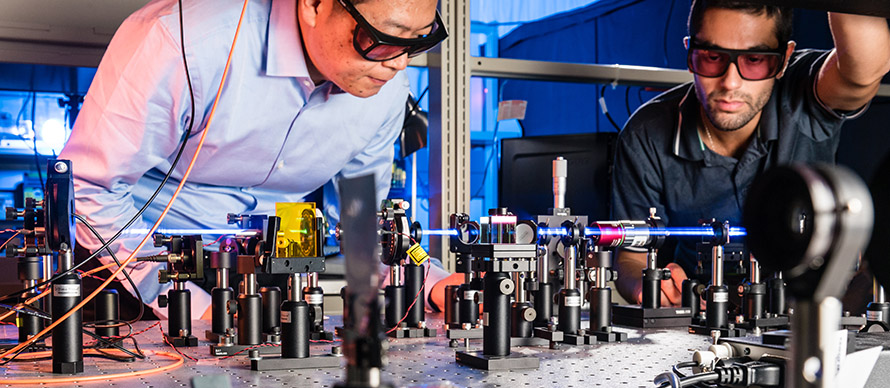
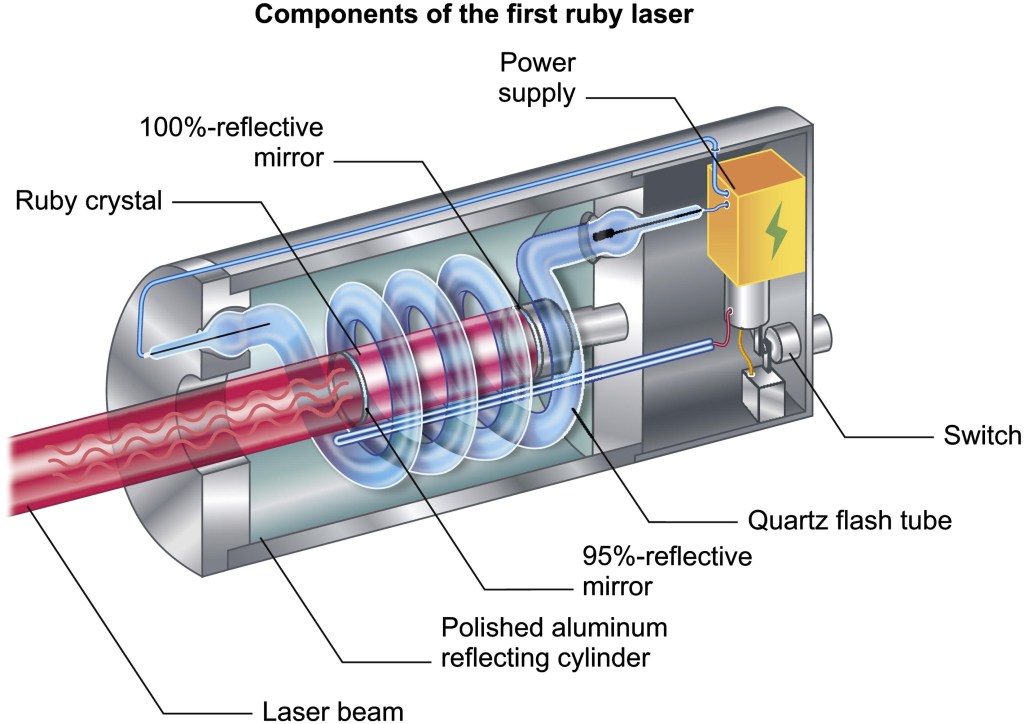










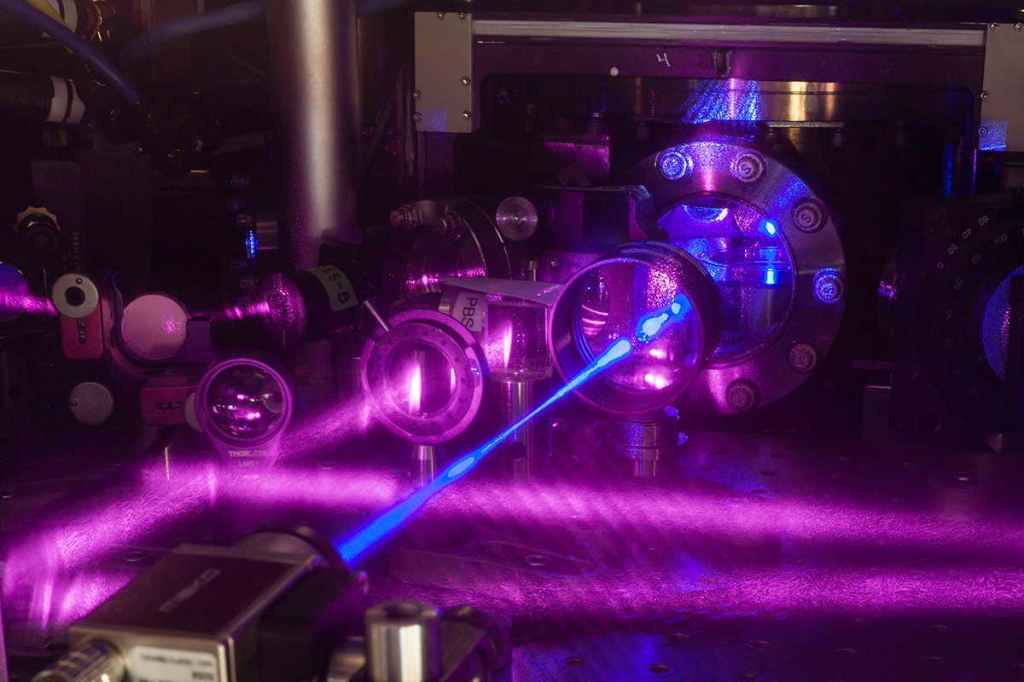

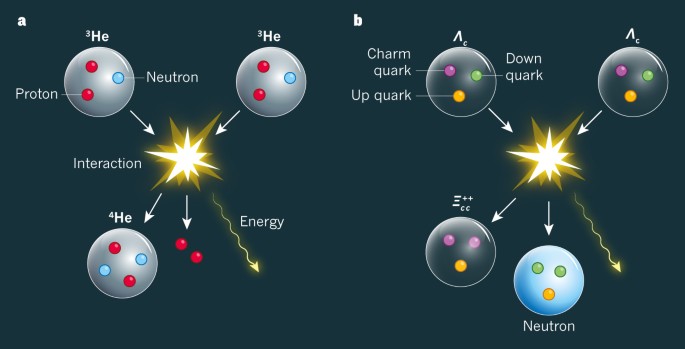
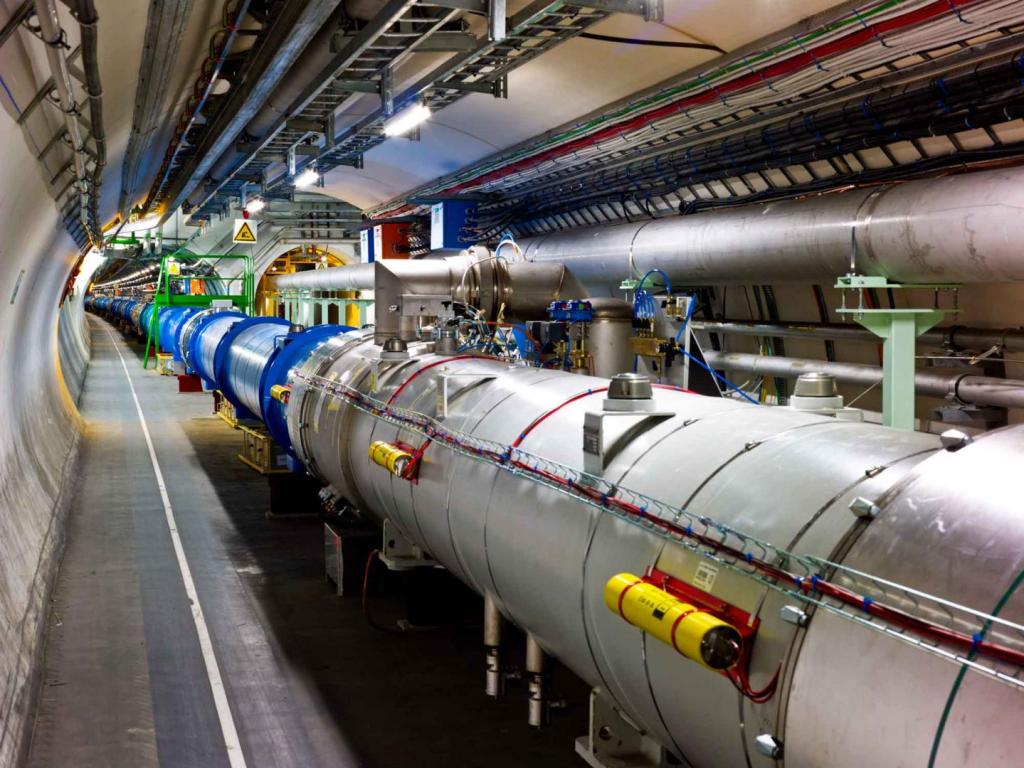





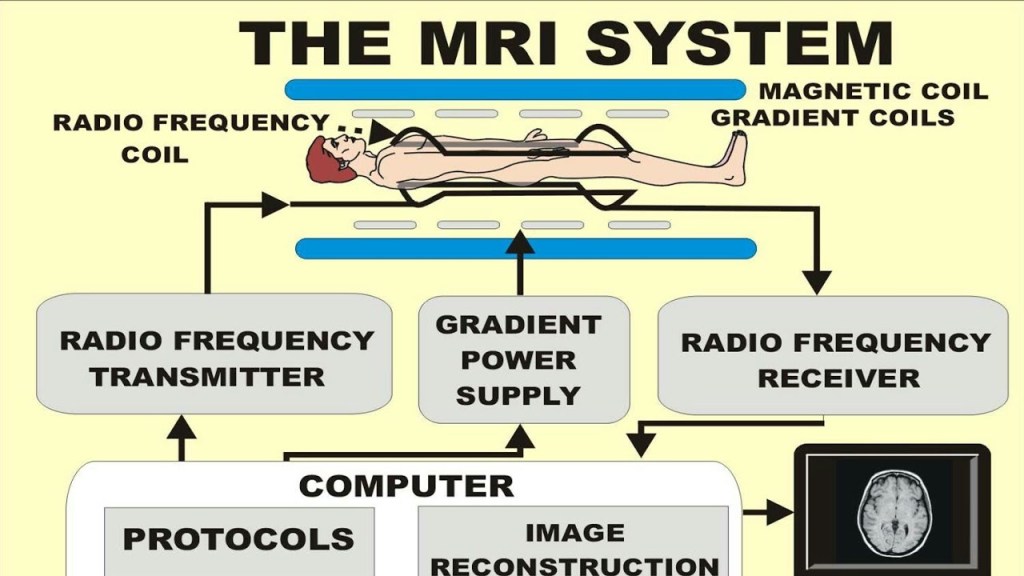


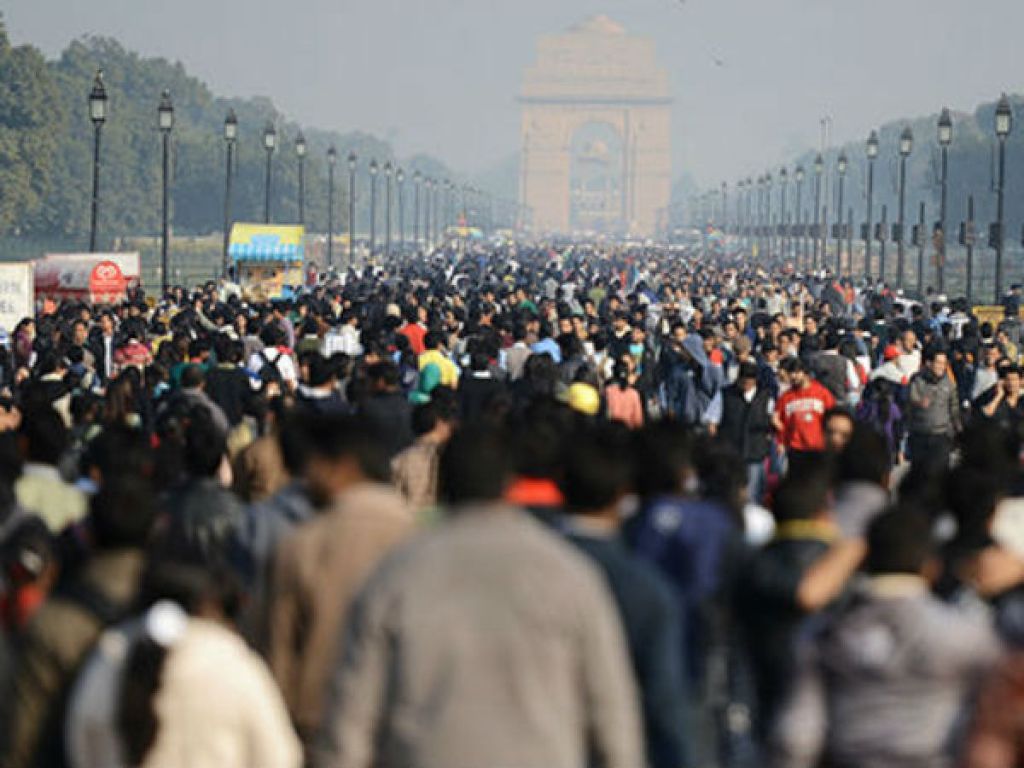




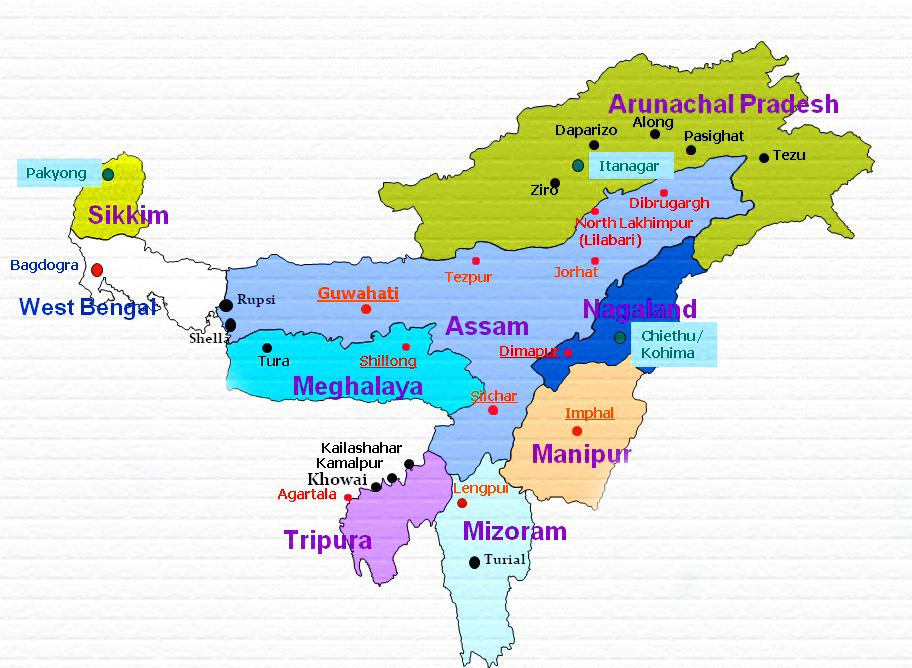




 Track2Training
You must be logged in to post a comment.