HYPOTHESIS RESEARCH

What is Hypothesis in Research?

A Hypothesis is a tentative statement of a proposition which the researcher seeks to prove. It’s basically a concrete generalization. Of course, this generalization requires essential characteristics that pertain to an entire class of phenomena.

When a theory stated as a testable proposition formally and subject to empirical verification we can define it as a hypothesis. Researchers make a hypothesis on the basis of some earlier theories and some rationale that generally accepted as true. The hypothesis test finally will decide whether it is true or rejected.

So, to clarify a hypothesis is a statement about the relationship between two or more variables. The researcher set out the variables to prove or disprove. Hypothesis essentially includes three elements. For example-

  1. Variables
  2. Population
  3. Relationship between variables.

Example of Hypothesis

  1. Rewards increase reading achievements
  2. Rewards decrease reading achievements
  3. Or rewards have no effect on reading achievements

In the above examples- variables are- Rewards & Achievements.

Steps in Formulation of Hypothesis

A hypothesis is a tentative assumption drawn from practical knowledge or theory. A hypothesis is used as a guide in the inquiry of other facts or theories that a researcher does not know. However, the formulation of the hypothesis is one of the most difficult steps in the entire scientific research process.

Therefore, in this regard, we intend to point out the basic steps in the formulation of a hypothesis. We are pretty sure that this guideline will be helpful in your research works.

1. Define Variables

At first, with a view to formulating a hypothesis, you must define your variables. What do you want to test? Will you test that rewards increase reading achievement? Or rewards decrease reading achievement? Whatever your goals are, they need to be clearly defined, quantifiable, and measurable. This will provide you with a clear idea of what to follow to achieve results.

2. Study In-Depth the Variables

If we do think that your variables are Rewards & Achievements, then you need to intense study how rewards increase reading achievements? An in-depth study, rigorous questions, and data of rewards increase reading achievements will make you able to confirm your hypothesis. Specify dependent and independent variables.

3. Specify the Nature of Relationship

Then, identify what relationship there exist between the variables. What variable influences the other? That is what is the dependent variable and what is the independent variable? How Rewards impact achievements? If reward plays a key role in reading achievements, then reward is the independent variable.

4. Identify Study Population

The population in research we mean the entire group of individuals is going to study. If you want to test how rewards increase reading achievements in the United Kingdom, you need not study the whole population of the United Kingdom. Because the total population does not involve in reading achievements. Therefore, the researcher must identify the study population.

5. Make Sure Variables are Testable

Variables in your hypothesis must be testable. Otherwise, the hypothesis would be worthless. Because your research study must accept or reject a variable. So, variables you must need to test. Testable variables can only be accepted or rejected. Moreover, the sole aim of a research hypothesis is to test variables in the long run.

It is crucial for graduate students to search the thesis and dissertation literature to make sure that an idea or hypothesis has not already been tested, explored, and published.  An additional reason to search this literature is that it is rich with ideas and information not found elsewhere.  If graduate students do not continue on as academics or if students that came after them in their programs did not continue their research, this literature may be the end of the line for scholarship on a topic. Tesi Online is a good resource for scholars to try.

Photo by Andrea Piacquadio on Pexels.com

THE FOUR KINDS OF CHANGES

1. Mission Changes

Did you know that the team who made Instagram had previously developed a product called Burbn?  It was a check-in service similar to Foursquare except that it focused on hanging out with your friends.  Needless to say, it never took off.  The team performed something that is most visibly seen in the tech community: a company pivot.  They changed their business focus and created Instagram.

Sometimes companies need to change direction to survive.  For more on corporate culture and the role of the mission statement, check out this article on shaping an authentic corporate culture.

2. Strategic Changes

A strategic change is a change in how the company tackles a problem.  Going from print advertising for your business to online, for example, is a strategic change.  As is targeting a different demographic or selling a new type of product.  When Amazon launched the Kindle, that was a strategic change.  When Microsoft revealed that Windows 8 had changed how the company had approached operating systems, that was a strategic change.  Change management in this case means convincing your team of the new strategy’s value.

3. Operational Changes

An operational change is a change in the structure of your company.  That could be a reorganization, lay offs, or just a team change due to a strategic or mission statement change.

Operational changes are some of the roughest for your employees because they never quite know what to expect.  At least with a change in technology they aren’t likely to find themselves without a job.

4. Technological Changes

Technology is advancing inexorably, whether we like it or not.  That means we need to keep upgrading or fall behind.  Often operational and strategic changes are driven by a change in technology.  At the turn of the century, for example, it was rare to see a TV commercial direct you to a website.  Now it is commonplace.

A change in technology could mean a change that affects all your employees.  If an operating system upgrade breaks a proprietary piece of software, you are going to have to retrain your team with the new software.  Technological changes don’t have to be rough, though.  Switching to Intuit Quickbase is often quick and painless.

That said, people are stubborn.  Often technological changes cause the most trouble.  Make sure your team is trained for the software, though, and you should be able to avoid most of it.

TOTAL PROJECT MANAGEMENT

Total project management solutions (TPM solutions) will help a project-thinking organization to stabilize the business processes and begin leading employees towards achieving refined efficiency and accountability. Implementing TPM solutions requires a flexible infrastructure that lets respond to the dynamics of a project environment and rapid technological advances. In this article, I will briefly talk about what TPM concept means and will also outline a 5-step model for implementing total PM solutions. I guess my considerations will be helpful for management staff and executives in project-thinking organizations.

TPM Concept

The key idea behind total project management (TPM) consists in providing a project-thinking organization with an enterprise-wide approach to establishing an efficient project management system. Such a system paves the way for developing total project management solutions (TPM solutions) through creating a project-based culture in which every project is performed in line with the organization’s corporate strategy, and therefore every project participant and team member can get necessary support from managers at all levels. The system will be the foundation for implementing TPM effort and starting the project management process.

TPM solutions make it possible to build close collaboration and communication between project-thinking employees, technology and processes which are the key drivers in the total project integration environment. The implementation of total project management solutions depends on a selected management style that integrates accountability into the total project processes and serves as a convenient way for continuous improvement of both corporate and individual performance.

A 5-Step Model

A macro-level model of total project management includes 5 steps Taking each of the steps builds an infrastructure for implementing TPM solutions. Here are these steps:

  • Communication
  • Assessment
  • Recommendation
  • Implementation
  • Validation

Because a model of total project management encompasses all of the listed steps, a project-thinking organization needs to incorporate collaborative methods, tools, and appropriate technologies to create a synchronized and highly productive infrastructure that tends to be stable and flexible in a rapidly changing project environment.

Once the steps of TPM model are taken along with the standards of best practices (incl. communication protocols, employee competency assessments, project portfolio analysis, project methodology planning, process scheduling and mapping, application-based working environments, team training and development), the infrastructure for achieving efficient total project management solutions will be established.

The performance appraisal

Performance appraisal

Forming part of an organisation’s overall performance management system, the performance appraisal can be defined as the process of identifying, evaluating and developing the work performance of employees to help achieve the goals and objectives of the organisation. At the same time, appraisals benefit employees by providing them with recognition, feedback, career guidance and development.

Performance appraisal involves managers and their staff members meeting on a one-on-one basis at regular intervals (at least annually) to discuss work performance in relation to:

  • execution of roles and responsibilities
  • the requirements of the organisation and individuals’ contribution to the achievement of the organisation’s objectives.

Effective performance appraisal relies on clear performance standards being established and discussed with employees. Using these standards, appraisal involves:

  • observing the employee’s work behaviour and results, and comparing them against the agreed standards
  • evaluating job performance and the employee’s development potential
  • providing feedback to the employee
  • acting on the results of the appraisal process, for example through promotion, reward and recognition, counselling, training, or in some cases termination.

NEGOTIATION SKILLS

Negotiation is a dialogue between two parties to resolve conflicts or issues so that both parties find the solution acceptable. Usually, it is a compromise involving give and take. Negotiation results when each party compromises to resolve a conflict for everyone’s benefits. In the workplace, negotiations may take place between managers, departments, colleagues or between a team member and a manager. Even before you join the workplace, you may negotiate the job offer with the interviewer or HR manager.

In this article, we will discuss what negotiation skills are, its benefits, examples and tips for improving your negotiation skills.

What are negotiation skills?

Negotiation skills are inherent qualities that help two or more parties agree to a common logical solution. In the workplace, you may have to display your negotiating skills in various situations such as:

  • Negotiating a salary hike with the HR manager after promotion
  • Negotiating a project deadline with your team lead or manager
  • Negotiating few days off for a family holiday with your manager
  • Negotiating contract terms with a potential customer

Lack of negotiation skills affects the business bottom line and could ruin customer relationship. Negotiation skills are soft skills and essential to become a negotiator and resolve workplace conflicts.

However, this skill set depends on the work environment, the parties involved and outcome desired. Often, when one party is ready for reaching a compromise, the other party may be resistant. This makes negotiation difficult and you are likely to encounter such situations in the workplace. That is why you need to master your negotiation skills.

Why is knowledge management important?

Knowledge management

The knowledge management (KM) category represents solutions that streamline the process of capturing, distributing, and effectively using knowledge. When an organization is able to easily access, share, and update business knowledge, it can become more productive and cost-efficient. The ability to access the right knowledge at the right time, via a robust knowledge management system, informs accurate decision-making and stimulates collaboration and innovation.

A McKinsey Global institute reports indicates that a robust knowledge management system can reduce information search time by as much as 35 percent and raise organization-wide productivity by 20 to 25 percent. Findings culled from the International Data Corp also corroborates the value of a knowledge management system.

As your enterprise grows, so too will the need to access a reliable knowledge database in order to effectively run your business, serve your clients, and increase revenue. Without a knowledge management system in place, your employees will be forced to learn and relearn processes and information. That’s an inefficient and costly practice. Plus, you may also run the risk of losing those processes or information if a knowledge leader or legacy employee leaves your company.

APPROACHES TO THE STUDY OF ORGANIZATION BEHAVIOR

1. Human Resources Approach:

This approach recognizes that human resources in an organisation are the central force. Their development will contribute to the success of the organisation. Human resources approach provides for the changes in the managerial role. It requires that the managers, instead of controlling the employees, should provide active support to them by treating them as part of the group.

The superiors and managers should practice a style where workers are given the opportunities and encouragement to perform under loose supervision. By treating individuals as mature adults, organisations can increase productivity and at the same time meet the needs of individuals for independence and growth.

2. Contingency Approach:

The approach stresses that there is no single way to manage effectively under all circumstances. The methods of behaviours which work effectively in one situation may fail in another. The organisational structure and the processes of management are governed by the external environment and several aspects of the internal environment. Effective management processes will vary in different situations depending on the individuals and groups in the organisation, the nature of the job and technology, the environment facing the organisation and its structure.

The manager’s task therefore, is to identify which method will, in a particular situation, under particular circumstances and at a particular time, best contribute to the attainment of organization’s goals. Thus, the manager will have to analyze each situation prior to action and different managerial practices and styles are needed for effective management.

3. Productivity Approach:

Productivity means the numerical value of the ratio of output to input. Higher the value of this ratio, greater is the efficiency and effectiveness of the management. The traditional concept of productivity was concerned with economic inputs and output only. But nowadays human and social inputs and outputs are equally important. Productivity, a significant part of organisational behaviour decisions, is recognized and discussed extensively. These decisions relate to human, social and economic issues. For example if better organisational behaviour can reduce worker’s turnover or the number of absentees, a human output or benefit occurs.

4. System Approach

The systems approach is of the view that an organisation is a powerful system with several subsystems which are highly and closely interconnected. Any action taken to solve the problems in one subsystem will have its effect on the other subsystems as well; since all the parts of the organisation are closely connected. Thus, this approach gives the managers a way of looking at the organisation as a whole, whole group, and the whole social system. Systems approach has become an integral part of modern organisational theory. Organisations are termed as complex systems comprising of interrelated and interlocking systems.

According to this approach, an organisation receives several inputs from its environment such as material, human and financial. These inputs are then processed so as to produce the final output in terms of products or services.

ORGANIZATIONAL PROCESS

The Organizational Process

Organizing, like planning, must be a carefully worked out and applied process. This process involves determining what work is needed to accomplish the goal, assigning those tasks to individuals, and arranging those individuals in a decision‐making framework (organizational structure). The end result of the organizing process is an organization — a whole consisting of unified parts acting in harmony to execute tasks to achieve goals, both effectively and efficiently.

A properly implemented organizing process should result in a work environment where all team members are aware of their responsibilities. If the organizing process is not conducted well, the results may yield confusion, frustration, loss of efficiency, and limited effectiveness.

1.Review plans and objectives.

Objectives are the specific activities that must be completed to achieve goals. Plans shape the activities needed to reach those goals. Managers must examine plans initially and continue to do so as plans change and new goals are developed.

        2.Determine the work activities necessary to accomplish objectives.

Although this task may seem overwhelming to some managers, it doesn’t need to be. Managers simply list and analyze all the tasks that need to be accomplished in order to reach organizational goals.

     3.Classify and group the necessary work activities into manageable units.

A manager can group activities based on four models of departmentalization: functional, geographical, product, and customer.


    4.Assign activities and delegate authority.

Managers assign the defined work activities to specific individuals. Also, they give each individual the authority (right) to carry out the assigned tasks.


    5.Design a hierarchy of relationships.

A manager should determine the vertical (decision‐making) and horizontal (coordinating) relationships of the organization as a whole. Next, using the organizational chart, a manager should diagram the relationships.

SYSTEM APPROACH

Systems approach is based on the generalization that everything is inter-related and inter­dependent. A system is composed of related and dependent element which when in interaction, forms a unitary whole. A system is simply an assemblage or combination of things or parts forming a complex whole.

One its most important characteristic is that it is composed of hierarchy of sub-systems. That is the parts forming the major system and so on. For example, the world can be considered-to be a system in which various national economies are sub-systems.

In turn, each national economy is composed of its various industries, each industry is composed of firms’ and of course a firm can be considered a system composed of sub-systems sudi as production, marketing, finance, accounting and so on.

Features of Systems Approach:

(i) A system consists of interacting elements. It is set of inter-related and inter-dependent parts arranged in a manner that produces a unified whole.

(ii) The various sub-systems should be studied in their inter-relationships rather, than in isolation from each other.

(iii) An organisational system has a boundary that determines which parts are internal and which are external.

(iv) A system does not exist in a vacuum. It receives information, material and energy from other systems as inputs. These inputs undergo a transformation process within a system and leave the system as output to other systems.

(v) An organisation is a dynamic system as it is responsive to its environment. It is vulnerable to change in its environment.

In the systems approach, attention is paid towards the overall effectiveness of the system rather than the effectiveness of the sub-systems. The interdependence of the sub-systems is taken into account. The idea of systems can be applied at an organisational level. In Appling system concepts, organisations are taken into account and not only the objectives and performances of different departments (sub-systems).

The systems approach is considered both general and specialised systems. The general systems approach to management is mainly concerned with formal organisations and the concepts are relating to technique of sociology, psychology and philosophy. The specific management system includes the analysis of organisational structure, information, planning and control mechanism and job design, etc.

As discussed earlier, system approach has immense possibilities, “A system view point may provide the impetus to unify management theory. By definitions, it could treat the various approaches such as the process of quantitative and behavioural ones as sub-systems in an overall theory of management. Thus, the systems approach may succeed where the process approach has failed to lead management out of the theory of jungle.

Mother Tongue

Nowadays we are more on speaking in English rather than choosing our own mother tongue for communication, especially in India. This post is not discourage English language but encourage mother tongue

If you are an Indian then definitely your mother tongue is not English, and mind you here I am talking about those Indians who are living in India and I want to Indian parents, not of migrats. You might be speaking Hindi Tamil Punjabi Gujarati Asami Bengali etc. English has now become a language more of showing status rather than just being a medium of communication.

We use our mother tongue only while speaking to family members. All the other official work Arjan in English which is alright because India has very diverse population having different languages. But the problem is where we treat English as as a measurement tool for checking someone intelligence.

We prefer to speak in English in interviews as to give a better impression on the interviewer that you guess we know English and we are intelligent. A person who is living in a remote village can also be has equally qualified and intelligent as the person who knows English but, just because he don’t know how to speak English he is not getting that equal treatment while he goes for any job employment. And this is a reality.

We think in our mother tongue will our comfortable in speaking our mother tongue it’s just that we don’t use it because of the societal atmosphere around us. Through this post I just want to encourage people to be proud of their mother tongue and speak it with their heads up and not to treat english as a qualification of intelligence.

It is a fact that if you think in your own mother tongue then you are getting more effective and innovative ideas.

How we measure extreme distances in space – Light years

In the 1800s, scientists discovered the realm of light beyond what is visible. The 20th century saw dramatic improvements in observation technologies. Now we are probing distant planets, stars, galaxies and black holes where even light would take years to reach. So how we do that? Light is the fastest thing we know in the universe. It is so fast that we measure enormous distances by how long it takes for light to travel them. In one year, light travels about 6 trillion miles. It is the distance, we call one light year. The Apollo 11 had to travel four days to reach the moon but, it is one light second from earth. Meanwhile, the nearest star beyond our own sun is Proxima Centauri but, it is 4.24 light years away. Our Milky Way galaxy is on the order of 100,000 light years across. The nearest galaxy to our own, Andromeda is about 2.5 million light years away.

 The question is how do we know the distance of these stars and galaxies? For objects that are very close by, we can use a concept called trigonometric parallax. When you place your thumb and close your left eye and then, open your left eye and close your right eye. It will look like your thumb has moved, while more distant objects have remained in place. This same concept applies in measuring distant stars. But they are much farther than the length of your arm, and earth is not large enough, even if you had different telescopes across the equator, you would not see much of a shift in position. So we look at the change in the star’s apparent location over six months, when we measure the relative positions of the stars in summer, and then again in winter, nearby stars seem to have moved against the background of the more distant stars and galaxies.

 But this method only works for objects less than a few thousand light years away. So, for such distances, we use a different method using indicators called standard candles. Standard candles are objects whose intrinsic brightness, or luminosity that we know well. For example, if you know how bright your light bulb is, even when you move away from it, you can find the distance by comparing the amount of light you received to the intrinsic brightness. In astronomy, we consider this as a special type of star called a Cepheid variable. These stars will constantly contract and expand. Because of this, their brightness varies. We can calculate the luminosity by measuring the period of this cycle, with more luminous stars changing more slowly. By comparing the light that we received to the intrinsic brightness we can calculate the distance.

The Type 1a Supernovae – Death of a star

 But we can only observe individual stars up to about 40 million light years away. So we have to use another type of standard candle called type 1a supernova. Supernovae are giant stellar explosions which is one of the ways that stars die. These explosions are so bright, that they outshine the galaxies where they occur. So we can use the type 1 a supernovae as standard candles. Because, intrinsically bright ones fade slower than fainter ones. With the understanding of brightness and decline rate, we can use the supernovae to probe distances up to several billions of light years away. But is the importance of seeing distant objects? Well, the light emitted by the sun will take eight minutes to reach us, which means that the light we see now is a picture of the sun eight minutes ago. And the galaxies are million light years away. It has taken millions of years for that light to reach us. So the universe is in some kind of an inbuilt time machine. The further we can look back, the younger we are probing. Astrophysicists try to read the history of the universe, and understand how and where we come from.

“Dream in light years, challenge miles, walk step by step”William Shakespeare

Is Protecting Our Environment A Priority?

Look around yourself. Listen to the rustling of leaves, feel the bracing winds on your face, experience the trickling water slip through your fingers, hear the rumbling of clouds and the plashing patter of steady rain. Now imagine yourself in a place devoid of all this. Pretty hard to imagine, isn’t it? It may be difficult now to envision a world sans nature, but it is a dreadful reality looming over us. Probably a few years down the line, green spaces, clear water and fresh air would be the new El Dorado.

For over a century now, humans have been constantly capitalising on nature, an indispensable asset to extract monetary benefits. People treat nature simply as a warehouse of resources to serve human needs. ‘There is enough in nature for everybody’s need, but not enough for everybody’s greed’ is an apt statement made by Mahatma Gandhi that throws light on the avaricious temperament of mankind.

Humans are unappeasable creatures that can go on exploiting the environment without a second thought. They never think about the consequences of their actions and time and again they’ve paid the price for this.

In the United States when wheat cultivation had expanded dramatically in the early twentieth century, zealous farmers had recklessly uprooted all vegetation. This was followed by terrifying dust storms. Black blizzards rolled in, very often 7,000 feet high, rising like monstrous waves of muddy water. People were blinded and choked as the skies darkened, and the dust swept in.

They came year after year, throughout the 1930s.

In part, they came because the early 1930s were years of persistent drought. The temperatures soared owing to the falling rains. However, ordinary dust storms became black blizzards because the entire landscape had been stripped of all grass that held it together.

The American dream of a land of plenty had turned into a nightmare.

This is only one such incident that highlights the consequences of environmental degradation.

Now, a new problem has come to the fore — climate change.

We are facing a potentially staggering expansion of dangerous heat over the coming decades. Climate change poses a fundamental threat to flora and fauna. Due to global warming, sea levels are rising and oceans are becoming warmer. Longer, more intense droughts threaten crops and freshwater supplies. It might be possible that our grandchildren or great-grandchildren wouldn’t be fortunate enough to witness the beauty of the Andaman and Nicobar Islands as it would be submerged underwater.

Global warming is the direct outcome of high levels of pollution. Today, pollution is the most significant issue that concerns the health of our environment. Industrialisation and modernisation encouraged the widespread use of fossil fuels. Hundreds of factory chimneys spew black smoke into the skies and large quantities of refuse and waste products pollute the air and water.

We’re producing and consuming more than ever before, and generating more greenhouse gases as a result, as well as air pollutants in the form of chemicals and particulate matter. These activities have interfered with the Earth’s natural greenhouse effect. Too many of these gases result in the Earth’s atmosphere trapping additional heat.

A dangerous constituent of these gases is Chlorofluorocarbon, also known as Freon. It is a greenhouse gas that contributes to global warming. CFC’s lower the average concentration of ozone in the stratosphere. Discarded spray cans, leaking refrigerators and the burning of plastic products release the CFC’s into the atmosphere. Depending on the type, CFC’s stay in the atmosphere from 22 to 111 years.

Due to the depletion of the ozone layer, the earth is exposed to the harmful UV rays of the sun. Exposure to UV radiation is the main factor that causes skin cells to become cancer cells and is also responsible for sunburns and blindness.

Protecting the environment is the need of the hour. If we don’t take preventive actions now, we will have to face terrible consequences in the future. The air might become too toxic to breathe, the water too contaminated to drink, and the rainfall too acidic to harvest. Children might never enjoy the sun without getting sunburnt.

It’s time that we show some appreciation for all that nature has given us. The Bishnoi people were not a bunch of lunatics who sacrificed their lives to save trees and the villagers of Reni were not some crazy tree huggers. These people understood the value of nature and fought to preserve it.

We can all do our bit to conserve the environment, starting by switching off the electric appliances, not in use and not littering our surroundings. I can assure you that our great-grandchildren will certainly respect our efforts.

World of Social Media

Social media a word which is is now probably used by everyone. Social media maybe your WhatsApp, Instagram, snapchat, Facebook etc. These are some of the name of the apps which helps us to interact with whole world.

The power of social media in today’s world cannot be neglected, as there are many examples present where a small startup has grown into big business firm and because of a small post once put on some of the social media apps.

It not only help businesses to grow but it also helps your ideas to reach too many people around the world. It provides you a platform to give voice to your ideas and thoughts. Some of the other social media platforms like LinkedIn helps to create professional relationship.

It has helped each individual to showcase the talent. Earlier days the people who want to actually act in front of the audience were only limited to the film industry but, now even the common people can post their videos in any of the social media platforms like YouTube, Instagram, Facebook etc.

As we know everything has two sides so, it is also having its Dark Side as well. Today’s youth has now started misusing the social media platform for just waste of time. Day spend a lot of their valuable time just watching wasteful videos for chats. By this I don’t mean that you should not watch videos to refresh your mind you should watch but there should be a time fix for it.

We should always look at the positive thing in life to go ahead, so it similarly applies to the social media too. We should focus on using it positively so that it brings about a change in society in good manner and as well as in yourself as a person by gaining knowledge from other people.

Feelings

Do you have any idea what feelings actually are? There are people who know it, there might be people who don’t know. Feeling are actually your true personality.

Feelings actually represent your true personality. Like for instance we know many people around us cry by Justin emotional scene in the movie, what does it represent? It represents that they are soft hearted people it’s a part of the personality, they are emotional.

And in this world you cannot actually categorise feelings because in human there are so many types of feeling that we can’t even express many of them. We have sometimes very weird feelings that we can’t even express them. Just think it yourself you might be having such feelings at some point in your life.

A feeling of joy, a feeling of happiness, a feeling of sadness, a feeling of embarrassment etc. The list goes on and on and on. Here we meet categorised feeling in some of the specified sections, but the reality is that they are really very vast.

Sometime we have combinations of feelings together that we can’t give it a new name. And in reality your personality e is Defined by how you feel about each and everything around you. Feelings are a part of your thoughts. How we think of each and everything, ultimately develop feelings in everybody. That’s why everybody have different feelings in a same situation.

True Friends

Friend word which when you herd make you smile. Friends are the only one whom we choose ourselves. They are the ones with whom we share our feelings.

They are the ones with whom we spend our time by our own willingness. True friends are the ones who are always ready to help you at any point of time in your life. True friends are not made for benefits they are made for sharing feelings.

They are the ones with whom we fight a lot but never let another person dare to fight with them. They are the ones who understand your feelings in your weak times. No matter whatever happens they are always with you even if the whole world is against you.

True friends are like treasure you can’t easily find them but if you found them then and there always by you. That’s why everybody in this world says that finding a good friend is really very difficult in this world.

Friendship is also a relationship of respect, trust and gratitude. You play with them, have fun with them, play pranks on them and always help them. But choose your friends wisely as in today’s time everybody is two faces and you have to find the true face of a person with whom you want to be friends with.

Power of Time

You had heard of the film ‘No time to die’, you have heard of the phrase ‘no time to waste’, you had heard of people saying ‘time is money’. From all these examples you have understood that time has very much importance in our life.

Have you ever thought that something which is not even visible have so much importance in our life. Everybody says this one thing that the person who knows how to manage his time knows all the secret of success.

Time management has gained so much importance in today’s world that there are even courses to let people learn and understand how to manage their time. This is the one thing which we have to follow as we all know that time never follows anyone or stops for anyone.

This is the one thing which everybody has in eaqual amount, whether you are rich poor lives in America India anywhere in this world you all have a 24 hour in a day. The thing which make time different is how we utilise it.

We all know that the strongest thing in this world is time. We all should understand and utilise at a time in useful things. And by this way I am not saying that you should not have a relaxing time what time for your hobbies you should absolutely have those time. You should have time for everything in life. And you should do all the thing at the right time.

Women’s Safety In India

Women Safety in India is broadly talked about wherever these days. It has now turned into a significant issue. The crime percentage is on the spike. Women are neither protected outside nor at home. Women voyagers from different nations are likewise in a questionable state while contemplating coming to India. Notwithstanding, this dread can’t get them far from any sort of friendly action. There are laws however there ought to be appropriate security estimates which we need to follow stringently to shield the women from brutality.

Security of Women in India has turned into a significant issue in India now. The crime percentages against women in the nation have simply ascended generally. Women really reconsider getting out of their homes, particularly at the evening. This is, shockingly, the miserable truth of our country that lives in steady dread. Not a day passes by where you don’t know about the information on a wrongdoing against women in India. Truth be told, there are somewhere around five news stories that enlighten us concerning the horrendous subtleties of the different wrongdoings. It is very difficult to watch the situation with women security in India, particularly in a nation where women are given the height of goddesses.

To further develop women security in India the primary undertaking is to work on the quantity of ladies in each circle of society. Alongside that the adjustment of mentality of individuals is exceptionally fundamental for the wellbeing of women. From family to instructive organizations men ought to be educated about regarding females. Further, there ought to be quick track courts to hear the cases and they cases ought to be examined in a period bound way. Just severe laws can not tackle the issue of women wellbeing in India rather the execution of these laws in a period bound way can address the issue generally.

So, wrongdoings against women are halting the development of our country. We should not accuse ladies and request that they be extra cautious. All things considered, we should request that the men change their reasoning and work to make the world a more secure spot for women.

About that artist- pablo picasso 1

Pablo Picasso was a Spanish painter, sculptor, ceramist and printmaker born in 1881, in Malana, Spain. His impact on art is huge. He is one the most renowned artists in the world, who left a mark for himself in the history of art and founded a movement in that he most known for, cubism

Life

Pablo Picasso was born in malana in 1881. His father was a drawing professor, this could be one of the reasons why Picasso was inclined towards art at the young age of 10. In 1981, their family moved to A Coruna, in 1891, where his father began teaching fine arts. At the age of 13, his father saw one of his paintings and was so impressed that he thought his son had surpassed him.

Four years later the family moved to Barcelona, after the death of his younger sister. In Barcelona, Pablo joined a fine arts school where he excelled but his father knew that he won’t be able to fully reach his potential in Barcelona. Therefore, about 4 years later his father sent him to Madrid to pursue his art. 

Career 

Pablo was painting professionally from a very young age. The First Communion (1896), Portrait of Aunt Pepa (1896) are the paintings that he completed at the age of 14.

In Barcelona, he barely attended classes, he would wander in museums and admire the works of other artists like  Rossetti, Steinlen, El Greco. In 1900, he held his first exhibition in Barcelona, which featured around 50 of his artwork and was well appreciated for it.

The same year he made his first visit to Paris where he discovered some of the greatest things, some great colors, colors of Vincent van gogh rendering him extremely impressed.

The Blue Period 

This was a time during which Pablo Picasso used blue as the more prominent color in his paintings. This lasted between 1901-1904. This period in Picasso’s career can be attributed to the death of his friend Casagemas who had shot himself over a girl. He painted various portraits of Casagemas that had sort of a pang of grief and the observer could feel it.

Some of the paintings from the blue period include The Soup (1902), La Vie (1903), The Old Guitarist (1904). All these paintings possess a great deal of sorrow and the blue color makes it appear even more gloomy.

The Rose Period 

Even during the blue period, Picasso travelled between Barcelona and Paris, but in 1904 he moved permanently to paris. This and many other incidents in his life inspired this period. During this time he used lighter shades. Some of the rose period paintings include Two Nudes (1906), Woman with Loaves (1906), Garçon à la pipe (1905).

Cubism

Cubism is an art movement that became prominent during the 20th century. It represents reality in the form of cubes often making it appear distorted and fragmented. Picasso is considered one the founders of this movement and he truly made it his.

These are the types of paintings that Picasso is most known for. 

Sports

Sports happy way to stay fit. Sports has now change the way we live. Sports help us to stay fit while you are having fun. Playing sports also improve your personality and give few more skills.

Sports teaches us the sportsman spirit. It helps us to build a teen spirit among us. It’s such childhood pleasure. It’s time when we forgot our all worries and just focus on a happiness and on the sport.

It helps us to increase our concentration power as well. It helps us to stay fit, and from the word that I mean both mental as well as physical fitness. Value place port you doesn’t need to go to gym and all the stuff wish you don’t like to do.

It’s just not academic that is important being is sports is equally important. Being in sport doesn’t mean that you have to be a professional or a very good clay for it you can just played for your happiness your leisure time, just for fun.

It bills a healthy competition environment. It helps us to stay away from mental diseases like depression, anxiety, stress, etc. It teaches us some really important lessons in a life like how to be optimistic, there is always another way for any problem, there is always something good at the end, if you lose by one score that doesn’t mean you are not good it’s just the luck and you have to try for the next time.

PARENTING

Bringing up a cheerful, sound youngster is perhaps the most difficult job a parent can have – and furthermore one of the most fulfilling. However a considerable lot of us don’t approach nurturing with a similar center we would use for a task. We might follow up on our gut responses or simply utilize the equivalent nurturing strategies our own folks utilized, regardless of whether these were powerful nurturing abilities. Bringing up kids is one of the hardest and most satisfying positions on the planet — and the one for which you may feel the most un-arranged.

Guardians are among the main individuals in the existences of small kids. Guardians incorporate moms and fathers, just as different parental figures who go about as guardians. From birth, youngsters depend on guardians to give them the consideration they should be cheerful and solid, and to develop and foster well. However, guardians once in a while need data and the help that they need for great nurturing. Great nurturing helps encourage compassion, genuineness, independence, discretion, consideration, participation, and brightness, says Steinberg, a recognized educator of brain science at Temple University in Philadelphia. It additionally advances scholarly interest, inspiration, and urges a craving to accomplish. Great nurturing additionally shields youngsters from creating uneasiness, gloom, dietary problems, introverted conduct and liquor and substance addiction.

Kid raising tips that can assist you with feeling more satisfied as a parent :
• Boosting Your Child’s Self-Esteem
• Catch Kids Being Good
• Set Limits and Be Consistent With Your Discipline
• Make Time for Your Kid
• Be a Good Role Model
• Make Communication a Priority
• Be Flexible and Willing to Adjust Your Parenting Style
• Show That Your Love Is Unconditional
• Know Your Own Needs and Limitations as a Parent

Also, attempt to make nurturing a reasonable work. Zero in on the spaces that need the most consideration instead of attempting to address everything at the same time. Let it out when you’re worn out. Get some down time from nurturing to do things that will satisfy you personally or as a couple.

The parent-youngster relationship is significant in light of the fact that it establishes the framework for the kid’s character, life decisions, and generally conduct. It can likewise influence the strength of their social, physical, mental, and enthusiastic wellbeing. Kids who have a sound connection with their folks are bound to foster positive associations with others around them. They can set up secure bonds and fellowships with peers. The sound contribution of guardians in their kids’ everyday life guarantees that their children can perform better socially and scholastically.

Who is the girl with the pearl earring

The woman stands, a dark, ill-lit scene surrounds her, making it seem 3D, almost real; that is the girl with the pearl earring. 
Girl with the pearl earring is perhaps one of the most famous paintings to ever exist, also known as The “Mona Lisa of the North” this art piece by the dutch artist Johannes Vermeer is undoubtedly his most recognized work.

Vermeer and his style

Johannes Vermeer, a dutch painter born in 1632, in Delft, Netherlands is one of the most celebrated artists of all time. Although he was not very well known in his time, his work was posthumously recognized by critics.

Vermeer portrayed typical scenes in his art, ordinary everyday scenes. People doing everyday tasks, nothing out of the box,but these scenes were very skillfully painted. The perspective and the orientation of light was all very precise. For instance his painting The Music Lesson (1665), at first glance it seems a pretty simple painting of a teacher giving a piano lesson but there’s always more than meets the eye, the tiles show a perspective leading up to the student, the light coming through the window forces the observer to focus their attention right in the middle. The observer is not conscious of these things but influences them in some way.

What is so special about it?

A painting’s prevalence is not just determined by how good the painting itself is, but what the painting represents,the political environment during the time it was painted, and controversies it is involved in.

Girl with the pearl earring was painted in 1665, which shows a young woman looking directly at the observer. She can be seen wearing a turban, a mustard cardigan and a pearl earring. This painting is different from all of vermeer’s paintings, the lady is not doing any chore rather she just looks at the observer, this along with her inconspicuous eyebrows led to it’s comparison with the Mona Lisa. but it is not a portrait, it is a tronie.

Her lips are slightly parted, her gaze is at the observer. It looks almost 3D. Vermeer used a technique called sfumato for this painting, a technique that involves blending of colors to give a blurry or hazy appearance. Vermeer left out a lot of details,It is a tronie 

This was painted during a time when the church or the royals held power and depicted a working class girl. The pearl earring could be ironic. also the pearl is too big to be real, therefore the critics speculate that he could’ve intentionally painted it that way, to make it seem fake and also 17th century dutch women did not wear turbans.

Later assessment 

Vermeer ‘s work was assessed in the 19th century by a critic, which led to his recognition and became widely mainstream only in the 21st century.

A novel has also been written around this painting called  Girl with the Pearl Earring in 1999, written by Tracy Chevalier and later in 2003, a movie was also made, inspired from the book, with Scarlet Johansen playing the protagonist.

The painting sits Mauritshuis, The Hague, Netherlands

MUSIC

“We have a such a deep connection to music because it is ‘hardwired’ in our brains and bodies,” said Barbara Else.

We would all be able to consider somewhere around one tune that, when we hear it, triggers an enthusiastic reaction. It very well may be a tune that went with the principal dance at your wedding, for instance, or a melody that helps you to remember a troublesome separation or the passing of a friend or family member.

Music is one of the most widespread methods of articulation and correspondence for humanity and is available in the day to day existences of individuals, everything being equal, and from all societies all throughout the planet. Paying attention to music, singing, making, regardless of whether separately and by and large, are normal exercises for by far most of individuals. Music addresses a pleasant movement all by itself, yet its impact goes past basic delight. These exercises not just permit the declaration of individual internal states and sentiments, yet additionally can achieve numerous constructive outcomes in the people who participate in them.

Paying attention to music has been displayed to further develop memory working, increment pace of recuperating, work on your exercises and the sky is the limit from there. Music and its impact on memory has been a warmed discussion in the logical world, however scientists currently have proof that the preparing of music and language, explicitly remembering data, depend on a portion of a similar cerebrum frameworks. Music has an exceptional connection to our feelings, and exploration has discovered that it very well may be utilized as an amazingly viable pressure the board device.

Studies have shown that individuals who pay attention to music consistently score higher on knowledge tests than individuals who don’t. This is on the grounds that individuals can hold more data when feeling more joyful for longer timeframes, which is typically while paying attention to music. Presently with expanded innovation in things like PDAs and watches, music is versatile now and can be delighted in anyplace whenever.

Music is the substance of life. All that has mood has music. Our breathing likewise has a beat. Subsequently, we can say that there is music in each individual or a living animal. Music can pass on a wide range of feelings to individuals. Music is additionally an extremely incredible intends to interface with God. We can reason that Music is the most flawless type of love of God and to associate with our spirit.

What is your Personality Type?

Are you a person who often wonders about what their personality is like? If the answer to this question is yes, then the MBTI would be a good starting point.

The Myers-Briggs Type Indicator, popularly known as MBTI, is a psychometric test devised to give people a brief overview of their cognitive functions. Its structure is based on four major functions and is divided into 16 types. But, if we delve deeper, there are 8 functions in total. Most people won’t recognise the MMPI but would have some knowledge about the MBTI.

It is the most widely taken test with over 2 billion people taking it every year. This is the go-to test for schools, colleges and human resource departments for evaluating their candidates. The company that markets the test makes around 20 million dollars each year off the instrument.

History 

The test was originally constructed by Katharine Cook Briggs and her daughter, Isabel Briggs Myer. Briggs started her research of human behaviour quite early on in her life. In some accounts, the year has been documented as 1917, when she officially began her exploration of personalities.

Isabel, Briggs’ daughter also joined her in this investigation and it soon became her lifelong fascination as well. During the First World War, the test’s goal was to provide a measure for people’s personalities and help them find suitable careers. Job satisfaction was widely absent from many people’s life at that point. 

Construction of the test

The test is based on the mostly untested theories of Jungian personality theory. Carl Jung was a Swiss psychiatrist, who extensively studied personality archetypes and founded the field of analytical psychology. In present times, his work is renowned all over the world.

The Briggs’ mother-daughter duo expanded on his theories and came up with the MBTI.

Typology

Jung divided humans into two broad groups – perceivers and judgers. Further, the former group was subdivided into individuals who prefer using their intuitions and the others who prefer the senses, and the latter, into feelers and thinkers. The resulting four types were classified based on people’s attitudes i.e introverts and extroverts.

Functions

Myers propounded that humans use all four cognitive functions. However, one function is used more prominently than the others. This constitutes the dominant function. This function is supplemented by the secondary/auxiliary function. The tertiary function is used to an even lesser extent. , while the fourth, is the least consciously used function. Myers referred to this function as the shadow function as it is diametrically opposed to the dominant one.

Reliability 

In spite of the popularity of the test, many psychologists continue to criticize it, demanding that the test pass certain criteria to be called reliable and scientific. The validity of the instrument is dubious as the same person can get different results upon subsequent retakes. However, the MBTI instrument isn’t entirely useless as many people are drawn to the test. The desire to understand oneself is strong among many and in many cases, the MBTI can be a driving force behind personality development.

Conclusion 

Presently, the test has become a big part of popular culture apart from being relevant in professional realms. It’s being used even on dating sites to find out the character traits of potential matches. Fictional characters, ranging from Harry Potter to Disney princesses, all have been assigned an MBTI type. It is not uncommon to find a mention of MBTI on people’s social media descriptions. 

Mother Nature

Mother nature the word we often come across but we don’t give much importance. In this context nature has been given in the respect of a mother. But as we all know that a mother’s presence is so much in a life that at a point we start to ignore her little little things done for us. Similarly we have forgotten the importance of mother nature too.

Just think if we don’t have this nature what would happen of us. None of us would have been alive. We should not be so thankless towards nature who has always helped us in all aspects.

Instead of respecting nature as mother we have started exploiting it. We are taking the resources from nature but we are not giving anything bad to her free just want to full feel handbag letting hands empty.

This change we cannot bring all alone we need the support of all us, but everything starts with a single step if even one starts to respect or do something towards nature everyone else would join. The need of today’s just that one step.

Just take care for nature as if you are caring your own mother then you will start experiencing an aura of happiness. Nature is our everything and we are because of nature so please protect mother nature and mother earth.

The Atomic Bomb – How it changed the course of history?

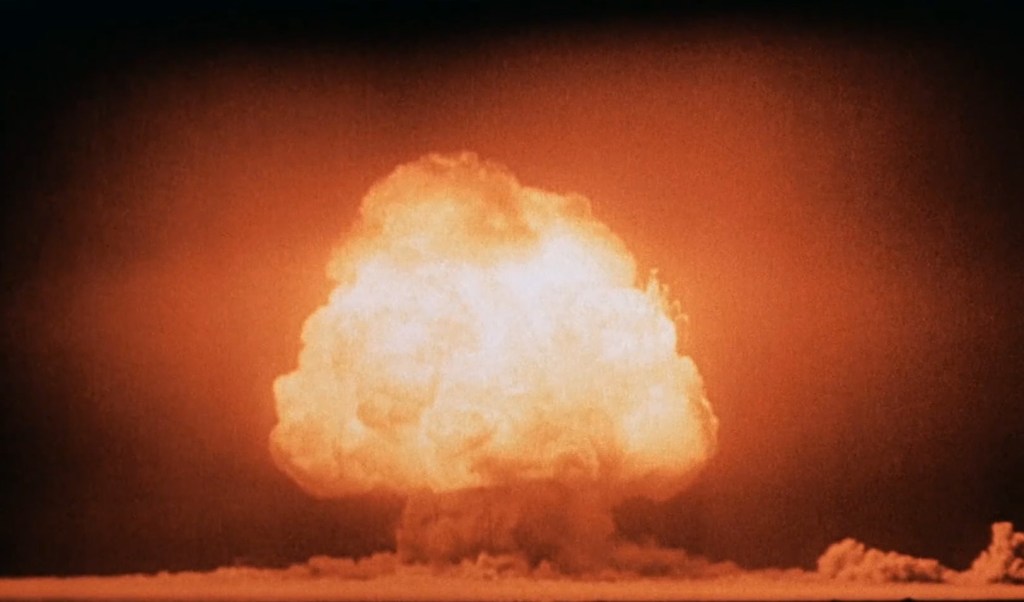
During the World War II the united sates used an unprecedented $2 billion to feed an ultra-secret research and development program, the outcome of which would alter the relationships of nations forever. Known as the Manhattan project, it was the search by the United States and her closest allies to create a practical atomic bomb. It is a single device which capable of mass destruction, the threat of which alone could be powerful enough to end the war. The motivation was simple. Scientists escaping the Nazi regime had revealed that research in Germany had confirmed the theoretical viability of atomic bombs. In 1939, in support of their fears that the Nazis might now be developing such a weapon, Albert Einstein and others wrote to President Franklin D. Roosevelt (FDR) warning of the need for atomic research. By 1941 FDR had authorized formal, coordinated scientific research into such a device. Among those efforts would ultimately unleash the power of the atom was Robert Oppenheimer, who was appointed the project’s scientific director in 1942. Under his direction the famous laboratories at Los Alamos would be constructed and the scientific team assembled. On July 16 1945, in a small town called Alamogordo, New Mexico, the course of human history was changed; the first atomic bomb was detonated that day.

The Little Boy- The world’s first atomic bomb detonated at 5:30 A.M on July 16 1945, Los Alamos, New Mexico

Principle of an atomic bomb

An atom bomb works in the principle that when you break up a nucleus of an atom, a large amount of energy is released. Because it takes a large amount of energy to keep the nucleus bound together. When you split it apart, the energy is released. Scientists chose the biggest and heaviest nucleus that is found in nature to be the best object for splitting. It is uranium, it is unique in that one of its isotopes is the only naturally occurring element on that is capable of sustaining a nuclear fission reaction. A uranium atom has 92 protons and 146 neurons together to give an atomic mass of 238 or U238. A very small portion of uranium, when it is mine, is in the form of an isotope U235, this isotope  has the same 92 protons but only 143 neutrons, or three fewer than U238. U235 is highly unstable, which makes it highly fissionable. When uranium U235 is slammed by a neutron, it becomes uranium 236. In the process of splitting and creating two more stable atoms, a whole bunch of energy is released, along with three more neutrons. These three more neutrons fly out and slam more U235 atoms. And thus, a chain reaction occurs, causing more and more U235 to be split, and ultimately causes a huge explosion. The uranium contains only 0.7% of this U235 isotope, and a whole bunch of it is needed to make one atomic bomb.

Another engineering challenge is to create a vessel with the correct shape and material to contain the neutrons after fissioning, so that they do not escape, but rather cause more atoms to fission. And it is lined with a special mirror so that it forces neutrons back in to the fissionable material rather than escape the vessel. Then the correct amount of fissionable material has to be placed inside this vessel. This is called ‘super critical mass’. There has to be enough mass to sustain an uncontrollable chain reaction resulting in an explosion.  The super critical mass has to be kept apart until you are ready for an explosion. Otherwise an explosion can occur when you don’t want it. The reason is because these isotopes are unstable, and are throwing off neurons randomly. In an atomic bomb, two sub-critical masses are slammed together usually with a conventional bomb contained inside the outer bomb. This conventional explosive charge initiates the chain reaction. This project ultimately created the first, man-made nuclear explosion, which Robert Oppenheimer called “trinity” on July 16, 1945. The concept of an atom bomb is simple but, the process of actually creating a bomb is not so simple.

“Now I am became Death, the destroyer of worlds.” – J. Robert Oppenheimer

MENTAL HEALTH

Mental instabilities are sicknesses or conditions that influence how you think, feel, act, or identify with others or to your environmental elements. They are extremely normal. Many individuals have had one or know somebody who has. Mental problems are among the most well-known reasons for handicap. The subsequent sickness weight of psychological maladjustment is among the most elevated, all things considered. Psychological well-being and actual wellbeing are firmly associated. Emotional wellness assumes a significant part in individuals’ capacity to keep up with great actual wellbeing. Psychological instabilities, like melancholy and tension, influence individuals’ capacity to partake in wellbeing advancing practices. Thus, issues with actual wellbeing, like constant sicknesses, can genuinely affect psychological wellness and decline an individual’s capacity to take part in therapy and recuperation.

It is typical for youngsters and youth to encounter different sorts of enthusiastic misery as they create and mature. For instance, it is normal for youngsters to encounter tension with regards to school, or youth to encounter brief times of discouragement that are transient in nature. At the point when manifestations continue, it very well might be an ideal opportunity to look for proficient help. There is no single reason for emotional well-being messes; all things being equal, they can be brought about by a combination of natural, mental and ecological elements. Individuals who have a family background of emotional wellness problems might be more inclined to creating one eventually. Changes in cerebrum science from substance misuse or changes in diet can likewise cause mental problems. Mental components and natural factors, for example, childhood and social openness can shape the establishments for hurtful idea designs related with mental issues.

Signs and indications of psychological instability can fluctuate, contingent upon the issue, conditions and different components. Some common symptoms are :

  1. Excessive paranoia, worry, or anxiety
  2. Long-lasting sadness or irritability
  3. Extreme changes in moods
  4. Social withdrawal
  5. Dramatic changes in eating or sleeping pattern

Taking everything into account the central matters raised are that emotional well-being is all the more wide spread an affliction and that it is shown that it can show itself in a wide range of circumstances both mental and physical. Psychological wellness in some structure can happen to anybody both in its straightforward or its more mind boggling structure. Measurably gaining from the exploration I have acquired, psychological well-being is on the increment locally and at a disturbing rate. This is expected to some extent to the way world/way of life is advancing at an always quicker speed. With monetary foundations and environment control in the day by day news and apparently crazy it is no big surprise individuals are experiencing more psychological wellness issues than they used to do. In this mechanical very quick world that we possess people groups lives are placed in a great deal of pressure and tension accordingly prompting a condition of misery and other actual issues.

About that author- Pablo Neruda

Neftalí Ricardo Reyes Basoalto, more popularly known as Pablo Neruda, was one of the most prominent Latin poets of the 20th century. 

Pablo Neruda was born in 1904, in Chile. He started writing poetry at a very early age. He grew up in Temuco. His father did not approve of his poetry, and did not encourage him of it. His father discouraging him could be the reason why he started publishing under the pseudonym Pablo Neruda.

Even though Neruda did not get any support from his father, he wasn’t completely devoid of support. The major source of encouragement for him was Gabriela Mistral, a nobel prize laureate who won the nobel prize a few years before Neruda. Neruda published multiple poems in local newsletters and magazines.

Literary work

Pablo Neruda published his first work, an essay at the age of 13 in a local magazine. In 1921, he left Chile to move to Santiago to study at the University of Chile in order to become a French teacher. He adopted a different lifestyle in Santiago almost that of a bohemian and was able to complete during that time his first collection of poems entitled Crepusculario (book of twilights) in 1923. A year later, he published another book, Veinte poemas de amor y una canción desesperada which when translated into English means Twenty Love Poems and a Song of Despair published in 1924. Both of these books brought him recognition. For the next few years he dedicated himself fully to writing poetry and continued to publish poems.

But unfortunately, he was unable to make ends meet through just his poetry so he worked as a consul in Myanmar for about 5 years. After that he moved to Sri Lanka. By this time he was quite familiar with South Asian culture and wrote a book called Residencia en la tierra meaning Residence onEarth.  In 1932, after spending time as a consul in Indonesia he moved to Chile with a woman he had married, Maria Antonieta Hagenaar. In 1933, he worked in Buenos Aires, Argentina as a consul. The following years Neruda moved around the world and became involved with the communist parties, also during this time he separated from his wife in 1936. He published another edition of Residencia en la tierra in 1935.

Political career 

He moved back to Chile again in 1937 and became associated with the politics of his country. When he returned to his home country in 1943 from Mexico, he ran for senator and won in 1945 and joined th communist party. In  1948, he was exiled from the position of a senate for writing an open letter against the leader and he left the country so as to not get arrested. He spent his exile travelling around the world writing poems, he published Tercera residencia. 

In 1952, he returned to Chile, again and lived there for the rest of his life. There he campaigned for political leaders and wrote a lot more books.

In 1971, he was awarded the Nobel Prize. He was terminally ill and died in 1973 in his home country of Chile. 

PSYCHOLOGY

Humans are not born blank slates, which makes it incredibly difficult to discover the true nature of human behavior. European philosophers were the first to agree that our actions are not motivated by rationality because they’re blindly driven by emotions. The existence of these two opposing forces is what guided many thinkers toward the study of psychology. Are humans rational or emotional beings? The answer is neither-we are both but one cannot always control the other, so there’s always uncertainty when it comes to predicting future choices and reactions.


The theories which describe our behavior can vary based on the culture or culture in question. For example, North Americans see the world in terms of dualism, while Asians tend to develop holistic views because they believe in harmony and balance. The point is that what you believe is true for your culture or country cannot always be applied to other cultures or countries blindly because each one has its own unique history and society.


Psychology is an attempt at explaining human behavior within the framework of how the mind works, both yours and others’.
Psychology is a science that applies psychological knowledge to explain behavior. It has four main fields: cognition, emotion, motivation and development.
In the subject of psychology, the word “memory” is often used interchangeably with “memorizing”. In fact, they are not exactly the same thing. In psychology, the term memory refers to an event that has been experienced or observed in the past. It may involve all or part of a visual image as well as a sound or smell.

Malnutrition a growing problem

Malnutrition is one of the most dangerous growing problem in this modern world. Now when we are talking about malnutrition many people have misconception about what malnutrition actually means.

According to WHO Malnutrition, in all its forms, includes undernutrition (wasting, stunting, underweight), inadequate vitamins or minerals, overweight, obesity, and resulting diet-related noncommunicable diseases.

So in simple sense there are two types of malnutrition when is under-nourished and the other is over-nourished. Today actually there are more obese adults than undernourished one.ie., about 1.9 billion are obese and 462 million are under-nourished. And there are 45% of the death caused children under 5 years of age is due to malnutrition.

So we can actually see that how this situation has been worse for the children and for the adults and even for the senior citizens too. We need to focus on how to atleast give them two times meal a day which, actually will help them to survive at least.

Government should come up with policies and programs which could help them. And from our side we can give whatever surplus is with us or we can work with NGOs to provide these people at least one time of meal if we can.

This article is mainly written to to highlight this problem which is actually now been overshadowed due to the covid-19 situation. But we have to consider the fact that covid has make their condition more worse. From belonging to at least a middle class family we should do something from a site to help the needy. And the people those who are suffering from obesity should try

3 Great inventions with simple engineering techniques – Catseyes, Fountain pen, Safety pin

Cats eyes – Road Reflectors

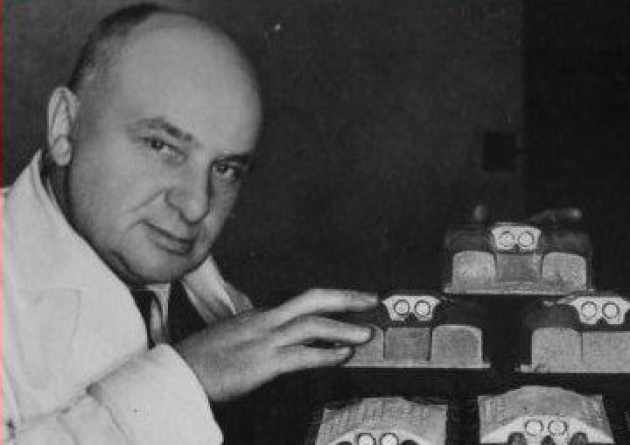
When you are driving at night, you see reflective objects on road. These objects reflect the light and guide people to drive safely. It may seem so simple, but the idea of this invention came in an interesting way. One night in 1933 when the road mender Percy Shaw was driving home in Yorkshire, he saw the light of his car headlamps reflected in the eyes of a cat beside the road. This gave Shaw the inspiration that by replicating this effect he could produce a practical way of helping drivers navigate poorly lit roads. Shaw’s challenge was to create a device bright enough to illuminate roads at night, robust enough to cope with cars constantly driving across it, and that also required minimum maintenance. Shaw came up with a small device that could be inserted into the road as a marker. It consisted of fur glass beads placed in two pairs facing in opposite directions, embedded in a flexible rubber dome. When vehicles drove over the dome, the rubber contracted and the glass beads dropped safely beneath the road surface. The device was even self-cleaning. The cast-iron base collected rainwater and whenever the top of the dome was depressed, the rubber would wash the water across the glass beads to cleanse away any grime, just as the eye is cleaned by tears. The patent for the catseye was registered in 1934. And in 2001 the product was voted the greatest design of the twentieth century, ahead even of Concorde.

Percy Shaw – Catseyes in 1934

Fountain pen

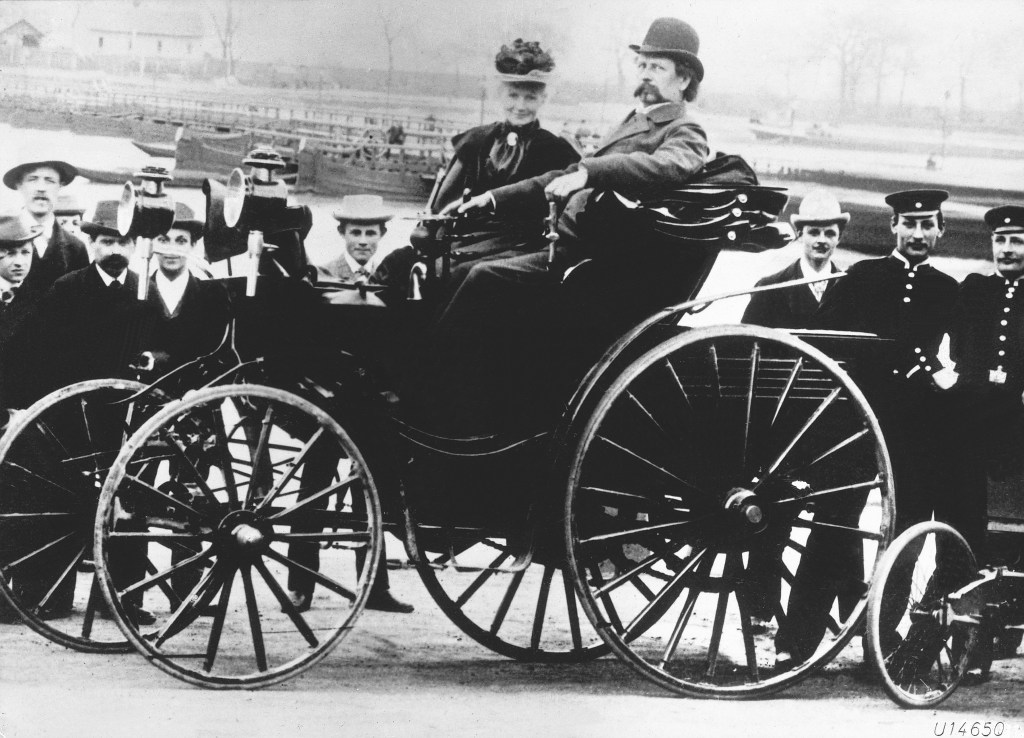
The invention of the modern fountain pen is really more a story of perfection than invention. In 1883, more than fifty years after the fountain pen was first invented, a New York insurance broker, Lewis waterman, was set to sign an important contract and decided to honor the occasion by using the standard ink-filled pen of the day. However, fountain pens were notoriously unreliable, especially in their capacity to regulate their ink low, so that it could not be signed, waterman decided to do something about it. Within a year Lewis waterman had designed the world’s first practical, usable, and virtually leak proof fountain pen. To regulate the flow of ink he successfully applied the principle of capillary action, with the inclusion of a tiny air hole in the nib of the along with grooves in the feeder mechanism to control the flow of ink from his new leak proof reservoir to the rib.

As early as the beginning of the eighteenth century, the chief instrument-marker to the king of France, M.Bion, crafted fountain pens with nibs, five of which survive to this day. The first steel pen point was manufactured in 1828, thought to be invented by Petrache Poenaru, and in the 1830s the invented James Perry had several unsuccessful attempts at designing nibs that employed the principle of capillary action. But it was Lewis waterman who overcome every obstacle and crafted a successful pen. It was so successful that by 1901, two years after waterman’s death, more than 350,000 pens of his design were sold worldwide.

Safety pin

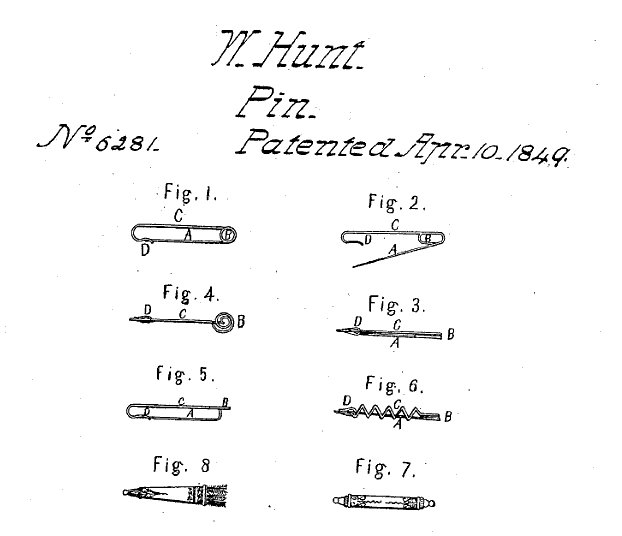
When it comes to simple engineering, we can’t avoid safety pin. This useful object is found in households across the globe, it even gained status as a fashion accessory, with the movement in 1970s. Walter Hunt was a New York mechanic who, in 1849, sat wondering how to pay off a $15 loan. He spent around three hours twisting a length of wire in his fingers before he created the answers to his problems, the humble safety pin. Pins were by no means a new idea, having existed for centuries before Walter’s twist on the design. However, his creation was unique as it provided a solution to the potential problem of pricking oneself with the old style variety. His pin has a clip at the top which locks the pin and keeps us safe from not pricking. At the bottom it has a spring like structure made by bending the same pin to maintain the tension of the pin. Hunts design was patented in April 1849, and he sold the rights to his creditor, clearing a $385 profit. Unfortunately hunt had no idea how popular his invention was set to become. Even after 150 years, we are using this safety pin which works on a very simple engineering.  He also designed America’s first sewing machine with an eye pointed needle. But fearing the loss of jobs his creation may cause, he did not patent the idea. It was left to a fellow American, Elias Howe, to claim the credit for this invention some twenty years later.

“A man who could invent a safety pin . .  . was truly a mechanical genius . . .” – New York Times

Delhi University Cut-Offs Released

A new academic year brings with it a new batch of anxious faces, eagerly looking at the DU cut-offs, hoping they get in. Lakhs of students apply to the University of Delhi annually while only a few make it through. This year too over 4 lakh applications were recorded, the highest being from Delhi, followed by Uttar Pradesh. The lowest number of applications were received from West Bengal. All these candidates are vying for a mere 70,000 seats.

Owing to the deadly second wave of the coronavirus, the exams pan India were cancelled. The different education boards came up with fair scoring criteria for their students. Everyone witnessed remarkable inflation in their marks after the results were declared, with more than  70,000 CBSE students scoring above 95%.

This posed a massive dilemma for the college principals, some of them even suggesting a centralised entrance exam for the batch of 2021. But due to time and procedural constraints, the same wasn’t feasible to conduct. Finally, the University decided to follow the merit basis for admission to the undergraduate programs.

Speculations were rife about the cut-offs being astronomically high for this academic year which, unfortunately, turned out to be true.

After a long and tiring wait, the first cut off list was released yesterday.

In an unprecedented development,  at least 6 colleges have released 100% cut-offs in 10 courses which have left the students all over India in shock.

Ramjas college and Hindu college demanded a whopping 100% for Political Science Hons. and Computer Science Hons. The other north campus colleges have followed the same trend. SRCC set the bar at 100% too for B.Com Hons. 13 out of 20 courses in Hansraj college are only available to students who have scored above 99%. The score required for English Hons. has increased by a percent to settle at 99% in most colleges. At Vivekananda College, History Hons requires 97%, a sharp jump from the previous year’s 85%.

Experts are now questioning the evaluation of the board results. A teacher at SRCC clarified that the 100% cut off was based on the applicant data provided to them which had almost 450 students who scored a perfect 100 in the best of four aggregate. It is indeed quite baffling how so many students managed to procure such excessive marks. Fingers would be pointed at various school managements who might have graciously rewarded marks to their pupils.

The number of 100 scorers at DU has increased to almost 10,000 from 5,500 last year. Understandably, the cut-off can’t be kept low.

The cut off list has left many students distraught, a number of them are looking at their DU dreams shattering. Aspirants who are just at the 90% margin are worried about their college prospects now, with many of them looking to seek admission in other universities. The ones who scored below 90% have very bleak chances of getting in, seeing the current trend. This is a leading cause of stress as well as anxiety for both parents and students as their future is now enveloped in a shadow of uncertainty.

The education system has been heavily criticised as there is only space for exceptional scorers in universities now. The entire focus has now shifted to performance in exams instead of the holistic development of children. The sky is the only limit now when it comes to college cut-offs.

Music a Therapy

Music a word which we all love to listen and we always love to listen music as well. Music relaxes our mind. Music listening to music makes us happy. Today everybody whenever they get little bit of their time they listen to music.

It has become an integral part of our life, we can’t even think of a life without music. We have music for every situation. It is scientifically proven that music has many good effects on our health. It helps us to relax from a busy life, it helps to change your mind when we are not feeling good, it booster moral to do something I.e., motivates us, it helps us to work out by giving us inspiration to do it, it helps to forget our tension etc.

Music has actually become a therapy today. Everyone have airpods, earphones, headphones which they use while working out to listen to music to have an inspiration to do it more fast or properly. We hear music in functions which makes us feel very happy with actually enhance is the party or function.

When we hear energetic music automatically feel like dancing which helps is to feel happy. And in Indian weddings we can’t even think of weddings without music and Nagin Dance too.

Whatever be your mode music is always there to motivate you to do better I just to make you happy and enjoy. It actually and has a thinking ability. So there are so many positive effects of listening music so, you do listen to music but, do take care of your ears too, don’t listen it in very high volume. And listen to positive music.

Yoga an Ancient way of Modern Living

Yoga an ancient Indian practice of balancing your body and mind. This is the actual modern way of living as in the stressful life we have forgot in the mean essence of life. Yoga helps us to be fit mentally as well as physically.

Now the whole world has realised the power of yoga. Even the UN has announced 21st june as the international yoga day. Now the whole world is doing yoga and are actually paralyzing the benefits of it.

It is scientifically proven that doing yoga helps you to calm your blood pressure, anxiety, stress and is capable of curing any diseases if done in right manner. It makes your body more flexible and yoga is actually a way of living.

It is really proud moment for India as an Indian ancient practice is now valued in the whole world and is given the Prestige which it deserves. One of the best thing of doing yoga is that it doesn’t have any side effect. Anyone can do it it doesn’t need any prior fitness or anything you can start with simple yoga.

Just if you introduce your car in your daily routine even for 15 minutes it will really give good benefits to your health which you will realise. Yoga has actually become a modern science. So if you are doing yoga please do it on a regular basis and if you are not doing your please start doing it as it has really very good effects on your mental as well as Physical health.

Gandhi Jayanti

2nd October, Gandhi Jayanti ,a date which needs no introduction. Father of our nation Mohandas Karamchand Gandhi was born on this day. He was one of the strongest pillar for India during in struggle for freedom from British era.

He was very different from other freedom fighters. He believed in the concept of nonviolence and self sufficiency. His personality has impressed many leaders around the world like Martin Luther King Jr, Nelson Mandela, Einstein and even the Britishers one of those.

He was a gentleman who gained law degree in London and came back to the India and I was so touched by the living conditions of the people here that he decided to be one of them. He wore a dhoti and thin cloth on upper body.

He was a man of principle, in his aashram he did all of his work on his own and teach the same lesson to his followers. He was a tiny man but having a great speed. He walked miles on his foot that too with great speed, matching his speed was not easy.

He always live for his countrymen and tried to solve their problems and dedicated whole of his life for the country. He fought the fight of freedom with never compromising his principles. That’s the reason he was given the title of ‘Father of India’.

Evolution of motorcars mechanism

It is difficult, to imagine a world without the motorcar. Back in the 1700s, some of the very first cars were powered by stream engines. When German engineer Karl Benz drove a motorcar tricycle I 1885 and fellow Germans Gottlieb Daimler and Wilhelm Maybach converted a horse down carriage into a four wheeled motorcar in august 1886, none of them could have imagined the effects of their invention. Benz recognized the great potential of petrol as a fuel. His three wheeled car had a top speed of just ten miles (16 km) per hour with its four-stroke, one cylinder engine. After receiving his patent in January 1886, he began selling the Benz Velo, but the public doubted its reliability. Benz’s wife Bertha had a brilliant idea to advertise the new car. In 1886 she took it on a 60 mile (100 km) trip from Mannheim to near Stuttgart. Despite having to push the car up hills, the success of the journey proved to a skeptical public that this was a reliable mode of transport.

Daimler and Maybach did not produce commercially feasible cars until 1889. Initially the German inventions did not meet with much demand, and it was French companies like Panhard at Levassor that redesigned and popularized the automobile. In 1926 Benz’s company merged to form the Daimler Benz company. Benz had left his company in 906 and, remarkably, he and Daimler never met. Due to higher incomes and cheaper, mass produced cars, the United States led in terms of motorization for much of the twentieth century. This kind of movement has, however, come at a cost. Some 25 million people are estimation to have died in car accidents worldwide during the twentieth century. Climate changing exhaust gases and suburban sprawl are but two more of the consequences of a heavy reliance on the automobile.

Karl Benz with his wife Bertha, the first motor car (1885)

Invention of the clutch

Almost all historians agree that clutch was developed in Germany in the 1880s. Daimler met Maybach while they were working for Nikolaus Otto, the inventor of the internal combustion engine. In 1882 the two set up their own company, and from 1885 to 1886 they built a four-wheeled vehicle with a petrol engine and multiple gears. The gears were external, however, and engaged by winding belts over pulleys to drive each selected gear. In 1889, they developed a closed four- speed gearbox and a friction clutch to powers the gears, this car was the first to be marketed by the Daimler motor campy in 1890. Without a clutch, if the car engine is running the wheels keep turning. For the car to stop without stalling, the wheels and engine must be separated by a clutch. A friction clutch consists of a flywheel mounted to engine side. The clutch originates from the drive shaft and is a large metal plate covered with a frictional material. When the flywheel and clutch make contract, power is then transmitted to the wheels.

Patent drawings of first motorcar – Karl Benz

Gears in Motorcars

Karl Benz was the first to add a second gear to his machine and also invented the gear shift to transfer between the two. The suggestion for this additional gear came from Benz’s wife, Bertha, who drove the three-wheeled Motorwagen 65 miles from Mannheim to Pforzheim – the first long distance automobile trip. The gears allow the engine to the maintained at its most efficient rpm while altering the relative speed of the drive shaft to the wheels. Gears originally required double clutching, where the clutch had to be depressed to disengage the first gear from the drive shaft, and then released to allow the correct rpm for the new gear to be selected. The clutch was then pressed again to engage the drives shaft with the new gear. Modern cars use synchronized which use friction to match the speeds of the new gear and he shaft before the teeth of the gears engage, meaning that the clutch only needs to be presses once.

“One thing I feel most passionately about: love of invention will never die” – Karl Benz

About that author- Rudyard Kipling

Rudyard Kipling, a journalist, short-story writer, poet, and novelist who is best known among us for his novel the jungle book, was an eminent  20th century writer. Kipling became the youngest person and till this date is the youngest person to receive the award in 1907, at the age of 41.

Life  

Rudyard Kipling was born in 1865, in Mumbai, India, which was a British colony during that time. He was born to John Lockwood Kipling and Alice Kipling. His father was an artist and an architect who used to work at an art school in Mumbai.

He spent his early childhood in India as an Anglo-Indian and at the age of 6 went to Britain and was vaguely perplexed with his identity, a topic he lightly touches on in his later work. In Britain, Kipling did not live with his parents; instead they left both Rudyard and his younger sister with a foster family. During this time, the couple that were looking after the siblings did not treat him very well. In his autobiography Something of Myself for My Friends Known and Unknown, which was published posthumously , Kipling looks back at this period of  his life with dread. Kipling felt abandoned and isolated throughout his childhood. First he was abandoned by his parents and then he was neglected in his foster home too.

In 1877 Kipling’s mother returned to England and pulled her children out of that foster home. The very next year, he was sent to the United Services College in Devon, where students would be prepared for the army. 

Career 

Towards the end of the school, Kipling dropped out as his family did not have enough money to send him to college so instead his father secured a job for him in India and worked as an editor and a journalist for a newspaper. This was the beginning of his journalistic career. It was in India that Kipling started to publish his collection of short stories. He published Plain Tales from the Hills in 1888 and he published 6 volumes of short stories which included soldiers Three, The Phantom Rickshaw; between 1887 and 1889. By the end of this decade, Kipling gained so much popularity that he was being considered one of the best prose writers of his time.

He left India in 1889 and went to San Francisco during this journey he met The Adventures of Tom Sawyer writer Mark Twain.

In 1892, he married Caroline Balestier and the couple lived in America before moving to England. In this decade Kipling he produced work that he is most known for, like  The Light That Failed in 1891, The Jungle Book in 1894, The Seven Seas  in 1896, a collection of poems,  Captains Courageous in 1897.

In 1907, at the age of 41, he became the youngest and the first Englishman to receive the Nobel Prize for literature. Kipling is thought to be an imperialist; his ideology at that time and even during this time is not accepted by people  and has been long criticized for the same. However, he was a very popular writer of his time.

About that author- Charles Bukowski

“We are here to laugh at the odds and live our lives so well that Death will tremble to take us.”

This very famous quote by Charles Bukowski gives us an idea about the kind of individual he was. He was the kind of poet who wrote whatever was in his heart, whenever it was. He always spoke about a part of himself that exists inside us all but we choose to silence it. Bukowski, afraid of that part, still chooses to give it a voice through his poems.

Life 

Charles Bukowski was a German-American poet, writer known for the violent imagery he tries to depict with his writing. Bukowski left his home in Los Angeles to move to New York to pursue writing. In New York he took up a lot of odd jobs so that he could continue to write, but he did not see much success during that period of his life.

Career 

Charles Bukowski published his first story, titled  “Aftermath of a Lengthy Rejection Slip” in 1944, at the age of 24 in a magazine. He published another story titled “20 Tanks from Kasseldown” about 2 years later in 1946, but unfortunately he failed to make a breakthrough and was left disappointed. Bukowski wrote a lot, was published too little and received even less recognition. This led him to quit writing or rather take a break from writing in the year 1946.

Now, one could say that Bukowski did not do anything during his hiatus but I disagree. During these years Bukowski gathered material for his future work. He moved back to Los Angeles and lived the life of a hippie and wandered around the country staying in cheap places. He would travel. drink alcohol and observe. The observations are talked about in his later published books.

Bukowski talked about the harsh and crude reality of existence and is known for his raw and bare writing.

After a hiatus of almost a decade, Bukowski got back to writing. In the mid 1950s he was hospitalized for a fatal bleeding ulcer. After being released from the hospital he started to write poetry, at the age of 35. Charles Bukowski, in 1957 married Barbara Frye, who later died in India. This incident resulted in Bukowski going back to alcohol and writing poetry.

By this time, Bukowski’s poems were published in literary magazines. But still he was unable to see the success he very much deserved. In the 1960s, he published a lot of poems and short stories and only tasted success in his 50s.

Bukowski spent more than half of his life writing and not seeing any considerable amount of success. He did not give up, in fact there was no point in him giving up because he was not one of the writers who wrote to achieve success, he wrote because he was extraordinarily in love with his art. He did not try to be a writer, in fact he didn’t try to be anything but true to himself and his work. He did not force himself to write, evident by his decade long hiatus. He thought that there had been too many writers in the past who forced themselves to try, whereas in his opinion if you truly love an art form you wouldn’t have to try, it would come to the artist. In his opinion if you had to try to be or do something you shouldn’t try at all. Even his grave has the words “don’t try” engraved on it.

He died in 1994, due to leukemia after living an adventurous and fulfiled life. 

Pets A True Friend

Having a pet at home, may be a dog, cat or any other animal makes you feel like a family and a companion. For a pet owners become their whole world. They are always loyal towards their owner, they are actually like parent to them.

There are many scientific proven positive effects on mental and social well being while having a pet at your home. They never let you feel alone, they are always around you. They sense your feelings and try to make you happy always. They can’t speak in our language but, they can understand and we can understand them too, there is actually an internal connection with them.

Having a pet miss you more social as you always have to take them for a walk that also help in having a physical exercise for us too. The help us connect to the people. Once you have a pet you actually have a family member with you which never lets you be lonely.

l just want to say that please care for your pets, don’t ever leave them as where whole world is you can’t live without you. Teacher responsibility of paint only when you can take care of them till the last breath don’t leave them alone in the middle of an ocean.

Be a good pet owner. Be like their parent and care for them as your child, play with them as friend and treat them as your family.

Making a Career in Community and Social Services

The community services industry is a largely overlooked sphere and the wide array of possibilities bubbling here go unnoticed by the general population. Moreover, this sector is pivotal to the development of the nation. It is essential for preparing young adults to become principled citizens in a globalized world. Students looking to start their careers should be made aware of the opportunities available here.

Job Prospects

According to one report by the US Bureau of Labour Statistics, the social and community employment sector is expected to grow by 12 per cent between 2020 and 2030.

There is a wide range of career opportunities in this domain including health inspectors, correctional and probationary officers, marriage therapists, disability assistants, and rehabilitation counsellors. In contrast to other sectors, community services give employees a myriad of client areas to choose from. That means one can continue to grow and diversify until one lands their perfect niche.

 Jobs would typically be advertised on social media or community issue-focused websites. Local authorities will give notice of the jobs on their respective websites, as will larger charities.

Most employers generally comprise officials of local authorities, not-for-profit organizations, rural development groups, organizations concerned with particular groups or issues such as refugees or asylum seekers, drug addicts, sexual abuse victims, etc.  

Since these workers aid marginalized groups and tackle the problem persisting in their local area, they would be required to work closely with other organizations such as the police, schools, and other agencies and operate mainly within inner-city areas, small towns, and rural localities.

Educational requirements

The field is well suited for individuals who are keen to help people in need and contribute to a positive change in society. One can chalk out their education by specializing in areas of drugs and alcohol abuse, family and domestic violence, housing, or adolescent development to get a more enhanced perspective before stepping into this fast-growing industry. It would also help in bettering the chances of securing employment for the candidate. Although entry to this field is not restricted by educational qualifications having a degree in any subject certainly helps.

Key skills for workers

Prospective job seekers wishing to go the extra mile should focus on honing key skills like written and oral communication skills, sincerity, patience, tact, and the ability to earn the trust of others, and finally an in-depth understanding of policies that affect target groups.

Responsibilities

Standard responsibilities include helping communities share resources effectively, recruiting and training volunteers, presenting verbal and written reports to the superiors,  generating funds for the operations, creating awareness about important issues, developing projects to help sections of society afflicted with various social evils like drug abuse and managing the audit processes,

Conclusion

The challenges involved in this career would push the person to grow and evolve into a more empathetic individual while exposing them to people from all walks of life. Being a noble profession also enriches a person’s social standing in society.

All things considered, this is a highly recommended line of work.

why Higgs Boson is called as the ‘God Particle’?

In 1964 peter Higgs with five scientists proposed a theory called the Higgs mechanism to explain the existence of mass in the universe. Before 1930s, atoms were considered as the fundamental particles. Then we found electron, protons and neutrons as atomic particles. Later we found that protons and neutrons are made up of even more small fundamental particles called quarks. Quarks are the fundamental building blocks for the whole universe. The key evidence for the existence of these elementary particles came from a series of inelastic electron-nucleon scattering experiments conducted between 1967 and 1973 at the Stanford linear accelerator center. They are commonly found in protons and neutrons. There are six types of quarks, up quark, down quark, top quark, bottom quark, strange quark, charm quark. They can have positive (+) or negative (-) electric charge. Up, charm and top quarks have a positive 2/3 charge. Down, strange, bottom quarks have a negative 1/3 charge. So protons are positive because there are two quarks (+2/3) ups and one down quark (-1/3), giving a net positive charge (+2/3+2/3-1/3 =1). These three quarks are known as valence quarks, but the proton could have an additional up quark and anti-up quark pair.

The Higgs field theory

In the second half of the 20th century, physicists made a developed a theory called a standard model of particle physics. They theorized about twelve fundamental particles that make up all matter, and four particles called bosons are responsible for three fundamental forces of nature. It includes strong force, weak force, and electromagnetism. Gravity is another force, it is not a part of this model but, it can be modeled using general relativity. With these fundamental particles in the standard model and gravity, we can build almost everything in the entire universe. However until 2012, the standard model was an underlying theory. Because all forces carrying particles should be massless. So, although the photons are massless, experiments show that the weak forces bosons have mass. So that was a promising model that could be used to explain our universe. But perhaps, it would need to be thrown out because it had the seemingly fatal flaw in being inconsistent regarding the way the weak force worked in the late 1950s physicists had no idea to resolve these issues all attempts to solve this problem. But indeed it created new theoretical problems. In 1964, Peter Higgs hypothesized that perhaps the force articles were massless but gained mass when they interacted with an energy field that is the reason for the existence of the entire universe.

During the very early moments following the big bang, in the universe, the elementary particles were massless and they were pure streams of energy that move at the speed of light. As the expansion of the universe was proceeding, density and temperature decreased below a certain key value. According to the theory, the Higgs field interacts with particles and can give them mass. It is theorized that different particles interact differently with the field, the particles that interact with it more intensely have greater mass and particles that don’t interact with it that much have lower mass. Just imagine Higgs field as water, pointed shape objects interact lesser with water and cube shaped objects interact more with it. Some particles don’t interact with the field like photons are massless. A fundamental part of the theory was the presence of a specific particle; it’s called the Higgs boson. A boson that would allow the Higgs mechanism to unfold correctly to give mass to all other particles.

The Higgs Boson – CMS experiment

CERN’s discovery of a new particle

Even though Higgs theorized it, scientists can’t able to prove that until 2012. The particle accelerators had to possess a huge amount of energy to detect them. Finally, the Large Hadron Collider (LHC), the CERN’s particle accelerator has been turned on in 2008 and managed to recreate the required energy and temperature conditions in 2012. The Higgs boson was finally experimentally detected and on 4th July, a conference held in the CERN auditorium announced the discovery of a particle compatible with the Higgs boson. The machine accelerates Hadron bundles at close to the speed of light and collides them each other in opposite directions. At four separate points the two beams cross, causing protons to smash into each other at enormous energies, with their destruction being witnessed by super-sensitive instruments. Even if LHC is the world’s largest particle accelerator, it had to work hard to detect Higgs boson. If the Higgs field doesn’t exist, all particles in the universe will become absolutely weightless and fly around the universe in the speed of light. For This reason Higgs boson is often called as the ‘God particle’.

“I never expected this to happen in my lifetime and shall be asking my family to put champagne in the fridge.”Peter Higgs

About that artist- Artemisia Gentileschi

Artemisia Gentileschi is regarded as one of the most illustrious artists of the 17th century. She made a name for herself during a time when women were not allowed to be a part of art and cultural activities. Her paintings were a symbol of women empowerment of the Baroque period and yet are not well known.

Early life

Artemisia was born in 1593 in Rome Italy, to Orazio Gentileschi, a renowned painter at the time. Her father recognized her talent from an early age and encouraged her to paint. Her father was a huge follower of the remarkable Baroque painter Caravaggio and her own paintings were highly inspired by Caravagio’s dramatic realism.  

Career

Gentileschi’s earliest known work is Sussana and the Elders, who at the time of painting this was only 17. The painting shows a young woman Sussane taking a bath in her garden and two men with ill intentions and a predatory look towering over the young women. Sussane who obviously seems very vulnerable at the moment and can not do much but just confute the two men with her actions which go to waste. This painting is inspired from a tale in the book of daniel. This tale portrays Sussana taking a bath in her garden as two elders start spying and harassing her sexually. 

In 1611, an Italian landscape painter Agostino Tassi who was working under Orazio, went into their house and raped Artemisia. Orazio was under the impression that Tassi would be marrying her daughter to save the Gentileschi name from embarrassment but when Tassi refused to do so Orazio took him to trial. This was really tragic for the 17 year old Gentilesci, according to her father and all the other men in power her virginity was stolen but for her it was a part of her that was stripped away. As if this wasn’t enough torture for her she was tortured with nails and screws at the trial to attest the authenticity of her testimony. Tassi was found guilty but did not serve any sentence owing to his relations with the pope.

A short while after the trial, her father married her off to a Florence based artist and moved to florence. This period of her life brought her tremendous success. She became the first woman to be accepted at the Academy of Design, Florence. This meant that she did not need permission from any man to buy art supplies, she could do it without any men controlling her.

In Florence, Gentileschi had developed her own style. She used tenebrism in her paintings which is a style of painting that uses light and dark contrasts and the dark becomes a dominating feature.

In 1620, she completed Judith Slaying Holofernes, which is inspired from a narrative in The Bible. Throughout the history of art many versions of this tale have been painted by multiple artists, even Caravaggio but Gentileschi’s  version is more real and violent. This work of hers can be compared with her own traumatic experience, where Holofernes can be compared to Tassi and Judith is Gentileschi.

Now it is not that she was the first female painter ever but all the female artists that came before her chose still lives or aesthetically pleasing subject matters. Gentileschi on the other hand, portrayed women that were a subject to male oppression like herself and were raw. Yet she is not very well known in the 21st century. Gentileschi’s work is empowering and a mark of early feminism and needs to be celebrated.

Fundamentals of Organizational Behavior.

A primary goal of management education is to develop students into managers who can think ahead, exercise good judgment, make ethical decisions, and take into
consideration the implications of their proposed actions.

Premises
Organizations are complex systems.
Where is a need to understand how the system operates esp. in a sociotechnical system – humanity and technology.
Human behavior in organizations is
sometimes unpredictable.
Behaviors may come from deep-seated needs, lifetime experiences and personal value systems ,Human behavior in a organization can be partially understood
And Applying the frameworks of behavioral science, management and other disciplines.

There are no perfect solutions to
organizational problems well, Increase the understanding and skills – work relationships can substantially upgraded

An organization is a collection of people
who work together to achieve individual
and organizational goals. Or it can be a consciously coordinated social unit,
composed of two or more people, that
functions on a relatively continuous basis
to achieve a common goal or set of goals.

Organizational behavior is actually the study of human behavior in the workplace,
And the interaction between people and the organization, and the organization itself.

It’s basic goals focuses on the behaviour of people under a variety of conditions.as even understanding the reason for the same . Managers need to remember that organizational behavior is a tool for human benefit

Organisational behaviour encompasses three broad areas which are mentioned below
1.The Behavior of People in Organisations

2.Organisational Structure

3.Behavior of organization

Anone studying about the importance of organisation and organizational behaviour will get to know it’s major aspects and Develop its skills to function effectively in the workplace. It even leads in the Growth of personality through insight into human behaviour as well as Enhance overall organizational effectiveness.

Thank you.

Consumers Perception towards OTT Platform VS Theatre.

The Internet is rapidly transforming the show business in India. the dimensions and effect of the longer-term use of digital content is very large for the country’s mobile user base, led by the launch of three G and 4 G networks and many subscribers. Audiences are using numerous different technologies to look at films, documentaries, and web series on their smartphone devices. Some examples include Netflix, Amazon Prime, Hotstar and Zee5, which provide movies and other video content through internet. it’s become a challenge to the Movie theater industry. Now that theatres are pack up and film releases are suspended during the national shutdown, cinema owners worry that the universal experience of viewing
movies will eventually change digital platforms, resulting in a dip in viewers
visiting once the screens open again.

Over-the-top (OTT) media platform refers to something sort of a digital video platform which is distributed explicitly to consumers bypassing cable, radio and satellite television channels over the web that sometimes act as distributors of these content. Over the past few years, owing to the increase in internet consumption, the media and entertainment sector has seen a
significant push. The fundamentals of the cinema industry are being redefined.

When it involves OTT platforms, on a mean every user holds minimum of
two OTT platforms, most important advantage of OTT platforms is that buyer’s access plenty of content during a freemium model where OTT platforms offer free content with a selected collection and there would be an incentive to modify to the paying subscription. OTT platforms have allowed users, at
their own convenience, to access a spread of content at low expense.
When it involves Movie theatres, Majority of the viewers choose a movie
once very month Viewers are able to spend 500-1000rupees to observe a movie. Majority of the viewers opting to observe a movie within the theatre when it’s a highly content driven movie. Thus, a change in
consumer watching habits is often seen where theatres were highly
preferred for commercial/big star movies, but now it replaced by content
driven movies. From the info, it is often said that folks prefer watching content mostly in OTT platforms and infrequently in movie theatres. Convenience is that the
biggest reason behind the utilization of over-the-top application. Second
biggest reason is choice of wide selection of content. Third on is availability of content on demand.


Conclusion:
The Indian audience’s perception of trends within the Indian media and show business is encouraging. The Indian audience claims that these applications are transforming the Indian media and entertainment sector, and therefore the reasons for these improvements are media
convenience, content efficiency, economical media, and innovative
projects. Research reveals that the longer term of Over-the-Top (OTT)application in India is promising. But certain factors of theatres like Screen size and Sound quality, theatrical experience and ambience can’t be achieved by OTT platforms. So, people will certainly reach bent theatres, but it’ll happen slowly thanks to things, but it can never be completely erased on the existence of OTT platforms. To summarize, the report
suggests that the OTT industry has disrupted the movies industry which
because the industry dynamics changes, both mediums won’t only coexist
but even prosper together.

Thank you.

Caste Atrocities In Contemporary India.

By Dilip Patel

Position related brutality in India has happened and keeps on happening in different structures. As indicated by a report by Common liberties Watch: Unfair and savage, brutal, and debasing
treatment of more than 165 million people in India has been advocated based on standing. Position is drop based and genetic in nature. It is a trademark dictated by one’s introduction to the
world into a specific rank, independent of the confidence rehearsed by the person. Caste signifies a conventional arrangement of unbending social definition into positioned
bunches characterized by drop and occupation. Caste divisions in India overwhelm in lodging, marriage, work, and gender and danger of social exclusion, financial blacklists, and actual violence. eral social connection divisions that are supported through the training.

The Dalits | Still untouchable
Article 46 of the Indian Constitution.
Today, 68 years after Autonomy, as Dalits keep on enduring the worst part of savagery and segregation featured lately by the appalling self destruction of Rohith Vemula, a Ph.D understudy
in the Hyderabad Focal College who hanged himself, accusing his introduction to the world as a “deadly mishap” in a chilling last note-we were
unable to be any further away from what the Constitution had requested from a free and reasonable India

A ghost of self destruction passed by a few Dalit students was frequenting India. Out of 25 students who ended it all just in north India and Hyderabad since 2007, 23 were Dalits. This remembered two
for the lofty All-India Foundation of Clinical
Sciences in New Delhi, and 11 in Hyderabad city alone. Deliberate information doesn’t exist for such suicides, however the issue runs far more
profound than a couple of understudies choosing to take their own lives in the wake of being crushed by the framework. Dalit problem in India peruses like a whole information sheet of misfortunes. As indicated by a 2010 report by the
Public Basic liberties Commission (NHRC) on the Anticipation of Outrages against Booked Ranks, a wrongdoing is carried out against a Dalit like clockwork. Overall, three Dalit ladies are assaulted, two Dalits killed, and two Dalit houses
consumed. As indicated by the NHRC insights set up by K.B. Saxena, a previous extra boss secretary of Bihar, 37% Dalits live underneath the destitution line, 54% are undernourished, 83 for
every 1,000 kids brought into the world in a Dalit family pass on before their first birthday celebration, 12% before their fifth birthday celebration, and 45 percent stay unskilled. The information likewise shows that Dalits are kept from entering the police headquarters in 28% of Indian towns. Dalit kids have been made to sit
independently while eating in 39% government schools. Dalits don’t get mail conveyed to their homes in 24% of towns. What’s more, they are denied admittance to water sources in 48% of our towns since distance stays a distinct reality
despite the fact that it was abrogated in 1955.

India’s caste system is perhaps the world’s longest enduring social progression. A characterizing highlight of Hinduism, station incorporates an intricate requesting of gatherings of people based on custom immaculateness. An
individual is viewed as an individual from the position into which the person is conceived and stays inside that
standing til’ the very end, albeit the specific positioning of that rank may differ among districts and over the long run. Contrasts in status are generally supported by the strict dictated by one’s deeds in past lifetimes.

today

The infection doesn’t see race, religion, shading, standing, doctrine, language or lines prior to striking”, while this glossed over, apparently fair- minded assertion from the Indian government has
been prevalently embraced and worldwide
worshipped, it doesn’t detract from the way that it was incredibly repetitive and proudly harsh.
Alongside the assertion—the revelation of public lockdown on 25th Walk 2020, the endorsed proportion of social separating, the cross country
burden of Fundamental Products Act, infection testing rules and any remaining activities of the individual state organizations have been in
finished dismissal to the limit contrasts and variety of the nation’s social and monetary set-up Government Initiatives . Deliberately ignoring the
standing class order and their commensurate connection in India, the state’s response to the
infection has been regardless commenced on such natural biases. Guaranteeing that the infection would influence the individuals who are
living on the 24th floor of an extravagance lofts in Mumbai and the Chamars and Musahar people group living in ghetto cum-ghettos similarly, is an endeavor to homogenize the populace while
invisiblising the individuals who are at the lower part of the financial pecking order of the station framework. Hence, the prevalent view that Coronavirus is considerably more fair-minded
than a large portion of us, is itself covered with predispositions which comes from the remaining alive station class advantage. The problem of utilizing social removing as a worldwide popular expression was only a hint of
something larger. There is more than what meets the eyes. Standing framework is that butterfly whose fluttering wings affect a wide range of associations of a person. From the way one dresses and lives and to the manner by which once makes money and makes an occupation, rank is a convincing despot which orders
everything, including this infection. It is standing based positions, for example, rummaging, sterilization, channel cleaning, their ensuing negligible social qualities, lacking compensations prompting unhygienic ghetto based way of life
which makes Dalit and Adivasi people group tortured not simply by their station personalities and its repercussions yet in addition by the deadly dangers of Coronavirus

Government Initiatives

Indian Government has enacted laws to remove untouchability and has also brought in many reforms to improve the quality of life for the weaker sections of society. Few among them are:
• Constitutionally guaranteed fundamental
human rights
• Abolition of ‘ untouchability’ in 1950
• Scheduled Caste and Scheduled Tribe
(Prevention of Atrocities) Act, 1989
• Provision of reservation in places like
educational institutions, for employment
opportunities etc.
• Establishing social welfare departments and national commissions for the welfare of scheduled castes and tribes.

Solutions

i. some benefit based training to youngsters from adolescence can tackle the issue of casteism somewhat.
ii. Different social organizations like family,
school, and Broad communications should be given the duty to build up an appropriate, wide viewpoint among youngsters, which will invalidate the sensations of casteism, for instance,
making mindfulness about the evil impacts of sustaining the conventional rank framework.
iii. Scholarly projects should be taken up in rustic territories as the position sentiments, which further propagate casteism, are more in country
regions. These sensations of caste can be limited by the arrangement of social schooling among rural population.

Thank you.

References

Dehalwar, K., & Sharma, S. N. (2024). Politics in the Name of Women’s Reservation. Contemporary Voice of Dalit, 0(0). https://doi.org/10.1177/2455328X241262562

(News)Diwali with a difference: NGO runs campaign to help marginalised people

It all starts with an attempt to go ahead in a path decided with a purpose in the present with severance and striking or facing it.

Life is what you make it . It is said that a human being with a purpose is most powerful than any other ordinary person . In this world , where obstacle strikes back of opportunities , one have to make there own path towards the destination which is to be decided in present for the future . Our value increases  based on our ability to see our worth and when difficulties strike hard in life keeping ourselves with the same pace till the storm passes .

In keeping with the spirit of the festive season, a Pune-based non-government organisation (NGO) is running a pan-India initiative by distributing “Diwali happiness kits” that include groceries and hygiene essentials , In keeping with the spirit of the festive season, a Pune-based non-government organisation (NGO) is running a pan-India initiative by distributing “Diwali happiness kits” that include groceries and hygiene essentials For many it more or less about the donation or charity but it’s not actually what they think it’s actually about this small smile and happiness on the face of the child .

Diwali an occasion, an event is an beginning and cerium of good over event , and bring a plant of hope as a light over darkness as symbolizing the victory . The way comes out with the spark of prosperous and growth many .

 All the way , A hope for small things brings a tremendous smile on a small child . It’s Just takes a matter of time to spend a moment for them . Diwali , an occasion of happiness for everyone , that brings a hope as well as joy for individuals, celebrating it in our customs of growth and prosperous for many .

Just with the one step of an individual will eventually lead a drastic change in their lives . It’s not about the donation or charity one gives , but it’s about the blessings with an opportunity for them to go ahead in their path of destination . It brings smile on the face of a child with an opportunity for them to go ahead .

The organization mainly Emphasis on the growth and development of unprivileged children which eventually lead by providing them support system.

With the start of this prosperous fevital , which brings a glint of hope for many people , children’s and poor , the NGOs are provided them a “Diwali happiness gift” ,which  includes groceries and toiletries

This Diwali let’s one make some contribution to an unprivileged one .

Thank you

Prejudice And Discrimination in our Society.

Introduction

It focuses specifically on the equality groups set out in the Equality Act 2006: groups which share a common attribute in respect of age, disability, gender, race, religion or belief, or sexual orientation.
Prejudice and discrimination have been prevalent throughout human history. Those who practice discrimination do so to protect opportunities for themselves by denying access to those whom they believe do not deserve the same treatment as everyone else.. Many prejudices seem to be passed along from parents to children. The media—including television,
movies, and advertising—also perpetuate demeaning images and stereotypes about assorted groups, such as ethnic minorities, women, gays and lesbians, the disabled, and the elderly. Prejudices may bring support from significant others, so rejecting prejudices may lead to losing social support. The pressures to conform to the views of families, friends, and
associates can be formidable. In response to early socialization, some people are especially prone to stereotypical thinking and projection based on unconscious fears. People with an authoritarian personality rigidly conform, submit without question to their superiors, reject those they consider to be inferiors, and express intolerant sexual and religious
opinions. The authoritarian personality may have its roots in parents who
are unloving and aloof disciplinarians. The child then learns to control his or her anxieties via rigid attitudes. To date, solutions to prejudice that emphasize change at the individual level have not been successful. In contrast, research sadly shows that even unprejudiced people can, under specific conditions of war or economic competition, become highly prejudiced against their perceived “enemies.” Neither have attempts at
desegregation in schools been successful. Instead, many integrated schools
have witnessed the formation of ethnic cliques and gangs that battle other
groups to defend their own identities.

Prejudice tended to mean having a set of idea about someone that is based
on assumptions or preconceptions, rather than a person’s actual action. For
Example: racism, sexism, ageism, classism, homophobia, nationalism etc.
Prejudices can either be positive or negative—both forms are usually
preconceived and difficult to alter. The negative form of prejudice can lead
to discrimination, although it is possible to be prejudiced and not act upon
the attitudes. Discrimination is the actual behaviour of excluding or restricting members of one group from opportunities that are available for other groups. For
example: age discrimination, sexual orientation, national origin, sexual
harassment etc. Unfortunately due to our past history, discrimination had
been among us from since decades. And it’s still on-going. These things had
led to human conflict which resulted in crime, war, and mass murder such
as genocide. Discriminations affect people’s opportunities and well-being.
Societies continue to make distinctions based on ethnicity, race, sex or
gender and other characteristics that should have no bearing on people’s
achievements or on their wellbeing. Prejudice and discrimination could
affect health of the victim in several ways. Discrimination could determine
groups living conditions and life changes affecting such areas as education,
employment, and housing. As per humanity every single individual existing
should have equal rights and opporcunity in all the areas of life.

conclusion

Therapists are not immune to prejudicial attitudes. Indeed, most schools
offer therapists little training on the role of racism, sexism, and other forms
of prejudice and discrimination in therapy. Prejudice can undermine the
therapeutic process and harm clients. Some examples of how prejudice can
affect therapy include:
Altering perceptions: A therapist’s prejudicial beliefs about a group
can affect their opinion of clients. For example, a therapist who thinks women tend to exaggerate things might not take seriously a woman’s claims of sexual abuse.
Minimizing experiences: A therapist’s prejudicial beliefs about how
prejudice and discrimination affects people can undermine their ability to help. A therapist might underestimate the extent to which police killings of unarmed black people affect black mental health, or
may be unaware of how high-profile sexual assault cases affect sexual
abuse survivors.

Not recognizing power dynamics: A therapist who harbours
prejudicial beliefs or who is unaware of the effects of prejudice might not recognize power dynamics in therapy. For example, a white therapist might not understand why a black person is reluctant to
discuss racism. In family therapy, a therapist who is prejudiced might
not notice power dynamics between male and female romantic
partners.
Gas lighting: A therapist who is blind to the effects of prejudice or who does not recognize their own prejudices may inadvertently gaslight by questioning a client’s experiences or reality.


Prejudice can manifest in other ways, too:
✓ Prejudice directed at a therapist may undermine the therapist’s
ability to help.
✓ A client may seek therapy to deal with the effects of prejudice on
their life and mental health. Prejudice can make virtually every
aspect of life more difficult, and has measurable lifelong mental and
physical health consequences.
✓ Prejudice may be a factor in couples or family therapy. To offer
comprehensive help, a therapist must recognize prejudice and
identify its role in the family.
✓ A client might seek therapy to overcome prejudicial attitudes.
Though prejudice is not a mental health diagnosis, it can have
profound and lasting effects on people and the world.
✓ Prejudice infects an entire society, but making change begins with
changing individual minds and lives.
Thank you

Gender equality.

Gender equality, referred to as sexual equality or equality of the sexes,
is that the state of equal simple access to resources and opportunities no matter gender, including economic participation and decisionmaking; and therefore the state of valuing different behaviors,
aspirations and wishes equally, no matter gender. Gender equality is that the goal, while gender neutrality and gender
equity are practices and ways of thinking that help in achieving the goal. Gender parity, which is employed to live gender balance during a given situation, can aid in achieving gender equality but isn’t the goal in and of itself. Gender equality is quite equal representation, it’s strongly
tied to women’s rights, and sometimes requires policy changes.

Gender equality isn’t solely a elementary right, however a necessary foundation for a peaceful, prosperous and property world. There has been progress over the last decades: a lot of women area unit planning to faculty, fewer women area unit forced into early wedding, a lot of girls
area unit serving in parliament and positions of leadership, and laws
area unit being reformed to advance gender equality. Despite these gains, several challenges stay: discriminatory laws and social norms remain pervasive, girls still be underrepresented in the
slightest degree levels of political leadership, And one in five girls and
women between the ages of fifteen and forty nine report experiencing
physical or sexual violence by an intimate partner at intervals a 12month
amount.

The effects of the COVID-19 pandemic may reverse the restricted progress that has been created on gender equality and women’s rights. The coronavirus irruption exacerbates existing inequalities {for women or ladies for women} and girls across each sphere – from health and
therefore the economy, to security and social protection. Women play a
disproportionate role in responding to the virus, as well as frontline tending employees and careers reception. Women’s unpaid care work has inflated considerably as a results of faculty closures and therefore the inflated wants of older individuals. Girls are tougher hit by the economic impacts of COVID-19, as they disproportionately add insecure
labour markets. Nearly 60% of girls add the informal economy, that puts
them at larger risk of falling into financial condition.
The pandemic has additionally junction rectifier to a steep increase in
violence against girls and women. With imprisonment measures in situ,
many ladies area unit at bay reception with their abusers, troubled

knowledge shows that, since the irruption of the pandemic, violence
against girls and women – and notably force – has intense to access services that area unit affected by cuts and restrictions. Rising

Gender difference and discrimination to exist in our society. Still there are specific field in which men and women are not treated equally. A lot of people in India are thinks that men and women does not have equal rights and that women are dominated. Women are equally
entitled to live in freedom as well as dignity. It is important to promote common values such as respect for human rights and equality between women and men. While progress is being made to increase gender equality across the globe, people need to be more aware of disadvantages that women still continue two face and take action to promote equality.

Thank you.

Consumption of healthy food.


“Healthy” food is a term which we often hear by almost everyone. It’s not only that
people are becoming more health-conscious but also following a trend which
supports healthier food. Whether it be your favorite Film star or Youtube and
Instagram influencer everyone is emphasizing how important it is to eat healthy food. From getting a good body to clear and even-toned skin everything depends on your diet which obviously includes healthy food items. So in this age of technology where people spend most of the time on Instagram and other social media where every other influencer is flaunting their good physique and fairness everyone is intimidated to become the same by eating good and healthy food. There’s a trend which is shifting towards healthy food. From physical to mental wellbeing everything is related to healthy food. To provide a more comprehensive assessment of why people are shifting towards healthy food we have done a survey that aims at analyzing and finding opinions and behavior of people towards healthy food.


With Increasing problems in the environment, the concern for consumption of the right food has become the main concern of people. Half of the problems nowadays have only one sole reason for its cause, that is unhealthy food. People now realised how important it is, to keep and maintain a healthy body. Serving your body with healthy food will not only increase your life expectancy but also improve your
mental health. From youngsters to grandparents, everyone is so attentive as to what is on their plate. A pandemic could also be considered as a means to the end, the end is eating healthy. As we are tackling and confronting new types of diseases each day, it has become fundamental to prioritize healthy food over unhealthy. Not only laymen but also companies and everyone who is associated with producing food has
realized the changing environment and shifted their sole focus on either producing healthy food or innovating new methods to make the current produced healthy.

Eating right has now occupied space in the priority list of the people. Good food
provides umpteenth benefits starting from good mental health to healthy living,
which is now believed by a lot of people. So the shift in trend is justified by the
benefits it supplies. A lot of youngsters have started to treat themselves with the
right food so that, it doesn’t affect them adversely in the upcoming future. With
modernization we can see the drastic change in the mentality of all the classes of people, choosing healthy food over fast food. Not only government policies are in
favor of this, but even the corporates have also started paying a huge amount of
attention to it. They’ve experimented so much to provide a good taste with
appropriate nutrients, that now people will not struggle in search of healthy food.
The whole shift of population towards healthy food carries a lot of expectations
such as low-stress level, good body, better living, etc. One shouldn’t let stress
dominate over his or her mind as that has been proven to be one of the causes of
craving for fast food. With all the minute things avoided, one can expect this shift
to occupy more people in it.

Thank you.

Westernization

British rule produced radical and lasting changes in Indian society and culture. It was unlike any previous period in Indian history as the British brought with them new technology, institutions, knowledge, beliefs and values. The new technology, and the revolution in communications which this brought about, enabled the British to integrate the country as never before in its history. During the nineteenth century the British slowly laid the foundations of a modern state by surveying land, settling the revenue, creating a modern bureaucracy, army and police, instituting law courts, codifying the law, developing communications—railways, post and telegraph, roads and canals—establishing schools and colleges, and so on. The British also brought with them the printing press,and the profound and many-sided changes this brought about in Indian life and thought deserve a volume in itself. One obvious result was that books and journals, along with schools, made possible the transmission of modern as well as traditional knowledge to large numbers of Indians—knowledge which could no longer be the privilege of a few, hereditary groups—while the newspapers made people in different parts of the far-flung country realize they had common bonds, and that events happening in the world outside influenced their lives for good or ill, which eventually resulted in setting up of the removal of barriers.

It is necessary to distinguish conceptually between Westernization and two other processes usually concomitant with it—industrialization and urbanization. On the one hand, there were cities in the preindustrial world, though they differed significantly from the cities of the Industrial Revolution in the West. For one thing, they needed large rural populations for their support, so that ancient and medieval countries remained dominantly agricultural in spite of a few great cities. Again, while the Industrial Revolution resulted in an increase in the rate of urbanization and “highly urbanized areas are generally highly industrialized areas, urbanization is not a simple function of industrialization.”

Finally, while the most Westernized groups are generally found in the big cities, a caution must be uttered against equating Westernization with urbanization. Even in a country such as India, it is possible to come across groups inhabiting rural areas which are more Westernized in their style of life than many urban groups. The former are to be found in areas where plantation or commercial crops are grown, or which have a tradition of supplying recruits to the Indian army.

Westernization results not only in the introduction of new institutions (for example, newspapers, elections, Christian missions) but also in fundamental changes in the old institutions. Thus while India had schools long before the arrival of the British, they were different from British-introduced schools in that they had been restricted to upper-caste children, and transmitted mostly traditional knowledge—to mention only two of the most important differences. Other institutions such as the army, civil service and law courts were also similarly affected. As a result all this included in this as a major aspect for the westernization which took place.

Thank you

Government Budget (objectives)

Objectives of Government Budget


The government plays a very important role in increasing the welfare of
the people. In order to do that the government intervenes in the economy
in the following ways.
Allocation Function of Government Budget
Government provides certain goods and services which cannot be provided
by the market mechanism that is, by exchange between individual consumers
and producers. Examples of such goods are national defence, roads,
government administration etc. which are referred to as public goods.
To understand why public goods need to be provided by the government, we must understand the difference between private goods such as clothes, cars, food items etc. and public goods. There are two
major differences. One, the benefits of public goods are available to all
and are not only restricted to one particular consumer. For example, if
a person eats a chocolate or wears a shirt, these will not be available to others. It is said that this person’s consumption stands in rival relationship to the consumption of others. However, if we consider a public park or measures to reduce air pollution, the benefits will be
available to all. One person’s consumption of a good does not reduce the amount available for consumption for others and so several people can enjoy the benefits, that is, the consumption of many people is not‘rivalrous’.
Two, in case of private goods anyone who does not pay for the goods
can be excluded from enjoying its benefits. However, in case of public goods, there is no feasible way of excluding anyone
from enjoying the benefits of the good. That is why public goods are
called non-excludable. Even if some users do not pay, it is difficult and sometimes impossible to collect fees for the public good. These non- paying users are known as ‘free-riders’. Consumers will not voluntarily pay for what they can get for free and for which there is no exclusive
title to the property being enjoyed. The link between the producer and
consumer which occurs through the payment process is broken and the
government must step in to provide for such goods.
There is, however, a difference between public provision and public production. Public provision means that they are financed through the budget and can be used without any direct payment. Public goods may be produced by the government or the private sector. When goods are produced directly by the government it is called public production.


Redistribution Function of Government Budget.

The total national income of the country goes to either the private sector, that is, firms and households (known
as private income) or the government (known as public income). Out of
private income, what finally reaches the households is known as personal
income and the amount that can be spent is the personal disposable income. The government sector affects the personal disposable income of households by making transfers and collecting taxes. It is through this that the government can change the distribution of income and
bring about a distribution that is considered ‘fair’ by society. This is the
redistribution function.

Stabilisation Function of Government Budget

The government may need to correct fluctuations in income and employment.
The overall level of employment and prices in the economy depends upon the
level of aggregate demand which depends on the spending decisions of millions
of private economic agents apart from the government. These decisions, in turn,
depend on many factors such as income and credit availability. In any period,
the level of demand may not be sufficient for full utilisation of labour and other
resources of the economy. Since wages and prices do not fall below a level,
employment cannot be brought back to the earlier level automatically. The
government needs to intervene to raise the aggregate demand.
On the other hand, there may be times when demand exceeds available output
under conditions of high employment and thus may give rise to inflation. In
such situations, restrictive conditions may be needed to reduce demand.
The intervention of the government whether to expand demand or reduce it
constitutes the stabilisation function.

It all serves the purpose directly in this field.

Thank you

Plastic A Modern Devil

Plastic the most dangerous and harmful enemy of our environment. It is killing mother nature and our health too. We take plastic bags from shop and don’t realise that we are actually taking home a devil who will cause harm to not only nature but to us too.

A normal plastic takes about 1000 years to decompose. Just think about it that a single piece of plastic take such long years to decompose, the level of plastic which we are using today will take how many years to decompose. It is choking our water organisms life. It is also choking are animals who eat food from the garbage like the cow, dogs, cats etc.

The youth are taking responsibility reduce the use of the plastic and organising campaigns and webinars to create awareness among people to not use plastic or use decomposable plastic. The big companies are taking responsibilities to to recycle plastic and many new forms has also set up for this purpose.

Even the government have started realising the need to protect our environment and nature. International organisations like UN has also so so called for an international cooperation in this matter.

There are many innovative way in which the plastic are being reused like in making bricks, floor, dolls, chair, etc. Forest sustainable future we have to look into this matter with utmost seriousness. This earth belongs to everyone and we have no right to miss you or destroy any element on this earth.

Sustainable development and climate change

SUSTAINABLE DEVELOPMENT AND CLIMATE CHANGE

SUSTAINABLE DEVELOPMENT

At present, a few new terminologies are also being used for economies such as ‘sustainable development’ and ‘green GDP’. ‘Sustainable development’ is a global terminology which is being used to address the global issues of global warming, environmental aspects increased global pollution and ecological imbalances, which are critical for survival of planet earth and is thus a broader concept not relating to any one country but for the world as a whole. It is neither the problem of one country nor can it be solved by one country. It is more macro in nature, which requires to be addressed by countries collectively through a dialogue and a consensus building at a global platform. This is about the present generation’s ability  to meet ‘its’ own needs but without compromising on the ability of the future generation to meet ‘its’ needs. It is about a better environment for the future generation rather than. what the present generation has inherited, to say the least not a worse than that inherited Even though there has been a consciousness on the issue of sustainable development, the real thrust was provided with the Earth Summit during 1992 and then through various international conventions.

All the conventions mentioned so far have flagged the underlying issues especially that of reduction in greenhouse gases emission, which is critical for sustainable development. It also addresses areas of cleaner energy, reduction in biodiversity losses, tree plantation, solar/wind energy and other such global issues in sustainable development.

India has announced its Intended Nationally Determined Contribution (INDC) With respect of climate change inclusive of following aspects:

• To put forth and further propagate a healthy and sustainable way of living, based on traditions and values of conservation and moderation.

• To adopt a climate-friendly and cleaner path than the one hitherto followed by others at a corresponding level of economic development.

• To achieve about 40 per cent cumulative electric power installed capacity from non- fossil fuel based energy resources by 2030 with the help of transfer of technology and low cost international finance including from the Green Climate Fund (GCF).

• To create an additional carbon sink of 2.5 to 3 billion tonnes of CO, equivalent (CO.eq.) through additional forest and tree cover by 2030.

• To better adapt to climate change by enhancing investments in development programmes in sectors vulnerable to climate change , particularly agriculture , water resources, the Himalayan region, coastal regions, health and disaster management.

• To mobilize domestic , new and additional funds from developed countries for implementing these mitigation and adaptation actions in view of the resources required and the resource gap.

• To build capacities, create domestic framework and an international architecture for the quick diffusion of cutting-edge climate technology in India and joint collaborative R&D for such future technologies.

CLIMATE FINANCING.

Climate finance means local, national or international financing through public, private and alternative sources of financing. It is critical to addressing climate change as large-scale investments are required to reduce climate change induced adversities. Climate finance is equally important for adaptation strategies as there are requirements for significant financial resources to allow countries to adapt to the adverse effects and reduce the impacts of climate change.

Thank you.

How waves differ from tides? why do they occur?

A wave begins as the wind ruffles the surface of the ocean. When the ocean is calm and glass like, even the mildest breeze forms ripples, the smallest type of wave. Ripples provide surfaces for wind to act on, which produces larger waves. Stronger winds push the nascent waves into steeper and higher hills of water. The size a wave reaches depends on the speed and strength of the wind. The length of time it takes for the wave to form, and the distance over which it blows in the open ocean is known as the fetch. A long fetch accompanied by strong and study winds can produce enormous waves. The highest point of a wave is called the crest and the lowest point the trough. The distance from one crest to another is known as the wavelength.

Although water appears to move forward with the waves, for the most part water particles travel in circles within the waves. The visible movement is the wave’s form and energy moving through the water, courtesy of energy provided by the wind. Wave speed also varies; on average waves travel about 20 to 50 Mph. Ocean waves vary greatly in height from crest to trough, averaging 5 to 10 feet. Storm waves may tower 50 to 70 feet or more. The biggest wave that was ever recorded by humans was in Lituya bay on July 9th, 1958. Lituya bay sits on the southeast side of Alaska. A massive earthquake during the time would trigger a mega tsunami and the tallest tsunami in modern times. As a wave enters shallow water and nears the shore, it’s up and down movement is disrupted and it slows down. The crest grows higher and be gins to surge ahead of  the rest of the wave, eventually toppling over and breaking apart. The energy released by a breaking wave can be explosive. Breakers can wear down rocky coast and also build up sandy beaches.

At Nazare ,the Brazilian Rodrigo Koxa holds the record for the biggest wave ever surfed (80ft).

Why does a tide occur?

Tides are the regular daily rise and fall of ocean waters. Twice each day in most locations, water rises up over the shore until it reaches its highest level, or high tide. In between, the water recedes from the shore until it reaches its lowest level, or low tide. Tides respond to the gravitational pull of the moon and sun. Gravitational pull has little effect on the solid and inflexible land, but the fluid oceans react strongly. Because the moon is closer, its pull is greater, making it the dominant force in tide formation.

Gravitational pull is greatest on the side of earth facing the moon and weakest on the side opposite to the moon. Nonetheless, the difference in these forces, in combination with earth’s rotation and other factors, allows the oceans to bulge outward on each side, creating high tides. The sides of earth that are not in alignment with the moon experience low tides at this time. Tides follow different patterns, depending on the shape of the seacoast and the ocean floor.  In Nova Scotia, water at high tide can rise more than 50 feet higher than the low tide level. They tend to roll in gently on wide, open beaches in confined spaces, such as a narrow inlet or bay, the water may rise to very high levels at high tide.

There are typically two spring tides and two narrow tides each month. Spring tide of great range than the mean range, the water level rises and falls to the greatest extend from the mean tide level. Spring tides occur about every two weeks, when the moon is full or new. Tides are at their maximum when the moon and the sun are in the same place as the earth. In a semi-diurnal cycle the high and low tides occur around 6 hours and 12.5 minutes apart. The same tidal forces that cause tides in the oceans affect the solid earth causing it to change shape by a few inches.

Our country INDIA.

India is the cradle of the human race, the birthplace of human speech, the mother of history, the grandmother of legend and the great grandmother of tradition. Our most valuable and most instructive materials in the history of man are treasured up in India only. “Mark Twain

India has a unique culture and is one of the oldest and greatest civilizations of the world. It stretches from the snow-capped Himalayas in the north to sun drenched coastal villages of the south and the humid tropical forests on the south-west coast, from the fertile Brahmaputra valley on its east to the Thar desert in the west. It covers an area of 32,87,263 sq. km. lt has achieved all-round socio-economic progress during the last so many years or its Independence. lndia is the seventh largest country in the world and ranks second in population. The country stands apart from the rest of Asia, marked off as it is by mountains and the sea, which give her a distinct geographical entity. Bounded by the Great Himalayas in the north, it stretches southwards and at the Tropic of Cancer tapers off into the Indian Ocean between the Bay of Bengal on the east and the Arabian Sea on the west.

Lying entirely in the northern hemisphere, the mainland extends about 3,214 km from north to south between the extreme latitudes and about 2,933 km from east to west between the extreme longitudes. The total length of the coastine of the mainland, Lakshadweep islands and Andaman and Nicobar lslands is 7516.6 km.

Geographical Background

Countries having a common border with India are Afghanistan and Pakistan to the north-west, China, Bhutan and Nepal to the north, Myanmar to the far east and Bangladesh to the east. sri Lanka is separated from India By a narrow channel of sea formed by the Palk Strait and the Gulf of Mannar.  The country can be divided into SIX Zones mainly north, south, east, west,Central and north-east zone. It has 29 states and seven union territories.

Physical Features

The mainland comprises four regions, namely, the great mountain zone,plains of the Ganga and the Indus, the desert region and the southern peninsula.

Flora

India is rich in flora. Available data place India in the tenth position in the world and fourth in Asia in plant diversity. From about 70 per cent geographical area Surveyed so far, over 46,000 species of plants have been described by the Botanical Survey of india (BSI), Kolkata. The vascular flora, which forms the conspicuous vegetation cover, comprises 15,000 species.

With a wide range of climatic conditions from the torrid to the arctic, India has a rich and varied vegetation, which only a few countries of comparable size possess. India can be divided into eight distinct floristic regions, namely, the western Himalayas, the eastern Himalayas, Assam, the Indus plain, the Ganga plain, the Deccan, the Malabar and the Andamans.

TheThe western Himalayan region extends from Kashmir to Kumaon. Its temperate zone is rich in forests of , pine, other conifers and broad-leaved temperate trees. The eastern Himalayan region extends from Sikkim eastwards and embraces Darjeeling, Kurseong and the adjacent tracts.

Faunal Resources

India is very  in terms of biological diversity due to its unique biogeographical location, diversified climate conditions and enormous Eco diversity and geodiversity. India’s immense biological diversity encompasses ecosystems, populations, species and their genetic make-up. This diversity can be attributed to the vast variety in physiography and climatic situations resulting in a diversity of ecological habitats ranging from tropical , sub-tropical, temperate, alpine to desert.

India is not only rich in its physical dimensions but even in its cultural aspect .

Thank you.

Education (government initiatives).

Education , is the basic necessity for an individual .The essence of human resource development is education, which plays a significant and remedial role in balancing the socio-economic fabric of the country . Since citizens of India are its most valuable resource, the billon-strong nation needs the  care in the form of basic education to achieve a better quality of life. This warrants an all round development of the citizens, which can be achieved by building strong foundations in education. Good quality education is the foundation of new discoveries, new knowledge, innovation and entrepreneurship that trigger growth and prosperity of an individual as well as that of a nation.

To lay emphasis on the educational development of students of weaker section of the society, A number of innovative initiatives have been taken by the ministry.

Among which two are given below:

Adult Education

At the time of independence, 86 per cent of India’s population was illiterate and as such the main focus or adult education had been on its very bottom tier that is, impairing of Basic literacy. For accomplishment of this objective, a series of programmes were introduced since the First Plan period, the most prominent, being the National Literacy Mission (NLM), launched in 1988 for the adults in the age group of l5+. The programme of National Literacy Mission was revamped in 2009 in alignment with new paradigms of lifelong learning as Saakshar Bharat. Considerable progress has been made in raising the Literacy rate of the country but still the levels remain uneven across different states, districts, social groups and minorities. The overall goal of adult education is to establish a fully literate society through improved quality and standard of adult education and literacy.

The National Literacy Mission Authority (NLMA) is the operating and Implementing organization at national level for all the activities envisaged in Adult Education and Skill Development. During the 12th Five Year Plan, NLMA has been striving to raise the literacy rate to 80 per cent and to reduce the gender gap to less than 10 per cent.

Of 410 districts which quality for coverage under Saakshar Bharat program, the Programme has been sectioned in 04 districts , in which many learners have been enrolled under basic Literacy.

National Council of Educational Research and Training

The National Council of Educational Research and Training (NCERT) provides academic and technical supports for qualitative improvement of school education. The NCERT was established in 1961 as an apex national body to lead qualitative changes in school education. NCERT has been playing an advisory role guiding central and state governments in formulating policies, acts and government programmes. It has played a crucial role in the development of national policies on education (1968-1986) and national curriculum frameworks. The researches undertaken by the Council have led to building new perspective of schooling and also provided inputs for formulation of policies and programmes. NCERT has been designing and offering innovative and need-Based courses for teachers, teacher educators and counsellors. The curricular and other learning materials developed by the Council have helped in bringing about quality schooling. NCERT has received recognition both at national and International levels in the area of school education owing to its work done in 50 years. It is a unique institution in the country, conducting researches, preparing skilled educational professionals and developing Curriculum and curriculum materials.

Both of the initiatives have given a major impact on the Educational sector .

Thank you.

Continental Drift Theory.

CONTINENTAL DRIFT
Observing the shape of the coastline of the Atlantic Ocean. The symmetry matches
of the coastlines on either side of the ocean. No wonder, many scientists thought of this similarity and considered the possibility of the two Americas, Europe and Africa, to be once joined together. From the known records of the
history of science, it was Abraham Ortelius, a Dutch map maker, who first proposed such a possibility as early as 1596.
However, it was Alfred Wegener—a German
meteorologist who put forth a comprehensive argument in the form of “the continental drift theory” in 1912. This was regarding the distribution of the oceans and the continents.
According to Wegener, all the continents
formed a single continental mass and mega ocean surrounded the same. The super continent was named PANGAEA, which meant all earth. The mega-ocean was called PANTHALASSA, meaning all water. He argued that, around 200 million years ago, the super continent, Pangaea, began to split. Pangaea first broke into two large continental masses as Laurasia and Gondwanaland forming the
northern and southern components
respectively. Subsequently, Laurasia and
Gondwanaland continued to break into various smaller continents that exist today.

A variety of evidence was offered in support of the continental drift are mentioned below:

The Matching of Continents (Jig-Saw-Fit)
The shorelines of Africa and South America facing each other have a remarkable and unmistakable match.

Rocks of Same Age Across the Oceans were found.

The belt of ancient rocks of 2,000 million years from Brazil coast matches
with those from western Africa. The earliest marine deposits along the coastline of South America and Africa are of the Jurassic age.

Tillite

It is the sedimentary rock formed out of
deposits of glaciers. The Gondawana system of sediments from India is known to have its counterparts in six different landmasses of the Southern Hemisphere. At the base, the system has thick tillite indicating extensive and
prolonged glaciation. Counterparts of this
succession are found in Africa, Falkland Island, Madagascar, Antarctica and Australia. Overall resemblance of the Gondawana-type sediments clearly demonstrates that these landmasses
had remarkably similar histories.

Placer Deposits
The occurrence of rich placer deposits of gold in the Ghana coast and the absolute absence of source rock in the region is an amazing fact. The gold bearing veins are in Brazil and it is obvious that the gold deposits of the Ghana are derived from the Brazil plateau when the two continents lay side by side.


Distribution of Fossils
When identical species of plants and animals adapted to living on land or in fresh water are found on either side of the marine barriers, a problem arises regarding accounting for such distribution. The observations that Lemurs
occur in India, Madagascar and Africa led some to consider a contiguous landmass ‘Lemuria’ linking these three landmasses.

All this provided evidences of this theory.

Thank you.

infosys.

Infosys Limited is an Indian multinational information technology company that provides business consulting, information technology and outsourcing services. The company was founded in Pune and is headquartered in Bangalore.Infosys is the second-largest Indian IT company after Tata Consultancy Services by 2020 revenue figures and the 602nd largest public company in the world

On 24th August 2021, Infosys became the 4th Indian company to cross $100 billion in market capitalization.

Infosys provides software development, maintenance and independent validation services to companies in finance, insurance, manufacturing and other domains.

One of its known products is Finacle which is a universal banking solution with various modules for retail and corporate banking.

Glass building in Pune campus

Its key products and services are:

NIA – Next Generation Integrated AI Platform (formerly known as Mana)

•Infosys Consulting – a global management consulting service

•Cloud-based enterprise transformation services •Infosys Information Platform (IIP) – Analytics platform

•EdgeVerve Systems which includes Finacle, a global banking platform

•Engineering Services Digital Marketing

Organizational structure followed in Infosys is a Functional Structure.

Under this structure, company will be organized into three main functions (Global sales function, Global delivery function and business enabling functions). In Infosys divides the industry verticals into following five segments •Financial Services Segment •Manufacturing Segment •Retail Segment •Energy, Utilities, Communications & Services Segment •Life Sciences, Healthcare & Insurance Segment

Functional structures are proved to operate well in stable environments where business strategies are less inclined to changes or dynamism, the amount of bureaucracy makes it tough for organizations to respond to changes in the market quickly . It also conducts Career development practice to help employees to showcase their skills, providing career guidance and career development activities. Infosys provides strong property rights to its employees by providing employee stock option plans. Infosys also provides health and pension benefits, but not at a very lucrative scale. It is in line with the government policies.

For its employees, Long term employment recognition and benefits like Pension Plans, Group Medical Policy, Accident Policy, Bonus, Annual Medical Check-ups, Budgets for quarterly team lunch, Annual outings as part of team building activities and flexible work hours.

Success of the organization :

Digital technology is transforming services and businesses in today’s world. It is fundamentally changing operations and delivering value to consumers. It is also a cultural modification which wants organisations to experiment with various things and get comfortable with downfalls.

Infosys is an information technology consulting company. It is an Indian multinational company that provides information technology, business consulting and outsourcing assistance. It considers itself to be a global leader in next-gen digital consulting. It is the 2nd largest IT company after TCS (Tata Consultancy Services). It is also the 596th biggest company in the entire world based on the terms of revenue.

Infosys is a provider of next-gen services. The company enables clients in more than 50+ countries to stay ahead of the innovation curve and outperform in the game. It has more than 187,000 employees working within it. 

Steps for betterment involved :

Investment Thesis

Infosys is one of India’s most pre-eminent providers of IT services. However, the company has suffered from its slow-moving legacy past (smaller, more discretionary projects) and out-of-date go-to-market strategy, resulting in low revenue growth relative to peers, margin compression, leadership churn, and high employee attrition. In light of these issues, Infosys has launched a number of initiatives to improve its performance. The company has some way to go before rectifying its position, but a number of signs are promising, with revenue growth, margins, client mining, and employee attrition improving. Ø ØEconomic Moat

Infosys’ narrow economic moat results from high switching costs (roughly 96%-98% of revenue is from repeat business and has been around these levels for many years). The company’s commitment to building lasting relationships, embedded systems and processes, and intimate knowledge of clients’ IT infrastructure means customers are averse to switching between vendors. On a gross basis, Infosys continually adds over 200 clients per year, which is an encouraging sign and cements further long-dated business given switching costs. Such switching costs ensure a certain level of operational consistency and the company’s exemplary financial health reflects this. We forecast Infosys to easily generate a return on invested capital in excess of its cost of capital for the foreseeable future, and we believe its lower-cost offshore delivery model allows for this assumption.

Risk Infosys has highlighted issues regarding relatively low revenue growth, margin compression, leadership churn, and high employee attrition. Management has taken steps to remedy this, but it is still early and there is the risk that these problems become inflated.Poor macroeconomic conditions, management turnover, founder disruption, visa restrictions, competitive threats, and foreign exchange movements are also external risks that could generate further downside for the company.

all the way it set out to be in this competitive world.

Thank you .

About that author- George Orwell

George Orwell, best known for his novels “Animal Farm” and his dystopian novel “1984”. He was known for a dystopian world he could create through his imagination. His writings, in a sense were also satirical, criticism towards institutions that held power

Childhood

Born on june 25, 1903 Eric Arthur Blair wrote some of the best dystopian novels under the pen name George Orwell. He was born in Motihari, India. His father worked for the Indian Civil Services. His mother Ida Blair grew up in Burma. A year after Eric was born his mother took him and his sister back to England. Eric had 2 sisters and he was the middle child. He was sent to a boarding school, excelled academically and even secured a scholarship in school.

He did not come from a financially sound household and therefore could not go to a university to study further. So instead he left for Burma (a British colony back then) in 1922 to serve in the Indian Imperial police. 5 years later he resigned from the Imperial Police to go back to England in order to chase his dream of becoming a writer. But Burma left him inspired, inspired enough to write a novel about it entitled “Burmese Days”. His experiences in Burma shaped his perception of writing to a certain extent.

Career 

After leaving Burma, he spent some time with his family and also lived in the slums of London and Paris, working odd jobs, he even washed dishes at hotels in Paris. He collected all of these experiences and wrote them down in his first well recognized  work “Down and Out in Paris and London” published in 1933 under the pen name George Orwell. This work of his provides insights about the life of the impoverished and the working class in that economy. 

Orwell’s second piece of work “Burmese Days” published in 1934 gives it’s readers a tour of Burma under British rule. This novel surrounds the grim facets of colonialism that he himself first handedly lived through.

His stories contain an alienated character, a character who feels a little detached from the environment. This alienation parallels his feelings during childhood and perhaps even his adult life.

Orwell published books in the next few subsequent years including “A Clergyman’s Daughter” in 1935, “Keep the Aspidistra Flying” in 1936, a rather political novel.

Orwell’s writings became political due to political movements involving imperialism and the uprising of the communist ideology.

Orwell left for Spain in 1936 to fight in the Spanish civil war where he suffered some serious injuries. At the time, his wife, Eileen was taking care of the publishing of his next book “The Road to Wigan Pier ” (1937). In mid 1937 Orwell came back to London and was later diagnosed with tuberculosis. His time in Spain was one that he expresses in his novel “Homage to Catalonia”. During WWII, he was working as a journalist at the BBC, a job that he left in 1943. Later working as an editor for a newspaper which led him to be known as a fine journalist.

In 1950, about a year after “1984” was published, he died due to Tuberculosis, granting the world some great work to read.

ALCOHOLISM IN INDIA

One of the most important products of global addiction demand is an alcoholic beverage. In developing countries like India, alcohol consumption tends to be a major problem because of the various socio-cultural practices across the nation, different alcohol policies and practices across the various states, lack of awareness of alcohol-related problems among the community, false mass media propaganda about alcohol use, various alcohol drinking patterns among the alcohol consumers and the emergence of social drinking as a habit because of the widespread urbanisation across the country. 

Social consequences of alcohol use

Alcohol consumption not only affects the individuals but also his family members get affected in one way or the other. The person in an intoxicated state may indulge in domestic violence with his family members; may exhaust the savings of the family, which can negatively affect the education of his children, and the children of alcoholic fathers will have strained relationship with their family members, which can affect their psychological wellbeing.

Road traffic accidents

One of the major problem of alcohol consumption are road traffic accidents which occur due to driving vehicles under the influence of alcoholic beverages. Both developing and developed countries report high rates of road traffic accidents because of alcohol consumption.

Primary care intervention for alcohol-related problems

In developing countries like India, primary care physicians are the first contact of patients with the healthcare system. primary care management of alcohol-related problems include three core steps, namely, counselling the patient on the ill-effects of alcohol and, if necessary, prescribing medications like disulfiram and connecting with the patients by organizing treatment programs and forming support groups. If necessary, they have to refer the patient to higher centres for further care and management.

BUT WHAT ABOUT PEOPLE WHO CAN’T AFFORD THESE TREATMENT AND SUFFERES FROM ITS CONSEQUENCES

In many countries AA Meetings are held for being a support emotionally and spiritually to an alcoholic person with no financial support and most of all countries it being held have not only they have accepted this but hole heartedly supported it some for their family members or some for their friends suffering from alcoholism.

What is AA?

Alcoholics Anonymous is a fellowship of men and women who share their experience, strength and hope with each other that they may solve their common problem and help others to recover from alcoholism.

The only requirement for membership is a desire to stop drinking. There are no dues or fees for AA membership; we are self-supporting through our own contributions. AA is not allied with any sect, denomination, politics, organization or institution; does not wish to engage in any controversy; neither endorses nor opposes any causes. Our primary purpose is to stay sober and help other alcoholics to achieve sobriety.

AA is nonprofessional – it doesn’t have clinics, doctors, counsellors or psychologists. All members are themselves recovering from alcoholism. There is no central authority controlling how AA groups operate. It is up to the members of each group to decide what they do. However, the AA program of recovery has proved to be so successful that almost every group follows it in very similar ways.

WHAT DOES A.A. DO?

  1. A.A. members share their experience with anyone seeking help with a drinking problem; they give person-to-person service or “sponsorship” to the alcoholic coming to A.A. from any source.
  2. The A.A. programme, set forth in our Twelve Steps, offers the alcoholic a way to develop a satisfying life without alcohol.

HISTORY OF AA IN INDIA

Here is an account of how AA came to India and it’s growth in the subsequent years. Though there are no accurate records from the early days, what is definitely clear is that Harold M., a school teacher by profession, was the first person in India, to stop drinking and gain lasting sobriety through the spiritual principles of Alcoholics Anonymous. He stopped drinking on 5th May 1957, and hence that date is nationally acknowledged as the “Founders Day” in India.

On 5th May 2021, AA completed 64 years of its service in India. Looking back, the results are heart-warming. The wide support and awareness generated by the groups in India and its members inspires immense hope for the future.

AWARENESS OF AA

In India, AA meeting is a program which mostly seen by people through foreign movies and shows not through advertisement or medical portals as its necessity seems nonsensical by people especially in India because of their traditional values about alcohol where some drinks it as a medicine and some as men for showing their authority and masculinity over others, stupid norms like that make bad habit like drinking into ADDICTION.

Rule of Thirds

Rule of Thirds

In photography, the rule of thirds is a type of composition in which an image is divided evenly into thirds, both horizontally and vertically, and the subject of the image is placed at the intersection of those dividing lines, or along one of the lines itself.

What is the Rule of Thirds in Photography

The rule of thirds is one of the most common rules in photography, and one of the easiest to learn and to use successfully. To understand and use the rule of thirds, simply break up an image into thirds both horizontally and vertically, as seen here. The four intersection points of these lines, and the four lines themselves, are where subjects, or strong compositional lines of a photograph, can be placed to create a strong, balanced image.

How to break the rule of thirds

Of all the “rules” in photography, the rule of thirds is one of the easiest to successfully break. Framing an image so that subjects or lines don’t fall on the rule of thirds areas can still create a successful image, as long as the lines and other elements in the image do create a strong overall image, and capture the viewer’s eye using other methods such as leading lines, contrast, color, symmetry, etc.