Expressing oneself through art seems a universal human impulse, while the style of that expression is one of the distinguishing marks of a culture. As difficult as it to define, art typically involves a skilled, imaginative creator, whose creation is pleasing to the senses and often symbolically significant or useful. Art can be verbal, as in poetry, storytelling or literature or can take the form of music and dance. The oldest stories, passed down orally may be lost to us now, but thanks to writing, tales such as the epic of Gilgamesh or the Lliad entered the record and still hold meaning today. Visual art dates back 30,000 years, when Paleolithic humans decorated themselves with beads and shells. Then as now, skilled artisans often mixed aesthetic effect with symbolic meaning.
In an existence that centered on hunting, ancient Australians carved animal and bird tracks into their rocks. Early cave artists in Lascaux, France, painted or engraved more than 2,000 real and mythical animals. Ancient Africans created stirring masks, highly stylized depictions of animals and spirits that allow the wearer to embody the spiritual power of those beings. Even when creating tools or kitchen items, people seem unable to resist decorating or shaping them for beauty. Ancient hunters carved the ivory handles of their knives. Ming dynasty ceramists embellished plates with graceful dragons. Modern pueblo Indians incorporates traditional motifs in to their carved and painted pots. The western fine arts tradition values beauty and message. Once heavily influenced by Christianity and classical mythology, painting and sculptures has more recently moved toward personal expression and abstraction.
Humans have probably been molding clay- one of the most widely available materials in the world- since the earliest times. The era of ceramics began, however, only after the discovery of that very high heat renders clay hard enough to be impervious to water. As societies grew more complex and settled, the need for ways to store water, food, and other commodities increased. In Japan, the Jomon people were making ceramics as early as 11,000 B.C. by about the seventh millennium B.C.; kilns were in use in the Middle East and china, achieving temperatures above 1832°F. Mesopotamians were the first to develop true glazes, through the art of glazing arguably reached its highest expression in the celadon and three color glazes of the medieval china. In the new world, although potters never reached the heights of technology seen elsewhere, Moche, Maya, Aztec, and Puebloan artists created a diversity of expressive figurines and glazed vessels.
When Spanish nobleman Marcelino Sanz de Sautuola described the paintings he discovered in a cave in Altamira, contemporizes declared the whole thing a modern fraud. Subsequent finds confirmed the validity of his claims and proved that Paleolithic people were skilled artists. Early artists used stone tools to engrave shapes into walls. They used pigments from hematite, manganese dioxide, and evergreens to achieve red, yelled, brown, and black colors. Brushes were made from feathers, leaves, and animal hair. Artists also used blowpipes to spray paint around hands and stencils.
The Gurukul was India’s first educational system. It was a residential schooling system that began approximately 5000 BC, in which the shisya (student) and guru (teacher) lived in the guru’s ashram (residence) or in close vicinity. This allows for the development of an emotional attachment prior to the transmission of knowledge. The ancient Sanskrit language was used as a means of communication.
The foundation of learning was not just reading books and memorising facts, but a child’s well-rounded, holistic development. Their mental, cognitive, physical, and spiritual well-being were all considered. Religion, holy scriptures, medicine, philosophy, warfare, statecraft, astrology, and other topics were covered.
The focus was on instilling human values in students, such as self-reliance, appropriate behaviour, empathy, creativity, and strong moral and ethical principles. The goal was for knowledge to be applied in the future to develop solutions to real-world challenges.
The Gurukul students’ six educational goals are as follows:
The acquisition of highest knowledge: The Gurukul education system’s ultimate goal was to understand Brahma (God) and the universe beyond sensual pleasures in order to achieve immortality.
Character development: The student developed will-power, which is a necessity for excellent character, as a result of their study of the Vedas (old scriptures), allowing them to develop a more positive attitude and outlook on life.
Development in all areas: The optimum approach for entire living was thought to be learning to withdraw the senses inside and practising introversion. While completing various jobs at the Gurukul, pupils were able to become aware of the inner workings of the mind, as well as their responses and reactions.
Social virtues: The learner was motivated to only tell the truth and avoid deception and lying by training his body, mind, and heart. This was regarded as the pinnacle of human morality. They were also encouraged to believe in charitable giving, which made them more socially responsible.
Spiritual development: Ancient literature, especially Yagyas, recommend introversion as the best approach for spiritual development (rituals). As a result, the learner spent time in reflection and isolation from the outside world in order to gain self-knowledge and self-realisation by looking fully within himself.
Students presented food to a pedestrian or a guest once a year as part of their cultural education. This act was regarded as a sacrifice comparable to one’s social and religious obligations to others.
India’s Educational Statistics and Facts
Every child between the ages of three and eighteen is entitled to free and compulsory education under India’s Right to Education Act 2020.
According to India’s education statistics, over 26% of the population (1.39 billion) is between the ages of 0 and 14, which presents a significant opportunity for the primary education sector.
Furthermore, approximately 500 million people, or 18% of the population, are between the ages of 15 and 24, offering for prospects for expansion in India’s secondary and higher education institutions.
According to the Indian education data, the literacy rate for adults (15+ years) in India is 69.3%, with male literacy at 78.8% and female literacy at 59.3%.
Kerala has the highest literacy rate in India, with 96.2 percent as of 2018.
The University of Delhi is the most well-known Indian higher education institution, followed by the Indian Institute of Technology Bombay.
In the 2019 English Proficiency Index, India was ranked 34 out of 100 countries, allowing for easy distribution of educational materials that satisfy Universal standards.
Goals for India’s educational future
India joined the United Nations’ E9 programme in April 2021, which aims to build a digital learning and skills initiative for marginalised children and youth, particularly girls.
The Indian government allotted a budget of US7.56 billion towards school education and literacy in the Union Budget 2021-22.
India’s higher education system is expected to feature more than 20 universities among the top 200 universities in the world by 2030. With an annual research and development (R&D) budget of US$140 billion, it is expected to be among the top five countries in the world in terms of research production.
What is the present Indian Educational System like?
It is obvious that modern Indian education differs from that of the “Gurukula.” The curriculum is generally taught in English or Hindi, and computer technology and skills have been integrated into learning systems. The focus is more on competitive examinations and grades than moral, ethical, and spiritual education.
In the 1830s, Lord Thomas Babington Macaulay introduced the modern school system to India for the first time. Metaphysics and philosophy were deemed unnecessary in favour of “modern” subjects like science and mathematics.
Until July 2020, India’s education system was based on the 10+2 system, which awarded a Secondary School Certificate (SSC) after finishing class 10th and a Higher Secondary Certificate (HSC) after finishing class 12th.
This has been replaced by the 5+3+3+4 system as a result of the new National Education Policy (NEP). The phases have been divided to correspond to the stages of cognitive growth that a kid goes through naturally.
India’s obligatory education system is divided into four levels.
1. Establishing a foundation According to the NEP, the five-year foundational stage of education consists of three years of preschool followed by two years of primary school. This stage will include the development of linguistic abilities as well as age-appropriate play or activity-based strategies.
We have a course called English in Early Childhood: Learning Language Through Play for people working in early education that can help you understand the importance of play in language development and how to use play to teach language skills to children in a fun way. With our free online course, you can also learn how to Prevent and Manage Infections in Childcare and Pre-School.
2. Stage of preparation This three-year stage will continue to emphasise verbal development while also emphasising numeracy abilities. Classroom interactions will also be activity-based, with a strong emphasis on the aspect of discovery.
3. The middle stage The three-year focus moves to critical learning objectives, such as experiential learning in the sciences, mathematics, arts, social sciences, and humanities, for classes six through eight.
4. The second stage Students in grades 9 and 10, as well as grades 11 and 12, have a range of subject combinations to pick from and study, depending on their talents and interests.
Critical thinking, an open mind, and flexibility in the cognitive process are all encouraged at this level. Our course Volunteering in the Classroom: Bringing STEM Industry into Schools will boost your students’ thinking abilities while also encouraging their interest in the subject of STEM, which has a large skills deficit and hence has a great employment potential.
Higher education In India
At the undergraduate stage, students can choose to study at this level from age 18 onwards. The majority of students attend a free public college or university, while others choose a private institution for their education. Indian college and university degrees in the field of agriculture, engineering, pharmaceutics and technology usually take four years to complete. Law, medicine and architecture can take up to five years.
Post-graduate study in India
Known as master’s courses or doctorate degrees, they can take from two up to three years to complete, respectively. Post-graduate education in India is largely provided by universities, followed by colleges and the majority of students are women. Post-graduate study allows students to specialise in a chosen field and conduct large amounts of research.
Adult education India
Adult education aims to improve literacy and move illiterate adults over the age of 21 along the path to knowledge. The National Literacy Mission Authority (NLMA) in India is in charge of supporting and promoting adult literacy programmes.
Our course Online Teaching: Creating Courses for Adult Learners offers everything you need to educate adults online if you’re an adult education provider or thinking about becoming one.
In India, distance education is available.
The School of Correspondence Courses and Continuing Education at Delhi University was the first to implement distance learning in India in 1962. The goal was to allow people who had the desire and aptitude to learn more and improve their professional skills to do so.
Significant gains in online education in India have been made and continue to be made as technology advances. Due to rising consumer demand and the pandemic’s effects, Indian higher education institutions are focusing on developing online programmes. By 2026, India’s online education market is expected to be worth $11.6 billion.
In India, homeschooling and blended learning are popular.
While homeschooling is not common in India, nor is it usually acknowledged, distant learning is becoming the new standard as a result of the epidemic. As a result, many children will learn at home while also attending school, a practise known as blended learning.
Our course Blended Learning Essentials for Vocational Education and Training provides a complete introduction to blended learning for teachers and trainers.
What is India’s New Education Policy?
The Union Cabinet authorised a new National Education Policy (NEP) in July 2020, which will be fully implemented by 2040. They also changed the Ministry of Human Resource Development (HRD) to the Ministry of Education, which will serve as the sole regulator for all Indian schools and higher education institutions.
The NEP was initially drafted in 1964 by a 17-member Education Committee and ratified by Parliament in 1968. Its objective is to provide the framework and lead the development of education in India. It has been updated three times since then, the most recent being under Narendra Modi’s Prime Ministership.
The 2020 NEP’s five major changes in school and higher education
1. School will begin at age three: The Right to Education Act (RTE) will now cover free and compulsory schooling from age three up to 18 years, instead of six to 14 years. This brings early childhood education of ages three to five, for the first time, under the scope of formal schooling.
2. Students will be taught in their mother tongue: Although not compulsory, the NEP suggests students until class five should be taught in their mother tongue or regional language as a way to help children learn and grasp non-trivial concepts quicker.
3. One umbrella body for the entire higher education system: Under the Higher Education Commission of India (HECI), public and private higher education institutions will be governed by the same set of norms for regulation, accreditation and academic standards
4. Higher education becomes multidisciplinary: By 2040, all universities and colleges are expected to be multidisciplinary, according to the policy. Students will be able to create their own subject combinations based on their skill set and areas of interest.
5. There will be a variety of exit alternatives for undergraduate degrees: Colleges and universities in India are now permitted to offer a certificate after one year of study in a discipline or a diploma after two years of study under the new regulation. After completing a three-year programme, a bachelor’s degree is conferred.
Conclusion
Because of the proactive nature of the NEP, India’s education system is in sync with the global reforms in education brought about by Covid-19. We have various teaching tools accessible to help you create a better influence on your students’ lives and your teaching abilities, as blended learning appears to be the future of education in India.
We hope you’ve gotten a better understanding of the facts that make up India’s education system, whether it’s merely to broaden your horizons or to take advantage of the rapidly expanding Indian education sector.
Internet fraud is a sort of deception that involves the use of the internet. It is not a single fraud; rather, it is a collection of frauds. Internet fraudsters are omnipresent, and they are always coming up with new ways to defraud people and drain their bank accounts. We’ll talk about the many types of internet scams in this blog.
Types of Internet Fraud
1. PHISHING OR AN EMAIL PHISHING SCAM
Fraudsters utilise this tactic to steal your personal information. Fraudsters send you emails impersonating as a legitimate or well-known organisation in this scam. The primary goal of the emails is to steal your financial information. A link or file is generally included in these emails. You will be directed to a phoney website if you click on those links. The false website will request critical information such as your credit card number, UPI code, and other bank account information. Furthermore, clicking on such links will infect your machine with a malware.
2. SCAMS IN ONLINE BUYING
It is one of the most significant online scams in recent years. Fraudsters use this method to build up bogus online shopping portals in order to defraud unsuspecting people of their hard-earned money. They display appealing products at a low price on their website. However, after paying for the transaction, either the fraudulent product is provided or the merchandise is not sent at all. There will be no return or refund procedures on these websites, and there will be no customer care personnel to contact.
3. THEFT OF PERSONAL INFORMATION
Identity theft occurs when criminals steal your personal information over the internet and use it to apply for a personal loan, a two-wheeler loan, or a bank credit card. When you take out a loan in your name, you are responsible for paying it back. Banks will give you a payback notification. If you do not repay the loan, your credit score will suffer and you will be labelled a loan defaulter.
Additionally, your stolen information might be utilized to construct phony social network accounts.
4. SCAMS INVOLVING WORK FROM HOME
The work-at-home scam is one of the most common types of online fraud. Fraudsters take advantage of those looking for work from home possibilities by suggesting that they may earn a lot of money by working from home for a few hours. Job searchers will be required to deposit a set amount of money for a job kit that will be useful for the employment in order to register for the scheme. There will be no record of employers once the money is deposited.
5. LOTTERY SWINDLE
Lottery fraud is one of India’s top three internet scams. Lottery fraud occurs when con artists phone you or send you emails and texts claiming you have won a lottery worth millions of rupees. You will be required to deposit money online in the name of tax in order to obtain the lottery money. When you visit phoney websites, you may be prompted to pay money. When you use those websites to make a payment, all of your card information is taken.
6. MATRIMONIAL DECEPTION
People use online matrimony sites to find their life partners in our fast-paced world. However, the sad reality is that many people lose lakhs of dollars when searching for their soulmates on matrimony websites. Innocent people are duped by fraudsters who create phoney profiles. In addition, various gangs have been formed to carry out this scam. First, the perpetrators persuade victims to trust them. Money is taken from the victims once the trust has been established.
7. TAX EVASION
This type of fraud usually occurs during tax season, when taxpayers are expecting a return. Taxpayers receive phoney refund SMS and emails from fraudsters pretending to be from the IRS. These messages are mostly delivered with the goal of gathering personal information such as I-T Department internet login credentials, bank account information, and so on. You will be requested to give sensitive bank information in order for the refund money to be credited to your bank account.
8. FRAUDLENT USE OF CREDIT CARD REWARD POINTS
Credit card firms offer reward points or loyalty points to encourage people to use their cards. Frauds involving credit card reward points have also been reported. Credit cardholders are contacted by fraudsters pretending to be from their credit card provider and offering to assist them in redeeming their credit card reward points. They generate a sense of urgency among cardholders by emphasising that the deal will expire soon. Cardholders will be required to enter their card details as well as an OTP in order to redeem their reward points. Fraudsters use these details to carry out fraudulent transactions.
9. OLX FRAUD
OLX fraud has become all too widespread, and many people have lost money while buying and selling items on the platform. Fraudsters pose as Army troops and place ads on the platform, which is a common occurrence on OLX. To gain people’s trust, fraudsters exploit army personnel’s stolen identification cards. They take money from the buyer in exchange for the claimed product, but they never deliver it. Fraudsters take advantage of the goodwill associated with the armed forces to defraud people of their hard-earned money.
10. SCAMS ON SOCIAL MEDIA
As the number of people utilizing social media grows, so does the number of social media hoaxes. Cyberbullying is one of the most common forms of social media fraud, and many youngsters have fallen victim to it. Cyberbullying is the use of social networking sites to bully people. There are also other more social media scams, such as a Facebook friend fraud.
The selling of products or services to other businesses and organizations is known as business-to-business marketing. It differs from B2C marketing, which is focused on customers, in various ways.
In general, B2B marketing content is more informative and simpler than B2C marketing content. This is because, in contrast to consumer purchases, company purchases are driven by bottom-line revenue impact. Return on investment (ROI) is rarely a financial factor for the average person, but it is a top priority for corporate decision makers.
Who is B2B Marketing for?
Any business that sells to other businesses. B2B can take various forms, including subscriptions to software-as-a-service (SaaS), security solutions, tools, accessories, and office supplies, to mention a few. Many businesses come under both the B2B and B2C categories.
Any individual(s) who has power or influence over purchase decisions is the target of B2B marketing initiatives. From entry-level end-users to the C-suite, this can contain a wide range of titles and functions.
Creating a B2B Marketing Strategy
There is a lot of competition for clients and their attention. Building a successful B2B strategy needs careful planning, implementation, and administration. Here’s a high-level look at how B2B organisations differentiate themselves in a crowded market:
Step 1: Create a Big Picture Vision If you don’t plan, you’re planning to fail. This axiom holds true indefinitely. Select defined and measurable business objectives before you start cranking out adverts and content. Then you’ll want to create or adopt a framework for achieving them through your B2B marketing strategy.
Step 2: Establish your target market and buyer personas This is especially important for B2B companies. B2B items and services are typically marketed to a specific set of consumers with specific difficulties and demands, whereas B2C goods are often promoted to a larger and more general audience. The more precisely you can define this audience, the better you’ll be able to communicate with them directly. It’s a good idea to make a dossier for your target buyer persona. To qualify leads, conduct demographic research, interview industry experts, and study your best customers to develop a list of criteria that you can compare against prospects.
Step 3: Determine B2B Marketing Channels and Tactics
After you’ve gathered good information about your target audience, you’ll need to figure out how and where you’ll reach them. This one should be guided by the knowledge you gained in the previous stage. You’ll want to ask yourself questions about your ideal consumers and prospects, such as these:
What do they do with their time on the internet?
What are the questions they’re posing to search engines?
What social media platforms do they favour?
What can you do to close the gaps that your competitors are leaving?
What industry events do they attend?
Step 4: Develop Assets and Launch Campaigns Now that you have a strategy in place, it’s time to put it into action. Make sure you’re following best practices for each channel you’re using in your approach. A unique strategy, relevant information, sophisticated targeting, and powerful calls to action are all essential parts in successful campaigns.
5th Step: Evaluate and Improve This is a continuous procedure that keeps you on the right track. Simply put, you want to figure out why your high-performing content succeeds and your low-performing content fails. If you understand this, you’ll be able to spend your time and money more wisely. The more diligent you are about consulting analytics and applying what you’ve learned, the more likely you’ll be to keep improving and exceeding your objectives. Even with a solid research basis, creating content and campaigns entails a lot of guesswork until you have solid engagement and conversion statistics to work with.
B2B Marketing Tactics and Content Formats
Here are some of the most frequent B2B marketing methods and content formats to think about incorporating into your plan:
Blogs: Blogs are a must-have for practically any content marketing team. Regularly updated blogs increase your site’s organic visibility and boost inbound visitors. Your blog may accommodate a wide range of material types and formats.
Search: SEO recommended practises change as frequently as Google’s algorithm (which is a lot), making this a difficult space to navigate, but any B2B marketing strategy must account for it. In recent months, the emphasis has shifted away from keywords and metadata and toward searcher intent signals.
Social Media: Both organic and sponsored social media should be included in the mix. You can reach out to prospects on social media and engage them where they are. B2B buyers are increasingly turning to these platforms to research potential vendors before making a purchase.
Whitepapers, eBooks, and infographics: Whitepapers, eBooks, and infographics are all good options. These downloaded papers can be gated (meaning a user must give contact information or perform another action to get access) or ungated (meaning a user must supply contact information or perform another action to gain access). Frequently used to generate B2B leads.
Email: Email will not go away anytime soon, even though its usefulness is fading in the age of spam filters and inbox shock. Video: This content type can be used in several of the preceding categories (blogs, social media, and emails), but it’s worth mentioning because it’s at the heart of many effective B2B initiatives.
Livestream events and Webinars: LinkedIn Live videos receive 7x more reactions and 24x more comments on average than native video generated by the same presenters during livestream events and seminars. LinkedIn Live is useful for more than just promoting an event. Use this feature to demonstrate expertise, showcase innovation, or provide a behind-the-scenes look into your company’s culture to LinkedIn members.
Case studies and customer testimonials: Case studies and customer testimonials are essential for B2B marketing strategists to establish credibility. Customer testimonials and case studies aren’t the most imaginative endeavours, but they’re essential nonetheless.
Podcasts: Podcasting is expected to grow in popularity even more than it currently has. Do you have a podcast aimed towards professionals? Are you considering starting one? Increase your podcast’s listenership by promoting it on LinkedIn.
B2B Marketing Best Practices
How can you set yourself up for success in B2B marketing? Here are a few tried-and-true pillars to help your team stand out and make an impression.
Be Human Yes, you’re attempting to gain a consumer, but you’re not marketing to a building or an intangible thing. You’re attempting to communicate with genuine employees, who, like any other human being, are motivated by emotional and cognitive factors.
Don’t limit your research to the firms and accounts you’re interested in. Learn about the people who work there, and tailor your marketing to their needs. Although business decisions are more sensible and logical, that doesn’t mean your content and tone should be robotic.
Target with Both Precision and Volume in Mind Multiple stakeholders affect the majority of B2B purchasing decisions. When it comes to targeting, one of the most typical blunders is attempting to pinpoint the decision maker. However, in almost all cases, that one decision maker does not exist. As a result, it’s critical to target all stakeholders who may have an impact on the purchasing decision.
B2B buying cycles are complicated, and stakeholders’ professions and roles are continuously changing. This is only one of many reasons why brand familiarity is so important. The following tools can assist B2B marketers in reaching out to decision-makers who can both influence and authorise purchases. They let you get as specific as you want, and you can use sophisticated automation to extend your target group as necessary.
Keep Context in Mind Today, personalization and relevance are required to gain attention. Yes, you want to speak your consumers’ language, but you also want to present content and advertising that are thematically appropriate for where they’re being viewed. Shorter videos with rapid hooks, for example, perform better on social media feeds, whereas a longer style is most likely better suited for YouTube. Catching someone looking through LinkedIn requires a different text angle than catching someone scrolling through other social media platforms. Put yourself in the shoes of the end user. When they’re watching your content, try to comprehend their current position, including their “surroundings,” and fit your message with their attitude.
B2B Marketing Solutions on LinkedIn
LinkedIn is the most-used social media network for B2B marketers, according to the CMI and MarketingProfs report B2B Content Marketing 2021: Benchmarks, Budgets, and Trends (at 96 percent ).
LinkedIn was also the leading paid social media site for B2B marketing. The most recent survey did not ask respondents which paid platform had the best results, although respondents in the prior survey said LinkedIn.
At a basic level, we strongly advocate that every B2B company create an optimised LinkedIn Page, which you can do for free on LinkedIn, since this will serve as your brand’s hub on the platform and a popular location for buyer research. Posting updates on a regular basis will keep you top of mind with your target audience and help you gain followers. There are a variety of LinkedIn marketing solutions and services you can use to target and engage the ideal users for maximum business impact and B2B marketing ROI.
Native Ads Native adverts are referred to as Sponsored Content on LinkedIn. These adverts show alongside the user-generated material that LinkedIn members come to see. For thought leadership, brand recognition, and driving strategic traffic, this is a great tool.
Lead Generation Many B2B marketers are judged on their lead generation abilities. Because they pre-populate the viewing member’s LinkedIn profile data and don’t require the user to leave the site, Lead Gen Forms are particularly useful for this purpose. It’s a win-win situation for both marketers and members. When it comes to accessing deals and information, members get a consistent experience. Lead data is of excellent quality for B2B marketers.
Retargeting The LinkedIn Insight Tag allows you to track LinkedIn visitors that come to your website and promote to them while they’re there. These people are more likely to be interested in your business and goods, increasing your conversion chances.
Message Ads LinkedIn Message Ads are becoming more advantageous as reaching professional inboxes (and sometimes even finding email addresses) becomes increasingly difficult. You can use this feature to send personalised direct messages to LinkedIn members, even if you aren’t linked yet.
Dynamic Ads These ads are tailored to the individual who is viewing them. To stand out and grab attention, they instantly populate with profile photographs and essential details.
Breaking Down B2B Marketing
Here are some essential factors to bear in mind as we summarise the most important conclusions from our investigation of modern B2B marketing:
Even though you’re doing business-to-business marketing, you’re still dealing with people. The most successful B2B marketers combine logic and passion.
Developing your goal, defining your audience, identifying techniques and channels, putting content and campaigns in action, and then continuously monitoring for optimization are the core processes in developing a B2B marketing strategy.
When targeting, strike a balance between precision and volume to ensure that you reach all of the most critical stakeholders who may have a say in the decision.
Truly effective B2B marketing is conversational, targeted, and contextually relevant.
Thought leadership content can help you gain a competitive advantage, but if it falls short of expectations, it might backfire.
It’s critical to understand the context. Market to your target audience where they are and try to fit your messaging with their attitude.
Every business, whether for profit or not, public or private, needs well-trained and experienced staff to carry out the operations necessary to meet the organization’s objectives.
Employees must be trained to improve their skill levels as well as their versatility and adaptability.
Inadequate work performance, productivity declines, changes resulting from job restructuring, or technological breakthroughs all necessitate some form of training and development.
Training Process in HRM – Steps, Process and Phases
A training is not a one-size-fits-all event; rather, it is a step-by-step procedure that can only be finished after all of the required tasks have been done successfully.
Assessment of Training Needs Prior to training someone, it is evident that it is necessary to determine whether the individual requires training and, if so, what the instruction should accomplish. As a result, establishing what training is required is generally the first step in the training process. Whether you’re training new or existing staff will affect how you analyse training needs.
The most important step in determining new employee training needs is to figure out what the work requires and split it down into subtasks, which you then teach to the new hires. Analysing existing employee demands can be more difficult because you also have to decide whether training is the best option.
The training needs are analysed with the help of following types of analysis:
The entire organisation is examined in terms of its goals, resources, resource allocation and utilisation, growth potential, and the environment in this analysis. The goal of this analysis is to establish where in the organisation training should be prioritised.
Under organisational analysis the following elements are studied:
(i)Organisational Analysis:
(a) Analysis of Objectives and Strategies: The entire organisation is examined in terms of its goals, resources, resource allocation and utilisation, growth potential, and the environment in this analysis. The goal of this analysis is to establish where in the organisation training should be prioritised.
(b) Resource Utilisation Analysis: The major goal of this investigation is to see how organisational resources are used. This analysis looks at the contributions of several departments by generating efficiency indices for each unit, which aid in estimating the human resource contribution.
(c) Environmental Analysis: This analysis looks at the organization’s economic, social, political, and technological surroundings. The major goal of this analysis is to determine the organization’s controllable and uncontrolled components.
(d) Organisational Climate Analysis: The attitude of management and employees is examined in this analysis, as the support of management and their attitude toward employees is required for planning and implementing the training programme.
(ii) Role or Task Analysis: It is a thorough assessment of all facets of the profession. It investigates the numerous operations as well as the conditions in which they are to be carried out.
Following procedure is involved in the task analysis:
(a) The duties and responsibilities of the task in question are listed using the job description as a guide. (b) Creating a list of the job’s performance standards. (c) Making a comparison between the actual and expected results. (d) Identifying the components of the task that are causing problems in the effective performance of the job if there is a gap between the two. (e) Identifying the training requirements to address the issues.
(iii) Manpower Analysis: The fundamental goal of this examination is to examine the individual’s abilities, skills, and growth and development. The manpower analysis aids in determining an individual’s strengths and shortcomings. It also aids in deciding whether or not he requires training. If that’s the case, what kind of instruction does he need?
The various sources of such information are as follows:
(a) Employee observation in the workplace. (b) Conducting an interview with the employee’s boss and coworkers. (c) The employee’s personal files. (d) Tests and records of production. These sources will supply information on the employee’s current skills and attitude, which he should have.
2. Preparing the Training Programme: The second step in the training process is to construct the training programme to suit these needs after determining the training needs.
The training programme should take into account the following considerations:
(i)New and experienced trainees (ii) The kind of training materials that are needed (iii) A person who will provide training as a resource (iv) A training programme that is either on-the-job or off-the-job (v) The length of the training programme (vi) The training method.
3. Preparing the Learners: The trainees who will participate in the training programme must be well-prepared for it. They will not be interested in learning the main components of the training programme if they are not prepared. As a result, learners should be adequately prepared so that they may get the most out of the training session.
Following steps are required for the preparation of learners for the training programme:
(i)Making the students feel at ease, especially if they are beginners, so that they are not frightened on the job. (ii) Ensuring that the learners comprehend the relevance of the job and how it relates to the overall process. (iii) Assisting learners in comprehending the training’s demands and objectives in respect to their jobs. (iv) Creating interest in the training programme among learners to motivate them to learn. (v) If on-the-job training is used, trainees should be placed as close to their employment as practicable. (vi) Getting the students acquainted with the equipment, materials, and tools, among other things.
4. Implementing Training Programme: This is the training program’s action phase. The trainer teaches and illustrates the new methods and knowledge to the learners during this phase. At this stage, the students are exposed to a variety of training exercises. To make the training a successful learning experience for the employees, the main topics are emphasised and one item is explained at a time.
To keep the learners’ attention in the training programme, audio-visual aids are employed to exhibit and illustrate, and the trainer encourages them to ask questions.
5. Performance Try Out: The learner is asked to repeat the job multiple times, slowly, at this point. The trainees’ errors are addressed, and the technical and tough portions are explained again if necessary.
6. Evaluation of the Training Programme: Training evaluation is an attempt to acquire information (feedback) on the impacts of a training programme and determine the training’s worth in light of that information. While organisations may spend a lot of money and time developing and implementing training programmes, the evaluation aspect is sometimes overlooked. This could be due to the assumption that determining the efficiency of training is difficult, if not impossible.
Only a comprehensive assessment of the real change in behaviour and performance on the job, over a long period of time, can determine the true success of training and development activities. As a result, the fundamental goal of training is to impart new knowledge, skills, and change in attitude and behaviour.
If training does not result in changes in any of these areas, it is completely useless. As a result, training is solely evaluated in terms of changes in skills, knowledge, attitude, and behaviour.
Under organisational analysis the following elements are studied:
“Meditation can wipe away the day’s stress, bringing with it inner peace. See how you can easily learn to practice meditation whenever you need it most.”
Mayo Clinic Staff
If stress makes you feel uncomfortable, tense, or worried, try meditation. Even a few minutes of meditation might help you regain your sense of calm and inner serenity.
Meditation is something that everybody can do. It’s easy to accomplish and doesn’t cost a lot of money, and it doesn’t require any special equipment.
And you can meditate anywhere you are: on a walk, on the bus, in line at the doctor’s office, or even in the middle of a tense work meeting.
Understanding Meditation
For thousands of years, people have been meditating. Meditation was created to aid in the comprehension of life’s sacred and mystical powers. Meditation is widely utilised these days for relaxation and stress reduction.
Meditation is a sort of supplementary treatment for the mind and body. Meditation can help you achieve a deep state of relaxation as well as a calm mind.
During meditation, you concentrate your attention and clear your mind of the muddled thoughts that may be bothering you and producing stress. Physical and emotional well-being may be improved as a result of this process.
Benefits of Meditation
Meditation can help you achieve a sense of quiet, peace, and balance, which can improve your emotional well-being as well as your general health.
And the advantages don’t stop when you stop meditating. Meditation can help you stay calmer throughout the day and may even aid in the management of symptoms associated with some medical problems.
Meditation and Emotional Well-Being When you meditate, you can rid your mind of the information overload that accumulates throughout the day and contributes to stress.
The following are some of the emotional advantages of meditation:
Taking a fresh look at challenging situations
Developing stress management skills and increasing self-awareness
Reducing unpleasant emotions by focusing on the present
Increasing creativity and imagination
Increasing tolerance and patience
Meditation and Illness If you have a medical problem, especially one that is exacerbated by stress, meditation may be beneficial.
Despite the fact that a growing body of scientific evidence supports the health advantages of meditation, other academics say it is still too early to draw judgments about its potential benefits.
In light of this, some study suggests that meditation may aid in the management of symptoms associated with diseases such as:
Anxiety
Asthma
Cancer
Chronic pain
Depression
Heart disease
High blood pressure
Irritable bowel syndrome
Sleep problems
Tension headaches
If you have any of these conditions or other health issues, talk to your health care practitioner about the benefits and drawbacks of meditation. Meditation has been shown to exacerbate symptoms of mental and physical illnesses in certain people. Traditional medical care is not replaced by meditation. However, it can be a good complement to your current treatment.
Types of Meditation
Meditation is a broad phrase that encompasses a variety of approaches to achieving a calm state of mind. Meditation can be found in a wide range of relaxation and meditation techniques. All of them are striving for the same thing: inner serenity.
Meditation can be done in a variety of ways, including:
Guided Meditation: This type of meditation, also known as guided imagery or visualisation, involves creating mental images of places or circumstances that you find pleasant.
You strive to employ all of your senses, including smells, sights, sounds, and textures. A mentor or teacher may accompany you through this procedure.
Mantra meditation: To avoid distracting ideas, you silently repeat a calming word, concept, or phrase in this style of meditation.
Mindfulness meditation: Being mindful, or having a greater awareness and acceptance of living in the present moment, is the foundation of this style of meditation.
You increase your conscious awareness by practising mindfulness meditation. During meditation, you concentrate on what you’re feeling, such as the flow of your breath. You can watch your thoughts and emotions but not judge them as they pass.
Qi gong: To restore and sustain balance, this practise typically involves meditation, relaxation, physical activity, and breathing techniques. Traditional Chinese medicine includes qi gong (CHEE-gung).
Tai chi: Tai chi is a Chinese martial art. This is a moderate kind of Chinese martial arts. You do a self-paced set of postures or motions in a calm, graceful manner while practising deep breathing in tai chi (TIE-CHEE).
Transcendental Meditation: It is a type of meditation that focuses on the present moment. Transcendental Meditation is a straightforward, natural practise. You silently repeat a personally allocated mantra, such as a word, sound, or phrase, in a precise way in Transcendental Meditation.
Without the need of attention or effort, this type of meditation may help your body to settle into a state of profound rest and relaxation and your mind to achieve a state of inner peace.
Yoga: To build a more flexible body and a tranquil mind, you execute a sequence of postures and controlled breathing exercises. You’re urged to focus less on your hectic day and more on the present moment as you go through positions that demand balance and concentration.
Elements of Meditation
Distinct styles of meditation may have different qualities to assist you in your meditation. These may differ depending on who you follow for advice or who is giving a lesson. The following are some of the most common elements of meditation:
Focused Attention: One of the most crucial aspects of meditation is focusing your attention. The ability to focus your attention is what allows your mind to be free of the numerous distractions that bring stress and concern. You can concentrate your attention on a single object, an image, a mantra, or even your breathing.
Relaxed Breathing: Deep, even-paced breathing using the diaphragm muscle to expand your lungs is used in this technique. The goal is to breathe more efficiently by slowing your breathing, taking in more oxygen, and reducing the use of shoulder, neck, and upper chest muscles while breathing.
Aquiet setting: If you’re a beginner, practising meditation in a peaceful place with few distractions, such as no television, radio, or telephone, may be easier.
You may be able to meditate anyplace as you gain experience, especially in high-stress situations where it is most beneficial, such as a traffic jam, a tough work meeting, or a long wait at the grocery store.
A comfortable position: Meditation can be done while sitting, lying down, walking, or in any other position or activity. Simply attempt to relax in order to get the most out of your meditation. During meditation, try to maintain a decent posture.
Open attitude: Allow your thoughts to flow through your head without judging them.
Everyday Ways to Practice Meditation
Don’t let the prospect of meditating “properly” add to your anxiety. You can go to dedicated meditation facilities or group programmes guided by certified instructors if you want to. However, you may easily practise meditation on your own.
And you may make meditation as formal or informal as you want, depending on your preferences and circumstances. Some people make it a habit to meditate every day. They could, for example, meditate for an hour at the start and finish of each day. However, all you truly need is a few minutes of great meditation time.
Here are some methods for practising meditation on your own whenever you want:
Breathe Deeply: Take a deep breath. Because breathing is a natural function, this approach is suitable for beginners.
Concentrate solely on your breathing. As you inhale and exhale through your nose, focus on feeling and listening. Slowly and deeply inhale. When your mind wanders, gently bring it back to your breathing.
Examine your entire body: Focus your attention on different parts of your body when practising this technique. Become conscious of your body’s many sensations, including pain, tension, warmth, and relaxation.
Combine body scanning with breathing exercises, imagining yourself inhaling heat or relaxation into and out of various body areas.
Repeat a manta: You can come up with your own mantra, whether religious or not. The Jesus Prayer in Christianity, the holy name of God in Judaism, and the om mantra in Hinduism, Buddhism, and other Eastern religions are examples of religious mantras.
Walk and mediate: A walk combined with meditation is an effective and healthful method to unwind. This strategy can be used anyplace you’re strolling, even in a peaceful forest, on a metropolitan sidewalk, or at the mall.
Slow down your walking pace when using this strategy so you can concentrate on each leg or foot action. Don’t put too much emphasis on a specific location. Lift each foot, move your leg forward, and set your foot on the ground, concentrating on your legs and feet and repeating action phrases like “raising,” “moving,” and “placing” in your head.
Participate in prayer: The most well-known and widely performed form of meditation is prayer. Most faith traditions include both spoken and written prayers.
You can pray in your own words or read other people’s prayers. Examples can be found in the self-help section of your local bookstore. Discuss available resources with your rabbi, priest, pastor, or other spiritual leader.
You can also listen to religious music, spoken words, or any other type of music that relaxes or inspires you. You might want to document your thoughts or talk about them with a friend or spiritual leader.
Concentrate your gratitude and loveConcentrate your gratitude and love: You focus your attention on a sacred picture or entity in this style of meditation, weaving feelings of love, compassion, and gratitude into your thoughts. You can also utilise your imagination or gaze at reproductions of the image if you close your eyes.
Read and reflect: Many people say that reading poems or spiritual texts and taking a few moments to ponder on their significance helps them.
With each transaction, successful businesses produce value for their customers in the form of satisfaction, as well as for themselves and their shareholders in the form of profit. Companies that provide more value with each sale have a better chance of profiting than those that produce less value. It’s vital to understand your company’s value chain in order to assess how much value it generates.
Here’s an overview of what a value chain is, why it’s important to understand it, and how you can use it to help your business create and keep more value from its sales.
Understanding Value Chain
The phrase “value chain” refers to all of the commercial activities and procedures that go into making a product or providing a service. A value chain can span various stages of a product’s lifecycle, from research and development through sales and all in between. In his book The Competitive Advantage: Creating and Sustaining Superior Performance, Harvard Business School Professor Michael Porter developed the notion.
Taking stock of the processes that make up your company’s value chain will give you a better understanding of what goes into each transaction. Your organisation can be better positioned to share more value with consumers while capturing a larger portion of the value created at each point in the chain by maximising the value created at each point in the chain. Similarly, understanding how your company creates value can help you better appreciate its competitive edge.
Components of Value Chain
All of the activities that make up a firm’s value chain, according to Porter’s concept, can be divided into two groups that contribute to its margin: primary activities and support activities.
Primary activities are those that directly contribute to the development of a product or the delivery of a service, such as:
Receiving, warehousing, and inventory management of source materials and components are all part of inbound logistics.
Raw materials and components are turned into a completed product through operations.
Outbound logistics refers to distribution-related activities such as packaging, sorting, and shipping.
Marketing and sales activities include promotion, advertising, and pricing strategy, all of which are relevant to the marketing and sale of a product or service.
Installation, training, quality assurance, repair, and customer service are examples of after-sales services that take place after a sale has been completed.
Secondary activities are divided into the following categories to help primary operations become more efficient, hence creating a competitive advantage:
Procurement refers to the activities involved in obtaining raw materials, components, equipment, and services.
Product design, market research, and process development are examples of activities associated to technological advancement.
Employee recruitment, hiring, training, development, retention, and remuneration are all part of human resources management.
Infrastructure includes activities such as funding and planning that are related to the company’s overhead and management.
What is Value Chain Analysis?
Value chain analysis is a method of assessing each activity in a company’s value chain to determine where improvements might be made.
A value chain analysis forces you to analyse how each step contributes to or detracts from the value of your end product or service. As a result, you may be able to gain a competitive edge, such as:
Cost savings are achieved by making each operation in the value chain more efficient and thus less costly.
Product differentiation can be achieved by devoting more time and resources to tasks such as research and development, design, and marketing.
In most cases, improving one of the four secondary activities will help at least one of the primary activities.
How to Conduct Value Chain Analysis
Identify Value Chain Activities Understanding all of the main and secondary actions that go into the creation of your product or service is the first step in doing a value chain analysis. If your organization sells a variety of items or services, this procedure should be followed for each one.
Determine the Cost and Value of Activities After identifying the major and secondary operations, the next step is to assess the value that each activity brings to the process, as well as the associated expenses.
When considering the value provided by activities, consider how each contributes to the end user’s satisfaction or enjoyment. How does it add value to my company? Is it true that using particular materials to build a product makes it more durable or luxury for the user? Is it more likely that your company will benefit from network effects and more business if you include a given feature?
Similarly, knowing the expenses associated with each step in the process is critical. Depending on your circumstances, you may discover that cutting costs is a simple method to increase the value of each transaction.
3. Identify Opportunities for Competitive Advantage You may assess your value chain through the lens of whatever competitive advantage you’re seeking to acquire once you’ve compiled it and understand the cost and value associated with each stage.
If your primary goal is to lower your company’s costs, for example, you should assess each component of your value chain through the lens of cost reduction. Which steps could be made more productive? Are there any that don’t add much value and could be outsourced or deleted entirely to save money?
Similarly, if product differentiation is your primary goal, which portions of your value chain provide the best potential to achieve that goal? Would the added value justify the expenditure of more resources?
You can identify multiple opportunities for your company through value chain analysis, which can be tough to prioritise. It’s usually better to start with the changes that require the least amount of effort yet provide the highest return on investment.
Security services guarantee protecting agents against attacks. During agent’s transportation the code is protected as a usual file. At the host site, the agent is open for modifications and very specific methods must be applied for protection.
A processing or communication service that is provided by a system to give a specific kind of protection to resources, where said resources may reside with said system or reside with other systems, for example, an authentication service or a PKI-based document attribution and authentication service. A security service is a superset of AAA services. Security services typically implement portions of security policies and are implemented via security mechanisms.
Facility Management services are designed and delivered according to the customers need; be it housekeeping services, janitorial support, HVAC repairs or pest control. We have shown significant growth over the past few years to become the 4th largest player in this space with a nationwide presence like few others. The clients are as diverse as our services, ranging from households, businesses and industrial establishments.
Cyber security to companies that provide services via the internet. Such as protecting the account of the company, their customer data, and their infrastructure. The cyber security service is based on the protection of computer data, networks, and identity management of companies.
Cyber security services are a branch of technology that protects the computer hardware, software, data and networks from unauthorized cyber attacks from internal and external sources. It is becoming increasingly more important over time, as we face more and more cyber-attacks from a variety of sources. The primary requirement of a cyber security service is to keep the systems and networks safe from external attacks.
Security Services:
A processing or communication service that enhances the security of the data processing systems and the information transfers of an organization. These services are intended to counter security attacks, and they make use of one or more security mechanisms to provide the service. Following are the five categories of these services:Authentication: The assurance that the communicating entity is the one that it claims to be.
Peer Entity Authentication: Used in association with a logical connection to provide confidence in the identity of the entities connected.
Data-Origin Authentication: In a connectionless transfer, provides assurance that the source of received data is as claimed.
Data Confidentiality: Protects data from unauthorized disclosure.
Access Control: The prevention of unauthorized use of a resource (i.e., this service controls who can have access to a resource, under what conditions access can occur, and what those accessing the resource are allowed to do).
Data Integrity: The assurance that data received are exactly as sent by an authorized entity (i.e., contain no modification, insertion, deletion, or replay).
Non-repudiation: Protects against denial by one of the entities involved in a communication of having participated in all or part of the communication.
Proof of Origin: Proof that the message was sent by the specified party.
Proof of Delivery: Proof that the message was received by the specified party.
There are different types of security services that service providers give to the firms, organisations, or individuals.
Technical Security Service. This is the most basic security service you can access. …
Event Management Security Service. Anything that comes under an event, comes under this type of security service. …
The observable universe is consists up to two trillion galaxies that are made of billions and billions of stars. In the Milky Way galaxy alone, scientists assume that there are some 40 billion earths like planets in the habitable zone of their stars. When you look at these numbers, there are a lot of possibilities of alien civilization to exist. In a universe that big and old, the possibilities of civilizations may start millions of years apart from each other, and develop in different directions and speed. So their civilization may range from cavemen to super advanced. We know that human started out with nothing and then making tools, building houses, etc. we know that humans are curios, competitive, greedy for resources, and expansionists. The more of these qualities that our ancestors had, the more successful they were in the civilization building process.
Like this, the other alien civilizations also must have evolved. Human progress can be measured very precisely by how much energy we extracted from our environment. As our energy consumption grew exponentially, so did the abilities of our civilization. Between 1800 and 2015, population size had increased sevenfold; while humanity was consuming 25 times more energy. It’s likely that this process will continue into the far future. Based on these facts, scientist Nikolai Kardashev developed a method for categorizing civilizations, from cave dwellers to gods ruling over galaxies into a scale called the Kardashev scale. It is a method of ranking civilizations by their energy use. It put civilizations into four categories. A type 1 civilization is able to use the available energy of their home planet. A type 2 civilization is able to use the available energy of their star and planetary system. A type 3 civilization is able to use the available energy of their galaxy. A type 4 civilization is able to use the available energy of multiple galaxies
. It’s like comparing an ant colony to a human metropolitan area. To ants we are so complex and powerful, we might as well be gods. On the lower end of the scale, there are type 0 to type 1 civilization. Anything from hunting, gatherers to something we could achieve in the next few hundred years. These might actually be abundant in the Milky Way. If that possible, why they are not sending any radio signals in space. But even if they transmitted radio signals like we do, it might not be very helpful. In such a vast universe, our signals may extend over 200 light years, but this is only a tiny fraction of the Milky Way. And even if someone were listening, after a few light years our signals decay into noise, impossible to identify as the source of an intelligent species. Today humanity ranks at about level 0.75. We created huge structures, changed the composition and temperature of the atmosphere. If progress continues, we will become a full type 1 civilization in the next few hundred years. The next step to type 2 is trying and mine other planets and bodies.
As a civilization expands and uses more and more stuff and space, at some they may start a largest project that extracting the energy of their star by building a Dyson swarm. Once it finished, energy has become unlimited. The next frontier moves to other stars light years away. So the closer a species gets to type 3, they might discover new physics, may understand and control dark matter and energy, or be able to travel faster than light. For them, humans are the ants, trying to understand the galactic metropolitan area. A high type 2 civilization might already consider humanity too primitive. A type 3 civilization might consider us bacteria. But the scale doesn’t end here; some scientists suggest there might be type 4 and type 5 civilizations, whose influences stenches over galaxy clusters or super clusters. This complex scale is just a thought experiment but, still it gives interesting things. Who knows, there might be a type omega civilization, able to manipulate the entire universe, and they even might be the actual creators of our universe.
The James Webb space telescope or JWST will replace the Hubble space telescope. It will help us to see the universe as it was shortly after the big bang. It was named after the second head of NAS James Webb. James Webb headed the office of space affairs from 1961 to 1968. This new telescope was first planned for launch into orbit in 2007 but has since been delayed more than once, now it’s been scheduled for 18 December 2012. After 2030 the Hubble will go on a well deserved rest since its launch in 1990 its provided more than a million images of thousands of stars, nebulae, planets and galaxies. The Hubble captured images of stars that are show about 380 million years after the big bang which supposedly happened 13.7 billion years ago. These objects may no longer exist, we still see their light. Now we expect James Webb to show us the universe as it was only 100 to 250 million years after its birth. It can transform our current understanding of the structure of the universe. The Spitzer space telescope and Hubble telescopes have collected data of gas shells of about a hundred planets. According to experts, the James Webb is capable of exploring the atmospheres of more than 300 different exoplanets.
The working of James Webb space telescope
The James Webb is an orbiting infrared observatory that will investigate the thermal radiation of space objects. When heated to a certain temperature, all solids and liquids emit energy in the infrared spectrum; here there is a relationship between wavelength and temperature. The higher the temperature, there will shorter the wavelength and higher the radiation intensity. James Webb sensitive equipment will be able to study the cold exoplanets with surface temperatures of up to 27° Celsius. An important quality of this new telescope is that it will revolve around the sun and not the earth unlike Hubble which is located at an altitude of about 570 kilometers in low earth orbit. With the James Webb orbiting the sun, it will be impossible for the earth to interfere with it, however he James Webb will move in sync with the earth to maintain strong communication yet the distance from the James Webb to the earth will be between about 374,000 to 1.5 million kilometers in the direction opposite of the sun. So its design must be extremely reliable.
The James Webb telescope weighs 6.2 tones. The main mirror of the telescope is with a diameter of 6.5 meters and a colleting area of 25 square meters, it resembles a giant honeycomb consisting of 18 sections. Due to its impressive size, the main has to be folded for start up; this giant mirror will capture light from the most distant galaxies. The mirror can create a clear picture and eliminate distortion. A special type of beryllium was used in the mirror which retains its shape at low cryogenics temperature. The front of the mirror is covered with a layer of 48.25 grams of gold, 100 nanometers thick; such a coating best reflects infrared radiation. A small secondary mirror opposite the main mirror, it receives light from the main mirror and directs it to instruments at the rear of the telescope. The sunshield is with a length of 20 meters and width of 7 meters. It composed of very thin layers of kapton polyimide film which protects the mirror and tools from sunlight and cools the telescope’s ultra sensitive matrices to 220° Celsius.
The NIRCam- Near Infrared Camera is the main set of eyes of the telescope, with the NIRCam we expect to be able to view the oldest stars in the universe and he planets around them. The nurse back near infrared spectrograph will collect information on both physical and chemical properties of an object. And the MIRI mid-infrared instrument will allow you to see stars being born many unknown objects of the Kepler belt. Then the near infrared imager and sliteless spectrograph or NIRIIS camera is aimed at finding exoplanets and the first light of distant objects. Finally the FGS- Fine Guidance Sensor helps accurately point the telescope for higher quality images updates its position in space sixteen times per second and controls the operation the steering and main mirrors. They are planning to launch the telescope with the help of the European launch vehicle Ariana 5 from the kourou Cosmodrome in French Guiana space center. The device is designed for between 5 to 10 years of operation but, it may serve longer. If everything goes well, $10 billion worth of construction and one year of preparation will have finally started in orbit.
Treating illness b using tools to remove or manipulate pats of the human body is an old idea. Even the minor operations carried high risks, but that doesn’t mean all early surgery failed. Indian doctors, at the beginning centuries before the birth of Christ, successfully removed tumors and performed amputations and other operations. They developed dozens of metal tools, relied on alcohol to dull the patient, and controlled bleeding with hot oil and tar. The 20th century brought even more radical change through technology. Advances in fiber optic technology and the miniaturization of video equipment have revolutionized surgery. The laparoscopy is the James Bond like gadget of the surgeon’s repertoire of instruments. Only a small incision through the patient’s abdominal wall is made into which the surgeon puffs carbon dioxide to open up the passage.
Using a laparoscope, a visual assessment and diagnosis, and even surgery causes less physiological damage, reduces patient’s pain and speeds their recovery leading to shorter hospital stays. In the early 1900s, Germany’s George Kelling developed a surgical technique in which he injected air into the abdominal cavity and inserted a cytoscope – a tube like viewing scope to assess the patient’s innards. In late 1901, he began experimenting and successfully peered into a dog’s abdominal cavity using the technique. Without cameras, laparoscopy’s use limited to diagnostic procedures carried out by gynecologists and gastroenterologists. By the 1980s, improvements in miniature video devices and fiber optics inspired surgeons to embrace minimally invasive surgery. In 1996, the first live broadcast of a laparoscopy took place. A year later, Dr. J. Himpens used a computer controlled robotic system to aid in laparoscopy. This type of surgery is now used for gallbladder removal as well as for the diagnosis and surgeries of fertility disorder, cancer, and hernias.
Hypothermia is a drop in body temperature significantly below normal can be life threatening, as in the case of overexposure to severe wintry conditions. But in some cases, like that of Kevin Everett of the buffalo bills, hypothermia can be lifesaver. Everett fell to the ground with a potentially crippling spinal cord injury during a 2007 football game. Doctors treating him on the field immediately injected his body with a cooling fluid. At the hospital, they inserted a cooling catheter to lower his body temperature by roughly five degrees, at the same time proceeding with surgery to fix his fractured spine. Despite fears that he would be paralyzed, Everett has regained his ability to walk, and advocates of therapeutic hypothermia feel his lowered body temperature may have made the difference. Therapeutic hypothermia is still a controversial procedure. The side effects of excessive cooling include heart problems, blood clotting, and increased infection risk. On the other hand, supporters claim, it slows down cell damage, swelling, and other destructive processes well enough that it can mean successful surgery after a catastrophic injury. Surgical lasers can generate heat up to 10,000°F on a pinhead size spot, sealing blood vessels and sterilizing. Surgical robots and virtual computer technology are changing medical practice. Robotic surgical tools increase precision. In 1998, heart surgeons at Paris’s Broussais hospital performed the first robotic surgery. New technology allows an enhanced views and precise control of instruments.
“After a complex laparoscopic operation, the 65-year-old patient was home in time for dinner”. – Elisa Birnbaum, surgeon
Thomas Newcomen, a Devonshire blacksmith, developed the first successful steam engine in the world and used it to pump water from mines. His engine was a development of the thermic siphon built by Thomas Savery, whose surface condensation patents blocked his own designs. Newcomen’s engine allowed steam to condense inside a water-cooled cylinder, the vacuum produced by this condensation being used to draw down a tightly fitting piston that was connected by chains to one end of a huge, wooden, centrally pivoted beam. The other end of the beam was attached by chains to a pump at the bottom of the mine. The whole system was run safely at near atmospheric pressure, the weight of the atmosphere being used to depress the piston into the evacuated cylinder.
Newcomen’s first atmospheric steam engine worked at conygree in the west midlands of England. Many more were built in the next seventy years, the initial brass cylinders being replaced by larger cast iron ones, some up to 6 feet (1.8 m) in diameter. The engine was relatively inefficient, and in areas where coal was not plentiful was eventually replaced by double-acting engines designed by James Watt. These used both sides of the cylinder for power strokes and usually had separate condensers. James watt was responsible for some of the most important advances in steam engine technology.
In 1765 watt made the first working model of his most important contribution to the development of steam power, he patented it in 1769. His innovation was an engine in which steam condensed outside the main cylinder in a separate condenser. The cylinder remained at working temperature at all times. Watt made several other technological improvements to increase the power and efficiency of his engines. For example, he realized that, within a closed cylinder, low pressure steam could push the piston instead of atmospheric air. It took only a short mental leap for watt to design double-acting engine in which steam pushed the piston first one way, then the other, increasing efficiency still further.
Watt’s influence in the history of steam engine technology owes as much to his business partner, Matthew Boulton, as it does to his own ingenuity. The two men formed a partnership in 1775, and Boulton poured huge amount of money into watt’s innovations. From 1781, Boulton and watt began making and selling steam engines that produced rotary motion. All the previous engines had been restricted to a vertical, pumping action. Rotary steam engines were soon the most common source of power for factories, becoming a major driving force behind Britain’s industrial revolution.
By the age of nineteen, Cornishman Richard Trevithick worked for the Cornish mining industry as a consultant engineer. The mine owners were attempting to skirt around the patents owned by James Watt. William Murdoch had developed a model steam carriage, starting in 1784, and demonstrated it to Trevithick in 1794. Trevithick thus knew that recent improvements in the manufacturing of boilers meant that they could now cope with much higher steam pressure than before. By using high pressure steam in his experimental engines, Trevithick was able to make them smaller, lighter, and more manageable.
Trevithick constructed high pressure working models of both stationary and locomotive engines that were so successful that in 1799 he built a full scale, high pressure engine for hoisting ore. The used steam was vented out through a chimney into the atmosphere, bypassing watt’s patents. Later, he built a full size locomotive that he called puffing devil. On December 24, 1801, this bizarre-looking machine successfully carried several passengers on a journey up Camborne hill in Cornwall. Despite objections from watt and others about dangers of high pressure steam, Trevithick’s work ushered in a new era of mechanical power and transport.
In the 1800s, scientists discovered the realm of light beyond what is visible. The 20th century saw dramatic improvements in observation technologies. Now we are probing distant planets, stars, galaxies and black holes where even light would take years to reach. So how we do that? Light is the fastest thing we know in the universe. It is so fast that we measure enormous distances by how long it takes for light to travel them. In one year, light travels about 6 trillion miles. It is the distance, we call one light year. The Apollo 11 had to travel four days to reach the moon but, it is one light second from earth. Meanwhile, the nearest star beyond our own sun is Proxima Centauri but, it is 4.24 light years away. Our Milky Way galaxy is on the order of 100,000 light years across. The nearest galaxy to our own, Andromeda is about 2.5 million light years away.
The question is how do we know the distance of these stars and galaxies? For objects that are very close by, we can use a concept called trigonometric parallax. When you place your thumb and close your left eye and then, open your left eye and close your right eye. It will look like your thumb has moved, while more distant objects have remained in place. This same concept applies in measuring distant stars. But they are much farther than the length of your arm, and earth is not large enough, even if you had different telescopes across the equator, you would not see much of a shift in position. So we look at the change in the star’s apparent location over six months, when we measure the relative positions of the stars in summer, and then again in winter, nearby stars seem to have moved against the background of the more distant stars and galaxies.
But this method only works for objects less than a few thousand light years away. So, for such distances, we use a different method using indicators called standard candles. Standard candles are objects whose intrinsic brightness, or luminosity that we know well. For example, if you know how bright your light bulb is, even when you move away from it, you can find the distance by comparing the amount of light you received to the intrinsic brightness. In astronomy, we consider this as a special type of star called a Cepheid variable. These stars will constantly contract and expand. Because of this, their brightness varies. We can calculate the luminosity by measuring the period of this cycle, with more luminous stars changing more slowly. By comparing the light that we received to the intrinsic brightness we can calculate the distance.
But we can only observe individual stars up to about 40 million light years away. So we have to use another type of standard candle called type 1a supernova. Supernovae are giant stellar explosions which is one of the ways that stars die. These explosions are so bright, that they outshine the galaxies where they occur. So we can use the type 1 a supernovae as standard candles. Because, intrinsically bright ones fade slower than fainter ones. With the understanding of brightness and decline rate, we can use the supernovae to probe distances up to several billions of light years away. But is the importance of seeing distant objects? Well, the light emitted by the sun will take eight minutes to reach us, which means that the light we see now is a picture of the sun eight minutes ago. And the galaxies are million light years away. It has taken millions of years for that light to reach us. So the universe is in some kind of an inbuilt time machine. The further we can look back, the younger we are probing. Astrophysicists try to read the history of the universe, and understand how and where we come from.
“Dream in light years, challenge miles, walk step by step” – William Shakespeare
A wave begins as the wind ruffles the surface of the ocean. When the ocean is calm and glasslike, even the mildest breeze forms ripples, the smallest type of wave. Ripples provide surfaces for wind to act on, which produces larger waves. Stronger winds push the nascent waves into steeper and higher hills of water. The size a wave reaches depends on the speed and strength of the wind. The length of time it takes for the wave to form, and the distance over which it blows in the open ocean is known as the fetch. A long fetch accompanied by strong and study winds can produce enormous waves. The highest point of a wave is called the crest and the lowest point the trough. The distance from one crest to another is known as the wavelength.
On November 11, 2011, US surfer Garrett McNamara surfed a massive wave (78-foot (23,8-meter)) at Nazaré.
Although water appears to move forward with the waves, for the most part water particles travel in circles within the waves. The visible movement is the wave’s form and energy moving through the water, courtesy of energy provided by the wind. Wave speed also varies; on average waves travel about 20 to 50 Mph. Ocean waves vary greatly in height from crest to trough, averaging 5 to 10 feet. Storm waves may tower 50 to 70 feet or more. The biggest wave that was ever recorded by humans was in Lituya bay on July 9th, 1958. Lituya bay sits on the southeast side of Alaska. A massive earthquake during the time would trigger a mega tsunami and the tallest tsunami in modern times. As a wave enters shallow water and nears the shore, it’s up and down movement is disrupted and it slows down. The crest grows higher and be gins to surge ahead of the rest of the wave, eventually toppling over and breaking apart. The energy released by a breaking wave can be explosive. Breakers can wear down rocky coast and also build up sandy beaches.
Why does a tide occur?
Tides are the regular daily rise and fall of ocean waters. Twice each day in most locations, water rises up over the shore until it reaches its highest level, or high tide. In between, the water recedes from the shore until it reaches its lowest level, or low tide. Tides respond to the gravitational pull of the moon and sun. Gravitational pull has little effect on the solid and inflexible land, but the fluid oceans react strongly. Because the moon is closer, its pull is greater, making it the dominant force in tide formation.
Gravitational pull is greatest on the side of earth facing the moon and weakest on the side opposite to the moon. Nonetheless, the difference in these forces, in combination with earth’s rotation and other factors, allows the oceans to bulge outward on each side, creating high tides. The sides of earth that are not in alignment with the moon experience low tides at this time. Tides follow different patterns, depending on the shape of the seacoast and the ocean floor. In Nova Scotia, water at high tide can rise more than 50 feet higher than the low tide level. They tend to roll in gently on wide, open beaches in confined spaces, such as a narrow inlet or bay, the water may rise to very high levels at high tide.
There are typically two spring tides and two narrow tides each month. Spring tie of great range than the mean range, the water level rises and falls to the greatest extend from the mean tide level. Spring tides occur about every two weeks, when the moon is full or new. Tides are at their maximum when the moon and the sun are in the same place as the earth. In a semidiurnal cycle the high and low tides occur around 6 hours and 12.5 minutes apart. The same tidal forces that cause tides in the oceans affect the solid earth causing it to change shape by a few inches.
When a massive star dies, it leaves a small but dense remnant core in its wake. If the mass of the core is more than 3 times the mass of the sun, the force of gravity overwhelms all other forces and a black hole is formed. Imagine the size of a star is 10times more massive than our sun being squeezed into a sphere with a diameter equal to the size of New York City. The result is a celestial object whose gravitational field is so strong that nothing, not even light can escape it. The history of black holes was started with the father of all physics, Isaac Newton. In 1687, Newton gave the first description of gravity in his publication, Principia mathematica, that would change the world. Then 100 years later, John Michelle proposed the idea that there could exist a structure that would be massive enough and not even light would be able to escape its gravitational pull. In 1796, the famous French scientist Pierre-Simon Laplace made an important prediction about the nature of black holes. He suggested that because even the speed of light was slower than the escape velocity of black hole, the massive objects would be invisible. In 1915, Albert Einstein changed physics forever by publishing his theory of general relativity. In this theory, he explained space time curvature and gave a mathematical description of a black hole. And in 1964, john wheeler gave these objects the name, the black hole.
The “Interstellar” black hole was created using a new CGI rendering software that was based on theoretical equations provided by Thorne.
In classical physics, the mass of a black hole cannot decrease; it can either stay the same or get larger, because nothing can escape a black hole. If mass and energy are added to a black hole, then its radius and surface area also should get bigger. For a black hole, the radius is called the Schwarzschild radius. The second law of thermodynamics states that, an entropy of a closed system is always increases or remains the same. In 1974, Stephen hawking– an English theoretical physicists and cosmologist, proposed a groundbreaking theory regarding a special kind of radiation, which later became known as hawking radiation. So hawking postulated an analogous theorem for black holes called the second law of black hole mechanics that in any natural process, the surface area of the event horizon of a black hole always increase, or remains constant. It never decreases. In thermodynamics, black bodies doesn’t transmit or reflect any radiation, it only absorbs radiation.
When Stephen hawking saw these ideas, he found the idea of shining black holes to be preposterous. But when he applied the laws of quantum mechanics to general relativity, he found the opposite to be true. He realized that stuff can come out near the event horizon. In 1974, he published a paper where outlined a mechanism for this shine. This is based on the Heisenberg uncertainty Principe. According to the principle of quantum mechanisms, for every particle throughout the universe, there exists an antiparticle. These particles always exist in pairs, and continually pop in and out of existence everywhere in the universe. Typically, these particles don’t last long because as soon as possible and its antiparticle pop into existence, they annihilate each other and cease to exist almost immediately after their creation.
In 2019, the Event Horizon Telescope (EHT) collaboration produced the first-ever image of a black hole
In the event horizon that the point which nothing can escape its gravity. If a virtual particle pair blip into existence very close to the event horizon of a black hole, one of the particles could fall into the black hole while the other escapes. The one that falls into the black hole effectively has negative energy, which is, in Layman’s terms, akin to subtracting energy from the black hole, or taking mass away from the black hole. The other particle of the pair that escapes the black hole has positive energy, and is referred to as hawking radiation. Due to the presence of hawking radiation, a black hole continues to loss mass and continues shrinking until the point where it loses all its mass and evaporates. It is not clearly established what an evaporating black hole would actually look like. The hawking radiation itself would contain highly energetic particles, antiparticles and gamma rays. Such radiation is invisible to the naked eye, so an evaporating black hole might not look like anything at all. It also possible that hawking radiation might power a hadronic fireball, which could degrade the radiation into gamma rays and particles of less extreme energy, which would make an evaporating black hoe visible. Scientists and cosmologists still don’t completely understand how quantum mechanics explains gravity, but hawking radiation continues to inspire research and provide clues into the nature of gravity and how it relates to other forces of nature.
The smallest thing that we can see with a light microscope is about 500 nanometers. A typical is anywhere from 0.1 to 0.5 nanometers in diameter. So we need an electron microscope to measure these atoms. The electron microscope was invented in 1931. Beams of electrons are focused on a sample. When they hit it, they are scattered, and this scattering is used to recreate an image. Then what about protons or neutrons? Or what about quarks? The quarks are the most fundamental building blocks of matter. So how did we find such small particles exist? The answer is a particle collider. A particle collider is a tool used to accelerate two beams of particles to collide since 1960s.
The largest machine built by man, the Large Hadron Collider (LHC) is a particle accelerator occupying an enormous circular tunnel of 27 kilometers in circumference, ranging from 165 to 575 feet below ground. It was situated near Genoa, Switzerland. It is so large that over the course of its circumference crosses the border between France and Switzerland. That’s the giant collaboration going on between over 100 countries and 10,000 scientists. The tunnel itself was constructed between 1983 and 1988 to house another particle accelerator, the Large Hadron Collider, which operated until 2000, its replacement, the LHC, was approved in 1995, and was finally switched on in September 2008.
Working of the Large Hadron Collider
The LHC is the most powerful particle accelerator ever built and has designed to explore the limits of what physicists refer to as the standard Model, which deals with fundamental sub-atomic particles. There are two vacuum pipes are installed inside the tunnel which intersects in some places and 1,232 main magnets are connected to the pipe. For proper operation, the collider magnets need to be cooled to -271.3 °C. To attain this temperature, 120 tons of liquid helium is poured into the LHC. These powerful magnets can accelerate protons near the speed of light, so they can complete a circuit in less than 90 millionths of a second. Two beams operate in opposite directions around the ring. At four separate points the two beams cross, causing protons to smash into each other at enormous energies, with their destructions being witnessed by super-sensitive instruments. But it’s not that easy to do this experiment. Each beam consists of bunches of protons and most of the protons just miss each other and carry on around the ring and do it again. Because, atoms are mostly empty space so getting them to collide is incredibly difficult. It like colliding a needle into a needle, provided that the distance between them is 10 kilometers.
The aim of these collisions is to produce countless new particles that stimulate, on a micro scale, some of the conditions postulated in the Big Bang at the birth of the universe. Higgs Boson was discovered with the help of LHC. This so called ‘God Particle’ that could be responsible for the very existence of mass. If it disappeared, all particles in the universe will become absolutely weightless and fly around the universe in the speed of light, the exact value is 299,792,458 m/s. that mean we can reach our moon in 1.3 seconds from earth.
“When you look at a vacuum in a quantum theory of fields, it isn’t exactly nothing.” – Peter Higgs
In 1964 peter Higgs with five scientists proposed a theory called the Higgs mechanism to explain the existence of mass in the universe. Before 1930s, atoms were considered as the fundamental particles. Then we found electron, protons and neutrons as atomic particles. Later we found that protons and neutrons are made up of even more small fundamental particles called quarks. Quarks are the fundamental building blocks for the whole universe. The key evidence for the existence of these elementary particles came from a series of inelastic electron-nucleon scattering experiments conducted between 1967 and 1973 at the Stanford linear accelerator center. They are commonly found in protons and neutrons. There are six types of quarks, up quark, down quark, top quark, bottom quark, strange quark, charm quark. They can have positive (+) or negative (-) electric charge. Up, charm and top quarks have a positive 2/3 charge. Down, strange, bottom quarks have a negative 1/3 charge. So protons are positive because there are two quarks (+2/3) ups and one down quark (-1/3), giving a net positive charge (+2/3+2/3-1/3 =1). These three quarks are known as valence quarks, but the proton could have an additional up quark and anti-up quark pair.
The Higgs mechanism theory
In the second half of the 20th century, physicists made a developed a theory called a standard model of particle physics. They theorized about twelve fundamental particles that make up all matter, and four particles called bosons are responsible for three fundamental forces of nature. It includes strong force, weak force, and electromagnetism. Gravity is another force, it is not a part of this model but, it can be modeled using general relativity. With these fundamental particles in the standard model and gravity, we can build almost everything in the entire universe. However until 2012, the standard model was an underlying theory. Because all forces carrying particles should be massless. So, although the photons are massless, experiments show that the weak forces bosons have mass. So that was a promising model that could be used to explain our universe. But perhaps, it would need to be thrown out because it had the seemingly fatal flaw in being inconsistent regarding the way the weak force worked in the late 1950s physicists had no idea to resolve these issues all attempts to solve this problem. But indeed it created new theoretical problems. In 1964, Peter Higgs hypothesized that perhaps the force articles were massless but gained mass when they interacted with an energy field that is the reason for the existence of the entire universe.
During the very early moments following the big bang, in the universe, the elementary particles were massless and they were pure streams of energy that move at the speed of light. As the expansion of the universe was proceeding, density and temperature decreased below a certain key value. According to the theory, the Higgs field interacts with particles and can give them mass. It is theorized that different particles interact differently with the field, the particles that interact with it more intensely have greater mass and particles that don’t interact with it that much have lower mass. Just imagine Higgs field as water, pointed shape objects interact lesser with water and cube shaped objects interact more with it. Some particles don’t interact with the field like photons are massless. A fundamental part of the theory was the presence of a specific particle; it’s called the Higgs boson. A boson that would allow the Higgs mechanism to unfold correctly to give mass to all other particles.
CERN’s discovery of a new particle
Even though Higgs theorized it, scientists can’t able to prove that until 2012. The particle accelerators had to possess a huge amount of energy to detect them. Finally, the Large Hadron Collider (LHC), the CERN’s particle accelerator has been turned on in 2008 and managed to recreate the required energy and temperature conditions in 2012. The Higgs boson was finally experimentally detected and on 4th July, a conference held in the CERN auditorium announced the discovery of a particle compatible with the Higgs boson. The machine accelerates Hadron bundles at close to the speed of light and collides them each other in opposite directions. At four separate points the two beams cross, causing protons to smash into each other at enormous energies, with their destructions being witnessed by super-sensitive instruments. Even if LHC is the world’s largest particle accelerator, it had to work hard to detect Higgs boson. If the Higgs field doesn’t exist, all particles in the universe will become absolutely weightless and fly around the universe in the speed of light. For This reason Higgs boson is often called as the ‘God particle’.
Our bodies contain many specialized cells that carry out specific functions. These specialized cells are called differentiated cells. Stem cells are cells with the potential to develop into many different types of cells in the body. They act as a repair system for the body. They are unspecialized cells, so they cannot do specific functions in the body. It can create the potential for the cells to be used to grow replacement tissues. American development biologist James Thomson (1958), from the University of Wisconsin School of medicine, won the race to isolate and human embryonic stem cells. On November 6 1998, the ‘journal science’ published the results of Thompson’s research. It described how he used embryos from fro fertility clinics which were donated by couples who no longer needed them, and developed ways to extract stem cells and keep them reproducing indefinitely.
With the ability to develop into any one of the 220 cell types in the body, stem cells hold great promise for treating a host of debilitating illness, including diabetes, leukemia, Parkinson’s disease, heart disease, and spinal cord injury. They also provide scientists with models of human disease and a new ways of testing drugs more effectively in living organisms. But for all the hopes invested, progress has been slow. It has helped that stem cell research has been steeped in controversy, with different groups questing the ethics of harvesting stem cells from human embryos.
In 2007 Thomson and Shinya Yamanaka, from Kyoto university, Japan, both independently found a way to turn ordinary human skin cells into stem cells. Both groups used four genes to reprogram human skin cells. Their work is being heralded as an opportunity to overcome problems including the shortage of human embryonic stem cells and restrictions on U.S. federal funding for research.
How stem cell therapy works?
Researches grow stem cells in lab. These developed stem cells are manipulated to specialize into specific types of cells, such as heart muscle cells, blood cells or nerve cells. These manipulated specialized cells can be implanted into the heart muscle. The healthy implanted heart muscle could then contribute to repairing defective heart muscle. The first stem cell therapy was a bone marrow transplant performed by French oncologist Georges Mathew in 1958 on five workers at the Vinca nuclear institute in Yugoslavia who had been affected by a criticality accident.
Stem cell therapies have become very popular in recent years, as people are seeking the latest alternative treatments for their many conditions. Stem cell therapies are very expensive to pursue. Even simple joint injections can cost $1,000 and more advancement treatments can rise in cost up to $100,000 depending on the condition. Patients must do their research and ask as many questions as they can before financially committing to treatment. Since it is a life changing treatment, it will effectively cost high.
Future stem cell treatments
The stem cell treatment can helps us curing various diseases in the future. But it is important not to overhype the potential of stem cells and to accurately communicate findings to the public. We must not allow the misleading of some people says that we can cure the untreatable diseases with stem cell treatments. However with more research and investment, I believe that stem cell therapy could transform disease outcomes of many patients.
“The regenerative medicine revolution is upon us. Like iron and steel to the industrial revolution, like the microchip to the tech revolution, stem cells will be the driving force of this next revolution.” -Cade Hildreth
It is difficult, to imagine a world without the motorcar. When German engineer Karl Benz drove a motorcar tricycle I 1885 and fellow Germans Gottlieb Daimler and Wilhelm Maybach converted a horse down carriage into a four wheeled motorcar in august 1886, none of them could have imagined the effects of their invention. Benz recognized the great potential of petrol as a fuel. His three wheeled car had a top speed of just ten miles (16 km) per hour with its four-stroke, one cylinder engine. After receiving his patent in January 1886, he began selling the Benz velo, but the public doubted its reliability. Benz’s wife bertha had a brilliant idea to advertise the new car. In 1886 she took it on a 60mile (100) trip from Mannheim to near Stuttgart. Despite having to push the car up hills, the success of the journey proved to a skeptical public that this was a reliable mode of transport.
Daimler and Maybach did not produce commercially feasible cars until 1889. Initially the German inventions did not meet with much demand, and it was French companies like Panhard at Levassor that redesigned and popularized the automobile. In 1926 Benz’s company merged to form the Daimler Benz company. Benz had left his company in 906 and, remarkably, he and Daimler never met. Due to higher incomes and cheaper, mass produced cars, the United States led in terms of motorization for much of the twentieth century. This kind of movement has, however, come at a cost. Some 25 million people are estimation to have died in car accidents worldwide during the twentieth century. Climate changing exhaust gases and suburban sprawl are but two more of the consequences of a heavy reliance on the automobile.
Invention of the clutch
Almost all historians agree that clutch was developed in Germany in the 1880s. Daimler met Maybach while they were working for Nikolaus Otto, the inventor of the internal combustion engine. In 1882 the two set up their own company, and from 1885 to 1886 they built a four-wheeled vehicle with a petrol engine and multiple gears. The gears were external, however, and engaged by winding belts over pulleys to drive each selected gear. In 1889, they developed a closed four- speed gearbox and a friction clutch to powers the gears, this car was the first to be marketed by the Daimler motor campy in 1890. Without a clutch, if the car engine is running the wheels keep turning. For the car to stop without stalling, the wheels and engine must be separated by a clutch. A friction clutch consists of a flywheel mounted to engine side. The clutch originates from the drive shaft and is a large metal plate covered with a frictional material. When the flywheel and clutch make contract, power is then transmitted to the wheels.
Gears in Motorcars
Karl Benz was the first to add a second gear to his machine and also invented the gear shift to transfer between the two. The suggestion for this additional gear came from Benz’s wife, bertha, who drove the three-wheeled Motorwagen 65 miles from Mannheim to Pforzheim – the first long distance automobile trip. The gears allow the engine to the maintained at its most efficient rpm while altering the relative speed of the drive shaft to the wheels. Gears originally required double clutching, where the clutch had to be depressed to disengage the first gear from the drive shaft, and then released to allow the correct rpm for the new gear to be selected. The clutch was then pressed again to engage the drives shaft with the new gear. Modern cars use synchronized which use friction to match the speeds of the new gear and he shaft before the teeth of the gears engage, meaning that the clutch only needs to be presses once.
“One thing I fell most passionately about: love of invention will never die” – Karl Benz
NFTs are currently taking the digital art and collectibles world by storm. Digital artists are seeing their lives change thanks to huge sales to a new crypto-audience. And celebrities are joining in as they spot a new opportunity to connect with fans. But digital art is only one way to use NFTs. Really they can be used to represent ownership of any unique asset, like a deed for an item in the digital or physical realm.
What’s an NFT?
NFTs are tokens that we can use to represent ownership of unique items. They let us tokenise things like art, collectibles, even real estate. They can only have one official owner at a time and they’re secured by the Ethereum blockchain – no one can modify the record of ownership or copy/paste a new NFT into existence.
NFT stands for non-fungible token. Non-fungible is an economic term that you could use to describe things like your furniture, a song file, or your computer. These things are not interchangeable for other items because they have unique properties.
Fungible items, on the other hand, can be exchanged because their value defines them rather than their unique properties.
The internet of assets
NFTs and Ethereum solve some of the problems that exist in the internet today. As everything becomes more digital, there’s a need to replicate the properties of physical items like scarcity, uniqueness, and proof of ownership. Not to mention that digital items often only work in the context of their product. For example you can’t re-sell an iTunes mp3 you’ve purchased, or you can’t exchange one company’s loyalty points for another platform’s credit even if there’s a market for it.
Here’s how an internet of NFTs compared to the internet most of us use today looks…
A comparison
An NFT internet
The internet today
NFTs are digitally unique, no two NFTs are the same.
A copy of a file, like an .mp3 or .jpg, is the same as the original.
Every NFT must have an owner and this is of public record and easy for anyone to verify.
Ownership records of digital items are stored on servers controlled by institutions – you must take their word for it.
NFTs are compatible with anything built using Ethereum. An NFT ticket for an event can be traded on every Ethereum marketplace, for an entirely different NFT. You could trade a piece of art for a ticket!
Companies with digital items must build their own infrastructure. For example an app that issues digital tickets for events would have to build their own ticket exchange.
Content creators can sell their work anywhere and can access a global market.
Creators rely on the infrastructure and distribution of the platforms they use. These are often subject to terms of use and geographical restrictions.
Creators can retain ownership rights over their own work, and claim resale royalties directly.
Platforms, such as music streaming services, retain the majority of profits from sales.
Items can be used in surprising ways. For example, you can use digital artwork as collateral in a decentralised loan.
NFT examples
The NFT world is relatively new. In theory, the scope for NFTs is anything that is unique that needs provable ownership. Here are some examples of NFTs that exist today, to help you get the idea:
We use NFTs to give back to our contributors and we’ve even got our own NFT domain name.
POAPs (Proof of attendance protocol)
If you contribute to ethereum.org, you can claim a POAP NFT. These are collectibles that prove you participated in an event. Some crypto meetups have used POAPs as a form of ticket to their events. More on contributing.
ethereum.eth
This website has an alternative domain name powered by NFTs, ethereum.eth. Our .org address is centrally managed by a domain name system (DNS) provider, whereas ethereum.eth is registered on Ethereum via the Ethereum Name Service (ENS). And its owned and managed by us.
How do NFTs work?
NFTs are different from ERC-20 tokens, such as DAI or LINK, in that each individual token is completely unique and is not divisible. NFTs give the ability to assign or claim ownership of any unique piece of digital data, trackable by using Ethereum’s blockchain as a public ledger. An NFT is minted from digital objects as a representation of digital or non-digital assets. For example, an NFT could represent:
Digital Art:
GIFs
Collectibles
Music
Videos
Real World Items:
Deeds to a car
Tickets to a real world event
Tokenized invoices
Legal documents
Signatures
Lots and lots more options to get creative with!
An NFT can only have one owner at a time. Ownership is managed through the uniqueID and metadata that no other token can replicate. NFTs are minted through smart contracts that assign ownership and manage the transferability of the NFT’s. When someone creates or mints an NFT, they execute code stored in smart contracts that conform to different standards, such as ERC-721. This information is added to the blockchain where the NFT is being managed. The minting process, from a high level, has the following steps that it goes through:
Creating a new block
Validating information
Recording information into the blockchain
NFT’s have some special properties:
Each token minted has a unique identifier that is directly linked to one Ethereum address.
They’re not directly interchangeable with other tokens 1:1. For example 1 ETH is exactly the same as another ETH. This isn’t the case with NFTs.
Each token has an owner and this information is easily verifiable.
They live on Ethereum and can be bought and sold on any Ethereum-based NFT market.
In other words, if you own an NFT:
You can easily prove you own it.
Proving you own an NFT is very similar to proving you have ETH in your account.
For example, let’s say you purchase an NFT, and the ownership of the unique token is transferred to your wallet via your public address.
The token proves that your copy of the digital file is the original.
Your private key is proof-of-ownership of the original.
The content creator’s public key serves as a certificate of authenticity for that particular digital artefact.
The creators public key is essentially a permanent part of the token’s history. The creator’s public key can demonstrate that the token you hold was created by a particular individual, thus contributing to its market value (vs a counterfeit).
Another way to think about proving you own the NFT is by signing messages to prove you own the private key behind the address.
As mentioned above, your private key is proof-of-ownership of the original. This tells us that the private keys behind that address control the NFT.
A signed message can be used as proof that you own your private keys without revealing them to anybody and thus proving you own the NFT as well!
No one can manipulate it in any way.
You can sell it, and in some cases this will earn the original creator resale royalties.
Or, you can hold it forever, resting comfortably knowing your asset is secured by your wallet on Ethereum.
And if you create an NFT:
You can easily prove you’re the creator.
You determine the scarcity.
You can earn royalties every time it’s sold.
You can sell it on any NFT market or peer-to-peer. You’re not locked in to any platform and you don’t need anyone to intermediate.
Scarcity
The creator of an NFT gets to decide the scarcity of their asset.
For example, consider a ticket to a sporting event. Just as an organizer of an event can choose how many tickets to sell, the creator of an NFT can decide how many replicas exist. Sometimes these are exact replicas, such as 5000 General Admission tickets. Sometimes several are minted that are very similar, but each slightly different, such as a ticket with an assigned seat. In another case, the creator may want to create an NFT where only one is minted as a special rare collectible.
In these cases, each NFT would still have a unique identifier (like a bar code on a traditional “ticket”), with only one owner. The intended scarcity of the NFT matters, and is up to the creator. A creator may intend to make each NFT completely unique to create scarcity, or have reasons to produce several thousand replicas. Remember, this information is all public.
Royalties
Some NFTs will automatically pay out royalties to their creators when they’re sold. This is still a developing concept but it’s one of the most powerful. Original owners of EulerBeats Originals earn an 8% royalty every time the NFT is sold on. And some platforms, like Foundation and Zora, support royalties for their artists.
This is completely automatic so creators can just sit back and earn royalties as their work is sold from person to person. At the moment, figuring out royalties is very manual and lacks accuracy – a lot of creators don’t get paid what they deserve. If your NFT has a royalty programmed into it, you’ll never miss out.
What are NFTs used for?
Here’s more information of some of the better developed use-cases and visions for NFTs on Ethereum.
Digital content
Gaming items
Domain names
Physical items
Investments and collateral
Maximising earnings for creators
The biggest use of NFTs today is in the digital content realm. That’s because that industry today is broken. Content creators see their profits and earning potential swallowed by platforms.
An artist publishing work on a social network makes money for the platform who sell ads to the artists followers. They get exposure in return, but exposure doesn’t pay the bills.
NFTs power a new creator economy where creators don’t hand ownership of their content over to the platforms they use to publicise it. Ownership is baked into the content itself.
When they sell their content, funds go directly to them. If the new owner then sells the NFT, the original creator can even automatically receive royalties. This is guaranteed every time it’s sold because the creator’s address is part of the token’s metadata – metadata which can’t be modified.
The Hubble space telescope is the most famous telescope in the world. It was named after the famous astronomer Edwin Hubble who changed our understanding of the universe proving the existence of other galaxies. It is an automatic observatory, has discovered millions of new objects in space. It helped us to witness the birth of new stars, found planets outside the solar system and see super massive black holes. Hubble was launched in 199o, and from December 1993 to may 2009, the telescope was repaired and updated four times. Astronauts visited HST five times in order to make repairs and new instruments.
Hubble holds the record for the longest range of observation. The light from the most distant galaxies has taken billions of years to travel across the universe and reach Hubble. By taking this picture, Hubble was literally looking back in time to the very early universe. You can notice on the right side of the image, there is a galaxy very much like the Milky Way that galaxy is about five billion years away, so we are looking back in time by five billion years. In March 4th, 2016, NASA releases a historic image, one that many believed was impossible. It captured the farthest away of all known galaxies; it’s located about 13.4 billion light years away from us. The light from his galaxy has just reached the earth crossing the distance that separates us; hat is now we can observe it as it was 400 million years after the big bang. This galaxy is 25 times smaller than our galaxy, the Milky Way. It helped to find the age for the universe now known to be 13.8 billion years, roughly three times the age of earth.
With the advanced camera of the NASA’s Hubble space telescope, it discovered a new planet called Fomalhaut b which orbiting is parent star Fomalhaut. Fomalhaut is 2.3 times heavier and 6 times larger than the sun around it is a disc of cosmic dust which creates the resemblance of an ominous eye. Fomalhaut b lies 1.8 billion miles inside the ring’s inner edge and orbits 10.7 billion miles from its star. Astronomers have calculated that Fomalhaut b completes an orbit around its parent star every 872 years. The Fomalhaut system is 25 light years away in the constellation Piscis Australis. But in April 2020, astronomers began doubting its existence; the planet is missing in the new Hubble pictures. Scientists believe that this planet was a cloud of dust and debris formed as a result of a collision of two icy celestial bodies.
In 1994, Hubble captured the most detailed image of the iconic feature called the pillars of creation. The pillars of creation are fascinating but relatively small feature of the entire eagle nebula. The blue color in the image represent oxygen, red is sulfur, and green represents both nitrogen and hydrogen. The nebula was discovered in 1745 by the Swiss astronomer jean Philippe Loys de cheseaux, is located 7,000 light years from earth in the constellation serpens. During its work Hubble has presented millions of images but unfortunately NASA has suspended missions to repair and modernize the telescope. It is assumed that in 2021, Hubble will be replaced with the new James Webb space telescope.
Most of us might have had this idea, that magnets attract each other in opposite poles, so why can’t we use this to create free energy. Like placing a magnet or a metal in a car and attach the other magnet with a rod or something and place it in front of the car that keeps them attract each other. With this idea, we can move the car without any energy, forever. A perpetual motion machine is a device that is supposed to work indefinitely without any external energy source. Imagine a windmill that produced the breeze it needed to keep rotating or a light bulb whose glow provided its own electricity. These devices have captured many inventers’ imaginations because they could transform our relationship with energy. It sounds cool right? But there is only one problem, it won’t work.
In countless instances in history, people have claimed that they have made a perpetual motion machine. Around 1159 A.D. a mathematician called Bhaskara the learned sketched a design for a wheel containing curved reservoirs of mercury. He reasoned that as the wheels spun, the mercury would flow to the bottom of each reservoir, leaving one side of the wheel perpetually heavier than the other. The imbalance would keep the wheel turning forever. Bhaskara’s drawing was one of the earliest designs for a perpetual motion machine. And more people have claimed that they made a perpetual motion machine, like Zimara’s self blowing windmill in the1500s, the capillary bowl where capillary action forces the water upwards, the oxford electric bell, which takes back and forth due to charge repulsion, and so on. In fact the US patent office stopped granting patents for perpetual motion machines without a working prototype.
Why perpetual motion machines won’t work?
Ideas of perpetual motion machine all violate one or more fundamental laws of thermodynamics. These laws describe the relationship between different forms of energy. The first law of thermodynamics says that “Energy neither be created nor be destroyed”. You can’t get out more energy than you put in. that rules out a useful perpetual motion machine right away because a machine could only ever produce as much as it consumed. There wouldn’t be any leftover energy to power a car or charge a phone. But what if you just wanted the machine to keep itself moving? Let’s take the Bhaskara’s wheel, the moving parts that make one side of the wheel heavier also shift its center of mass downward below the axle. With a low center of mass, the wheel just swings back and forth like a pendulum and will stop. In the 17th century, Robert Boyle came up with an idea for a self watering pot. He theorized that capillary action, the attraction between liquids and surfaces that pulls water through thin tubes, might keep the water cycling around the bowl. But if the capillary action is strong enough to overcome gravity and draw the water up, it would also prevent it from falling back into the bowl.
For each of these machines to keep moving, they had to create some extra energy to nudge the system past its stopping point, breaking the first law of thermodynamics. There are ones that seems to keep moving, but in reality, they invariably turn out to be drawing energy from some external source. Even if engineers could design a machine that didn’t violate the first law of thermodynamics, it still wouldn’t work in the real world because of the second law. The second law of thermodynamics tells us that energy tends to spread out through processes like friction, heating. Any real machine would have moving parts or interactions with air or liquid molecules that would generate tiny amount of friction and heat, even in a vacuum. That heat is energy escaping, and it would keep leeching out, reducing the energy available to move the system itself until the machine inevitably stopped. Like I said about the idea of a car with magnets, the magnets in it won’t able to move the car. Even if the magnet is so powerful to move the car, the friction came into action and will eventually stops the car. So these two laws of thermodynamics will destroy every idea for perpetual motion. With these, we can conclude that perpetual motion machines are impossible.
In the early models of the atom were simple, with protons and neutrons forming a nucleus and negatively charged electrons orbiting it, it seemed like a tiny solar system. In the early 1930s, however, analysis of cosmic rays and experiments with particle acceleration showed the existence of new particles by the dozen. In the early of 1960s American physicist Murray Gell-Mann and George Zweig independently conjectured that protons and neutrons were made of even more fundamental particles. They named the subatomic particles as Quark in 1964. The word quark came from James Joyce’s novel “Finnegan’s Wake” in which it is a nonsense word made by Joyce. He key evidence for their existence came from a series of inelastic electron-nucleon scattering experiments conducted between 1967 and 1973 at the Stanford linear accelerator center. Other theoretical and experimental advances of the 1970s confirmed this discovery, leading to the standard model of elementary particle physics currently in force.
Properties of Quarks
Quarks are most commonly found inside protons and neutrons. They have many properties including mass, electric, charge, and color. There are six types of quarks, up quark, down quark, top quark, bottom quark, strange quark, charm quark. They can have positive (+) or negative (-) electric charge. Up, charm and top quarks have a positive 2/3 charge. Down, strange, bottom quarks have a negative 1/3 charge. So protons are positive because there are two quarks (+2/3) ups and one down quark (-1/3), giving a net positive charge (+2/3+2/3-1/3 =1). These three quarks are known as valence quarks, but the proton could have an additional up quark and anti-up quark pair.
An anti-quark is the anti-particle of a quark and it could have other types of quarks. It includes pairs of strange quarks and anti-strange quarks, charm quarks, and anti-charm quarks. In fact, the proton has tons of quarks, anti-quarks pairs. The quarks are held together by the strong force which is carried by particles called gluons. So inside the proton, there are zillions of gluons and quarks all moving around close to the speed of light. The quarks that comprise a proton only make of 1% of the mass of that proton. A neutron consist two down quarks and one up quark which gave it an overall charge of 0. The quarks have a property called color change. It includes three color, red, blue, green and each of them is complemented with an anti-color. When we mix these three colors, we get white, that’s why proton is called colorless. The quarks change their colors constantly but, In order to maintain colorless state, the ant-color mix into it.The interaction between quarks and gluons is responsible for almost all the perceived mass of protons and neutrons and is therefore where we get our mass.
Conclusion
The discovery of quarks was a gradual process that took over a decade for the entire sequence of events to unfold. A variety of theoretical insights and experimental results contributed to this discovery, but the MIT-SLAC deep inelastic electron scattering experiments plays a vital role. The existence of quarks is recognized today as a cornerstone of the standard model. I numerous experiments at CERN including those at the Large Hadron Collider (LHC), physicists are measuring the properties of Gell-Mann and Zweig’s particles with ever-greater precision.
“Three quarks for muster mark!” – Author James Joyce
With the government encouraging make in India campaigns and promoting atmanirbhar Bharat. The budget for the year is incorporative of several schemes and initiatives that will help businesses and ecommerce websites operate more easily. schemes such as “Ease of Doing Business 2.0” and “One nation, one registration” programs and “Digital Ecosystem for Skilling and Livelihood” (DESH-Stack) portal which will aid business operations with measures such as: • Digitization for improved transparency and ease of use • Interlinking of the ASEEM (Atmanirbhar Skilled Employee-Employer Mapping) Udyam, e-Shram and National Career Service (NCS) portals to create connected databases and improve efficiency
Economic
The amazon effect
The Amazon effect refers to the impact created by the online, eCommerce, or digital marketplace on the traditional brick and mortar business model that is the result of the change in shopping patterns, customer expectations, and the industry’s competitive landscape. As online shopping and eCommerce grow in popularity, it has hurt many traditional businesses that are forced to compete with the online marketplace with only a physical location. Counter Amazon has enabled small businesses to reach millions of customers across India by providing an ecosystem for them to use. They have been empowered to offer a superlative customer experience while helping these local sellers increase their product exposure, expert endorsements along with product reviews. It has also created a space that can foster these sellers’ unique products and services. .he world.”
Technological
Amazon is virtually in every industry from food delivery, content streaming, e commerce. It is truly an unrivalled monopoly. Amazon has had several fantastic technological innovations in the last decade. Fire tv Fire TV is Amazon’s response to similar products from competitors, such as Apple TV and Roku. The product is gobbling up market share quickly. By mid-2019 it had more than 34 million active users.4 The streaming industry measures market share separately for the box and the stick. In the U.S., Amazon’s Fire TV box had a 28.5% share of the market but 57% of the market for sticks.4Its versatility has garnered rave reviews from industry analysts: A Fire TV box streams live TV and allows users to watch hundreds of queued shows and movies. It is also a popular and well-received gaming device. Amazon Alexa While the voice-assisted technology isn’t entirely there yet, Amazon’s voice-responding virtual assistant is helping to propel it forward. With the Amazon Echo, Tap, and Dot, Amazon is getting people accustomed to using this technology—and trying to grab their share of the market (versus competitors like Google and Apple). Amazon’s voice assistant, Alexa, is amazing at doing Amazon things (placing orders, finding music, etc.). And she can hear and respond to voice commands at a normal volume from across a noisy room, which is pretty impressive.
Social
the social impact of e-commerce can be measured by satisfaction and trust. Social media playing a key role in the dynamic in the website consumer relationship. Eith the nuber of people using the internet increasing day by day. the effect social media has particularly on the millennial and gen z is astonishing. Various social media platforms have a strong impact on lifestyles of people today. Facebook, Quicker, Snapdeal, Amazon, Pinterest, and Instagram greatly affect consumers in their online shopping habits with SEO and SMO, and strategies like pay per click advertising whereby they reach the target audience effectively. Compared to 39.1% of Millennials, 64.2 percent of Gen Z said they draw purchasing inspiration from Instagram. Ethics, sustainability, and equality are equally important to these younger generations. For example, 41% of Gen Z indicated they’d pay more for sustainable apparel, while 73.9 percent of Millennials believe it’s extremely or somewhat essential for firms to demonstrate their support for diversity and equality.
Over 75% of people are shopping at least once a month online.
45% of millennials admitted they prefer buying online because they can run comparisons on products and prices
Eight out of 10 millennials never buy anything without first reading a review
95.1% of millennials admit to impulse shopping
83% of Millennials are not concerned about security while online shopping
40% of millennials have used voice search before making a purchase online
More than 53% of millennials prefer to seek out details online rather than talk to store staff when they are in a shop
Social media is also a big influence on their purchase decisions. In particular, 64.2% of Gen Z noted that they get shopping inspiration from Instagram, compared to 39.1% of Millennials. These younger generations also care a great deal about ethics, sustainability, and equality. For example, 41% of Gen Z said they’d pay more for sustainable fashion, while 73.9% of Millennials think it’s very or fairly important that brands show that they are pro-diversity and pro-equality
Environmental
Recycling
Amazon is committed to reducing our environmental footprint through recycling initiatives in our own operations and partnerships that support the development of recycling infrastructure across the industry. Carbon footprint Amazon’s corporate carbon footprint quantifies the total greenhouse gas emissions attributed to our direct and indirect operational activities. We measure our total impact on the climate, map the largest activities contributing to this impact, and develop meaningful carbon reduction strategies to reach net-zero carbon emissions across our business by 2040. Renewable Energy As part of our goal to reach net-zero carbon by 2040, Amazon is on a path to powering our operations with 100% renewable energy by 2025—five years ahead of our original target of 2030. In 2020, we became the world’s largest corporate purchaser of renewable energy, reaching 65% renewable energy across our business. The Climate Pledge Amazon is committed to building a sustainable business for our customers and the planet. In 2019, Amazon co-founded The Climate Pledge—a commitment to be net-zero carbon across our business by 2040, 10 years ahead of the Paris Agreement.
legal
In June 2021 by the Department of Consumer Affairs came up with the Consumer Protection (E-Commerce) (Amendment) Rules, 2021, placing some stringent rules on ecommerce websites. Amazon as an ecommerce Some of the rules are Use of marketplace entity’s name or brand for advertising or sale of products or services: Marketplaces may not use their name or brand to represent that their offers are from the marketplace itself. Misuse of a dominating market position: An e-commerce business may not abuse its dominant market position in any market. fallback liability: In the event that a seller on a marketplace platform fails to provide goods or services, resulting in a loss to the customer, the marketplace will be held liable. Advertising that are deceptive: An e-commerce platform should not allow misleading advertisements. Falsely portraying a product or service, (ii) falsely promising or misleading regarding nature are all examples of deceptive advertising under the Act.
PepsiCo is the largest selling beverage the world over, of course after its arch rival Coca Cola. It accounts for a 37% share of the global beverage market, and therefore they need to understand each and every country’s market in order to stay in line with their PESTLE situations. Pepsico is a big brand, currently holds the 23rd place in the Interbrand report of the World’s Leading Brands. Their advertisements feature major celebrities and athletes like David Beckham, Robbie Williams, Britney Spears, Michael Jackson, Kendall Jenner etc. Their market reach is also very diverse, as they’re present in almost every country from the US to New Zealand. A probable PESTLE analysis for them is given below:
Political:
Major economies like the United States and Canada are politically stable but in many parts of the world civil unrest in certain markets results in sales dip, product seizure, disrupted supply chain, product damage and hence losses. Most importantly, cross border situations are starkly different therefore Pepsi has to stay in line with all those policies and changes so that they can adapt to all those changes accordingly. Besides, US government initiatives against sweetened carbonated drinks are a threat that could reduce PepsiCo’s revenues in the upcoming future. Due to new introduction of an American tax called the soda tax, the price of soda rose 3 cents per ounce when adopted by Philadelphia. Although this soda tax originated in 2015 but since Philadelphia’s adoption, Oakland, Seattle (Washington), San Francisco, and Boulder Colorado have also integrated this change. The government is trying to make a point- sugar and obesity is the biggest threat to American youth health today and a stop has to be put to it.
Economic:
As the recent economic downturn has plagued the economy, companies had to restructure their sales and marketing campaigns greatly- so they will have to rethink budget. Also, if profits diminish they may have to undergo downsizing internally and re-think upon how to increase the sales. Economic conditions have the highest influence on a business, regardless of what trade it is in. Social: Social factors greatly impact Pepsico, as it’s a non-alcoholic beverage it has to remain in line with the strict and stark differences of cultures the world over. Also, Pepsi has to communicate its image as a global brand so that the people can associate it with themselves as something that connects the world together. People are avoiding sweetened aerated beverages (an average can has 40 sachets of sugar) and obesity is becoming a concern- they have to address these concerns. Pepsico is running various CSR projects globally for food, water and children well-being.
Technological:
With the advent of the new age in technology, companies have completely integrated themselves with all the recent changes that have taken place. To mention a recent trend that has greatly picked up and something that almost every business is turning toward is Social Media for advertising. The social media explosion has allowed for increasingly interactive engagement with the consumers with real time results so Pepsi has to stay ahead of all the developments that take place with keeping in view how the youth of today utilizes technology for their benefit and how can Pepsi reach them in order to keep on increasing brand recall and brand engagement. E-commerce delivery can also be looked at. Factory automation is another developmental focus area and technology upgradation could help production.
Legal:
There can be many legal implications upon the beverage industry. Pepsi is a non-alcoholic beverage and is therefore regulated by the FDA. So, they’re supposed to maintain a firm standard of the laws set out by the FDA with consistency. Also, many different markets across the world have different set of regulations that are either relaxed or are either stringent. In the early decade of this century, Pepsi was accused of using contaminated water in Indian market, given a lab test that was done upon the water flowing into the Pepsi factory that was located nearby an industrial estate. A massive recall was issued for the products from shelves and then the product was tested costing the company many billions of dollars upon the tests as India is a very major market. Pesticide charges were another legal controversy.
Environmental:
Plastic is adding to environmental strain and so bottling /packaging will have to be thought again. Over utilization of water resources for manufacturing has created a concern today.
During the World War II the united sates used an unprecedented $2 billion to feed an ultra-secret research and development program, the outcome of which would alter the relationships of nations forever. Known as the Manhattan project, it was the search by the United States and her closest allies to create a practical atomic bomb. It is a single device which capable of mass destruction, the threat of which alone could be powerful enough to end the war. The motivation was simple. Scientists escaping the Nazi regime had revealed that research in Germany had confirmed the theoretical viability of atomic bombs. In 1939, in support of their fears that the Nazis might now be developing such a weapon, Albert Einstein and others wrote to President Franklin D. Roosevelt (FDR) warning of the need for atomic research. By 1941 FDR had authorized formal, coordinated scientific research into such a device. Among those efforts would ultimately unleash the power of the atom was Robert Oppenheimer, who was appointed the project’s scientific director in 1942. Under his direction the famous laboratories at Los Alamos would be constructed and the scientific team assembled. On July 16 1945, in a small town called Alamogordo, New Mexico, the course of human history was changed; the first atomic bomb was detonated that day.
By the end of 1945, the bombing had killed an estimated 140,000 people in Hiroshima, and a further 74,000 in Nagasaki.
Principle of an atomic bomb
An atom bomb works in the principle that when you break up a nucleus of an atom, a large amount of energy is released. Because it takes a large amount of energy to keep the nucleus bound together. When you split it apart, the energy is released. Scientists chose the biggest and heaviest nucleus that is found in nature to be the best object for splitting. It is uranium, it is unique in that one of its isotopes is the only naturally occurring element on that is capable of sustaining a nuclear fission reaction. A uranium atom has 92 protons and 146 neurons together to give an atomic mass of 238 or U238. A very small portion of uranium, when it is mine, is in the form of an isotope U235, this isotope has the same 92 protons but only 143 neutrons, or three fewer than U238. U235 is highly unstable, which makes it highly fissionable. When uranium U235 is slammed by a neutron, it becomes uranium 236. In the process of splitting and creating two more stable atoms, a whole bunch of energy is released, along with three more neutrons. These three more neutrons fly out and slam more U235 atoms. And thus, a chain reaction occurs, causing more and more U235 to be split, and ultimately causes a huge explosion. The uranium contains only 0.7% of this U235 isotope, and a whole bunch of it is needed to make one atomic bomb.
Another engineering challenge is to create a vessel with the correct shape and material to contain the neutrons after fissioning, so that they do not escape, but rather cause more atoms to fission. And it is lined with a special mirror so that it forces neutrons back in to the fissionable material rather than escape the vessel. Then the correct amount of fissionable material has to be placed inside this vessel. This is called ‘super critical mass’. There has to be enough mass to sustain an uncontrollable chain reaction resulting in an explosion. The super critical mass has to be kept apart until you are ready for an explosion. Otherwise an explosion can occur when you don’t want it. The reason is because these isotopes are unstable, and are throwing off neurons randomly. In an atomic bomb, two subcritical masses are slammed together usually with a conventional bomb contained inside the outer bomb. This conventional explosive charge initiates the chain reaction. This project ultimately created the first, man-made nuclear explosion, which Robert Oppenheimer called “trinity” on July 16, 1945. The concept of an atom bomb is simple but, the process of actually creating a bomb is not so simple.
“Now I am became Death, the destroyer of worlds.” – J. Robert Oppenheimer
Beginning with the first agricultural settlements, people have been utilising biological processes to enhance their quality of life for over 10,000 years. Humans began to use microbes’ biological processes to manufacture bread, alcoholic drinks, and cheese, as well as to preserve dairy goods, some 6,000 years ago. However, such processes are not included in today’s definition of biotechnology, which was coined to describe the molecular and cellular technologies that emerged in the 1960s and 1970s. In the mid- to late 1970s, a nascent “biotech” sector emerged, led by Genentech, a pharmaceutical firm founded in 1976 by Robert A. Swanson and Herbert W. Boyer to commercialise Boyer, Paul Berg, and Stanley N. Cohen’s recombinant DNA technology. Genentech, Amgen, Biogen, Cetus, and Genex were among the first businesses to produce genetically altered molecules for medicinal and environmental purposes.
Recombinant DNA technology, often known as genetic engineering, dominated the biotechnology sector for more than a decade. Splicing the gene for a useful protein (typically a human protein) into production cells—such as yeast, bacteria, or mammalian cells in culture—causes the protein to start producing in large quantities. When splicing a cable, there are a few things to keep in mind. . A new creature is produced when a gene is spliced into a producing cell. Biotechnology investors and researchers were first unsure if the courts would enable them to get patents on organisms; after all, patents were not permitted on newly found and recognised creatures in nature. However, in the case of Diamond v. Chakrabarty, the United States Supreme Court decided in 1980 that “a living human-made microbe is patentable subject matter.” This decision resulted in the formation of a slew of new biotechnology companies as well as the industry’s first investment boom. Recombinant insulin was the first genetically engineered product to be approved by the US Food and Drug Administration in 1982. . Since then, hundreds of genetically modified protein therapies, such as recombinant growth hormone, clotting factors, proteins that stimulate the creation of red and white blood cells, interferons, and clot-dissolving agents, have been sold across the world.
In a laboratory, a researcher purifies molecules for the manufacture of therapeutic proteins from biological material. Alamy/Uwe Moser Methodologies and tools The capacity to create naturally occurring therapeutic compounds in bigger amounts than could be obtained from conventional sources such as plasma, animal organs, and human cadavers was the primary success of biotechnology in the early years. Pathogens are less likely to infect recombinant proteins, and allergic responses are less common. Biotechnology experts are now working to identify the underlying biological causes of disease and intervene precisely at that level. As with the first generation of biotech drugs, this might imply creating therapeutic proteins to supplement the body’s own resources or compensate for hereditary inadequacies. (A related procedure is gene therapy, which involves inserting genes encoding a required protein into a patient’s body or cells.)
The biotechnology sector has also increased its research into conventional medications and monoclonal antibodies that can halt disease progression. One of the most important biotechnology approaches to emerge in the final part of the twentieth century was the successful manufacture of monoclonal antibodies. Because of the specificity of monoclonal antibodies and their widespread availability, sensitive tests for a wide range of physiologically essential chemicals have been developed, as well as the capacity to differentiate cells by recognising hitherto identified marker molecules on their surfaces. The study of genes (genomics), the proteins that they encode (proteomics), and the wider biological pathways in which they function allowed for such advancements.
Biotechnology’s applications
Biotechnology offers a wide range of uses, including medicine and agriculture. Biotechnology could be used to merge biological information with computer technology (bioinformatics), or it could be used to investigate the use of microscopic equipment that can enter the human body (nanotechnology), or it could be used to replace dead or defective cells and tissues using stem cell research and cloning techniques. Biotechnology has been useful in refining industrial processes through the discovery and production of biological enzymes that spark chemical reactions (catalysts); in environmental cleanup with enzymes that digest contaminants into harmless chemicals and then die after consuming the available “food supply”; and in agricultural production through genetic engineering. Biotechnology’s agricultural uses have been the most contentious. Some environmentalists and consumer groups have proposed GMO bans or labelling regulations to alert people to the rising prevalence of GMOs in the food chain. GMOs were first introduced into agriculture in the United States in 1993, when the FDA authorised bovine somatotropin (BST), a growth hormone that increases milk output in dairy cows. The FDA authorised the first genetically modified whole product the following year, a tomato with a longer shelf life. Since then, dozens of agricultural GMOs have received regulatory clearance in the United States, Europe, and abroad, including crops that make their own insecticides and crops that resist the application of certain herbicides. creatures that have been genetically modified Scientific approaches, such as recombinant DNA technology, are used to create genetically engineered species. Encyclopaedia Britannica, Inc. is a company that publishes encyclopaedias. GMO foods have been found to be safe by studies conducted by the United Nations, the National Academy of Sciences of the United States, the European Union, the American Medical Association, US regulatory agencies, and other organisations, but sceptics argue that it is still too early to judge the long-term health and ecological effects of such crops. The land area planted in genetically modified crops expanded substantially in the late twentieth and early twenty-first centuries, from 1.7 million hectares (4.2 million acres) in 1996 to 180 million hectares (445 million acres) in 2014. Approximately 90% of maize, cotton, and soybeans cultivated in the United States were genetically modified by 2014–15. The Americas were home to the bulk of genetically modified crops.
Over the five-year period from 1996 to 2000, the revenues of the biotechnology sectors in the United States and Europe almost quadrupled. The development of new products, notably in health care, spurred rapid expansion far into the twenty-first century. The worldwide biotechnology market is expected to be worth $752.88 billion by 2020, with significant growth potential arising in particular from government and industry-led efforts to speed up medication research and product clearance procedures.
Nanotechnology is a phrase used to describe fields of science and engineering in which phenomena occurring at nanoscale dimensions are used in the design, characterization, manufacture, and application of materials, structures, devices, and systems. Although there are many examples of structures with nanometer dimensions (hereafter referred to as the nanoscale) in the natural world, such as essential molecules in the human body and food components, and although many technologies have inadvertently involved nanoscale structures for many years, it has only been in the last quarter of a century that it has been possible to actively and intentionally modify molecules and structures within this size range. Nanotechnology is distinguished from other fields of technology by its ability to manipulate things at the nanometer scale. Clearly, nanotechnology in its different manifestations has the potential to have a huge influence on society. In general, it is reasonable to expect that the deployment of nanotechnology will benefit both individuals and organizations. Many of these applications include novel materials that act at the nanoscale, where new phenomena are connected with the extremely large surface area to volume ratios observed at these dimensions, as well as quantum effects that are not seen at larger scales. . Materials in the form of ultra-thin films for catalysis and electronics, two-dimensional nanotubes and nanowires for optical and magnetic systems, and nanoparticles for cosmetics, medicines, and coatings are all examples. The information and communications sector, which includes electronic and optoelectronic fields, food technology, energy technology, and the medical products sector, which includes many different aspects of pharmaceuticals and drug delivery systems, diagnostics, and medical technology, where the terms nanomedicine and bio nanotechnology are already commonplace, are the industrial sectors that are most readily embracing nanotechnology. Nanotechnology goods may potentially present fresh challenges for environmental pollution mitigation. However, just as phenomena occurring at the nanoscale may be quite different from those occurring at larger dimensions and may be exploitable for the benefit of mankind, these newly identified processes and their products may expose the same humans, as well as the environment in general, to new health risks, potentially involving quite different mechanisms of interference with human and environmental species’ physiology. These possibilities might be focused on the destiny of free nanoparticles produced in nanotechnology processes and discharged into the environment, either purposefully or accidently, or supplied directly to persons through the operation of a nanotechnology-based product. Individuals whose jobs expose them to free nanoparticles on a regular basis should be particularly concerned. The fact that evolution has determined that the human species has developed mechanisms of protection against environmental agents, both living and dead, is central to these health risk concerns. This process is determined by the nature of the agents commonly encountered, with size being a key factor. Exposure to nanoparticles with previously unknown properties may pose a threat to the body’s usual defense mechanisms, such as the immunological and inflammatory systems. It’s also likely that nanotechnology goods will have an environmental impact due to processes of dispersion and persistence of nanoparticles in the environment. Wherever the possibility for a completely new risk is discovered, a detailed examination of the risk’s nature is required, which may subsequently be utilized in risk management processes if necessary. It is commonly acknowledged that the hazards related with nanotechnology should be investigated in this manner. Many international organisations (e.g. Asia Pacific Nanotechnology Forum 2005), European Union governmental bodies (European Commission 2004,), National Institutions, non-governmental organizations (e.g. UN-NGLS 2005), learned institutions and societies, and individuals (e.g. Oberdörster et al 2005, Donaldson and Stone 2003) have published reports on the current state of nanotechnology. The European Council has emphasized the importance of paying close attention to potential risks throughout the life cycle of nanotechnology-based products, and the European Commission has expressed its desire to work on an international level to establish a framework of shared principles for the safe, sustainable, responsible, and socially acceptable use of nanotechnologies.
Scope and Definitions
There are numerous definitions of nanotechnology and nanotechnology products, which are frequently developed for specific reasons. The fundamental scientific principles of nanotechnology have been deemed more significant than the semantics of a definition in this Opinion, thus they are addressed first. The Committee believes that the UK Royal Society and Royal Academy of Engineering’s definition of nanoscience and nanotechnology in their 2004 report (Royal Society and Royal Academy of Engineering 2004) effectively communicates these notions. This implies that the nanoscale extends from the atomic level (about 0.2 nm) to roughly 100 nm. . Because of the significantly increased ratio of surface area to mass, and also because quantum effects begin to play a role at these dimensions, leading to significant changes in several types of physical property, materials in this range can have significantly different properties than the same substances at larger sizes. The words used in this Opinion are defined in accordance with the British Standards Institution’s recently released Publicly Available Specification on the Vocabulary for Nanoparticles (BSI 2005), which proposes the following meanings for the key generic terms: Nanoscale refers to objects with one or more dimensions of 100 nanometers or less. Nanoscience is the study of phenomena and material manipulation at the atomic, molecular, and macromolecular sizes, where characteristics differ dramatically from those at higher scales.
Nanotechnology is the control of form and size at the nanoscale in the design, characterization, manufacturing, and application of structures, devices, and systems.
Nanomaterial: a material with one or more exterior dimensions or an interior structure that may have unique properties when compared to a similar material without nanoscale features.
Nanoparticle: a particle with one or more nanoscale dimensions. (Note: Nanoparticles are assumed to have two or more dimensions at the nanoscale in this paper.)
A nanocomposite is a composite in which at least one of the components has a nanoscale dimension. It’s worth noting that nanoscience and nanotechnology have exploded in popularity in recent years, and the terminology used by the respective fields hasn’t always been consistent. Furthermore, as this report points out, there have been and continue to be significant challenges in precisely measuring nanoscale parameters, making it difficult to have complete confidence in data and conclusions drawn about specific phenomena relating to specific features of nanostructures and nanomaterials. This Opinion recognises the inevitability of the situation and has derived some broad conclusions despite the fact that the literature may include contradictions and errors. While this Opinion adheres to the notion that nanoscale presently has dimensions of up to 100 nm, it recognises that certain publications may have depicted nanoscale as having bigger dimensions than 100 nm. Much of the research on particles, particularly that on aerosols, air pollution, and inhalation toxicity, has classified particles as ultrafine, fine, or conventional. Unless otherwise noted, ‘ultrafine particles’ are presumed to be substantially identical to nanoparticles in this research.
Also, when it comes to nanoparticles, keep in mind that a sample of a substance containing nanoparticles will often comprise a variety of particle sizes rather than being monodisperse This makes determining the characteristics of the nanoscale considerably more challenging, especially when considering dosages for toxicological investigations. In this Opinion, references to studies of particle exposure and toxicity data will be made often, and the particle size specified in the publications will be quoted as single numbers (e.g. 40 nm) or ranges (e.g. 40 – 80 nm), with the understanding that they will be approximations.
Furthermore, nanoparticles will have a tendency to agglomerate in specific settings. It’s reasonable to anticipate an aggregation of nanoparticles, which may have dimensions measured in microns rather than nanometers, to act differently than individual nanoparticles, but there’s no reason to expect the aggregate to behave like a single huge nanoparticle. Similarly, it is likely that nanoparticle behavior will be influenced by their solubility and susceptibility to degradation, and that neither the chemical composition nor particle size will remain constant over time. With the aforementioned definitions and disclaimers in mind, it’s evident that there are two sorts of nanostructures to evaluate in terms of intrinsic qualities and health risks: those where the structure is a free particle and those where the nanostructure is an essential element of a larger item. Nanocomposites, which are solid materials with one or more dispersed phases present as nanoscale particles, and nanocrystalline solids, which have individual crystals with nanoscale dimensions, belong to the latter group. . This category also includes things that have been given a surface topography with nanoscale characteristics, as well as functional components with crucial nanometer dimensions, typically electrical components. Surface alterations can be achieved for medicinal applications by utilizing nanosized materials in particular coatings (Roszek et al 2005). This Opinion acknowledges the reality of such materials and products, as well as the fact that material properties on the nanoscale can affect interactions with biological systems. Despite the fast advancement of the study of interactions between biological systems and nano topographical characteristics, little is known about the potential for such interactions to cause harmful consequences. The danger would be related to the release during usage or at the end of the product’s life cycle, and would be determined by the strength of the adhesion to the carrier material. There is currently no reason to believe that immobilized nanoparticles represent a greater risk to health or the environment than larger size materials as long as the nanomaterials are fixed on the carrier’s surface. The former group, which includes free nanoparticles, is the one that causes the most worry in terms of health hazards, and is the focus of the majority of this Opinion. . The term ‘free’ should be qualified since it indicates that the material in question is made up of individual nanoscale particles at some point during its creation or usage. These individual particles may be mixed into a quantity of another material, which may be a gas, a liquid, or a solid, to generate a paste, a gel, or a coating, in the application of the substance. Although their bioavailability will vary depending on the phase in which they are scattered, these particles may nonetheless be termed free This category would include ultrafine aerosols and colloids, as well as cream-based cosmetics and medicinal preparations, and it is with these instances that much of the current research on nanotechnology health implications has been focused. The main focus of this opinion is on the possible dangers connected with the manufacturing and use of items using engineered nanomaterials. Proteins, phospholipids, lipids, and other biological nanostructures are not considered in this context
“I don’t care that they stole my idea, I care that they don’t have any of their own”, said by one of the greatest inventors to have ever lived, the Serbian inventor Nikola Tesla who developed the framework for modern-day electrical engineering. When Nikola Tesla began work at Edison’s DC (direct current) power plant in the United States, his new employer was not interested in his ideas for a new type of power called AC (alternating current). At the time DC was the only electrical supply, but it could only be transmitted across short distances before it lost power. To Edison, AC sounded like competition and he persuaded Tesla to work on improving his DC system by offering him a huge sum of money. But when Tesla had done what he had been asked, Edison reneged on his promise. Tesla resigned and returned to his AC power concepts. DC power is constant and moves in one direction and the resistance in wires causes it to lose power over distance. AC power does not have this problem as it varies in current so the resistance is less, and yet it varies in current so the resistance is less, and yet it delivers the same amount of power.
How AC current works?
In an atom, the negatively charged electrons are bound to the nucleus due to their electromagnetic attraction to the oppositely charged nucleus. But the electrons in the outer most shell called valence shell can sometimes become free due to external forces. These electrons that escape from the valence shell are called free electrons and they can move from one atom to another. This movement is called charge and the flow of electric charge is called electricity. Materials that allows many electrons to move freely are conductors and don’t allow are called insulators. That why copper is a great conductor. Alternating current would flow back and forth 50-60 times per second, this is called the frequency. Even though Thomas Edison one of the famous and powerful men of the 19th century, he tried his best to compete with Tesla. The mathematic formula of the current is P = I×V, with this formula, the same amount of power can be transmitted either at high current and low voltage or low current and high voltage. But when you transmit current through wires, there will be also loss of heat. To overcome this problem, we have to higher the voltage to reduce the heat loss.
In modern electric power grids, electricity is transmitted at hundreds of thousands of volts. But the voltage cannot be this high when it arrives at your home. So a transformer steps down this high voltage to typically between 100 and 240 volts. The step down process of AC current is way easier than the DC current. Transformers require a time varying voltage to function, and since direct current is constant, and only alternating current is time varying, transformers like these only work with AC electricity. In Edison and Tesla’s time, there was no easy way to transform voltage with direct current. And this is the primary reason Tesla’s AC won out over Edison’s DC in the early era of electrical transmission.
AC current – a scientific breakthrough
This made AC power more cost effective, as fewer power plants were needed. Entrepreneur George Westinghouse saw the potential of Tesla’s AC power and bought his patents for AC motors. Edison began a propaganda war in an attempt to keep DC power on top, but it was inevitable that ac power would win. Almost all electricity is now delivered as Tesla’s AC power. Edison’s place in history as an inventor and electrician is secure. But in many ways Tesla went even further. He envisioned fluorescent lights, technology of the radio, and remote control. Nikola Tesla was one of the most forward thinking, and dynamic visionaries that ever lived.
“If your hate could be turned into electricity, it would light up the whole world”. – Nikola Tesla
India is a place where one can visit any area for many purposes such as general tourism, medical tourism, religious tourism, games and sports tourism, educational tourism etc. On 11 January 2022, I had the opportunity to visit a wonderful place located about 80 kilometres away from Hyderabad (from my residence of Suncity, Hyderabad) known as Yadagirigutta in Telangana. I am presenting a few lines about the place based on secondary sources and also later on my observations. Yadagirigutta is a temple town as the famous Lakshmi Narasimha Temple is situated here. It is situated around 16 kilometres away from the district headquarters Bhuvanagiri and 55 kilometres away from Uppal, a major suburb of Hyderabad and already mentioned around 80 kilometres away from Suncity of Hyderabad. It is pertinent to mention that Hyderabad Regional Ring Road passes through Yadagirigutta (wikipedia.org/wiki/Yadagirigutta). Thousands of people visit the place every day. According to the website, yadadri.telangana.gov.in/tourist-place/yadagirigutta, five thousand to eight thousand people everyday visit for pujas, weddings, other family rituals etc. The number of visitors increases significantly on weekends, holidays and festivals. Further, in the context of its name few points are highlighted from the website, (yadadri.telangana.gov.in), “according to the myths of the Third Age, there was a sage named Yadarshi, who was the son of the great sage Sri Rishyasringa Maharshi and Santa Devi. He meditated inside the cave with the gaze of Sri Anjaneya Swami. Sri Narasimha Swami appeared before him, pleased with his devotion. The Swami himself manifested himself in five different forms as Sri Jwala Narasimha, Sri Gandabherunda, Sri Yogananda, Sri Ugra and Sri Lakshminarasimha after Swami and is therefore worshipped as the Pancharama Narasimha Kshetra. The Sudarshan Chakra is a guide for the devotees towards the temple. In the 15th century, the great king of Vijayanagara, Sri Krishnadevaraya, mentioned in his autobiography about the temple that before going to war he would always visit the temple and pray to the Lord for victory. The town is well connected to the capital and the nearest major towns by the Ghat Road. This temple is very popular in the Telangana region”.
I was highly fascinated to see the beauty of the place as from the top place the view was scenic. I observed with my heart and mind, the beauty of nature as well as its pristine beauty. The Temple Committee meticulously arranged the visit of the people without any chaos, etc. As revealed, every day thousands of people visit the place to have a glimpse of Bhagawan Narshimha. Here, I wish to suggest a few things to the Government of Telangana. While taking the Prasadam by paying a little amount, many people have to stand under the scorching heat. So, I suggest a spacious area should be selected with fully covered. Also, I observed only one counter was in operation where tokens were issued (payment counter) and another counter where Prasadam was distributed. Here, my suggestion is that there should be two more counters if not more. One (payment counter and Prasadam counter) should be for the senior citizens and another (payment counter and Prasadam counter) should be for ladies. Because when I visited on 11 March 2022 there was no separate counter either for senior citizens or for ladies. Only one as mentioned already was functioning for all. Anyway, I congratulate the Government of Telangana for developing the area as a sequel many have got the job, both self-employment and wage- employment. Even eight years ago the place was not at all developed from a tourism point of view. (I, Shankar Chatterjee, offer my gratitude to T. Sanjeeva Reddy, Legal Adviser by profession, Libdom Villa, Bandlaguda Jagir, Hyderabad for inspiring me in carrying out my academic activities)
According to a 2020 survey by the National Foundation for Credit Counseling, only 47% of Americans use budgeting tools to keep track of their spending. A budget, on the other hand, as the most basic instrument in the financial planning process, might make it easier to meet your financial objectives.
Not only does a budget help you keep track of where your money is going, but it also gives you more control over that process. Without a clear plan for your cash flow, you could be spending against your own best interests without even knowing it.
How a proper Budget can power your Financial Independence?
Budgeting isn’t always enjoyable, but it’s one of the most crucial steps you can do to better your financial situation. Here are a few examples of how living on a budget might help.
– It aligns your spending with your goals: You may decide how you’ll spend your money each month depending on what’s most important to you by setting and sticking to a budget.
– It can improve your debt repayment strategy: If you’re trying to pay off student loans, credit cards, or other types of debt, a budget might help you set aside more money so you can get out of debt.
– It can help you achieve your savings goals: A budget can help you figure out how much you’re going to save toward your goal at the beginning of the month, whether you want to save more for retirement, develop your emergency fund, or put money down for your next vacation.
5 Budgeting Methods to Consider
1. Zero- Based Budget A zero-based budgeting strategy is straightforward: income minus expenses equals zero.
This budgeting strategy is best for persons who have a fixed monthly income or can at least anticipate their monthly income. Add your monthly spending and savings to equal your monthly income after you’ve calculated your monthly income.
It’s critical to budget for all of your spending as precisely as possible. If you go over budget in one category, you’ll have to make up the difference by taking money from another. And forgetting about a significant expense can throw your budget off.
A zero-based budget may be a better alternative for someone who has been budgeting for some time because there is less space for error. Even so, keeping additional cash in your bank account as a buffer is a wise idea. Also, keep a modest emergency money on hand in case you face a major unexpected bill.
2. Pay-yourself-first budget Another simple budgeting strategy that focuses on savings and debt reduction is the pay-yourself-first budget.
Simply put, every time you are paid, you set away a particular amount for savings and debt payments, then spend the remainder of your money as you see fit. This allows you to prioritise your savings and debt payback goals while making do with the leftovers.
For instance, you might prioritise paying off high-interest debt first while gradually creating an emergency fund. However, once you’ve paid off your high-interest debt, you may concentrate on other savings goals.
Of course, prioritizing your necessary expenses and obligations is critical. However, because you’ve already taken care of what’s most essential to you, you don’t need to be concerned about where you spend your discretionary spending. This budget is ideal for someone who has trouble saving each month or doesn’t want to spend too much time planning out each spending.
3. Envelope System Budget This way of budgeting is similar to the zero-based budget, but there is one major difference: everything is done in cash. An envelope budgeting strategy is planning out how you’ll spend your money each month and using an envelope for each category of spending. Then, according to your budget, you withdraw as much cash as you need to fill each envelope.
Take your grocery envelope with you when you go grocery shopping, for example, and pay for your purchases with cash. If you run out, unless you choose to withdraw cash from other envelopes, that’s all you can spend in that area for the month. However, don’t raid other envelopes too frequently, as this might lead to a snowball effect, and you could run out of money before the end of the month.
The envelope system is endorsed by financial expert Dave Ramsey, so it’s a good alternative for folks who share his money ideals, which emphasize paying down debt rapidly and utilizing cash rather than credit cards.
However, it’s not a smart budgeting approach for someone who doesn’t like having a lot of cash on hand or prefers to use credit or debit cards.
4. 50/30/20 Budget The 50/30/20 budgeting method is simple and requires less effort than the envelope and zero-based budgeting methods. The goal is to categorize your spending into three groups
Necessary expenses (50%)
Discretionary expenses (30%)
Savings and Debt Payments (20%)
This budgeting strategy is ideal for rookie budgeters because it does not necessitate detailed spending tracking. You can stick to this budget as long as you understand what constitutes a want vs a need and allocate adequate funds to savings and debt repayment.
The biggest disadvantage is that the 50/30/20 rule may be impossible for people who have a lot of debt or want to save a lot of money because 20% isn’t a lot of money.
However, the good news is that you may tailor it to your own requirements. For example, you might wish to consider raising savings and debt repayments while minimising discretionary and necessary expenses.
To put it another way, don’t get too fixated on the 50/30/20 ratio. Make the concept fit your requirements.
5. The ‘no’ budget This unique budgeting strategy is totally based on not spending money that you don’t have, as the name implies. Rather than making a budget, you should:
Keep an eye on the balance of your bank account. To keep track of your spending, use a budgeting app or your bank’s online banking or mobile app.
Keep track of when your recurring expenses are due. Keeping a list in a spreadsheet, Microsoft Word document, or on a piece of paper is one way to do this.
Set money aside for savings and additional debt repayments. Increase your automatic monthly debt payments and use automatic transfers from checking to savings wherever possible.
Spend the remainder of your funds without being overdrawn on your account. You’ll be better equipped to determine how much money is remaining after key costs if you keep an eye on your account balance.
While the “no” budget sounds easier than the other techniques we’ve discussed, telling oneself “no” isn’t always easy. This budgeting strategy works best if you’ve shown spending restraint in the past and are confident in your ability to do so again.
Today, there is a plan for everything, but before you can design one, you must first comprehend the fundamentals. For example, understanding marketing ideas is critical if you want to develop a great marketing plan. You can find out the best marketing approach for you by following the five fundamental marketing concepts. Simply put, execution is a critical element in marketing that occurs only after extensive study and strategizing.
What is Marketing?
The art and process of building, implementing, and maintaining an exchange connection is known as marketing. You start by acquiring clients, then create a relationship with them, and then keep it by meeting their demands. Customers or other businesses can be that customer; thus, marketing can be B2B or B2C depending on the situation. The fundamental goal of marketing, however, remains the same: to develop a relationship with clients and meet their needs by meeting their requirements.
Telecommunications, for example, develops a marketing plan that entices and persuades customers to utilize their phone, message, and internet bundles. When users start using, they are encouraged to rate their service by giving it a star rating.
What are the Marketing Concepts?
When a corporation prepares and implements strategies to increase profits by increasing sales, meeting consumer requirements, and outperforming competitors, it is referred to as marketing. The goal is to create a condition that benefits both the customer and the business.
The marketing concept is based on the idea of anticipating and satisfying customer requirements and wants better than competitors. Wealth of Nations, Adam Smith’s work, was the source of the marketing concepts. However, it remained unknown to the rest of the world until the twenty-first century. To completely comprehend the marketing notion, we must first comprehend needs, desires, and demands.
Needs: Needs are unavoidable for life to survive; without them, various negative consequences can arise. Death would be the worst-case scenario. Food, shelter, self-development, security, social belonging, self-esteem, and respect are all examples of needs.
Wants – Wants are our desires and wishes in life are shaped by our social environment and culture.
Demand: Demands are created when our desires, needs, and wants are backed by our ability to pay.
5 Basic Marketing Concepts
1. The Production Concept Customers will be more drawn to products that are easily available and can be acquired for cheaper than rival products of the same kind, according to the manufacturing principle. This concept arose from the rise of early capitalism in the 1950s, when businesses were focused on production efficiency to assure maximum profits and scalability.
This mindset can be beneficial when a company markets in a rapidly growing field, but it also comes with a danger. Businesses that are unduly focused on low-cost production might easily lose touch with client wants and, as a result, lose revenue, despite their low-cost and widely accessible goods.
2. The Product Concept The product concept is the polar opposite of the production concept in that it assumes that customer buying habits are not influenced by availability or price, and that people value quality, innovation, and performance over low cost. As a result, this marketing approach emphasises product improvement and innovation on a regular basis.
Apple Inc. is a great example of how this principle works. Its target demographic anticipates the company’s new releases with bated breath. Many people will not compromise solely to save money, even if there are off-brand products that perform many of the same functions for a lower price. However, if a marketer relies solely on this idea, he or she may miss out on people who are also influenced by availability and pricing.
3. The Selling Concept Marketing based on the selling concept focuses on getting the customer to the actual transaction without regard for the client’s wants or product quality – a costly technique. This approach generally overlooks customer satisfaction efforts and rarely results in repeat purchases.
Because a product or service isn’t a need, the selling notion is based on the belief that you must persuade a buyer to acquire it by aggressive promotion of its merits. Soda pop is an example. Have you ever wondered why, despite the brand’s popularity, you keep seeing advertisements for Coca-Cola? Everyone understands what Coke has to offer, but it’s also common knowledge that soda is devoid of nutrients and harmful to one’s health. Coca-Cola understands this, which is why they spend such large sums of money to promote their product.
4. The Marketing Concept The marketing concept is based on a company’s capacity to compete and maximise revenues by promoting the ways in which it provides customers with higher value than its competitors. It all comes down to knowing your target market, sensing its wants, and efficiently providing those demands. This is referred described as the “customer-first strategy” by many.
Glossier is a well-known example of this type of marketing. The brand recognises that many women are dissatisfied with the way cosmetics affects their skin’s health. Women are also tired up with being instructed what makeup items to use, according to the researchers. With this in mind, Glossier launched a line of skincare and beauty products that not only hydrate the skin but also promote individualism and personal expression through the use of makeup.
5. The Societal Concept The societal marketing concept is a new one that stresses societal well-being. It’s founded on the premise that, regardless of a company’s sales goals, marketers have a moral responsibility to sell ethically to promote what’s good for people over what people may want. Employees of a corporation live in the communities to which they market, and they should advertise in the best interests of their community.
The fast-food sector is an example of the type of problem that the societal notion seeks to solve. Fast food is in high demand in our society, but it is high in fat and sugar and adds to waste. Despite the fact that the industry is catering to modern consumer wishes, it is harming our health and undermining our society’s goal of environmental sustainability.
The history of rocketry dates back to around 900 C.E., but the use of rockets as highly destructive missiles able to carry large payloads of explosives was not feasible until the late 1930s. War has been the catalyst for many inventions, both benevolent and destructive. The ballistic missile is intriguing because it can be both of these things. It has made possible some of the greatest deeds mankind has ever achieved, and also some of the worst. German Walter Dornberger and his team began developing rockets in 1938, but it was not until 1944 that the first ballistic missile, the aggregate-4 or V-2 rocket, was ready for use. V-2 was used extensively by the Nazis at the end of World War II, primarily as an error weapon against civilian targets. They were powerful and imposing: 46 feet (14m) long, able to reach speeds of around 3,500 miles per hour (5600 kph) and deliver a warhead of around 2,200 pounds (1000 kg) at a range of 200 miles (320 km).
Ballistic missiles follow a ballistic flight path, determined by the brief initial powered phase of the missile’s flight. This is unlike guided missiles, such as cruise missiles, which are essentially unmanned airplanes packed with explosives. This meant that the early V-2 flew inaccurately, so they were of most use in attacking large, city sized targets such as London, Paris, and Antwerp. The Nazi ballistic missile program has had both a great and a terrible legacy. Ballistic missiles such as the V-2 were scaled up to produce intercontinental ballistic missiles with a variety of warheads, but also the craft that have carried people into space. Ballistic missiles may have led us to the point of self destruction, but to venture beyond our atmosphere.
Intercontinental ballistic missiles (ICBM) were first developed by the United States in 1959. It is a guided ballistic missile with a minimum range of 5500 kilometers primarily designed for nuclear weapon. United States, China, France, India, United Kingdom and North Korea are the only countries that have operational ICBMs. The ICBMs has a three stage booster, during the boost phase the rocket get the missile airborne, this phase last around 2 to 5 minutes until the ICBM has reached space. ICBMs have up to three rocket phases with each one ejected or discarded after it burns out. They use either liquid or solid propellant. The Liquid fuel rockets tend to burn longer in the boost phase than the solid propellant. The second phase of the ICBMs is the point where the rocket has reached space, here it continues along is ballistic trajectory. At this point the rocket will be travelling anywhere from 24,140 and 27,360 kilometers an hour. The final phase is the ICBM’s final separation and re- entry into earth’s atmosphere. The nose cone section carrying the warhead separates from the final rocket booster and drops back to earth. If the ICBM has rocket thrusters, those will be used at this point to orient itself towards the target. It is important that ICBMs have adequate heat shields to survive reentry, if not they burn up and fall apart. It’s important to note that although countries have ICBMs, none have ever been fired in anger against another country.
“This third day of October, 1942, is the first of a new era in transportation that of space travel.” –Walter Dornberger
The formal study of light began as an effort to explain vision. Early Greek thinkers associated with a ray emitted from the human eye. A surviving work from Euclid, the Greek geometrician, laid out basic concepts of perspective, using straight lines to show why objects at a distance appear shorter or slower than they actually are. Eleventh-century Islamic scholar Abu Ali al Hasan Ibn Al-Haytham known also by the Latinized name Alhazen revisited the work done by Euclid and Ptolemy and advanced the study of reflection, refraction, and color. He argued that light moves out in all directions from illuminated objects and that vision results when light enters the eye. In the late 16th and 17th centuries, researches including Dutch mathematician Willebrord Snel noticed that light bent as it passed through a lens or fluid. Although he believed the speed of light to be infinite, Danish astronomer Ole Romar in 1676 used telescopic observations of Jupiter moons to estimate the speed of light as 140,000 miles a second. Around the same time, Sir Isaac Newton used prisms to demonstrate that white light could be separated into a spectrum of basics colors. He believed that light was made of particles, where as Dutch mathematician Christiaan Huygens described light as a wave.
The particle versus the wave debate advanced in the 1800s. English physician Thomas young’s experiments with vision suggested wavelike behavior, since sources of light seemed to cancel out or reinforce each other. Scottish physicist James Clerk Maxell’s research united the forces of electromagnetism fell along a single spectrum. Te arrival of quantum physics in late 19th and early 20th century prompted the next leap in understanding light. By studying the emission of electrons from a grid hit by a beam of light known as the photoelectric effect Albert Einstein concluded that light came from what he called photons, emitted as electrons changed their orbit around an atomic nucleus and then jumped back to their original state. Through Einstein’s finding seemed to favor the particle theory of light, further experiments showed that light and matter itself behave both as waves and as particles.
How do lasers work?
Einstein’s work on the photoelectric effect led to the laser, an acronym for “light amplification by stimulated emission radiation.” As electrons are exited from one quantum state to another, they emit a single photon when jumping back. But Einstein predicted that when an already excited atom was hit with the right type of stimulus, it would give off two identical photons. Subsequent experiments showed that certain source materials, such as ruby, not only did that but also emitted photons that were perfectly coherent-not scattered like the emissions of a flashlight, but all of the same wavelength and amplitude. These powerfully focused beams are now common-place, found in grocery store scanners, handheld pointers, and cutting instruments from the hospital operating room to the shop floors of heavy industry.
Future trends in fiber optics communication
Fiber optics communication is definitely the future of data communication. The evolution of fiber optic communication has been driven by advancement in technology and increased demand for fiber optic communication. It is expected to continue into the future, with the development of new and more advanced communication technology.
Another future trend will be the extension of present semiconductor lasers to a wider variety of lasing wavelengths. Shorter wavelength lasers with very high input powers are of interest in some high density optical applications. Presently, laser sources which are spectrally shaped through chirp managing to compensate for chromatic dispersion are available. Chirp managing means that the laser is controlled such that it undergoes a sudden change in its wavelength when firing a pulse, such that the chromatic dispersion experienced by the pulse is reduced. There is need to develop instruments to be used to characterize such lasers. Also, single mode tunable lasers are of great importance for future coherent optical systems. These tunable lasers laser in a single longitudinal mode that can be tuned to a range of different frequencies.
“Music is the arithmetic of sounds as optics is the geometry of light.” – Claude Debussy
Most of us have experienced it while in our class, meeting or at any other important commitments. Yes, sneezing, especially when we were suffering from some allergies, we can’t control it, but why do we sneeze? What’s the reason behind it? Well a sneeze is officially called as Sternutation. Sneezing is an involuntary activity of our body to clear our nose. Whenever a foreign matter such as dust, dirt, germs or anything that shouldn’t be there enters your nostrils, the nose get irritated and it sends a message to your brain. Then to remove the particle your brain sends a message to all of your muscles for a sudden exhalation process called a sneeze, and it would take only milliseconds for your brain to process this. In 2002, a study at Denmark’s department of Otorhinolaryngology at Rigshospitalet showed that 95% of people sneeze four times or less each day. Worldwide, we could be sneezing upwards of 7.8 billion times a day.
Shot of an attractive young woman feeling ill and blowing her nose with a tissue at home
Cultural beliefs about sneezing
Many people think that sneeze is a sign of good luck, while others think it’s a bad sign. People in ancient Greece, 400BC believed these sneezes are favorable sign from the gods. During the 6th century, the plague killed 200 million people all over the world; sneeze is also one of the symptoms of this disease. So people started to believe that sneeze is a sign of death and by saying “bless you” they thought it may prevent them from being infected and some used to consider as a final blessing. That’s why still some people say “God bless you” when someone sneeze.
Does really sneeze stops our heart?
Do you know? Your sneeze can create 100,000 droplets and it can travel up to 160 kilometers (100 miles) an hour. Yes it’s more likely a faster way to spread diseases than a cough. So while sneezing, our heart stops for a second and start after that? Well it seems like it takes a break but, it’s not the case. Usually we inhale deeply before sneezing; this increases the pressure in your chest and slows down the blood flow to your heart. The heart compensates this by changing to its regular beat right after we sneeze. So it only reduces the heart rate for a short period of time rather than stopping it. Do you know? The heart can continue to beat for a short time after being removed from the body because; it has its own electrical system that can pump blood as long as it gets oxygen. So a sneeze won’t stop the electrical activity of our heart.
Is holding your sneeze dangerous?
Most of us hate sneezing in awkward situations, it makes us embarrassed. Did you ever tried to hold your sneeze? If you did, the following incident will show why you should not. A 34 year old man has admitted to a hospital in the UK for serious neck infection. Doctors found that the pressure built from the sneeze cant able to escape as he blocked his nose and mouth. It causes rupture in the cavity that connects our nose and mouth called pharynx. It seems that he is trying to hold his sneeze every time for the last 30 years because, he feels that it would be unhygienic to sneeze into the atmosphere. He was hospitalized for a week and doctors treated him with the necessary antibiotics to cure the infection.
Sneezing is one of the primary defense systems in our body to get rid of harmful irritants in our nose. The entered irritant somehow should have to go out. So, don’t try to hold it, just let it happen.
“I used to wake up at 4 AM and start sneezing, sometimes for five hours. I tried to find out what sort of allergy I had but finally came to the conclusion that it must be an allergy to consciousness”. – James Thurber.
Loans, such as mortgages, vehicle loans, personal loans, and credit card debt, are the most common types of debt. The borrower is obligated to repay the loan balance by a particular date, usually several years in the future, according to the terms of the loan. The amount of interest that the borrower must pay annually, stated as a percentage of the loan amount, is also specified in the loan terms. Interest is used to reward the lender for taking on the risk of the loan, as well as to encourage the borrower to repay the loan fast in order to reduce their total interest expense.
Credit card debt works similarly to a loan, with the exception that the borrowed amount fluctuates over time based on the borrower’s needs—up to a predetermined limit—and has a rolling, or open-ended, repayment date. Consolidating loans, such as student loans and personal loans, is an option.
Types of Debt
1. Secured Debt Putting yourself in the position of a lender might help you understand secured debt. When someone asks for a loan, the lender must examine whether the debt will be repaid. Creditors can limit their risk by using secured debt. Because secured debt is backed by an asset (also known as collateral), this is the case. To put it another way, the collateral acts as a “security” for the loan.
Cash or property can be used as collateral. It can also be taken if borrowers do not make timely payments. Failure to repay a secured debt might result in additional consequences. Missed payments, for example, could be reported to credit bureaus. In addition, an unpaid debt may be referred to collections.
For example, a secured credit card needs a cash deposit before it may be used to make transactions. Consider it similar to the security deposit you’d put down when renting an apartment. Secured debt includes mortgages and auto loans. With these, the collateral is usually the purchased property, such as a house or a car. However, there is a silver lining to collateral: For the borrower, a lower risk to the lender could mean more attractive lending conditions and rates. Furthermore, some lenders may be less stringent when it comes to credit score requirements.
2. Unsecured Debt When a debt is unsecured, there is no need for collateral. Consider student debts, credit cards, and personal loans. If you don’t have any collateral, your credit will usually play a significant role in determining whether you qualify for unsecured debt—though there are some exceptions, such as school loans.
Credit reports are used by lenders to assess your credit. That is true for the majority of debts. However, loan criteria may vary. Creditors typically consider factors such as your payment history and outstanding debt. Credit scores—another instrument that lenders may employ—are calculated using similar principles.
In general, the higher your credit score, the more possibilities you have. A higher credit score, for example, could help you qualify for bigger credit limits or cheaper interest rates on an unsecured credit card. Some credit cards may provide benefits such as cash back, miles, or points. Remember that a higher credit score does not guarantee that you will be approved for unsecured credit cards or other loans. And just because a loan is “unsecured” doesn’t imply it’s okay to skip payments. If you go behind on your payments, it may harm your credit and lead to collections or a lawsuit.
3. Revolving Debt You may already be familiar with revolving debt if you have a secured or unsecured credit card. A revolving credit account is open-ended, which means you can charge and pay off your debt as many times as you like as long as the account is in good standing. Revolving credit includes personal lines of credit and home equity lines of credit.
If you qualify for a revolving credit line, your lender will set a credit limit for you, which is the most you can charge on the account. The amount of credit you have available changes month to month based on how much you utilise it. The minimum payment amounts may also alter month to month. Any unpaid debt will be carried over to the following payment cycle, along with interest. What’s the greatest way to avoid paying interest? Each time you receive a bill, pay it in full.
4. Installment Debt In some respects, instalment debt varies from revolving debt. This sort of loan is closed-ended, unlike revolving credit. That is, it is paid back over a set length of time. And, as the name implies, payments are usually made monthly in equal increments. Payments may be needed more regularly depending on the loan agreement.
Installment loans are available. Car loans and mortgages are examples of this. Unsecured instalment loans are also available. Student loans are an example of this. Another sort of instalment loan is a buy-now-pay-later loan, sometimes known as a BNPL. When you pay off a loan in instalments, you’re repaying both the principal and the interest. As the debt is paid down, the amount of each payment that goes toward interest usually decreases. Amortization is the term for this procedure.
The four Ps of marketing are the most important aspects of selling a product or service. They are a good or service’s product, pricing, location, and promotion. The four Ps, often known as the marketing mix, are influenced by both internal and external elements in the broader corporate environment, and they interact heavily.
Companies utilise the 4 Ps to figure out what their customers want from them, how their product or service fulfils or fails to satisfy those demands, how their product or service is viewed in the world, how they differentiate themselves from their competitors, and how they engage with their customers.
Understanding 4Ps
In the 1950s, Neil Borden popularized the concept of the marketing mix—and the concepts that would eventually be known as the four Ps. Borden was a Harvard University advertising professor. His article “The Concept of the Marketing Mix,” published in 1964, illustrated how businesses should employ advertising methods to engage their customers. Companies are still advertising their goods and services using the themes that Borden popularized decades later.
The marketing mix helped corporations account for the physical hurdles that impeded widespread product adoption when it was originally coined. Today, the Internet has aided businesses in achieving a higher level of integration with their customers, as well as overcoming some of these hurdles. People, process, and physical evidence are additions to the classic four Ps that are more relevant to today’s marketing trends.
The 4Ps
1. Product Any object or service that satisfies a customer’s wants or preferences is referred to as a product. It can also be characterised as a collection of utilities with physical characteristics such as design, volume, and brand name. The perceived value of a product is influenced by its type, which allows businesses to price it profitably. It also has an impact on things like product placement and advertising.
To achieve their goals, businesses might alter packaging, after-sales service, warranties, and pricing ranges, as well as expand into new areas. Marketers must comprehend the product life cycle and devise strategies for each step, including introduction, growth, maturity, and decline.
2. Price The price of a product has a direct impact on sales volume and, as a result, earnings. Demand, cost, rival price patterns, and government laws are all important considerations in determining pricing. The price of a thing usually reflects its perceived value rather than its actual value. As a result, cost can be raised to promote exclusivity or lowered to promote accessibility.
As a result, pricing entails making judgments on the base price, discounts, price changes, credit terms, freight payments, and so on. It’s also crucial to determine when and if discounting strategies are necessary or appropriate.
3. Promotion Advertising, salesforce, direct marketing, public relations, advertising budgets, and other considerations are all part of promotion. The fundamental goal of promotion is to raise awareness of a company’s products and services. It aids in influencing customers to choose one product over others available on the market. The following are examples of promotional efforts:
Advertising: Advertising is a method of promoting a product, service, or concept by sending out a sponsored, non-personal communication about it.
Public Relations: Management and control of the flow and matter of information from one’s organisation to the general public or other institutions is what public relations entails.
Marketing Strategy: Marketing strategy is determining the correct target market and employing methods like advertising to enter it. Online variables such as defining the class of Google search operations that may trigger corresponding or targeted adverts for the product, the design and layout of a company’s webpage, or the content shared on social media accounts like Twitter and Instagram are all examples of promotion.
4. Place (or Distribution) The term “place” refers to the location where things will be made available for purchase. The fundamental goal of trade channel management is to guarantee that the product is available to the customer at the appropriate time and location. It also includes judgments about where wholesale and retail stores should be located and how much they should cost. After a cost-benefit analysis, distribution options such as outsourcing or business transport fleets are chosen. Smaller data, such as department store shelf space devoted to the product, are also mentioned.
Extensions of 4Ps of Marketing
The 4 P’s of Marketing should be expanded to cover services, according to new marketers. They are as follows:
People: Servicing entails direct engagement between service providers and users, increasing the potential for subjectivity. Appearances, communication, discretion, consumer engagement, demeanour, and service attitude are all critical factors. Physical Evidence: The atmosphere, layout, and style of a workplace can have a significant impact on a product’s brand image.
Process: When it comes to policy, processes, systems, and consumer interaction, standardised procedures are frequently used to ensure consistency in service delivery.
India is the second largest producer of wheat and rice, which are the most widely used staple food. India also plays a major role in producing dry fruits, raw materials for textile industries, roots, tuber crops, pulses, coconut, sugarcane and various other vegetables. Agriculture plays a vital role in Indian economy. According to the sources, Indian agriculture began by 9000 BCE on north west India. Indians considered agriculture as their major survival and they even worshiped it and we still do.
Rise and Fall of agriculture
Farmers used to cultivate their lands with completely natural seeds and fertilize them using bio fertilizers, that is manually prepared fertilizers which consists of cow dung, dry leaves, vegetable and fruit waste and farmers even used earthworms to decompose the organic matter. Earthworms have the ability to eat and mix large amount of soil and organic matter and deposit it in the form of casts. The crops that are obtained as a result of natural organic forming were healthy but the yield was less. In order to increase the yield, nowadays lot of chemical fertilizers, pesticides are used, which increases the yield but the quality of the crop is a question mark. Over the years, the dependency on agriculture has declined to 50 percent as per the latest round of the periodic labor force survey for 2018-19, also the lockdown has severely disrupted India’s agriculture.
The invasion of Ukraine by Russia, as well as the flurry of punitive measures put on it by the US and European nations, has the potential to have two effects on India Inc. One, if not passed on, the resulting jump in commodity prices might raise input costs and pressure downstream sector margins.
Two, trade and banking restrictions may limit India’s export-import operations in the targeted region unless workarounds are discovered.
However, according to a CRISIL analysis, a few industries, such as steel and aluminium, may profit from increased prices. Overall, the impact of the continuing battle will differ depending on the industry.
. However, as the geopolitical situation improves, a clearer picture, including the credit quality of affected enterprises, will emerge.
Brent crude prices have soared beyond US$130/barrel, up from US$97/barrel before the Russian incursion. Oil marketing corporations are already losing money without a corresponding increase in retail fuel costs. Chemicals and paints industries that use crude oil-linked derivatives as their principal feedstock are feeling the effects of this. As inventory purchased at reduced prices run out, these industries may face a margin compression that might go far into the first quarter of the following fiscal year.
Other commodities will witness increased cost inflation as well. Steel and aluminium prices, which have recently risen from already high levels (Russia provides nearly 6% of world primary aluminium output), will continue to rise. While this would assist local primary steelmakers and aluminium smelters by increasing realisations, it would have a detrimental impact on the construction, real estate, and car industries.
Natural gas spot prices, which are similarly related to petroleum, may continue to rise. However, the downstream industries would be less affected. The higher pricing can be passed on to urea producers who utilise it as a feedstock. However, if the conflict continues, domestic urea supply might become a problem for the agricultural industry, as about 8% of the demand is met domestically.
City gas operators have favourable cost economics compared to competing fuels, according to the credit rating agency, which might allow them to pass on gas price rises downstream – at least to some extent.
Sanctions tied to trade and banking might affect industries that get critical raw materials like crude sunflower oil and rough diamonds, according to CRISIL. Sunflower oil accounts for over 10% of India’s edible oil consumption, with 90% of it coming from Russia and Ukraine.
An protracted battle might disrupt supply to domestic oil mills, which normally keep 30-45 days’ worth of inventories on hand and have few alternatives for changing their source on short notice.
For diamond polishers, persistent trade interruption can raise the cost of raw diamonds, putting a strain on their profit margins. Alrosa, Russia’s largest diamond miner, produces approximately 30% of the world’s rough diamonds, which saw a 21 percent increase in price in 2021.
The persistent semiconductor shortfall is unlikely to provide relief to the automotive industry. This is due to the fact that Russia and Ukraine supply over 75% of the neon gas required in semiconductor manufacturing operations such as etching circuit patterns into silicon wafers to build chips. A lengthy conflict, as well as sanctions against Russia, would stifle semiconductor output even further. According to the rating agency, import dependency on palladium and platinum, which are used in catalytic converters, and nickel, which is used as a cathode in lithium-ion batteries, is low and so may have only a minor impact on the vehicle sector.
The pharmaceuticals industry may only see a minor impact because its shipments to Russia and Ukraine are now free from sanctions, and Indian drugmakers’ exposure to these regions is modest, accounting for less than 3% of overall exports, according to CRISIL. To be sure, the government and the impacted enterprises are expected to take efforts to mitigate the situation, and CRISIL is keeping a close eye on the situation and will analyse its impact on credit quality on a case-by-case basis.
Consumers could also expect a significant increase in the price of animal protein, such as chicken, dairy products, and seafood. Amul, the world’s largest dairy company, hiked retail milk prices by 4% in all Indian markets on March 1st. “Due to growing energy, packaging, transportation, and cow feeding expenses, this price increase is necessary. As a result, the overall cost of operation and milk production has increased “Amul stated in a press statement. Mother Dairy, a milk brand, has also announced a price increase of Rs 2 effective March 6th.
The ongoing conflicts between Russia and Ukraine are expected to have an influence on local wheat and sunflower oil prices. Both nations produce considerable amounts of wheat, and Ukraine is one of the world’s leading exporters of sunflower seeds. Analysts say that while India is self-sufficient in wheat, it does import some high-quality grain. Furthermore, the drop in Russian and Ukrainian wheat prices on the international market would provide an appealing opportunity for Indian exporters, raising local prices significantly. In the last 8-10 days, the price of sunflower oil has risen by around 5% to 10% on the worldwide market. For customers who have been paying historically high prices for over two years, the Russia-Ukraine conflict has dashed any thoughts of relief from high cooking oil costs.
Chicken prices have risen by 25% since January, and industry insiders predict a further increase of 10% to 50% in March in various regions of the nation owing to a severe feed scarcity.
Tea exports, which are referred to as chai in both Russian and Ukrainian, may also meet difficulties. Russia is one of India’s largest tea buyers, accounting for 18% of the country’s tea exports. Given the importance of the Russian market for Indian tea exports, Given that Iran shipments continue to be plagued by payment troubles, which has resulted in a sharp drop in export volumes, the Russian market is critical for Indian tea exports.
Hostilities between Russia and Ukraine are projected to put pressure on India’s agriculture industry, raising costs and limiting availability of potash, a vital component used in fertiliser production.
Belarus and Russia are now the world’s leading suppliers of potash. India, on the other hand, is a large importer of potash, which is utilised in fertiliser production. Russia, Ukraine, and Belarus account for ten percent to twelve percent of India’s total fertiliser imports. . With already-high prices, the government’s subsidy expenditure, which would be necessary to maintain an acceptable retail price for farmers, will skyrocket.
If Russia and Ukraine do not reach an agreement quickly, there is a risk that the war may spread beyond the area. This would be disastrous for businesses. Regardless of whether the battle continues or ends soon, it is likely to result in soaring inflation, which will affect a variety of industries.
A conflict of interest arises when a party’s interests or loyalties are divided as a result of their obligations to more than one person or organization. A person with a conflict of interest cannot fairly represent both parties’ real or projected conflicting interests.
What Does It Mean to Have a Conflict of Interest?
A person or entity having two relationships contending for the individual’s loyalty is said to be in a conflict of interest. For example, the person may be devoted to both his or her employment and a family company. Each of these companies expects the individual to put the company’s best interests first
As a result, there is a disagreement. Personal and professional conflicts of interest might occur.
What is a Conflict of Interest?
In many different scenarios involving personal allegiance and loyalty to a private employer, government employer, or professional connection, a conflict of interest might arise. A public official whose personal interests conflict with their expected loyalty to the organisation, a person of authority in one company or organisation who conflicts with their interests in another company or organisation, or an attorney who tries to represent both parties in a divorce are all examples of conflicts of interest.
Conflicts of Interest: What They Are and What They Aren’t
There are a variety of activities that might lead to a conflict of interest, including:
Nepotism
Self-dealing
excessive remuneration
In situations of employment, promotion, transfer, or termination, nepotism is the practise of offering favours to family and close friends. It was customary practise in ancient times, and the phrase originates from the word “nephew.” Because the relative may not be the best person for the position, nepotism is regarded a conflict of interest.
Self-dealing is when a corporate fiduciary acts for his or her own personal gain rather than the company’s profit. Using business cash as a personal loan is one example, as is buying company shares based on insider information, which is also an insider trading offence. 3 Setting salary or perks for officials, directors, or trustees in a non-profit organisation can lead to a conflict of interest. Paying an employee in a position of significant power exorbitant salary, for example, serves a private purpose. 4
Workplace conflicts of interest may take many different shapes.
There are business-related issues, such as an employee running a side business that competes with the employer, and personal issues, such as a manager having a romantic involvement with an employee. The latter creates a problem since the manager has the authority to grant the employee increases or promotions, and communications between the two persons concerning the firm may also violate confidentiality agreements.
Conflicts of interest are more likely to occur in organizations that rely on a supply chain. An employee’s acquaintance with a supplier, for example, may allow them to bypass the bidding procedure and secure contracts with little or no competition.
Many organizations have laws and processes in place that prohibit conflicts of interest, such as hiring family in specific circumstances.
After-Employer Conflict of Interest
A conflict of interest can arise even after someone has left a post, despite the fact that many institutions prohibit this type of conflict. Executives and business owners are frequently obliged to sign non-compete agreements to avoid scenarios such as someone obtaining their former company’s client list and immediately competing with them.
Former federal workers in the executive branch are prohibited from testifying on behalf of other individuals or organizations before the federal government. This includes limits on “switching sides” after leaving the government and working for a corporation where the official previously worked.
The Massachusetts conflict of interest statute, like those of other government and commercial institutions, prohibits a person from working for anyone other than the government entity on an issue that they worked for the entity on. Business partners and intimate family members may be subject to these post-employment limitations.
Is it Illegal to Have a Conflict of Interest?
Conflict of interest actions, like other sorts of unlawful or immoral behaviour, pose the possibility of negative repercussions. Conflicts of interest in the public sector are illegal under federal and state law, and they can lead to punishment in certain instances.
Government personnel are prohibited from acting personally and materially in official activities in which they have a financial interest under the federal government’s criminal conflict of interest legislation. This limitation also applies to the spouse, minor child, general partner, and a few others. Conflicts of interest can develop from a variety of sources, including:
Investments and assets
Liabilities
Funds for private investment
Ownership of a business or a farm
Working for a company
Working for a legal company or as a consultant
Work with higher education institutions, as well as associated research, speaking, and writing activities
Alternative dispute resolution (ADR) refers to a variety of methods for resolving disagreements without going to court. Mediation, arbitration, and neutral evaluation are examples of ADR methods. Unlike typical court sessions, these procedures are often more private, less official, and less stressful.
ADR frequently saves money and expedites the settlement process. Parties have a vital role in settling their own conflicts through mediation. This frequently leads to innovative ideas, long-term results, increased satisfaction, and enhanced relationships. In family law, general civil, and commercial law issues, the New York State Unified Court System provides free or reduced-fee mediation and other ADR services. These services are offered in virtually all of New York State’s 62 counties, as well as numerous courthouses and Community Dispute Resolution Centers. Arbitration: a neutral person known as a “arbitrator” hears both sides’ arguments and evidence before making a decision. The rules of evidence are typically modified in arbitration, making it less formal than a trial. Parties agree to accept the arbitrator’s judgement as final in binding arbitration, and there is usually no right of appeal. If the parties do not accept the arbitrator’s ruling in nonbinding arbitration, they may request a trial.
Collaborative Law is a problem-solving technique that allows divorcing couples and their lawyers to dissolve marriages and reconstruct families without the stress, delay, and expense of traditional litigation. Three elements underpin collaborative law:
A promise not to fight issues in court;
an honest, voluntary, quick, and good-faith exchange of pertinent facts without formal discovery; and
a commitment to seek solutions that include both parties’ and their children’s greatest objectives. Despite their shared dedication to collaborative law concepts, each lawyer has a professional responsibility to zealously represent his or her own client and is not the counsel for the other party.
Mediation: In mediation, a neutral third party known as a “mediator” assists the parties in attempting to obtain a mutually agreeable resolution of the conflict. The mediator does not make a decision in the case; instead, he or she assists the parties in communicating so that they can try to resolve the conflict on their own. Mediation can be especially beneficial when family members are involved. If one side has a major advantage in power or influence over the other, mediation may not be acceptable. To learn more about mediation, click here.
In order to facilitate settlement, a neutral person with subject-matter experience hears abridged arguments, assesses the strengths and weaknesses of each side’s case, and provides an assessment of potential court outcomes. With the parties’ permission, the neutral evaluator may also give case planning advice and settlement aid.
PC stands for Parenting Coordination, which is a child-centered procedure in which a qualified and experienced mental health or legal expert known as a “parenting coordinator” aids high-conflict parents in carrying out their parenting plan. The parenting coordinator may make decisions within the scope of the court order with the parties’ and the court’s previous consent. Parent Coordination’s goal is to assist parents in resolving child-related problems in a timely manner while also attempting to create safe, healthy, and meaningful parent-child interactions.
Restorative Justice is a process in which stakeholders identify and address the effects, needs, and duties of an incidence of damage or other conflict, and form an action plan to move forward.
Settlement Conferencing: Before going to trial, a court or a judge’s representative meets with the parties and their lawyers to try to resolve some or all of the points in dispute. The parties’ involvement is restricted, and the emphasis is on limiting the issues at hand. A court appoints a Special Master to carry out some form of action on its behalf. This might entail managing discovery concerns, conferencing cases, or post-judgment action.
Summary Jury Trials (SJT): In this adversarial dispute resolution method, each party presents their case to the jury in a condensed manner. The jury then offers a recommendation, which is simply advisory unless the parties want a binding ruling. A summary jury trial provides parties a sneak peek at what they could get if the matter goes to trial. SJTs are only accessible in a few states. Advantage and disadvantages of ADR[ • Suitable for multi-party disputes • Lower costs, in many cases it’s free when involving consumers • Likelihood and speed of settlements • Flexibility of process • Parties’ control of process • Parties’ choice of forum • Practical solutions • Wider range of issues can be considered • Shared future interests may be protected • Confidentiality • Risk management • Generally no need for lawyers • Can be a less confrontational alternative to the court system However, ADR is less suitable than litigation when there is: • A need for precedent • A need for court orders • A need for interim orders • A need for evidential rules • A need for enforcement • Power imbalance between parties • Quasi-criminal allegations • Complexity in the case • The need for live evidence or analysis of complex evidence • The need for expert evidence
A virtual currency is a digital representation of value that can be digitally traded and functions as (a) a medium of exchange, and/ or (b) a unit of account, and/or (c) a store of value, but, unlike fiat currency like the rupee, it is not legal tender and does not have the backing of a government. A cryptocurrency is a subset of virtual currencies, and is decentralised, and protected by cryptography.
What are Distributed Ledger Technologies and Blockchain?
Imagine a small group of school friends maintaining a list of transactions among themselves, but with a twist: Instead of holding this list in one single computer or in the notebook of one of the group members or authorising some outside authority (say, their class teacher) to maintain (and update) the list, all of them decide to maintain a separate copy of the list in their personal computers. Every time they transact, the rest of the members verify the transaction and once it is verified by all, they update their list. Further, to make sure that none of them changes records of the past transactions in their personal list, they decide to place each transaction as a block, and to stack it one after the other in a sequence. This way, no one can tweak the details of any past transactions because the overall sequence will not match with sequences held by others. Lastly, to make sure that no other child from the school gets to know the details, they devise a code (a cypher) for all their communications related to the list.
The pandemic has made us stay at home and we all know that staying at home is boring. We can kill this time productively by learning new skills online.
Coding
Technology is vast and there are plenty of job opportunities available if you know how to code. Programmers are high in demand all over the world. Learning and doing programming is an exercise for your brain that eventually improves your problem solving and logical ability. There are many apps and websites which teach coding for free.
SEO
SEO stands for Search Engine Optimization, which is the practice of increasing the quantity and quality of traffic to your website through organic search engine results. SEO is the best way to market and it can boost your public visibility. If you are a Freelancer or a business owner then you really can’t conduct online business without knowing about SEO.
Microsoft Excel
Microsoft Excel is a software program included in the Microsoft Office suite. It is used to create spreadsheets, which are documents in which data is laid out in rows and columns like a big table. Excel training just doesn’t help you get things done quicker and more efficiently it also increases the effectiveness of the reports and analysis that you do.
Languages
Learning a foreign language, even as little as a handful of phrases, will make your travel experiences better. It also boosts the confidence of an individual and improves the probability of getting employed in a company. Learning a new language helps us to discover a new culture and this is an immensely enriching experience for us.
Photography
You can capture a beautiful moment by learning photography. It also increases your creativity. Moreover, photography provides an enjoyable hobby. Earning a certificate online shows that you’ve had formal training, practical experience and critical assessments. This can open doors to a broader range of job opportunities where a degree is a minimum requirement.
PhotoShop
Adobe Photoshop is one of the most famous and all-round image editing software existing in the market today. Photoshop skills are often listed in a lot of job descriptions these days. Learning Photoshop gives you an added advantage over other applicants who are not skilled in Photoshop. Using Photoshop one can transform pictures to unimaginable heights of creativity.
Public Speaking
Public speaking is not just standing on a stage and speaking into a microphone to an audience. Public speaking includes speaking at meetings, with potential clients, colleagues, and customers. Mastery of public speaking will empower numerous other skills, abilities and personal enhancements will be the result.
Video Editing
Video is the best marketing and promotional tool ever in the modern market. Videos attract the people to watch. They stop for a movement and see the video. In this technological age, people watch videos as they are easily accessible. So if you want something across, pushing out your message or promotion to the people, make videos.
Digital Marketing
Digital marketing is the promotion of products or brands using electronic devices or the internet. It also includes text messaging, instant messaging, video, apps, podcasts, electronic billboards, digital television and radio channels, etc. Digital marketing gives a huge scope and multitude of job options. Digital marketing will also help you to promote your startup at very low cost.
We all are nervous while attending an interview, even with full preparations our hands start sweating. Here are some tips to ace an interview and get your dream job.
Whether you are applying for an entry-level position or a senior role, you will probably have an interview with a potential employer before receiving a job offer. Since a job interview gives you a chance to show your qualifications and make a good impression on the hiring team, you should know to perform at your best during this important meeting. It is not only your qualifications and experience which matters but also your positive attitude, your ability to work in teams and positive aspirations which matters in the selection process. 85% of the interviews are decided in the first two/three minutes. So be careful about your handshake, eye contact, body language, and right posture.There are 4P’s to have success in an interview – Prepare, Practice, Present, and Participate.
You should prepare for the interview by learning about the significance of body language. Also you should improve your public speaking and linguistic skills. Also, learn as much as you can about the company and the position.You should practice the frequently asked questions by the interviewer (I have listed those questions in the end of the article). You should also practice some puzzles because in many interviews one or more IQ based questions are asked. And finally participate in the interview; express your views confidently and don’t be afraid to share your opinions to them. On the day of the interview carefully consider what to wear and how to present yourself professionally. Here are some do’s and don’ts during an interview:
Dos
Organize all the required material neatly.
Have a good dress sense, groom well.
Reach the place of interview well in advance.
Be cheerful and expressive.
Have positive body posture.
Be honest, sincere and simple in your talk.
Be assertive and confident.
Be polite in answering.
Leave a good last impression by saying “thank you.”
Replace the chair and other things in the original place when you leave the room.
Don’ts
Don’t search for anything in an interview as it creates a bad impression.
Don’t fold arms or close palms.
Don’t drag the chair and make a noise.
Don’t be rigid. Don’t cross your legs.
Don’t tell lies.
Don’t be very submissive or aggressive.
Don’t argue, confront, challenge.
Don’t feel frustrated if you lose the interview.
Tips for great body language
Your body language expresses your confidence. Here are some tips for a great body language.
1. Smile
2. Don’t cross your arms
3. Make good eye contact
4. Keep your body pointed vertically towards your guest
5. Nod at key points
6. Stand up straight
Frequently asked questions:
1. Introduce yourself.
2. What are your strengths and weaknesses?
3. Can you tell something about our company?
4. Why should we hire you?
5. Are you willing to relocate/travel?
6. What was the toughest decision you ever had to make?
7. Would you lie for the company?
8. On a 10 point scale how do you rate yourself in communication skills?
9. How long would you like to work for us if we hire you?
We all are nervous while attending an interview, even with full preparations our hands start sweating. Here are some tips to ace an interview and get your dream job.
Whether you are applying for an entry-level position or a senior role, you will probably have an interview with a potential employer before receiving a job offer. Since a job interview gives you a chance to show your qualifications and make a good impression on the hiring team, you should know to perform at your best during this important meeting. It is not only your qualifications and experience which matters but also your positive attitude, your ability to work in teams and positive aspirations which matters in the selection process. 85% of the interviews are decided in the first two/three minutes. So be careful about your handshake, eye contact, body language, and right posture.There are 4P’s to have success in an interview – Prepare, Practice, Present, and Participate.
You should prepare for the interview by learning about the significance of body language. Also you should improve your public speaking and linguistic skills. Also, learn as much as you can about the company and the position.You should practice the frequently asked questions by the interviewer (I have listed those questions in the end of the article). You should also practice some puzzles because in many interviews one or more IQ based questions are asked. And finally participate in the interview; express your views confidently and don’t be afraid to share your opinions to them. On the day of the interview carefully consider what to wear and how to present yourself professionally. Here are some do’s and don’ts during an interview:
Dos
Organize all the required material neatly.
Have a good dress sense, groom well.
Reach the place of interview well in advance.
Be cheerful and expressive.
Have positive body posture.
Be honest, sincere and simple in your talk.
Be assertive and confident.
Be polite in answering.
Leave a good last impression by saying “thank you.”
Replace the chair and other things in the original place when you leave the room.
Don’ts
Don’t search for anything in an interview as it creates a bad impression.
Don’t fold arms or close palms.
Don’t drag the chair and make a noise.
Don’t be rigid. Don’t cross your legs.
Don’t tell lies.
Don’t be very submissive or aggressive.
Don’t argue, confront, challenge.
Don’t feel frustrated if you lose the interview.
Tips for great body language
Your body language expresses your confidence. Here are some tips for a great body language.
1. Smile
2. Don’t cross your arms
3. Make good eye contact
4. Keep your body pointed vertically towards your guest
5. Nod at key points
6. Stand up straight
Frequently asked questions:
1. Introduce yourself.
2. What are your strengths and weaknesses?
3. Can you tell something about our company?
4. Why should we hire you?
5. Are you willing to relocate/travel?
6. What was the toughest decision you ever had to make?
7. Would you lie for the company?
8. On a 10 point scale how do you rate yourself in communication skills?
9. How long would you like to work for us if we hire you?
TheBusiness is something which needs patience, time and value. Technologically a proper business needs proper level of investment and thus correct percentage of profit. Initially any business needs time before expecting return that is profit. Any kind of idea which provides with money is a business. In this pandemic or post pandemic situation finding a business idea which will promise to settle itself is really difficult and so here we are listing down below few business ideas which can be taken into account.
The first in the list is —
ONLINE TEACHING— If you are in teaching or like teaching passionate about it and don’t know how to start it since all the educational institutions are closed now and recruitment process might take longer than usual. So, here is a fantastic idea to explore which is online teaching. Here we are listing few ideas which will help you to explore or be a teacher in online mode of education.
Upload an advertisement through facebook, whatsapp and instagram of every details.
Upload your profile in byju, urbanpro, shaw academy and the like where they call you and mail based on the requirement.
Ask your known ones relatives, friends, parents and others that if they can arrange for students.
Teaching means any kind of teaching art, craft and any kind of skill so even if you want to turn your hobby into profession you are free to do so.
CONSULTANT— I you know that you can guide people for the best for finance management, job idea and change and any other than you can go forward as a consultant. In India consultants are given trainings before they actually step into the job world few of those trainings are—training as a consultant, master in education, psychologist and many other even counselling is a part of the same. But in abroad there might not be this kind of rigidity. In this time of post pandemic, people have lost their jobs, clueless about education so people needs consultant service which will guide them in the right path in every way.
SERVICE PROVIDER—This is the third option which one can avail as a service provider. If you are multi talented or have potential managerial skill than you can provide service based on your skills and talent. Like—if you know to cook than provide service to people as a cook, if you know to stitch well provide the same to people demanding those. Here also you have to explore your own skills and talents before you start your business as a service provider.
Upload your profile in byju, urbanpro, shaw academy and the like where they call you and mail based on the requirement.
Ask your known ones relatives, friends, parents and others that if they can arrange for students.
Teaching means any kind of teaching art, craft and any kind of skill so even if you want to turn your hobby into profession you are free to do so.
CONSULTANT— I you know that you can guide people for the best for finance management, job idea and change and any other than you can go forward as a consultant. In India consultants are given trainings before they actually step into the job world few of those trainings are—training as a consultant, master in education, psychologist and many other even counselling is a part of the same. But in abroad there might not be this kind of rigidity. In this time of post pandemic, people have lost their jobs, clueless about education so people needs consultant service which will guide them in the right path in every way.
SERVICE PROVIDER—This is the third option which one can avail as a service provider. If you are multi talented or have potential managerial skill than you can provide service based on your skills and talent. Like—if you know to cook than provide service to people as a cook, if you know to stitch well provide the same to people demanding those. Here also you have to explore your own skills and talents before you start your business as a service provider.
Thus these are the most easily explorable business ideas which one can practise just by being at home just one needs time , investment and involvement.
It is said that education is the key to freedom, a power to change the world and make world a better place to live. Education is a continuous process which enriches our mind with the light of knowledge and provides us the ability to distinguish between right and wrong. There was a time when India had a high illiteracy rate, but slowly with the time things are changing for the better. The Education System of India has developed gradually.
Education during British Rule
The British East India Company planned to educate a small portion of Indians for their own benefit. They wanted some educated Indians who could assist them in their work and also wanted to know the customs and laws better. Various Universities were established by Britishers to follow their purpose. Calcutta Madarsa was established by Warren Hastings for study and teaching of Muslim Law. Jonathan Duncan set up the Sanskrit College for study of Hindu Law and philosophy at Varanasi. Slowly, English was being used as the medium of teaching and learning.
Changes after Independence
Pre-Independence the education was only available for the elites, this scenery was changed Post Independence. Now Education was accessible to large number of society. After Independence India was in a very poor condition, Under-Developed India was the biggest challenge that came forth. A large number of people were illiterate ,though from 18% of literacy rate in 1951 has raised up to 73 % as of 2011.Today, India has very strong and widespread education system which is successfully competing with the world.
Committees set up
UniversityEducationCommittee (1948) : The Commission was inspired under the leadership of Sarvapalli Radha Krishnan, this committee aimed upon setting up Universities to provide education for the development of overall personality. This Commission also stressed over the purpose of “Women should get good education as men get”.
Secondary Education Commission (1952-1953) : It is also known as Mudaliar Commission.The main recommendations of this commission was to provide seperate schools for girls to the places it was needed. It also focused over providing special facility to study of Home Science. Target of this Commission was to the need of training Indians in a democratic way of life.
Kothari Committee (1964-1966) :
Kothari Commission is also known as the Indian Education Commission .Daulat Singh Kothari was the chairman of this committee, it was set up to formulate the general principles and guidelines which was very much needed for the development of the education system. It stressed at providing free and compulsory education to all till the age 14. It focused over the development of languages specially by implementing ‘three-language formula’ , and keeping in check with the quality of education being provided.
Educational policies of India
National PolicyEducation (1968)
This was first such kind of policy that came up in 1968.It focused over the culture based curriculum and strengtening the structure of resource support, compulsory education for all children till the age of 14. It also aimed at better training and qualification of teachers. To promote the standardisation of language Hindi was adopted as national language and elementary to higher education was made an integral part of urban and rural India.
Education in Pandemic
Covid-19 has changed the whole chalk and duster dynamic of conventional education system. Lockdown made everything to shut down including schools, colleges and coachings. where everything came to pause and when there was no light found at the end of the tunnel, E-learning came up and reshaped the educational system of India. Distinctive hike in e-learning have taken place due to pandemic. But to standardise education the government of India should reach out to the students who are unable to afford such technologies and devices for education and learning.
What would it feel like to travel to one of the world’s most famous cities?
New York City or NYC is the most populous city in the United States and also one of my favorite travel destinations. Some people come here to enjoy the Broadway shows; others come specifically to shop and dine, and; many simply come to see the sites.
The City Tour
New York is a vast and diverse city, it has something for everyone. This city has a high-energy vibe throughout the year and that’s why some people call it a city that never sleeps. A few budget-friendly places can be:-
Statue of liberty
One of the most iconic sights, the Statue of liberty is on every first-time visitor’s list of the things to do in New York. It is spectacular to see it up close.
Brooklyn Bridge
The Brooklyn Bridge is the first roadway to connect Manhattan and Brooklyn and it offers an easy 25-minute walk into Brooklyn and the waterfront park on the other side of the bridge which can also become a 40 minutes walk if you stop for taking Instagram-worthy photos, As you make your way across you will get to see a lot of amazing views of Manhattan which makes being there totally worth it.
Top of The Rock
The top of the rock also called Rockefeller Centre is best for views whilst exploring Manhattan as it provides you a 360-degree view of Manhattan. There are many other viewing points around the city but there’s something special about New York’s Top of The Rock.
Empire State Building
If you want a perfect shot of the New York City Skyline then the only best place for it is the Empire State Building. This building is a historic landmark which makes it one of the top places to visit in New York.
Times Square
One of the best things to do in NYC is to visit Times Square, especially during Christmas and new year’s eve. No matter what the time is it is always crowded with people.
Outdoor Spaces
New York has so much to see and do, with numerous world-famous museums, fantastic restaurants, historic neighborhoods but there are also a massive amount of free things to do in New York and one of them is the world’s largest city park. Yes, I’m talking about Central Park. A perfect way to relax in a bustling city is to spend your day surrounded by beautiful lakes, public art, and even a zoo with loads of open space.
Washington Square Park
Named after United States first president George Washington, Washington Square Park would be another good option. It is a good place for hangouts.
The Subway
If you want to get a sense of the heart of the city then you must try taking the subway. It may not be very comfortable but you will be able to see a live performance at different stations.
Tickling the Taste Buds
Let’s be honest, one thing we all love is to eat. There are so many markets, restaurants, cafes, and bars in NYC. This city is a paradise for a foodie.
Katz’s Delicatessen
It is New York’s most famous restaurant mostly known for its classic sandwiches. It has a variety of food on its menu. You will enjoy every bite of it.
Spicy Village
Those who love chicken must try this place. Spicy Village is a small restaurant located in Chinatown in Manhattan. This place stands because of its powerful flavors and style of home-cooked food.
Pizza and Bagels
Who would mind a bit of a cheesy pizza or a freshly baked bagel? There is no “best” place for pizza or bagel. A few spots where you can try yummy pizza are Joe’s Pizza in Greenwich Village and Di Fara Pizza in Brooklyn. For bagels, Absolutes bagels hit the spot.
The Friends Experience
Another reason to visit NYC could be FRIENDS. The famous American television sitcom Friends is a huge part of many people’s lives be it teenagers or adults. Even though the series was filmed in Burbank, California; it was based on six friends living in New York. A true fan of this show would die to pose on the iconic orange couch. Grabbing a cup of coffee at Central Perk is a dream come true for every friend’s fan.
Being a student of Simandhar education has been a valuable experience and has contributed to my personal growth.
Some reasons which make Simandhar stand out when it comes to CPA/CMA preparation are :
Faculty: Simandhar has highly qualified top faculties which simplify the concepts for you through real-world examples and make the learning experience fun. The mentorship of Sripal Jain sir gives the right direction to your preparation.
Mock tests and study material: Simandhar ensures regular revision of topics and helps brush up your concepts via quizzes, mock tests and up to date study material.
Placement assistance: The telegram group of Simandhar education regularly keeps the aspirants posted about the latest job opportunities and provide placement assistance. They have corporate tie-ups with some of the Big Four and fortune 500 companies.
Personality Development: Besides academics, webinars and sessions from the industry leaders provide valuable insights into the corporate world. They also offer soft skills training through initiatives such as the Toastmasters club, which helps build your overall personality.
I can personally vouch for simandhar education. It is definitely worth the investment for your bright future.
Ramadan is the ninth month of the Islamic calendar observed by Muslims worldwide as a month of fasting(sawm), prayer, reflection and community. A commemoration of Muhammad’s first revelation,the annual observance of Ramadan is regarded as one of the Five Pillars of Islam and lasts twenty-nine to thirty days, from one sighting of the crescent moon to the next.
Fasting from dawn to sunset is fard (obligatory) for all adult Muslims who are not acutely or chronically ill, travelling, elderly, breastfeeding, diabetic, or menstruating.The predawn meal is referred to as suhur, and the nightly feast that breaks the fast is called iftar.
Although fatwas have been issued declaring that Muslims who live in regions with a midnight sun or polar night should follow the timetable of Mecca,it is common practice to follow the timetable of the closest country in which night can be distinguished from day.
The spiritual rewards (thawab) of fasting are believed to be multiplied during Ramadan. Muslims refrain not only from food and drink, but also tobacco products, sexual relations, and sinful behavior,devoting themselves instead to salat (prayer) and recitation of the Quran.
History
Muslims hold that all scripture was revealed during Ramadan, the scrolls of Abraham, Torah, Psalms, Gospel, and Quran having been handed down on the first, sixth, twelfth, thirteenth (in some sources, eighteenth) and twenty-fourth Ramadans, respectively. Muhammed is said to have received his first quranic revelation on Laylat al-Qadr, one of five odd-numbered nights that fall during the last ten days of Ramadan.
Although Muslims were first commanded to fast in the second year of Hijra (624 CE) they believe that the practice of fasting is not in fact an innovation of monotheism but rather has always been necessary for believers to attain taqwa (the fear of God).They point to the fact that the pre-Islamic pagans of Mecca fasted on the tenth day of Muharram to expiate sin and avoid drought. Philip Jenkins argues that the observance of Ramadan fasting grew out of “the strict Lenten discipline of the Syrian Churches,” a postulation corroborated by other scholars, including theologian Paul-Gordon Chandler,but disputed by some Muslim academics.
The underlying rules, assumptions, and conditions that establish the parameters and restrictions within which accounting operates are known as accounting concepts. In other words, accounting concepts are generally accepted accounting principles that serve as the foundation for regularly preparing universal financial accounts.
Basic accounting concepts will also assist you in making timely but informed operational decisions on a daily basis. As an entrepreneur, this will save you time and money, two of your most significant resources. Even if you use accounting software for your firm, you need have a basic awareness of these ideas.
Finally, knowing the fundamentals of accounting will help you have productive conversations with your financial advisors as you strategize for your company’s future.
Objectives of Accounting Concepts
The main objective of accounting concepts is to establish uniformity and consistency in financial statement preparation and maintenance.
It serves as a foundational idea for accountants in the preparation and maintenance of business records.
Its goal is to develop a common understanding of the norms or assumptions that all types of companies must follow, allowing for more comprehensive and comparable financial data.
Basic Accounting Concepts
Business Entity Concept: According to the business entity concept, business’s transactions must be recorded separately from those of its owners or other businesses. This necessitates the use of separate accounting records for the organization that are fully free of any other entity’s or the owner’s assets and liabilities. Without this idea, several businesses’ records would be mixed together, making it difficult to distinguish the financial or taxable results of a single company. For example, The only shareholder of a company receives a $1,000 payout. This results in a loss of equity in the company’s books, as well as $1,000 in taxable income for the shareholder.
Money Measurement Concept: The money measurement concept is an essential accounting concept that is based on the premise that a corporation should record only those transactions on the financial statement that can be quantified or described in monetary terms. Money measurement idea, also known as Measurability Concept, asserts that while recording financial transactions, transactions that cannot be stated in terms of monetary worth should not be recorded.
Periodicity Concept: The notion of periodicity states that an institution or corporation must account for a specific period of time, usually a financial year. The frequency with which financial statements are prepared can range from monthly to quarterly to annually. It aids in the detection of any changes that occur throughout time.
Accrual Concept: The accrual basis of accounting is based on the principle of recording revenues and expenses as they are incurred. The usage of this approach has an impact on the balance sheet, as receivables and payables may be reported even if there is no accompanying cash receipt or payment.
Both generally accepted accounting principles (GAAP) and international financial reporting standards support the accrual basis of accounting (IFRS). Both of these accounting frameworks offer guidance on how to account for revenue and expense transactions when there are no cash receipts or payments to trigger the recording of a transaction under the cash basis of accounting.
Matching Concept: The matching concept is linked to the Accrual and Periodicity concepts. According to the matching principle, the entity must account for just those expenses that are related to the period for which revenue is being examined. It implies that the organization must keep track of both revenue and expenses for the same time period.
Going Concern Concept: A going concern is an accounting term for a corporation that has the financial resources to continue functioning indefinitely unless it can show otherwise. The ability of a corporation to produce enough money to stay afloat or avoid bankruptcy is sometimes referred to by this word. If a company is no longer in operation, it has gone bankrupt and its assets have been liquidated.
Cost Concept: All acquisitions of items (e.g., assets or items needed for expenditure) should be recorded and held in books at cost, according to the cost concept of accounting. As a result, unless otherwise mentioned, if a balance sheet shows an asset at a given value, it should be presumed that this is its cost. For example, If a building is purchased for $500,000, for example, it will remain in the books at that price regardless of its market worth.
Realization Concept: This concept is linked to the concept of cost. The realization idea states that an asset should be recorded at cost until and unless the asset’s realizable value is realized. In practice, it’s true to say that the entity will record the asset’s realized value once it’s been sold or disposed of, as the case may be.
Dual Aspect Concept: According to the dual aspect concept, every company transaction must be recorded in two independent accounts. This idea underpins double entry accounting, which is required by all accounting systems in order to produce trustworthy financial accounts. The theory is based on the accounting equation, which states:
Assets= Equity+ Liabilities
The accounting equation is obvious in the balance sheet, where all assets must equal all liabilities and equity. Most company transactions will have an effect on the balance sheet in some form, therefore at least one portion of every transaction will involve assets, liabilities, or equity.
Conservatism Concept: When there is uncertainty about the outcome, the conservative principle states that expenses and liabilities should be recognized as soon as feasible, while income and assets should only be recognized when they are guaranteed to be received. When offered a choice between numerous events with equal probabilities of occurrence, you should acknowledge the transaction that results in a smaller profit, or at the very least a profit deferral. Recognize the transaction resulting in a lower recorded asset valuation if a choice of outcomes with similar probabilities of occurrence may effect the value of an asset.
Consistency Concept: According to the consistency principle, businesses should employ the same accounting procedures or principles throughout their accounting periods so that users of financial statements or information can draw meaningful inferences from the data.
The consistency concept is important for determining company patterns that span multiple accounting periods. If a company’s accounting techniques are constantly changing, it will cause confusion and financial statements will not be comparable between accounting periods.
Materiality Concept:
The concept of materiality in accounting relates to the idea that all material elements should be appropriately recorded in financial statements. Material elements are those whose inclusion or absence causes major changes in the decision-making process for business information users.
The concept of materiality also allows for the disregard of other accounting principles if doing so has no impact on the financial statements of the company in question.
As a result, the financial statements’ information must be complete in terms of all material aspects in order to present an accurate picture of the business. The users of financial statements can be shareholders, auditors and investors, etc.
Typically steel does not corrode easily. Perhaps that was the reason why the civil services won the epithet of the steel frame of India but the recent turmoil in Lakshadweep and the episode in West Bengal tells a different story. The former is linked to the loopholes that exist in the administration itself while the latter exemplifies the influence of politics on administration. The island which was known till yesterday for its natural beauty and booming tourism industry is now under the limelight for all the wrong reasons. The trending #savelakshadweep is the new slogan aimed at drawing the attention of commoners to the threat posed by the controversial policy changes to the local culture of the island. Lakshadweep administrator Praful Khoda Patel has been accused of ‘imposing saffron agenda and corporate interests’. The administration is being indicted for destroying people’s livelihood, eliminating their staple food (beef), and closing down dairy farms. These alleged religious colored actions have given rise to widespread opposition from the native inhabitants and civil society. The administrator has been given the powers of the district panchayat compounding the argument that administration is the new Goonda-raj. Health, education, fisheries, animal husbandry and agriculture now fall under the jurisdiction of the administrator. An administrator is an agent of the centre, therefore all fingers are pointing to the union government. The protestors are demanding a recall of the administrator. The Kerala assembly even passed a resolution to this effect. In the second story, West Bengal chief secretary Alapan Bandopadhyay was suddenly recalled to Delhi. The whole tussle started when Bengal CM and Bandyopadhyay left a meeting being chaired by Prime Minister to review damage and mitigation caused by cyclone Yaas. According to the service rules an officer has to report to the prime minister in such an event. The centre has accused the chief secretary of breaching the service rules. However, CM stated that the rules were abided but the centre is of a different opinion. These two instances show the Dark side of the Indian administration. Ideally, an officer should maintain political, ideological and religious neutrality and work under democratically elected representatives. When neutrality is compromised then the system fails to work for the common good of the country. The case of Lakshadweep is quintessentially a testament to this fact. The voice raised against the administration not only creates mistrust among people but also taints the name of the entire organisation. The Supreme Court of India described a civil servant as a person who serves a master that is; the state. There is a difference between the state and the political party governing that state. Failure to see this difference by either of the two, the party in power or the officer, is detrimental to a functional democracy. In West Bengal, an officer is on a tight rope because of the animosity between the parties in power in state and centre. India is one of the most diverse countries in the world needs a strong steel frame to rely on. The corrosive elements like political biases or unabated political pressure, should be kept far away or it won’t be long when we see the beautiful monument of democracy we built from blood and sweat, crumble to dust.
Central Bord of Secondary Education (CBSE) and Council for the Indian School Certificate Examinations (CISCE) have been cancelled.
There will be no Class 12 board exams this year, Prime Minister Narendra Modi said on Tuesday, ending weeks of anxiety among students and parents over the Covid situation in the country. The decision was taken because of “uncertain conditions” due to COVID-19 and based on feedback from different stakeholders, said his office.
Students should not be forced to appear for exams in such a stressful situation,” a statement from the Prime Minister’s Office The health and safety of our students is of utmost importance and there will be no compromise on this aspect,” said the statement, quoting PM Modi.Both CBSE and CISCE Class 12 exams have been cancelled.
Government of India has decided to cancel the Class XII CBSE Board Exams. After extensive consultations, we have taken a decision that is student-friendly, one that safeguards the health as well as future of our youth,” PM Modi tweeted.
The CBSE will now take steps to compile the results of Class 12 students according to “well-defined objective criteria in a time-bound manner”, the PMO release said. Like last year, students who still want to take the exams will be given a chance when the situation improves, said the government.
The decision was announced shortly after PM Modi’s meeting with key ministers and officials from various related ministries and stakeholders.
COVID-19 has affected the academic calendar and the subject of board exams was causing immense anxiety among students, parents and teachers, which had to be put to an end,” said the PMO statement.
The decision comes two days ahead of a Supreme Court hearing in which the Centre is expected to file its reply on a petition seeking exactly this. The court had posted the hearing to June 3 after the Centre requested time.
At a meeting on May 23, the CBSE had recommended that the exams be held between July 15 and August 26. It also suggested two options: regular exams in 19 major subjects at notified centers and shorter-duration exams at schools where the students are enrolled
A majority of states had favored holding the exam, Union Education Minister Ramesh Pokhriyal had said after that meeting. Mr. Pokhriyal was on Tuesday admitted to AIIMS hospital in Delhi with post covid complications
The Prime Minister asserted that the decision has been taken in the interest of students and that the anxiety among students, parents and teachers must be put to an end.The CICSE had last week asked its affiliated schools to submit data, including average of marks obtained by Class 12 students in Class 11 and during this session.The board had postponed Class 12 exams which were scheduled from May 4 in light of the devastating second wave of the COVID-19 pandemic
The 12 Board exam cancelled . In the prime Minister “said” to the students safety and security it’s very important for the students.
“There is more treasure in books than in all the pirate’s loot on Treasure Island.”– Walt Disney
How does one increase his/her attention span, knowledge, and emotion quotient at the same time? Well, the answer is only a single word – Reading. The fact that reading is such an essential habit to develop cannot be stressed enough. It is not just a habit but an exercise of the mind. Just as our body requires exercise to function well, our brain also requires exercise to develop better and reading does just that. Understanding the written words is one way by which our mind grows in its ability. Reading exposes us to new information, new things, new places, and new people too. Reading books provides the luxury of traveling to different places from the comfort of our homes. By reading books, we get to travel places that we won’t be able to see in real life and we get to meet people we won’t be able to meet in real life. Readings World is a platform where you can delay good reading habits. Reading is good for everyone, not only kids but also adults.
Reading takes us to a whole different world of imagination. When we read with a focus in silence, our brain becomes clearer and we are able to connect. This helps us to link things to one and another, structure things, and plan solutions. It helps to increase our attention span and fills us up with great amounts of knowledge. Reading broadens our horizons and helps us improve our communication skills by expanding vocabulary. Reading is also well known to reduce stress and anxiety. Through reading, we are exposed to think in a new way and explore different angles to view something we have known for a long.
Advantages of Reading
Some of the major benefits that one can derive from reading are
Better vocabulary
When we read, we come across so many new words, so many new phrases which we have never heard of. With children, it not only helps with vocabulary but also with learning how to pronounce these words correctly from the start.
Critical thinking
Developing critical thinking is one of the primary benefits of reading books. For example, if one is reading a piece of fiction say a mystery novel or a thriller novel it forces the reader to think and find their way to the climax. Or if the one reads a book that is non-fiction it makes the reader think whether the author is right or wrong or whether their opinion matches with that of the author.
Improves writing skills
Just as we are influenced by the artists and the influencers who we see on Instagram nowadays; similarly, we are influenced by a well-written book. When we read well-written books, it affects our ability to write better as we observe different styles of writing.
Effective communication skills
Reading plays a vital role in improving communication skills by perfecting our oratory skills. It helps us learn new words and perspectives. It helps us strengthen language and sharpens sentence structure. It provides a better command over the language.
Increases focus and concentration
Today when we all are surrounded by the internet and all our attention is diverted to social media and streaming services like Netflix, our ability to concentrate and focus is compromised one way or the other. When we read, we devote all our attention to the story and we tend to absorb details and the rest of the world just moves away. Reading can be a good break from continuous use of smartphones and interaction with the world through social media.
Reduces stress and Anxiety
Stress and anxiety are known to disturb our mental health. In current times when people are stressed or anxious about not one but multiple things like lifestyle, work, health, peer, etc., books of different genres like romance, science fiction, autobiographies, etc helps as a stress buster and helps us be calm and relaxed. By reading people get the time to take their minds off of work-related tensions.
Conclusion
Reading should be made a non-negotiable habit in one’s life. The benefits of reading are remarkable. Books are our best companions, they just give, give and give. It’s up to us how much knowledge we want to gather.
Firstly St Paul’s college is where I am studying in bangalore north most beautiful campus with such a massive interior and exterior of the building is amazing with all four sides covered with trees,plants and birds there is beautiful ecosystem which inside a village like area that college is beautiful and massive colorful with very big campus which greenery when it comes to winter season it will be so cold chilling weather and rain drops falling along plant which is beautiful in nature fresh air chilling during summer you can experience the beauty of college nature is astonishing during raining the college reflects on water like a mirror the college is best known for media studies mostly we have to actually part of college has a massive studio for film and recording everything will happen in that studio in black and red coloured with apple computers best sounding and editing material and studio voiceless chamber no sound can hear from outside it has two level door lock that no one will get to known whatis happening inside and inside people don’t understand what’s happening outside Pinetop silence no voice can be heard from outside if a flood at all happen no one will get to known what is happening that college name is ST PAUL’S COLLEGE which in bangalore that college main head in Italy Rome city main headquarters that college has many branches in india that st Paul’s college bangalore had three head to run the college in smooth surface firstly has a principal DR.FATHER THOMAS M.J principal of the college very kind hearted person in college Seconly FATHER Arockia swami administrative of college thirdly Xaviour Susan sir coordinator of the college and admissions department is taken take by SPC Nagarjuna and Uma mam in college office and fees,receptionist by Mr. Nisha taking outside visitors visit father or any other from outside Nisha reports to father immediately then Shelly sir our technical expert take care of entire college technical support and media support is done by him neatly cleaner who cleans our college neat and clean day and night next we have three department and one spice department
Sleep is a vital, often neglected, component of every person’s overall health and well-being. Sleep is important because it enables the body to repair and be fit and ready for another day. Getting adequate rest may also help prevent excess weight gain, heart disease, and increased illness duration.The poet is affected when the wind has brought the rain again as it is now splashing into the house through the broken windows.
CONTENT:
“To Sleep” is a poem by William Wordsworth. Here, the speaker is someone who suffers from insomnia. He lies sleepless all night, wanting to be able to sleep, but he cannot. He imagines a flock of sheep leisurely passing by, one after one.The poet sees all of the above while he lay awake in his bed, unable to sleep. b. The poet is trying to fall sleep by imagining all the different sounds that nature enriches the world with .
THEME:
The poem is about the power of sleep to restore the sleeper. The speaker clearly feels that human beings cannot tolerate too much consciousness and need periods of ‘forgetfulness divine’ when the soul can be protected from the troubling thoughts which lurk beneath the surface of conscious thought. The poet William Wordsworth addressed Sleep as a mother in his poem ‘To Sleep’ because he was suffering from insomnia, he was unable to take the blessing of the morning. In our life mother is like our positive vibes, as well as morning comes in our life as fresh thoughts and joyous health.The poet couldn’t sleep for three nights because sleep was running away from him. … Many of us can identify with Wordsworth’s experience of being sleepless the whole night as they are stressed out by the pressures of life and so they cannot fall asleep until the birds twitter their dawn chorus.In Macbeth, sleep symbolizes clear conscience, peace, and innocence. Sleep is vital when it comes to good health and well-being of characters. Sleep is a significant symbol in the play because it tells us more about the inner state of characters.
SLEEP IMPORTANT:
This sonnet by one of the leading second-generation Romantic poets addresses sleep as a ‘soft embalmer of the still midnight’. Sleep allows us to escape from what A. E. Housman referred to as the sour taste of ‘all I ever did’, when one’s conscience begins to prick us, keeping us awake.
BENEFITS OF SLEEP:
The Benefits of Getting a Full Night’s Sleep. Sleep Can Boost Your Immune System. … Gaining Zzz’s Can Help Prevent Weight Gain. … Sleep Can Strengthen Your Heart. … Better Sleep = Better Mood. … Sleeping Can Increase Productivity. … Lack of Sleep Can Be Dangerous. … Sleep Can Increase Exercise Performance. … Sleep Improves Memory.
CONCLUSION:
However, symbolically the word “sleep” suggests death and darkness. Hence, this line refers to a long journey ahead before the speaker could go to eternal sleep of death, or it simply proposes that the speaker has many responsibilities to fulfill before sleeping or dying.
How ever know you’re in love when you can’t fall asleep because reality is finally better than your dreams.” –
” I want to be like a caterpillar: eat a lot, sleep for a while, wake up beautiful.” –
Symbols-Moral Themes-Contribution-Conclusion Literary history-Character analysis-Two versions of this epic-Similarities between this epic and the bible-Symbols-Moral Themes-Contribution-Conclusion
History of literature:
The Epic of Gilgamesh () is an ancient Mesopotamian epic poem that is considered the oldest extant noteworthy literature and the second oldest religious document after the Pyramid Texts. Gilgamesh’s literary history begins with five Sumerian poems about Uruk’s king, Bilgamesh (Sumerian for “Gilgamesh”). The “Old Babylonian” form, which originates from the 18th century BCE and is named after its incipit, is the first surviving version of this composite epic. The Standard Babylonian version was afterwards created.
Uruk’s King, the most powerful of mankind, two-thirds deity and one-third mortal, and the ideal embodiment of all human virtues. He is a valiant warrior, a just judge, and a visionary builder.
ENKIDU
Gilgamesh’s companion and friend. Enkidu was reared by animals and has a hairy and muscular body. Enkidu resembles Gilgamesh in appearance and is physically comparable to him. He wishes to be Gilgamesh’s adversary, but instead finds himself to be his soul partner. Gilgamesh and Enkidu are punished by the gods, who give Enkidu a lengthy, painful, and ignominious death for murdering the monster Humbaba and the Bull of Heaven.
HUMBABA
The terrifying demon who defends the Cedar Forest, which is off-limits to mortals. He is the epitome of awe-inspiring natural power and danger. Like an exploding volcano, his mouth is fire, he roars like a flood, and he breaths death.
ISHTAR
She is the goddess of love and fertility, as well as war. Ishtar is known as the “Queen of Heaven.” She is a caring mother figure at times and a bitter and vicious mother figure at other times, despite her unpredictability. She is the patroness of Uruk, which has a temple dedicated to her.
THE SHAMHAT
Shamhat works as a prostitute at a temple. She begins the process of bringing Enkidu into civilization by sleeping with him.
There are two variants available.
Two main versions of the epic have been largely reconstructed from the many sources discovered: the Standard Babylonian version, or He who saw the depths, and the Old Babylonian version, or Surpassing all other kings.
Version in Babylonian standard
The opening lines, or incipit, of the Standard Babylonian version differ from the older form. The earlier version begins with the lines “Surpassing all previous kings,” whereas the Standard Babylonian version begins with the lines “He who saw the deep” (“deep” alluding to the mysteries of Gilgamesh’s information brought back from his meeting with Utnapishtim) regarding Ea, the spring of learning.Gilgamesh was taught how to worship the gods, why human beings must die, what qualities make a good monarch, and how to live a decent life. The Babylonian epic contains the account of Utnapishtim, the hero of the flood myth.
Versions from Babylonian times
This version of the epic, known as surpassing all other monarchs in certain pieces, is made up of tablets and fragments from various sources and degrees of preservation. It is mostly incomplete, with several tablets missing and large gaps in those that have been discovered. They are given names based on their current location or the site where they were discovered.
There are some parallels between this epic and the Bible:
As a companion for Gilgamesh, the gods create Enkidu, who runs wild with the animals in the open plains. The Garden of Eden account in Genesis and the myth of Enkidu’s transition from nature to culture and civilization have some striking parallels. In both cases, a woman is blamed for causing a man who had previously eaten and drunk with the animals to become estranged from nature. When Enkidu is rejected by the animal world, Shamhat clothe him and teaches him to drink beer and eat bread, both of which are technological advancements that distinguish humans from animals.
Symbols include:
Religious symbolism abounds in Gilgamesh. Sacrifices, festivals, sex, dream interpretation, and shamanic magic were all part of Mesopotamian religious ceremonies, and they all feature in the storey. The hirsuteness of Enkidu represents the natural, uncivilised state.
Themes of morality:
The Epic of Gilgamesh has a number of moral themes, the most important of which is that love is a motivating force. The inevitability of death and the dangers of engaging with the gods are two more moral themes in this epic. Enkidu and Gilgamesh’s friendship motivates both of them to become better men in different ways.
Marketing is the activity, set of institutions, and processes for creating, communicating, delivering, and exchanging offerings that have value for customers, clients, partners, and society at large. A market is an arrangement between a seller and a buyer in which:
The seller agrees to supply the goods or the service.
The buyer agrees to pay the price.
Defined this way, the market is not necessarily a geographical location. Products and services are purchased over the phone, through mail and electronic mail, as well as through the online. For any organisation, marketing makes the economy strong and stable. The lesser the stress on the marketing function, the weaker will be the economy. Marketing is complex mechanism involving many people in one form or the other. The major marketing functions are buying, selling, financing, transport, warehousing, risk bearing and standardization, etc. In each such function different activities are performed by a large number of individuals and bodies.
Marketing strategy is the comprehensive plan formulated particularly for achieving the marketing objectives of the organization. It provides a blueprint for attaining these marketing objectives. It is the building block of a marketing plan. It is designed after detailed marketing research. A marketing strategy helps an organization to concentrate it scarce resources on the best possible opportunities so as to increase the sales.
Importance of Marketing Strategy
Marketing strategy provides an organization an edge over it’s competitors.
Strategy helps in developing goods and services with best profit making potential.
Marketing strategy helps in discovering the areas affected by organizational growth and thereby helps in creating an organizational plan to cater to the customer needs.
It helps in fixing the right price for organization’s goods and services based on information collected by market research.
It helps an organization to make optimum utilization of its resources so as to provide a sales message to its target market.
A marketing strategy helps to fix the advertising budget in advance, and it also develops a method which determines the scope of the plan, i.e., it determines the revenue generated by the advertising plan.
Marketing is not just one single strategy, but rather a combination of many different techniques and tactics. Below listed are some essential marketing strategies that are popular
Marketing Plan: Discover what a marketing plan is, why you need to design one, and the keys to creating a strong plan. Without a marketing plan, a company or brand can’t reach its goals.
Digital Marketing: Digital marketingis the discipline of marketing which focuses on developing a strategy solely within the digital environment.
Direct Marketing: Direct marketing is a type of campaign based on direct, two-way communication that seeks to trigger a result from a specific audience.
Email Marketing: Email Marketingis one of the most profitable and effective techniques in terms of return. Naturally, it consists of sending emails to your audience, but make sure to define your segments well in order to be effective.
Mobile Marketing: Mobile Marketingis a broad concept which brings together all marketing campaigns and actions focused exclusively on mobile platforms and applications (i.e. smartphones and tablets).
Viral Marketing: Having something go viral is every company’s dream. Viral Marketing spreads from one person to the next and is capable of going incredibly far incredibly fast.
Performance Marketing: Performance Marketing is a methodology which applies various marketing methods and techniques and guarantees advertisers that they only have to pay for achieved results.
Inbound Marketing: This methodology focuses on creating valuable content to attract qualified traffic and work towards the final sale.
Communication is the process of sending and receiving messages through verbal or nonverbal means, including speech, or oral communication; writing and graphical representations (such as info graphics, maps, and charts); and signs, signals, and behavior. More simply, communication is said to be “the creation and exchange of meaning.”. Communication is a two-way progression that empowers you to exchange your thoughts, notions, and opinions with each other. Communication has now become overbearing to flourish in the world of business.
We have already stepped into a modern world! Haven’t we? The excessive exposure to the use of gadgets and increasing knowledge because of that makes us more sensitive today. We are always worried about our image in society and on social media. And, when we are concerned, it is bound to create sensitivity around the way we behave and communicate in the larger groups, our office, in our neighborhood, or on social media. And as we are humans, we get impacted by what others do and how they react. Social dynamics bring together the ideas from people who would want to influence the changes and thus communication is the act of conveying your thoughts to others through the use of mutually understood signs which will influence their behavior.
Social dynamics such as seminars, interviews and even conversations during networking call for excellent communication skills. One person can be distinguished from another with the development of different skills which can influence people around them and one of utmost importance skill that is the influence are the Communication Skills. It is the sole medium through which people share their ideas, feelings, knowledge, and thoughts with others. If you have effective communication skills, you will be able to present yourself and your knowledge with everyone confidently and be able to stand out from the crowd.
Someone has truly said that if you want to be a good communicator, learn how to be a good listener. One with better listening ability master’s communication skills. Listening is as important as speaking and is the key to developing good communication skills. Communication can be verbal, visual, or written. To ensure that you maintain the social dynamics of the society, as an individual, you need to be a good communicator. Here‘s what you can do to improve your communication which can create a positive impact on Social Dynamics around you:
Always know what type of communication you are doing and where. Is it a written, oral, social, etc.? Is it happening between two people or a larger group?
Be confident and have the courage to speak what you think. But that does not mean that you speak without thinking. Always take some time to think and then react to a situation that might be as small as a casual conversation with people in a group.
If you are getting prepared to speak in public or make a presentation, do the practice. It is very well said that “Practice makes the man perfect.” In case you are speaking for the first time, remember that new skills take time to shape up, but every time you use your communication skills, you prepare yourself for opportunities and future consoles.
When you are speaking or communicating, make sure that you have eye contact with others, and you use gestures to express yourself. Gestures are a great way to communicate a positive body language, make optimal use of them.
To create an impact on what you want to present, have the right attitude and behaviour in your communication. When the qualities as honesty, peace, culture, optimism, etc. reflect in your talk, it definitely elevates you and your communication.
User right words and learn to speak words that are simple and not confuse people. Do not hesitate to bring a change in your communication style on the basis of past experiences so that others do not have to say to repeat the thing.
With strong communication skills, you can clearly impact your business. Great communicators are the ones who bring solutions, drive change, motivate and inspire their colleagues.
By improving communication skills, we can improve employee engagement, teamwork, decision-making, and interdepartmental communication in the workplace.





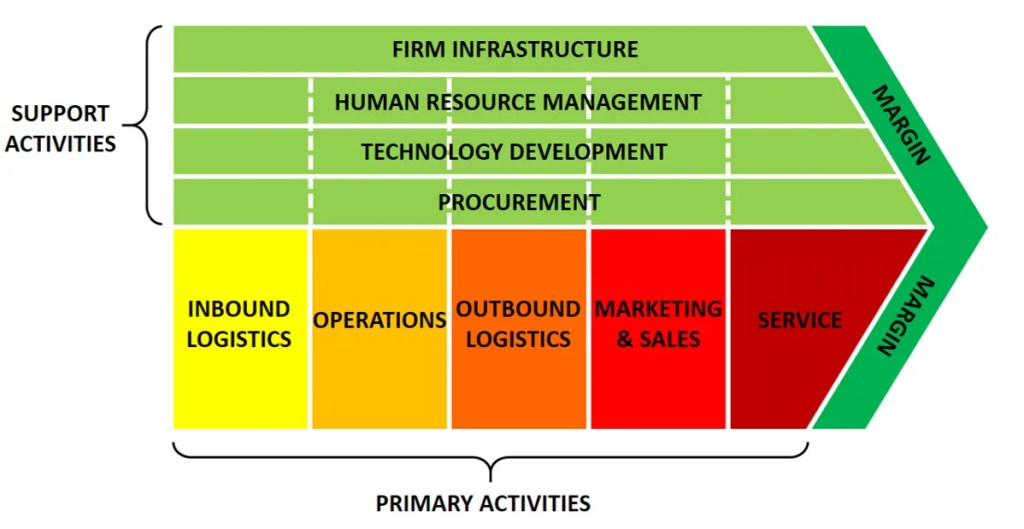
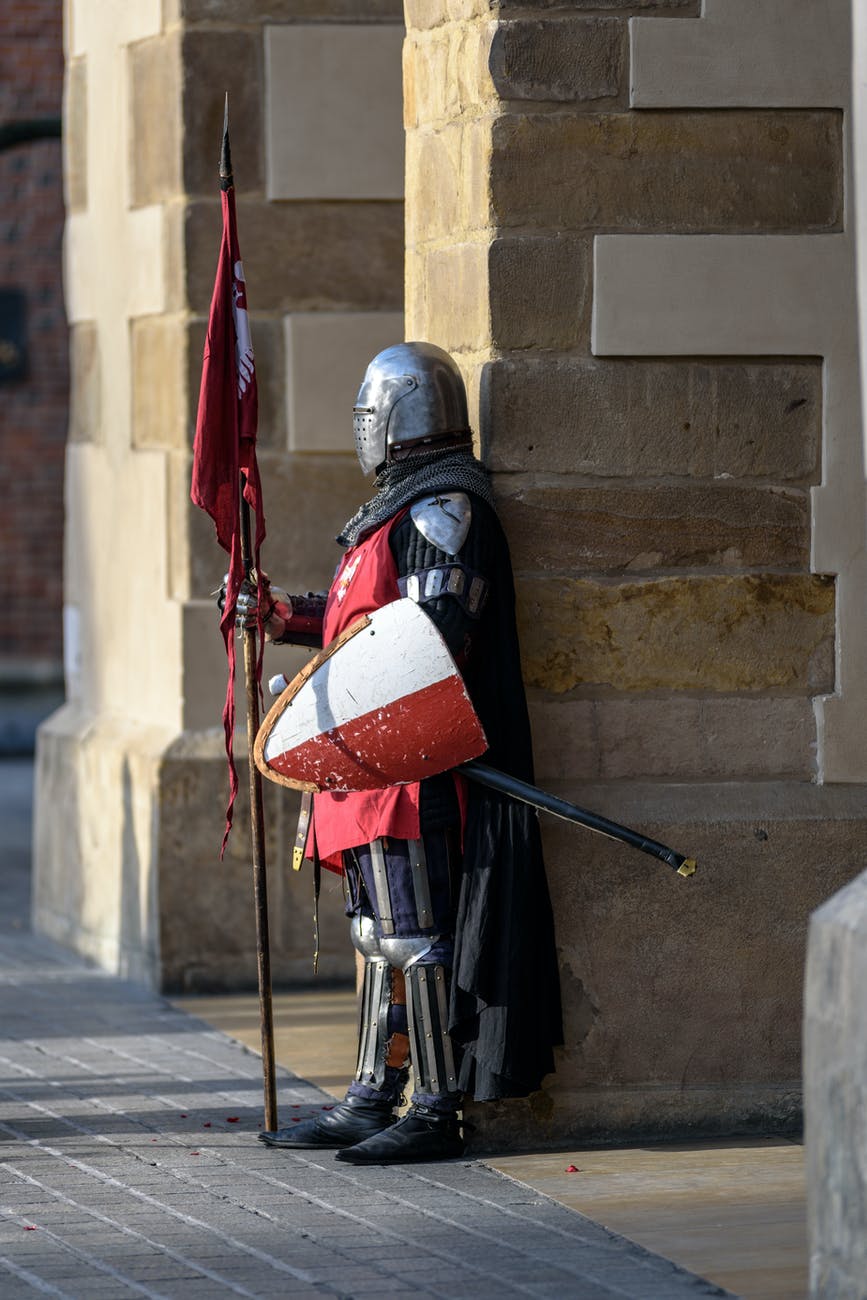
![[m1-2]](https://i.imgur.com/kEZj1sV.jpg) Authentication: The assurance that the communicating entity is the one that it claims to be.
Authentication: The assurance that the communicating entity is the one that it claims to be.













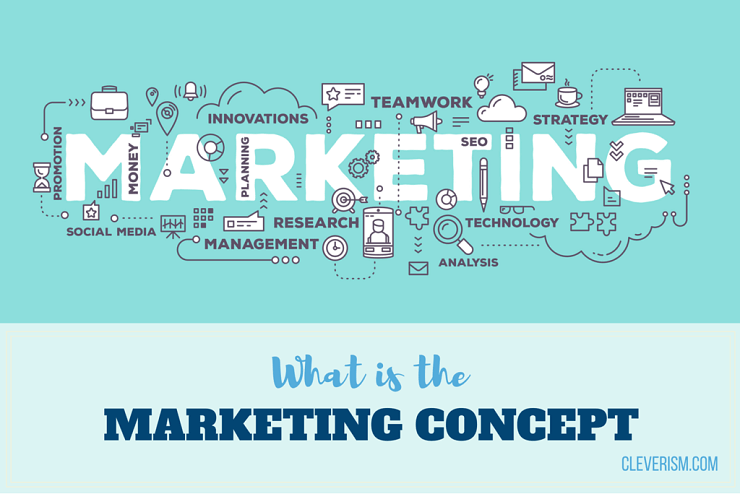








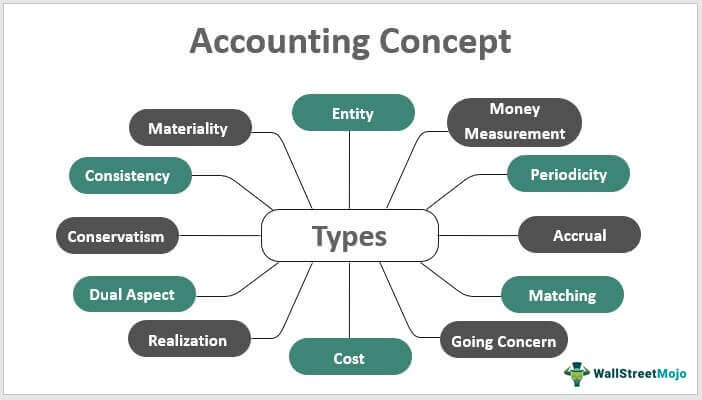




 Track2Training
You must be logged in to post a comment.