The Opposite of Fate by Amy Tan

Despite the subtitle, I bought this book expecting it to be more of a memoir than it actually is. I think Amy Tan’s main purpose in writing it was to set the record straight on a variety of topics, beginning with an inaccurate summary of her life that turned up in an edition of CliffsNotes. She does so in essays that directly address the points that need to be made, and also tosses in other writings that range from a college commencement address to an item she wrote for the newspaper when eight years old.

As such, it’s somewhat disjointed and uneven. Some parts appealed to me much more than others.

Early on, she provides some personal and family history, which includes plenty of elements readers will recognize from her fiction (a character who goes one day each year without speaking, for example, and most certainly the memorable voice of her mother). This is followed by a section in which she argues that readers ought not assume that her stories are autobiographical. (Maybe they aren’t, but reading between the lines in yet another section one can conclude that she sees a self-portrait in The Kitchen God’s Wife.) There’s also an eloquent rebuttal to the people in publishing and educational circles who insist on pidgeon-holing her as a representative of her ethnic group, gender, color, etc. and looking to her for politically correct lessons. That kind of writing, she feels (and I agree) amounts to propaganda, not literature. She says, “I write stories about life as I have misunderstood it. To be sure, it’s a Chinese-American life, but that’s the only one I’ve had so far.”

There are points at which it seems the lady protests too much. She mentions a journalist friend who says, “Any attention is valuable … If you receive any, you should be grateful.” I rather agree with that as well, because Tan’s path to literary success appears to have been unusually smooth. Better to be misunderstood by some harebrained people than completely ignored. This is not to suggest that she doesn’t deserve success; she emphatically does. But she too acknowledges that she has been lucky.

Her luck has not been only literary, since apparently she’s had more than her share of close brushes with death. For me, the final section is devastating. It describes a mysterious illness that overtook her and the frustratingly slow process of getting a diagnosis. Because of the story described in my own book, I recognized her discovery that most doctors and even professional medical societies are clueless when presented with something out of the ordinary. I recognized the cynical but helpful voices she found on Internet discussion boards, and her conclusion that, rare or not, this thing afflicts a heck of a lot of other people.

I found most of this book utterly fascinating. It sparked an interest in going back and rereading her novels. It reaffirmed an earlier impression that Amy Tan is someone I’d be glad to know (an impression that faded when I later visited her Facebook page). Most importantly, in discussing her life and what has been important to her, she shows how much of the joys and fears of this existence are common experiences

TAJ MAHAL:

ABOUT TAJ MAHAL:

Taj Mahal is one of the seven wonders in the world. Taj Mahal is one of the historic and most beautiful places in the world. The Taj Mahal is one of the most magnificent Indian historical monuments with complex visualization. The Taj Mahal is the materialized vision of love and marks a perfect indelible remark on it’s Mughal Architecture. The Taj Mahal is a white marble mausoleum built by the 17th century Mughal Emperor Shah Jahan. This structure on the bank of the river Jamuna is constructed on a platform 6.5 meters high. The Mahal was built in the loving memory of the Emperor’s beloved wife, Mumtaz Mahal. It also attracts thousands of tourists with no preference for religion or lifestyle. The words Taj Mahal means ‘ crown of the palace’ and is a symbol of eternal love. Taj Mahal is one of the main reasons why India is famous. Taj Mahal was declared as a Heritage Site by UNSECO in 1983.

ARCHITECTURE OF TAJ MAHAL:

The Taj Mahal is a perfect symmetrical planned building, with an emphasis on bilateral symmetry along a central axis on which the main features are placed. The Taj Mahal emits a sense of peace and harmony which is mainly caused by the structure’s near-perfect symmetry, the main dome and surrounding minarets, and the division of the gardens by four canals that meet at a raised central lotus pond. The building material used is brick-in-lime mortar veneered with red sandstone and marble and inlay work of precious/semi-precious stones. It is made of pure white marble with its special luster and fine texture. The marble was obtained from Makrana in Rajasthan. Inside the Taj Mahal, the cenotaphs honoring Mumtaz Mahal and Shah Jahan are enclosed in an eight-sided chamber ornamented with pietra dura (an inlay with semi-precious stones) and a marble lattice screen. The interior octagonal chambers are connected by diagonal passages. Floors and walkways use contrasting tiles or blocks in tessellation patterns. The inlay stones are of yellow marble, jasper, and jade polished and leveled to the surface of the walls. The calligraphy on the Taj Mahal is beautiful. The beauty of the black inscriptions over the white marble is an attractive feature of the edifice. The walls and pillars of the monuments are also adorned with calligraphy written in Thuluth script. Most of the inscribed verses are from the holy book of Islam- the Quran. Taj Mahal reflects different colors depending on the light. In the morning, it looks a little pinkish, in the afternoon with strong sunlight it appears shimmering white, milky white in the evening, and golden at night. The main structure is surrounded by gardens, fountains, and pools. Another interesting aspect of the architecture of the Taj Mahal is the iconography of the plants engraved in the walls and floors of the mausoleum.

WHEN WAS TAJ MAHAL BUILT? :

The construction of the Taj Mahal took over twenty years. It was built in 1632, and in 1648, the mausoleum was finished. Another 5 years were spent on the building of the enclosure, the ancillary buildings such as gardens, so the whole complex was completed in 1653.

DO DALIT LIVES MATTER?

DO DALIT LIVES MATTER?

AUTHOR: ARIBBA SIDDIQUE

Introduction:

We witnessed the slogan โ€˜Black lives matterโ€™ when it went viral all over social media in May 2020. The movement was in response to the death of an African-American citizen, America has been always known as the country which promotes โ€˜White supremacyโ€™. Every Indian condemned the murder of George Floyd who lost his life because he was a black person not fit for America.

The hashtag โ€˜black lives matterโ€™ has been used my many of us on our social media accounts. However, when this kind of discrimination happens in our own country, what do we do? We mute ourselves, politicize the issue and we condemn the government. This article analyses the hardships that the Dalit community in India has faced in recent times.

Recent cases regarding the discrimination with Dalits:

Privileged Indians often ignores the Dalits, their hardships, the atrocities that they face. Recently, on 6th June 2020, a Seventeen -year-old Dalit boy namedย Vikas Kumar Jadav was shot dead by 4 upper caste men for visiting a temple in Amroha in U.

In June 2020, a Dalit activist, Arvind Bansod from Nagpur, was found dead. He was publicly assaulted with casteist slurs by a mob. The police refused to file an FIR & declared the death as a suicide.

No FIR. No Justice. No hashtag on social media. No protest. Why? The reason is that a Dalit is not considered as equal despite being a citizen of the same country and having the same rights.ย 

Historical texts and legislations of India and the US:

The situation of Dalits in India is similar to that of African-Americans in the United States. Both are historically suppressed and treated as second class citizens in their own countries. Racial segregation is encouraged by legislations like โ€œBlack Codesโ€ and[L5]  โ€œuntouchabilityโ€™โ€™ made segregation in housing, education, public places; transport; parks, theatres, cemeteries, jails, and other public spaces legal in the US until only a few decades ago. This resulted in divided and hierarchical citizenship[L6] .

The Manusmriti in India, though not legally enforceable, has been the moral code that guides the upper caste community in their treatment and behaviour towards the Dalits in daily life[L7] . The Dalits were not allowed and are still not allowed in many areas to use public wells and enter temples. The Dalit children are boycotted, made to sit separately in many schools and drink water from separate utensils. Inter-caste marriages between a Dalit, and an upper caste are still leading to the honour killing of the Dalit person. The Dalits have been oppressed for cheap labour, forced to take up vigorous menial work with less than subsistence wages.

 A report by Human Rights Watch states that:

Discriminatory and cruel, inhuman, and degrading treatment of over 165 million people in India has been justified on the basis of caste… (caste divisions in India) are reinforced through the practice and threat of social ostracism, economic boycotts, and physical violence.”[2]

Dalits, the literal Sanskrit meaning “broken/scattered”. According to NCDHR, every fifteen minutes, a crime is committed against a Dalit, six Dalit women are raped every day and Fifty-six thousand children living in slums die due to malnutrition every year in India. Dalits, mostly landless, are forced to work on the fields of the upper caste Hindus at very low wages[L8] . The democratic polity and the Constitution of India, which assures equality and abolishes untouchability, have failed in achieving social and economic equality. Violence against the Dalits is in everyday news. The upper castes seek to control the person (through unpaid or lowly paid physical labour and sexual assaults on Dalit women), mind (through forceful cultural traditions and customs and denial of educational opportunities) and soul (through religious beliefs and Manusmriti) of the Dalits[L9] .

The NCDHR, along with NDMJ, analysed data from the past 10 years and released a status report on the implementation of the Scheduled Castes and Scheduled Tribes (Prevention of Atrocities) Act 1989 (SC/ST Act) and Rules 1995. The report, called โ€œQuest for Justiceโ€, noted that during the years 2009-18, more than 3,91,952 cases of atrocities were reported against SCs and 72,367 against STs. As many as 12,750 incidents of rape were registered between 2014 and 2018. Attempt to rape increased to 677 in 2018 from 87 in 2014. There were 5 cases of acid attack against SC women in 2018. From 2014 to 2018 cases against SC women rose sharply by 42.63 per cent to 41,867 from 5,154.[3]

Conclusion:

Dalits are murdered, beaten and shunned, but the stories arenโ€™t covered by mainstream media. Minimal reportage leads to privileged and ignorant people into believing that casteism doesnโ€™t exist in India anymore. We need to say their names and know their stories[L10] .


[1]Aathira Konikkara, Dalit activist Arvind Bansod was murdered, not a suicide: Lawyer, Caravan Magazine, (October 03, 2020, 10:00 PM) https://caravanmagazine.in/author/1118

[2]Human Rights watch โ€˜Hidden Apartheid Caste Discrimination against Indiaโ€™s Untouchables(October 03, 2020, 10:04 PM) https://www.hrw.org/report/2007/02/12/hidden-apartheid/caste-discrimination-against-indias-untouchables

[3]National Campaign on Dalit Human Rights, (October 04, 2020, 02:00am) http://www.ncdhr.org.in


 [L1]Source?

 [L2]Source?

 [L3]Source?

 [L4]Describe the facts of the above two cases precisely or add such more cases to make it more informative.

 [L5]Mention Voting right Act, 1965

 [L6]Mention Art. 17 abolition of untouchability and yet the problems are faced by the Dalits.

 [L7]Cite proper historical source.

 [L8]Provide equivalent citation in the footnotes for the source.

 [L9]Mention the Articles in the constitution regarding the protection of right, equality and life.

 [L10]Make the conclusion more elaborate and remarkable.

Solar Energy: Advantages and Challenges

What is Solar Energy?

Sunlight is a renewable source of energy which can be converted into usable energy by solar panels. There are two main types of solar energy. Solar photovoltaic (PV) panels which directly convert solar energy into a usable form of energy using a PV cell containing a semiconductor material. CSP (concentrating solar power) on the other hand, concentrates energy from sunlight to a heat receiver which transforms energy from heat into mechanical energy, and in turn, solar thermal electricity.

Photo by Pixabay on Pexels.com

Advantages of Solar Energy

  • Because solar energy does not emit greenhouse gases, there will be no negative environmental impact. It is a pollution-free and non-polluting source of energy.
  • Solar energy is a renewable source of energy. As a result, there will be no trouble using it all up without leaving any for future generations.
  • Expanding the solar energy business will result in a large number of green jobs.
  • Solar energy will benefit the economy in the long run because there will be no need to import fossil fuels like coal for energy.
  • There is no need to buy any resources because sunlight is free.
  • Solar energy requires money to install, but the energy generated is the cheapest electricity. So, many more people can have access to affordable electricity.
  • Even in disaster-hit places, off-grid solar systems provide power. Off-grid means buildings designed to be self-sufficient without depending on public electricity and water lines.
  • The production of electricity from fossil fuels requires a large amount of water. Solar energy production does not require the use of water. As a result, it saves water. Therefore, this makes solar energy more reliable. Even if there is a drought, power generation will not be affected.

Challenges in using solar energyย 

  • Solar power generation on a huge scale requires a large area of land.
  • Solar cells currently only use a small portion of sunlight. Increasing the efficiency of solar cells is a big challenge. Moreover, as efficiency improves, the amount of land required decreases.
  • Solar energy production facilities need a huge investment to set up.
  • Not every part of the earth gets enough sunlight to totally rely on it.
  • Storage is required to ensure power supply during the night when there is no sunlight.
  • The clean energy industry is facing a skilled labour shortage. Another challenge is to train a large number of people in the required skill set to keep up with the increasing solar industry.
  • Toxic chemicals such as sulfuric acid and hydrochloric acid are used in the production of solar cells. Developing efficient solar cells using less toxic chemicals is a big challenge.

Conclusion

The use of solar energy will result in energy transformation from fossil fuels to clean and sustainable energy. It also helps in the fight against global warming. Government should provide subsidies and widespread awareness to encourage roof-top solar grids and solar farms, so that everyone will have access to affordable and clean energy.

THE BIOGRAPHY OF ALEXANDER POPE:

EARLY LIFE:

Alexander Pope, (born May 21, 1688,ย London, England-died May 30, 1744, Twickenham, near London), poet and satirist of the English Augustan period, best known for his poemsย An Essay on Criticism ย (1711),ย The Rape of the Lockย  (1712โ€“14),ย The Dunciadย (1728), andย An Essay on Manย (1733โ€“34). He is one of the most epigrammatic of all English authors. Popeโ€™s father, a wholesale linen merchant, retired from business in the year of his sonโ€™s birth and 1700 went to live at Binfield in Windsor Forest. The Popes were Roman Catholics, and at Binfield, they came to know several neighboring Catholic families who were to play an important part in the poetโ€™s life.ย 

EARLY WORKS:

Windsor Forest was near enough to London to permit Popeโ€™s frequent visits there. He early grew acquainted with former members of John Drydenโ€™s circle, notably William Wycherley, William Walsh, and Henry Cromwell. By 1705 his โ€œPastoralsโ€ were in draft and were circulating among the best literary judges of the day. In 1706 Jacob Tonson, the leading publisher of poetry, had solicited their publication, and they took the place of honor in his Poetical Miscellanies in 1709.

This early emergence of a man of letters may have been assisted by Popeโ€™s poor physique. As a result of too much study, so he thought, he acquired curvature of the spine and some tubercular infection, probably Pottโ€™s disease, that limited his growth and seriously impaired his health. His full-grown height was 4 feet 6 inches (1.4 meters), but the grace of his profile and fullness of his eye gave him an attractive appearance. He was a lifelong sufferer from headaches, and his deformity made him abnormally sensitive to physical and mental pain. Though he was able to ride a horse and delighted in travel, he was inevitably precluded from much normal physical activity, and his energetic, fastidious mind was largely directed to reading and writing.

CAREER AS A SATIRIST :

As Popeโ€™s career continued, his satirical writings became more and more pointed. Theย Dunciad, first published anonymously in 1728, would come to be considered a masterful piece of poetry but earned him a huge amount of hostility. The poem is aย mock-heroic narrative that celebrates an imaginary goddess and her human agents who bring ruin to Great Britain. The allusions in the poem were aimed at many prominent and aristocratic figures of the day, as well as the Whig-led government. Popeโ€™s satire earned him so many enemies that, for a time, whenever he left the house, he brought his Great Dane with him and carried pistols, in case of a surprise attack by one of his targets or their supporters. In contrast, hisย An Essay on Manย was more philosophical, reflecting on the natural order of the universe and suggesting that even the imperfections in the world are part of rational order.

FINAL YEARS AND LEGACY:

After 1738, Pope mostly stopped producing new work. He began working on additions and revisions to theย Dunciad, publishing a new โ€œbookโ€ in 1742 and a complete revision in 1743. In the new version, Pope more clearly satirized and criticized Horace Walpole, a Whig politician who was in power and who Pope blamed for many of the problems in British society.

By that point, however, Popeโ€™s lifelong poor health was catching up to him. He had suffered from chronic pain, respiratory problems, a hunchback, frequent high fevers, and other problems since childhood. In 1744, his doctor reassured him that he was improving, but Pope only made a joke and accepted his fate. He received the last rites of the Catholic Church on May 29, 1744 and died at his villa, surrounded by his friends, the following day. He was buried at St. Maryโ€™s Church in Twickenham.

In the decades following his death, Popeโ€™s poetry went out of fashion for a time. 

Published by Ayisha Shabana. M….

THE BIOGRAPHY OF DANIEL DEFOE:

Daniel Defoe was an English writer, trader, journalist,ย Pamphleteer, and spy. He is most famous for his novelย Robinson Crusoe published in 1719, which is claimed to be second only to the Bible in its number of translations.ย He has been seen as one of the earliest proponents of theย English novel and helped to popularise the form in Britain with others such asย Aphra Ben andย Samuel Richardson.ย Defoe wrote many political tracts, was often in trouble with the authorities and spent a period in prison. Intellectuals and political leaders paid attention to his fresh ideas and sometimes consulted him.

HIS EARLY LIFE:

Daniel Foe was probably born inย Fore Street in the parish ofย St Gile cripplegate, London.ย ย His birthdate and birthplace are uncertain, and sources offer dates from 1659 to 1662, with the summer or early autumn of 1660 considered the most likely. His father, James Foe, was a prosperousย tallow Chandler of ย Flemish descent,ย and a member of theย Worshipful Company of Butchers. In Defoe’s early childhood, he experienced some of the most unusual occurrences in English history: in 1665, 70,000 were killed by the Great Plague of London, and the next year, the Great Fire of London left only Defoe’s and two other houses standing in his neighborhood. In 1667, when he was probably about seven, a Dutch fleet sailed up theย Medwayย via theย River Thamesย and attacked the town ofย Chathamย in theย raid on the Medway. His mother, Alice, had died by the time he was about ten.

HIS EDUCATION :

Defoe was educated at the Rev. James Fisher’s boarding school in Pixham Lane inย Dorking, Surrey. His parents wereย Presbyterian dissenters, and around the age of 14, he was sent toย Charles Morton’s dissenting academyย at Newington Green,ย  then a village just north of London, where he is believed to have attended the dissenting Church there.ย He lived on Church Street, Stoke Newington. During this period, the English government persecuted those who chose to worship outside the Church of England.

HIS BUSINESS CAREER:

Defoe entered the world of business as a general merchant, dealing at different times in hosiery, general woolen goods, and wine. His ambitions were great and he was able to buy a country estate and a ship (as well asย civetsย to make perfume, though he was rarely out of debt. On 1 January 1684, Defoe married Mary Tuffley at St Botolph’s Aldgateย .ย She was the daughter of a London merchant, receiving aย dowryย of ยฃ3,700 a huge amount by the standards of the day. With his debts and political difficulties, the marriage may have been troubled, but it lasted 47 years and produced eight children. In 1685, Defoe joined the Ill-fatedย  Monmouth Rebellion ย but gained a pardon, by which he escaped the Bloody Assizesย ย of Judgeย George Jeffreys .ย Queen Maryย and her husbandย  William IIIย were jointly crowned in 1689, and Defoe became one of William’s close allies and a secret agent.

Some of the new policies led to conflict with France, thus damaging prosperous trade relationships for Defoe.ย In 1692, he was arrested for debts of ยฃ700 and, in the face of total debts that may have amounted to ยฃ17,000, was forced to declare bankruptcy. He died with little wealth and evidently embroiled in lawsuits with the royal treasury.

HIS WRITING CAREER:

Defoe’s first notable publication was An Essay upon Projectsย , a series of proposals for social and economic improvement, published in 1697. From 1697 to 1698, he defended the right of Kingย  William IIIย to a standing armyย ย during disarmament, after the Treaty of Ryswickย ย (1697) had ended theย Nine Years’ War ย (1688โ€“1697). His most successful poem, ย The True-Bornย (1701), defended William against Xenophobic ย  ย attacks from his political enemies in England, and English anti-immigration sentiments more generally. In 1701, Defoe presented theย Legion’s Memorialย toย Robert Harley , then- Speaker of the House of the Commons โ€”and his subsequent employerโ€”while flanked by a guard of sixteen gentlemen of quality. It demanded the release of the Kentish petitioners, who had asked Parliament to support the king in an imminent war against France.

Published by Ayisha Shabana. M

Nobel prize

Photo by Nataliya Vaitkevich on Pexels.com

every year in he month of october, swedis and norgwegian committees award 6 nobel prizes to an individual or organization in 6 different fields for their ground breaking work in their respective fields and their contribution for the humanity. the 6 different fields include physiology or medicine, physics, chemistry, economic science, literature and peace work. the winners are awarded with a diploma and a degree with cash prize of about 1.1 million$. the prize money is divided when there are multiple winners.

GANDHI’S GOAL-SHANTI SENA

SHANTI SENA

              *    SHANTI SENA is a word derived from Sanskrit.

               *  SHANTI means peace and SENA Means army.

                *  SHANTI SENA is also called as peace army.


MAIN GOALS OF SHANTI SENA:

*.   Service to peoples as a volunteer at any time.

*.    Give to a cause close to your heart.

*.     Most important goal is to bring the non-violence.

*.       No religion diverse all religions must       get equal rights and respect.

All are equal

QUOTES BY PEACE ARMY:-

“THE GREAT GOOD IS WHAT WE DO FOR ONE ANOTHER”.

” TREES NEED FOR SEED PEOPLE NEED FOR SHANTI SENA”.

  NON – VIOLENT LIFE :-

                        *  Non violent is a personal practice to not make harm to others.

                        *  Gandhi introduced the concept of ahimsa ( Non-violence).

                         *. Non violence is powerful tool for the social protest.

                          *. To create non violent children.It is crucial to maintain the peaceful environment.

                          *. It is the active out pouring of one’s whole being of another.

                          *. Non violence love is active not passive.


IMPORTANT OF NON VIOLENT COMMUNICATION IN Society:-

* Non violent will bring peace among the people.

* Non violent communication help us to express our feelings.

* Non violent communication means complete lack of violence in the way we communicate with others.

* To respect our people.

MAIN COMPONENTS OF NON VIOLENT COMMUNICATION:-

* Observation.

* Feelings.

* Needs.

* Requests.

SHANTI SENA:-

* SHANTI SENA makes love and peace to the people.

* SHANTI SENA brings non violence to the people.

* SHANTI SENA is not only to maintain peace also good relationship.

* SHANTI SENA is the non weapon war of peace.

* If one should have shanti sena he should ignore annoyance.

* SHANTI SENA avoid us from the jealous and competition with the people.

* SHANTI SENA is one of the fundamental peace policy of people.

” soldiers army save country

Peace army save courtesy”.

GANGA RIVER

The Ganges is the largest river in India with a profound religious significance. It is known by several names, including Jahnavi, Gange, Shubhra, Sapteshwari, Nikita, Bhagirathi, Alaknanda, and Vishnupadi. Nothing can match the ever-lasting divinity of the holy River Ganga; the sacred river is a true mother by all means. 

Children’s Day

Children’s Day is a commemorative date celebrated annually in honor of children, whose date of observance varies by country. In 1925, International Children’s Day was first proclaimed in Geneva during the World Conference on Child Welfare. Since 1950, it is celebrated on 1 June in most Communist and post-Communist countries. World Children’s Day is celebrated on 20th of November to commemorate the Declaration of the Rights of the Child by the UN General Assembly on 20 November 1959. In some countries, it is Children’s Week and not Children’s Day.World Children’s Day

7 WONDERS OF THE WORLD

Our world is filled with the most unique structures that are both man-made and natural. Some of the man-made creations include churches, tombs, temples, monuments, mosques, buildings and even cities. These structures have withstood the test of time and they continue to leave many awestruck with their brilliance. There are many in the world, but only seven are selected, which are deemed to be the best.

The 7 wonders of the world are:

  • Taj Mahal – India
  • Colosseum – Italy
  • Chichen Itza – Mexico
  • Machu Picchu – Peru
  • Christ the Redeemer – Brazil
  • Petra – Jordan
  • Great Wall of China – China

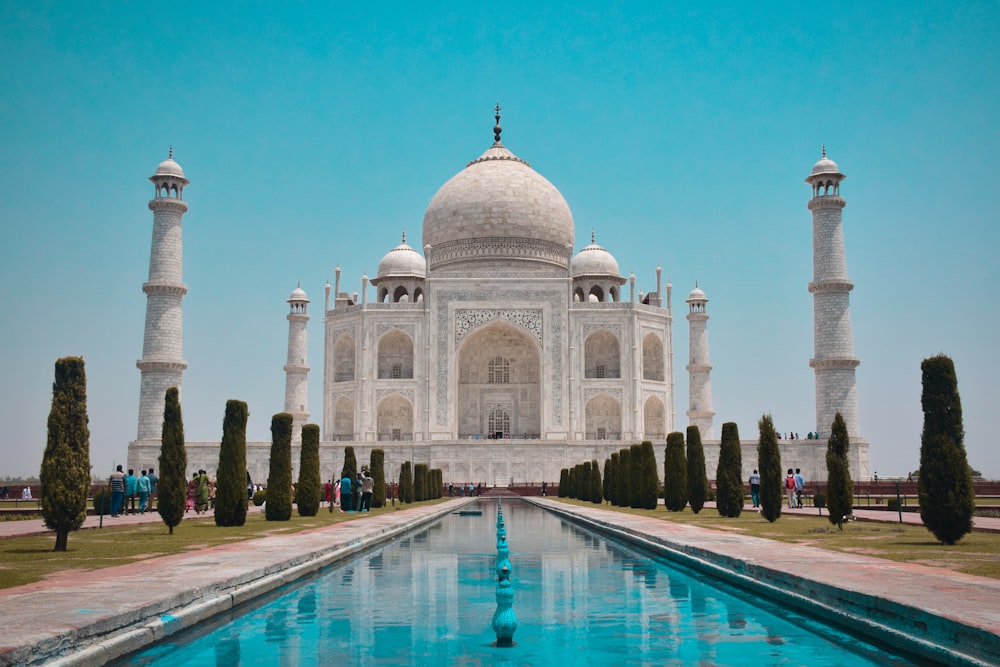
TAJ MAHAL – INDIA

Taj Mahal India photo โ€“ Free Taj mahal Image on Unsplash
TAJ MAHAL

The Taj Mahal is well known across the world for its historical value, its tale of love, and its stunning beauty. The Taj Mahal is located in the historic Indian city of Agra. It houses the tomb of Mumtaz Mahal, the wife of the Mughal Emperor Shah Jahan. It is said that the Emperor loved his wife dearly and was prompted to build the Taj Mahal after her death as a testament to his love.The construction of the Taj Mahal was completed by 1632. It took 17 years, 22,000 laborers, stonecutters, painters, and embroidery artists, and 1000 elephants to complete the Taj Mahal. The construction of the temple cost the equivalent of US$827 million today. 28 types of precious and semi-precious stones were used to decorate the Taj Mahal. The monument changes color depending on the time of the day and the moon. In 1983, the Taj Mahal was inscribed by the UNESCO as a World Heritage Site. Today, it attracts 7 to 8 million annual visitors each year.

COLOSSEUM – ITALY

Visiting the Colosseum: Highlights, Tips & Tours | PlanetWare
COLOSSEUM

Rome, Italy, hosts the Colosseum, which is one of the world’s seven wonders. Sometimes called the Flavian Amphitheatre, the Colosseum is an oval-shaped amphitheater in the center of the city. Constructed from concrete and sand, it is the largest amphitheater in the world. The Colosseum’s construction was initiated in AD 72 by Emperor Vespasian and was finished by AD 80 by his successor, Titus. Domitian, another emperor of the Flavian dynasty later made certain modifications to the amphitheater. The labor of tens of thousands of slaves were used to build this magnificent structure. The Colosseum had the capacity to host about 80,000 spectators and 80 entrances at the time of its construction.Mock sea battles, animal hunts, famous battle re-enactments, executions, and mythological dramas were just some of the public spectacles held at the Colosseum. Entry to events in the Colosseum were free and paid from the Emperor’s treasury. However, the Colosseum bore witness to a lot of brutality. Often over 10,000 animals were killed in a day. Today, this wonder of the world is a popular tourist attraction and serves as the iconic symbol of Imperial Rome.

CHICHEN ITZA – MEXICO

Chichen Itza Sunrise Tour | Globol

Chichen Itza is an archaeological site located in Mexicoโ€™s Yucatรกn State. It is a pre-Columbian city that was built during the Terminal Classic period by the Maya people. Chichen Itza’s structures like the temples, arcades, and pyramids were sacred to the ancient Maya people. Chichen Itza is believed to have been one of the major cities of the ancient Mayan world and constructions in the city exhibit a variety of architectural styles.

The Temple of Kukulkan in Chichen Itza is an archeological marvel based on Maya astronomy. It has 365 steps for each day of the year. There are 91 steps on each of the four sides and the platform at the top serves as the 365th step. The site even houses a sophisticated ancient observatory that exhibits the excellent advanced astronomical knowledge possessed by the Maya people. Chichen Itza was abandoned in the 1400s. However, it is still not known why people left their homes in the city. The historical value of the site contributes to its status as a wonder of the world.

7

Distance Learning

Distance learning can truly be defined as the way of getting an education without visiting a school or attending a class physically.

Adaptability and Freedom:

One of the main advantages of distance learning can be the personalized approach to getting an education regardless of the channels or mediums you are using for this purpose. Whether you are getting study materials online or through posts you can learn only when a connection is developed between the material of the course and you. You get the freedom to deal with the study material in the distance learning process. You can plan your learning process at your convenience instead of sticking with a fixed schedule.

Self-inspiration:

Distance learning encourages you to motivate yourself to learn due to the absence of a traditional teacher to guide you. You will have to create a learning environment and control it effectively so that a band of self-motivation develops in you to inspire you to learn for your personal growth. You can cultivate this band in you by engaging yourself in distance learning methods.

Flexibility to Choose:

You will have to follow a set schedule of learning as per the curriculum of the school if you are following traditional ways of learning. But different types of distance learning allows you to set your learning schedule as per your convenience without following a regular schedule of learning. Even if you are out of touch with the learning process, a distance learning program offers you the flexibility to choose your course of learning.

Easy to Access:

If you cannot attend regular classes due to various reasons like time constraints and distance etc. then distance learning can be the best option for you to access the benefits of your education. If you opt for a correspondence course for distance learning then you will have to make postal delivery as a connection between you and your distance learning centre. But if you have a computer and internet connection then you can opt for an online learning method by using some video conferencing software like ezTalks Cloud Meeting etc. It will allow you to interact with your teachers face-to-face to resolve your problems. Moreover, you can continue learning even without taking leave from your job.

Earn While You Learn:

For those who want to improve their resume by getting a higher education and without breaking their existing job then distance learning can be the best option for them. You can go on earning your livelihood along with improving your qualification as distance learning will accommodate both, learning as well as earning.

Saves Money and Time Both:

By joining a distance learning course you can save money and time spent travelling to a nearby educational institution. Distance learning allows you to access your learning centre online without any additional cost. Moreover, the course offered at distance learning centres is cheaper than the courses provided at traditional education centres.

Easy Access to the Experts:

The students in traditional classes have limited options to guide them but distance learning by video conferencing will provide you expanded opportunities to access the experts in your course even if they are not located in your town or country. They can easily get connected with you from any part of the world to share their expertise and experiences with you. Such a facility is not possible in traditional classrooms.

Communicate with Other Educational Institutions:

You can also be in touch with several other e-schools by getting distance learning through video conferencing software. You can also connect with the students located at far locations from you, anywhere in the world, to mutually share the experiences and problems along with solving problems of each other. Distance learning through video conferencing also allows you to hone your interactive skills by collaborating with others from different work environments and cultures. Such facilities will not be available in the traditional classroom education system.
Virtual Trips:

Another important advantage for distance learning is to plan virtual trips if your budget does not allow you to go on trips from an actual school. Video conferencing allows the students of distance learning courses to visit the location important for them and experience the enjoyment even better than an actual trip. These virtual trips allow you to visit locations that you might have never thought of. Moreover, such trips can enable your teachers or lecturers to make your ordinary lessons more interesting than ever.

Thus, distance learning through video conferencing software tools like ezTalks Cloud Meeting or Skype etc. offers some benefits for those who want to improve their qualification even without disturbing their daily routine.

Me Before You- A Book Review

A love different than any, Me before you by Jojo Moyes is going the hug, twist, and crush your hearts. It is cruelly beautiful. Introducing us to the story of two strangers, who were never supposed to meet if wreckage had not greeted them if they hadn’t been completely flipped over again and again in the hands of their wicked lives, Will Traynor and Louisa Clark. Two souls, perfectly carved out for each other, like two jigsaw pieces fit together, and yet, all the while, poles apart.

The story starts with a small yet life-altering chronicle in the world of Will. We can see he is a dapper guy, with impossible fears, and a great liking for adventure and travel. But before we start hoping the rising scene starts, the climax greets upon our doors. Will has an accident. This is where we start our bewitching tale. Funny right? I thought so too at first. The fact that how an almost-fatal thing can start a love story is beyond my mental capability. But this happened, not only in this fictional tale but also in real life. I have seen numerous examples of how, when one type of living ends, the other starts, but the person inside stays constant. It is magnificent.

You will cry, OH, you will cry, at the sweetness, the unfairness, the predictable unpredictability, you will wholly devour this book with your soul. Or whatever sane part’s left of it, though I doubt there’ll be any after you read it. It is that good. I am not even trying to oversell this book, but it is hands-down beguiling. No matter how foreseeable the ending is, this book is all worth it. It is worth the time, the effort and the constant search of a dictionary on every page.

Instructions For Dancing: A Book Review

Though we can predict what happens on the next page, this dazzling book certainly doesn’t prove to be dull. Instructions for dancing by a very talented Nicola Yoon gives us the hypes for love, lust, and well…dance!. It starts with an obvious scenario Of almost every romance novel. The girl gives up her past life and self because of something tragic and life-changing which forced her not to believe in love and happily-ever-afters anymore. But, she knows, deep-down, the silent and loneliest place of her, That romance-novel reading girl with a pair of dreamy eyes containing unwavering fire still hopes for something magical to happen in her dreary life, and before she knows it, it does.

Yvette Antoinette Thomas, better known as Evie wakes up a simple morning, hoping for a normal day. Little does she know that she will not be the same anymore, ever again, and nor will her world. After she packs her old books with hopeless eyes and a forgone excitement for anything, she plans to give them away to the library. As soon as she paddles out with her unique but absolutely fabulous bicycle, it strikes her that it is a Sunday, and the library is shut on Sundays. With an even soulless, even more cynical sense of life(even she didn’t know it was possible) she paddled her way back to home, when, out of nowhere, she passed upon a little blue junction with a big board showing “open library”. The rest is history.

Comfort and luxury

โ€œWe act as though comfort and luxury were the chief requirements of life when all that we need to make us happy is something to be enthusiastic about.โ€ – Albert Einstein

The Dip

Across language learning, company building, and any kind of creative project, there is a dip. The Dip is the long stretch between beginnerโ€™s luck and real accomplishment.
Extraordinary benefits accrue to the tiny minority of people who can push just a tiny bit longer than most.

The Start before the Dip

In any goal that has to be accomplished, there is a Start. It usually gets overlooked, as it’s always there. 
The Start is a much bigger problem since you canโ€™t reach The Dip if you donโ€™t get through The Start, and many more people fantasize about doing something than do it and give up.

Motivation management

The biggest problem we face with completing our projects isnโ€™t productivity or time management, but motivation management. When youโ€™re sufficiently motivated to accomplish something, youโ€™ll move heaven and earth to do it.

Motivation Defined

Motivation is โ€œthe reason or reasons one has for acting or behaving in a particular way,โ€ or rephrased, โ€œthe general desire or willingness of someone to do something.โ€

โ€œWhen you quit something that you had initially wanted to do, itโ€™s because the reasons to stop eventually came to outweigh the reasons to continue. Thus, to maintain your motivation you can either strengthen the reasons to keep going or weaken the reasons to quit. Successful motivation efforts generally include both.โ€

  • Ericsson & Poole

Getting Motivated to Start a Project

โ€ข Increase your reason to start a project, by increasing the value of starting it.
โ€ข Increase your expectancy of succeeding at that project.
โ€ข Decrease your reasons to delay, by increasing urgency, using a deadline.

Parkinson’s Law

It states that “work expands to fill the time available for its completion.โ€

A commitment Device

Many people use a commitment device or game their surroundings to get and stay motivated.
You can physically help your goal by things like throwing away your junk food, only showering at the gym so that you go there, and similar activities aimed at focussing on your goal. People also use public commitments in social media to stay motivated by peer pressure.

Stay Motivated 

Set small, incremental goals that are sufficiently exciting to be motivating and for which you have a reasonable expectation of completing.

How To Keep Going

โ€ข Maintain your sense of Expectancy in the project using small wins and accomplishments.
โ€ข Reward yourself.
โ€ข Maintain a sense of value by finding a way to remind yourself of the bigger picture of the small, everyday bouts of effort.
โ€ข Build positive habits.
โ€ข Find flow.
โ€ข Set clear follow-on goals.
โ€ข Maintain energy.

Governments budgeting

Description of the budget

The word โ€˜budgetโ€™ is derived from the French word, Bougette, which means a leather wallet or purse. Therefore, the term modern budget refers to a document that contains estimates of revenue and expenditure of a country, usually for one year.

Types of Budget
Budgets can be categorized based on the following principles:

(i) Combined time.
(ii) Number of budgets tabled in the legislature.
(iii) The overall finance budgets position is presented in the budget.
(iv) An approved policy on the takeover of revenue and expenditure in the budget.
(v) Division of receipts and expenses in the budget.

Based on these principles budgets can be:

(i) Annual budgets or long-term budgets.
(ii) One or more budgets.
(iii) Excess budgets, deficits or estimates.
(iv) Budget or revenue budget.
(v) Departmental budget or operating budget.

A brief description of the different types is as follows:

Annual or long-term budgets:
Generally, Government budgets are for one year, that is, for one year. In India, England and many other commonwealth countries the financial year starts on April 1 and ends on March 31, but in the U.S.A., Australia, Sweden and Italy the dates are 1st July and 30th June.
Some countries adopt a planned economic policy and meet the requirements for long-term planning, using a long-term budget, that is, preparing a budget for three years or more. Such a budget is a long-term plan rather than a long-term budget because what is offered is a financial plan over the years to fund the program.
These countries spread the use of program costs over many years. The legislature approves the plan and estimates its costs, but that does not equal the actual voting of all-time shares. Every year the national budget will include expenditure on a plan for that year to be approved by the legislature.

One or more budgets:
When the estimates of all Government functions are allocated to a single budget, it is known as a single budget. The advantage of a single budget is that it reflects the financpractisetion of the Government as a whole.
But if there are separate budget-related budgets passed by the legislature, it is called a mass budget. In India, we have two budgets โ€” one for the railway line and one for the rest of the departments. The practise of having a separate train budget began in 1921. In England, there is one budget.

Extra income, deficit or limited budget:
A budget is a surplus if the estimated income exceeds the estimated cost/expense But if the expected revenue falls below the expected cost, it becomes a budget deficit. According to economists, a deficit budget is a sign of global development. A limited budget is when the expected revenue is equal to the expected cost/expense. Budgets are often in short supply.

Income or budget of income:
A budget is one in which the estimates of various items of income and expenditure include amounts to be acquired or used in one year.
In revenue and expenditure budgets, accumulated in one financial year, are planned for that financial year regardless of whether the revenue is available or expenses incurred in that financial year. In India, Britain and the U.S.A., counts are calculated, in France and other continents, counting income.

Departmental or operational budget:
The current practice is to have a departmental budget, that is, the revenue and expenses of one department are organized under it. It does not provide any information about the work or activity that has been budgeted for. The operating budget is another where the total cost of a particular project is compiled under the head of a specific program.
It is organized into activities, programs, activities and projects, for example, in the case of collaboration (employment), it will be divided into programs such as higher education, Secondary and Higher Education. Each program will be divided into activities, for example, teacher training is a task. The project is the final unit of division of labour.
It symbolizes work as a major project, such as the construction of a school building. The A.R.C. proposed the adoption of a budget for all the departments and agencies of the Central and provincial governments that have managed development programs.

The Romantic Revival

Introduction

The first thirty years of the 19th century is termed as the period of the Romantic Revival in English literature. The Elizabethans were the first romantics. The romantic spirit suffered a decline during the subsequent ages and it was left to the writers, especially the poets of the early 19th century, to bring back that spirit once again to literature. The Romantic Revival is a broad term used to indicate the change that came over literary sensibility and expression during this period.

Romantic Revival in English Literature

The Romantic Revival was a revlot against the neo-classical spirit. The classical mode had outlived its utility and a change was universally felt. The signs of revolt became evident when James Thompson published his ‘The Season’, a poem totally new in matter and manner. Collins and Gray enlarged the spirit of the movement in their odes and elegies. Burns, Crabbe and Cowper also contributed to the incipient revolt against the neo-classical traditions. Among the early romantics William Blake was the most revolutionary and his two publications ‘Songs of Innocence’ (1789) and ‘Songs of Experiences’ (1794) were landmarks in the evolution of the romantic spirit in English poetry. These poets are called ‘the transition poets’ because they represented a period just before the great romantics.

Impact on French Revolution

The ideas of the French Revolution such as liberty, equality, and franternity encouraged the growth of the romantic spirit. The literature and arts of ancient Greece and Rome and the writngs of philosophers like Rousseau also had an impact on the Romantic Revival. Victor Hugo defined romanticism as liberalism in literature. The roamntic outlook emphasised spontaneity of expression and encouraged man’s right to utter his thoughts without restrictions.

Romanticism in poetry

Romanticism is the expression of sharpened sensibilities and heightened imaginative feeling. It found solace in going back to the ancients both in mythology and history. It was also a return to nature. Romanticism was not only concerned with beauty and inner life but also it added strangeness to beauty. Other aspects of romanticisim are a subtle sense of mystery, an exuberant intellectual curiosity and instinct for the elemental simplicities of life. Thus the Romantic Revival brought back many of the characteristics of the Renaissance and the Reformation. The diginity and importance of man was recognised and the emotions and feelings of even the humblest human being were recognised as worthy of artistic and literary expression. The spirit of the Romantic Revival was best expressed in the poetry of the great romantics Wordsworth, Coleridge, Keats, Shelley, and Byron and in the novels of Walter Scott. Even the prose writings of Charles Lamb were coloured by romantic sentiments.

The Lyrical Ballads published by Wordsworth and Coleridge in 1798 inaugurated the romantic era. It is called the period of Romantic Revival because the glorious productions of the nineteenth century had a close kinship with those of the spacious age of Elizabeth. Unbridled imagination, the first joy of a new found power – the inevitable consequence of the Renaissance and Reformation characterised the Elizabethan and Caroline literature in the seventeenth century. But this spirit of imaginative enthusiasm was subjected to deep scrutiny and close criticism by the growing self-consciousness of the nation in the next age – the age of Pope and Johnson. During the eighteenth century, in society, in politics, in life and literature which is but a reflection of life, it stood for order, dignity, clarity and for a certain standard of grace and beauty of ‘correctness’ and decorum in expression, and for the smothering of all passions and emotions which came to be regarded as barbaric and genteel. Against this spirit the natural reaction was the second Romantic movement which was actually founded by William Blake and strengthened by William Wordsworth.

Victor Hugo describes romanticism as ‘liberalism in literature’. Wordsworth in his preface to the Lyrical Ballads boldly asserts “Those who have been accustomed to the guadiness and inane phraseology of modern writers, if they persist in reading this book to its conclusion will no doubt, frequently have to struggle with feelings of strangeness and awkwardness.”

Akshar โ€“ A Unique school in Guwahati

Have you ever heard of a school that charges a fee for collecting plastics?

Akshar school in Pamohi village, Guwahati, Assam, where pupils pay plastics as a fee in exchange for an education. The school only accepts a polythene bag full of plastic rubbish as payment.

Akshar is a model school that provides quality education to children from economically disadvantaged families. Parmita Sarma and Mazin Muktar launched the company in 2016. They began by providing free education in the community, but they soon found a high use of plastics in the area, and locals had developed a practise of burning plastics to stay warm during the winter.

Because of smoke from burning plastic, their classroom used to be filled with those hazardous vapours at times. As a result, they established a pricing structure in which students pay for their education by bringing 10โ€“20 pounds of plastic debris to school each week. Students were taught how to successfully recycle plastic garbage, how to manufacture eco-bricks, and have already constructed a plant guarder in their school grounds.

They use a different format than the one used throughout India. There are both traditional and vocational subjects available. They instruct children on how to instruct.Higher-class students teach the school’s younger students, and they also receive a reward money, similar to that used in video games, that allows them to shop at the school store. The school has raised awareness about the dangers of plastic and transformed the thinking of the students’ families. Their class classification is based on IQ level rather than age, and students are taught lessons depending on their IQ level. They intend to grow Akshar School throughout India.

Photo by Artem Beliaikin on Pexels.com

Digital Marketing

โ€œMarketing is no longer about the products you create, but rather about the tales you tell.โ€ โ€“Blogger and best-selling author Seth Godin
Digital marketing, often known as online marketing, is the promotion of brands through the use of the internet and other types of digital communication to interact with potential clients. As a marketing channel, this comprises not only email, social media, and web-based advertising, but also text and multimedia messages. Simply said, if a marketing campaign includes digital communication, it is considered digital marketing.

The goal of digital marketing is to reach a wider audience than could be reached via traditional methods.

It aids in identifying the prospects most likely to purchase your goods or service. It has been observed that it is typically more cost-effective than traditional advertising, and that it allows you to track progress on a daily basis and pivot as needed.

It’s easy to get the terms digital marketing and inbound marketing mixed up. This is due to the fact that digital marketing makes use of similar methods to inbound marketing, such as email, content on an internet platform, and so on. Both marketing strategies attract prospects’ attention and convert them into customers throughout the buyer’s journey. So, what makes the difference? The area in which the views of the relationship between the tool and the objective in the two area.

ย 

The importance of digital marketing
Digital marketing can work electronically and online thanks to the internet. This opens up a slew of new ways for firms to connect with customers, including email, video, social media, and search engines.

Digital marketing has shown to be quite beneficial to one’s business and brand awareness. Almost every company nowadays has a website. Even if they don’t, they should have a social media presence or a digital advertising strategy. Consumers have come to expect and rely on digital information and marketing as a means of learning about brands.

Digital marketing types
There are several methods to interact with digital media, just as there are numerous specialisations within digital marketing.

SEO stands for search engine optimization.
Marketing with content
Marketing on social media
PPC (pay-per-click) affiliate marketing
Advertisement that is native to the environment
Marketing automation is a term used to describe a
Marketing via email
Digital marketing’s benefits
On a global scale, trading
For a modest investment, a website allows one to discover new markets and trade abroad.

Cost-efficient
When compared to traditional marketing tactics, a well-planned and well-targeted digital marketing campaign may reach the correct demographic at a considerably cheaper cost.

ย 

Tracking is simple, and the outcomes are measurable.
The results of digital marketing can always be measured or predicted. It enables the business owner to measure his or her online marketing with web analytics and other online metric tools, making it easier to determine the effectiveness of their campaign.

Personalisation
If your client database is linked to your website, you can greet visitors with targeted offers everytime they come to the site. The more they buy from you, the better you’ll be able to develop your client profile and promote to them more successfully.

Transparency
By engaging in social media and carefully controlling it, one can generate consumer loyalty and establish a reputation for quality

ย 

The value of social money
Using content marketing methods, digital marketing allows you to construct engaging campaigns. This content (pictures, movies, and articles) can generate social currency by being shared and going viral.

Digital marketing’s drawbacks

When it comes to digital marketing, there are some obstacles and disadvantages.

Having the Right Skill Set

To be successful with digital marketing, one must ensure that their workforce has the necessary knowledge and expertise. Because technologies, platforms, and trends change at a rapid pace, the staff must stay current with all of them.

ย 

Time-consuming
Optimising online advertising campaigns and developing marketing content are two areas that can consume a significant amount of effort. To secure a return on investment, it’s critical to track your progress.

The stakes are high.
Because everyone uses digital marketing nowadays, all firms are faced against global competition. Standing out from the crowd and grabbing attention amid the various messages aimed to consumers online can be difficult.

Photo by Canva Studio on Pexels.com

Disadvantages Of An Online Examination System

Online assessments have gotten something beyond a pattern in India. The remarkable ascent in internet learning has made online tests an important asset for instructive organizations and corporates. While understudies pick serious tests like Feline, JEE, Door, etc, working experts select tests like UPSC, GMAT, Bank PO, or CAT. The shared factor here is online assessments.

Pen and paper tests are as of now being enhanced or rather subbed by online evaluation stages, because of quick digitalization. An investigation by KPMG states that the online assessment industry is required to develop into an amazing USD 11 billion market by 2021. Appropriately so, since it is the second-biggest e-learning market after the US.

Photo by Ketut Subiyanto on Pexels.com

Let us look at the disadvantages of an online examination system:

  • Challenges in Technology Adoption
  • Infrastructural Barriers
  • Difficulty in Grading Long-answer Type
  • Susceptible to Cheating
  • Transitioning to Open-Book Exams
challenges in technology adaptation

Executing another framework may make a minor interruption and require time of acclimation by the clients. Any change from conventional procedure to the online mode will require some speculation from instructive establishments to update the frameworks. Nonetheless, acclimating the two understudies and educators with the progress is the ideal route forward. Such preparation would instruct understudies and educators about the new highlights and advantages of an online assessment framework.

infrastructural barriers

One of the significant weaknesses of the online assessment framework surfaces in distant areas where admittance to power stable web association and other fundamental framework prerequisites are hard to meet. Such boundaries obstruct online tests. Along these lines, while moving to the online mode, establishments should consider whether everything understudies can show up for the test and what plans can be made to guarantee something very similar.

difficulty in grading long-type answers

Despite the fact that online assessments have facilitated the invigilators’ work, the issue emerges generally with long answer-type questions. Abstract answers require manual reviewing, for which inspectors need to contribute extra time. This is the place where the cutting-edge framework covers with the customary one. As innovation in the instruction area keeps on advancing, the reviewing of emotional answers would get simpler.

suspectable to cheating

One of the significant impediments of an online assessment framework is cheating. Particularly in high-stakes tests, understudies regularly resort to pantomime, making colleges speculate test-takers’ character. Understudies may likewise get outer assistance through cell phones or smartwatches. The frameworks utilized by up-and-comers likewise offer various bamboozling openings, for example, interfacing outer capacity gadgets, screen sharing, and so forth.

transtioning to open-book exams

Normally, the configuration of online tests is seen as much the same as open-book tests. Dissimilar to a customary test setting where outer materials are not allowed inside the test corridor, there is no such arrangement in the advanced organization. Truth be told, it is hard to prevent understudies from alluding to their investigation materials during an online evaluation. Also, there is an absence of oversight during the test meeting, which risks the validity of these tests.

Before by Anna Todd

I felt obligated to read this because I’d already suffered through the rest of the series, and I couldn’t just.. not finish it. But my god. This entire series is so, so awful. And I’m a sucker for crappy entertainment, so that’s saying a lot.

Worst characters ever. Hardin is a sh*thead, through and through. The fact that he eventually becomes capable of developing feelings for another human does not negate his sh*thead status, especially since he only becomes capable of those feelings because he can’t fathom not being able to sleep with said human whenever he so wishes (as well as making sure he’s the only person who will ever get to see or touch pretty much any part of her for the rest of eternity, until the end of time, etc, etc). This book in particular shows what a sh*thead he truly is. Tessa is unbelievably and annoyingly naive and whiny. I was tempted to reread the first couple of books so I had more to say about what a crappy character she is for about five minutes before I realized it’s really not worth it. So, she sucks too, that’s it.

Worst attempt at creating a “relationship” with two people who have no connection other than an overwhelming love for each other’s naughty bits. They know close to nothing about each other before they’re mentally professing their undying love for the other. Remember, these are college aged people, not a couple of twelve year olds navigating their way through their first crush. Apparently, neither Hardin nor Tessa were ever taught the difference between lust and love. HUGE difference.

Full of unnecessary, over the top drama, simply for the sake of drama. Basically, the equivalent of a soap opera written by a hormonal teenager. The drama is exhausting; I can’t imagine waking up every day knowing that I’ll be in hysterics at least once, most likely multiple times, due to the unstable romantic relationship that I refuse to walk away from in order to save some sh*thead from thinking that he’s a sh*thead, despite the multiple reasons he’s given me to do just that, in addition to all of the other strained relationships in my life (family/frenemies).

Not even going to touch on the whole abusive relationship business that I see being complained about in a lot of other reviews of this series; that’s actually somehow less disappointing/annoying than the fact that EVERY SINGLE LITTLE THING is worthy of either walking away dramatically and vowing to never speak to the other person again, or confessing how one simply can’t survive without the other (dramatically, of course). Both scenarios are inevitably followed by sex, because that is the only way these two know how to “connect” to one another. Super possessive, jealous, emotionally closed off boyfriend mad at you for saying hi to a male coworker? Have sex, everything will be dandy! Until 10 pages later, when he gets mad at you for wearing the wrong socks. Is he mad at someone else for something totally unrelated to you or your relationship with him? Well, sex will fix that too! And if you’re angry at him for something silly, like lying or invading your privacy, just let him fondle you a bit and you’ll feel soooo much better. Moral of the story: Sex fixes everything!!!

To be fair, this last book was the best, mostly because it was the shortest and skipped over quite a bit of the drama included in the first four books.

After Ever Happy by Anna Todd

The fourth book in the ‘After’ series, ‘After Ever Happy’ is the first book in the series that had a different “feel” to it. Don’t get me wrong, there is plenty of dramatic shenanigans between Tessa and Hardin. However, this time around they aren’t the sole focus of the book. The result is a much more somber vibe.

After everything that went down at the end of the third book, Tessa is left markedly changed from the girl she was before. Those tragic events forced her to take a long, hard look at her relationship with Hardin. She finally faces the facts — they’re toxic.

Despite her love for Hardin, she knows that she needs to get away from him. Like the clichรฉd saying, “sometimes love isn’t enough”. Nothing could be more true for this dysfunctional couple at that point in time.

Even though Hardin comes to his senses and does his best to get Tessa to forgive him, it won’t come easy this time around. Tessa has made up her mind and it will take years for Hardin to prove himself to her. It was long overdue.

With Tessa and Hardin living separate lives for most of this book, the story definitely had a different feel to it than earlier books. As much as it was what the logical me said needed to happen, the illogical part of me couldn’t help but feel like this new direction wasn’t as captivating. After all, this series’ entire guilty pleasure appeal was based on the very same things that made this couple such a train wreck — fighting, angst, jealousy, breaking up and making up. With those elements largely missing from this book, I didn’t feel the same pull to the story.

That being said, I think that the author had used up all of the major angst-ridden story elements that readers could handle. Although the loss of this drama resulted in a slightly less engaging story for me, I don’t think I could’ve handled another book full of Tessa and Hardin’s back and forth fighting. This series has left me emotionally exhausted and I just don’t have it in me.

Luckily, Tessa and Hardin do get the HEA eventually. It was long overdue and I was glad to see it. Finally, they have started to mature and deal with some of the issues in their relationship. As much as I loved to hate this couple, I have to admit that if there was ever a couple that stuck it out, it was them. Talk about hanging in there for better or worse.

Overall, this was still a great read. I have been completely hooked on Tessa and Hardin’s story right from the start. It was one hell of an emotional rollercoaster ride. I feel content, but emotionally drained. I know that there are two remaining books in this series, but I’m stopping with this one for now. I don’t want to upset the balance. I’m feeling content with how this book ended and I’m not sure I could handle it right now if something disrupted that peace.

After We Collided by Anna Todd

After finishing the first book in the ‘After’ series, I immediately jumped into this second book. There was no way that I was going to quit this series with the way things ended at the end of ‘After’–absolutely, no way! I had to know how things were going to play out for this disastrous couple. They are like crack! It might kill me. I know it’s really not healthy…but I just can’t seem to pull myself away from it!

If I thought that Hardin and Tessa were going to grow up and start treating each other better, I would’ve been sorely disappointed. These two are every bit as toxic as they were the first time around. The back and forth, break-up and make-up, abusive cycle continues, strong as ever. Of course, I’m such a glutton for punishment that I had to have a front row seat for all of it!

Picking up right where the first book ended, Tessa does her best to try and piece her life back together. She has been betrayed by everyone that she thought were her friends — most of all, Hardin. Unfortunately, the manipulative jackass succeeded in tying her to him when he tricked her into moving into an apartment with him and away from the dorms. This will make distancing herself from him more difficult than she had hoped.

While Tessa makes a weak attempt at moving on, Hardin sets out to prove that his feelings for her are genuine. Of course, every time he starts to make any progress in that regard he does something that sabotages all of his efforts. They truly are their own worst enemies.

For what it’s worth, Hardin does seem to show some actual emotions in this book. Mainly, his regret and heartache shines through. It’s hard to feel sorry for him though, since all of his pain is entirely the result of his own cruel actions. To make matters worse, every time he starts to gain a little “nice guy” stock, he goes and does something abhorrent again, reminding me of what a despicable asshat he is. Some big revelations about his past only further prove that he is not to be trusted. He really is deplorable…but I love to hate him!

I also found myself feeling a little more irritated with Tessa’s weakness this time around. Can you say “doormat”? How many times is this girl going to fall for his crap? She also played the same childish games over and over, using other guys to make Hardin jealous, only to play the victim when she got the reaction she was looking for all along.

I felt sorry for Tessa at first. By the end of this book, I was marveling at the fact that she hadn’t been weeded out as part of the process of natural selection. Surely, this girl is too stupid to live!

That being said, I still can’t pull myself away from this angsty, infuriating story. It is like watching a trashy talk show or soap opera. It’s unrealistic. The relationships are toxic. It probably kills off brain cells. However, I can’t get enough of it. It is my latest guilty pleasure. I’m kind of ashamed to admit it, but I’m completely hooked on this series.

Like the first book, ‘After We Collided’ ends with a huge cliffhanger. Anna Todd certainly knows how to pull me back in. At this point, I think my relationship with this series is much like the relationship between Hardin and Tessa. I should probably cut all ties and get out while I can, but I just can’t seem to resist the pull. I’m on to the third book in this addictive, dysfunctional romance. 

After by Anna Todd

I know Iโ€™m late to the After party. But hey, better late than never! I started After by Anna Todd in the evening, then stayed up all night because I had to finish it. And then, I begged my teen sister for the second book. She kindly agreed to give the book to me. I hope she doesnโ€™t change her mind just to torture me. Weโ€™ll have to see how this unravels. 

Synopsis:

Tessa is just starting college, and sheโ€™s got everything planned. In one year, her boyfriend Noah will join her as well. But then she meets her wild roommate Steph as well as the incredibly rude guy with a British accent, Hardin. And everything changes!

My Thoughts:

Tessa is a good girl and she doesnโ€™t do parties and short dresses. And she goes to a party with Steph and something changes. She canโ€™t look away. Harding is doing something to her and she can barely resist. But she has a boyfriend. And also, everything she has a good moment with Hardin, two bad ones follow. Hardin is toxic, and Tessa hurts him in return as well. Also, their communication has to improve. Not the mention how the whole boyfriend situation was handled. 

Honestly, I thought my opinions would be conflicting. But theyโ€™re not. I really enjoyed the book and Iโ€™m looking forward to the second one. Also, I know Hardin is based on Harry Styles, but while I was reading the book, he didnโ€™t once cross my mind. I also often have fantasies about celebrities, I just donโ€™t happen to write them. Honestly, itโ€™s not a big deal.ย 

My only worry was that teens might see Hardinโ€™s toxic side and think thatโ€™s how a girl should be treated. But that would mean underestimating the girls out there. Even in the book, Tessa was aware Hardinโ€™s behaviour was not okay, which is why she reacted the way she did. The facts she would return only meant that she had feelings for him. Their relationship has more issues than good parts, but in all honesty, when I think about my high school days, it was that way for me too. I didnโ€™t handle things well. Sometimes I didnโ€™t communicate well. I trusted people I shouldnโ€™t have trusted. And thatโ€™s the beauty of this book. 

After by Anna Todd is the perfect teenage book.

It reminded me of my days of high school and uni. Attending parties I shouldnโ€™t have and trusting people that didnโ€™t deserve my trust. Handling relationships badly and having terrible ability to communicate. And this book brought all the excitement back and more. Fond and not so fond memories that reminded me that I have lived at the fullest. 

In the next book, I do hope that their relationship improves. I hope Hardin grows up and Tessa communicates to him, instead of hurting him back. Also, I hope Tessa fixes her relationship with her mother as well, even though her mother needs to work on her own biases as well. I also hope that the dramas continue as well โ€“ I really love them. 

Attila : Scourge of God by William Napier

Rome C AD408 is laid out to us as an Empire on the edge of collapse, itโ€™s allies the Huns alongside Roman forces under the command of General Stilicho defeat the barbarian hordes & Rome is saved (for now).

The players are thus introduced, one being a hostage, that of Attila as a boy in Rome alongside other barbarian leaders sons, his grandfather King Uldin (of the Huns) having just fought alongside the Romans. General Stilicho & his wife Serena are a coupla who feature in Attilaโ€™s life, somewhat surrogate parents to him in an otherwise hostile environment. The Emperor & Princess Galla are front & centre in Attilaโ€™s world too along with various others namely a servant & a soldier, all who have some way influenced a young Attila as we read of his early life at the hands of Rome. Other hostages, namely the Vandal Princes Gesaric & Beric become his protagonists, they appearing in a few scenes.

So what else happens…..?

The sack of Rome by Alaric of the Goths is covered in the period but only through the eyes of a travelling Roman soldier (lieutenant which is a rank I donโ€™t recognise as being Roman tbh) & not really done in any detail… its jus mentioned which is an omission I think.

The character of Attila is well played & I warmed to him instantly, strong, wilful & mindful of his roots whilst in the belly of Rome, certainly not seduced by its trappings as other hostages appear to be. Always distrustful, listening & gathering intelligence all the while, making plans to escape, its all believable as part of the story. Its the only part of the story, at itโ€™s ending, that I truly enjoyed.

Some parts contain mystical nonsense which donโ€™t really fit in with the story but perhaps fit with the superstitious nature of the period, some are a little fantastical though. A Druid, shaman & witch all make appearances & have to say I mostly cringed when I read those excerpts, expecting unicorns or cave trolls to pop outta the mist at any moment…….

The part about the Huns was quite interesting & probably the only part where you felt immersed in the period & the people. The Romans could have been from any era especially the soldiering element.

As you can derive from the last statement I did expect a little more historical detail. As for its substance, in truth I found it a similar read to the Simon Scarrow Macro & Cato series (even the Centurion in it is called Marco!), not great depth or intrigue but good fun nevertheless…… not a read that takes itself to seriously. The author even nicks a coupla immortal lines from the film Zulu during a battle scene!

Quite a contrast throughout the book, sometimes the historical detail is there & the context is sound at others its a boys own adventure whilst in patches itโ€™s puerile crassness. Bit of a mash-up Iโ€™m trying to say but for the most part it did hold my attention & i would give it 3.25 stars for an enjoyable enough romp, although not the historical content I had expected or was looking for, rounded down to a 3.

Gratitude Psychology: The Benefits of Gratitude

Gratitude has a bigger influence on our lives than we realise. We’ll look at what positive psychology has to say about the habit of offering thanks in this post. โ€œGratitude has a stronger impact on our lives than we think,โ€ according to a related piece. Let’s have a look at what positive psychology has to say about the habit of expressing thanks in this article. The United States and Canada celebrate Thanksgiving, which was originally called Thanksgiving, on various dates each year.

On American soil, it is observed on the final Thursday in November, while on Canadian soil, it is observed on the second Monday in October. Its Beginnings In 1621, a group of pilgrims in Plymouth shared their autumn crop with the Vampanok Indians, who taught them how to cultivate.

Avul Pakir Jainulabdeen Abdul kalam

Avul Pakir Jainulabdeen Abdul kalam or Abdul Kalam as he is well-known is the major force behind India’s missile power. He is the driving force behind missiles like Agni, Akash, Trishul, and Nag which made India a major missile power in the world.

Born in 1931, in Rameshwaram, Tamilnadu, Abdul Kalam had his initial education in Rameshwaram. Later he studied at Schwartz High School, in Ramanathapuram. Subsequently, he moved to st. Joseph’s college Tirchi. Though he was not a bright student in terms of the marks that he secured in exams, he developed an interest in physics. After completing the B.sc degree course from St.Joseph’s he joined the Madras Insitute of technology, the best institution for technical education in south India at that time. He specialized in Aeronautical Engineering after being trained at Hindustan Aeronautics Limited, Bangalore.

After his college education, Abdul kalam was keen on joining the Indian Air force were dashed when he just missed making it to the selected list of candidates. Though he was sad at being unable to join the Indian Air force, he went ahead and joined the directorate of technical development and production, DTD and P (Air), as a senior scientific assistant.

Abdul Kalam’s job at the DTD and P (Air) became the launching pad for his glorious career in the defense field. After working for some time at The National Aeronautics and Space Administration (NASA) in the USA, Abdul kalam returned to India and helped the country to develop awesome weaponry.

It will be no exaggeration to state that Abdul kalam is instrumental in firmly establishing India’s core competency in rocketry. His efforts, along with that of his dedicated team, took India into the select club of nations that call themselves superpowers.

For his distinguished contributions to the defense of the country, the government decorated him with the highest civilian award of India, the Bharat Ratna.

Abdul kalam leads a simple life working 18 hours a day. He is fond of music and spends his leisure hours practicing veena. He is also actively involved in developing inexpensive medical devices to bring advanced medical care within the reach of the poor Indians.

nature protects, if protected

Earth provides enough to satisfy every man’s needs, but not every man’s greed.

Mahatma Gandhi

In 42nd amendment to the constitution of India (1976), article 48A and 51A(g) were added inter alia. Article 48A talks about the “protection and improvement of environment and safeguarding of forests and wildlife” and Article 51A(g) talks about one of our fundamental duty i.e. “to protect and improve our natural environment”. These two articles were added in the aftermath of the Stockholm convention (UN conference on Human environment, 1972) which provided for 26 principles and 109 recommendations. These principles serves as the “Magna carta” of environment protection.

The SARS-CoV-2 ravaged the whole globe, however “differential treatment” is offered by the virus to the unprivileged sections of our societies. Those who were at lowest rung of the societies faced the most brunt of it with some of the families even losing their sole breadwinner. There is a substantial hue and cry among the opposition parties as well as people regarding the mishandling of pandemic by the government. However, we all are more or less responsible for this havoc. Not just because we haven’t followed the COVID appropriate behavior religiously but because we as a human race failed to respect, “The Precautionary Principle”.

Why do we look different in photos?

No wonder we always experienced that how hard we try to click a good photo for our profile picture it is so hard for all of us to get a decent photo.

Also, when we look ourselves in the mirror we look just fine! Then why exactly we look good in mirror but bad in photos?

Reality is we do not really know how we look. The mirror gives us a reflection and the camera does not show us our accurate face.

The mirror you look in every morning during washing or before going out makes you believe that this is how you look. We are so accustomed to see ourselves in mirror that when we see ourselves in a picture we are unable to recognize ourselves.

Mirror shows us the enantiomorph version of our face in simpler terms when we see in a mirror the right becomes left and the left becomes right, and so unless you have a completely symmetrical face you will always find slight change in the mirror image of you and photo clicked image of you.

Scientist call this familiarity of us to the mirror image of ourselves as MERE EXPOSURE. This exposure makes us favorable to things which are familiar and unfavorable to things which are unfamiliar. Henceforth, we are more inclined towards our mirror image than the camera clicked image

Also, the camera picture we see are not also true image. Camera clicks 2D images and thus it somehow distorts our real look.

Putting in a nutshell, we do not really know how we look and honestly it does not even matter how we look as Margaret Hungerford says beauty lies in the eye of the beholder.

They both die at the end – Adam Silvera

-deep, nerve-wrecking and a tearjerker as the title promises.

What if you had one day to live?

They both die at the end bases on an alternative present, where a company named Death Cast calls the deckersโ€”a term for the people who will die the coming dayโ€” to tell them of their forthcoming death, though not the way it will happen. Unfortunately two teenagers Mateo Torrez and Rufus Emeterio face their cruel destiny when they receive a call from Death Cast. But is it really cruel though?

Two total strangersโ€”deckersโ€”find each through an app Last Friend to spend their end day and make it worth. Mateo and Rufus contact each other through Last Friend and eventually try to come out of their comfort zone to spend their last day, with no regrets during which their deepening friendship starts blossoming into something more.

The books gives off the most important message that yes, we’re going to die but until then we are living. We have to move, live, dream even if we survive for a day. And as the title already spoils it, they both do die at t

Top Tourist Destinations

In this blog, I am going to take you to the middle of the sea. Wondering where? The island which is very famous because of our freedom fighters where they had to spend years behind the bars. Yes, you are guessing right, I am talking about Andaman and Nicobar Island. This place is heaven on the earth if you havenโ€™t visited yet after reading this blog about Andaman and Nicobar Island, I am sure that you all will be going to book your tickets now! So, letโ€™s start our online trip to Andaman and Nicobar.

I am going to talk about the places where I had visited in Andaman and Nicobar.

  1. Havelock
  2. Neil island
  3. Cellular Jail
  4. Ross Island

Havelock is the spotlight of the Andaman and Nicobar tourism, it is very famous for the beaches and greenery, in short, it is the feast for the eyes. Clyster clear water, white sand will definitely soothe your eyes. In 2018 our prime minister Narendra Modi has changed the name of havelock to swaraj deep. Yes I know you all want to know how to reach there, you have to book ferries and it will take 90 min to reach there. Places to visit in havelock are:

  1. RADHA NAGAR BEACH:

Radha Nagar beach is one of the most well-known beaches in Andaman and Nicobar and  the best beach in Asian  described by the Time magazine. sky blue sea with crystal clear water and white sand where you and enjoy your day you can play in the water you can swim in the water you can also take sun-bath there. There are large numbers of huts, benches and wooden chairs where you can sit and relax there and can enjoy the beauty of nature.

They also provide you with changing rooms where you can change you wet cloths.

  1. ELEPHANT BEACH 

Donโ€™t judge this place by its name, you might be thinking that there must be many elephants but it is not like that. Elephant beach is very famous for water sports, it gives you numerous water activities. Letโ€™s discuss in more details about water sports.

  • SCUBA DIVING : 

In scuba diving, you are taken under-water where you can see the breath-taking view of aquatic life. You can see untouched coral reefs, vibrant fishes, under-water vegetation and under-water ecosystem.

  • SNORKELING :

Snorkelling is little bit same as scuba diving but it doesnโ€™t allow you to go deep inside the water, you can only go to the surface of the water and can see through your goggles, and also can swim.

  • SEA WALKING: 

Yes, you heard right you can walk under the sea, sea walking is most unique and very adventurous. Diving and swimming are okay but have you ever imagined walking under the sea. Once you reached the bottom of the sea you will see that you will get surrounded by hoards of fishes you can actually feed them, isnโ€™t it really exciting?

It is another island full of beaches, this island is for those who want to be far from noise, disturbance as you can find a smaller number of vehicles, market and less population. Here also you can find water sports activities like jet skiing and a glass bottom boat ride. Let me make you more clear about these water sports.

  • JET SKIING:

Jet skiing is one of the most enjoyable water sports activity as it can be enjoyed by anyone and it is available at Bharatpur Beach in Neil. It will give you a unique feeling that you are riding a bike on water. Timing for this activity is from 9AM to 4PM. I personally advise you to book jet ski as it is always available and t is cheaper than other water sports activities.

  • GLASS BOTTOM BOAT RIDE:

this activity is appropriate for those who donโ€™t want to get wet or doesnโ€™t want to go into the water. By the name itself, it is clear that you will be travelling on a boat which will have a see-through glass from which you can see the underwater life, you can see fishes, corals and many more.

Cellular jail is one of the most historic monuments in Andaman and Nicobar, also known as kaala Pani, it will definitely give you goosebumps while exploring the jail. Every wall of the jail will tell you the story of our soldiers. There you will see how much sacrifice has been done by our freedom fighters. Britishers used to send the soldiers in this whenever they try to protest against them. You can visit the jail at 9AM to 12:30PM and 1:00PM to 5PM (except on Mondays and on national holiday)

Cellular jail will provide you light and sound show, in this you will get narrated the whole story of how freedom fighters lived there how they survived there and how has been treated there. It is a must-watch show. The show is in both Hindi language and in the English language. You can enjoy this show at 6PM    (Hindi) and 7:15PM (English).

The one who is a nature lover, Ross island is a perfect place to visit. There you are surrounded by nature. There you can see animals and the best part is that they are not caged they will roam here and there. You will see rabbits, deer, peacocks roaming here and there and you can experience the beauty of the nature. You can sit there for hours in cool breeze and can also enjoy the beach view. In 2018 our Prime Minister Narender Modi has changed the name of Ross Island to Netaji Shubhas Chandra Bose island.

Next question you all will get that how one can reach there?

You can get a boat from phoenix bay jetty and it will help you to reach in 15 mins, the people over there will provide you with a life jacket also or else you can choose a helicopter tour. 

Yes, this is the short and adventurous trip of mine to Andaman and Nicobar, I am sure that after reading this blog you will definitely plan your future trip to Andaman and Nicobar. I personally suggest you to visit Andaman and Nicobar during summer months. 

Brave New World by Aldous Huxley

Brave New Worldย is aย dystopianย social science fictionย novelย by English authorย Aldous Huxley, written in 1931 and published in 1932. The book presents a nightmarish vision of a future society.

In 1999, the Modern Library ranked Brave New World at number 5 on its list of the 100 best English-language novels of the 20th century. In 2003, Robert McCrum, writing for The Observer, included Brave New World chronologically at number 53 in “the top 100 greatest novels of all time”, and the novel was listed at number 87 on The Big Read survey by the BBC. Despite this, Brave New World has frequently been banned and challenged since its original publication. It has landed on the American Library Association list of top 100 banned and challenged books of the decade since the association began the list in 1990.

Summary

This is a story about a world where people are born in test tubes and their lives are predetermined by their social status. Mothers, fathers, children, and other social relationships do not exist, and all of the primary human needs are met by forced or fabricated social experiences.

The Alphas, the top social class, are the most brilliant and enjoy more of life, whereas the lower classes, who have been genetically stunted in a lab, perform the society’s less important chores. To further assure their future social rank, each generation of children is created in batches via cloning and suggestive conditioning.

Bernard, a government psychologist in London, is an Alpha, but he’s physically small and doesn’t like society’s artificial social aspects, such as unrestricted sex and soma, a drug that makes people feel drunkenly good.

Bernard is sent to New Mexico as a psychologist to study a “savage” reservation, a place where the “old” society still exists. He brings Lenina, a young and attractive woman, with him, and the two of them enter the reservation together. There, Bernard meets Linda, a lady who grew up in London but was abandoned in the reservation several years ago. It is also discovered that, Linda had a son named John.

This is problematic because the father is Bernard’s boss, the Director of Hatcheries and Conditioning, and Bernard’s society does not accept procreation through natural means. Instead, Bernard decides to bring Linda and John back to London.

Bernard, who is normally quiet, becomes outgoing, as his fame for bringing back John, “The Savage”, grows. However, when John fails to show up for a social event, his social status returns to one of an outcast.

After his mother’s death, John understands that something is wrong with society. He attracts the attention of the Controller, the regional leader of Western Europe, and then John and the Controller talk.  

The Controller explains how and why things are the way they are.  That the coexistence of truth and happiness is a balancing act and that they have chosen a life of extreme happiness with very little truth.

Bernard is sent to an island with other freethinkers like himself, and John decides to move to the countryside and live alone. In the end, after being made a spectacle, John hangs himself out of shame.

Review

There’s a lot to say about this story, but what draws my interest is the concept of predisposing individuals for a specific course before they’re even born, similar to putting them on a train track. We learn in the story that lower-level individuals learn what is comfortable to them early on so that when they grow up and have to do menial duties, they are not angry because they have been conditioned to believe that what they are doing is good. In other words, a social ceiling has been created for them.

What’s even more interesting is that the same thing could be happening today. For example, if a person is raised in a high-status social network, he or she is bound to stay in that high-status social network. Similarly, someone who grew up in a poor social network is more likely to stay in that network. Of course, these paths aren’t cast in stone, and there’s always the possibility of deviations, but for the most part, one’s environment has a significant impact on the type of person they become and the decisions they make.

What’s exciting to see are individuals, through their own talents or luck, who shift their social circumstances and assimilate themselves into other social networks. In essence, they are shifting the direction of their tracks and arriving at new destinations.

AN INTRODUCTION TO STUART ENGLAND (1603-1714):

The Stuart era began when James I, who was also James VI of Scotland, succeeded Elizabeth I. The last Tudor queen had died childless in 1603. James’s ascension to the throne conjoined the two long-warring nations of England and Scotland. The Stuart period witnessed intense religious and political conflicts, which shifted power from the monarchy to Parliament. Meanwhile, discoveries and innovations transformed science, architecture and everyday life.

A NEW DYNASTY :

The shrewd James I (r.1603โ€“25), who was also James VI of Scotland (and the son of Elizabeth Iโ€™s cousin Mary, Queen of Scots), successfully conjoined the two long-warring nations of England and Scotland.

Despite threats to his reign, including the Gunpowder Plot (1605), he maintained peace at home and abroad.

Jamesโ€™s glamorous elder son Prince Henry died in 1612, leaving his younger son, Charles I (r.1625โ€“49), to succeed.

This sober, ceremonious monarch was devoted to the arts and to the Anglican Church, and acutely conscious of his divine right to rule.

ROYAL DECREE AND CIVIL WAR:

Impatient with parliamentary control, Charles ruled by royal decree (without Parliament) from 1629 until 1640. His subjects became increasingly exasperated by the taxes he levied on them, and by the suppression of Puritanism by William Laud, the Archbishop of Canterbury.

After the fiasco of the Bishopsโ€™ Wars with the Scots of 1639โ€“40 (provoked by the imposition of Charlesโ€™s religious reforms), the king was forced to recall Parliament in a bid to raise money. Frustration boiled over as Charles refused to give Parliament real power in State and Church. Both sides armed themselves, and despite a widespread desire for compromise, civil war broke out in August 1642.

The civil wars and their aftermath were calamitous. They killed a far greater proportion of the populations of England, Scotland and (especially) Ireland than the First World War. Many castles were pressed into active service for the first time since the Middle Ages and many โ€“ likeย Scarboroughย in North Yorkshire โ€“ underwent epic sieges.

A KING CONDEMNED:

By 1647 Parliamentโ€™s New Model Army, commanded by Sir Thomas Fairfax and Oliver Cromwell, had defeated King Charles. He was imprisoned at Carisbrooke Castle on the Isle of Wight, but under the cover of peace negotiations, he secretly worked to provoke a Second Civil War, which broke out 1648. Parliament was again victorious, and this time the army accordingly insisted (despite moderate protests) on his trial, condemnation and execution in 1649.

The unprecedented public beheading of a monarch sent shockwaves through Britain and Europe. In 1651, with Scots support, the future Charles II mounted a hopeless invasion of what was now a republic, the English Commonwealth (1649โ€“53). Defeated, he escaped to France after famously hiding in an oak tree at Boscobel in Shropshire.

THE INTERREGNUM :

The period after Charlesโ€™s execution, known as the Interregnum, saw the loosening of government and Church control. In response, there was an unprecedented ferment of revolutionary ideas, which were spread by an explosion of pamphlets. Radical religious sects proliferated, many expecting the imminent Second Coming of Christ. The Levellers demanded votes for all men and universal religious tolerance.

Oliver Cromwell, who ruled as Lord Protector of the Commonwealth of England, Scotland and Ireland from 1653 until 1658, personally favoured toleration of all religions despite his own radical Puritanism. But he used military power to preserve both the fruits of his Civil War victory and national stability, commanding the confidence of both army and civil government.

At his death, this stability collapsed. Charles II was invited to return, and resumed the throne in triumph in May 1660.

SUCCESSION AND UNION:

The joint rule of William III (1689โ€“1702) and Mary II (1689โ€“94) brought peace to England, although in Ireland and Scotland Jamesโ€™s supporters fought on. The Act of Settlement (1701) ensured the succession of Maryโ€™s sister, Anne โ€“ rather than James II, his son or any other Catholic claimant โ€“ and ultimately the โ€˜Protestant Successionโ€™ of the House of Hanover. This was all the more necessary since none of Anneโ€™s 18 children reached maturity.

During Anneโ€™s reign (1702โ€“14) the Duke of Marlborough won famous victories against Louis XIV of France, but the most significant political event during her time on the throne was the Act of Union with Scotland (1707). For the first time, England was part of a unified Great Britain.

Cycling for Health and Fitness

Physical activity is required to be fit and healthy. Obesity, heart disease, cancer, mental illness, diabetes, and arthritis are all diseases that can be prevented by regular physical activity. One of the most effective strategies to lower your risk of health problems related with a sedentary life is to ride your bicycle on a regular basis.

Cycling is a low-impact, healthy activity that may be enjoyed by people of all ages, from toddlers to seniors. It’s also enjoyable, inexpensive, and environmentally friendly.

Riding to work or the shops is one of the most time-efficient ways to combine regular exercise with your everyday routine. An estimated one billion people ride bicycles every day โ€“ for transport, recreation and sport. It only takes two to four hours a week to achieve a general improvement to your health.

Photo by Andrea Piacquadio on Pexels.com

Health benefits of regular cycling

Cycling is mostly an aerobic activity, which means that your heart, blood vessels and lungs all get a workout. You will breathe deeper, sweat more, and have a higher body temperature, all of which will improve your overall fitness.

The health benefits of regular cycling include:

  • increased cardiovascular fitness
  • increased muscle strength and flexibility
  • improved joint mobility
  • decreased stress levels
  • improved posture and coordination
  • strengthened bones
  • decreased body fat levels
  • prevention or management of disease
  • reduced anxiety and depression.

Cycling and specific health issues

Cycling can improve both physical and mental health, and can reduce the chances of experiencing many health problems.

1) Obesity and weight control

Cycling is a good way to control or reduce weight, as it raises your metabolic rate, builds muscle and burns body fat. If youโ€™re trying to lose weight, cycling must be combined with a healthy eating plan. Cycling is a comfortable form of exercise and you can change the time and intensity โ€“ it can be built up slowly and varied to suit you.

2) Cardiovascular disease and cycling

Cardiovascular diseases include stroke, high blood pressure and heart attack. Regular cycling stimulates and improves your heart, lungs and circulation, reducing your risk of cardiovascular diseases. Cycling strengthens your heart muscles, lowers resting pulse and reduces blood fat levels.

3) Cancer and cycling

Many researchers have studied the relationship between exercise and cancer, especially colon and breast cancer. Research has shown that if you cycle, the chance of bowel cancer is reduced. Some evidence suggests that regular cycling reduces the risk of breast cancer.

4) Diabetes and cycling

The risk of developing type 2 diabetes is rising, posing a severe threat to public health. Physical inactivity is known to be a primary factor in the development of this condition. Large-scale research in Finland found that people who cycled for more than 30 minutes each day had a 40% decreased chance of acquiring diabetes.

5) Bone injuries, arthritis and cycling

Cycling improves strength, balance and coordination. It may also help to prevent falls and fractures. Riding a bike is an ideal form of exercise if you have osteoarthritis, because it is a low-impact exercise that places little stress on joints.

Cycling does not specifically help osteoporosis (bone-thinning disease) because it is not a weight-bearing exercise.

6) Mental illness and cycling

Regular bike riding can help with mental health issues like sadness, stress, and anxiety. This is due to the effects of the exercise itself and because of the enjoyment that riding a bike can bring.

7) Hand cycling and health

Hand cycles are similar to recumbent tricycles, but instead of using foot pedals, they use hand power. If necessary, Velcro straps can be used to hold the hands to the pedals.

This style of tricycle allows amputees, people with spinal injuries and those recovering from certain conditions such as stroke to cycle as a form of exercise and recreation. Hand cyclists get the same cardiovascular and aerobic benefits as normal bicycles.

LIFE OF ENGLAND IN SEVENTIES:

After the dynamic optimism of the sixties, the seventies proved to be a decade of disillusionment. The seventies ushered in a mood of weary disenchantment. It was essentially a decade of disillusionment.

A Conservative government, under Edward Heath, was elected in 1970. He introduced further changes in politics and technology that were characteristic of the over- optimistic thinking of the sixties. For a while the economy seemed unreal. There was a sharp increase in real estate prices, leading to a great concentration of city development. Inflation rate became alarming. The trade unions were becoming very aggressive and were at odds with the Conservative government over its Industrial Relations Act. Heath tried his best to meet the crisis, but his government collapsed in 1974. When Harold Wilson returned as the next Prime Minister, it was a chaotic period of industrial unrest, power cuts and food shortages. Shipbuilding a s the aircraft industries were nationalised.

In 1975, when the country was on the very brink of a financial crisis, Wilson resigned. Over the next couple of years, the conservatives, under Mrs. Margaret Thatcher, won a long series of by-elections, toppling the huge Labour majorities. With the increasing power of the conservatives, there was a steady swing back to the right. Between1975 and 1976, both of Britain’s major political parties had chosen new leaders. James Callaghan replaced Harold Wilson as the leader of the Labour party . In 1979, the Conservative Party Won, and Margaret Thatcher became the first woman Prime Minister of England. By the end of the seventies, the British people began to feel that a revival of conservative attitudes was essential. Various writers and politicians, who were earlier leftist, now warned the people that the power of the unions, if unchecked, would eventually change the country into a Marxist totalitarian state. Another Aspect of the seventies was the increasing interest in the religions of the East.

IRISH REPUBLICAN ARMY (IRA):

In England, the Irish Republican Army (IRA) intensified its nationalistic campaign through a series of terrorist activities. Several people were wounded when two car bombs exploded in central London. The IRA was responsible for the disaster. Another explosion caused by the IRA backed terrorist activities in the seventies. In fact, Earl Mountbatten, Queen Elizabeth’s cousin was killed by an IRA bomb.

IMPORTANT EVENTS:

Giant strides are being taken in the world of science. For example, computers and cheap calculators were flooding the market. History was created in the world of medical science when the world’s first test tube baby was born in England in 1978. During the seventies, people began to take another look at the negative effects of science and technology. It was the seventies which, for the first time in history, received the earliest warnings that the earth’s supplies of energy and natural resources were getting depleted. And Mankind began to depend so much on oil, that oil consumption far outbalanced oil production. By the end of the decade , the global energy crisis was a harsh reality. Metals were also slowly disappearing.

Published by

Ayisha Shabana. M

The Great Gatsby by F. Scott Fitzgerald

The Great Gatsby, third novel by F. Scott Fitzgerald, published in 1925 by Charles Scribnerโ€™s Sons. Set in Jazz Age New York, the novel tells the tragic story of Gatsby, a self-made millionaire, and his pursuit of Daisy Buchanan, a wealthy young woman whom he loved in his youth. Unsuccessful upon publication, the book is now considered a classic of American fiction and has often been called the Great American Novel.

Summary

This is the story of a man named Nick who lives in America in the 1920s. He moved to New York to work as a bond trader and discovers that he lives next to a large mansion occupied by a mysterious man named Gatsby.

Gatsby throws huge parties every night, along with loads of women and alcohol, and when Nick is invited, he learns that Gatsby served in the army as well. However, no one knows how Gatsby became so rich.

Nick reunites with his cousin, Daisy, a flirty young woman who is married to Tom, a wealthy businessman. Tom, on the other hand, is having an affair with Myrtle, the wife of a mechanic.

Nick meets Daisy’s friend Jordan, a young professional golfer, and the two fall in love. In the meantime, Nick and Gatsby become friends, and Gatsby tells Nick about how he inherited his wealth from a yacht owner.

Gatsby also reveals that he knew Daisy when they were younger and that he is still in love with her. In fact, Gatsby secretly watches Daisy from across the lake, where she lives with Tom and her daughter.

When Gatsby and Daisy finally reunite, a flood of emotions returns. They acknowledge their love for each other. To escape the heat, they all drive into town.  When Tom finds that Daisy wants to leave him, he gets upset and tells Daisy and Gatsby to drive back home and talk about it. However, Daisy, driving Gatsby’s yellow car, accidentally runs over Myrtle.

Tom then tells the mechanic that it was Gatsby who ran over Myrtle. The mechanic shows up and shoots Gatsby when he is swimming at home. Unfortunately, no one attends Gatsby’s funeral, and Nick, confused and saddened, sells everything and returns to the Midwest.

Analysis

First of all, this novel provides a historical perspective on the 1920s, a fascinating period in American history.ย  We get the vividness of the time, with the lights and glitz that saturated the people. Drinking and parties were to be encouraged rather than discouraged.

It should also be highlighted that expressing this energy and culture through writing  is a difficult task. It’s not only saying that there were bright lights and cocktails, but also engaging the reader in a world with subtle reminders of the culture.

Identity is another major theme, as the characters, like real people, have complicated identities that frequently involve deceit. People aren’t who they say they are, as seen by Tom and Myrtle’s affair and Gatsby’s ambiguous history, as Gatsby’s name isn’t even his real name. And as readers, we are reminded of this when Gatsby’s father shows up and corrects Nick, saying his name was “James Gatz.”

There are various theories of how Gatsby became wealthy. Readers learn early on how he had gained his wealth , but are still wondering how he kept it over the years. Even after Gatsby’s death, ambiguous phone calls seem to be coming to the house, which hints at illegal gambling as a source of income for Gatsby.

Nick makes an interesting point regarding parties that may still be relevant today. That, despite the fact that parties happen every weekend, there is a sense of emptiness experienced at parties.  This emptiness stems from how easily people may be replaced. That if you go to enough parties, they all start to look the same.

Gatsby also wishes he could travel back in time to when he first met Daisy. And any character who wishes the present were the past, that things were the way they used to be, is doomed.  This is a strong literary strategy that many of the best stories use in their tragic characters. So be forewarned, living in the past is dangerous.

FAHRENHEIT 451 by Ray Bradbury

Fahrenheit 451, dystopianย novel, first published in 1953, that is regarded as perhaps the greatest work by American authorย Ray Bradburyย and has been praised for its stance againstย censorshipย and its defense ofย literatureย as necessary both to the humanity of individuals and to civilization.

In 1954,ย Fahrenheit 451ย won theย American Academy of Arts and Lettersย Award in Literature and theย Commonwealth Club of Californiaย Gold Medal.ย It later won theย Prometheus “Hall of Fame” Awardย in 1984 and aย “Retro” Hugo Awardย in 2004. Bradbury was honoured with aย Spoken WordGrammy nominationย for his 1976ย audiobookย version.

Summary

This is a story about a man named Guy Montag who is a fireman.ย  However, by today’s standards, he is not a fireman. Rather than putting out fires, he starts them by burning books, which are outlawed by the government.

After talking to his neighbour, Clarisse, Guy begins to doubt his work. When he looks around, he sees a wife who doesn’t love him and a world wrapped in technology and war. Every day, people kill each other and  no one seems to care.

After learning that Clarisse died, Guy further begins to question himself whether or not he is doing the right thing by burning books. He is so enraged that he steals a book before burning a lady and a pile of books.

Beatty, his fire captain, notices changes in Guy and keeps a close eye on him. Guy tells his wife that he has a small book collection at home, and they try to read them together, but his wife seems disinterested.

Guy meets Faber, an old English professor, and the two decide to fight the government together.

Meanwhile, when Guy is at work, they receive a notification that books have been found. Surprisingly, the firemen arrive at Guy’s residence.

Guy is forced to burn all of his books with a flamethrower, but when provoked, he kills Beatty. He grabs what books he can and rushes over to Faber’s house for a final farewell. 

The government has launched a full-fledged broadcast hunt for Guy, which includes the use of a mechanical search dog. Guy escapes the city and walks down the river, where he encounters a group of runaways. There, he discovers that they have all memorized books, thus creating a human library of literature.

Finally, the runaways watch the city being destroyed by enemy bombs and prepare themselves for a grim future.

Analysis

So, why does this society dislike books? What did books ever do to humans?  In this society, people have chosen not to read books. The majority of people quit reading and instead found entertainment in the form of bite-sized  portions of educational information. 

The administration then decided that books should be forbidden because they contained contradictory views that caused debates and conflicts. Rather than creating a marketplace of ideas, the government wanted to streamline thinking so that everyone had the same viewpoint. What’s even scarier is that this doesn’t seem too farfetched to occur in real life.

Most importantly, this story tries to answer the question: Why are books so important?  As Faber discusses with Guy, books are important for three reasons.  The first is that books are excellent sources of information. The second reason is that reading books takes time and dedication. The third reason is that we have the power to react to our surroundings based on what we learn from reading. That the words in books aren’t just meaningless words, but have practical applications in our lives.

It’s not just because this old dead guy wrote some things for me to read hundreds of years later, but also because how do those words apply to our society today? 

Despite the fact that technology has progressed our society, we still tent to see the same human problems as in the past, so it seems that technology makes our life simpler but does not solve many of our most basic problems, such as war, disease, and poverty.

It’s quite scary to think that the author may have imagined some of the technology that we use presently. Fast cars, mechanical dogs, large TV screens, reality TV, bluetooth, and a variety of other technologies are included in the novel. It makes you question how far we are from a world without books.

THE WARS OF THE ROSES:

Theย Wars of the Roses, known at the time and for more than a century after asย the Civil Wars, were a series ofย Civil Warsย fought over control of theย English throne in the mid-to-late fifteenth century, fought between supporters of two rivalย Cadet branchesof the royal House of Plantagenet :ย Lancasterย andย York. The wars extinguished theย male linesย of the two dynasties, leading to theย Tudor Familyย inheriting the Lancastrian claim. Following the war, the Houses of Tudor and York were united, creatingย a new royal Dynasty, thereby resolving the rival claims.

The conflict had its roots in the wake of the Hundred Years’ War and its emergent socio-economic troubles, which weakened the prestige of the English monarchy, unfolding structural problems of bastard feudalism and the powerful duchies created by Edward III, and the mental infirmity and weak rule of Henry VI, which revived interest in the Yorkist claim to the throne by Richard of York. Historians disagree over which of these factors were the main catalyst for the wars.

The wars began in 1455 when Richard of York captured King Henry VI in battle and was appointed Lord Protector by Parliament, leading to an uneasy peace. Fighting resumed four years later. Yorkists, led by Warwick the Kingmaker, recaptured Henry, but Richard was killed in 1460, leading to the claim by his son, Edward. The Yorkists lost custody of Henry the following year but destroyed the Lancastrian army, and Edward was crowned three months later in June 1461. Resistance to Edward’s rule continued but was defeated in 1464, leading to a period of relative peace.

In 1469, Warwick withdrew his support for Edward due to opposition against the king’s foreign policy and choice of bride, and changed to the Lancastrian claim, leading to a renewal in fighting. Edward was briefly deposed and fled to Flanders the following year, and Henry was reinstalled as king. Henry’s renewal in reign was short-lived however, as the Lancastrians suffered decisive defeats in battle in which Warwick and Henry’s heir were killed, Henry was reimprisoned, and much of the Lancastrian nobility were either killed, executed, or exiled. Shortly afterwards, Edward reassumed the throne, after which Henry either died or was assassinated on Edward’s order. Edward ruled unopposed and England enjoyed a period of relative peace until his death twelve years later in 1483. Edward’s twelve-year-old son reigned for 78 days as Edward V until he was deposed by his uncle, Richard III. Richard assumed the throne under a cloud of controversy, particularly the disappearance of Edward IV’s two sons, sparking a short-lived but major revolt and triggering a wave of desertions of prominent Yorkists to the Lancastrian cause. In the midst of the chaos, Henry Tudor, son of Henry VI’s half-brother, returned from exile with an army of English, French, and Breton troops. Henry defeated and killed Richard at Bosworth Field in 1485, assumed the throne as Henry VII, and married Elizabeth of York, the eldest daughter and sole heir of Edward IV, thereby uniting the rival claims.

Theย Earl of Lincoln then put forwardย  Lambert Simnel as an impostorย Edward Plantagenet, a potential claimant to the throne. Lincoln’s army was defeated and Lincoln himself killed atย Stoke Fieldย in 1487, ending the wars. Henry never faced any further serious internal military threats to his reign. In 1490,ย Perkin Warbeckย claimed to beย Richard of Shrewsbury, Edward IV’s second son and rival claimant to the throne, but was executed before any rebellion could be launched.

Theย House of Tudor ruledย Englanduntil 1603. Theย reign of the tudor dynastyย saw the strengthening of the prestige and power of the English monarchy, particularly underย Henryย 8 andย ElizabethI, and the end of theย medeival period of Englandย which subsequently saw the dawn of theย English Renaissance. Historianย John Guy argued that “England was economically healthier, more expansive, and more optimistic under the Tudors” than at any time since the Roman occupation.

Benefits of Surya Namaskar

In Surya Namaskar, Surya refers to โ€œthe sun,โ€ and Namaskar means โ€œbowing down in respect.โ€ This has been the most popular yogic kriyas for many decades now, as it combines 12 yoga asanas in a yogic sequence. Practicing Surya Namaskar daily helps in balancing three constituents of your body, i.e., Kapha, Pitta, and Vata, which will help you lead your life in a greater way and influence your creativity and intuitive abilities. Itโ€™s simple yet powerful poses are what make it possible for people of all age groups and all sizes to perform it, anytime, anywhere.

Benefits of Surya Namaskar

1) Helps lose weight

Surya namaskar at a fast pace serves as an effective cardiovascular workout. It includes poses that stretch the abdominal region which is helpful in burning the extra fat layer around the belly. Hence, it is effective in losing weight.

2) Improves overall flexibility

Along with the spine, the entire body experiences deep stretches while performing Surya Namaskar. It expands and contracts most of the muscles and keeps the body flexible and agile.

3) Relieves gastrointestinal issues

Surya Namaskar stimulates the digestive tract due to alternate stretching and contraction of abdominal muscles and organs. It keeps the digestive and gastrointestinal issues at bay.

4) Cures insomnia

Surya Namaskar includes a set of 12 poses along with synchronized breath that calms the mind and ensures sound sleep.

5) Regulates and eases the menstrual cycle

Females experiencing irregularity in their menses or pain or discomfort before or during menstruation find Surya namaskar quite relieving.

6) Lowers blood sugar levels

Surya namaskar involves poses that stimulate heart muscles and act as a natural remedy for controlling blood pressure. It regulates the blood sugar level keeping the heart healthy.

7) Helps getting rid of anxiety, stress, and depression

The deep breathing involved in Surya namaskar poses draws oxygen to the brain which brings the state of calm. Along with the nervous system, it benefits the endocrine system, especially the thyroid gland which uplifts the mood and fights against anxiety and depression.

8) Increases the focus and concentration power

As already mentioned that the benefits of Surya Namaskar are not limited to physical health as it also relaxes the mind. Therefore, the physical postures along with breath regulation in Surya Namaskar are helpful in increasing awareness levels along with enhancing the concentration power of the brain.

Conclusion

Various studies have shown how beneficial Surya Namaskar is for uplifting the overall health. Therefore, doing few rounds of Surya Namaskar before starting your hectic regular routine is a must if you want to live life to the fullest.

So, next time you wake up to start your day, consider how much productive you could be if you added Surya Namaskar to your daily routine.

ย ย ย ย ย  7 Fun Things to Do in Snow & Winters

Facing another snow day with the children? With schools closed and additional snow predicted, it can be hard to come up with ways to keep the kids entertained, however weโ€™re here to assist.

1.Do Sledging:

Sledging is that the final snow day activity thus it’ topping our list of things to try to once it snows; head to the native park, realize an enormous hill and sledge youโ€™re thanks to the bottom! you’ll obtain sleds from biggest supermarkets, otherwise you can get artistic by making an attempt to create your own. larger kids can love bigger hills to choose up additional speed, while very little ones will get a style of the action on smaller hills. Why not have a race to envision who can win? simply take care to not crash into different sludgers in action.

2.Build a snow man or a snow dog:

ย within the known words of Anna, does one need to create a snowman? excellent on days once thereโ€™s various snow, begin by rolling snow to create your base. make certain to pack it in tight thus it doesnโ€™t crumble, and keep adding thereto to create it as huge as you can! opt for whether or not to possess 2 or 3 layers, then end with some accessories. Send the children off in search of sticks for arms and also the excellent carrot nose, before finishing with a scarf. Donโ€™t forget to require a picture.

3.Try arts and crafts:

ย Another good thing to try to on a snowy day within the home is to urge artistic with some arts and crafts for kids. Our journal is packed with ideas, from gardens to bathroom roll creatures and rescuing toys from ice โ€“ perfect throughout this huge chill.

4.Snow paintings: Youโ€™ve all detected the old saying โ€˜donโ€™t eat yellow snowโ€™, however why not have a go at making some yourself mistreatment food coloring? Fill a twig bottle with cold water (hot water will soften the snow!) and add in an exceedingly few drops of food coloring. Then, let your youngsters loose to form a snow masterpiece thatโ€™s dead safe. build as many colors as you prefer and see what they’ll come back up with.

5.Make hot chocolate: typically, the simplest factor concerning snow isn’t having to depart the house and face the cold! Raid the cabinets and prepare some delicious drinkables (follow our handy real hot chocolate formula for ideas), then prime with marshmallows for a true treat. move into a DVD, laden Netflix and find comfortable on the couch with various blankets to stay warm. you may even strive building a mini fort mistreatment blankets โ€“ itโ€™s the proper thanks to weather the snow storm.

ย 6.Make homespun playdough: Ran out of playdough for your artistic snowy day activities? No ought to go outside, you’ll make some yourself! All you wish is a few cornstarch, some conditioner and a few food coloring, and you’ll prepare your very own playdough at home! Get an enormous bowl and pour in starch (imagine what proportion playdough you would like to finish up with to urge a thought of quantities). Add conditioner and blend together, you will ought to add additional conditioner as you attend get the correct consistency โ€“ it ought to be very pliable and really smooth. Add a couple of drops of food coloring to allow it a touch of vibrancy, and youโ€™re all set.

7.Plan a dream list to visit this year:

Plan a dream list of daysโ€™ intent on visit this year: Let’ bring our list of things to try to once it snows to a detailed by dreaming of family adventures within the year ahead. This wintry weather may have ruined set ups to go to your favorite attractions this weekend, however why not pay the time designing an entire year of adventures instead? Youโ€™ll realize over 6,000 attractions on our site, serving to you to plan for days out close to home and any afield. Get the children concerned and plan your dream days out list โ€“ allow us to apprehend which of them youโ€™re most trying forward to visiting! Play. Run, jump, sing, dance. nearly anything you’ll do within you can do outside.

THE HUNDRED YEARS WAR:

Hundred Yearsโ€™ War,ย intermittent struggle betweenย England andย Franceย in theย 14-15th centuryย over a series of disputes, including the question of theย legitimateย succession to the French crown. The struggle involved several generations of English and French claimants to the crown and actually occupied a period of more than 100 years. By convention the warย is said to have started on May 24, 1337, with the confiscation of the English-held duchy ofย Guyenne by French Kingย Philip6. This confiscation, however, had been preceded by periodic fighting over the question of Englishย fiefsย in France going back to the 12th century. In the first half of the 14th century, France was the richest, largest, and most populous kingdom of western Europe. It had, moreover, derived immense prestige from the fame and exploits of its monarchs, especially Louis IX, and it had grown powerful through the loyal service given by its administrators and officials. England was the best organized and most closely integrated western European state and the most likely to rival France, because the Holy Roman Empire was paralyzed by deep divisions. In these circumstances, serious conflict between the two countries was perhaps inevitable, but its extreme bitterness and long duration were more surprising. The length of the conflict can be explained, however, by the fact that a basic struggle for supremacy was exacerbated by complicated problems, such as that of English territorial possessions in France and disputed succession to the French throne; it was also prolonged by bitter litigation, commercial rivalry, and greed for plunder.

CAUSES OF HUNDRED YEARS WAR:

The problem of English lands in France

The complicated political relationship existing between France and England in the first half of the 14th century ultimately derived from the position of William the Conqueror, the first sovereign ruler of England who also held fiefs on the continent of Europe as a vassal of the French king. The natural alarm caused to the Capetian kings by their overmighty vassals, the dukes of Normandy, who were also kings of England, was greatly increased in the 1150s. Henry Plantagenet, already duke of Normandy (1150) and count of Anjou (1151), became not only duke of Aquitaine in 1152โ€”by right of his wife, Eleanor of Aquitaine, recently divorced from Louis VII of Franceโ€”but also king of England, as Henry II, in 1154.

First Hundred Yearsโ€™ War,โ€ was ended by the Treaty of Paris between Henry III of England and Louis IX of France, which was finally ratified in December 1259. First Hundred Yearsโ€™ War,โ€ was ended by the Treaty of Paris betweenย Henry IIIย of England andย Louis IXย of France, which was finally ratified in December 1259.The duchy was overrun again (1324โ€“25) by the forces of Charles of Valois. Even so, both sides had intermittently been seeking a solution to this troublesome problem. Edward II and Philip V had tried to solve it by the nomination of seneschals or governors for Guyenne who were acceptable to them both, and the appointment of the Genoese Antonio Pessagno and later of Amaury de Craon to this post proved successful for a time. A similar expedient was adopted by the appointment (1325) of Henri de Sully, who held the office of butler in the French royal household and was a friend of Edward II. In the same year, Edward renounced the duchy in favour of his son, the future Edward III. This solution, which avoided the awkwardness of requiring one king to do homage to another, was unfortunately of short duration, because the new duke of Guyenne returned almost immediately to England (September 1326) to dethrone his father (1327).

Published by Ayisha Shabana M…..

The Pros and Cons of Drones (UAVs)

What is Drone technology ? 

By definition, drones are unmanned aerial vehicles that are operated and navigated by a smartphone or a remote control.

As per records, the earliest version of drones was launched in 1849. Since then, drones have primarily been used for military purposes. Only a few years ago, the miniaturization of drones allowed different businesses to start utilizing drone technology.

Now, the drone industry is rapidly expanding. Drone technology is increasingly being used by organizations to manage their business and deliver services. In the near future drones may be used to deliver items and services. With this new technology, drones have their own set of benefits and drawbacks.

Pros of drone technology

  • Drones are used in a various sectors. They go to places that people find difficult to get.ย  For example, they can be used to quickly deliver medicines in hilly areas.
  • During natural disasters, drones can be used to deliver food. Not only can drones be used to distribute food, but they may also be used to locate and rescue those who are stuck. Drones can thereby save lives.
  • They can also be used in agriculture to disperse seeds, pollinate flowers, and identify crop diseases, and so on.
  • They can reduce human workload by performing monotonous chores such as delivering goods, sowing seeds, and so on.
  • Drones are extremely useful in substituting humans  for working in dangerous places such as mining.
  • Drones are being used in the military. By replacing humans, they can prevent or reduce the loss of life during wars.
  • They can also be used to provide internet access in remote areas.
  • Drones can replace various jobs, especially those that are monotonous. However, the good news is that drone technology is generating a lot more jobs in different sectors.
  • Drones are cost-effective. Many people who buy drones for personal use, for example, use them to take aerial shots. Taking aerial pictures used to be quite expensive before drones were affordable to the general people.

Cons of drone technology

  • Drones are vulnerable to cyber-attacks.
  • It’s possible that they’ll crash with flights.
  • Drones can be misused to stalk people, vandalize homes and  engage in a variety of other anti-social behaviour. There have been numerous instances where drones have posed a security threat.

Conclusion

Unmanned Aerial Vehicles (UAVs) have a wide range of applications. Drones have the potential to transform a variety of industries. Many industries, including agriculture, construction, mining, and filmmaking, are already using them.

Non-Fungible Tokens (NFTs)

What are Non-Fungible Tokens?

NFTs (Non-Fungible Tokens) are units of data that are stored on a blockchain.  They are non-fungible, which means they cannot be replaced by another identical item, which means they are unique.

 For example, if an artist wishes to sell digital art online, he or she can convert it to NFT and then sell it. People can buy this artwork using cryptocurrency.  They will be the official owners of digital artworks if they buy them as NFTs. They can resell it to someone else for a higher price. So, there will be only one official owner for NFT at a time.

Any digital work/art can be converted into NFTs. Music, video clips, photos, URLs, tickets, and metaverse virtual lands are just a few examples of the things that are being converted into NFTs.

Ethereum was the first blockchain to support NFTs. Thatโ€™s why the Ethereum blockchain is mostly used for NFTs. Because of their growing popularity, several other blockchains are now adding support for NFTs.

The present situation

People are buying and selling NFTs through NFT marketplaces.Currently, the majority of NFTs are digital arts.

Bitcoin and Ethereum are cryptocurrencies that cannot be used for regular purchases. Only a few platforms, such as Xbox games and Overstock, accept cryptocurrency as a payment method. At present, cryptocurrencies are mostly used for trading.  So, people who own cryptocurrencies now have something to invest in: NFTs. So, some NFTs were sold for millions of dollars.  In February 2021, a Nyan cat gif that had been converted to NFT was sold for $58000. Another example is Jack Dorsey, the co-founder of Twitter, who sold his first tweet for $2.9 million. In August 2021, clip art of rock was sold for 400 ether  ($1.3 million).

They are digital assets, according to some. Several people who have bought NFTs have stated that they bought these as an investment in the hope that their value will increase in the coming days.

Benefits of Non-Fungible Tokens

  • NFTs enable artists to sell their paintings, music, and other works for a high price, which may not be possible before NFTs.
  • Even though at present NFTs are mostly used to sell digital artworks and video clips, they can also be used for a variety of other reasons such as preserving important documents.

Problems with Non-Fungible Tokens

  • The transaction of selling or buying an NFT consumes a lot of electricity. Because we are already fighting against climate change, this massive energy consumption is a serious problem.
  • The copies of digital artworks that were sold as NFTs are now available online and can be seen for free by anyone.
  • In the hope of becoming rich, many people are burning money to buy these overhyped digital artworks. Many will lose money when people lose interest in buying these NFTs. According to some, NFTs are a bubble that is going to burst.
  • The non-financial-transactions sector is mostly unregulated.
  • Hackers are stealing NFTs. They’re also sending malicious NFTs to steal cryptocurrencies. Recently, hackers stole $150k worth of crypto from Twitch co-founderโ€™s Fractal NFT project.

The future of Non-Fungible Tokens

The technology offers a wide range of applications for storing and transferring digital assets. NFTs are still new and the technology is still in its early phases. So, with the new developments, the energy consumption of NFT transactions may also be reduced.  Furthermore, the use of NFTs may increase.

Conclusion

Non-fungible tokens are unique pieces of data that are stored on a blockchain. Digital art, music, video clips, and tickets are just a few examples of the digital assets that are being transformed into NFTs. Some believe that this is a bubble  that will burst, while others believe that NFTs will drive the digital economy. The technology is still in its early phases, so we must wait and see how it evolves.

COVID-19 Update | the Government Claims That Over 166.59 Crore Vaccine Doses Have Been Provided in India So Far.

According to the Union Health Ministry, India’s COVID-19 immunisation coverage has reached 166.59 crore people, with over 53 lakh vaccine doses distributed on Monday. The daily vaccine number is expected to rise as the last reports for the day are compiled late at night, it added.

Since the commencement of phase three of the vaccination push, 54,11,58,635 first doses have been given to those aged 18 to 44, and 40,58,44,481 have received the second dose in the same age range, according to Health Ministry data. 4,65,47,420 first doses and 3,35,552 second doses have been delivered to people aged 15 to 18. So far, 1,24,29,876 precautionary doses have been given to the indicated categories of recipients.

The vaccination programme as a measure to protect the country’s most vulnerable populations from COVID-19 is still being assessed and monitored at the highest level, according to the ministry.

Benefits of Game-Based Learning

What is Game-Based Learning?

Game-based learning (GBL) is a teaching method that is designed to help students learn and explore certain subjects and acquire skills while playing the game. This type of game has defined learning outcomes and is designed to help students in remembering and applying the learning in the real world. Game-based learning defies the old school method of โ€˜rote memorizationโ€™, in which the focus is on learning by memorization and recall of information.

The core concept behind game-based learning is repetition, failure and the achievement of goals. Students work toward a goal. During the process, they choose actions and experience the consequences of those actions. While doing so, they actively participate, learn and practice the right way to do things.

Benefits of Game-Based Learning

1. Boost self-confidence

Motivation is one of the core benefits of game-based learning. ย As students progress through the game’s various stages, they feel a sense of accomplishment. Game-based learning has been shown to increase student’s self-confidence by 20%.

2. Sharpen Memory

According to studies, game-based learning sharpens memory by 90%. Because the principles are taught visually, this leads to better retention power.

3. Better Analytical Skills

Game-based learning encourages students to think critically and logically, allowing them to increase their analytical skills by four times more.ย 

4. Better Conceptual Knowledge

Game-based learning improves student’s conceptual understanding and knowledge by 11%. The game’s interactive aspects boost their degree of involvement and promote better learning.

5. Simplifies Complex Concepts

Theoretical concepts might be difficult to propagate. Games can be used to break them down into more manageable chunks. This trait of Game Based learning is also useful for students writing an expository essay as a college assignment.

6. Motivate towards completing tasks

Game-based learning keeps students engaged and allows them to accomplish three times as many activities as they would with traditional learning techniques.

7. Enhance real-world skills

Game-based learning encourages students to “learn by doing.” The learner gains a 20% better understanding of real-world applications through hands-on experience.

8. Inquiry-based learning

By performing certain actions and then understanding and facing the consequences of those actions, the learner takes an active role in acquiring knowledge.

9. Encourages Teamwork

Since game-based learning involves complex activities, the entire group canย  team up in the learning environment, conceptualize the potential results and offer their plans in solving the problems.

10. Provide immediate feedback

Students feel motivated when they get their scores immediately, pushing themselves to play until they get the perfect scores.

Conclusion

Game-based learning improves a student’s ability to acquire and retain new information. It helps students in learning new concepts, remembering them, and applying them when needed.

As a student, you can try to find games that are related to the subjects you are studying. You will notice a big change in your learning abilities as you dive deep into the virtual world of knowledge.

The Curious Case of Benjamin Button by F. Scott Fitzgerald

The short story “The Curious Case of Benjamin Button” was published in 1922 by F. Scott Fitzgerald, who was a pillar of American literature from 1920 until his death in 1940. โ€œThe Curious Case of Benjamin Buttonโ€ follows a 70-year-old man who is destined to age backwards. Though Fitzgerald is best known for novels like The Great Gatsby (1925) and Tender is the Night (1934), he also completed more than 160 short stories. Today, Fitzgerald is regarded as one of the best American writers of the 20th century, though he experienced only moderate success during his life. โ€œBenjamin Buttonโ€ was adapted into a major motion picture in 2008, with Brad Pitt starring as the protagonist.

Summary

This is a story about Benjamin Button, an infant who is born as a 70-year-old man and ages in reverse.

Set near the time of the Civil War, when Benjamin is born, his father and mother struggle to accept his condition, forcing Benjamin to act his actual age. Benjamin, on the other hand, dresses and thinks like an older man, wanting to wear a suit and smoke a cigar.

After failing to integrate into school, eventually Benjamin begins to notice that he is looking younger.  His skin is tightening and he is becoming more energetic.

Soon after, Benjamin and his father, almost similar in appearance in terms of age, attend a party where he meets a young woman named Hildegarde. Despite the fact that Benjamin is approximately twenty years older than Hildegarde, the couple marries soon after.

After fathering a child, Benjamin continues to grow younger.  He begins to notice that his interests in the party lifestyle are growing, while his interest in his wife is decreasing.

After serving in the army, Benjamin enters college and graduates from Harvard.  In the meantime, his son, Roscoe, has taken over the family hardware store. Even Roscoe, though, is embarrassed to be seen with Benjamin because of how young he looks.  

And in the end, after Benjamin attends kindergarten with his own grandchild, he continues to become younger and younger until his mind starts to blank out, resetting back to an infantile status.

Review

This story takes an interesting look at a life in reverse, but really magnifies the similarities between the polar extremes of a life – the elder and infant years. In both extremes, individuals are highly dependent on extra care.

Behind all of the fantasy, this story also comments on the loneliness of being in a family. Despite the fact that Benjamin is surrounded by a “family,” albeit a distant and apathetic family, the narrator of this story prefers to place him alone. He is often the only person looking out for himself. Even in relationships where we may expect some help, such as from his parents, wife, or child, he is still the primary source for his own well-being.  

The ending scene, where Benjamin’s mind begins to lose consciousness, is quite sad.  He loses all memory of his life, and his universe is reduced to his crib and nurse.  

This juxtaposition of life’s most polar extremes, birth and death, works wonders at the end.  We’re left with a child, who represents new beginnings and birth, while also being left with a literal 70-year-old man who is losing his memories and entering death.

And so it seems that in the course of a natural life, we enter and leave with nothing, no memories at all.

Web 3.0

Previous versions of Internet Era

Web 1.0: The first version of the web was started with the development of the web browser in 1991. It consisted of static websites with content written by a few people and organizations. Other people can only read the content, they cannot comment or provide new information, so it is just one-way communication. It worked very well but had one big problem there was no way to make money off it. For instance, a Web 1.0 startup called Google had heavy traffic, but couldn’t encash it.

Web 2.0: The next version of the web, which is web 2.0 was started approximately from 2004. It allowed consumers to add content through comments, blogs etc. People began creating a lot of content on social media websites as well. So, people can read and write on this version of the web, which allowed two-way communication.

What is Web 3.0 ?

Any innovation starts with a vision. So, many people had different version on how the next version of the web should be. The majority of them wanted a web that ensured data privacy and free speech. The invention of Blockchain technology, which enables peer-to-peer online payment transfers without the interference of banks, gave hopes of creating the decentralized web, where user privacy and free speech are guaranteed. The latest technologies, such as blockchain technology, artificial intelligence, and the Internet of Things, are being used to create Web 3.0.

Web 3.0 is defined as a decentralized web, where content does not lie in the hands of big corporations. Instead, it uses peer-to-peer infrastructure, so the information cannot be censored by corporations or the government. So, it can ensure free speech.

However, the reality may or may not match the vision. It may change somewhat from the vision or take a whole different direction.

The vision of web 3.0

  • Web 3.0 will most likely be a decentralized internet. Now there are already so many Decentralized applications (dApps), which are based on blockchain technology to give more control to users over their data and finances.
  • As the data is not controlled by big companies, user privacy will be guaranteed.
  • The accuracy of the information may also be improved by making Artificial intelligence learn to distinguish between good and bad data. AI is already being used to accomplish this goal. Google, for example, uses Artificial Intelligence to delete millions of fake reviews.

  • Web 3.0 allows 3D graphics in apps. Big tech companies have already begun to invest metaverse โ€“ virtual environments. Some of the most popular metaverses include Decentraland, Sandbox, and CryptoVoxels. Metaverses are made possible with the help of Virtual Reality (VR) and Augmented Reality (AR) technologies. We may use our digital avatars to interact, shop, and play games in the virtual world. There, we can use cryptocurrencies for financial transactions.
  • Web 3.0 is already being included by several websites and apps. According to some experts, web 3.0 will not be able to totally replace web 2.0 in the near future. Instead, both will run simultaneously.

Challenges with Web 3.0

  • Vastness: The internet is huge and it contains billions of pages and the SNOMED CT medical terminology ontology alone includes 370,000 class names, and existing technology has not yet been able to eliminate all semantically duplicated terms.
  • Vagueness: User queries are not really specific and can be extremely vague at the best of times. Fuzzy logic is used to deal with vagueness.
  • Uncertainty: The internet deals with scores of uncertain values. For example, a patient might present a set of symptoms that correspond to many different distinct diagnoses each with a different probability. Probabilistic reasoning techniques are generally employed to address uncertainty.
  • Inconsistency: Inconsistent data can lead to logical contradiction and unpredictive analysis.

Conclusion

Web 3.0 is the next step in the internet’s evolution, and its foundations have already been set. According to current standards, web 3.0 will be a huge advance in network technology since it will be a hyper-intelligent network capable of understanding information like a human. Aside from the technological marvels proposed by web 3.0, it also proposes the application of certain ideas that will drastically alter existing mode of operation of today’s networks.  And we as the end-users will usher into a new era of networking, one that will further blur the lines between the physical and the digital space.

Biomedical Waste Crisis

The present situation

At present, there isย poor segregation of biomedical waste and other general solid waste. As a result, biomedical waste such as masks, gloves, and personal protective equipment (PPE) kits is mixed in with regular waste and ends up in landfills and open dump yards. This has an impact on the health of waste collectors as well as the environment.

In India, there are currently around 40 lakh garbage pickers. Due to the increasing biomedical waste in the time of the Covid pandemic, almost all are susceptible to health risks. According to the World Health Organization (WHO), depositing biomedical waste in open dump yards might lead to the spread of drug-resistant bacteria.

As per the Central pollution control board (CPCB), 616 tons of biomedical waste was being generated per day in 2019. On an average, India generated about 183 tonnes of COVID-19 related bio-medical waste per day in September 2021.ย 

How to deal with biomedical waste

  • Rules on the segregation of biomedical waste from normal solid waste should be implemented strictly with hefty fines.
  • The general public should be educated on how to properly dispose of biomedical waste such as gloves and masks. According to the CPCB, Masks and gloves should be cut into pieces to prevent misuse, and garbage should be kept separate for 72 hours before being given to municipal workers in a separate bag.

  • Currently, India’s biomedical waste treatment facilities can manage 840 tons of medical waste per day. This capacity should be enhanced,ย and also they should be monitored well.
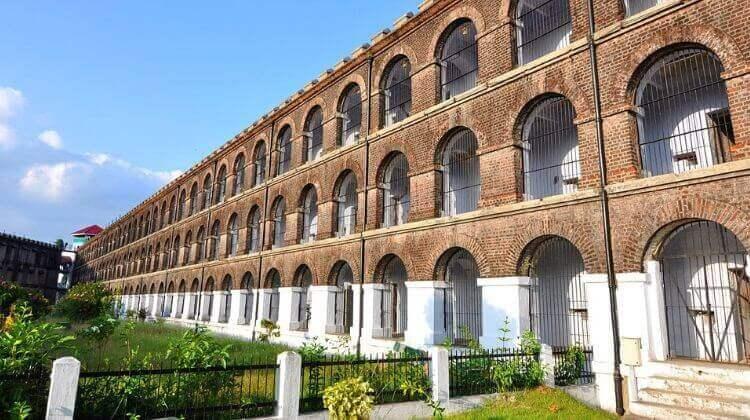
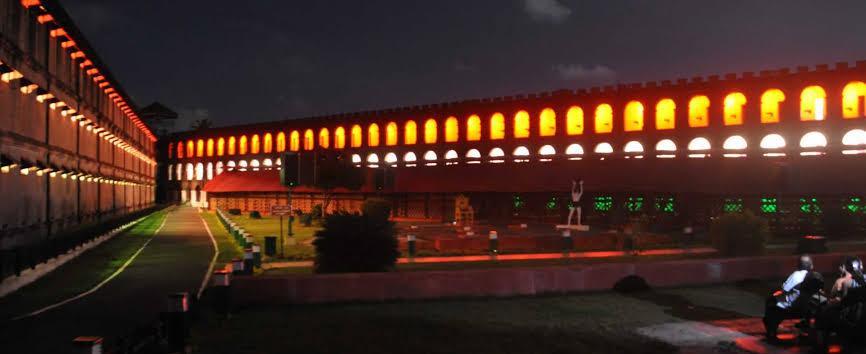
  • More investment and human resources should be brought into handling biomedical waste.
  • Greener options for destroying biomedical waste, such as bio-methanisation (converting biomedical waste into electricity), should be explored and implemented on a broad scale. The majority of biomedical waste is currently incinerated (destruction by burning).
  • Sanitation workers should be provided with protective equipment.
  • Regular checks on the disposal of biomedical waste at diagnostic centers and hospitals can help in the effective implementation of guidelines.

Reducing biomedical waste waste generation as much as possible by effective practices such as wearing cloth masks, reusable gloves, and so on can help in reducing the burden of the destruction of the biomedical waste.

Conclusion

More investment and human resources are needed to deal with the growing amount of biological waste. Effective management of biomedical waste is very essential to ensure a cleaner environment and healthy humans.

RSETI: Selfโ€“employment Programme for Rural Youths๏ฟผ

Unemployment in India is always a serious issue particularly in rural India as the scope is limited in rural areas. So launching of Rural Self Employment Training Institutes (RSETIs) by the Ministry of Rural Development (MoRD) of the Government of India is a praiseworthy step. MoRD was impressed by the Rural Development and Self Employment Training Institute (RUDSETI) model which was established in the year 1982 at Dharmasthala, Karnataka by Dr D Veerendra Heggade jointly with Syndicate Bank and Canara Bank. MoRD in 2009 advised all the banks to establish one RUDSETI type institute in all their Lead Districts under the banner of Rural Self Employment Training Institutes (RSETIs) (www.nacer.in/index_more.html).
It is pertinent to mention that RSETIs identify, orient, train and assist rural youth to take up self-employment as a source of livelihood. The youths in the age group of 18-45 years, irrespective of caste, creed or religion are eligible to undergo training at RSETI, which is free of cost. RSETI has been doing a commendable job in training and settlement of rural youths. The total number of training programmes organised from inception to 31 March 2020 was 1,26,556 where the number of youth trained was 35,00,770 during the same period and 24,41,083 (69.73%) youths were settled. Further, the number of functional RSETIs was 585 where altogether 29 banks weresponsored (www.nacer.in/performance_glance.html).
Each RSETI offers skill development programmes in a financial year in various avenues and in each batch 25-30 youths are selected for training. The programmes are of short duration ranging from 1 to 6 weeks. And to get a general idea few trades are mentioned below:
โ€ข Agricultural Programmes โ€“ agriculture and allied activities like dairy, poultry, apiculture, horticulture, sericulture, mushroom cultivation, floriculture, fisheries, etc
โ€ข Product Programme โ€“ dress designing for men and women, rexine articles, incense sticks manufacturing, football making, bag, bakery products, leaf cup making, recycled paper manufacturing, etc.
โ€ข Process Programmes โ€“ two wheeler repairs, radio/TV repairs, motor rewinding, electrical transformer repairs, irrigation pump-set repairs, tractor and power tiller repairs, cell phone repairs, beautician course, photography and videography, screen printing, domestic electrical appliances repair, computer hardware and DTP.
โ€ข General Programmes โ€“ skill development for women
โ€ข Other Programmes โ€“ related to other sectors like leather, construction, hospitality and any other sector depending on local requirements.
The author time to time studied many youths who were undergoing training and also collected data after training that were settled and found earning was substantial. Few names as evidence can be mentioned here: a) Adapa Kalpana (female) , Dharanikota village of Amaravathi Mandal, Guntur district of Andhra Pradesh ( year of study in 2016), b) Ashok Kumar ( Male/year of study July 2018), Hajpurwa village of Warisnagar block, Samastipur district of Bihar, c) Arati Mishra (female/ year of study July 2018) Nirpur village, Samastipur block, Samastipur district d) In 2017, the author studied some youths of Amritsar district, Punjab. The youths were Jasbir Kaur (female), Harjit Kaur (female), Mandip Kaur (female), Navneet Kaur e) In 2019 the author studied by visiting RSETI at Aurangabad district of Maharashtra. Names of some of the youths are Chhaya Bhalerao (female), Kalpana Jagannath Surase (female), Umesh Bhanudas Dhepe (male), f) In Darrang district of Assam names of some of the youths who were contacted in 2018 are Mousami Saikia Gogoi (female), Poly Seal (female), Mira Medhi, (female), Sabita Koch (female) and many others.
In addition, the author visited many RSETIs and cases collected about the youths trained and post-training settlement and earning of income. and found training and post-training settlement was praiseworthy.
It is suggested that wherever feasible RSETI may be started at the sub-division level.

Know your furry buddy

Giggling and playing with your new puppy is so mesmerising. It is fun to look how your new doggy is gradually being comfortable with you. Be honest, you love it when your puppy snuggle into you unknowingly while taking little naps right. We all love that isn’t it. There comes a phase during his adulthood where your grown up doggy follows your every command, protects you, helps you stay away from toxicity and one thing is sure that your dog is a free therapy to your mental health. Your dog will become a part of your family just like that. But everything comes with a responsibility. Would you like if your dog suffers from food poisoning just because you didn’t knew what he ate last time was injurious to his health?  Ofcourse not,  you’ll do whatever it takes to make your furry friend healthy. Pepperoni is one of the most delicious items we know so far.

Almost everyone loves it. Ever wondered if it is good for your dog? Is it something your dog should enjoy or suffer after consuming?  So, in this series of Know your furry buddy, we’ll mainly focus on one question, Can dogs eat pepperoni?

It might seem harmless, after all, it is just meat. But can dogs eat pepperoni? In this guide youโ€™ll learn all about this meat and how much of it is safe for dogs to eat.

For ultimate pet safety, I recommend consulting with your vet about all the questions you have about your dog eating pepperoni.

Dogs should not eat pepperoni. It contains too much sodium and fat for dogs. Some flavors and types of pepperoni might have seasonings in them that are unsafe for dogs.Dogs can safely eat one slice of pepperoni once in a long while โ€“ like a few times a year. More than that and they run the risk of experiencing digestive issues, salt poisoning, pancreatitis, or kidney damage.

This situation alone comes with several questions. We’ll try to deal with few of them

Can Dogs Eat Hot Pepperoni?

No, dogs can not eat hot pepperoni. Spicy foods will upset their stomach and give them digestive problems. Do not let your dog eat hot pepperoni.If your dog eats some hot pepperoni, give them plenty of water and watch for any signs of lethargy or dehydration. 

Can Dogs Eat Pepperoni Jerky?

Do not give your dog pepperoni jerky more than once every few months. Avoid any flavors that have garlic or onion powder since that is toxic for dogs.Donโ€™t give your dog spicy jerky.

Can Dogs Eat Pepperoni Slices?

It is safe to give your dog one pepperoni slice every few months, but do not give them more than that. Too many pepperoni slices could cause your dog to consume too much salt and fat โ€“ both of which have bad health effects for dogs.

Can Dogs Eat Pepperoni Sticks?

Do not give your dog entire pepperoni sticks to munch on. That is far too much sodium and fat for your dog to eat all at once. Instead, give your dog a small part of a pepperoni stick.

Can Dogs Eat Turkey Pepperoni?

Dogs can safely eat small amounts of turkey pepperoni, just like traditional pepperoni. The type of meat doesnโ€™t matter, itโ€™s the amount of salt, fat, and the types of spices it has. If the turkey pepperoni is just as high in salt and fat, then only give them a little bit of it. If it has garlic or onion powder, donโ€™t let them eat any of it.

Can Dogs Eat Pepperoni Pizza?

No, dogs should never eat pepperoni pizza. Pizza crust and sauce usually has garlic and onion powder โ€“ both are toxic for dogs.Pizza is also really high in sugars, fats, and sodium. It will give your dog an upset stomach and could lead to long-term health effects if they eat it regularly.

Is Pepperoni Bad For Dogs? Can pepperoni kill dogs?

A few slices of pepperonis wonโ€™t kill your dog, but eating too much could make them very sick.Too much pepperoni is bad for dogs. If your dog eats it frequently, then watch out for these symptoms.

Increased thirst

Increased urination

Vomiting

Diarrhea

Abdominal pain

If your dog shows any of the above symptoms, please call your vet.

How Often Can Dogs Eat Pepperoni?

Try to keep pepperoni away from your dog. Dogs should only eat a few thin slices of pepperoni once in a while. In other words, dogs can eat one slice of pepperoni every few months. They should not eat it regularly.

Dogs might love the smell of the seasoned chewy pepperoni, but keep it away from them. It is perfectly safe to allow your dog to eat one slice every few months as a special treat. Since it has so much sodium and fat in it, be careful with everything else they eat that day.As always, call your vet if you notice your dog reacting negatively after eating pepperoni.

Conclusion

Your dog is your responsibility. Through this article, i’ve tried to answer almost all the questions related to the issue. It’s human nature to make mistakes, even if you mistakenly feed your dog with pepperoni, contact your vet immediately if your dog is showing negative symptoms. Be accountable for your dog’s poor health. Take good care of him afterwards and try not to let him eat pepperoni again.

That’s it for now, wish you and your Furry Buddy stays happy and healthy forever.

Metaverse

What is Metaverse?

In metaverse, people can interact with each other using virtual and augmented reality technologies. It will result in forming the shared virtual world.

Metaverse is considered web 3.0. The earlier version of the internet which consisted of web pages that provided information is termed web 1.0. The next version consisted of interactive web pages. Now, web 3.0 will be a result of assimilating virtual reality and augmented reality in web 2.0.

We can shop, play games, buy things and own places in the metaverse. Several companies are creating gaming metaverses. The game ‘Second Life,’ which was released in 2003, can be considered an early version of the metaverse.

Benefits of Metaverse

  • It will be quite beneficial to host meetings. Video conferencing has some drawbacks, such as the lack of a personal connection. Metaverse will make us feel like we are sitting at the same place by interacting through digital avatars.
  • It will also help people with special needs.
  • It can also be used to help people overcome phobias.
  • It is expected that virtual currencies in the metaverse will significantly influence the world economy. Decentralization will reduce the dependence on governments.

Challenges with Metaverse

  • Few companies may control the metaverse and hence power and influence may stay in the hands of a few people.
  • Government surveillance and control could be increased by collaborating with businesses.
  • Addictions to the internet and smartphones are becoming common. As a result, it’s possible that virtual world addiction will become the next huge concern. Furthermore, metaverse consists of entertainment, shopping, games and many other things that are addictive in nature.
  • Even in this modern era, not everyone has access to the internet. Many people are digital illiterates. Due to the digital divide, the benefits of metaverse will not be accessible to many.

Conclusion

Some people believe that the metaverse will be the internet’s future. Many businesses are investing in the development of the metaverse. It is important to ensure that no monopoly exists in the shared virtual environment.

Ender’s Game by Orson Scott Card

Ender’s Game is a 1985 military science fiction novel by American author Orson Scott Card. The book originated as a short story of the same name, published in the August 1977 issue of Analog Science Fiction and Fact. The novel was published on January 15, 1985.

Reception of the book has been mostly positive. Ender’s Gameย was recognized as “best novel” by the 1985ย Nebula Awardย and the 1986ย Hugo Award in the genres of science fiction and fantasy.

Book Summary

This is a story about a boy named Ender who lives with his mother, father, and two older siblings, Peter and Valentine.  All of the children are intelligent, but Ender, unlike his siblings, seems to have the potential to be a brilliant military leader. As a result, he is taken away to be trained by Colonel Graff for the war against the buggers, an alien race looking to invade Earth.

When Ender arrives at battle school, he is put through a series of tests and introduced to various battle simulators, video game-like simulations of space battles.  He performs excellently and is assigned to one of the several armies. He is initially advised to remain out of the war games, but he discovers a superior winning strategy. Despite his success as a tactician, Ender is despised even more, but he does teach those who want to learn from him on the side.

Meanwhile, Peter and Valentine create fake personas and begin political discussions on the net.

After graduating early from battle school, Ender is trained on a dedicated battle simulator.  And when that becomes too easy, he trains with Mazer Rackham, an old war hero.

Under this new training, Ender is pushed to the limit and nearly breaks down as his battle simulations become increasingly more difficult.  

Ender finally has one last battle simulation that involves a planet and several thousand ships.  He wins the game, but then is told that all of it was real.  That he was commanding real ships in what he thought was a simulation.

Ender is proclaimed a hero, but still fears Peter, who has great political influence on Earth.  In the end, Ender finds a bugger cocoon and takes it with him as he travels in space with Valentine.

Analysis

There’s a lot to say about this story, but what draws my interest and attention is the idea of using children in intergalactic war.

Throughout the story, it is sometimes difficult to remember that most of the main characters are children.  In Ender’s society, children are often forced into maturing quickly for military endeavours.  

But why children?  Isn’t it more practical to train more physically mature people to fight? The explanation given is that the military wants individuals who are willing to react to situations without thinking about the consequences.  Children are able to act this way because they haven’t lived long enough to understand the scope and bigger consequences of their actions.  

While cruel, this type of thinking is valuable and necessary in the battle against the buggers because of how the buggers learn and adapt.

Also, a lot of the battles are battle simulations, or at least perceived as battle simulations to the children.  It’s this perception of a game that allows the children to learn, strategize, and take risks that would not be possible had they known it was happening in real time, which says a lot about how children learn and how humans learn in general. 

LAND POLLUTION:

The degradation of the earthโ€™s land surfaces, both above and below ground level, is referred to as land pollution.

Land pollution occurs when trash, compost, and other toxins are dumped on the land, contaminating or polluting it. Land pollution is caused by human activities such as littering and waste washed ashore from boats, oil rigs, and sewage treatment plants.

The accumulation of solid and liquid waste products, which contaminate groundwater and soil, is the cause. The greater the permeability of the soil, the greater the risk of land contamination.

THE MAIN CAUSES OF LAND POLLUTION:

Litter 

Littering, the improper disposal of waste products, is unfortunately common. Every cigarette butt tossed on the ground or food wrapper tossed out of a car window is a small contribution to a monumental issue. According to Keep America Beautiful, 76% of litter found on roadways is from pedestrians and motorists. Not all litter, however, is intentional. A large volume of litter also comes from unsecured items that fall off the back of vehicles or out of trash receptacles. 

All litter, whether intentional or not, causes pollution by releasing chemicals and microparticles as it degrades. Check out our blog post on littering to learn more about the effects of littering and how to reduce it in your community. 

Urbanization and Construction

While urbanization is not in itself littering, large quantities of people living, producing trash and littering in a dense area does inevitably lead to land pollution. To accommodate this increased population, construction activities also occur, which result in large waste materials, such as metal, plastic, wood, and bricks. When these materials are not properly disposed of, it contributes to the land pollution of that area. 

To help reduce the environmental impact of construction sites, itโ€™s important to work with partners that offer comprehensiveย builder solutions to achieve cost-effective construction recycling and waste disposal plans.ย 

Mining

Mining is the extraction of minerals and other geological materials from the ground, which are then used for a wide range of purposes, including but not limited to, producing gasoline for automobiles, generating electricity, and selling materials such as gold and silver. This extraction and the methods used, however, deplete the earth of its natural resources and cause damage and pollution in its wake. Thatโ€™s why finding alternatives for energy (think solar and wind power) that arenโ€™t mined from the earthโ€™s surface are so vital in helping to reduce land pollution moving forward.

Agriculture 

Agriculture is foundational for both everyday life, as well as the economy as a whole. It also, however, can have profound effects on the planet. Agricultural pollution occurs when contamination created as a by-product of raising livestock and growing food crops is released into the environment, and the contamination is vast. 

EFFECTS OF LAND POLLUTION :

Land pollution touches essentially every area of the living world, including:

  • Water that isnโ€™t safe to drink.
  • Polluted soil, which leads to a loss of fertile land for agriculture.
  • Climate change, which causes an onslaught of disastrous problems, including flash floods and irregular rainfallsย .
  • The endangerment and extinction of species in wildlife.
  • Habitat shifting, where some animals are forced to flee where they live in order to survive.
  • An increase in wildfires, due to polluted areas often becoming very dry
  • Increased air pollution, which burning waste contributes to.

Published by

Ayisha Shabana…..

Aggression in Sports

Aggression is inherent in animals and in human beings because biologically it serves an important purpose of facilitating organisms struggle for existence.

Aggression is a part of human behaviour and is accepted as social phenomenon to some extent but beyond that aggression becomes an anti social behaviour intended to harm others. 

Types of Aggression

  1. Hostile aggression: intent to harm, goal to harm, anger
  2. Instrumental aggression: intent to harm, goal to win, no anger
  3. Assertive aggression: no intent to harm, legitimate force, unusual effort and energy expenditure

Reflections of Aggression in Various Sports

In sports, the following five levels of aggression are recorded:

1) Direct and strong aggression in boxing, wrestling, American football.

2) Limited aggression in football, hockey, water polo etc.

3) Indirect aggression in handball, volleyball, tennis, table tennis etc.

4) Aggression directed only against objects in golf, throwing events in track & field.

5) Little observable aggression in gymnastics, figure skating, aesthetic events etc.

Effect of Aggression on Performance

  1. Aggression results in a decrement in performance of individual as well as team as whole. 
  2. The level of frustration produced by the particular situation usually determines the amount of aggression.
  3. There are some factors that influence aggression in sports are:
    • Win-at-all-cost
    • Perceived intention of the opponents
    • The reinforcement of violent behaviour by the coach
    • Spectators effects
    • Maturity and standard of players
    • High incentives
    • Rise of professionalism

How to Reduce Aggression in Sports

1) Most influential people actually promote rather than discourage violence because they believe it sells tickets. If this attitude is curtailed then it is possible to minimize aggression.

2) Anger behaviour and feelings can be modified through anger awareness training and role playing.

3) Athletes can learn to control their feelings of hostility and anger.

4) Athletes who engage in aggressive act must be severely penalised. 

5) Coaches who encourage should be fined or suspended from their coaches duty.

6) External stimuli capable of evoking hostile aggression on the field of play should be removed.

7) Coaches and referees should be encouraged to attend in-service training workshops on dealing with aggression on the part of players.

8) Social interaction between members of opposing teams should be encouraged by coaches and managers.

Development

Development has been a topic of discussion and debate since several decades. It has a very deep meaning. When we talk about development of a particular thing, we should know itโ€™s roots first. We need to understand 3 aspects of that object:-

  1. First existence:- where or how it came into existence?
  2. How it evolved with the passage of time? 
  3. Itโ€™s current stage.

These are the three aspects that determines rate of development. 

Development at personal level:-

Self development and analysis plays a cruicial role in personality development. It means evolution of our understanding and knowledge. When we were kids, we were dumber and easily manipulated. But as of now, we know whatโ€™s for our well being and whatโ€™s not. This growth is defined as development. Thereโ€™s an ethical side of development too. For instance, if someone act rudely unnecessarily, we should confront them straight in the most decent way possible rather than abusing them, no matter what, we should not be unnecessarily cruel to anyone. This understanding can be a part of development as well. 

Development as a whole:-

The term national development is very comprehensive. It includes all aspects of the life of an individual and the nation.It is holistic in approach. It is a process of reconstruction and development in various dimensions of a nation and development of individuals. It includes full-growth and expansion of our industries, agriculture, education, social, religious and cultural institutions. Moreover, national development implies development of a nation as a whole. It can be best defined as the all-round and balanced development of different aspects and facets of the nation viz. political, economic, social, cultural, scientific and material. 

John Vaizey, noted economist defines:

โ€œNational development is the total effect of all citizen forces and addition to the stock of physical, human resources, knowledge and skill.โ€

Broadly, development of the nation encapsulates such parameters as:

(i) Development through a planned national economy

(ii) Increase in agricultural production through application of modern technical 

(iii) Harnessing industrial production

(iv) Development of human resource

(v) Application of science and technology in production sector

(vi) Provision of mass education and

(vi) Provision of various facilities to meet the needs and aspirations of disadvantaged, deprived and poorest of the poor segments of population.

Bridge to Terabithia by Katherine Paterson

Bridge to Terabithia is one of the most classic books you may ever read about friendship, imagination, and loss. And, with all of these elements, the book won Katherine Paterson her first Newbery Medal in 1978 (she won another for Jacob Have I Loved in 1981). The novel won a lot of other honors, too, including being named an ALA Notable Children’s Book in 1977 and a School Library Journal Best Book of 1977.

Summary

This is a story about a boy named Jessie who lives with his family in a small town called Lark Creek and has a hard family life. He likes to draw and to run, and is kind of lonely; he’s out-of-place in his family and the only person he really gets along with is his little sister May Belle. He’s about to enter the fifth grade and has been training all summer to be the fastest runner in school.  

The Burke family moves in next door.  Their daughter, Leslie, is creative and smart and becomes Jessie’s classmate.

When the big day of the race arrives at school, however, Jessie gets beaten by Leslie. And, at first Jess is crushed, but later he and Leslie end up becoming good friends.

Since they’re both outcasts, Jess and Leslie spend a lot of time together. They take over a part of a nearby forest that’s only accessible by swinging on a rope over the creek, and name it Terabithia. In this imaginary land, they are king and queen. They can escape from the bullies and the boredom of fifth grade, and dream all they like. When Janice Avery, the resident bully, takes May Belle’s Twinkies, Jess and Leslie get revenge by writing her a fake love note and humiliating her.

The most of the school year has passed. Jess gives Leslie a puppy for Christmas, and she becomes a member of their Terabithia kingdom. They also assist Leslie’s father with the construction of their new home. When they discover Janice the bully is truly upset, they work together to comfort her.

By Easter, it’s been raining continuously for a month and crossing the creek to Terabithia has gotten more difficult. Leslie attends Easter service with Jess’s family. After the service, Leslie and Jess, along with May Belle, debate whether people who do not believe in the Bible go to hell.

One day after Easter, Jess thinks it’s too dangerous to go to Terabithia, with all of the rain that’s been coming down. But he forgets about it when Miss Edmunds, the school music teacher, calls and invites him to a museum with her. He goes and has one of the best days of his life. However, when he returns home, he discovers that Leslie had gone to Terabithia without him and died while attempting to cross the creek.

At first, Jess refuses to believe it. In meeting with Leslie’s parents and spending time with her dog, he slowly begins to understand what he’s lostโ€ฆbut also what he gained by having Leslie in his life at all.

He goes to Terabithia to try to figure out what’s going on, but his younger sister follows him and nearly drowns in the water. In rescuing her he realizes that  he has gained some of Leslie’s bravery.

Later, Jess returns to Terabithia and constructs a bridge across the creek. When May Belle follows him again, he welcomes her to Terabithia and guides her across the bridge.

Review

Despite portraying the power of imagination and the innocence of childhood, this is not really a children’s book in my opinion as it touches upon various adult-related themes and challenges many of the social conventions established in society.ย ย It displays unusual relationships that children may not understand.ย  Of course, by that fact alone, it does not make the book false or bad, just, shall we say, unique.ย ย 

And of course, there is death.ย  One of the main characters in the story dies.ย  How is a child supposed to react to this?ย  How do children react to the death of someone they know?ย  There doesn’t seem to be a real answer presented to us from the author, but maybe the lack of an answer through Jessie’s struggles to come to understand his situation is relatable enough for children.ย 

All of these may fly over the heads of children. I do not know how children would take the book or what they would think but other than that it is a great read!

AIR POLLUTION

The presence of materials in the air in such a concentration, which are harmful to man and the environment is called air pollution.

About 1ร—10^12 tons of emission enter air annually, of which 5ร—10^8 tons are emitted by man and the remaining by natural air pollution. Many pollutants do not rise above 600 meters of earth’s surface or they are diluted. So, air pollution affects locally than globally. All living organisms inhale a large quantity of air. An average human being breaths 22,000 times a day, inhaling 16kg of oxygen. About 98% of the total air pollution is accounted by the following pollutants globally. CO-52%, SO2-18%, Hydro carbons-12%, Particulars-10% and oxides of Nitrogen-6%. These pollutants are derived from natural sources and human activity. The surface of our planet consists of 78% nitrogen, 20.95% oxygen, 0.93% argon, 0.03% CO2, water vapours and other gases. In addition, to these gases, particular matter such as pollen grains , dust algae, bacteria and spores of fungi causing different odours, vapours and fumes prevail in the air. Some of the substances are harmful to living organisms. The atmosphere is being continuously polluted with harmful materials by the activity of man.

TYPES OF AIR POLLUTION:

There are two basic types of pollutants in the air. They are known as primary pollutants and secondary pollutants.

Primary pollutants enter the air directly. Some are released by natural processes, like ash from volcanoes. Most are released by human activities.
Carbon oxides are released when fossil fuels burn.
Nitrogen oxides form when nitrogen and oxygen combine at high temperatures. This occurs in hot exhausts from vehicles, factories, and power plants.
Sulfur oxides are produced when sulfur and oxygen combine. This happens when coal that contains sulfur burns.
Toxic heavy metals include mercury and lead. Mercury comes from smokestacks. Both metals have industrial uses.
Volatile organic compounds (VOCs) are carbon compounds, such as methane. VOCs are released by many human activities. Raising livestock, for example, produces a lot of methane.
Particulates are solid particles. These particles may be ash, dust, or even animal wastes. Many are released when fossil fuels burn.
Secondary pollutants form from primary pollutants. Many occur as part of photochemical smog. This type of smog is seen as a brown haze in the air. Photochemical smog forms when certain pollutants have a chemical reaction in the presence of sunlight. Photochemical smog consists mainly of ozone (O3). Ozone near the ground is a pollutant (Figure below). This ozone is harmful to humans and other living things. However, ozone in the stratosphere protects Earth from the Sun’s harmful ultraviolet radiation.

SOURCES OF AIR POLLUTION:

โ€œMost air pollution comes from energy use and production,โ€ says John Walke, director of the Clean Air Project, part of the Climate and Clean Energy program at NRDC. โ€œBurning fossil fuels releases gases and chemicals into the air.โ€ And in an especially destructive feedback loop, air pollution not only contributes to climate change but is also exacerbated by it. โ€œAir pollution in the form of carbon dioxide and methane raises the earthโ€™s temperature,โ€ Walke says. โ€œAnother type of air pollution, smog, is then worsened by that increased heat, forming when the weather is warmer and thereโ€™s more ultraviolet radiation.โ€ Climate change also increases the production of allergenic air pollutants, including mold (thanks to damp conditions caused by extreme weather and increased flooding) and pollen (due to a longer pollen season).

Global Warming

Global warming refers to the gradual rise in the overall temperature of the atmosphere of the Earth. There are various activities taking place which have been increasing the temperature gradually. Global warming is melting our ice glaciers rapidly. This is extremely harmful to the earth as well as humans. It is quite challenging to control global warming; however, it is not unmanageable. The first step in solving any problem is identifying the cause of the problem. Therefore, we need to first understand the causes of global warming that will help us proceed further in solving it.ย ย 

Causes of Global Warming

1. Oil and Gas

Oil and Gas is used all the time in almost every industry. It is mostly used in automobiles, buildings, manufacturing, and the electricity production. When we burn coal, oil and gases it largely adds to the climate problem.  Fossil fuel consumption is also harmful to wildlife and the environment because of its toxicity, which kills plant life and makes areas uninhabitable.

2. Deforestation

Deforestation is the clearing of woodland and forest for the purpose of harvesting wood or making space for farms or ranches. Because trees and forests convert carbon dioxide into oxygen, when they are cut down, the stored carbon is released into the atmosphere. Deforestation can also occur naturally which has a greater effect because of the fumes released from the fire.

3. Wasteย ย 

Humans create more waste now than ever before, because of the amount of packaging used and the short life cycle of products. Many products, garbage, and packaging are not recyclable, resulting in their disposal in landfills. When landfill waste decomposes/breaks down, hazardous gases are released into the atmosphere, contributing to global warming.

4. Power Plantsย 

Power plants work by burning fossil fuels, and as a result, they emit a variety of pollutants. The p ollution they produceย  that not only ends up in the atmosphere but also in waterways, contributing significantly to global warming. Coal combustion in power plants is responsible for around 46% of total carbon emissions.

5. Oil Drillingย 

Oil drilling is responsible for 30 % of methane emissions and about 8% of carbon dioxide emissions. Oil drilling is a method of extracting petroleum oil hydrocarbons from the ground. As a result of this process, additional gases are released into the atmosphere, contributing to climate change. It is also harmful to wildlife and the environment.

6. Transport and Vehiclesย 

The large amount of transportation is done through cars, planes, boats and trains, almost all of which rely on fossil fuels to run. Carbon and other pollutants are released into the atmosphere when fossil fuels are burned. As a result, transportation is partly responsible for the greenhouse gas emissions. This effect could be reduced with the introduction of electric vehicles.

7. Consumerismย 

Customers may buy any goods at any time because of technological and industrial advancements. This means that we are producingย  more and more goods each year, and now we are overproducing them. The majority of the products we buy aren’t very sustainable, hence we’re producing more waste than ever before due to the shorter lifespan of electronics and textiles.

8. Farming

Because farming consumes a lot of green land, local habitats may be devastated to make room for farming. These animals emit a large number of greenhouse gases, such as methane, and they also produce a large amount of trash. Factory farming is responsible for even more climate issues because of the extra pollution it produces and the more animals it can hold.

9. Industrializationย 

Industrialization has a number of negative consequences. All of the waste generated by this industry ends up in landfills or in our environment. Chemicals and materials used in industrialization have the potential to damage both the atmosphere and the soil underneath it.

10. Overfishing

Fish is one of humans main sources of protein and a lot of the world now rely on this industry. The amount of people buying and consuming fish has resulted in a decrease in marine life. Overfishing has also resulted in a loss of ocean variety. 

Ways to Prevent Global Warming

There are many changes we can bring about in our life both big and small to prevent global warming and save our planet. Firstly, we must stop deforestation in all forms. Do not cut down more trees as it will only worsen the level of carbon dioxide in the air. Instead, encourage people to plant even more trees to create a fine balance in nature.

Moreover, it reduces the usage of energy everywhere. It does not matter if you are at your home or at your office, the higher the energy used the more the carbon dioxide produced. Thus, do not waste electricity as it requires the burning of fossil fuels. As a result of the burning of fossil fuels, greenhouse gases in the atmosphere increase rapidly and contribute to global warming. Moreover, reduce the carbon footprint and do not travel through planes that often.

Most importantly, replace all your ordinary bulbs with LED lights. It will help in reducing the use of energy by a massive amount. Similarly, do not waste that energy. Instead of becoming more dependent, we need to reduce our dependence on fossil fuels and electricity right away.

OTT Platforms: Why Are They So Popular?

What is An OTT Platform?

An over-the-top (OTT) media service is a streaming media service offered directly to viewers via the internet without the traditional use of cable/satellite.

Overโ€“theโ€“top media services (OTT) platforms have become quite popular since the last few years. Due to COVID-19 outbreak in the country, many filmmakers are now releasing their movies on major OTT platforms, instead of waiting for the theatres to re-open.

Your Complete Guide to Over-The-Top (OTT) Advertising

REASON FOR RAPID GROWTH OF OTT PLATFORMS

1) Affordable Subscription-Based Service:

Most OTT platforms offer very pocket-friendly subscriptions. For example, the leading OTT player in the market, Netflix offers an Rs.149 subscription for mobile users in India. The variety of content offered for prices as low as that beats PayTV/Cable subscriptions by miles and we are not complaining.

2) Ease of Viewing Across Devices:

Another major point in favor of OTT platforms is that you are not stuck in front of TV or praying for good weather before the match starts because even the tiniest of raindrops render the UFO-like dish antennas useless. OTT platforms work across smartphones, smart TVs or laptops as long as you have a valid subscription.ย 

3) Ad-Free Streaming Experience:

This one is one big reason why OTT Platforms are getting more popularity than televisions and stuff. Wasting 15 minutes on seeing add is as irritating as it sounds. Plus it interrupts the interest while watching something. That is why the ad-free streaming experience is what viewers are investing their money and time for.

4) Flexible Subscription Models:

Unlike satellite TV/Cable subscriptions where they keep confusing you with choices that are barely any different from one another, OTT platforms offer straight-forward subscriptions. You get an all-access pass with only one subscription for Amazon Prime, whether monthly or yearly. Netflix offers multiple choices depending on how many screens are being used.

5) Ease Of Payment:

All your payments can be made online using debit/credit cards, online wallets or UPI payment options, or your Amazon pay wallet if itโ€™s your Prime subscription. You get reminders over texts/emails before your subscription expires unlike Cable TV alerts on your TV screens that leave you more pissed off than mindful. You also donโ€™t have to run to your local operator or spend hours on the phone any time the service is disrupted, which is a rare possibility in itself.

6) Better Choice Of Content:

The major reason most of us have taken to OTT platforms is definitely how different and fresh the content is as compared to satellite TV channels. On OTT platforms like Prime and Netflix, you can watchย  pretty much anything from movies to web series to original content. Set your filters and let the algorithm recommend possibilities for compiling a list of your favourite shows to binge-watch on the weekends or late at night whenever you want, rather than waiting for it to air on the television. The originality of content is a major factor, just as much as the fact that we finally have the option to watch shows from all over the world and not just from your own country.

7) Convenience:

The best thing about the OTT platform is that it is differentiated from a normal TV set, it is based on the following slogan: โ€œAnytime, Anywhere, Everyoneโ€

  • Anytime โ€“ The user can watch their favourite shows at any time, because the shows are already on the web, except for just a few clicks;
  • Anywhereโ€“ User can watch shows anywhere, the only requirement is a gadget and internet facility (in case of online streaming otherwise shows can be downloaded also);
  • Everyoneโ€“ Any person with any gadget can access the platform. You just need to create an account on that platform and can use it.

8) Quality and Fresh Content:

The OTT platform gives you the option to watch anything. People are also attracted to these platforms because they are tired of traditional TV serial especially Indian serial which is endless. The growing demand for fresh and original content has been addressed by these OTT platforms.

9) The World Is On Your Screen:

OTT service providers have done away with any remaining geographical barriers when it comes to the distribution of content. Now we can watch global shows at the exact same time as the rest of the world, or even premier football league matches! Similarly, even audio content distributors now finally have a global audience, leading to a tremendous rise in both revenues as well as growth opportunities.

10) Functional User-Friendly Interface:

Last but not the least, the use of AI technology in OTT platforms have created a far superior user interface experience than what traditional TV could even get close to. You see suggestions based on your browsing history and your preferred genres as soon as you launch the respective apps, as well as get alerted to upcoming launches, thereby engaging the users better without forcing them to constantly reach out for the remote control to change the channels.

With an increasing demand for content on OTT platforms, we can expect quite a few more media giants to jump on the OTT wagon. Given the potential for growth and promises of better content, it is safe to assume that OTT platforms are not going out of trend any time soon.

These are some of the epic reasons of why the OTT platforms are gaining such popularity than any other infotainment platforms.