Realism has been the most important approach of international relations over the years. It has been the dominant way of explaining international behaviour. Realism emphasizes relations among nations, as they have been and as they are. It is not concerned with the ideal world. It is the international interpretation of human behaviour. Individuals are essentially selfish, and they seek power to serve their interests and to prevail over others. As Morgenthau wrote in the 20th century, power is the control of men over the minds and actions of other men. And, there is constant strife leading to conflicts and clashes between individuals having divergent interests and seeking to acquire power. Thus, there is an ever-present struggle for power in the society. The same is the tone of nations that are guided by the same considerations as individuals.
Political Realism
Realism, or political realism, as an approach of international relations has evolved over the centuries. Prominent among its earlier advocates were Indian scholar Kautilya, Chinese strategist Sun Tzu, and Greek scholar Thucydides. Much later, Italian scholar Nicolo Machiavelli and English philosopher Thomas Hobbes also contributed to the evolution of realism. Their ideas may be called classical realism, though Morgenthau is now considered the principal classical realist. However, according to the view expressed by Robert Jackson and George Sorensen (1999) and many others, Morgenthau’s theory may be described as neo-classical realism. But, Morgenthau was the most systematic advocate of realism. However, British Professor E.H. Carr, who wrote The Twenty Years’ Crisis (1919-39) had prepared the ground on which Morgenthau developed his theory of realism.
Carr criticized democracies like the UK and France for their failure in defeating the designs of dictators. He blamed the democratic countries for failing to recognize the power realities in the world. Carr divided the scholars of international relations into two groups. These were ‘utopians’, or ‘idealists’, and the ‘realists’. He described the utopians as optimists- children of enlightenment and liberalism. The liberals held the view that reason and morality could structure international behaviour of the states towards peace. Wilson and (his) League of Nations were cited as main examples of utopians. Carr, who himself was a a realist, described realists as pessimists, or children of darkness, who emphasize power and national interest. Commenting on Carr’s views on power, Michael G Roskin and Nicholas O Berry wrote, ‘This does not necessarily mean perpetual war, for if statesmen are clever and willing to build and apply power, both economic and military, they can make the aggressors back down…’
Political realism is a significant theory in the field of international relations that seeks to explain state behavior under a set of specific and rigid assumptions. At its core, political realism is guided by three S’s: statism, survival, and self-help.
Statism asserts that states are the only entity on the international stage that matter and that they are unitary (acting alone) and rational (acting in its best interests) actors. Survival identifies the state’s primary goal is to survive in an international system characterized by anarchy. The final S, self-help, conveys the assumption that states cannot trust others in their pursuit of survival and must secure their security.
Political realism is further delineated into sub-theoretical frameworks, including:
Classical realism
Liberal realism
Neorealism
Neoclassical realism
While each sub-framework has its own nuance within the broader political realist theory, all forms of political realism fundamentally believe world politics is a field of conflict among states pursuing power.
Structural Realism
Structural realism, also referred to as neorealism in the academic community, is a major branch of political realism derived from classical realism. While the latter incorporates analysis of human behavior within state decision-making, structural realism focuses predominantly on the anarchic structure of the international system. In other words, structural realists see global conflict as inevitable because there is no supranational body that could prevent or mediate conflict between individual states. Therefore, structural realists assume that states must always be preparing for conflict because war could break out at any time.
Structural realists believe that understanding the international system is guided by the three S’s of political realism. However, they do incorporate analysis of inter-relationships between distinct state entities, particularly regarding power relationships. A key concept in structural realism is polarity, the balance of power within the international system. Today, international theorists often describe the world as unipolar, with the United States acting as the sole superpower endowed with the ability to dominate international relations via their economic, political, and military supremacy.
REFERENCES : International Relations By V.N. Khanna
As history has shown, India’s approach to development always remains contextual. This is evident when the nationalist leaders opted for a Soviet type centralized planning as perhaps an effective means for development. The idea was widely acclaimed regardless of the ideological differences among those who presided over India’s destiny following decolonization. The Planning Commission which was constituted in 1950 was hailed as an instrument to bring about quick development in India. India’s trajectory of development however proved otherwise : instead of being instrumental in contributing to a uniform development in the country, the Planning Commission failed to accomplish the goal; it was felt that centralized planning did not appear to be effective in attaining the goal that the nationalist leadership sought to attain.
The impact of the Planning Commission on India’s development cannot be easily ignored since it had been in place for more than six decades following the withdrawal of colonisation in India in 1947 while the NITI Aayog is too new to have any sway on the trajectory of growth in the country.
What is striking is the fact that while the Planning Commission was considered to be a piece of ideological baggage borrowed from the former Soviet Union, the NITI Aayog represents an effort toward articulating India’s neoliberal endeavour for sustainable economic growth. Ideologically drawn, both the planned development of the erstwhile era and its opposite, as conceptualized by the NITI Aayog, remain important pillars of India’s growth trajectory since independence. Centralized planning may have become futile though it undoubtedly had its role in the state directed development era.
Planning And Economic Development
With the formation of the Planning Commission in 1950, India was ushered in the state-led development era in which the state became a critical economic actor. Despite its historical antecedents, the idea of the state directed planned economic development gained significant salience in independent India, especially with Jawaharlal Nehru, India’s first prime minister, at the helm of affairs. Given his staunch opposition to the Gandhian model of democratic decentralization, Nehru always preferred the state-driven economy as perhaps the only driving force for India’s rapid socioeconomic regeneration in the aftermath of colonial rule.
There are two fundamental questions that need to be addressed: first, has the idea of the state-driven economic development lost its relevance just because of its failure to accomplish the stated goals or due to its vacuous claim in contrast with the rising importance of a market-driven counter ideology providing an alternative to the erstwhile strategy of the state-directed economic development? There is a connected second question: whether the market – driven strategy shall be useful for peripheral societies, including India, where the proportion of the people living below the poverty line is staggeringly alarming.
The Objective Of Economic Development
The following were the original objectives of economic planning in India:
Economic Development: This is the main objective of planning in India. Economic Development of India is measured by the increase in the Gross Domestic Product (GDP) of India and Per Capita Income
Increased Levels of Employment: An important aim of economic planning in India is to better utilise the available human resources of the country by increasing the employment levels.
Self Sufficiency: India aims to be self-sufficient in major commodities and also increase exports through economic planning. The Indian economy had reached the take-off stage of development during the third five-year plan in 1961-66.
Economic Stability: Economic planning in India also aims at stable market conditions in addition to the economic growth of India. This means keeping inflation low while also making sure that deflation in prices does not happen. If the wholesale price index rises very high or very low, structural defects in the economy are created and economic planning aims to avoid this.
Social Welfare and Provision of Efficient Social Services: The objectives of all the five year plans as well as plans suggested by the NITI Aayog aim to increase labour welfare, social welfare for all sections of the society. Development of social services in India, such as education, healthcare and emergency services have been part of planning in India.
Regional Development: Economic planning in India aims to reduce regional disparities in development. For example, some states like Punjab, Haryana, Gujarat, Maharashtra and Tamil Nadu are relatively well developed economically while states like Uttar Pradesh, Bihar, Orissa, Assam and Nagaland are economically backward. Others like Karnataka and Andhra Pradesh have uneven development with world class economic centres in cities and a relatively less developed hinterland. Planning in India aims to study these disparities and suggest strategies to reduce them.
Comprehensive and Sustainable Development: Development of all economic sectors such as agriculture, industry, and services is one of the major objectives of economic planning.
Reduction in Economic Inequality: Measures to reduce inequality through progressive taxation, employment generation and reservation of jobs has been a central objective of Indian economic planning since independence.
Social Justice: This objective of planning is related to all the other objectives and has been a central focus of planning in India. It aims to reduce the population of people living below the poverty line and provide them access to employment and social services.
Increased Standard of Living: Increasing the standard of living by increasing the per capita income and equal distribution of income is one of the main aims of India’s economic planning.
REFERENCES : Public Administration By Bidyut Chakrabarty and Prakash Chan Kandpal
Public Administration is a continuous process and, in the sense, it is always an undergoing reform. So, in public administration, ‘reform is a journey rather than a destination’. Reforms are an obvious response to the new challenges confronting state institutions managing public affairs. At the root of such an exercise lies the effort at enhancing administrative capability in the changed scenario. The problem of administrative reform has received continuing attention in India, both at the centre and in the states.
Since Independence, there have been a large number of changes in the structure, work methods, and procedures of the administrative organisations. Although these changes have been gradual, at times not too perceptible, they do indicate the efforts made by the government to affect procedural and policy innovation in the administrative system and to keep pace with the changed situations, growing needs, and exigencies of the government. With this background, the present chapter makes an attempt to understand the concept of administrative reform, to analyze the initiatives of reforms after Independence, and understand the changing patterns of administrative reforms in India in the post – liberalization era.
Theoretical Underpinning Of Administrative Reforms
Public administration as an academic discipline was born with a bias toward change and reform. The term ‘reform’ literally means forming again. The Oxford English Dictionary defines ‘reform’ as ‘to convert into another and better form, to amend or improve by some change of form, arrangement or composition; to free from previous faults or imperfection.’ Following this definition, ‘administrative reform’ is to convert public administration into a better, improved form.
As An Academic Discipline
The Public Management and Administration field, in essence, is broad, necessitating a specific study of theoretical frameworks. A review of conceptual literature and contemporary case studies material on structural transformation and policy reform was conducted to enlighten the research question and the statement of research. The existing knowledge was highlighted in terms of its relevancy to this research, thus enabling the incorporation of valid citation on previous experiences with civil service reform. Conceptual definitions by proponents usually do not provide generic approaches on administrative reform process, hence, the need for a focussed review of literature.
The objective is to consult the theoretical material relevant to public service reform. For any research, it is important to establish a relationship between theoretical and research perspectives (Procter, 2002) and identify gaps in the literature (Johnson, J. 1991). Varying views of different schools of thought cited must be contrasted so that what has happened over time helps to show how others handled similar problems in the past (Gerstenfeld, 2004). Philosophical or metaphysical nature of the phenomena being investigated, whether observable or unobservable, has to be proved early before the scientific knowledge of the object that is theory informed and the paradigms position used in the research is established, appropriately in the concept definition section. Research in the Public Administration field must not overlook or underlook the societal imperatives – dynamics, which are underpinning public service reform. Political, social and economic imperatives of a given society determine the type of public administration adopted for a particular developmental state. Each societal imperative would obviously contribute differently to the internal environment. This pattern is not common in every country as developed and developing societies likewise experience their unique situation where peace and stability enhance the conditions for reform.
In early 1953, there was a change in the leadership of both the superpowers- the US and USSR. In the US, President Truman’s tenure ended in January 1953. He was succeeded by Dwight Eisenhower. an ex-army general who had commanded the Allied forces in Europe during the Second World War. Meanwhile. Soviet leader Stalin died in March 1953. He was succeeded as party chief by Nikita Khrushchev and by Georgy Malenkov as prime minister. The two Soviet leaders were not very comfortable with each other. Malenkov was replaced by Nikolai Bulganin in 1955. He was more acceptable to the party chief.
But in 1958 even Bulganin was dropped and Khrushchev assumed the prime ministership as well. President Eisenhower led US for eight years till he was succeeded by John F Kennedy in January 1961. Khrushchev remained at the helm of affairs till he was overthrown in 1964 by the troika of Leonid Brezhnev, Nikolai Podgorny and Alexei Kosygin. After the Truman-Stalin era, the US-Soviet relations eased considerably, but the Cold war showed no signs of ending. During 1953-64 several steps were taken by both the sides to improve relations, but at the same time tension got accelerated on different occasions.
CRISIS IN POLAND
Poland was the first to ignite. In June 1956, riots in the industrial city of Poznam were brutally suppressed, leaving dozens of people dead and hundreds wounded. A conflict occurred in the Polish Communist Party between two factions – one owing allegiance to Boleslaw Bierut, who had died earlier the same year, and the other led by Gomulka, who was a Nationalist Titoist communist, and had remained in jail since 1949, and was recently released. Gomulka faction succeeded.
In October, Polish Communist Party issued a proclamation that Poland would henceforth pursue a ‘national road to socialism’, and Gomulka was elected Secretary of the Polish Communist Party. The Soviet leaders decided not to use force against Gomulka. This was second set-back to USSR after Yugoslav decision in 1948 to follow Nationalist Communism.
REVOLT IN HUNGARY
Since the end of Second World War, Hungary was governed by an orthodox Communist leader, Matyas Rakosi, a nominee of Stalin. (He had been freed from jail before the War on Stalin’s initiative after the Soviet Union returned old Hungarian flags captured by the Czar in 1849.) The Rakosi regime was severe ‘even by Stalinist standards.’ In 1953, he was summoned to Moscow, reprimanded and replaced by a reformist communist Imre Nagy.
A more intangible effect of 1956 arises with the spread of its talented diaspora. Many thousands of gifted Hungarians left their country and settled as far afield as Australia, the United States, and across Western Europe. The contributions they made to their adopted countries were incalculably beneficial. Nowhere have I heard the kind of objections to Hungarian refugees that one regularly encounters in relation to other refugee and asylum-seeking groups. To some degree this is because everyone knew what the Hungarians had fled from; they received instinctive sympathy. But it also reflects the performance of the Hungarians in their adopted countries. They assimilated well and quickly, and were soon more than repaying their hosts.
Even though assimilated, however, they were eloquent voices critical of communism and the Soviet empire. The eminence many soon achieved in their fields of scholarship and enterprise added weight to their criticisms. And in the United States especially, they formed the influential “captive nations” lobby with other émigré groups, to press for a realistic foreign policy and, in time, to provide Reagan with intellectual heft.
REFERENCES : International Relations By V.N. Khanna
China has undergone a massive transformation in the last four decades. It has emerged as a major world power within a short span of time and is set to challenge the hegemony of the United States in the coming years. China’s spectacular rise is predominantly due to its unprecedented economic growth which averages nearly 10 per cent for the last forty years. It has to be noted that this achievement has no precedence in recorded human history and even critics of China have acknowledged this grand success. Even the World Bank has noted that China has ‘experienced the fastest sustained expansion by a major economy in history – and has lifted more than 800 million people out of poverty.’
This transformation began in 1979 with the introduction of economic reforms and today China ranks first in the world in terms of economic size on Purchasing Power Poverty (PPP) basis. Many economists are predicting that China is set to emerge as the world’s largest economy in a couple of decades or even sooner. It is notable that when this happens, it will be for the first time in more than a hundred years a non- European country will hold the mantle of being the foremost economic power. This will be a seismic shift in international politics.
History Of China’s Economic Growth
Economist Angus Maddison’s work which studies Chinese economy through centuries notes that China had the world’s largest economy as late as 1820. It is often forgotten that China was one of world’s foremost economic powers before the negative impact of colonialism. By the beginning of the 19th century, the Qing dynasty which was ruling China has serious internal weakness which left the country vulnerable to Western and later Japanese imperialist ambitions. China lost the First Opium War with Britain in 1839 and subsequently signed the Treaty of Nanking in 1842 which was the first of many humiliating unequal treaties which the country would sign. It was a part of this treaty that Hong Kong was ceded o Britain and ports like Shanghai and Guangzhou were opened for British trade.
China also lost the Second Opium War in 1856 which was jointly fought by British and the French with the support of the United States. China was forced to sign the Treaty of Tientsin in 1858. This opened more ports for foreign trade and also granted more rights for foreigners to travel and trade within Chinese territory. By this time, China had already signed the Treaty of Wanghia with the United States in 1844 granting certain privileges to the country. During this phase of Chinese weakness, several European countries including France and Russia signed unequal treaties with China to gain trade privileges.
Implications Of The Rise Of China
With a rising economy, increasing military strength and growing ambitions, there is no doubt that China is set to dominate international politics in the century. This will however have major ramifications on the international system which needs to be discussed.
China’s rise has already caused concerns about whether the post Second World War liberal international political order will be threatened by the emergence of an authoritarian country as a systemic power. Since the end of the Second World War, the United States and its Western allies have set up international institutions like the United Nations, International Monetary Fund, World Bank and the WTO to construct a rule based international order.
Strategically, interdependence amidst economic globalization has eroded the foundation for a “new Cold War”, which would require four conditions. First, policymaking in both countries would have to be ideologically driven so that, second, the world can be politically divided into two camps against each other. Third, their economies would be independent of each other upon which, fourth, both sides could form alliances to sanction against each other.
However, like most countries today, policymaking in both the US and China are essentially interest oriented, not ideologically determined. Hence it is virtually impossible that the world could retreat to Cold War dynamics, where nations are divided into two camps politically hostile and economically independent of each other. Moreover, although a US-led security system has survived the end of the Cold War, the US allies would be reluctant to join the fight should confrontation take place between the two superpowers. As for China, Xi Jinping made it clear in his speech at the Belt and Road Initiative summit in May 2017 that China would not pursue any alliance but strives to foster partnerships with other countries.
Thus, despite Trump’s high-profile measures against China, it is hard to imagine that either the US or China would go to war against each other. This is not necessarily because they would give up the competition and even rivalry, but because it will be extremely difficult for both Beijing and Washington to achieve a policy consensus at home and form alliance abroad, which are necessary for a confrontation between the two global powers.
However, the US “tough approach” against China will have a far-reaching negative impact on world order and stability, not only because Trump’s anti-China measures are an essential part of his “America first” unilateralism and his anti-establishment impulse in international affairs, but also because China has already become a deep-rooted stakeholder in all the three layers of today’s international order, i.e., the political order centered on the United Nations and its affiliated organizations, the economic and trade order based on WTO and other multilateral trade agreements, and the financial order maintained by the World Bank, IMF and other institutions like the ADB and AIIB. Thus, it is not surprising that even America’s closest allies in Europe and Asia – despite their substantial differences with China in terms of value and political systems – are reluctant to join the US in its effort to roll back on China. This does not mean they support China at all. But like China, they are also deep-rooted stakeholders of the existing international order that based on multilateral arrangements. After all, the essential purpose of reckless unilateralist behavior by the Trump Administration (e.g., withdrawals from the Paris Agreement, the Iranian Nuclear Deal, the UN Human Right Council, levying heavy tariff taxes on almost all important trade partners, and demanding allies to pay more for the US security commitments) is to rewrite the rules of game in America’s term at the expense of the entire international order. It is in this regard that Trump’s “America first” has turned into “America isolated” because such an approach hurts all the stakeholders of the existing international order, including the US allies.
By contrast, China’s response to the US pressure sounds rational and positive. Xi Jinping made it clear in his speeches at the Bo’ao Forum for Asia in April 2018 that China will resolutely continue its reform and openness policy. Meanwhile, Beijing will firmly defend the free trade system based on multilateral arrangements on the one hand, and carry on its “peaceful development” strategy on the other hand. While it remains to be seen whether, and to what extent, China can turn the rhetoric into credible actions, how, and by what means, China can manage the volatile relationship with the US under a highly self-centered and unpredictable Trump Administration will indeed have a far reaching impact on peace and development of the world. The good news is that Trump’s ego-driven and unilateral behaviour can actually strengthen China’s hand, only if Beijing can handle it appropriately. The bad news is that the US still is the strongest power on earth.
REFERENCE : Russia in Global Affairs, International Relations by V.N. KHANNA
Public policy is a frequently used term in our daily lives. We often read in newspapers about a public health policy, education policy, environmental policy, agricultural policy, industrial policy, and so on. Public policies are primarily framed by the government to satisfy public needs and demands. They are the means by which ends of a collective community are served. Without a policy, government and administration are rudderless. Successful policies make for successful government and administration, and hence there is a saying that when a policy fails, the government fails.
Theoretical Dimensions : The Context
Public policy is a relatively new subfield in political science. Its development as an area of study emerged out of the recognition that traditional analyses of government decisions were incomplete descriptions of political activities. As the relationships between society and its various public institutions became more complex and more interdependent, the need developed for more institutions became more complex and more interdependent, the need developed for more comprehensive assessments of what governments do – how and why they pursue some policy alternatives over others.
The focus on the public policy process has developed with the emergence of modern society and industrialization. During the nineteenth century, representative governments began to evolve in some parts of the world. With increased political participation by larger portions of the public, government decisions assumed greater importance and legitimacy.
What Is A Public Policy?
The term “public policy” refers to a set of actions the government takes to address issues within society. For example, public policy addresses problems over the long-term, such as issues with healthcare or gun control, and as such, it can take years to develop. Public policy addresses issues that affect a wider swath of society, rather than those pertaining to smaller groups. To explore this concept, consider the following public policy definition.
For example, public policy might tackle the problem of student loans by creating a student loan forgiveness program that affects several students at once, rather than paying off the loan of one student. Something important to remember about public policy is that it does not just refer to the government’s actions, but also to the behaviours and actions that result from those actions.
Significance Of Public Policy
It is evident that the public policy is the significant factor in the democratic government and it emphasizes on the public and its problems, in fact it is a discipline which is branded as public. The concept of public policy assumes that there is an area of life which is totally individual but said in public. Likewise, public policies have a significant purposes to work in the society where the democracy is prevails.
The important role of the public policy is to make the society to lead a better life and to maintain the delivery of the goods and services are significant, it is regarded as the mechanism for developing economic-social system, a procedure for determining the future and so on.
REFERENCES : Public Administration by Bidyut Chakrabarty and Prakash Chand Kandpal
Structural approaches of international relations, also known as ‘neo-radical approaches’, are of recent origin. Theories in support of these approaches were advocated by leftist writers who were deeply influenced by Marxism-Leninisim. The structural approaches, including the ‘World System Approach’ and the ‘Dependency Theory’, consider the world structure from the class point of view, based largely on the level of development and accumulation of capital. Western capitalist countries, having huge accumulation of capital, are termed as the centre or core of the world system, while third world countries, lacking development and capital, are called the periphery. We shall examine the concept of development and underdevelopment with reference to the centre versus periphery.
A reference may be made here to neo-realists, who also examine the international structure, but from the political angle. They describe the international structure as chaotic or anarchic because there is no all powerful central authority to discipline the nation states, and to resolve their disputes and maintain world peace. The leftists, on the other hand, largely concentrate on economic relations between the rich industrialized nations of the capitalist world on the one hand and the poor developing third world countries on the other. This chapter will discuss the centre-periphery aspect of development as advocated by the neo-radicals.
Economic Accumulation : The North-South Divide
There is enormous gap today between income levels in the world’s industrialized regions and those in the third world. The rich industrialized countries generally lie in the northern parts of the world, while the poor developing countries are in the south. This difference in the income levels has caused differences in the overall prosperity between the rich North and the poor South. How can this gap be explained? This may be done with the help of the liberal view and also with reference to the revolutionary or radical world view.
The liberal view explains the problem by stressing that the capitalist countries have overall efficiency in maximizing economic growth. This view holds that the poor countries are merely lagging behind the industrial north. The liberals would make us believe that more wealth creation in the North is a good thing, as is wealth creation in the South. According to this view, there is no conflict between the two, as eventually the South will also acquire more wealth.
The leftist, or socialist, view is that the divide may be viewed not only in terms of creation of wealth but also with regard to its distribution. According to this view, the creation of wealth in the North often comes at the expense of the South.
The World System Approach – Centre And Periphery
The system of regional class divisions has been viewed by scholars of international relations with Marxist orientation as the ‘ world system’ or ‘capitalist world economy.’ The world system approach is a leftist theory and it relies on global system of analysis. Marx himself had limited his theory to domestic class conflict only, but Marxist scholars apply the same logic in their world system approach. In this system, class divisions are regionalized. The third world countries (exceptions apart) generally produce raw materials, including agricultural products.
These activities need large manpower but not much of capital. The peasants working in agriculture, mining and other sectors are paid low wages. The industrialized countries, on the other hand, mostly produce manufactured goods. This requires large amount of capital, and needs more skilled workers who are paid high wages. The industrialized manufacturing regions are called ‘centre’ of the world system; and the extraction regions (producing raw materials and agricultural items) are known as ‘periphery’.
After about 40,000 years ago, we see many significant changes in the archaeological record, reflecting important changes in cultural and social life. We see art, many new inventions, and considerable increases in the population. This period of cultural history in Europe, the Near East, and Asia is known as the Upper Paleolithic and dates from about 40,000 years ago to the period known as the Neolithic (beginning about 10,000 years ago, depending on the area). In Africa, the cultural period comparable to the Upper Paleolithic is known as the Later Stone Age and many have begun much earlier.
In many respects, lifestyles during the Upper Paleolithic were similar to lifestyles before. People were still mainly hunters, gatherers, and fishers who probably lived in small mobile bands. They made their camps out in the open in skin-covered huts and in caves and rock shelters. And they continued to produce smaller and smaller stone tools.
But the Upper Paleolithic is also characterized by a variety of new developments. One of the most striking developments is the emergence of art – painting on cave walls and stone slabs, and carving tools, decorative objects, and personal ornaments out of bone, antler, shell and stone. (Perhaps for this, as well as other purposes, people began to obtain materials from distant sources.) Because more archaeological sites date from the Upper Paleolithic than from any previous period and some Upper Paleolithic sites seem larger than any before, many archaeologists think that the human population increased considerably during the Upper Paleolithic. And the new inventions, such as the bow and arrow, the spear thrower, and tiny replaceable blades that could be fitted into handles, appear for the first time.
The Last Ice Age
The Upper Paleolithic world had an environment very different from today’s. The earth was gripped by the last ice age, with glaciers covering Europe as far south as Berlin and Warsaw, and North America as far south as Chicago. To the south of these glacial fronts was a tundra zone extending in Europe to the Alps and in North America to the Ozarks, Appalachians, and well out onto the Great Plains. Environmentally, both Europe and North America probably resembled contemporary Siberia and northern Canada. Elsewhere in the world conditions were not as extreme but were still different from conditions today.
For one thing, the climate was different. Annual temperatures were as much as 50 °F below today’s, and changes in ocean currents would have made temperature contrasts (i.e., the differences between summer and winter months) more extreme. The changing ocean currents also changed weather patterns, and Europe experienced heavy annual snowfall. Not all the world was cold, however; still, the presence of huge ice sheets in the north changed the climate throughout the world. North Africa, for example, appears to have been much wetter than today, and South Asia was apparently drier. And everywhere the climate seems to have been highly variable.
Upper Paleolithic Europe
With the vast supplies of meat available from megafauna, it is not surprising that many Upper Paleolithic cultures relied on hunting, and this was particularly true of the Upper Paleolithic people of Europe, on whom we focus here. Their way of life represents a small pattern throughout the Old World. But as people began to use more diverse resources in their environments, the use of local resources allowed Upper Paleolithic groups in much of the Old World to become more sedentary than their predecessors. They also began to trade with neighbouring groups to obtain resources not available in their local territories.
No one remains a stranger to this phrase, But there is nothing more vague and inarticulate than this phrase. From the moment we are born into this world, we are being directed to behave and do things in a certain way. When we reach adolescence, we no longer have to be told to behave in a certain way as we begin to realise what the society expects from us and behave in accordance to their expectations. Finally, when we enter adulthood, we become champions in complying to societal expectations.
After going through all these stages in life, while in a group discussion or a meeting, a team leader or a manager asks us to think outside the box. That’s unfair. Nobody taught us to think for ourselves, even if we did, it fell in the societal pattern of studying, marrying, rearing kids, and retiring.
What is thinking out of the box?
In a professional terminology, thinking out of the box basically means coming up with a new idea (because the contemporary ones didn’t work) that would reap huge benefits for the company. In terms of life, thinking out of the box means being indifferent to societal norms and expectations as you do things your own way. Although my monologue above is defensive towards societal expectations, it is often impractical as not all of us can afford to waste our time and resources on carving a new path, when we can comply with our society and become financially stable and independent.
How to think outside the box?
Nevertheless, we can still incorporate the habit of thinking outside the box to make a difference in our lives when needed. Thinking out of the box does not require racking your brains till you come up with a feasible idea.
Take up a new course
Enrolling yourself for a new course will open doors to learning about new and unfamiliar things. Learning new things will influence your thinking in different areas and aspects of your life. Thereafter when you are confronted with a problem, you will be equipped with knowledge from the specialisation in a certain field that can aid you with thinking out of the box.
Daydream
Although it sounds counter intuitive, daydreaming is an important factor that influences your thinking out of the box. While daydreaming, your brain is led astray from the logical aspects and helps you make connections and co-relations that you couldn’t come up with while racking your brain. So, turn your attention away from the problem you are facing and let your imagination go wild!
Read a book from a new genre
Thinking out of the box would require you to do things differently or try new things. So how about reading from a different genre than the one you usually prefer? Try nonfiction or didactical if you have always preferred fiction. Fiction might have accustomed you to think in a certain manner. To break that monotony in thinking, reading from a different genre might just do the trick.
Pen a poem
The motive behind doing this relatively weird stuff during a serious confrontation is to break free from rational and logical thinking and invite new possibilities and ideas into the situation. Try writing a poem on the basis of your problems. As your mind begins wandering to support your efforts in poetry, you expand your horizon of thinking, leading to thinking outside the box.
So there you go, a vague article on an equally vague topic. Thinking out of the box. Do drop in your thoughts in the comment box. Now that’s a rhyme scheme created which can be considered as the first two lines of a poem. I was wondering how to end this article so I made a rhyme scheme, a.k.a a poem.
The field of literacy studies has made many of us take a deeper look into the similarities and differences between text based and digital literacy. It seems not only through the literature but also by observation as a classroom practitioner that there are certain elements and conflicts between digital literacy and text based literacy that need to be combed through by educators in the field.
One of the most powerful lessons we’ve learned through our work with schools is the importance of doing the work we ask our students to do. Nothing helps us anticipate misunderstandings or understand the strategic support our students will need as much as stepping into their shoes, and doing the reading, writing, and thinking they will do as part of upcoming instruction. The approach to these said instructions is what one may categorize into digital literacy and text based literacy.
Similarities And Dissimilarities
There are a number of similarities between digital and text based literacy, one of them being, both have a common goal, which is, to gather information and communicate effectively. Digital literacy means having the skills you need to live, learn, and work in a society where communication and access to information is increasingly through digital technologies like internet platforms, social media, and mobile devices. While, text literacy is the ability to gather information to communicate using text. The common goal in both the cases is clearly somewhat similar, just the catalyst is different.
From school to the workforce, digital literacy is vital in many areas of life — but simply, having it is an absolute necessity for anyone who uses the internet. Sometimes forms and applications are only available online, so you’ll need to be comfortable accessing and using them. In short, digital literacy is a necessary skill for navigating in our modern, digital world.
Advantages And Disadvantages
Text based literacy has many advantaged over digital literacy. Text based materials are available all the time, regardless of not being in a good internet zone. Text based materials are not as expensive, But its limitation says, they are not as interactive as digital literacy might be. Also, text based literacy works merely on facts and memorization and has zero scope of innovations and ideas, unlike digital literacy.
People feel generally competent and confident when discussing matters of communication. Some perceive communication as one of the fundamental differences between human and other animal species, and as the very element that led to human change, development, adaptation, and domination. But to try and define such a broad term is a difficult task – one that many scholars have undertaken. The essence of communication though can be expressed in simple words: communication is the transfer of thoughts, feelings, ideas, and opinions from one person to another (or to a group of others) through specific channels.
The Virtual Scenario
Virtual communication clearly has many advantages including increased productivity, reduced business costs and a better work/life balance of the workforce. However, virtual communication also entails numerous challenges and obstacles which are often neglected in light of the benefits.
When communication is effective, it leaves all parties involved satisfied and feeling accomplished. By delivering messages clearly, there is no room for misunderstanding or alteration of messages, which decreases the potential for conflict. In situations where conflict does arise, effective communication is a key factor to ensure that the situation is resolved in a respectful manner. How one communicates can be a make or break factor in securing a job, maintaining a healthy relationship, and healthy self-expression.
In contemporary virtual scenario, effective communication fosters trust with others. Your ability to listen attentively and embrace different points of view helps others trust that you are making optimal decisions for everyone in the group. The ability to communicate effectively plays a large role in resolving conflicts and preventing potential ones from arising. The key is to remain calm, make sure all parties are heard and find a solution that is ideal for everyone involved. With people feeling more confident in their work and in their understanding of what they need to do, they become more engaged with their work as a whole. To cite a day-to-day example, video-conference with clients on another continent or even replying to a flood of emails for that matter, can be two of the very prominent instances, one may come across quite frequently.
A video-conference with clients on another continent, can be best accomplished only with one’s spontaneous communication skills, virtually. It is definitely not as easy as it may seem in an authentic face-to-face scenario.
The same holds true for online classes as well. Communicating with teachers, and students, virtually, isn’t as fun as it used to be in the past in a non-virtual scenario. To make situations like these more welcoming. One must have good communication skills and must know the right way to make use of it too. Being able to communicate effectively is one of the most important life skills to learn.
Reading is an immersive experience that often rewards you with a great story and good vocabulary. There are books across several genres one can choose from to indulge in a wonderful reading experience. But there are some books that fall under the category of ‘classics’ as their themes, characters, and plot lines become relevant for ages to come. These are written by some of the brilliant literary minds that became popular and they went on to influence many modern works of literature.
The story begins with a typical farm being run by a human with a variety of animals living in it. The farm animals are often mistreated, overworked and ignored by the human which agitates them. Hoping to overthrow the human race and reaping all the benefits of their work, they drive the human out of the farm. What follows is a satirical allegory to the events that happened during and after the Russian Revolution of 1917.
Although the story revolves around farm animals, its themes of corruption, slavery, dicatorship, class distinction, and characters, makes the readers draw parallels with the current political scenario. It is a must-read for a better understanding of the Russian revolution and an engaging experience.
The Great Gatsby- The Jazz age novel
The Great Gatsby is a 1925 novel written by F. Scott Fitzgerald. It follows the life of a self-made millionaire named Jay Gatsby who is in pursuit of his long lost lover named Daisy Buchanan. The novel however, has little scope for romance and represents America in the 1920s. It highlights the era of unrivalled wealth and materialistic access.
The novel upon its release didn’t gain commercial success. Critics believed that it did not amount to Fitzgerald’s earlier novels. However, it began to gain popularity during World War II as free copies were distributed among American soldiers who were serving overseas. The Great Gatsby went on to become an important part of America’s educational curriculum and pop culture.
The novel continues to attract scholarly attention and is a contender for the title of ‘The Great American Novel’.
Harry Potter and the Philosopher’s stone- You Know Who
This book can be considered as J.K Rowlings’ stepping stone to success. After being rejected by 11 publications and finally being published by Bloomsbury publication, upon the request of the chief executive’s 8 year old daughter. Harry Potter and the Philosopher’s stone went on to be translated into 73 languages and sold 120 million copies. Becoming the second best-selling novel of all time.
The story follows Harry Potter and the readers’ introduction to the world of magic, following Harry’s discovery of his magical heritage and acceptance into the Hogwarts School of Witchcraft and Wizardry. As the readers alongside Harry manage to grasp the revelation of a whole new world of possibilities, worthy opponents and dangers show up on whom magic must be used to defeat and protect.
Reading is an immersive experience that often rewards you with a great story and good vocabulary. There are books across several genres one can choose from to indulge in a wonderful reading experience. But there are some books that fall under the category of ‘classics’ as their themes, characters, and plot lines become relevant for ages to come. These are written by some of the brilliant literary minds that became popular and they went on to influence many modern works of literature.
The book thief is a 21st century novel that uses the Nazi regime in Germany as its background. Although it has its fair share of horror and despair. The Book Thief delivers hope to its readers through love and tranquility among family and friends.
The novel follows the life of Liesel, who moves into her new foster parents’ home following her brother’s death. As she goes on to witness the dangers posed by the Nazi regime, Liesel adopts her newly found passion for reading by stealing books from the rubbles and also the Mayor’s house. One of the pivotal characters in the novel is death itself as it narrates the entire story.
The Lion, The Witch, and The Wardrobe- A world of fantasy
Open the book to a whole new world of fantasy, mythical creatures and magic. When 4 siblings are relocated to a large house in the countryside due to wartime evacuation. They discover a wardrobe in the house which had more than just clothes hanging inside. The 4 siblings venture into the world of dreams upon entering the wardrobe. They go on to encounter the witch and the lion, and participate in an impending war to end the evil’s oppression over the good.
This fantasy novel was the first to be published among the 7 volumes known as The Chronicles of Narnia. C.S Lewis wrote this novel as a dedication to his goddaughter named Lucy Barfield.
Here are some of the classic novels from the 20th century across different genres to enhance your reading pleasure.
Time is precious, it’s a saying that is reiterated often by everyone! We all are gifted with 24 hours everyday and many more during our whole lives. But often we don’t know how to utilize them. We understand how precious time is only when it passes away, leaving us with only a few hours left to turn in an assignment! This doesn’t have to repeat because here are some ways you can make the best use of time.
Keep track of your time
When time passes you in a whiff, leaving you with the feeling of having nothing done from your ‘to do list’. The moment has come to identify how you have been utilizing your time. A simple note making activity along the week can do the trick. Keep tabs on the activities you do on a regular basis across different time periods. You can do this the old school way by writing down in a notebook or the modern way by typing in your smartphone. The aim of the activity is to figure out the tasks that waste your time by the end of the week and curb the duration of indulging in such activities.
For example if using your mobile phone or watching television is eating up your time, leaving you with no time to do what is necessary. Keeping track of your time will help you understand this mishap and rectify your actions. Thus helping you to make the best use of time.
Make a ‘To do list’, but avoid listing a ton of items.
Making a ‘To do list’ is supposed to motivate us to get things done for the day. But listing a ton of tasks kills the motivation to do the same. Listing even 3 important items to do for the day can help you get things done and motivate you to do more. Three tasks might seem very less, but it accounts for a day well spent as you accomplish the 3 most important tasks that need to be done, rather than listing 10 items in your ‘to do list’ and get nothing finished.
Doing less also helps you focus and spend adequate time over your important tasks, making you less prone to make errors and getting things done efficiently.
Plan your day before time
We all have heard the famous words of Benjamin Franklin, “If you fail to plan, you are planning to fail.” Although it sounds daunting and negative, it makes a lot of sense when you try to make the best use of time. When you haven’t given a thought about the day ahead, you end up spending the day doing mundane things that take up the majority of your time.
It is best to plan the next day before going to bed or during the early hours of the day to make the best use of time. This helps you to remember the important things to be done for the day and keep you occupied.
We all develop some habits in our lives that are harmful or keep us from being productive. You might probably take your love for music to the next level by having your earphones plugged in for several hours. This could be harmful to your ears or reduce efficiency as you listen to music in the background while doing something important. Hence, it becomes necessary to fix a duration for plugging in some music rather than doing so all the time.
Similarly, you can curb other time consuming habits by spending less time over them or putting them away during your time of productivity.
Put your phone away to resist the urge for checking messages while you study or work on an assignment.
Turn off the Wifi or mobile data on your phone to prevent notifications from interrupting your work schedule.
Begin with the most important task for the day
Although it sounds intimidating, waking up after the right duration of sleep leaves you with great energy and potential to complete important tasks that you have planned for the day. Maybe that’s why schools, colleges and offices expect people to arrive in the morning as they are equipped with sufficient energy for conveyance and other important things.
Finishing the significant tasks in the morning such as studying or attending meetings, equips you with the necessary information and a sense of accomplishment to carry on with the rest of the day. Thus making the best use of time.
Figure out what is important to you in the long run
Finally, it’s all in the bigger picture. You need to figure out what carries significance in your life. Some may want to explore while the others may want to settle down. What is important to you would determine your actions.
Do tasks that provide good returns.
Taking a break during the day from your studies or work is something you deserve. As you plan your activities and ‘to do lists’, it is also necessary to plan your time of leisure. Playing video games or watching television for 4 hours straight can be tempting, but it prevents you from reading the book you were planning on reading or meeting up with a good friend.
It is better to limit your time over tasks that provide less returns and focus more on tasks that add value to your life. So pick an interesting book while you feel the urge to binge watch or initiate a meet-up with friends which you have been putting off for a while.
Because making the best use of time is to learn new things and add new experiences to your life.
Its been six years of the advent of the Companies Act, of 2013 that obligated companies to contribute over a specific size and profitability, a portion of their profits or benefits towards societal development, discourses about corporate social responsibility, or CSR, is all over the place. There have been workshops, seminars, meetings, newspaper articles, and award distribution ceremonies galore on the matter. Today, CSR has become an important aspect for all companies in contributing towards both, society as well as increasing the brand value reputation of the companies. As corporate social responsibility (CSR) is not compulsory, many companies might not prioritize it or engage in it. However, there are many companies ranging from middle-class companies to highly valued companies who have contributed a lot to CSR and continue to contribute, knowing its importance. The top 6 companies with the best CSR reputation are:
INFOSYS LIMITED
Image credit: Alamy
Infosys Limited is ranked as the top company in India, contributing the most towards CSR. Being an early adopter of corporate social responsibility (CSR) initiatives, its contributions to the environment and society have been key factors in the holistic growth of its business.
The company spent nearly Rs. 360 crores on various CSR schemes in the financial year 2019-20[1]. It has contributed to many covid relief works and among its main CSR initiatives in the financial year, 2019-20 were a 100-bed quarantine set up in Bengaluru in partnership with Narayana Health City, and another one which had 182 beds for COVID-19 patients for Bowring and Lady Curzon Medical College & Research Institute[2]. This company has also established the Infosys foundation— a nonprofit nodal body aimed at contributing toward community and society development and betterment and also fulfilling its CSR commitments. Infosys Foundation has worked with many non-government organizations for implementing its projects. Highlights of the Foundation’s interventions in the past include the introduction of Aarohan Social Innovation Awards, restoration of water bodies in Karnataka, enabling the pursuit of access and excellence in sports through the GoSports Foundation, and disaster relief efforts in Tamil Nadu, Karnataka, and Kerala[3].
Image credit: The CSR journal
The above graph shows CSR spending of Infosys Ltd. in the last 5 years[4]
ROLEX WATCH CO. LTD.
Image credit: prezi.com
Rolex has been on the top 10 list of the most reputable companies in the world for four consecutive years. Rolex’s success is attributed to the authenticity and longevity of its charity work. By investing in and committing to long-term social enterprise projects, Rolex has an impressive record of over forty years of philanthropic work[5]. The Rolex Awards for Enterprise which were established to commemorate the 50th anniversary of the Oyster Chronometer is a great example of CSR activity carried out by the company. All the individuals who demonstrate leadership and entrepreneurialism in the areas of technology, applied sciences, and the environment are presented with these awards. Since the inception of the Awards, 33,000 people from over 190 countries have applied, and 140 laureates have been selected[6]. These laureates have worked on projects benefitting millions of people in 60 countries across the globe[7]. Several initiatives under the Rolex Perpetual Planet have been taken up for upgrading our environment. These include watching over the Earth’s blue heart, Heroes of the Oceans, and Paula Kahumbu: defending rights for elephants.
MAHINDRA AND MAHINDRA LTD.
Image credit: Avinash Chandra
Mahindra and Mahindra ltd. is known for its contributions to climate change and sustainable business practices. The company spent INR 93.50 crores on CSR initiatives during the financial year 2018-19[8]. The biggest CSR project for educating girls in India known as Nanhi Kali was conducted by Mr. Mahindra. This project provides free education to girls, who belong to low-income backgrounds and also empowers their families. The group works closely with non-profits like Naandi Foundation, which feeds over 1.3 million government school children every[9]. This project also encourages environment-friendly farming practices by working with many small farmers. Mahindra and Mahindra Ltd. has also won the award for India’s best CSR project in the Environment and Sustainability category for its green initiative of project Hariyali, which aims at planting 1 million trees on India’s green cover every year. In the financial year 2019-20, Mahindra & Mahindra planted 1.32 million trees, taking the total tally to 17.93 million trees[10]. Of these, 10.78 million trees have been planted in the Araku Valley, which besides greening the environment, also provides livelihood support to tribal farmers growing coffee in the region[11]. The company’s other CSR projects include Mahindra Pride schools: a unique 90-day livelihood training program for youths from socially and financially disadvantaged communities, Integrated Watershed Management Programme, saving a life with safer roads, employee social options, and covid-19 releif[12].
Image credit: The CSR Journal
The above graph shows the CSR Spends of Mahindra and Mahindra Limited for the last five years.
WALT DISNEY COMPANY
Image credit: Money Inc
Considering the Walt Disney company CSR report, it can be said that it is well organized, and consistent, and is in connection with the global reporting initiative (GRI) too. The company has contributed a lot towards renewable energy, workforce investment, community engagement, charitable giving, and diversity and inclusion. In the financial year of 2019-20, Disney brought online a massive 270-acre, 50+-megawatt solar facility onsite in Orlando, in collaboration with the Reedy Creek Improvement District and Origis Energy USA[13]. The facility generates enough power from the sun to operate two of the four theme parks at Walt Disney World annually[14]. This, along with other initiatives, helped to reduce the net emissions by 47% in FY19 from 2012 levels[15].
Disney has also donated a lot towards workforce investment, supporting the long-term career goals of its employees through education.
The company is investing $150 million over the first five years to cover 100% of employee tuition, books, and education fees[16].
Disney also gave $338.2 million in cash and in-kind donations to non-profit organizations that bring comfort, inspiration, and opportunity to kids, families, and communities around the world[17].
Image credit: Slideshare
COCA- COLA COMPANY
Image credit: India Frontline
Coca-Cola aims to create a sustainable and better future. For this, they follow various activities like Focusing on a World Without Waste, Maximising water conservation, reducing carbon footprint, etc.
In addition to this, all the countries where coca-cola has its market, have increased employment and helped to raise the standard of living which has, in turn, helped to strengthen the national economy.
The company has also launched its project known as the last mile, which aims to expand access to HIV and malaria medicines across Africa. The Coca-Cola Foundation recently awarded a $2 million grant to Project Last Mile—$1 million for South Africa and $1 million for additional countries across the continent—as part of the foundation’s $20 million “Stop the Spread” fund[18]. An additional $500,000 grant from The Coca-Cola Foundation has supported COVAX, a program co-led by the World Health Organization (WHO) to ensure equitable global access to COVID-19 vaccine tests and treatments in the world’s poorest countries[19].
The company also aims at making all its packaging 100% recyclable and also reduce its carbon emissions 25% by 2030 from a 2015 base year[20]
Image credit: research-methodology.net
TATA CHEMICALS LTD.
Image credit: csrbox.org
The CSR model of Tata chemicals limited is very unique. Although the prescribed CSR for 2019-2020 was 21.39 Crores, the company went on to spend 37.81 crores on community development projects[21]. Tata Chemicals spends INR 12 crores on CSR annually, and wildlife conservation accounts for 30% of the budget of the TCSRD[22]. The company has also established the Tata Chemicals society for rural development. The company’s CSR agenda also focuses on empowerment, inclusion—especially of women and socially backward communities, volunteering, technology, innovation, etc. At Okhai, the company provides sustainable livelihood to 900 rural women artisans by applying their traditional handicraft-making skills to create marketable products[23].
Blossom: Promotion and development of native handicrafts •Enhance: Overall enhancing the quality of life, Aspire: Education and vocational skill development, Conserve: Investment in Bio-diversity, natural resource, and climate change management leading to increase in environmental sustainability, Nurture: Health care, sanitary solutions, and safe drinking water are some of the other projects taken up by Tata chemicals ltd[24].
BA in English Literature is an undergraduate course that is opted for following the completion of the 10+2 formal schooling. Do you have a knack for analysing poetry or writing one? Are you keen about learning the history and evolution of different forms of arts and literature? Then a BA in English Literature was an ideal choice for your graduation. Many great inventions today across different fields such as astronomy, engineering and medicine are influenced by ancient literature and several art forms.
For example, Nicolaus Copernicus’ book “The revolutions of the celestial spheres” popularised the heliocentric theory that proposed the sun as the centre of the universe. With the majority of students opting for medical, engineering or legal degrees, Bachelor of Arts as a degree course is often undermined. There are a lot of common misconceptions and stigmas surrounding this graduation course.
Students studying BA in English Literature are assumed to lackluster in studies.
It is a course often idealised as suitable for women.
Students opting for BA in English LIterature can only become a teacher or professor.
Many students graduate in English Literature as they are passionate about what the course has to offer. Although women are the majority among English Literature graduates, Men also specialise in this field and go on to pursue post graduation alongside women.
As we have debunked some of the misconceptions and stigmas surrounding BA in English Literature, let us look at the doors of opportunities this course leads us to.
Courses to take up after BA In English Literature
BA in English Literature is a three year graduation course that familiarises you with the evolution of English language and its literature through plays, different forms of poems, novels and theatre. Its curriculum consists of literary analysis, literary criticism and communication skills. Graduating in English Literature qualifies you for several job opportunities and higher studies.
For further specialisation or better job opportunities, doing a Masters course following BA in English Literature might be an ideal choice.
Here are the following courses you can consider following your graduation in English Literature.
MA in Communication is a postgraduate program for the duration of 2 years which equips students with information regarding transmitting messages and principles of communication.
This masters course prepares its candidates for professions such as film directors, producers, screenwriters, journalists, public relations officers, and other professional careers.
Eligibility
Minimum requirement for admission to MA in Communication is a Bachelor’s degree in any stream from a recognized university.
Students must have secured 50% in their bachelor’s degree course.
Candidates may be required to pass entrance exams conducted by specific colleges or universities.
Employment Opportunities
Choosing MA in Communication following BA in English Literature can set you up for the following employment roles.
MA in Sociology is a postgraduate program like MA in Communication. Students keen about social studies, politics and economics can pursue this masters course following BA in English Literature. The MA Sociology curriculum consists of the study of religion and society, political society, Indian society, economy and society, social development, and research in sociology.
Eligibility
Interested candidates must be graduated in any stream of education from a reputed university.
Candidates must have scored a minimum of 50% in the undergraduate level.
Some colleges expect students to be a graduate in psychology while the others accept candidates across different streams.
Colleges conduct entrance exams that need to be cleared by the admission seeking candidates.
Employment Opportunities
MA in Sociology opens doors to an expansive range of career opportunities after your graduation in English Literature. Following are some of the job profiles that might get you interested.
Nothing seems more appropriate than studying for MA in English Literature post your graduation from BA in English Literature. This post graduation course in English Literature is the study of ancient and modern English literature, consisting of poetry, drama and fiction. Literature in the English language is not only written by English authors from England but also writers from across the world.
Post graduation in English Literature sets you up for job profiles such as a teacher or a journalist. Candidates interested in writing and translating for agencies can also benefit from this masters course.
Eligibility
Already being a graduate in English Literature, one needs to make sure that he or she has earned upto 50% marks to be qualified for admission.
Your graduation course should be from a recognized university.
Admissions can be provided on both merit basis as well as clearance of entrance exams.
Employment Opportunities
Upon completion of your post graduation course, you will be qualified for the following job profiles.
Bachelor of Law is a popular choice for higher studies among graduates of English Literature. A degree in LLB familiarises students with environmental law, consumer protection act, arbitration, and insurance law including others. Following the completion of Bachelor in Law, candidates can opt to study LLM (Masters of Law) for further specialisation, practice law after registering with certain agencies or take up careers as legal professionals in public or private sectors.
Eligibility
Students aspiring to study Bachelor of Law must have graduated from a recognized university with an aggregate of 45% in any stream.
Selection for the course is based on the results from entrance exams such as SLAT, CUET, and CLAT.
Employment Opportunities
Careers after a Bachelor of Law are not confined to courtroom duties involving defending clients. Law graduates today have scope for job profiles in corporate firms, legal agencies, IT firms, and administrative services. Following are some of the job profiles mentioned below.
Graduates who want to begin a career in the field of teaching can further study Bachelor of Education. This post graduation course acquaints the candidates with different learning methods and Pedagogy of a school subject. The course lasts for a duration of 3 to 4 years.
After the completion of B.Ed, clearing aptitude tests such as TET and CTET will qualify you for teaching in primary and secondary schools.
Eligibility
A bachelor’s degree from a recognized university with 50% aggregate marks.
A master’s degree from a recognized university with 50% aggregate marks.
Aspirants for B.Ed must be at least 21 years old, irrespective of their graduation or post graduation.
Job Profiles
Job profiles for B.Ed graduates are usually related to the field of teaching. One can become a teacher with specialisation in a particular subject or head teacher in a primary or secondary school.
Happy Learning!
References
Vinayak Kashyap, mycourseguru.in/courses after ba english/
Team Careers360 | Updated on Sep 29, 2021 – 3:32 p.m. IST career360.com/10 best career options to progress with after llb degree/
Let’s begin by knowing what Mass Media or Mass Communication is. Mass media refers to the media technologies such as movies, songs, news, podcasts, advertisements and photos, that are utilized to carry information to the masses.
Importance of Mass Media
This blog you are reading is helping you gain knowledge about Mass Media and communication. Hence this blog becomes a media technology and educating you in the field of Mass Media defines its importance. From applying for a job to reaching out to a friend on your phone, everything becomes a portion of Mass Media as they help users pass on information from one place to another or one person to another.
Here are some advantages of Mass Media to highlight its importance.
It becomes a voice for the voiceless: Mass Media provides every individual with an opportunity to practice their freedom of speech and spread their ideas among the world. YouTube is a great example of Mass Media. As a platform in this 21st century it helps both small and large creators publish their videos for everybody to watch.
Enables widespread communication: Today, the world is often referred to as a global village. This is made possible due to several types of mass media technologies such as social media, internet, and other digital content. It helps governments, businesses and organizations to communicate with each other and stay connected.
Diversifying culture: Mass Media helps in diversifying languages and cultures beyond its place of origin. A good internet connection and a mobile phone or a computer is all you need to learn a new language or gain knowledge about a new culture. You can even take a peek around the world without leaving your home.
The Evolution of Mass Media
Mass Media can be traced back to the 800 AD which consisted of prehistoric arts, writings and some basic printing technology. The introduction of Gutenberg’s printing press in the 1450s helped art and literature gain a wider reach among the people.The year 1605 witnessed the publishing of the first weekly newspaper in Antwerp, known as ‘Relation’. This was followed by the inventions of radio and television in 1895 and 1925 respectively. Finally in 1990, the world wide web was introduced by Tim Berners Lee.
The number of people benefiting from these media technologies witnessed a steady growth from a handful, to thousands, and millions with the introduction of newspapers, radios and televisions. Today, due to the internet, these numbers are reaching billions. In 2018, the number of World Wide Web’s users was estimated to be 4 billion.
The 21st century has introduced the ability for even individuals to broadcast a customised message for thousands across the globe. You no longer need to be a part of some huge networking channel to do so. A good internet connection and a hand held device can do the job.
The functions of Mass Media
Mass Media, in the form of writing, podcasting, and publishing, has a significant effect on the masses. Commercials on television, billboards and social media influence the audience into buying a product or availing a service. Hence companies across the world look for suitable mediums such as social media, blogs, forums, or video streaming platforms to convey their messages based on their businesses. Once they find the right mass media technology, they conduct campaigns to communicate their ideas.
Majority of the companies today create and maintain their social media pages, maintain blog posts on their websites, and run advertisements on video streaming platforms to educate viewers about their products or to entertain them. These define the functionality of Mass Media.
Courses in the field of Mass Media and communication
After addressing the ‘Wh’ questions of Mass Media, let us dive into the courses one can opt for in the field of Mass Media and communication. There are three kinds of courses available for aspiring students in the field of Mass Media and communication. Courses at undergraduate, postgraduate and diploma levels.
Both the course levels familiarise students both practically and theoretically in the field of Mass Media and Communication.
Eligibility for courses in Mass Media and communication (UG PG)
A student aspiring to seek admission in a Bachelor of Arts in Mass Communication course, he or she must fulfil some eligibility criterias.
The applicant should have completed senior secondary schooling (10+2) from a recognized university.
The applicant must have scored a minimum of 50% from the aggregate in their senior secondary schooling.
Similarly, students aspiring for seeking admission in the Master of Arts in Mass Communication course must fulfil the following eligibility criterias.
The applicant must have a Bachelor’s degree in any stream from a recognized university.
The applicant must have scored a minimum of 50% from the aggregates in their Bachelor’s degree.
Institutes may also require you to give an entrance exam to fulfil the admission process.
Here’s what you will learn from Mass Media and Communication courses
Courses in Mass Media helps you get acquainted with subjects such as Public Relations, Design and Graphics, Digital Media, Reporting and Editing for Print Media, Data Journalism, Photojournalism, Event Management, and Media Law and Ethics. The courses are inclusive of Computer based learning, Guest Lectures, Seminars, Workshops, Massive Open Online Courses, Individual and Group projects, and community based projects.
Scope for Mass Media courses under employment prospect.
With an increase in media technologies following new inventions and establishments such as Television Channels, Radio Stations, Advertising Agencies, PR Agencies, etc. Scope in this field is also parallely increasing. Here are some of the job profiles candidates can look out for upon completion of the course.
Journalism
Public Relations
Advertising
Media Planner
Broadcasting and Production
Event Manager
Conclusion
Mass Media and Communication as a field in academics has a great scope in India and overseas. Freshers with expertise in specific areas and sufficient experience will be hired by prominent media companies for different job profiles. Individuals with good communication skills, writing proficiency, and passion for learning can pursue an undergraduate or a postgraduate course in Mass Media and Communication.
References
Ritika Shrivastava, May 17, 2021 09:36 IST, shiksha.com
Although it sounds complex, Logical Reasoning is a simple process that involves effective thinking. It is put into action when we ask questions like, “If this is true, what else is true?, If this isn’t true, what else couldn’t be true?” These questions raised are inferences, they form connections between the given primary sentence and the secondary sentence. There are rigid rules that determine if something can be considered an inference or not.
For Example:
If there are puddles of water on the road, it rained yesterday.
Considering this sentence to be true, the following sentence could also be true.
If there are no puddles of water on the road, it wouldn’t have rained yesterday.
Just because there are puddles of water on the road, it doesn’t mean that it rained yesterday.
Ludwig Wittgenstein states that, “Logic takes care of itself; all we have to do is to look and see how it does it.”
There are two types of Logical reasoning that are categorized by their respective inferences.
Deductive Logical Reasoning:
Deductive logical reasoning is identified when the secondary sentence in accordance with the primary sentence, must be true. For example, if it is true that there are always puddles of water while it rains and it’s true that it rained. Then it must be true that there will be puddles of water. Obviously the world doesn’t always conform to the conditions of deductive logical reasoning. There wouldn’t be a puddles of water every time or everywhere it rains as mentioned in the above example But deductive logical reasoning is an important quotient in fields such as law, science, and engineering that possess rigid principles.
Inductive Logical Reasoning
Inductive logical reasoning can be associated with when the secondary sentence, which is in accordance with the primary sentence, could probably be true. The secondary statement in Inductive reasoning is less definitive in comparison with deductive reasoning. But this kind of reasoning proves to be more useful. Induction helps us to guess what will happen in the near future. We observe how things are happening, how things had happened before, and draw conclusions about how things will happen in the future. However these conclusions are based on estimations and not certaninity. For example, there is a probability that it will rain tomorrow. But it is not certain as there are several other factors that could have caused the formation of dark clouds.
Importance of Logical Reasoning
Logical Reasoning, in accordance with Analytical Ability, is useful in everyday situations. It helps you make decisions, identify truths, and arrive at solutions while solving complex problems. It also helps you formulate new ideas and set achievable goals. Logical reasoning is also an important factor for testing intelligence in IQ tests.
Analytical ability is a skill which helps you understand the complexities of a problem and provide solutions for it. Analytical thinking is a process involving utilization of existing resources to accurately assess situations. Analytical ability heavily focuses on the cause and effect relationship that predicts the impacts of different solutions. Employers expect their potential employees to possess the skill of analyzing as it is important for making decisions that benefit their company.
Here are some common factors of analytical ability that can be put to fair use:
Attention to detail: This is an important factor of analytical ability that involves identifying specific details, picking up on social cues, and finding subtle patterns in an aspect that helps you stock up on data necessary to think analytically.
Research: A factor of analytical ability that helps in identifying relevant information and reliable sources for the information through research. It further enhances the ability to analyze.
Data mining: Data mining involves looking through large sets of data and finding patterns among them to make analytical projections about situations in the future.
Data analysis: Data analysis is the process of using information uncovered by data mining to make models, tables, and other visual representations to help others understand your analysis.
Diagnostics: Diagnosing the cause of a problem and clearly defining it forms an integral part of analytical ability.
Organising: Organising information into different categories makes it easier to access the most relevant information and create convenient patterns for analysing information.
Problem-Solving: Problem-solving is an analytical ability that involves utilising the information gathered on real-world situations to arrive at solutions.
Forecasting: This process involves making predictions about the future with the information in hand. It encourages further analysis to create plans for handling foreseen challenges.
Decision making: Taking a course of decision adds credibility to your analysis as it shifts the focus from theories to strategies.
Importance of Analytical Ability
Analytical ability is important because it helps people to arrive at a solution while dealing with complex problems by taking necessary decisions and fruitful actions. This ability comprises several related skills such as decision making, critical thinking, attention to detail, research skills, etc as mentioned above.
Every person has their own language of expression. Each being express themselves in a way that is so unique to them and that way gives them next level comfort and warmth. Every morning they find one or other way of letting people know what they are feeling but the best way they can and should and mostly express themselves is through their love language. A language that makes them more of themselves and less of everyone else, a language that describes them in the most perfect way, a language that makes them free, independent and illuminated. This language is so pure and pious. And this language as said, have many forms and states but with each different personality these forms and states of this language also becomes different making it not only unique but special in its own way.
Poetry has to be the one that is close to my heart and special to my personality. But as mentioned, it might not necessarily be same poetry as someone else. I might write in way that not only describes my state of mind but also my insecurities or even the thoughts that are deep engraved in by sub-conscious. My language has to be poetry, it is the way I express myself. My poetries not only make me free but also lead me out of the dark tunnel of silence in to the world that has bright sunny day of full of thoughts and intellect. I express only grief, anger, or despair through my poetries but also, love, compassion and even bliss through it. Every emotion finds its place in my poetry and just fit well in its position to portray myself being just the way I want to.
Some people have painting as their language. They communicate their thoughts, feelings through painting them in colours. They choose red for love and green for happiness and black for grief and they go for white to describe peace. These colours express them way better than words could ever. They paint the canvas of their life with these colours of emotions and passion and at the same convey their opinions in the most colourful way to the person across the room. They have colour for each occasion and they have the best strokes to kill the heart breaking moments of life. Their paintings not only describe them as the painter who knows how well to use colours but those pieces are the reflection of their inner self and that they paint a part of themselves with each of their painting and say it out loud in those art works just as perfectly anybody could through writing.
Along with these languages that mostly involve the imagination in their expression, there come are languages that help beings express themselves through the moves of their body. Dance as they say, one must dance to express, not to impress has to be one of the most powerful of expressing and channeling their inner energy in conveying what they want to. With all the gloomy days taking a toll on the dancers they become quite and choose to perform only for themselves or on the music that fits their conditions but sometimes, their performance has a glow that shows us how happy or contended they are. This dance language is the language that makes us express through our body, a language that makes us believe in the beauty of this self that god created.
Today, as soon as the sun comes up the only hot topic that people could pick from the news sections that could give some respite to the evil, gossip loving person inside them is the update about humans living in the b-town. Right from the first cup of tea of the day, people want their dose of rumors, some true other false about the celebrities working in the movie industry of India specifically and others in general, to the last meal of the day, all these gossip sharing beings care about is the latest scandal that happened even a second ago. Indians have been so passionate about the tiniest of the details about every big or small event taking place in the lives of the actors specially working in the Hindi film industry that they sometimes even take offence when an actor is not that public about their personal lives. They become so indulged the lives of the bollywood stars that they hardly have any track of their own lives.
With the new paparazzi culture developing ever so fast in India, the curiosity of next move of these stars have risen to another level. With paparazzi capturing them in the local city just as they move, it has become easier for people to track them and go all gala over them. Each passing day the craze for the knowledge about the movie actors increase. Every new project of their favorite celebrity works like an energy drink for their gossip loving minds. A slightest of fire of affair of two celebrities is enough to burn the house of reality to ashes and believe the rumor. The information about whose dating whom, whose getting married to whom, who is having kids with whom, who is getting most approval on their auditions, whose been rejected most often, who is into drugs and who follows which god or religion, serves as the chilly-flakes on their freshly ordered pizza only to burn their tongues later.
This toxic behavior of following every detail in their beloved celebrity life which eventually turns into obsession is harmful for both the celebrity and the people obsessed with them. These followers become so involved into the lives of these big town stars that they are affected to the extreme levels when they learn the reality about one or other of these actors which is definitely different from what they had expected it to be. They literally worship these actors to the extent that they even become ready to give up their lives just so to have a selfie with them. With the deaths of some famous and really admired stars this year the deaths of their fans in their remembrance has lead to the shocking and unexpected toxicity that this following to the nook culture has developed. People need to back out from this over involvement, fascination, passion for the celebrity they follow so as to give them and themselves the space for breathing into the healthy culture of loving and admiring someone but not getting so engrossed that they turn into some maniac follower who knows no boundaries.
We the creatures of this planet are born with numerous feelings and emotions and as soon as we get hold of ourselves we decide for ourselves if a certain emotions are important for us or not. And the emotion that gets the last place in this not so perfect ranking is the feeling that portray us as sentimental, weak, and quite vulnerable that of crying, venting out all that we have deep buried inside us through our eyes, tears as people call them are what we find the heaviest to let out and yet heavier to carry within us. The vulnerability that we believe surrounds us every time we emit sentiments or feelings that are emotionally draining turns us into some being that isn’t comfortable about their own emotions and consequently we crawl further into ourselves becoming more of an emotional wreck than an emotional person.
The salty water that is emitted every time we experience any sort of emotional trouble or low can actually turn in to the best kind of respite from the burden that this world puts on us. The relieving of our tensions through our eyes is quite normal and in fact healthy. Taking into the acceptance that we are having a bad day and that crying it out might be the best part of the day then one must do that. With all the responsibilities and tensions of the world we definitely need some type of respite from that hectic schedule and mostly people want to run away from it but crying can actually be the medicine we need on a long day. Though different people have different ways of getting themselves back after a heavy day but if letting out the tears is your way you must not shy away from it.
A common stereotype that makes people control their tears to the extent that they start getting uneasy and it becomes unhealthy is that of crying being associated with weakness, while in reality it has to be quite strong of a person to be vulnerable enough to own this emotional self that they make of themselves. Physical health has always got priority over mental health for a very long time in the past. But now as the times are changing and we as human beings are evolving the significance of taking care of our mental health has been increasing to the extent that people are normalizing the act of crying as the perfect humanly behavior and no connection whatsoever with it being the deed of the coward or the weak. In fact keeping it in is considered much less brave and as more of the action of those who are not familiar with their own weak side and in consequence do not know themselves inside out.
There is no insistence on crying out loud in front of the people we know or not know, but rather it is about letting out of the fear which resides within us, the fear of losing it all, the fear of staying the emotional wreck for the rest of our lives, the fear of going away from sanity, the fear of knowing the weak, vulnerable person that we actually are, the fear of people knowing or seeing our not so perfect side, the fear of getting everything to its worst end, the fear of not making ourselves what we thought of, the fear of not getting back on our feet, the fear of unknown, the fear that makes us let it out.
Childhood is the most memorable time in any person’s life and among all other things the television shows had to be the best part of the evenings in those days. All the different characters, with so simple yet entertaining story lines let us enjoy our little make believe world so much so that we would wait for school to get over and be home and watch those shows. With development and advancement in technology and easier accessibility to the shows any time, any where the butterflies that waiting for those shows would give the children in those days do not easily come to children these days. These shows were sometimes superficial and most of the time fiction still made our childhood better and more fun. Here are some the most loved and remembered shows of those times:
SHARARAT
If you are true magic fan you definitely loved SHARARAT. This was a show with three generations engaging in magic and living their lives as PARIS. With Jia being the main protagonist who would always mess up her magic spells and get herself and people around her in trouble and her NANI coming to her rescue, always cleaning her mess and thereby giving a life lesson with the beauty of magic had to give us the most funny moments of all the times.
AGADAM BAGDAM TIGDAM
Do you think you have the craziest family? Wait till you meet a family that has apples as their phones and has smoke coming out of their ears now and then and belong to a planet named ZOLTAR, now this is what you call actual crazy. This show revolves around the MALHOTRAS who happen to be aliens looking like humans surviving on Earth while trying to keep their secret safe come what may. The show aired in 2007 and though might not have been as famous as others but was one of kind, first among the science fiction in the children dramas.
KYA MAST HAI LIFE
If you follow Shaheer Sheikh you definitely know him from the days of this show. This had five main characters, all enjoying their college lives while being the coolest group in the college. There is no denying that this show raised our hopes for the perfect college life while we end up attending our farewells crawled up in blankets. The show made us fall in love with Shaheer way before we even knew the meaning of love. With actor like Shweta Tripathi reaching all the heights today still remains the cute Zeeniya who solved everyday problems of her friend Ritu telling us what true friendships are for us.
SHAKE IT UP
Though very few know or talk about this show now, but this was one of the first dance programmes that lit the fire of being a dancer on growing up in every child that saw it. The show is about two teenage boys who love dancing and even excel in it so much so that become a part of a dance reality show along with the troubles that they encounter and try and solve them all by themselves. It might not have been huge hit but still has to be a hidden gem.
All these shows were the coolest thing back in early 2000s and they gave us major streaming goals. we can only thank the makers of the shows for making our childhood more fun and giving us memories of a lifetime. We owe it to these shows.
Fruits that are not native and are cultivated at their place of origin are known as exotic fruits, simply they are unusual or different. There are several fruits around the world that are found in a particular place, collected from the wild and usually eaten by the locals. nowadays, exotic fruits have found their way to the international audience. India too is an abode to some fruits that are different from the usual fruits like mango, banana and are rare, found in particular places.
Thanks to social media star fruit has become a known fruit among indian locals and is quite popular. Also known as five fingers, carambola is the native to southeast asia and is consumed in many parts of the world. The whole fruits is edible, and is fleshy, crunchy and firm. It is consumed when the fruit leaves all traces of green and turns yellow, it tastes sweet and sour. It is a source of a good number of nutrients, especially vitamin C and fiber. despite being anutritiuos fruit star fruit can have negative effects on some poeple due to availability of high oxalate content.
Buddha’s Hands (fingered citron)
An unusual hand like fruit which is given as an offering in buddhist temples, and it is believed that buddha prefers fingers that are closed rather than open as they resemble praying hands. In chinese religion it is a symbol of happiness, longitivity and good fortune. It is a very fragrant fruit an is used to add fragnance to rooms and clothes, specifically in china japan and malaysia. although citrus fruits are juicy but most variety of buddha’s hands contain no pulp and usually known for their aroma and texture. It is used as a flavouring agent in dishes, desserts and beverages. It is also a part of traditional medicine.
Phalsa (Indian sherbet berries)
Phalsa is a small dark purple fruit and is helpful in balancing sweet and sour flavors. It is a good cooling agent and perfect for hot weather. It is a good source of calcium, magnesium, potassium, iron, phosphorus and vitamin C. It cures diarrhea, stomachache, builds immunity and supports smooth digestion. It is also consumed in the form of squash or sugar syrup and despite numerous benefits it is a very less known fruit in India.
Bael (wood apple)
One of the most popular summer fruit, bael is a highly effective against the scorching heat of the sun. The outer covering of the fruit is hard but the inner part is sweet and soft. Every part of the plant is good for human body, high in fibre, vitamins and other essential nutrients, it cures ulcers and piles, prevents constipation, is a good source of energy and equally effective against respiratory issues. The number of benefits it provides are uncountable.
Chalta (elephant apple)
Large sized shrub that is native to southeastern asia and the fruit of this plant is loved by the local elephants hence the fruit is known as elephant apple. It is consumed in both ripe and unripe form and is usually used is usually used for making jam, chutney or pickled dishes. The fruit has a large greenish-yellow shape and consists of 15-20 carpels, the fruit pulp is bitter-sour. It consists of numerous health benefits, like lowering blood pressure, fighting flu,cold and other infections, it is also good for eyes, has vitmin C and also cures stomach related problems.
We the people of new, technologically developed world have a way around the advance, next-gen, electronic in such a fashion that it has started affecting our health to the extent of the worst. The toll that excessive screen-time can have on being’s health is of major concern in today’s highly advanced times. Be it a small town or a big city, be it a young kid or an old man, be it the middle-class or the rich, be it a third-world citizen or a first world citizen, everyone has an excessively disturbing effect on health. With the rays that are responsible of the operation of these electronics are said to be harmful as that causing a heart-attack. Along with many other health- problems the cutting- off from the real world around has to be one of the most unwanted affect. As the world moves forward in the digital world, it moves backward in the health status in the real world.
Ramifications
There are numerous effects in a variety of ways on the human being because of the too much interaction with the virtual world. These effects are not only too harmful but sometimes even life-threatening.
Repercussions on Physical health=
The prolonged hours in front of the screen can lead to a number of physical health problems. These can cause health issues like obesity, weak eyesight, neck and back problems.
With people sitting in front of the screens for hours in the same place can lead them to eat unhealthily and excessively. They become more prone to junk food as an instant food is better than the one taking time to cook. The unhealthy food habits that develop because of the increased hours of sitting, makes the person obese sometimes to the extent of no return to a healthy body.
Weakening of the eyesight is one of the most disturbing affect when more than enough hours are spent in front of the screen. The blue light from the screen can cause problems like eye fatigue and blurry vision. Fatigue can cause inability to look clearly at night.
People usually sit in one place for hours while using screen and those positions can cause neck and back problems as sitting in not so comfortable positions can lead to neck, shoulder and back pains, these pains can be higher than we think. Too much screen time snatches away the person of the sleep that comes to them naturally. As studies have found that people generally tend to stretch their screen time by spending time late at nights, causing sleep related problems, generally loss of sleep.
Mental health =
Depression has been indicated as one of the worst effects of increased screen time along with anxiety. The use of too much of phones, laptops, etc can lead to drop in mental health as they tend to damage the brain cells and thereby making the case of one’s mental health further worse.
Students have generally experienced lack of concentration while studying as the excess of screen time robs them off their focus while learning something new and for the first time. The attention span reduces and the sitting hour for actually learning or studying suffers.
With sleep deprivation and lack of focus as is the effect of some drug addiction, screen time leads to irritable behaviour along with person becoming an emotional wreck. People usually involved in screen time addiction end up staying alone for hours and there by affecting their mental stability and health.
Detoxification
The screen time usage can be restrained by detoxification. There are a number of ways of detoxifying, which is the act of staying away from the screen for a specific period of time so as to reduce the effects that it might have on physical and or mental health.
Switching off the applications is proved to be one of the best ways of staying away from the screen when not so required. Turning them off gives people to more time to spend on other things than just the screen.
Resorting to other activities whenever the person finds some free time instead of gadgets can help them restore their concentration and focus. With recreational activities such as reading, writing, painting, playing any instrument etc can be beneficial for the recharging of the brains.
Making a proper routine to follow including the correction of sleep cycle has to be one of the best ways to regain the lost mental and physical health. With a good night sleep, the less strain on the eyes could bring down the eyes fatigue and irritability levels.
Physically being active is very important if you spend hours in front of the screen. Exercising has been a proven treatment to a lot of health problems and here too definitely is going to be beneficial. With the hours of sitting at least one hour of exercise makes the person gain the lost stamina and physical abilities.
Yoga and meditation have had been famous in India now for quite a long time. These two have proved to be the best cure for most the mental health related problems. Thus even only fifteen to twenty minutes of meditation shows tremendous positive effect on mental health of a being.
Moving out, has to be a difficult choice especially if you live in a small town, moving to a big, metropolitan city could be one hell of ride. These metropolises can have a toll on the new, moved in person’s mind as they entail the feeling of racing through the life for a goal so far away to reach. The kid of 16-17 that moves out having a different perspective for everything that came across them changes as soon as that teenager finds himself/herself walking on the streets of a totally unknown place all alone. The innocence and purity that small town had taught to a person is soon discovered to be a fragile characteristic for a person who needs to compete in the rat race with other strong headed people. This rat race robs the person’s inner capability that was enlightening enough to him/her but not for others. The difference in lifestyle varies on whole new level and adjusting to that can be a sport in itself.
The Problems
Whenever a person from a small town moves into a different city there are a number of problems that they have to face and difficulties that they have to go through. These problems as some might feel hinder the development as compared to the natives. For a person moving into a new city, leaving behind the comfort home, living away from their beloved has to be a different sport altogether. They are on their own for at least three years, adjusting to the situations and circumstances all alone. The fear of uncertainty and aloofness stares right into the eyes of the migrated. The difference in culture, lifestyle, sometimes language and ethnicity is something that may further make the migrated anxious the fear of unknown. Further, for someone coming from a middle class of a small town shifting to a big city might become a financial constraint, a thing that definitely affects their overall development and growth for what they actually shift or migrate. The most important issue that the migrated ones face is discrimination. They are treated with the stereotypes that have existed for forever now. The immigrants aren’t treated with equal respect and dignity sometimes because of the small town origin. Immigrants are offered low-paying jobs because of the thinking that the standard of education is not so up to the mark that they might fit in the top positions.
The Bright Side
Though all these problems might be prevalent in the big cities even today but there have been a change in attitude in past few years. Today, globalization has reduced all sorts of gaps and hence, the standard of living in small towns has come near close to that of big cities. The settlers in new cities are judged for their capabilities and talents rather than their original cities. Although financial constrain still poses a big problem for the immigrants but the promise of a better and bright future makes them take the risk and mostly succeed in it. The peace that they find at home and among the people they love still might be missing in the new city but they do get the peace that they always aspire for. The rat race they become part of unknowingly might not be as beneficial as they believe it to be but it could still open the door to the illuminated path which turns out to be their real passion and the better career.
The people of India have a special love for the language of English. With it being one of the official languages of India, people have obsessed over it now for years. It is considered supreme to any other local or regional language, the language of the elites, the language of the educated, the language of the rich, the language of the better, the language of the greater. Why the knowledge of an alien language has been recognised as the mark of standard or class? Why do Indians take pride in celebrating the English language more than any other? Why do the older generations boast about their children being able to speak English so much? Why do Indians being proud about their culture, traditions, ethnicity, customs and festivals are not as proud of their mother tongues as they are of English? These questions pop up every time a non- English speaking person is humiliated or belittled for their poor English speaking skills. But the real question is do we really need this toxicity of humiliating someone just for the sake of a mere language? No, absolutely we do not.
The answers to all these questions go back to the pre independent era. Ever since the British ruled over India they started with the policy of rejecting non-English, non-white, natives so as to establish strong foot of their supremacy. They dented the minds of naive Indians with the theory that only English speaking, white, educated (the western way) people were supreme and had the capability of ruling over others. With decades of humiliation and degradation, the people in pre independent India accepted the superiority of the English language and this made them bound to have inferiority complex about their very own language and mother tongue. The effect was so profound that even after independence, the people educated in English were considered better than those who were equally skilled but not in this supreme language. The Indian population were now interested in educating their children in an English medium school. The liking for the society with English read people enlarged to a level that it lead to the decay and ultimately the end of traditional schools with Indian native languages.
As India’s economy started to grow and new industries and establishments were born, the culture of hiring mostly and after some time only English speaking people grew to an unexpected level. The new businesses wanted English conversing people as they were now associated with better intelligence and know how. When we look back into the history of the relation between English language and the skills or expertise or wisdom we do not find any strong logical evidence to support that. It was merely the supremacy of the language created by the British that Indians starting judging themselves on the basis of the English speaking skills. The interviews were taken only in English language so as to ensure their hold of the language. Students with better grip of this foreign speech were preferred over others. Even this lingo came to be recognised as the symbol of intelligent, sincere and best for any job students.
Society made it very clear with their over likeness towards English that only the privileged, classy, affluent and powerful individuals could afford and were entitled to this learning. This obsession with a foreign tongue was so unhealthy and unwanted that till this day citizens of India have not been able to accept the fact that it is just a language and that the understanding of this speech has nothing to do with intelligence or wisdom. The folks with lesser experience or practice in English are judged too quickly as being the lesser ones. There is a swift shift in people’s attitude after they realize they are conversing with someone with no skills for English language than with the one who is an expert in it. Though with developing nature of the society today, the respect and glory of the local, regional or native language that was lost decades ago is returning back but nevertheless the tilt towards the English language continues, bent enough to stay an obsession.
The use of an appropriate counter-measure or protection technique to physically confront an attacker is known as Self- Defense. It can be applied to protect your interests or against people who try to invade your personal space and to halt the attack. There are diverse Self Defense techniques around the world, depending upon the culture, availability of weapons, costumes, purpose, etc. A few of them have been mentioned below.
KARATE
Karate was originated in the Ryukyu Kingdom under the Chinese and Japanese influence. This self defense form gained fame during WW II, when the Japanese military men stationed at sites used this martial art to defend themselves against enemies. This combat sport involves, kicks, elbow strikes, knee strikes, punches, vital point strikes, etc. The popularity gained by this form was so tremendous that the English men started naming any Martial Art technique as Karate. There are six belt colours which can be achieved by a student, starting from White and ending with Black.
JUJUTSU
Jujutsu is a Japanese origin martial art that can be learnt for close combat with minor or no weapons to attack or subdue people that are unarmed. It was primarily developed to distract or get rid of the attacker by trying to shake his balance through strangulation or locking of joints. In the earlier times, trained Samurai’s used to find it difficult to use long swords during wars or attacks. Hence, they used to make use of short daggers, small swords or would fight unarmed. There are eight belts in totality for adults trained in Brazilian Jujutsu.
KRAV MAGA
This martial art is practiced by the Israeli Defence Operations. It is a mixture of several other fighting forms such as boxing, karate, wrestling and judo. Training is rendered in such a form that, one might end up severely injuring or even killing the opponent. It avoids long close combat fights and rather focuses on quick and aggressive blows on weaker sections of the opponent’s body. Mental toughness, agility and development of muscle memory are a part of the training. Worldwide, there is a six belt system used in Krav Maga.
KALARIPAYATTU
With a history of over 3000 years, this Indian self defence technique has two stages – Use of Weapons (taught first) and Barehanded Combat (taught later). It originated in Kerala, located in Southern tip of India. Training encompasses yogasanas, dance moves, kicks, strikes, ayurveda and healing techniques. Bodhi Dharma, a Buddhist monk who was trained in this self defense technique, travelled to China and spread this martial artform there, which evolved as Kung Fu. A greater focus is laid on mobility and flexibility. The Indian Kalaripayattu Federation is the body that governs this combat sport.
BENEFITS OF LEARNING SELF DEFENSE
Inculcates discipline within oneself. Attending coaching regularly and practicing to get better each day helps in maintaining self discipline.
It accelerates reflexes. The ones who are trained in self defense techniques respond to a situation in a different manner than normal people. Those who have learnt self defense tend to take decisions quicker and act faster than others.
It certainly helps boost confidence. In case if a person is caught up in a dangerous scenario, he/she will be self reliant enough to protect oneself. With all the upcoming news and stories, women in society have turned fearful of venturing out of their homes, during wee hours. Learning self defense will help to discard their fear by boosting self confidence.
Training in self defense techniques also helps to improve overall fitness. One can take it as a hobby or for recreational purpose. Since, it is a well defined form of exercise, it will help release endorphins in the body, leading to happiness. Along with agility, mobility, it will also help to eliminate extra calories from the body.
Self- Defense does not promote violence. It is only a method to protect oneself efficiently in case of an attack. With the rising concerns of abductions, murders and other heinous crimes, learning self defense has become the need of the hour. Hence, self defense can be explained as a justified defensive response to a threatening situation.
Every time we look in the mirror we hope to find the person we have always wanted to become and not our actual self. But the fun about this whole hoping and wishing is that we never accept and move on, we continue to hope. People say hoping is what makes our life beautiful and worth living but in reality it is the fact that we try and work hard towards getting what we hope for, that makes our life adventurous and value hyping. Hope isn’t something that lead us dream unattainable but rather it is something that compel us to work hard enough to attain the unattainable. We decide to put our best foot forward in the battle field, we aim on reaching the top end of the ladder, we become courageous enough to climb that mountain peak and all that because of one not so little thing- HOPE. How amazingly pure this emotion of hope is that we surrender ourselves with all our might to it regardless of the moment, time, person or our own actions. Hope takes us to another beautiful emotion called- FAITH. Faith isn’t something that will take us places but it is definitely something that describes the world in much more innocent sense and leads us to the path of prospect. Hope is something that can make us optimistic about future, something that can make us fight the toughest battles of our life and eventually win them with zero loss. Hope brings out the best in life it describes each of our act with certainty of killing it and accomplishing the unimaginable.
Hope knock together the possibility of a future so different from present and yet so close to our past. Hope turns us into the being so true to our own selves that we dream big and pull of something even bigger. Hope sticks us to the ground reality but at the same time motivates us to alter that reality into our biggest ambition. Our fantasies start growing into reality and making more sense to us as we hope of realizing it. With each step closer to the goal, we take a jump upwards the clouds of hope. As soon as we start accepting the fact that with each of our day of hoping more we accomplish more we begin to hope more and in the constant act of hoping and genuinely conquering we end up hoping what we did not even suppose of wishing of and ultimately getting it. Hope regenerates the self- confidence which life’s unpredictability robbed us off. Hope gives rise to general feeling of completeness even when events around us seem a little unfair. Hope does not cause us doubt our self worth instead it furthers our treasure of self believing powers. We gain and loose in life simultaneously but hope ameliorate the realization of loosing and celebrate the actions of gaining. Hope optimizes everything around us, it looks straight into the black sky and wonder in the stars assisting us to trust the process and pray to hope forever.
Social networking sites- these three words bring a very large world together on a single platform and in a simple and easy way. If we see the positive side, there are a number of benefits of social networking. How can we forget that how social media helped Malala Yusufzai become the youngest nominee for the noble peace prize. It were these sites only which made it possible not only for her but for 1000s of girls like her to have higher education. The social media has been playing a crucial role in making today’s teens aware about the events around globe by just one click. Social media has proven to be the fastest medium to update ourselves with daily world events. Social media updates every single second bringing the entire world together every second. Although globalisation has to be given its due credit for bringing the world closer economically and further culturally but it is social media platforms that have made it possible for a person in India to watch a French show at the comfort of their home and without any extra cost. With these social networking sites not only now people could talk, interact, respond to someone in the opposite corner of the world but can also be there without actually being there.
Social networking sites have provided a platform for protesting in some rather unusual but effective ways, from BLACKLIVESMATTER to METOO to BRINGBACKOURGIRLS and many more social media have been proved to be the best way of protesting for the right and just cause. As social media does not connect people from just one city or country but all over the world the movements on social media have a greater impact and helps in bringing greater good in the society. Back in 2013 people from different parts of India were able to raise funds from different campaigns on Facebook, Twitter for Uttrakhand flood victims. In 2014 John Bunnel, a US based sheriff was able to mobilize 5000 youngster for a basic life support training campaign only through Facebook campaign. Our Prime Minister Mr. Narendra Modi has been able to reach to a million people of our country on a personal level through his social media and special programme MANN KI BAAT. These sites made a 14 year old boy Ahammad Mohammed in America fight against the injustice he felt in his school for wearing a handmade watch. It was twitter and facebook only that brought on him the focus of the then President of USA Barack Obama and then later earned him a scholarship too.
There is no doubt that in today’s modern era whether it is a motion of physics or politics of civics we can get all the useful links by just a single click. In no means we can deny that internet has changed everything for good and it is social media that has made it so flexible. It only depends on us, how we take it, as a head or as a tail. Social networking is an ever changing fad which in every field from communication to examination has become our supporting tool. Today no one can even imagine a life without these social networking sites. From dusk to dawn, from entertainment to welfare, our lives now run on these media platform platforms. And as harmful as it’s over usage is as beneficial is its appropriate use.
Everyone has a right to make his/ her life happy and fruitful but the refugees have to pay a high price for this quality life. The refugees are the most affected people, in today’s globalised world. Refugees are people who are outside their home country because of their race, religion, nationality, membership of a particular social group or political opinion. Displacement is a long, lasting reality for most refugees. We need to bring them out of the situation which they face at borders of different countries. We all know that refugees deserve much better treatment on the borders of the countries than they are able to get. Migration has long been part of our human history, but the current Afghan crisis has shown that countries must accept refugees into their sovereign states. Although we all know the countries with refugees have special security but still we are not ready to take responsibility of human. All the countries know the process to bring refugees or displaced people to a stable life in their country. But still one fact is that we are not ready for this responsibility. Why? No one knows, but what all we should know is the way to make refugees’ life stable as readily as possible. Countries have potential to make life better and even best for refugees but the problem is that we are not taking refugees a collective responsibility. But still there are some super ways to help refugees collectively (by different countries).
All the countries should investigate trafficking gangs who exploit refuges and migrants, and put people’s safety above all. Governments also need to stop blaming refugees and migrants for economic and social problems. Even if governments allow refugees to enter their country, they should not treat them as worthless creatures as they are intruders. Opening up safe routes for refugees is one important solution to the problem. When people are assured about their security, they too start feeling safe though they have a lot of crisis in their country related to their country related to their health and housing, yet they have faith in those country members who by giving equal rights and opportunities assure them that they will definitely be able to live comfortable and happy life. Resettlement is vital solution for the most refugees. And whether they travel by land, or by sea, they should be allowed to cross borders, with or without travel documents. Though countries are not forced to make refugees a part of them, still if they allow some of them to enter, they would definitely be one of the countries who appreciate their courage to come out of drastic situations just to ensure good future on their own basis but what all they want is some support of the country and its permission to enter that particular country.
As we all know women are essential part of a family and a nation. The condition of migrant and displayed women has become the worst. Refugee women, who lose their homes, families, husbands, have to face some very devastating situations during migration. They have to go through different critical situations of rape, sexual and physical harassment and violence. Even the girls of five to twelve years of age have to face such unfortunate incidents which haunt them throughout their lives. Women are more required to migrate than men as they have to face more violence than men. Single parent with her children needs to be concerned more. When females try to cross the borders of the other countries, they are locked with men who are unknown to them, which make the situation worse than ever.
All these incidents of misfortune, violence and harassment can be stopped if we all take a collective step against them countries should accept women as their part of the nation. They should make efforts to make women safe, and secure from these kinds of situations. All the countries should make more migration policies for women and children. For women and children, different routes for migration should be made. If their cases are pending, they should be allowed to live in quarters but not with men of other families. If women refugees are being oppressed, their cases should be recognized and they should be given justice. For children, policies like keeping them away from gang exploiters should be formed. Children who get separated from their parents should be kept in safe places. Special security forces should be there to safeguard children and women. So it is not important that whatever we do alone could gain better results, things done collectively are more beneficial for people who are real heroes, who leave their home and nation for betterment, who we call victims of misfortune, “THE REFUGEES”.
God resides in the heart of a child. Child is as pure as water. When dirt enters in water it becomes impure. When a child is married the child loses the inner purity. To fulfill some “so called” rituals and respect their tradition people get ready to tie their children’s knot with someone even before the appropriate age. To prove our traditions, to respect them do we really need sin like child marriage? On one hand we talk about children and on the other hand we talk about marriage, how come we are living with this contradiction? We are living in a society where a separate section of society feels marrying their children after 18 is as dangerous as nuclear bomb. The actual nuclear bomb is child marriage. Because of this many children have died or let me say they have martyred. And here we are crying over GST; high price of tomatoes. This is the culture we are living with, this is the nation we are residing in.
The Middle
What actually child marriage is? Child marriage is a human rights violation. Despite laws against it, the practice remains widespread, in part because of persistent poverty and gender inequality. In developing countries, one in every three girls is married before reaching age 18. Child marriage is related to child espousal and court approved early marriages after teenage pregnancy. In many cases, only one marriage-partner is a child, usually the female. Child marriages were common throughout history for a variety of reasons, including poverty, insecurity, as well as for political and financial reasons. Today, child marriage is still fairly widespread in developing countries, such as parts of Africa, South Asia and Latin America. The incidence of child marriage has been falling in most parts of the world. Somewhere child marriage has given rise to teenage pregnancy. In poor countries, early pregnancy limits or can even eliminate their education options. This affects their economic independence. This makes girls more vulnerable to persistent poverty if their spouses die, abandon, or divorce them. Girls in child marriages are more likely to suffer from domestic violence, child sexual abuse, and marital rape.
The United Nations, through a series of conventions has declared child marriage a violation of human rights. Child marriages violates a range of women’s interconnected rights such as equality on grounds of sex and age, to receive the highest attainable standard of health, access to education and freedom from violence. The society is interlinked with each other. If one factor gets effected the whole system is disturbed. Then in which world we thought that child marriage would not create any change in our surroundings? Or the objects encircling us wouldn’t have any effect on child marriage? Factors that impact child marriage include poverty, gender inequality, protecting family honor; tradition and culture; and insecurity, particularly during war, famine or epidemics. Other factors include family ties in which marriage is a means of consolidating powerful relations between families. Why have we made marriage a form of business? Why always dowry has to be included in marriage? Why bride’s price is to be paid? Providing a girl with a dowry at her marriage is an ancient practice which continues in some parts of the world. These difficulties pressed families to betroth their girl, irrespective of her age, as soon as they had the resources to pay the dowry. A bride price is the amount paid by the groom to the parents of a bride for them to consent to him marrying their daughter. In some countries, the younger the bride, the higher the price she may fetch. Hence, the rise of the menace like child has become so popular all around the globe.
The End
Some of these marriages could have been stopped, in fact they should have been prevented only if people were well aware? No, only if we were all aware. We as a society need to come together to stop this gruesome crime. We need to stand against such traditional practices that endanger the lives of young kids, which lead to the creation of a dark cloud over these kids’ future. We just don’t need an end to this practice but we need an end to the thought process that lead people to think crimes like this to be okay in the name of traditions, we need an end to this totally aggravated legacy of ruining children’s life.
I was too young to understand how and why you were so important to the people who already had passed out from you. But the day I got my farewell and had tears in my eyes, I guess I knew then why you were so important to me, to them, to all of us. My education, my confidence, my surviving power, my friends and life long memories, I owe them all to you. I joined your forces as a three year old kid and left you as an adult. All those years I lived, learned, fell, rose, in your lap of wisdom and you let me. You taught me to be me. You made me, me. You have been the destination of my firsts, and you are just as special as those firsts. I wore your name on my badge for years and no day even after all those years did I feel any less of you as a family. You became my religion for the only praise I know was for you, to you, about you. I didn’t give fourteen precious years of my life to you instead you gave fourteen life changing years of yours to me. I stumbled and you held my hand and walked me to the ladder of success, you became my rainbow after days of rain, I prayed and will continue to pray for you are the divine power to me, my beloved school you gave me everything.
Though I cannot thank you enough for what you have done to me and what you are doing and will continue to do, to many more like me, but here is a thank you note as I try to be a little less emotional and a lot more of your student by reliving my days within you. I thank you for making me believe that teachers are really next to god, that they are the candles that lighten up your way and that you can reach places with their support. I thank you for giving the stupid, idiotic, smart, beautiful friends whom I now bank upon for any and every life problem. I thank you for introducing me to the world of books, debates, speeches, writing, and many more. I thank you for bringing the PICASSO inside me out to the world for now I rock at creativity. I thank you for teaching me perseverance, courage, honor, respect, harmony, dignity, bravery, discipline, consistency, commitment, ambition, care, kindness, loyalty, service, forgiveness, integrity, hard work, gratitude, humility, trust, self respect and most important of them all LOVE. I thank you for not only building my character but also securing my future. I thank you for preparing for the cruel world with your soft feather like deeds. I thank you for crowning me with your presence. I thank you for residing within me. I thank you for building me, for encouraging me, for guiding me, for loving me. I THANK YOU for everything as I bow to you and will continue to do so till I breathe my last.
We are very well know how important teenage life is important and the most crucial part of life. It is the time you make the most important decisions in life and realize your goals and dreams. It is really a small age wherein, we are asked to make decisions on how our next 10yrs of life should be or wish to be. It is not acceptable and stressful to take such huge decisions in a confused state of mind. Do we never know what we really want to ask ourselves what do you really want? most of us don’t get the answers. We all are streamlined to travel in certain paths in life as others did or elders did and that is what we should be doing irrespective of interests, likes, or talents. It is ruthless to have pressure on teenagers to decide on their life. But, we definitely know that we have enough time to build a proper career and assemble the stones properly to see the view behind those huge rocks. This time you will never ever get it back never set back to relax keep running with mild breaks but do not lose the consistency and zeal to run to succeed in the race. We have enough time to gain experience in our interests, skills, and talents.
Most of us really don’t know what to do with so much idle time and misspend it on other unwanted things. But using it in the right way will lead to the best life. Use this time to hustle, learn, grow, ask, think, restructure, reframe, understand and be honest to your work. It is okay to make mistakes that’s when you learn how to face the next and prevent making another one. Mistakes teach you so much than one could ever. They shouldn’t be intentional but if it is accidental it should help you open your eyes and grow from the mistakes. Learn new skills, and improve on your interests they help a lot for your future.
These may sound boring and exhausting now but few years down the line you will be thankful to your past self for not misspending time and using it for career building. Even such small things help a lot in resume building. The users look for other qualities in your resume alongside your degree. They improve your chances of getting jobs and may experience an increase in stipend for the qualities you possess. This may sound so much now but taking slow-steady steps will add so much. Develop these qualities in this time and your experience has a lot of value in the future. You never know what really happens and people your age may waste their time partying and hang out with friends limitlessly. But, it is your option to choose whether to misspend or use it wisely. Because it is not their future or career, they are there today and not tomorrow but, your time never comes back to you. Your future your time is completely in your hands. Know what you need to spend time on at the end of the day it is you who is hustling hard and strongly wanting to have the best life. Find your stones and build them wisely.
Growing up in India, belonging to a caste which is not deemed as “prestigious” or “glorified” as some others, because certain classiest men believe it to be the best way of managing a society, cannot be and does not have to be easy. The fact that these casteist men are able to pull the scam of calling names to people of a caste different to them and blaming it to be their fault requires guts to another level. Caste system has been around for so long that now when someone prefers to not to state their surname so as to avoid any sort of casteist slurs or just to promote the feeling of unity or equality they are forced to introduce themselves with their full name. The feeling that one caste is superior to another leading to subjugation of the so called inferior caste to the degree that it becomes everyday business for some and normal for others is problematic and definitely needs urgent attention. With years of development and advancement there has to be some difference in the way “dominant” look at the “survivors”, but with lack of access to education and technology the gap has only grown further, making things worse for the “non-dominants”.
Entrenched In Past
History of caste system dates back to the “SATYUG”. At the time of RAMAYANA and MAHABHARTA, the caste system started taking shape although it was not as watertight as it appears to be today but still existed. A lot of scholars argue that it was VARNA system that existed then and that CASTE system is its corrupted and un-required form. It has long been believed that there are/were four strata of society each originating from different body parts of GOD BRAHMA. With Brahamanas taking birth from the head, Kshatriyas from arms, Vaishyas from thighs and finally Shudras from feet. They were assigned tasks on the basis of this division as their capabilities matched. Although there was this division of duties and responsibilities but people could change or shift from Varna to another if they had the capability for the same. And those who did not want to change remained in the same, but were never subjected to disrespect or violence for belonging to a particular Varna.
As the society shifted its YUGA, the system of Varna also started to change. It went through a dramatic change to become present day caste system- a system way worse than Varna system. With the involvement of traditions and customs and rules that were not to be broken the Varna system soon started becoming more rigid and difficult to cut through. People were now assigned the Varna on the basis of their birth and they were to follow their parents’ leads and indulge in the same occupation as them with no adherence to their own capabilities. As society progressed towards the present times, Varna system achieved its highest level of rigidity and was now termed as caste system. The caste system did not allow anything outside the caste and was seen as an assault on the whole system. Anyone who tried to break through this system was termed anti-traditions and given capital punishment. And thus, these roots became so deep that it is difficult to cut them off even in the present day.
Data on Vulnerability
Today, we witness a number of cases of violence, brutality, discrimination and barbarity against the India’s “UNTOUCHABLES”. The graph of these cases has only been rising ever since. Sexual and physical and even mental torture continues in the name of protecting the society from the ills of SCs and STs causing a substantial number of deaths every year. The members of other caste take the responsibility onto themselves of ensuring that the audacity of these marginalized sects or caste remains in check through use of economic, political and violent power and resources, making it difficult for SCs and STs to live equally in this country as everyone. The women belonging to the discriminated castes face violence and sexual harassment more than those not belonging to these castes. According to National Crime Records Bureau of India as much as ten SC women are raped everyday and there has been a rise in their proneness to cruelty for about 44% in past ten years.
In present times there have been a change in attitude of a lot of people with movies like, ARTICLE 15, MASAAN, THE WHITE TIGER and many more, the harsh reality has come in limelight and tried to change the perspective of the society towards the weaker sections. The big cities have never cared about the caste of a certain person, it is mostly the smaller towns and villages where the caste is so deeply engraved in the mindset of people that it will take time for the better and equal future. Though it will take time till this menace is shot dead in our Indian society and we could seize being Casteist of them All but still got to work for it together.
A group of cognitive psychologists, curriculum theorists and instructional researchers, and testing and assessment specialists published in 2001 a revision of Bloom’s Taxonomy with the title A Taxonomy for Teaching, Learning, and Assessment. This title draws attention away from the somewhat static notion of “educational objectives” (in Bloom’s original title) and points to a more dynamic conception of classification.
The authors of the revised taxonomy underscore this dynamism, using verbs and gerunds to label their categories and subcategories (rather than the nouns of the original taxonomy). These “action words” describe the cognitive processes by which thinkers encounter and work with knowledge.
A statement of a learning objective contains a verb (an action) and an object (usually a noun).
The verb generally refers to [actions associated with] the intended cognitive process.
The object generally describes the knowledge students are expected to acquire or construct. (Anderson and Krathwohl, 2001, pp. 4–5)
The cognitive process dimension represents a continuum of increasing cognitive complexity—from remember to create. Anderson and Krathwohl identify 19 specific cognitive processes that further clarify the bounds of the six categories.
The Cognitive Process Dimension – categories, cognitive processes (and alternative names)
The knowledge dimension represents a range from concrete (factual) to abstract (metacognitive) (Table 2). Representation of the knowledge dimension as a number of discrete steps can be a bit misleading. For example, all procedural knowledge may not be more abstract than all conceptual knowledge. And metacognitive knowledge is a special case. In this model, “metacognitive knowledge is knowledge of [one’s own] cognition and about oneself in relation to various subject matters . . . ” (Anderson and Krathwohl)
The Knowledge Dimension
Factual
knowledge of terminology
knowledge of specific details and elements
Conceptual
knowledge of classifications and categories
knowledge of principles and generalizations
knowledge of theories, models, and structures
Procedural
knowledge of subject-specific skills and algorithms
knowledge of subject-specific techniques and methods
knowledge of criteria for determining when to use appropriate procedures
Metacognitive
strategic knowledge
knowledge about cognitive tasks, including appropriate contextual and conditional knowledge
self-knowledge
Bloom’s Revised Taxonomy Model
Note: These are learning objectives – not learning activities. It may be useful to think of preceding each objective with something like, “students will be able to…:
The Knowledge Dimension
Factual
The basic elements a student must know to be acquainted with a discipline or solve problems in it.
The Knowledge Dimension
Conceptual
The interrelationships among the basic elements within a larger structure that enable them to function together.
The Knowledge Dimension
Procedural
How to do something, methods of inquiry, and criteria for using skills, algorithms, techniques, and methods.
The Knowledge Dimension
Metacognitive
Knowledge of cognition in general as well as awareness and knowledge of one’s own cognition
The Cognitive Process Dimension
Remember
Retrieve relevant knowledge from long-term memory.
Remember + Factual
List primary and secondary colors.
Remember + Conceptual
Recognize symptoms of exhaustion.
Remember + Procedural
Recall how to perform CPR.
Remember + Metacognitive
Identify strategies for retaining information.
The Cognitive Process Dimension
Understand
Construct meaning from instructional messages, including oral, written and graphic communication.
Understand + Factual
Summarize features of a new product.
Understand + Conceptual
Classify adhesives by toxicity.
Understand + Procedural
Clarify assembly instructions.
Understand + Metacognitive
Predict one’s response to culture shock.
The Cognitive Process Dimension
Apply
Carry out or use a procedure in a given situation.
Apply + Factual
Respond to frequently asked questions.
Apply + Conceptual
Provide advice to novices.
Apply + Procedural
Carry out pH tests of water samples.
Apply + Metacognitive
Use techniques that match one’s strengths.
The Cognitive Process Dimension
Analyze
Carry out or use a procedure in a given situation.
Analyze + Factual
Select the most complete list of activities.
Analyze + Conceptual
Differentiate high and low culture.
Analyze + Procedural
Integrate compliance with regulations.
Analyze + Metacognitive
Deconstruct one’s biases.
The Cognitive Process Dimension
Evaluate
Make judgments based on criteria and standards.
Evaluate + Factual
Select the most complete list of activities.
Evaluate + Conceptual
Determine relevance of results.
Evaluate + Procedural
Judge efficiency of sampling techniques.
Evaluate + Metacognitive
Reflect on one’s progress.
The Cognitive Process Dimension
Create
Put elements together to form a coherent whole; reorganize into a new pattern or structure.
“Fake it until you make it” has been a life mantra for many. It’s a scenario where you create a lie for yourself and keep believing that lie until it becomes your reality. But what if we are not the ones creating the lies? What if someone else lied to us and we made it our reality?
Hello readers, I welcome you to a new age of MANIPULATION. *cue evil laughter*
The lies we believe-
The term for this is Self fulfilling prophecy given by Robert Merton. The name itself is self explanatory but still I want to give some insight on it. This psychological term in short can be named as misconception that later becomes true cause at first we believed it to be true. So essentially a lie we believed in and subconsciously we commenced our work towards that lie and made it our reality.
Now what if somebody lies to us like “I know what you did last summer.” Pretty vague. No one’s a psychic here. But subconsciously we already start reminiscing what haphazard thing we did last summer hence giving into the manipulation and believing a lie.
Classic manipulation, isn’t it?
The lies made me do it-
Security dilemma is caused by Self fulfilling prophecies. It can lead to people not being able to distinguish between the actual truth and the prophecy discussed above. In general it is a political term which happens only 40% of times in a case of self fulfilling prophecy.
Take it like this, there’s a person, 2 parties A and B and an old age rivalry. So this person who favors none of these parties and wants to stir up some trouble. He goes to party A and says “Hey there, I found these filled water balloons near B. Weird right?” Now that A has evidence that B might be preparing for a water balloon fight they start packing their own balloons and Nerf guns. B part sees the ammunition. And voila blow the toot for a full fledged WATER FIGHT!!!
Now imagine this scenario going on a bigger level and let the realization dawn upon you that how everything is just psychology.
The lies I am-
Talking about Behavioral confirmation, it is a very special kind of self fulfilling prophecy where we change our personality according to someone’s initial belief about us.
Let’s make it clear with an example. Some random person comes up to you and says “When I first saw you I thought you to be a little aggressive.” Now remember this is a person whom you have met only 2-3 times and you are anything but aggressive. Now whenever this person come around you’ll start acting a little aggressive and sometimes even when the person is removed from the equation.
Leading a belief/expectation to turn into reality just like in the 2 cases mentioned above.
All these scenarios are derived from self fulfilling prophecy. A very basic way of controlling human brain according to our wishes. These psychological ways can be used positively too but if you decide to go for manipulation then I didn’t tell you this. Jokes apart, it’s still quite wondrous how a little he said she said shenanigan can be used in our favor.
The groom riding on the back of a horse, just being the prince charming, this beautiful bride had been waiting for, since she was nine, hundreds of people dancing, singing, celebrating, some other busy hosting more than a thousand people and the guests just rejecting every good thing. Rings a bell? Yes! That is what a Big Fat Indian Wedding Is! Will this showing off business take us anywhere? Why can’t we just have a wedding to satisfy ourselves rather than some strangers? The tradition of BIG FAT WEDDING has been in India for as long as humans have existed on earth and even a slightest change is considered crime in the eyes of the envoys of these traditions. With fair variety of food amounts taking space in the rented marriage halls as deemed necessary and appropriate measure of the respect they give to their guest has to be toxic at another level.
Hidden Ills
These high budgeted, well planned, stretching for over a week weddings could be fun for people who can afford it but for those who are to take loans just to satisfy the people (of half of whom doesn’t even matter to them), is something that definitely catches the eye. The issue with these weddings is that their sole purpose is not the happiness and contentedness of the bride and the groom but of the people who does not even knew the couple existed until before their wedding day. The show business is something that is worrisome to people who intend on getting married with lesser crowds and obviously lesser money. Because when these people do not follow the lead of burning millions in food, drinks, lodging, entertainment, for the people they hardly know, they are termed as misers, or even sometimes questioned if they are happy for their own wedding. The glorification of picture perfect wedding, the one where bride has at least one Sabyasachi or Manish Malhotra, groom gets a diamond ring for the engagement, there are as many as thousand shaguns given to all the guests, the hotels are no less than five stars, magnificent wedding sets inspired from dharma movies and only some 10-15 years worth savings going away with each step, is doing the harms it can in all the directions.
The amount to be spent on the wedding which was once one’s own choice today has become not only the status symbol but also a way of getting much craved respect from far away relatives. The amount that is spent has gone so high that people are compelled to give up all their savings along with loans burden on their heads. Everything becoming expensive day-by-day, the total cost can range anything from 20 lakhs to 5 crores, which also happens to be some family’s total savings or at least half of it. From decor to events to catering to photography with list adding on, the wealth drains with every event until it’s over. 80% people take loans for the wedding expenses. Reliance Money has stated that “An Indian wedding is generally a three-day affair with different ceremonies and rituals lined up. Each ceremony requires its own set of apparel, set-up, and materials. The average cost of a single ceremony may range between 6 to 10 lakhs.” Could we even think that these weddings are nothing more than wastage of money in its most prime way?
Refined Way
as the younger generation is getting married with their own money and not with their families taking loans, there has been a change in the way the weddings are being planned out. They marry on their own terms and more specifically in their own budgets. These new couples of 21st century aren’t the ones who spend money to impress some strangers but the ones who plan and spend as their own needs. The court marriages have emerged as a new trend with only the couple and parents saving the money and mostly donating it. With covid hitting the world and restricting the number of people in weddings in India, people have been inviting guests that are close to them. Now weddings are turning into more of a private affair than a public one, with only limited guests and less spending, there by moving forward in the right direction of curbing the ills of BIG FAT INDIAN WEDDING.
Isn’t it amazing when your friends are talking about something that is a myth but you know the real fact about it and you can actually brag about it. Everyone thinks you are a genius but you know that it is something you read somewhere. It’s hard sometimes to think about thousands of myth and facts which we just don’t know and continue to believe what we know about it. When I was small my mother once told me that if you see your face in the mirror at night your face will get wrinkles. Yeah… like that doesn’t even make sense but she told me anyway because she was getting ready and I was In the way. And I know you too have come across some bizarre myths that I believe are made up. But there are myths that people actually believe and are common to everyone like black cats are unlucky. They are not!! I have a black cat and I love her the most.
It’s modern time and people want facts if you want them to believe something. Science has progressed and has answer to almost everything but there are things which even science is unable to answer for e.g., why are women always right? And how moms are able to find anything when we ask them and we can’t. How?? Okay, I will pull my hair out and still won’t get any answer so let’s move on to our myths vs facts quiz. I will give you some common beliefs and you will have to identify it as a myth or a fact and at the end I will answer them.
READY, SET, GO…
You have to drink at least 8 glasses of water a day.
Bulls get angry when they see red color
Only animals that blush are humans
Dogs only see black and white. Poor doggos. (Simple huh?? Real questions start now.)
If you swallow gum it will sit for 7 years in your stomach.
Pineapple is a natural meat tenderizer.
To boil water faster add salt to it.
Answers
(Myth) No you don’t have to. There are many factors involved as of how much water you should consume. Drink when you feel like drinking. Not too less not too much. 3 to 4 litres work perfectly fine. According to The U.S. National Academies of Sciences, Engineering, and Medicine, the adequate intake of fluids for men is 3.7 L and for women it is 2.7L. about 50 to 70 % of our body is made up of water and it is important for:
Keeping temperature normal.
Getting rid of body waste
(Myth) I’ve spent my life getting scared and hiding my red clothes whenever I saw bulls. Whoever made this myth hated red color. Everyone believed this because of that red cloth used by matadors in bull fights but American science guide says that bulls are red green colorblind. The actual reason for bulls’ anger was the movement of the cape. Feeling stupid? Yeah me too. We are in this together.
(Fact) Isn’t it amazing how our cheeks turn red when someone compliments us or when we are embarrassed of saying something stupid. humans are the only animals who are capable of blushing, and as Darwin states “the most peculiar and the most human of all expressions.” It’s still unknown how it happens voluntarily but in terms of science it is caused by the dilation of blood vessels in the facial skin.
(Myth) Here is a good fact dogs don’t see in black and white. Our friend is actually capable of seeing colors not many but can distinguish between them. The can see blue, yellow and some shades of grey. They may not see the true color of an object but they definitely see the color of love. Dogs are pure souls.
(Myth) “Oh my god! I just swallowed a gum, it will get stuck to my intestines now. (screaming in fear).” You can understand this, right? From fruit seeds to chewing gums we have avoided gulping them. But you will laugh after knowing that neither plants were going to grow from your stomach nor the gum will hijack your guts because your gut can’t digest it. If you anyhow swallow it, it will pass through you in a couple of days. Although a large amount of gum can result in intestinal blockage.
(Fact) Bromelain enzyme in pineapple is digests protein and softens the tissues in meat, hence, goes well with beef, pork and some types of fish. This is the reason why it stings our tongue, it breaks down the surface tissues thankfully our body regenerates cells and repairs the tongue. If you want to soften it you can bake it or soak it in salty water.
(Myth) Adding salt to water will increase the temperature of water fast but it’s boiling point will remain same. Even if you add a spoonful of salt the boiling point will change from 100° to hardly 100.4°.
I hope you enjoyed the quiz, if you know some more myths and facts do tell in the comments below also tell me how much you scored today.
Internet has made our lives easy, everything is available there from assignments to math problems but can internet do Everything for us? No, ultimately it’s us, students, who have to study, write for exams and get through this phase of our life. It’s very easy for all of us to get distracted with just one notification on our phone, or thought of our crush😉. Not everyone can study with all that is going around and concentrate, so many students opt for night time as their study time. But you won’t disagree with fhe fact that it affects our daily routine, makes us feel exhausted for the rest of the day. Night time is for dreaming!! It’s important to rest for our body and our mind. If you are not satisfied with your daily routine, change it. Start with small changes like waking up early, eating healthy and being productive etc,. You don’t have to have a very strict routine, chill you are just a student few ‘habits’ are enough for you.
You must have heard your parents saying that you never forget whatever you learn in the morning, can’t bet on it’s authenticity but it’s true that mornings are good to start learning. From my experience it is because there is no or very less disturbance with your family sleeping peacefully it’s easy to concentrate. And you know when you start early most of your work is done by the time others wake up. Your reasons for not exercising are eliminated. It also helps in protecting you against:
Stress
Respiratory issues
Obesity
Bad mood
DISTRACT THE DISTRACTION 🥷
Do you find it hard to concentrate while studying? Everytime you open your book your phone calls you and asks to scroll for 5 more mintues? Or your mind starts wandering to some wonderland? Well, it’s normal but it makes the study time difficult. Thankfully you can actually eliminate these small distractions. Let’s start with phone. Keep you phone one silent or block the apps for the time being, download website and app blockers from playstore. Keep your away from the place you’re studying so that you don’t pick up your phone everytime you have the urge to check msgs. Start with the topic that you find most interesting and make a time period for every subject. Don’t include the boring ones together and study when you feel it.
Make good habits and they will make you
Parks Cousins
TAKE A BREAK
It’s so important to just forget about everything and enjoy for a moment. You can plan a family trip to some nearby hill station or a dinner or you can ask your friends for a weekend reunion. It will help you in keeping your study tension side for a day or two. You will stay up to date with your loved ones and you will have people to share your story. You can explore new things like, a dish, a new restro or a new friend you met online. Just get out of the house feel free, dump everything from your head make it ready for the next week. You don’t wanna start your week burdened with stress of the last one.
SLEEP ON TIME😴
As students we often ignore the importance of sleep and how much it affects us. Lack of sleep can cause many serious issues affecting our brain function and body. It will cause you to feel exhausted all day long and lower your productivity. It can lead to stress and a greater risk of heart attack. A good 7 hour sleep is a must as our brain and body rest at that time. In simple words you have all the reasons in the world to get a good sleep. To keep you healthy, working, efficient, happy. What else reason do you need?? It is the ultimate solution to all your problems. Start sleeping on time and you will discover the ultimate change in your lifestyle. You will have all the time to do you daily chores and still have time in your sleeves to relax.
India’s Constitution is a lengthy, elaborate and detailed document. Originally it consisted of 395 Articles arranged under 22 Parts and eight Schedules. Today, after many amendments, it has 441 Articles and 12 Schedules. It is probably the longest of the organic laws now extant in the world.
Several reasons contributed to its prolixity.
First, the Constitution deals with the organization and structure not only of the Central Government but also of the States.
Secondly, in a federal Constitution, Centre-State relationship is a matter of crucial importance. While other federal Constitutions have only skeletal provisions on this matter, the Indian Constitution has detailed norms.
Thirdly, the Constitution has reduced to writing many unwritten conventions of the British Constitution, as for example, the principle of collective responsibility of the Ministers, parliamentary procedure, etc.
Fourthly, there exist various communities and groups in India. To remove mutual distrust among them, it was felt necessary to include in the Constitution detailed provisions on Fundamental Rights, safeguards to minorities, Scheduled Tribes, Scheduled Castes and Backward Classes.
Fifthly, to ensure that the future India be based on the concept of social welfare, the Constitution includes Directive Principles of State Policy.
Lastly, the Constitution contains not only the fundamental principles of governance but also many administrative details such as the provisions regarding citizenship, official language, government services, electoral machinery, etc.
In other Constitutions, these matters are usually left to be regulated by the ordinary law of the land. The framers of the Indian Constitution, however, felt that unless these provisions were contained in the Constitution, the smooth and efficient working of the Constitution and the democratic process in the country might be jeopardized. The form of administration has a close relation with the form of the Constitution, and the former must be appropriate to, and in the same sense as, the latter. It is quite possible to pervert the Constitutional mechanism without changing its form by merely changing the form of the administration and making it inconsistent with, and opposed to, the spirit of the Constitution. Since India was emerging as an independent country after a long spell of foreign rule, the country lacked democratic values. The Constitution-makers, therefore, thought it prudent not to take unnecessary risks, and incorporate in the Constitution itself the form of administration as well, instead of leaving it to the legislature, so that the whole mechanism may become viable. It would, however, be wrong to suppose that the Indian Constitution with all its prolixity finally settles all problems of government. It leaves a number of matters to be taken care of by ordinary legislation. It also provides scope, though not so much as in Britain, for the growth and development of conventions.
Thus, the relationship between the President or the State Governor and his Council of Ministers, the concept of ministerial responsibility for acts of the officials, the relationship between the Prime Minister or the Chief Minister in a State and his Council of Ministers, the appointment of a State Governor, dissolution of the Lok Sabha or of a State Legislative Assembly by the President or the Governor respectively, the relations between the President and the Governor, are some of the matters which are left to be evolved by conventions.
It is not correct to assume that the conventions of the British Constitution would operate suo motu in India wherever relevant and applicable. In course of time, some of these conventions have been questioned, and new conventions are in the process of emergence. This is mainly because most of the conventions of the British Constitution have been evolved in the context of a two-party system, while in India, a multiparty system is evolving. More will be said on this subject in later pages.
It will be fair to say that Paralympics 2020 is India’s most extraordinary Paralympics ever. From 1968 to 2016, India won 12 medals at Paralympics, at Tokyo India have already secured 15 members and counting. 30th august will go down as golden day in history of Indian para sports as India claimed 5 medals in a single day. Let’s have a look at India’s journey at Paralympics till now,
Bhavina Patel created history as she won silver medal in women’s single table tennis C4. She won medal in her maiden Paralympics on august 29. Chinese paddler Ying Zhou ended her impressive run at the games in class 4 final with 0-3 win.
India’s next medal came from men’s high jump T47. India’s Nishad kumar clinched a silver medal in the event with an Asian record effort. The 21 year old cleared 2.06 m to win the silver and set an Asian record. He lost his right hand due to an accident at the age of 8.
Shooter Avani Lekhra made history as she became the first Indian woman to win a gold medal at the Paralympics as she won gold in women’s 10m air rifle shooting standing SH1. The 19 year old finished with a world record equaling total of 249.6, which is also a new Paralympic record. Also it was her maiden Paralympics.
India’s medal favorite, two time gold winning javelin throw veteran Devendra jhajharia didn’t disappointed and clinched a silver in men’s javelin throw F46. 40 year old Devendra already India’s greatest Paralympian pulled off a new personal best throw of 64.35 m for silver. Sundar Singh Gurjar, another Indian secured third place with a best effort of 64.01 m in the same event.
24 year old Yogesh Kathuniya started India’s golden day in para sports history with a silver in Men’s discus throw F56. He sent the discus to the best distance of 44.38 m and clinch the silver.
30th august didn’t stopped producing amazing moments for Indians as Sumit Antil upgraded his own world record in the Men’s javelin throw F64 category with a throw of 68.55m to hand India second gold medal of Paralympics 2020. Singhraj added to India’s medal tally by winning bronze medal in the men’s 10 m air pistol shooting SH1. He started shooting only 4 years ago and it was his debut Paralympics.
Mariyappan Thangavelu and Sharad kumar secured silver and bronze for India in men’s high jump T42 on 31th august. Mariyappan cleared 1.86m while Sharad succeeded in clinching bronze with 1.83m jump. 18 year old Parveen kumar also won silver in T64 classification of men’s high jump with the best jump of 2.07m. It was his personal best performance and his first major medal.
Avani Lekhra added 12th medal to India’s medal tally as she won bronze in women’s 50m rifle three positions SH1. She also became India’s most successful women para-athlete as it was her second medal after winning gold in women’s 10m air rifle.
We can hope for more as many more events are yet to come. India’s para-athletes are on a dream run and we hope it doesn’t stop.
India is one of the most populous countries among the rest. There is a change of cycle from past to present. People’s lifestyles and living patterns have changed and along with that the leap of authorization. The term reservation is nothing new, it is running for a long period. History speaks that people in past have faced discrimination in name of caste, crude, and sex. Although the terms have been given by humans themselves still some communities faced bias. Before independence, there was a hierarchy of class where different people were put into a different class box. According to a person is brahmin or Dalit they were given task and place to live. No doubt backward class people had to suffer a dark past. An individual was not allowed to touch the bowl of brahmin because it was a symbol of impurity. People behaved and formed a mentality among themselves that, if one belongs to the lower caste they should behave like a slave and if one is from an upper class, they should lead a glamorous life. The long injustice within a certain community was not justified. And due to this, after independence, the new government introduced a reservation system. Needless to say, the reservation policy was a much-needed gift to the people who mostly suffered from the unfairness. A scheme for ST, SC, OBC, and the backward class was initiated to empower them and ensure their participation in the decision-making process. Reservation was applied in the job sectors, education field, and economic field as well.The issue that arises at present time is that “whether there is a need for reservation in 2021?”. With a lot of discussions and eye-witnessed scenarios, it can be said that there is a demand for change in the system. No doubt we can’t repay the injustices that happened in the past but looking at the present picture it is becoming very hard for the common people to survive in this race. The change in a generation has led to great progress in all communities irrespective of caste or class. A Dalit man like Raja Nayak has turned his business to 60 crores. He currently serves as President of the Karnataka chapter of Dalit Indian Chamber of Commerce and Industries (DICCI) and runs schools and a college under the banner of Kalani Ketan Educational Society for the underprivileged and disadvantaged sections of society. So, it is in itself is the sign of change.Thus, it’s a request and a demand from the commoners to revise the scheme and at least serve all people equally. We see a student committing suicide just because she could not reach the cutoff and some others with less number book the seat because he/she is from a reserved category. A qualified employee has to lose his chance because that seat is for some other category person. If this is not partiality then what is? The revival of a year-long plan could change the whole picture and could provide justice. After all, people want democracy and not quotacracy.
Twitter is an American social networking and microblogging service. Twitter users interact with small messages called, “tweets”. Currently twitter has more than 330 million monthly active users. It is in the league of big social media platforms like Facebook, Instagram etc. It was created by Jack Dorsey, Noah Glass, Biz Stone and Even Williams in March. In this article I will take you through the journey of creation and rise of twitter.
Initial history
In 2006, Jack was an undergraduate student at New York University. He came up with an idea of an SMS service to communicate with small group. He shared his idea with board members of a podcasting members Odeo. Williams was also part of board members. He later ascribed the idea to Noah. They decided to name this project twttr as domain twitter.com was already in use. Later they bought the domain name and changed the name of service to twitter. Twitter spun off its own company in 2007.
Work on the project started on March 21, 2006 and full version was publicly in july 2006.
The first breakthrough moment for twitter came in 2007 through South by Southwest Interactive conference. During the event, twitter engagement increased from 20000 tweets par day to 60000. They placed two 60 inch plasma screens in the conference hallways. These screens were used to stream twitter messages.
This conference helped twitter in rapid initial growth. Almost 400k tweets were being posted on twitter per quarter in 2007. This increased to 100 million tweet per quarter in 2008. By 2010, company recorded over 70000 registered applications. In march 2021 it became third highest ranking social site. Prominent events like football world cup, NBA finals etc. helped twitter in growing quickly. When Michael Jackson died on 25th June 2009, twitter severs crashed as users were tweeting at the rate 100k tweets per hour.
Emergence of “New Twitter”
After gaining popularity, twitter started revamping it’s service. Initial changes included the ability to see pictures and videos without leaving twitter by clicking on link given in individual tweets of various sites like YouTube.
On 5 April 2011 , twitter released a new home page but due to some glitch it was relaunched on 20th April 2011. On 8th December 2011, twitter added a new feature to its website named “FLY”. In addition to home tab, the connect and discover were also introduced. On 21 March 2012, twitter celebrated its birthday and also announced that they have 140 million active users.
In 2012 twitter expanded at a fast rate. They opened an office in Detroit to work with automobile brands. In june 2012, logo of twitter was modified to bird symbol. Throughout next couple of years twitter acquired several companies like Vine, Crashlytics, Trendrr etc.
In 2014, twitter underwent a redesign which significantly changes its interface. Some of major changes included profile picture and biography in a column left to the timeline, and a full-width header image. Twitter acquired many different type of companies onwards 2014 like Namo Media ( a native advertising company) in 2014, Mitro( a password-security startup) on 31st july 2014, Niche(an advertising network) on February 2015 etc.
Twitter took an significant step in 2020 and started marking tweets which contain misleading information.
Twitter kept expanding its business and was announced to be the 10th most downloaded mobile app in 2019.
Childhood is the phase of life where our heart & soul truly resides. The time span of childhood is always precious, indescribable, tension- free and THE BEST. The time we spent in our childhood can never be compared to any phase of our life. Childhood is something which we will cherish for the rest of our life, it is probably the best time we all had in our whole life span. For some children, it might be a scary one also, but the things we learned and did in our childhood are absolutely unforgettable and always has a special place in our heart. Everyone has a different childhood, so I can only relay what it was like for me growing up as a single child. Being a single child consists of mixed emotions,at one point of time you enjoy being a single child, but when you become an adult , when you have so many things going on in your mind, when you literally want your person to listen to your feelings and the things that are going on, it hits you when you realise that you are all alone in this and there’s no one to listen and it literally breaks your heart. It is the only time where every single child might have felt the need of a sibling. Being a single child is never ever easy, spending the childhood all alone has mad a habit of being alone, and to be in your own little world. Having no siblings definitely affects the childhood and the adulthood of the person.
The phase of a childhood – where a small kid needs someone to play with, to share things with, to fight with, to make lifetime memories with, to get clicked doing some stupid stuff and later cherishing them, to care, to fight for the chocolate and what not.. but having no siblings means no one to play with or to do any of these things with, which completely affects the childhood of the person, it made the person to live alone, to entertain himself or herself, to play alone, to eat alone without any fight, to do every thing which developed a habit of being alone. Being alone is something very terrible, but for all the single child out there it has become a part of life for us, where for some children being alone is something very terrible for them, but for us, being lonely, soothes us and has become our comfort zone now. At some point we might have cried for being alone or having no siblings, but later when we learned to live alone, to play alone it become a part of our daily life, a part of our personality. In the adulthood phase, the need of having atleast one sibling hits the most, specially when you have no one to discuss your personal issues, trauma and fears. Though we cannot share everything with our parents. We literally need our person who has the same genes, same thought process. Adulthood is the phase where we face a lot of rejections , heartbreaks, we lose friends, denials and it is the age where we might lose one of our parent, the need of a sibling can be truly felt here only, when there’s no one to discuss your inner feelings or someone to guide you for the future, to atleast gives you a surety that, “everything will be alright”, that ,“I’m here” but then it hits you that you are all alone in this, that only you’ve got some serious responsibilities of your parents of their future and that you are all alone in this, you become hopeless and helpless when there’s no one to share about what’s going inside, what’s eating you. No one who knows you completely, who knows your innermost fear and insecurities. It is the time where you feel the need of having a sibling the most, but all you can do is nothing, you have to be strong in this, you have to feel comfortable in being alone, you have to do all the things alone. This is the time where a person’s heart breaks inside. Being a single child is never too easy, it is something we have to adjust in, to get comfortable in. Afterall, it’s not at all easy to spend your childhood all alone while seeing your friends having fun with their siblings, it something that hits you from inside. Being a single child means being all alone since the day you born without any sibling, being alone is something that made the child a bit mature than when the child is assumed to be.
I learned very early on how to entertain myself.I’m often asked if I was lonely growing up without siblings. I really wasn’t. Without siblings around to play with, I was forced to figure out ways to entertain myself. As a young child I enjoyed building things, usually with LEGOs and many other things like that. I also liked to draw, even though I was never particularly good at it. As I got older, I became very interested in computers, which became something that could infinitely satiate my desire to build and learn.
I was very curious about why I didn’t have a brother or sister. Growing up, all of the kids in my neighborhood had siblings and that confused me. I remember asking my parents why I didn’t have a brother or sister and them more or less saying that the reason I didn’t have a sibling is simply because I just didn’t have a sibling. One time after seeing a TV show about long-lost siblings reunited, I became obsessed with the idea and questioned my mom for a while about the possibility of me having a long-lost twin. At the time, I was confused how she could be so sure that I didn’t.
I never had to fight for my parents’ attention. I never felt like I was competing with anyone or anything for my parents’ attention. Whenever I needed to or wanted to talk about something, I had an attentive parent. As a result, I was always fully supported in my major interests. My mother and father has done their best to make me comfortable of doing everything alone. Instead of a sibling, my father used to eat the food made up of the paper from my kitchen set, he never complained and he literally enjoyed eating paper just for me. Both of them made my childhood easier and funnier, they both has also played the role of a sibling that I always needed.
My parents were often over-protective. From what I’ve observed, later siblings usually get more leeway than older siblings do. Parents, after the first few times around, figure out what children can actually handle at what ages and aren’t as scared to let them make mistakes. My parents weren’t terribly strict, but they often worried about me making mistakes, not because I was irresponsible or untrustworthy, but simply because I was the only child.
I like attention and want my accomplishments to be recognized. Growing up, every little thing I accomplished was celebrated, no matter how trivial. Moreover, I often listened to my parents bragging about how I accomplished this or that or the other thing to anyone who would listen. Now, like a stereotypical only child, I feel a need for my accomplishments to be called out and recognized for their importance.
I grew up always in my head. I had a lot of alone time, which meant I had a lot of time to think about everything, with no one around to distract me from it. I was (and still am) always in my head. I analyzed and over-thought everything. I was often in a state of worry. I had a lot of trouble sleeping as a teenager, because I was unable to turn off my thoughts and get into a restful place.
A feminist is anyone who recognizes the equality and full humanity of women and men.”-Gloria SteinemSo, what is feminism? Feminism is an action of the society to bring rights to women and treat them equally regardless of their gender. Feminism is not something that should be endorsed by a woman only ,it can be carried forward by a man too. As said by G.D Anderson,” Feminism isn’t about making women strong, women are already strong, it’s about changing the way the world perceive that strength.” The fact itself is so confusing to understand the imbalance between two genders despite of any human being who is born with the same type of skin and color of blood. A woman deserves the same respect a man has without facing the question about their gender. Needless to say , patriarchy runs deep in our Indian society . A woman is forced to feel weak and small in front of a man and enforced to stay within a certain boundary. The long injustice in the name of gender has led to the topic of feminism. The importance of feminism in India is utmost. History has been an evident of feminism culture and its significance. The first and the foremost reason to bring this revolution is to change the mentality and to achieve a society free from male dominance. It has been a long battle for women to fight for their rights even if it’s about their decision. It is sad that till today a girl has to accept a man as her husband without her consent. A married woman is forced to do the household work and do not have the right to have a job hand in hand. Feminism plays an important part in the society because it demands equality among genders. Every year lakhs of female fetus get buried due to the burden of carrying a responsibility and the fear of giving dowry in marriage. Do you know Indian culture also discriminate working profession in regard of gender? Yes, in the past women could only do a job if that is approved by the male society and not judged by her talent. Feminism helps to remove such inequality. Today because people are giving importance to it, women like Mirabai Chanu and Lovlina Borgohain could outshine in their own field. No doubt with different kind of body framework and organs women have to undergo certain changes to meet the reproductive life. Menstruation is a big taboo, where women are considered impure during period cycle. Also there needs to have a stoppage of peoples hindering nature. Needless to say, women sometimes give rise to the inequality they once suffer from. Her mother-in-law force her to behave in a certain way, to cover her face whole life, to dress decently and ultimately it turns to be a social practice in a community.With change in generation and people advancing mindset things are changing and women are getting their rights. Topics like women empowerment, Beti bachao Beti padhao making people aware of the crucial role of a woman in balancing the atmosphere. Now a days, highly restricted states like Haryana is producing Miss world, wrestler like Geeta Phogat and Nirmala Devi. With the hope that one day the country would be free of gender inequality. Thus, people need to carry this journey forward and bring a change where both men and women could walk in the street without having the fear of getting killed or molested as a girl rather with the feeling safety to chase their dreams.
When we hear the word meditation, we feel like we have to get immersed in a deep concentration. We feel like we have some magical powers for the same. But today I am here to brief you about what meditation is. It is a calm and lovable state of mind. It is a journey of slowing your thinking process and also a path towards positive thinking. So, meditation is a state of mind which should incorporated in your life. In times of crisis, where the pandemic has significantly affected our mental health ,we should spare at least 5 mins wherein we could sit in peace, let the thoughts and emotions flow.
So yes , it is rightly said that we thrive every moment to turn our lives into a positive direction. But only a calm, relaxed and blissful mind can pave the way for a successful and well lived experience on this planet. To do so , we have to acknowledge and adopt meditation in our culture.
Now let’s take a look at some benefits of meditation 1- regular meditation helps in coping with anxiety attacks- practicing meditation decreases grey matter in the areas of the brain associated with fear and anxiety, and increases grey matters in areas where compassion and love exist.
2- helps in getting rid of unwanted/ negative thoughts- As an idol is created after removing unwanted stones, in the same way, meditation helps you to remove unwanted thoughts and a beautiful personality comes before everyone.
3-Meditation improves concentration and memory- the calmer the mind is , the more you can focus on things and see them clearly ; which also makes it easier to remember.
4- increases your productivity- when you’re in a peaceful state of mind , you would be able to determine which tasks are most important and which aren’t urgent.
To conclude, when we start meditating we start seeing significant changes in our life. Therefore, start meditating today to live a stress free , productive life.
Education is the most powerful weapon we can use to change the world- Nelson Mandela”
The knowledge and skills acquired by a person depends on the education system. A person cannot become a saint by learning about the scriptures and holy books, for this he must practice some basic self-actualization habits to conquer the hurdles and to achieve the desired position. Likewise, an engineer in his degree period is not restricted to the technical books. for this he also comes across the practical field to excel in the career.
The policies of education in the teaching sector are the backbone of it. Education policy is a plan where government is involved in the educational sphere and laws of education system. The most common place where education policy plays its part are- field of schools, include school size, class size, school choice, school privatization, teaching selection, education and certification, teacher pay, teaching method, curricular content, graduation requirement and school infrastructure investment. All the major part of the education revolves around the education policy. The stronger the policy the better will be the future of schooling.
With the onset of pandemic, the education policy has taken a big turn. For which, the whole world had to undergo the revision of education policy. In India, Government has come with National Education policy of 2020 where there are some modifications of rules and guidelines. Here, school curriculum will be restructured in a new 5+3+3+4 form. Early childhood care and education (ECCE) focuses on investment infrastructure such as children playing equipments. There is also a Foundational literacy and Numeracy plan (FLN) where there is a three month preparatory course to students to access digital contents through energized textbook ETB-Diksha. It also aims to achieve universal foundational literacy and numeracy in primary schools by 2025. The policy also states that higher education system shall aim to be multidisciplinary by 2040. One of the most needed guidelines for teachers (Teachers and teacher education) where the policy proposes the minimum education degree requiring a 4 year B.Ed undergraduate programme. Policy also demands to allow promotion based on merit. A big change where this policy is coming up with “Equitable and inclusive education” plan where there is gender equality and promises to female and transgender students by driving state level inclusion activities, developing sufficient infrastructure for safety, and targeted boarding. Talking about the ground system and the building structure of education in country, this policy plans to re-organize smaller schools with very low enrolment into a school complex structure which connects 10-15 such small schools into one administrative which will help reduce school isolation efficiently, use teaching learning resources, and increase governance and accountability, especially in rural/ adivasi parts of India.
Thus, it is quite evident that the countries education system has reversed. There is a big competition in the education field to achieve the best goal. With the right plan and structures this country could attain success. As said,” Education is the best economy policy there is – Tony Blair”
YouTube’s popularity continues to grow, the reputation of its content creators grows with it. In August 2018, the status of its top stars reached a new high when KSI and Logan Paul faced off in a boxing match that generated around $13 million in pay-per-view revenue. Starting your own channel from scratch and growing it into something special isn’t just a pipe dream. Many YouTubers have done it and more will do it again in the future. One of those YouTubers could be you.
Make A Plan: How often do I want to upload videos? This is also very important because the more videos you want to upload, the harder it will be to create fresh content and keep up with your schedule. As a kid, you probably have school to take into consideration and other after school activities.]
Follow your passion: It is almost impossible to create a really engaging video without having a genuine passion for what you’re doing. If you pretend to be interested, it won’t be long before you get called out in the comments section! Passion is infectious. That’s why even potentially boring topics can prove to be extremely successful on YouTube.
Make Your Content: Once you’ve decided what you want to create videos about, start thinking of how you can develop personal branding around that. Look for a unique selling point that’s related to the niche you’ve chosen and start owning it.
Choose your target audience: Just like you would if you were running an ad campaign, consider which demographic group your content would be most suited to. Think about factors like age, gender, and occupation when making your decision. It’s often best to target an audience that’s the same age and gender as you, as it’s easier to relate to them. Ask your friends what they’d be interested in watching and their answers could give you an insight into what your peers would like.
A ‘YouTube Influencer’ makes their money through sponsorships and ad revenue from other companies and brands as well as YouTube itself (if you become a ‘big’ YouTube influencer).
To monetize off of your YouTube channel you have to have at least 1,000 genuine (not bought or spam) subscribers and 4,000 watch hours in a year.
SEO: SEO is something that not everyone on YouTube will be doing, so it could be the secret weapon in your quest to become a top YouTuber. If you’re not familiar with it, it stands for search engine optimization and refers to the methods by which content is optimized to rank higher when someone searches for it. If you optimize your channels, videos, and playlists correctly, you’ll have a much better chance of being found on YouTube. The search ranking algorithm on YouTube will take into account how well your content, titles and video description matches the search intent of a viewer. If your content isn’t relevant, it won’t rank.
Once you’ve made it in, you can start making money from ads. The types of ads are: display ads, overlay ads, sponsored cards, skippable video ads and non-skippable video ads. Display ads appear to the right of your video, above suggestions, while overlay ads are semi-transparent and appear on the lower part of your video. The other ads appear at various points before, during, and after your video.
Transformational leaders are positive, empowering, and inspiring. They value followers and inspire them to perform better. So what can you do to embrace these valued leadership qualities and become a stronger and more effective leader?
Understand Your Leadership Style: Understanding your current leadership style is essential. What are your strengths? Which areas need some improvement? One way to start assessing your skills is to take this leadership style quiz to get a general idea of how you lead.
Once you have completed the quiz, read about the major characteristics of your dominant style. Are these qualities helping or hindering your leadership? Once you’ve determined which areas need some work, you can begin looking for ways to improve your leadership abilities.
Encourage Creativity: One way to foster creativity is to offer challenges to group members, making sure that the goals are within the grasp of their abilities. The purpose of this type of exercise is to get people to stretch their limits but not become discouraged by barriers to success.
Show Passion: You can develop this leadership quality by thinking of different ways that you can express your zeal. Let people know that you care about their progress. When one person shares something with the rest of the group, be sure to tell them how much you appreciate such contributions.
Communicate Effectively: Another important quality of transformational leadership involves a focus on providing one-on-one communication with group members. Transformational leadership is effective when leaders are able to communicate their vision to followers, who then feel inspired and motivated by this vision.
Part of the trust-building process is creating an environment where it’s safe to take risks and allows you and your employees to comfortably exchange candid, honest and direct feedback without the fear of being punished.
It’s important you provide ample channels for two-way communication between employees and managers, and also solicit and reward them for their ideas and contributions. This facilitates progress toward reaching organizational goals. As a leader, you should foster trust and cooperation. Leaders can paint a vision of the future that inspires the team to do whatever it takes to get there.
And as a coach, you have to inspire action that will help execute that goal. Reinforce an honest and candid environment without taking information personally. Equally treat everyone like you would want to be treated.
Give credit where credit is due. Say “thank you,” be encouraging, and try to put yourself in their shoes to better understand their everyday challenges.
You have to support and assist your team. Give them the confidence to take risks and speak up without being punished.
When the mistake is yours, take ownership. Don’t try to blame someone else, the situation or a circumstance.
Be credible – people want to follow an honest leader. Be candid about why things didn’t work out, learn from the mistake and move on. People will trust someone who actively displays honesty. As you work toward developing some of these leadership qualities, don’t forget to look to your followers for feedback and inspiration. Pay attention to the things that have been effective in the past and always be on the lookout for new ways to inspire, motivate, and reward group members.
Delhi being the National Capital always wins the race, even for the obsession of momos- Delhi is on Number 1! Delhi has a forever- kind of love for momos! Street- food is the Highlight of our culture, and momos are always the go to street food for most of the citizens out there. The love and insanity for momos has been increasing, as momos always gives us it’s different character on different seasons – be it summer, winter or rainy season, eating momos always gives us different feelings in every season! Delhites has unconditional love for momos. When it comes to food, every state has its own specialty of street food or cuisine and it holds a special place in our hearts. Be it Mumbai’s Vada Pav or Kolkata’s Kathi Roll, we always have a fond memory with each of these dishes. But then some dishes are not only our comfort food, but they are also famous for being tasty, delicious, crispy , soft and what not! And one such dish is momo. We cannot eat enough of momos, be it steamed momos or fried momos, our love for momo is completely different. Evening is always the time for 1 plate momos be it the chicken one or the veg one, momos holds a precious place in our hearts when it comes to evening snacks! Trust me, the mouth watering taste of momos served with spicy chutney is all you need on a bad day! Momos are dumplings native to Tibet and Nepal. Traditionally, momo is prepared with minced meat filling, but now, one can find number of variations. If you enjoy momos and are thinking about going to the nearest momo joint to hog on some, you should certainly visit these places in Delhi to eat some unforgettable momos!
BEST PLACES TO EAT MOMOS IN DELHI!!
DILLI HAAT
Place: Dilli haat, Sri Aurobindo marg, Kidwai nagar.
Dilli haat is the place where you can get each and every type of dishes and cuisines from different states. Every state has its own Cafe with its own food specialty of the state! Dilli haat is the place where you can get the feeling of eating typical Darjeeling chicken momos with the soup while literally sitting in New Delhi, you’ll literally feel that you are enjoying the chilly evenings in Darjeeling and are eating hot and spicy chicken Darjeeling momos in order to warm yourself and to enjoy the thin yet soft outer layering of the momos, with the juicy filling of chicken inside, and of course with the spicy yet sweet chutney that will surely make you cry! There are several momo joints such as ‘Nagaland Old’, ‘Sikkim Tourism Tashi Delek Food Stall’, ‘Manipur Food Stall’ and others that sell mouth-watering momos.
2. DOLMA AUNTY MOMOS
Place: Dolma aunty momos, Lajpath Nagar 2
How can someone lives in Delhi and haven’t ate momos from Dolma aunty?? Haha, it’s surely not possible at all! Dolma aunty Momos, The first ever momos stall in Delhi, dolma aunty momos is mainly known for its Chicken & Veg momos which are worth the taste! These are the cheapest yet the tastiest momos you’ll ever get in Delhi. The ambience here isn’t so well, but as dolma aunty momos is located in Lajpat Nagar 2, the famous south Delhi market of Delhi, you can shop here! Dolma aunty still has maintained its taste since the day she started selling the momos for the first time. The taste has become more prominent and delicious. Since so many years of working, dolma aunty has opened 2 stalls- one in the most famous -Kamla Nagar market in north Delhi, and the second is in Janpath, CP.
3. DEPAULS, JANPATH
Place: Chinky momos, Depauls, Janpath
Janpath, the most famous market known for cheap yet bomb clothes for girls located in the centre of Connaught Place. Depauls in Janpath is the most crowded place, people even stand in a queue to order for their momos. It’s is also known for the cheap yet tastiest momos ever. People here literally come, not to buy clothes from Janpath but to eat momos from depauls!Along with momos you can also buy the most famous cold coffee of delhi from depauls which serves in various flavours!
4. BROWN SUGAR, GK
Place: Brown Sugar, GK
India’s first ever healthiest momos, you all will wonder that momos? And healthy?! Ofcourse, Brown sugar sells momos made up of wheat! Yes, you’ve heard it right , it’s WHEAT. And don’t you dare to think that momos made up of wheat will be in a very thick structure, no not at all! Wheat momos here are served with thin outer layer made up of wheat, which is healthy and the spicy serving is not like the common red- spicy one, brown sugar provides the spiciest chutney made with sesame seeds and green chillies! These wheat momos are worth to taste , different from others yet the best momos ever! The range of brown sugar momos lies from Rs 120 – Rs 340.
5. QDs
Place: QDs , Any outlet in Delhi.
If you visit QDs then you’ll notice that a hot and famous selling item here, that you will spot on every table is their signature Tandoori Momo. This is why they always place a bottle of mint chutney along with the red chilly garlic chutney on every table that serve as the best accompaniments to Tandoori Momos. Their momos are quite big in size and loaded with a spicy masala. Their chutney will bring tears from your eyes for sure!!
I’m sure you’ve loved reading this, now make a plan to visit all these places and eat different types of momos!! All the momos freak, go grab your plates, and don’t forget to take a water bottle to calm yourself after eating the juicy momos with the spiciest chutney!!!
The title itself is horrible to even think about. ’Father’- this 6- word letter has a lot of emotions vested in it. Losing a father is something tremendous which happens to the child, no matter what the age is, losing a father breaks you in pieces” It is an indescribable experience, it permanently alters children of any age. Nothing is the same, you start a new life without your well- wisher, it is a whole transformative event for a child. Since we all know that death is inevitable, no one can stop that, but this doesn’t minimize the grief, the pain that a child experiences after losing a parent. The two main persons of our life to whom we call -“ mumma and papa” even thinking about a life without them gives goosebumps. For me, it is something from which I will never move on, I mean, how could I move on? He was the person who made me, who gave me a life, how can I forget him? Daddies & daughters have a very precious bond that nobody can ever replace. I lost him at the age of 20, where he was supposed to guide me, to cheer me up, to enjoy my earnings, but everything went upside down. That night has taught me everything, for which I wasn’t ready at all. I didn’t even know that I could write down my feelings, but since I lost him, writing my feelings on a piece of paper has become my go – to best friend. The realisation that I keep getting is that I will not be able to see him or hear his voice for the rest of my life, I will not ever see him or talk to him again” which always breaks me whenever I think of this, this is something dreadful. We are never really ready to lose a loved one no matter how ill they are. They had made our heart, they made us and now there is a hole where they once were and nothing can fill it in or cover it. I am the daughter who lost her father too soon, too much to process. Writing my feelings is my way of missing him, other than I can do nothing, nobody can ease my pain or can understand through which I’m going, this is something so excruciating, that I am unable to even write.
Father- the most powerful word connected with millions of sentiments. Nobody can ever replace those laughs, smiles, those secrets between a father and a daughter, it’s something so precious that I wish I could make a montage from my head to see those moments again and cherish them once again. I wish I could relive those moments, to see him once again, to laugh with him, to do every possible thing that I’ve missed. The man behind me is no more, and it breaks me to pieces, and I am left with zero energy to even pick those pieces to make it again. It shatters me whenever I think of those last moments of him taking his last breath beside me. I wish I could take all of his pain….I wish…..


















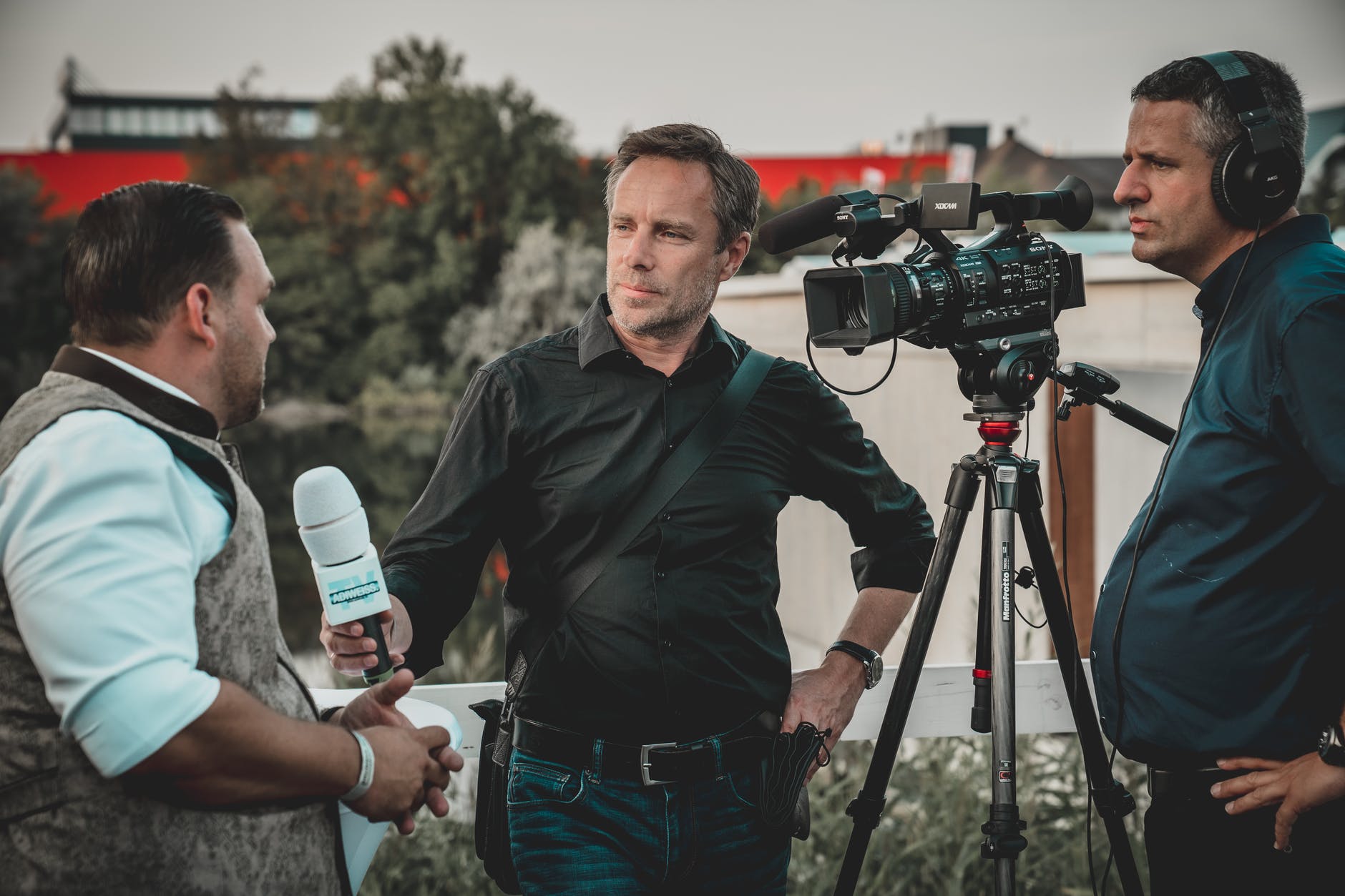









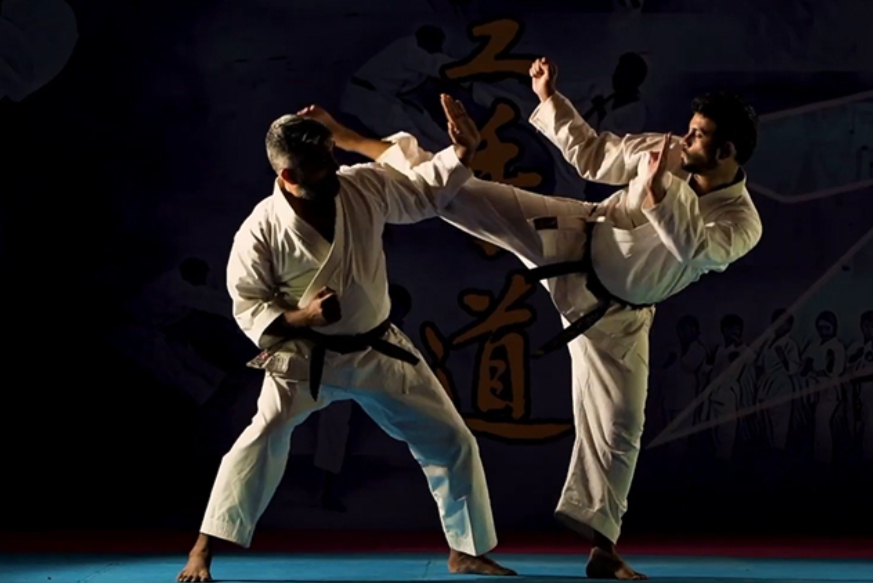
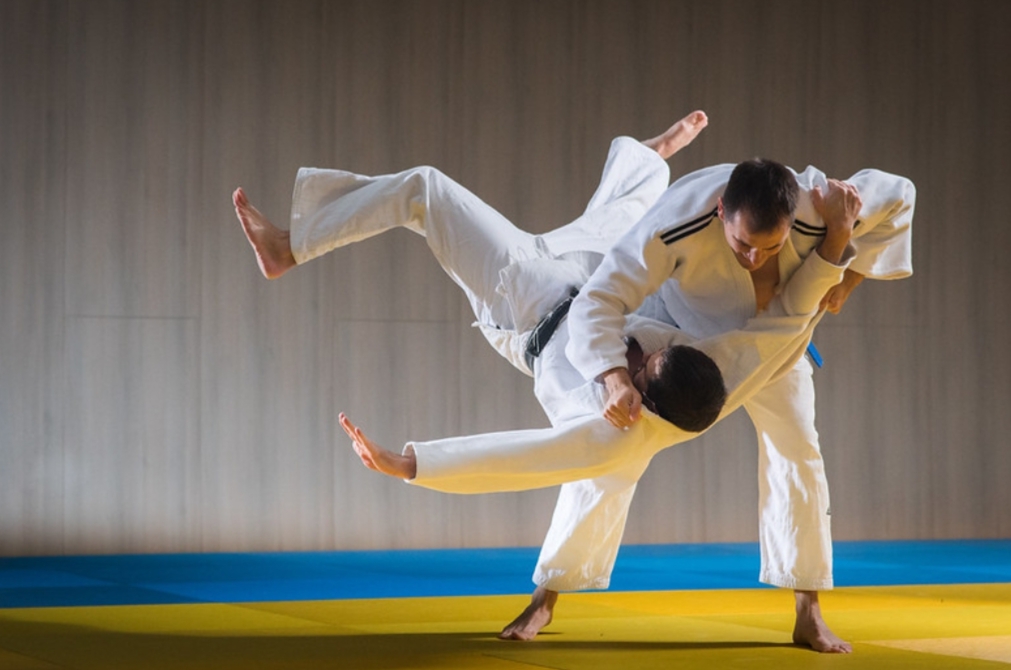

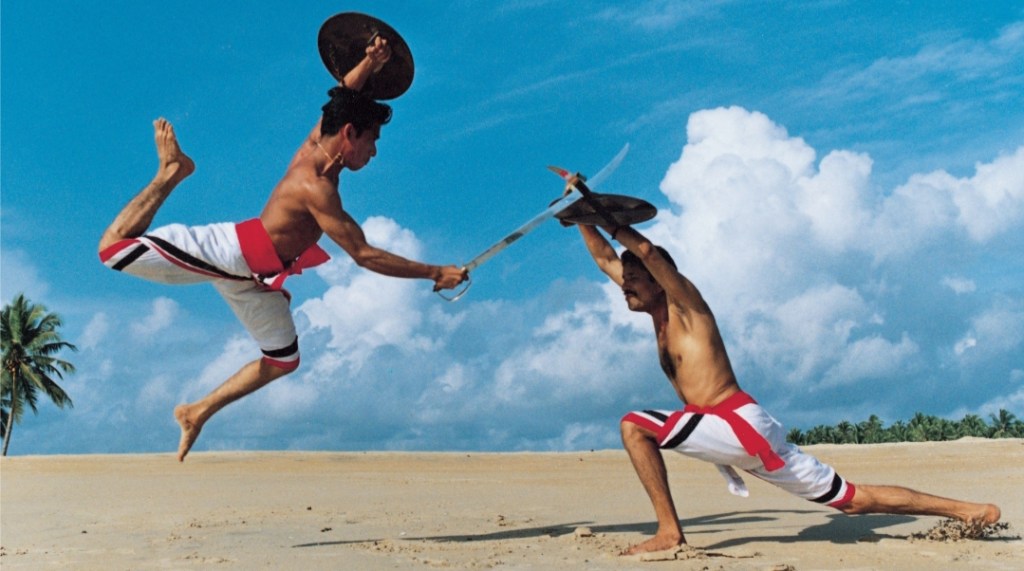







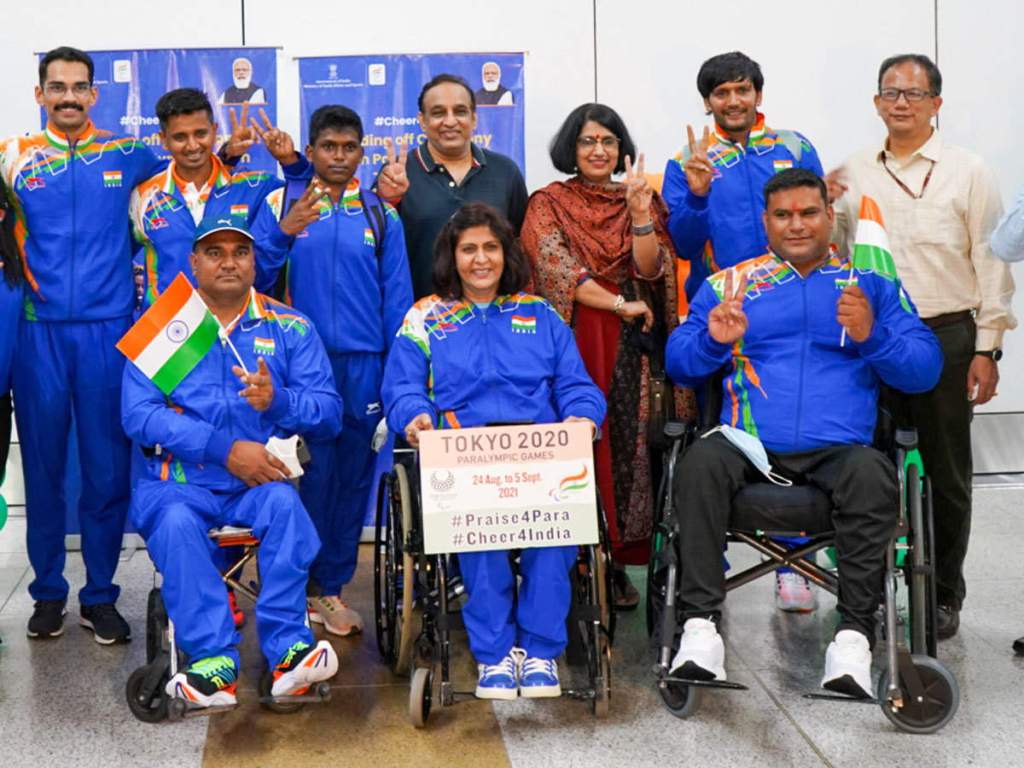









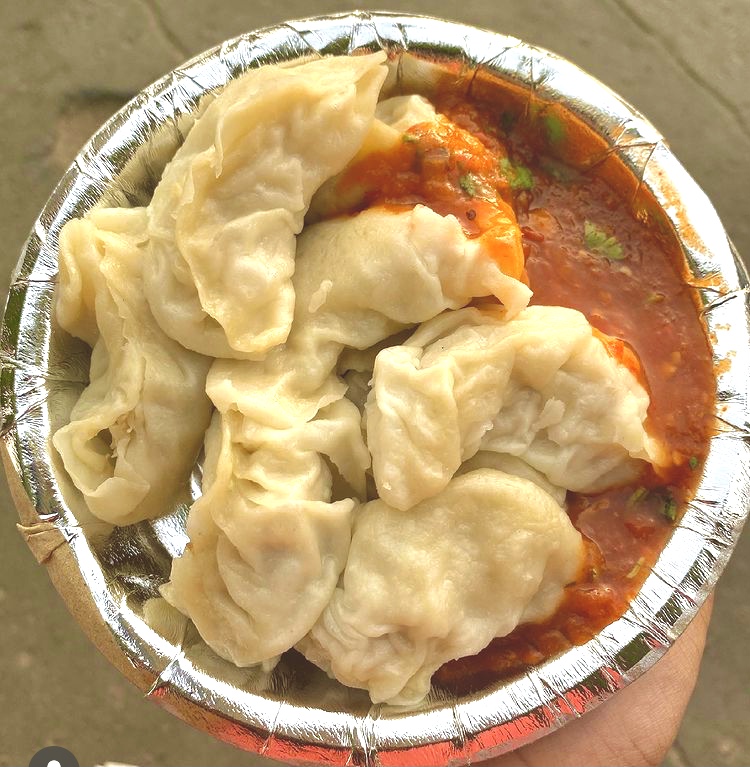

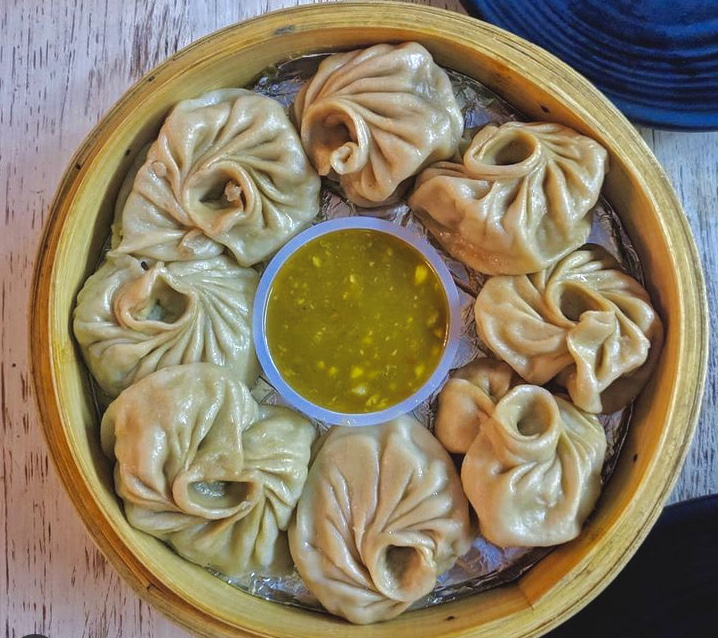


 Track2Training
You must be logged in to post a comment.