Jumping ₹3.28 lakh crore, TCS, HUL, and RIL are at the top of the list of companies.
According to a PTI report, eight of the 10 most valuable corporations in India had a combined increase in market worth of ₹3.28 lakh billion last week. The top three performers were Hindustan Unilever (HUL), Reliance Industries (RIL), and Tata Consultancy Services (TCS). RIL continued to be the most valuable corporation overall, with TCS, HDFC Bank, Bharti Airtel, and ICICI Bank completing the top five. In the ranks that followed were the State Bank of India (SBI), Infosys, Life Insurance Corporation of India (LIC), HUL, and ITC. op Gainers.
Top Gainers
RIL, TCS, HDFC Bank, Bharti Airtel, ICICI Bank, Infosys, HUL, and ITC were the top gainers. These companies saw their market valuations increase by a total of ₹3,28,116.58 crore, as per PTI.
The biggest individual gainer was TCS, which saw its market valuation soar by ₹80,828.08 crore to ₹14,08,485.29 crore.
HUL was next, adding ₹58,258.11 crore, and taking its market capitalization to ₹6,05,407.43 crore.
RIL was third last week, increasing by ₹54,024.35 crore to ₹19,88,741.47 crore.
HDFC Bank’s market valuation rose by ₹32,241.67 crore to ₹11,96,325.52 crore.
Bharti Airtel climbed ₹32,080.61 crore to ₹8,10,416.01 crore.
ITC’s valuation surged by ₹16,167.71crore to ₹5,48,204.12 crore.
ICICI Bank increased by ₹1,745.46 crore to ₹7,88,975.17 crore.
The Laggards
LIC and SBI were the only two laggards in the top 10 list of corporations.
The market value of LIC decreased to ₹6,28,451.77 crore, a decrease of ₹12,080.75 crore. Of ₹7,40,653.54 crore, SBI’s mcap fell by ₹178.5 crore. The BSE benchmark increased by 2,732.05 points, or 3.69 percent, last week in the market. On Friday, June 7, the 30-share BSE Sensex increased by 1,720.8 points, or 2.29 percent, to record an intraday high of 76,795.31. At the close, the benchmark was up 1,618.85 points, or 2.16 percent, to a record high of 76,693.36.
Swarna Jayanti Shahari Rozgar Yojana (SJSRY) is a government scheme in India aimed at promoting employment opportunities and improving the quality of life for urban poor individuals. It was launched on 1st December 1997, on the occasion of the 25th anniversary of India’s independence, and is part of the broader National Urban Livelihoods Mission (NULM).
Key Objectives of Swarna Jayanti Shahari Rozgar Yojana:
Employment Generation: The primary goal of SJSRY is to generate sustainable employment opportunities for the urban poor, with a specific focus on skill development and self-employment ventures.
Skill Development: The scheme emphasizes the importance of skill enhancement and training for individuals from marginalized urban communities. By imparting relevant skills, the program aims to enhance employability and income-generating capabilities.
Self-Employment: SJSRY promotes self-employment among the urban poor by providing financial assistance and support for starting small businesses or enterprises. This aspect of the program is crucial for fostering entrepreneurship and economic independence.
Urban Poverty Alleviation: The scheme is designed to address the challenges of urban poverty by creating a conducive environment for income generation, thereby contributing to the overall improvement of living standards in urban areas.
Components of Swarna Jayanti Shahari Rozgar Yojana:
The SJSRY is broadly divided into two sub-components:
Urban Self-Employment Program (USEP): This component focuses on providing financial assistance and skill training to individuals interested in starting their own ventures. The financial aid is intended to cover a portion of the project cost.
Urban Wage Employment Program (UWEP): UWEP is aimed at providing wage employment opportunities for the urban poor. This involves the creation of temporary employment through various community-based projects.
Implementation and Monitoring:
The implementation of the Swarna Jayanti Shahari Rozgar Yojana involves collaboration between the central government, state governments, and urban local bodies. The program is monitored by the Ministry of Housing and Urban Affairs, Government of India, to ensure effective implementation and adherence to the program’s objectives.
It’s important to note that policies and schemes may undergo changes and updates over time. For the most current and detailed information on the Swarna Jayanti Shahari Rozgar Yojana, it is advisable to refer to official government sources or recent publications related to urban development in India.
References
Rajkonwar, A. B. (2005). Swama Jayanti Shahari Rozgar Yojana: A study on effectiveness in Dibrugarh. SEDME (Small Enterprises Development, Management & Extension Journal), 32(4), 23-42.
Sharma, S. N. (2020). A Review of Swarna Jayanti Shahari Rozgar Yojana. Think India Journal, 23(1), 26-32.
Shobha, K. (2007). Performance of women beneficiaries of the Prime Minister’s Rozgar Yojana in Coimbatore City (Doctoral dissertation, Avinashilingam University for Women (India)).
The Umbrella Scheme of Atal Vayo Abhyuday Yojana(AVYAY), being run by the Department of Social Justice and Empowerment, includes components to provide financial security, healthcare, nutrition, shelter, welfare etc. for senior citizens. Under one of such components, namely, the Integrated Programme for Senior Citizens(IPSrC), Grant-in-Aid is given to Implementing Agencies for running and maintenance of Senior Citizens Homes where basic amenities like shelter, food, medical care, entertainment opportunities etc. are provided free of cost to indigent senior citizens. Under RashtriyaVayoshri Yojana(RVY), assisted living devices are distributed free of cost, in camp mode, to senior citizens belonging to the families living below the poverty line or having Rs. 15000/- as monthly income and suffering from age related disabilities. The Elderline: National Helpline for Senior Citizens(NHSC) (Toll-free No. 14567) provides free information, guidance, emotional support and field intervention in cases of abuse and rescues in order to improve the quality of life of senior citizens. The component namely Senior-care Ageing Growth Engine(SAGE) aims to encourage youth to think about the problems of the elderly and come out with innovative ideas for the elderly care and promoting them into start-ups by providing equity support.
Under Indira Gandhi National Old Age Pension Scheme(IGNOAPS) of the National Social Assistance Programme(NSAP), a fully funded Centrally Sponsored Scheme of the Department of Rural Development, Government of India, monthly pension at the rate of Rs.200/- per month per beneficiary to elderly persons in the age group of 60-79 years belonging to Below Poverty Line(BPL) households, is being paid. The rate of pension is increased to Rs.500/- per month per beneficiary on reaching the age of 80 years. The States/Union Territories are encouraged to provide top up amounts of at least an equivalent amount to the assistance provided by the Central Government so that the beneficiaries could get a decent level of assistance. At present, the States/Union Territories are adding Top up amounts ranging from Rs.50/- to Rs.3000/- per month per beneficiary under the IGNOAPS of NSAP. The assistance under NSAP pension schemes is sanctioned up to the scheme-wise, State/Union Territory-wise cap of beneficiaries under the scheme. At present, the number of beneficiaries under the IGNOAPS in the country is around 2.21 crore and the Scheme has achieved almost 100% saturation in all States/Union Territories. The States/Union Territories have the option to provide pension from their own sources in case there are more eligible beneficiaries over and above the State/Union Territory cap under the NSAP pension schemes.
The Ministry of Health and Family Welfare launched the National Programme for Health Care of the Elderly(NPHCE) in 2010-11 with a view to provide dedicated healthcare services to senior citizens at various level of State Health Care delivery system i.e., at Primary, Secondary and Tertiary health care, including outreach services. The Programme has two components, namely National Health Mission(NHM) i.e., Primary and Secondary care service delivery through District Hospitals(DH), Community Health Centres(CHC), Primary Health Centres(PHC), Sub-Centre/Health & Wellness Centres, and Tertiary Component i.e., these services are being provided though Regional Geriatric Centres(RGCs) located at 19 Medical colleges in 18 states of India and two National Centres of Aging(NCAs) one in AIIMS, Ansari Nagar, New Delhi and another in Madras Medical College, Chennai. It also includes Research on health issues pertaining to senior citizens. Further, Government launched Ayushman Bharat-Pradhan Mantri Jan Arogya Yojana
(PMJAY) to cover 10 crore poor and vulnerable families (approx. 50 crore beneficiaries) providing coverage of up to Rs.5 lakh per family per year for secondary and tertiary hospitalization. With the launch of the Ayushman Bharat-PMJAY, the RashtriyaSwasthya Bima Yojana(RSBY) and the Senior Citizen Health Insurance Scheme(SCHIS) have been subsumed in it. All enrolled beneficiary families of RSBY and SCHIS are entitled for benefits under the Ayushman Bharat-PMJAY.
All G20 Finance Ministers and Central Bank Governors agreed to paragraphs 1, 4, and paragraphs 6 to 26 along with Annexes 1 and 2.
We, the Finance Ministers and Central Bank Governors of G20 countries, met on 17-18 July 2023, in Gandhinagar, India. Under the Indian Presidency’s theme of “One Earth, One Family, One Future”, we pledge to prioritize the well-being of our people and the planet and reaffirm our commitment to enhancing international economic cooperation, strengthening global development for all and steering the global economy towards strong, sustainable, balanced, and inclusive growth (SSBIG).
12Since February 2022, we have also witnessed the war in Ukraine further adversely impact the global economy. There was a discussion on the issue. We reiterated our national positions as expressed in other fora, including the UN Security Council and the UN General Assembly, which, in Resolution No. ES- 11/1 dated 2 March 2022, as adopted by majority vote (141 votes for, 5 against, 35 abstentions, 12 absent), deplores in the strongest terms the aggression by the Russian Federation against Ukraine and demands its complete and unconditional withdrawal from the territory of Ukraine. Most members strongly condemned the war in Ukraine and stressed that it is causing immense human suffering and exacerbating existing fragilities in the global economy constraining growth, increasing inflation, disrupting supply chains, heightening energy and food insecurity, and elevating financial stability risks. There were other views and different assessments of the situation and sanctions. Recognising that the G20 is not the forum to resolve security issues, we acknowledge that security issues can have significant consequences for the global economy.
It is essential to uphold international law and the multilateral system that safeguards peace and stability. This includes defending all the Purposes and Principles enshrined in the Charter of the United Nations and adhering to international humanitarian law, including the protection of civilians and infrastructure in armed conflicts. The use or threat of use of nuclear weapons is inadmissible. The peaceful resolution of conflicts, efforts to address crises, as well as diplomacy and dialogue are vital. Today’s era must not be of war.
1 China stated that the G20 FMCBG meeting is not the right forum to discuss geopolitical issues.
2 Russia dissociated itself from the status of this document as a common outcome because of references in paragraphs 2, 3 and 5.
Global economic growth is below its long-run average and remains uneven. The uncertainty around the outlook remains high. With notable tightening in global financial conditions, which could worsen debt vulnerabilities, persistent inflation and geoeconomic tensions, the balance of risks remains tilted to the downside. We, therefore, reiterate the need for well-calibrated monetary, fiscal, financial, and structural policies to promote growth, reduce inequalities and maintain macroeconomic and financial stability. We will continue to enhance macro policy cooperation and support the progress towards the 2030 Agenda for Sustainable Development. We reaffirm that achieving SSBIG will require policymakers to stay agile and flexible in their policy response, as evidenced during the recent banking turbulence in a few advanced economies where expeditious action by relevant authorities helped to maintain financial stability and manage spillovers. We welcome the initial steps taken by the Financial Stability Board (FSB), Standard Setting Bodies (SSBs) and in certain jurisdictions to examine what lessons can be learned from this recent banking turbulence and encourage them to advance their ongoing work. We will use macroprudential policies, where required, to safeguard against downside risks. Central banks remain strongly committed to achieving price stability in line with their respective mandates. They will ensure that inflation expectations remain well anchored and will clearly communicate policy stances to help limit negative cross-country spillovers. Central bank independence is crucial to maintaining policy credibility. We will prioritise temporary and targeted fiscal measures to protect the poor and the most vulnerable, while maintaining medium-term fiscal sustainability. We will ensure the coherence of the overall monetary and fiscal stances. We recognise the importance of supply-side policies, especially policies that increase labour supply and enhance productivity to boost growth and alleviate price pressures. We reaffirm our April 2021 exchange rate commitments. We also reaffirm the importance of the rules-based, non-discriminatory, fair, open, inclusive, equitable, sustainable and transparent multilateral trading system with the World Trade Organization (WTO) at its core in restoring growth and job creation and reiterate our commitment to fight protectionism and encourage concerted efforts for reform of the WTO.
While global food and energy prices have fallen from their peak levels, the potential for high levels of volatility in food and energy markets remains, given the uncertainties in the global economy. In this context, we welcome the G20 Report on Macroeconomic Impacts of Food and Energy Insecurity and their Implications for the Global Economy, informed by policy experiences shared by members and supported by analysis from the International Monetary Fund (IMF), World Bank Group (WBG), International Energy Agency (IEA) and Food and Agriculture Organisation (FAO) and take note of its voluntary and non-binding policy learnings. We look forward to an ambitious replenishment of the International Fund for Agricultural Development (IFAD) resources at the end of the year by IFAD members, to support IFAD’s fight against food insecurity.
We also take note of the discussions on assessing macroeconomic risks to SSBIG, including those stemming from climate change and various transition policies considering country-specific circumstances and different levels of development. The macroeconomic costs of the physical impacts of climate change are significant at an aggregate level and the cost of inaction substantially outweighs that of orderly and just climate transitions. We recognise the importance of international dialogue and cooperation, including in the areas of finance and technology, and timely policy action consistent with country- specific circumstances. It is also critical to assess and account for the short, medium and long-term macroeconomic impact of both the physical impact of climate change and transition policies, including on growth, inflation, and unemployment. We endorse the G20 Report on Macroeconomic Risks Stemming from Climate Change and Transition Pathways that presents an evidence-based assessment informed by policy experiences shared by members and technical inputs from the IMF, IEA, and the Network of Central Banks and Supervisors for Greening the Financial System (NGFS). Building on analysis in this Report, we will consider further work on the macroeconomic implications, as appropriate, particularly as relevant for fiscal and monetary policies, drawing on the inputs from a diverse set of stakeholders.
We remain committed to pursuing ambitious efforts to evolve and strengthen Multilateral Development Banks (MDBs) to address the global challenges of the 21st century with a continued focus on addressing the development needs of low- and middle-income countries.
Following up on the mandate from our Leaders in Bali in November 2022 and based on the updates from MDBs in Spring 2023, a G20 Roadmap for Implementing the Recommendations of the G20 Independent Review of MDBs Capital Adequacy Frameworks (CAFs) has been developed. We endorse this Roadmap and call for its ambitious implementation, within MDBs’ own governance frameworks while safeguarding their long-term financial sustainability, robust credit ratings and preferred creditor status. We also call for a regular review of the progress of implementation on a rolling basis including through engaging with MDBs, subject experts and shareholders. We commend the MDBs for their progress in implementing the CAF recommendations, especially with respect to adapting definitions of risk appetite and financial innovation. At the same time, we emphasise the need to give an additional push to CAF implementation. We appreciate the ongoing collaboration among MDBs on the timely release of Global Emerging Markets (GEMs) data and the launch of GEMs 2.0 as a stand-alone entity by early 2024. Going forward, we also encourage MDBs to collaborate in areas such as hybrid capital, callable capital, and guarantees. We appreciate the enhanced dialogue between the MDBs, Credit Rating Agencies and shareholders and encourage continued transparency in the exchange of information and rating methodologies. We take note that initial CAF measures, including those under implementation and consideration, could potentially yield additional lending headroom of approximately USD 200 billion over the next decade, as estimated in the G20 CAF Roadmap. While these are encouraging first steps, we will need continued and further impetus on CAF implementation.
Furthermore, we reiterate our call for the MDBs to undertake comprehensive efforts to evolve their vision, incentive structures, operational approaches and financial capacities so that they are better equipped to maximize their impact in addressing a wide range of global challenges, while being consistent with their mandate and commitment to accelerate progress towards Sustainable Development Goals (SDGs). Recognising the urgent need to strengthen and evolve the MDB ecosystem for the 21st century, we appreciate the efforts of the G20 Independent Expert Group on Strengthening MDBs in preparing Volume 1 of the Report, and we will examine it in conjunction with Volume 2 expected in October 2023. We take note of Volume 1’s recommendations and the MDBs may choose to discuss these recommendations as relevant and appropriate, within their governance frameworks, in due course, with a view to enhancing the effectiveness of MDBs. We look forward to a High-Level Seminar, on the sidelines of the Fourth FMCBG meeting in October 2023 on strengthening the financial capacity of MDBs. We encourage MDBs to update the International Financial Architecture Working Group (IFA WG) on their evolution efforts to better address global challenges. We welcome the March 2023 Report on Evolution of the World Bank Group and call on the World Bank to advance the implementation of the agreed actions and continue to develop further proposals that can contribute to significant progress of the Bank’s evolution exercise by the IMF/WBG 2023 Annual Meetings in Marrakech. Recognising other multilateral efforts in this area, we take note of the Summit for a New Global Financing Pact. We also look forward to an ambitious IDA21 replenishment. We acknowledge the concluding report on the 2020 Shareholding Review of the International Bank for Reconstruction and Development (IBRD) and look forward to the 2025 Shareholding Review.
We reiterate our commitment to a strong, quota-based, and adequately resourced IMF at the centre of the global financial safety net. We remain committed to revisiting the adequacy of quotas and will continue the process of IMF governance reform under the 16th General Review of Quotas (GRQ), including a new quota formula as a guide, and ensure the primary role of quotas in IMF resources, to be concluded by December 15, 2023. In this context, we support at least maintaining the IMF’s current resource envelope. We welcome the landmark achievement of the global ambition of USD 100 billion of voluntary contributions (in SDRs or equivalent) and USD 2.6 billion of grants in pledges for countries most in need and call for the swift delivery of pending pledges. We welcome the progress achieved under the Resilience and Sustainability Trust (RST) and Poverty Reduction and Growth Trust (PRGT) with pledges for the RST amounting to about USD 45.5 billion and for the PRGT to about USD 24.2 billion in loan resources and nearly USD 1.9 billion in subsidy resources, respectively, through the voluntary channelling of Special Drawing Rights (SDRs) or equivalent contributions. We call for further voluntary subsidy and loan pledges to the PRGT by the IMF/WBG 2023 Annual Meetings in Marrakech to meet the first stage PRGT fundraising needs. We look forward to the IMF delivering a preliminary analysis, by the 2023 IMF/WBG Annual Meetings, of the range of options to put the PRGT on a sustainable footing with a view to meeting the growing needs of low-income countries in the coming years. The G20 reiterates its continued support to Africa, including through the G20 Compact with Africa. We will continue to monitor progress on channelling SDRs or equivalent contributions from countries with strong external positions and look forward to the IMF Ex-Post Report on the use of SDRs in September. We will continue to monitor the effectiveness of RST supported programs and look forward to interim review scheduled for April 2024. We look forward to further progress on the exploration of viable options for channelling SDRs through MDBs, while respecting relevant legal frameworks and the need to preserve the reserve asset character and status of SDRs. We look forward to the review of precautionary arrangements (FCL, PLL and SLL) and take note of the discussions held on the IMF surcharge policy.
We welcome discussions on the potential macro-financial implications arising from the introduction and adoption of Central Bank Digital Currencies (CBDCs), notably on cross-border payments as well as on the international monetary and financial system. We welcome the BIS Innovation Hub (BISIH) Report on Lessons Learnt on CBDCs and look forward to the IMF Report on Potential macro-financial implications of widespread adoption of CBDCs to advance the discussion on this issue. We also look forward to continued discussions on the implementation of international frameworks for the use of different tools in addressing capital flow volatility based on the policy updates by the IMF, the OECD, and the BIS while being mindful of their original purpose. We reiterate our commitment to promote sustainable capital flows. To this effect, we note the OECD’s Report on Towards Orderly Green Transition – Investment Requirements and Managing Risks to Capital Flows.
We re-emphasise the importance of addressing debt vulnerabilities in low and middle-income countries in an effective, comprehensive and systematic manner. We continue to stand by all the commitments made in the Common Framework for Debt Treatments beyond the DSSI, including those in the second and final paragraphs, as agreed on November 13, 2020, and step up the implementation of the Common Framework in a predictable, timely, orderly and coordinated manner. To this end, we ask the G20 International Financial Architecture Working Group (IFA WG) to continue discussing policy-related issues linked to implementation of the Common Framework and make appropriate recommendations. We welcome the recent agreement between the Government of Zambia and official creditor committee on a debt treatment and look forward to a swift resolution. We welcome the formation of an official creditor committee for Ghana and look forward to an agreement on a debt treatment as soon as possible. We also call for a swift conclusion of the debt treatment for Ethiopia. Beyond the Common Framework, we welcome all efforts for timely resolution of the debt situation of Sri Lanka, including the formation of the official creditor committee, and we call for the resolution as soon as possible. Noting the work in developing the G20 Note on the Global Debt Landscape in a fair and comprehensive manner, we ask the G20 IFA WG to continue the development expeditiously. We encourage the efforts of the Global Sovereign Debt Roundtable (GSDR) participants to strengthen communication and foster a common understanding among key stakeholders, both within and outside the Common Framework, for facilitating effective debt treatments.
We welcome joint efforts by all stakeholders, including private creditors, to continue working towards enhancing debt transparency. We note the results of the voluntary stocktaking exercise of data sharing with International Financial Institutions. We welcome the efforts of private sector lenders who have already contributed data to the joint Institute of International Finance (IIF)/OECD Data Repository Portal and continue to encourage others to also contribute on a voluntary basis.
We emphasise the need for enhanced mobilisation of finances and efficient use of existing resources in our efforts to make the cities of tomorrow inclusive, resilient, and sustainable. To this effect, we endorse the G20 Principles for Financing Cities of Tomorrow, which are voluntary and non-binding in nature and the G20/OECD Report on Financing Cities of Tomorrow, which provides a financing strategy as well as presents a compendium of innovative urban planning and financing models. We encourage stakeholders, including the Development Financial Institutions and the MDBs, to explore the potential of drawing upon these principles in their planning and financing of urban infrastructure wherever applicable and share experiences from early pilot cases. We note the progress in outlining the enablers of inclusive cities. We also note the customisable G20/ADB Framework on Capacity Building of Urban Administration to guide local governments in assessing and enhancing their overall institutional capacity for the effective delivery of public services. We note the ongoing pilot application of the voluntary and non-binding Quality Infrastructure Investment (QII) Indicators and look forward to further discussion on their application considering the country circumstances. We thank the Global Infrastructure Hub for supporting the G20’s multi-year infrastructure agenda since 2014. We note that the GIH Board and shareholders are currently engaged in exploring a way to best sustain the value created so far. We look forward to the outcome report of the 2023 Infrastructure Investors Dialogue focused on integrating the private sector perspective in designing policies for financing cities of tomorrow.
We continue to reaffirm our steadfast commitment to strengthening the full and effective implementation of the United Nations Framework Convention on Climate Change (UNFCCC) and the Paris Agreement. We recall and reaffirm the commitment made by developed countries to the goal of mobilising jointly USD 100 billion climate finance per year by 2020, and annually through 2025, to address the needs of developing countries, in the context of meaningful mitigation action and transparency in implementation. Developed country- contributors expect this goal to be met for the first time in 2023. In this context, we also support continued deliberations on an ambitious new collective quantified goal of climate finance from a floor of USD 100 billion per year to support developing countries, that helps in fulfilling the objective of the UNFCCC and implementation of the Paris Agreement.
We welcome the Sustainable Finance Working Group (SFWG) recommendations on the mechanisms to support the timely and adequate mobilisation of resources for climate finance, while ensuring support for transition activities in line with country circumstances. We also recognise the significant role of public finance, as an important enabler of climate actions such as leveraging much-needed private finance through blended financial instruments, mechanisms and risk-sharing facilities, to address both adaptation and mitigation efforts in a balanced manner for reaching the ambitious Nationally Determined Contributions (NDCs), carbon neutrality and net-zero considering different national circumstances. We welcome the recommendations for scaling up blended finance and risk-sharing facilities, including the enhanced role of MDBs in mobilizing climate finance. We underscore the importance of maximizing the effect of concessional resources, such as those of the multilateral climate funds to support developing countries’ implementation of the Paris Agreement and look forward to an ambitious replenishment of the Green Climate Fund (GCF) this year. Recognizing the importance of supporting the commercialization of early-stage technologies that avoid, abate and remove greenhouse gas emissions and facilitate adaptation, we note the recommendations on financial solutions, policies, and incentives to encourage greater private flows for the rapid development, demonstration, and deployment of green and low-carbon technologies. We reiterate the importance of a policy mix consisting of fiscal, market and regulatory mechanisms including, as appropriate, the use of carbon pricing and non-pricing mechanisms and incentives, toward carbon neutrality and net zero. We look forward to the early finalisation of the Compendium comprising the discussions on Non-Pricing Policy Levers to Support Sustainable Investment.
We reiterate our commitment to take action to scale up sustainable finance. In line with the G20 Sustainable Finance Roadmap, we welcome the analytical framework for SDG-aligned finance, and voluntary recommendations for scaling-up adoption of social impact investment instruments and improving nature-related data and reporting, informed by the stocktaking analyses, considering country circumstances. We encourage all relevant stakeholders to consider these recommendations in their actions and support for the 2030 Agenda.
We endorse the multi-year G20 Technical Assistance Action Plan (TAAP) and the voluntary recommendations made to overcome data-related barriers to climate investments. We encourage the implementation of TAAP by relevant jurisdictions and stakeholders in line with the national circumstances. We look forward to reporting on the progress made by members, international organisations, networks and initiatives in the implementation of the G20 Sustainable Finance Roadmap, which is voluntary and flexible in nature, and call for further efforts to advance the Roadmap’s recommended actions that will scale up sustainable finance, including among others the implementation of the Transition Finance Framework. We look forward to the finalisation of the 2023 G20 Sustainable Finance Report, including a review of the implementation of the G20 Sustainable Finance Roadmap. We welcome finalization of the sustainability and climate-related disclosure standards published by the International Sustainability Standards Board (ISSB) in June 2023, which provide the mechanisms that address proportionality and promote interoperability. It is important that flexibility, to take into account country- specific circumstances, is preserved in the implementation of those standards. When put into practice as above, those standards will help to support globally comparable and reliable disclosures.
We remain committed to strengthening the global health architecture for pandemic prevention, preparedness and response (PPR) through enhanced collaboration between Finance and Health Ministries under the Joint Finance and Health Task Force (JFHTF). Under the JFHTF, we welcome the participation of invited key regional organisations in the Task Force meetings as they enhance the voice of low-income countries. We welcome the discussion on the Framework on Economic Vulnerabilities and Risks (FEVR) and the initial Report for Economic Vulnerabilities and Risks arising from pandemics, created through collaboration between World Health Organisation (WHO), World Bank, IMF, and European Investment Bank (EIB). We call on the Task Force to continue refining this Framework over its multi-year work plan in order to regularly assess economic vulnerabilities and risks due to evolving pandemic threats, taking into account country-specific circumstances. We welcome the Report on Best Practices from Finance Health Institutional Arrangements during Covid-19 that will contribute towards joint finance-health sector readiness to support our response to future pandemics. We welcome the Report on Mapping Pandemic Response Financing Options and Gaps developed by the WHO and World Bank and look forward to further deliberations on how financing mechanisms could be optimized, better coordinated and, when necessary, suitably enhanced, to deploy the necessary financing quickly and efficiently, duly considering discussions in other global forums. The analysis provided by these three reports will offer important inputs for discussion in the Joint Finance-Health Ministerial Meeting in August on global response to the next pandemic threat. We welcome the conclusion of the call for proposals by the Pandemic Fund and look forward to the first round of funding in the coming months.
We reaffirm our commitment to continue cooperation towards a globally fair, sustainable and modern international tax system appropriate to the needs of the 21st century. We welcome the delivery of a text of a Multilateral Convention (MLC) on Amount A, significant progress of work on Amount B and the completion of the work on the development of the Subject to Tax Rule (STTR) and its implementation framework as set out in the July 2023 Outcome Statement of the OECD/G20 Inclusive Framework on BEPS (Inclusive Framework). We call on the Inclusive Framework to swiftly resolve the few pending issues relating to the MLC with a view to prepare the MLC for signature in the second half of 2023 and complete the work on Amount B by end of 2023. We welcome the steps taken by various countries to implement the Global Anti-Base Erosion (GloBE) Rules as a common approach. We recognise the need for coordinated efforts towards capacity building to implement the two-pillar international tax package effectively and in particular, welcome a plan for additional support and technical assistance for developing countries. We welcome the launch of the pilot programme of the South Asia Academy in India for tax and financial crime investigation in collaboration with OECD. We note the 2023 update of the G20/OECD Roadmap on Developing Countries and International Taxation. We note the Update on the Implementation of the 2021 Strategy on Unleashing the Potential of Automatic Exchange of Information for Developing Countries by the Global Forum on Transparency and Exchange of Information for Tax Purposes (“Global Forum”). We call for the swift implementation of the Crypto-Asset Reporting Framework (“CARF”) and amendments to the CRS. We ask the Global Forum to identify an appropriate and coordinated timeline to commence exchanges by relevant jurisdictions, noting the aspiration of a significant number of these jurisdictions to start CARF exchanges by 2027, and to report to our future meetings on the progress of its work. We note the OECD Report on Enhancing International Tax Transparency on Real Estate and the Global Forum Report on Facilitating the Use of Tax-Treaty-Exchanged Information for Non-Tax Purposes. We note the discussions held at the G20 High-Level Tax Symposium on Combatting Tax Evasion, Corruption and Money Laundering.
We continue to closely monitor the risks of the fast-paced developments in the crypto-asset ecosystem. We endorse the Financial Stability Board’s (FSB’s) high-level recommendations for the regulation, supervision and oversight of crypto-assets activities and markets and of global stablecoin arrangements. We ask the FSB and standard-setting bodies (SSBs) to promote the effective and timely implementation of these recommendations in a consistent manner globally to avoid regulatory arbitrage. We welcome the shared FSB and SSBs workplan for crypto assets. We look forward to receiving the IMF-FSB Synthesis Paper, including a Roadmap, before the Leaders’ Summit in September 2023, to support a coordinated and comprehensive policy and regulatory framework taking into account the full range of risks, and risks specific to the emerging market and developing economies (EMDEs) and ongoing global implementation of FATF standards to address money laundering and terrorism financing risks. In this context, we note the Presidency Note as an important input for the Synthesis Paper. We also welcome the BIS Report on The Crypto Ecosystem: Key Elements and Risks.
We continue to strongly support the work of the FSB and SSBs to address vulnerabilities and enhance the resilience of non-bank financial intermediation (NBFI) from a systemic perspective while monitoring evolving developments in NBFI. We welcome the FSB’s consultation report on revisions to the FSB 2017 recommendations on addressing liquidity mismatch in open-ended funds, and we support work to promote implementation of the FSB money market fund proposals, enhance margining practices, and address vulnerabilities from non-bank leverage. We welcome the FSB’s recommendations to achieve greater convergence in cyber incident reporting, updates to the Cyber Lexicon and Concept Note for a Format for Incident Reporting Exchange (FIRE). We look forward to the FSB’s work to identify the reporting needs and the prerequisites for and feasibility of the development of FIRE, and we ask the FSB to develop an action plan with appropriate timelines.
We welcome the FSB’s consultation Report on Enhancing Third-party Risk Management and Oversight. We expect the toolkit to support efforts in enhancing the operational resilience of financial institutions, addressing the challenges arising from their growing reliance on critical third-party service providers including BigTechs and FinTechs, as well as reducing fragmentation in regulatory and supervisory approaches across jurisdictions and in different areas of the financial services sector. We reaffirm our commitment to the effective implementation of the prioritised actions for the next phase of the G20 Roadmap for Enhancing Cross-border Payments and welcome the initiatives undertaken by SSBs and international organisations in this direction. To that end, we look forward to the FSB’s progress report in October on the implementation of this roadmap. We look forward to the G20 TechSprint 2023, a joint initiative with the BIS Innovation Hub, which will promote innovative solutions aimed at improving cross-border payments. We welcome the annual progress Report on the FSB’s Roadmap for Addressing Financial Risks from Climate Change. We endorse the revised G20/OECD Principles of Corporate Governance with the aim to strengthen policy and regulatory frameworks for corporate governance that support sustainability and access to finance from capital markets, which in turn can contribute to the resilience of the broader economy.
We welcome the progress made by the Global Partnership for Financial Inclusion (GPFI) towards the completion of the deliverables under the G20 2020 Financial Inclusion Action Plan (FIAP). We welcome the 2023 Update to Leaders on Progress towards the G20 Remittance Target and endorse the Regulatory Toolkit for Enhanced Digital Financial Inclusion of Micro, Small and Medium Enterprises (MSMEs). We endorse the voluntary and non-binding G20 Policy Recommendations for Advancing Financial Inclusion and Productivity Gains through Digital Public Infrastructure. We take note of the significant role of digital public infrastructure in helping to advance financial inclusion in support of inclusive growth and sustainable development. We also encourage the continuous development and responsible use of technological innovations including innovative payment systems, to achieve financial inclusion of the last mile and progress towards reducing the cost of remittances in line with the G20 Leaders’ directions. We also support continuous efforts to strengthen digital financial literacy and consumer protection. We endorse the G20 2023 FIAP, which provides an action-oriented and forward-looking roadmap for rapidly accelerating the financial inclusion of individuals and MSMEs, particularly vulnerable and underserved groups in the G20 countries and beyond. We also endorse the 2023 Updated GPFI Terms of Reference.
We recognise the importance of delivering on the strategic priorities of the Financial Action Task Force (FATF) and FATF Style Regional Bodies. We commit to supporting their increasing resource needs and encourage others to do the same, including for the next round of mutual evaluations. We remain committed to the timely and global implementation of the revised FATF Standards on the transparency of beneficial ownership of legal persons and legal arrangements to make it more difficult for criminals to hide and launder ill- gotten gains. We welcome the ongoing work of the FATF to enhance global efforts to recover criminal proceeds, in particular, the progress made by the FATF towards revising its standards on asset recovery and reinforcing global asset recovery networks. We reiterate the importance of countries developing and implementing effective regulatory and supervisory frameworks to mitigate risks associated with virtual assets in line with FATF Standards especially for terrorism financing, money laundering, and proliferation financing risks. In this regard, we support the FATF’s initiative to accelerate the global implementation of its standards, including the “travel rule”, and its work on risks of emerging technologies and innovations, including decentralised finance (DeFi) arrangements and peer-to-peer transactions. We look forward to the completion of FATF’s work on the use of crowdfunding for terrorism financing and on money laundering related to cyber-enabled fraud.
With a vision reminiscent of Mahatma Gandhi’s teachings, we, the Finance Ministers and Central Bank Governors of G20 countries, envisage a future in which every nation thrives, prosperity is widely shared, and the well-being of humanity and the planet are harmoniously intertwined.
Annex I: Issues for further work
This Annex lists the deliverables from various G20 Finance Track workstreams following the July FMCBG meeting.
Framework Working Group
G20 IMF Report on Strong, Sustainable, Balanced and Inclusive Growth, October 2023, in the context of increasing vulnerabilities associated with macroeconomic instabilities and financial globalisation.
International Financial Architecture Working Group
· Volume 2 of the Report of G20 Expert Group on Strengthening MDBs
Regular review of the progress of implementation of CAF recommendations on a rolling basis including through engaging with MDBs, subject experts and shareholders
· Updates from IMF on the progress of the 16th General Review of Quotas
Update from the IMF on the ex-post assessment of 2021 SDR allocation
Continued exploration of opportunities for a “User manual” for the Common
Framework presenting the experience of the first cases.
G20 IFA WG to continue developing expeditiously the G20 Note on the Global Debt Landscape in a fair and comprehensive manner.
IFA WG to continue discussing policy-related issues linked to implementation of the Common Framework and make appropriate recommendations
Technical workshops to be held under the ambit of GSDR, such as the one on Comparability of Treatment (CoT).
Improvements to sovereign debt restructuring by continuing the discussion on some specific debt instruments, including potential best practices for LICs on collateralised financing practices, exploring ways to increase private sector involvement, in particular regarding the restructuring of syndicated loans, collective action clauses, assessing the benefits and complications of state- contingent debt instruments (SCDI), and climate-resilient debt clauses in international sovereign bonds and in official bilateral lending.
IMF Report on the potential macro-financial implication of widespread adoption of CBDCs, in September 2023.
Infrastructure
Continuation of the InfraTracker 2.0 to track planned infrastructure investments across G20 member economies using publicly available sources and transition it to an online tool.
Compilation of the scope and taxonomies related to infrastructure across G-20 economies and International Organisations.
Sustainable Finance Working Group
Monitoring and reporting of progress on G20 Sustainable Finance Roadmap on the SFWG online dashboard.
Finalisation of the 2023 G20 Sustainable Finance Report.
Compendium of case studies for financing SDGs.
International Taxation
A Handbook by the OECD on Pillar Two to facilitate implementation through a common approach, especially to assist capacity-constrained jurisdictions and present the Handbook by October 2023.
Financial Sector Issues
A joint synthesis paper by the IMF and the FSB integrating the macroeconomic and regulatory perspectives of crypto assets to be submitted in September 2023.
An interim report by the BIS Committee on Payments and Market Infrastructures (CPMI) on Fast Payment Systems (FPS) interlinking governance, risk management and oversight considerations; and the final report on ISO 20022 harmonisation requirements for cross-border payments in October 2023.
FSB to provide a report on the financial stability implications of leverage in NBFI in September 2023.
FSB to provide an overall progress report on enhancing the resilience of NBFI in September 2023.
FSB to provide its Annual Report on Promoting Global Financial Stability in October 2023.
FSB to report in October 2023 its progress on the implementation of the G20 Roadmap for Enhancing Cross-Border Payments.
FSB, in coordination with the ISSB and IOSCO, to prepare a report on the progress of jurisdictions and firms on climate-related financial disclosures by October 2023.
Global Partnership for Financial Inclusion
GPFI will continue work to complete the Second Update of National Remittance Plans and present a case-study on the impact of digital remittances in reducing the cost of remittances.
GPFI will report on progress in implementing the G20 GPFI High-Level Principles on Digital Financial Inclusion.
GPFI to work on SME best practices and innovative instruments to overcome common constraints in SME financing based on GPFI SME living database.
Annex 2: Reports and Documents received
G20 Report on Macroeconomic Impacts of Food and Energy Insecurity and their implications for the global economy
G20 Report on Macroeconomic risks stemming from climate change and transition pathways
G20 Roadmap for implementing the recommendations of the G20 Independent Review of MDBs Capital Adequacy Frameworks (CAFs)
Volume 1 of the G20 Expert Group on Strengthening MDBs
BIS Innovation Hub (BISIH) Report on “Lessons learnt on CBDCs”
OECD’s report on “Towards Orderly Green Transition – Investment Requirements and Managing Risks to Capital Flows
G20 note on the total global ambition of USD 100bn of voluntary contributions for countries most in need
G20 Principles for Financing Cities of Tomorrow: inclusive, resilient and sustainable
G20/OECD Report on Financing Cities of Tomorrow
G20/ADB Framework on Capacity Building of Urban Administration
G20 Sustainable Finance Working Group Deliverables
Framework on Economic Vulnerabilities and Risks (FEVR) and the initial Report for economic vulnerabilities and risks arising from pandemics
Report on Best Practices from Finance Health Institutional Arrangements during Covid-19
Report on Mapping Pandemic Response Financing Options and Gaps developed by the WHO and World Bank
G20/OECD Roadmap on Developing Countries and International Taxation Update 2023
OECD Report on ‘Enhancing International Tax Transparency on Real Estate’
Global Forum Report on ‘Facilitating the Use of Tax-Treaty-Exchanged Information for Non-Tax Purposes’
Global Forum Update on the implementation of the 2021 Strategy on Unleashing the Potential of Automatic Exchange of Information for Developing Countries
FSB Chair’s Letters to G20 Finance Ministers and Central Bank Governors, April and July 2023.
FSB’s global regulatory framework for crypto-asset activities: Umbrella public note to accompany final framework
FSB’s high-level recommendations for the regulation, supervision, and oversight of crypto-asset activities and markets
FSB’s high-level recommendations for the regulation, supervision, and oversight of global stablecoin arrangements
BIS Report on “The crypto ecosystem: key elements and risks”.
FSB Consultation report on addressing liquidity mismatch in open-ended funds-Revisions to the FSB 2017 policy recommendations
FSB Report on Enhancing Third-Party Risk Management and Oversight: A toolkit for financial institutions and financial authorities
FSB Roadmap for Addressing Financial Risks from Climate Change: 2023 Progress Report
FSB Recommendations to Achieve Greater Convergence in Cyber Incident Reporting: Final Report
FSB Concept Note on Format for Incident Reporting Exchange (FIRE) – A possible way forward
Revised G20/OECD Principles of Corporate Governance
G20 Policy Recommendations for Advancing Financial Inclusion and Productivity Gains through Digital Public Infrastructure
2023 Update to Leaders on Progress towards the G20 Remittance Target
Regulatory Toolkit for Enhanced Digital Financial Inclusion of Micro, Small and Medium Enterprises (MSMEs)
G20 2023 FIAP
2023 Updated GPFI Terms of Reference.
2023 GPFI Progress Report to G20 Leaders
G20 Financial Inclusion Action Plan Progress Report 2021-23
The Third G20 Finance Ministers and Central Bank Governors (FMCBG) meeting under the Indian Presidency was held during 17-18 July 2023 in Gandhinagar, Gujarat. The meeting was jointly chaired by Union Minister of Finance and Corporate Affairs Smt. Nirmala Sitharaman, and Governor, Reserve Bank of India, Shri Shaktikanta Das.
Over 500 delegates, including Finance Ministers and Central Bank Governors from G20 member countries, Invitee Countries, and Heads of various International Organisations (IOs) participated in the meeting. The FMCBG meeting was preceded by the Third G20 Finance and Central Bank Deputies (FCBD) meeting during 14-15 July 2023 in Gandhinagar, Gujarat.
Under the Indian Presidency’s theme of “One Earth, One Family, One Future”, G20 Ministers and Governors pledged to prioritise the well-being of the people and the planet and reaffirmed their commitment to enhancing international economic cooperation, strengthening global development for all and steering the global economy towards strong, sustainable, balanced, and inclusive growth (SSBIG).
The meeting was organised in five thematic sessions covering Global Economy and Global Health, Sustainable Finance and Infrastructure, International Financial Architecture, International Taxation, and Financial Sector & Financial Inclusion.
The Union Finance Minister, in her welcome remarks, reiterated the collective responsibility of G20 to steer the global economy towards strong, sustainable, balanced, and inclusive growth. The meeting discussed the key deliverables of the Finance Track under the Indian G20 Presidency for 2023. The Indian Presidency received wide support on all the agenda items.
Members discussed the global economic outlook and risks, including macroeconomic implications of food and energy insecurity as well as climate change. Members endorsed the ‘G20 Report on Macroeconomic Risks Stemming from Climate Change and Transition Pathways’.
Under the priority of strengthening Multilateral Development Banks (MDBs) to address global challenges of the 21st century, members recognised the urgent need to strengthen and evolve the MDB ecosystem. Members appreciated the efforts of the G20 Independent Expert Group on Strengthening MDBs constituted by the Indian Presidency earlier this year. The Expert Group has prepared Volume 1 of the Report, and Volume 2 is expected in October 2023. Noting Volume 1’s recommendations, members shared that the MDBs may choose to discuss these recommendations to enhance their effectiveness. A High-Level Seminar will be held on the sidelines of the Fourth FMCBG meeting in October 2023 on strengthening the financial capacity of MDBs. G20 members also endorsed a ‘Roadmap for Implementation of Recommendations of the G20 Independent Review of MDBs’ Capital Adequacy Frameworks (CAF)’. This Roadmap will help unlock more lending resources in MDBs.
Managing global debt vulnerabilities is a significant priority area for 2023, reflecting the Indian Presidency’s endeavor to voice the concerns of the Global South. G20 Members have actively deliberated on how to strengthen multilateral coordination to effectively address the deteriorating debt situation and facilitate coordinated debt treatment for debt-distressed countries. G20 Members welcomed the progress achieved on various ongoing debt treatment cases under the Common Framework and beyond, and called for swift and timely resolution of these cases. They also emphasised the importance of addressing debt vulnerabilities in low and middle-income countries in an effective, comprehensive and systematic manner. The G20 encouraged the efforts of the Global Sovereign Debt Roundtable (GSDR) towards strengthening communication among key stakeholders to facilitate effective debt treatment. The GSDR is chaired by India, IMF and the World Bank.
The Indian Presidency has brought the Digital Public Infrastructure (DPI) agenda into the G20 discussions. Members acknowledged the transformative role of DPI in rapidly advancing financial inclusion and productivity gains. The Ministers and Governors lauded India’s pioneering efforts in leveraging DPIs to accelerate financial inclusion to the last mile. While noting that harnessing DPIs can help countries to leapfrog their development trajectories, the members unanimously endorsed the ‘G20 Policy Recommendations for Advancing Financial Inclusion and Productivity Gains through Digital Public Infrastructure’. developed under the Indian Presidency. These policy recommendations will be instrumental in guiding the G20 and non-G20 countries to leverage DPI for fast pacing their development processes and achieve strong and inclusive growth. The G20 FMCBGs endorsed the new G20 2023 Financial Inclusion Action Plan (FIAP) for the three years 2024-26, the FIAP provides an action-oriented and forward-looking roadmap for rapidly advancing financial inclusion of individuals and MSMEs in G20 and beyond by focusing on action areas which inter alia focus on promoting technological, innovations and digital infrastructure including DPI. Also, India has been appointed as one of the Co-Chairs of the Global Partnership for Financial Inclusion (GPFI) and in its capacity of Co-Chair, India will lead the implementation of the new FIAP for the next three years starting from 2024.
The Indian Presidency has prioritised the need to consider macrofinancial implications of crypto assets along with financial stability concerns. The Presidency has also focused on bringing the specific concerns of the Global South onto the crypto assets’ agenda. As a result, the IMF had, in February, presented a paper on the macrofinancial implications to the 2nd G20 FMCBG. The Financial Stability Board (FSB) has also included sections on EMDE concerns in its forthcoming reports and deliberations. In continuation of this process, in the July meeting, the G20 members welcomed the high-level recommendations of the FSB on crypto-asset activities and global stablecoin arrangements.
While the work of preparation of the IMF-FSB Synthesis paper is underway, the Indian Presidency has submitted a “Presidency Note” to the G20 membership laying down important inputs for a Roadmap on crypto assets. The Roadmap, to be contained in the Synthesis Paper will support a coordinated and comprehensive policy and regulatory framework taking into account the full range of risks, and risks specific to the emerging market and developing economies (EMDEs) and ongoing global implementation of FATF standards to address money laundering and terrorism financing risks. The G20 now looks forward to receiving the IMF-FSB Synthesis Paper, along with the Roadmap, before the Leaders’ Summit in September 2023.
To further enrich the ongoing policy work around crypto assets, a Round Table discussion titled “Policy Dialogues on Crypto Assets” was organized on the sidelines of the 3rd G20 FMCBG meeting at Gandhinagar. The aim of the round table session was to discuss and deliberate on some of the key questions pertaining to the crypto assets, in an open and candid manner. The session saw active participation from the G20 Finance Ministers, Governors, and the Heads of IMF, FSB, and FATF – institutions that are instrumental in the on-going work on crypto asset ecosystem. The views generated in the round table discussion will provide important inputs to the Synthesis paper.
The Indian G20 Presidency has also brought climate finance discussions to the forefront. Members welcomed the recommendations on the mechanisms to support timely and adequate mobilisation of resources for climate finance, prepared by the Sustainable Finance Working Group. With the commitment to scale up sustainable finance, members also welcomed the Analytical Framework for SDG-aligned finance.
Members also discussed taking forward global efforts in pandemic prevention, preparedness and response through enhanced collaboration between Finance and Health Ministries. Members welcomed the discussion on the Framework on Economic Vulnerabilities and Risks (FEVR) arising from pandemics, while taking into account country-specific circumstances.
On the infrastructure agenda, members showed strong support for work under the Indian Presidency’s priority of ‘Financing the Cities of Tomorrow’. The Principles designed by the Indian Presidency will enable cities to develop customised policies that encourage alternative financing sources and enable greater public-private collaboration to bridge the infrastructure financing gap in our cities.
A G20 Infrastructure Investors’ Dialogue on ‘Leveraging Funding and Financing Mechanisms and Approaches for the Cities of Tomorrow’ was also held on 16 July, 2023. Panel discussions focused on mechanisms for de-risking projects, better urban planning, innovations in blended finance, harnessing technological innovations, capacity building and augmenting support from governments & MDBs in developing climate-resilient and sustainable city infrastructure. Learnings from practical experiences of countries enriched the discourse immensely.
On the tax agenda, members appreciated the significant progress made with respect to the two-pillar international tax package and called for the finalization of the pending work as per the agreed timelines. Members welcomed a plan for additional support and technical assistance for developing countries and discussed the need to ensure that G20 efforts to enhance tax transparency translate into effective outcomes.
Members noted with great interest, the discussions held at the G20 High-Level Tax Symposium on Combatting Tax Evasion, Corruption and Money Laundering organised by the Indian Presidency on 16 July, 2023 on the sidelines of the FMCBG meeting. Panelists included Heads of FATF and OECD, the European Commissioner for Economy and the Finance Minister of Indonesia. This Symposium initiates a debate on the effective multilateral response required to counter tax evasion, corruption and money laundering. The panelists acknowledged that financial crimes are complex, operate across international borders and deprive governments both in developed and developing countries of much needed resources. They stressed the need for greater cooperation, both domestically and internationally. The panel discussion also delved into strategies that can be developed for a coordinated response for fighting tax crimes and other financial crimes.
Union Finance Minister also engaged in various bilateral discussions with her counterparts on the sidelines of the FMCBG meeting.
The delegates were hosted for ‘Ratri Bhoj Par Samvad’ (Conversation over Dinner), preceded by cultural programs curated by the Government of Gujarat, showcasing Gujarat’s place in civilisational history and its contribution to India’s trade and entrepreneurship.
Excursion events are also planned for the delegates on 19 July 2023. The delegates will be provided opportunities to experience Gujarat through visits to Adalaj Step wells, Sabarmati Ashram, Sabarmati River Front, Patan and Modhera.
The Third G20 FMCBG meeting concluded with a G20 Outcome Document and Chair’s Summary comprising 26 paragraphs and 2 Annexures. The Outcome Document and Chair Summary reflects the deliberations held during the meeting and conveys the wide support that the Indian G20 Presidency received for various deliverables envisaged for 2023.
The discussions held during the Third G20 FMCBG meeting will inform the Leaders for the G20 Summit to be held in India in September, 2023. The G20 FMCBGs will meet next in October 2023 in Marrakesh on the sidelines of IMF/WBG Annual Meetings.
Reminiscing Mahatma Gandhi’s teachings, the Finance Ministers and Central Bank Governors of G20 countries shared their vision for a future, in which every nation thrives, prosperity is widely shared, and the well-being of humanity and the planet are harmoniously intertwined.
Finance Minister Nirmala Sitharaman announced on Monday that the Indian Government intends to monetize ₹6 lakh crore worth of state-owned assets over the next four years under its asset monetization pipeline. The union government has said that they’ll allow the private sector to bid for operating the assets for 25 years, and with a lump sum payment upfront, but without giving away title to the underlying assets. The Centre aims to sell off gas pipelines, roads, railway assets, and warehousing facilities among a host of other assets with the help of the National Monetisation pipeline (NMP). The private sector can operate these assets for 25 years but they have to calculate what they can earn from it in various ways, over the next 25 years; discount that cash flow to its ‘present value (PV), deduct from that their profit margin, and pay the balance amount as an upfront rental to the government[1].
Lets us assume the value of the said asset is Rs 100. And return to the asset in real terms is 4% per annum (net of inflation)[2]. The present value of the 4% earnings, discounted at the real rate of interest to such an operator, assuming it is 6%, (again real as opposed to nominal rate) would be Rs 51.3[3]. Let us round it off to 50. Rs 50 represents the PV of an annuity of Rs 4, over 25 years, discounted at 6% per annum[4]. In effect for every Rs 100 of assets monetized, the cash flow yield from the asset that the operator can expect is Rs 50[5]. From this, he must deduct the return that he expects from his investment, the risk premium attached to the earning, and the general uncertainty of dealing with a capricious government[6]. Assume the operator wants a minimum of 50% return on his equity[7]. He will then be willing to pay Rs 35 (rounding off the calculation) for the Rs 100 assets[8]. One doesn’t know if the Rs 6 trillion number is indeed the market value of the assets[9]. But assuming it is, then the total value of upfront rental it can expect from such monetization will be in the region of Rs 2.1 trillion or less[10]. In fact, given normal discounting rates of 50% in such cases (100% return on capital), the government should expect no more than Rs 1.5 trillion[11].
WHY IS THE GOVERNMENT DOING THIS?
The Indian government has been facing a silent budgetary crisis. This crisis resulted because of disasters like demonetization, tax cuts for corporates, and GST made by Modi. Because of these serial disasters, the GDP growth of the country has fallen drastically. As a result of GDP falling, Modi had to steeply hike the prices of inelastic commodities like petroleum products to pay for corporate tax cuts. The price hike and hike in direct taxes burden the lower and middle-class people, indirectly, and hence, they have to reduce their consumption. So their consumption falls dragging GDP growth down even further. As a result of all these events, the economy tanked by sinking GDP by 28% in one quarter[12]. The GDP for the full year fell by 7%, the highest of any major economy[13]. All the government revenues are left plummeting and deficits soaring, thus necessitating record borrowings to pay for government expenses. Presently, the government debt as a percentage of GDP now stands in the region of 90%[14]. Government tax and non-tax revenues are expected to be 22.7% of GDP, and the combined government deficit is projected at 6.3%[15]. So, the government was left with no choice introduced asset monetization to fill its coffers. As and when, asset monetization will take place it will add up to the non-tax revenues of the government. All this trickery comes in the backdrop of India’s worsening credit ratings, which are just about a notch above junk, with a negative outlook.
FEW POINTS TO KNOW ABOUT ASSET MONETISATION
Asset monetization involves monetizing brownfield assets and does not include the selling of land.
“Ownership of assets will remain with the government and there will be a mandatory hand-back,” as said by finance minister Nirmala Sitharaman[16].
The infrastructure line ministries included the pipeline—Roads, Transport and Highways, Railways, Power, Pipeline and Natural Gas, Civil Aviation, Shipping Ports and Waterways, Telecommunications, Food, and Public Distribution, Mining, Coal and Housing, and Urban Affairs—along with Secretary (Department of Economic Affairs) and Secretary (Department of Investment and Public Asset Management)[17].
The estimated value corresponds to 14 percent of the proposed outlay for the Centre under the National Infrastructure Pipeline ( ₹43 lakh crore)[18].
Asset Monetisation aims at tapping private sector investment for new infrastructure creation.
Asset Monetisation is important for employment opportunities and generation, which will further help in accelerating economic growth and public welfare of the country.
The top 5 sectors (by estimated value) capture ~83% of the aggregate pipeline value. These top 5 sectors include: Roads (27%) followed by Railways (25%), Power (15%), oil & gas pipelines (8%) and Telecom (6%)[19].
In terms of annual phasing by value, 15% of assets with an indicative value of ₹0.88 lakh crore are envisaged to be rolled out in the current financial year (FY 2021-22)[20]. However, the aggregate, as well as year-on-year value under NMP, is only an indicative value with the actual realization for public assets depending on the timing, transaction structuring, investor interest, etc[21].
A range of instruments is identified through which assets and transactions identified under the NMP are expected to be rolled out[22]. These include direct contractual instruments such as public-private partnership concessions and capital market instruments such as Infrastructure Investment Trusts (InvIT) among others[23].
Union Budget 2021-22 had identified monetization of operating public infrastructure assets as a key means for sustainable infrastructure financing[24].
EFFECTS OF ASSET MONETISATION
Privatization of assets will lead to the following outcomes: –
Through the way of consumption or investment, privatization will lead to paring down of government instead of a further increase in government expenditure.
Efficacy of asset use is improved through lower real interest rates to spur private investment.
All the money that comes from asset monetization will go back to the government via a circuitous route.
Asset monetization will not result in any addition to the gross domestic in the economy, either by bringing in foreign savings or by attracting a significant synergy premium.
Asset monetization doesn’t add up to the share of resources available to the private sector and does not contribute to the growth of the private sector even by a penny.
In conclusion, the idea of selling existing government funds to create new ones is excellent. But in the current situation, there is no such thing, and speaking of the economy as a whole, there will be no other changes except transaction costs go up, and a severely limited government bandwidth is further stretched thin over needless paperwork.
Are you scared of investing in the stock market too? Have you heard of people losing all their money by investing in the stock market? If it is so, then you are not alone. There are many individuals with limited experience who are scared to invest in stocks after hearing the horror stories of investors losing 50% of their portfolio value[1]. The reality is that investing in the stock market carries some amount of risk. But it is one of the best methods to increase one’s net worth if carried out in a disciplined manner. Today, most rich and affluent people have the majority of their wealth from investment in stocks.
WHAT IS THE STOCK MARKET?
The stock market is where investors connect to buy and sell investments — most commonly, stocks, which are shares of ownership in a public company. ` When you purchase a public company’s stock you get entitled to the stock ownership of that particular company that is you become a shareholder. Stock ownership implies that the shareholder owns a slice of the company equal to the number of shares held as a proportion of the company’s total outstanding shares. For instance, an individual or entity that owns 100,000 shares of a company with one million outstanding shares would have a 10% ownership stake in it.[2] Most companies have outstanding shares that run into the millions or billions[3]. Anyone with a brokerage account can easily buy stocks online through the stock market. Most of the stock trades take place between investors. If we buy shares of a company, we are not buying these shares from the company itself. We are buying shares of another investor who has decided to sell his shares.
TYPES OF STOCKS
There are mainly two types of stocks that are common stocks and preferred stocks.
COMMON STOCKS
Common stock is a security that represents ownership in a corporation. Holders of the common stock vote on corporate policies and elect the board of directors. Common stock is further classified on the basis of voting rights. The basic proposition of common shares is that they should have equal rights –one vote per share system. But some companies have multiple classes of stocks, wherein each class of stock has different voting rights. In such a dual-class structure, Class A shares, for example, may have 10 votes per share, while the Class B “subordinate voting” shares may only have one vote per share. Dual- or multiple-class share structures are designed to enable the founders of a company to control its fortunes, strategic direction and ability to innovate[4].
PREFERRED STOCKS
Preferred stocks are a class of stocks that are granted rights different from common stocks. They usually have higher claims over dividends and asset distribution. Preferred stocks have limited or no voting rights in corporate governance. Preferred stocks have more priority to investors than common stocks as they possess characteristics of both bonds and common stocks.
HOW THE STOCK MARKET WORKS?
The stock market works in a very simple and easy way. In a stock market, buyers and sellers negotiate the prices of stocks and make trades. This process is carried out with the help of a network of exchange. When companies list shares of their stock on an exchange then this process is called Initial Public Offering or IPO. Investors buy and sell stocks among themselves. The supply and demand of stocks are determined by exchange networks like the New York Stock Exchange or the Nasdaq. Supply-demand helps to determine the price of the security. Price is determined by the investors and traders willing to buy or sell. Bidding by the buyer for the highest amount is done. The amount that the buyer is willing to pay is often lower than the amount sellers ask for. The difference in the amounts is called the bid-ask spread. The bid-ask concept is not much of a concern for beginner and long-term investors as the amount differs by pennies.
The working of the stock market is a fascinating example of the law of supply and demand, in real-time. If there are more buyers than sellers, then the price of stocks trends up. If there are more sellers than buyers, then the price falls down. The stock market serves two very important purposes both for the companies and the investors. For the companies, the stock market helps to raise funds from the public and helps in their funding operations. It also helps in the development and growth of the company and further expands its projects and business. As the companies grow and expand their business, shares bought by investors become more valuable, thus helping them to gain more capital. In addition to this, investors also receive dividends from the company as their profits. Public companies selling their shares need to disclose all the material information required and also give a say in how their business works to the investors.
All these processes that help in the working of the stock market seem to be complicated, but in reality, these have become relatively easy with the help of computer algorithms that help in price-setting calculations. Bid, ask and bid-ask all are available on the broker’s website with the required information. Today, the stock market is considered to be one of the most reliable ways of making money.
WHAT IS THE STOCK MARKET DOING TODAY?
Anyone can look at the performance of the stock market with the help of market indexes like the S&P 500 or the DJIA. Previously, when the covid-19 cases in India were at a hike, the stock market fell drastically. But now, in the current scenario around 3.2 per cent of the 1,216 listed companies on the National Stock Exchange that have reported their June quarter earnings have managed to defy the odds by expanding their operating margins on a sequential basis for four consecutive quarters[5]. In India, currently, there are 40 stocks that are defying a widespread trend[6].
HOW TO INVEST IN THE STOCK MARKET?
Decide the kind of account which you want to open: –
The first step to investing in the stock market is to decide the kind of account you want to open. Investment accounts can be opened for anything ranging from short-term goals to long, retirement savings to college savings etc.
Open a brokerage account: –
After deciding the kind of account you want to open, you have to open an account at a provider called a brokerage. When you choose a company, do look at their fees and available investment opportunities.
Depositing Money: –
To further continue with the investing process, you have to make an initial deposit. You can also set up recurring deposits to automate your investments going forward.
Choose your investments: –
Once you are done with the above-mentioned steps. You can buy and sell securities. You can take up mutual funds, exchange-traded funds (ETFs), individual stocks and bonds etc. These include hundreds of individual securities. It is recommended to have a diversified fund-based approach as it reduces the risk of losses and bad investments.
Purchasing chosen investments: –
After choosing what you want to buy simply enter the ticker symbol in the buy field and indicate how many shares you want to buy.
STOCK MARKET VS STOCK EXCHANGE
The stock market and stock exchange are two very different things but they are often interchanged with each other. The stock market is a wider term than the stock exchange. In fact, the stock exchange is a part of the stock market. The stock market includes many stock exchanges such as the Nasdaq or New York Stock Exchange (NYSE) in the U.S and NSE – National Stock Exchange in India.
We might have heard people talking about the performance of the stock market. When they talk about performance they mean thousands of public companies listed on multiple stock exchanges. In general, too stock market is a very broad term which comprises all the terms like mutual funds, ETFs, bonds and other securities beyond just stocks.
Today, most people have shifted their focus toward investments for the purpose of strengthening their financial position. While there are many ways to strengthen one’s financial position, investment is considered to be the most apposite way. The covid pandemic has taught us a lot about different aspects of life. However, most importantly it has highlighted our way of savings and investments. During tough phases like lockdown, almost everyone suffered financially and was forced to make compromises within their lifestyle. Only those who made wise money decisions at the right time were left uncompromised.
During the pandemic, it was observed that more and more people started investing in safe-haven assets. The most popular safe-haven investment during the covid pandemic has been gold. Gold investments, as we all know, are said to give good returns most of the time. It is also viewed as one of the safest options for investments. However, nowadays, investment in gold is being challenged by cryptocurrencies. Cryptocurrencies are now being regarded as the new hot cake in the world of investments and are said to give even more returns than gold. The most trending and successful cryptocurrency is Bitcoin.
WHAT IS BITCOIN?
Bitcoin is termed a digital currency which is free of any central control or the oversight of banks or governments. Instead, it depends upon peer-to-peer software and cryptography. It is also known as digital gold because its properties are very similar to that of gold. Like gold, bitcoin too has a fixed supply and derives its value through its limited supply and growing consumer demand. Some of the pros and cons of this cryptocurrency are: –
PROS
Since bitcoin is entirely digital, it can be easily sold a transferred to another person’s account.
Bitcoin has the potential to give higher returns on investments because of its growing market.
Bitcoin can be used as a currency everywhere. It can be used for payments at any store that accepts bitcoin.
Investing in bitcoin now could lead to big payoffs down the road. Because bitcoin is an emerging investment and has the potential to increase in value.
CONS
There is a greater degree of risk involved in bitcoin as it is extremely volatile and susceptible to large fluctuations.
Bitcoin is subjected to scams or stealing as it is completely digital and so web-based wallets have the possibility to be hacked.
Bitcoin’s value is totally dependent upon the phenomena of demand and supply. If the demand for other cryptocurrencies increases more than the demand for bitcoin, its value can decrease.
WHAT IS INVESTMENT IN GOLD?
Gold is a valuable yellow metal and is used for various consumer goods such as jewellery, and it is not in abundance. Gold is a must for all the special occasions in India ranging from weddings to other special functions. In fact, one of the largest markets for gold is found in India. Gold has a big significance in the country’s cultural value and is considered to be a store of value, a symbol of wealth and status and a fundamental part of many rituals. Investment in gold gives fruitful results most of the time. Some of the pros and cons of Gold investments are: –
PROS
Investment in gold is always a stable option as its value increases over time; even if the economy gets into recession, its value will not decrease.
If you have your gold stored in a precious metals IRA, it will be stored in a specific, safe vault that is overseen by a custodian who will manage your account. These accounts are often insured up to a certain amount, much like a traditional bank account, so you can rest easy knowing your investment is safe[1].
Gold is considered to be an ideal baseline for trading purposes and is being used up as long as civilizations have been around. So it is durable in nature.
CONS
Gold can be used as a currency only during an economic crisis. It cannot be used as a currency to buy something in normal times.
When you invest in gold you need to keep that physical item stored carefully and safely.
DIFFERENCE BETWEEN BITCOIN AND GOLD
CHARACTERISTICS
BITCOIN
GOLD
Legality, Transparency and safety
Bitcoin has safety issues and is not that transparent and legal
Gold ranks above bitcoin in safety, legality and transparency.
Volatility
Bitcoin is extremely volatile. It is more susceptible to market whims and news
Gold is a safer asset and is less volatile
Baseline Value
Bitcoin has less baseline value as it is based on a full banking system and many people don’t have access to online banking services.
As gold is used in a variety of ways, therefore, it has more baseline value than bitcoin.
Rarity
Rare
Rare
Liquidity
Liquid
Liquid
WHICH TYPE OF INVESTMENT SHOULD BE CONSIDERED? GOLD OR BITCOIN
According to billionaire Ray Dalio, bitcoin is just a digital version of gold but he prefers physical gold over bitcoin. “If you put a gun to my head, and you said, ‘I can only have one,’” says Dalio. “I would choose gold.” Here’s why he prefers investment in gold over bitcoin[2].
Gold has thousands of years of historical record as a store value and doesn’t face the same competition risks as bitcoin has
Unlike bitcoin, gold is very less volatile. Its volatility is just one-fifth of the volatility of bitcoin.
Cryptocurrencies can never replace metals like gold and silver as they are being used for centuries in every corner of the world and have a very strong economic standing as compared to bitcoin. So Cryptocurrencies like bitcoin can only help increase the value of these metals but cannot replace them.
Gold has offered a very high degree of longevity but such degree of longevity offered by bitcoin is highly questionable.
FINAL VERDICT
Both bitcoin and gold have their own advantages and disadvantages. For now, it is very hard to predict whether an investment in gold will result in better returns or investment in bitcoin. Bitcoin, today is said to be giving more returns than gold. It is alleged that Bitcoin’s market cap will surpass gold’s market cap by 2030. However, nothing is for sure now. Many people prefer gold investments, at the same time many people have shifted towards investments in bitcoin. Bitcoin has a fantastic upside and limited downside, while gold has a more traditional risk-reward balance[3]. Bitcoin is good for short-term investments and getting high returns on it and gold is good for long-term investments and gives relatively lower returns than bitcoin. It is completely the choice of the investor regarding the kind of investment he/ she wants to take up. An investor can invest in bitcoin or gold or in both. It is completely the choice of the investor. But it is advisable to invest in both bitcoin as well as gold as it will help you diversify your investments and increase your chances of high returns.
According to a 2020 survey by the National Foundation for Credit Counseling, only 47% of Americans use budgeting tools to keep track of their spending. A budget, on the other hand, as the most basic instrument in the financial planning process, might make it easier to meet your financial objectives.
Not only does a budget help you keep track of where your money is going, but it also gives you more control over that process. Without a clear plan for your cash flow, you could be spending against your own best interests without even knowing it.
How a proper Budget can power your Financial Independence?
Budgeting isn’t always enjoyable, but it’s one of the most crucial steps you can do to better your financial situation. Here are a few examples of how living on a budget might help.
– It aligns your spending with your goals: You may decide how you’ll spend your money each month depending on what’s most important to you by setting and sticking to a budget.
– It can improve your debt repayment strategy: If you’re trying to pay off student loans, credit cards, or other types of debt, a budget might help you set aside more money so you can get out of debt.
– It can help you achieve your savings goals: A budget can help you figure out how much you’re going to save toward your goal at the beginning of the month, whether you want to save more for retirement, develop your emergency fund, or put money down for your next vacation.
5 Budgeting Methods to Consider
1. Zero- Based Budget A zero-based budgeting strategy is straightforward: income minus expenses equals zero.
This budgeting strategy is best for persons who have a fixed monthly income or can at least anticipate their monthly income. Add your monthly spending and savings to equal your monthly income after you’ve calculated your monthly income.
It’s critical to budget for all of your spending as precisely as possible. If you go over budget in one category, you’ll have to make up the difference by taking money from another. And forgetting about a significant expense can throw your budget off.
A zero-based budget may be a better alternative for someone who has been budgeting for some time because there is less space for error. Even so, keeping additional cash in your bank account as a buffer is a wise idea. Also, keep a modest emergency money on hand in case you face a major unexpected bill.
2. Pay-yourself-first budget Another simple budgeting strategy that focuses on savings and debt reduction is the pay-yourself-first budget.
Simply put, every time you are paid, you set away a particular amount for savings and debt payments, then spend the remainder of your money as you see fit. This allows you to prioritise your savings and debt payback goals while making do with the leftovers.
For instance, you might prioritise paying off high-interest debt first while gradually creating an emergency fund. However, once you’ve paid off your high-interest debt, you may concentrate on other savings goals.
Of course, prioritizing your necessary expenses and obligations is critical. However, because you’ve already taken care of what’s most essential to you, you don’t need to be concerned about where you spend your discretionary spending. This budget is ideal for someone who has trouble saving each month or doesn’t want to spend too much time planning out each spending.
3. Envelope System Budget This way of budgeting is similar to the zero-based budget, but there is one major difference: everything is done in cash. An envelope budgeting strategy is planning out how you’ll spend your money each month and using an envelope for each category of spending. Then, according to your budget, you withdraw as much cash as you need to fill each envelope.
Take your grocery envelope with you when you go grocery shopping, for example, and pay for your purchases with cash. If you run out, unless you choose to withdraw cash from other envelopes, that’s all you can spend in that area for the month. However, don’t raid other envelopes too frequently, as this might lead to a snowball effect, and you could run out of money before the end of the month.
The envelope system is endorsed by financial expert Dave Ramsey, so it’s a good alternative for folks who share his money ideals, which emphasize paying down debt rapidly and utilizing cash rather than credit cards.
However, it’s not a smart budgeting approach for someone who doesn’t like having a lot of cash on hand or prefers to use credit or debit cards.
4. 50/30/20 Budget The 50/30/20 budgeting method is simple and requires less effort than the envelope and zero-based budgeting methods. The goal is to categorize your spending into three groups
Necessary expenses (50%)
Discretionary expenses (30%)
Savings and Debt Payments (20%)
This budgeting strategy is ideal for rookie budgeters because it does not necessitate detailed spending tracking. You can stick to this budget as long as you understand what constitutes a want vs a need and allocate adequate funds to savings and debt repayment.
The biggest disadvantage is that the 50/30/20 rule may be impossible for people who have a lot of debt or want to save a lot of money because 20% isn’t a lot of money.
However, the good news is that you may tailor it to your own requirements. For example, you might wish to consider raising savings and debt repayments while minimising discretionary and necessary expenses.
To put it another way, don’t get too fixated on the 50/30/20 ratio. Make the concept fit your requirements.
5. The ‘no’ budget This unique budgeting strategy is totally based on not spending money that you don’t have, as the name implies. Rather than making a budget, you should:
Keep an eye on the balance of your bank account. To keep track of your spending, use a budgeting app or your bank’s online banking or mobile app.
Keep track of when your recurring expenses are due. Keeping a list in a spreadsheet, Microsoft Word document, or on a piece of paper is one way to do this.
Set money aside for savings and additional debt repayments. Increase your automatic monthly debt payments and use automatic transfers from checking to savings wherever possible.
Spend the remainder of your funds without being overdrawn on your account. You’ll be better equipped to determine how much money is remaining after key costs if you keep an eye on your account balance.
While the “no” budget sounds easier than the other techniques we’ve discussed, telling oneself “no” isn’t always easy. This budgeting strategy works best if you’ve shown spending restraint in the past and are confident in your ability to do so again.
Loans, such as mortgages, vehicle loans, personal loans, and credit card debt, are the most common types of debt. The borrower is obligated to repay the loan balance by a particular date, usually several years in the future, according to the terms of the loan. The amount of interest that the borrower must pay annually, stated as a percentage of the loan amount, is also specified in the loan terms. Interest is used to reward the lender for taking on the risk of the loan, as well as to encourage the borrower to repay the loan fast in order to reduce their total interest expense.
Credit card debt works similarly to a loan, with the exception that the borrowed amount fluctuates over time based on the borrower’s needs—up to a predetermined limit—and has a rolling, or open-ended, repayment date. Consolidating loans, such as student loans and personal loans, is an option.
Types of Debt
1. Secured Debt Putting yourself in the position of a lender might help you understand secured debt. When someone asks for a loan, the lender must examine whether the debt will be repaid. Creditors can limit their risk by using secured debt. Because secured debt is backed by an asset (also known as collateral), this is the case. To put it another way, the collateral acts as a “security” for the loan.
Cash or property can be used as collateral. It can also be taken if borrowers do not make timely payments. Failure to repay a secured debt might result in additional consequences. Missed payments, for example, could be reported to credit bureaus. In addition, an unpaid debt may be referred to collections.
For example, a secured credit card needs a cash deposit before it may be used to make transactions. Consider it similar to the security deposit you’d put down when renting an apartment. Secured debt includes mortgages and auto loans. With these, the collateral is usually the purchased property, such as a house or a car. However, there is a silver lining to collateral: For the borrower, a lower risk to the lender could mean more attractive lending conditions and rates. Furthermore, some lenders may be less stringent when it comes to credit score requirements.
2. Unsecured Debt When a debt is unsecured, there is no need for collateral. Consider student debts, credit cards, and personal loans. If you don’t have any collateral, your credit will usually play a significant role in determining whether you qualify for unsecured debt—though there are some exceptions, such as school loans.
Credit reports are used by lenders to assess your credit. That is true for the majority of debts. However, loan criteria may vary. Creditors typically consider factors such as your payment history and outstanding debt. Credit scores—another instrument that lenders may employ—are calculated using similar principles.
In general, the higher your credit score, the more possibilities you have. A higher credit score, for example, could help you qualify for bigger credit limits or cheaper interest rates on an unsecured credit card. Some credit cards may provide benefits such as cash back, miles, or points. Remember that a higher credit score does not guarantee that you will be approved for unsecured credit cards or other loans. And just because a loan is “unsecured” doesn’t imply it’s okay to skip payments. If you go behind on your payments, it may harm your credit and lead to collections or a lawsuit.
3. Revolving Debt You may already be familiar with revolving debt if you have a secured or unsecured credit card. A revolving credit account is open-ended, which means you can charge and pay off your debt as many times as you like as long as the account is in good standing. Revolving credit includes personal lines of credit and home equity lines of credit.
If you qualify for a revolving credit line, your lender will set a credit limit for you, which is the most you can charge on the account. The amount of credit you have available changes month to month based on how much you utilise it. The minimum payment amounts may also alter month to month. Any unpaid debt will be carried over to the following payment cycle, along with interest. What’s the greatest way to avoid paying interest? Each time you receive a bill, pay it in full.
4. Installment Debt In some respects, instalment debt varies from revolving debt. This sort of loan is closed-ended, unlike revolving credit. That is, it is paid back over a set length of time. And, as the name implies, payments are usually made monthly in equal increments. Payments may be needed more regularly depending on the loan agreement.
Installment loans are available. Car loans and mortgages are examples of this. Unsecured instalment loans are also available. Student loans are an example of this. Another sort of instalment loan is a buy-now-pay-later loan, sometimes known as a BNPL. When you pay off a loan in instalments, you’re repaying both the principal and the interest. As the debt is paid down, the amount of each payment that goes toward interest usually decreases. Amortization is the term for this procedure.
Financial markets is a marketplace where buying and selling of securities like stocks, bonds, derivatives, commodities, currencies, etc. occur. These markets may include securities which are listed on an regulated exchanges or are traded Over-The-Counter(OTC). Financial markets basically provide a way for those who have excess money to invest and those who are in need to money to borrow.
Financial markets play an important role in creating liquidity for capitalist economies. Financial markets are transparent as they ensure that the prices set are efficient and appropriate.
Types of Financial Markets
Images created and referenced from Trade Nation – What time does the forex market open. All distribution rights belong to the publisher and cannot be used without written permission.
Stock Markets
Stock markets are a place where trading of equities occur. Equity is the value of shares issued by the company. In a stock market, securities are traded via Primary Market and Secondary Market. In Primary Market, securities are issued to investors directly by the issuer. Companies raise capital by an Initial Public Offering(IPO). Primary markets are also known as New Issue Markets.
Secondary markets are where investors buy and sell securities they already own. The secondary market, also called the aftermarket and follow on public offering, is the financial market in which previously issued financial instruments are traded.
The most popular stock exchanges in India are National Stock Exchange(NSE) and Bombay Stock Exchange(BSE).
Bond Markets
The Bond Market is a marketplace where participants can issue new debt, known as primary market and buy and sell debt securities, known as secondary market. A bond is an financial instrument in which an investor loans money for a specific period of time at a pre-determined interest rate. Bonds are issues by municipalities, states, and sovereign governments to finance projects and operations. Debt securities usually include bonds, but it may include notes, bills, and so for public and private expenditures.
Money Markets
Money Markets involves trading of securities that are highly liquid and are issued for short time period with low interest rates. Money market consists of various financial institutions and dealers, who seek to borrow or loan securities. Examples of securities traded in money markets are treasury bills, commercial papers and certificate of deposits. Money markets are considered a safe place to invest as they have high liquidity.
Money markets are Over-The-Counter(OTC) markets which means that they are not regulated and not structured. Money markets give lesser returns however they offer a variety of products.
Derivatives Market
Derivatives markets are financial markets for derivatives like futures, options, forwards, etc. Derivatives are financial instruments whose value is determined by the value of the financial instruments like bonds, commodities, currencies, interest rates, market indexes, and stocks. The four major types of derivative contracts are options, forwards, futures and swaps. Futures and Options are listed and traded on stock exchanges while forwards and swaps are not.
Forex Market
The forex (foreign exchange) market is a market where people can buy, trade, hedge, and speculate on currency pairs’ exchange rates. Because cash is the most liquid of assets, the Forex market is the most liquid in the world. The currency market conducts more than $5 trillion in daily transactions, which is higher than the combined volume of the futures and stock markets. The forex market, like the OTC markets, is decentralized and is made up of a global network of computers and brokers from all over the world. Banks, commercial companies, central banks, investment management firms, hedge funds, and retail forex brokers and investors make up the forex market.
Commodities Market
Commodities markets are gathering places for producers and consumers to trade physical commodities like maize, livestock, and soybeans, as well as energy goods (oil, gas, and carbon credits), precious metals (gold, silver, and platinum), and “soft” commodities (such as cotton, coffee, and sugar). Spot commodities markets are those where tangible things are exchanged for money.
Cryptocurrency Markets
Cryptocurrencies like Bitcoin and Ethereum, which are decentralised digital assets based on blockchain technology, have been introduced and have grown in popularity over the last few years. Hundreds of cryptocurrency tokens are now accessible and traded on a patchwork of independent online crypto exchanges throughout the world. These exchanges provide traders with digital wallets via which they can exchange one cryptocurrency for another or fiat currencies like dollars or euros.
In this Digital age, the market has became more global than ever it has been, the use of internet has been at peak, than it has never before, the small business that were in the street has started to open a wide market through the use of Internet, the local shop has reached to other parts of the world through the use of internet, websites, social media etc., many big multinational company has been facilitating the tools and facilities for the small business owner to come on the much bigger platform than ever before through the internet. Global integration through this medium that remove the barrier of trade, investment, communication, factor flows, bringing the economics together for the development.
There is a global change in the world, in this pandemic, changes in economies, business, technology, communication, politics and many more. This changes make the require the business to adapt to this changes as quick as possible or else they will get outdated, obsolete and might even wind up the business. There are many uncertainties in the business, so the entrepreneur must adapt to this changes, think about the future of the business. There are many other factors that are forcing the business to make changes, like limited resources, limited market, huge competition, highly skilled labor to change from traditional way to alternative way for getting the business more successful and to get in global market. Advantages of going international: It can able to take advantage of market opportunities in abroad countries through internet, trade. It also defends and grips the position of the business from the competitive position in varying technology, and also from domestic rivalry or government policies. It also enhances their return from the higher revenue and also lowers their cost of production. It also reduces it imports and try to increase their exports It breaks the barriers of places, geographical locations through internet. It also amplifies their relations with the International Diplomats. It also takes benefits from the international technology, labor and many opportunities. To get more access to the global markets and get the resources at low price without compromising its quality. The Domestic business is a business that buys or sells the goods and services within the national boundaries. It gets its resource within the country boundaries doesn’t have any option to search for the better option and even for the markets, it has limited its boundaries in terms of place, markets, resources unlike International business where goods and services are traded across the boundaries of the country, it can be either the countries or between the multinational companies from the different countries. The Domestic business has some limitation that it operates only within the boundaries, limited to narrow markets, no new customer, no customer visibility and reach, scare resources with high price, not good quality, but whereas International business all this limitations are eradicated with the help of technologies which remove the barrier of place, market, time, and new customer with high quality product with reasonable price, and the owner get the raw material with good quality and with reasonable price. In domestic business, the business get a constant threat of competition, rival companies as they don’t have new markets and large reach for their products, it becomes difficult for the domestic business to survive in the market. Many domestic businesses are going in the way of globalization, market integration with the use of technologies and becoming the international business and removing all the hindrance of the small business problems, competition.
The Union Minister for Finance & Corporate Affairs, Smt Nirmala Sitharaman presented the Union Budget 2021-22 in Parliament today, which is the first budget of this new decade and also a digital one in the backdrop of unprecedented COVID-19 crisis.
This year’s Budget lays focus on the seven pillars for reviving the economy – Health and Wellbeing, Physical and Financial Capital and Infrastructure, Inclusive Development for Aspirational India, Reinvigorating Human Capital, Innovation and R&D, and Minimum Government Maximum Governance. Several regulations around the securities market are proposed to be merged as a single code. Several direct taxes and indirect taxes amendments were also proposed.
Our FM starts the budget2021 announcement by mentioning the challenges during the pandemic and the vision of the Pradhan Mantri Garib Kalyan Yojana. FM says that India has two #COVID19 vaccines made available and two more will be made accessible soon. FM reiterated that the government is fully prepared to support the economy’s reset. FM says the Budget2021 is based on 6 pillars. Starting with healthcare & wellbeing: Spending’s been increased New scheme with an outlay of Rs.64K crore to be spread over 6 yrs The above is in addition to the National Health Mission.
Support to rural & urban health centres FM announces the Jal Jeevan Mission with an outlay of 2.87 lakh crores aiming to provide full-fledged water supply to all urban local bodies with household tap connections. The FM proposed Rs1.41 lakh crores over a period of 5 Years for the Urban Swacch Bharath 2.0.
An amount of Rs.1.47 lakh crores, over a 5-year-period, from 2021 has been assigned for initiatives such as wastewater treatment, reduction in plastic waster, reduction in pollution and the like. The Scrapping Policy has been announced in the Budget2021. The voluntary vehicle scrapping policy aims to remove inefficient vehicles so as to reduce vehicular pollution and oil import bills. FM proposes an amount of Rs.35000 crore to manufacture and make accessible the COVID19 vaccine.
To strengthen nutritional content, delivery, outreach, and outcome, Government will merge the Supplementary Nutrition Programme and the PoshanAbhiyan and launch the Mission Poshan 2.0. Government will adopt an intensified strategy to improve nutritional outcomes across 112 Aspirational Districts.
Universal Coverage of Water Supply and Swachch Bharat Mission:
The Finance Minister announced that the JalJeevan Mission (Urban), will be launched for universal water supply in all 4,378 Urban Local Bodies with 2.86 crore household tap connections, as well as liquid waste management in 500 AMRUT cities. It will be implemented over 5 years, with an outlay of Rs. 2,87,000 crore. Moreover, the Urban Swachh Bharat Mission will be implemented with a total financial allocation of Rs 1,41,678 crore over a period of 5 years from 2021-2026. Also to tackle the burgeoning problem of air pollution, government proposed to provide an amount of Rs. 2,217 crore for 42 urban centres with a million-plus population in this budget. A voluntary vehicle scrapping policy to phase out old and unfit vehicles was also announced. Fitness tests have been proposed in automated fitness centres after 20 years in case of personal vehicles, and after 15 years in case of commercial vehicles.
Physical and Financial Capital and Infrastructure:
Finance Minister said that for a USD 5 trillion economy, our manufacturing sector has to grow in double digits on a sustained basis. Our manufacturing companies need to become an integral part of global supply chains, possess core competence and cutting-edge technology. To achieve all of the above, PLI schemes to create manufacturing global champions for an AatmaNirbhar Bharat have been announced for 13 sectors. For this, the government has committed nearly Rs.1.97 lakh crore in the next 5 years starting FY 2021-22. This initiative will help bring scale and size in key sectors, create and nurture global champions and provide jobs to our youth.
Textiles:
Similarly, to enable the textile industry to become globally competitive, attract large investments and boost employment generation, a scheme of Mega Investment Textiles Parks (MITRA) will be launched in addition to the PLI scheme. This will create world class infrastructure with plug and play facilities to enable create global champions in exports. 7 Textile Parks will be established over 3 years.
Thus, the budget was widely acclaimed and appreciated.
In the simplest of terms cryptocurrency is a digital currency used to make transactions. It is currently not being used to make transactions but can be potentially used to do so. Before jumping to cryptocurrency let’s clear our basics.
Understanding currency
Think of cryptocurrency as any other currency, we use currency to fulfil our needs and we exchange currency because we are aware that we will be provided with goods and services in return. Now, this currency is not limited to just notes or coins but can be anything. Like in olden times barter system existed where people would exchange goods and services for other goods and services in return but this concept had a lot of limitations so currency started evolving. We moved to commodity money i.e., gold, silver then to metal money then paper money then plastic money(cards) and now we are moving towards crypto. These currencies evolved because the previous methods of transaction had their own drawbacks.
Like any other method, the method of transaction that the world operates on now also has drawbacks like centralisation, elasticity, the ease with which it can be issued to name a few.
Need for Crypto
Now, this is where cryptocurrency comes into play. It is a virtual form of currency that uses blockchain technology. Blockchain technology is a virtual decentralised ledger that keeps a record of transactions. Cryptocurrency is secured by cryptography which is a secure communication technique.
Now, keep in mind that it does not physically exist, one can’t hold up a bitcoin because it is based on a network distributed across computers. So you don’t have to carry it around, kind of like net banking or online transactions but online transactions are made through banks and can be monitored by any authority. Now, imagine you want to transfer your friends 5 bitcoins. You can do it without a bank or an intermediary interfering. It can be done anonymously with your privacy being protected. And since no authority controls it, that currency cannot be altered either.
With paper currency, the government can print as much money as they want because they control it and printing a lot of money causes inflation but that is not the case with cryptocurrency because only a limited number exists.
For example, only 21 million bitcoins exist on the web. Bitcoin is a form of cryptocurrency created allegedly by a Japanese fellow Satoshi Nakamoto. Now , this could be a pseudonym or perhaps more than one person was involved in the development of said currency. However, for the most part that person’s identity still remains anonymous.
Now, this number of 21 million cannot be changed, it is constant. There will always exist 21 million bitcoins and can be found out through miing. This is done by solving puzzles. The more puzzles you solve, the more bitcoin you get. As more and more bitcoins are mined, the puzzles get tougher. These bitcoins are not easy to find and it is definitely not easy to solve the puzzles. Perhaps, that is why Bitcoin is so valuable.
It is possible that somewhere in the not so far future we would not be using paper currency but crypto. For now, cryptocurrency is highly volatile and is used only for investing money.
In India, poverty is presently estimated by fixing a poverty line based on a differentiated calorie-norm. This means that the level of poverty depends upon the capacity of a person to purchase food and a person who can buy specific amount of food to cross the poverty line margin for nutrients and calorie intake is above the poverty line. Whereas, the person who cannot buy enough food to meet the required nutrition value of calories and carbohydrates is below the poverty line. This level is not the correct parameter to check the level of poverty.
A task force of the Planning Commission in 1979 defined the poverty line as that per capita expenditure at which the average per capita per day calorie intake was 2400 calories in rural areas and 2100 calories in urban areas. Average per capita expenditures incurred by that population group in each State which consumed these quantities of calories, as per the 1973-74 survey of NSSO, were used as the poverty lines.
The debate on the extent of poverty in India has been a matter of global interest in the recent years. The primary reason for the global interest in the debate is that the levels of poverty in India and China have come to exert significant influence over the trends in world poverty itself.
Within India too, there has been growing contestation around poverty estimates, particularly in the period of economic reforms. First, there are persistent disagreements among economists on whether the rate of poverty decline after economic reforms was slower than in the preceding period. Secondly, the shift to targeted, rather than universal, welfare schemes has witnessed the use of poverty estimates to decide on the number of households eligible to access these schemes. The report of the Expert Group on the estimation of poverty, chaired by Suresh Tendulkar, is the latest input to the “Great Indian Poverty Debate.”
It is to be noted here that many subsidies and programs are launched by the government but these additional increments do not reach the actual people that are in need of them. Instead it is sent back to the businessman and thus a lot of profit is earned on these subsidized goods. Thus, to lower the level of poverty in India, schemes have to be launched in order to directly benefit the people in need.
The Hindu states that, “A final issue with the report, of much long-term consequence, relates to the wisdom of abandoning the calorie norm. It is indeed true that the levels of calorie intakes are not well correlated with nutritional outcomes. However, abandoning the calorie norm altogether and taking solace from the fortuitous fact that calorie intakes appear adequate at the new poverty lines is an arbitrary proposition. It is unclear whether there is any basis, theoretical or empirical, for this relationship to hold true across time.”
The Tendulkar Committee has pitched for a policy position that is stranded between the harsh realities of poverty in India and the fiscal conservativeness of a neo-liberal framework. The real challenge lies in preserving the positives from the report, and strongly persisting with the demand for a universal social security system.












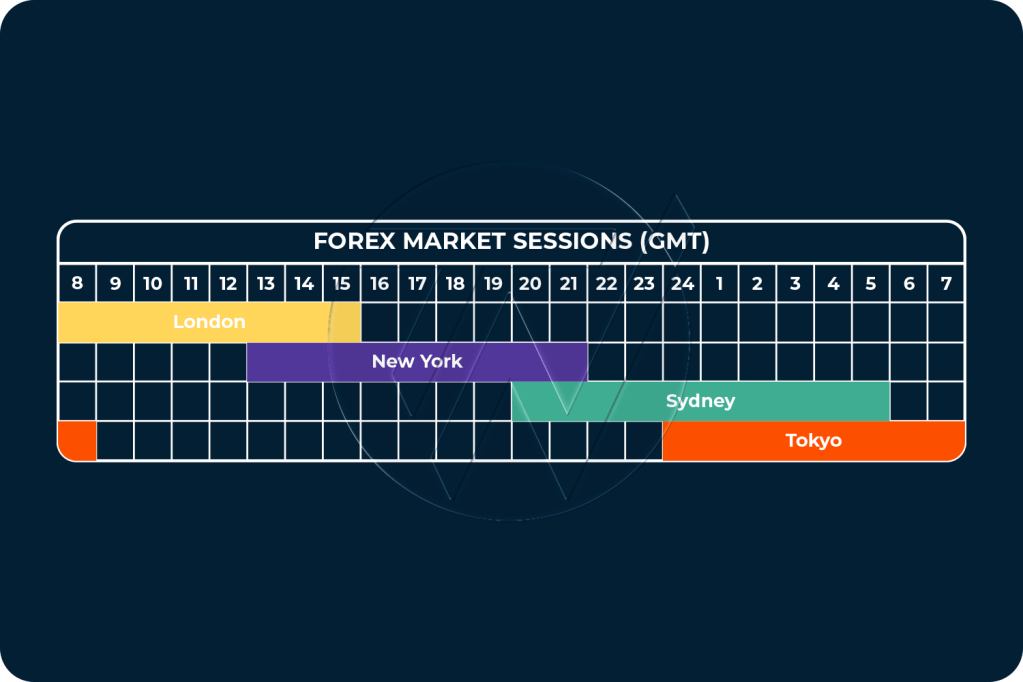


 Track2Training
You must be logged in to post a comment.