Tips for Office Management in India

By Shashikant Nishant Sharma

Effective office management is crucial for the smooth functioning of any organization. In India, where cultural, economic, and regulatory factors play significant roles, there are unique considerations to keep in mind. Here are some tips tailored for office management in India:

Photo by PhotoMIX Company on Pexels.com

1. Understand Cultural Sensitivities

  • Respect Hierarchies: Indian workplaces often have a hierarchical structure. Recognize and respect the chain of command.
  • Festivals and Holidays: Be aware of and accommodate various regional festivals and holidays. Celebrating festivals at the office can boost morale.
  • Communication Style: Indian communication can be indirect. Be mindful of non-verbal cues and ensure clear, respectful communication.

2. Compliance and Regulations

  • Labor Laws: Familiarize yourself with Indian labor laws, including those related to working hours, minimum wages, and employee benefits.
  • Statutory Requirements: Ensure compliance with regulations such as Provident Fund (PF), Employees’ State Insurance (ESI), and Goods and Services Tax (GST).
  • Data Privacy: Adhere to data protection laws and ensure the secure handling of personal and company data.

3. Infrastructure and Technology

  • Reliable Internet: Ensure a stable and fast internet connection to support efficient operations and communication.
  • Technology Integration: Invest in the latest office management software for tasks like HR management, payroll, and project management.
  • Work Environment: Create a comfortable and productive workspace with necessary amenities and ergonomic furniture.

4. Talent Management

  • Recruitment: Use diverse recruitment channels, including online job portals, campus placements, and referrals.
  • Training and Development: Invest in continuous learning and development programs to upskill employees.
  • Retention Strategies: Offer competitive salaries, benefits, and a positive work culture to retain talent.

5. Financial Management

  • Budgeting: Maintain a detailed budget and monitor expenses to ensure financial health.
  • Cost Control: Implement cost-effective measures without compromising on quality.
  • Vendor Management: Build strong relationships with vendors to negotiate better terms and ensure timely delivery of goods and services.

6. Employee Engagement and Wellbeing

  • Work-Life Balance: Encourage a healthy work-life balance to prevent burnout. Consider flexible working hours or remote work options.
  • Health and Safety: Prioritize employee health and safety by maintaining a clean and safe work environment.
  • Employee Feedback: Regularly seek and act on employee feedback to improve workplace satisfaction and performance.

7. Sustainability and Corporate Social Responsibility (CSR)

  • Eco-friendly Practices: Implement sustainable practices such as reducing paper usage, recycling, and energy conservation.
  • CSR Initiatives: Engage in CSR activities that benefit the community and enhance the company’s reputation.

8. Crisis Management

  • Contingency Planning: Have a robust contingency plan in place for emergencies like natural disasters, political unrest, or pandemics.
  • Communication Plan: Ensure clear communication channels for timely updates during a crisis.

9. Legal and Ethical Practices

  • Ethical Standards: Uphold high ethical standards in all business practices to build trust and credibility.
  • Legal Counsel: Have access to legal counsel to navigate any legal issues or disputes.

10. Networking and Collaboration

  • Industry Networks: Join industry associations and participate in networking events to stay updated on trends and opportunities.
  • Collaboration: Foster a culture of collaboration within teams and with external partners for innovation and growth.

By focusing on these areas, office managers in India can create a productive, compliant, and positive work environment that supports both employees and organizational goals.

References

Aronow, W. S. (2010). Office management of peripheral arterial disease. The American journal of medicine123(9), 790-792.

Bardi, J. A. (2011). Hotel front office management. John Wiley & Sons, Inc..

Dehalwar, K., & Singh, J. (2015). Current State of Water Management System: Case Review of Bhopal, Madhya Pradesh. International Journal of Civil, Structural, Environmental and Infrastructure Engineering Research and Development (IJCSEIERD)5(6), 35-40.

Dehalwar, K., & Singh, J. Determining the Role of Different Stakeholders towards Sustainable Water Management within Bhopal.

Gibbs, C. F., Johnson II, T. M., & Ouslander, J. G. (2007). Office management of geriatric urinary incontinence. The American journal of medicine120(3), 211-220.

Nickel, J. C. (1998). Effective office management of chronic prostatitis. Urologic Clinics of North America25(4), 677-684.

Sharma, S. N., & Dehalwar, K. (2024). Review of Evergreen ILS: Highly-Scalable Open Source Library Management Solution. Available at SSRN 4853757.

Weiner, D. K. (2007). Office management of chronic pain in the elderly. The American journal of medicine120(4), 306-315.

Navigating the Future of Education: Insights from Transformative Leadership

Daily writing prompt
When do you feel most productive?

By Shashikant Nishant Sharma

The landscape of education is perpetually evolving, driven by changes in technology, society, and global challenges. In this dynamic environment, the role of educational leadership has become more critical than ever. The theories and practices that define effective leadership in education are continuously being refined and reimagined. Two pivotal works in the recent scholarly discourse on this topic are by Sharma, S. N., and colleagues—providing profound insights into the transformational strategies and planning required in modern educational contexts.

Photo by Fox on Pexels.com

Transformative Leadership: A Path to Educational Excellence

In their 2024 work, New Perspectives on Transformative Leadership in Education, Sharma, S. N., and Adeoye, M. A. delve into the concept of transformative leadership in educational settings. This book serves as a seminal text, illustrating how transformative leaders can influence educational institutions to adapt and thrive amid changing educational demands and societal expectations. The authors argue that transformative leadership is not just about incremental improvements but about rethinking and reshaping educational paradigms to foster environments that enhance learning, equity, and the personal development of both students and teachers.

Transformative leaders are depicted as visionaries who dare to challenge the status quo and inspire a collective commitment to goals that elevate the educational experience. They prioritize critical thinking, creativity, and adaptability—skills essential for students to succeed in a rapidly changing world. Moreover, the book discusses the importance of a culturally responsive pedagogy, which acknowledges and utilizes the cultural knowledge, frames of reference, and performance styles of ethnically diverse students to make learning more relevant and effective.

Strategic Planning in Educational Leadership

Further exploring the dimensions of effective educational leadership, Sharma, S. N., and Dehalwar, K.’s 2023 article in the Journal of Planning Education and Research focuses on the strategic planning aspects of educational leadership. The article, titled Council of Planning for Promoting Planning Education and Planning Professionals, emphasizes the need for meticulous strategic planning in educational leadership to cultivate environments that not only promote learning but also professional development in education and planning sectors.

The authors discuss how strategic planning in education involves a systematic process of envisioning a desired future and translating this vision into broadly defined goals or objectives and a sequence of steps to achieve them. By fostering a robust planning culture, educational leaders can better prepare planning professionals to meet future challenges, ensuring that educational institutions remain resilient and responsive to external pressures and internal needs.

Impact and Implementation

Both works underscore the importance of leadership that is adaptive and forward-thinking. Educational leaders are encouraged to embrace innovative approaches and technologies that support interactive and inclusive learning environments. For instance, integrating digital tools and fostering a digital mindset can significantly enhance the accessibility and quality of education, preparing students for the digital economy.

Additionally, these leadership styles and strategies emphasize the importance of continuous learning and development for educators themselves, advocating for professional development programs that equip educators with the latest pedagogical skills and knowledge.

Conclusion

The insights provided by Sharma, S. N., and colleagues highlight the transformative potential of leadership in education. As we navigate the complexities of 21st-century education, the principles of transformative leadership and strategic planning become indispensable. These leaders do not merely manage resources but catalyze change, inspire innovation, and pave the way for future generations to succeed in an interconnected and ever-evolving world. Through such leadership, education can transcend traditional boundaries and become a powerful tool for societal transformation and personal development.

References

Bush, T. (2007). Educational leadership and management: Theory, policy and practice. South African journal of education27(3), 391-406.

Dehalwar, K. Institute of Town Planners India is Dedicated to Planning Education and Development in India.

Dehalwar, K. Religion as Social Work: Understanding its Significance in Planning.

Grogan, M., & Shakeshaft, C. (2010). Women and educational leadership. John Wiley & Sons.

Firestone, W. A., & Riehl, C. (Eds.). (2005). A new agenda for research in educational leadership. Teachers College Press.

Leithwood, K. (2005). Educational Leadership. A Review of the Research. Laboratory for Student Success (LSS), The Mid-Atlantic Regional Educational Laboratory.

Sharma, S. N., & Adeoye, M. A. (2024). New Perspectives on Transformative Leadership in Education (pp. 1–176). EduPub. https://doi.org/10.5281/zenodo.10970922

Sharma, S. N., & Dehalwar, K. (2023). Council of Planning for Promoting Planning Education and Planning Professionals. Journal of Planning Education and Research43(4), 748-749.

Spillane, J. P. (2004). Educational leadership. Educational evaluation and policy analysis26(2), 169-172.

Top Management Skills for Young Professionals

Daily writing prompt
Describe something you learned in high school.

In today’s dynamic and competitive work environment, young professionals face unique challenges as they navigate their careers and strive for success. Beyond technical expertise, the ability to effectively manage oneself and others is crucial for advancement in the corporate world. Here, we explore the top management skills essential for young professionals to thrive in their roles and emerge as effective leaders.

Photo by Jonathan Borba on Pexels.com

1. Communication Skills

Effective communication lies at the heart of successful leadership. Young professionals must master the art of conveying ideas clearly, both verbally and in writing. This includes active listening, articulating thoughts persuasively, and fostering open dialogue within teams. By honing their communication skills, young leaders can build trust, resolve conflicts, and inspire others to action.

2. Emotional Intelligence

Emotional intelligence (EQ) is the ability to understand and manage emotions, both in oneself and others. Young professionals with high EQ can empathize with colleagues, adapt to diverse personalities, and navigate interpersonal relationships with finesse. By cultivating self-awareness, self-regulation, and empathy, they can foster a positive work environment and lead by example.

3. Adaptability

In today’s rapidly evolving business landscape, adaptability is a prized trait. Young professionals must embrace change, stay flexible in their approach, and continuously learn and grow. Whether faced with new technologies, market trends, or organizational restructuring, adaptable leaders remain resilient and resourceful, turning challenges into opportunities for innovation and growth.

4. Decision-Making

Effective decision-making is a hallmark of strong leadership. Young professionals must develop the ability to analyze complex situations, weigh options thoughtfully, and make timely and informed decisions. By leveraging data, seeking input from stakeholders, and considering long-term consequences, they can mitigate risks and drive strategic outcomes that align with organizational goals.

5. Problem-Solving

Problem-solving is an essential skill for overcoming obstacles and driving progress. Young professionals should approach challenges with a proactive mindset, breaking down problems into manageable components and exploring creative solutions. By fostering a culture of innovation and collaboration, they can harness the collective intelligence of their teams to address complex issues and drive sustainable change.

6. Team Leadership

Effective team leadership requires the ability to inspire, motivate, and empower others to achieve common objectives. Young professionals must cultivate a collaborative spirit, build cohesive teams, and leverage individual strengths to maximize collective performance. By setting clear goals, providing constructive feedback, and fostering a culture of accountability, they can unlock the full potential of their teams and drive results.

Conclusion

In conclusion, mastering top management skills is essential for young professionals seeking to excel in their careers and emerge as effective leaders. By prioritizing communication, emotional intelligence, adaptability, decision-making, problem-solving, and team leadership, they can navigate the complexities of the modern workplace with confidence and drive meaningful impact. As they continue to refine these skills and lead by example, they will not only achieve personal success but also inspire others to reach their full potential in the pursuit of organizational excellence.

What is Academic Bank of Credits (ABC) in Higher Education Institutions?

By Shashikant Nishant Sharma

The University Grants Commission (UGC), one of the statutory organizations, is a key player in maintaining the quality of education across Indian institutions.

Right from evaluating teaching-learning practices to bringing innovations in the field of education, UGC introduces various schemes from time to time for quality assurance.

Continuing the chain of building transformative educational setup, UGC has introduced the “Academic Bank of Credits” (ABC). It helps faculty to manage & check the credits earned by students.

Before we get into details, let us understand the main objectives of ABC…

  • To promote student-centric education
  • Focus on learner-friendly teaching approaches
  • Implement an inter-disciplinary approach
  • Allow students to learn the best courses of their interest
  • Enable students to learn at their own pace

Keeping these objectives in mind, Prime Minister Narendra Modi introduced the National Education Policy (NEP 2020) and the Academic Bank of Credits is a vital part of the policy.

What is the Academic Bank of Credits (ABC)?

Academic Bank of Credits (ABC) is a virtual/digital storehouse that contains the information of the credits earned by individual students throughout their learning journey. It will enable students to open their accounts and give multiple options for entering and leaving colleges or universities. There will be “multiple exits” & “multiple entries” points during the higher education tenure & credits will be transferred through the ABC seamlessly.

ABC can be considered as an authentic reference to check the credit record of any student at any given point in time. Thus, the concept of ABC is fuel to boost the efficiency of faculty and help students embrace a multi-disciplinary educational approach. The idea is to make students “skillful professionals” and help their overall growth.

In a crux, the Academic Bank of Credits will be a game-changer in transforming Indian education to a great extent.

Functions of Academic Bank of Credit (ABC)

  • The Academic Bank will be accountable for opening, closing, and validating the academic accounts of students.
  • It will carry out tasks such as credit accumulation, credit verification, credit transfer/redemption of students.
  • The courses include online and distance mode courses offered by the government and institutes.
  • The validity of these academic credits earned by students will be up to seven years and students can redeem these credits.
  • The credits can be redeemed and students can seek admission directly in the second year at any university.
  • The validity will be up to seven years, hence, students will have to rejoin within seven years.

Importance of Academic Bank of Credit (ABC)

  • Increases the student’s freedom in choosing their courses and academics.
  • Enables the student to drop out in any year and then exchange the credits earned so far with a certificate/diploma if they are eligible.
  • They can redeem the credits and rejoin the same or any other institute in the future and continue their education.
  • The institutes cannot keep the students in the courses against their will to earn money

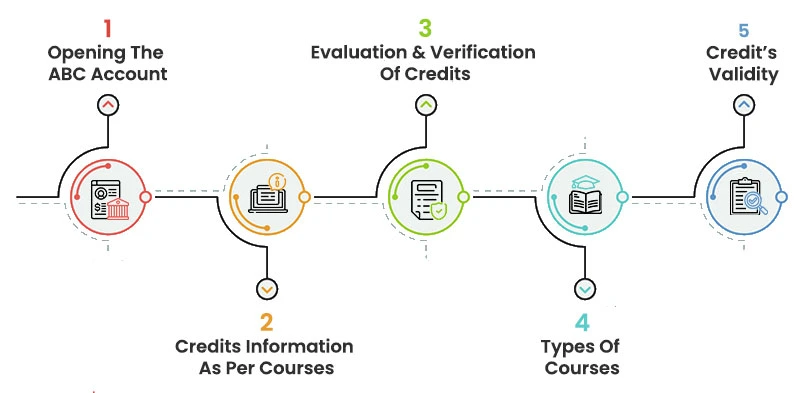
How does the Academic Bank of Credits Work?

As I mentioned to you earlier, the Academic Bank of Credits (ABC) would act as a reference point for faculty to check the credit records of students. The students need to follow the given guidelines to be a part of the ABC.

Academic-Bank-Of-Credits-Work

: Opening The ABC Account

First and foremost, the students need to open an Academic Bank Account.

They might require details like their name, address, certificates, course details, etc to create the ABC account.

A unique ID & password will be created from where students can log in at any given point to check their earned credits.

: Credits Information As Per Courses

As per the courses, a credit structure will be created by the Government.

When a student pursues any course and clears exams, credits will be automatically awarded to them. Institutions need to fill out the details and upload the deposits in the students’ Academic Credit Bank’s account on the digital portal.

#3: Evaluation & Verification Of Credits

Any kind of credit evaluation & verification will be carried out by the Academic Credit Bank at regular intervals.

If students want to transfer the credits, they need to approach the ABC for further process.

It will help in regulating the processes with ultimate authenticity.

: Types Of Courses

Online & offline – both types of courses are included in the scheme. Some of the important ones include National Schemes such as–

  • NPTEL
  • SWAYAM
  • V-LAB

Thus, the ABC will cover almost all types of courses including distance learning courses to help students of every possible stream.

#5: Credit’s Validity

The credits earned by students will be valid for seven years.

However, the validity of credits is subject to change depending on the type of courses or disciplines.

In such instances, ABC will provide the details of the exceptions to students.

Even if a student takes a break or is not able to continue their education, they may redeem the earned credits in the future within the time limit of seven years.

Expected Impact of ABC on Educational System

The UGC expects a positive impact that will be brought via the practice of the ABC in the upcoming years. HEIs who participate in the scheme will be highly benefited due to the smooth management of credits.

The inter-disciplinary & multi-disciplinary approach is the need of the hour. With the Academic Credit Bank, HEIs will be able to help students learn subjects of their choice and become “skill-oriented” graduates.

For further details, you may visit the ABC’s official website.

References

Gawas, N. M., Naik, G. R., & Kapdi, G. Academic Bank of Credits (ABC): A Big Fish in a Big Pond. Anand Bihari, 152.

Mandale, K., & Killedar, S. (2023). Benefits of the Academic Bank of Credits ABC According to New Education Policy NEP 2020. PRARUP PUBLICATION A/p. Hatkanangale, Tal. Hatkanangale Dist. Kolhapur-416 004 (Maharashtra), 23-28.

Naveen, H. M. (2021). Establishment and Operation of Academic Bank of Credits (ABC) in Higher Education. International Journal of Engineering Applied Science and Technology6(5), 166-169.

Sharma, S. N., & Dehalwar, K. (2023). Council of Planning for Promoting Planning Education and Planning Professionals. Journal of Planning Education and Research43(4), 748-749.

Vashistha, N., Dhiman, A., Grima, S., & Kiran, S. (2022). National academic credit bank: Need of times. In Edutech enabled teaching (pp. 201-216). Chapman and Hall/CRC.

Crucial Role of Stakeholder Analysis

By Kavita Dehalwar

In the dynamic landscape of project management, understanding and engaging with stakeholders are critical components for success. Stakeholder analysis is a systematic process that helps identify, assess, and prioritize the individuals, groups, or organizations that can significantly impact or be impacted by a project. This method provides a strategic lens through which project managers can navigate complexities, align goals, and cultivate positive relationships.

Stakeholder analysis holds significant importance in the realm of project management due to its multifaceted contributions to the success and sustainability of projects. First and foremost, the process of stakeholder analysis ensures a comprehensive understanding of the project landscape by systematically identifying and categorizing all entities that may influence or be influenced by the project. This inclusivity ranges from internal stakeholders, such as project team members and sponsors, to external entities like clients, suppliers, regulatory bodies, and even the broader community.

Beyond mere identification, stakeholder analysis serves as a proactive risk management tool. By recognizing potential challenges and sources of resistance at an early stage, project managers can strategize and implement measures to mitigate risks effectively. This forward-thinking approach minimizes the likelihood of unforeseen obstacles derailing project progress, contributing to a smoother and more predictable project lifecycle.

The significance of stakeholder analysis is particularly pronounced in its role in relationship-building. Understanding the unique interests, expectations, and concerns of stakeholders allows project managers to tailor their communication and engagement strategies accordingly. By doing so, they create an environment conducive to positive relationships, collaboration, and stakeholder support. Effective engagement not only promotes a harmonious project atmosphere but also enhances the likelihood of obtaining the necessary resources and approvals throughout the project’s duration.

Strategic decision-making lies at the core of project success, and stakeholder analysis plays a pivotal role in achieving alignment of goals. By ensuring that the project’s objectives resonate with the interests and expectations of key stakeholders, project managers can make informed decisions that reflect a broader consensus. This alignment not only enhances the likelihood of project success but also contributes to a more harmonious working relationship with stakeholders.

In essence, stakeholder analysis matters because it goes beyond a mere checklist exercise. It provides a dynamic framework that guides project managers in understanding, engaging, and collaborating with stakeholders throughout the project lifecycle. The tailored insights derived from stakeholder analysis empower project managers to navigate complexities, anticipate challenges, and build a supportive network that is integral to the overall success of the project.

In this article, we will delve into the importance of stakeholder analysis and explore the key steps involved in this transformative process.

Why Stakeholder Analysis Matters:

  1. Comprehensive Identification:
    • Stakeholder analysis facilitates a comprehensive identification of all parties involved, ensuring that no influential entity is overlooked. Stakeholders extend beyond just project sponsors and team members; they include clients, end-users, regulatory bodies, and even the broader community.
  2. Understanding Influence and Interest:
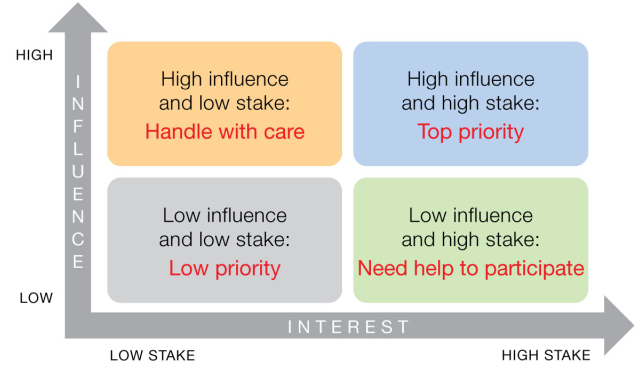
    • Each stakeholder brings a unique combination of influence and interest to the project. Understanding the power dynamics and the level of interest stakeholders have in the project’s outcome is crucial. This insight helps prioritize efforts in managing relationships and communication strategies effectively.
  3. Mitigating Risks:
    • Stakeholder analysis serves as a proactive risk management tool. By identifying potential challenges and sources of resistance early on, project managers can devise strategies to mitigate risks and create a more resilient project environment.
  4. Alignment of Goals:
    • Successful projects are built on shared objectives. Stakeholder analysis enables project managers to align the project’s goals with the interests and expectations of key stakeholders. This alignment fosters a collaborative environment and enhances the likelihood of project success.
  5. Tailored Communication Strategies:
    • Different stakeholders have varied communication preferences and expectations. Stakeholder analysis allows project managers to tailor communication strategies to suit the needs of specific individuals or groups, ensuring that information is disseminated effectively and received positively.

Key Steps in Stakeholder Analysis:

  1. Identification:
    • Begin by creating a comprehensive list of potential stakeholders. This can include internal and external entities such as team members, sponsors, clients, suppliers, regulatory bodies, and the broader community.
  2. Assessment of Influence and Interest:
    • Evaluate the level of influence each stakeholder wields over the project and their level of interest. This assessment helps categorize stakeholders into groups such as high influence-high interest, low influence-high interest, high influence-low interest, and low influence-low interest.
  3. Mapping Power Dynamics:
    • Create a stakeholder map to visually represent power dynamics. This map helps project managers prioritize engagement efforts by focusing on stakeholders with high influence and high interest, while also considering those with high influence and low interest.
  4. Understanding Expectations and Concerns:
    • Engage with stakeholders to understand their expectations, concerns, and perspectives. This information is invaluable in tailoring project strategies and mitigating potential challenges.
  5. Developing a Stakeholder Management Plan:
    • Based on the analysis, create a stakeholder management plan that outlines strategies for engagement, communication, and issue resolution. This plan should be dynamic, evolving as the project progresses and stakeholder dynamics change.

Conclusion:

In the intricate web of project management, stakeholder analysis emerges as a beacon of strategic foresight and collaboration. By systematically identifying, assessing, and engaging with stakeholders, project managers pave the way for successful project outcomes. Recognizing the multifaceted nature of stakeholder relationships and incorporating these insights into project planning is not just a best practice—it’s a fundamental step towards project success in today’s interconnected and dynamic business environment.

References

Aaltonen, K. (2011). Project stakeholder analysis as an environmental interpretation process. International journal of project management29(2), 165-183.

Brugha, R., & Varvasovszky, Z. (2000). Stakeholder analysis: a review. Health policy and planning15(3), 239-246.

Dehalwar, K., & Sharma, S. N. (2023). Fate of Slums of Bhopal-A Tale of Struggle and Resilience. Think India Journal26(4), 12-18.

Dehalwar, K., & Singh, J. (2016). Challenges and strategies for the improvement of water management in Bhopal. European Scientific Journal12(2).

Dehalwar, K., & Singh, J. Determining the Role of Different Stakeholders Towards Sustainable Water Management within Bhopal, Madhya Pradesh.

Sharma, S. N., Chatterjee, S., & Dehalwar, K. (2023). Mahatma Gandhi National Rural Employment Guarantee Scheme: Challenges and Opportunities. Think India Journal26(1), 7-15.

Ramirez, R. (1999). Stakeholder analysis and conflict management. In Cultivating peace: conflict and collaboration in natural resource management. IDRC, Ottawa, ON, CA.

Varvasovszky, Z., & Brugha, R. (2000). A stakeholder analysis. Health policy and planning15(3), 338-345.

MANAGEMENT CHARACTERISTICS

1) IT IS A CONTINUOUS PROCESS

It is a never ending process. Continuity is an important part of management. It is necessary throughout the life of organization. Management is essential to begin the activity, to run it smoothly and to control the activity.

2) MANAGEMENT IS GOAL ORIENTED

Every business organisation has their own set of goals which is decided prior to the execution of the goal. When the management achieves the goal it is called success. Success depends on proper management skills and a manager takes a lot of efforts to achieve this goals. So management is a goal oriented activity.

3) MANAGEMENT IS DYNAMIC

Management is dynamic and not static in character. It deals with human efforts different situations and activities. It embrace changes in form of technological change, socio-economical change, political changes and many more.

4) MANAGEMENT IS UNIVERSAL

Management is universal in character. The principles and theories of management are equally applicable to everywhere and in every field like defence, business, education, etc. These principles are guidelines which are flexible and capable of adaptation to every type of organization.

Tips to learn a new language faster

Learning a new language often considered as really tough task, but is it true? Maybe for some, but the real truth is if followed right resources and direction is definitely an task to do so. So for this here are some tips that might help you.

1) Know about the language that you are going to learn

By writing this I mean one should know what language is he or she going to learn. If you have clear idea of what actually you are going to learn will help you to set almost perfect goals which will ultimately help you to do what you want.

2) Set goals

Setting goals to learn a new language will help you to go far and keep yourself ahead. Goal setting should be done after being familiar by the subject.

3) Set small goals

Setting small goals will help you to complete your work on given time. Setting small goals will also help you to analyse yourself and keep your records on track.

4) Analyse yourself

Analysing is an art if done properly will take you way to far. Whenever do things do them on time and analyse what mistakes you make or what are the problem that you have encountered.

5) Challenge yourself

This part will help you to grow. grow beyond your limits. But one thing to keep in mind while doing so is do not challenge yourself more than what will harm you. Doing this in moderation will definitely help but if done excessive will also harm.

6) Use the language as frequently as you can

If you do so it will help you to retain things faster. It will also help you to clear your vocabulary and pronunciation and also will help you to keep everything you learn stored in your brain for a long time.

7) Test yourself

At the end complete your learning and test your self this will help you to know how much you have learn about the language.

Hope you will like my blog follow the steps and go ahead. Happy learning!

How to become A Leader

Photo by Rebrand Cities on Pexels.com

Transformational leaders are positive, empowering, and inspiring. They value followers and inspire them to perform better. So what can you do to embrace these valued leadership qualities and become a stronger and more effective leader?

Understand Your Leadership Style: Understanding your current leadership style is essential. What are your strengths? Which areas need some improvement? One way to start assessing your skills is to take this leadership style quiz to get a general idea of how you lead.

Once you have completed the quiz, read about the major characteristics of your dominant style. Are these qualities helping or hindering your leadership? Once you’ve determined which areas need some work, you can begin looking for ways to improve your leadership abilities.

Encourage Creativity: One way to foster creativity is to offer challenges to group members, making sure that the goals are within the grasp of their abilities. The purpose of this type of exercise is to get people to stretch their limits but not become discouraged by barriers to success.

Show Passion: You can develop this leadership quality by thinking of different ways that you can express your zeal. Let people know that you care about their progress. When one person shares something with the rest of the group, be sure to tell them how much you appreciate such contributions.

Communicate Effectively: Another important quality of transformational leadership involves a focus on providing one-on-one communication with group members. Transformational leadership is effective when leaders are able to communicate their vision to followers, who then feel inspired and motivated by this vision.

Part of the trust-building process is creating an environment where it’s safe to take risks and allows you and your employees to comfortably exchange candid, honest and direct feedback without the fear of being punished.

It’s important you provide ample channels for two-way communication between employees and managers, and also solicit and reward them for their ideas and contributions. This facilitates progress toward reaching organizational goals. As a leader, you should foster trust and cooperation. Leaders can paint a vision of the future that inspires the team to do whatever it takes to get there.

And as a coach, you have to inspire action that will help execute that goal. Reinforce an honest and candid environment without taking information personally. Equally treat everyone like you would want to be treated.

Give credit where credit is due. Say “thank you,” be encouraging, and try to put yourself in their shoes to better understand their everyday challenges.

You have to support and assist your team. Give them the confidence to take risks and speak up without being punished.

When the mistake is yours, take ownership. Don’t try to blame someone else, the situation or a circumstance.

Be credible – people want to follow an honest leader. Be candid about why things didn’t work out, learn from the mistake and move on. People will trust someone who actively displays honesty. As you work toward developing some of these leadership qualities, don’t forget to look to your followers for feedback and inspiration. Pay attention to the things that have been effective in the past and always be on the lookout for new ways to inspire, motivate, and reward group members.

How to create the initial team for your startup

 Establishing a startup is not a one day task. It requires a lot of hard work, patience and most importantly, it requires an excellent team to work with you to achieve your goals. And building a winning team that rides your startup to victory is not an easy task. The people you choose have the ability to make or break your business. You need to take a few essential steps at your initial stage to begin your work. 

  • Identify Positions

 If you are not doing a sole proprietorship, you and your co-founder need to know the positives and negatives of each other. You can’t be perfect in every skill, so you both must do a self-evaluation and know what are your strengths and weaknesses. When you know about it then you both can categorize your work according to your skills.

 When things between you and your co-founder are settled, you should start identifying positions to complete your team. Marketing and sales, accounting and finance, research and development are just a handful of examples of positions that you may need in your team.

  • Selecting your team members
  •   The process of hiring of team members should be done very accurately for the firm.
  •  Try to find T- shaped people for the organization. These people are experienced in one specific area but can handle other tasks too. They are quick learners and ready to take new challenges. They will benefit you more as compared to the employees experienced in a specific area. This will also help in recruiting a few numbers of employees in the beginning. 
  • Hire people who understand the importance of customer service.
  • You can appoint advisors to guide on important matters.
  • If your capital is limited, then you can go scouting in different colleges. Choose interns from there. Explain your plan to them and convince them to join you.

When you select your candidates, you must see that they fit in your startup culture, possess the right set of tools for your startup and should be passionate about what they do.

After selecting your candidates, there should be hiring and training. After this, they should be assigned their roles and responsibility. 

Always keep in mind whether you are choosing your 1st or your 100th candidate, you should know about the needs of your company and only then appoint someone who perfectly fits in that role.

  • Important things to keep in mind while building your startup:-
  • Be focused on your plan.
  • Make products keeping in mind what customers will be attracted to.
  •  Customer satisfaction must be a priority list.
  • You need to create a unique brand proposition of your product.
  • You must have good leadership quality.
  • Always communicate with your team members.
  • You must have a proper check on the cash flow of your company.
  • Never ignore or underestimate your competition.
  • Ability to listen and understand your teammates.
  • You should always be willing to learn and adapt to the changes happening around you.

In conclusion, this African proverb sums up beautifully:

If you want to go fast, go alone; if you want to go far, go together. 

Building your startup is a ride of ups and downs. You need to be calm and positive in the initial period. Thus, if you want to make your startup into the leading company, you need to start by building a winning team that will take you far.

Gandhi preach us more!

Have you at any point longed for world with harmony and thriving for all mankind- a world where we love and care for each other notwithstanding the differences in our way of life, religion and lifestyle?

I frequently feel vulnerable when I see the world in disturbance, an after effect of contrast between our goals. Mahatma Gandhi was the man who inspired the world with Ahimsa, his faith in peace, and non- animosity. His life was a message – a message of harmony overpower, of discovering approaches to accommodate our disparities and of living in amicability with difference and love notwithstanding for our adversary. His message was as clear to his enemies as it was to his followers. He believed we can resolve best our issues if we set out to have a constructive discussion with our enemy. “Be the change you wish to see in the world ” was the statement he gave. We frequently like to complain about the system that we need to follow. But before changing the system it’s significant that we see inside ourselves and try to fix our faults. Self- realization is one of the ways to achieve success. Pour out love and respect for every individual you come across, and don’t form biases based on their background. Each simple act matters. We are responsible for our future, whatever actions we do in present determine our future. Be a life long learner, learn as if you were to live forever.

Gandhi and our nation have suffered a lot under British, but instead of taking up arms against them, he chose the path of non-violence. See how we enjoy our freedom now. He taught us revenge is never a solution, it doesn’t lead to peace or happiness. One needs to learn to forgive.It is important to be true to yourself, no matter whatever the consequences are. Stand up for what you feel is right, even if it displeases a lot of people.

Gandhi’s musings can play a tremendous role in taking the human culture forward, towards the ideal objective. His lessons and analyses are more legitimate today than any time in recent memory, particularly when we are attempting to discover answers for overall greed, corruption, violence, and runaway which are putting a heavy burden on
the world. We as a nation continue to fail him. But like for every other thing, here is also hope. We can bring harmony to our world by spreading love and peace. Although the task is daunting, Gandhi has shown us how a fragile man can achieve incredible magnitude with a staunch belief to practice peace and harmony.
Will you take the pledge to become the change you want to see in the world?

What does empowerment/bravery have to do with gender?

Not making women Commandant Officers in the army is simply prejudice and fear of the fraternity of male officers.

The argument made by the Solicitor General in the Supreme Court that women officers of the Indian Army cannot be made as Commandants because male soldiers will not obey their orders is in fact irrational. In 1992, women were first included in the Armed Forces through the Short Service Commission. This service is of 10 years which can be extended up to 14 years.

They train in OTA Chennai and work shoulder to shoulder with their male counterparts. Their posting takes place at risky, rough and tough areas, whether it borders Kashmir or as a UN Peacekeeper, Libya and Congo. In areas bordering Pakistan and in the North East, there are hardly 4-5 officers and even sometimes just a sole woman officer with her male soldiers.

The question is when the head of NCC battalion of over 800 girls can be a male commandant, then why can’t a woman be the commandant of that battalion? The argument that the physical difference in women makes them less capable of the military is ridiculous. Whether the fighter is at the junior level or senior position.

There is no need for more or less muscle power anywhere. At the senior level, job profile supervision, strategy making and decision making have to be done. An order issued by the Ministry of Defense on 25 February 2019 calls for giving a permanent commission to women in the army from the date of the order. But this leaves off the demand of women who have served the country for 24-25 years and most of them have crossed 40 years of their age.

It is necessary that the policies of the government should be proposed considering those who are currently the officers in the army and should not be made considering the future. Now that the time has come for these high-ranking women officers to be given their right to serve in high positions, the appellant suspects that selective 332 women officers, who are just 4% of their entire capacity, will purloin the vacant positions at a higher level in the military. This is nothing but prejudice and fear of the fraternity of male officers.

The Army considers women officers as an effective workforce for lower-level positions which extends up to 14 years of service and considers them incompetent and unfit for the Commandant level, which is a culmination of hypocrisy. People argue that this battle is parallel to fighting against the government. But they have to understand that Prime Minister Narendra Modi has made it clear that women should be taken for bureaucracy and all senior positions of government. The Prime Minister’s words are political volition.

It should be believed that a person’s rank or role in life should be according to integrity and merits. On the one hand, we send Captain Tanya Shergill in the Republic Day Parade to lead the contingent and on the other hand, we argue in the Supreme Court that she is not entitled to be a commandant in the army. This reflects the military’s dual policy towards its people. The fight is not against the government but against the misconception and mindset of bureaucracy.

Our women officers have suffered sentimental throbs during their 25-year job. To be sidelined despite having the ability, the lack of job security due to the ambiguous cadre status and working below the 6 batch Junior Officer affects the morale of giving 100 per cent for the service. The argument that can be made in favour of these women officers is that the mode of war in the world is changing. The world is evolving in a cyber age and even wars are not left rearwardly. Signal communication has to govern in ever-increasing adverse surroundings.

New technologies and methods of demolition are being prepared every day. And analytical skills are more than the physical ability to deal with them. Women are making missiles in DRDO and Chandrayaan in ISRO, then why can’t they command a battalion? We all know the answers to these questions. This idea needs to attain policies.

Men and women live in the same bunker in the army. Once a woman or a man joins the army, he/she is just a fighter, apart from gender. It is only the qualification that should decide their position in the service. Are women kept in the army only as fancy chunks? So that the army is not labelled as ‘men zone.’

And they only maintain a women-men ratio so that the data can be shown internationally.
How is heroism related to gender? When a woman can handle the election campaign of Srinagar, which is currently the most unstable area in the world, without being in the army, then why can’t women handle the commandant’s charge?

A woman can be second in command but not a commandant because women can perform in the army only as long as they do not hurt the ego and arrogance of men. However, when we look at the other side of the coin, there are some false feminists who have used the card of family and child care responsibility to deny the call of duty. There was a case when a female officer refused to go to Nagpur to court-martial because she had to take care of her newborn. Such excuses should be condemned.

If the Supreme Court and the government feel that women are not competent for combat or defence service because they are women, then their entry into the service should be stopped altogether. But Punita Arora, Padmavati Bandopadhyay, Mitali Madhumita, Priya Jhingan and Tanya Shergill prove all those arguments wrong. High positions are being demanded as rights, not in charity.

Lessons from life of a Samurai

The world of martial arts is truly a thrilling one, isn’t it? Those movies with ninjas, mighty warriors and samurais give me an adrenaline rush. The swordfights are gripping ones. But above all , the Samurais for some inexplicable reason have always fascinated me. No they aren’t mere characters we see on the screen or hear tales of.

They are a jewel in Japan’s glorious history. The real warriors, whose lives had a deeper meaning beyond protection of the royalty. A life built upon the philosophy of Bushido. (Righteousness, couragebenevolence, respect, honesty, honour, and loyalty). Their lives hold the secrets of becoming a real warrior.

Here are major takeaways from the life of a Samurai. 

  • State of staying calm: The Samurais laid emphasis on cultivating a calm mind. A mind, wherein there is no room for anxieties and nor the fear of death.  In the words of samurai Miyamoto Mushashi, “Most important battle is to overcome yourself”. A calm mind is the ultimate weapon against all your enemies. When the Samurais can stay calm in the face of death, then why can’t we in midst of a challenging situation? Controlling your mind is the first step towards becoming a modern day Samurai.
  • Turning obstacles into opportunities: The story of Samurai Minamoto No Tametomo is an inspiring one. Born with a genetic deformity, his arm was 6 inches longer than others. But did that stop him from becoming a Samurai? Absolutely No!! He turned this “perceived” shortcoming into his strength and went on to become one of the finest Samurai archers. So the next time you feel like whining how unfair life is, just shift your focus. Today’s weakness might turn out to be your greatest strength tomorrow. So stop complaining when life hands you lemons, instead focus on the lemonade.
  • Dedication:  The Samurais had an unwavering dedication towards their duty. And mind you, unlike us their dedication wasn’t short lived. They committed their entire lives towards the single purpose of serving Japan.  The legendary Samurai tales are a testimony of how these warriors could pierce an arrow through large rocks with sheer devotion. They were so resolute in their purpose that upon facing defeat they chose to commit Seppuku(die with honour rather than fall into the hands of their enemies). Honour and purpose weighed far more for a Samurai than his own life. Do contemplate when was the last time you were so dedicated towards your life, relationships and self growth? If not, then find your calling and chase it like a Samurai.
  • Growth Mindset: Remember that scene in karate Kid wherein Jackie Chan tells Jaden Smith to pick up his jacket a thousand times over as a part of his martial arts training?

The above picture carries the essence of Kaizen (Japanese philosophy of change for the better” or “continuous improvement.”) The Samurais were masters of the art of repetition. Learning new techniques and practicing them until they attainted perfection. They trained relentlessly, preparing themselves for battles. Even the master Samurais instead of being consumed by pride, always strived for becoming better than the previous day.  And here we are, basking in the false glory of “knowing it all”. Remember, like desires there is no end to learning. So let’s learn, repeat and grow!

  • Comparison with self: Samurai Tshkara Bokuden quoted “My art is different from yours. It consists not so much in defeating others but not being defeated”. These words resonate deeply in the world today wherein we compare ourselves with colleagues, friends and random people on social media robbing our inner peace. We defeat the very meaning of our own existence in the process of comparison. So like Samurais let’s water the garden of our minds instead of letting the weeds of comparison to grow.
  • Acceptance towards life: The Samurais were mindful of their lives and actions. Unlike others, they weren’t caught in the quest for worldly success nor did they fear death. They accepted both happiness and sorrow with equal calm. They sought nothing outside themselves. The Samurais knew that there lies a powerful force inside us and it is the same force that drives our surroundings. Samurai Miyamoto Mushashi quotes “Get beyond love and grief. Exist for the good of humanity”.So instead of chasing material pursuits, let’s take a step towards becoming more accepting of our lives and the self.

As we come to an end, you must be wondering do samurais still exist? Honestly speaking, they don’t. The Meiji Emperor abolished the Samurai system. However, their cultural legacy is eternal and the lessons from the lives of Samurai still hold the same relevance as they did in the medieval times. But these Samurais weren’t born Samurais. They trained hard both physically and mentally to earn that honour.  I believe, we’re all warriors fighting our own battles and we don’t needs armours or swords for that. Let’s simply imbibe these valuable lessons from the Samurais into our lives.

You ,my friend, don’t just be any warrior. Strive to become a “modern day Samurai”.