Major geopolitical developments and it’s impact on India

Over the past several weeks, a number of important developments have taken place which may appear disconnected at a glance but in fact add up to a significant shift in regional and global geopolitics.

ONE, the withdrawal of US and NATO forces from Afghanistan and the complete takeover of the country by the Taliban. This resulted in chaos and overall disruption of the semblance of peace the country earlier possessed. With the Taliban claiming the residents of the country are happy with their takeover and the disrupted president on the run, the future of the country appears in shambles.

TWO, significant domestic political changes in the People’s Republic Of China. This includes the ideological and regulatory assault against its dynamic private high-tech companies and now recently, its real estate companies. As a result, it has a heightened risk perception among international business and industries which had seen China as a huge commercial opportunity until now. While the economical affairs of the country are entirely their own to manage and govern, there will be a lasting impact on the general job opportunities.

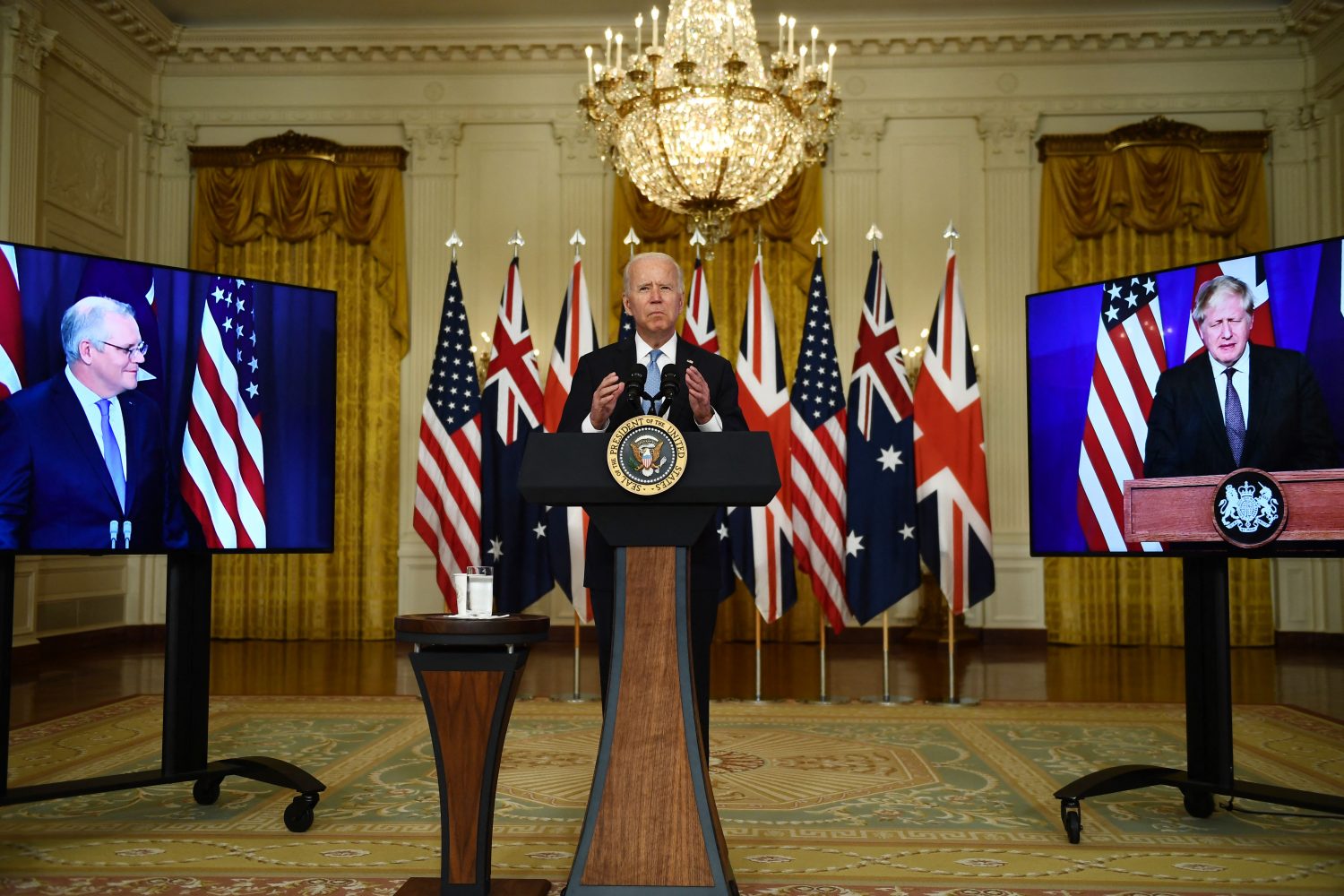
THREE, the announcement of the Australia-UK and US (AUKUS) alliance which represents a major departure in US strategy by its commitment to enable Australia to join a handful of countries with nuclear submarines. The alliance clearly portraits Australia’s strategic choice to firmly support USA despite its considerable economic and commercial equation in China.

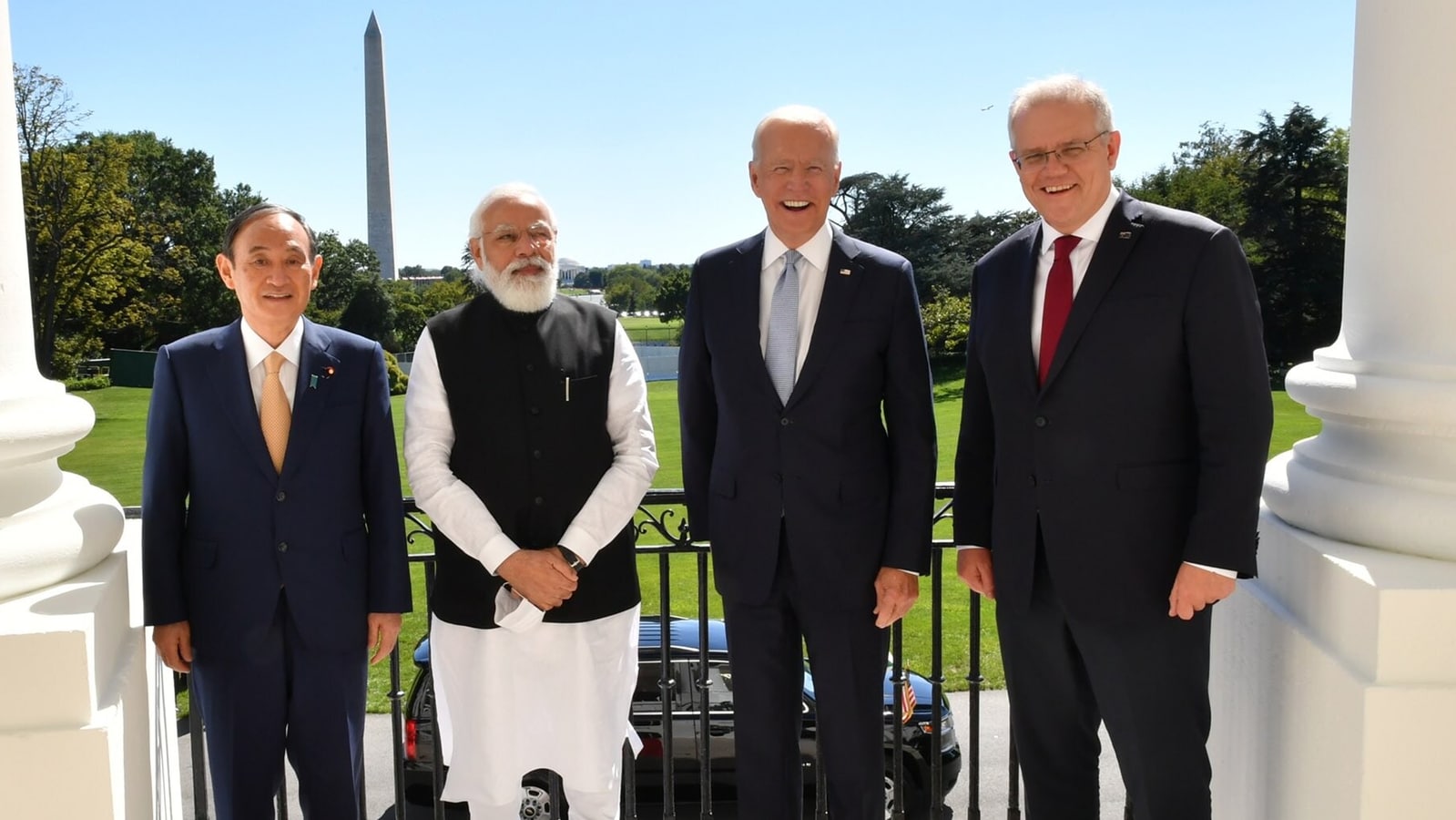
FOUR, the convening of the four nation Quad physical summit (India, Australia, Japan and the US) IN Washington. This reflected a major step towards its formalization as an influential grouping in the Indo-Pacific going beyond boundaries and into a personal level of safeguarding.

These four developments together present India with both risks and opportunities. While the latter outweighs the risks henceforth. It would indeed be fitting to say a future of uncertainties awaits the entire world. Are these measurements a preparation of the unseen future or simply precautions is something only time will reveal.

Written by : Ananya Kaushal

ROLE OF QUAD IN SOUTH CHINA SEA

BY DAKSHITA NAITHANI

The Quadrilateral Dialogue was established in 2007 when four countries—the United States, India, Japan, and Australia—joined forces. However, it did not take off at first due to a variety of factors, and it was resurrected in 2017 after almost a decade due to factors such as growing country convergence, the expanding importance of the Indo-Pacific area, and rising threat sentiments toward China, amongst many others.

The origins of QUAD may be traced back to the Malabar Exercise. Malabar began as a modest Passage Exercise named PASSEX between the Indian and US Navies in 1992, but was halted after India’s nuclear testing in Pokhran in 1998. It was later restarted in 2002. Since its inception in 2002, QUAD has become an annual event. With the addition of Japan in 2015, it has become a trilateral practice.

The Quad’s goal remains intact: to promote the economic and security objectives of those nations with genuine and essential interests, to devise a new approach for keeping the Indo-key Pacific’s maritime lanes free of foreign influence. It has become necessary in view of the increased need for information exchange in the maritime sector. With the growing presence of the Chinese Navy in the Indian Ocean, awareness is a key subject for the Navy. After 2008, China increased its presence in the Region under the pretext of anti-piracy operations, even deploying submarines for the objective. In 2017, China formally established its first overseas facility near Djibouti, in the Horn of Africa.

What are the underlying challenges?

The environment in which QUAD has been resurrected, as well as subsequent engagements like as Malabar Exercise 2020, are regarded as governed by a counter-China narrative. There are several features that may not constitute sites of convergence, despite how they appear.

China’s influence: China has significant economic links with Quad partners, particularly Australia, which is what it may use to compel or sway nations to its side. This might prove to be an issue for India.

Maritime orientation: Quad is a marine rather than a land-based organisation because of its strong concentration on the Indo-Pacific. This raises some important concerns about the basis of collaboration with Asia-Pacific and Eurasian countries.

Differing perspectives. There are conflicting viewpoints on certain situations, such as the Myanmar crisis as seen through the eyes of the United States and India. India has remained silent in the face of Japan’s expressed worry that China is attempting to alter the status quo in the East and South China Seas.

Advantages in Space- When QUAD representatives join forces in space, they have significant benefits and are able to fight China. This includes (a) lowering the extremely high expenses of building a dock in order to promote the development of interplanetary vehicles (IPVs). (b) One member state has benefits that will compliment each other and will lead to a successful Mars exploration and the construction of support facilities that will be necessary for effective asteroid belt mining. (c) All member countries bring a high degree of convergence in space applications, for example, the United States has the advanced technological base required for advanced avionics, which will form the backbone for both the construction of a space dock and the construction of IPVs; India has a highly educated and inexpensive working population, which will lower the cost of space; and Australia has the natural resources required for exploration.

The Quad met in Tokyo on October 6, 2020, for the second time since the organisation revived in November 2017. It was the second such gathering, following the inaugural virtual meeting in June, and the first high-level Quad meeting since the 2019 foreign ministers’ meeting in New York on the margins of the UN General Assembly meeting. Furthermore, given mounting worries about Beijing’s hostile conduct and growing suspicions about China’s management of the COVID-19 outbreak in Wuhan, the meeting’s timing and circumstances added to its relevance.

China’s ‘incremental encroachment strategy’ in the South China Sea (SCS) is a source of worry not only for the countries currently affected by the loss of influence over the Exclusive Economic Zone (EEZ), but also for the rest of the world, as China may be able to exercise a monopoly over SCS Sea Lines of Communication (SLOC). Affected nations lack the necessary power to stand up to China, and so will be forced to accept a one-sided agreement such as the China-driven “Code of Conduct” (COC).

As a result, Chinese adventurism must be restrained by other major maritime countries in the global interest. The fact that China could establish a military facility in the SCS despite the existence of the US Navy shows that worldwide criticism and more effort are required to prevent the SCS from becoming “China’s lake.”

Quad may not have the fangs it needs right now, but there is no other option than to establish a prospective structure like this involving likeminded maritime countries with shared strategic objectives in the Indo-Pacific. Various perspectives on the Quad’s role, viability, and prospects have been expressed on several occasions. Because Quad is a security conversation platform rather than a military alliance, aspirations from it must be suitably limited for the time being. 

In the Indo-Pacific, each Quad member sees a distinct threat. While three of the Quad’s warships (Australia, the United States, and Japan) operate under the NATO military alliance structure, India is not a member of any military alliance, while being a reliable ally of two of them. Without India, the trilateral conversation between the three NATO partners has been since 2002. Because India is the only Quad member with an unresolved land boundary with China, it will take a different strategy to dealing with China.

The Quad has emphasised the importance of ASEAN in the Indo-Pacific; nevertheless, their membership in it is a contentious topic owing to Chinese influence. In reaction to China’s claim to the nine-dash line in the SCS, there are divisions within the ASEAN grouping. Some of the ASEAN nations that have been harmed had previously raised a faint voice opposing Chinese aggressiveness, expecting international powers to rein in China’s antics.

Quad’s shared goal of putting its vision of a free and open Indo-Pacific on a “rules-based” legal framework to ensure freedom of passage in the global SLOC requires some reflection and strengthening. The United Nations Convention on the Law of the Sea (UNCLOS III) has been ratified by Australia, India, and Japan, but the United States has yet to do so. This ratification will be required in order to maintain a high moral ground when implementing the agreement.

China is relatively certain that the US and any other country would not employ military action against it, given the current world geopolitical situation. Beijing is also beefing up its naval capabilities. Quad aims to upgrade beyond its Malabar workouts in this situation.

In the Indo-Pacific, Quad members must maintain freedom of navigation exercises and military posture as China continues to do so. Chinese expansion must continue to be condemned by the international community. Quad may not be powerful enough to stop Chinese adventurism in its current form, but it has the potential to become one of the most effective instruments if the afflicted nations and the international community band together to address their mutual concerns.

The navies of Australia, India, Japan, and the United States conducted their largest naval drills this month, sending warships, submarines, and aircraft to the Indian Ocean, signalling the four countries’ seriousness in countering China’s military and political influence in the Indo-Pacific region, according to analysts. Officials in Beijing were silent, but Chinese state media denounced the Malabar naval manoeuvres, calling them a threat to regional stability, according to the Global Times newspaper.

Conclusion

The Quad is developing as one of the major multilateral which is committed to increased security collaboration in the post–COVID-19 international order, given the rising pace and scope of the group’s work. Furthermore, having an active Quad dispels the long-held belief that the Indo-Pacific is mainly inert. With the stakes higher than ever, each of the Quad’s four members must play a larger role in balancing the Indo-threats Pacific’s and power moves. Every step made by the Quad will make it more difficult for Beijing to realise its great-power goals. As a result, China will be unnerved by the Quad’s emergence as a united front championing a free and open Indo-Pacific. Furthermore, if China continues to push the security boundaries and put the Quad members to the test, the organisation will morph into the anti-China squad Beijing fears.

Top social media marketing blogs

The world of Social Media is probably responsible for more innovation in digital marketing over the past 5 to 10 years than nearly any other discipline. From ephemeral story based content to live video to all the things being done with data for more personalized marketing, staying in top of what’s real vs. the hype in marketing is increasingly difficult.

Top help marketers find great sources of marketing advice, we’ve curated the BIGLIST of marketing blogs and more recently a marketing blogs from martech companies. Adding to that curation effort and our own solid social media marketing advice is today’s list of social media marketing blogs.

This list focuses in on blogs covering all aspects of social media marketing including the usual suspects of platforms including Twitter, Facebook, Instagram, YouTube and LinkedIn as well as newer platforms like TikTok. From trends to strategies to tactics to analytics, this group of blogs about social media and marketing is a great mix of big names, publications, platforms and a few names that are hopefully new to you.

1. Adweek Social Pro Daily @adweek
Platform news, industry trends and plenty of brand examples.
Our favorite post: Social Networks Finally Bypassed Print Newspapers as a Primary Source of News

2. Andrea Vahl Blog @AndreaVahl
Everything you wanted to know about Facebook advertising plus a glimpse of “Grandma Mary”.
Our favorite post: Facebook Video Ads – What’s Working Now

3. Awario Blog @AwarioApp
Social media monitoring, selling, research and influencer marketing advice.
Our favorite post: 10 of the best social media marketing tools for 2019

4. Brian Solis @briansolis
One of the true pioneering thought leaders on social media that continues to offer strategic insights – including how to temper social media use for a more creative, productive and happy life ala Lifescale.
Our favorite post: The Past, Present And Future Of Social Media – How We Fell To The Dark Side And Why The Force Is With Us

5. Brand24 Blog @brand24
Social listening, marketing and industry news plus best practices on everything from hashtags to social influencers.
Our favorite post: A Complete Guide to Social Media Analysis

6. CinchShare Blog @CinchShare
Social Media Marketing tips for small business including Instagram, Facebook, Pinterest and blogging advice.
Our favorite post: Grow your team on Facebook by doing these 3 things

7. Digimind Blog @digimindci
Social insight driven marketing advice, competitive social intelligence tips and soup to nuts social media campaign direction for agencies.
Our favorite post: Optimize Your Content Marketing Strategy in 13 Steps with Social Media Intelligence

8. DreamGrow Blog @dreamgrow
Social Media Marketing advice plus curated lists of resources.
Our favorite post: How To Integrate Social Media With eCommerce in 2019

9. Facebook Business Blog @facebook
Official blog from Facebook on advertising news, best practices and thought leadership.
Our favorite post: Turn Interested Shoppers Into Buyers with a Guided Shopping Experience in Messenger

10. Falcon Insights Hub @falconio
Social Media Marketing strategy, tactics and ROI measurement plus platform specific best practices.
Our favorite post: 5 Social Media Trends to Watch in 2019

11. Gary Vaynerchuk Blog @garyvee
The content machine that is Garyvee covers social media marketing thought leadership, trends, news and practical advice for specific social networks.
Our favorite post: 5 LinkedIn Marketing Strategies for 2019

12. Gleam Blog @gleamapp
A lot of how to social media marketing content, tips on using Gleam apps and advice on social contests, giveaways, coupons and product hunts.
Our favorite post: Stop Buying Likes: 25+ Tips to Drive Real Engagement on Facebook

13. Grow @markwschaefer
Mark Schaefer’s blog on the intersection of marketing, technology and humanity featuring provocative insights on industry trends, featured examples of social media and marketing in action and practical advice.
Our favorite post: What Is Your Social Media Marketing Purpose? (If You Don’t Know, This Will Help)

14. Hopper HQ Blog @hopper_hq
All things Instagram marketing ranging from trends to tips and a bit of advice on working with social influencers too.
Our favorite post: How to Measure B2B Social Media Marketing Success

15. Hot in Social Media @hotinsm
Social platform news and tips covering the gamut of social media marketing topics plus curated advice from industry experts.
Our favorite post: How to Use TikTok Like a PRO: Actionable Tips for Marketers

16. Iconosquare Blog @iconosquare
Focused information on marketing with Facebook and Instagram.
Our favorite post: Instagram Marketing Strategy: Your A-Z Guide

17. Instagram Business Blog @instagram
Official blog from Instagram sharing platform updates, features advertising advice.
Our favorite post: Creative Secrets of Instagram Stories

18. Jeff Bullas Blog @jeffbullas
Social Media Marketing best practices from Jeff and guest contributors.
Our favorite post: 9 Insider Tips For Increasing Your LinkedIn Leads

19. Jon Loomer Blog @jonloomer
This blog is Facebook marketing central – everything you ever wanted to know.
Our favorite post: How to Edit a Facebook Ad and Retain Social Proof

20. Karen’s PR & Social Media Blog @kfreberg
Dr. Karen Freberg’s take on social media marketing, PR and crisis communications.
Our favorite post: Super Bowl 2019: Trends & Takeaways from a Social Media Professor

21. Katie Lance Blog @katielance
Great example of a personal brand showcasing social media marketing advice with a slant towards the real estate audience.
Our favorite post: How to Attract Your Dream Client Through Social Media and Storytelling

22. Keyhole Blog @keyholeco
Recent attention to a variety of social media marketing tools as well as practical advice for Twitter, Facebook, Instagram and hashtag marketing.
Our favorite post: Hashtags: A Beginner’s Guide and How to Use them Effectively – Keyhole

23. Later Blog @latermedia
Instagram Marketing strategy, tips, tools, resources and guides.
Our favorite post: Real or Fake: 5 Instagram Algorithm Rumors Explained

24. LinkedIn Marketing Solutions Blog @linkedinmktg
Official blog from Linkedin offering marketing thought leadership, industry trends, news and practical advice on how to make the most of marketing and advertising on LinkedIn. (client)
Our favorite post: 10 Content Ideas for your LinkedIn Page

25. Louise Myers Visual Social Media Blog @Louise_Myers
Practice visual social media marketing tips for Facebook, Instagram, and Pinterest plus advice on blogging.
Our favorite post: How to Boost Your Social Media Strategy for 2019

26. Madalyn Sklar Blog @MadalynSklar
Literally everything you would ever want to know about building and engaging a community on Twitter with plenty of attention towards tools.
Our favorite post: How to Grow Your Twitter Community: 7 Essential Tips

27. Meltwater Blog: Social Media @MeltwaterSocial
Social Media thought leadership, practical advice and featured brand social media examples.
Our favorite post: Social Sidekick: Your Monthly Guide to Social Holidays, Themes, and Noteworthy Events

28. NetBase Blog @NetBase
Advice on social media listening, analytics and practical advice plus applications for social intelligence.
Our favorite post: Social Media Monitoring vs Social Listening – Yes, There’s a Difference!

29. Planoly Blog @planoly
Stay on top of Instagram and IG Marketing with practical tips and examples.
Our favorite post: How to Stay Motivated with Your Blog and Instagram

30. Problogger @problogger
Dedicated to the art and science of blogging and no one tells that story better than Darren Rowse.
Our favorite post: How to Start a Blog When You’re Not an Expert: 11 Ways to Make it Work

31. Quintly @quintly
Social Media Marketing research and analysis, best practices, trends and news about the platform.
Our favorite post: Instagram Study: We analyzed 9 million posts and here’s what we’ve learned

32. Snapchat for Business @snapchat
Official blog from Snapchat featuring the latest launches, announcements, and insights.
Our favorite post: CPG on Snapchat: Why Gen Z and millennials make all the difference

33. Socialnomics @equalman
Erik Qualman’s long running thought leadership blog on social media and marketing.
Our favorite post: 22 Social Media Tips From The Pros To Skyrocket Your 2019 ROI

34. Social Insider Blog @socialinsiderio
A cornucopia of how to articles on social media marketing plus a fun series of interviews with industry experts called Socialinsider Insta’rviews.
Our favorite post: The Most Impactful Social Media Trend That Businesses Should Integrate It In 2019

35. Social Media Examiner @SMExaminer
Probably the most popular blog about social media marketing from Mike Stelzner and team that also run the Social Media Marketing World conference.
Our favorite post: 10 Metrics to Track When Analyzing Your Social Media Marketing

36. Social Media Explorer @smxplorer
An original social media marketing blog covering the gamut of social media topics including tips, tools, news, and case studies.
Our favorite post: Up And Coming Social Media Trends Driven By Millennials And Generation Z

37. Social Media Lab @agorapulse
A special project from the folks at Agorapulse highlighting their investment of over $15k per month to help “Crack the Code” of social media and then report those results to readers.
Our favorite post: LinkedIn Post Length: Does Data Support the Idea that Longer is Better?

38. Social Media Today @socialmedia2day
A community blog offering a comprehensive view of social media marketing including updates to social platforms, trends, strategy and tactics.
Our favorite post: Social Media Calls to Action: 19 Words & Phrases to Generate More Engagement

39. Social Media Week News & Insights @socialmediaweek
Regular updates on the famous Social Media Week events in New York and Los Angeles plus coverage of social media technologies and marketing tactics.
Our favorite post: Boost Your Instagram Stories Game for 2019 With These 10 Practices

40. Social Report Blog @thesocialreport
A collection of practical posts about marketing on all of the major social networks plus trends and examples.
Our favorite post: 10 Top Social Media Scheduling Tools to Save Time in 2019

41. Social Sorted @SociallySorted
Donna Mortiz offers awesome monthly list posts of social media marketing ideas and in between shares visual and video marketing advice for social media channels.
Our favorite post: 60+ April Social Media Ideas – Videos, GIFs and more!

42. Spiderworking @Spiderworking
Amanda Webb covers social platform updates, examples and practical advice about small business social and content marketing.
Our favorite post: Relationship Marketing With Jessika Phillips, Pots Of Gold And LinkedIn Networking

43. Sue B Zimmerman @SueBZimmerman
The guru of Instagram marketing.
Our favorite post: How To Grow Instagram Followers in 2019

44. The Social Media Hat @SocialMediaHats
Mike Allton’s blog with practical advice about blogging, social media, SEO and email marketing.
Our favorite post: How to Create 26 Pieces Of Content From A Facebook Live

45. Talkwalker Blog @Talkwalker
Social Media Marketing and analytics blog with an emphasis on social monitoring and data applications.
Our favorite post: Social media trends that will impact 2019

46. Twitter Marketing Blog @Twitter
Official blog from Twitter about product news, marketing and advertising best practices and research.
Our favorite post: 10 ways marketing changed with Twitter

47. Unmetric Blog @unmetric
Social Media Marketing strategy, industry trends, and how to articles focused on brands.
Our favorite post: Brands vie for the throne in the game of social media marketing

One trend I’ve noticed is that many individuals that have really made a name for themselves as trusted voices in the social media space during the formative years of the industry simply are not blogging as much or have diversified into other areas of marketing. At the same time, a steady drumbeat of social media marketing advice can be found amongst a smaller number of highly focused industry blogs and companies serving the social media marketing industry.

Speaking of the social media marketing industry, you may have noticed some well known social media marketing technology brands are not on the above list. That’s because we’ve already included them in the martech list, but they certainly belong in this collection, so here they are:

Joe Biden and NATO

President Joe Biden’s first overseas trip put his political and negotiating philosophy ahead of everyone, as he gathered traditional US democratic allies to tackle new and old challenges and proposed an often-rosy take on the options of cooperation with Russian President Vladimir Putin after a one-on-one summit.

Here are some key takeaways:

Biden and Putin didn’t use the word “reset” to label the condition of affairs between the 2 nations after their summit in Switzerland. But that’s what the meeting amounted to, with both men risking out clear areas of divergence, even as they pointed to smaller-scale areas where they could unite.

They expressed both a joint respect and a mutual scepticism. It was an sudden return to more conservative US-Russia inclosing after the presidency of Donald Trump, who often seemed to raise Putin and create at least the ambition that the countries could be more like partners.

This time, each leader left with the estimation that some of the old rules still apply. Russia returns to its place as a “worthy adversary,” as Biden put it, rather than some quite associate. And the longer-standing tensions, over cyberwarfare and human rights, remain.

After their three-hour meeting, Biden’s sunny character stood in sharp difference to the more sober, taciturn tone of Putin, who at times became self – justifying when asked questions by reporters about human rights violations in Russia and therefore the country’s attacks of Ukraine.

Even so, Biden recognized his optimism was more wishful thinking than reality.

“I’m getting to drive you all crazy because i do know you want me to always put a negative thrust on things, particularly publicly ,” he said shortly before boarding Air Force One, adding, that way, “you guarantee nothing happens.”

It emphasized the president’s talking style, whether it’s with Putin or with Senate Republicans reception on infrastructure — during which he publicly expresses his confidence that a deal can be struck despite often overwhelming odds.

“I know we make policy bent be this great, great skill that somehow quite “> is sort of kind of a cipher ,” Biden said. “All policy could also be a logical extension of personal relationships. It’s the way human nature functions.”

He later added, “There’s a worth to being realistic and to put on an optimistic front, an optimistic face.”

Biden’s eight-day, three-country foreign trip established his emphasis on private relationships above all.

“There’s no substitute, as those of you who have covered me for a quick time know, for face-to-face dialogue between leaders. None,” Biden said, stating his summit with Putin successful simply for the actual fact that they spoke face to face .

Throughout his trip, most of Biden’s meetings were conducted privately , without cameras, or with only a couple of moments hospitable media.

It highlighted Biden’s faith in immaterial personal ties that can drive policy outcomes, both foreign and domestic.

And it marked a clear leaving in style from Trump, whose carefree public meetings with global leaders became something of legend on the international stage. Relationships inclined to flow one way — with sycophantic public displays by heads of state and government trying to get on Trump’s good side.

Biden is banking that those leaders will welcome a return to the “old school” approach.