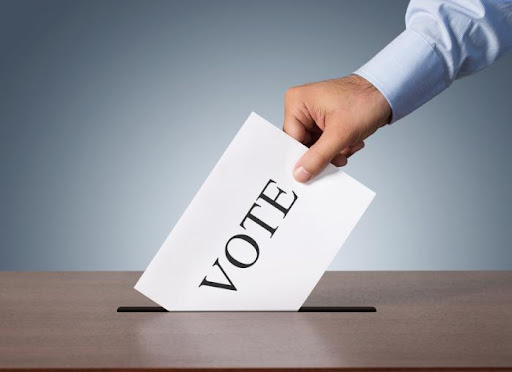
Importance of Voting – Why should we vote!

Importance of Voting in India:

Voting in India is a Constitutional right if one is a citizen over 18 years of age. However, that also makes it optional. It has been a tendency among voters, especially in the urban areas, to treat the voting day as a day of rest. While skipping the vote may not seem to cause any harm,the long-term consequences are disastrous.

What’s the need to vote?

  • We complain that we don’t have proper roads, no regular supply of water, no development, corruption etc. Rather than complaining if we elect a good candidate who will work for the people then that’s what the true power of common man.
  • Voting is not just our RIGHT, it’s also our DUTY.
  • Our country is a republic and its the responsibility of the people to elect the right candidate.
  • A good leader will make sure that the next 5 years will be safe, progressive and pro-development.
  • We should never think that how will it matter if one or two persons don’t vote. Our constitution has given a very important power to us to elect the person who can take forward the country on the right path, so we have to use our power intelligently.
  • We should always remember that we ( as an individual ) should not vote a person based on just caste (thinking that he is of my caste), religion. We should not accept any gifts or monetary benefits from any candidate in exchange for vote.
  • We should check the candidates standing for elections in our constituency and then among them, we have to vote for one candidate.
  • Please take necessary help from the staff in the voting poll centres as the incorrect process will make your vote invalid.
  •  In 2014, the voting percentage of our country was around 66.5%, which can be improved if we all decide to vote and also create awareness of voting among our friends and family.
  • On the voting day it will be a holiday, but don’t go for outing/movie without voting as one day of enjoyment may cost us and our country.
  • Those people who have migrated to different cities due to different reasons and if they have their vote in their native then they need to plan to visit their native and vote as each and every vote matters for electing the right candidate.

It has become a common ritual to talk bitter about any candidate or an elected leader of any legislative assembly or the parliament. The faultfinding then comes down to the ‘System’ and how democracy is not working as it should. However, a very little room has been given to ‘What the people can do’ to strengthen the democratic roots and bring about a change in the system. Just as it is the responsibility of the elected leader to fulfill the well-beings of the voters, the same is the need for the people of India to contribute to choosing the correct leader for their representation.

Democracy has given people a powerful right- that is to VOTE. Voting is the fundamental basis of democracy’s ‘Of the people, for the people, and by the people’ slogan. Therefore, rather than enjoying it as a holiday, one must vote if he truly wants to contribute to the nation-building process and bring about a change. A Citizen should actually not need to find any reason to Vote. It must be done as a compulsive duty although there is no legal obligation to vote.

Every Single Vote Is Significant:

Needless to say, every citizen’s vote is counted in the polling process. If the people are equally divided between two candidates, one single vote can be a game-changer and a decisive factor. We have seen in the past how one vote from an MP can decide the fall of the government. Exactly the same way, a single person’s vote can confirm the win/fall of an aspiring MP or MLA.

Whom to Vote?

  • Check the candidate’s manifesto and his/her background. If he/she is sitting MP then check his/her and his/her party’s work and based on that you can decide.
  •  If you want to vote based on political party’s work then check the party’s last time’s promises and check which all party has fulfilled their promises and compare their work.
  • Think about the country, present and future of our next generations when you vote.

Non-choosers get NOTA:

At times, it is possible that one does not want any single candidate to be elected from all who are contesting. The election commission has made a special provision of NOTA. It stands for None of The Above. Hence if none of the candidates fit into your criteria, just hit the NOTA option and voice the opinion. Introduction of this alternative is believed to play a significant role in the future. In the late future, it may also be possible that the NOTA will decide the re-elections with fresh candidates.

We must honor the right of voting given by the constitution of India. The youngsters are well excited to exercise their right to vote as soon as they turn 18. The feeling after having cast a vote infuses a sense of pride for being a responsible citizen. As can be witnessed from the sharing of the inked finger on social media. The trend is continuing to gain popularity amongst the youngers and the elders as well.

Gone are the days when it was required for people to motivate them to vote. The vote share for the General Election of 2014 was 8% higher than the previous election. Voter turnout in the Lok Sabha Election 2019 was 67%. Voter awareness program has become successful in its mission and the vote share continues to increase till date in many state elections. With this increasing number of voter turnout, we will soon reach the 80-90% golden mark.

“Voting is the expression of our commitment to ourselves, one another, this country, and this world.”

Sharon Salzberg

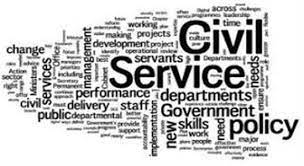
Role of civil services in a democracy.

In a democracy, the civil services play an extremely important role in the administration, policy formulation and implementation, and in taking the country forward towards progress and development.

Democracy is an egalitarian principle in which the governed elect the people who govern over them. There are three pillars of modern democracy:

  1. Legislature
  2. Executive
  3. Judiciary

The civil services form a part of the executive. While the ministers, who are part of the executive, are temporary and are reelected or replaced by the people by their will (through elections), the civil servants are the permanent part of the executive. 

  • The civil servants are accountable to the political executive, the ministers. The civil services are thus, a subdivision under the government. 
  • The officers in the civil services form the permanent staff of the various governmental departments. 
  • They are basically expert administrators. 
  • They are sometimes referred to as the bureaucracy or also the public service. 

Importance of the Civil Services :

  1. The civil service is present all over India and it thus has a strong binding character.
  2. It plays a vital role in effective policy-making and regulation.
  3. It offers non-partisan advice to the political leadership of the country, even in the midst of political instability.
  4. The service gives effective coordination between the various institutions of governance, and also between different departments, bodies, etc.
  5. It offers service delivery and leadership at different levels of administration.

Functions of Civil Services

  • Basis of Government: There can be no government without administrative machinery. 
  • Implementing Laws & Policies: Civil services are responsible for implementing laws and executing policies framed by the government.
  • Policy Formulation: The civil service is chiefly responsible for policy formulation as well. The civil service officers advise ministers in this regard and also provides them with facts and ideas.
  • Stabilising Force: Amidst political instability, the civil service offers stability and permanence. While governments and ministers can come and go, the civil services is a permanent fixture giving the administrative set up a sense of stability and continuity.
  • Instruments of Social Change & Economic Development: Successful policy implementation will lead to positive changes in the lives of ordinary people. It is only when the promised goods and services reach the intended beneficiaries, a government can call any scheme successful. The task of actualising schemes and policies fall with the officers of the civil services.
  • Welfare Services: The services offer a variety of welfare schemes such as providing social security, the welfare of weaker and vulnerable sections of society, old-age pensions, poverty alleviation, etc.
  • Developmental Functions: The services perform a variety of developmental functions like promoting modern techniques in agriculture, promoting the industry, trade, banking functions, bridging the digital divide, etc.
  • Administrative Adjudication: The civil services also perform quasi-judicial services by settling disputes between the State and the citizens, in the form of tribunals, etc.

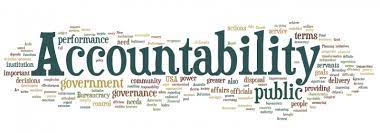
Accountability of a Civil Servant :

The civil servants are responsible to the ministers of the departments in which they serve. The ministers are accountable to the people through the Parliament or State Legislatures, and the civil servants are accountable to the ministers. They should ideally serve the elected government of the day, as government policies are the functions of the civil services. However, an impartial civil servant is also accountable to the Constitution of India on which he has taken an oath of allegiance.

Problems Affecting Civil Services Today :

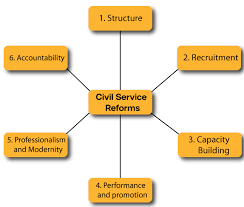
  • Lack of professionalism and poor capacity building.
  • An ineffective incentive system that does not reward the meritorious and upright civil servants.
  • Rigid and outmoded rules and procedures that do not allow civil servants to exercise individual judgement and perform efficiently.
  • Lack of accountability and transparency procedure, with no adequate protection for whistle-blowers.
  • Political interference causing arbitrary transfers, and insecurity in tenures.
  • An erosion in ethics and values, which has caused rampant corruption and nepotism.
  • Patrimonialism (a form of governance in which all power flows directly from the leader).
  • Resistance to change from the civil servants themselves.

Key Facts about Democracy in India :

  • Democracy in India federal republic.
  • Democracy in India is headed by the President as the head of the state and Prime Minister as the head of the government.
  • There is a parliamentary form of government at the central level.
  • There is a universal adult franchise.

Hugging might even lower heart rates and blood pressure

The university of North Carolina conducted a studies with 59 women and found some interesting results after a short series of questions and general chatting about their partner some women ended each session with a 20 second hug

The women who received a hug from their partner had lower blood pressure and heart rates during stressful section of testing the researchers think that oxytocin that we mention earlier might be the causes for their better heart health

Hugging can be good for your heart health. In one studyTrusted Source, scientists split a group of about 200 adults into two groups:

  • One group had romantic partners hold hands for 10 minutes followed by a 20-second hug with each other.
  • The other group had romantic partners who sat in silence for 10 minutes and 20 seconds.

People in the first group showed greater reductions in blood pressure levels and heart rate than the second group.

According to these findings, an affectionate relationship may be good for you heart health.

Oxytocin is a chemical in our bodies that scientists sometimes call the “cuddle hormone.” This is because its levels rise when we hug, touch, or sit close to someone else. Oxytocin is associated with happiness and less stress.

Scientists have found that this hormone has a strong effect in women. Oxytocin causes a reduction in blood pressure and of the stress hormone norepinephrine.

One study found that the positive benefits of oxytocin were strongest in women who had better relationships and more frequent hugs with their romantic partner. Women also saw positive effects of oxytocin when they held their infants closely.

The Voting…

Vote is the formal expression of the choice or opinion of a person. The voting is process to choose the a person in an election. Voting systemis set of rules or law that governs the conduct of the election. As humanneed oxygen to survive likewise voting is necessary to existence of theDemocracy. Democracy has given […]

The Voting…

The Voting…

Vote is the formal expression of the choice or opinion of a person. The voting is process to choose the a person in an election. Voting system
is set of rules or law that governs the conduct of the election. As human
need oxygen to survive likewise voting is necessary to existence of the
Democracy. Democracy has given people a powerful right- that is to VOTE. Voting is the fundamental basis of democracy’s ‘Of the people, for the people, and by the people’ Therefore, rather than enjoying it as a holiday, one must vote if he truly wants to contribute to the nation-building process and bring about a change. A Citizen should actually not need to find any reason to Vote. It must be done as a compulsive duty although there is no legal obligation to vote. In India the Voting is a Constitutional right if one is a citizen over 18 years of age.  In India National Voters Day is celebrated on 25th day of January every year to spread awareness and to  To ensure that new voter or the 18+ who gets registered, finds a way to understand that ‘voting is an important responsibility, and at certain point of time, they have to go to vote.

  • It induces the Sense of Empowerment: Through voting, people have a sense of ‘ownership of government’.
  • To make government more responsible and accountable: Indian voters have brought revolutionary changes, in that regard, through voting e.g. in 1967, when Congress Government was not working as per the aspirations of the people, people brought the Congress Government to very thin majority at the center and almost half of the State Governments were given to non-congress parties.
  • By voting, people can decide the direction of change and development.

The Voting system widely classified into two categories ie. Plurality System and the Proportional Representative system. Plurality or Majoritarian System in which party win directly by getting only higher proportion of the seats than the proportion of vote they got in election. This increases the chances of a single party to gain parliamentary
majority. In Proportional System which guarantees an equal relationship between seat won by party and the votes gained in election. So there is low probability to making government of a single party, generally it has multi-party or the coalition government.

Even now, we have to more contribute towards the improvements in the Voting pattern because the Voting Percentage is not up to mark. These can be overcome by following ideas

  • Some challenges like financing of elections, unfair use of social media in elections and proxy voting for NRIs are yet to be addressed.
  • Something should be done to facilitate inter-migrants to vote in the place, where they are living.
  • Political class and ECI need to come together to find the ways and means to decriminalize the elections. Entry of the criminals into politics should be taken in more serious manner.
  • Examining the relevance of alternative kind of methods like Proportional Representation System in Indian Elections.
  • Electoral Reforms should be introduced to handle coalitions.

At last I request you to please vote for nation buildings and for strength of democratic values.

Thanks….