The day India burned

The day India burned is a documentary by BBC published on 14th August, 2007. It basically deals with the partition of India and Pakistan.

Partition of India provides a good overview of the fateful events leading to that cataclysmic decision by the British and the catastrophic suffering of ordinary people caught in the crossfire of communal hatred.

 It described in detail British motivation for leaving India after world war 2 in a quick and face-saving number; the underlying distrust of Hindus and Muslims of each other despite centuries of living together; Muslim educational and economic backwardness relative to Hindus and their fear of Hindu domination in a united India; the failure of the march 1946 Cabinet Mission in Shimla on account of Nehruโ€™s refusal to a agree to a decentralized subcontinent.

The beginning of the Hindu-Muslim communal riots with Jinnahโ€™s call for direct action in Calcutta in August 1946; the desperate attempts made by Gandhi to effect Hindu-Muslim unity via appeal to their humanity; and the pressure exerted on most Princely States to agree to ascension to India.

It also describes: the manipulation of people by political leaders in the name of religion; the slaughter looting, raping and mayhem among different communities from forcible ethnic and religious cleansing; the horrific price paid by human for defending their honor.

The utter lack of governmental preparation for a mass migration of people; the needless human carnage caused by Mountbattenโ€™s decision to expedite the planned partition; and the decline of hitherto culturally rich and cosmopolitan cities like Lahore by loss of other communities

According to my opinion this documentary is based on the story of those bloody months of 1947 through various testimonies of people who were forced to leave their ancestral homes after living together for centuries, despite all the religious disparities. The documentary also has some dramatized reconstructions which are sure going to surprise the youth who might not be knowing or have read much on the most unfortunate happening in the history of India.

To give an idea, it tells you how the British officials hurriedly took many major decisions disregarding the possible dangerous outcome in various regions of the country, especially Punjab. the well-directed film clearly shows cases that how it was earlier decided that the split will be there in the summer of 1948 after long negotiations between Lord Mountbatten, Mohammed Ali Jinhua and Jawaharlal Nehru. But then it was suddenly announced that the British empire would actually be granting the freedom a year ahead than planned in August 1947. It further reveals how the border line of this partition was drawn by a person, who had never been to India and knew nothing about the religious and cultural diversification existing in the country. Moreover, it also tells the fact that how numerous Hindus, Sikhs and Muslims were being slaughtered all over, since the British army was too small in numbers in front of the huge mobs and therefore couldnโ€™t stop it well in time

The plague to humanity has killed many and has targeted rages in many minds which will take years to endanger and distortion.

Difference between Tort and Contract

Civil law is practised to uphold the individualโ€™s private right and find suitable remedies for the violated rights. Civil law is classified into Contract, Tort, and Family Law. Criminal law is laws or rules created for the protection of the public against potentially serious crimes. Criminal offences are considered offences against the public. Criminal cases are punished by ordering fines, imprisonments or rehabilitation of the guilty or even death sentences. Criminal cases are always filed by the government as it is a crime against the public as a whole. 

 A tort is when a person defers from the conventional conduct and causes a disturbance or harms another person which leads to a civil action against the person causing the nuisance filed by the person who has been harmed.  There is a clear difference between tort and contract. The contract is understood as a legally binding document between two or more parties that consent and are obliged to follow the terms of the agreement.

 Contract law is rules are applied when two or more parties agree to enter into an agreement or contract; all parties in the agreement are required to respect the terms of the agreement. Any parties found to have broken the terms of the contract then they have committed a civil wrong and broken the contract. Whereas a tort is committed with or without the consent of the person. A tort is a duty that is imposed on the citizens. Thus it is a private right of an individual right of a person. A tort is a violation of a right in rem of a person which means that the right is available for the whole world. A contract is where two or more parties voluntarily sign a contract and are obliged to follow the terms of the contract. Any party who breaks any terms of the contract will be held guilty. A contract is the violation of a right in personam; the right is only available against a particular person or body. 

  1. The first area of differentiation between tort and contract is seen in the consideration of consent. A contract is signed willfully by the parties and the parties mutually consent to respect the terms of the case. An act of tort is committed with or without the consent of the other person or party. 
  • Tort arises from the rules and duties vested in man by law whereas contract occurs when the parties form rules created out of the contract. 
  • A tort is a violation of a right in rem of a person which means that the right is available for the whole world. A contract is the violation of a right in personam; the right is only available against a particular person or body
  • A contract cannot be signed by a minor and any contract signed by a minor is considered as invalid. A minority in age is considered as a good defence against the contract. In tort, a minor can be held responsible for the tort and can be made to pay for damages.
  • In tort, the motive for breach of duty is considered as immaterial and cannot be used as a defence. In contract, the motive is considered. If the person violates the contract in good faith, then the plaintiff is not liable.
  • The damages in tort are unliquidated and fixed after seeing the facts and situations of the case. The compensation in the contract is already determined by the terms and conditions of the contract.
  • The damages in a contract are compensatory in nature whereas in tort they are compensatory as well as punishing in nature 
  • The period of limitation in case of torts usually runs from the date when the damage is suffered and in the contract, the limitation starts from the breach of the contract 

What Boys Learn from Their Dads

Fathers are different from mothers. They look different, they sound different, they play in a different way, and they usually have a different approach to raising children than a mother does. And that’s a good thing. A boy learns from his father, without even realizing he’s doing it, what a man is and does. He learns about masculinity, about what men like and don’t like. Many adult men report that they either wanted to be “just like my dad”โ€”or wanted to be his exact opposite. Fathers undoubtedly have a powerful influence on their growing sons, and it begins from the moment of birth.

Fatherhood in the Early Years

Imagine a couple who have just welcomed the birth of a son. Curt was thrilled when his wife Nancy announced that she was pregnant with their first child. He was even more excited when tests showed that the baby was a boy. Curt had wonderful memories of camping trips and fishing expeditions with his own dad, and he looked forward to giving his son a happy and loving childhood. He attended childbirth classes enthusiastically, listened to parenting books on tape as he drove to work each day, and was right beside Nancy when she gave birth to Alex.

Once Alex was at home, though, Curt began to feel unsure of how to behave. Alex was so small. Nancy nursed him and seemed to know just how to handle his burps, cries, and various physical needs. Curt loved watching his wife hold and care for him; Nancy laughed and said they’d need to build an extra room to store the photos Curt was taking. But when it came time for Curt to hold Alex, to feed him, or to bathe him, he felt clumsy and insecure. The baby seemed to be his mom’s territory, and suddenly those camping trips seemed a long time away.

Challenges for Dads

Fathers sometimes find their sons’ infancy challenging. They love the baby and delight in his noises and new activities, but infant care seems to be Mom’s province. Devoted mothers sometimes unwittingly prevent Dad from taking a more active role by insisting that the baby be held, fed, and rocked in a particular way (usually hers). Dads often disappear, falling back on work and providing for their new family. Sometimes they don’t reappear for years, if at all.

father’s role in the raising of his children has changed dramatically over the past century or two. In generations past, sons expected to follow in their fathers’ footsteps, apprenticing in their work and in their approach to life. During the nineteenth century, however, fathers began to go out to work, and the measure of a man’s success slowly changed. Rather than the closeness of his family and the strength of his family business, a man’s worth could be measured in his income, the value of his house, and the size of his car. Parenting became “women’s work”; fathers were just too busy earning a living. And generations of boys grew up hungering for closeness with a father they barely knew, someone who came home only to eat dinner, look over homework, hear about the day’s misbehavior, and watch a little television.

Fact

Ross Parke, Ph.D., at the University of California at Riverside, found that fathers are just as good at reading a baby’s emotional cues as mothers are, but they respond in different ways. A father’s active play and stimulation may actually help a baby learn to be aware of his own internal state and to tolerate a wide range of people and activities.

Research shows that without a doubt, fathers are an integral part of their sons’ healthy emotional, physical, and cognitive growth from their first moments of life. Boys whose fathers love them and can demonstrate that love in consistent, caring ways have fewer problems later in life with peers, academics, and delinquent behavior. One study tracked a group of boys and girls for twenty-six years, exploring the roles of both mothers and fathers in nurturing emotional health and empathy. While the mother’s role was important, by far the most influential factor in a child’s emotional health was how involved the father was in a child’s care. In fact, the benefits of having an active, involved father during infancy and early childhood appear to last well into adolescence.

CULPABLE HOMICIDE

Culpable Homicide under Area 299 has certain fixings. To pull in this segment, demise of a person probably been brought about by doing a demonstration, (I) with the aim of causing passing; or on the other hand (ii) with the goal of making such substantial injury as is likely reason demise; or (iii) with the information that such demonstration done is probably going to cause demise. ‘Information’ and ‘aim’ must not be confounded. The arrangement in characterizing initial two classes doesn’t manage the information though it does comparable to the third classification. It would likewise be pertinent to manage at the top of the priority list the import of the expressions “likely by such act to cause demise”. In this “possible” would mean most likely and not in any way, shape or form. Injury is probably going to cause demise, when the equivalent is adequate in the conventional course of nature to cause demise which thus it would imply that passing will be the most plausible result. “likely”- The blamed was sentenced for an offense of carrying on in a way liable to jeopardize the well being of an airplane by determined utilization of his cell phone.

Section 304 gives discipline to offense of at fault manslaughter not adding up to kill. Under this there are two sorts of disciplines applying to two distinct conditions:In the event that the demonstration by which passing is caused was finished with the goal of causing demise or such real injury as is probably going to cause demise, the discipline is life detainment or then again detainment of either portrayal for a term which may reach out to 10 years and fine.On the off chance that demonstration is finished with information that it is probably going to cause passing however with no aim to cause passing or such real injury as is probably going to cause demise, the discipline is detainment of either portrayal for a term which may reach out to 10 years or with fine or both.Section 304 Section I v. Area 304 Section II-Etymological qualification being obvious, there are two different qualifications too. One comparable to the discipline, while other is established on the goal of causing such act, with no expectation yet with the information that the demonstration is prone to cause demise. It is neither prudent nor conceivable to express any fixed model that would be generally relevant to every single such case. Each case must be chosen its own merits. The Court needs to play out the sensitive capacity of applying the arrangements of IPC to the realities of the case with an unmistakable division as to under which classification of cases, the case at hand falls and as needs be rebuff the accused.

Harry potter – A must read

Harry Potter is a story of a young wizard who fought against the Dark Lord, Voldemort and defeated hs penned down by J.K Rowling. As we are growing up, we are accustomed with choosing to watch series over going through the main Novel. The Novel depicts the characters Harry Potter, Hermione Granger and Ron Wealsey played by Daniel Radcliff, Emma Watson, Rupert Grint respectively showing the pure bond of friendship between the three. They stood strong, in spite of all the odds. The Genre for Harry Potter isn’t much specified, as it portrays Horror, Thriller, Drama, Romance, Friendship also Fantasy. While the series influenced the minds of youngsters a lot, this is for Good. There were 7 novels written Part by Part, starting with the Philosopher’s Stone (1997), Harry meets Hagrid, who came to take him away to the Hogwarts School of Witchcraft and Wizardry, as ordered by Albus Dumbeldore, the Professor. He learns that his parents were killed by Lord Voldemort, but he somehow survived. Harry met his friends here and recognized his talents for Quiditch Game. He met Snape, the Potions master who disliked Harry a lot. the second novel was Harry Potter and the Chamber of Secrets (1998), Ginny, Ron’s sister finds out the Tom Riddle’s Diary, through which Voldemort possessed her, she opened the chamber of Secrets. Harry learns that he can speak Parseltongue, snake’s language, with help of which he entered in Chamber to kill Basilisk, the ancient monster. The third novel was Prisoner of Azkaban (1999), Here Harry meets with Sirius Black, his father’s best friend who was a mass murderer, as stated by the Wizarding World, also Remus Lupin, a Defence of Dark Arts teacher, who was a warewolf by nature. Lupin taught harry a few Defences. The forth one was Goblet of Fire (2000), this is basically a tournament which was dangerous, for wining Triwizard’s Cup. He was mentored by Mad-eye-moody. Here, Voldemort tried to kill him by kills Cedric Diggory instead, another student of Hogwarts. The fifth book was Order of the Pheonix (2003), Ministry of Magic refuses to believe that Voldemort has returned, Harry and his friends form Dumbledore’s Army. Ministry appoints Dolores Umbridge, who turns the school into dictatorial regime. Harry had a face off against Voldemort’s followers, Series black dies in the conflict. The fifth novel was The Half Blood Prince (2005), Harry finds out, through a device that Voldemort has split his soul into pieces, and created a series of Horcruxes, hidden in various locations. Draco Malfoy, who was his classmate joined with the Death Eaters and attempted to kill the Professor, who was killed by Prof. Snape instead. The last novel Deathly Hollows (2007) was the final climax. These novels had attracted children a lot due to absurd creatures and magic elements present on, through there was a lot more to understand. How much positivity is incurred in Harry Potter, in spite of being such a young boy. The Wizarding world was related to the Fantasy world, having no practicality as such on its own and mostly based on imagination. According to Rowling, main was death, other than that there was Prejudice, Corruption and Madness. Novel also shows the angle of Harry’s cleverness and focus to remove all evils, whereas without his friends, he was nothing. He was all alone on his childhood, before he came to know his wizarding skills, and no one loved him as such, he was tortured by his Aunt’ Family. Harry potter has been one of the greatest Media Franchise of all times. Harry Potter became widely popular, for all age groups due to relativity. Like something we all face in our teenage, heartbreaks, betrayal, respect, loneliness and such feelings. Though, it is a fact that Positive energy conquers all sorts of negativity, how much powerful it is.

As for many, Prof. Snape was the real Hero of the series because he was exceptionally skilled, Wizard, who was extremely mocking and aloof was initially threat for the Wizards, Snape loved Harry’s mother, as shown later on through, was deeply attracted to Voldemort’s theories, who hated Muggles.

FORGOTTEN VICTIMS……..COMFORT WOMEN

Around 150,000 to 200,000 women during the Second World War were coerced, abducted and forced into being sex slaves for the Imperial Japanese Army. These women were lured in with promises of nurse jobs, waitresses, to work in an office or to work as an entertainer but there taken to military bases and kept in comfort stations. The reason for this brutal and inhumane legally sanctioned rape was to mitigate or to reduce the rape crime by the Japanese Imperial Army due to rising anti-Japanese sentiment. The rising anti-Japanese sentiment was due to incidents like the rape of Nanking. By forming comfort stations where women were ready to service the Japanese army men then they could confine rapes and abuse to the military stations and such atrocities would not reach international news.
The first Comfort station was formed in Shanghai in 1932. The women working there were voluntary Japanese prostitutes or kidnapped Japanese women but later when the resources dried up in Japan, the army started to look beyond its country. Women from Japanese concessions and Japanese colonies were recruited. Women were falsely misled into thinking that they were about to get a job as a nurse or waitress or a simple office worker but were taken to Japanese military stations where they were made to learn a routine and were coerced into having sex multiple times with different people. Because of such inhumane conditions, most of the comfort women would contract sexually transmitted diseases. But the Japanese military doctors would carefully and regularly monitor comfort women to detect STDs and to stop it from reaching the troops.


The women were 80 per cent Koreans and the rest were Chinese / Filipina /Dutch/women who were abducted. Many such women were taken in and were raped 30 -40 times every day. Those who refused were beaten severely. Girls who were virgins while entering the stations were broken in or raped. So Tetsuo who was a medical physician in the Imperial Japanese Army wrote that comfort was referred to as female ammunition and was seen as things to be used rather than human beings. Comfort women were also forced to donate blood to save wounded soldiers. When a soldier would enter a comfort station, where photographs of comfort women were displayed and soldiers could choose from there. Women who got pregnant were forced to get abortions. Any human being with a little shred of humanity would know that this is wrong but this issue went unnoticed. Most comfort women were told and the theory that white men were cannibals were indoctrinated into them. When the Allied forces came close to capturing Japanese military stations, most of these women were forced to commit suicide or were killed by the soldiers. Many comfort women killed themselves as they didnโ€™t want to be eaten by white men as this fact that white men were cannibals were drilled into them.


The Japanese military used the drug called salvarsan which was used to sterilize women; many condoms were given out for free to prevent the spread of sexually transmitted diseases. Japan has issued apologies to the countries where it had forcefully taken women from. Prime Minister Shinto Abe stated in a newspaper interview that there was zero evidence that the Japanese army had used sex slaves but the fact that the Japanese government had admitted that they used brothels in a statement issued in 1993. But the country had issued an apology for the inhumane treatment of women and the deep psychological trauma that it had inflicted on the countries citizens.

Test Cricket and Covid19: The Changes Need to be Adopted

ย ย ย ย ย ย ย ย ย ย ย ย ย ย ย ย ย ย ย ย ย ย ย ย ย ย ย ย ย ย ย ย ย ย ย ย ย ย ย ย ย ย ย ย ย ย ย ย ย ย ย ย ย ย ย ย ย ย ย ย ย ย ย ย ย ย ย ย ย ย ย ย ย ย ย ย ย ย ย ย ย ย ย ย ย ย ย ย ย ย ย ย ย ย ย ย  ย -SHUBHANKAR

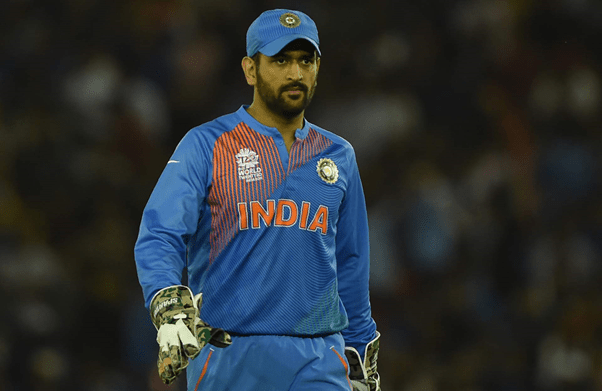
Cricket is back and with the pandemic still going on, the new normal needs to be adopted and adopted well so that players play in a safe environment. With cricket played with the new norms, lets look at what the new changes would be and what affect would it have on the gentlemanโ€™s game. According to the new norms, the most affected format would be the test format, and this is the main format which has to make itself bloom again in this darkness. Why Iโ€™m saying darkness is because of the fact that test cricket needed a rejuvenation but with the pandemic hitting the world, test cricket could be again on the fringes.

Test cricket as all cricket lovers know is the best format and the most testing formats of all. This is the ultimate test for all players. But with the introduction of twenty twenty cricket and ODI format, most people have forgotten test cricket. They find it boring to play for 5 days. Thatโ€™s why we in the last many years never saw too much of crowds in stadiums for test matches. With the players finding it not interesting, they came up and spoke about this issue openly in the media to encourage spectators to watch test cricket in stadiums, giving a natural lift to the players to give their 200% on the field. The change was starting to happen, with many spectators now going to watch test matches in the recent years. Especially when talking about the Indian crowds, they have lived upto the expectation of the current Indian Menโ€™s cricket team captain Virat Kohli and come to watch test cricket in huge numbers whenever India plays, be it away or at home.

But now with the Covid19 restrictions in place, what it holds for test cricket is the fact that with restrictions on entry of people into the stadiums, will test cricket get the same reception back by the spectators? This question arises because according to the WHO this Covid19 virus is here to stay and with people not looking to risk their life at all, will cricket boards be able to bring back spectators for watching test cricket again in stadiums? The answer to this question could be instrumental in saving test cricket from fading away. The next thing which could harm test cricket and in particular the bowlers is the fact that saliva canโ€™t be used to shine the ball. Those of who have played test cricket or are cricket enthusiasts know that saliva is one of the main weapons for a fast bowler to swing the ball as it helps in shining the ball. If the use of saliva is banned, which off course is now, the bowlers will face a lot of problem while they bowl in test cricket. The saliva ban will affect test cricket of all the 3 formats because of the fact that the red ball needs to be shinned more as test cricket is played for 5 days whereas in T20 or ODI cricket, its just a dayโ€™s game where swing doesnโ€™t really have that much impact on the game and also with these two formats really fast paced and played with a white ball, the saliva ban would certainly not impact the shorter formats of the game.

In the end, I would want to say that whatever happens, I feel that test cricket is well and up and running and the people need to make sure that it stays there. Because cricket is nothing without a format of it, known as TEST CRICKET.

POVERTY IN INDIA

India lifted 271 million people out of poverty in a decade. Poverty is a state of economic status where employment or financial resources of a person isnโ€™t enough to meet the minimum standard of living and basic human needs arenโ€™t met. A person needs basic shelter, food, access to health care and education as these are basic human needs to lead a life. But a poor person does not have access to most of these needs. Though India has pulled millions of people out of poverty but yet the distribution of wealth is extremely uneven across the population. In India, 1 per cent of the population holds 73 per cent of the wealth.
Poverty is a problem that all countries are facing but India had done an exceptional job lifting people out of poverty. In India, most poor people who canโ€™t afford food canโ€™t also afford shelter. Over dependency on monsoon with no proper irrigation makes people come to cities which have much stable employment opportunities. Poor people in India depend upon subsidized food rates provided by the government and free food given by organizations and temples. They end up sleeping on the streets with zero access to proper and safe food and basic health care. Urban poverty is higher than in rural poverty. The rural population migrates to cities in search of better job opportunities. Because of the lack of education, most jobs that they find are labour intensive and underpaid. Large numbers of people who live below the poverty line live in slums where there isnโ€™t proper sanitation, infrastructure and no safe access to drinking water.
There are multiple causes of poverty is high employment levels. But the main causes of poverty are the lack of funds to invest in education and limited access to bank systems. Corruption, the growing population which means fewer job opportunities, clears dependency on irregular rains for agriculture and illiteracy. A large portion of the population is dependent on agriculture but agriculture doesnโ€™t pay well low agriculture and many crop failure leads to farmers in debt traps some farmers go to banks or some go to other illegal methods. Historical causes are colonialism, slavery and frequent wars. Because the parents arenโ€™t earning the children usually go get jobs. Children get jobs such as waitressing, mining and other such jobs. When the children are working their education is at pause thus the poverty circle continues. The government has incentives like Indira Awas Yojana which provides housing to the poor. The government has mid-day meal schemes to attract children to stay in schools and the Mahatma Gandhi National Rural Employment Guarantee Act secures the citizens right to work. The state governments offer food, rations as a cheap and subsidized rate to people owning a below poverty line card. There are also government schemes which allow subsidized school rates for people who own a below poverty line card.
Poverty is an issue for the entire country. India has an annual growth of 7 per cent for 15 years and has put more than 271 million people out of poverty. Elimination of poverty has been Indiaโ€™s priority and should continue to be.

Due Diligence

It is the process by which confidential legal, financial and other material information is exchanged, received and appraised by a parties to a business transaction, which is done prior to the transaction

Due diligence is an analysis and risk assessment of an impending business transactions. It is careful and methodological investigation of a business or persons or the performance of an art with certain standard of care to ensure that the information is accurate and to uncover the information that may affect the outcome of the transaction

It is basically a background check to make sure that the parties to the transactions have the required information they used to proceed with the transactions. It is used to investigate and evaluate a business opportunities. It is a tool that often provides insights into the hidden facts.

Objective of Due Diligence

The objective of due diligence is to verify the strategic identification or attractiveness of the target company, valuation risk associated etc. the major objectives of the due diligence are :

  1. Collect material information from the target company
  2. Conduct swot analysis
  3. Improve bargaining position depending on the result
  4. To take a informed decisions about the investments
  5. Identification of areas where representation and warranties are required
  6. To provide a desired comfort level in the transactions
  7. To ensure complete and accurate disclosure
  8. To bridge the gap between the existing and expected
  9. To take smooth/accurate action/decision
  10. To enhance the confidence of the stakeholder

Process of Due Diligence

A legal due diligence investigation takes place in three stages.

  • Preparation
  • Investigation
  • Results

The most time-consuming part of the process is the investigation or the gathering of facts.

Preparation

This stage of the legal due diligence is to set goals and priorities. Often there is one central goal or multiple smaller important goals that stand out from the rest. Legal due diligence investigation are often limited by time and budget pressures. It’s important to prioritize what information is most important.

Investigation

During the investigation a lawyer or team of lawyers collect facts and documents. The findings will allow them to formulate a legal opinion as to whether the sale or purchase is worthwhile. There are many parts to the investigation.

Establish the Big Picture. This comes back to the goal of the investigation. It’s important to formulate the investigation around the central question or goal. This is also a good time to help the investigating lawyer understand the broad overview of your company.

Provide Documents and Interviews. The list of documents and interviews necessary for a legal due diligence investigation will likely surprise you with its length. The list of documents requested will likely be more documents than are actually necessary. The lawyer’s job is to create a full picture, which means being thorough in gathering information. Consider making one of your c-level officers available to answer questions. Interviews are an efficient way to gather information.

Results

The results of a legal due diligence investigation are reviled at the end of the investigation. In the results, the lawyer will present the data in as concise way as possible. The lawyer will also present a results summary which will point out the most important discoveries.

The results may also provide analysis or opinion. The lawyer may offer an opinion as to the validity of the sale or purchase.

The results may be provided in written format or verbal conversation. This depends upon the size of the investigation and the preference of the lawyer and the client.

Presentation of Legal Due Diligence Investigation Findings

The findings of a legal due diligence investigation are really only important to a buyer and the buyer’s counsel.

The buyer will typically want the due diligence finding to be presented in a compact and user-friendly way. The presentation can take many forms:

Verbal conversation: This is a great method for small deals or a buyer who is concerned about cost.

Memorandum: This memorandum can greatly range in length and depth. For larger deals, the written document will be longer.

Whichever form it takes, the presentation of the legal due diligence investigation findings should describe all of the reviewed documents, analysis of key issues discovered, and make recommendations as to a solution to presented issues.

If you are having a due diligence investigation performed, be clear with your expectations. Be specific on how you would like information and issues presented to you at the end of the legal due diligence investigation.

EATING DISORDERS

We will in a world where being thin is considered to be the beauty standard and anything other than thin is fat. People openly comment and advise on how to lose weight. So people in the process of being thin some develop eating disorders. Eating disorders are a type of mental disorder which abnormal eating behaviour negatively affects ones physical and mental health. People tend to assume that eating disorders are a lifestyle choice or that people choose to have an eating disorder. The eating disorders are of different types. Some range from extreme overeating and extreme restrictive eating. There are different types of eating disorders. But there are two main types, Anorexia Nervosa and Bulimia Nervosa.
Anorexia Nervosa is a type of eating disorder where people perceive that they are overweight, they also have bad self-esteem where they constantly feel fat and have to lose weight. People suffering from anorexia nervosa restrict their diet or vomit or use a laxative to force out the food in their system. Because they donโ€™t want to gain weight, they force out food. Anorexia Nervosa has the highest mortality rate of any mental health disorders. Their diets are always restrictive with less calorie intake. Because they donโ€™t eat a nutrition meal, they are very thin and have a deep fear of gaining weight. They consider themselves as overweight and continue to start themselves despite life-threatening starvation. The symptoms of the disorder are seen over a while. Mild anemia, brittle hair and nail and growth of fine hairs are one of the first symptoms seen. The growth of the fine is to keep the body warm when there is no fat to keep the body warm. Severe constipation, low blood pressure and multiple organ failure, the person will feel cold all the time and infertility are major symptoms the patients will face.
Bulimia Nervosa is an eating disorder where people tend to overeat large amounts of food with control over their eating habit. People suffering from Bulimia Nervosa eat large amounts of food and overcompensate by self-induced vomiting, over the use of laxatives to force the food out, fasting for long times. They overeat and then use extreme methods to get rid of it. They consider themselves as overweight and have self-perceived flaws. They always fear of gaining weight. They have a chronic swollen throat because of self-induced vomiting. They also have swollen salivary glands of self-induced vomiting. Acid induced reflex and intestinal distress and irritation from the use of laxatives. Long term effects are electrolyte imbalance which can lead to a stroke from there a heart attack; tooth enamel can become overly sensitive because of stomach acid because of self-induced vomiting
Eating disorders can affect people of all genders, ages and racial backgrounds. They usually start in the teenage year of a patient. There are many treatments for eating disorders.
People suffering from eating disorders have a higher risk of depression and suicidal tendencies. The treatments are usually psychotherapies and medications. To reduce the tendencies of self-induced vomiting and binge eating, Cognitive behavioural therapy is a frequently used therapy tool to help the patients acknowledge their unhealthy patterns of eating behaviour. Some medications are prescribed by the psychiatrist.

One Plus Nord : An Affordable Premium

Nowadays, we all are obsessed with Smartphones. We cannot imagine a life without it, that is for sure. Due to the Pandemic situation for Corona Virus, i.e., Covid 19, we all are stuck at our homes. As for most of us, we are participating in Group meetings, Virtual Classes, Work from Home or just for making a video call to our loved ones, or to drop a mail to the office. We all are engrossed in smartphones for Studies, Official Work or for Entertainment, for all the other aspects with the help of Smartphones. A Smartphones along with proper Internet Connectivity is a must nowadays. All we do is typing on our smartphones, also for Online Shopping this comes handy. Smartphones are a savior for us, right at this moment. We all cannot afford the Luxury I phones or something close to that, as because we are youngsters and do not earn so much, but we all dream to own a premium quality Handset. This is a sort of Fascination or a Trend revolving around today’s world and we cannot deny that. What if we want a Beautiful camera or better resolution in a much more affordable form? The easiest option is to buy A One Plus Node, much cheaper in rate than a Premium Smartphone. One Plus Nord is an android based Smartphone, which will be launched as on 21st July, 2020s. It will be available in India, off course, also in Europe, Malaysia and in some parts of Hong Kong. Slogan for the One Plus Nord Smartphone is, ‘Pretty much anything you could have asked for’. According to Gadgets Now, that is India’s No 1 Tech news site, One Plus Nord is described as it:

1) Camera: One Plus Nord comes with a quad-camera setup that includes a 48MP Sony IMX586, primary camera, and 8 MP ultra-wide-angle lens. On the front, the phone will feature a deal punch hole camera that will include a 32 MP main sensor and an 8MP ultra-wide.

2) Design and Specifications: OnePlus Nord will have a curvy glass back with a vertically aligned quad-cam set up that will be on its top right corner. While the alert sider is shifted to right edge, just above power button. Weight – around 185 grams.

The new entrant is expected to run Android 10 with Oxygen OS on top. It will have a 6.4inch Full-HD+ AMOLED Touch screen display with Corning Gorilla Glass protection. One Plus Nord is one of the first few phones to launch in India having an Octa-core Qualcomm Snapdragon 765G SoC processor, coupled with up to 12GB of RAM.

3) Battery and Color Options: OnePlus Nord is expected to support 4115mAh battery, can back up to 30W Warp Fast Charging. This is available in three color options like Gray Ash, Blue Marble and Gray onyx.

4) Storage Options: OnePlus Nord is available in three different storage variations – 6GB RAM + 128GB internal storage and 12GB RAM + 256GB internal storage, available at several costs.

OnePlus Nord smartphone price in India is around Rs 24,999. A Survey would be done in which these smart phones will be given for usage to 50 chosen people for a review in US and Canada, the best part is reviewers can keep these phone, depending on the situation. This is a form of Marketing Strategy. One Plus Nord is founded by Pete Lau Carl Pei, and area served is worldwide. There’s a slight difference to OnePlus Nord models sold in India, versus other countries in respect to5G. This is an opportunity to experience something brand new and OnePlus Nord is the Flag Bearer of an affordable premium. Games like Pubg can be played in big screen and HDR video is streamed using YouTube and Netflix. This whole thing is pretty much hyped up and a lot of people are extremely excited to try this model out. It is free from any competitors as such, no companies haven’t made a 5g ready phone yet in such an affordable range under 50,000. This states that One Plus Nord is indeed in a much better position.

Happy Raksha Bandhan

Raksha Bandhan is celebrated as on the full moon Hindu month of Shravana ( Shravana Purnima ) or around July or August every year. This day is celebrated to mark the bond between brothers and sisters. The Expression “Raksha Bandhan” in Sanskrit literally means the bond of ‘Protection, Obligation or Care”. The Sister ties a sacred thread on wrists of the brothers, named as “Rakhi”. Also, the sister prays to God that may his brother stays in high spirits and healthy forever. This is a custom which is being followed for so many years, till date. This is a day for celebration or happiness for all the brothers and sisters across the world. Whether he is a cousin, or a sibling, or someone known, the sister will wait for his day to tie the thread. We also form bondings with someone whom we meet by travelling, or seniors in our office or schools, they also uplifts us so much with heir brotherly instinct. Actually, this is a ritual which depicts the protection of brothers from all the evils and odds, simultaneously brothers also plays the role of Savior after the demise of her father or her husband. Sisters have an immense respect for their brothers, so this “Raksha Bandhan” celebrates the connection of Brotherhood and Sisterhood. Gift plays a very important part in this ceremony. It isn’t about the gift actually but just the soulful connection between them, as sisters tend to demand a lot and throw all the childish tantrums to their brothers only. A sister blesses the younger brother for her well being and prays for his successful life. No Raksha Bandhan is ever complete without a gift In return of the Rakhi, the brother especially pays a sum of money or gives presents to the sisters as a token of appreciation. This attachment stays on for Lifelong. “Raksha Bandhan” signifies togetherness between brothers and sisters. The term ‘Raksha’ signifies Protection and ‘Bandhan’ signifies the Bond. Rakhi is tied on the wrists of Brothers to show care and affection for him. Lets find out the History behind his celebration and how it actually started.

According to the ancient mythology, it has been stated that In Mahabharata, Lord Krishna shared a brotherly relationship with Queen Draupadi, she considered Lord Krishna as her brother. For the protection of Dharma on the Earth, he killed Sishupal, while doing so he accidentally has hurt his finger and it was bleeding very badly, Draupadi could not tolerate this and she had torn a strip from her saree and tiedit on the Finger of Lord Krishna. Amused by her behavior, Lord Krishna promised to protect her from all odds and be by her side forever, which he did so as well later on. Another popular evidence regarding Rakhi is between Rani Karnawati and Emperor Humayun, In medieval era, Rajputs were busy protecting their territories from Muslim attacks. raksha Bandhan that time meant that the priority of the brothers is to foresee the security of their sisters. Rani Karnawati was the widowed wife of a King of Chittor, she got to understand that she cannot protect her Kingdom from Sultan Bahadur Shah’s invasion, hence she sent a Rakhi thread to Emperor Humayun, he was deeply moved by the gesture and started off to Chittor for saving her. The Great Poet Shri. RabindranathTahore used the concept of brotherhood, togetherness and thread o “Rakhi” as a medium to protect against British Partition Policy to prevail harmony between two communities. A Brother from very childhood keeps guiding the sister, by supporting her in studies by sharing important views for her carrier, also the sisters are the source of inspiration for their Brothers. We eventually learn a lot from our brothers, as he shoulders a lot of responsibilities after the demise of Father, he becomes the decision maker of the family. In “Raksha Bandhan” Ceremony, the Brother promises to bless her no matter what and also to protect her. Hence all the sisters are immensely grateful to their brothers for all the help and support. Nowadays, the Sisters also tie Rakhi on another sister’s hand to show affection. This day, make a video call to your brother or write a letter, expressing your appreciation to him if you cannot meet him personally, just to let the brother know that you love him and still stand by him.

Source – Wikipedia

ย ย ย ย ย  A Look into the 2019/20 Champions League Matches to be Played

ย ย ย ย ย ย ย ย ย ย ย ย  ย ย ย ย ย ย ย ย ย ย ย ย ย ย ย ย ย ย ย ย ย ย ย ย ย ย ย ย ย ย ย ย ย ย ย ย ย ย ย ย ย ย ย ย ย ย ย ย ย ย ย ย ย ย ย ย ย ย ย ย ย ย ย ย ย ย ย ย ย ย ย ย ย ย ย ย ย ย ย ย ย ย ย ย ย -SHUBHANKAR

With the domestic seasons of Europeโ€™s top 5 leagues over, the focus now shifts on the later stages of one of the most elite competitions in football, the UEFA Champions League. With the tournament in its later stages and with top teams in action, these will be one of the best matches to cover for the broadcasters as well as for the spectators. With the 1st leg of the Round of 16 already played, the 2nd leg will be a feast to watch on, with the quarterfinals at stake. So, here’s a brief look at what can be expected in the upcoming days in the premier tournament known as the UEFA Champions League.

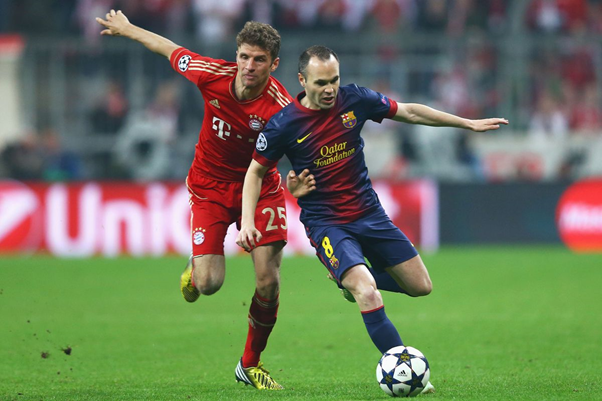
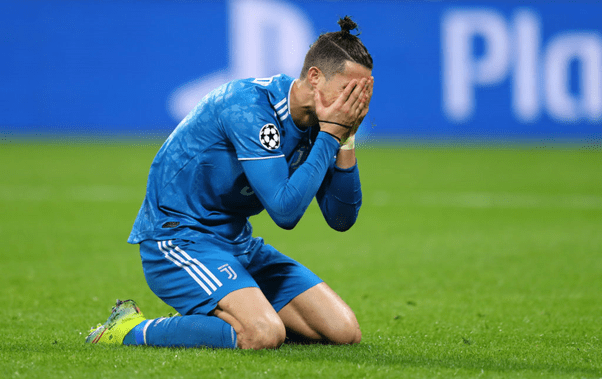
The first day will say 3 heavyweights of the game in action in the 2nd leg of the Round of 16. The Italian champions Juventus will take on Lyon, with surprisingly Lyon going with the lead into the 2nd leg as they defeated Juventus 1-0 earlier in the 1st leg between the two teams. Talking about the other fixture that day, it will be a spicy contest as two of the favourites to lift the trophy would lock horns, meaning one of the title contenders will surely be eliminated in the Round of 16. It is the game between Spanish Champions Real Madrid and English giants Manchester City. City go into the match with a 2-1 lead in the 1st leg. This will surely be the match to look out in the Round of 16 remaining matches. The next day will see 4 top teams from different leagues around Europe clash among themselves for a place in the quarterfinals. The match will be played between German champions Bayern Munich and former English champions Chelsea. The other match will be played between Spanish giants Barcelona and the Italian underdogs Napoli.

Now let us discuss who have the best chance of being crowned the UEFA Champions League winner. The race is very tight and the top contenders for me looking at the recent form and the team composition, I feel Real Madrid and PSG are the top contenders for the Champions League crown this season, given their form and the team composition. Looking at Real Madrid, they will face a sergeant Manchester City in the Round of 16, with them trailing the former English champions 1-2, they would I feel overcome this match. After the lockdown, the Spanish champions havenโ€™t lost any of the games, and with no major injury concerns and with their whole team in top form, including striker Karim Benzema, Real Madrid are certain to be in the final for sure, thatโ€™s how I see it. Talking about the other contender, that is the French champions PSG. PSG will come into the tournament on the back of winning a domestic treble already. The only little concern for PSG could be the injury to Kylian Mbaape, their main man and this could be a major blow to their hopes of lifting the Champions League this season.

In the end, I want to say that the 2019/20 season is still not over and the fireworks havenโ€™t started yet. Once the Champions League starts, its all to play for. ย ย ย 

Domestic Arbitration:

The Arbitration and Conciliation (Amendment) Act, 2015 grants the liberty to the parties to appoint an arbitrator mutually.

The Act provides that the parties are free to determine the number of arbitrators, provided that such number shall not be an even number. However, if the parties fail to do so, the arbitral tribunal shall consist of a sole arbitrator.1

The procedure in relation to appointment of arbitrator(s) is provided under Section 11 of the Act. A person of any nationality may be an arbitrator, unless otherwise agreed by the parties. The aforesaid section also deals with the contingency wherein the parties fail to appoint an arbitrator mutually. In such a situation, the appointment shall be made, upon request of a party, by the Supreme Court or any person or institution designated by such Court, in the case of an International Commercial arbitration or by High Court or any person or institution designated by such Court, in case of a domestic arbitration.

Before the appointment of arbitrator is made, the concerned Court or the person or institution designated by such Court is required to seek a disclosure in writing from the prospective arbitrator in terms of Section 12(1) of the Act and also give due regard to any qualifications required for the arbitrator by the agreement of the parties and the contents of the disclosure and other considerations as are likely to secure the appointment of an independent and impartial arbitrator.

It may be noted that under Section 12(1) of the Act, an obligation has been cast upon the prospective arbitrator to make an express disclosure on (a) circumstances which are likely to give rise to justifiable doubts regarding his independence or impartiality; or (b) grounds which may affect his ability to complete the arbitration within 12 (twelve) months.

The purpose of this provision is to secure the appointment of an unbiased and impartial arbitrator.

Fifth Schedule to the Act (Annexure-A) contains a list of grounds giving rise to justifiable doubts as to the independence or impartiality of an arbitrator. The Seventh Schedule (Annexure-B) lays the grounds which make a person ineligible to be appointed as an arbitrator.

The Act provides that in an International Commercial Arbitration, an arbitrator of a nationality other than the nationalities of the parties may be appointed where the parties belong to different nationalities.

Expeditious disposal of application for appointment of an arbitrator(s) is emphasized by the Act and an endeavour shall be made to dispose of the matter within a period of sixty days from the date of service of notice on the opposite party.

Foreign Arbitration:

Choice of arbitrators:

Unlike court proceedings, in which generally parties have no input into the choice of judge for their case, the parties to an arbitration usually appoint, nominate, or at least have some input into the selection of the arbitrator(s). Most developed arbitration laws require that all of the arbitrators be impartial. However, a party can use its choice or input into the selection process to help ensure that, as far as possible, the tribunal will understand the commercial context, the relevant issues, and the partyโ€™s procedural preferences. The parties may agree upon certain criteria for the arbitrators, or for the presiding arbitrator, although they should take care not to narrow the field so far that there are difficulties in identifying potential candidates. In arbitrations with more than one party on either side, or where other parties might be joined in to the proceedings, maintaining the partiesโ€™ right to choose the arbitrators (rather than simply delegating the choice to an institution) can be particularly challenging. For example, if one party has the right to select an arbitrator but two parties on the other side cannot agree upon a joint selection, the latter could claim that they were not being treated equally. Careful consideration as to the means of appointing the arbitrators is therefore required in such multi-party scenarios.

Section 11 Appointment of Arbitrators:

(9) In the case of appointment of sole or third arbitrator in an international commercial arbitration, 2[the Supreme Court or the person or institution designated by that Court] may appoint an arbitrator of a nationality other than the nationalities of the parties where the parties belong to different nationalities.

What are the requirements in your jurisdiction as to disclosure of conflicts? Do courts play a role in challenges and what is the procedure?

Timetable V to the Act records the sort of relations between a mediator and a gathering/advocate/topic of the question, which may offer ascent to reasonable questions in regards to a referee’s freedom. Timetable VII to the Act records the sorts of relations between an authority and a gathering/advocate/topic of the contest, which would, despite any earlier understanding between the gatherings, disentitle an individual from going about as a judge, except if post emerging of questions, parties explicitly postpone such clash. Calendar V and VII (embedded vide the 2015 Amendment) can be supposed to be along the lines of the IBA Guidelines on Conflicts of Interest. A mediator can be tested just if conditions exist that offer ascent to legitimate questions with regards to his autonomy or fairness or in the event that he doesn’t have the capabilities consented to by the gatherings. Subject to any understanding, any test will be made inside 15 days of a gathering getting mindful of the constitution of the council or getting mindful of the conditions prompting the test. The arbitral court will settle on the test. The court has no job at that stage and if a test is dismissed, the arbitral council will proceed with the procedures and render its honor. It is available to the gathering provoking the mediator to take any unfair dismissal of challenge as a ground for putting aside the honor.

How are arbitrators selected? Do courts play a role?

 So far, the courts were involved if parties were unable to agree upon a sole arbitrator or if the parties appointed arbitrators failed to agree on a third arbitrator (and there was no party agreed mechanism in place to make the appointment). After the 2019 amendment to the Act, the courts are left with no role in the aforesaid situations. Instead, the Supreme Court is to designate an arbitral institution to make appointments in relation to international arbitrations and likewise, the High Courts are to designate arbitral institutions to make appointments in relation to domestic arbitrations. The appointments thus are to be made by the designated institutions (and not by the courts). The Act clarifies that there is no delegation of judicial power by the Supreme Court or High Courts to the arbitral institutions and hence (any challenge to an appointment would remain subject to any final order by the courts).

Vinubhai Haribhai Malaviya and Ors. Vs. Respondent: The State of Gujarat and Ors. Case Note

 Criminal – Further investigation – Filing of charge sheet – Sections 156(3) and 173(8) of Code of Criminal Procedure, 1973 – First Information Report was registered against Appellants – Pursuant to filing of FIR, investigation was conducted, which resulted in filing of charge-sheet – Magistrate took cognizance and issued summons to Accused regarding offences under Sections 420, 465, 467, 468, 471, 384 and 511 of Code – Application was filed by Accused No. 1 for further investigation under Section 173(8) of Code and for discharge, which stand rejected – Meanwhile, Application was moved by accused persons to register FIR, or for Magistrate to order investigation under Section 156(3) of Code – Revision applications were filed before Sessions Court, whereby Sessions Judge found that case had been made out for further investigation – Revisional application filed before High Court against said order, High Court held that Magistrate did not possess any power to order further investigation after charge-sheet was filed and cognizance was taken – Hence, present appeal – Whether, after charge-sheet was filed by police, Magistrate had power to order further investigation, and if so, up to what stage of criminal proceeding. Facts: An First Information Report was registered against the Appellants. Pursuant to the filing of the FIR, investigation was conducted by the police, which resulted in a charge-sheet being submitted to the Judicial Magistrate (First Class). The said Magistrate took cognizance and issued summons to the Accused regarding offences under Sections 420, 465, 467, 468, 471, 384 and 511 of the Indian Penal Code, 1860. An application was filed by Accused No. 1 for further investigation under Section 173(8) of the Code and another application for discharge. The Magistrate dismissed the applications that were filed for further investigation and discharge. Revision applications were filed before the Sessions Court, whereby Additional Sessions Judge went into details of facts that were alleged in the application Under Section 173(8) of Code and found that a case had been made out for further investigation. The Criminal Revision Application was filed before the High Court against said order. The High Court held that Magistrate did not possess any power to order further investigation after a charge-sheet was filed and cognizance was taken. The High Court further found that the two interim investigation reports virtually acquitted the Accused persons, and therefore, the High Court set aside the judgment of the Second Additional Sessions Judge. Held, while disposing off the appeal: (i) It was clear that the Magistrate’s power under Section 156(3) of the Code of Criminal Procedure was very wide, for it was this judicial authority that must be satisfied that a proper investigation by the police takes place. To ensure that a proper investigation takes place in the sense of a fair and just investigation by the police-which such Magistrate is to supervise-Article 21 of the Constitution of India mandates that all powers necessary, which may also be incidental or implied, were available to the Magistrate to ensure a proper investigation which, without doubt, would include the ordering of further investigation after a report was received by him under Section 173(2) of Act and which power would continue to enure in such Magistrate at all stages of the criminal proceedings until the trial itself commences. Indeed, even textually, the investigation referred to in Section 156(1) of the Code of Criminal Procedure would, as per the definition of investigation under Section 2(h) of Act, include all proceedings for collection of evidence conducted by a police officer which would undoubtedly include proceedings by way of further investigation under Section 173(8) of the Code of Criminal Procedure. [23] (ii) There was no good reason given by the Court in various decisions as to why a Magistrate’s powers to order further investigation would suddenly cease upon process being issued, and an Accused appearing before the Magistrate, while concomitantly, the power of the police to further investigate the offence continues right till the stage the trial commences. Such a view would not accord with the earlier judgments of this Court, in particular, Sakiri, Samaj Parivartan Samudaya, Vinay Tyagi, and Hardeep Singh, Hardeep Singh having clearly held that a criminal trial does not begin after cognizance is taken, but only after charges are framed. What was not given any importance at all in the recent judgments of this Court was Article 21 of the Constitution and the fact that the Article demands no less than a fair and just investigation. To say that a fair and just investigation would lead to the conclusion that the police retain the power, subject, of course, to the Magistrate’s nod under Section 173(8) of Act to further investigate an offence till charges were framed, but that the supervisory jurisdiction of the Magistrate suddenly ceases midway through the pre-trial proceedings, would amount to a travesty of justice, as certain cases may cry out for further investigation so that an innocent person was not wrongly arraigned as an Accused or that a prima facie guilty person is not so left out. There was no warrant for such a narrow and restrictive view of the powers of the Magistrate, particularly when such powers were traceable to Section 156(3) read with Section 156(1), Section 2(h), and Section 173(8) of the Code of Criminal Procedure, and would be available at all stages of the progress of a criminal case before the trial actually commences. It would also be in the interest of justice that this power be exercised suo motu by the Magistrate himself, depending on the facts of each case. Whether further investigation should or should not be ordered was within the discretion of the Magistrate who would exercise such discretion on the facts of each case and in accordance with law. [38] (iii) Given the allegations in the communication made by the Commissioner of Revenue, to the Collector, it was found that this was not a case which calls for any further investigation into the facts alleged in the FIR lodged. Yet, having regard to what was stated by the Commissioner in the said letter, the police be directed to register an FIR qua these facts, which needs to be investigated by a senior police officer nominated by the concerned Commissioner of Police. [42] (iv) Therefore, set aside the impugned High Court judgment insofar as it states that post-cognizance the Magistrate was denuded of power to order further investigation. However, given that the facts stated in the application for further investigation had no direct bearing on the investigation conducted pursuant to the FIR, upheld the impugned High Court judgment insofar as it had set aside the judgment of the Second Additional Sessions Judge which had ordered further investigation, and also the consequential order setting aside the two additional interim reports. [43]

Virtual reality

What is virtual reality?

Virtual reality (VR) means experiencing things through our computers that don’t really exist. From that simple definition, the idea doesn’t sound especially new. When you look at an amazing Canaletto painting, for example, you’re experiencing the sites and sounds of Italy as it was about 250 years agoโ€”so that’s a kind of virtual reality. In the same way, if you listen to ambient instrumental or classical music with your eyes closed, and start dreaming about things, isn’t that an example of virtual realityโ€”an experience of a world that doesn’t really exist? What about losing yourself in a book or a movie? Surely that’s a kind of virtual reality?

If we’re going to understand why books, movies, paintings, and pieces of music aren’t the same thing as virtual reality, we need to define VR fairly clearly. For the purposes of this simple, introductory article, I’m going to define it as:

A believable, interactive 3D computer-created world that you can explore so you feel you really are there, both mentally and physically.

Putting it another way, virtual reality is essentially:

  1. Believable: You really need to feel like you’re in your virtual world (on Mars, or wherever) and to keep believing that, or theย illusionย of virtual reality will disappear.
  2. Interactive: As you move around, the VR world needs to move with you. You can watch a 3D movie and be transported up to the Moon or down to the seabedโ€”but it’s not interactive in any sense.
  3. Computer-generated: Why is that important? Because only powerful machines, with realistic 3Dย computer graphics, are fast enough to make believable, interactive, alternative worlds that change in real-time as we move around them.
  4. Explorable: A VR world needs to be big and detailed enough for you to explore. However realistic a painting is, it shows only one scene, from one perspective. A book can describe a vast and complex “virtual world,” but you can only really explore it in a linear way, exactly as the author describes it.
  5. Immersive: To be both believable and interactive, VR needs to engage both your body and your mind. Paintings by war artists can give us glimpses of conflict, but they can never fully convey the sight, sound, smell, taste, and feel of battle. You can play a flight simulator game on your home PC and be lost in a very realistic, interactive experience for hours (the landscape will constantly change as your plane flies through it), but it’s not like using a real flight simulator (where you sit in aย hydraulically operatedย mockup of a real cockpit and feel actual forces as it tips and tilts), and even less like flying a plane.

Types of virtual reality

“Virtual reality” has often been used as a marketing buzzword for compelling, interactive video games or even 3D movies and television programs, none of which really count as VR because they don’t immerse you either fully or partially in a virtual world. Search for “virtual reality” in your cellphone app store and you’ll find hundreds of hits, even though a tiny cellphone screen could never get anywhere near producing the convincing experience of VR. Nevertheless, things like interactive games and computer simulations would certainly meet parts of our definition up above, so there’s clearly more than one approach to building virtual worldsโ€”and more than one flavor of virtual reality. Here are a few of the bigger variations:

Fully immersive

For the complete VR experience, we need three things. First, a plausible, and richly detailed virtual world to explore; a computer model or simulation, in other words. Second, a powerful computer that can detect what we’re going and adjust our experience accordingly, in real time (so what we see or hear changes as fast as we moveโ€”just like in real reality). Third, hardware linked to the computer that fully immerses us in the virtual world as we roam around. Usually, we’d need to put on what’s called a head-mounted display (HMD) with two screens and stereo sound, and wear one or more sensory gloves. Alternatively, we could move around inside a room, fitted out with surround-sound loudspeakers, onto which changing images are projected from outside. We’ll explore VR equipment in more detail in a moment.

Non-immersive

A highly realistic flight simulator on a home PC might qualify as nonimmersive virtual reality, especially if it uses a very wide screen, with headphones or surround sound, and a realistic joystick and other controls. Not everyone wants or needs to be fully immersed in an alternative reality. An architect might build a detailed 3D model of a new building to show to clients that can be explored on a desktop computer by moving a mouse. Most people would classify that as a kind of virtual reality, even if it doesn’t fully immerse you. In the same way, computer archaeologists often create engaging 3D reconstructions of long-lost settlements that you can move around and explore. They don’t take you back hundreds or thousands of years or create the sounds, smells, and tastes of prehistory, but they give a much richer experience than a few pastel drawings or even an animated movie.

Collaborative

What about “virtual world” games like Second Life and Minecraft? Do they count as virtual reality? Although they meet the first four of our criteria (believable, interactive, computer-created and explorable), they don’t really meet the fifth: they don’t fully immerse you. But one thing they do offer that cutting-edge VR typically doesn’t is collaboration: the idea of sharing an experience in a virtual world with other people, often in real time or something very close to it. Collaboration and sharing are likely to become increasingly important features of VR in future.

Web-based

Virtual reality was one of the hottest, fastest-growing technologies in the late 1980s and early 1990s, but the rapid rise of theย World Wide Webย largely killed off interest after that. Even though computer scientists developed a way of building virtual worlds on the Web (using a technology analogous to HTML called Virtual Reality Markup Language, VRML), ordinary people were much more interested in the way the Web gave them new ways to accessย realย realityโ€”new ways to find and publish information, shop, and share thoughts, ideas, and experiences with friends through social media. With Facebook’s growing interest in the technology, the future of VR seems likely to be both Web-based and collaborative.

What equipment do we need for virtual reality?

Close your eyes and think of virtual reality and you probably picture something like our top photo: a geek wearing a wraparound headset (HMD) and datagloves, wired into a powerful workstation or supercomputer. What differentiates VR from an ordinary computer experience (using your PC to write an essay or play games) is the nature of the input and output. Where an ordinary computer uses things like aย keyboard,ย mouse, or (more exotically)ย speech recognitionย for input, VR uses sensors that detect how your body is moving. And where a PC displays output on a screen (or a printer), VR uses two screens (one for each eye), stereo or surround-sound speakers, and maybe some forms of haptic (touch and body perception) feedback as well. Let’s take a quick tour through some of the more common VR input and output devices.

Applications of virtual reality

Scientific visualization

Anything that happens at the atomic or molecular scale is effectively invisible unless you’re prepared to sit with your eyes glued to anย electron microscope. But suppose you want to design new materials or drugs and you want to experiment with the molecular equivalent of LEGO. That’s another obvious application for virtual reality. Instead of wrestling with numbers, equations, or two-dimensional drawings of molecular structures, you can snap complex molecules together right before your eyes. This kind of work began in the 1960s at the University of North Carolina at Chapel Hill, where Frederick Brooks launchedย GROPE, a project to develop a VR system for exploring the interactions between protein molecules and drugs.

Medicine

Apart from its use in things like surgical training and drug design, virtual reality also makes possible telemedicine (monitoring, examining, or operating on patients remotely). A logical extension of this has a surgeon in one location hooked up to a virtual reality control panel and a robot in another location (maybe an entire continent away) wielding the knife. The best-known example of this is the daVinci surgical robot, released in 2009, of which several thousand have now been installed in hospitals worldwide. Introduce collaboration and there’s the possibility of a whole group of the world’s best surgeons working together on a particularly difficult operationโ€”a kind of WikiSurgery, if you like!

Although it’s still early days, VR has already been tested as a treatment for various kinds of psychiatric disorder (such asย schizophrenia,ย agoraphobia, andย phantom-limb pain), and in rehabilitation forย stroke patientsย and those suffering degenerative diseases such asย multiple sclerosis.

Industrial design and architecture

Architects used to build models out of card and paper; now they’re much more likely to build virtual reality computer models you can walk through and explore. By the same token, it’s generally much cheaper to design cars, airplanes, and other complex, expensive vehicles on a computer screen than to model them in woodplastic, or other real-world materials. This is an area where virtual reality overlaps with computer modeling: instead of simply making an immersive 3D visual model for people to inspect and explore, you’re creating a mathematical model that can be tested for its aerodynamic, safety, or other qualities.

Games and entertainment

From flight simulators to race-car games, VR has long hovered on the edges of the gaming worldโ€”never quite good enough to revolutionize the experience of gamers, largely due to computers being too slow, displays lacking full 3D, and the lack of decent HMDs and datagloves. All that may be about to change with the development of affordable new peripherals like the Oculus Rift.

SOUTH CHINA SEA DISPUTE

Recently America and Australia have rejected most of chinaโ€™s claim over the South China Sea as well are its territorial claims over certain islands. So what is this dispute about? The South China Sea is a marginal sea from Karinata and Malacca Straits to the Strait of Taiwan. The sea is the south of China, east of Vietnam, the west of the Philippines and the east of the Malay Peninsula and Sumatra up to the Strait of Singapore. One-third of the worldโ€™s shipping passes through it. About 5.3 trillion worth of goods pass through the South China Sea. 1.2 trillion Of trade is with the US.
Because the sea is surrounded by various countries, the various parts of the sea are also claimed by different countries.But China claims most parts of the sea and Vietnam, Brunei, Philippines, Malaysia and Taiwan have contested the Chinese claim.All the claims of all the countries overlap at some point; all these claims are mostly geological claims and historical claim. China claims 80 per cent of the sea and Taiwan claims the islands of Paracel and Spratly. The Philippines claims the Spratly Islands and the Scarborough Shoal comes under Philippine sovereignty Brunei and Malaysia claimed the southern parts of the sea was under their sovereignty. Vietnam in 2009 began reclaiming the 48 islands they had occupied from before. In retaliation, China reclaimed larger portions of the sea it had occupied since the 1980s. China formed the nine-dash line which extends 2000 km from the Chinese mainland. This line almost touches the Indonesian and Malaysian international waters. In July 2016, an arbitration tribunal was formed under the United Nations Convention on the Law of the Sea in Hague. The tribunal ruled against chinaโ€™s claims over the South China Sea, the case was brought by the Philippines. The Peopleโ€™s Republic of China and the Republic of China; the countries also did not recognize the tribunal. Disregarded the judgment of the tribunal and dismissed the judgment saying that this matter should be solved by negotiating with other claimants.


According to the international laws and the United Nations Convention on the Law of the Sea, every nation in the South China Sea have the right to claim 200 nautical miles of the sea as an exclusive economic zone where they can mine for oil or minerals or exploit the sea and sea bed. When the boundaries overlap usually countries negotiate to agree. But this hasnโ€™t happened in the South China Sea. All countries have historical claim over the sea. China claims most of the sea due to ancient claims of trade, Japan occupied islands of the South China Sea, and the country later recognized Taiwan thus giving Taiwan historical claim over the land. Also, the nine-dash line is not recognized by international law. Taiwan isnโ€™t recognized as a sovereign state, the country isnโ€™t a signatory to the Convention on the Law of the Sea. In international law, for a country to claim part of the sea, the island must be habitable for humans, there was no such island found on Spratly islands.
This sea is important as it houses one-third of the worldโ€™s sea trade and the sea is also a huge source of oils and natural gas. The sea also has 80 per cent of Chinaโ€™s sea trade. The situation hasnโ€™t evolved and there is no resolution as no two countries are open to bilateral negotiations as of now.

Right to freedom of Religion

Indian Constitution provides rights and duties to citizen. One of the rights guaranteed by the Indian Constitution is the right to Freedom of Religion. As a secular nation, every citizen of India has the right to freedom of religion i.e. right to follow any religion. As one can find so many religions being practiced in India, the constitution guarantees to every citizen the liberty to follow the religion of their choice. According to this fundamental right, every citizen has the opportunity to practice and spread their religion peacefully. And if any incidence of religious intolerance occurs in India, it is the duty of the Indian government to curb these incidences and take strict actions against it. Right to freedom of religion is well described in the Articles 25, 26, 27 and 28 of Indian constitution. The Constitution of India guarantees the protection of certain fundamental rights. They are given in articles 12 to 35, which form Part III of the Constitution. Among them articles 25 and 26 are the two central articles guaranteeing religious freedom.


Religion is a matter of belief or faith. The constitution of India recognizes the fact, how important religion is in the life of people of India and hence, provides for the right to freedom of religion under Articles 25 to Article 28. The Constitution of India envisages a secular model and provides that every person has the right and freedom to choose and practice his or her religion. In a number of cases, the Apex Court has held that secularism is the basic structure of the Constitution, the most important being the Keshavananda Bharati case. People in India mainly practice Islam, Hinduism, Jainism, Buddhism, Sikhism and, Christianity. In India, there are religion-specific laws and Goa is the only state to have a Uniform Civil Code known as the Goa Civil Code. The Constitution supports religious harmony which means the people of India show love and affection to different religions of the country.

In the Constitution makes it clears that the rights provided in clause (1) of article 25 are subject to public order, morality and health and to the other provisions of Part III of the Constitution that lays down the fundamental rights. Clause (2) of article 25 is a saving clause for the State so that the religious rights guaranteed under clause (1) are further subject to any existing law or a law which the State deems it fit to pass that (a) regulates or lays restriction on any economic, financial, political or other secular activity which may be associated with religious practices, or, (b) provides for social welfare and reform or the throwing open of Hindu religious institutions of a public character to all classes and sections of Hindus.2 Religion has its basis in โ€œa system of beliefs or doctrines which are regarded by those who profess that religion as conducive to their spiritual well beingโ€, but it would not be correct to say that religion is nothing else but a doctrine or belief. A religion not only suggest a set of rules for its followers to accept, it also prescribe rituals and observances, ceremonies and modes of worship which are regarded as integral part of religion and these forms and observances might extent even to matters of food and dress.

Right to Freedom of Religion play crucial role in India because followers of various religion reside here. This right safeguard the free practice, conscience, profess and propagation of religion.

Thanks……

BODY DYSMORPHIC DISORDER

We all live in a judgmental society where our neighbourhood aunties tell us too eat more or eat less, maybe if we tried putting curd on our face as she told then well be fair or whiter or less brown to be precise, she always knows whatโ€™s best because she is older than all of us. All of these unwanted suggestions can lower our self-esteem when they point out your flaws you didnโ€™t know existed. This just leads to us obsessing over our flaws. We all most of the times donโ€™t like we see in the mirror but people who are suffering from body dysmorphic disorder obsess over their flaws on a specific body part which is usually exaggerated in their minds. This is body dysmorphia. Body dysmorphia or Body Dysmorphic Disorder [BDD] is a mental health disorder where you focus obsessively over your perceived flaws; the flaws might not be visible to others, this causes embarrassment, anxiety and leads to you being ashamed in public settings. Because the flaw is perceived its importance is exaggerated this leads to repetitive behaviour or people tend to avoid public settings or certain social engagements. It means repeatedly checking your appearance in the mirror, or seeking constant validation and repeated grooming oneself. Body Dysmorphic Disorder affects 0.7% to 2.4% of the population.

The disease was first reported in 1886 by Enrico Morselli, he named it Dysmorphophobia. It was first diagnosed as a somatoform but later reclassified as an obsessive-compulsive disorder. These people tend to indulge in behaviours which are directed towards fixing or masking their perceived flaw, they always compare their appearances with others, and they undergo cosmetic procedures with little to no satisfaction from the procedure. They also constantly think that others notice or make fun of their perceived flaw. Body Dysmorphic Disorder can be due to different factors, it develops during early adolescence, it might stem from social, cultural standards, psychological or trauma or abuse or bullying. It causes introversion and negative body image. Suicidal thoughts and depression are common in BDD. BDD also causes mood swings, depression, and the repetitive behaviour to mask their flaws causesโ€™ obsessive-compulsive disorder to the patient, eating disorders to lose weight or to gain their perfect weight or to undergo multiple cosmetic surgeries.
BDD can be treated but most individuals tend to hide their obsessive disorders.

The conditions are hugely misdiagnosed because people are not open about it.
The common treatment for body dysmorphic disorder is Cognitive behavioural therapy is the most successful in treating BDD. Because BDD comes with an array of other disorders itโ€™s a little difficult to treat but understandable. Cognitive-behavioural therapy provides a good mechanism where you can turn negative thoughts and irrational thoughts into positive thoughts. Responsive prevention in CBT teaches to resist the urge to mask their perceived flaw and how to seek validation from others and to grow confident. One of the ways to understand this disorder is that everyone is different and itโ€™s no oneโ€™s business to tell others how to look or eat. Every person is beautiful in one or the other way and that not everyone is conventionally beautiful. So, be confident and find a niche for yourself.

Suresh Raina: The Most Selfless Cricketer

ย ย ย ย ย ย ย ย ย ย ย ย ย  ย ย ย ย ย ย ย ย ย ย ย ย ย ย ย ย ย ย ย ย ย ย ย ย ย ย ย ย ย ย ย ย ย ย ย ย ย ย ย ย ย ย ย ย ย ย ย ย ย ย ย ย ย ย ย ย ย ย ย ย ย ย ย ย ย ย ย ย ย ย ย ย ย ย ย ย ย ย ย ย ย ย ย ย -SHUBHANKAR

Be it batting, bowling, fielding or celebrating others success, when it comes to giving 100%, thereโ€™s none better than Suresh Raina. Yes, the left-handed master piece Indian cricket has produced. He was the 1st Indian to score hundreds in all three formats of the game. His classy hundred on his test debut was a very special knock in the conditions the Indian team were in that match against Sri Lanka. He was also a part of the Indian team which won the 2011 World Cup as well as the 2013 Champions Trophy. He has been an instrumental part of the team, be it the Indian team or the Chennai Super Kings. The left-handed dasher from Uttar Pradesh is still one of the best fielders around the world, let alone in India.

A journey which started in 2005, it has been a journey of ups and downs. The contribution what Raina has made to the Indian team has been immense. But not all credit has been given to the man who in true terms is a selfless player. Some of his knocks have been very crucial to the Indian team victories. Be it those cameos in the semifinal against Pakistan in the 2011 World Cup or the all important cameo against the mighty Aussies in the Quarter Finals of the 2011 World Cup. If these knocks werenโ€™t played, might have been possible that India could have not won the 2011 World Cup. But these knocks are never appreciated. Sometimes we look into records so much that we forget certain important knocks played at a very crucial time. The number at which Suresh Raina batted through out his career so far in the Indian cricket team is at number 5,6 or 7. At this number with a strong Indian batting lineup, rarely he would get a chance in the first 35 overs. Playing in the death overs, the only requirement is playing aggressively and in that players tend to get out quickly sometimes when trying to clear the boundary. But when the top order on certain days failed, he was the one with MS Dhoni who helped India get out of trouble and win the games. In the 2013 Champions Trophy, Suresh Raina didnโ€™t had much to do with the bat but with his fielding he helped India reach the finals and in fact win the tournament. Those blinders at slip against Sri Lanka were very few of the many blinders taken by him throughout his career till now.

Not only for India, his role for Chennai Super Kings has been massive, in helping them win 3 titles so far. He is the 2nd highest run getter so far in IPL. Thatโ€™s why he has been given the title of MR.IPL. His batting has been very much criticized for the way he takes on the bowlers from the word go, but thatโ€™s the batting style which has resulted in his success. So, why would he change it? I think the criticizers must know that he has been performing his best for the team, be it while batting or bowling or even when fielding. In the end, I just want to say that with his performances in the domestic circuit and IPL, he would certainly make a comeback into the Indian team and perform his level best to make sure that the team gains and wins, not for his individual gains.

Improving Communication Skills

Communication is the core of a Personality. Having a good communication skill can change your life instantly. What makes us actually attractive and impressive, is our Communication Skill. We say, “First impression is the last impression”. How can you even make a proper impact without proper communication skills? The trick to make a person listen to you and get your points clearly is by showing him that you have immense control on your communication skills. Without this you cannot be a complete achiever, in spite of having all the good qualities you cannot move forward because of not having the best rapport. Whether you are in front of your teacher or an interviewer, your communication skill is the reflection of your capability. You should be sure of what you wish to speak or how much to speak, you cannot let down your opinion just for the reason of not having effective communication Skills. Here are few tips to enhance your communication skill –

1) Choosing a Language – While conversing with someone, it is indeed the best option to use the language you feel comfortable in. Choosing any other language, which you have a little difficulty in speaking, just to make yourself look cool won’t help you much in the long run. The Interviewer is an experienced person and will get a clear idea that you do not know much about that language giving a wrong image, hence to avoid that, start speaking in the language you know better. Just because any one else is choosing a different language, do not go preach for that. If any specific language is mentioned that you have to opt for that particular language to communicate verbally, you certainly have no choice here. Else, if possible choosing the language you had great command on.

2) Speaking Techniques – You simply do not have enough time to think, translate and speak. Even if you do it in your mind, you won’t be fast enough to speak. While an Official is taking an interview or a teacher asking viva is questioning a lot of others, including you or even more qualified than you. So, you have to make your opinions crystal clear and crisp. Change the game by being direct enough, respectfully having supreme control on the way you are speaking and an abundance of knowledge over the points you have to explain or discuss with.

3) Short and Sweet – No One likes to hear a lot of rantings while conversing, listener is going to get bored or tired very soon. He needs simple answers, not much hard or tricks words. If you genuinely want to contradict a point or raise a question, do it politely. Let the other person speak, let him finish his sentences. It is a strictly No to interrupt in between or speaking in between lines, give small gaps, maintain the eye contact to give a picture that you are listening to the topic and glad to be the part of discussion. Just how to talk to someone known, carry the same attitude while interacting with someone else, always.

4) Vocabulary – Having a good stock of words is absolutely necessary. Do not use any word you do not know the meaning of and you are confused. Choice of word is very important – keep this in your mind. Choose the right word and apply it nicely. Do not repeat the words. Know the basics, or learn about them, like how to start the conversation, how to end it up. Just we write down in a letter or mail, few etiquettes are to be followed here as well. You should have a decency in speaking and should observe more. Also, body language plays a very important look in Communication Skills.

5) Learning more – There is no better way to enrich your stocks of words other than learning more about it. Watch movies, seek the inner meanings of the dialogues, take notes, write it down, write a diary, read newspapers, novels, check out interviews of renowned personalities, read any other book of interest, go through dictionary, find out words and write their antonyms and synonyms. You can also start practicing to speak in English as this language is much admired worldwide and known by a lot of people, also it comes lot handy in competitive exams as the 1st language for most of these Exams are mentioned as in English.

Types of Dream

In earlier post “Dreams as pseudo Oxygen”. I posted about dream and it’s importance. In this I explain about it’s types. It classified below

Ordinary dreams are the unconscious mindโ€™s reactions to something witnessed or experienced by the conscious mind. For example, if you planned a vacation during the day, you might dream about beach that night.

Recurring dreams are the unconscious mindโ€™s way to try and teach a lesson that needs to be learned. If you repeatedly dream about driving then passing the same sites at every turn, yet you never seem to get anywhere; your subconscious might be trying to encourage you to pay attention to and change up your routine.

Lucid dreams occur when you are actually aware that youโ€™re dreaming and you have the power to control your dreams. You might decide to dream about singer before you go to sleep, and end up dreaming about singing with a band of singers.

Telepathic dreams open the door to communication between loved ones whoโ€™ve transitioned and your unconscious mind. It is called telepathic because communication with those who have passed on occurs with mind-to-mind communication. If a loved one shows up in your dream, pay attention to their presence. The easiest way for them to communicate is in dreams.

Premonitory dreams are premonitions but they can also allow the dreamer to travel into their future in a dream state. By doing so, they can witness things that could happen in the future. You could have a dream about the colour blue; which you decide to wear to work the next day. And, the moment you walk in, you notice that everyone else at work seemed to have had the same dream; everyone has something blue on. Premonitory dreams are often the source of Deja vu because the soul recognizes what itโ€™s already witnessed in dreams.

Nightmares are a response to fear and often stem from both childhood and past lives. They can be brought on by a trigger during the waking hours. The soul houses all memories of its existence and, since weโ€™re always learning, sometimes something we experience during our waking hours will perpetuate the soul memory of a similar situation. Warnings also can be perceived in nightmares: โ€œif you first see a frightful event in a dream, you can prevent harm from happening in waking life. For example, nightmares can warn against acting on impulse, as well as show that certain feelings and emotions are unhealthy.โ€

Daydreams tend to occur when the body and mind are in a relaxed state, and are designed to distract the mind. A recent National Geographic article suggested that daydreaming turns off the analytical part of the brain and makes you more creative. This occurs because the mind seeks an escape from the task at hand, and therefore the creative side kicks in.

So, the Dreams are an incredible reminder of just how connected we are to the universal consciousness. They are a door, a portal that not only allows us to learn and grow but to also receive guidance and love from the worlds beyond this one.

Thanks…..

Emoji

Emoji – This term speaks a lot for itself. Emoji depicts pictography, there is an uncanny similarity between the English words “Emoji” and “Emotions”. Emoji is especially used by the youngsters as they haven’t got much time to write a lot and they tend to make it more fun. Emotions can be expressed through these cute and humorous emojis. Emojis are only available in smart phones and very rarely on feature phones. In today’s life, we cannot imagine an “Emoji” less world. It is a must have for we youngsters. Earlier we used Smileys which was a most simplified version of Emojis where punctuation marks were used like full stop, semi colon, exclamation marks etc. Emoji is basically the faces which shows several sentiments. This makes the online conversation much more funnier and easier, not having to type lengthy texts while you are texting someone else. Every year we celebrate World Emoji Day, as on 17th July every year. This is the modern world where chatting is becoming must to carry on day to day activities and for entertainment. Emoji is everyone’s best friend. What we cannot say through a call or even through texting, we can just do it by dropping an emoji. It is a much subtle way to reveal the sentiments without overdoing anything. Sending emoji is a casual and informal way, and is not something dignified or professional. We were certainly very fond of smiley, we repeatedly used to send those smiley to each other. Emojis are more modern way of Smiley, having a lot more varieties. There are happy emojis, sad emojis, exclamatory emojis, angry emojis, also there are flags of other countries, furniture, foods, we have all in our smartphones. Emojis can be tricky sometimes, when used sarcastically, if a person sends a text and an emoji just opposite to it, this signifies mockery. Emojis come handy as to text a friend or in groups. As because we are so deeply engrossed into social networking sites like Facebook, WhatsApp, Instagram, it is not always possible to write long texts in an informal conversation more than one at a time, usage of emojis makes it faster and easier. Emojis are also handy to use when you are certainly not in a mood to text or chat, just want to end it up without being rude. It is also used to freshen the mood and make it more entertaining. There are several kinds of laughter Emojis. Emojis like casual smile, fun, extremely happy, laughing in tears, laughing heartily as we normal humans do. While in a call you can guess a person’s nature of behavior, but through emojis you cannot very easily get hold of his conduct or instincts, When we are extremely busy and we have to reply and cannot offend the other person, few emojis will easily sort the matter out. Emoji can be helpful during sadness, as it is difficult to express these feelings very easily. Emojis are also relatable for a birthday wish, as it is a more decent and fair way to show joviality, or to wish for any festivities to the close ones. Many people who cannot type or on keypads can henceforth use emojis to express themselves. Emojis are very efficient aspects to use while a person is busy in work or while travelling. Emojis speak a lot more than mere words, what words cannot express, emojis can.

However, a person can understand emojis wrongfully, if it is sent on a hurried note, the person receiving it shall think that emoji is a sign of an ignorant attitude. While texting, imagine you by mistake send a wrong emoji to the recipient, and there is no possibility of correcting it out, like sending any unsuitable emoji to an elderly person or a much younger person, it is very disrespectful on your part. There are various emojis of sports, fruits, veggies and is so much impactful while conversing. No body likes to type lengthy messages or unwanted chatting, also if we are not having the time to type texts separately we can just forward the emoji and the work is done. Without emojis an important part of our life such as chatting which is essential by all means, for official purpose or family group or with friends, it would become much boring and we will start feeling lethargic real soon. Improper usage of emojis can break the conversation even. There are several emojis on our smartphones as gifts to express gratitude and thankfulness.

Coronavirus Family vs Humans

Corona virus or Covid 19 has conferred all of us at homes. Words such as ‘Lockdown’, Shutdown’, ‘Isolation’ we have cam across in History Books, is a harsh reality for the world today indeed. Corona Virus has created a havoc worldwide, Especially for the old aged community of people. It is not allowed to shake hands or give a warm hug when you meet or greet someone. Covid 19 has made our lives much more difficult and less happening. A situation of Pandemic has been created by this disease named as Covid 19, as declared by World Health Organization. The symptoms for this disease are cough, sore throat, feeling lethargic, fever just common symptoms for a normal flu, but the strangest part is that it can cause even a loss of life. While it has been strictly declared by the Government that going out and making an crowd isn’t safe but some reckless and desperate people won’t care to follow them. They should know that many rules has been made not just for their own safety, but also to ensure the safety of their loved ones. It should be realized that these steps are taken for our awareness on safety. We are human being, superior to all other creatures so we don’t easily until something really dangerous happens to us. We shall abide by the rules and regulations of the Government and make stuffs like marks, hand gloves, sanitizers the most crucial part of our lives. We shall maintain proper hygiene while travelling by public transport till reaching to a public place and should ensure social distancing. Social distancing means maintaining at least 6feet distance from on other to avoid physical contact. We should also use masks to protect ourselves from the dust and be less prone to viruses outside our homes. Sanitizers are a must have before touching any stuffs also, sprays are also available. Wearing a mask won’t harm anyone but not wearing a mask would surely do. Hands should be sanitized well before eating or drinking anything. Sanitization in all the public places are mandatory. Maintaining personal stuff and washing them properly after every uses shall keep us away from any viruses. Self Quarantining is absolutely essential for a Covid positive Patient for lowering the chance of spreading. We should take proper vitamins and minerals to create that hard immunity which is deliberately needed and must have to fight with the corona family to keep the human race intact. A person having progressive mindset should understand the urgency of the situation and hence act accordingly. He should not go out without having any important reason. It is our duty to give mental support to corona positive patients and treat them with utmost care sot they get the motivation to fight back this deadly disease. If possible, more companies shall take up the initiative to make the employees work from home, to avoid gatherings or official meetings shall be conducted on video calls. Technology should be used more often in this condition and manual works shall be excluded. We should be careful enough not to sneeze or cough openly. We should also refrain ourselves from talking to others or touching anyone without a mask or proper sanitization. Spending a lot more time at home with the family will normalize the situation lot more and would relieve stress and cut down the negative feelings. We all need the constant support of family in this crucial times. The best part we all can do is to educate or acknowledge others about the seriousness of this matter and so they will stop taking human lives as a practical joke. Carelessness is the main drawback of struggling with a pandemic situation as thousands of people are dying everyday because of being not aware enough. Corona virus family will surely leave us someday, if we follow the principles prescribed by the doctors. We should not gather together like we used to do, just to combat the disease. If each and every people starts having this self consciousness we can get rid of Corona virus very soon.

Flouride

Is adding artificial Fluoride in drinking water necessary? There is no clear evidence that
Fluoride is an essential nutrient for the human body. However, it is necessary to have an adequate
amount of Fluoride in the body to prevent tooth related problems. Research has found out that
Fluoride is found in all water sources, so adding chemical Fluoride leads to health problems.
According to the article โ€œFluoride in drinking waterโ€ by the WHO (World Health Organization)
points out that the concentration of artificial Fluoride above its value can cause an increased risk
of dental fluorosis, and much higher concentrations will lead to skeletal fluorosis. The
recommended value for artificial fluoridation of water supplies is usually 0.5โ€“1.0 mg/litre. Many
cities add artificial Fluoride into their ground drinking water. The top cities are China and India.
With numerous research by Zhang, Zhao, et al., they analyzed and put forward their finding in
their article โ€œSpatial distribution of fluoride in drinking water and health risk assessment of
children in typical fluorosis areas in north Chinaโ€ which stated that in places with endemic
fluorosis. However, water fluoride level is maintained, health education and health promotion
strategies are still necessary, and their importance must be highly valued. Many surveys and
research have been conducted regarding Fluoride in water and its harmful cause to human health.
All the article supports that adding an excess amount of Fluoride in the drinking water is harmful
to human health. The article is supported by numerous reach and surveys that were participated
in various parts of the world.

Is vaccination worth taking?

Vaccination is known to strengthen our immune system that will help prevent diseases.
According to the article (Against vaccination), taking a vaccine in most cases leads to deaths. It
states that taking the vaccine is highly noxious than a disease. However, I argue that although
there is a possible danger at the initial stage of taking the vaccine, it is an excellent solution to
prevent oneself from subsequent danger from assimilating diseases.

Vaccine causing several deaths. The article “against vaccinationโ€ states that VAERS has received
several reports about dangerous reactions to vaccination. The report was taken into
considerations from doctors ( โ€œThe U.S. FDAโ€™s VAERSโ€. n.d). This claim does not support
evidence that gives us the correct report about the leading cause of the people dying of the
vaccine. The vaccine can cause reactions to some individuals and also death. However, a small
number of cases can not be concluded that the vaccine is dangerous.

What works better vaccine or homeopathy?. The claim that the article makes that vaccine does
not assure the prevention of diseases and that homeopathy works better. This statement is taken
into account because of the historical fact that the death rate was less in homeopathic hospitals.
( “death rate of only 3%โ€, n.d). However, this statement is biased, and we cannot verify that
homeopathy works better by taking the statistic of the death rate of one hospital.
The advance of technology medication has improved, and we also cannot prove that homeopathy
works best to prevent deceases.

Some specific vaccines can have side effects on individuals, especially with infants, but we
cannot generalize or consider that it is harmful and does not help prevent disease. The vaccine is
a stimulant of antibodies that, in rare cases, does not suit an individualโ€™s body and may lead to
death, but that does not authenticate the vaccine as a harmful agent.

Is being different a curse?

Indian Gorkhas or the Bhartiya Gorkhas are Nepali language speaking Indian citizens. Indian
Gorkhas are the citizens of India as per the broadsheet notification of the Government of
India, on the publication of citizenship of the Gorkhas of India. However, the Indian Gorkhas
are faced with a unique identity crises and vilifications with regard to their Indian
citizenship.
The history it traces back to the British times when there was a mass labour movement for the
flourishing resources in the area and they were dragged into this segment. Little did they
know that the impact of this action would be so outrageous for the coming generations. This
account has led to issues such as racial discrimination, ethnic plight, cultural dilemma in the
present scenario. A common identity for identification in a big country like India without
being fraudulent as an outsider is the major obstacle. Individuals presently are simply
judged, remarked on the grounds that they appear to be different. They fail to see the plight of
the citizens as humans, thus sharing the glimpses of the biased account of history making the
lives of these citizens unsparing by their own motherland.
The fight still continues an is never ending, therefore as in democracy, we decide our future.
We should likewise decide how our coming generation remember Nepalese as a community
of India in between all its differences.

Human boundaries.

Castes seem to have originated more than 2,000 years ago. Under this
system, which is associated with Hinduism, people were categorized by their occupations.
Although originally caste depended upon a person’s work, it soon became hereditary. Each
person was born into an unalterable social status. The four primary castes areย Brahmin, the
priests;ย Kshatriya, warriors and nobility;ย Vaisya, farmers, traders and artisans; andย Shudra,
tenant farmers, and servants. Some people were born outside of (and below) the caste system.
They were called “untouchables” orย Dalitsโ€””the crushed ones.”
During the 1900โ€™s Marriage across caste lines was strictly forbidden. Most
people even married within their own sub-caste orย jati. At mealtimes, anyone could accept
food from the hands of aย Brahmin, but a Brahmin would be polluted if he or she took certain
types of food from aย lower casteย person. At the other extreme, if an untouchable dared to
draw water from a public well, he or she polluted the water, and nobody else could use it. In
religious worship, Brahmins, as the priestly class, presided over rituals and services including
preparation for festivals and holidays, as well as marriages and funerals. The Kshatriya and
Vaisya castes had full rights to worship, but in some places, Shudras (the servant caste) were
not allowed to offer sacrifices to The Gods. Untouchables were barred entirely from temples,
and sometimes they were not even allowed to set foot on temple grounds. If the shadow of an
untouchable touched a Brahmin, the Brahmin would be polluted, so untouchables had to lay
face-down at a distance when a Brahmin passed.
They were not allowed to sit in school with their counterparts if they were of lower caste,
they were told to sit in a gunny cloth and the servant would not touch the gunny bag touched by the Dalits. They could not drink water from one tank, as they would pollute the whole
water, they could not even quench their thirst before the touchable person opened that tap. No
waterman washed their clothes not because they didnโ€™t have money but they were of so-
called lower caste.
According to 2011 census the Dalits comprise of 16.6 per cent of India’s
population. 2014 report to theย Ministry of Minority Affairs, over 44.8 per cent of Scheduled
Tribe (ST) and 33.8 per cent of Scheduled Caste (SC) populations in rural India were
livingย below the poverty lineย in 2011โ€“12. In urban areas, 27.3 per cent of ST and 21.8 per
cent of SC populations were below the poverty line. Caste is something like blood which
flown into the bodies from grandparents to parents and from them to us. No matter how much
people deny it, itโ€™s somewhere alive in the body.ย According to a 2007 report byย Human
Rights Watchย (HRW), the treatment of Dalits has been like a “hidden apartheid” and that they
“endure segregation in housing, schools, and access to public services”. Whereas, A general
category category of poor family is denied admission to a government college even if he
scores twice the marks scored by a reserved category so called backward candidate. Even if
the so-called backward candidate has a lavish life style. So many people justify themselves as
a lower caste but has a better economic status than most of the people but still take all the
benefits from the government. They have exploited the whole economy of the government
that way. Many people therefore have lost their desired right because of it.
Differences between human beings are never going to end as long as human
race exists. We as humans, if see someone as lower to you, you should still regard them as
fellow human beings and help them in need. Caste should not be based upon surname or
where we are born from, no human should be treated unfair. Everyone is equal and if
reservation is followed it should be solely based of economic status, so that we can really be
with the needy.

Growing popularity of Korean music (K-pop)

K-POP is a short form used for Korean music, it is a musical genera originated in South
Korea. Its musical roots is spreading all over the world, but why is K-POP (Korean music)
gaining so much popularity in the western world, despite the music being in a foreign language?
I argue that the growing popularity of K-POP (Korean music) as a global phenomenon,
especially in the western part of the world, is due to factors like social media, the influence of
western culture, and the idols multilingual skills that plays a crucial role in the success of Korean
music.
The impact of social media in circulating and facilitating the rapid growth of Korean
music, making it a global phenomenon. Social media has played a crucial role in the growth of
Korean music. Social media such as Facebook, Instagram, Reddit and specially YouTube is the
leading social networking site that is constantly helping in the growth of K-POP. For example the
article by Dal Young Jin, he point out how young adults instead of buying CDs and DVDs and
watching famous culture on theatres or television are now using social media such as YouTube
and Facebook to relish poplar music. (Jin & Yoon as cited in Dal Yong Jin, 2018). The Korean
music industries does not confine itself or are reluctant on popular networking sites. They have
mastered the business of globally promoting individual K-POP group. They have developed
online games with animated K-POP idols characters, sites where global fans can communicate
with they admired idols irrespective from where they are and online merchandise that represent
particular groups. The Seattle Times had published an article by Sohee Kim and Pei Yi Mak focusing on how โ€œmastermind mind producerโ€( Sohee Kim & Pei Yi Mak, 2019, p1)has built a
strong fortune.โ€œIn addition to Big Hitโ€™s proprietary merchandise such as games and cushions to
pajamas featuring characters created by BTS, thereโ€™s even a line of Barbie dolls.Bang is a low-
key figure not known for the ostentatious displays of wealth often seen in K-pop.โ€ (p1) this
statement indicates that not only social networking site but social website like games and online
shopping has also played a vital role in the growth of Korean music.
K-POP idols have robust multilingual skills, which act as a catalyst in the growing
popularity of Korean music. The idols not only vigorously learn how to perform their music in
front of the audience but also train for several years to master different languages. The idols are
taught to communicate with different ethnicity in different ways. which not only helps them
connect with their fans in and around Asia but globally. It is said that โ€œHaving a multilingual
skill not only appeals to the fans in Asia, but it makes it more accessible to fans in the western
world.โ€ (Alicia Prince, 2013, p5). Having a multilingual skill helps them understand and
communicate with fans and most importantly they can attend interviews and award shows held in
the western world without a translator. According to billboard news, the fluent English speaker
among the idols translate the things that are difficult for other members to catch up (Caitlin
Kelley, 2017). This also goes for other languages such as French, Japanese, Spanish and Chinese
that are popular language among the idols.(Koreaboo 2018). We can take an example of a
Korean idol Henry who can speak six different languages โ€œ Korean, English, Cantonese, French,
Thai and mandarin.โ€( Hannahlex 2018, p 8). The process does not end here due to the growing
popularity of K-POP, the western fan is taking a major part in learning Korean language to have
a better understanding of what the idols is telling. According to an article by BBC News The
latest โ€œstatistics show 14,000 students are learning Korean in the US, compared to only 163 two decades earlier.โ€ (Matt Pickles, 2018, p2). We cam estimate that not only the idols but also the
fans are taking part in learning languages to cut the language barriers between them.
The western music culture having a huge influence on K-POP, which is also one of the
factor that leads to the popularity of Korean music. Nevertheless an article about the influence of
western music on K-POP states that โ€œAmerican music culture has the most significant impact on
the evolution of the Korean music regarding the style of the music and the preference of the
domestic audience and these influence are still apparent even in the contemporary K-pop musical
productsโ€ (Stephen, 2018, p1). The agencies send their idols to different parts in the west to
promote them self as well as learn and adapt western music culture. Many K-pop idols have done
covers of western music artist in many of their concerts or have posted it on YouTube which
grabbed most Westerners attention. According Zheng , Korean music has incorporated elements
of American pop, hip-hop, and R&B along with their synchronized dances. ( Hua Zheng, 2018).
Over the past few years there has been a rapid collaboration between American musician and K-
POP groups. Many famous American artists have collaborated with the Korean idols and
produced songs that has made it to the top ten billboard charts.K-pop group like BTS and
western musician Steve Aoki are know for their outstanding works, and are taking advantage of
it. “Waste It On Me” one of their best hit is the third collaboration between the Korean boy band
and the American DJ and producer, following their collaborative hits โ€œMic Dropโ€ and โ€œThe Truth
Untold.โ€ “Waste It On Me” is BTS’ first all-English song, connecting the language gap between
them and their English-speaking fans.(Jean Natividad, 2018)

The growing popularity of Korean music is phenomenal, and factors like social media, western music culture and idols multilingual skills play a vital role in helping it grow in
the western part of the world. However, we cannot deny the fact that the idolโ€™s hard work, talent,
and, most importantly, dedication played a significant role in the growth of Korean music K-POP
in the western world.

Dysrationalia

We often think that rationality and intelligence are technically similar; however, it is not. It is
said that a person can be a rational thinker with very little intelligence. People who are rational
use logic and reason to solve everyday problems or situations. The article states that rationality
differs between person to person and are three types: โ€œautomatic mind,” “algorithmic mind,” and
โ€œ reflective mind.” which is, however, interesting and can be taken into consideration because it
somehow explains how minds can work.
It is said that rationality can be learned and taught, which means that the knowledge of
reasoning can be acquired thought-out life. Statical and scientific thinking is considered as the
primary source that helps in gaining the technique of reasoning. The fundamental strategy to
learn to reason is to think the opposite. Taking many deliberations to analyze things is the best
way to fall prey.
However, if an individual solves a tricky question in his/her examination, will it be considered,
will it be regarded as solving the problem using rational thinking or intelligence?

Knowledge as internally certifiable

Is knowledge internally certifiable? According to Descartes, if there is a proposition (that is a
statement or a judgement), then there is an argument that shows that the proposition is true. The
premise is โ€œtrue or introspectionโ€ by introspection or examination or observation of own mental
processes. Descartes gives weightage in introspection he says that the given premise can be
considered valid because of introspection and priori reasoning.
According to Descartes, if a subject is confident that a conclusion is true, then the subject should
also know that all the premises related to it are accurate and that he knows that is true because
through the experience. The main element is that introspection gives us knowledge about the
connection between inside and outside of our minds.
How do we know Descartes’s theory is reliable? According to the article, the author agrees to
Descartes’s view, but his approach differs. It supports that knowledge need connection as to what
is going inside the mind is what is going outside. However, he does not acknowledge the theory
of a premise to be true does not need introspection and priori reasoning because the subject does
not have to know that the premises related to being right.

The misinterpretation of miracles.

The miracle happens not because of a supernatural entity. However, instead, because it is a rare
occurrence that makes us think of it as a miracle. Once something happens too much, we no
longer see it as a miracle, and it becomes part of the natural order of things. The interpretation of
a positive outcome of situations is often considered as a miracle. I argue that the belief in
miracles is due to the rare occurrence of situations that cause individuals to believe that a
supernatural force is a subject for its outcome.
The lack of evidence to support the occurrence of miracles. The article (A drop in the sea) does
a marvellous job in emphasizing the fact that the occurrence of miracles lacks evidence to
support the claim. The infrequent occurrence of any event may lead the people to believe that
miracles occur. For example, seeing a shooting star, which is not a common phenomenon that we
see every day, maybe interpreted as a miracle by some people who say it for the first time.
However, if there is enough evidence for an unusual situation, do we consider it a miracle or an
unfrequent or rare situation?
There is no proper evidence that miracles may or may not occur. Nevertheless, the lack of
evidence to support the occurrence of that miracle lacks, which loses its creditability.

Evil Genius

Is God an evil genius? According to Descartes, God is excellent; however, there is an oil genius
who is as powerful as God. The evil has deceived Descartes, and he thinks that the universe,
heaven and all the things around the bus are just dreams and illusion that the evil has taken up
himself. He falsely believes that he has posses no physical attributes. He states that evil can
deprive us of all the attributes that surround us. There is a good line in the article stating that evil
follows and does according to his direction and words.
A good example can be taken from the article about Tom, who has an illusion of a bowl of
flower, which he thought was there and now it was not present. He has an illusion of touching
the flower petal and sniffing the flower; however, there was no flower but was paper. Another
encounter of strangeness is when his friend enters the room. However, her physical appearance
looked strange. Everything around him is unusual than he is acquaintance off. This example
concludes that the evil deceives tom, the evil tries to mislead Tom to think about what is not
valid. According to the article, the illusion is something that looks and sounds like a thing that
we are likely to mistake with the thing we are looking for. Nevertheless, in the end, the article
concludes that evil is not deceiving us, but he was posting that he could deceive us.

Self-impression

Students who do well on exams manage self-impression in various ways when engaging with
other students after receiving their grades. According to Denial Albas and Cheryl Alba’s
individual frequently alter their demeanor towards others to convey the impression which intern
are in favor to them, there are three categories of students the โ€˜Acesโ€™ the โ€˜Middle of the
Roadersโ€™ and the โ€˜Bombersโ€™ who knows that they must create a self-impression for them to be
regarded as a praiseworthy people (Denial and Cheryl,1988,p.290). Self-impression of โ€œAcesโ€
when encountered by an โ€œAcesโ€ are likely to be accessible because โ€œitโ€™s much easier to admit a
high mark to someone who has done better than you, or at least wellโ€ (Denial and Cheryl,
1988,p.298). However, the self-impression is utterly different between the encounter of an โ€˜Acesโ€™
and โ€˜Bomberโ€™ for the students who did well on their exam are most likely to interact with the
bombers but hesitate because they remember how poorly they had performed before the
interaction began. ( Denial and Cheryl,1988). In conclusion, the student who does well is often
modest with their self-impression towards others, especially towards people with low grades to
preserve oneโ€™s honour.

How do we know things exist?

Are we aware of our surroundings? Simple things and day-to-day tasks are the things that we
are aware of, such as our physical future and our natural surroundings. However, how do we
exactly know if it exists? What if everything was just a dream or when we make up we feel it is
was all a hallucination. So trying to prove that there was an outside world would be a part of the
dream. Trying a different way to prove that there is an outside world would be useless. Slapping
or pinching yourself to wake up from that dream would not work.
Observations can be mistaken, but other observations can also correct it. Our idea of things that
exist is just our idea. If we see a snake in our dream and ounce, we wake up; we will realize that
it was just a reflection of a grass. Our belief in the world is outside our minds comes very
quickly; therefore, we do not need any ground or proof for it. We can live with it because there
may be a possibility of our belief becoming false, or we have no basis for ruling out the
possibility.

The portrayal of women in social media.

In the article Womenโ€™s self-sexualization in photos on social media (2017, June 15), Laura
R. Ramsey, Amber L. Horan, tries to scrutinize the level at which young female post sexually
appealing pictures of themselves on social media because they are longing for public attention.
(Ramsey and Horan, 2017)
There has been widespread growth in women’s sexualization, especially in western media.
As a result, women have destitute body image about themselves; their tolerance level towards sex
violence against women has increased, and also women are now more prominent supporters of
sexist beliefs (Ramsey and Horan, 2017). According to Ramsey and Horan, women self objectify
themselves in a sexualized manner which could be used as an object; women give more value to
what others think about them, peopleโ€™s perspective and how they look {physically}.
Young adult posting pictures in social media like Instagram and Facebook has always been much
of a public concern (Ramsey and Horan, 2017)example, โ€œin early 2016 journalist Nancy Jo Sales
published a book about girlsโ€™ sexualized behaviour online that immediately made into the New
York Times Best Seller list, and online article about the book garnered hundreds of concerned
commentโ€ (e.g.,NPR, 2016). (Ramsey and Horan, 2017, para 1).

According to research by (Manago, Graham, Greenfield and Salimkhan, 2018), young
women post sexually appealing pictures on social media and does not bound themselves with
cultural obligations and uploads pictures with minimum amount of clothing to make it more sexual,which is likely to receive more likes or views with flooding number of positive comment. (Ramseyand Horan, 2017)


The growing popularity of social media site has made it more vulnerable for the young adult
to post self-sexualized pictures of themselves, even the sites emphasis and promotes in sharing
sexual pictures which is in the way of supporting self-sexualization. (Ramsey and Horan, 2017).
(Daniels and Zurbriggen, 2016) Found out posting sexually appealing pictures comes with a price,
In their experiment, they found out sexualized profile pictures of women were viewed less alluring
and not competent when tallied with her non-sexualized profile picture by other young women. It
was also found that young men were only sexually attracted to women who posted sexualizing
pictures and were not interested in committing to a relationship with them. (Moreno, Swanson,
Royer, and Robert, 2011).

(Sherman et al., 2016) points out the primary motivation of women posting self-sexualized
photos on social media showed the want of attention from the audience, which is the main factor
that acts as a motivation manifested by likes and comments on uploaded pictures. (Ramsey and
Horan 2017). The finding also shows that โ€œadolescents who viewed photos with a lot of โ€œlikesโ€
showed more unusual activities in the regions of the brain associated with reward processing and
attentionโ€(Sherman, Payton, Hernandez, Greenfield and Dapretto, 2016, p86). Therefore getting
more likes acts as a catalyst for social media behaviour. (Ramsey and Horan, 2017).

Self Objectification of oneself has brought negative impact such as inculcating
psychological disorders {which is very hazardous and destroys the equilibrium state of individual}
(Ramsey and Horan 2017)
Do some questions revolve around this article, which also gives us a conclusion and some
reverent answer as to what extent do young women post self- sexualized photos on social media?
(Ramsey and Horan, 2017). Dose posting such pictures gain much positive remark in the form of likes, comments and followers? Moreover, how do we predict which women post self- sexualized
pictures on social media? (Ramsey and Horan, 2017). The answer to these questions is: young
women post sexually appealing pictures in social media for the desire of attention from people who
are on social networking sites. For a matter of fact, wanting attention is very much related to self-
objectification, zeal for sexualization, and having a view that sex is their source of power. (Ramsey
and Horan, 2017).

Ruins of Fashion

“Dress shabbily and they remember the dress; dress impeccably and they notice the woman.”ย quotes Chanel.ย  Fashion has a very big dimension in the world of today, but till now no one can give justice to its definition. Itโ€™s mainly a self-reflection of the person, and the image that they want to create in the society. Fashion trend is defined as a particular style, or clothing at a particular period of time. The modern world is now a combination of different people all having their own extraordinary patterns and style. Thus, fashion is not mere about clothing or dressing up but bringing up the creator in you.

Fashion and youth go hand in hand, its this generation that brings out a new approach in this arena. Fashion not only means wearing clothes, but feeling comfortable, confident and beautiful with your skin. It adds a flash of colour to your emotions and transforms your life. The different colour you wear is also a reflection of your feelings. It is proven that Warm colours is associated with happy times and dull colour are worn when you feel low or unhappy. Coming from the traditional attire to the plain bland long clothes, to miniskirts, dresses and now baggy jeans, we can see the transition of fashion industry to extreme levels. The teenager nowadays is very active in social medias and technological development this also brings them into an exposure of the current trend, and being a fast-moving world, everything is at the tip of their fingers. Therefore, the youth today should never underestimate the power of a good outfit on a bad day.

Everyday is a fashion show, and the world your runway, is a popular conception in the fashion industry, not only are two people distinct by their appearance but their taste and clothing differ too. Sometimes these are mainly a contribution of the place they live in or due to their beliefs and notion. In India, there are a mix of people but the most dominant in them are the Hindus, the Muslims and the Christians. Firstly, the Hindus follow several Holy God and their way of clothing is mainly normal traditional attire with a mix of their tribal dress and heavy makeup at the time of festival. The Muslims wear burkha normally or clothes that will cover their body because thatโ€™s what their religion had told them about. Finally, Christian is a migrant religion and western to Indian wear is seen by the people who follow this religion. It is seen that in Hinduism when there is a death in the family, they normally wear white, but in Christianity white is a symbol for holiness and they marry in white beautiful gowns. Red sari is normally worn by the Hindu brides in their marriage. The Muslims on the other hand wear the black burkha on a daily basis and have hijab for their own belief. Thus, fashion is not only to look pretty or attractive but has some deep roots in their values and rituals, because at the end, life cannot be perfect but your outfits can be.

Fashion is thus a stepping stone for self-love, its when you feel good that you start getting confidence and thatโ€™s the biggest magic that fashion does in your life. As Neiman Marcus rightly said, โ€œIf loving fashion is a crime, we plead guilty.โ€

Jurisdiction of the arbitrator:


The Act provides that the arbitral tribunal may rule on its own jurisdiction, including any
objections with respect to the existence or validity of the arbitration agreement. The arbitration
agreement shall be deemed to be independent of the contract containing the arbitration clause,
and invalidity of the contract shall not render the arbitration agreement void. Hence, the
arbitrators shall have jurisdiction even if the contract in which the arbitration agreement is
contained is vitiated by fraud and/or any other legal infirmity. Further, any objection as to
jurisdiction of the arbitrators should be raised by as party at the first instance, i.e., either prior to
or along with the filing of the statement of defence. If the plea of jurisdiction is rejected, the
arbitrators can proceed with the arbitration and make the arbitral award. Any party aggrieved by
such an award may apply for having it set aside under Section 34 of the Act. Hence, the scheme
is that, in the first instance, the objections are to be taken up by the arbitral tribunal and in the
event of an adverse order, it is open to the aggrieved party to challenge the award.
In SBP & Co. v. Patel Engg Ltd.8 the Supreme Court of India (in a decision rendered by a Bench
of Seven Judges) held that the nature of power conferred on the Court under Section 11 of the
Act is judicial (and not administrative) in nature. Accordingly, if parties approach the Court for
appointment of arbitral tribunal (under Section 11) and the Chief Justice pronounces that he has
7 Section 11 of the Act.
8 (2005) 8 SCC 618
6
jurisdiction to appoint an arbitrator or that there is an arbitration agreement between the parties
or that there is a live and subsisting dispute to be referred to arbitration and the Court constitutes
the Tribunal as envisaged, this would be binding and cannot be re-agitated by the parties before
the arbitral tribunal.
In S.B.P & Co. case the Supreme Court has defined what exactly the Chief Justice, approached
with an application under Section 11 of the Act, is to decide at that stage. The Chief Justice has
the power to decide his own jurisdiction in the sense whether the party making the motion has
approached the right court. He has to decide whether there is an arbitration agreement, as defined
in the Act and whether the person who has made the request before him, is a party to such an
agreement. He can also decide the question whether the claim was a dead one; or a long-barred
claim that was sought to be resurrected and whether the parties have concluded the transaction
by recording satisfaction of their mutual rights and obligations or by receiving the final payment
without objection.
The Court in SBP & Co case, inter alia, concluded as follows:
(i) The power exercised by the Chief Justice of the High Court or the Chief Justice of India
under Section 11(6) of the Act is not an administrative power. It is a judicial power.
(ii) The power under Section 11(6) of the Act, in its entirety, could be delegated, by the Chief
Justice of the High Court only to another Judge of that Court and by the Chief Justice of
India to another Judge of the Supreme Court.
7
(iii) In case of designation of a Judge of the High Court or of the Supreme Court, the power
that is exercised by the designated Judge would be that of the Chief Justice as conferred
by the statute.
(iv) The Chief Justice or the designated Judge will have the right to decide the preliminary
aspects as indicated in the judgment. These will be, his own jurisdiction to entertain the
request, the existence of a valid arbitration agreement, the existence or otherwise of a live
claim, the existence of the condition for the exercise of his power and on the
qualifications of the arbitrator or arbitrators. The Chief Justice or the designated Judge
would be entitled to seek the opinion of an institution in the matter of nominating an
arbitrator qualified in terms of Section 11(8) of the Act if the need arises but the order
appointing the arbitrator could only be that of the Chief Justice or the designated Judge.
(v) The District Judge does not have the authority under Section 11(6) of the Act to make
appointment of an arbitrator.
(vi) The High Court cannot interfere with the orders passed by the arbitrator or the Arbitral
Tribunal during the course of the arbitration proceedings and the parties could approach
the Court only in terms of Section 37 of the Act (appealable orders) or in terms of Section
34 of the Act (setting aside or arbitral award).
(vii) Since it is a judicial order, an appeal will lie against the order passed by the Chief Justice
of the High Court or by the designated Judge of that Court only under Article 136 of the
Constitution to the Supreme Court.
8
(viii) No appeal shall lie against an order of the Chief Justice of India or a Judge of the
Supreme Court designated by him while entertaining an application under Section 11(6)
of the Act.
(ix) Where an Arbitral Tribunal has been constituted by the parties without having recourse to
Section 11(6) of the Act, the Arbitral Tribunal will have the jurisdiction to decide all
matters as contemplated by Section 16 of the Act.
Challenge to arbitrator:
An arbitrator may be challenged only in two situations. First, if circumstances exists that give
rise to justifiable grounds as to his independence or impartiality; second, if he does not posses
the qualifications agreed to by the parties. A challenge is required to be made within 15 days of
the petitioner becoming aware of the constitution of the arbitral tribunal or of the circumstances
furnishing grounds for challenge. Further, subject to the parties agreement, it is the arbitral
tribunal (and not the court – unlike under the old Act of 1940) which shall decide on the
challenge. If the challenge is not successful the tribunal shall continue with the arbitral
proceedings and render the award, which can be challenged by an aggrieved party at that stage.
This is another significant departure from the Model Law, which envisages recourse to a court of
law in the event the arbitral tribunal rejects the challenge.9
The Indian courts have held that โ€œthe apprehension of bias must be judged from a healthy,
reasonable and average point of view and not on mere apprehension of any whimsical person.
9 Article 13 of Model Law
9
Vague suspicions of whimsical, capricious and unreasonable people are not our standard to
regulate our vision.โ€10

Background to arbitration legislation:


The Indian law of arbitration is contained in the Arbitration and Conciliation Act 1996 (Act).1
The Act is based on the 1985 UNCITRAL Model Law on International Commercial Arbitration
and the UNCITRAL Arbitration Rules 1976. The Statement of Objects and Reasons of the Act
recognises that Indiaโ€™s economic reforms will become effective only if the nationโ€™s dispute
resolution provisions are in tune with international regime. The Statement of Objects and
Reasons set forth the main objectives of the Act as follows:
โ€œi) to comprehensively cover international and commercial arbitration and conciliation as
also domestic arbitration and conciliation;
ii) to make provision for an arbitral procedure which is fair, efficient and capable of
meeting the needs of the specific arbitration;
iii) to provide that the arbitral tribunal gives reasons for its arbitral award;
iv) to ensure that the arbitral tribunal remains within the limits of its jurisdiction;
v) to minimise the supervisory role of courts in the arbitral process;
vi) to permit an arbitral tribunal to use mediation, conciliation or other procedures during
the arbitral proceedings to encourage settlement of disputes;
vii) to provide that every final arbitral award is enforced in the same manner as if it were
a decree of the court;
โˆ— The authors are partners of the law firm, Kachwaha & Partners.
1 Full text of the Act can be viewed at: http://www.kaplegal.com/statutes/index.html.
2
viii) to provide that a settlement agreement reached by the parties as a result of
conciliation proceedings will have the same status and effect as an arbitral award on
agreed terms on the substance of the dispute rendered by an arbitral tribunal; and
ix) to provide that, for purposes of enforcement of foreign awards, every arbitral award
made in a country to which one of the two International Conventions relating to
foreign arbitral awards to which India is a party applies, will be treated as a foreign
award.โ€

Section 12 of consumer Protection act


โ€ข A complaint in relation to any goods sold or delivered or agreed to
be sold or delivered or any service provided or agreed to be
provided may be filed with a District Forum byโ€”
โ€ข (a) the consumer to whom such goods are sold or delivered or
agreed to be sold or delivered or such service provided or agreed
to be provided;
โ€ข (b) any recognised consumer association whether the consumer
to whom the goods sold or delivered or agreed to be sold or
delivered or service provided or agreed to be provided is a
member of such association or not;
โ€ข (c) one or more consumers, where there are numerous consumers
having the same interest, with the permission of the District
Forum, on behalf of, or for the benefit of, all consumers so
interested; or
โ€ข (d) the Central or the State Government, as the case may be,
either in its individual capacity or as a representative of interests
of the consumers in general.17

MR RAMGIRISH SAHANI V. M/S. RAMEE GUEST LINE HOTEL Summary


Complainant absent Opponents No.1 & 2 Ex-parte ORDER . (Per- Mr. S. S.
Vyavahare, Honble President )
The complainants have filed this complainant under Section 12 of the
Consumer Protection Act, against the opponents for getting compensation
alleging deficiency of service on their part. Facts giving rise to the present
complaint in short are as under:
The opponent No.1 is hotel under the name & style M/s. Ramee Guest Line
Hotel, whereas opponent No.2 is Valet Parking under the name & style Jay
13 Taj Mahal hotel vs united India Insurance Company Ltd. Judgement of Supreme court
Ambe Valet Parking. The offices of opponent No.1 & 2 are situated on the
address mentioned in the complaint.14
Complainant No.1 is father of complainant No.2. The complainant No.1 was
having one four wheeler car of Tata Safari Car. It is the contention of the
complainant that on 03/11/2011 the complainant No.2 along with his friends
visited opponent No.1 in above mentioned car. At about 12.15 a.m. at
midnight on 04/11/2011 the complainant No.2, after visiting to opponent No.1
had entrusted the keys of his car to one Mr. Guddu Jha who was employed by
opponent No.1 in his hotel to park guest car of opponent No.1in the valet
parking area. It is also contention of the complaint that Shri Guddu Jha has also
assured to the complainant No.2 about his identity and further assured that,
he will safely park the car and the car parked in the valet parking are within the
control of opponent No.1. Believing the representation of the said person
complainant No.2 handed over the same car to Shri Guddu Jha. It is further
contention of the complainant that Shri Guddy Jha also issued valet parking
receipt to complainant No.2. At about 02.45 a.m. when complainant No.2 left
the hotel of opponent No.1 he demanded for the return of his car from the
valet parking counter and also produced valet parking receipt. The concern
person Guddu Jha after receiving the receipt went to fetch the car but he
reported about the missing of the vehicle from the valet parking area. The
complainant No.2 was shocked and therefore again he confirmed the said fact
by accompanying to the said spot with Guddu Jha. According to the
complainants Shri Guddu Jha being servant/agent of opponent No.1 and 2 was
negligent in parking the vehicle unsafely. Therefore both the opponents are
vicariously liable for the theft of the vehicle. The complainants also reported
the theft to police. Complainants also issued notice to opponents calling upon
them to pay compensation. According to the complainants the cost of the
vehicle was Rs.10,00,000/- Therefore, complainants have filed present
complaint alleging deficiency of service on the part of the opponents for
negligently keeping the vehicle of the complainants.15
Both the opponents though served remained absent and therefore matter was
proceeded ex-parte against them by my learned predecessor. The
complainants were called upon to adduce their evidence. The complainants did
so by filing their evidence affidavit. Since then complainants did not turn up
before the forum. Today also complainants were absent. The contents of
complaint and evidence affidavit are very much similar to each other which
need not be repeated again. Since the opponents are ex-parte the contents of
14 MR RAMGIRISH SAHANI v. M/S. RAMEE GUEST LINE HOTEL District Consumer Disputes Redressal
Commission (26 Feb, 2016)
15 MR RAMGIRISH SAHANI v. M/S. RAMEE GUEST LINE HOTEL District Consumer Disputes Redressal
Commission (26 Feb, 2016)
complaint and evidence affidavit have gone unchallenged. The complainants
have filed on record the exit check, statement of Guddu Jha and copy of FIR to
justify the visit of the complainant No.2 to opponent No.1, parking of his car in
valet parking area through Guddu Jha who is employee of opponent No.1. The
copy of FIR shows about the theft of the vehicle. Whereas, the copy of notice
issued to opponent No.1 sufficiently go to show that vehicle of the
complainant which was handed over to Guddu Jha on day of incident was
stolen on 04/11/2012. It further shows that the vehicle was entrusted to
Guddu Jha who was employee of opponent No.1 & 2. Therefore opponents are
liable for act of their agent for deficiency of service on his part. Therefore we
have no hesitation to accept unchallenged testimony of complainant No.2 to
hold deficiency of service on the part of the opponents to conclude that
complainant is entitled to get compensation.
The complainants have shown the value of the car Rs.10,00,000/- they have
not produced the purchase receipt of said car nor complainants have made it
clear that vehicle in dispute was insured or not. The complainant have also not
made it clear whether they have received any amount from insurance
company. The registration documents of the said car shows that registration
was carried out for the year 2009-2010 meaning thereby the vehicle was
purchased in the year 2009. The incident has occurred in 2011 and therefore it
would not be justified to grant Rs.10,00,000/- towards cost of the vehicle.
Considering 10% depreciation per year on said car we are of the view that
complainants are entitled to get Rs.7,00,000/- towards the cost of the vehicle
and Rs.50,000/- towards compensation. Hence following order. ORDER
Complaint is allowed. It is hereby declared that the opponents have indulged in
deficiency of service while maintaining the custody of complainants car in their
valet parking. The opponent No.1 & 2 are jointly and severally, within two
months from the receipt of copy order do pay Rs.7,00,000/- to the
complainant towards compensation for loss of his car. Failing to which they
shall further pay 10% interest on said amount from the date of complaint till
the realization of said amount. The opponent No.1 & 2 are jointly and severally
within two months from the receipt of copy order do pay Rs.50,000/- to the
complainant towards compensation for mental agony and Rs.5,000/- towards
cost of the complaint. [HON’BLE MR. S S VYAVAHARE] PRESIDENT [HON’BLE
MR. S.V.KALAL] MEMBER16
Important Points In the Following Case:

  1. The valet and the hotel share a relation of master and servant.

Consequence of Misconducts Performed By the valets Or Valet Parking agency:


Indemnification.
The Permittee, and any person acting under or pursuant to a Valet Parking
Operatorโ€™s permit, agrees to indemnify, hold harmless, release and defend
(even if the allegations are false, fraudulent or groundless), to the maximum
extent permitted by law, and covenants not to sue, the City, its Council and
each member thereof, and its officers, employees, board and commission
members and representatives, from any and all liability, loss, suits, claims,
damages, costs, judgments and expenses (including attorneyโ€™s fees and costs
of litigation) which in whole or in part result from, or arise out of: (1) any use
or performance under the permit; (2) the activities and operations of the
Permittee and its employees, subcontractors or agents; (3) any condition of
property used in the permitted operation; or (4) any acts, errors or omissions
(including, without limitation, professional negligence) of the Permittee and its
employees, subcontractors or agents in connection with the Valet Parking
operation.6
4 https://valetonly.com/blog/regulations-that-govern-valet-parking-in-the-united-states/
5 https://valetonly.com/blog/regulations-that-govern-valet-parking-in-the-united-states/
6 Los angels ordinance on Valet parking
Disciplinary Action โ€“ Additional Grounds. The following acts committed by a
Permittee shall be grounds for disciplinary action in addition to the grounds
listed in Section 103.35:

  1. The Permittee, its agents or employees, through carelessness, negligence or
    failure to make proper provision for the safeguarding of vehicles left in their
    custody, have knowingly or unknowingly facilitated or contributed toward the
    theft or conversion of any such vehicle, or of the contents thereof, or the
    damaging of any such vehicle; or
  2. The Permittee, its agents or employees failed to cooperate with the police to
    aid in the investigation of any theft or other crime committed on a parking lot
    used by Permittee, or which arose out of the conduct of the business for which
    the permit was issued; or
  3. The Permittee, its agents or employees knowingly delivered a vehicle in their
    custody to a person not the registered owner or entitled to possession of such
    vehicle; or
  4. The Permitteeโ€™s Valet Parking operation negatively impacted traffic or
    disrupted the peace and quiet within any area of the City; or
  5. The Permittee failed to comply with any City business tax and parking
    occupancy tax laws; or
  6. The Permittee failed to comply with any of the operating requirements in
    Subdivision (d) of this section, or any rules or regulations adopted by the Board
    governing valet parking.
    Violation. Violations of the operating requirements in Subdivision (d) of this section, or
    any rules or regulations adopted by the Board of Police Commissioners governing valet
    parking, shall not be prosecuted as misdemeanors, but shall be subject to administrative
    sanctions and civil remedies as provided by this Code, or at law or in equity, or any
    combination of these.
    Any person operating as a Valet Parking Operator without a permit as required in subdivision (b)
    of this section shall be guilty of a misdemeanor.7
    Severability:
    If any provision of this ordinance is found to be unconstitutional or otherwise
    invalid by any court of competent jurisdiction, that invalidity shall not affect
    the remaining provisions which can be implemented without the invalid
    provisions and, to this end, the provisions of this ordinance are declared to be
    severable.8
    The above extract from the ordinance of valet parking in Los Angles gives us
    the information how the valet parking rules and regulations in united States
    help consumers or protects consumers from theft or any misconducts which
    are done by the valet parking agency. The rules regarding the valet parking in
    U.S.A are amended in consideration with the prospective of consumers.

MALNUTRITION IN INDIA

Nutrition plays an important role in determining a personโ€™s health. Foundation of a good life is laid down in childhood where the food we eat plays an important role. Proper nutrition sets us up a good immune system and proper growth in us. This is the ideal condition but not the reality in most parts in India More than half of the deaths of children under the age of 5 in India are due to malnutrition. India has more than 46.6 million stunted children according to the Global Nutrition Report 2018. More than one-third of the worldโ€™s malnourished children live in India. Malnutrition is a poor condition of health of a person caused due to lack of food or a restrictive diet, it includes deficiencies, excess and imbalance intake of a personโ€™s diet.
Malnutrition is divided into two broad classifications, undernutrition and over nutrition. Undernutrition is the lack or deficiency of nutrients or calories. Undernutrition comprises of stunting, wasting, underweight and deficiencies. Overnutrition is a condition where there is higher than needed uptake of nutrition. It includes overweight, obesity and chronic non-communicable diseases. Malnutrition affects people of all age group but malnourished children are at higher risk because these children do not have the adequate nutrition to build a strong immune system which exposes them to a wide array of diseases such as diarrhoea, measles. Chronic malnutrition can damage a childโ€™s mental and physical development it also could affect the childโ€™s growth and development. Malnutrition may result in decreased productivity and poor performance. Malnutrition puts pregnant women as the risk of pregnancy-related complications. Overnutrition causes obesity which leads to heart problems at the very least. Indiaโ€™s main reason for malnutrition is economic inequality. There is food production but people canโ€™t afford them. Most of Indiaโ€™s population still lives below the national poverty line. 25 per cent of the worldโ€™s hungry call India their home. According to the data provided by UNICEF, one in three malnourished children in the world is Indian. Globally over 146 million children are malnourished and 46.6 million children reside in India.
Most of Indiaโ€™s population depends upon rains to grow their crops and with climate change and irregularities in rains force the family into poverty where there is no solid way of providing children with a healthy diet. Undernutrition is more prevalent in rural areas where much of the population depends on agriculture as its main force of income. Providing accessible healthy food to a population of a country is always a big problem. India has taken steps to overtake the problem. India has introduced the Mid Day meal scheme where free food is provided to government schools aided by government funds and donations given by individuals and corporations. India also launched the Intergraded Child Development Scheme where children and mothers are provided with through health and nutrition education, free or subsidized health services and supplementary food by the government, the program has reached over 70 million young children and 16 million pregnant women. Considering all factors India does have a high rate of malnutrition in the country but it has taken steps towards solving the problem.

Dreams as pseudo Oxygen

Dreams are stories, thoughts, images or emotions that our minds creates during period of sleepness. It can beย also defined as โ€œan involuntary vision occurring to a person when awake.โ€ Dreams can be entertaining, funny, romantic, disturbing, sometime even frightening. There are several theories regarding this:-

  • representing unconscious desires, wishes and thoughts.
  • interpreting random signals from the brain and body during sleep.
  • an unique state of consciousness that grow experienceย of the present, processing of the past, and preparation for the future.

Dream play a crucial role in human life. It can be said that dream is aim for human. Every person has some dream in his life. It can be become millionaire, brightest icon in their field, enjoy it’s seconds of time etc and many other. As per my thought one person is alive to fulfil his or others dream in life. So we can say that dream is essential as the oxygen to the life. Without dream life is useless. Every person has its own dream and it depends upon its age, lifestyle and various circumstances. Not everything you think of can be your dream. Some things are just a part of the fascination you grow up with during your childhood.This very dream encourages you to do better and better and move towards your goal. In student life dream is very important it gives path or goal to a student. Student must not fearful about career dream, fitness, relationship etc. One must can achieve it’s dream/aim by hard labour, determination & firm.

At last, I pray to the Lord that one and all achieve their Dream/Aim.

Thanks….

Feature phone: A thing of the Past

Phones are an integral part of our everyday life. We cannot imagine an hour without our mobile phones. Mobile phones connected the entire world together. In case of an emergency or a free chitchat, we just need to make a call or drop a text message. As because we are so deeply involved in mobile phones right from the mornings till going to bed at night. Mobile phones were invented on April 3rd, 1973, Martin cooper made the first mobile telephone call from Handheld subscriber equipment, he called Dr. Joel Engel of Bell Lab, his Rival. He was a Motorola researcher and executive, Motorola was the first company to produce handheld mobile phones. What we see today is a much modified version of Mobile Phones. These days, the kids just have the Idea about smartphones and how it works. Without internet connectivity life for them is clueless. Smart phones supports 5g nowadays which has almost no disruption, was a dream long back. Either we just had 2g or 3g connectivity which was extremely slow. But initially, such was not the case. Primarily, feature phones came into market and gained wide popularity. This phones had a smaller screen, a keypad and not a touch pad. These phones were largely efficient for quick calling or dropping a message. Social media services like Face Book, Instagram, WhatsApp e t c came into being as Smartphones made it much more accessible due to its touch facilities. The technicalities about feature phones were simply and easy to use. Lot of elderly people uses Smartphones nowadays, making Feature Phones a thing of the past. Feature phones were easier to carry around but had a disadvantage that we had to press the buttons a lot more, damaging the key pad. Feature phones were less convenient as compared to Smartphones and hence termed as Backdated. People need faster and swift options for better living. Official works such as mail checking or video calling weren’t possible on Feature phones. Just as the Gallery of Smart phones supports a lot more pictures, because of the high quality camera, such was not possible during the times of Feature phones. Feature phones thus lacked a lot of speediness. We often do a lot of online shopping nowadays, cannot even imagine of going out because of our busy schedules, strangely this was not possible in the context of Feature phones. Feature phone supported a lot less games as it didn’t had a play store to download more games. Though many feature phones had facilities of Music. Feature phone those had a lot of usage still as because we human being always opt something modern with lot more technicalities and infrastructure. The Mobile Companies always seeks to launch a new product with more and more features in order to help people. Also, mostly many keeps mobile as a thing of premium and is ready to spend a lot of money for it. The companies understood this and hence adopted this as a marketing techniques. A lot of promotional activities are also involved in this business, also many other companies collaborate or invest a lot of money for upgrading this market. The mobile companies launches these phones for all over the world, though we also have Indian companies for production of Mobile Phones as well. Many companies bought Feature Phones in to play like Nokia, Samsung, Motorola etc. Smartphones uses systems like Android, Windows, Symbian Operating System. Earlier times, Smartphones were a luxury only richer categories could afford them as those were much more costlier. After, telephones which cannot be carried on from one place to another became a history. Feature phone had a huge sale due to its features. As compared to smartphones, the Features of Feature phones are almost nil. The poorer sections of India especially still use Feature phones. Feature phones is a story for most people now, though it is a reality for those few who use them yet.

Taiji Dolphin Hunt

Theย Taiji dolphin drive huntย is based on driving dolphins and other small cetaceans into a small bay where they can be killed or captured forย their meatย and for sale toย dolphinariums.ย Dolphin drive huntsย exist in coastal communities around the world,ย andย Taijiย has a long connection toย Japanese whaling. The 2009 documentary filmย โ€œThe Coveโ€ drew international attention to the hunt. Taiji is the only town in Japan where drive hunting still takes place on a large scale.

The government quota allows over 2,000 cetaceans to be slaughtered or captured, and this hunt is one of the world’s biggest.ย Annually, an approximation of 22,000 small cetaceans are killed using the methodology of drive hunting, taking place in the waters of Japan. The annual dolphin hunt provides income for local residents, but has received criticism for both the cruelty of the slaughter methods and the high mercury levels of the dolphin meat.

It has been practiced in various parts of Japan as well, but Taiji is the only substantial hunt that remains. The hunts are argued to be a part of Japanese culture.

PETA’s take on it

PETAโ€™s friends at Dolphin Project report thatย 740 dolphinsย were eitherย killed or taken captiveย in this yearโ€™s(2020) annual slaughter in Taiji, Japan. For six months, fishing vessels sailed out of Taiji, hunted down pods of wild dolphins, surrounded them, and drove them back toward land and theย infamous killing cove. Many more dolphins likely died in the process.

How is it actually done?

  • In the cove, dolphin huntersย snared the animals with nets and dragged them to shore for the selection process.
  • Dolphin trainers work with them to help choose the most beautiful onesโ€”the ones who will be sold toย marine parksย and โ€œswim with dolphinsโ€ encounters.
  • A metal rod is rammed down the spines of others, and they die of hemorrhaging or suffocation in full view of their friends and family members.
  • Their flesh is then sold as meat.

Dolphins deserve better.

Dolphinsโ€™ brains are much larger than those of humans. (Many would argue their hearts are, too.) These brilliant animals use complex echolocation to navigate the vast ocean, and several species swim up to 60 miles a day. They have highly developed communication skills, and itโ€™s believed that individuals respond to the sound of a signature whistle the same way humans respond to the sound of their names. Forcing these brilliant animals to live inside cages for our entertainment is moral bankruptcy.

Image Courtesy:The Dolphin Project

Education: The Institutes Need to Change their Mindset

ย ย ย ย ย ย ย ย ย ย ย ย ย ย ย ย ย  ย ย ย ย ย ย ย ย ย ย ย ย ย ย ย ย ย ย ย ย ย ย ย ย ย ย ย ย ย ย ย ย ย ย ย ย ย ย ย ย ย ย ย ย ย ย ย ย ย ย ย ย ย ย ย ย ย ย ย ย ย ย ย ย ย ย ย ย ย ย ย ย ย ย ย ย ย ย ย -SHUBHANKAR

With the virus spreading its roots all over India, its highly unlikely that schools and colleges will open for the rest of the year until the vaccine is supplied to the whole of the country. So, whatโ€™s next for the students? This is the big question in everyoneโ€™s mind. The answer to this question is the preparation which needs to be shown by the various educational institutes in the country so that the students donโ€™t suffer. The thing is that these are times which nobody in their life has ever seen. So, the educational institutes have to make sure that they bring a sense of calmness to the students rather than making them feel more under pressure.

The educational institutes should adopt a method of online teaching which gives both the children learning as well as fun. The basic thing for that is to limit the screen time of the students, be it students in schools or in colleges. The screen time should be limited and making sure that burden isnโ€™t put on students. See, what schools and colleges need to understand first off all is that we arenโ€™t an economy like the US or China, where around 80-90% of students have amazing connectivity and no connectivity issues at all. But thatโ€™s not the case in India. Connectivity is a major problem in India and all students donโ€™t have same connectivity signal, it maybe different for few and maybe slow for others. Therefore, the educational institutes should not everytime use online live teaching platforms. For students benefit, they can upload the material to be taught to students on platform like WhatsApp, which requires a relatively low internet connectivity. Also, schools and colleges need to make sure that if a student faces any technical issues, they support them by providing them helpful assistance.

Another thing which needs to be checked by the educational institutes is the fact that examination being conducted online is one of the worst modes. Why? I tell you in detail about it. With education happening online, the matter which is being taught is to impart knowledge into the students rather than taking exam of the knowledge imparted. Also, if the institutes want to make sure that what they have taught is being understood by the students, they could give them online projects and judge them on these projects, rather than organising online tests, where the pressure faced by students genuinely increases due to the technical aspects and issues they face. The use of various online evaluation methods like giving students projects like preparing reports on certain topics being taught to them, or other creative skills, like making them make their view points on certain topics in video formats, etc.

In the end I want to say that education is very important, but online examination isnโ€™t that important. The students need to be taught in a way so that each and every student, irrespective of the connectivity issue gets quality education and connectivity issue isnโ€™t a problem for them. ย 

Banjara:The Nomads

Banjara, who are also known by numerous other names – such asย Laman,ย Lambadi, andย Vanjariย – are a historicallyย nomadic tribe, who may have origins in Afghanistan or in theย Mewarย region of what is nowย Rajasthan, northern India. The Banjaras usually refer to themselves asย Gorย and outsiders asย Korย but this usage does not extend outside their own community. A related usage isย Gor Matiย orย Gormati, meaningย cattle grazersย orย Own People. Despite the community adopting a multitude of languages,ย Banjaraย is used throughout India, although inย Karnatakaย the name is altered toย Banijagaru.ย A survey conducted in 1968 by the All India Banjara Seva Sangh, a caste association, recorded 27 synonyms and 17 sub-groups.

The origin of the Banjaras has been a much-debated topic. One opinion is that they originate from whar is now the state of Rajasthan, whilst another suggests their origins lie in Afghanistan, where there is both a province and a village called Gor.ย As with many nomadic communities of India, they have aย myth of originย that claimsย Rajputย ancestry and this provides a connection to the Mewar region of Rajasthan: they say that they were Rajputs in that area until the time ofย Mughal domination, when they retreated to the forests and vowed to return only when the foreign influence had gone.

Banjaras were historically pastoralists, traders and transporters of goods on the inland regions of India, for which they used boats, carts, camels, oxen, donkeys and sometimes the relatively scarce horse. The mode of transport depended upon the terrain; for example, camels and donkeys were better suited to the highlands which carts could not negotiate, whilst oxen were able to progress better through wet lowland areas. They often travelled in groups for protection, thisย tandaย being led by an elected headman variously described as aย muqaddam,ย nayakย orย naik. However, many Europeans historically thought the Banjaras to be similar toย Gypsies, although this was unjustified as there were significant differences. Habib notes that “Superstitions of all kinds, including suspected witch killings and sacrifices, reinforced the Gypsy image of the class”.

Language

Banjaras speakย Gor Bol; also called Lambadi, it belongs to theย Indo-Aryanย group of languages.

Art

Banjara art includes performance arts such as dance and music as well as folk and plastic arts such asย rangoli, textile embroidery,ย tattooingย and painting. Banjara embroidery and tattooing are especially prized and also form a significant aspect of the Banjara identity.

Dance and music

Fire dance andย Chari danceย are the traditional dance forms of the Banjaras.

Religion

The majority of the Banjara people profess faith in Hinduism. They are known to worship deities such as Balaji, Jagadamba Devi, Bhavani of Tuljapur, Renuka Mata of Mahur,  Mahadev,  Khandoba  and Hanuman. However, the Banjaras have been “ambiguous” with regard to religion and were “tolerant and syncretic”, according to Satya. Sevalal or Sevabhaya is the most important saint of the Banjaras. 

Bibliotherapy

This is the art of reading books, as a part of therapy. Therapy is actually a treatment for those who are going through mental pressure or anxiety, and heals them from tensions. Doctors prescribe different therapies according to the needs of patients. Therapy can be performed on a clinic as well as also at home. As we all know, books are a man’s best friend. A friend like a book won’t be leaving you in your worst times, as because it will remain by your side no matter what, you can take during a Journey, or at Afternoons, you can gift it to you close ones etc. Earlier times when there was no form of modern entertainments or gadgets, people used to read a lot to enrich their knowledge. Reading used to be an excellent method for time pass back then, as many were housewives and weren’t allowed to go out or get socialized that much. Reading is an ancient practice which are becoming rare, almost obsolete as days pass by. Now those people only read who is having a fascination towards it. Reading distracts your mind from everything around you, and sometimes it even feels like you are the part of a character. Reading actually needs a lot of focus or one won’t understand the topics properly. When you read you start imagining the whole thing in your mind . You somehow tend to connect with the stories as if it was happening with you. Reading books is a very good habit which needs absolutely no companion and stimulates your thinking and beliefs. This helps you to think more and more which is a good exercise for your brain. You can spend hours and hours reading an interesting book but still won’t get bored of its twists and turns. During childhood the kids are given books like fairy tales which took them to a fantasy world. We all have read Snow White and the seven Dwarfs, Little Mermaid but unfortunately kids nowadays prefer the cartoons over books. Books provides us with an abundance of knowledge. Reading makes you feel more self sufficient and complete by yourself. Books can be of different languages also having variety of classifications like Detective, Horror, Humorous, Romantic. You can choose your favorite Genre and spend time reading, this is definitely going to cure you from any kind of stress or depression by taking you to another word. We do not get enough time to read books due to the busy schedule, but it is okay to take a break sometimes and spend your leisure time reading new stories. Reading is often the best remedy for a lonely mind. It seems like someone is there with you and supporting you throughout. There are several autobiographies and biographies on eminent and renowned personalities i.e., Mahatma Gandhi, Rabindranath Tagore, Swami Vivekananda and many others. You get to know a lot about their lives and this inspires you indeed. Reading helps you to become a much better person. You get involved in the book within no time because you are a creator then as you create the scenarios and visualize them all by your own. Hence this is an efficient way to divert your mind from any kind of traumas or depressions.

Reading has almost no disadvantages, you need not have to be a bookworm, if you genuinely love books you will take care of those. Many of the children from this generations do not go for buying books because of its costs rather they download it from the online book platforms directly for free, where the essence is somewhere lost. Library is an abode of books which is an organization stocking ample of books together. These libraries are becoming a matter of past due to the shortage of readers, it is unable to run anymore and mostly getting shut down. No one visits Libraries nowadays to read Story books. Many films are being made adopting the storylines and mostly everyone prefers to watch them over reading the books where the incidents and situations are manipulated according to whims and fancies of the directors. It is good to read to at least pay tribute towards the writers who put their heart and souls it in and spends months on their work. Books can be of various types like Novels, Short Stories, Fiction etc.

EUTHANASIA IN INDIA

Aruna Shanbaug died on 18th May 2015 after spending 42 years in a persistent vegetative state in KEM hospital. She was brutally assaulted, sodomized and choked with a dog chain which cut of oxygen supply to her brain thus putting her in a persistent vegetative state. She was the women who prompted Indiaโ€™s discussion on euthanasia in India. Euthanasia is a procedure of intentionally ending a personโ€™s life to relive a life of pain and suffering. There are different types of euthanasia -Voluntary, Non-voluntary , Non-voluntary, Involuntary, Passive and Active. Voluntary euthanasia means that the process of euthanasia is done with the consent of the patient. It is legal in Belgium, Luxembourg, The Netherlands and Switzerland. Non Voluntary euthanasia is done when the patient is unable to give his/her consent. The consent is given by a personโ€™s close relative or legal guardian. Involuntary euthanasia is done without the consent of the patient or his/her legal guardian. This amounts up to the murder. Passive euthanasia is where a personโ€™s intake of food or treatment is stopped which would eventually lead to a personโ€™s death. Active euthanasia is where a person is given lethal doses of a substance which end a personโ€™s life.
There is a difference between euthanasia and suicide. In suicide, a man purposely ends his own life due to depression or his reasons being failure whereas euthanasia is where a third person ends about a personโ€™s life with the patient’s consent. Euthanasia is complicated with different views form an ethical, moral, law and religion point of view. In India, euthanasia is considered as an illegal practice. In India, there are no laws regarding euthanasia in the IPC. It is considered as suicide, every act which is seen as an act as abetting the act of suicide is punishable under section 306 of IPC. Any physician who has the intention to cause death to a patient can be charged under section 300 of IPC, when there is consent from the legal guardian is present, the physician is charged with homicide not amounting up to murder under part 1 of section 300. Even if euthanasia is done under mercy killing is considered as homicide and any abettors will be charged.
The case of Aruna Shanbaug was a landmark case. Aruna Shanbaug was left in a persistent vegetative state after she was sexually assaulted and sodomized by ward boy Sohanlal Walmiki. She was taken care of by the KEM Hospital nurses. Her next friend which legally means that person who speaks on behalf of someone who is incapacitated. her next of friend Pinki Virani filed a plea to the SC with a plea to stop KEM hospital from force-feeding Aruna Shanbaug. The SC admitted the plea filed by Pinki Virani. the court set up a medical panel to examine. The panel examined and concluded that she met with most of the conditions of being in a persistent vegetative state. But it did not allow mercy killing plea on 7th March 2011. The court in its landmark decision allowed passive euthanasia in India. The court laid down guidelines for passive euthanasia. While India still has to figure out the ethical debate of euthanasia, it had made a stride in its attempt to understand the issue. The Aruna Shanbaug case stands as a landmark judgment for euthanasia.

Can anyone enter into a contract?

The answer for this would be no. we know that we enter into many contracts on a daily basis but not everyone can enter into contracts according to the Indian Contract Act,1872 the capacity to contract is clearly mentioned. the article will focus on who can enter into a contract and who cannot.

the concept is explained in two sections as explained below.

Sec.11 states the following

โ€œ11. Who are competent to contract. โ€”Every person is competent to contract who is of the age of majority according to the law to which he is subject,1 and who is of sound mind and is not disqualified from contracting by any law to which he is subject.โ€

This section says that every person is competent to contract and creates exception of the following 3 grounds: –

  1. Age of majority

This means that one should be considered as a major according to the taw he is subject to. In India the age of majority is 18 years according to the section 3 of The Indian Majority Act, 1875.such contracts with minors are considered as void ab initio (void from the beginning)

However, there are a few exceptions to this rule. A minor is allowed to enforce a contract which is of some benefit to him and he has to bear no obligation under this contract. This was enforced in the case of Raghava Chariar v. Srinivas[1].  Ordinary trade contracts are not including in these beneficial contracts. The minor has an option to retire from a beneficial contract after attaining majority. The minor is generally not held liable for entering into a contract by misleading the other party to be a major. A person cannot ratify (making a contract that was void valid) an agreement made by him during his minority after attaining majority.

Effects of minorโ€™s agreement

  1. No estoppel against Minor

A minor who has entered into contract by misrepresenting his age can disclose his age and make the contract void by disclosing his real age. This means that there is no estoppel against him.

  • No liability in contract or in Tort Arising out of Contract.

A minor cannot be held liable for any obligations of the contract and he is not capable of giving a consent and the consent given by the minor is not a valid consent.

Doctrine of Restitution

Under this doctrine if a minor buys or sells property or goods by misrepresenting his age, he will be compelled restore it but only if the goods or property are traceable and in his possession. A famous case law under this doctrine is Leslie (r) Ltd. v. sheill[2].

  • Sound mind

Here soundness of mind refers to the capacity of the person to think like a reasonable human being and take decisions and understand the consequences of those decisions and act accordingly. Someone of an unsound mind at the time of entering into a contract is considered to be incapable of entering into a contract. (explained in detail in section 12 of The Indian Constitution,1872).

Section 12 of The Indian Contract Act,1872 states

โ€œ12.What is a sound mind for the purposes of contracting.โ€”A person is said to be of sound mind for the purpose of making a contract, if, at the time when he makes it, he is capable of understanding it and of forming a rational judgment as to its effect upon his interests. โ€”A person is said to be of sound mind for the purpose of making a contract, if, at the time when he makes it, he is capable of understanding it and of forming a rational judgment as to its effect upon his interests.” A person who is usually of unsound mind, but occasionally of sound mind, may make a contract when he is of sound mind. A person who is usually of sound mind, but occasionally of unsound mind, may not make a contract when he is of unsound mind.โ€

This means that one may not be completely disqualified from contracting if he is of unsound mind but it is determined on the basis on the soundness of the mind of a person while entering into the contract. for example, if a person is suffering with a lunatic asylum and he is at a state of not being able to think like a reasonable human being only at certain times and is normal at the other times, he is normal. Then the contracts made by him during his state of sound mind will be valid and contracts entered by him during the state of unsound mind are con considered to be valid.

  • Not disqualified from contracting by law

One should not be disqualified from contracting by the law he is subject to. This means that for example contracts with alien enemy or a person from a nation with whom the nation is in a war.  


[1] Raghava Chariar v. Srinivas ILR (1916) 40 MAD 630 (FB)

[2] Leslie (r) Ltd. v. sheill (1914) 3 KB 607 (CA)

Bailment

you lend a book to your friend a book and take it back once he has finished reading it or ask your neighbor to take care of your car by giving him your car keys until you return from a trip. all these situations are very common in our life. did u know that you are entering into a contract in these situations? the contract of bailment is a special type of contract and i have tried to briefly explain the same in this article.

The sec. 148 of the Indian contract Act,1872 defines bailmentโ€ 148. โ€˜Bailmentโ€™, โ€˜bailorโ€™ and โ€˜baileeโ€™ defined.โ€”A โ€˜bailmentโ€™ is the delivery of goods by one person to another for some purpose, upon a contract that they shall, when the purpose is accomplished, be returned or otherwise disposed of according to the directions of the person delivering them. The person delivering the goods is called the โ€˜bailorโ€™. The person to whom they are delivered is called the โ€˜baileeโ€™.โ€ This section defines bailment as the delivery of goods by one person to another for a purpose and once the purpose is fulfilled, the goods will be returned to the owner or disposed as per the instructions of the owner.

The person delivering the goods is called bailor and the person to whom the goods are delivered is called bailee.

The sec.149 explains the meaning of delivery asโ€ 149. Delivery to bailee how made. โ€”The delivery to the bailee may be made by doing anything which has the effect of putting the goods in the possession of the intended bailee or of any person authorised to hold them on his behalf.โ€ This delivery means by doing anything to transfer the possession of the goods to the person as intended which is the bailee or any other person who is authorised to possess them on behalf of the bailee.

The types of delivery are: –

  1. Actual or constructive delivery
  2. Delivery upon contract
  3. Conditional delivery

Duty of Bailor

  1. Duty of gracious bailor

Sec.150 statesโ€ 150. Bailorโ€™s duty to disclose faults in goods bailed.โ€”The bailor is bound to disclose to the bailee faults in the goods bailed, of which the bailor is aware, and which materially interfere with the use of them, or expose the bailee to extraordinary risks; and if he does not make such disclosure, he is responsible for damage arising to the bailee directly from such faults. If such goods are bailed for hire, the bailor is responsible for such damage, whether he was or was not aware of the existence of such faults in the goods bailed. โ€œ 

  • Duty of bailor for reward

The bailor has the duty to see that his goods which he delivers are reasonably safe for the purpose of bailment.

Duties of Bailee

  1. Duty of reasonable care

Sec.151 says that the bailee must take good care of the goods bailed to him.

Sec.152 says that if the bailee has taken reasonable care[1] , then he will not be held liable for the theft, loss, etc.. of the goods bailed to him

  • Duty not to make unauthorised use

The Sec.154 says that the bailee makes un unauthorised use of the goods bailed to him, he will be liable for the paying the compensation to the bailor accordingly.

 The sec.153 says that the bailor can terminate the contract if the bailee does not act according to the contract, made by them.

  • Duty not to mix

The sec.155 says that that if the bailee mixes his goods with that of the bailors with the interest of the bailee, they would receive their proportion at from the mixture.

The sec.156 says that if the bailee mixes the goods of the bailor with his goods and they can be seperatable, then the expense of separation an mixture is bared by the bailee.

The sec.157 says that if the bailee mixes that goods of his and the bailor and his goods in such a manner that they cannot be separated, the loss beard by the bailor must be compensated by the bailee.

  • Duty to return

The sec.160 says that it is the duty of the bailee to return the goods bailed to him on the completion of purpose or expiration of time.   

The sec. 159 says the goods that are lent graciously are to be returned to the owner.

  • Duty not to set up jus tertii

The sec. 166 says if the bailor has not title to the goods, and the bailee delivers the goods to the bailor in good faith, the bailee will not be responsible to the owner in respective of such delivery.

The sec.167 says a third person may apply to the court to stop the goods from being delivered to the bailor and confirm the title of the goods.

  • Duty to return increases

The sec. 163 says in the absence of a contract the bailee is bound to deliver to the bailor any increase or profit which he may have gained from the goods bailed.

FINDER

The sec.168 says that the finder of the goods may claim from the owner if any reward was offered by his and if not the finder must act as a bailee and return the goods to its owner.

The sec. 169 says the finder may sell the goods found when the good is perishable or loosing its value or when the lawful charges of the finder in respect of the thing found amount to the two third of its value.

Rights of the bailee 

  1. Right to compensation

The sec.164 says the bailor is entitled to any loss that the bailee may sustain with the reason that bailor was not entitled to make the bailment.

  •  Right to necessary expenses or remuneration

The sec. 158 says that the bailee shall repay to the bailee the necessary expenses incurred by him for the purpose of the bailment.

  • Right of lien

This sec. 170 says the bailee is entitled only you particular lian which means that right to retain only that goods in respective of which the charge is due.

The sec.171 says the general lian means that right to hold the goods bailed as a security for general balance of account. 

  • Right to sue

The scec.180 says that if any third person deprives the bailee from usage or possession of the goods, a suit can be brought for the deprivation against the third person.

The sec. 181 says about the appropriation of relief or compensation obtained by such suits as in sec. 180.


[1] AS PER SEC.151

Contract of Indemnity

Insurance, is something that all of us know. It is a special type of contract which is called contract on Indemnity. I have tried to explain the same in brief in this article.  

The concept of indemnity came into exitance from the idea to save a person from the losses he/she may incur. This promise may be express or implied. In the English law, the definition of indemnity is wide and it includes to protect the person from loss arising out of any cause but the Indian definition to the same is a little narrow. A famous English case is Adamson v. Jarvis[1]. The section 124 of the Indian Contract Act, 1872 defines indemnity as follows

 โ€œ124. โ€œContract of indemnityโ€ defined. โ€”A contract by which one party promises to save the other from loss caused to him by the conduct of the promisor himself, or by the conduct of any other person, is called a โ€œcontract of indemnity.โ€ This section says that it is a contract in which one party promises to save the other party from any loss caused due to the conduct of the promisor or any other part to the contract.

The Sec. 125 of the Indian Contract Act statesโ€ 125. Rights of indemnity-holder when sued. โ€”The promisee in a contract of indemnity, acting within the scope of his authority, is entitled to recover from the promisor-

(1) all damages which he may be compelled to pay in any suit in respect of any matter to which the promise to indemnify applies;

(2) all costs which he may be compelled to pay in any such suit if, in bringing or defending it, he did not contravene the orders of the promisor, and acted as it would have been prudent for him to act in the absence of any contract of indemnity, or if the promisor authorized him to bring or defend the suit;

(3) all sums which he may have paid under the terms of any compromise of any such suit, if the compromise was not contrary to the orders of the promisor, and was one which it would have been prudent for the promisee to make in the absence of any contract of indemnity, or if the promisor authorized him to compromise the suit.โ€  

The person who is getting indemnified (promisor) is called the indemnity holder and the person indemnifying the other(promisee) is called the indemnifier. The sec.125 talks about the rights of the indemnity holder when sued.  This means a promisee is entitled to recover from the promisor all damages which he is compelled to pay and the promise to indemnify the promisee applies, all the costs of the suit and all the money he must have paid in any compromise  when he acts within his scope of authority.

The rule behind indemnity is that โ€œone must be demnified before he/she is indemnified.โ€ Which means that one must face a loss to seek recovery or be indemnified from the loss incurred. But this rule was not followed in the case of Gajanan Moreshwar v. Moreshwar Madam[2].


[1] (1827) 4 Bing 66: 5 LJ (OS) (CP) 68: 29 R R 503.

[2] AIR 1942 Bom 302 at p 304.

The Union

The part V of the Constitution includes Art.52 to Art.151 of the Constitution of India.it is known that there are 3 organs of the Government of India that are Legislative, Executive and judiciary. The functioning and powers of these organs is explained in this Part of the Constitution. The Part 3 contains 5 chapters namely: –

  1. The executive (Art. 52- Art. 78)

This chapter is further divided into the following topics: –

  1. The president and Vice Precedent (Art.52- Art. 73)

The president is the head of the executive ( Art. 53 of the Constitution) . The president is elected by the members of an electoral college consisting of the elected members of both the houses of the parliament and the elected members of the legislative assemblies of the state(Art. 54 and Art. 55 of the constitution.). The president shall hold office for five years from the date on which he enters upon his office ( Art. 56 of the constitution.). A president is eligible for re-election(Art.57 of the constitution.). There are a few qualifications for election as president ( Art. 58 of the Constitution.). There are a few conditions of Presidentโ€™s office ( Art. 59 of the constitution.). There is a procedure for the Impeachment of the President of India ( Art. 61 of the constitution).

The vice president of India is the ex- officio chairman of the chairman of council of states and shall not hold any other office of profit ( Art. 64 of the constitution.). The vice president may act as the president in his absence ( Art. 65 of the constitution). The vice president is elected is elected by the electoral college consisting the members of both houses of the parliament ( Art. 66 of the constitution). The vice president holds office for 5 years ( Art. 67 of the constitution). The vice president takes an oath before taking office as the vice president ( Art. 69 of the constitution). The president has the power to grant pardons and suspend, remit or commute sentences in certain cases ( Art. 72 of the constitution).

  1. Council of Ministers (Art.74- Art. Art.75)

The council of ministers may aid and advice the president (Art. 74). The prime minister is appointed by the president (Art. 75).

  1. The Attorney- General for India. (Art.76)

The president appoints a person who is qualified to be a supreme court judge as the attorney general of India (Art. 76)

  1. Conduct of the Government Business (Art.77- Art.78)

The government of India can conduct business activities (Art. 77). Th3e prime minister has a few duties to furnish the information to the President (Art.78)

  • Parliament
  • General (Art.79- Art. 88)
  • Officers of Parliament (Art. 89- Art. 98)
  • Conduct of business (Art.99- Art. 106)
  • Legislative procedure (Art. 107- Art.111)
  • Procedure in Financial Matters (Art. 112- Art.117)
  • Procedure generally (Art. 118- Art.122)
  • Legislative powers of the President (Art.123)

The power of the president to pass ordinances and procedure to make it a law.

  • The union Judiciary (Art.124- Art. 147)
  • Comptroller and Auditor General of India. (Art. 148- Art.151)

The Panchayats

The panchayat system is an age-old system in India. It is law making and decision-making body of a village. It had the functions of both todayโ€™s legislature and judiciary. It was earlier a place for dispute resolution. This article will focus on the part IX of the constitution

This part contains Art. 243A to Art.243O of the constitution of India. The Art.243 statesโ€ 243. Definitions In this Part, unless the context otherwise requires,

(a)district means a district in a State;

(b)Gram Sabha means a body consisting of persons registered in the electoral rolls relating to a village comprised within the area of Panchayat at the village level;

(c)intermediate level means a level between the village and district levels specified by the Governor of a State by public notification to be the intermediate level for the purposes of this Part;

(d) Panchayat means an institution (by whatever name called) of self-government constituted under article 243B, for the rural areas;

(e) Panchayat area means the territorial area of a Panchayat;

(f) population means the population as ascertained at the last preceding census of which the relevant figures have been published;

(g) village means a village specified by the Governor by public notification to be a village for the purposes of this Part and includes a group of villages so specified.โ€

This article defines district, Gram Sabha, intermediate level, Panchayat, Panchayat area, population and village. These are the terms that are often used in this part.

Gram Sabha of a village is like the Parliament of the country or nation[1]. Panchayats are constituted at village level, intermediaries at district level and accordingly. The panchayats at intermediary level do not exceed the population of 20 lacks[2]. The state legislature makes laws on the composition of panchayats, the persons chosen and about the chairperson of a Panchayat.  (Art.143C).

The reservation of seats in a panchayat is explained in the Art.243D. the duration of Panchayats is given in the Art.243E. the membership of a panchayat can be disqualified as according to the Art.243F. the responsibilities, authorities and powers of the panchayats are given the Art.243G. the panchayats have the power to impose taxes and collect funds as per Art.243H. the financial commission shall review the financial position of the Panchayats as in Art.243I. the legislature shall make laws to govern the audit of the accounts of the Panchayats according to Art.243J. the elections of the Panchayats shall be conducted as per the Art.243K. the application of the provisions of this Part to the Union territories are explained in the Art.243L. the provisions of this part will not apply to schedule areas and the states of Nagaland, Meghalaya, Mizoram and hill areas of Manipur and other areas as in Art.243M. Art.243N talks about continuance of existence laws and panchayats. The elections of Panchayats shall not be questionable in the court of law except the election petition presented to the authority as mentioned by the law made by the parliament.


[1] Art.243A of Indian Constitution.

[2] Art.243B of Indian Constitution.

THE SCHEDULED AND TRIBAL AREAS

I have tried to explain in brief the part 10 of the Indian Constitution in this Article.

The part contains Art.244 and Art.244A of the constitution.

The Art.144 states

โ€ 244. Administration of Scheduled Areas and Tribal Areas

(1) The provisions of the Fifth Schedule shall apply to the administration and control of the Scheduled Areas and Scheduled Tribes in any State other than the States of Assam Meghalaya, Tripura and Mizoram.

(2) The provisions of schedule VI shall apply to all the administrat6ion of the tribal areas in the state of (Assam[1], Meghalaya[2], Tripura and Mizoram[3]).โ€

 This Article says that the 5th schedule applies to the administration and control of the scheduled areas in the states of Assam, Meghalaya, Tripura and Mizoram.

The Art.244A statesโ€ 244A. Formation of an autonomous State comprising certain tribal areas in Assam and creation of local Legislature or Council of Ministers or both therefor

(1) Notwithstanding anything in this Constitution, Parliament may, by law, form within the State of Assam an autonomous State comprising (whether wholly or in part) all or any of the tribal areas specified in Part I of the table appended to paragraph 20 of the Sixth Schedule and create therefor

(a) a body, whether elected or partly nominated and partly elected, to function as a Legislature for the autonomous State, or

(b)  a Council of Ministers, or both with such constitution, powers and functions, in each case, as may be specified in the law

(2) Any such law as is referred to in clause ( 1 ) may, in particular,

(a) specify the matters enumerated in the State List or the Concurrent List with respect to which the legislature of the autonomous State shall have power to make laws for the whole or any part thereof, whether to the exclusion of the Legislature of the State of Assam or otherwise;

(b) define the matters with respect to which the executive power of the autonomous State shall extend;

(c) provide that any tax levied by the State of Assam shall be assigned to the autonomous State in so far as the proceeds thereof are attributable to the autonomous State;

(d) provide that any reference to a State in any article of this Constitution shall be construed as including a reference to the autonomous State; and

(e) make such supplemental, incidental and consequential provisions as may be deemed necessary

(3) An amendment of any such law as aforesaid in so far as such amendment relates to any of the matters specified in sub clause (a) or sub clause (b) of clause ( 2 ) shall have no effect unless the amendment is passed in each House of Parliament by not less than two thirds of the members present and voting

(4) Any such law as is referred to in this article shall not be deemed to be an amendment of this Constitution for the purposes of Article 368 notwithstanding that it contains any provision which amends or has the effect of amending this Constitution PART XI RELATIONS BETWEEN THE UNION AND THE STATES CHAPTER I LEGISLATIVE RELATIONS Distribution of Legislative Powers.โ€

This Art. talks about the formation of an autonomous state comprising certain tribal areas in the state of Assam and creation of local legislature or council of ministers. This is made by the making of law by the parliament for the same.


[1] Substituted for โ€œthe state of Assamโ€ by the north east areas (Recognition) act,1971(81 of 1971) and

[2] Substituted for โ€œand Meghalaya by the 49th amendment act.

[3] Substituted for โ€œunion territory of Mizoram for the Mizoram act, 1968.

Elections

India is the largest democracy of the world and elections is an important part of the democratic form of government. The part XV of the constitution explains about elections.

This part includes Art.324 to Art.329A.

The Art.324 statesโ€ 324. Superintendence, direction and control of elections to be vested in an Election Commission

(1) The superintendence, direction and control of the preparation of the electoral rolls for, and the conduct of, all elections to Parliament and to the Legislature of every State and of elections to the offices of President and Vice President held under this Constitution shall be vested in a Commission (referred to in this Constitution as the Election Commission)

(2) The Election Commission shall consist of the Chief Election Commissioner and such number of other Election Commissioners, if any, as the President may from time to time fix and the appointment of the Chief Election Commissioner and other Election Commissioners shall, subject to the provisions of any law made in that behalf by Parliament, be made by the President

(3) When any other Election Commissioner is so appointed the Chief Election Commissioner shall act as the Chairman of the Election Commission

(4) Before each general election to the House of the People and to the Legislative Assembly of each State, and before the first general election and thereafter before each biennial election to the Legislative Council of each State having such Council, the President may also appoint after consultation with the Election Commission such Regional Commissioners as he may consider necessary to assist the Election Commission in the performance of the functions conferred on the Commission by clause ( 1 )

(5) Subject to the provisions of any law made by Parliament, the conditions of service and tenure of office of the Election Commissioners and the Regional Commissioners shall be such as the President may by rule determine; Provided that the Chief Election Commissioner shall not be removed from his office except in like manner and on the like grounds as a Judge of the Supreme Court and the conditions of service of the Chief Election Commissioner shall not be varied to his disadvantage after his appointment: Provided further than any other Election Commissioner or a Regional Commissioner shall not be removed from office except on the recommendation of the Chief Election Commissioner

(6) The President, or the Governor of a State, shall, when so requested by th Election Commission, make available to the Election Commission or to a Regional Commissioner such staff as may be necessary for the discharge of the functions conferred on the Election Commission by clause ( 1 ).โ€

This article explains about control of elections that is lying in the hands of election Commission.

The Art.325 statesโ€ 325. No person to be ineligible for inclusion in, or to claim to be included in a special, electoral roll on grounds of religion, race, caste or sex There shall be one general electoral roll for every territorial constituency for election to either House of Parliament or to the House or either House of the Legislature of a State and no person shall be ineligible for inclusion in any such roll or claim to be included in any special electoral roll for any such constituency on grounds only of religion, race, caste, sex or any of them.โ€

This article says that a person cannot be held ineligible for   participating  in the elections  on the basis of their   religion  race  caste  or sex .  

The Art.326 Statesโ€ 326. Elections to the House of the People and to the Legislative Assemblies of States to be on the basis of adult suffrage The elections to the House of the People and to the Legislative Assembly of every State shall be on the basis of adult suffrage; but is to say, every person who is a citizen of India and who is not less than twenty one years of age on such date as may be fixed in that behalf by or under any law made by the appropriate legislature and is not otherwise disqualified under this constitution or any law made by the appropriate Legislature on the ground of non-residence, unsoundness of mind, crime or corrupt or illegal practice, shall be entitled to be registered as a voter at any such election.โ€

 from this article we can understand  that elections of  the legislative assemblies  of the states  are conducted on the basis of   adult suffrage and  every person of India  about the age of 21 years   are eligible to participate in elections  unless  disqualified  by any law   on the grounds of  non residence , unsoundness of mind , or crime or corrupt or illegal practices .   

Art.327 statesโ€ 327. Power of Parliament to make provision with respect to elections to Legislatures Subject to the provisions of this constitution, Parliament may from time to time by law made provision with respect to all matters relating to, or in connection with, elections to either House of Parliament or to the House or either House of the Legislature of a State including the preparation of electoral rolls, the delimitation of constituencies and all other matters necessary for securing the due constitution of such House or Houses.โ€

this article gives the parliament the  power  to make provisions  for elections .  

Art.328 statesโ€ 328. Power of Legislature of a State to make provision with respect to elections to such Legislature Subject to the provisions of this Constitution and in so far as provision in that behalf is not made by Parliament, the Legislature of a State may from time to time bylaw make provision with respect to all matters relating to, or in connection with, the elections to the House or either House of the Legislature of the State including the preparation of electoral rolls and all other matters necessary for securing the due constitution of such House or Houses.โ€

This article gives the   legislature  of the state to make provisions  for elections  .  

Art.329 statesโ€ 329. Bar to interference by courts in electoral matters Notwithstanding anything in this Constitution

(a) the validity of any law relating to the delimitation of constituencies or the allotment of seats to such constituencies, made or purporting to be made under Article 327 or Article 328, shall not be called in question in any court.

(b) No election to either House of Parliament or to the House or either House of the Legislature of a State shall be called in question except by an election petition presented to such authority and in such manner as may be provided for by or under any law made by the appropriate Legislature.โ€

     this article    y explain about  weather  coats can interfere  in the   matter of election .

Art.329A[1] statesโ€ 329(a) the validity of any law relating to the delimitation of constituencies or the allotment of seats to such constituencies, made or purporting to be made under Article 327 or Article 328, shall not be called in question in any court;โ€

 This article  talks about  allotment of seats to constancies.  


[1] Repealed by the 44th ,1978.