article 21

The Constitution speaks that no person of the state shall be destitute of the right to life and personal library. The right to life was protected by the law under the fundamental right. No restrictions were on the citizen of the country, everyone has the right to life under the Constitution. The human rights provided people’s good life under the right to life and personal library. If was restricted to enjoy his freedom by some unlawful action of government the he have rights to investigate against the action.

The most important part of the constitution was fundamental rights and in it elaborates exploitation of human rights as written in the other constitution of the world. The provision constitution provided a broad declaration of fundamental rights which is necessary for the full development of personality of individual. The aimed of these fundamental rights is to establish such law to welfare of the citizen. The purpose of establishing the fundamental rights is to protect the rights and liberties of the peoples. Human development is moral basic principles that explain the standard of human and it protect their natural and legal rights.

 Article 21 [1]now safeguard the right to life and personal liberty of citizens and not only from managerial action but from the parliamentary action also.

If two conditions compiled then a person can be deprived of his life and personal liberty:-

  1. There must be a law.
  2. There must be a procedure prescribed by law, provided that the procedure is just fair and reasonable.    

Article 21[2] held to the heart of the constitution. It’s give a different way of protecting the fundamental right of life. Without the fundamental right to life we cannot live as human being and included all those aspects of life. The rights of life makes the life meaningful, complete, and worth living. The right to life and personal liberty makes the citizens life to live freely without any interference of the government. There are many fundamental rights which was making to the development or to increasing the living standard of citizens. This right was not conflict to the fullest things of humans but with the judicial action.

 In the place of the rule of man, a human being has established the rule of law of constitution to protect the right of life and liberty of citizens. The state has been very inception to protect and safeguard of such fundamental rights. These rights was accepted and adopted by the citizen of the state for development of their living life. The right to life and liberty find its place in Article 3[3] of human right that speaks “everyone has the right to life, liberty, and security of person”.

Under Article 21 of the constitution of India interoperated the right to life and personal liberty of citizens in Maneka Gandhi’s[4] case has explain all the perception of the right to life.

For the development of human personality it is necessary to benefit the right to life and liberty. In the democratic state it id the basic human right. The right to life and personal liberty of citizen is a back-bone of the human rights. Every citizen has a right to live freely and enjoy their freedom as there fundamental right. In the state without the laws and legal rights person cannot enjoy their freedom because in the modern era the humans was not honor each other’s action and interfere in there human rights and violate them.

So to get the solution of this problems man established some certain law which was found in the constitution. The right to life and personal liberty was the most precious fundamental right among all the human rights. The reason for this when the peoples attentive towards their right to life then there life become meaningful.


[1]Protection of life and personal liberty No person shall be deprived of his life or personal liberty except according to procedure established by law.


Article Three of the United States Constitution establishes the judicial branch of the federal government. Under Article Three, the judicial branch consists of the Supreme Court of the United States, as well as lower courts created by Congress.

[4]1978 AIR 597, 1978 SCR (2) 621

ARE WE READY TO ADOPT THE UNIFORM CIVIL CODE?

See the source image

The Uniform Civil Code is encoded in the Article 44 of the Directive Principles of State Policy. The Article expects state to implement a common set of rules and regulations which will replace the personal laws based on the scriptures and the customs of every religion. Recently, the subjects like marriage, divorce, inheritance come under the realms of the Personal law. If we talk about the whole, the Hindus, Sikhs, Jains and the Buddhists which were governed by the Hindu personal laws has already codified by the government ages ago, in 1956. On the other hand, the personal laws of the Muslim, Christians and the Jews are still in unmodified and traditional approach. The concept of equality which was raised by various learned persons must have led to such conditions. Or could it be the orthodox of the Muslim community? In a secular country like India, there was always a need for a common code but it was only because of few Politicians and religious scholars that every attempt for such has been in vain. The reason behind this was the majority of vote bank. And the major community who will be affected by the code is the Muslim community. This is because the Hindu code was already modified and that was well adopted by the community. The right to practice religion becomes a controversial topic in Indian politics during the controversial Shah Bano case of 1985. The predictable challenges and questions that will be raised are, it will be declared unconstitutional. This is because; Freedom of religion gets into question with the right to equality. Article 14 and Article 15 will be raised as defense. “The right to conserve distinctive culture will be infringed”, Article 29. The Indian Constitution has provided he Indian citizens all the liberty that could be exercised not infringing others’ rights. This is why the people have right to religion and no one can interfere in their personal matters. In 2018, Law Commission of India stated that the UCC was “neither necessary nor desirable at this stage”. But every coin has two sides. The government must emulate Gaon practice of common civil code; they have been living under a uniform law since ages. The concept must not be understood as a common law instead it can be a uniform law which has a modified version of personal laws. For this people should not misinterpret it and not make rumors disgracing the country and the Government of India.

India is a continuously developing country and has adopted many changes in the constitution before. There have been many changes and amendments in the constitution that the country has adapted even before. Changes are necessary for the development of the nation and they are the signs of a healthy democracy. The people objecting the civil code may say that the country is trying to impose the Hindu code over all the community but it isn’t imposing it. The Hindu community has long ago gone through this phase of changing the personal laws. There were some objections but gradually the community has adopted it. So it can be said that the Hindus will not be affected by the change. Many can argue that the Indian territory consist of many religions so copying the west positivism centered legal trajectory would not be right but in order to unify the whole nation and stop the mishaps we will have to adopt the civil code. It can be argued that personal law system violates the principle of equality of the constitution because by having different personal laws for different religions, we are going against secularism and equality. But UCC would promote equality and unity as it will implement similar laws for all citizens.[1]

The time for establishment of the UCC might have come as it may help the Muslim community to break the taboos.[2]. It would be a strong step towards gender equality and gender justice. It is a mandatory provision of the constitution and if we are not ready for it after more than 70 years of independence, how much more time the people would seek?

It has been rightly pointed that UCC will not violate the Article 25 and 26 and it will help in attaining secularism and Article 44. Further, it can be argued that marriage, succession etc. are secular matters and law can regulate them. Implementing UCC will promote monogamy. It will promote a sense of equality among the citizens and betterment of the position of women in India. It will help to remove the prejudices against women regarding personal laws on marriage and maintenance.

Though, witnessing the large amount of protests against the CAA it can be concluded that the country is in a phase of sensitive minds. The people instead of thinking about the goods peacefully prefer the violent methods. Though, it can be a healthy sign of a democracy.                Even if the Uniform Civil Code cannot be implemented the government has always been implementing the laws in public interest. Gradually the people will start adapting to the codes and thus we will adapt to the Uniform Civil Code. Although, the majority government has worked wonders and taken decisions that were almost impossible. We can never guess what could be the next step taken by the government, and that too when it was mentioned in the manifesto.


[1]Nithya NR, Uniform Civil Code for India: Prospects and Constraints, Global Research Analysis Journal Vol.2

[2]Seshadri Chari RSS

Is exercise necessary for weight loss?

See the source image

Exercising is a great way to be healthy and maintain your weight. It makes our body flexible, improves our metabolism and also helps with stress and depression. Many people suggests exercising for weight loss, but the question is if it is really an essential to loose weight?

We have been conditioned to believe that exercise is an essential ingredient to loose weight but according to science, it might not be that important of a factor to loose some pounds. A very uncommon fact about exercising is that it amounts to a very small calorie expenditure of your daily life. Obesity researcher Alexxai Kravitz suggests that there are three main components of calorie expenditure : 1) basal metabolic rate, or the energy used for basic functioning when the body is at rest; 2) the energy used to break down food; and 3) the energy used in physical activity.

According to Kravitz, basal metabolic rate amounts to about 70% of energy expenditure and we have no control over the same. Energy spent in digesting food amounts to about 10%. All of this included, it leaves only about 20% room for physical exercise along with daily activities like walking, carrying weight,etc. What I am trying to imply is that food we consume actually amounts to 100% of calories/energy that goes inside our body while exercising only amount to about 10-30% of expenditure. This basically shows that erasing all the fat on your tummy is not as dependable on exercise as your gym membership shows.

It is difficult to create a calorie-deficit only through exercising. To explain it in easier words, “If a hypothetical 90-kg man added 60 minutes of medium-intensity running four days per week while keeping his calorie intake the same, and he did this for 30 days, he’d lose 3 kgs.” And to compensate the exercise, if the man adds food and rest in his daily routine his weight loss will be even less significant. So for an overweight person to loose weight solely by exercise, it will take him a lot of time to reach his goal.

Studies say that generally people who exercise may consume more than on a daily basis believing they lost a lot of calories or simply because they were hungrier. “You work hard on that machine for an hour, and that work can be erased with five minutes of eating afterward,” Hall explained. It is suggested that reducing calorie intake and replacing high calorie food with low calorie ones are more helpful on your way to effective weight loss. Exercising boosts weight loss in other subtle ways but depending wholly on it may not be the best idea. We need to change the way we look at exercising, it is immensely helpful for preventing diseases and living a healthier life but it may not be the best way to lose weight. Also, it has been said many times that exercise helps in building muscles, more than losing weight. In order to lose weight there should be a balance of physical activity and calorie intake.

FEMALE FOETICIDE

INTRODUCTION

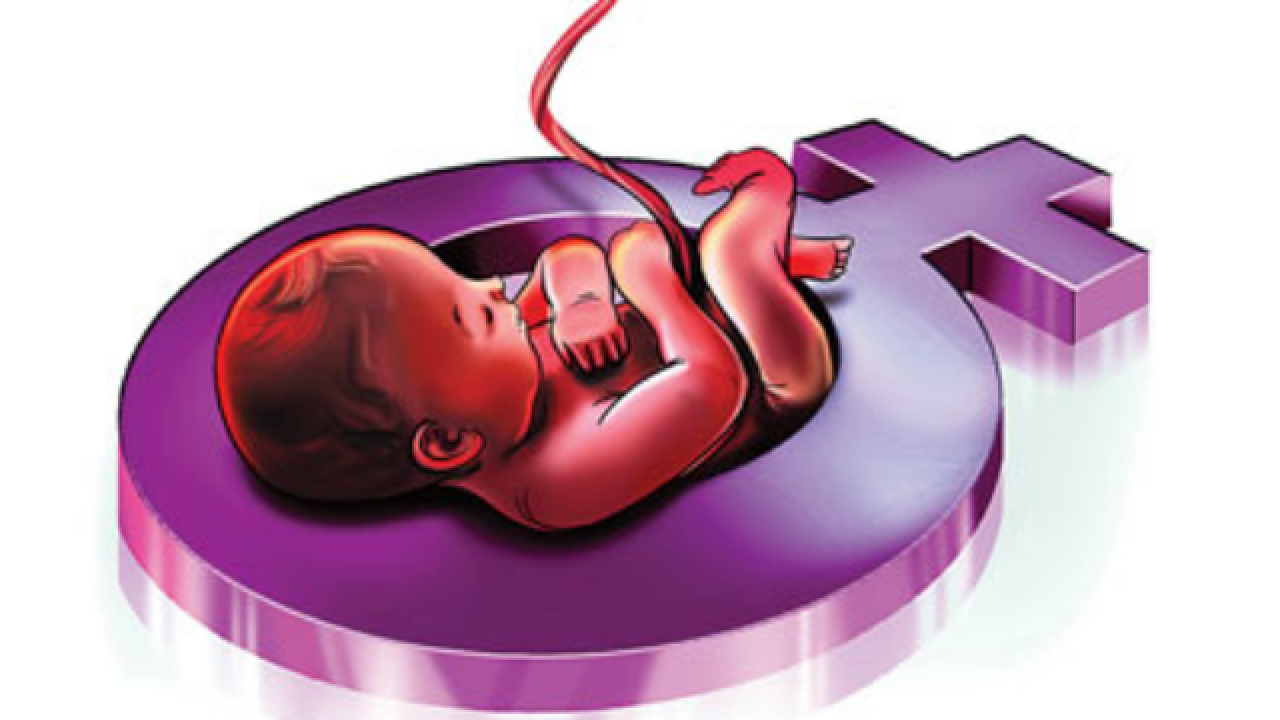
Women are murdered all over the world. But in India a most brutal of killing female takes place regularly, even before they have the opportunity to be born. Female foeticide , the selective abortion of female fetuses is killing upwards of one million females in India annually with far ranging and tragic consequences. In some areas, the sex ratio of females to males has dropped to less than 8000:1000. Females not only face inequality in this culture, they are even denied the right to be born. Why do so many families selectively abort baby daughters? In a word: economics. Aborting female fetuses is both practical and socially acceptable in India. Female foeticide is driven by many factors, but primarily by the prospect of having to pay a dowry to the feature bridegroom of a daughter. While sons offer security to their families in old age and can perform the rites for the souls of deceased parents and ancestors, daughters are perceived as a social and economic burden. Prenatal sex detection technologies have been misused, allowing the selective abortions of female offspring to proliferate. Legally, however, female foeticide is a penal offence. Although. Female infanticide has long been committed in India , foeticide is a relatively new practice, emerging concurrently with the advent of technological advancements in prenatal sex determination on a large scale in the 1990s. While abortion is legal in India, it is a crime to abort a pregnancy solely because the fetus is female. Strict laws and penalties are in place for violators. These laws, however, have not stemmed tide of this abhorrent practice.

See the source image

 CAUSES OF FEMALE FOETICIDE

Female feticide has been practice foe periods especially for the families who have a preference only male child. Several religious, social, financial and emotional are the reason for female foeticide. Therefore the time has been changed how much However, many reasons and beliefs are ongoing in some families. Some main reason for female foeticide are:

Generally, parents don’t want a girl baby because they have to give a big amount as a dowry at daughters marriage.

There is a faith that girls are always consumer and boys are the only producers. This parents understand that son will earn money for the whole life and care their parents however girls will get married a day and will have a separate family.

There is a belief that the son will carry the name of the family in future however the girl has to Carry the husband’s family.

This is a prestige issue in society for parent and grandparent to have a boy baby in the family besides having a daughter.

There is a stress on the new bride of the family to give birth to male child so she is enforced to go for sex recognition and abort if girl baby.

Illiteracy, insecurity and poverty of people in society are also major reasons for girl baby burden.

JUDICIAL RESPONSES

Centre for Enquiry into Health and Allied Themed v Union Of India –

The petition was filed by an NGO and Social activist Centre for Enquiry into Health and Allied Themes (CEHAT) a research centre of Anusandhan Trust based in Pune and Mumbai and others filed this writ petition against a social evil-female feticide very much prevailing in our society.

DECISION : in a response to the petition, the court issued in notice to the central and state governments to file replies to central government. The central sepervisory board, state Governments under the administration. And to appoint appropriate authorities at district and sub district level. Directions stated that the list of the members appointed should be published in the print and electronic media. Appropriate authorities were further directed to send a quarterly report to the central supervisory board. Public awareness against the practice of prenatal sex determination.

Supreme court directed state governments to take further steps to enforce the law and the secretary. Department of family welfare was directed to file an affidavit indicating the status of actions taken. Supreme court directed 9 companies to supply the information of the machines sold to various clinics in the last 5 years. Details of about 11,200 machines from all these companies and fed into commion data base. Addresses received from the manufacturers were also sent to concerned states and to launch prosecution against those bodies using ultrasound machines that had filed yo get themselves registered under the act. The court directed that the ultrasound machine/scanners be sealed and seized if they were being used without registration. Three associations viz., The Indian Medical Association [IMA], Indian Radiologist Association [IRA], and the Federation of Obstetricians and Gynecologists Societies of India [FOGS] were asked to furnish details of the members using these machines. Since the supreme court directive 99 cases were registered and in 232 cases ultrasound machines, other equipment and records were seized. Today there is an estimated 2509 ultrasound machines in the country, of these 15000 have been registered. State governments havve communicated to the central government in writing the according to official reports received, they are satisfied that sex determination services are no longer being provided in their respective states.

However, it is widely believed thaat while these services are no longer openly available their clandestine availability and utilization continues all over the country. The observation of the National inspection and Monitoring Commission confirm this situation and endorse the need for stricter enforcement of laws.

Impact of female foeticide on the sex ratio

 ratio denotes the ratio of females to male in a specific region. Many practices like female foeticide and female infanticide ( killing a baby girl after her birth) have been had a contrary influence on the sex ratio. Thus it rises and promotes many social evils.

As per the decennial Indian census, Sex ratio of India is 107.48. It means 197.48 males per 100 females in 2019. Therefore India has 930 females per 1000 males. So, India has 48.20%female population compare to 51.80% male population

EFFECTIVE MEASURES TO CONTROL

Some measures are:

1. There should be registration of all the nursing homes and rigorous action should be taken against the defaulters.

2. Government must deploy national wide campaign to spread cognizance among the people. They should aware the people about the importance of girls and should not consider them as stigma to their families.

3. More reservation should be given to the girls in education. Government should provide financial support to those families who are not able to educate their children. Proper measures should be taken to implement anti dowry law and culprits should be punished. Government should provide financial support for the marriage of girls belonging to poor families.

4. Emphasis should be given to women empowerment. Women education will help in eradicating this problem. As the women will become independent, they can take decision according to their volition.

5. There is a need of remove the myth of sin preference from our society only then this problem can be tackled.

LAWS

1. The constitution of India, 1950

Section 312 of the Indian Penal Code 1860 read wIth the Medical termination of pregnancy Act, 1971 where all the restrictions imposed therein, including the time limit of 20 weeks, other than the ones to ensure good medical conditions, infringe the right to abortion and the right to health, which emanate from right to life as guaranteed under Article 21 of the Constitution. Right to abortion is a species of right to privacy, which is again proclaimed a continuance of the right to life under Article 21 of the Constitution.

2. The Indian Penal Code, 1860

Sections 312-316 of the Indian Penal Code deak with the miscarriage and death of an unborn child aand depending on the severity and intention with which the crime is committed , the penalties range from seven years of imprisonment and fine to life imprisonment

3. The medical termination of pregnancy Act, 1971

The Medical Termination of Pregnancy Act, 1971 was conceived as a tool to let the pregnant women decide on the number and frequency of children. It further gave them the right to decide on having or not having the child. However, this good intentioned steo was being misused to force women to abort the female child. In order to do away with the lacunE inherent in previous legislation, the Pre- natal Diagnostic Techniques ( regulations and prevention of Misuse) Act was passed in sex of the foetus and stipulated punishment for the violation of provisions thereof. It also provided for mandatory registration of genetic counseling centers, clinics, hospitals, nursing homes, etc

POINT OF VIEW

These unscrupulous murders of female or girls is justified on two grounds. First, it reduces the population and second is that ghe loor parents will be saved from the expamses which thay would have to incur in the marriage of their daughter if she had born. So the murder of a female foetus is considered to be a solution to two major problems i.e. population problem and dowry. But how far are thse grounds justified . India was the first country to adopt family planning as an official programme to reduce the birthrate. But population of the country is still growing. One of the reasons for the growth of population in India is the desure for a son

Today the sex determination tests have provided an easy way out to know whether or not a woman will get a son

None of the arguments given in favour of the continuance of sex determination tests holds good. It is true that people should have every right to plan their families. If a man has a daughter and he wants son let have it. But difficulty lies if he wants son only. How far is correct to permit him to do do. The sex determination test is used to destroy the female foetus than to control the number of children or to have a child of the sex of one’s choice. In India the choice is always male child and it is the female only that is unwanted child.

CONCLUSION

“Yatra Naranthya Pujyathe Raman The Tatra Devatha” has been our culture. In our country a girl is worshiped as a Devi on one hand and denied ger existence on the other as if she has no right to live. Time has perhaps come for us to get rid of male chauvinism and treat children as gifts of nature regardless of their gender. We cannot imagine a society in the future where there will be only males and no females. The society will be full of crimes and evils. Only if legislations enacted in this behalf are not sufficient. Orthodox views regarding women need to be changed. The PNDT Act should penalize and punish the violators of this crime strictly. The pernicious acts of females foeticide and coercive abortions have to end before women becomes endangered species.

REFERENCES

1. Manjeet Rathe, Eradicate scourge of female Foeticide, people’s Democracy, vol xxv, no. 39

2. Manmeet kaur, female foeticide: A Sociological Perspective, the journal of Family Welfare, vol39(1), March 1993

3. Pre-natal Diagnostics Techniques ( Regulations and Prevention of Misuse) Act 1994

4. Supreme Court On Women Justice by Prof. Satish C. Shastri

5. Indiankanoon.org

Analyzing the constituents of Happiness in Chhichhore Movie

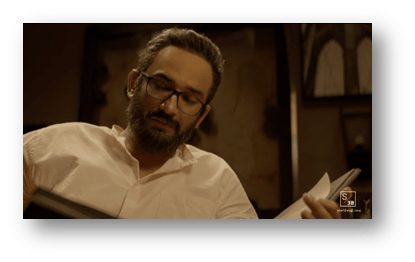
Chhichore was directed by Nitesh Tiwari and the characters were played by Sushant Singh Rajput, Shraddha Kapoor, Varun Sharma, Tahir Raj Bhasin, Prateik Babbar, Naveen Polishetty and Tushar Pandey beautifully. The genre of the movie is comic with a strong message to the audience. It is a ride of emotions which makes you nostalgic and happy. The movie gives us humour with a great meaning of life. It is a relatable and relevant must watch movie with your friends.

The story is takes us in the past showcasing six friends and their journey from losers to choosers. Anni (Annirudh) and Maya are divorced parents who inspire and teach their kid in different ways to ace his exam. While Anni pleases his son (Raghav) with guidance and things he would do if he passes the exam, Maya guides him and tells him to be relaxed about it. Raghav who was very stressed about not being able to pass the exam decides to rather take his life than to be a ‘loser’. Anni and Maya rushed to the hospital and are broken by the fact that their son is in I.C.U., Maya blames Anni for his high expectations and behavior towards his son that made him take his life. Raghav’s friend tells Anni how he was scared that people would call him loser and what a big disappointment he is as a person whose parents were college toppers. Anni on hearing the word loser suddenly remembers his hostel and college life which gives him a brilliant idea. Anni goes back home and returns the very next day with his college album.              

Anni narrates his college memories, the incidents and their journey from losers to choosers. When he was a fresher in the college he was sent to the wing which belonged to the losers where he learnt the meaning of friendship. Together with Varun Sharma (Sexa), Tahir Raj Bhasin (Derek), Naveen Polishetty (ACID), Tushar Pandey (Mummy) and Saharsh Shukla (Bevda) he makes his way out of the title losers. Not only they get rid of the term losers but also got a great lesson of life how we chose to be a loser and how it depends on us if we want to be the choosers. Raghav, one day gets out of the coma and asks who was Sexa and slowly the bad incident turns into a college reunion as all the friends joins Anni where they altogether teach Raghav more about life than any subject. With the climax of the movie we are left with very precious life lessons. One is that no one is a loser and we are losers if we don’t try and one that any examination is not bigger than one’s life.

Meaning of Life

The movie Chhichhore teaches us that life just doesn’t ends on failing an exam. In today’s society as the population increased so the competition for jobs has increased. To ensure a job everyone wants to complete their studies with good marks and that too from an esteemed institution. Now these circumstances have made students very pressurized about studies and a person who is not very capable of the same is considered a loser. The movie teaches us that our life is not only about passing exams but about living life and failing once does not mean that our life ends.

 Anni’s son felt so pressurized due to the pressure of society, parents, and about his future that he starts to over think about his exam results. According to him, if he failed in the exam, his entire life would be a failure. He was scared to face his parents but forgot the love and attachment with people; he completely forgot what he will do to the person he is leaving behind. One thing we should all remember is that we only fail in exams not in real life. Every examination leaves a person either with success or with a great life lesson. Life is not only about a single examination. By the time we have came to know that the person who failed once, twice or many times became the most successful and respectful people. Bill Gates, Thomas Edison and more have failed many times but at the end became someone who everyone looks up to. Life is not about achieving but living the achievement. The road is more important than the destination because we learn the most there.

The movie gives us a very important lesson that is to make a plan not only after success but also after failures. The society has given us the tag of a loser, no one is born with it and no one needs to carry it forever. It is our choice to get rid of the tag of ‘loser’ just as Anni and his gang did. A loser is not the one who fails but a loser is the one who doesn’t tries. Life is more than just winning and losing, it’s about living it to the fullest. Every person has come with some motive and every person is important for this world. No one is useless and cannot do anything so, suicide is never an option to escape the world’s misery. Results doesn’t matter but the journey does so, enjoy the journey not the results.

How Raghav finds happiness in the movie?

Raghav who is Anni’s son was disappointed that he could not pass the entrance exam for the college. His disappointment was so deep that he couldn’t even believe the fact he has failed. He thought everyone will call him a loser especially when both his parents were college toppers and decided to get rid of this tag by trying to take his life. This is because he had planned what to do after passing the exam but didn’t even consider the fact that he could fail. Anni took great use of this opportunity by telling his son how he got rid of the tag of loser and that he was once himself a loser.

Anni starts to narrate that he was the part of a hostel wing that was declared losers by the whole college. They were losers because they continued to live by the tag instead of getting rid of it. They believed that they were infact losers but once they started struggling and trying. They were no more the losers but the choosers. Even if they could not win the championship over the other wings but still they weren’t called the losers. Because they were no more the same people who didn’t want to try. Anni told Raghav that they stopped being the loser the moment they started working. Raghav while listening to all this realized where he was wrong. He realized that failing didn’t mean he became the loser but when he decided to jump off the balcony, it was then he decided to remain the loser and live with failure.

Towards the end of the movie Raghav finally realized what he did wrong. He realized that failing the exam didn’t make him a loser but accepting it and not trying further made him one. Also he learned that there were people who would stay by his side and help him to overcome every difficulty in his life as he will climb the ladder of success.

A LOSER IS NOT THE ONE WHO FAILS BUT THE ONE WHO DOESN’T TRY.

5 Point Something on Judicial Review and Judicial Activism

  • INRODUCTION

In the enforcement of law, the Judiciary is in charge of three roles, firstly, as an interpreter of the constitution to eliminate any ambiguity in the language of the provisions given in the constitution; secondly, as the protector of fundamental rights which are guaranteed by the constitution to its people; and thirdly, to resolve the disputes which have been appealed after being heard in the lower judiciary.

In India the judiciary is the only authority that interprets the Constitution. By this it is meant that the Judiciary acts like the protector of the Constitution. It prevents the harm done by the executive and legislative. It provides the general public their rights that have been prescribed in the Constitution under the Directive Principles of State Policy. Judicial Review is the power of judiciary to review the laws and determine their validity. Judicial Review has not been defined in the Indian Constitution. It does not direct judicial system to practice the judicial review but it is deep rooted in the constitution itself. For instance, Article 13 states that ‘all laws in force in the territory of India before the commencement of this Constitution, in so far as they are inconsistent with the provisions of Part III shall, to the extent of such inconsistency, be void.’

In this sense ‘judicial activism’ is treated as a necessary consequence of judicial review. Assertion of judiciary and its powers is judicial activism. The Indian courts have achieved readiness in exercising their power to cherish the values of constitution to an extent that Judicial Review has taken form of Judicial Activism. In other words, Judicial Activism is bringing justice to the doorstep of people, especially who are vulnerable. It is not something that has been invented by the courts but the lawyers, i.e. the activists themselves. It has its roots in the Article 21, ‘Right to life and liberty of a citizen’. Precisely, it is a philosophy which involves the personal views and understandings of a judge with regard to a statute. It is activism regarding a public policy and its benefits instead of constitutionalism.

  • PROS AND CONS

JUDICIAL REVEIW

PROS

  • It offers a route to justice for those adversely affected by public body decision making
  • It performs an essential tasks in that it allows the courts and judiciary oversight of government decision making, be that central or local government, or parts of the state that implement government policy.
  • Judicial review allows the Supreme Court to take an active role in ensuring that the other branches of government abide by the constitution. If two laws conflict with each other, the Court must decide on the operation of each.

CONS

The concept of Judicial Review does not consist of negative aspects but here are some limitations of the Judicial review.

  • Only the procedure followed by the authority in reaching the decision can be checked not the decision. The court is only allowed to check and limit the procedure not the decision.
  • The power is delegated to superior courts only, i.e. Supreme Court and High Courts.
  • The court cannot be involved in policy matters and political doubts unless absolutely necessary.
  • It is temporary in nature. Law once passed may become unconstitutional with changed situation; this may create vacuum in legal system. Hence, it can be said that directions given by court would be binding only till legislation is enacted.
  • The court can interpret and invalidate a law but it cannot itself make laws.

JUDICIAL ACTIVISM

PROS

  • It provides a system of checks and balances to the other government branches. Judicial Activism is a delicate exercise involving creativity. It brings out required innovation in the form of a solution.
  • Judicial Activism provides judges to use their personal wisdom in cases where the law failed to provide a balance.
  • Judicial Activism also provides insights into the issues. The reason why this is a good thing is that it shows the instilled trust placed in the justice system and its judgments.
  • Many a time public power harms the people, so it becomes necessary for the judiciary to check misuse of public power.
  • It provides speedy solutions where the legislature gets stuck in the issue of majority.

CONS

  • Judges can override any existing law. Hence, it clearly violates the line drawn by the constitution.
  • The judicial opinions of the judges become standards for ruling other cases.
  • Judgment may be influenced by personal or selfish motives. It can further harm the public at large.
  • Repeated interference of courts can erode the faith of the people in the quality, integrity and efficiency of governmental institutions.
  • Courts limit the functioning of government, when it exceeds its power and to stop any abuse or misuse of power by government agencies.
  • PRECEDENT CASES

JUDICIAL REVIEW

  • Indira Gandhi vs. Raj Naraian
  • Marbury vs. Madison
  • Chandra Kumar vs. Union of India and others

JUDICIAL ACTIVISM

  • Keshvanand Bharati vs. State of Kerala
  • Minerva Mills vs. Union of India
  • SP vs. Union of India
  • DIFFERENCE BETWEEN JUDICIAL REVIEW AND JUDICIAL ACTIVISM
Judicial review is a through which a court can review an administrative action by a public body and safeguard declarations or orders. Judicial activism means judicial rulings based on personal or political considerations rather than on existing law. 
The power of Judicial Review comes from the Constitution of India itself (Article 13). The authority of judicial review is suggested to protect and implement the fundamental rights defined in Part III of the Constitution. Judicial Activism also has its roots in the Constitution of India. It has its roots in the Article 21, ‘Right to life and liberty of a citizen’.
Judicial review is concerned with the power of the Court.Judicial activism is concerned with the manner in which the power is being exercised.
Power of judicial review follows from various provisions of the Constitution of India itself like Articles 13(2), 32, 226, 227,136,141 etc.Judicial activism on the other hand is more to do with the attitude of a judge handling the case and is thus an attribute of the personality of the judge other than any provisions in the legal system.
   
  • SUMMARY

It can be said that judicial review and judicial activism is a highly developing and complex concepts. Judicial review has its root long back and its scope and extent varies from case to case. The growth of judicial review is the inevitable response of the judiciary to ensure proper check on the exercise of public power. Growing awareness of the rights in the people; the trend of judicial scrutiny of every significant governmental action and the readiness even of the executive to seek judicial determination of debatable or controversial issues, at times, may be, to avoid its accountability for the decision, have all resulted in the increasing significance of the role of the judiciary. There is a general perception that the judiciary in this country has been active in expansion of the field of judicial review into non-traditional areas, which earlier were considered beyond judicial purview. The judges have a duty to perform, which is even more onerous to keep the judicial ship afloat on even keel. It must avoid making any ad hoc decision without the foundation of a juristic principle, particularly, when the decision appears to break new grounds.

Judicial Activism is an obligation to be shouldered and not to be shirked by the judiciary when occasion and opportunity arise and demand the same. Otherwise, the judiciary will be failing to redeem the obligations to the people in accordance with the letter and spirit of the Constitution.

Judicial review has sound justification in the function of upholding constitutional supremacy. The supremacy of Constitution itself is embedded in convincing facts of public confidence. The role of judiciary is that of sentinel qui vive (on guard). The role of judiciary in the domain of review of legislation and administrative action has reinforced faith of people in good law and good governance. Judicial review and judicial activism has been treated as the most essential function of the judiciary to set right the lapses in all the administrative actions in the interest of justice.

Black Fungus: A Threat to Eyes

200,000 Amphotericin B doses used in black fungus treatment reaches India |  Latest News India - Hindustan Times

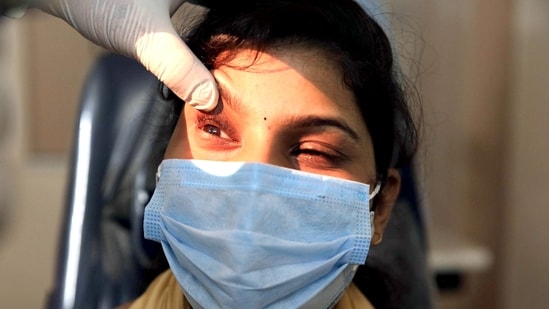
Mucormycosis, also known as black fungus, is a rare but dangerous Infection. Its caused by a group of molds called mucormycetes and often affects the sinuses, lungs, skin and brain. You can inhale the mold spores or come into contact with them in Things like soil, rotting produce or bread, or compost piles.

Symptoms of Mucormycosis

The symptoms of mucormycosis will depend on where in your body the fungus is growing.

 They may include:

  • Fever
  • Cough
  • Chest pain
  • Shortness of breath
  • Swelling on one side of your face
  • Headache
  • Sinus congestion
  • Black lesions on the bridge of your nose or the inside of your mouth
  • Belly pain
  • Nausea and vomiting
  • Gastrointestinal bleeding
  • Diarrhea

If your skin is infected, the area can look blistered, red, or swollen. It might turn black or feel warm or painful. The infection can also spread to other parts of your body through your blood. This is called disseminated mucormycosis. When this happens, the fungus can affect organs like your spleen and heart. In severe cases, you may have changes to your mental state or go into a coma. It can even be deadly.

Diagnosis and Treatment of Mucormycosis-

If you suspect mucormycosis, your doctor will give you a physical exam and ask about your medical history. Let them know if you’ve been around spoiled foods or other places in which fungal spores are often found. If it looks like you have a lung or sinus infection, your doctor may take a sample of the fluid from your nose or throat and send it to be tested in a lab. They might also do a tissue biopsy, taking out a small piece of infected tissue for testing. Your doctor may do imaging tests like CT or MRI scans to find out whether the infection has spread to your brain or other organs. If you’re diagnosed with mucormycosis, you should start treatment as soon as possible with prescription antifungal medications. These medicines stop the growth of the fungus, destroy it, and bring the infection under control.

You might take:

  • Amphotericin B
  • Isavuconazole
  • Posaconazole

You get these medications through a vein (intravenous or IV) or as pills that you swallow. Your doctor may start with high doses through an IV until the infection is under control, which can take several weeks. Then, you’ll switch to pills. Let your doctor know if a medication has troublesome side effects like stomach pain, heartburn, or trouble breathing. They may be able to change your treatment plan. In severe cases, your doctor may recommend surgery to remove infected or dead tissue to keep the fungus from spreading. This might include removing parts of your nose or eyes. It can be disfiguring. But it’s crucial to treat this life-threatening infection.

  • Blindness
  • Blood clots or blocked vessels
  • Nerve damage

Mucormycosis can be deadly without treatment. Because the infection is so rare, the exact mortality rate isn’t clear. But researchers estimate that overall, 54% of people with mucormycosis die. The likelihood of death depends on which part of the body is affected. The outlook is better for people who have sinus infections than it is for lung or brain infections.

Mucormycosis Prevention-

There is no way to avoid breathing in spores. But you can do a few Things to lower your chances of mucormycosis. It’s especially important if you have a health condition that raises your risk.

  1. Stay away from areas with a lot of dust or soil, like construction or excavation sites. If you have to be in these areas, wear a face mask like an N95.
  2. Avoid infected water. This can include floodwater or water-damaged buildings, especially after natural disasters like hurricanes or floods
  3. If you have a weakened immune system, avoid activities that involve dust and soil, like gardening or yard work.
  4. If you can’t, protect your skin with shoes, gloves, long pants, and long sleeves. Wash cuts or scrapes with soap and water as soon as you can.
  5. If you get mucormycosis, be sure to take your medications as directed. If side effects cause problems or the infection doesn’t get better, let your doctor know right away.

STAY HOME, STAY SAFE

MEDICAL NEGLIGENCE

Medical Negligence And Law In India - An Analysis - iPleaders

ABSRACT

With the advancement of technology, many incurable diseases are now curable. Not only this but now people live longer than the earlier times as there are several developments in the field of medicine. With the time medicines and technology has changed but one thing that hasn’t changed is Medical Negligence. Even now, when we promise best medications and facility to patients, there are a number of evident cases which bring to our notice the medical malpractice that prevails in the recent times. Every practitioner possessing some skill owes a duty to the one he provides service to. Often, due to the carelessness of the practitioner this duty is breached on his part and as a consequence thereof the consumer suffers an injury/damage/loss.

A shocking fact is that even with advance technologies, cases of negligence haven’t decreased to a noticeable extent. The most vulnerable person in the relation is the patient who expects to get treated but instead suffers a greater loss. In the crucial time of covid-19 pandemic, it is essential to note that the practice can be proved harmful o he citizens of our country. The virus is contagious and can spread from one to another quickly if not brought under control. But the number of increasing cases tells us a different story; it gives us the evidence of poor management and medical facilities. This research paper aims to focus on the concept and cases of medical negligence in light of current scenario of pandemic.

Keywords: Negligence, Medical Negligence, Duty, Liability, Covid-19, Compensation, Injury.

INTRODUCTION

When one person owes duty to the other and commits a breach of the same which results damage to the other, the person is said to commit negligence. Medical Negligence refers to negligence committed by a professional in the field of medicine. A Medical Practitioner at general needs to maintain a standard of care and in case they fail to do the same, they are liable for the damage made. The concept of medical negligence has developed to punish the wrongdoer and bring justice to the person who has suffered loss due to negligent behavior  of the latter. Negligence is punishable under many laws including Tort, Contract Act, Consumer protection Act and the IPC.

By the years, numerous patients have died, had permanent injuries, miscarriage, disablement and more due to the medical negligence of a professional. A patient is a consumer and expects necessary care to be practiced by the professional. However not every harm caused to patient during treatment is punishable or result of a negligent behavior. A professional is liable only to the extent to which the skills of a person in that field are considered reasonable. A doctor is expected to provide services which heal the patient and makes him/her physically fit. He is required to have the necessary skills and knowledge for the purpose and exercise reasonable degree of care. The standard of skills and care depends upon the qualification of the person. A doctor is expected to have more skills than an average nurse may have. Medical practice falls under the ambit of services, the Supreme Court in the case Indian Medical Association v. V.P. Santha explained[1]:

“Services rendered to a patient by a medical practitioner (except where the doctor renders services free of charge to every patient or under a contract of personal service), by way of consultation, diagnosis and treatment, both medicinal and surgical, would fall within ambit of service as defined in Section 2(1)(o) of the Act”.

Medical Negligence is a serious issue and has been prevalent irrespective of the time. A person with no knowledge and skills that are required to treat a particular injury or disease is expected to commit negligence. The harm caused can vary from a temporary disability to death of the person. Generally, doctors indulge in activities like wrong treatment, overdose of medicines, carelessness about the health and capacity. If a patient suffering from Hepatitis and Jaundice gets a surgery without getting initial checkup for diseases and gets into even more serious condition that could even result into death if gets more serious, the doctor is liable for the negligence.[2] In such cases the doctors are liable for medical negligence in the treatment of patients and shall compensate or even be punished for the same.

HISTORY

The idea of medical negligence is around many years old. The Babylonian lords Hammurabi present a law against the doctors whose patient loses an eye. The discipline for such acts of neglect was to cut the hand of the doctor or specialist. Indeed, even the Egyptian and Roman law had such comparable arrangements for clinical acts of neglect causing demise or genuine wounds to the patient.[3] During British rule, English custom-based law was presented in the organization of equity in India. Mr. Wheeler, 555 individual from committee, Sea client and boss Justice of choultry in Chennai kicked the bucket because of utilization of wrong prescriptions. Dr. Samuels were attempted and absolved by the fantastic Jury when the Bill of Ignoramus[4] was acquired. Before the presentation of the Constitution of India 1950, countless English standards of law of misdeeds were followed and applied by the Indian courts.

The very first case at any point recorded under English law was in year 1374 against a specialist J. Mert; the opposite party had a physical issue in his hand because of wrong treatment. In USA, the primary case was recorded was in the year 1794, the case is known as Dr. Cross v. Guthrie[5]. For this situation patient’s significant other sued Dr. Cross, a doctor after the patient passed on because of postoperative mastectomy (bosom expulsion medical procedure) inconveniences three hours after activity. The remuneration of 40 pound was granted to defendant party.

In Kautilya’s Arthashastra, the laws relating to weight and measures at that time are depicted. Similarly, Yajnavalkya has given his views on weights and measures and adulteration of food, punishments with regard to it in Yajnavalkya samhita. Main provisions of Yajnavalkya samhita cover transactions related to sale and purchase. It also has regulations related to the sale of sample. He took into account the hard conditions faced by the purchaser and framed rules for their protection by giving them time to judge the utility of goods purchased and giving them the right to return goods. One fine elaborative mechanism of pricing policy and profit ratio charged by traders on the sold goods has been prescribed in the samhita. He also developed a concept of constructive theft. It includes the widespread deceitful practice of goldsmiths. The malicious practices ornament makers were prevalent in the ancient times as well and in order to protect the consumers from the same he (Yajnavalkya) prescribed certain standard norms. These norms included rules regarding ornaments so that the goldsmith cannot claim on great wastage and in case they do, they will be punished for the same.

The Indian common law on negligence basically is the appointed authority made custom-based law followed in England for quite a long time. In the lead of hearings, the law considers an assortment of levels of capability, and in this manner an assortment of guidelines, as long as the level of skill which can be normal from any given proficient is promptly obvious from his specific capability for example that he is an overall specialist as opposed to a pro. Be that as it may, each expert must accomplish a satisfactory degree of basic competence. When assessing whether or not a professional has been negligent, the courts will normally use as their benchmark the common practice within the relevant profession. However, where they consider that a profession adopts an unjustifiably lax practice, they may condemn the common standard as negligent.[6]

MEDICAL NEGLIGENCE

Meaning of Negligence

Eminent jurists and judges have exclaimed that there are many meanings to negligence. The Apex Court in the case of Jacob Mathew v. State of Punjab[7] stated,

“Negligence is the breach of a duty caused by the omission to do something which a reasonable man, guided by those considerations which ordinarily regulate the conduct of human affairs would do, or doing something which a prudent and reasonable man would not do. Actionable negligence consists in the neglect of the use of ordinary care or skill towards a person to whom the defendant owes the duty of observing ordinary care and skill, by which neglect the plaintiff has suffered injury to his person or property.”

In usual meaning, negligence means carelessness towards something but in legal language it is the breach duty to exercise a certain standard of care that has resulted in some sort of injury. In the case of negligence the injury is generally foreseeable, hence a man, in order to prevent any harm or injury is expected to be preventive in his actions. There are cases when a man is careful but not accordingly to the situation which may also result in injury. If a person boards a train which has just started moving but forgets to close the door of the boogie, it creates danger for the people standing on the platform. And if a porter standing on the platform gets injured, the latter is liable for his carelessness as it is a duty of the boarding people to close the door as to prevent any injury to others.[8]

Medical Negligence

Professionals in the law of negligence are lawyers, doctors and architects. Professing a special skill requires adequate practice and knowledge of the task undertaken. This is the reason a medical practitioner is said to ‘practice medicine’, even if the field requires proficiency a lawyer or doctor doesn’t assure his clients of 100% success. The only assurance that can be given is that the person is proficient in the required skill and while undertaking the certain task will handle it with reasonable competence.[9]The Apex court held that a person can be held liable for negligence on two findings, ‘either he was not possessed with the requisite skill which he professed to have possessed, or, he did not exercise, with reasonable competence in the given case, the skill which he did possess’.

“In my opinion, our health care system has failed when a doctor fails to treat an illness that is treatable.”  – Kevin Alan Lee.

In the case Indian Medical Association v. V.P. Santha[10], the judges explained the difference between “occupational liability” and “professional liability”. They state that a profession consists of success and failures and those we cannot expect the doctor or medical practitioner to always have success in every case. The liability can only be decided on analyzing the case as the standard of care differs from case to case. A case of patient suffering from flu requires less care than a person suffering from cancer. Also the possibility of healing also depends on the case and its severity. In M/s Spring Meadows Hospital v. Harjot Ahluwalia[11], the Court observed, that the judgment depends on case to case. If the error made by the person in charge would not have been made by an ordinary person competent and skilled to the same extent as the defendant acting with reasonable care, he must be held negligent. While if the error made by him could have been made by an ordinary person in the same situation he must not be held negligent. A homeopathic doctor giving allopathic medicine which causes the patient’s death has been negligent and is liable to compensate as he was entitled to practice homeopathy only.[12]

Also, the term accident should not be confused with the consequence of negligence. Accident has a wider meaning. An accident means an unintended and unforeseen injurious occurrence; something that occurs in the usual course of events or that could not be reasonably anticipated.[13]

Res ipso loquitur[14] in Medical Negligence

The principle of res ipso loquitur is also applicable in the field of medical negligence. If the accident occurred would not have occurred if the management would have taken essential care and preventive measures, it proves to be an evidence for the liability. In such cases the management or the servants have been negligent towards their duties which resulted in the injury caused to the patient. In the case of Ashish Kumar Mazumdar v. Aishi Ram Batra Charitable Hospital Trust,[15] the patient has fallen out of the window of a hospital room, which clearly showed the negligence of the hospital staff. A three-judge bench of the Supreme Court applied the principle of res ipsa loquitur held the hospital liable for the absence of duty of care.

ESSENTIALS OF NEGLIGENCE

Negligence is the breach of a duty that a person owes to the other, caused by an omission which an ordinary man guided by the considerations of human conduct would not do; and the breach has resulted into an injury or damage to the person. Negligence has three essential components: ‘duty’, ‘breach’, ‘damage’.

The duty of care owed to the plaintiff;

The breach of duty on the part of defendant;

The damage caused to the plaintiff as a result of the breach.

Duty of the Doctor to attend a patient

If a doctor does not care to attend a patient in need to be admitted or attended the doctor will be held liable to compensate for any kind of loss that the patient suffers. There are many cases in which due to the non availability of the doctor at the time a patient has to suffer great injuries and even death. It was held inSishir Rajan Saha v. The state of Tripura[16]  that if a doctor is not available to attend a patient he will be liable for the damage caused. In the recent case, the petitioner’s son met an accident while coming to Udaipur from Agartala on scooter. He was admitted to the G.B. Hospital, Agartala in the emergency ward. The senior doctor, Dr. P. Roy who was a specialist in the field wasn’t available in the hospital at the time. He was continuously contacted and called to the hospital but chose to ignore as he was busy attending his patients in private. As a result the patient gave in to his injuries and died. The Court held the doctor liable to compensate Rs. 1, 25,000 to the father of the deceased. The Court also directed the Government hospitals to upgrade their services.

Duty of care

When a doctor attends his patient, he owes certain duties towards the patient:

  1. A duty in deciding whether to take the case,
  2. A duty in deciding the kind of treatment to give,
  3. A duty of care in the administration of the treatment.

In Dr. Lakshman Bal Krishna Joshi v. Trimbak Bapu Godbole[17], the respondent’s son who was 20 years old met an accident on a beach and as a result femur of his left leg was fractured. He was taken to the appellant’s hospital and during the treatment of reducing the fracture; the appellant gave him a single dose of morphia injection instead of giving an anesthetic. He used excessive force in handling the fracture and pulled the injured leg with three attendants. Then he put his leg into plaster of paris splints. The treatment gave a shock to the patient and as a consequence thereof he died. The doctor was held guilty of negligence by the Supreme Court.

In the recent case, the court held, “The petitioner must bring to his task a reasonable degree of skill and knowledge and must exercise a reasonable degree of care. Neither the very highest nor the very low degree of care and competence judged in the light of the particular circumstance of each case is what the law requires. The doctor, no doubt, has discretion in choosing treatment which he proposes to give to the patient and such discretion is relatively ampler in cases of emergency.”

In the case of Jagdish Ram v. State of H.P.[18], it was held that ‘ Before performing any surgery the chart revealing information about the amount of anesthesia ad allergies of the patient should be mentioned so that an anesthetist can provide ample amount of medicines to the patient’. The doctor in this case gave an overdose of anesthesia to the patient and as a result thereof the patient dies. The doctor was held liable for the negligence on his part.

Thus, a treatment found to be not in accordance with medical protocol would be a case of medical negligence.[19] The doctor cannot be made liable for negligence in case when things have gone wrong. But if a doctor fails to provide medication necessary to the treatment and health of the patient, no one but the doctor is to be held liable for the act.

NEGLIGENCE DURING THE COVID-19 PHASE

With the COVID 19 pandemic surrounding the globe and in excess of 2 million active instances of the same, the caring administrations by the medical experts is the main redeeming quality going with the careful steps that are the duty of the considerable number of citizens. Be that as it may, the security of the residents is being taken consideration by the clinical organization yet what it involves for the clinical clique who is over and over being blamed for negligence in discharge of average duty. On one hand the medical practitioners are being hailed as ‘Corona warriors’ but on the other hand, with the increase in cases wouldn’t there be a increase in negligence?

India had only 111 Covid-19 testing   centers to deal with a population of 1.35 billion people. This accounts to the medical negligence of the practitioners along with the hospital administrations especially at a time when every state is trying to reduce the number of cases. The number of beds available in the hospitals is comparatively less and as a result the citizens are dependent on understaffed and under-funded state run health facilities for COVID 19 diagnosis and treatment. This is a serious issue as people do not believe on the state authorities. A lady who was quarantined after her Spain visit states that there is a lack of basic amenities in the hospitals. People fear to come forward as they doubt the skills of the administration to treat their disease. Global health experts claimed that India does not have enough infrastructure and other facilities to face the pandemic. The claim nearly became evident with the increasing number of cases in India. Not only hospital authorities but the government has been lacking service, testing is another major concern. India has performed a little over 100,000 tests — a rate of nearly 47 tests per million people compared with 4,572 tests per million in the U.S., 2,753 tests per million in the U.K, and 8,800 per million in South Korea[20]. At present, India is not adequately testing to identify new cases, which might be hiding the true number of cases. An incident of severe medical negligence was noted when the Patna All India Institute of Medical Sciences (AIIMS-P) handed over the body of a COVID-19 positive patient to his family members.

In the midst of the vulnerability made by the COVID-19 pandemic, the judiciary remains the sole symbol of would like to review the worries of residents oppressed by the absence of satisfactory medical framework and the rising occasions of clinical negligence. There is trust that vital estimates will be taken by the Supreme Court, to safeguard the confidence and any expectation of the individuals.

CONCLUSION

Medical Negligence is, by and by, a hard issue to set up. On the off chance that negligence cases result from the current emergency, they will be tried comparable to target norms of care. The courts will think about the real factors and conditions of the case, including that the medicinal services staff were acting in an emergency. Considering past cases and the law’s methodology, the significance of clinical rules, conventions, staff preparing, ability appraisal, and enlistment expect a fundamental centrality, and all means should be completely reported. Documentation of steps taken in every one of these issues will demonstrate pivotal in safeguarding any cases brought. In any case, the COVID 19 is a phenomenal occasion and the relevance of the above laws in such conditions of most extreme criticality and affectability stays to be questionable. After the lockdown ends it would be unmistakable component of the lawful framework to observe such case emerging out of clinical carelessness in taking care of crown positive patients.

It isn’t expressed that specialists (doctors) are careless or reckless, however while carrying out a duty which requires a great deal of knowledge and care, regularly numerous experts fail to perform their duty towards the patient. Medication which is perhaps the noblest profession requires setting a domain which can profit the victims of different diseases. Numerous specialists even the expert in some cases dismisses little things to be dealt with while practicing which may bring about harms to the patients that could have been maintained with a permanent disability from that time or even the demise of the patients.

This type of negligence makes patients more prone to harm than to heal. And to avoid these sorts of accidents, prevention and careful behavior of doctors is important. The most prevalent way of doing this is relevant laws and statutes to ensure a patients well being. In a case where a US-based doctor who was Indian from origin lost his 29-year-old wife who was a child psychologist during their visit to India fifteen years ago. The Supreme Court asked the Kolkata-based hospital and three doctors to pay over Rs 11.41 crore[21]. “A bench of justices C K Prasad and V Gopala Gowda arrived at a figure of Rs 6.08 crore as compensation after considering aspects such as loss of consortium, pain and suffering and the cost of litigation.”

Another such case was noted where the Apex Court awarded a compensation of 1.8 crores to a women who had lost her eyes in 1996.[22] Cases like this are evidence of the medical malpractice in India. The government requires making strict rules to prevent the same, so that the justice prevails. People of India should be provided with adequate medical facilities, hygiene and sanitation. Laws should be strict for not only medicine but for all such professions to maintain a certain standard of care and prevent breach of duty.


[1] (1995) 6 SCC 651.

[2] AIR 2012 M.P. 21

[3] Tapas Kumar Koley, Medical Negligence and Law in India.

[4] “We are ignorant”. This was the word used by the grand Jury to discuss a bill of indictment and was used in the sense of not a true bill or not found. available at : https://www.etymonline.com/word/ignoramus( Last visited on March 12,2018)

[5] 2 Root 90 (Conn. 1794)

[6] Edward Wong Finance Co Ltd v. Johnson, Stokes, [1984] AC 296

[7] AIR 2005 S.C. 3180

[8] Booker v. Wenborn (1962) 1 W.L.R. 162.

[9] Jacob Mathew v. State of Punjab

[10] (1995) 6 SCC 651.

[11] (1988) 4 S.C.C. 39.

[12] Poonam Verma v. Ashwin Patel and Ors. (1996) 4 S.C.C. 332

[13] Black’s Law Dictionary, 7th edition

[14] The principle that the mere occurrence of some types of accident is sufficient to imply negligence.

[15] AIR 2014 S.C. 2061.

[16] AIR 2002 Gauhati 102.

[17] AIR 1989 185

[18] A.I.R. 2007 (NOC) 2498 (H.P.)

[19] Malay Kumar Ganguly v. Sukumar Mukherjee AIR 2010 S.C. 1162.

[20] https://www.bbc.com/news/world-asia-india-51922204

[21] THE OUTLOOK

[22] Krishna Iyer v. State of Tamilnadu and Others, 2015 STPL(Web) 1239 SC

LABOUR LAW RELAXATION: CHANGES AND IMPACTS

INTRODUCTION

Covid-19 pandemic has undoubtedly shaken up the condition in India. The widespread virus has resulted in nationwide lockdown and, it has not only affected the public but also worsened the economy. The Government of India has since taken all necessary steps to ensure that we are well prepared to face the challenge and threat posed by the growing COVID-19 Corona Virus pandemic. But the economy is struggling with the lockdown and a lot of firms and representatives suspect a doubtful future, a part of the state governments chose to roll out huge improvements in the labour laws. These alterations were made considering it a good measure to boost monetary movement in a few states. But on the other hand, this move may undermine the enthusiasm of workers, who are one of the most defenseless slabs that have been affected by the pandemic. Our Indian labour laws are regularly portrayed as “firm1 “. At the end of the day, it has been contended that gratitude to the difficult lawful prerequisites, firms vacillate from recruiting new labourers since terminating them requires government endorsements. Indian labour laws are made to defend the interests of the labourers. In the outbreak of the COVID-19, numerous states have loosened up the labour laws in the favour of the businesses/employers so outside ventures can be attracted in their states. But this exemption may cause infringement of labour laws in India. It is appropriate to say that the pandemic is a once in a blue moon chance to push through labour reforms. All these things accounted, it is muddled that the whole scale revocation of the labour law framework benefits either work or industry. On the off chance that anything, this is a well-suited second for the administrations, at both the Centre and in the states, to re-establish their responsibility to the DPSP.

Amidst the lockdown due to the fatal covid-19 pandemic, the states were quick to take an important step to relax the labour laws. While at one hand the exemption was to encourage industrial setup and to pump up investments, on the other hand it might increase the difficulties of the workers. The Indian economy has had a major letdown due to the lockdown extended to almost 60 days. In order to revive the economy it is equally important to make a balance between both the employees and the employers. And a sudden exemption of 1000 days in major labour laws has created a disarray of opinion among the decision makers and labour law experts including organizations such as ILO.

But a question arises. From loosing employment, to walking miles to reach home, from starving to death, to getting run over by train while sleeping on tracks, did exemption in labour laws add to the plight of labourers?

RELAXATION IN LABOUR LAWS

In a recent survey by Azim Premji University, 67% of workers have lost their jobs during the lockdown. In addition, the officials have failed to fulfill the needs of the agonizing workers, the migrant labourers who then decided to walk their ways out to their home. The plight just doesn’t end as humanity was shocked when 16 migrant labourers were run over by a goods train while resting.

Now, in the middle of the fatal covid-19 lockdown, many states have urged to bring changes in the labour law by the way of amendments. The sole reason of the urge seems to immune the employers from the labour laws for a while. Most of them have provided an exemption of about 1000 days which is approximately 3 years to the businesses and the employers. However, the laws for deployment of women and children, timely payment of wages will not be relaxed. 

In India, there are around 200 state laws and close to 50 central laws for labour. There are many central laws that are not supposed to brush aside by the state alone without considering and consulting the centre. The ones in favour of the move feel that this will give flexibility to the industry, while the others including labour law experts call it ‘atrocious’.

 “Relaxation in labour laws” for three years could result in “exploitation of workers”, and workers needed “some guard rails” in times like this,” said Ravi Vishwanath, Finance executive at TeamLease. Even if there are a bunch of pros, the fear of exploitation still haunts the workers.

What were the changes?

There are various amendments introduced by the state governments which took place due to Covid-19 outbreak. Those amendments are:

  • Working hours in factories can be extended from eight to twelve hours. Employers are also allowed to extend working hours up to seventy two hours per week in overtime, after consultation with the employees.
  • Now the factory registration can be performed in only one day instead of 30. And the license renewal can be done after 10 years, rather than in a year. The officers not complying with the deadline can be penalized for non compliance.  
  • Industrial Units will be exempted from majority of the provisions of the Industrial Disputes Act, 1947. Organizations will be in a position to keep employees in service at their convenience. The Labour Department or the labour court will now not interfere in the action taken by the industries.
  • Contractors who will employ less than 50 employees/workers will be in a position to work without registration under the Contract Labour (Regulation and Abolition) Act, 1970.

Several industries faced tremendous stress due to nationwide lockdown and slump in aggregate demand tweaked labour laws of their respective states. Several state governments in order to boost economic growth and revive these industries have initiated changes in labour laws. These changes were meant to protect their interests and provide them options against the pitfall they faced.

Uttar Pradesh

 Uttar Pradesh government through a very large and ambiguously worded ordinance, exempted all factories and establishments engaged in manufacturing process from the operation of all Labour Laws for a period of three years; (with some exceptions). The state has exempted 10 Minimum Wages Act 1948, Maternity Benefit Act 1961, Industrial Dispute Act 1947 and Trades Union Act 1926 to name a few. The laws exempted from this ordinance are Payment of Wages Act 1936 and The Bonded Labour System (Abolition) Act 1976. Some provisions of Building and Other Construction Workers Act, 1996 and Factories Act, 1948 will continue to apply that are related to ex gratia payments in case of work-related diseases and disabilities. The ordinance is yet to be approved by the President as it seeks to amend Central legislations.

Madhya Pradesh

Similarly, Madhya Pradesh Government promulgated an ordinance which has amended two state laws i.e. Madhya Pradesh Industrial Employment Act, 1961 and Madhya Pradesh Sharam Kalyan Nidhi Adhiniyam 1982. The 1961 Act regulates the conditions of employment of workers and applies to all establishments with 50 or more workers. The Ordinance increases this threshold to 100 or more workers. Therefore, the Act will no longer apply to industries with between 50 and 100 workers that were previously regulated. The 1982 Act provides for the constitution of a fund that will help labours for finance activities. The Ordinance amends the Act to allow the state government to exempt any establishment or class of establishments from the provisions of the Act through a notification. Government has further amended certain provisions of Industrial Dispute Act, 1947 1 to exempt new establishments from the requirements under the act as long as it feels that there exist a mechanism of dispute resolution in new establishments. Shops and Establishments Act has also been amended, shops are permitted to stay open from 6 a.m. to 12 p.m. (which appears to be a typo for 12 a.m., midnight).

Gujarat

Gujarat has also amended certain labour laws exempting establishments from various obligations pertaining to the welfare of labour. The state has increased working hours from 48 to 72 a week with no overtime pay required Gujarat has also exempted all factories registered under the Factories Act, 1948 from various provisions relating to weekly hours, daily hours, intervals for rest etc., with effect from April 20, 2020, with the following conditions until July 19, 2020: • No adult worker shall be allowed or required to work in a factory for more than twelve (12) hours a day and seventy-two (72) hours in a week. • No worker shall work for more than six (6) hours before he has had an interval for rest for at least half an hour on each day. 11 • No female worker shall be allowed or required to work in a factory between 7:00 PM to 6:00 AM. • Wages shall be in proportion of the existing wages. (E.g. if wages for eight (8) hours are Rs. 80, then the proportionate wages for twelve (12) hours will be Rs. 120).

Rajasthan

Rajasthan has also tweaked their labour laws in the favour of industries and other manufacturing establishments, both the states have increased the working hour from 8 to 12 per day with overtime.

Was it a good decision?

The relaxed labour laws might have made it easier for the businesses to run, but the question is, did it put the interests of labourers and workers at stake? This is because amid the covid-19 breakdown, workers and labourers are more prone to risks. This risk came along with the relaxed labour laws which exempted the essential provisions such as healthcare, sanitization and working conditions. While there is no doubt that a great challenge for businesses is created by the pandemic. The relaxation in the laws will promote an environment for industries to start off at new speed. It will help India to work on their pre-planned programs like ‘Make in India’, ‘Skill in India’. But on the other hand, it will create a new phase of problems for the workers who already have nothing in their pockets.

Suggestions

The State Government should improve the ambience of industries. This is especially required in the times of pandemic. The virus can be fatal and in contemplation of their lives, sustaining the living condition, working condition, sanitization is very important. In addition, maintaining social distancing is the need of the hour. All of these can only be ensured by the government when they will enforce the industries to abide by it. Another strand to this is the ‘Exploitation of workers’, which is yet another threat. As soon as the lockdown lifts, the people who are already desperate for wages, work and means of livelihood will be the target of exploitation. Extension of work hours from 8 to 12 hours per day has solved the problem of shortage in supply of workers. But this will cascade the old methods of abuse of the helpless labourers. Thus, it is necessary to assure the well being of the workers. The skilled and productive workers will be given adequate opportunities while the weaker ones will be exempted from proper wages and protective environment. This problem is not unpredictable and thus the Government is obligated to resolve the same.

One would suggest that with manipulation of workers, the industries, businesses and workplaces need to ensure the living condition, health and hygiene, no abuse, fair treatment, social distancing, sanitization, interests and well being of the workers ad labourers too. The Government is supposed to requisite such instructions and enforces them without any flaw. Perceiving the risk of exploitation and unfair treatment, several Trade union activists have joined the battleground. They exclaimed that the decision of government ‘completely lacks sensitivity’. They have demanded for proper sanitizers and masks in order to save their lives. Moreover, proper cooked food for the stranded workers. In fact, the informal women workers are barely getting anything. Due to the huge gender based wage cycle, the women who work for informal sectors such as domestic work, waste picking, construction work, street vending etc are hardly being paid. The Government need not overlook this and cannot have a lockdown exit strategy which ignores women.

CONCLUSION

It is a speculation that with uplifting the bar of labour laws, Indian markets are competing with the authoritarian markets of China. With removal or relaxation of all but three laws in some of the most impactful states has created chaos among employers and employees. While the labour reform was the most anticipated one by the industrialists and businesses, it can be a curse for the labourers. India is a democratic country and holds a socialist economy which ensures equity and welfare of the general public. The most important thing to be kept in mind is to create a balance between the rights and duties employers and employees. For providing bread to a person, we cannot snatch it from the other, similarly to boost the economic growth we cannot take away protection from the workers. In an already lethal situation which the country is, we cannot make workers to put their life at cost. But the labour reform was always something the country needed, keeping this in mind; the decision cannot be claimed as a bad move. The economy was not in a good condition at first place and as many companies are seeking to withdraw their hands from China, we cannot have a better opportunity. Many have the view that the laws must be relaxed permanently, so that the relaxations will help industry get back on its feet. “At the very least, ease some of its current pain—which, in the long run, will benefit workers more than the immobilizing labour laws that were enacted to ensure the workers’ interests were preserved.”       

But with that the government must ensure living conditions, adequate pay, wages and opportunities. India has come through facing worker exploitation since ages, it has improved a lot but we cannot afford to go all the years back.

SELF RELIANT INDIA

INTRODUCTION

As the covid 19 pandemic affected the whole world including India, Narendra Modi the prime minister of India has addressed the nation with the necessity of being Self-reliant. He emphasized that self-reliance was need of the hour. Modi coined the term on 12 May, 2020 in his address to nation with regard to the covid 19 pandemic. His focus was mainly on the absence of domestic production and that there is a need to improve the quality and supply of domestic production. Thus, he started the wave of Atma Nirbhar Abhiyaan (Self Reliant India Movement). In the long term race, this decision is seen as a very beneficial one but for a short term, it can be a slight pain for the country. The difficulties arise as the nation aims to boycott economic relations with China, when India imports $75 billion worth of goods every year from there. The mission has already taken pace with banning 59 apps from Chinese developers. But it doesn’t just stop here; the centre has put 250 more applications under watch. The relations between the nations are sour since the Galwan Valley skirmish on 15 June, 2020 in which 20 brave soldiers sacrificed their lives. Many are of the view that the movement is a repackaged version of the Make in India launched by the Modi government in 2014.

The concept of being a self reliant nation does not mean that India will cut ties from rest of the world, says the Finance minister. ‘It doesn’t mean isolating away from the world but playing a bigger role on the global economy.’ says Ravi Shankar Prasad, the Law and IT minister.

WHAT DOES SELF RELIANT MEAN?

Self reliant India indicates the need to recognize the value of production at domestic level. The concept might seem similar to make in India but it has a vast horizon. It includes the slogan Vocal for Local which refers to be more attracted to local products. India is a developing country but there are many things which India lacks, like it has the second largest market for smartphones but produces a very little amount of the same. The movement aims to make India a bigger and more essential part of the economy. This is a great opportunity, especially after a brutal pandemic which left the people helpless. It will boost the economy and would help the country to reach new heights of development. The move has special importance as America a home to many companies seeks to shift business out of China, India can become home to Industries and MNCs. Many states have also eased the labour laws in order to give companies an exemption from them and attract investments. The prime minister also announced an economic package of Rs. 20 lakh crores focusing on cottage industries, MSMEs labourers, middle class and industries among others. Package of amount Rs. 20 lakh crores amounts to 10% of India’s GDP.

PM’s 5 PILLARS OF ATMA NIRBHAR BHARAT

Modi has introduced 5 pillars to Atma Nirbhar Bharat, they are; Economy, Infrastructure, System, Demography and Demand. He focused on essence of local markets and supply. In the pandemic phase, the import and export of major supplies is not possible and so it is an important time for India to utilize this opportunity for the benefit of Nation. Modi has asked the nation turn this crisis into opportunity, giving an example of domestic production of PPE kits and N-95 masks. He believes that the vision of India of turning crisis into opportunity will be equally effective for our resolution of self-reliant India. He also explained that the decision is not self centered but will improve the dynamic performance of India before the world, “The culture and tradition of India speaks of self-reliance and the soul is Vasudhaiva Kutumbakam. India does not advocate self-centric arrangements when it comes to self-reliance. India’s self-reliance is ingrained in the happiness, cooperation and peace of the world.”

Initiatives regarding Atmanirbhar Bharat:

  • India’s personal protective equipment (PPE) sector grew from zero before March, to around 1, 50,000 pieces a day by May. It is considered an inspiring example of a self-reliant India. The PPE industry of India became worth ₹7,000 crore (US$980 million) in two months, the second largest after industry in China.
  • IIT Alumni Council setup the largest fund in the country worth ₹21,000 crore (US$2.9 billion) with the aim of supporting the mission towards self-reliance.
  • Reliance Jio announced the India’s own ‘Made in India’ 5G networks in July 2020. Mukesh Ambani announced in mid-July “Jio has created a complete 5G solution from scratch that will enable us to launch a world-class 5G service in India, using 100 per cent homegrown technologies and solutions”.
  • For the first time, it was announced that Apple would manufacturer one of their premium I-Phone models in India itself in July 2020, Chinese media also debunked misinformation related to Apple entirely shifting out of China.

CONCLUSION

Even in the phase of a virus outbreak, India cannot stop building itself. A crisis led to the birth of a new opportunity to India. This will not only help the country but the citizens to grow by reducing unemployment and poverty. It will help the health sector, agriculture sector, infrastructure and many more to grow and reach the world. The road to the same will not be easy but still with full determination the country can achieve its aim to become self reliant. After a total shutdown of the economy, a revival of the same is important and can be achieved by growing even more. The government hopes for the better and have set an aim of gasification of 100 million tons of coal by 2030 with an investment of Rs 20,000 crore. This will help our country to reach a new level in the world economy. This cannot be only fulfilled by the government but requires a great role of the citizens.

The first step is to believe in yourselves

Believe in Yourself - Motivational Video - YouTube

“Man often becomes what he believes himself to be. If I keep on saying to myself that I cannot do a certain thing, it is possible that I may end by really becoming incapable of doing it. On the contrary, if I have the belief that I can do it. I shall surely acquire the capacity to do it even if I may not have it at the beginning.” – Mahatma Gandhi

Mahatma Gandhi was a man of extreme will power. He was one of the people who never gave up and kept working until he succeeded. His identity is not limited to a lawyer, nationalist or a freedom fighter. He was a leader and a writer who people used to look up to. He gave the world various learning which a normal person could not do. He was one of the people who left us in debt not of money but of knowledge.

No man is born with what he has now. All the qualities which a man possesses are the fruit of his hard work, his blood, sweat and tears. A man’s thought process plays a very important role in his life, what a man believes gets reflected in his actions; later these actions become his values and a man is made up of his values. What I think is what I will do, what I think of myself is what I will be. A human’s brain has been given a special ability which is rare for any other living species and that is the power to think. The concept of thinking is not limited, might its literal meaning be considering or reasoning about something but a broad perspective is hidden behind it. To think is to imagine, to dream, to determine. One day if I think of myself as a decent person with a strong mind, I will on the same day start the journey to become one. The next day I will feel stronger and the next to next day I will feel stronger. After one month I will become the person I aspired to be and this is how thinking process works. But if I keep think of myself as a person with a weak mindset, after a month I will be weaker. This has both positive and negative effect and it depends on the person how he uses his thinking capacity. A person’s attitude makes him and breaks him too. Considering things like, ‘I can’t do this’ will make us rigid but a simple thought like ‘I can, I can do this’ will make us flexible. Life is all about discovering new things and adapting them. Life is like a game in which we find new adventures every day, but if you deny facing them you need to start from the 1st level to a new path. While the others who faced it are far ahead of you with new skills, values and are walking further.

Failing to do something does not denote that you cannot do it but it simply says that you need to do it again, you need to practice more. A person who fails once and thinks he cannot do it will go even behind. But the one who learns from his mistakes is even better than the people who succeeded at their first attempt. A soft sea has never made a good sailor. The more you fail, the more you learn a person can never learn something on his own or by birth. This is a concept contrary to talent, to be precise, talent is often considered an inborn skill but what is often overlooked is the hard work behind it. A veteran basketball player missed 100 shots to make 10 perfect ones; he lost 50 matches to win the 10. The person who is ahead of you has failed many more times than you did. A person fails due to his mistake not because he wasn’t made for him. If I think I am not capable of a thing it will not only stop me from doing it again but make me incapable of it while I could certainly made it through if I wanted to. In a class with 50 students with a fixed mindset remained the same academically but 50 with a growth mindset improved a grade point or two. A mindset is what we nurture from the very beginning hat is our childhood, as it is well known that we tame ourselves when young. But as we know what we think, we will become so it is right to say that age is just a number. It is never too late.

The best version of a person comes out when he becomes confident of his capabilities. Years ago, it was considered impossible for a human being to cut the mountain all by himself. But soon it was proved by the mountain man when he cut the mountain single handedly with a hammer and a chisel. The man who cut the mountain was inspired by the grief of his wife’s death but it made him do something no one dreamt of. There are several examples of people doing things that a man never imagined he could. The concept certainly doesn’t mean to think impossible things like flying, but to think of that, it made the Wright brothers do what no one did. What others say and what others do is something which affects a man the most, both in positive and negative ways. A man with weak mindset not only makes himself a humdrum but others too, but a person with a progressive mind can not only motivate himself but others to do what others can’t. It is just a game of mindsets which assign role for people but these stereotypes are always broken now and then. A blind cannot read is just one of these assigned roles, which was broken fairly when a blind girl not only read but cracked one of the most difficult exams of the country, the UPSC mains. “A man who believes he can do something is right and so is the one who believes he can’t.”, it certainly says it all. Determination is the key to success, when a person makes his mind to do something with his full will power then there is no one stopping him unless he stops himself from doing it. Everyone would like to win but there are a few who can and the secret is to make your mind and work.

Child Adoption according to the Hindu Law

Introduction

Children are the future of our country. But many children are abandoned and sent to orphanages where a part of them face abuse and exploitation. In many cases it has been evident that such children become victims of human trafficking and even go through sexual harassment. Whereas, part of fortunate cases show some abandoned children are taken in for adoption. Adoption is that the act of agreeing with approval. Adoption may be a legal process that makes a parent child relation between persons not related by blood. An adopted child is entitled to any or all privileges as almost like natural-born child. Adoptive child also has right to inherit. It’s usually called as the legal process of becoming non-biological parent. The adopted son is then taken as being born within the new family and acquires rights, duties and standing there only, and his tie with the old family involves an end.

Every religion has its own laws regarding adoption. There’s no uniform law of adoption. Though adoption is that the legal process of actual giving and taking of a baby, it also forms the topic matter of private laws. Thus, Muslims, Christians, and Parsis don’t have their adoption laws; they approach to the court under The Guardians and Wards Act, 1890. They’ll take the kid under the provisions of the said Act. When child grew up and attain age of majority, he wouldn’t under the requirement of the adoption law the least bit. And this child also doesn’t have right of inheritance over the property of guardians.

Under the laws of The Guardians and Wards Act, 1890, a foreigner can even adopt a toddler. If the guardian wants to require the kid to outside the country, he shall take the court’s permission which process will govern under the adoption process in foreign law. Hindu law, Muslim law and also the Guardians and Wards Act, 1890, are containing three different provisions of adoption.

Hindu Law

The Hindu Law legalizes the child adoption in India. The Hindu Adoption and Maintenance Act, 1956 defines the adoption and legalizes it. The Act directs that the adopted children are equal to the natural child and they have all the rights that the natural children have. There must be no discrimination among the natural and adopted child. They have the right to inherit. Earlier according to the adoption laws any person could not adopt a girl child but after The Hindu Adoption and Maintenance Act, 1956 got commenced female child also got included under the adoption. Adopted child not only creates a relation between children and parents, but also it creates a new family for the adopted child. Also, any girl child adopted under the Hindu law should be treated like a natural child and there must not be any discrimination between a boy and a girl child. 

This Act contains capacity of person to adopt a child and requisites which the child should fulfill for being given in adoption. All the important aspects regarding the procedure of adoption of a child mentioned under the same Act. Adoption under Hindu law includes Budhists, Jains, Sikhs and Hindu religion.

Bal Gangadhar Tilak vs Shri Shriniwas Pandit[1]

In this case the Privy Council observed that adoption among Hindus is not only for having a legal children but it is also a religious rite meant to perform obligations and sacrifices which would allow the soul of the deceased father to pass from Hades to the paradise. 

Amarendra Man Singh Bhramarbar vs Sanatan Singh[2]

In this case the Privy Council observed that the foundation of the Brahmanical doctrine of adoption is a duty which every Hindu owes to his ancestors for the continuance of the generation and the performance of the necessary rites. Adoption is a part of the customs. The burden of proving the validity of adoption falls on the person who claims it under the Hindu Adoption and Maintenance Act, 1956.    

Binapani Samanta vs Sambhu Mondal & Ors

In this case the petitioner filed a petition challenging the defendant who is the probate of the will on the basis that she was the adopted daughter of the deceased and that the probate is fraudulent. But she failed to prove the burden of proof and of the validity of the adoption. It was held that she could not challenge as she failed to prove the validity of probate.

Requisites of valid adoption

 Section 6 of The Hindu Adoption and Maintenance Act, 1956 describes it, the requisites are-

  1. A person who is giving in a child for adoption must have the capacity to do the same.
  2. A person who is given in adoption must be capable for being taken in adoption.
  3. Adoptive father and mother must have the capacity and right to do adopt a child.

Smt. Malati Roy Chowdhury vs Sudhindranath Majumdar And Ors.[3]

In this case, the petitioner filed the case for the right of married women of adoption because according to the HAMA act married women were not allowed to adopt a child. Not even with the consent of her husband thus this case was related to gender discrimination. The court stated for this judgment is “Adoption has to be taken factually or legally by the male in case of marriage, and not by the wife. In other words, the wife cannot adopt a child even with the consent of the husband”. 

Brijendra Singh vs The State of M.P[4]

This case overruled the case of Malti Roy, in this case. It was observed by the court that the case was a big disappointment. In this case, a disabled lady was married to man according to the village custom that was a virgin girl must get married. Her husband left her and so she adopted a son after whole 22 years of her marriage. In the other case, disputes were under the agriculture land ceiling law. She a declared that the appellant was her adopted son. The suit was decreed by the trial court and it was affirmed by the first appellate court. Madhya Pradesh High Court on the second appeal in the court held that, given the provisions of section 8(c) of the Hindu Adoption and Maintenance Act, 1956, the adoption was not valid. The argument by her side that she is leading a life like a divorced woman was not acceptable because there is a great difference between a female Hindu who is divorced and a female who is leading a life as a divorced woman. 

After this case a new Act was established in the favor of married women. The Gender Discrimination Act which is a personal law was amended in the year 2010. It gives right to married woman to adopt a child with husband’s consent but that will not change the fate of a married woman in the position of the disabled, deserted, “divorced-like” lady in this case. 

Capacity of males to take in adoption

Section 7 of The Hindu Adoption and Maintenance Act, 1956 describes it; the man must be of sound mind and must be a major. If the wife of the man is alive then he is not allowed to adopt a child without the consent of his wife. Unless she completely and finally ceased to be Hindu or renounced the world or any competent court has declared her to be incompetent. If a person happens to have more than one wife, he must take consent of all wives. 

Capacity of females to take in adoption

Section 8 of The Hindu Adoption and Maintenance Act, 1956 describes it; the woman must be of sound mind and must be a major. If husband of the woman is alive then she is not allowed to adopt a child without the consent of her husband. Unless he completely and finally ceased to be a Hindu renounced the world or competent court declared him incompetent. Section 8 also gives a widow the right to adopt a son or a daughter for her. The result of this is that for all purposes the child adopted in effect becomes the natural son or daughter not only of the widow but also of her deceased husband as well.

Deen Dayal Vs. Sanjeev Kumar

In this case, the mother’s consent is equally mandatory in giving and taking of a child in adoption. Thus, an adoption, even through, registered, where the child was given in adoption by the natural father but without the consent of the mother was held to be invalid. 

Who may give in adoption?

Section 9 of The Hindu Adoption and Maintenance Act, 1956 describes it, a person is capable of giving in adoption – No individual other than the mother and father of kid could have the authority to give a kid for adoption. The two have equivalent rights to give a kid in adoption. In the case that both the father and mother have passed away, or totally denied the world or authorized court announced them as of unsound mind; the guardian of the kid will have the option to give a youngster in adoption.

Who may be adopted?

Section 10 of The Hindu Adoption and Maintenance Act, 1956 describes it, for valid adoption of a child, he should be Hindu by religion. The child must not have been adopted earlier. He or she should not be married, unless there is a custom which permits a person to get married. He or she should not have completed the age of 15 years unless there is any custom which allows a child to do so.

Kumar Sursen vs The State of Bihar[5]

In this case, the issue of the adoption of a Muslim child by Hindu parents was brought up before the court. The child was supposedly brought up by Hindu parents since a very tender age and they treated him like their own son. The court, however, denied to give him the status of an ‘adopted child’ because of the specified provision of section 10(i)[6] of the Act.

Age difference

There must be an age gap of 21 years or more between the child and the parent. In case adoption is by a male and child getting adopted is female, the adoptive father must be at least twenty one year older than the child. And in case the adoption is by a female and the child getting adopted is male, the adoptive mother must be at least twenty one year older than the child.

Other provision like the ceremony of Datta Homam isn’t compulsory (section 11), adoptive father or mother shall not be bereft of their power to transfer the property merely by reason of adoption of a kid (section 13), etc. is additionally important.

Uma Prasad vs Smt. Padmawati And Ors.[7]

In this case, the claim of an adopted son on properties was challenged on the grounds that the boy was above 15 when he was adopted. And that the adoption was invalid. However, the parties, Agarwals by caste, succeeded in proving the exception that they were governed by ancient customs and usage, which allowed the adoption of a boy over the age of 15. The adoption was held to be valid.   


[1] (1915) 17 BOMLR 527

[2] (1933) 35 BOMLR 859

[3] AIR 2007 Cal 4, (2007) 1 CALLT 323 H

[4] (2016) 10 SCC 220

[5] AIR 2008 Pat 24

[6] 10. Persons who may be adopted.—No person shall be capable of being taken in adoption unless the following conditions are fulfilled, namely:—

(i) he or she is a Hindu;

[7] 1999 (2) MPLJ 502

Income inequality in India

Shared Moral Blindness - Ted's Thoughts

How has the unpriviliged community in India fared within the last few decades? Has their scenario changed?

There square measure actually several changes that one might observe within the last twenty years. Access to food grains from the general public distribution system at a supported rate has improved; several villages are electrified; a lot of youngsters are attending primary colleges in villages and concrete slums; bathrooms are made in many villages; several currently use mobile phones.

But has there been any important modification within the financial gain of little and marginal farmers among Adivasis and Dalits?

This is in all probability a a lot of complicated question to answer. after we started our journey as development practitioners twenty years past, we have a tendency to had to conduct a village study.

The average financial gain of Adivasi households in an exceedingly village of Bihar’s Lohardaga district (now Jharkhand) was around Rs 15,000 in 1996. This matched with the findings of comparable such studies in different areas of the Central Indian Plateau (CIP) conducted by our peers throughout a similar time.

Similar studies by development practitioners show that across the CIP, the common financial gain of little associated marginal households in an Adivasi space was Rs 55,000-60,000 in 2020 — a rise of just about fourfold from 1996.

The financial gain of those individuals failed to modification abundant within the last twenty years, if we have a tendency to take under consideration the rate. The Net present value (NPV) of Rs 15,000 in 1996 was around Rs 67,000 within the year 2019.

Rising inequality

The scenario changing at the national level?

India’s per capita gross domestic product (GDP) multiplied 5 times between 2000 and 2019; to $2014 in 2019 from $443 in 2000.

This doesn’t mean that financial gain of the complete population has multiplied. The highest one per cent in India attained twenty one per cent of total country’s financial gain in 2019. This was eleven per cent in 1990.

The top ten per cent attained fifty six per cent of the country’s total financial gain in 2019; rock bottom ten per cent attained solely 3.5 per cent.

Wealth distribution tells an analogous story. The richest ten per cent Indians closely-held 80.7 per cent of wealth in 2019.

The Gini (inequality in financial gain distribution) constant points to associate increasing difference in Republic of India. The constant in 2014 was 34.4 per cent (100 per cent indicates full difference and zero per cent full equality).

The constant multiplied to 35.7 per cent in 2011 and to 47.9 per cent in 2018. India is just second to Russia within the world in terms of difference.

Agricultural work is one of the most common way to sustenance in villages. A complete of 26.3 crores households are concerned in farming activities in India, per the most recent census knowledge for 2011.

Of this, only 11.9 crore folks are land-owning farmers; 14.4 large integer are landless staff and peasants. A minimum of 86.2 per cent of all farmers in India own simply 47.3 per cent of the crop area, per the agriculture census knowledge 2015-16.

During 2010-11 and 2015-16, the proportion of tiny and marginal farmers grew to 86.2 per cent from 84.9 per cent, whereas the overall range of operational holdings grew to 146 million from 138 million.

There are 126 million tiny and marginal farmers, that points to fragmentation of lands which a lot of medium farmers have become tiny and marginal farmers. These farmers along in hand concerning 74.4 million hectares of land — or a mean holding size of simply 0.6 hectares every.

Between 2010-11 and 2015-16, the amount of tiny and marginal farmers rose by concerning nine million, per agriculture census 2015-16.

Per capita land holding of rock bottom sixty seven per cent marginal farmers reduced to 0.38 hectares from 0.4 hectares within the last 20 years. The world isn’t enough for farmers to grow food for even six months.

Nearly 17 per cent smallholders have a mean land holding of 0.4 angular distance — a discount of 1.42 angular distance in 2000. The typical holding of scheduled tribe marginal farmers is 0.48 ha; for scheduled Caste, it’s solely 0.37 ha.

The country has another 3.76 crore households of landless laborer within the same time.

Pandemic made it worse

French economic expert Thomas Piketty, in his book Capital in the 21st Century, came up with a straightforward plan to elucidate difference in terms of wealth distribution takes place in associate degree economy.

He believes, once the come back on investments (r) is over the speed of economic process (g) of the country, a lot of wealth gets accumulated within the hands of a couple of (who own the suggests that of production) as compared to the busy category.

Piketty showed that the typical rate of come back on investment was 5 per cent throughout history. He finished that any rate below five per cent can cause a lot of difference as a lot of wealth are going to be generated for a couple of investors as compared to people who don’t own any suggests that of production.

Whether Piketty’s findings, largely supported Europe and also the u. s., are applicable for countries like India where economic history and pathways are totally different, is debatable.

However, a thirty five per cent increase within the web value of the billionaires in India throughout the novel coronavirus malady (COVID-19) pandemic, once India’s growth was negative ten per cent, could force US to assume if Piketty was right.

The approach ahead

India’s economic process has caught up considerably. This can be the time once states ought to invest: cash must move into the hands of the marginalized.

States earn cash through taxation. Increasing tax on the rich folks is that the obvious resolution. Piketty additionally projected the same live to cut back difference. The next rate of tax for billionaires are often the simplest way to get a lot of revenue for the state.

In any case, withdrawal of Central Public Sector Undertakings associate and public sector banks can’t be a permanent resolution in an economy where difference is rising sharply.

There is a desire to trace what’s happening within the economic condition pockets of India. A periodic study could facilitate policy manufacturers to believe the problem a lot of seriously and are available up with higher ideas to cut back inequalities.

Difference between Civil law and Criminal law.

All you need to know about Criminal Law: An Insight

What is Criminal Law?

Criminal law relates to the offences that negatively affect society as a whole, rather than just one person. Criminal laws are put in place by Parliament to prevent breaches of conduct which they deem as harmful towards the whole of society. If a person breaches criminal law, then they will face criminal prosecution by the state. Criminal proceedings are brought by the Crown Prosecution Service and will be heard in Magistrates’ Court or the Crown Court. If you are then convicted, you may receive a prison sentence or a community order. The standard of proof for criminal law cases is “beyond a reasonable doubt” or “certain so you can be sure.” These both mean the same thing.

Examples of criminal offences include:

Murder, Manslaughter, Fraud, Assault, Sexual Offences, Burglary, etc.

Civil Law High Res Stock Images | Shutterstock

What is Civil Law?

Civil law is more concerned with cases between individual people where one person commits an offence which is harmful towards another person, their rights or their property. Civil law also settles disputes between individuals and organisations. If you are convicted of a civil offence, you are not likely to be sent to prison, but most often will become liable for compensation. The standard of proof for civil law cases is “the balance of probabilities.” However, certain civil offences such as disciplinary proceedings for solicitor misconduct can use the higher standard of “beyond reasonable doubt.”

Examples of civil offences include:

Personal injury, Breaches of contract, Employment tribunals, Negligence, etc.

Civil LawCriminal Law
Civil Law is a general law which deals with disputes between organizations or individuals or between the two. The wrongdoer, as per the civil law will has to compensate the affected party.Criminal Law deals with crimes and offences that are committed against the society. It deals with crime and legal punishment of offences.
Civil Law is generally initiated by the aggrieved individual or organisation or also known as ‘plaintiff.’The Government files the petition in case of criminal law.
In case of Civil Law, to start a case, the aggrieved party needs to file a case in the Court or TribunalAs per Criminal Law, to start a case, a petition cannot be filed directly in a court, rather the complaint should be first registered with the police, and the crime needs to be investigated by the Police. Thereafter a case can be filed in the court.
The objective of Civil Law is to protect the rights of an individual or organization and make sure that he or the concerned organization receives the compensation for the wrongs that they have suffered. The purpose of Criminal Law is to maintain law and order and protect society by punishing the wrongdoer.
In Civil Law, the wrongdoer gets sued by the complainant or the aggrieved party.In Criminal Law, the accused person will be prosecuted in the court of law.
In the case of Civil Law, there is no punishment like Criminal Law, but the aggrieved party receives the compensation and the dispute gets settled.In the case of Criminal Law, punishment is meted out as per the seriousness of the criminal offence committed or a fine could be imposed.
In the case of Civil Law, the power of the court is to pass judgement or injunction to compensate for damages caused to the aggrieved party.In the case of Criminal Law, the powers of the court are charging a fine, imprisonment to the guilty of a crime, or discharge of the defendant.
In Civil Law cases, the defendant is considered to be either liable or not liable.In Criminal cases, the defendant is considered either guilty or not guilty by the court.

LEGISLATIVE AND JUDICIAL ATTEMPTS TO BURY THE BASIC STRUCTURE DOCTRINE

Introduction:

The doctrine of basic structure is not defined in the constitution of India. The term has evolved as a result of various judicial decisions by the years. The Basic Structure Doctrine of Constitution of India states that the parliament can neither destroy nor alter the basic structure of the Indian constitution. The doctrine is applicable only to the constitutional amendments.

The basic features of the Constitution are:

  1. Supremacy of the constitution.
  2. Republican and democratic form of government.
  3. Secular character of the constitution.
  4. Federal character of the constitution.
  5. Separation of power.
  6. Unity and Sovereignty of India.
  7. Individual freedom.

                                                                                                                                                      Within their respective jurisdictions, the Parliament and the state legislatures are entitled to make suitable laws for the sake of people. The Bills regarding amendment of Constitution can only be passed by the Parliament itself. But the power is absolute and limited to some aspect. The Supreme Court of India holds the power to declare any law which it considers inconsistent with the Constitution invalid. In other words if any bill is passed by the Parliament which does not follows the ideals of the Constitution will be held invalid and void by the Supreme court. This doctrine has been laid by the Supreme Court to ensure and preserve the will of the Constitution and the ideology behind it. Hence, the Parliament cannot destroy or alter the basic structure of the Constitution. 

Evolution of the Basic Structure Doctrine:

The term Basic structure Doctrine has evolved through various decisions of the Supreme Court on the powers of parliament and judiciary. There was a dilemma between Article 13 and Article 368, the question raised was which of the Article had an overriding effect on the other.

Shankari Prasad vs. Union of India[1] (1951)

In this case, the First amendment was challenged on the ground that it is in violation to the Part-III of the constitution. Therefore, it was suggested that it should be considered invalid and void. The Supreme Court held that the Article 368 of the Constitution states, ‘the Parliament has the power to amend any part of the constitution including fundamental rights.’

In Sajjan Singh Vs State of Rajasthan[2] case in 1965 the Court gave the same ruling.

Golak Nath vs State of Punjab[3]

In this case in 1967, the Supreme Court held that the Parliament is not empowered to amend Part III of the constitution as the fundamental rights are immutable. The Supreme Court overruled its earlier decision.  According to the Supreme Court ruling, Article 368 lays down the procedure to amend the constitution, that does not give absolute powers to the parliament and to amend any part of the constitution.

The 24th Constitution Amendment Act

In 1971, the Parliament passed the 24th Constitution amendment act. The act gave absolute power to the parliament, in order to make any changes in the constitution and also the fundamental rights. It also made it obligatory for the President to give his assent on all the Constitution Amendment bills sent to him. This move was executed evidently in the favor of Smt. Indira Gandhi and her government.

Kesavananda Bharti vs. State of Kerala[4]

In this case, the Supreme Court upheld the validity of the 24th Constitution Amendment Act and reviewed its decision in the Golaknath case. The Supreme Court held that the Parliament has power to amend any provision of the constitution but the basic structure of the constitution is to be maintained as it is. But the Apex Court has not provided any clear definition for the term basic structure. It held that the “basic structure of the Constitution could not be abrogated even by a constitutional amendment”.

Attempts to bury the Basic Structure Doctrine:   Many politicians, experts and ministers were against the basic structure defined by the earlier cases. This led to challenges against the verdict of the court. In 1975, the Supreme Court reaffirmed the concept of Basic Structure Doctrine. This happened when the victory of Prime Minister Indira Gandhi in the elections was upheld by the Allahabad High Court on the grounds of electoral malpractice. Justice Krishna Iyer granted a stay allowing Indira Gandhi to work as the Prime Minister on the condition that she would not draw salary and speak or vote until the case was decided. But, while the court was hearing the case, the parliament passed the Thirty- ninth amendment o the constitution. This amendment removed the authority of the Supreme Court to handle cases with regard to elections of President, Prime Minister and the speaker of Lok Sabha.  Instead a body will be constituted for resolving such disputes. The aim of the bill was evidently to benefit Smt. Indira Gandhi. Some amendments were also made to the Representation of Peoples Acts of 1951 and 1974 and placed in the Ninth Schedule along with

the Election Laws Amendment Act, 1975. The mala fide intention of the government to save the face of Indira Gandhi in case the Court passed a verdict against them was proved by the hurry in which the Thirty-ninth amendment was passed. The bill was introduced on 7th of August, passed by the Lok Sabha the same day, and Rajya Sabha the next day, the President passed it giving his assent 2 days later and it was gazetted on 10th August. The counsel for the opposing party challenging Indira Gandhi argued that the amendment violated the basic structure of Constitution and hence should be held unconstitutional.  It affected the power of judicial review and the basic features including conducting of free and fair elections. They also argued that the Parliament is not empowered to decide if the election were valid or not stating the incompetency to use its constituent power to hold an election that was declared void by the High court. The court upheld the amended laws, striking down the law which restricted the power of judiciary to adjudicate the situation. The judges grudgingly accepted the Parliaments power to pass overriding laws.

Within three days of the decision of the election case, C.J. Ray convened to review the Keshavanandan Bharti case verdict with regard to a number of land ceiling petitions. The opposing party’s counsel argued that it was an unnecessary move. The bench dissolved soon after it and people doubted the government’s indirect involvement in the issue. The National emergency was declared in 1975. Soon after the Congress party constituted a committee with Sardar Swaran Singh its chairman to review the question of amending the Constitution. Through the 42nd amendment several changes were incorporated which also included that any amendments by the Parliament in the past or in future in the constitution cannot be questioned by the court.

Minerva Mills and the Waman Rao cases[5]

In this case the owners of Minerva mills challenged the 42nd amendment in the Supreme Court. Mr. N.A. Palkhivala from the side of petitioners decided not to challenge the government’s action instead he framed the challenge to Parliament’s power to amend the Constitution. He argued that the section 55 of the amendment provided unlimited power to the Parliament. He added that Article 31 C violated the Preamble and the basic structure doctrine, hence should be declared unconstitutional. It also took away the power of judicial review.

The majority judgment (4:1) held the amendment to Article 31C unconstitutional.’ It destroyed the harmony and balance between fundamental rights and directive principles which is an essential or basic feature of the Constitution.’ In another case relating to a similar dispute involving agricultural property the apex court, held that all constitutional amendments made after the date of the Kesavananda Bharati are subject to judicial review as the same procedure as prior to the 42nd amendment.


[1] AIR. 1951 SC 458

[2] AIR 1954 Raj 301

[3] 1967 AIR 1643, 1967 SCR (2) 762

[4] 1973 4 SCC 225

[5] 1980 AIR 1789

PRIDE AND PREJUDICE by Jane Austen – Book review

Jane Austen (December 1775 – July 1817) was an English novelist. The plots of her novel were often based on the situation of women; how their social and economic status totally depended on the family they are married to. She used social commentary, humor and realism to express her thoughts. Her works were approximately based on her social background. The books that she wrote were highly influenced by moral issues.

Pride and Prejudice, published in 1813, is one of the most recognized works of Jane Austen. The story revolves around Elizabeth Bennet (Lizzy) and how her character changes and develops through. It is a romantic comedy about how a man and woman surrender their pride and prejudice and come to realize their feelings for each other. It also shows how in the 1800, the only way to lead a decent and content life a woman had to marry in a rich house.

 Elizabeth is the second oldest daughter out of five of the Bennet family. The Bennet family is a combination of both silly and wise personalities. Mrs. Bennet is a lady of uncertain temper and mean understanding. Jane, the oldest daughter, was very beautiful comparatively among the five. Elizabeth, on the other hand, was quick-minded, cultured and wise. Mary was fond of reading while Catharine and Lydia spent their time flirting with youngmen, especially militia. Mr. Bennet, was the owner of Longbourn state, but he had no son but five daughters. Accordingly, the property would be inherited by a cousin of his leaving the daughters economically unstable. Mrs. Bennet was always keen to find a suitable and wealthy gentleman to marry at least one of her daughters off. It was a matter of great importance as at least one of the five needs to be economically stable to help the others. Elizabeth, considered the wisest, is often ashamed of her mother’s sheepish behavior.  

The events take place when the Bingley’s arrive in Hertfordshire where the Bennets reside. The daughter of Bennets and Mr. Bingley were introduced at a ball dance party. Mr. Bingley is attracted to Jane at their first meeting. While Mr. Darcy is a close friend of Mr. Bingley who is also present in the party. Darcy is usually an attractive person but is full of pride and haughtiness. Elizabeth gets provoked by Darcy’s comment on her claiming that she wasn’t pretty enough to dance with him. However, he falls for her wisdom and quick mindedness. Mr. Bingley begins to fall in love with Jane and Jane too. However, Mr. Darcy is logical and believes that Jane is after his money and so plays a role in separating them. The Bennets give up the hope of Jane’s marriage to Mr. Bingley and are disappointed, especially Mrs. Bennet whose aim in life is to marry her daughters. 

Mr. Collins and Mr. Wickham can be considered the antagonists who have created more toil in Elizabeth’s life. The Bingley sisters are no less; they carried a superior behavior towards Elizabeth. Mr. Wickham first shows interest towards Lizzy filling her up with hatred towards Darcy but then engages someone else. Wickham later elopes with Lydia, the youngest daughter of Bennets.  Later demands money to marry her and they have to do the same to save their reputation. Among these events Elizabeth is proposed to by Mr. Darcy and she, ignorant of the truth and full of hatred towards him, refuses him coldly. However, she later comes to know the true character of Mr. Wickham and Mr. Darcy, and regrets her past actions and prejudices.

The novel provides the reader cognizance through the chapters. It is a piece of reading which is more meaningful and worthy of learning than just entertainment. We learn more while reading it instead of getting a lesson at the end. It shows how even a sharp minded woman is dependent on her spouse to lead a good life. Not only this, but it gives us some life lessons and a new view to someone’s personality.

But to expose the former faults of any person without knowing what their present feelings were, seemed unjustifiable.
– Jane

Doing things we don’t mean to and ending up hurting others. We can never judge a person by what we hear from others.

It is very often nothing but our own vanity that deceives us.
– Jane

One can never be perfect. There is always room to improve. Too much pride may make us blind at times. There are times we skip the options that are right for us by underestimating them.

The novel contains a not rushed story with tons of valuable lessons.

The Art of Self Acceptance

How often do you look at yourself and think that you’re not good enough? That you should have performed better at that test, or maybe should have been slimmer, taller, had a clear skin? In general people blame themselves most of the time for not being good enough. Most of us have become adapt to self-criticism in this high pressured society. And it is not bad at all, to know your weakness and criticize yourself and learn from your mistakes seems like the best way possible to achieve your goals. Self-criticism motivates you but often we become so good at self-criticism and finding our mistakes that we forget to accept our downfalls. Falling prey to excessive criticism often make you depressed, doubt your potential and makes you give up even before trying. Then comes the phase of self-flagellation, where you beat yourself mentally for not being good enough. In easier words it can be called self-blaming, when you blame yourself too much for things that are not even in your control. This might actually affect your performance, making you perform worse than you usually do. You might even lose the will to get up and start, and simply procrastinate.

Depression and self-hatred are serious enemies of life

You need to appreciate the role of self-care, because it’s not only criticism that makes you work. We are so obsessed with success that we fail to acknowledge the scale of challenges and that everyone has some weaknesses. What is easy for your friend might not be that easy for you and vice-versa. The path to your decided goal does not have to be that spotless. You can fall and start all over again anytime. The society might have made you believe that you have to write the entire poem alone but in reality, we all are here to add our own small verses. Daily we routine ourselves to achieve that goal that often you forgot who you are. You are so much more than the degree you completed, maybe the race you won or the test you aced. These materialistic achievements only make up about 20% of the person you genuinely are.

Stop comparing yourself with others

Social media has made you believe that everyone except you in this world is rich and beautiful. And thus you are running after that artificial lifestyle some influencer pretends to have. You are depressed because you weren’t able to pass that exam that someone else did. You want to get that flat stomach, and a sharp jaw line that he has because that might make you look cooler than before and everyone around you will love you more. The more you know about diets, exercise and perfect bodies, the more you become dissatisfied with your body. The more you look at luxurious lives of people on media, the more you become disappointed about what you have been doing all your life. Comparison will take you nowhere because it never ends, there is always a person with something bigger than you. Instead self acceptance is the key to an actual satisfaction. When will it be that we stop justifying, people pleasing, looking outside ourselves for validation about our worth that we know comes from within?

Get rid of that hypothetical mask you are carrying with yourself

Have you ever recorded your voice and felt uncomfortable with the way you sound? Might have, many times but have you ever realized that everyone around you has listened to that voice and they are okay with that. When you look at a random recording of yourself you are unpleased by the way you look, or talk. There’s no way I look/sound like that. But everyone else has looked at you the same way. Everybody is already okay with you and it is you who need to accept yourself. The standards on which you judge yourself are often based on the ones you see on social media or television. But the final product they post/show us is actually a product of photo shop and hundreds of retakes. Reality has no retakes and it is okay to be what you are.

Self-acceptance and Self-compassion

People take responsibility of everything that happens in their life, or will blame their luck for most of the part. Luck is a genuine feature of existence but by blaming yourself or your luck, you also rob yourself the opportunity of fair conciliation. No one is entirely in control of the things that happen around them, sometimes it is okay to fall or maybe crash. You need to reduce expectations to zero for a time. Take each new hour as it comes, and without being banal, what you need most of all, is some rest. Self-compassion is not equal to self pity; you need to give yourself a break even if you feel like you haven’t done something big. Humans were not created to achieve, they were created to live and that is what you have been doing. Don’t be too hard on yourself, life is not a race, it is a puzzle take your time.

The people who love you will still love you for who you are and not for what you have achieved. It is okay to not being able to achieve what you wanted, it is okay to learn from your mistakes but it is not okay to fall prey to the never ending cycle of needs. Success doesn’t necessarily have to be something big, it can be small things. Completing that assignment you have been procrastinating is also a success. There is no set time to achieve it or a scale to decide how much success is enough to be successful.