Self Help In Anxiety

Making the decision to get some help can be intimidating for many people. How do we know who to trust when it comes to our problems? For many people, the idea of trust is such a problem that they avoid getting help at all. Typically, their problems in their lives only worsen as a result of avoiding the help they need and they eventually find themselves in a desperate situation. Once you are desperate, you will accept help from anyone and you won’t have the luxury of choosing where to go. That’s why it’s important to be sensible and seek out help early before your problems get too bad. This will help you to avoid any serious problems and make the solution to the problem much quicker and easier.

Anxiety typically comes about because of a lack of trust in the people around us. Although we can certainly say that there are a lot of trouble makers out there, it is also the rule that people typically exacerbate a problem when they become afraid and what might have been resolved quite easily becomes a very big ordeal. If you have a problem in your personal life and you need to get some help, ask around and get some references from other people who you already know. Many people are familiar with various counselors or therapists who they have had some kind of experience with or whom they know someone else has received excellent treatment. Many of the twelve step groups are also very helpful and it can be a lot easier to attend your first meeting if you go along with someone you have already met who can show you the ropes the first few times.

If you still feel afraid to reach out and find some help, there are a few basic tips that you can use to maintain a sense of security as you journey out into this new world of self help. First, think about the questions you may have before you go out and meet a new counselor or group of people. Write down the things you want to ask them ahead of time so that you will keep a clear sense of your purpose for going there. This will also make it easier to remember your questions if you get into a state of anxiety along the way. Second, remember that it is ok just to listen and to allow the other person to do most of the talking the first time. You can tell them that you feel a bit “new” to all of this so you were planning on just listening on your first visit. Although you may have a few questions, you would prefer hearing everything they have to say about the process first and ask your questions later.

When attending your first 12 step group, you can expect to be greeted by one or two people when you arrive but it is also quite normal for others to leave you alone when you first sit down. If someone introduces themselves, just be friendly and introduce yourself as well. Tell them this is your first night so you were going to just listen. If they offer to show you the ropes, be open to anything they wish to tell you and listen to their suggestions. Most people at a twelve step group simply want to help because they have found that it benefits them in their own life when they reach out to others and try to lend a helping hand. You may be surprised to find that the person who first frightened you at your first meeting turned out to be one of the most helpful people you ever met!

After you get up the courage to try out a new place or a new person who can help you, make sure and congratulate yourself for facing one of your biggest fears in life. It is a very common fear among people seeking out help to be absolutely terrified about what the others in the room are going to “think” about them. Surprisingly, however, newcomers to the world of self help discover that the other people they meet have already seen hundreds of people like them before. Your problems are far from being as “unique” and “different” in the self help circle as you may think. You aren’t the center of the universe and most people will only be slightly interested to see you anyway. After a few visits, you will find that you feel a lot more comfortable and your problems weren’t nearly as scary as you thought.

THE USE OF MOBILE PHONES.

The invention of mobile phones is one of the greatest achievement of humankind. The first mobile phone service was started in Japan in 1979 and within 42 years it has revolutionized the lives of people. Mobile phones usage is growing at a rapid rate, today the world is unimaginable without mobile phones.

Mobile phones is one of the quickest means of communication device. A person can communicate with their friends or family who lives miles apart. It has eradicated the olden system of letter delivery. In morden generation assess to internet has acted as miracle to many tech company to accumulate wealth for their companies. We can take phones in our pocket and roam anywhere. By use of mobile phones life has become more comfortable also phones now do the work of laptop’s; we can do NetBanking, send our important documents to the required place through email and many more.

Parent’s encourage their children to use mobile phones as it promotes learning. People can assess to google or youtube for educational purposes. In the current pandemic situation the world has shifted to virtual meating and imparting knowledge as socializing is prohibited in peron/groups. Parents also encourage their children to use mobile phones as it has GPS system so that they are assured of their child safety when they venture out in the world alone. Phones also serves as an entertainment purposes. People can assess to different apps for movies and shows to keep themselves busy. People can save their money due to introduction of eBooks. Many important date can be stored in our phone which out mind can’t remember. It’s helps a person to captured their sweetest memory for them to cherish.

Mobile phones has connected the world digitally through internet. People can know what is happening around the world through news. The current scenario has changed a lot now the world is leading itself to globalization. Branding and advertising are done through online platform it’s has made growth in many different industries. Different countries set their own cyber security so that there is no breach of people’s privacy. Many tech company hires professional hackers for their companies digital data so that no one can hack into their companies system.

“Mobile phones are neither good or bad it depends on the individual how they use “.

Why Qatar shouldn’t organize football world cup

Football world cup will be organized in 2022 in Qatar. When FIFA announced Qatar as host of 2022 world cup, questions started rising on suitability of Qatar as host country. Many media outlets, sports experts and human rights groups criticized FIFA for this decision and even alleged of them being bribed. Former UEFA president was also arrested in 2019 in relation to bribing case.

In addition of bribing scandal there are several reasons why world at Qatar is a disgrace. Let’s discuss them one by one:

Human rights

FILE PHOTO: Soccer Football – World Cup Qualifiers Europe – Group J – Germany v Iceland – MSV-Arena, Duisburg, Germany – March 25, 2021 Germany players pose for a photo displaying a Human Rights message on their t-shirts before the match Pool via REUTERS/Tobias Schwarz/File Photo

Violation of human rights is the biggest criticism of Qatar as world cup host. Treatment of workers hired to build infrastructure like stadium, hotels etc. was miserable. Kafala system left migrant workers vulnerable to systemic abuse. Workers may not change their job or even leave country. They were literally used as slaves in the process of building infrastructure. In 2013, Amnesty international reported serious exploitation of labors.

Due to heavy criticism, Qatar govt. stepped up and promised reforms in labor laws in 2014, But a little progress was made. The Nepalese ambassador to Qatar said that Qatar had become an open jail for migrant workers of south Asia. Companies forced workers to stay and work in poor conditions by denying them promised salaries and withholding worker ID permits. They faced exploitation to extent of modern day slavery. The Guardian did a investigation and found out horrible situations. Labors were forced to live in unsanitary conditions. Workers told the guardian that they were promised higher wages but their contracts were destroyed upon their arrival in Qatar. Some were not paid from months. They described having to beg for food and being beaten. Minimum monthly wage system was announced in 2020 , 10 years after announcement of hosting world cup. But this was also not sufficient to meet needs of workers as standard of living in Qatar is high.

Another problem is legal status of homosexuality in Qatar. Homosexuality is banned in Qatar with offenders facing fines and 7 years of imprisonment. LGBT fans may face problems. Many LGBT activists asked FIFA to cancel world cup but FIFA ensured that everyone will have right to watch the game in stadiums.

Climate

In addition to human rights violation climate is also a major problem as the world cup usually occurs during the northern hemisphere’s summer. Summer in Qatar sometimes become unbearable as temperature reaches 50 degree Celsius. It will affect the performance level of footballers and they will also need longer recovery time. Also lots of money will be required to create infrastructure of stadiums with cooling system

Solution of this problem is winter world world cup which is also a problem itself. World cup can’t be staged in January and February as it will clash with winter Olympics. Staging it in November December is also not feasible as it might clash with Christmas season. The Premier league also raised issues over moving world cup to winter as it will interfere with European domestic leagues and players from all over the world participates in these leagues. Broadcasters also raised voice as clash of world cup with major European leagues will be not profitable for them.

There are also some minor problems like transpiration, ban on use of alcohol in Qatar, huge cost etc. Qatar govt. is also taking some steps but they are not enough. So Qatar as a world cup hosting nation is a disgrace to football.

Growing Up Is Fun But Really Stressful By An Adolescent

College is one of the most important phases in any person’s life. There are some who enjoy these days by going to parties and watching movies and simply enjoy themselves, there are others who have to work and provide for to a family at the same time. This period, like any other period, in a person’s life goes through in phases and with each phase comes an increasing level of stress. Some stress is good and is necessary, it is termed as Eustress. It is the minimum level of stress that keeps us motivated to do our best and thus is positive in nature. Some stress is negative and its constancy can cause us much harm, this kind of stress is known as Distress.

The first change that occurs with college is the absolute freedom we receive, and we are not always use to it and get carried away in the process. Important decisions are to be made, like what courses to choose and what career to follow? Whether to live at home or in a hostel? Students have to develop an ethical value system that is best suited to them. Once the courses are chosen, the most common reason for stress is grades. The students put themselves under a lot of pressure to perform better, the professors often tend to side

the ones who score high marks rather than focusing on how much the students learn, the pressure to perform together with the pressure to impress could lead to a lot of stress. Students who enter college on scholarship programs or those from low socio economic status who have the responsibility of caring and providing for the family, suffer the most. Some of them even take up part time jobs that leave them no time to relax.

Next in line are friends. Friends are the most important part of any ones life. Friends give our life meaning and to some extent help us find our inner self. Making new friends and adjusting with their lifestyles is never easy. Sometimes it may lead to change in the value system. In the shoes of a non-smoker, “Do I really need to smoke to fit in the group?” Sometimes individuals change their entire perspective on life. Deciding on giving in to peer pressure or to stick with your own values and judgments often lead to conflict and stress.

Love is another important change in an adolescent’s life. There are different kinds of lovers. There are some who feel love is a game. Some feel it is something which would make them cool. Some are just flirting and then there are those who think love is eternal and forever. With these different perspectives sometimes different kinds of lovers get together. This could lead to a lot of stress. From one of my heart broken friends I got this, “My boyfriend

thinks love is just another game in life. If you are strong enough you will win the game or else you are a looser. Sex is just another parameter just like cloths or shoes in life.” Many times sex is misunderstood and misused as love. Sometimes girls feel pressurized into being physical on the demand of their boyfriends. Sometimes it can lead to date rape or sexual harassment also. Most girls get too embarrassed to talk about it or seek much needed help; this resistance is very harmful to their mental and physical health.

With love and relationships come break-ups. Breakups are never easy. It can lead to self doubt, feeling depressed, and can sometimes also lead to a negative and poor self image. By the age of 17, most of the college students have had their heart broken and fallen in love all over again. By the time they are 18, they face different kind of stressors. Now they are official adults and have far more responsibilities. There is a conflict inside of them, as they

are not children and not totally adults. They have to find socially accepted ways to express themselves.

This is a period where adolescents usually face identity confusion. They are in the process of making an individual identity based on their on values. Sometimes these values go against the values of their parents and family systems. In a typical Indian society, there are a lot of gender related stressors. Adolescent girls are under the pressure of getting married, and many times against their will. She is expected to perform all the house hold functions

and duties and has to manage her education and homely duties which can be very stressful. She is expected to be humble and respectful and is many times not allowed to speak her mind. She is dominated by the wishes of her father and is given very little freedom. On the other hand the male child is encouraged to go out, and make a living. They are given more freedom than women.

These are few stressors that my surveys conclusively indicated. There are far too many that are faced by the adolescents of today. The stressors faces by adolescents today are far more different from the ones faces by their parents or even their elder siblings. The adolescents in our modern world are aware and willing to make a difference.

Positive Thinking And Your Creative Mind: 7 Steps To Success

You have a bright idea hidden somewhere in the back of your mind that you just can’t wait to test out. The question is, do you really want to bring it out into the light? What could motivate you to churn your creative, inspiring juices to their utmost flavor?

Did you know that it always helps to set a time limit to your personal goals? Set yourself up so you can accomplish the most tasks in record time. For example, mowing the lawn in an hour before the big game on TV. A correct and positive attitude in whatever you do will make things easier, and even enjoyable.

It’s simple. If you begin to allow yourself a bit of positive thinking then you will begin to realize things that you never thought possible. Thinking big is indeed the American Way and that what made our country prosperous. You can follow other great Americans who tapped into their creative mind and began to thing big..

Discover some tips to make it through your first week of possibility thinking even if you’re just sitting in your favorite couch. Your mind is constantly at work for you. Tap into it’s great resource while doing everyday activities.

1. Act. You must take passionate action towards living your life by design. Talk is cheap. Action = deposits in the bank of a passionately authentic future. My mother (probably quoting someone else) always said, “Action speaks louder than words”. Without action, passion is void.

Dreams become reality when you simply start by tinkering with your mind, then with your hands. And if the idea weakens or falters you can always go back to it later until you finish it. Thomas Edison and his Dream Team had to go back to the idea of a light bulb and recalculate it over 1,000 times before the first working light bulb begin to light the world.

2. Love. Commit to yourself. Then commit to those you love to powerfully create a life you can love. Instead of reacting, commit to creating from your heart and soul, out of love rather than fear. The American Dream will always be there, but a dream will still be a dream without motion. Be amazed as the transformation begins.

3. Live. Embrace moments and opportunities. Recognize and embrace the thought that each moment is perfect regardless of its outcome. Every time you hit on something that may appear too extreme why not give it a shot anyway. See if it will work. You may be surprised with the results. If you are not then decide to use that moment to learn from it and make the appropriate shift. Learning and growing from mistakes and failures is a part of living.

4. Be grateful. Dwell completely in a place of gratitude. Learn to utilize what you have in your hands and make use of it in the most constructive way. Necessity is the mother of invention. Have you ever been stuck without something you needed and had to make do with something else? (MacGyver,from the famous tv show, was famous for that!) How grateful were you that you had the means to solve your situation? Slipping into neediness will become less of a habit when you repeatedly shift towards gratitude and away from poverty consciousness.

5. Be Passionate. Use a Passion Formula of Recognize/Reevaluate/Restore in place of the Shoulda/Woulda/Coulda whirlwind. The former is based on increased knowledge and abundance while the latter focuses on scarcity and lack. As you face people or tasks that may seem harder than scaling the summit of the Himalayas, allow yourself to realize that the task is just as important as giving out orders to your subordinates. You would rather be richly passionate!

6. Laugh. Keep humor at the forefront of thought, laughing at and with yourself whenever possible. You may find yourself quite entertaining when you loosen up! I have yet to see a comedian ever go hungry even though his jokes are as ‘old as great-grandma’. Life has too much to offer to allow yourself to mope around in self pity. Humor is very attractive, very passionate: life-giving.

7. Discover Your Purpose. Believe that you are the architect of your destiny. Realizing how you wish to be remembered when you pass from this life is a truly driving force. Your purpose for being can be a seemingly simple as being a great parent to as elaborate as discovering miraculous cures.

When you have a strong purpose no one can take your passionate future from you except for you! Truly, as long as there’s still breath in your body, there is no end to how much you can accomplish in a lifetime. Discovering and following your purpose will enable you to enjoy your work. Celebrate in the discovery that acting on your creative mind’s thoughts is fulfilling your purpose. Watch everything flow into place with perfect, passionate precision.

Activate your positive thinking. Stretch your imagination. Think bigger than you feel comfortable. Act on your thoughts. The number one tip here is action. You want to start practicing these steps.

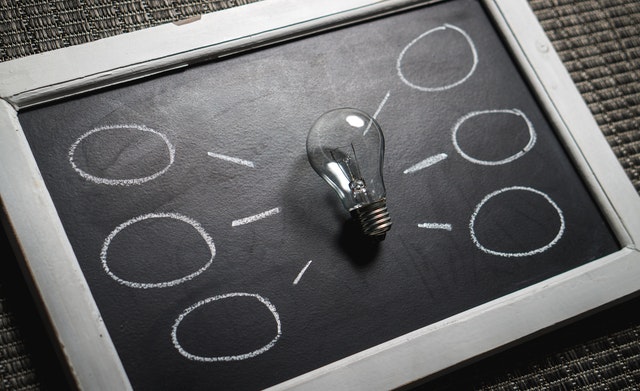
Think about this: It is unfortunate that so many people still do not use a computer because it appears too complicated to begin using. Or maybe they just keep putting it off till a more convenient time. These are just a couple of limitations one can set up for themselves. Limitations and failure to act on ideas and opportunities leave many as a dim bulb in a dark corner.

Alert! You are not doomed to darkness. You are interested in living a life of purpose and love. The wonderful, creative idea in you is about to be released. You are interested in doing this because you are reading this article. Fortunately if you truly desire something, the will to attain it will open your creative mind to find a way.

Now you need only to begin to act on your desire to create. Act now! Make your path to creativity and follow your purpose. Take your first step today with a positive attitude.

Is the world becoming a meme?

I feel in today’s time, you are truly successful if a meme is based on you.

brainyquote.com
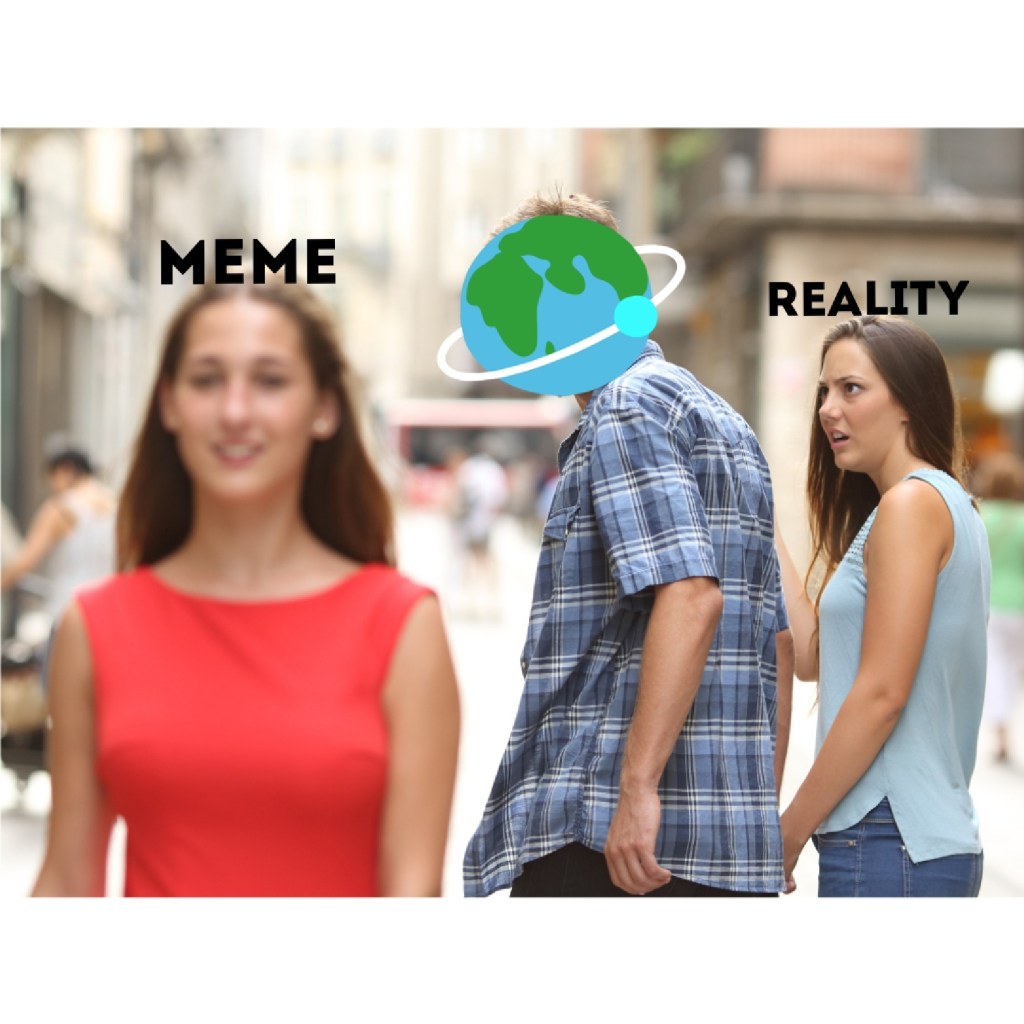
Made this meme as soon as I decided to write on this topic.

What is a meme?

The word meme is the short form of greek word mīmēma which means ‘imitated thing’. According to Wikipedia, a humorous image, video or text that is copied and rapidly spread by the internet users. It has become a lifestyle through which people give out their creativity. The reason it has become so popular is the connection viewers feel between them and the events portrayed.
With the rise in meme culture, meme makers that are known as memers have increased incredibly since, its not a tough task to make a meme, but being consistent and up to date is an important and must to have skill. With the decline in humour of COMEDY industry memes have come as life saviors.

How it came into existence

Memes have literally evolved with the internet and they became a thing in the mid 1990s. Memes in the form of short clips were shared by peope in usenet forums. People put their humor into the right place or as we see a right template. Earlier they were shared via mails, messages or even newspapers and as the electronics took over social media became a meme hub. It has become an important aspect of marketing strategy. Whenever a movie is about to be released, memes related to it are all over the internet, a very smart move by the marketing people because what’s better than meme when you want your stuff to be known by the audience.

Pros of meme

Meme shared by Dominos_india on twitter.
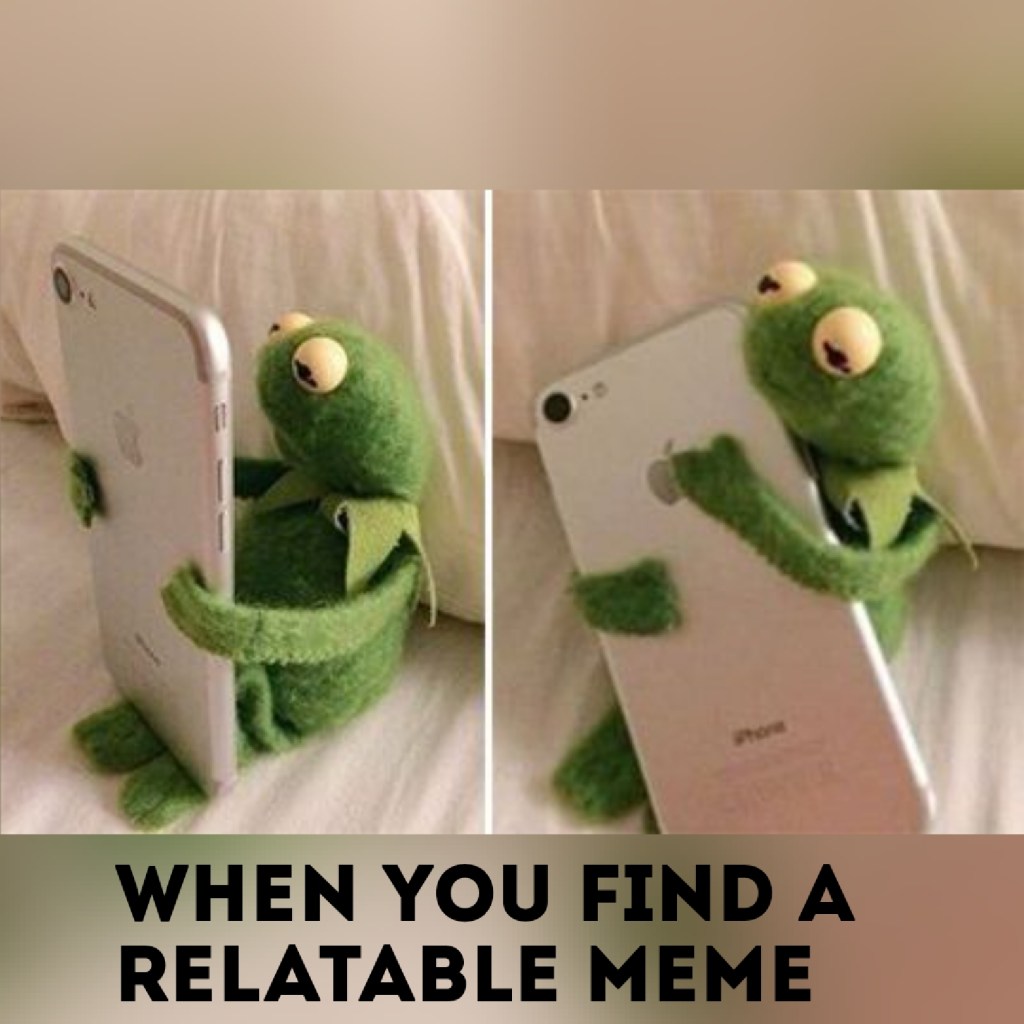
  1. Gives us a reason to SMILE: Feeling bored? Scroll through social media memes. Sad? Obviously memes!! Sometimes we are feeling down and really have someone to talk to, thats when people start looking for relatable things and memes provide them the feeling of satisfaction that there are others just like us, who go through similar things. They are meant to be funny even with the darkest of humor.
  2. A source of income: Big brands like Domino’s, IPL, are hiring professionals memers for their marketing. It helps them in popularity and also gives their fans a chance to interact with them via internet. Not only brand but celebrities share memes nowadays. Big meme pages get paid promotions regularly. Meme accounts, which these people started a few years ago have become a good source of income for them.
  3. A link between friends: You can’t talk to your friends everyday but you can share memes. Sharing memes has become a trend. There are groups for this single purpose where this small happiness is shared everyday and people connect to each other without having a proper conversation.
  4. Free of cost! This is the best thing about memes. You can get them anywhere and anytime without spending a single penny. Who doesn’t like to get things free?
pic courtesy: pinterest

According to psychologist paul Thagard in a 2013 web article, memes are not a good way to express extreme thoughts.

Cons of memes

  1. Offensive: memes that are funny to some might be offensive to others. With time they have become controversial, though hurting other’s sentiments should be avoided but you never know what can hurt people. This offensive side of meme culture gets unnoticed. People don’t understand the depth of it.
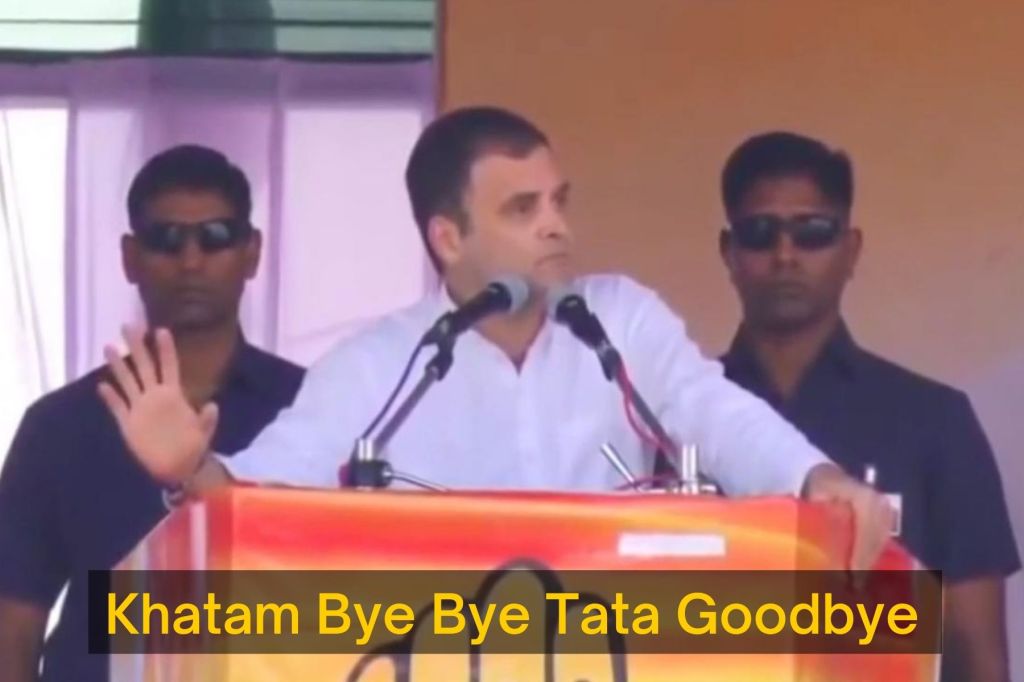
  2. Negativity: lately everything that goes viral becomes a meme and with it goes hate. People hate on others who they dislike or disagree with. For example, few days ago a lady was seen slapping a guy and soon as the matter was discovered, people got their fresh meme material much of which was funny but a small portion if it was purely bad taste. Abusing or hating should never be considered right in memes.
  3. Short lived: memes get famous for a short period of time and are replaces by others as soon as something new comes in market. They are forgotten easily and sometimes you just get bored of them because there are so many similar memes they don’t appeal to us the same way others do.

Conclusion

Despite the pros and cons, it’s important for the public especially youngsters to understand that memes are just a means of making people laugh but within the limits. We need to understand that mocking others or using the memes to laugh on sensitive topics should be avoided. There have been many incidents in the past where people have made meme without acknowledging the seriousness of the matter. Just yesterday I saw a meme on people who got killed by clinging to the plane in Afghanistan.
On the other hand there have been cases where memes have saved people in their gloomy days. And they have also been helpful in spreading information on a wide scale. We get the news of an earthquake from meme fater than the media. Funny but true.
Meme culture can have repercussions on our mental well being, it affects the way we see our society and sometimes stops us from changing by approving our toxic traits.

Let’s not make this world a meme and keep it real. Laugh at funny but be serious when required. Laughing about negative aspects of human life is not ok. Making memes on suicide, depression and other such matters is not ok. Turning these serious matters into trivial ones is not ok!! Let’s enjoy memes that are really funny and within the limits.

On a lighter note…

Pic courtesy: HumorNama

Reference: https://smeharbinger.net

https://www.wikipedia.org

Marginalization

Marginality is an experience that affects millions of people throughout the world. People who are marginalized have relatively little control over their lives, and the resources available to them. This results in making them handicapped in delving contribution to society. A vicious circle is set up whereby their lack of positive and supportive relationships means that they are prevented from participating in local life, which in turn leads to further isolation. This has a tremendous impact on the development of human beings.

What is Marginalization?

Marginalization is when an individual or group is put into a position of less power or isolation within society because of discrimination. When an individual is marginalized, they are unable to access the same services and resources as other people and it becomes very difficult to have a voice in society.

It deprives a large majority of people across the globe from participating in the development. It is a complex problem, and there are many factors that cause marginalization. This complex and serious problem needs to be addressed at the policy level.

Meaning of Marginalization

In general, the term ‘marginalization’ describes the obvious actions or tendencies of human societies, where people who they perceive to undesirable or without useful function, are excluded, i.e., marginalized. These people, who are marginalized, from a GROUP or COMMUNITY are known as ‘marginalized groups’. This limits their opportunities and means for survival.

The Encyclopedia of Public Health defines marginalized groups as, “To be marginalized is to be placed in the margins, and thus excluded from the privilege and power found at the center”. Latin observes that ‘Marginality’ is so thoroughly demeaning, for economic well-being, for human dignity, as well as for physical security. Marginal groups can always be identified by members of dominant society, and will face irrevocable discrimination.

Characteristics of Marginalized Groups

Usually, a minority group has the following characteristics :

  • It suffers from discrimination and subordination
  • They have physical and/or cultural traits that set them apart, and which are disapproved of, by a dominant group
  • They share a sense of collective identity and common burdens
  • They have shared social rules about who belongs, and who does not
  • They have a tendency to marry within the group

Various Marginalized Groups and their Problems

1. Women

Under different economic conditions, and under the influence of specific historical, cultural, legal and religious factors, marginalization is one of the manifestations of gender inequality. Gender-based violence and domestic violence is high among women in general in India. Girl child and women from the marginalized groups are more vulnerable to violence. The dropout and illiteracy rates among them are high. Early marriage, trafficking, forced prostitution and other forms of exploitation are also reportedly high among them. In situations of caste conflict, women from marginalized groups face sexual violence from men of upper caste i.e., rape and other forms of mental torture and humiliation.

2. People with Disabilities

People with disabilities have had to battle against centuries of biased assumptions, harmful stereotypes, and irrational fears. The stigmatization of disability resulted in the social and economic marginalization of generations with disabilities, and, like many other oppressed minorities, this has left people with disabilities in a severe state of impoverishment for centuries. The proportion of the disabled population in India is about 21.9 million.

3. Scheduled Caste

The caste system is a strictly hierarchical social system based on underlying notions of purity and pollution. Brahmins are on the top of the hierarchy and Shudras or Dalits constitute the bottom of the hierarchy. The marginalization of Dalits influences all spheres of their life, violating basic human rights such as civil, political, social, economic and cultural rights. A major proportion of the lower castes and Dalits are still dependent on others for their livelihood. Dalits do not refer to caste but suggest a group who are in a state of oppression, social disability and who are helpless and poor. Literacy rates among Dalits are very low. They have meagre purchasing power and have poor housing conditions as well as have low access to resources and entitlements.

4. Scheduled Tribes

They constitute a large proportion of agricultural laborers, casual laborers, plantation laborers, industrial laborers etc. This has resulted in poverty among them, low levels of education, poor health and reduced access to healthcare services. They belong to the poorest strata of the society and have severe health problems.

5. Elderly or Aged People

Lack of economic dependence has an impact on their access to food, clothing, and healthcare. Among the basic needs of the elderly, medicine features as the highest unmet need. Healthcare of the elderly is a major concern for society as aging is often accompanied by multiple illnesses and physical ailments.

6. Sexual Minorities

Due to the dominance of heteronomous sexual relations as the only form of normal acceptable relations within the society, individuals who are identified as having same-sex sexual preferences are ridiculed and ostracized by their own family and are left with very limited support structures and networks of community that provide the conditions of care and support. Their needs and concerns are excluded from various health policies and programs.

7. Patients of Communicable Diseases

Those living with HIV/AIDS, mental illness and disability are more venerable among others. These groups face severe forms of discrimination that denies them access to treatment and prevents them from achieving a better health status.

8. Children

Children Mortality and illness among children are caused and compounded by poverty, their sex and caste position in society. All these have consequences on their nutrition intake, access to healthcare, environment, and education. Poverty has a direct impact on the mortality and morbidity among children. In India, a girl child faces discrimination and differential access to nutritious food and gender-based violence is evident from the falling sex ratio and the use of technologies to eliminate the girl child.

SWATCH BHARAT SWASTH BHARAT

SWATCH BHARAT SWASTH BHARAT
Whether the Sun shines or it Rains; Cleaning the India should be our aim.
Pledge for cleanliness to show your keenness to clean India. India will teach us the tolerance and gentleness of mature mind, understanding spirit and a unifying, pacifying love for all human beings.” – Will Durant
India is in dire need of a cleanliness drive like Swachh Bharat Abhiyan to eradicate dirtiness. It is important for the overall development of citizens in terms of health and well-being. This a scheme to help us amd to make India healthy and clean and to make India swatch and swasth.

Swachh Bharat Abhiyan is one of the most significant and popular missions to have taken place in India. Swachh Bharat Abhiyan translates to Clean India Mission. This drive was formulated to cover all the cities and towns of India to make them clean. This campaign was administered by the Indian government and was introduced by the Prime Minister, Narendra Modi. It was launched on 2nd October in order to honor Mahatma Gandhi’s vision of a Clean India. The cleanliness campaign of Swachh Bharat Abhiyan was run on a national level and encompassed all the towns, rural and urban. It served as a great initiative in making people aware of the importance of cleanliness. This helped in making the message reach wider. It aims to build sanitary facilities for all households. One of the most common problems in rural areas is that of open defecation. Swachh Bharat Abhiyan aims to eliminate that. Generally, in these areas, people do not have proper toilet facilities. They go out in the fields or roads to excrete. This practice creates a lot of hygiene problems for citizens. Therefore, this Clean India mission can be of great help in enhancing the living conditions of these people. When we will dispose of waste properly and recycle waste, it will develop the country. As its main focus is one rural area, the quality of life of the rural citizens will be enhanced through it. Similarly, they also wanted to make people aware of health and education through awareness programs. After that, a major objective was to teach citizens to dispose of waste mindfully. Most importantly, it enhances the public health through its objectives. This helped in making the message reach wider. It aims to build sanitary facilities for all households.
Every small step towards sanitation will bring a big change for the nation.
Heaven could be on earth, Cleanness is something which has priceless worth.

The main objective of Swachh Bharat Abhiyan is to aware the citizens of the country of their utmost priority and responsibility towards cleanliness in the nearby surroundings and the spread of filth and infectious parasites. The campaign primarily focuses on eradicating the unhealthy practices of open defecation and provide basic sanitation facilities by constructing toilets, solid-liquid waste disposal systems, supplying clean drinking water, etc.

“Let’s make this our plea; we will make India open defecation free.
Cleanness can provide us inner peace, clean India mission is something that we need.
For cleanness we still have hope, because Swachh Bharat Abhiyan has a big scope.”


Swatch Bharat Abhiyan is a great accomplishment and proved out to a one of a kind project in the history of India. We must carry forward the practices of cleanliness with the same enthusiasm and zeal and help each other by keeping our Mother India clean and beautiful.
There are lots of schemes made for us by our government. These Abhiyan tries to make our beautiful India more beautiful and to make us healthier.
We can make our country beautiful; by participating in Swachh Bharat mission we can achieve something fruitful.
Let’s work on cleanliness from our side, and make India feel pride and clean your houses, roads and street, Cleanliness is our basic need. Make India great again, participate in Swachh Bharat mission to bring new reign.
Due to waste lying in the streets cause dangerous diseases which hampers our health and may cause dangerous diseases. These Abhiyan is a kind initiative to help us and to free us from these dangerous diseases. These are some examples how these Abhiyan help us and gift us a healthy life.
Clean India mission is something which we need for progress of our country.

Contaminated water causes many water-borne infections like diarrhoea, and also serves as a carrier for vectors such as mosquitoes spreading epidemics. Open defecation means no sanitation. It fouls the environment, and spreads diseases. According to WHO-UNICEF report (2010), India has the highest rate of open defecation. Access to safe drinking water and good sanitation are vital for family well-being. It results in control of enteric diseases, and boosts child health. A healthy child has better learning and retaining ability. Girls avoid going to school where there are no proper sanitation measures. Sanitation makes a positive contribution in family literacy. One key goal of sanitation is to safely reduce human exposure to pathogens. Pathogens are excreted by infected individuals and if not properly contained or treated, may present a risk to humans who come in contact with them. These individuals can also be exposed to pathogens through drinking water or eating food contaminated with pathogens found in human excreta. According to a UNICEF study, for every 10 per cent increase in female literacy, a country’s economy can grow by 0.3 per cent. Thus, sanitation contributes to social and economic development of the society.
Improved sanitation also helps the environment. Clean drinking water and good sanitation would not prevent infections without practicing good hygiene. A simple habit of washing hands goes a long way towards preventing diseases. The stored water supply may also serve as a source of infection in the absence of hygiene. Sanitation envisages promotion of health of the community by providing clean environment and breaking the cycle of disease. Sanitation systems aim to protect human health by providing a clean environment that will stop the transmission of disease, especially through the fecal–oral route. For example, diarrhea, a main cause of malnutrition and stunted growth in children, can be reduced through adequate sanitation.

If we follow the sanitation system then we can create a healthy world . If we live healthy then we can be wealthy. Swatch bharat is swasth bharat is a true word. If the world become clean then everyone become healthy.
If we want to make India a developed nation then clean India mission is the necessity.
Let’s take oath; by participating in clean India mission we will make our country proud.
Clean India mission is something which we need for progress of our country.
Working towards sanitation will bring a significant positive change for the nation.

AN IDLE LIFE IS AN EARLY DEATH

An idle life is an early death. It means wasting time and doing nothing, life without an aim and lack of ambitions. Scientifically it’s proved that an idle life leads to physical incapabilities and mental disorders.

“A SOUL WITHOUT A HIGH AIM , IS LIKE A SHIP WITHOUT A RUDDER.”

The meaning of the above quote is , a ship has a rudder which helps it to turn it into a particular direction, same way a person should set a high aim in life and should be courageous enough to achieve that goal through the path they choose. Each one of us have been equipped with unique abilities and sensibilities, they have the power within them they just need to manifest that power to achieve their desired goal. To contribute something positive in the society one needs to understand they just don’t need to be active but to be proactive to display the difference they have and make in the community.

Mankind has always been inclined towards growth, but only a significant individual are able to leave their footprint on the sand. Their capabilities reflects in their personality, who didn’t choose to live an idle life but are capable to make difference in life to benefit the future generations. Our great leaders, freedom fighters, philosophers, scientists and many more who contributed to the humankind. They didn’t get dusted away in the flow of time but become immortal by their virtues , rightly termed as ‘live in deeds, not in years.’

We the present generation should look upto this great pioneer and get aspirations from them so we also don’t lead an idle life and contribute great work to humanity so we don’t get lost in the flow of time.

THE CORONAVIRUS- 20 MONTHS LATER

COVID-19 is invisible the disruption it has triggered is visible everywhere. COVID-19 the disease caused by the virus has been wreaking havoc across the world for the last twenty months. No part of the planet has been left untouched. How safe is the world faring today? Some experts refer to number showing that the world is better off given the fact that COVID is less deadly than the “Spanish flu” safe vaccines were developed and record times vaccinations work treatment other than vaccines for covid have been proven to work too and open science has led to a life saved.

Granted no two pandemics or the same, covid and the Spanish Flu belong to different eras. Science is not as advanced 100 years ago as it is today. The world population at 7.8 billion today is much bigger. Still, the sheer numbers are instructive. when the Spanish flu pandemic hit it had infected an estimated 500 million people between 1918 to 1920 and killed up to 50 million or 10% of the fatality rate- during a period when the planet’s inhabitants were still less than two billion. The world today is truly more global with both its upsides and downsides. This makes covid truly a pandemic. one cannot unmake travel. have but this has a potentially dangerous downside: in the case of smaller island nations, their very existence is at risk warned World Health Organization.

There are at least 21 COVID-19 vaccines approved today vaccines were developed in record time using at least three platforms. The World Health Organization so far approved seven vaccines. experts estimate that if 30.2 million vaccines are produced daily around the rate of 349 vaccines per second that number would enable the world to achieved herd immunity in the next 12 months. The current batch of approved vaccines is highly effective at preventing severe cases. However, they are less effective and preventing mild cases of the delta. Science benefits mankind. In this pandemic-keeping science, open help save lives. As the research findings are getting translated and to practice even more rapidly open science encourages a broader endorsement of the principles that science should always be a rigorous process reliable and transparent. They had some glitches but in general, the world has seen an unprecedented pace of research and development in the midst of COVID. Rapid sharing and review of research data have greatly improved understanding of the pandemic which has led to reducing mortality. Another benefit of open science is greater scrutiny of informed consent and in any drug study, adverse effects cannot be neglected.

But despite these developments, there are still some worries. What Health Organization has approved seven covid vaccines. more than 190 countries have approved vaccines that are at least 138 vaccines candidates and 404 vaccine trials. But there isn’t enough vaccine stock in the world. Wealthy nations are funded by vaccine research have plenty of vaccine supplies while underdeveloped countries struggle. Online learning helped to win the virus that was ramping across the world. It wasn’t perfect but allowed education to continue even when schools were closed. decent learning is never the same as classroom learning. Life on a university campus the education of life itself students missed all that. Not to mention the difficulty in accessing the internet for students living in poorer sections of society.

Need For Women Safety In India

By Anshiki Jadia

Ladies in India, today, are turning into the most weak segment all things considered. Ladies are the best strength of our general public and it is so debilitating to see that they are getting risky step by step as the quantity of violations against them are expanding. As indicated by a survey by Reuters, India has been positioned the most perilous country out of the world’s 10 most noticeably awful nations for ladies. At the point when we turn the pages of a paper, we go over many title texts revealing instances of attack, badgering, dealing, abuse of ladies in houses, brutality against ladies in distant regions and so forth Ladies feel risky and unstable and feel that their opportunity and freedom are open to hazard. It is excruciating to envision the predicament of ladies who are victims of such violations. It is a shake on the certainty of the ladies of the general public and on our legal framework.

As indicated by the National Crimes Records Bureau(NCRB), India recorded 88 assault cases each day in 2019 and wrongdoings against ladies expanded by 63.3% in the initial a half year of 2021. NCRB report features that assault weakness of a young lady or lady has expanded up to 44% over the most recent 10 years. According to the most recent NCRB information, KOLKATA dominates the competition in security, for ladies, however generally speaking also. To shield ladies from aggressive behavior at home THE PARLIAMENT OF INDIA passed ‘The Protection of Women from Domestic Violence Act 2005’.

Significance OF WOMEN SAFETY-

Security of ladies is vital in this pitiless and fiendish society. As the quantity of bodies of evidence are emerging against ladies, practice the laws and get the criminal captured and rebuffed straightaway. It assists ladies with being more settled, comprehension and they feel ensured. They will trust the public authority if the criminal gets required discipline on schedule. It will foster body and psyche control in them. They will take dynamic part in all things if appropriate wellbeing is guaranteed to them. There are laws yet there ought to be appropriate wellbeing estimates which we need to follow rigorously to shield the ladies from savagery.

We for the most part look for someone else to take the blame for any such occurrence and henceforth have not prevailed to arrive at the underlying driver of this issue. A successful execution of misfortune ensuring ladies’ privileges is the initial phase toward this path. There ought to be rigid misfortune and the crooks of such wrongdoing ought to be seriously rebuffed.

Violations AGAINST WOMEN-

In India, lewd behavior, assaults, aggressive behavior at home, settlement cases and murder are normal types of brutality against ladies. It is found in certain spots that even today, there is a practice of taking share from the young lady’s family and the dad forfeits and loses everything to pay it. Abusive behavior at home is likewise expanding seriously where one accomplice or a man mishandles another accomplice or a young lady in a relationship. It prompts discouragement and suicides. It’s anything but an immediate homicide yet it is the reason for homicide without a doubt. Cheating in a relationship and giving separation is likewise a wrongdoing against ladies which annihilates the entire existence of a ladies and the man effectively tracks down another young lady and weds her. Corrosive tossing is viewed as the most horrifying wrongdoing against ladies which ruins the excellent young lady’s life and left her in a condition of shock.

HOW Might WE SAFEGUARD WOMEN OF OUR SOCIETY?

We likewise need to make social mindfulness about these issues and exclude the individuals who carry out such wrongdoings and not the people in question. Ladies security is a vital worry in India and a great deal of associations began chipping away at it after Nirbhaya’s case. Ladies ought to be shown some self-preservation tips and deceives in schools, universities, workplaces and private provinces, so that in the event that anybody attempts to hurt them, they can apply these stunts to ensure them and hurt the individual attempting to assault her. Likewise, different recordings of self-protection methods are transferred on the web, on different online media stages for instructing ladies’ wellbeing. Ladies should consistently put some cold powder, ginger-garlic glue or some hurting materials while going out to hurt the assailant. To guarantee the security of the ladies in the country, the whole populace ought to be knowledgeable and the laws ought to be exceptionally extreme against each sort of wrongdoing. Both the people of the general public ought to be engaged with appropriate schooling and pay so they can battle against any mischief to them. There are likewise different helpline numbers for guaranteeing ladies security in India. Just when these actions are taken, India can turn into a lighthearted and charming spot for ladies when they can go any place they like to with no dread of being gazed at, attacked or segregated.

WOMEN SAFETY IN INDIA

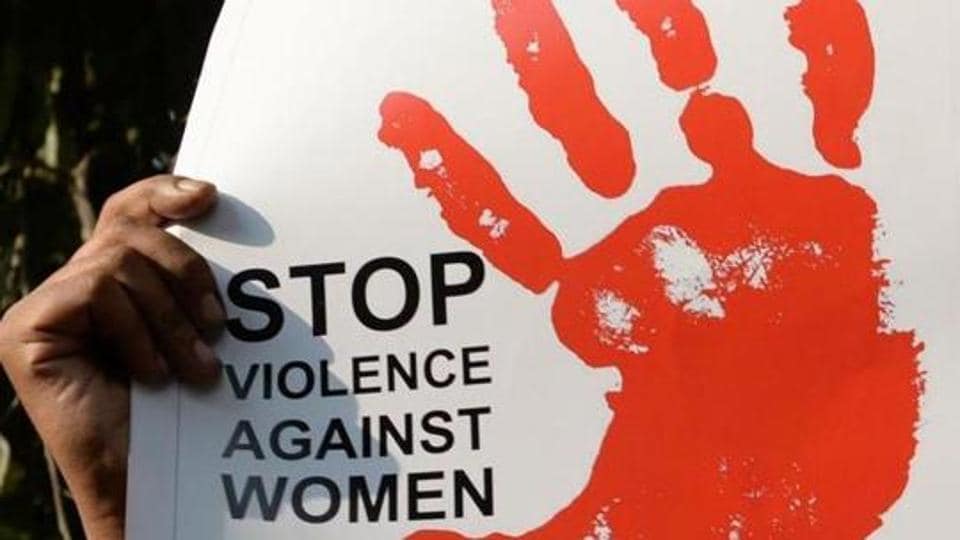
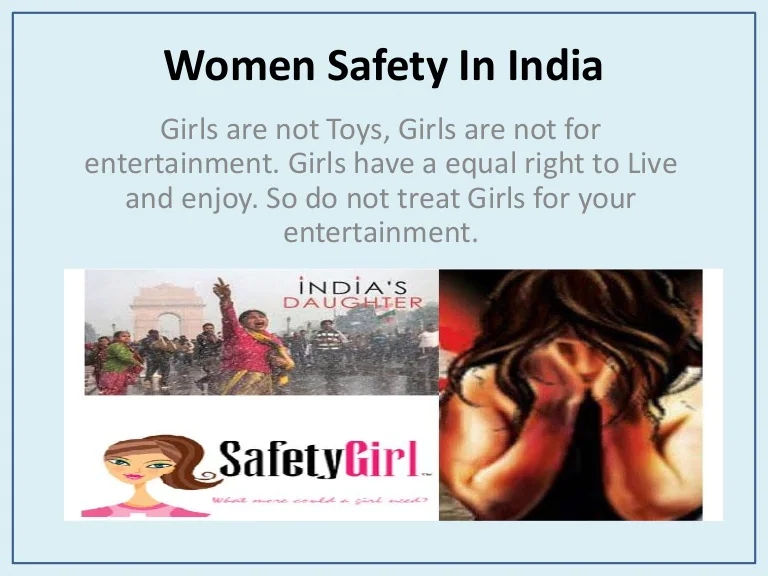
Women in India, today, are becoming the most vulnerable section as far as their safety and security is concerned. Women are the greatest strength of our society and it is so disheartening to see that they are getting unsafe day by day as the number of crimes against them are increasing. According to a poll by Reuters, India has been ranked the most dangerous country out of the world’s 10 worst countries for women. When we turn the pages of a newspaper, we come across many headlines reporting cases of molestation, harassment, trafficking, ill treatment of women in houses, violence against women in remote areas etc. Women feel unsafe and unsecure and feel that their freedom and liberty are expose to risk. It is unbearable to imagine the plight of women who are sufferers of such crimes. It is a shake on the confidence of the women of the society and on our judicial system.

According to the National Crimes Records Bureau(NCRB), India recorded 88 rape cases every day in 2019 and crimes against women increased by 63.3% in the first six months of 2021. NCRB report highlights that rape vulnerability of a girl or woman has increased up to 44% in the last 10 years. As per the latest NCRB data, KOLKATA comes out on top in safety, not just for women, but overall as well. To protect women from domestic violence THE PARLIAMENT OF INDIA passed ‘The Protection of Women from Domestic Violence Act 2005’.

IMPORTANCE OF WOMEN SAFETY-

Safety of women is very important in this cruel and evil society. As the number of cases are arising against women, it is very important to exercise the laws and get the criminal arrested and punished as soon as possible. It helps women be calmer, understanding and they feel protected. They will trust the government if the criminal gets required punishment in time. It will develop body and mind control in them. They will take active part in every thing if proper safety is ensured to them. There are laws but there should be proper safety measures which we have to follow strictly to protect the women from violence.

We generally play the blame game for any such incidence and hence have not succeeded to reach the root cause of this issue. An effective implementation of loss protecting women’s rights is the first step in this direction. There should be stringent loss and the criminals of such crime should be severely punished.

CRIMES AGAINST WOMEN-

In India, sexual harassment, rapes, domestic violence, dowry cases and murder are common forms of violence against women. It is found in some places that even today, there is a tradition of taking dowry from the girl’s family and the father sacrifices and loses everything to pay it. Domestic violence is also increasing very badly where one partner or a man abuses another another partner or a girl in a relationship. It leads to depression and suicides. It’s not a direct murder but it is the cause of murder for sure. Cheating in a relationship and giving divorce is also a crime against women which destroys the whole life of a women and the man easily finds a new girl and marries her. Acid throwing is considered to be the most heinous crime against women which ruins the beautiful girl’s life and left her in a state of shock.

HOW CAN WE SAFEGUARD WOMEN OF OUR SOCIETY?

We also need to create social awareness about these issues and ostracise those who commit such crimes and not the victims. Women safety is a crucial concern in India and a lot of organisations started working on it after Nirbhaya’s case. Women should be taught some self-defence tips and tricks in schools, colleges, offices and residential colonies, so that if anyone tries to harm them, they can apply these tricks to protect them and hurt the person trying to attack her. Also, various videos of self-defence techniques are uploaded online, on various social media platforms for educating women’s safety. Women should always put some chilly powder, ginger-garlic paste or some harming materials while going out to harm the attacker. To ensure the security of the women in the country, the entire population should be well-educated and the laws should be very tough against every kind of crime. Both the men and women of the society should be empowered with proper education and income so that they can fight against any harm to them. There are also various helpline numbers for ensuring women safety in India. Only when these measures are taken, India can become a carefree and enjoyable place for women when they can go where ever they like to without any fear of being stared at, molested or discriminated.

”It took me quite a long time to develop a voice, and now that I have it, I am not going to be silent”. – Madeleine Albright

Crisis in AFGHANISTAN

Photo by Pixabay on Pexels.com

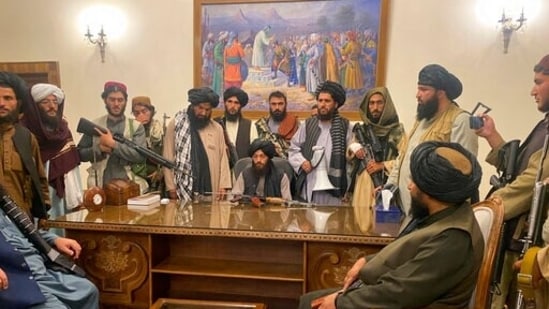
Now that the US army has pulled out from Afghanistan after spending 20 years there, the Taliban has taken control of almost whole of the country. HISTORY REPEATS ITSELF, and here history is repeating itself for the worst. Politicians have fled from the country leaving their countrymen to die and the civilians are in a state of panic. As Taliban has taken control from all the borders leaving no exit point.

What is Taliban

Taliban is the word for ‘student’ in pashto language. Ironically they have nothing to do with knowledge, at least on humanitarian basis. They emerged from the northern part of Pakistan in the early 1990s, they basically promised peace to the peope an to impose Sharia or islamic law, once in power. In September 1995, they started their rule by capturing Herat and then all the major cities one by one and by 1998, they had captured about 90% of Afghanistan.

They became popular as they finished corruption and lawlessness. They also introduced roads. But at the same time they implemented the Sharia law and gave punishments according to it, like public execution for murderers and adultration, amputating those, who were found guilty of theft. Girls were not allowed to go to school after the age of 10, women had to wear chaadri (burqa, covering whole body) when going out and they had to be accompanied by a man all the time, men too had to grow beard. Cinema, music and television were banned. women were not allowed to work even when their husbands died. Basically all their rights were taken away.

Read more about Afghanistan: https://edupub.org/2021/07/19/afghanistan-through-khaled-hosseinis-a-thousand-spendid-suns/

Major terrorist activities by Taliban

On 11 September, 2001 the world trade center was attacked and Taliban was accused of providing safety to Al Qaeda.

Malala Yousafzai was shot by the talibani terrorists as she refused to leave school and continued to study.

pic courtesy: shutterstock

Disturbing images have been coming in from airport where people were rushing as their last hope of fleeing from there. It’s very saddening to see politicians leaving their people to die on the streets. Even though talibanis have said that the people need not be scared of anything but can we trust them?? Not really. Several videos have been surfacing on the net of dead bodies littered on roads. People are being dragged out of their houses, specifically those who have in any way helped American forces.
Residents are trying any possible way to get out of there but unfortunately the only exit left at last, the airport in kabul, has been shut off, shutting their last hope for now.

Photo by Disha Sheta on Pexels.com

Well, I hope for now at least the citizens will be safe and peace will be restored soon. The Afghanistan of 1960s-70s, where women enjoyed freedom and the country was progressing will be back. Children will play with toys and not guns, knowledge will be used as weapon and not violence.

Normal animal sicknesses and their management

By Anshiki Jadia

1 – Bacillus anthracis Anhrax, a profoundly irresistible and deadly sickness of dairy cattle, is brought about by a moderately enormous spore-framing rectangular formed bacterium called Bacillus anthracis. Bacillus anthracis causes intense mortality in ruminants. The microbes produce incredibly powerful poisons which are answerable for the evil impacts, causing a high death rate. Indications of the ailment for the most part seem 3 to 7 days after the spores are gulped or breathed in. When signs start in creatures, they generally bite the dust inside two days. Hoofed creatures, like deer, cows, goats, and sheep, are the principle creatures influenced by this sickness. They for the most part get the infection by gulping Bacillus anthracis spores while touching on field tainted (made debased) with Bacillus anthracis spores. Breathing in (taking in) the spores, which are unscented, dull, and boring, may likewise cause disease in creatures and individuals.

Side effects: Unexpected passing (regularly inside 2 or 3 hours of being evidently typical) is by a long shot the most widely recognized sign; Incidentally a few creatures might show shuddering, a high temperature Trouble breathing, breakdown and spasms before death. This generally happens over a time of 24 hours; After death blood, may not cluster, bringing about a modest quantity of ridiculous release from the nose, mouth and different openings

Treatment and control Because of the intense idea of the infection bringing about abrupt demise, therapy is normally impractical in creatures despite the fact that Anthrax bacilli are clines. Treatment is useful in cases showing sub-intense type of the infection. Much of the time, early treatment can fix Bacillus anthracis. The cutaneous (skin) type of Bacillus anthracis can be treated with normal anti-microbials.

Preventive measures: Normal yearly immunization of creatures in endemic regions will keep the illness from happening. Inoculation might be done somewhere around a month preceding expected sickness event in endemic regions. Never open a corpse of a creature suspected to have passed on from Bacillus anthracis. Contact a veterinarian promptly if the accompanying manifestations are seen and look for counsel on control measures to be taken on. Fever (106-108°F), loss of craving, sorrow and bluntness

2 – Dark quarter (dark leg) It is an intense irresistible and profoundly deadly, bacterial sickness of dairy cattle. Bison, sheep and goats are additionally influenced. Youthful cows between 6 two years old enough, in great body condition are for the most part influenced. It is soil-borne contamination which for the most part happens during blustery season. In India, the illness is inconsistent (1-2 creature) in nature. Causal organic entity: it is a bacterial infection brought about by Clostridium chauvoei

Side effects: Fever (106-108°F), Loss of hunger, Depression and bluntness Suspended rumination Quick heartbeat and pulses Troublesome breathing (dyspnoea) Faltering in influenced leg Crepitation expanding over hip, back and shoulder Expanding is hot and difficult in beginning phases though cold and effortless entomb. Supineness (surrender) trailed by death inside 12-48 hrs.

Treatment: Early treatment can be feasible to finish fix of the creature. Talk with veterinarian right away.

3 – Foot and mouth illness The foot-and-mouth illness is an exceptionally transferable sickness influencing cloven-footed creatures. It is described by fever, arrangement of vesicles and rankles in the mouth, udder, nipples and on the skin between the toes or more the feet. Creatures recuperated from the illness present a naturally unpleasant coat and misshapening of the foot. In India, the illness is far reaching and expects a place of significance in animals industry. The sickness spreads by direct contact or by implication through contaminated water, compost, feed and fields. It is additionally passed on by cows specialists. It is known to spread through recuperated creatures, field rodents, porcupines and birds.

Indications fever with 104-105o F lavish salivation – ropes of wiry spit dangles from mouth vesicles show up in mouth and in the entomb advanced space faltering noticed cross reproduced cows are exceptionally vulnerable to it

Safety measures substantial milch creatures and extraordinary types of cows reared for milk ought to be secured consistently. it is fitting to do two immunizations at a time period months followed by a yearly inoculation program. disengagement and isolation of debilitated creatures. It ought to be educated quickly to the veterinary specialist sterilization of creature sheds with blanching powder or phenol chaperons and hardware’s for wiped out creatures ought to be preferably independent the gear’s ought to be altogether disinfected appropriate removal of left over feed by the creature legitimate removal of remains control of flies

4 – Rabies (Mad canine infection) Rabies is an infection of canines, foxes, wolves, hyaenas and in certain spots, it is an illness of bats which feed on blood. The illness is passed to different creatures or to individuals in case they are chomped by a creature with rabies. The germs which cause rabies live in the spit of the debilitated (frenzied) creature. This is an amazing sickness however only one out of every odd canine which nibbles is tainted with rabies. At the point when the out of control creature chomps another creature or human, the germs which live in its salivation pass into the body through the injury brought about by the nibble. The germs venture out along the nerves to the cerebrum. The time between the chomp and the principal appearance of signs that the nibbled creature or human has been tainted can take from 2 to 10 weeks or more. The time taken relies upon the distance of the chomp from the cerebrum. In the event that the nibble is on the face or head, the chomped creature or human will rapidly give indications, yet on the off chance that the nibble is on the leg it will take any longer for signs to create.

General indications of rabies You should initially search for the characteristics of the nibble and find where and when the creature was chomped. All raging creatures give comparable indications in the first place. they change their typical conduct and act unusually. They quit eating or drinking. Male creature will attempt to mate (mount) different creatures. The calm (stupid) type when the creature is tranquil and doesn’t move.

Control of rabies Canines locally can be immunized against rabies. You ought to get some information about immunization against rabies. In case there is a flare-up of rabies, the animals locally can be inoculated as well.

Mini Movie Review|It touched the hearts but not the brains

A character played by Kirti Sanon personifies surrogacy through Mimi who was aspired to chase her dreams but couldn’t fulfill it.

Nothing like you are expecting!!

Cast: Kirti Sanon, Pakaj Tripathi, Sai Tamhankar, Supriya Pathak, Manoj Pahwa

Director: Laxman Utekar

In a patriarchal society like India, women have always been under the umbrella of the community. It’s barely seen in the families who support a girl’s dream and accept her to be a dancer.

The movie begins with the introduction of a foreign couple who came to India in the search of a surrogate. After long hours of work, they were finally able to find a girl with the help of the driver (a role played by Pankaj Tripathi) in a hotel. Mimi(the girl) was a dancer and getting influenced by its flexibility they decided to offer her 20 lakhs to be the surrogate. Being an ambitious 25-year old woman agrees to take the risk for the same of becoming a famous Bollywood actress. She decides to live at her friend’s house by convincing the parents saying, she is going to a film shoot. With the required procedure, Mimi becomes the surrogate, and for the first four months, she was having a good time with the pregnancy. However, after eight months tests revealed that the baby is suffering from some mental disorder. This news outraged the couple and they decided not to accept the baby after birth and told Mimi to abort. This became the turning point in her life. She sacrificed all her dreams by deciding to give birth to the child and raise him. Later, the couple returned to her after 2 years when they came to know that the baby was born healthy. Mimi refused to give the child back and in the end, they decided to adopt a girl.

Message

  • A girl is also born with a dream and her character is not decided with what she pursues but what she is.
  • The support of family is crucial in the darkest times. Mimi faced all the criticisms from society but her parents never let her alone and accepted her as she was.
  • Killing is not an option. It’s not the fault of a child to be born unhealthy.
  • One loyal friend is more important than a group of unloyal ones. The driver and the friend were with Mimi till the end, helping her go through all the difficulties with a smile.

Every coin has two sides. Even though the movie won the hearts of the audience, it faced several criticisms like not following the laws related to a sensitive topic of surrogacy, using the term casually, and disrespect towards the decision of abortions.

It played with the emotions well, yet failed to manipulate the thoughts.

Lucid Dreams

What are lucid dreams?

Lucid dreams occur when you are aware that you are dreaming while sleeping.You’re aware that the events that are flashing across your mind aren’t genuine. However, the dream is vivid and real. You could even be able to guide the action in your sleep, as if you were directing a movie. According to studies, roughly half of all adults have had at least one lucid dream. However, they are unlikely to occur frequently, usually only a few times per year.

Photo by Ketut Subiyanto on Pexels.com

When do lucid dreams happen?

Lucid dreams are most common during rapid eye movement (REM) sleep, which is characterised by rapid eye movement, faster breathing, and increased brain activity. About 90 minutes after falling asleep, you normally enter REM sleep. It lasts approximately ten minutes. Each REM cycle lasts longer than the one before it, eventually reaching an hour.

Lucid Dreams Research

Neuroscientists are baffled as to how and why lucid dreams occur. They do, however, have some suggestions. For one instance, research have discovered physical differences in the brains of those who have lucid dreams versus those who don’t. People who have lucid dreams have a larger prefrontal cortex, which is responsible for high-level processes such as decision-making and memory recall. That shows that people who are most prone to have lucid dreams are self-reflective individuals who ruminate on their own thoughts. In a tiny study conducted in Germany, individuals’ brain electrical activity was monitored as they slept. According to the findings, lucid dreaming may be a kind of “in-between state” in which you aren’t entirely awake but also not fully sleeping. Some sleep researchers believe that lucid dreams can occur outside of REM sleep, which was previously regarded to be the only moment when people dreamed.

Benefits of Lucid Dreams

Lucid dreams may assist your waking life by providing advantages such as:

– Less Anxiety: There is less anxiety. The sense of control you experience during a lucid dream may linger and make you feel powerful. You can mould the tale and the finale after you realise you’re in a dream. This could be used as a form of treatment for people who suffer from nightmares, teaching them how to manage their dreams.

– Better motor skills: Some research suggests that by “practising” in a lucid dream, you might be able to improve simple things like tapping your fingers faster. Whether you visualise the actions while awake or run through them in a lucid dream, the same area of your brain becomes engaged.

– Improved Problem-solving skills: Researchers discovered evidence that lucid dreams can assist people address difficulties involving creativity (such as a disagreement with another person) rather than reasoning (such as a math problem).

– Increased creativity: Some participants in lucid dream studies were able to generate new ideas or insights, sometimes with the assistance of characters in their dreams.

Dangers of Lucid Dreams

Lucid dreaming can lead to a variety of issues, including:

– Sleep deprivation: Vivid dreams might wake you up and make it difficult to fall back asleep. And if you’re too concentrated on lucid dreaming, you can have trouble sleeping.

– Confusion, delirium, and hallucinations: Lucid dreams can cause confusion, delirium, and hallucinations in people with certain mental health problems.

Women Safety in India: Still a Major Concern?

Women Safety in India - An Unending Struggle? – BloggerBunny

Protection of women in India has become a crucial issue. We cannot assure the safety of the women nowadays because if we read a newspaper or go on social media, the news of girls getting raped by cab drivers, acid burning, child marriage, domestic violence, molestation is flooded from different parts of India. Such incidents have created fear and fright among young girls and women. They don’t feel safe in their own country. In rural areas, the conditions are worse where women are burned and killed by in-laws or tortured for dowry. Moreover, female infanticide is still practised in some remote areas.

The most dreadful event that the country faced was the Nirbhaya gang-rape incident. To curb such horrendous crimes against women, the government has passed laws for women’s safety. They are Child Marriage Restraint Act 1929, Hindu Marriage Act 1955, Dowry Prohibition Act 1961, Deaths and Marriages Registration Act 1886, Indian Divorce Act 1969, Equal Remuneration Act 1976, Prohibition of Sex Selection Act 1994, Protection of women from Domestic Violence Act 2005, Sexual Harassment of Women at Work Place Act 2013 etc. and many more.

How to Ensure Women Safety in India?

Everyone requires to determine and willingly agree that every person has the freedom to feel safe. Indian constitution states that every person is even before the law. But unfortunately, it is not practiced everywhere. Women and girls around the world should be given access to education, freely walk at any place, reach to hospitals, the opportunity of choosing a career, freedom of choice of marriage partner and also the freedom to wear their own choice of clothes. They should not be punished for the selection of garments, friends, and other extra-curricular activities.

Education is the demand for the hour to eradicate such problems and to help individuals in the nation recognize and respect limits, and approval in order not to dishonor women’s rights. As individuals, we can regard each other with respect. Let us stand as active bystanders where we stop sexual violence and interfere if any such incidence happens anywhere with the women. Most importantly, do not perpetuate it.

Role of the Government:-

The Government must ensure that the law in force is activated. What is the point of having women’s security law if the order is definitive and inhibiting? There is a requirement to improve the infrastructure to secure women’s freedom. Notwithstanding the production of various efficient laws and ordinance by the Government of India to trade with and set assaults against females, the volume and repetition of sins against females are growing daily. The state of women in the country has been metal assault and offensive in the past few years.

Women’s belief in their protection in their country has decreased. Women are in questionable conditions for their security and anxiety while going everywhere or outside their houses (such as office, market, etc.). We should not criticize the government, because it is not just the duty of the government to safeguard women but of every citizen of India, especially the people who require it. Research that put India as the most unsafe place due to its raised incidence of sexual violence, deficiency of access to trial in rape instances, child wedding, female feticide and trafficking in human beings. India surpassed nations that have a high rate of women’s criticism.

The safety of women in India is a significant concern today. We cannot say that women are safe in India by going through crimes against women in the past few years. Women feel frightened to move out and roam around by themselves.

Some Major Safety Tips:-

  • Self-defense routines are the first and foremost method that every woman must be mindful of and have sufficient self-defense practice for their security.
  • Women need to be mindful of some efficient defense techniques, such as crotch kicks, blocking punches, etc. Usually, most women should be trained well to recognize the issue.
  • Women should at once limit any situation that they feel wrong about.
  • Escape and operate is also an excellent way to mitigate some of the risks women face whenever they are in trouble.
  • They should never travel alone with an unknown person in some strange location.
  • Women must know and feel their dynamic power and practice it subsequently. They should nevermore think that they are more insecure than men and get some self-defense practice.
  • Women should be alert to interact with someone on the Internet in cyberspace.
  • Pepper spray can also be used as a self-defense tool, but it may be not effective for some people who cannot be harmed by even full-face spraying. It may not obstruct the attacker; thus women should not depend completely on it and use other methods as well.
  • Women should carry all the emergency numbers with them to tell their family members and the police immediately, in case of any emergency.

Conclusion:-

Though we had a woman prime minister, a woman president and a woman finance minister, and a woman defense minister, still we have a gender non-inclusive legislature primarily. At 12%, India is one of the stragglers among its associates in the portrayal of women in Parliament.

Free India represents women as half of the population, which is observed in the Chinese bureaucracy. The situation is not very promising yet in the state of the judiciary, where, as a nation, we are glorifying only the first instance of three female judges sitting in the 68-year tale of the nation’s Supreme Court. Notwithstanding repeated crimes against women and young girls, India still does not have a wide database of physical offenders. Registration and information systems for sex offenders have been created around the world over the past 20 years. Since 1994, 18 more countries have launched new laws on the recording of sex offenders.

Women, in the past years, have made an extraordinary contribution to the world whether she is Mother Teresa, Marie Curie, Virginia Woolf, Betty William, and the most present one is Malala Yousafzai. They fought for their freedoms and stood up for their convictions against all the odds. Few more women such as Kalpana Chawla, Sania Mirza, Saina Nehwal, Indra Nooyi, etc. are the examples in the history of India, who broke down all the obstacles in their routes to progress and impact.

Women empowerment in the nation encourages equality between women and men and supports women by allowing them with power and courage to be the decision-maker of their individual life. Women’s empowerment in India has achieved power with the support of women’s welfare organizations by giving them all the required support.

Periods

By Anshiki Jadia

What’s the menstruation?

Your feminine cycle assists your body with getting ready pregnancy consistently. It additionally causes you to have a period in case you’re not pregnant. Your monthly cycle and period are constrained by chemicals like estrogen and progesterone. Here’s the means by which everything goes down. You have 2 ovaries, and every one holds a lot of eggs. The eggs are really minuscule — too little to even consider seeing with the unaided eye.

During your monthly cycle, chemicals make the eggs in your ovaries develop — when an egg is adult, that implies it’s fit to be treated by a sperm cell. These chemicals likewise make the coating of your uterus thick and elastic. So if your egg gets prepared, it has a decent comfortable spot to land and begin a pregnancy. This covering is made of tissue and blood, as nearly all the other things inside our bodies. It has bunches of supplements to assist a pregnancy with developing. Part of the way through your feminine cycle, your chemicals advise one of your ovaries to deliver a develop egg — this is called ovulation. The vast majority don’t feel it when they ovulate, yet some ovulation manifestations are bulging, spotting, or a little aggravation in your lower tummy that you may just feel on one side. When the egg leaves your ovary, it goes through one of your fallopian tubes toward your uterus.

In the event that pregnancy doesn’t occur, your body needn’t bother with the thick covering in your uterus. Your coating separates, and the blood, supplements, and tissue stream out of your body through your vagina. Presto, it’s your period! In the event that you do get pregnant, your body needs the coating — that is the reason your period quits during pregnancy. Your period returns when you’re not pregnant any longer.

When in life do periods begin and stop? Eventually during pubescence, blood emerges from your vagina, and that is your first period. The vast majority get their first period between ages 12 and 14, however a few group get them prior or later than that. It’s basically impossible to know precisely when you’ll get it, however you might feel a few PMS indications (connection to PMS segment) a couple of days before it occurs. On the off chance that you don’t get your period when you’re 16, it’s a smart thought to visit a specialist or attendant. Peruse more about getting your first period.

The vast majority quit getting their period when they’re somewhere in the range of 45 and 55 years of age — this is called menopause. Menopause can require a couple of years, and periods for the most part change progressively during this time. After menopause is absolutely finished, you can’t get pregnant any longer. Peruse more about menopause. Your period might begin and stop around the time it accomplished for others you’re identified with, similar to your mother or sisters.

Do transsexual folks get a period? Not every person who gets a period distinguishes as a young lady or lady. Transsexual men and genderqueer individuals who have uteruses, vaginas, fallopian cylinders, and ovaries additionally get their periods. Having a period can be a distressing encounter for some trans people since it’s an update that their bodies don’t coordinate with their actual sex character — this uneasiness and nervousness is once in a while called sex dysphoria. Other trans individuals probably won’t be excessively troubled by their periods. Either response is typical and alright.

Now and then trans individuals who haven’t arrived at pubescence yet take chemicals (called adolescence blockers) to forestall the entirety of the gendered body changes that occur during pubescence, including periods. What’s more, individuals who as of now get periods can utilize specific kinds of conception prevention (like the embed or hormonal IUD) that help ease up or stop their periods. Chemical substitution treatment, such as taking testosterone, may likewise stop your period.

In the event that you begin taking testosterone, your period will disappear. In any case, this is reversible — on the off chance that you quit taking testosterone, your period will return. There can be a few changes in your feminine cycle before it stops for great. Periods get lighter and more limited over the long run, or come when you don’t anticipate it. You might have spotting or squeezing now and again until you quit getting your period, and once in a while even get-togethers appears to have halted — this is typical. Testosterone infusions make your periods disappear quicker than testosterone cream.

In the event that you experience sexual orientation dysphoria when you get your period, realize that you’re in good company. It very well might be useful to look at our assets and track down a trans-accommodating specialist in your space that you can converse with.

The Indian Tricolour Flag

On August 15, 2021, India will commemorate its 75th anniversary of independence. As we get closer to the big day, it’s only natural to look back at the history of the tricolour, or tiranga. Did you realise that our flag’s colours of saffron, green, and white have no communal significance? In this essay, we’ll look at the history of the tricolour, its evolution, and the meaning of the Chakra and the three colours of the flag to learn more about these facts.

Photo by Still Pixels on Pexels.com

The flag of a country is a sign of its independence. The Indian National Flag in its current form was adopted just days before the country declared independence from British rule on August 15, 1947. The decision was made on July 22, 1947, during a meeting of the Constituent Assembly. Between August 15, 1947, and January 2, 1950, it was the national flag of the Dominion of India, and then the Republic of India.

India’s current tricolour flag was adopted after the country gained independence. The old flag’s colour and meaning were retained, but the Dharma Charkha of Emperor Asoka was replaced as the flag’s insignia in favour of the spinning wheel.

The colours of the Indian flag

India’s national flag is a horizontal tricolour with a deep saffron top, white in the middle, and dark green at the bottom. The chakra is represented by a navy blue wheel in the midst of the white ring.

The colour saffron represents the country’s power and bravery. The colour white represents peace and truth. Our land’s fertility, growth, and auspiciousness are symbolized by the green belt.

The “wheel of the law” is shown by Dharma Chakra at the Sarnath Lion Capital, which was built by Mauryan Emperor Ashoka in the 3rd century BC. It meant that life is found in movement and death is found in immobility.

Flag Code

The Indian flag code was changed on January 26, 2002, and inhabitants of India were now allowed to hoist the Indian flag above their homes, offices, and factories on any day, not only national holidays, as was previously the case. Indians can now proudly display the national flag anywhere and whenever they want, as long as the Flag Code is rigorously obeyed to avoid any disrespect to the tricolour. The Flag Code of India, 2002, has been broken into three parts for your convenience. The National Flag is described in general in Part I of the Code. The display of the National Flag by members of the public, private organisations, educational institutions, and other entities is addressed in Part II of the Code. The National Flag is displayed by the Central and State governments, as well as their organisations and agencies, according to Part III of the Code.

Based on law passed on January 26, 2002, there are some guidelines for flying the flag. The following are some of them:

Do’s:

– To promote respect for the Flag, the National Flag may be flown in educational institutions (schools, colleges, sports camps, scout camps, and so on). The flag flying in schools now includes an oath of allegiance.

– On all days and occasions, ceremonial or otherwise consistent with the dignity and honour of the National Flag, a member of the public, a private group, or an educational institution may hoist/display the National Flag.

– Section 2 of the new code recognises that all private persons have the right to fly the flag on their property.

Don’ts:

– The flag may not be used for communal purposes, draperies, or clothing. It should be flown as much as possible from sunrise to sunset, regardless of the weather.

– The flag cannot be permitted to contact the ground, the floor, or the water’s surface. Vehicles, trains, boats, and aircraft cannot have it draped over the hood, top, sides, or back.

– There can be no other flag or bunting higher than the flag. Also, no object can be placed on or above the flag, including flowers, garlands, or symbols. A tricolour festoon, rosette, or bunting cannot be used.

5 Greatest Films on India’s Freedom Struggle

Many people find it difficult to conceive living a life of slavery and servitude with no possibility of liberation. However, this was the reality for the entire nation of India only a little more than seven decades ago.

Today is India’s 74th anniversary as a constitutionally democratic and sovereign country. However, without the courage, tenacity, and heroism demonstrated by India’s revolutionaries, the road to freedom would have been significantly more difficult.

Here, we look at five of the best films that pay tribute to individuals who helped us achieve our current level of freedom.

1. Mangal Pandey: Mangal Pandey, directed by Ketan Mehta, transports viewers to the mid-nineteenth century and India’s First War of Independence, the country’s first organised revolt against the British Empire. The plot centres around an Indian soldier who fights the East India Company valiantly. Against all obstacles, Mangal Pandey (Aamir Khan), an Indian Army sepoy, conducts a violent and fierce revolt against India’s colonial occupiers, while preserving his friendship with his British commanding officer, William Gordon. Mangal Pandey, a classic story about the oppressed fighting against their oppressors, is a must-see this Independence Day.

2. Lagaan: Lagaan was India’s entry to the Academy Awards in 2001, written and directed by Ashutosh Gowariker. The film, which stars Aamir Khan and Gracy Singh in the key roles, is set in 1893 and expertly blends sports and politics. Lagaan is a hugely enjoyable film that was a worldwide smash thanks to its devious machinations, musical sequences, and laugh-out-loud humour. When the British overlords of India decide to impose a new tax on Indian villages, Bhuvan, a young man, leads a charge against them, challenging the occupiers to a cricket match. The story that follows is a colourful one of perseverance and intrigue.

3. The Legend of Bhagat Singh: The Legend of Bhagat Singh is a film directed by Rajkumar Santoshi and starring Ajay Devgan. It tells the story of the fiery independence fighter who led an armed battle against British imperialism. The film follows the revolutionary from his childhood, when he witnesses the atrocities perpetrated on his people, to his alliance with the Hindustan Republic Association and the assassination of a British police officer. The Legend of Bhagat Singh is a must-see for anybody interested in learning about the immense sacrifices made by India’s liberation fighters.

4. Gandhi: Mohandas Karamchand Gandhi, the father of the nation, has and will continue to be an unrivalled presence in Indian history. Gandhi, starring Ben Kingsley as Mahatma Gandhi, is a biopic that follows his life and tribulations from his days as a lawyer in South Africa through the nonviolent independence movement he leads in India. Gandhi has near-saintly status in India, yet the film succeeds admirably in depicting his more humanistic side. Richard Attenborough’s biographical drama, filmed and produced by him, received acclaim upon its premiere and won eight Academy Awards, including Best Picture, Best Director, and Best Actor.

5. Rang De Basanti: Rang De Basanti, produced and directed by Omprakash Mehra, is the third film on this list to feature Aamir Khan in the lead role. Following their graduation from Delhi University, a group of young Indians are cast in a documentary about India’s liberation fighters by an English woman. Mehra’s film, which alternates between two time zones, poses some difficult concerns and challenges the viewer to consider what the genuine value of freedom is. Rang De Basanti was also nominated for Best Foreign Film at the Oscars, thanks to its outstanding screenplay and narrative.

Apart from India, here are 5 countries that celebrate Independence Day on 15th August as well

For every Indian, August 15 is a significant date because it was on this day in 1947 that the country gained its legitimate independence from the United Kingdom, putting an end to over two centuries of colonial control. India, the world’s largest democracy, celebrates its independence on August 15, 1947. The founding of the democratic country is commemorated on this day. This is the day India gained independence from the British Raj. Jawaharlal Nehru, India’s first Prime Minister, proudly unfurled the Indian flag at the Red Fort in Delhi on August 15, 1947.

Photo by Studio Art Smile on Pexels.com

In case you were wondering, India is not the only country that celebrates Independence Day on August 15; people all over the world mark this date on their calendars as a national holiday. Here are five more: Republic of Congo, South Korea, North Korea, Bahrain, and Liechtenstein all commemorate their independence on August 15. Here’s additional information on them:

1. Bahrain: Bahrain, which was likewise ruled by the British, gained independence on August 15, 1971, more than two decades after India. Following a United Nations assessment of Bahrain’s population, the British announced a troop pullback east of Suez in the early 1960s. The signing of a treaty between Bahrain and the United Kingdom commemorated Bahrain’s independence day. The country, however, does not commemorate its independence on this day. Instead, it commemorates the succession of the late king Isa bin Salman Al Khalifa to the throne on December 16 as National Day.

2. North Korea: North and South Korea, officially known as the Democratic People’s Republic of Korea, gained independence from Japan on August 15, 1945. During the Russo-Japanese War, Japan conquered Korea. Japan attempted to acquire Korean traditions and culture while also gaining control of the economy for its own gain. Korean resistance groups, known as Dongnipgun, fought Japanese forces along the Sino-Korean border.

3. South Korea: In 1945, the Korean Peninsula was liberated, and on August 15, 1948, autonomous Korean governments were established. The area was officially dubbed the Republic of Korea, and a pro-US administration was founded. The first President of South Korea, Syngman Rhee, was elected, and August 15 was declared a national holiday. The holiday is known as Gwangbokjeol, which translates to “the day the light returned.”

4. Liechtenstein: Liechtenstein, a German-speaking microstate in the European Alps between Austria and Switzerland, celebrates its National Day on August 15. The date was chosen since it was already a bank holiday; the feast of the Assumption of Mary is on August 15. Second, Prince Franz Josef II, the reigning prince at the time, was born on August 16. As a result, the Feast of the Assumption and the Prince’s birthday were combined to form Liechtenstein’s national holiday.  

5. Democratic Republic of Congo: The Central African country, often known as Congo, gained full independence from French colonial overlords on August 15, 1960. It has been under French control for exactly 80 years. In 1880, the country was renamed French Congo, and in 1903, it was renamed Middle Congo. During the first five decades of colonial administration in Congo, economic development was centered on natural-resource extraction, and the techniques used were violent. At least 14,000 people died in the construction of the Congo-Ocean Railroad.

Disaster & Disaster Management

A disaster is a sudden, calamitous event that seriously disrupts the functioning of a community or society and causes human, material, and economic or environmental losses that exceed the community’s or society’s ability to cope using its own resources. Though often caused by nature, disasters can have human origins.

The word disaster implies a sudden overwhelming and unforeseen event. At the household level, a disaster could result in a major illness, death, a substantial economic or social misfortune. At the community level, it could be a flood, a fire, a collapse of buildings in an earthquake, the destruction of livelihoods, an epidemic or displacement through conflict. When occurring at district or provincial level, a large number of people can be affected. Most disasters result in the inability of those affected to cope with outside assistance. At the household level, this could mean dealing with the help from neighbours. At the national level, it could mean assistance from organizations, various non-governmental organizations (NGOs) and government agencies themselves. As the limiting factor in disaster response is often the coping capacity of those affected, improving their resilience when responding to disasters is a key approach to lessening the consequence of a disaster.

There is no single measure of a disaster that can capture the full scope of a disaster. A common measure is the number of people killed or affected. The individual will consider the impact on his or her family and livelihood. Disaster managers will assess the speed and success of the disaster response. Economists will measure physical loss to houses and buildings and loss of production. Politicians will assess political damage from a poor response by state agencies. Health workers will consider the resources required to contain an outbreak of Ebola or Coronavirus. Others may focus on the nature of the hazard, the social consequences and the impact to specific elements of the infrastructure. To think seriously about a disaster means we must consider all affected and their losses both in the immediate and the longer term.

A disaster may occur with or without a warning phase. A response is made following a disaster. The response may be helped substantially by any preparedness actions which were made before the disaster occurred. Relief activities occur during the emergency phase, which follows the impact of the disaster.

General Effects of Disasters

 The typical effects of disasters may be one or more of the following :

  • Loss of life
  • Injury
  • Destruction of property, plantations and crops
  • Disruption of production, lifestyle & transport
  • Loss of livelihood and occupation to people
  • Disruption to essential services like electricity, water supply and gas supply
  • Damage to national infrastructure
  • Disruption of communication and other networks
  • Disruption to government systems and schemes
  • Shortage of food resources
  • Spreading of diseases
  • National economic loss
  • Sociological effects
  • Psychological after effects.

Types of Disasters

There are 2 major types of disasters :

1. Natural Disasters

A natural disaster can be defined as a major event brought about by the natural processes of the Earth that causes widespread destruction to the environment and loss of life. The list of natural disasters include weather phenomena such as tropical storms, extreme heat or extreme cold, winds, floods, earthquakes, landslides and volcanic eruptions.

Management of Natural Disasters

  • Early warning systems can alert costal populations of approaching tsunamis and they can give populations time to be evacuated from danger areas.
  • Responsible land use can reduce the risk of landslips caused by unchecked felling of trees. For other events classified as natural disasters, risks can be dramatically reduced through careful planning.
  • Construction codes when enforced can reduce loss from earthquakes. Governments can institute measures to assist in extreme cold and extreme heat.
  • Food security programmes can protect a population against food crisis arising from pests and failed crops.
  • Surveillance systems and high coverage by routine immunization programmes can help prevent outbreaks of disease.
  • Social programmes can reduce vulnerability to disasters which otherwise could not be controlled.

Types of natural disaster

Natural disasters may be broadly grouped into major and minor types depending upon their potential to cause damage to human life and property. The disasters like earthquakes, volcanic eruptions, droughts, floods and cyclones could be regarded as major types. The disasters like hailstorms, avalanches, landslides, fire accidents, etc. whose impact is localised and the intensity of the damage is much less than the others may be categorized as minor disasters.

Natural disasters can be categorised into 4 parts :

  • Geophysical (e.g., Earthquakes, Landslides, Tsunamis and Volcanic Activity)
  • Hydrological (e.g., Avalanches and Floods)
  • Climatological (e.g., Extreme Temperatures, Drought and Wildfires)
  • Meteorological (e.g., Cyclones and Storms/Wave Surges)

2. Man-Made Disasters

Man-made disasters are extreme hazardous events that are caused by human beings. Some examples of man-made disaster emergencies include chemical spills, hazardous material spills, explosions, chemical or biological attacks, nuclear blast, train accidents, plane crashes, or groundwater contamination.

Man-made disasters have an element of human intent, negligence, or error involving a failure of a man-made system, as opposed to natural disasters resulting from natural hazards. Such man-made disasters are crime, arson, civil disorder, terrorism, war, biological/chemical threat, cyber-attacks, etc.

Man-made disasters can be caused by :

  • Environmental Degradation
  • Pollution
  • Accidents (e.g., Industrial, Technological and Transport usually involving the production, use or transport of hazardous materials)

Though weather and geologically related disasters are considered to have generated the greatest number of deaths and economic loss, disasters generated by humans are increasing in importance. As society has become more complex, it is evident that people are increasingly responsible, directly or indirectly, for the consequences of events previously ascribed to forces beyond their control. Globalization is now carrying industrial production to previously agrarian societies. The risk from the unintended release of hazardous materials is becoming ever more widespread. Potentially hazardous products are now available in communities and populations which do not have adequate regulations governing their use and, in fact, may not even be aware of their presence or health risks. Rapidly increasing transport of people and commodities across continents means that transportation disasters pose increasing threats to millions.

Disaster Management

Disaster Management can be defined as the organization and management of resources and responsibilities for dealing with all humanitarian aspects of emergencies, in particular preparedness, response and recovery in order to lessen the impact of disasters.

Disaster management conveys the important idea that protecting populations and property also involves the estimation of risks, preparation, activities which will mitigate the consequences of predictable hazards and post-disaster reconstruction in a way that will decrease vulnerabilities. An important goal is building a culture of awareness that preparation is not only possible, but also will greatly reduce the consequences from disasters in terms of human and economic loss.

An effective response to disaster begins with effective planning, but must include many other steps. Each of these steps depends on the strength of other links in the disaster management chain. While no one organization or group ‘owns’ a disaster, the ultimate responsibility rests with governments to protect its people against disaster. No government can carry out these responsibilities without cooperating with many other groups in a country. Disaster management planning is often seen as a separate activity from the main functions of governments and organizations.

Conclusion :

Disaster management is the only way to mitigate the effects of all these hazards. Advance planning is always needed to keep the items of emergency for any disaster. Guidelines are also to be prepared in the form of booklets and circulated to the educated individuals. Awareness camps are to be organised for public. Training is yet another initiative. Training involves the duties and responsibilities, efforts to sustain, role of employees/NGOs, risks, errors, behavioural patterns, recovery techniques, communication channels, safety rules, priorities and security measures. Knowledge of water quality, sanitation, first aid, emergency medicines, electricity controls and gas usage are needed. Evacuation, reporting and alert procedures, are the other major initiatives. Proper insurance policies, alterations to existing buildings, changes in business locations and other resources are to be planned, for future disaster mitigation.

Organ Donation Live Life.Give Life.

Organ donation is a process in which a person willingly donates an organ of his body to another person. Furthermore, it is the process of allowing the removal of one’s organ for its transplanting in another person. Moreover, organ donation can legally take place by the consent of the donor when he is alive. Also, organ donation can also take place by the assent of the next of kin of a dead person. There has been a significant increase in organ donations due to the advancement of medical science.

Organ Donation in Different Countries

First of all, India follows the opt-in system regarding organ donation. Furthermore, any person wishing to donate an organ must fill a compulsory form. Most noteworthy, this form is available on the website of the Ministry of Health and Family Welfare Government of India. Also, The Transplantation of Human Organs Act 1994, controls organ donation in India.

The need for organ donation in the United States is growing at a considerable rate. Furthermore, there has also been a significant rise in the number of organ donors in the United States. Most noteworthy, organ donation in the United States takes place only by the consent of the donor or their family. Nevertheless, plenty of organizations are pushing for opt-out organ donation.

Within the European Union, the regulation of organ donation takes place by the member states. Furthermore, many European countries have some form of an opt-out system. Moreover, the most prominent opt-out systems are in Austria, Spain, and Belgium. In England, no consent is presumed and organ donation is a voluntary process.

Argentina is a country that has plenty of awareness regarding organ donation. Most noteworthy, the congress of Argentina introduced an opt-out organ donation policy. Moreover, this means that every person over 18 years of age will be a donor unless they or their family state their negative. However, in 2018, another law was passed by congress. Under the new law, the family requirement was removed. Consequently, this means that the organ donor is the only person who can state their negative.

Benefits of Organ Donation

First of all, organ donation is very helpful for the grieving process. Furthermore, many donor families take relief and consolation due to organ donation. This is because they understand that their loved one has helped save the life of other people. Most noteworthy, a single donor can save up to eight lives.

Organ donation can also improve the quality of life of many people. An eye transplant could mean the ability to see again for a blind person. Similarly, donating organs could mean removing the depression and pain of others. Most noteworthy, organ donation could also remove the dependency on costly routine treatments.

Organ donation is significantly beneficial for medical science research. Donated organs offer an excellent tool for conducting scientific researches and experiments. Furthermore, many medical students can greatly benefit from these organs. Most noteworthy, beneficial medical discoveries could result due to organ donation. Organ donation would also contribute to the field of Biotechnology.

To sum it up, organ donation is a noble deed. Furthermore, it shows the contribution of an individual even after death. Most noteworthy, organ donation can save plenty of lives. Extensive awareness regarding organ donation must certainly be spread among the people.

“THE GIFT THAT HAS BEEN GIVEN TO ME SAYS MUCH ABOUT OUR CAPACITY FOR GREAT COMPASSION AND GENEROSITY, AND I HOPE IT SENDS AN INSPIRING MESSAGE TO OTHERS ABOUT THE IMPORTANCE OF ORGAN DONATION.”

. —STEVEN COJOCARU

Kargil war

Kargil Vijay Diwas 2020: Brief Rundown of 1999 Kargil War And How India  Emerged Victorious | All You Need to Know

Kargil war was a very difficult time that our country went through. Furthermore, it was a crisis situation that ensued a feeling of nationalism, patriotism, and unity among every Indian. This essay on Kargil War will throw light on the various developments of the war and its after-effects.

Background of the War

Kashmir is a beautiful region that resides in an extremely mountainous area, containing some of the highest peaks in the world. Unfortunately, this amazing land has remained a constant battleground between the two countries of India and Pakistan.

The dispute began from the First Kargil War in 1947-1948 which led to the establishment of the LOC, line of control. The LOC still divides the land of Kashmir between India and Pakistan.

As part of the Simla Agreement in 1972, there was an agreement that neither India nor Pakistan would contest the border by making use of military means. Since the agreement, both countries began guarding the border heavily for the majority of the year. During the exceedingly cold winter months, both the Indian and Pakistani guards abandon their posts, only to return back in the spring.

All About Kargil War | When was Kargil Vijay Diwas? Who Win the Conflict?

However, during the winter of 1998-1999, a surprise attack took place from the Pakistan army and it became successful in crossing the LOC and into India’s portion of Kashmir. Moreover, slowly and gradually, they went on capturing one Indian outpost after another and held their position in Kargil.

In February 1999, at the same time as the winter invasion, the Lahore Declaration was being signed between India and Pakistan which was based on peace. After a few months, the Kargil war began between the two countries. Furthermore, a series of bloody battles were fought between the two nations of India and Pakistan.

The battles posed a huge challenge for the Indian forces as they had to fight on difficult mountainous terrain.  In spite of this challenge, the Indian soldiers showed amazing bravery. After a long struggle, the Indian army became successful in pushing back the Pakistani forces across the line of control.

Rise of Nationalism

By July 14, 1999, there were heavy causalities on both sides. However, the sacrifice of Indian soldiers was not in vain. This great struggle of the Indian army has carved a place in the heart of every Indian.

The entire Kargil war was a time of tension and nervousness for the Indian people. It infused the spirit of national pride in every Indian. Most noteworthy, it served as an opportunity of unifying all the Indians together irrespective of caste, colour, religion, language etc.

Kargil Diwas 2021: Here Are 20 Kargil War Heroes You Should Know About

Conclusion of the Kargil War 

The Kargil war has become an unforgettable event in the history of India. Nevertheless, this was an event that brought about feelings of patriotism in the hearts of every Indian like never before. The brave struggle of the Indian soldiers will continue to be an inspiration for all the citizens of this country.

Surgical Strike

We sleep because our soldiers wake. We live in peace because they guard and protect us. What army does is always and only for the country. Surgical strike is a well planned militant affair of crossing the borders of their nation and destroying the camps, and arms and kill terrorists. In a surgical strike, the forces do no harm to the innocent people and to the public property. The army performs it with proper guidance and instructions of Defence Ministry and Army authorities. That surgical strike was held by Indian Army against Pakistan on 28th and 29th September 2016.

Surgical Strike of 2016

Since 1947, the Indo-Pak cold war is one of the most talked-about rivalries in the world. After that Pakistan has always sought ways to attack our nation. The events leading to surgical strike can be dated back to 18th September 2016 when four Pakistani attacked Indian army at Uri-base in Jammu and Kashmir. It was Jaish-e-Mohammad Fidayeen group of Pakistan who planned the attack.

On 21st September India gave a protest letter to Pakistan High Commissioner Abdul Basit regarding the involvement of Pakistan in those attacks. It, in turn, back-fired India as Pakistani Defence minister blamed us of carrying Uri attack to grab the attention from protestors group in Jammu and Kashmir. These events offended India and consequently led to its outbreak in the form of surgical strike.

On 28th September 2016, at 12.30 am, the commandos of Indian Army were dropped at Line of Control (LoC) in the region of Pakistan. The surgical operation was conducted in Bhimber, Hotspring, Kel and Lipa sectors. India claims that during the surgical strike 7 military launch pads with 38 terrorists and 2 Pakistani soldiers were killed and destroyed.

Before the attack was held the army forces walked for 1-3 km destroying terrorist bases. This kind of operation or strike always requires coordination among the government, intelligence agencies and the security forces for the success.

After Effect of Surgical Strike

After the surgical strike, there was a heated discussion on the political grounds. Pakistan claimed that there had been no surgical strike conducted by India. The formation of allied groups in Pakistan was also seen and they feared another attack by India on a larger scale.

The Modi government got support from the neighboring countries like Japan and Germany whereas Pakistan tried to improve their relationship with China. In today’s political scenario every country is trying to strengthen its powers.

Conclusion.

A nation with no terrorism, extortion, black money and murders is a dream of every citizen. Whereas peace and harmony is yet the ultimate desire of every being. No matter how we justify the cause of destruction which these attacks create on either side of the border, can never be reasonable. At the end of the day what anyone aspires from life is immense happiness, peace, and satisfaction. If every civilian adheres to it the world would be a happy and peaceful place to live in.

The phrase surgical strike might be more acceptable if it were common practice to perform surgery with high explosives.

—Gesnge Carlin

Ideas and Advice for How To Live a Joyful and Empowered Life.

From this moment on, choose not to let your past dictate your future. What is gone is gone – forever. Now is the time to move on, to do and become what you want: to be the best in any area that you choose, so you may design your own destiny.

Here are a few helpful suggestions that you may take on board, and below you will find a couple of simple tips that can quickly move you in the direction of manifesting your destiny to accomplish many great things in your life.

To join ranks with the most successful people in the field of your choice, or merely to achieve your dreams quietly, for yourself, you will need to take the journey toward a better more enlightened future; toward a more empowered and motivated you, toward a life that you will design and achieve. You will live your life as you want it. And you will become that person you have been dreaming of becoming.

Invest in life – in your life. No more wavering dreams, staring out the window and wishing and hoping. No more sleepless nights worrying about your future as you only see where you are now.

This time it is for real. What you are dreaming of will happen, and in abundance. From today, you will move forward in your life in a dramatic way. You will do what is required of you to accomplish your daily goals, big and small, and you will always expect to succeed at everything you do.

Embrace your unlimited power and build a life of excellence. Success is your one and only option. Fill all of your days with accomplishments, no matter how small you may think they are. It is important, at this point, to realise that most successes stem from your ability to feel certain that you can set out to achieve what it is that you desire – to accomplish great things in your life. And for you to feel certain, you need to become confident.

One of the principle prerequisites to achieving almost anything in life is confidence. Confidence is an indispensable requirement to your success and further development or betterment, be it for your personal or professional needs. Confidence is the doorway to success and fulfilment. With confidence you will have the courage, strength and motivation to tackle and overcome all life’s setbacks and challenges.

The great news is that confidence is a learned skill, and anyone can learn the skills to having awesome and unstoppable confidence.

As promised, here are just a couple of confidence tips that I believe are easy to do and are extremely effective. By repeating the simple tips daily, they will retrain your thinking and become an automatic part of your new successful and confident habit. They will become your new way of life.

Challenge your thoughts that have been holding you back and stretch your mind to raise your limits to unlimited heights.

At the end of each day, put yourself into a confident and resourceful state of mind by jotting down in your diary or daily journal, all of the day’s achievements, no matter how small.

Benefit: The mere act of writing them down reinforces the idea of success and confidence. It is extremely beneficial and motivating for you to feel the successes from deep within so your mind acknowledges them as confident achievements.

Just before going to bed, conceive and initiate your ideal day. Once you have gone through your diary and planned your next day, sit back and take a few minutes to imagine and visualise the entire day, from beginning to end. See it unfolding exactly how you would want it to be, in every situation. Feel the confident emotions that come from success, with the feeling that you have accomplished all that you wanted.

Benefit: When you go to sleep, your unconscious mind will work all night on ways to bring about that which you have just visualised.

Truly make it your destiny to accomplish many great things in your lifetime by adopting a vital ingredient to success, and that is confidence. With confidence you discard worry, hesitation and fear. With confidence you rise above challenges and failures. With confidence you have unlimited motivation and unrelenting persistence.

Do not underestimate the immense power of confidence. Go ahead, reap the rewards and accomplish many great things in your lifetime.

“Poverty is the worst form of violence”. – Mahatma Gandhi.

We can define poverty as the condition where the basic needs of a family, like food, shelter, clothing, and education are not fulfilled. It can lead to other problems like poor literacy, unemployment, malnutrition, etc. A poor person is not able to get education due to lack of money and therefore remains unemployed. An unemployed person is not able to buy enough & nutritious food for his family and their health decline. A weak person lacks the energy required for the job. A jobless person remains poor only. Thus we can say that poverty is the root cause of other problems.

How Poverty is Measured?

For measuring poverty United nations have devised two measures of poverty – Absolute & relative poverty. Absolute poverty is used to measure poverty in developing countries like India. Relative poverty is used to measure poverty in developed countries like the USA. In absolute poverty, a line based on the minimum level of income has been created & is called a poverty line. If per day income of a family is below this level, then it is poor or below the poverty line. If per day income of a family is above this level, then it is non-poor or above the poverty line. In India, the new poverty line is Rs 32 in rural areas and Rs 47 in urban areas.

Causes of Poverty

According to the Noble prize winner South African leader, Nelson Mandela – “Poverty is not natural, it is manmade”. The above statement is true as the causes of poverty are generally man-made. There are various causes of poverty but the most important is population. Rising population is putting the burden on the resources & budget of countries. Governments are finding difficult to provide food, shelter & employment to the rising population.

The other causes are- lack of education, war, natural disaster, lack of employment, lack of infrastructure, political instability, etc. For instance- lack of employment opportunities makes a person jobless & he is not able to earn enough to fulfill the basic necessities of his family & becomes poor. Lack of education compels a person for less paying jobs & it makes him poorer. Lack of infrastructure means there are no industries, banks, etc. in a country resulting in lack of employment opportunities. Natural disasters like flood, earthquake also contribute to poverty.

In some countries, especially African countries like Somalia, a long period of civil war has made poverty widespread. This is because all the resources & money is being spent in war instead of public welfare. Countries like India, Pakistan, Bangladesh, etc. are prone to natural disasters like cyclone, etc. These disasters occur every year causing poverty to rise.

Ill Effects of Poverty

Poverty affects the life of a poor family. A poor person is not able to take proper food & nutrition &his capacity to work reduces. Reduced capacity to work further reduces his income, making him poorer. Children from poor family never get proper schooling & proper nutrition. They have to work to support their family & this destroys their childhood. Some of them may also involve in crimes like theft, murder, robbery, etc. A poor person remains uneducated & is forced to live under unhygienic conditions in slums. There are no proper sanitation & drinking water facility in slums & he falls ill often & his health deteriorates. A poor person generally dies an early death. So, all social evils are related to poverty.

Government Schemes to Remove Poverty

The government of India also took several measures to eradicate poverty from India. Some of them are – creating employment opportunities, controlling population, etc. In India, about 60% of the population is still dependent on agriculture for its livelihood. Government has taken certain measures to promote agriculture in India. The government constructed certain dams & canals in our country to provide easy availability of water for irrigation. Government has also taken steps for the cheap availability of seeds & farming equipment to promote agriculture. Government is also promoting farming of cash crops like cotton, instead of food crops. In cities, the government is promoting industrialization to create more jobs. Government has also opened ‘Ration shops’. Other measures include providing free & compulsory education for children up to 14 years of age, scholarship to deserving students from a poor background, providing subsidized houses to poor people, etc.
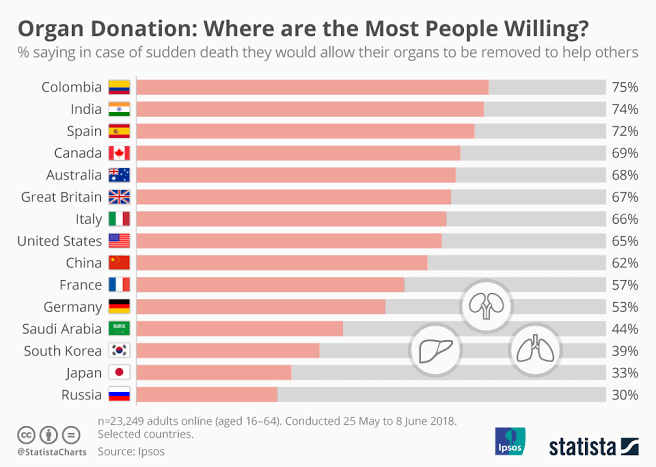
Poverty is a social evil, we can also contribute to control it. For example- we can simply donate old clothes to poor people, we can also sponsor the education of a poor child or we can utilize our free time by teaching poor students. Remember before wasting food, somebody is still sleeping hungry.

Overcoming poverty is not a gesture of charity. It is an act of justice.

—nelsen mandela

8 Emerging Plastic Alternatives We Need To Start Using

Plastics is currently one of the world’s most significant challenges. Consumers are becoming more aware of the thousands of tonnes of plastic that are polluting the ocean thanks to David Attenborough’s Blue Planet. Due of the widespread usage of plastic, particularly in packaging, firms will need to act quickly to identify plastic alternatives. In fact, 25% of customers are extremely concerned about plastic packaging, and 42% believe manufacturers should prioritise making packaging recyclable, while 21% believe the industry should move toward completely plastic-free packaging (Kantar). As plastic continues to be featured in the news on a regular basis, this figure will only climb. Brands must be seen to be taking a responsible approach; else, their hard-earned equity will be harmed.

Photo by mali maeder on Pexels.com

With so many plastic alternatives being produced, we’ve compiled a list of 13 of the most interesting plastic replacement technologies.

1. Plant Based Plastic: Bioplastics are created from a range of materials, including corn that has been broken down into PLA (polylactic acid). Because it’s manufactured from waste products from maize cultivation – which is also easy to grow – it’s highly sustainable to make. PLA can be used to produce beverage bottles, food-grade containers, and films. Innocent, the eco-heroes, are now using 15% PLA in their bottles.

2. Bagasse: Bagasse is a sugarcane manufacturing waste product. It may be easily moulded into packaging ideal for food delivery and food service, comparable to polystyrene, because to its malleability and stickiness. It’s guaranteed biodegradable and compostable, and because it’s a by-product, it’s considerably more environmentally friendly to make than polystyrene.

3. Seaweed Water Bubbles: Ooho, a British firm, has developed a seaweed-based edible (and, by default, biodegradable) water bubble. “To provide the convenience of plastic bottles while minimising environmental impact,” they say. They’ve devised manufacturing methods that are both more efficient and less expensive than creating plastic bottles. When compared to PET manufacture, the process emits 5 times less CO2 and consumes 9 times less energy.

4. Shower Friendly Paper: L’Oréal, the beauty juggernaut, has now introduced Seed Phytonutrients, an eco-beauty line. The products themselves sound wonderful (crafted with 93-100 percent natural ingredients, cruelty-free, paraben-free, etc. ), but it’s the packaging that stands out. The exterior card is made by Ecologic and is recyclable, compostable, glue-free, and water-resistant. The inner liner is composed of recyclable plastic and consumes 60% less material than standard plastic bottles.

5. Stone Paper and Plastic: You might be surprised to learn that stone can be used to make paper. It obviously had an effect on me. I have a stone paper notepad with a lovely smooth finish that feels almost chilly to the touch. This wonderful invention might be used in a variety of packaging applications. It can be used as a paper or plastic substitute because it is printable, recyclable, and water-resistant… and it also has good eco credentials. It’s created from calcium carbonate, one of the world’s most common minerals, and the manufacturing process consumes less water, has a lower carbon footprint, and is more energy efficient than traditional papermaking. FDA-approved food packaging can also be made with stone paper. Paper (supermarket singlet) bags, takeaway food cartons, greaseproof paper wraps, and Ziplock bags can all be made with this.

6. Palm Leaves: The oyster-like casings for Holy Lama’s handmade soaps are constructed from palm leaves from the areca palm. The areca palm’s leaves naturally fall to the ground, where they are collected and shaped into the required shape. They’re brilliantly environmentally friendly because they employ a natural areca palm waste product and the final packaging is biodegradable. Arekapak, a Berlin-based firm, is working on palm leaf packaging for foods like fresh fruit, vegetables, and nuts.

7. Mushroom Root: Packaging is physically grown with Mycelium (mushroom roots, which is also the same substance that Quorn is comprised of). Ecovative Design collects agricultural waste, mixes it with mycelium in moulds, and then watches as the packaging grows. You can see how it works here, but I’m not convinced it’s not magic.

8. Wood Pulp Cellophane: NatureFlex is the more environmentally friendly younger sibling of cellophane, created from FSC-approved wood pulp and certified biodegradable. It is available in three different types: uncoated, which is ideal for chocolate and confectionery as well as household items; semi-permeable, which is suitable for fresh produce and dairy; and barrier, which is suitable for bakery, snacks, coffee, tea, chocolate, confectionery, as well as home and personal care items.

USAGE OF BOTTLED WATER

SHOULD WE AVOID IT?

For a long time now, bottled water has become a trend amongst people all around the world. Mostly, it is cheap and advertised as healthy. Unfortunately, the water is actually not always as healthy as it might seem. Many companies use tap water sealed into bottles, sometimes purified, sometimes not. Many people who buy water bottles never reuse them and the plastic ends up polluting the environment. The cost for transporting millions of empty bottles each month is huge, and ultimately pollutes the air. Therefore, harming the environment, polluting the air and wasting plastic and fuel are strong arguments that why should not sell bottle water.

“Drinking water is like washing out your insides. The water will cleanse the system, fill you up, decrease your caloric load and improve the function of all your tissues.” – Kevin R. Stone

Even though recycling is something everyone should be doing, many people still throw away their water bottles. Millions use plastic bottles each month, causing transport to waste lands costing great amounts of money for fuel. The wastelands pollute the air, and so does the fuel when used. If our school sells and uses these plastic bottles normally, that demonstrates that we are helping to pollute the environment.

I believe that bottled water should be banned, because of the environmental impact & the health effects they cause. Bottled water is obviously not a healthier or cleaner option to normal tap water. Also, bottled water is despicably expensive when you compare it to the cost per gallon of tap water.

Almost all bottled water sold is tap water, which is put in plastic bottles and sold at huge profits. So pretty much what you’re doing is buying the same water that you could drink at your house for FREE. Also, if a person is choosing between tap water and bottled water, tap water is clearly the more economical and the healthier option.

According to a 2001 report of the World-Wide Fund for Nature, approximately 1.5 million tons of plastic are used in the bottling of 89 billion liters of water each year. Other than the amount of plastic bottles produced each year, the energy essential to produce and transfer these bottles to the market uncontrollably drains limited fossil fuels.

Did you know that each year the making of the plastic water bottles takes sufficient oil and energy to fuel a million cars? Millions of gallons of fuel are wasted daily transporting filtered tap water around the world and across countries. All the energy to make the bottle, even more to ship it around the planet and then we drink it in about two minutes? And do you know what happens when you’re finished with that bottle?

Ninety percent of water bottles end up in landfills where they sit for thousands of years or in incinerators where they’re burned releasing toxic pollution. I don’t see this as being recycling; real recycling would be turning the bottles back into bottles, which happens to only ten percent of the water bottles.

Pretty much what the government is doing, is wasting so much money and energy to pollute our earth. Bottled water companies have made a momentous strain on the environment, due to their tolerant use of precious resources and their manufacturing of billions of plastic bottles.

Around the globe, a billion people don’t have access to clean water. However cities all over the world are spending millions of dollars to deal with all the plastic bottles thrown out. What if we spent that money improving our water systems or even better, developing better water systems in third world countries?

Just remember it could be the beginning of this change, but after cities would be banning water bottles and maybe even countries.

Plastic Ban: An Initiative Towards Better Results!

Reducing Millions of Tons of CO2: EU Single-Use Plastic Ban

Plastic bags are a major cause of environmental pollution. Plastic as a substance is non-biodegradable and thus plastic bags remain in the environment for hundreds of years polluting it immensely. It has become very essential to ban plastic bags before they ruin our planet completely. Many countries around the globe have either put a ban on the plastic bag or imposed tax on it. However, the problem hasn’t been solved completely because the implementation of these measures hasn’t been as successful as expected.

People are more aware of the fact that plastic is harmful to the environment and if we keep increasing the use of plastic it is possible that we are creating a more harmful environment sooner than later. In this aticle on should plastic be banned it is important to understand that plastic in itself is not harmful when used, or recycled and reused, it is rather the littering of plastic on the streets, on land and water bodies, and the single-use plastic bags which are disposed in the same manner and cannot be recycled. Plastic is a non-biodegradable matter and takes lots of efforts to get decomposed so it is only natural that when such matter is only increasing then the threat to nature also rises.

Many countries like Italy, Bangladesh, China, and Kenya have taken the initiative to ban the use of plastic and are not given any to the public at any check out counter. However, there are many countries that have not adopted this, as it is also difficult to find an alternative to plastic that is easily decomposable and safer for the environment. So, rather than completely banning the use of plastic, we must find ways of recycling and reusing the plastic so that the dumping of plastic does not deteriorate the natural environment.

Important Reasons to Ban Plastic Usage:-

  1. Plastic can endure every climate and when littered travels through wind or water and reaches ocean bodies or gets stuck on lands and trees and harms these environments as it is non-biodegradable since it is made of non-renewable materials.
  2. The energy required to drive a car for 1 kilometre is used to make 9 plastic bags and this ratio is irrational as the plastic bag used is rather useful for only 11 minutes to carry materials and then discarded.
  3. An Environment Health Perspective reports that the components of plastic mimic hormones like estrogen and this causes severe damage to our health as it disrupts the natural hormonal balance in our body.
  4. It is a threat to wildlife who in negligence sometimes consume plastic which is littered along with their food. Many aquatic animals like turtles suffer a great deal as their digestive system is entangled in plastic and die.
  5. Plastic bags are not easy to recycle as the recycling rate by the recycling facilities is only 5% so it is tedious work.

Some Major Problems caused due to Plastics:-

  1. They are Non-Biodegradable

Plastic bags are made up of elements that are extremely hard to be degraded by the microbes in the environment. They take hundreds of years to be completely decomposed, which essentially means that almost all of the plastic ever made still exists in the environment causing pollution! In fact, plastic bags are a major source of pollution of land and water presently across the world. 

2. Effect of Plastic on Human Health

Due to the excessive use of plastics, there are a number of ways in which plastic finds its way into our food chain. Accumulation of nano plastics over a long period of time can cause organ failure, intoxication and respiratory and gastrointestinal distress. Burning of plastics also produces harmful smoke that can cause poisoning in humans. 

3. Harmful for Animals

Animals, both terrestrial and aquatic, consume a lot of plastic wastes unknowingly. Consuming large chunks of plastic often cause blockage in their respiratory tract. This may result in respiratory failure due to choking. After consuming plastic bag, an animal is not able to digest it and it stays inside its intestine causing complications and ultimately, untimely death.

4. Clogged Sewage

Another major problem of plastic bags is that it accumulates in waterways and clogs drains and sewages. This can result in overflowing drains which can then breed various vectors of diseases. Afterwards, from this accumulation of plastic bags oxygen supply to the water is reduced and aquatic animals die due to the lack of oxygen as well.

Conclusion:-

Although plastic is becoming a big threat for all of us, still this problem has often been overlooked and underestimated. This is because people do not look at the long term effect of these small, easy to carry bags they use in their everyday life. Besides all of these people keep using bags due to their convenience. But now everyone has to completely stop using the plastic bag to save our environment and earth.

It is safe to say that like any global problems affecting the environment and the people all over it is not easy to find a particular solution so we can only trust time to see what works and what doesn’t and in the meantime find alternatives which are biodegradable and instead of dumping reuse and recycle and spread awareness about its importance, in this way you can contribute to maintaining nature’s sanctity.

Importance of newspaper

Importance of Newspaper in Life Essay - Let's Learn

Newspaper is quite a powerful tool that circulates information to people. It is one of the greatest means of communication between people and the world. In addition, they are also a great medium of knowledge. We get our daily dose of news from newspapers early in the morning. It is quite a reliable source which gives us information only after thoroughly investigating the information.
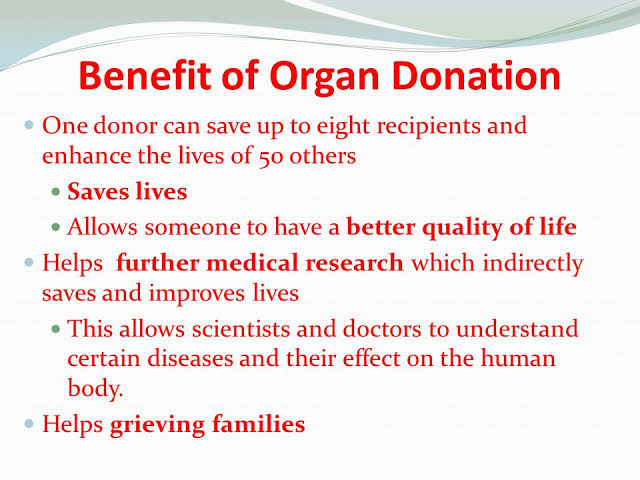
Newspapers are easily available in the most remote regions as well. They are also very economical which gives an abundance of information at really low cost. Most importantly, newspapers are published in various languages that make it easier for people of all regions to get news in their local language. thus, we see how newspapers have numerous advantages that help the common man stay informed of the worldly issue.

Significance of Newspaper

The newspaper has created a positive impact on society. It helps people become aware of current affairs and stay curious about them. When the public will question, it means they are aware. This is exactly what a newspaper does. It is also the finest link you can find between the government and its people. Newspapers provide people with every detail no matter how small.

Essay on the Importance of Newspaper and Press - Ilmi Hub

Furthermore, it helps us become informed citizens. Whenever there are any changes in the rules and regulations of the country, newspapers make us aware of them. Moreover, they are very informative for students. A student can learn all about general knowledge and current affairs from here. We stay updated with the technological advancements, government policies, research studies and more.

Other than that, newspapers also have incredible articles that tackle social issues, cultures, arts, and more. It conveys the public opinion to the people on important issues. This will, in turn, help people review the government and ministers well. Similarly, people get great employment opportunities from newspapers. Those seeking jobs look through newspapers to get reliable job opportunities.

In short, the newspaper carries a lot of significance for humans. If we read the newspaper daily, it can develop our reading habit and make us more fluent. It also has mind-brain exercise games like puzzles, Sudoku and more to sharpen people’s brains. Furthermore, you can also go through the comic strips and cartoons to keep yourself entertained.

A World Without Newspapers

As the world is advancing rapidly, everything is becoming digital. From our shopping to news, we can easily do it on our smartphones or computers. This digitization has also affected the newspaper scenario. As people are getting instant updates on their phones about the latest news, the sales of newspapers have gone down massively.

Importance of Newspaper Essay for Students | 500+ Words Essay

Does this mean the digital era will wipe out the newspapers? Looking at the present scenario, this possibility might soon become a reality. However, are we ready to have a world without newspapers? A world without newspapers is like having a home without mirrors. This means we won’t be able to see our own reflection.

Now, compare this situation to that of the world and newspaper. Imagine the world has lost its national mirror, resulting in you not being able to get an honest reflection of what is happening around. What’s even worse is the fact that instead of the national mirror we are getting a fun-house mirror which is distorting the information and making you see what’s not real.

In short, the world will become a free rein for politicians to propagate their advertising and agendas to the public. The information won’t be reliable and won’t even be scrutinized. We won’t have any journalists to decipher the PR spin of the governments and corporate firms robbing the common man of their money.

13th August: Left-Handers Day and 10 Interesting Facts about Lefties

Did you know there’s a day dedicated solely to left-handed people? There is, indeed! International Lefthanders Day is observed on August 13th. The purpose of the day is to emphasize the uniqueness of persons who accomplish daily tasks with their left hand. Many well-known people all across the world are left-handed. Former US President Barack Obama is at the top of the list, followed by renowned CEOs like Mark Zuckerberg, Ratan Tata, and Bill Gates. Lady Gaga, Julia Roberts, and Amitabh Bachchan, all well-known stars in the entertainment business, are left-handed. Left-handed people include Walt Disney, Charlie Chaplin, and Albert Einstein.

Photo by ANTHONY SHKRABA production on Pexels.com

Left-handed persons have long been considered and treated as misfits. Left-handed persons in the Middle Ages were afraid of being accused of witchcraft. Many schools in the United States compelled left-handed students to “retrain” their natural proclivities in order to become right-handed as recently as the early twentieth century. Left-handedness was once thought to be caused by slight brain injury during early development, according to scientists. Over time, these misconceptions have been dispelled, and some have even claimed that being left-handed is linked to superior IQ. While the claim is intriguing, medical research yields mixed findings.

Every year on August 13, the International Left-Handers’ Day 2021 is commemorated. It’s a way to honour those who were born left-handed, in contrast to the majority of the population. While we mark this day by calling up our lefty friends and family, let us look into some fun facts about lefties. Here’s a list of ten interesting facts about lefties that distinguish them in a variety of ways.

1. Left-handed people make up a significant portion of the population, accounting for almost 10% to 12% of the global population.
2. The right half of the brain is used more by left-handed people. The human brain is cross-wired, with the right half controlling the left side of the body and the left half controlling the right. As a result, persons who are left-handed use their right side of the brain more than people who are right-handed.

3. Some people are terrified of the left side or those who are left-handed. Sinistrophobia is a phobia that can occur as a result of this illness.

4. According to a study conducted at Queen’s University in Belfast, a foetus which prefers to suck its left hand while in the womb will grow up to be left-handed. Left-handedness is determined in part by genetics.

5. After a stroke, left-handed people recover faster. Our language function is controlled by the left side of the human brain, which is heavily employed by right-handed persons. As a result, strokes on the left side of the body tamper with a right-handed person’s language. Left-handed people, on the other hand, rely less on the left side of the brain. As a result, they can regain their language abilities more quickly after a stroke.
6. In several sports, left-handed people have an advantage. When it comes to sports, they are usually good in one-on-one situations. Left-handed players generally have an advantage over right-handed opponents in sports like baseball, boxing, fencing, and tennis since they are accustomed to competing with right-handed players.

7. Being a left-handed person is considered unnatural in many cultures and countries. Left-handedness is considered impolite in eastern nations such as India and the Middle East. Left-handed children were once required to use their right hands in the United Kingdom as well.

8. Left-handed people have an advantage when it comes to typing. They can type nearly 3,000 English words using only their left hand on a QWERTY keyboard. However, only about 300 words can be typed using just the right hand. The most frequently typed letters are found on the left side of the keyboard.

9. Tasks and memory are handled differently by right and left-handed people. Left-handed people are known for multitasking effectively since they consider the tasks as a whole.

10. While this is still debatable, studies have shown that the majority of artists, including painters, musicians, and even architects, are left-handed.

How are we, humans causing endangered species and how can we overcome it by wildlife conservation.

Wildlife conservation
Are we aware of the amount of deaths and the amount of endangered species around us? And of course, the answer would be an absolute NO. I would not like to include all single human beings, as there are organisations trying to help the species and working on conserving them, but I don’t think they can do it all alone. They need our help. The animals NEED our help.

How are we, humans, causing extinct species?
One of the main reason for extinction is habitat destruction. Humans destroy the habitats of species which cause them to die or suffer.The second main reason would be the diseases causing species to die because of us, example : taking pictures, polluting the area, hunting, deforestation and ect. These activities can be the major reasons for species extinction.

What are the well known critically endangered species? and why?
Amur leopards – being hunted for their fur for coating. it is also said that their habitat are continuously being destroyed – ( human causing )
Black rhino – their horns are being hunted for medicines. – ( human causing )
Hawksbill sea turtle – is being hunted for their shell and also for meat. the jelly fishes, water animals and also the Hawksbill sea turtle are being affected by the plastic covers being thrown on seas – ( human causing )
Mountain gorillas – being extinct due to deforestation also causes to destroy the trees which can be the food for animals – ( human causing )
pangolin – scales of the pangolin are believed that they are used for medical problems.
polar bear – global warming issues – ( human causing )
plants – yes! I would also like to include plants in endangered species. We all know humans are the main reasons for the dying of plants. plants are being dead by deforestation, cutting trees – for wood and paper, and pollution ( water, air, water)
What is India doing?
“India will work with Coalition countries to adopt cleaner energy sustainable production and consumption patterns and environment-friendly transport, agriculture, industry and waste management to promote clean air,” Minister Javadekar said. The central government gives all types of financial literacy and conserving and protecting the wildlife. National ban was imposed on tiger hunting in 1970 and the Wildlife Protection Act became effective in 1972.
countries that are helping the endangered species
The Philippines and Malaysia are trying to shield the animals. Individual European nations are taking actions to help and support their animals.

let’s do it together!
Nothing is impossible!All of us can do it together! There are a lot of tips for us to follow for conserving wildlife. If we follow them continuously we can achieve! The animals can achieve!
Join in organisations or wildlife agencies.
donate and volunteer
Learn about species and animals ( birds ) – increasing our knowledge.
Let’s raise awareness
Recycle
Build a wildlife garden
let’s stop using products made from animals
Let’s not eat meat or nonveg – try eating a low impact diet.
save energy, save water, save the environment
Avoid plastic
What are we supposed to do? Just… save the animals. save the planet!

Values

Values are the positive teachings provided to help us and tread the right path in life. Every parent wants his child to imbibe these. These can even be referred to as good qualities. A person who imbibes good values grows on to become a responsible individual and he is capable of demarcating right and wrong. Also, he is able to make wiser decisions in life.

Importance of Values

For an individual, values are most important. An individual with good values is loved by everyone around as he is compassionate about others and also he behaves ethically.

Values Help in Decision Making

A person is able to judge what is right and what is wrong based on the values he imbibes. In life at various steps, it makes the decision-making process easier. A person with good values is always likely to make better decisions than others.

Values Can Give Direction to Our Life

In life, Values give us clear goals. They always tell us how we should behave and act in different situations and give the right direction to our life. In life, a person with good values can take better charge.

Values Can Build Character

If a person wants a strong character, then he has to possesses good values such as honesty, loyalty, reliability, efficiency, consistency, compassion, determination, and courage. Values always help in building our character.

Values Can Help in Building a Society

If u want a better society then people need to bear good values. Values play an important role in society. They only need to do their hard work, with compassion, honesty, and other values. Such people will help in the growth of society and make it a much better place to live.

Characteristics of Values

Values are always based on various things. While the basic values remain the same across cultures and are intact since centuries some values may vary. Values may be specific to a society or age. In the past, it was considered that women with good moral values must stay at home and not voice their opinion on anything but however, this has changed over time. Our culture and society determine the values to a large extent. We imbibe values during our childhood years and they remain with us throughout our life.

Family always plays the most important role in rendering values to us. Decisions in life are largely based on the values we possess. Values are permanent and seldom change. A person is always known by the values he possesses. The values of a person always reflect on his attitude and overall personality.

The Decline of Values in the Modern Times

While values are of great importance and we are all aware of the same unfortunately people these days are so engrossed in making money and building a good lifestyle that they often overlook the importance of values. At the age when children must be taught good values, they are taught to fight and survive in this competitive world. Their academics and performance in other activities are given importance over their values.

Parents, as well as teachers, teach them how to take on each other and win by any means instead of inculcating good sportsman spirit in them and teaching them values such as integrity, compassion, and patience. Children always look up to their elders as their role models and it is unfortunate that elders these days have a lack of values. Therefore the children learn the same.

Conclusion

In order to help him grow into a responsible and wise human being, it is important for people to realize that values must be given topmost priority in a child’s life because children are the future of the society. There can be nothing better in a society where a majority of people have good values and they follow the ethical norms.

“VALUES ARE LIKE FINGERPRINTS. NOBODY’S ARE THE SAME, BUT YOU LEAVE THEM ALL OVER EVERYTHING YOU DO.”

— ELVIS PRESLEY

SLEEP HYGIENE

“Sleep’s what we need. It produces an emptiness in us into which sooner or later energies flow.”
― John Cage.

Almost everyone has encountered a zombie-like feeling after a night of minimal or no sleep. Even after just one night without enough rest, we can feel drowsy during the day with slowed thinking, lack of energy, and an irritable mood.

Sleep deprivation is when you don’t get the sleep you need, and it is It’s estimated to affect most of the students, a problem that has only worsened in recent years.

Lack of sleep directly affects how we think and feel. While the short-term impacts are more noticeable, chronic sleep deprivation can heighten the long-term risk of physical and mental health problems.

If you eat well and exercise regularly, but don’t get at least seven hours of sleep every night, you may be undermining all of your other efforts.

How much sleep do you actually need?

Everyone feels better after a good night’s rest.  But now, thanks to a report from the National Sleep Foundation, you can aim for a targeted sleep number tailored to your age.

  • Older adults, 65+ years: 7 to 8 hours.
  • Adults, 26 to 64 years: 7 to 9 hours.
  • Young adults, 18 to 25 years: 7 to 9 hours.
  • Teenagers, 14 to 17 years: 8 to 10 hours.
  • School-age children, 6 to 13 years: 9 to 11 hours.
  • Preschool children, 3 to 5 years: 10 to 13 hours.
  • Toddlers, 1 to 2 years: 11 to 14 hours.
  • Infants, 4 to 11 months: 12 to 15 hours.
  • New-born, 0 to 3 months: 14 to 17 hours.

But a minimum of seven hours of sleep is a step in the right direction to improve your health.

What happens when you don’t get enough sleep?

Short-term problems can include:

  • Lack of alertness. Even missing as little as 1.5 hours can have an impact on how you feel.
  • Excessive daytime sleepiness. It can make you very sleepy and tired during the day.
  • Impaired memory. Lack of sleep can affect your ability to think, remember and process information.
  • Relationship stress. It can make you feel moody and you can become more likely to have conflicts with others.
  • Quality of life. You may become less likely to participate in normal daily activities or to exercise.
  • Greater likelihood for car accidents. Drowsy driving accounts for thousands of crashes, injuries and fatalities each year, according to the National Highway Traffic Safety Administration.

Chronic sleep deprivation can even affect your appearance. Over time, it can lead to premature wrinkling and dark circles under the eyes. There’s also a link between lack of sleep and an increase in the stress hormone, cortisol, in the body. Cortisol can break down collagen, the protein that keeps skin smooth.

So lack of sleep could mean more wrinkles! Understand why sleep is so important yet?

How to Sleep Better

If you’re experiencing mild, occasional problems with sleep, try these simple strategies to make you better.

1. Treat getting enough sleep as if it is as important as taking medicine.

With all the demands on our time every day, you might put a good night’s rest at the bottom of your priority list.

2. Keep a consistent wake time.

Wake up at the same time every day, including weekends or days off.  Waking at the same time every day will actually help you to sleep better at night. A fixed wake time helps to build a strong desire for sleep throughout wakefulness. This sleep drive gradually builds, and shortening it by sleeping in will make it harder to fall asleep the next night. Sleeping in on the weekend makes it much more difficult to wake up earlier on Monday morning.  

It also is important to do some relaxing activity such as taking a warm bath or reading a book before bedtime. By making these activities part of your bedtime ritual, you can train yourself to associate these activities with sleep. This association will help you to move more easily into slumber.

3. Put away the smart phones and tablets.

Electronic devices keep your mind humming — and far from the relaxed state you need to achieve before bedtime. So, keep away the gadgets at least an hour ago before sleep.

BOTTOM LINE

Getting frequent sunlight exposure during the day supports a healthy circadian rhythm that helps you be alert during the day and sleepy at night. Regular physical activity can also contribute to a normal sleep schedule, so try to engage in at least moderate exercise every day.

REFERENCES https://health.clevelandclinic.org/happens-body-dont-get-enough-sleep